


In an era defined by constant digital communication, the email inbox has evolved from a simple messaging tool into a complex ecosystem that can either empower or overwhelm us. For many professionals, managing email has become a significant time sink, demanding endless hours of drafting, refining, and responding. The sheer volume of incoming messages, coupled with the need for clear, concise, and impactful communication, often leaves individuals feeling swamped and less productive. This challenge is not merely about sending replies; it encompasses ensuring the right tone, grammar, clarity, and timeliness for every single interaction, whether it is a crucial client proposal or a quick internal update. The mental load associated with crafting perfect emails can be immense, diverting focus from core tasks and contributing to burnout.
However, a revolutionary solution has emerged from the intersection of artificial intelligence and communication technology: the AI Email Assistant. These smart writing tools are rapidly transforming the way we interact with our inboxes, offering a beacon of hope for those grappling with email overload. Far beyond simple spell checkers, modern AI email assistants leverage sophisticated algorithms, including advanced natural language processing (NLP) and large language models (LLMs), to understand context, generate human-like text, and even predict communication needs. They are designed to streamline the entire email writing process, from brainstorming initial drafts to polishing final messages, ensuring every email you send is professional, effective, and perfectly tailored to its recipient and purpose. This comprehensive guide will explore the profound impact of AI email assistants, delving into their capabilities, benefits, and practical applications, ultimately demonstrating how you can master your inbox and significantly boost your everyday productivity with these intelligent tools.
What is an AI Email Assistant?
An AI email assistant is a software tool or feature that utilizes artificial intelligence to help users manage, write, and optimize their email communications. At its core, it aims to reduce the time and effort required to handle emails by automating repetitive tasks, suggesting improvements, and even generating entire message drafts. These assistants are powered by advanced machine learning models, primarily natural language processing (NLP) and more recently, large language models (LLMs) like those underlying technologies such as GPT-3 or GPT-4, which allow them to understand context, interpret intent, and produce coherent, relevant text.
Think of an AI email assistant not just as a glorified grammar checker, but as a proactive digital co-pilot for your inbox. It goes beyond merely correcting typos; it understands the nuances of human language, adapts to various communication styles, and can even learn from your past interactions to provide increasingly personalized and effective assistance. For example, if you frequently write follow-up emails for sales leads, an AI assistant can quickly generate a template that incorporates elements from your successful past emails, saving you valuable minutes each time. This level of sophistication transforms the mundane task of email writing into an efficient and often effortless process.
The capabilities of these tools range from basic functionalities to highly advanced features. On the simpler end, they might offer intelligent autocomplete suggestions, grammar and spelling corrections, and basic tone detection. However, the true power of contemporary AI email assistants lies in their ability to perform more complex tasks. They can summarize long email threads, allowing you to grasp the core message without reading every line. They can draft responses based on the context of an incoming email, saving you the mental energy of starting from scratch. Furthermore, they can help you refine your message to ensure it conveys the desired emotion, whether that is empathy, urgency, or professionalism. This multi-faceted support system makes them indispensable for anyone looking to reclaim control over their inbox and optimize their communication strategy.
The Evolution of Email and AI’s Role
Email has come a long way since its inception in the early 1970s. Initially a groundbreaking method for digital communication, it quickly became an indispensable tool for businesses and individuals alike. For decades, the fundamental mechanism remained largely unchanged: compose, send, receive. While client software improved with features like rich text formatting, attachments, and folder organization, the core process of drafting and managing messages largely remained a manual, human-intensive task.
The dawn of the internet age in the 1990s and the subsequent proliferation of email brought both immense benefits and unforeseen challenges. The sheer volume of emails grew exponentially, leading to the phenomenon of “email overload.” Professionals found themselves spending hours each day sifting through messages, responding to requests, and drafting new communications. This burden significantly impacted productivity, as time spent on email often meant less time for core job responsibilities. The need for efficient email management tools became critical, leading to the development of rudimentary filters, spam blockers, and later, smart search functions within email clients.
The real game-changer arrived with advancements in artificial intelligence, particularly in the fields of natural language processing (NLP) and machine learning (ML). Early AI applications in email were relatively basic, focusing on spam detection and intelligent sorting, such as Gmail’s “Primary,” “Social,” and “Promotions” tabs. These tools, while helpful, were largely reactive, helping to organize the influx rather than assisting in the creation of outbound communication.
However, the rapid progress in deep learning and the development of large language models (LLMs) in the last few years have ushered in a new era. LLMs, trained on vast datasets of text, can understand context, generate coherent and contextually relevant prose, and even mimic different writing styles. This breakthrough transformed AI’s role from a passive organizer to an active, creative assistant. Modern AI email assistants leverage these powerful models to not just suggest corrections but to actively participate in the writing process. They can take a few bullet points and turn them into a formal email, summarize a lengthy conversation, or even suggest follow-up actions based on the content of a message. This shift represents a fundamental transformation in how we approach email, moving from a manual chore to a collaborative effort with intelligent digital partners. AI is no longer just sorting our mail; it is helping us write it better and faster, fundamentally redefining email productivity.
Key Features and Capabilities of AI Email Assistants
Modern AI email assistants boast a wide array of features designed to tackle every aspect of email communication. Understanding these capabilities is the first step toward harnessing their full potential and truly mastering your inbox.
-
Intelligent Email Drafting and Generation:
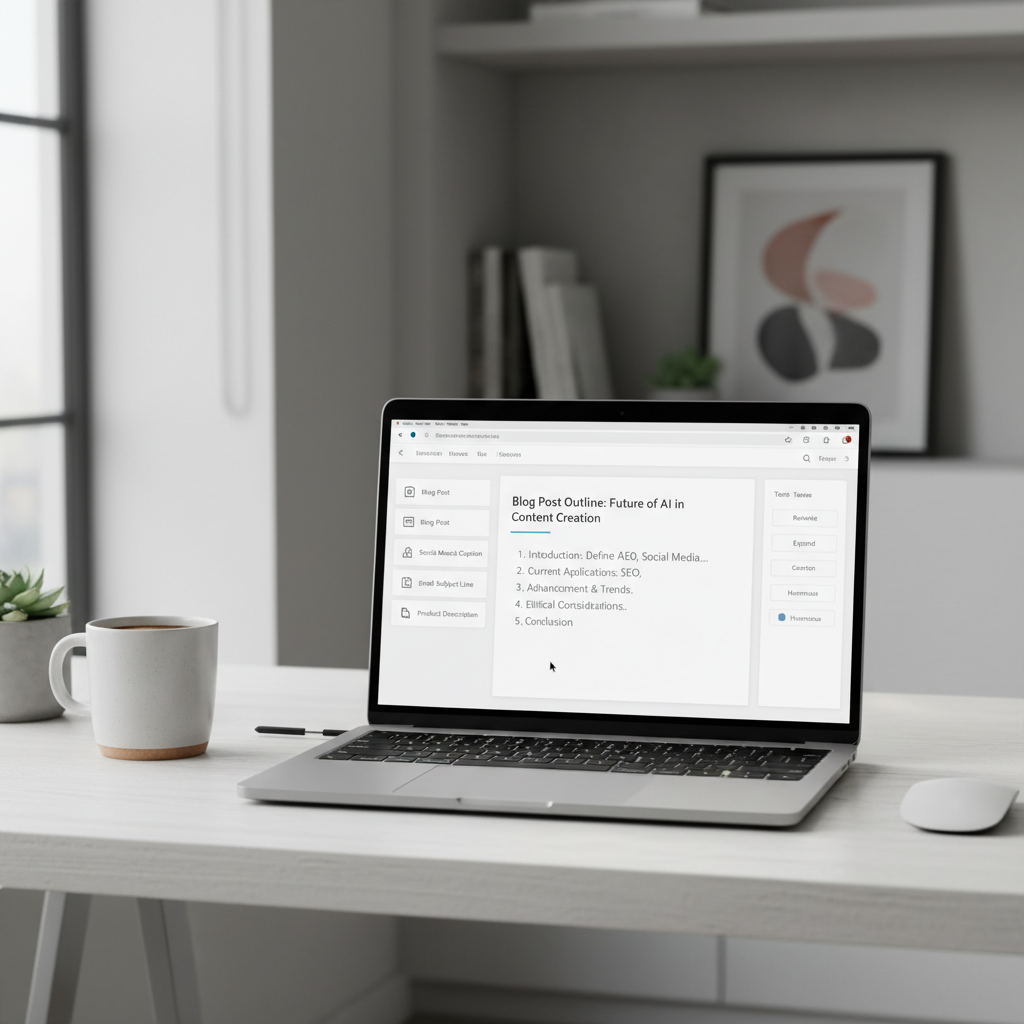
Perhaps the most powerful feature, AI assistants can generate entire email drafts from minimal input. You might provide a few keywords, bullet points, or a brief description of your intent, and the AI will craft a complete, well-structured email. This is invaluable for busy professionals who need to compose numerous emails daily, such as sales outreach, customer service responses, or internal updates. For example, instead of spending 15 minutes drafting a project update, you could simply tell the AI: “Draft an email to the team about the Q3 project status. Mention the completion of Phase 1, the upcoming client demo, and a reminder about the Friday sync.” The AI would then generate a professional, clear, and comprehensive message.
-
Tone and Style Adjustment:
Effective communication often hinges on the right tone. An email that is too casual might undermine your professionalism, while one that is too formal could feel cold. AI assistants can analyze your draft and suggest modifications to adjust its tone. They can transform a blunt message into a more empathetic one, or make a friendly email sound more authoritative. Options often include making text more professional, friendly, formal, concise, or empathetic. This feature is particularly useful when communicating with diverse audiences or navigating sensitive topics.
-
Grammar, Spelling, and Punctuation Correction:
While seemingly basic, flawless grammar and spelling are crucial for maintaining credibility. AI assistants go beyond traditional spell checkers by understanding context, catching more complex grammatical errors, and suggesting improvements in sentence structure and word choice. They can identify awkward phrasing, passive voice, and run-on sentences, offering alternatives that enhance clarity and readability. This ensures that every email you send is polished and error-free, reflecting positively on you and your organization.
-
Summarization of Long Email Threads:
Diving into a long email chain to find a specific piece of information or catch up on a discussion can be incredibly time-consuming. AI assistants can rapidly process lengthy threads and provide a concise summary of the key points, decisions made, and action items. This feature is a massive time-saver, allowing you to quickly get up to speed without reading through dozens of messages, ensuring you are always informed and prepared for subsequent actions.
-
Smart Reply and Quick Response Suggestions:
Many AI email assistants integrate directly into your inbox to offer intelligent reply suggestions based on the content of incoming emails. These might be short, predefined responses for common queries (e.g., “Thanks!”, “I’ll get back to you soon,” “Yes, sounds good”), or more elaborate, context-aware drafts. This speeds up your response time for routine emails, allowing you to clear your inbox faster and focus on messages that require more nuanced attention.
-
Personalization and Customization:
Advanced AI tools learn from your writing style, common phrases, and communication patterns over time. This personalization allows them to generate suggestions and drafts that truly sound like you, maintaining your unique voice. Some tools also offer customizable templates and dictionaries, ensuring that industry-specific jargon or preferred company phrasing is consistently used, enhancing brand consistency in communication.
-
Multilingual Support:
In today’s globalized world, cross-cultural communication is common. Many AI email assistants offer multilingual support, allowing you to compose emails in different languages or translate incoming messages. This breaks down language barriers, facilitating smoother international collaboration and expanding your communication reach without the need for manual translation tools.
-
Sentiment Analysis:
Some tools can analyze the sentiment of your email before you send it, helping you gauge how your message might be perceived by the recipient. This is particularly valuable for sensitive communications, conflict resolution, or when trying to convey a specific emotional tone. It allows you to refine your message to ensure it lands exactly as intended, preventing misunderstandings.
These features, when combined, create a powerful ecosystem that not only simplifies email writing but elevates its quality and efficiency. By automating the tedious aspects and providing intelligent assistance for the complex ones, AI email assistants empower users to communicate more effectively and reclaim valuable time in their day.
Benefits of Using AI Email Assistants for Productivity
Integrating AI email assistants into your daily workflow offers a multitude of benefits that extend far beyond simply saving a few minutes here and there. The impact on overall productivity, communication quality, and even mental well-being can be transformative. Here are some of the key advantages:
-
Significant Time Savings:
The most immediate and apparent benefit is the drastic reduction in time spent on email. From drafting initial messages to crafting detailed replies, AI can handle the heavy lifting. Imagine cutting down the time spent on routine emails by 50% or more. This reclaimed time can then be allocated to more strategic tasks, core responsibilities, or even personal well-being. For sales professionals, this means more time prospecting or closing deals. For customer service, it means faster resolution times and higher customer satisfaction. For project managers, it allows for deeper engagement with project execution rather than endless communication loops.
-
Enhanced Communication Quality:
AI assistants are meticulous. They catch errors that human eyes might miss, refine awkward phrasing, and suggest more impactful vocabulary. This ensures that every email you send is articulate, grammatically correct, and professional. The ability to adjust tone means your messages will always resonate appropriately with the recipient, fostering clearer understanding and stronger relationships. A well-written email not only reflects positively on you but also reduces the likelihood of misinterpretations, preventing costly back-and-forth exchanges.
-
Reduced Cognitive Load and Decision Fatigue:
Constantly deciding how to phrase an email, what tone to adopt, or how to summarize complex information contributes to mental fatigue. AI assistants offload a significant portion of this cognitive burden. By generating drafts, suggesting replies, or summarizing threads, they free up your mental energy, allowing you to focus on the strategic content of your message rather than the mechanics of writing. This reduction in mental strain leads to less decision fatigue, greater focus, and improved overall decision-making capacity throughout the day.
-
Improved Consistency and Brand Voice:
For teams and organizations, AI email assistants can help maintain a consistent brand voice across all external communications. By learning from predefined templates, style guides, or frequently used phrases, the AI ensures that all outgoing emails align with the company’s messaging standards. This consistency builds trust and reinforces brand identity, which is crucial for customer engagement and professional reputation. Even for individuals, it ensures a consistent professional image in their communications.
-
Faster Response Times:
The ability to quickly generate smart replies or draft emails rapidly means you can respond to messages much faster. This is particularly beneficial in client-facing roles where prompt responses are often crucial for customer satisfaction and competitive advantage. Faster responses can also keep projects moving forward, prevent bottlenecks, and improve overall operational efficiency within a team.
-
Accessibility and Inclusivity:
AI email assistants can be a significant boon for individuals who struggle with writing due to language barriers, learning disabilities, or simply a lack of confidence in their writing abilities. By providing robust drafting and editing support, these tools empower a wider range of individuals to communicate effectively and professionally, fostering greater inclusivity in the workplace and beyond.
-
Learning and Development:
While AI assists, it also serves as a subtle learning tool. By observing the AI’s suggestions for grammar, vocabulary, and sentence structure, users can gradually improve their own writing skills. It provides real-time feedback and demonstrates best practices, acting as a personal writing coach that helps refine your communication abilities over time.
In essence, AI email assistants transform email from a potential productivity drain into a powerful lever for efficiency and effective communication. They empower users to not only manage their inboxes with greater ease but to also elevate the quality and impact of every message they send.
Choosing the Right AI Email Assistant for Your Needs
With a growing number of AI email assistants entering the market, selecting the right one can feel daunting. The ideal tool for you will depend on your specific needs, budget, existing software ecosystem, and the nature of your email communication. Here are key factors to consider when making your choice:
-
Integration with Existing Email Clients:
One of the most critical considerations is how seamlessly the AI assistant integrates with your primary email client. Do you use Gmail, Outlook, Apple Mail, or a proprietary system? Many AI tools offer browser extensions, desktop applications, or direct integrations (via APIs) that allow them to work directly within your preferred email interface. A tight integration ensures a smooth workflow, eliminating the need to copy-paste text between applications.
-
Core Features and Capabilities:
Review the list of features discussed earlier. Which ones are absolutely essential for you? If you primarily need help with grammar and spelling, a basic tool might suffice. However, if you require full draft generation, summarization, tone adjustment, or multilingual support, you will need a more advanced solution. Prioritize features that address your biggest email pain points. For instance, a salesperson might value robust drafting and personalization for outreach, while a customer support agent might prioritize quick replies and sentiment analysis.
-
Accuracy and Quality of AI Output:
The effectiveness of an AI assistant hinges on the quality of its output. Look for tools that generate natural-sounding, coherent, and contextually appropriate text. Many providers offer free trials or demos, which are excellent opportunities to test the AI’s capabilities with your own writing samples and typical email scenarios. Pay attention to how well it understands your intent and if its suggestions truly enhance your message.
-
Ease of Use and User Interface:
An AI tool, no matter how powerful, is only effective if it is easy to use. The interface should be intuitive, and the features should be readily accessible without a steep learning curve. Consider how quickly you can activate features like drafting or tone adjustment, and how smoothly it fits into your existing writing process. A clunky interface can negate any productivity gains.
-
Customization and Personalization:
Does the AI tool learn from your writing style? Can you train it with your specific vocabulary or brand guidelines? The more customizable an AI assistant is, the better it will adapt to your unique needs and preferences, ensuring that its suggestions sound genuinely like you. This is particularly important for professionals who need to maintain a consistent personal or brand voice.
-
Pricing Model and Value:
AI email assistants come with various pricing models, including free tiers with limited features, subscription-based models (monthly or annual), and enterprise plans. Evaluate the cost against the features offered and the value you expect to gain. Some tools might seem expensive upfront but could offer a significant return on investment through time saved and improved communication. Consider if the free version meets your needs, or if the paid features justify the expenditure.
-
Security and Privacy:
You will be entrusting your sensitive communications to these tools. It is paramount to investigate their data privacy policies, encryption standards, and compliance with regulations like GDPR or HIPAA (if applicable). Ensure that your data is handled securely, not used for training models without your explicit consent, and that you retain ownership of your content. Transparency from the provider regarding data handling is key.
-
Customer Support and Updates:
Technology evolves rapidly. Choose a provider that offers reliable customer support and frequently updates its software with new features and improvements. A responsive support team can be invaluable if you encounter issues, and regular updates ensure the tool remains effective and current with the latest AI advancements.
By carefully evaluating these factors, you can make an informed decision and select an AI email assistant that perfectly aligns with your communication habits, professional demands, and organizational requirements, leading to a truly transformative inbox experience.
Best Practices for Integrating AI Email Assistants into Your Workflow
Simply adopting an AI email assistant is the first step; effectively integrating it into your daily workflow is what truly unlocks its transformative power. To maximize its benefits and avoid potential pitfalls, consider these best practices:
-
Start Small and Experiment:
Do not try to overhaul your entire email strategy overnight. Begin by using the AI for specific, repetitive tasks. For instance, try it for drafting short internal messages, composing routine follow-ups, or proofreading important client emails. Experiment with different features, such as tone adjustment or summarization, to understand what works best for your communication style and needs. This gradual approach allows you to build confidence and adapt without feeling overwhelmed.
-
Treat AI as an Assistant, Not a Replacement:
Remember that AI email assistants are tools designed to augment human intelligence, not replace it. Always review the AI-generated content critically. While the AI can produce impressive drafts, it may not always capture the exact nuance, emotion, or specific context required for every situation. Personalize the output, infuse your unique voice, and ensure the message aligns perfectly with your intent. Your human touch remains crucial for authentic and impactful communication.
-
Provide Clear and Concise Prompts:
The quality of the AI’s output is directly proportional to the clarity of your input. When using drafting features, provide specific instructions. Instead of saying, “Write an email about the meeting,” try, “Draft an email to John and Sarah to confirm our meeting on Tuesday at 10 AM regarding the Q3 budget review. Ask them to bring their departmental forecasts.” The more detail you provide, the better the AI can tailor its response, reducing the need for extensive edits.
-
Leverage Contextual Information:
Many advanced AI assistants perform better when they have access to relevant context. If the tool integrates with your email client, it can often analyze previous messages in a thread to inform its suggestions. When manually providing input, offer summaries of previous conversations or relevant background information. This helps the AI generate more accurate, relevant, and personalized content, saving you time in refinement.
-
Utilize Templates and Customization Features:
If your AI assistant offers customizable templates or the ability to learn your preferred phrasing, take advantage of these features. Create templates for frequently sent emails (e.g., meeting invitations, status updates, client onboarding messages). Training the AI with your specific vocabulary, brand guidelines, or industry jargon ensures that its output consistently reflects your professional identity and reduces the time spent on manual adjustments.
-
Regularly Review and Provide Feedback:
Some AI tools improve over time through user feedback. If the AI makes an irrelevant suggestion or an incorrect correction, take a moment to provide feedback if the option is available. This helps the model learn and refine its performance, leading to more accurate and helpful assistance in the future. Regular review of its output also helps you understand its strengths and limitations.
-
Maintain Data Privacy Awareness:
Always be mindful of the information you share with an AI assistant. While reputable providers implement robust security measures, it is wise to avoid inputting highly confidential or sensitive data directly into the AI for generation if you have any concerns about its data handling policies. Understand the tool’s privacy policy and ensure it aligns with your organization’s security protocols, especially when dealing with proprietary or protected information.
-
Integrate with Other Productivity Tools:
Consider how your AI email assistant can complement other productivity tools you use, such as calendar apps, CRM systems, or project management software. A truly integrated workflow allows for seamless transitions between tasks, ensuring that information flows efficiently and that your communication efforts are aligned with your broader productivity ecosystem.
By diligently applying these best practices, you will not only make the most of your AI email assistant but also foster a more efficient, effective, and less stressful approach to email communication, truly mastering your inbox.
Potential Challenges and Ethical Considerations
While AI email assistants offer immense benefits, it is crucial to acknowledge and address the potential challenges and ethical considerations that come with their widespread adoption. A thoughtful approach ensures responsible and effective use of these powerful tools.
Data Privacy and Security
The most significant concern revolves around data privacy and security. AI email assistants process and analyze potentially sensitive information contained within your emails. This includes personal data, proprietary company information, financial details, and confidential communications. Users must carefully scrutinize the privacy policies of AI tool providers to understand how their data is collected, stored, processed, and whether it is used to train the AI models. Questions to ask include:
- Is the data encrypted both in transit and at rest?
- Who has access to the data?
- Is the data anonymized?
- Is the data stored on secure servers, and where are those servers located?
- Does the provider comply with relevant data protection regulations (e.g., GDPR, CCPA)?
A breach or misuse of this data could have severe consequences for individuals and organizations, leading to reputational damage, financial loss, or legal penalties. It is imperative to choose providers with transparent and robust security practices.
Over-reliance and Loss of Human Touch
There is a risk of users becoming overly reliant on AI for crafting communications, potentially leading to a degradation of personal writing skills over time. If individuals consistently defer to the AI for drafting, they might lose the ability to articulate thoughts effectively without assistance. Furthermore, an over-reliance can strip emails of genuine human empathy, nuance, and personal connection. While AI can simulate human-like text, it lacks true emotional intelligence and understanding of complex social dynamics. Emails that are entirely AI-generated might come across as impersonal, generic, or even cold, particularly in sensitive situations or when building long-term relationships.
Bias in AI Output
AI models are trained on vast datasets of existing text, which often reflect societal biases present in human language. This means that AI-generated content can inadvertently perpetuate or amplify stereotypes, discriminatory language, or unfair assumptions. For example, if the training data contains gender-biased language, the AI might default to gendered pronouns or portray certain professions in a stereotypical manner. Users must be vigilant in reviewing AI-generated content for unintended biases and be prepared to edit and refine it to ensure fairness, inclusivity, and ethical communication. Organizations should consider implementing internal guidelines for AI use to mitigate such risks.
Contextual Misunderstanding and Inaccuracies
While AI has made incredible strides in understanding context, it is not infallible. An AI email assistant might occasionally misinterpret the nuances of a conversation, misread the intent behind an incoming email, or generate content that is factually incorrect or inappropriate for the specific situation. This can lead to misunderstandings, professional faux pas, or even serious errors if uncorrected. The human user always bears the ultimate responsibility for the accuracy and appropriateness of the final message, underscoring the need for careful review and editing.
Security Risks and Phishing
While not a direct challenge of *using* AI assistants, the existence of generative AI raises concerns about the potential for malicious actors to leverage similar technologies for more sophisticated phishing attacks or social engineering. AI can make it easier to craft highly convincing fake emails that are grammatically perfect and contextually relevant, making them harder to detect. Users need to remain vigilant about cybersecurity best practices, regardless of their own AI tool usage.
Cost and Accessibility Disparity
Advanced AI email assistants often come with subscription fees, which can create a disparity in accessibility. Smaller businesses or individuals with limited budgets might be unable to afford the most sophisticated tools, potentially widening the productivity gap between those who can afford AI assistance and those who cannot. This raises questions about equitable access to productivity-enhancing technologies.
Addressing these challenges requires a proactive approach: choosing reputable providers, implementing robust internal policies, fostering critical thinking skills in users, and maintaining a human-centric approach to communication. By being aware of these potential pitfalls, individuals and organizations can harness the power of AI email assistants responsibly and ethically.
The Future of AI in Email Communication
The trajectory of AI’s integration into email communication is one of continuous innovation and increasingly sophisticated capabilities. What we see today is just the beginning; the future promises even more intuitive, personalized, and profoundly impactful tools that will redefine our relationship with the inbox.
Hyper-Personalization and Predictive Communication
Future AI email assistants will move beyond simply learning your writing style. They will become hyper-personalized, understanding not just how you write, but who you are writing to, what their preferences are, and when the optimal time to send a message might be. Imagine an AI that, based on past interactions, automatically adjusts its tone for a specific client, uses their preferred salutation, and suggests an appropriate follow-up window. Predictive capabilities will allow AI to anticipate your communication needs before you even think of them, proactively drafting emails for recurring tasks or suggesting responses to emails it knows you’re likely to receive based on your calendar or project management tools.
Proactive Inbox Management and Automation
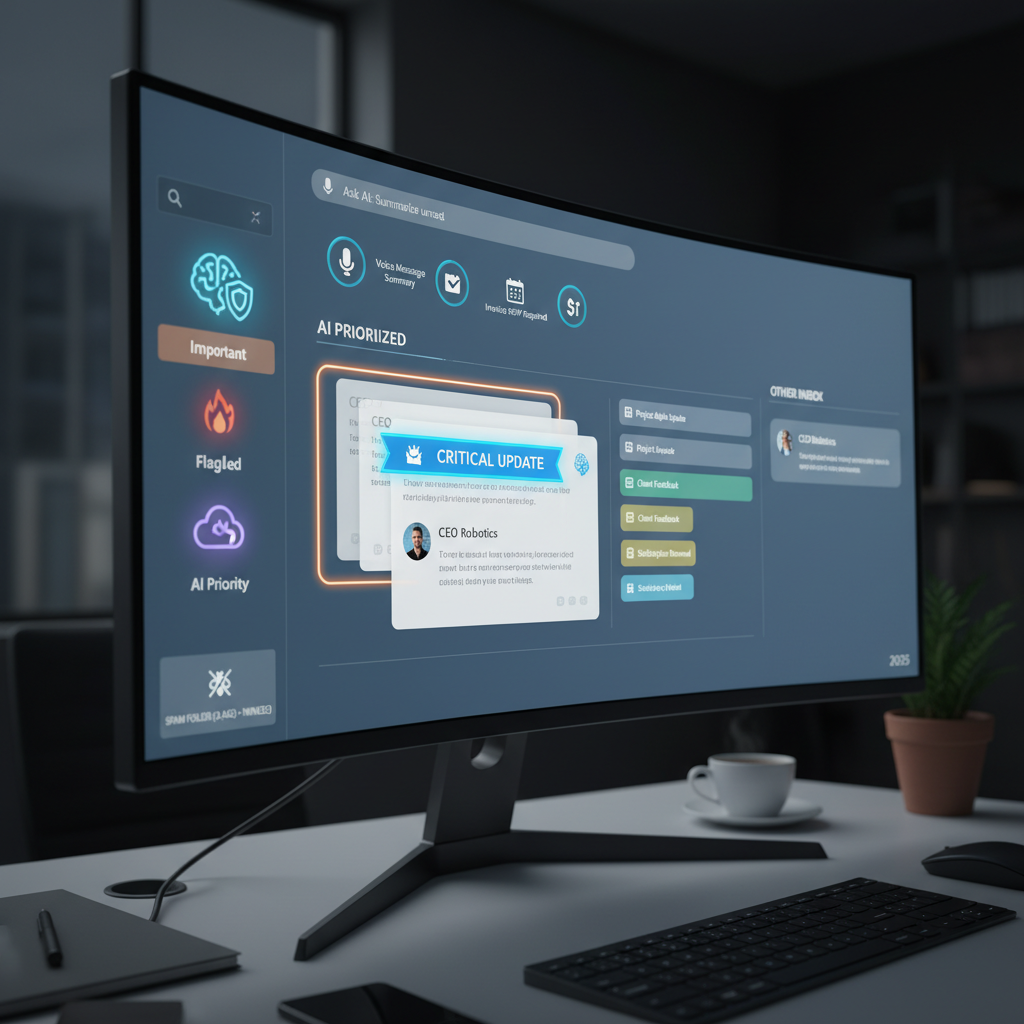
The next generation of AI will take a more proactive role in managing your inbox. Beyond summarizing threads, AI might automatically triage emails based on urgency and importance, not just keywords but actual content and sender history. It could automatically draft and send routine replies, schedule meetings based on availability and participant preferences directly from email conversations, and even integrate with other productivity tools to convert emails into tasks or project updates without manual intervention. Imagine an AI that identifies a meeting request in an email, cross-references your calendar, suggests a time, drafts a confirmation, and sends it – all with minimal human oversight.
Enhanced Multimodal Communication
Current AI email assistants primarily deal with text. The future will see a seamless integration of multimodal AI. This means the AI could analyze images, attached documents, or even audio/video snippets linked in an email to provide more comprehensive context for its suggestions. For example, if an email discusses a design review, the AI might be able to pull key points directly from an attached PDF or generate questions based on visual elements, creating more informed and holistic responses.
Advanced Emotional Intelligence and Nuance
While current AI struggles with true emotional intelligence, future developments will lead to more sophisticated sentiment analysis and emotional synthesis. AI will be better equipped to discern subtle emotional cues in incoming emails and assist in crafting responses that genuinely reflect empathy, excitement, or concern. This will be crucial for sensitive communications, conflict resolution, and building deeper human connections, allowing the AI to help you convey the right feeling, not just the right words.
Voice-Activated Email and Natural Language Interfaces
The integration of voice AI will become more prevalent. Instead of typing, users will be able to dictate emails, provide instructions, or request summaries using natural language commands. The AI will then transcribe, process, and format the email, making email composition even faster and more accessible. This hands-free approach will be particularly beneficial for mobile users or those who prefer voice interfaces.
Ethical AI and Trust Frameworks
As AI becomes more integral, there will be a greater emphasis on ethical AI development and robust trust frameworks. Future AI email assistants will likely come with built-in mechanisms for transparency regarding data usage, bias detection, and user control. Regulations and industry standards will evolve to ensure that these powerful tools are used responsibly, safeguarding privacy, preventing misuse, and maintaining user trust. Features like “AI-assisted” disclaimers could become standard for certain communications.
In essence, the future of AI in email communication is heading towards an intelligent, proactive, and deeply integrated ecosystem that not only assists in writing but fundamentally transforms how we interact with information and manage our digital lives. It promises an era where the inbox is no longer a source of stress but a highly efficient hub for meaningful and effective communication.
Comparison Tables
To help illustrate the differences and capabilities, here are two tables comparing features and popular AI email assistant tools.
Table 1: Key Features of AI Email Assistants
| Feature Category | Description | Benefit to User | Example Use Case |
|---|---|---|---|
| Email Drafting & Generation | Creates full email drafts from brief prompts or keywords. Leverages LLMs to generate coherent text. | Saves significant time on composing emails from scratch; overcomes writer’s block. | Quickly compose a client proposal or a project update from a few bullet points. |
| Tone & Style Adjustment | Analyzes current draft and suggests changes to alter the message’s emotional register (e.g., formal, friendly, urgent, empathetic). | Ensures messages are perceived as intended; improves clarity and professional image. | Refine a blunt internal memo to be more empathetic, or a casual note to be more formal for an executive. |
| Grammar & Spelling Correction | Identifies and corrects grammatical errors, spelling mistakes, punctuation issues, and suggests improvements in sentence structure. | Enhances professionalism, credibility, and clarity of written communication. | Eliminate typos and awkward phrasing in an important job application email or client communication. |
| Summarization | Condenses long email threads or documents into concise summaries, highlighting key points and action items. | Saves time by allowing quick understanding of complex discussions without reading every message. | Catch up on a lengthy project discussion thread in seconds before a meeting. |
| Smart Reply Suggestions | Generates context-aware, short reply options for incoming emails, often pre-populating with common phrases. | Speeds up response times for routine messages; helps clear the inbox faster. | Instantly send a “Thanks!” or “I’ll get back to you soon” to acknowledge an email. |
| Personalization & Learning | Learns from user’s writing style, vocabulary, and preferences over time to generate more customized suggestions. | Maintains consistent voice and branding; reduces need for manual edits. | AI learns to use specific industry jargon or company-specific phrases you prefer. |
| Multilingual Support | Allows users to compose emails in multiple languages or translate incoming messages. | Facilitates global communication; breaks down language barriers. | Communicate effectively with international clients or colleagues in their native language. |
Table 2: Comparison of Popular AI Email Assistant Tools (Illustrative Examples)
| Tool Name | Key Strength(s) | Integration | Primary Use Case | Example Feature Set | Pricing Model (General) |
|---|---|---|---|---|---|
| Grammarly Business/Premium | Comprehensive grammar, spelling, style, tone, and clarity suggestions; robust editing. | Browser extension, desktop app, MS Office, Gmail, Outlook. | General professional writing, academic writing, ensuring polished communication. | Advanced grammar, tone detection, conciseness, full sentence rewrites, plagiarism checker. | Freemium (basic), Subscription (Premium, Business). |
| Superhuman AI | Integrated AI for drafting, summarizing, and quick replies within a fast, minimalist email client. | Proprietary email client (Gmail/Outlook integration). | High-volume email users, executives, sales professionals seeking extreme efficiency. | AI-powered summary of threads, instant AI reply suggestions, compose new emails from prompts, ‘undo send’. | Subscription-based (premium). |
| Lavender Email Assistant | Focus on improving sales and outreach emails; real-time coaching for performance. | Browser extension (Gmail, Outlook, Salesloft, Outreach, etc.). | Sales development representatives (SDRs), B2B sales, cold outreach. | Personalization engine, email warmer, tone analysis, mobile preview, subject line checker, coaching metrics. | Freemium (limited), Subscription (Pro, Team). |
| Spark Mail (with AI) | Smart inbox management combined with AI writing tools for drafting and summarizing. | Dedicated email client (iOS, Android, Mac, Windows). | Individuals and teams seeking an all-in-one smart email client with AI features. | Smart Inbox, AI email drafting, AI email summarization, priority email grouping, send later. | Freemium, Subscription (Premium). |
| Copy.ai (Email specific templates) | AI-powered content generation for various marketing copy, including email campaigns. | Web-based tool; copy-paste functionality to email client. | Marketers, content creators, entrepreneurs needing to generate various email types quickly. | Numerous email templates (cold outreach, welcome, follow-up, newsletter), tone options, content generation. | Freemium (limited), Subscription (Pro, Enterprise). |
Note: This table provides illustrative examples and general characteristics. Features and pricing models are subject to change by providers. It is always recommended to check the latest information directly from the tool’s website.
Practical Examples and Real-World Scenarios
To truly understand the impact of AI email assistants, let’s explore several practical, real-world scenarios where these smart tools can make a significant difference in productivity and communication quality.
Scenario 1: The Sales Professional Crafting Cold Outreach Emails
Challenge: A sales development representative (SDR) needs to send dozens of personalized cold outreach emails daily. Each email requires research, custom messaging, and a compelling call to action, which is incredibly time-consuming. Generic templates often lead to low response rates.
AI Solution: The SDR uses an AI email assistant integrated with their CRM or sales engagement platform (like Lavender or a custom-trained AI). Instead of writing each email from scratch, they provide a few data points: the prospect’s company, their role, a recent achievement, and the product’s key benefit. The AI then drafts a highly personalized, compelling email with an engaging subject line, relevant intro, and clear call to action. The AI also analyzes the tone to ensure it’s confident but not aggressive, and suggests optimal send times based on prospect engagement data.
Outcome: The SDR can craft 3-4 times more personalized outreach emails in the same amount of time, leading to a significant increase in meetings booked and pipeline generated. The quality of the emails is higher, resulting in better open and response rates. The AI acts as a consistent coach, guiding the SDR to continually improve their outreach strategy.
Scenario 2: The Project Manager Managing Cross-Functional Communication
Challenge: A project manager is juggling multiple projects, communicating with diverse teams across different departments and time zones. Their inbox is constantly flooded with status updates, requests for information, and meeting discussions. Summarizing long email threads to brief an executive or catching up after a day of meetings is a major time drain.
AI Solution: The project manager utilizes an AI email assistant with summarization capabilities (like Superhuman or Spark AI) and intelligent drafting. When returning from a long meeting, they can instantly get a summary of new email threads related to their projects, highlighting key decisions and action items. When an executive asks for a quick project status, the PM provides a few bullet points to the AI: “Project X, Phase 2 complete, risks mitigated, next milestone presentation due Friday.” The AI drafts a concise, professional update email, summarizing the progress and confirming the next steps.
Outcome: The project manager stays informed without drowning in email details, quickly extracts critical information, and responds promptly to stakeholders. This reduces cognitive load, prevents communication bottlenecks, and allows them to focus more on strategic project oversight and less on administrative communication tasks.
Scenario 3: The Customer Support Agent Handling High Volume Inquiries
Challenge: A customer support agent receives hundreds of similar inquiries daily, ranging from refund requests to technical troubleshooting. While templates exist, many require slight customization, and agents need to maintain an empathetic yet professional tone under pressure.
AI Solution: The support agent uses an AI email assistant integrated with their helpdesk system. When a new ticket comes in, the AI analyzes the customer’s query and suggests 2-3 tailored response drafts based on common issues and existing knowledge base articles. The agent reviews, makes minor adjustments, and ensures the tone is appropriate (e.g., empathetic for a complaint, informative for a technical query). For complex issues involving long email chains, the AI summarizes the conversation history, allowing the agent to quickly grasp the issue without reading every message.
Outcome: Response times are drastically reduced, leading to higher customer satisfaction. Agents can handle a greater volume of inquiries without sacrificing quality or feeling overwhelmed. The AI helps maintain a consistent, professional, and empathetic brand voice, even during busy periods.
Scenario 4: The Entrepreneur Juggling Multiple Roles
Challenge: An entrepreneur running a startup wears many hats – sales, marketing, operations, and HR. Crafting clear and compelling emails for diverse purposes (investor updates, hiring outreach, marketing campaigns) consumes valuable time that could be spent on core business development.
AI Solution: The entrepreneur leverages an AI email assistant with robust drafting capabilities and personalization. For an investor update, they provide the AI with key metrics and achievements, and the AI drafts a polished, professional email. For a hiring outreach, the AI generates a customized message for potential candidates based on their LinkedIn profiles. For marketing, the AI helps brainstorm engaging subject lines and call-to-action phrases for newsletter campaigns.
Outcome: The entrepreneur can maintain high-quality communication across all facets of their business without hiring additional staff or sacrificing precious time. The AI ensures professionalism, consistency, and effectiveness in all their email interactions, allowing them to focus on strategic growth.
These examples highlight how AI email assistants are not just theoretical tools but practical solutions that address real-world communication challenges, empowering individuals and organizations to operate with greater efficiency and impact.
Frequently Asked Questions
Q: What exactly is an AI Email Assistant, and how does it differ from traditional email tools?
A: An AI Email Assistant is a software tool that uses artificial intelligence, particularly natural language processing (NLP) and large language models (LLMs), to help you manage, write, and optimize your email communications. Unlike traditional email tools that primarily focus on sending, receiving, and basic organization (like folders or simple search), AI assistants actively participate in the *creation* and *refinement* of your messages. They can draft full emails from minimal prompts, adjust the tone of your writing, summarize long threads, suggest quick replies, and provide advanced grammar and style corrections. Traditional tools help you manage emails; AI assistants help you master writing them.
Q: How secure are AI Email Assistants with my sensitive information?
A: The security of your data is a critical concern when using AI email assistants. Reputable providers prioritize data privacy and employ robust security measures, including encryption (both in transit and at rest), strict access controls, and compliance with international data protection regulations like GDPR or CCPA. However, it is paramount for users to research and understand the specific privacy policy of any tool they consider. Look for transparency regarding how your data is collected, stored, processed, and whether it’s used for AI model training. While many services offer enterprise-grade security, always exercise caution with highly confidential information and choose providers with a strong track record of data protection.
Q: Can AI Email Assistants truly replicate my personal writing style?
A: Modern AI Email Assistants, especially those powered by advanced LLMs, are highly capable of learning and adapting to your personal writing style over time. By analyzing your past emails and communication patterns, they can generate content that mimics your preferred vocabulary, sentence structures, and overall voice. This personalization ensures that AI-generated drafts sound authentic and genuinely reflect your unique identity, rather than appearing generic. However, a final human review is always recommended to infuse true nuance and ensure the message perfectly aligns with your specific intent and emotional context, as AI still lacks genuine human empathy.
Q: Are AI Email Assistants only for professionals, or can individuals benefit too?
A: While AI Email Assistants are incredibly beneficial for professionals dealing with high email volumes and complex communication needs, they are equally valuable for individuals. Anyone who sends emails regularly—whether for job applications, academic correspondence, community engagement, or personal organizing—can benefit. Students can use them for essay outlines or formal university emails, job seekers for cover letters, and anyone needing to write clearer, more impactful messages. The tools help save time, reduce stress, and improve the quality of any written communication, making them universally useful.
Q: What are the main limitations or drawbacks of using an AI Email Assistant?
A: Despite their advantages, AI email assistants have limitations. They can sometimes misinterpret complex context, lack genuine emotional intelligence, and may generate text that requires significant human editing to sound truly authentic or to avoid unintended biases present in their training data. Over-reliance can also diminish personal writing skills. There are also concerns about data privacy and security, as you are entrusting sensitive information to a third-party service. Finally, the cost of advanced features can be a barrier for some users. It is crucial to view AI as an assistant, not a replacement, and to always review and personalize its output.
Q: How do AI Email Assistants handle different tones and formality levels?
A: A key feature of many AI Email Assistants is their ability to handle and adjust different tones and formality levels. You can often instruct the AI to make your email more “formal,” “friendly,” “urgent,” “empathetic,” “professional,” or “concise.” The AI analyzes the linguistic elements, word choice, and sentence structure to achieve the desired effect. This capability is invaluable for communicating effectively across diverse audiences and situations, ensuring your message is always appropriately perceived. For instance, it can transform a blunt internal message into a more diplomatic one for a client or executive.
Q: Can AI Email Assistants help with multilingual communication?
A: Yes, many advanced AI Email Assistants offer robust multilingual support. This means they can help you compose emails in various languages, often with a high degree of fluency and grammatical correctness. Some tools can also translate incoming messages, allowing you to understand and respond to emails from international contacts without needing a separate translation service. This feature significantly breaks down language barriers, making global communication much more efficient and accessible for businesses and individuals alike.
Q: Is it ethical to use AI to write emails, especially in professional contexts?
A: The ethics of using AI to write emails largely depend on how it’s used and the context. For tasks like drafting routine messages, summarizing long threads, or correcting grammar, it’s generally considered ethical as it enhances efficiency and clarity. However, ethical concerns arise when AI is used to mislead, misrepresent, or depersonalize communication. Transparency is key; if an email requires a personal touch, it’s essential to review and infuse your own voice. Using AI to generate purely fake or manipulative content is unethical. In professional contexts, using AI to improve productivity is widely accepted, but always ensure the final message reflects your true intent and maintains integrity.
Q: How do I choose the best AI Email Assistant for my specific needs?
A: Choosing the best AI Email Assistant involves evaluating several factors: your primary email client (for seamless integration), the specific features you need (e.g., drafting, summarization, tone adjustment), the quality and accuracy of the AI’s output (test with free trials), ease of use, customization options, the provider’s data privacy policies, and your budget. Consider if you need a general writing assistant, a specialized tool for sales, or an all-in-one smart inbox. Prioritize tools that address your biggest pain points and align with your existing workflow and security requirements.
Q: What are some practical examples of how an AI Email Assistant can save time daily?
A: AI Email Assistants offer numerous daily time-saving benefits:
- Drafting: Quickly generate a meeting invitation or project update in seconds by providing a few keywords, saving 10-15 minutes per email.
- Replying: Use smart reply suggestions for common queries, cutting response time from minutes to seconds.
- Summarizing: Get a concise overview of a long email thread instantly, saving 5-10 minutes of reading.
- Proofreading: Automatically catch grammar and spelling errors, preventing embarrassing mistakes and saving time on manual review.
- Tone Adjustment: Ensure your message is perfectly pitched with a single click, avoiding rewrites and potential misunderstandings.
Collectively, these small gains add up to significant time savings throughout the day, allowing you to focus on more strategic tasks.
Key Takeaways
- AI Email Assistants are Transformative: They leverage advanced AI (NLP, LLMs) to fundamentally change how we interact with email, moving beyond basic management to active content creation and optimization.
- Multifaceted Capabilities: Key features include intelligent drafting, tone adjustment, grammar correction, summarization, smart replies, personalization, and multilingual support, addressing various communication needs.
- Boosts Productivity and Quality: Benefits span significant time savings, enhanced communication quality, reduced cognitive load, improved consistency, faster response times, and increased accessibility for all users.
- Strategic Tool for All: While powerful for professionals and businesses (sales, project management, customer support), these tools also offer substantial value to individuals for everyday communication.
- Careful Selection is Crucial: When choosing a tool, prioritize integration with your existing email client, essential features, AI accuracy, ease of use, customization, pricing, and critically, robust security and privacy policies.
- Best Practices Ensure Success: Integrate gradually, use AI as an assistant (not a replacement), provide clear prompts, leverage context, customize, review output, and remain mindful of data privacy.
- Awareness of Challenges is Essential: Be mindful of potential issues like data privacy risks, over-reliance leading to loss of human touch, inherent AI biases, and occasional contextual misunderstandings.
- Future is Even More Intelligent: The evolution points towards hyper-personalization, predictive communication, proactive inbox management, multimodal integration, enhanced emotional intelligence, and stronger ethical frameworks.
- Ultimately, Human Oversight Remains Key: Despite AI’s prowess, the human element of critical review, personalization, and ensuring ethical communication remains indispensable for impactful and authentic messaging.
Conclusion
The relentless tide of digital communication has long made the email inbox a daunting frontier, a place where productivity often goes to wither under the weight of ceaseless demands. For years, the quest for inbox mastery felt like an uphill battle, requiring immense mental energy, meticulous attention to detail, and a significant portion of our precious working hours. However, the advent of AI Email Assistants has profoundly shifted this paradigm, offering a powerful, intelligent ally in our daily communication struggles.
As we have explored throughout this comprehensive guide, these smart writing tools are far more than mere conveniences. They represent a fundamental leap in how we approach email, empowering us with capabilities that were once the exclusive domain of dedicated personal assistants or skilled copywriters. From instantly drafting nuanced messages to perfectly tuning the tone, from effortlessly summarizing complex threads to ensuring every word is grammatically pristine, AI email assistants free us from the mundane mechanics of writing, allowing us to focus on the strategic intent and human connection behind every message. They are reclaiming lost time, sharpening our communication quality, and significantly reducing the cognitive burden that email once imposed.
Embracing AI in your email workflow is not about surrendering your voice or your judgment; it is about augmenting them. It is about leveraging cutting-edge technology to become a more efficient, articulate, and impactful communicator. By choosing the right tool, integrating it thoughtfully, and maintaining a discerning human touch, you can transform your inbox from a source of stress into a powerful engine of productivity. The future of communication is here, and with AI Email Assistants, mastering your inbox is no longer a distant dream, but an achievable reality, propelling you towards greater efficiency and success in every aspect of your professional and personal life.











































































Leave a Reply