


In an increasingly fast-paced digital world, the quest for enhanced productivity and streamlined workflows is perpetual. We are constantly searching for tools and strategies that can help us reclaim time, reduce mental load, and amplify our creative output. Enter the powerful synergy of artificial intelligence and advanced browser technology: specifically, ChatGPT integrated seamlessly with the Atlas Browser.
This comprehensive guide dives deep into the ‘Beyond search’ paradigm, exploring creative and transformative ways to leverage ChatGPT’s AI capabilities directly within your Atlas Browser for a multitude of daily tasks. Forget merely searching for information; imagine an intelligent assistant anticipating your needs, drafting your communications, summarizing complex articles, and even generating creative content—all within the familiar environment of your preferred browser. For users of the Atlas Browser, known for its focus on speed, privacy, and customizable workspaces, this integration offers a unique and powerful avenue to redefine personal and professional efficiency.
We will uncover the secrets to mastering your daily workflow, transforming tedious routines into automated efficiencies. From email management to content creation, from complex research to simple brainstorming, you will discover how to harness AI as a genuine partner. Prepare to unlock a new level of productivity and innovation that will not only save you time but also empower you to achieve more than you ever thought possible. Let us embark on this journey to elevate your digital experience and master the art of AI-powered workflow automation.
The Atlas Browser Advantage: A Perfect Canvas for AI Integration
Before we delve into the specifics of ChatGPT integration, it is crucial to understand why the Atlas Browser stands out as an ideal environment for this kind of advanced AI-powered workflow. The modern browser is no longer just a window to the internet; it is a central hub for work, communication, and learning. For AI to truly augment our daily tasks, it needs a browser that is not only robust but also intelligent in its design and highly adaptable.
The Atlas Browser, often praised for its minimalist design combined with powerful underlying technology, offers several inherent advantages. Its emphasis on speed ensures that AI-generated content or interactions are delivered swiftly, without lag, maintaining the flow of your work. Privacy features mean that while you are interacting with AI, your browsing data remains secure, a critical consideration in today’s digital landscape. Furthermore, Atlas Browser’s customizable workspaces and tab management functionalities create a structured environment where you can dedicate specific windows or tabs to AI interactions without cluttering your main work area. This architectural simplicity and power make it a prime candidate for hosting a truly transformative AI assistant.
Why Atlas Browser? Understanding its Unique Features for AI Synergy
- Optimized Performance: Atlas is built for speed and efficiency, ensuring that running ChatGPT in a tab or a dedicated pane does not bog down your system. Quick loading times for AI responses are crucial for a fluid workflow.
- Streamlined Interface: A clean, uncluttered interface means less visual distraction, allowing you to focus on the AI’s output and your tasks without unnecessary chrome. This simplicity enhances clarity when parsing AI-generated text.
- Advanced Tab Management: Features like tab groups, vertical tabs, or workspaces (depending on the specific Atlas version/features) enable you to keep your ChatGPT interface readily accessible alongside your primary work tabs, without losing context.
- Privacy and Security Focus: A strong commitment to user privacy provides a secure sandbox for your AI interactions, especially when dealing with sensitive information that you might process or analyze with ChatGPT.
- Potential for Extension Integration (or Future): While direct, deeply integrated AI functionality might be nascent, Atlas Browser’s foundation is usually open to extensions or side panels. This means conceptualizing custom integrations or using existing web-based AI tools within its framework is efficient.
- Resource Efficiency: Unlike some heavier browsers, Atlas is designed to be lightweight, meaning your system’s resources are primarily dedicated to your work and AI processes, not the browser itself.
By understanding these inherent strengths, Atlas users can appreciate how their browser is not just a passive viewer of the internet, but an active participant in an AI-augmented workflow. It is the solid ground upon which we can build highly efficient and intelligent daily routines.
Setting Up Your AI-Powered Workflow: Initial Steps with ChatGPT and Atlas
Embarking on your AI-powered workflow journey requires a thoughtful setup. The goal is to integrate ChatGPT so seamlessly into your Atlas Browser experience that it feels like an organic extension of your own thought process. This involves understanding basic prompt engineering and configuring your browser for optimal AI interaction.
First and foremost, ensure you have access to ChatGPT. This typically means having an account on OpenAI’s platform, and for more advanced features, potentially a ChatGPT Plus subscription or access to the API. While the web interface is excellent for direct interaction, some users might find utility in browser extensions that offer quick access or even specific features (though these would run within Atlas, not be native to it in a unique way to Atlas over other browsers). For the purposes of a truly integrated workflow, keeping ChatGPT open in a dedicated tab, a split-screen view, or a side panel within Atlas is often the most effective approach.
Configuring Atlas for Optimal ChatGPT Interaction
- Dedicated Workspace/Tab Group: Create a specific workspace or tab group in Atlas labeled “AI Assistant” or “ChatGPT Hub.” This keeps your AI interface organized and easily accessible without interfering with other open tasks.
- Split-Screen View (if supported): Many modern browsers, including potentially Atlas, offer split-screen functionalities. Utilize this to have your primary task (e.g., an article you are reading, an email you are composing) on one side and ChatGPT on the other, facilitating real-time interaction and content transfer.
- Pinning the ChatGPT Tab: Pin the ChatGPT tab within your designated workspace. This ensures it is always open and in a fixed position, ready for immediate use.
- Custom Shortcuts: If Atlas allows for custom keyboard shortcuts for specific tabs or workspaces, configure one for your ChatGPT hub. Speed is key to effective automation.
- Defaulting to ChatGPT: Consider setting a new tab or specific startup page to directly open your ChatGPT interface if your workflow heavily relies on it from the outset of your browsing session.
Mastering Basic Prompt Engineering for Daily Tasks
The efficacy of ChatGPT hinges on the quality of your prompts. Think of prompt engineering as giving clear, concise instructions to a highly intelligent but literal assistant. Here are fundamental principles:
- Be Specific and Contextual: Instead of “write an email,” try “Write a polite follow-up email to John about the Q3 report, summarizing key findings and requesting his feedback by end of day Friday.”
- Define the Role: Tell ChatGPT what role it should adopt. “Act as a professional content marketer,” or “You are a seasoned academic researcher.” This helps tailor the tone and style.
- Specify Output Format: Request specific formats. “Generate a bulleted list,” “Provide a summary in three paragraphs,” “Create a table with two columns.”
- Set Constraints and Length: “Keep it under 150 words,” “Focus only on positive aspects,” “Exclude technical jargon.”
- Provide Examples: If you have a specific style in mind, provide an example. “Draft a tweet like this: [example tweet].”
- Iterate and Refine: Do not expect perfection on the first try. Use follow-up prompts like “Make it more formal,” “Shorten it,” “Expand on point number two.”
By meticulously setting up your Atlas Browser and honing your prompt engineering skills, you lay the groundwork for a truly transformative daily workflow. The investment of time here will yield significant returns in productivity and efficiency.
Beyond Search: Creative Daily Tasks Transformed by ChatGPT in Atlas
The true power of ChatGPT within Atlas Browser emerges when we move beyond conventional search queries and start leveraging its generative and analytical capabilities for actual task execution. Here, we explore several real-world scenarios where ChatGPT can become an indispensable part of your daily routine.
1. Streamlining Communication and Email Management
Email overload and the pressure to craft perfect messages can be draining. ChatGPT in Atlas can revolutionize your communication strategy.
- Drafting Emails and Replies: Open your email client in one Atlas tab, and ChatGPT in another. Provide ChatGPT with the context, purpose, tone, and key points for an email. It can generate professional drafts, follow-ups, or even apologies in moments. For instance, “Draft a professional email to reschedule a meeting with client XYZ for next Tuesday at 10 AM, explaining a prior commitment unexpectedly arose. Apologize for the inconvenience.”
- Summarizing Long Threads: Copy-paste a lengthy email thread into ChatGPT and ask for a concise summary of decisions made, action items, and key stakeholders. This is invaluable for quickly catching up or preparing for meetings.
- Tone Adjustment: Need to soften a stern message or make a casual note more formal? ChatGPT can rephrase your text to fit the desired tone, ensuring effective and appropriate communication.
- Translating Communications: Seamlessly translate emails or messages between languages, enabling global communication without leaving your browser.
2. Supercharging Content Creation and Curation
Whether you are a professional content creator, a student working on a project, or someone who simply needs to write coherent text, ChatGPT is a game-changer.
- Brainstorming Ideas and Outlines: Stuck for ideas for a blog post or presentation? Ask ChatGPT to generate topic ideas, subheadings, or even a full outline based on a keyword or theme. For example, “Generate 10 blog post ideas about sustainable living for urban dwellers, focusing on actionable tips.”
- Drafting and Expanding Content: Provide a few bullet points or a short paragraph, and ChatGPT can expand it into a full article, social media post, or script. It can also help overcome writer’s block by providing initial drafts.
- Repurposing Content: Transform a long-form blog post into a series of social media captions, a short video script, or a concise executive summary.
- Grammar and Style Correction: Beyond basic spell check, ChatGPT can improve sentence structure, vocabulary, and overall readability of your content.
- Keyword Integration: If you are working on SEO-driven content, provide your target keywords, and ChatGPT can help integrate them naturally into your text.
3. Enhancing Learning and Research Efficiency
Students, academics, and lifelong learners can drastically improve their research and study habits.
- Summarizing Articles and Papers: Open a research paper or a lengthy news article in one Atlas tab, copy its content (or key sections), and paste it into ChatGPT with a request like, “Summarize this article, highlighting the main argument and key findings, in under 200 words.”
- Explaining Complex Concepts: Struggling with a difficult topic? Ask ChatGPT for a simplified explanation, analogies, or examples. “Explain quantum entanglement to a high school student.”
- Generating Study Questions: After reading a chapter or lecture notes, provide the text to ChatGPT and ask it to generate potential exam questions or discussion prompts.
- Fact Extraction: Quickly pull out specific facts, figures, dates, or definitions from large bodies of text.
- Literature Review Assistance: While not a replacement for deep analysis, ChatGPT can help categorize research themes, identify gaps (if prompted with existing literature), or suggest related sub-topics for exploration.
4. Personal Productivity and Task Management
Beyond professional tasks, ChatGPT can act as a personal assistant within Atlas to manage your daily life.
- To-Do List Generation and Prioritization: Input your upcoming tasks, meetings, and deadlines. Ask ChatGPT to generate a prioritized to-do list, perhaps broken down by day or category. “Given my meetings tomorrow at 9 AM, 1 PM, and 4 PM, and tasks A, B, C, D, E, create a prioritized schedule for my day.”
- Idea Generation for Personal Projects: Need ideas for a weekend project, a gift, or a travel itinerary? ChatGPT can brainstorm creative suggestions based on your preferences.
- Reminder and Notification Text: Generate polite and clear reminder messages for colleagues or family members regarding shared tasks or events.
- Simple Budgeting Help: While not a spreadsheet, ChatGPT can offer advice on budgeting based on income and expenses you input, or generate a basic spending plan outline.
5. Data Analysis and Quick Insights Generation
For individuals dealing with text-based data, ChatGPT can offer quick analytical support.
- Sentiment Analysis: Copy-paste customer reviews, social media comments, or feedback forms into ChatGPT and ask it to perform a sentiment analysis (“Is the overall sentiment positive, negative, or neutral? Identify key themes.”).
- Pattern Recognition in Text: If you have a collection of unstructured text data, ChatGPT can help identify recurring patterns, keywords, or emerging topics.
- Summarizing Survey Responses: For open-ended survey questions, feed the responses to ChatGPT for thematic summaries and key takeaways.
- Basic Report Generation: Based on provided data points (even if textual), ChatGPT can draft simple explanatory paragraphs or summary reports.
6. Brainstorming and Idea Generation
Whether you are a creative professional or just need fresh perspectives for a personal problem, ChatGPT is an excellent ideation partner.
- Product Naming and Taglines: Input details about a product or service, and ask for catchy names or compelling taglines.
- Problem-Solving Scenarios: Describe a problem you are facing (e.g., “How can I reduce my daily commute time?”), and ChatGPT can offer a range of potential solutions and considerations.
- Creative Writing Prompts: For writers, poets, or hobbyists, ChatGPT can generate unique story prompts, character descriptions, or plot twists.
- Marketing Campaign Ideas: Develop innovative campaign concepts, target audience profiles, or messaging strategies for a product launch.
By integrating these AI-powered capabilities directly into your Atlas Browser workflow, you are not just automating tasks; you are fundamentally changing the way you interact with information and execute your responsibilities, leading to unparalleled efficiency and creative freedom.
Advanced Automation Techniques: Integrating ChatGPT with Atlas Browser Capabilities (Conceptual)
While direct, deep API-level automation of ChatGPT within Atlas Browser might require custom development or dedicated extensions, users can already leverage Atlas’s existing features and a touch of manual dexterity to create advanced, pseudo-automated workflows. The goal is to minimize copy-pasting and maximize contextual awareness.
Imagine a future where AI is not just in a separate tab but intelligently integrated with the very fabric of your browsing experience. With Atlas Browser’s emphasis on customization and efficiency, even without a specific ‘ChatGPT extension’ for Atlas (unless one exists and is popular), we can simulate and anticipate advanced automation techniques.
Leveraging Atlas Browser’s Native Features for Smarter AI Interaction
- Side Panels and Split View Enhancements: If Atlas supports a configurable side panel or a persistent split-screen view, dedicate one pane to ChatGPT. This allows for constant, unobtrusive AI access. You can then drag-and-drop text snippets from your main browsing window directly into the ChatGPT pane, or use context-menu options to “Send to ChatGPT” if a simple browser extension were developed.
- Contextual Prompt Engineering with Clipboard History: Modern operating systems and some browser tools offer advanced clipboard history. Instead of repeatedly copying and pasting, use a clipboard manager to quickly recall previous text segments and combine them with new prompts for ChatGPT, all within the Atlas environment.
- Custom Search Engine Shortcuts: While ChatGPT is not a search engine, you can configure custom search engine shortcuts in Atlas. For example, a shortcut like “ai” followed by your query could, conceptually, open a new tab with your query pre-populated into the ChatGPT interface (if a specific URL structure or extension allowed this).
- User Scripts and Bookmarklets: For technically inclined users, custom JavaScript bookmarklets can be created. These small scripts, saved as bookmarks, can perform actions on the current page, like extracting selected text and then opening a new ChatGPT tab with that text pre-populated for summarization or analysis. This mimics a lightweight automation.
- Workflow Templates with Custom Instructions: Within ChatGPT itself, utilize the “Custom Instructions” feature. This allows ChatGPT to remember your preferences, role, or preferred output style across conversations. For instance, you can tell it to “Always summarize in bullet points, using a formal tone, and highlight action items,” reducing the need for repetitive prompting.
- Leveraging ChatGPT’s API (Advanced User Setup): For power users, the ChatGPT API offers much deeper integration potential. While this requires coding knowledge, one could create a local application or script that takes input from the clipboard (triggered by a hotkey) and sends it to the ChatGPT API, displaying the output in a notification or even populating a field in your Atlas Browser. This moves beyond browser-only capabilities but demonstrates the ultimate potential.
The key here is to think creatively about how Atlas Browser’s efficiency tools—its speed, its tab management, its potential for custom scripting (via bookmarklets), and its overall customizable nature—can be combined with ChatGPT’s power. The less friction between your thought process, the information you are working with, and the AI’s assistance, the more truly ‘automated’ your workflow becomes. The future likely holds even more seamless integrations, but even today, users can build remarkably efficient systems.
Overcoming Challenges and Best Practices for AI Workflow
While the promise of AI automation is immense, integrating ChatGPT into your daily workflow with Atlas Browser is not without its nuances and potential pitfalls. Awareness and strategic planning are crucial to harness its power effectively and ethically.
Common Challenges and How to Address Them
- AI Hallucinations and Inaccuracy: ChatGPT, especially older versions, can sometimes generate factually incorrect information or “hallucinate.”
Best Practice: Always fact-check critical information generated by ChatGPT, particularly for sensitive or public-facing content. Use it as a powerful draft generator or idea source, not a definitive authority without verification.
- Data Privacy and Security Concerns: Inputting sensitive personal or proprietary information into a public AI model can pose risks.
Best Practice: Exercise extreme caution. Avoid sharing confidential data. Utilize enterprise-level AI solutions if your organization requires higher security, or restrict your prompts to non-sensitive information. Be aware of OpenAI’s data usage policies.
- Over-Reliance and Skill Erosion: Constantly relying on AI for tasks like writing or critical thinking might diminish your own skills over time.
Best Practice: Use ChatGPT as an augmentation tool, not a replacement. Engage in critical review of its output. Understand the underlying concepts it explains, rather than just accepting its summaries. View it as a powerful assistant that frees you for higher-level thinking, not as a shortcut to avoid learning.
- Prompt Engineering Learning Curve: Getting optimal results requires learning how to ask the right questions in the right way.
Best Practice: Invest time in understanding prompt engineering principles. Experiment with different phrasings, roles, and formats. There are many online resources and communities dedicated to mastering this skill. The more specific and contextual you are, the better the output.
- Context Window Limitations: Older ChatGPT models had limitations on how much text they could process in a single prompt or conversation, potentially leading to truncated or out-of-context responses.
Best Practice: For very long documents, break them into smaller, manageable chunks. Utilize the latest models (like GPT-4 Turbo) with larger context windows when available, as they can handle significantly more information.
General Best Practices for Sustainable AI Workflow
- Define Clear Objectives: Before engaging ChatGPT, have a clear idea of what you want to achieve. A well-defined goal leads to a more effective prompt and a more useful output.
- Iterate and Refine: Treat ChatGPT as an iterative partner. Its first response is rarely its best. Refine your prompts based on its output, asking for adjustments, expansions, or alternative perspectives.
- Maintain Human Oversight: Always keep a human in the loop. AI is a tool to empower you, not to take over completely. Your judgment, creativity, and ethical compass remain paramount.
- Stay Updated: The field of AI is evolving rapidly. Keep abreast of new ChatGPT features, model updates, and best practices. Follow AI news and tutorials to continuously improve your workflow.
- Integrate Gradually: Do not try to automate everything at once. Start with a few simple, high-frequency tasks where ChatGPT can provide immediate value, and then gradually expand your AI-powered workflows.
- Protect Your Privacy: While Atlas Browser offers security features, your interaction with ChatGPT itself (as an external service) requires discretion. Avoid submitting highly confidential information unless using a secure, private instance of the AI.
By approaching AI integration with a mindful and strategic perspective, you can navigate these challenges and unlock the full potential of ChatGPT within your Atlas Browser, transforming your daily tasks into a highly efficient and intelligently augmented experience.
Future Prospects: The Evolving Synergy of AI and Browser Technology
The current integration of ChatGPT with Atlas Browser, as powerful as it is, represents merely the nascent stages of what is possible. The future holds immense potential for an even more deeply intertwined relationship between advanced AI and browser technology, promising a truly intelligent and intuitive digital experience. As both AI models and browser capabilities continue to evolve at a rapid pace, we can anticipate a future where our daily workflows are not just augmented, but fundamentally transformed.
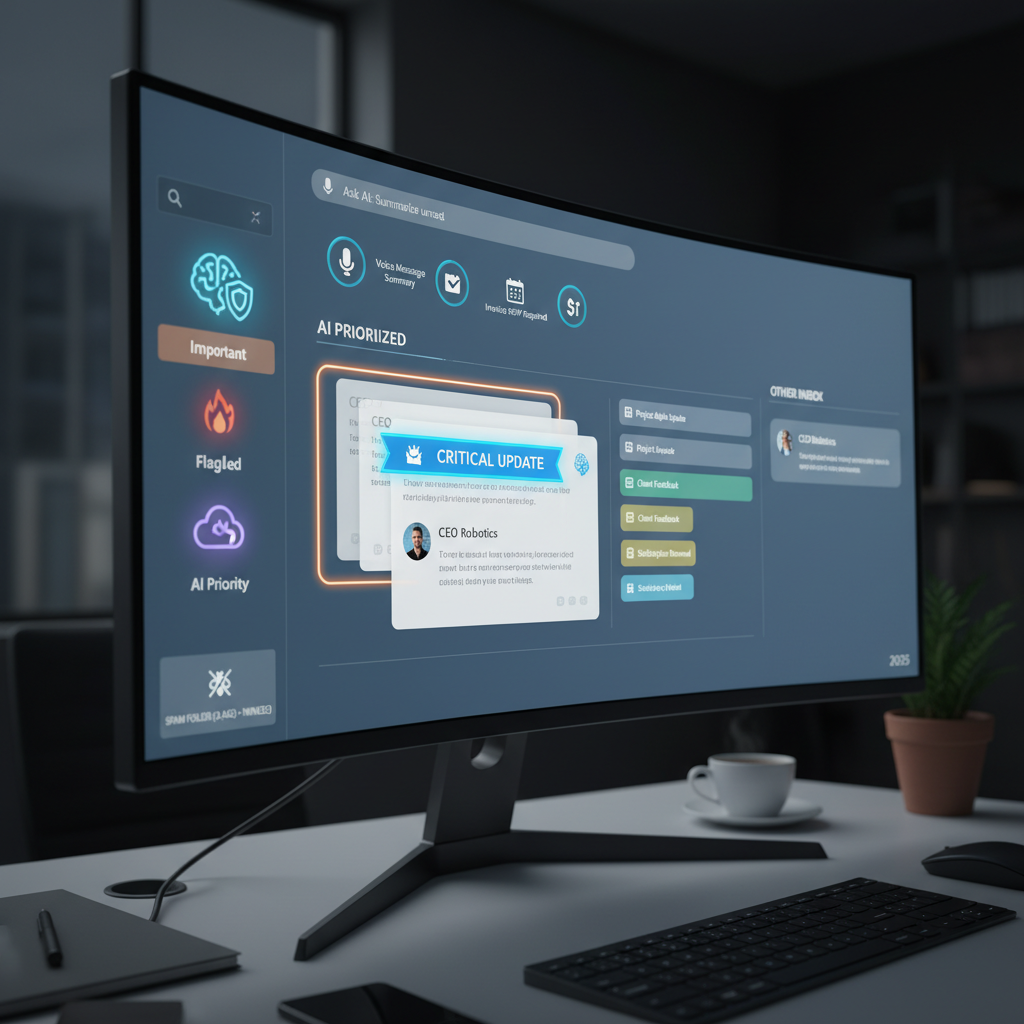
One of the most exciting prospects is the development of natively integrated AI agents within browsers. Imagine Atlas Browser not just hosting a ChatGPT tab, but having an AI assistant that understands your browsing context across all tabs. This agent could proactively offer summaries of open articles, suggest related research materials from your history, draft emails based on ongoing conversations, or even pre-fill forms based on your preferences, all without explicit prompting. Such an agent would learn from your habits and preferences, becoming a truly personalized digital concierge.
Furthermore, advancements in AI models will lead to more nuanced understanding and generation. Future iterations of ChatGPT (or similar models) will likely possess even greater contextual awareness, reducing hallucinations and providing more reliable, fact-checked information. This means less need for manual verification and greater trust in AI-generated content for critical tasks. The ability to integrate with diverse data sources, beyond just text, will also become more prevalent, allowing AI to analyze images, videos, and complex datasets directly within the browser environment.
The synergy will also extend to hyper-personalized browsing experiences. Your Atlas Browser, powered by AI, could dynamically adapt its interface, content suggestions, and even ad filtering based on your current task, mood, and long-term goals. Learning assistants embedded in the browser could identify knowledge gaps as you read and proactively provide supplementary explanations or quizzes. For professionals, project management tools could integrate directly with browser-based AI to automatically update task statuses, generate reports, or assign follow-ups based on communication within your browser.
Ethical considerations and robust privacy protections will also be paramount in this future. As AI becomes more pervasive, the development of transparent, explainable AI models and strong data governance will be crucial. Atlas Browser, with its current focus on privacy, is well-positioned to lead in providing secure environments for these advanced AI integrations, ensuring user control over data and AI interactions. The conversation around ethical AI deployment will shape how these powerful tools are integrated, always prioritizing user benefit and digital well-being.
In essence, the future points towards a browser that is not just a portal to information, but an intelligent, proactive partner that anticipates your needs, streamlines your tasks, and amplifies your capabilities across every digital interaction. The journey of mastering daily workflow with ChatGPT in Atlas Browser is just the beginning of this exciting evolution, paving the way for unprecedented levels of productivity and innovation.
Comparative Analysis: Traditional vs. AI-Augmented Workflow in Atlas Browser
To truly appreciate the transformation offered by integrating ChatGPT into your Atlas Browser workflow, it is useful to compare traditional methods with their AI-augmented counterparts. This table highlights how AI can significantly improve efficiency, quality, and speed across various common tasks.
| Aspect | Traditional Workflow (Manual in Atlas Browser) | AI-Augmented Workflow (ChatGPT in Atlas Browser) |
|---|---|---|
| Email Drafting | Requires significant time for composition, grammar check, and tone adjustment. Iteration is manual and slow. | Quick generation of drafts, tone adjustment, summaries, and translation with simple prompts. Faster, more consistent output. |
| Research & Summarization | Manually reading through articles, taking notes, identifying key points. Time-consuming and prone to human error. | Instantly summarizes long articles, extracts key data, explains complex concepts, and generates study questions. Highly efficient. |
| Content Generation | Brainstorming from scratch, writing full drafts, editing for flow and grammar. Can lead to writer’s block. | Rapid idea generation, outlines, first drafts, content expansion, and repurposing. Overcomes writer’s block, boosts creativity. |
| Data Analysis (Textual) | Manually sifting through feedback, reviews, or reports to find patterns, sentiment, or key themes. Labor-intensive. | Automated sentiment analysis, pattern identification, and thematic summaries of large text datasets. Quick insights. |
| Task Management | Creating to-do lists, prioritizing tasks, breaking down projects, and setting reminders manually. | Generates prioritized task lists, breaks down complex projects into actionable steps, drafts reminders, and schedules. Supports organization. |
| Meeting Preparation | Reviewing past notes, emails, and documents to prepare talking points or agendas. | Summarizes previous meeting minutes, drafts agendas, generates discussion points, and identifies action items from communication. Streamlines prep. |
| Learning New Concepts | Reading textbooks, searching for multiple explanations, trying to grasp difficult ideas. | Provides simplified explanations, analogies, examples, and Q&A to accelerate understanding and retention. Personalized learning. |
This comparison clearly illustrates how AI, particularly ChatGPT, can augment nearly every facet of our digital lives, turning time-consuming manual tasks into efficient, AI-assisted processes directly within the Atlas Browser.
Evaluating AI Model Capabilities for Specific Workflow Needs in Atlas
The effectiveness of your AI-powered workflow with ChatGPT in Atlas Browser also depends on understanding the capabilities of different AI models or key features within the ChatGPT ecosystem. This table helps delineate which aspects of ChatGPT are best suited for particular types of tasks, allowing you to optimize your prompts and expectations.
| AI Model/Capability (ChatGPT Focus) | Strengths for Workflow Integration in Atlas | Best Use Case in Atlas Browser | Considerations/Limitations |
|---|---|---|---|
| GPT-3.5 (Standard Access) | Fast response times, good for basic text generation, summarization, and quick questions. Economical for API use. | Quick email replies, simple content ideation, basic summarization of short articles, grammar checks. | Shorter context window, can be less accurate for complex tasks, may lack deep reasoning for nuanced requests. |
| GPT-4 Turbo (Plus Subscription/API) | Advanced reasoning, significantly larger context window (up to 128k tokens), enhanced instruction following, superior code generation and analysis. | Complex content creation (long articles, reports), in-depth research summarization, data interpretation (from text), complex problem-solving, detailed explanations. | Slightly slower response times compared to GPT-3.5, higher cost for API access. |
| Custom Instructions (User-Defined) | Allows ChatGPT to remember user preferences, roles, and output styles across conversations, enhancing consistency. | Maintaining specific brand voice for content, consistent email formality, always summarizing in bullet points, setting a default persona (e.g., ‘academic assistant’). | Requires initial setup and careful definition of instructions, needs to be updated if preferences change. |
| Code Interpreter/Advanced Data Analysis (Plus Subscription) | Ability to execute Python code, handle data uploads, perform complex mathematical calculations, and create charts. | Analyzing textual data from tables (copied from web pages), generating reports from numerical data (e.g., website analytics copied to text), creating simple visualizations. | Limited to data that can be copied/pasted into the interface or uploaded as files; requires understanding of data input. |
| Plugins/Browse with Bing (Plus Subscription) | Extends ChatGPT’s capabilities by allowing it to interact with external services or browse the internet in real-time. | Accessing up-to-date information for research (e.g., current news, live stats), booking appointments (if applicable plugin), complex travel planning, fetching real-time product comparisons. | Plugin availability and reliability, potential for slower responses due to external calls, requires careful prompt selection for plugin use. |
By judiciously selecting the appropriate ChatGPT model or feature for your specific task, Atlas Browser users can maximize their efficiency and the quality of AI-generated output, moving closer to a truly automated and intelligent workflow.
Real-World Workflow Transformations: Practical Examples
To ground these concepts in tangible outcomes, let us explore a few practical scenarios showcasing how Atlas Browser users can leverage ChatGPT to revolutionize specific daily workflows. These case studies highlight the versatility and power of this AI-browser synergy.
Case Study 1: The Content Marketer’s AI Assistant
User: Sarah, a content marketer, needs to publish 3 blog posts, 10 social media updates, and a monthly newsletter. Her main challenges are ideation, overcoming writer’s block, and ensuring consistent brand voice across platforms.
Atlas Browser Setup: Sarah uses Atlas Browser’s tab groups, with one group dedicated to “Content Creation” (including her CMS, social media scheduler, and email marketing platform) and another group specifically for “AI Assistant” with her ChatGPT tab pinned.
Workflow Transformation:
- Ideation: Sarah opens her “AI Assistant” tab and prompts ChatGPT: “Act as a content strategist for a sustainable living brand. Generate 5 unique blog post topics and 10 related social media post ideas for June, focusing on zero-waste tips.”
- Drafting Blog Posts: She selects a blog topic, then prompts: “Expand on the topic ‘DIY Home Composting for Urban Dwellers’ into a 800-word blog post outline, including an intro, 3 main sections with actionable steps, and a conclusion. Incorporate SEO keywords: ‘urban composting’, ‘zero waste’, ‘eco-friendly gardening’.” ChatGPT quickly provides a detailed outline. Sarah then feeds the outline back to ChatGPT section by section, asking it to draft content for each, which she then refines.
- Social Media Updates: Using the previously generated social media ideas, she prompts: “For the ‘Zero-Waste Kitchen Hacks’ social media idea, draft 3 engaging Instagram captions (under 100 words each) with relevant emojis and hashtags, appealing to eco-conscious millennials.” She copy-pastes these directly into her social media scheduler.
- Newsletter Content: Sarah needs to summarize her top 3 blog posts for the monthly newsletter. She copies the main points of each post into ChatGPT and asks: “Summarize these three blog posts into concise, engaging paragraphs (50 words each) for a monthly newsletter, encouraging click-throughs.”
Outcome: Sarah significantly reduces her content generation time by 40%, overcomes writer’s block consistently, and maintains a more consistent brand voice with less effort, allowing her to focus on strategy and engagement analysis.
Case Study 2: The Student’s Research Accelerator
User: Alex, a university student, needs to write an essay on “The Impact of Climate Change on Coastal Ecosystems.” His challenges include sifting through vast amounts of academic papers, understanding complex terminology, and structuring his arguments effectively.
Atlas Browser Setup: Alex utilizes Atlas Browser’s split-screen feature. On one side, he has his university’s academic database or JSTOR; on the other, his ChatGPT tab. He also uses a dedicated Atlas workspace for essay writing, keeping his word processor and reference manager accessible.
Workflow Transformation:
- Summarizing Research Papers: Alex finds a lengthy PDF article. He copies a key section (or the abstract and conclusion) into ChatGPT, prompting: “Summarize this academic paper’s main arguments and findings regarding climate change’s impact on coral reefs, in 250 words, suitable for an undergraduate essay.” This helps him quickly ascertain relevance.
- Explaining Concepts: While reading, he encounters terms like “ocean acidification” or “eutrophication.” He highlights the term in his research tab, copies it, and pastes into ChatGPT: “Explain ‘ocean acidification’ in simple terms, providing a relevant example of its impact on marine life.”
- Structuring the Essay: After gathering several summaries, Alex pastes his essay prompt and some key points into ChatGPT: “Given the essay question ‘Discuss the multifaceted impacts of climate change on coastal ecosystems,’ create a detailed essay outline with an introduction, 3 body paragraphs each focusing on a different impact (e.g., sea-level rise, ocean acidification, extreme weather), and a conclusion. Suggest potential arguments for each section.”
- Generating Study Questions: After finishing his draft, Alex feeds sections of his essay back into ChatGPT, asking: “Based on this paragraph about mangrove ecosystems, generate 3 potential short-answer exam questions.”
Outcome: Alex reduces his research and comprehension time by 30%, gains a clearer understanding of complex topics, and produces a more well-structured essay. This allows him to focus more on critical analysis and original thought.
Case Study 3: The Project Manager’s Daily Digest
User: Maria, a project manager, is overwhelmed by daily communications, task updates, and the need to provide succinct reports to her team and stakeholders. She struggles to synthesize information quickly and efficiently.
Atlas Browser Setup: Maria uses Atlas Browser’s tab pinning for her project management software (e.g., Asana, Trello), her team’s communication platform (e.g., Slack, Microsoft Teams), and her ChatGPT tab, all within a “Project Management” workspace.
Workflow Transformation:
- Daily Stand-up Preparation: Before her morning stand-up, Maria opens her communication platform in Atlas, copies the previous day’s team updates from her chat channels. She pastes these into ChatGPT: “Summarize yesterday’s team updates from these messages, highlighting key progress, blockers, and urgent items for today’s stand-up. Format as a bulleted list.”
- Drafting Stakeholder Updates: At the end of the week, Maria needs to send a concise progress report. She gathers key milestones from her project management tool and her AI-summarized daily updates. She then prompts ChatGPT: “Draft a weekly progress report for stakeholders on Project Alpha. Key achievements this week include [list points]. Key upcoming milestones are [list points]. No major blockers. Keep it under 200 words, professional tone.”
- Task Breakdown for New Projects: When a new project is assigned, Maria inputs the project brief into ChatGPT: “Break down the ‘Website Redesign Project’ into its main phases and suggest 5-7 actionable tasks for each phase, suitable for a sprint backlog.” She then reviews and inputs these directly into her project management software.
- Generating Meeting Minutes/Action Items: During a meeting, Maria quickly types bullet points of discussion. Afterwards, she feeds these points to ChatGPT: “Based on these meeting notes [her bullet points], generate clear action items with owners and deadlines. Also, identify any key decisions made.”
Outcome: Maria saves significant time (up to 25%) on administrative and communication tasks. Her reports become more concise and consistent, leading to clearer communication with her team and stakeholders, and she can allocate more time to strategic project oversight.
Frequently Asked Questions
Q: What is Atlas Browser and why is it particularly suitable for ChatGPT integration?
A: Atlas Browser is a modern web browser often recognized for its lightweight design, speed, focus on user privacy, and efficient tab management features (like tab grouping or workspaces). Its suitability for ChatGPT integration stems from these characteristics. Its performance ensures AI responses are rendered quickly without slowing your system, its clean interface minimizes distractions, and its robust tab management allows you to keep ChatGPT accessible in a dedicated pane or tab group alongside your work. This creates a highly organized and fluid environment for AI-augmented workflows, enhancing productivity by reducing friction.
Q: Do I need a special version of ChatGPT for this?
A: No, you do not need a special version of ChatGPT. The standard web interface of ChatGPT (either the free version or a ChatGPT Plus subscription for advanced models like GPT-4 Turbo) works perfectly within Atlas Browser. For users interested in conceptual deeper integrations, access to the OpenAI API (which requires an API key and typically involves some coding knowledge) would offer more advanced automation possibilities, but the core workflow relies on the web interface.
Q: Is my data safe when using ChatGPT for workflow tasks in Atlas Browser?
A: Atlas Browser itself prioritizes user privacy and security. However, when you input information into ChatGPT, that data is processed by OpenAI’s systems. It is crucial to be aware of OpenAI’s data usage policies. Generally, you should avoid inputting highly confidential, sensitive, or proprietary information into public AI models. For enterprise-level privacy, specific secure AI solutions or private deployments might be necessary. Always exercise caution and discretion with the information you share with any AI.
Q: What are the main benefits of integrating ChatGPT into my Atlas Browser workflow?
A: The main benefits include significantly enhanced productivity through task automation (e.g., email drafting, summarization, content creation), reduced mental load by offloading repetitive tasks, improved quality of output (e.g., better grammar, consistent tone), faster learning and research, and an overall more efficient and creative digital experience. It transforms your browser from a content viewer into an intelligent assistant hub.
Q: How can I improve the quality of ChatGPT’s responses for my specific tasks?
A: The key to improving response quality is mastering prompt engineering. Be specific and provide ample context, define the role you want ChatGPT to adopt (e.g., “Act as a marketing expert”), specify the desired output format (e.g., “bulleted list,” “formal email”), and set constraints (e.g., “under 200 words”). Do not hesitate to iterate and refine your prompts based on initial responses. The more precise your instructions, the better the output will be.
Q: Can ChatGPT help with real-time web browsing information within Atlas?
A: Standard ChatGPT models do not have real-time access to the internet. However, ChatGPT Plus subscribers have access to features like “Browse with Bing” or various plugins. When activated, these allow ChatGPT to access current web information, search the internet, and interact with specific web services directly. This capability significantly enhances its utility for tasks requiring up-to-date data, such as market research or current event summaries, and operates seamlessly within your Atlas Browser tab.
Q: Are there any costs associated with using ChatGPT for workflow automation?
A: OpenAI offers a free tier for ChatGPT, which provides access to GPT-3.5 and is sufficient for many basic workflow tasks. For advanced features, access to more powerful models like GPT-4 Turbo, and capabilities like “Browse with Bing” or plugins, a ChatGPT Plus subscription is required (a monthly fee). For API access (for custom automation), costs are usage-based, depending on the volume of tokens processed.
Q: What are the limitations or potential downsides of relying on AI for daily tasks?
A: Limitations include the potential for AI “hallucinations” (generating inaccurate information), data privacy concerns if sensitive information is shared, the risk of over-reliance leading to skill erosion, and the need for continuous human oversight to ensure accuracy and ethical use. AI should be viewed as an augmentation tool, not a complete replacement for human judgment and critical thinking.
Q: Can I use ChatGPT to automate actions within Atlas Browser, like clicking buttons or filling forms?
A: Directly, no. ChatGPT’s web interface is for generating text responses based on your prompts. It cannot directly control your browser to click buttons, fill forms, or perform other interactive actions. While advanced users might combine ChatGPT API with browser automation tools (like Puppeteer or Selenium) or custom browser extensions (if Atlas supports them and such extensions were developed), this goes beyond the scope of simply using the ChatGPT web interface within Atlas Browser.
Q: How do I get started with implementing these AI workflow secrets in Atlas Browser?
A: Begin by creating an OpenAI account and familiarizing yourself with ChatGPT. Then, configure your Atlas Browser by dedicating a workspace or pinned tab for ChatGPT. Start with simple tasks, like drafting an email or summarizing a short article, focusing on clear and specific prompts. Gradually expand to more complex tasks, iterate on your prompts, and consistently review the AI’s output. The key is to start small, experiment, and integrate AI progressively into your existing routines.
Key Takeaways for Mastering Your AI-Powered Workflow
Embracing ChatGPT within your Atlas Browser is a transformative step towards unparalleled productivity. Here are the core takeaways to guide your journey:
- Atlas Browser’s Advantages: Its speed, privacy features, and robust tab/workspace management make it an ideal platform for integrating AI into your daily tasks, providing a fluid and efficient environment.
- Beyond Search Capabilities: ChatGPT’s true power lies in its ability to generate, summarize, analyze, and brainstorm, moving past simple information retrieval to active task execution.
- Strategic Setup is Crucial: Optimize your Atlas Browser with dedicated workspaces, pinned tabs, and custom shortcuts for ChatGPT to ensure easy and consistent access, minimizing friction in your workflow.
- Master Prompt Engineering: The quality of AI output directly correlates with the clarity and specificity of your prompts. Invest time in learning how to communicate effectively with ChatGPT by defining roles, contexts, and desired formats.
- Diverse Application: ChatGPT can revolutionize a wide array of daily tasks, including email management, content creation, research, learning, personal productivity, and quick data analysis.
- Leverage Advanced Features: Utilize ChatGPT Plus features like GPT-4 Turbo, Custom Instructions, Code Interpreter, and Browse with Bing to unlock higher levels of accuracy, context, and real-time information access.
- Human Oversight is Paramount: Always fact-check AI-generated information, protect sensitive data, and maintain your own critical thinking skills. ChatGPT is an assistant, not a replacement for human judgment.
- Iterate and Adapt: The AI landscape is rapidly evolving. Be prepared to refine your prompts, explore new features, and adapt your workflow as AI models improve and new capabilities emerge.
- Start Small, Grow Big: Begin by integrating ChatGPT into a few high-frequency, low-risk tasks, and gradually expand its role in your workflow as you become more proficient and confident in its capabilities.
- Embrace the Future of Work: This synergy between AI and browser technology is not a fad; it is the future of digital productivity, empowering you to achieve more with less effort and unlock new creative potentials.
Conclusion: Your Journey to Unprecedented Productivity Begins Now
The journey to mastering your daily workflow with ChatGPT AI automation secrets for Atlas Browser users is not just about adopting a new tool; it is about embracing a new paradigm of productivity. We have explored how the inherent strengths of Atlas Browser—its speed, privacy, and customizable workspaces—create a perfect environment for harnessing the generative power of ChatGPT. From streamlining mundane communications to supercharging creative endeavors, and from accelerating research to optimizing personal task management, the possibilities are vast and transformative.
By moving beyond the traditional ‘search’ function and leveraging AI as an active, intelligent partner, you are not merely saving time; you are freeing up cognitive resources for higher-level thinking, creativity, and strategic planning. The practical examples and detailed guides provided herein offer a clear roadmap to integrate this powerful synergy into your own daily routines, ensuring you can navigate the complexities of modern digital life with unprecedented efficiency and ease.
Remember, the key to success lies in a thoughtful setup, continuous learning in prompt engineering, and a balanced approach that leverages AI’s strengths while maintaining human oversight. The digital landscape is constantly evolving, and by staying attuned to advancements in AI and browser technology, you position yourself at the forefront of productivity innovation.
Your journey to an AI-augmented workflow in Atlas Browser begins now. Embrace these secrets, experiment with their application, and prepare to unlock a level of productivity and creative freedom you may have only dreamed of. The future of work is here, and with ChatGPT in Atlas, you are perfectly equipped to master it.













































































Leave a Reply