

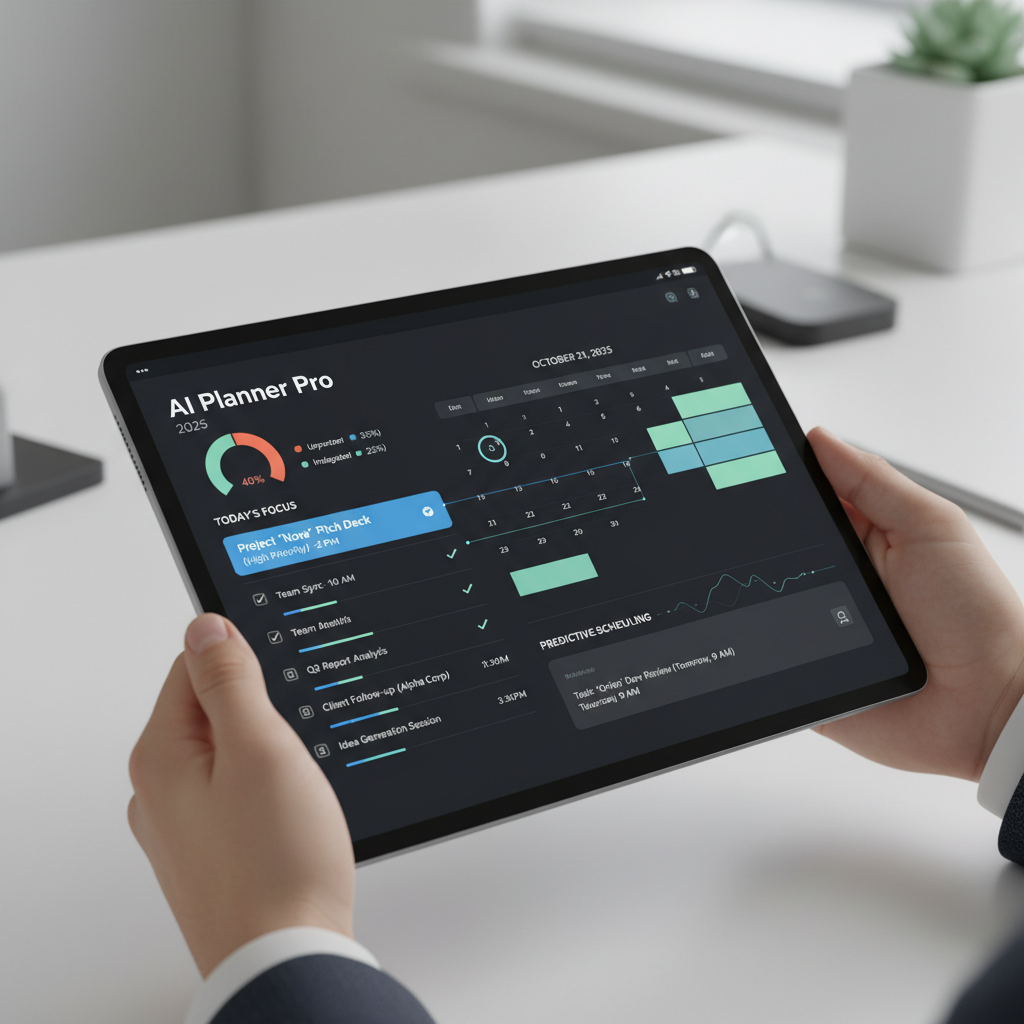
In a world teeming with distractions and ever-growing to-do lists, the siren song of procrastination has never been louder. We all know the feeling: that crucial task looming, while our attention drifts to social media, an inbox notification, or the sudden urge to reorganize our desk. For too long, the battle against procrastination has been a lonely, often losing fight, fought with sheer willpower and generic productivity hacks. But what if there was a smarter, more personalized way to cultivate unwavering focus? What if an intelligent companion could not only help us manage our time but also understand our behavioral patterns, gently nudging us towards productivity, and strategically shielding us from distractions?
Welcome to the era of AI-powered planning, where the future of productivity isn’t just about static calendars and rigid task lists, but about dynamic, adaptive systems that learn from you, predict your needs, and actively assist you in building unstoppable daily focus. This blog post delves deep into how artificial intelligence is fundamentally transforming our approach to daily schedules, offering a powerful antidote to procrastination and paving the way for a more productive, fulfilling existence. We will explore the mechanisms, benefits, and practical applications of these revolutionary tools, providing you with a comprehensive understanding of how to harness AI to reclaim your time and achieve your goals.
The Persistent Shadow of Procrastination: Why We Struggle
Before we can appreciate the revolutionary potential of AI, it is crucial to understand the multifaceted nature of procrastination itself. It is not merely laziness; it is a complex psychological phenomenon rooted in various cognitive biases, emotional responses, and environmental factors. For centuries, humans have grappled with the tendency to postpone tasks, often despite knowing the negative consequences.
Understanding the Roots of Delay
Procrastination often stems from several deep-seated psychological triggers. One major factor is the “present bias”, where we prioritize immediate gratification over future rewards. The pleasure of avoiding a difficult task now often outweighs the future pain of a looming deadline. Another significant contributor is fear – fear of failure, fear of success, fear of the unknown, or even fear of being judged. When a task feels overwhelming, ambiguous, or lacks clear steps, our brains instinctively seek comfort in avoidance.
Furthermore, a lack of self-regulation and impulse control plays a substantial role. When faced with a challenging task, our emotional regulation system might prompt us to switch to something less demanding to alleviate immediate discomfort. This short-term emotional relief reinforces the procrastination habit, making it harder to break free. Tasks perceived as boring, unpleasant, or lacking personal meaning are also prime targets for delay. Without intrinsic motivation, the extrinsic pressure of a deadline often feels insufficient until it reaches a critical point.
The Modern Distraction Epidemic
Compounding these inherent human tendencies is the relentless assault of the modern digital landscape. Our smartphones, computers, and myriad applications are designed to capture and hold our attention, creating an environment ripe for distraction. Notifications, social media feeds, endless content streams, and the constant pull of connectivity fragment our focus and erode our ability to concentrate for extended periods. This constant context-switching not only reduces productivity but also trains our brains to seek novelty and immediate reward, further exacerbating the procrastination cycle.
The sheer volume of information and choices we face daily also contributes to decision fatigue. From deciding what to eat to prioritizing work tasks, every decision, no matter how small, depletes our mental energy. When our cognitive resources are low, we are more likely to defer difficult choices or tasks, opting for easier, less demanding activities instead. This combination of deep-seated psychological tendencies and an increasingly distracting digital world makes breaking free from procrastination a formidable challenge, one that traditional planning methods often fail to adequately address.
How AI-Powered Planners Revolutionize Your Daily Schedule
Traditional planners, whether paper-based or digital, offer a static framework: a place to list tasks, set reminders, and block out time. While useful, they lack the dynamic intelligence to truly adapt to our unpredictable lives, our fluctuating energy levels, or our unique working styles. This is where AI-powered planners step in, transforming passive tools into active partners in productivity.
Beyond the Static To-Do List: The AI Difference
Unlike conventional planners that rely entirely on manual input and rigid adherence, AI-powered systems employ sophisticated algorithms to understand your workflow, learning from your past behaviors, preferences, and even your current cognitive state. They move beyond simple task listing to offer proactive suggestions, smart scheduling, and personalized nudges. Imagine a planner that knows when you are most productive for creative work versus administrative tasks, or one that automatically reshuffles your schedule when an urgent meeting crops up, minimizing disruption and helping you stay on track. This level of dynamic adaptation is the hallmark of AI integration.
These intelligent planners leverage machine learning to analyze vast amounts of data, including how long tasks typically take you, when you tend to respond best to certain types of work, and even external factors like weather patterns or traffic that might impact your commute and thus your schedule. This data-driven approach allows for far more accurate predictions and recommendations than any human could consistently provide. The result is a planning system that feels less like a chore and more like a wise, invisible assistant, constantly optimizing your day for peak performance and minimal stress.
Personalized Planning: AI as Your Digital Productivity Coach
One of the most profound impacts of AI in planning is its ability to offer unparalleled personalization. Traditional advice often provides generalized strategies – “eat the frog,” “the Pomodoro Technique” – which may or may not suit an individual’s unique brain chemistry or daily circumstances. AI, however, functions as a highly attuned digital productivity coach, observing your habits and tailoring strategies specifically for you.
For instance, an AI planner might notice that you consistently complete deep work tasks most effectively between 9 AM and 11 AM, but struggle with emails after 3 PM. It will then intelligently schedule your most demanding tasks during your peak productivity windows and suggest lighter, less mentally taxing activities for your low-energy periods. It can identify patterns in your procrastination – perhaps you always put off tasks related to a specific project, or tasks requiring a certain skill. Based on these observations, the AI can then recommend tailored interventions, such as breaking down large tasks into smaller, less intimidating steps, or pairing an undesirable task with a more enjoyable one to create a positive association. This goes beyond simple organization; it delves into behavioral psychology, offering a bespoke approach to overcoming your unique procrastination triggers and cultivating sustainable focus. The goal is not just to get things done, but to foster a healthy, productive relationship with your work and your time.
Core Features of AI-Powered Planning for Unstoppable Focus
The intelligence embedded within these modern planning tools manifests in several powerful features, each designed to dismantle procrastination and fortify your focus.
Intelligent Task Prioritization and Dynamic Rescheduling
- Smart Prioritization: AI algorithms can automatically prioritize tasks not just by due date, but by importance, estimated effort, dependencies, and even your personal energy levels. Utilizing techniques like Eisenhower Matrix principles or critical path analysis, the AI can highlight what truly matters, ensuring you are always working on the most impactful items first.
- Dynamic Rescheduling: Life is unpredictable. When an unexpected meeting arises or a task takes longer than anticipated, AI planners don’t just let your schedule crumble. They intelligently re-evaluate your remaining tasks, find the optimal slots, and adjust your calendar automatically, often suggesting the best times to move tasks without causing a cascade of missed deadlines. This minimizes the mental load of constant manual re-organization, a major cause of frustration and subsequent procrastination.
Predictive Analytics and Time Blocking
AI leverages your historical data to predict how long tasks will take you, improving the accuracy of your scheduling. If you consistently underestimate the time for writing reports, the AI learns this and adjusts future estimates. This proactive insight helps you create more realistic schedules, preventing the feeling of being constantly behind, which can be a significant demotivator. Combined with intelligent time blocking, where the AI suggests specific time slots for specific tasks based on your peak productivity times and existing commitments, it creates a structured yet flexible framework for your day. It ensures that crucial work gets dedicated, uninterrupted blocks of time, protecting you from context switching and deep work erosion.
Habit Building and Goal Reinforcement
Cultivating good habits is foundational to overcoming procrastination. AI planners can assist in this by:
- Habit Tracking and Reminders: Beyond simple reminders, AI can learn the optimal time and context to prompt you for your habits, increasing adherence. It might suggest “Review your daily goals” when you first open your laptop, or “Go for a walk” during a natural break in your schedule.
- Progress Visualization: By visualizing your streaks and progress towards larger goals, AI tools provide positive reinforcement, leveraging gamification principles to make habit-forming more engaging and less like a chore. Seeing tangible progress is a powerful antidote to the discouragement that often leads to procrastination.
- Goal Breakdown and Integration: Large goals can feel daunting. AI can help break down ambitious objectives into smaller, actionable steps and integrate these steps directly into your daily schedule, making the path forward clear and manageable.
Distraction Management and Focus Modes
Recognizing the pervasive nature of digital distractions, some AI planners incorporate features designed to create an environment conducive to deep work:
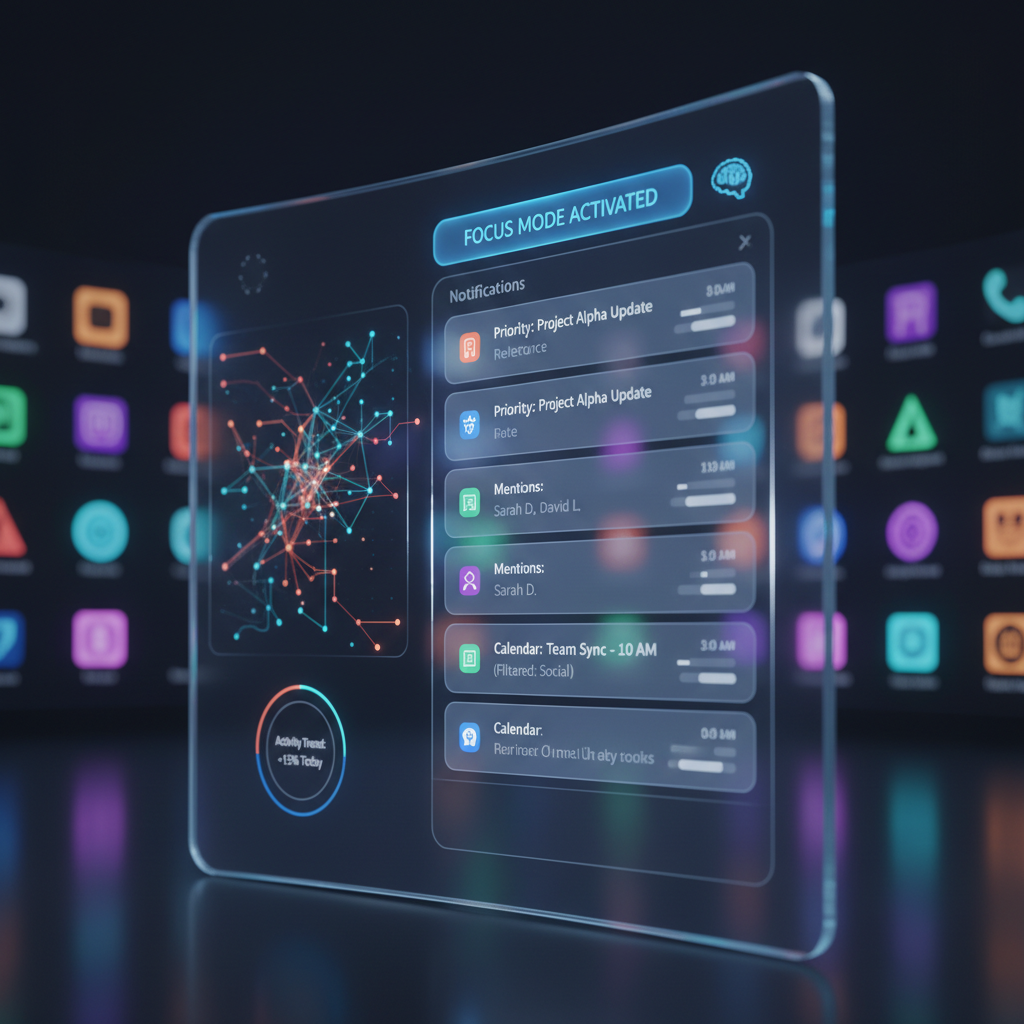
- Smart Notifications: Instead of continuous alerts, AI can group notifications or deliver them at less disruptive times, protecting your focus blocks.
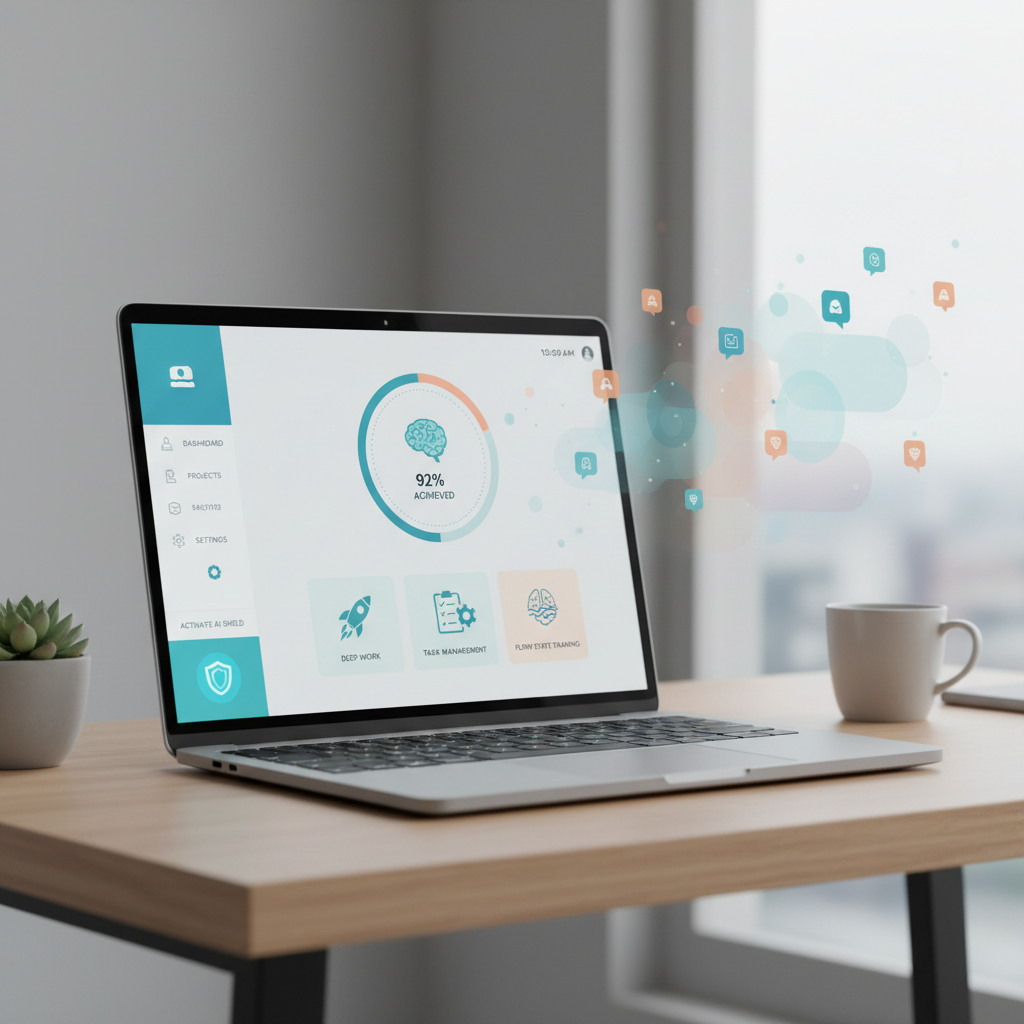
- Focus Modes: These features can automatically silence non-essential notifications, block access to distracting websites or apps, and even integrate with smart devices to create a conducive physical environment (e.g., dimming lights, playing focus music). The AI can activate these modes automatically based on your scheduled deep work sessions, reducing the willpower required to resist distractions.
The Science Behind AI’s Effectiveness in Combating Procrastination
The power of AI in productivity isn’t magic; it’s rooted in leveraging psychological principles and cognitive science to optimize human behavior. By understanding how our brains work, AI tools can create environments and systems that naturally steer us away from procrastination and towards sustained focus.
Leveraging Behavioral Economics
AI planners often incorporate principles from behavioral economics, which studies the effects of psychological, cognitive, emotional, cultural, and social factors on the economic decisions of individuals and institutions. Key applications include:
- Nudge Theory: Instead of forced compliance, AI provides gentle “nudges” or suggestions that guide users towards better decisions. For example, instead of just reminding you about a task, it might suggest, “Completing this 30-minute task now will give you a clear hour before your next meeting.” This frames the action in terms of immediate benefit, aligning with our present bias. It can also use social proof by showing anonymized data on how others are managing similar tasks.
- Commitment Devices: Some AI tools can act as digital commitment devices. By making your goals and task commitments visible (even if only to yourself within the app) or by requiring you to explicitly confirm a task schedule, they increase your psychological commitment to follow through. The AI can then hold you accountable, tracking adherence and providing feedback, reinforcing positive behaviors.
- Loss Aversion: While not universally implemented, some advanced systems could potentially leverage loss aversion by framing delays in terms of lost opportunities or future effort, subtly encouraging timely action. For instance, “Delaying this project will require an extra 2 hours of work on Friday.”
Minimizing Decision Fatigue
Every decision, from the trivial to the significant, consumes mental energy. This phenomenon, known as decision fatigue, is a major contributor to procrastination. When our decision-making capacity is depleted, we tend to:
- Avoid Decisions: We simply put off making choices, including starting difficult tasks.
- Make Impulsive Decisions: We opt for the easiest path, which often means engaging in distracting activities.
AI addresses decision fatigue by automating and optimizing many of the daily choices related to task management:
- Automated Prioritization: Instead of you having to constantly re-evaluate what’s most important, the AI does it for you, presenting a clear, prioritized list.
- Smart Scheduling: The AI proposes optimal times for tasks, reducing the need for you to weigh options and juggle your calendar. It takes into account your preferences, deadlines, and estimated task durations, presenting a streamlined schedule rather than a blank canvas.
- Pre-emptive Problem Solving: By dynamically rescheduling around unforeseen events, AI prevents the cascade of micro-decisions and re-planning that would otherwise exhaust your mental reserves.
By offloading these cognitive burdens to AI, users conserve their mental energy for the actual execution of tasks, making it easier to start, sustain focus, and resist the urge to procrastinate. The more decisions an AI can intelligently handle, the more mental bandwidth a user has for truly productive work.
Integrating AI into Your Workflow: Best Practices
Adopting an AI-powered planner isn’t just about downloading an app; it’s about integrating a new approach into your daily routine. To maximize its benefits and truly break free from procrastination, consider these best practices.
Starting Small and Iterating
Do not try to overhaul your entire system overnight. Begin by introducing the AI planner for a specific type of task or a segment of your day. For instance, you might first use it solely for managing your personal to-do list, or for scheduling deep work blocks related to a single project. As you become more comfortable and the AI begins to learn your patterns, gradually expand its role. Pay attention to what works and what doesn’t, and be prepared to adjust your approach. AI tools are adaptive, but they also require a period of learning and fine-tuning from your end. Provide accurate feedback when prompted by the AI (e.g., if a task took longer or shorter than estimated) to help it refine its predictions.
Leveraging Integrations for a Seamless Experience
The true power of modern AI planners often lies in their ability to integrate with other tools you already use. Look for planners that connect with your:
- Calendar (Google Calendar, Outlook Calendar): This is crucial for reflecting your real-world availability and ensuring AI-scheduled tasks don’t conflict with existing appointments.
- Email Client (Gmail, Outlook): Some AI tools can process emails, turning actionable messages into tasks and scheduling them automatically.
- Project Management Software (Asana, Trello, Jira): Syncing with these tools can pull project tasks into your daily planner, ensuring that project objectives are integrated into your personal workflow.
- Note-taking Apps (Evernote, Notion): AI can help schedule time to review notes or act on ideas captured in these apps.
Seamless integration reduces manual data entry and ensures that your AI planner has a holistic view of your commitments and responsibilities, leading to more accurate scheduling and fewer missed tasks.
The Importance of Regular Review and Adaptation
An AI planner is a dynamic system, not a set-it-and-forget-it solution. Regularly reviewing your schedule and task completion rates is essential.
- Daily Check-ins: Start your day by reviewing the AI-generated schedule, making any minor manual adjustments needed for that specific day.
- Weekly Reviews: At the end of each week, analyze your performance. Did the AI accurately predict task durations? Were you able to stick to your focus blocks? What recurring distractions did you face? Use these insights to refine your settings, provide more data to the AI, or adjust your personal habits.
- Provide Feedback: Many AI tools prompt for feedback on task completion and estimates. Actively engage with these prompts to help the algorithms learn and improve their recommendations for you over time.
Your life and work demands evolve, and so should your AI-powered planning strategy. By actively participating in this feedback loop, you empower the AI to become an increasingly effective and indispensable tool in your quest for unstoppable daily focus.
Future Trends: What’s Next for AI in Productivity?
The current generation of AI-powered planners is already impressive, but the field is rapidly evolving. We can anticipate even more sophisticated and integrated solutions that further blur the lines between personal assistant, productivity coach, and wellness manager.
Hyper-Personalized Adaptive Learning
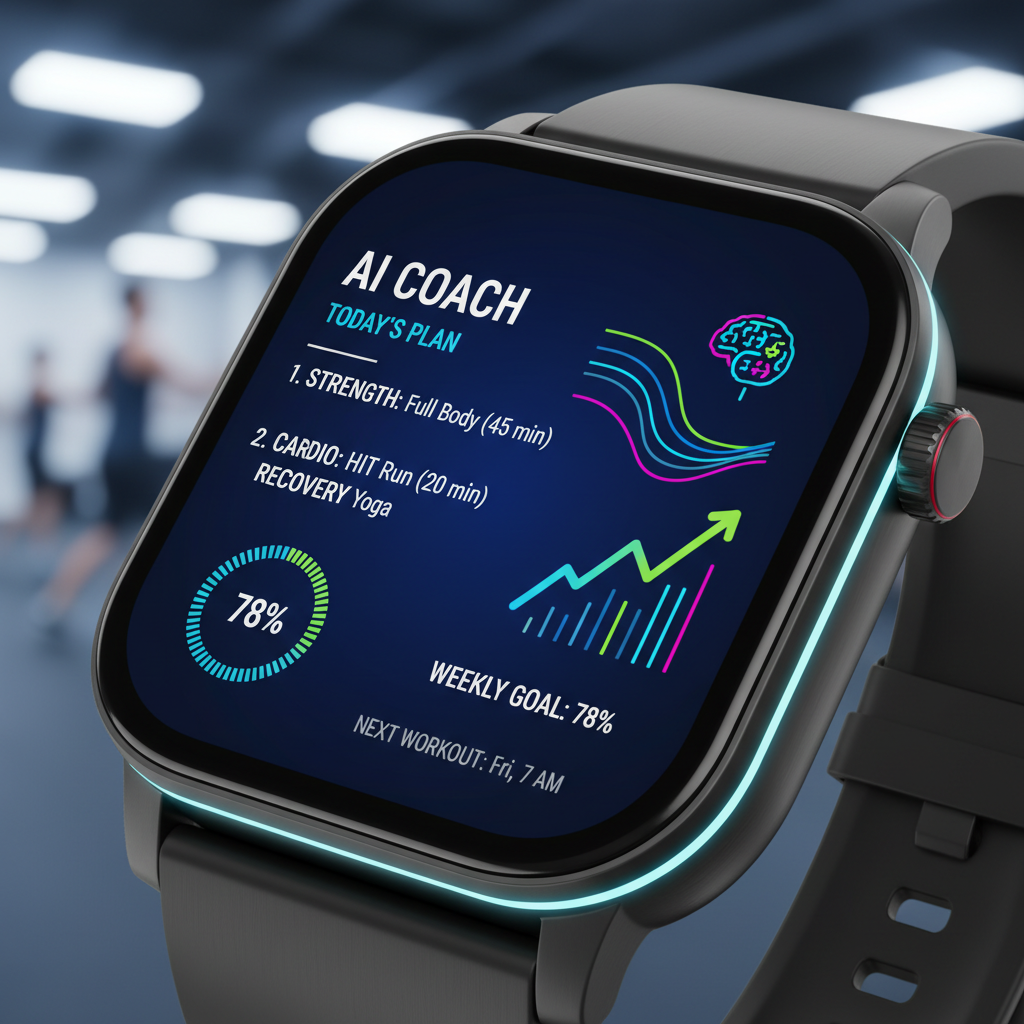
Future AI planners will move beyond simply learning task durations and peak productivity times. They will likely incorporate deeper insights into your cognitive state, emotional well-being, and even physiological data. Imagine an AI that integrates with wearable tech to detect early signs of fatigue or stress and automatically adjusts your schedule, suggesting breaks or less demanding tasks. It could analyze your language patterns in emails to predict conflict or high-stakes interactions, preparing you or blocking out focused time for complex responses. The goal is to create an even more nuanced understanding of you, enabling truly hyper-personalized recommendations that adapt in real-time to your unique circumstances, not just your schedule.
Proactive Mental Wellness Integration
Procrastination is often linked to stress, anxiety, and burnout. Future AI productivity tools are poised to integrate mental wellness components more actively. This could mean:
- Stress Detection and Mitigation: AI might analyze your digital activity (e.g., increased late-night work, rapidly switching tabs, certain keyword usage) to detect rising stress levels and suggest mindfulness breaks, short walks, or even recommend reaching out to a support network.
- Burnout Prevention: By monitoring your workload across all integrated platforms, AI could proactively identify potential for burnout, suggesting periods of reduced activity or mandatory downtime before you even realize you’re overextended.
- Cognitive Load Management: Beyond just scheduling tasks, AI could help manage cognitive load by suggesting ways to simplify complex information, breaking down mental models, or recommending specific learning resources to overcome knowledge gaps that contribute to task avoidance.
By connecting productivity with holistic well-being, AI will evolve from a task manager to a comprehensive life management system, ensuring that your pursuit of unstoppable focus is sustainable and contributes to overall health, not just output. The future promises a truly symbiotic relationship between human and AI, where technology empowers us to not only achieve more but to live better.
Comparison Tables
| Feature Category | Traditional Planner (Paper/Basic Digital) | AI-Powered Planner |
|---|---|---|
| Task Management | Static lists, manual prioritization. | Intelligent prioritization (based on importance, urgency, effort), automated task breakdown, dependency tracking. |
| Scheduling | Manual time blocking, fixed appointments, no dynamic adjustment. | Dynamic scheduling, intelligent time blocking, predictive analytics for task duration, automated rescheduling for conflicts. |
| Personalization | Generic templates, user must adapt strategies. | Learns individual work patterns, peak productivity times, preferred work styles, tailored recommendations. |
| Behavioral Support | Basic reminders, relies on user willpower. | Nudges, habit tracking, goal reinforcement, progress visualization, distraction management modes. |
| Decision Fatigue | High; user makes all prioritization and scheduling decisions. | Low; AI automates prioritization, scheduling, and re-planning, reducing cognitive load. |
| Integration | Limited (e.g., basic calendar sync). | Deep integration with calendars, email, project management tools, communication platforms, wearables. |
| Proactive Assistance | None. | Suggests optimal times, identifies potential conflicts, provides insights into productivity patterns. |
| Common Procrastination Trigger | How AI Contributes to Procrastination (if applicable) | AI-Powered Solution for Overcoming Procrastination |
|---|---|---|
| Overwhelm / Large Tasks | N/A | Automatically breaks down large projects into smaller, manageable sub-tasks. Schedules these micro-tasks with realistic estimates. |
| Lack of Clarity / Ambiguity | N/A | Prompts for clear task definitions, helps set specific goals, and integrates with note-taking tools for detailed planning. |
| Lack of Motivation / Boring Tasks | N/A | Suggests pairing unpleasant tasks with rewarding activities. Uses gamification (streaks, progress) to provide intrinsic motivation. |
| Fear of Failure / Perfectionism | N/A | Focuses on incremental progress, celebrates small wins, and schedules ‘review’ or ‘iteration’ phases to reduce pressure on initial drafts. |
| Distractions (Digital / Environmental) | Can be source of digital distractions itself if not configured. | Offers ‘Focus Modes’ to block distracting apps/websites, intelligently filters notifications, and suggests optimal focus times. |
| Poor Time Management / Underestimation | N/A | Learns from historical data to provide accurate task duration estimates. Dynamically reschedules based on real-time progress. |
| Decision Fatigue | N/A | Automates task prioritization, suggests optimal schedule flows, and reduces the need for constant manual re-planning. |
| Lack of Accountability | N/A | Provides clear progress tracking, nudges for missed tasks, and in some cases, integrates with shared accountability features. |
Practical Examples: AI in Action
To truly grasp the transformative power of AI-powered planners, let’s explore some real-world scenarios where they make a tangible difference in combating procrastination and fostering focus.
The Freelancer’s Dynamic Schedule
Consider Sarah, a freelance graphic designer juggling multiple client projects, administrative tasks, and continuous learning. Her traditional planner often became a graveyard of half-finished lists and hastily scribbled cancellations. She found herself constantly overwhelmed, leading to procrastination on critical client deliverables, resulting in last-minute stress.
With an AI-powered planner, Sarah’s workflow transformed. She inputs all her client deadlines, project requirements, and personal learning goals. The AI, learning from her past project durations and creative energy cycles, automatically prioritizes tasks. It knows that Sarah is most creative in the mornings for design work and better suited for administrative tasks in the afternoon. When an urgent client revision comes in, the AI doesn’t just add it to a list; it intelligently shuffles her schedule, moving a less critical learning module to the evening, or suggesting a short block for the revision immediately, followed by her next prioritized task.
The planner also integrates with her email, flagging new project inquiries and scheduling time for her to review and respond without disrupting her current deep work. When Sarah feels stuck on a design, the AI might suggest a short, timed break or a switch to a simpler task to avoid creative block and subsequent procrastination. This dynamic adaptation means Sarah rarely feels overwhelmed, maintains consistent progress, and delivers high-quality work on time, enhancing her reputation and reducing stress.
The Student’s Study Marathon Optimizer
Meet David, a university student struggling with procrastination, especially when faced with large assignments and multiple exam preparations. He often found himself endlessly scrolling social media, only to pull all-nighters fueled by panic as deadlines loomed. His traditional study plan, if he even made one, quickly fell apart.
David adopted an AI study planner. He inputs his course syllabi, assignment deadlines, and exam dates. The AI breaks down his large research papers into smaller steps: ‘Research 1 hour’, ‘Outline 30 mins’, ‘Draft Intro 45 mins’. It then intelligently scatters these micro-tasks across his week, taking into account his class schedule, part-time job hours, and preferred study times (it learned he concentrates best on complex topics late morning).
The AI also tracks his progress. If he spends longer than estimated on a math problem set, it automatically adjusts his schedule for the rest of the day, perhaps shifting a lighter reading task to compensate. For his history exam, the AI prompts him with spaced repetition reminders for key concepts, helping him build long-term memory rather than cramming. When he opens a distracting social media app during a scheduled study block, the AI-powered focus mode gently reminds him of his current task, or temporarily blocks the app. David finds himself consistently making progress, reducing the anxiety that previously fueled his procrastination, and leading to better grades and more balanced free time.
The Manager’s Project Workflow Streamliner
Eleanor is a project manager overseeing several complex initiatives with multiple team members. Her biggest challenge was managing her own extensive to-do list, delegating effectively, and ensuring her team stayed on track, all while fighting her own tendency to postpone administrative tasks.
Eleanor integrates an AI-powered planner with her company’s project management software (like Jira or Asana) and her team’s shared calendar. All tasks assigned to her or needing her input automatically appear in her personal AI planner. The AI intelligently prioritizes these tasks based on project deadlines, dependencies, and her role in the workflow. It also learns her typical response times for different types of requests.
When a team member requests a review of a document, the AI assesses Eleanor’s current workload and schedules a realistic block for it. If an unexpected critical issue arises on Project X, the AI highlights it, reshuffles her less urgent tasks, and allocates immediate focus time. It also uses predictive analytics to flag potential bottlenecks in her team’s workflow based on their reported progress and schedules follow-up meetings or check-ins for her. This proactive approach minimizes Eleanor’s decision fatigue, ensures she allocates her time effectively to high-impact activities, and empowers her to be a more responsive and organized leader, reducing the likelihood of her own procrastination impacting project timelines.
Frequently Asked Questions
Q: What exactly is an AI-powered planner, and how is it different from a regular digital planner?
A: An AI-powered planner goes beyond simply listing tasks and setting reminders. It uses artificial intelligence, specifically machine learning algorithms, to learn from your past behaviors, preferences, and productivity patterns. Unlike a static digital planner, an AI planner can dynamically prioritize tasks, intelligently schedule them based on your peak productivity times, predict how long tasks will take, automatically reschedule in case of conflicts, and even provide personalized nudges and feedback to help you build better habits and overcome procrastination. It acts as an adaptive, intelligent assistant rather than just a digital notebook.
Q: How does an AI planner learn my personal productivity patterns?
A: AI planners learn in several ways. Initially, they might ask you questions about your work style, preferred times for certain tasks, and energy levels. Over time, as you use the planner, it observes how long you actually take to complete tasks versus your estimates, when you mark tasks as complete, which tasks you tend to delay, and your general availability. Some advanced planners can even integrate with your calendar, email, and project management tools to get a more holistic view of your commitments and work habits. This continuous data collection and analysis allows the AI to refine its understanding of your unique productivity rhythm.
Q: Can an AI planner truly help me overcome deep-seated procrastination habits?
A: Yes, an AI planner can be a powerful tool in combating procrastination, especially when combined with your conscious effort. It helps by reducing the mental friction associated with starting tasks. It tackles common procrastination triggers such as overwhelm (by breaking down tasks), ambiguity (by structuring steps), and decision fatigue (by automating prioritization and scheduling). Furthermore, its ability to provide personalized nudges, track habits, and offer positive reinforcement can help you gradually build self-discipline and more productive routines, retraining your brain away from avoidance behaviors.
Q: Are AI planners expensive? What are some popular options?
A: The pricing for AI planners varies widely. Some offer free basic versions with premium features available through subscription (monthly or annually). Others are entirely subscription-based. The cost typically reflects the sophistication of the AI and the range of integrations. Popular options include tools like Motion, Reclaim.ai, Akiflow, and Sunsama, among others. Many offer free trials, allowing you to test their features before committing to a subscription.
Q: How much personal data do I have to share with an AI planner? Is it secure?
A: AI planners require access to your schedule, tasks, and potentially information from integrated apps (like email or project management tools) to function effectively. The amount of data shared depends on the features you enable. Most reputable AI planner companies adhere to strict data privacy policies and employ robust security measures (encryption, secure servers) to protect your information. It’s always advisable to read the privacy policy of any tool you consider using to understand how your data is collected, stored, and utilized.
Q: Can an AI planner make decisions for me, or do I still have control?
A: AI planners are designed to assist and optimize, not to take away your autonomy. They offer suggestions, make intelligent adjustments, and automate repetitive tasks, but you always retain ultimate control. You can override AI recommendations, manually reschedule tasks, or adjust your preferences at any time. The AI learns from your interventions, further refining its future suggestions to better align with your choices. Think of it as a highly capable co-pilot, not an autopilot.
Q: What if my work is highly unpredictable? Can an AI planner still be useful?
A: Absolutely. In fact, AI planners can be even more valuable in unpredictable environments. Their dynamic rescheduling capabilities mean they can quickly adapt to unexpected changes without you having to manually rebuild your entire schedule. If an urgent task comes up, the AI can intelligently shift lower-priority items, find the best new slots, and minimize the ripple effect across your day. This flexibility is a significant advantage over rigid traditional planning methods, which often break down under unpredictability.
Q: Are there any downsides or limitations to using AI-powered planners?
A: While highly beneficial, AI planners do have some limitations. They require an initial investment of time to set up and for the AI to learn your patterns. Over-reliance can potentially reduce your own strategic planning skills if not balanced with mindful engagement. They are also tools, and like any tool, their effectiveness depends on how consistently and correctly you use them. There can be a learning curve, and some users might find certain integrations or features overwhelming initially. Additionally, AI may not fully grasp nuanced human factors like emotional state or complex social dynamics that might influence task completion, though future developments aim to address this.
Q: How do AI planners help with distinguishing between urgent and important tasks?
A: AI planners tackle this by integrating multiple data points. When you input a task, you typically assign it a due date (urgency) and often a priority level or category (importance). The AI combines this with its understanding of task dependencies, your workflow, and even external factors to suggest prioritization. For example, it might use an adapted Eisenhower Matrix approach internally to highlight “important but not urgent” tasks that often get neglected, ensuring they receive dedicated time slots before they become urgent crises. It can also help visualize your tasks in a way that makes their importance and urgency clear at a glance.
Q: What is the role of natural language processing (NLP) in these planners?
A: Natural Language Processing (NLP) plays an increasingly significant role. Many AI planners allow you to create tasks and schedule events using natural language commands, similar to how you would speak to a human assistant (e.g., “Schedule a meeting with John for 3 PM tomorrow about Project Alpha” or “Remind me to call Mom next Tuesday”). NLP helps the AI understand your intentions, extract key information (dates, times, names, tasks), and convert it into actionable items within the planner. This makes interaction more intuitive, efficient, and user-friendly, reducing friction and making it easier to capture tasks as they arise.
Key Takeaways for Unstoppable Focus
- Procrastination is Complex: It stems from psychological factors like present bias and fear, exacerbated by modern digital distractions and decision fatigue.
- AI Transforms Planning: AI-powered planners move beyond static lists to offer dynamic, personalized, and adaptive scheduling solutions.
- Personalized Productivity Coaching: AI learns your unique work patterns, peak times, and habits to offer tailored recommendations, acting as a digital coach.
- Core AI Features: Include intelligent task prioritization, dynamic rescheduling, predictive analytics, habit building, goal reinforcement, and distraction management.
- Science-Backed Effectiveness: AI leverages behavioral economics (nudges, commitment devices) and minimizes decision fatigue to encourage consistent action.
- Smart Integration is Key: Connect your AI planner with calendars, email, and project management tools for a holistic view and seamless workflow.
- Start Small, Iterate, and Review: Integrate AI gradually, provide feedback, and regularly review your progress to maximize its effectiveness.
- Future is Hyper-Personalized and Holistic: Expect future AI planners to integrate deeper insights into cognitive and emotional states, proactively preventing burnout and supporting overall well-being.
- Empowerment, Not Replacement: AI tools assist and optimize, but you remain in control, making the ultimate decisions and guiding the learning process.
Conclusion: Embrace the AI Advantage
The battle against procrastination is no longer an insurmountable personal struggle. With the advent of AI-powered planners, we have access to intelligent tools that genuinely understand our unique challenges, learn from our behaviors, and proactively guide us towards sustained productivity and unwavering focus. These aren’t just glorified calendars; they are sophisticated digital companions that combat our inherent tendencies to delay, mitigate the impact of modern distractions, and empower us to reclaim control over our most precious resource: our time.
By embracing the AI advantage, you are not surrendering control to a machine; you are augmenting your human capabilities with intelligent assistance. You are freeing up mental energy previously spent on planning and re-planning, allowing you to dedicate your cognitive resources to creative problem-solving, deep work, and meaningful engagement. Whether you are a student striving for academic excellence, a freelancer managing diverse projects, or a professional leading a team, AI-powered planners offer a revolutionary path to breaking free from the shackles of procrastination and cultivating an unstoppable daily focus. The future of productivity is here, and it’s intelligently designed to help you thrive. Take the leap, experiment with these tools, and unlock a new level of efficiency and accomplishment in your life.




























































Comments (2)
Beyond Basic Phrases: Advanced Language Strategies with AI Tutoring Systems - techswaraj.comsays:
November 10, 2025 at 2:20 pm[…] to an infinite array of highly relevant practice scenarios, AI tutors empower advanced learners to break free from the limitations of traditional methods. They provide a safe, accessible, and infinitely patient […]
Unmasking Algorithmic Bias in AI Image Generation: A Creator's Guide to Fairer Visuals - techswaraj.comsays:
November 22, 2025 at 3:38 pm[…] Harmful Stereotypes: Biased AI outputs can solidify existing stereotypes, making it harder to break free from prejudiced views. If AI consistently shows certain groups in specific, often negative, roles, it […]