


In the dynamic world of design, the quest for fresh ideas and groundbreaking visuals is constant. Designers often face the challenge of creative blocks, tight deadlines, and the pressure to produce unique, compelling content. What if there was a boundless wellspring of inspiration, accessible at your fingertips, capable of translating your wildest ideas into tangible visuals in mere seconds? Welcome to the era of AI art generators, tools that are not just novelty toys, but powerful catalysts for innovation and imagination. This comprehensive guide delves into how integrating daily AI art practices can revolutionize your design process, unlock unprecedented creative potential, and lead to truly innovative design solutions.
From graphic designers seeking new mood board concepts to product developers visualizing futuristic prototypes, AI art is rapidly becoming an indispensable companion. It’s more than just generating pretty pictures; it’s about fostering a dialogue with an intelligent creative assistant, pushing the boundaries of what’s possible, and evolving your artistic intuition. We will explore the mechanisms behind these powerful tools, provide practical strategies for their daily integration, discuss ethical considerations, and illustrate their transformative impact through real-world examples. Prepare to embark on a journey that redefines creativity in the digital age, transforming how you conceive, iterate, and deliver design excellence.
The Dawn of AI Art: A Creative Renaissance
The landscape of digital creation has been irrevocably altered by the advent of artificial intelligence. What began as fascinating experiments in machine learning has rapidly evolved into sophisticated AI art generators capable of producing stunningly intricate, diverse, and often breathtaking visuals from simple text prompts. These tools, such as Midjourney, DALL-E 3, and Stable Diffusion, operate on complex neural networks trained on vast datasets of images and their corresponding textual descriptions. This training allows the AI to understand the relationship between words and visual concepts, enabling it to synthesize entirely new images based on user input, often with an astonishing degree of fidelity and artistic flair.
The journey of AI art, while seemingly sudden, is the culmination of decades of research in computer vision and natural language processing. Early attempts were crude, producing abstract or distorted imagery that was more curiosities than practical tools. However, rapid advancements in deep learning, particularly with transformer architectures and diffusion models, have dramatically enhanced their capabilities. Today, these generators can mimic a myriad of artistic styles, render photorealistic scenes, design abstract patterns, and even combine disparate concepts into coherent compositions that challenge traditional notions of authorship and creativity. For designers, this represents a monumental shift – a paradigm where ideation can be accelerated exponentially, and visual exploration knows virtually no bounds. It democratizes complex rendering techniques and opens up possibilities for individuals and small teams to compete with larger studios in terms of visual output, conceptual breadth, and speed to market. The AI isn’t just an engine; it’s a tireless collaborator, an ever-present muse that never sleeps, always ready to render the next iteration of your creative vision with unprecedented speed and versatility.
Beyond Novelty: Why Daily AI Art Matters for Designers
While the initial allure of AI art might be its ability to generate fantastical images with ease, its true, enduring power for designers lies in consistent, daily engagement. Treating AI art as a regular practice transforms it from a mere tool into an indispensable extension of your creative thought process. This daily interaction offers several profound benefits that directly contribute to innovative design outcomes and elevate a designer’s capabilities.
- Overcoming Creative Blocks with Unprecedented Speed: Every designer, from seasoned veterans to enthusiastic novices, has faced the dreaded blank canvas or the stagnant mood board, a period of mental inertia where ideas refuse to flow. AI art generators provide an instant and powerful antidote. By inputting even vague ideas, abstract concepts, or tangential keywords, designers can receive a deluge of diverse visual interpretations within seconds. This immediate visual stimulus acts as a powerful catalyst, sparking new directions, offering unexpected perspectives, and effortlessly breaking through mental barriers. It’s akin to having an infinite brainstorming partner who never runs out of ideas, constantly pushing you past your creative comfort zone into novel and exciting territories, ensuring that inspiration is always at hand.
- Rapid Prototyping and Iteration Cycles: The sheer speed at which AI can generate images is unparalleled, fundamentally altering the pace of design. Designers can now test hundreds of visual concepts, experiment with countless color palettes, explore various stylistic approaches, and assess diverse compositional layouts in minutes, rather than hours or days. This radical acceleration of the iteration cycle allows for quicker refinement of ideas, reducing the time spent on unproductive paths and dramatically accelerating the journey towards an optimal design solution. Imagine the efficiency gained by experimenting with a product’s packaging design across fifty different aesthetic styles and material finishes before even sketching a single physical mock-up or rendering a complex 3D model. This agility fosters a dynamic and responsive design process.
- Expanding Your Visual Lexicon and Aesthetic Range: Consistent exposure to AI-generated images, especially those derived from experimental and unconventional prompts, profoundly broadens a designer’s understanding of visual possibilities. Through this interaction, you learn to articulate specific aesthetics and abstract concepts more precisely, discovering new combinations of elements, textures, and forms that you might not have conceived independently. It serves as a continuous, immersive education in visual language, expanding your internal library of potential forms, textures, lighting conditions, and emotional moods. This constant influx of novel visuals helps to cultivate a more sophisticated and versatile aesthetic judgment.
- Developing Advanced Prompt Engineering Skills: Daily use of AI art generators inevitably sharpens your ability to communicate effectively and precisely with the artificial intelligence. Prompt engineering—the evolving art and science of crafting precise, evocative, and technically informed textual inputs—becomes a critical and highly valuable skill. Through practice, you learn which keywords yield desired results, how to layer descriptive terms for greater nuance, and how to effectively utilize model-specific parameters to fine-tune outcomes. This skill is not merely technical; it refines your ability to clearly articulate visual intent, a valuable asset in any design context, enhancing clarity in human-to-human communication as well.
- Fostering Cross-Disciplinary Inspiration and Fusion: One of AI’s remarkable capabilities is its aptitude for blending concepts from widely different domains and artistic movements. A designer working on an automotive interior might prompt the AI with “luxury car interior inspired by deep-sea bioluminescence, organic forms, futuristic.” Or an architect might explore “futuristic office space in the style of brutalist architecture with natural, living wall elements.” This inherent ability to merge disparate themes and draw connections across traditionally separate fields can lead to truly innovative, unexpected, and boundary-pushing design directions that transcend conventional industry aesthetics.
- Reducing Drudgery, Enhancing Core Creativity: AI can efficiently handle the repetitive, time-consuming tasks of generating variations, creating base assets, or refining subtle details, thereby freeing up human designers to focus on higher-level strategic thinking, conceptual development, emotional impact, and the nuanced, bespoke refinements that only human intuition and empathy can provide. It effectively elevates the designer’s role from a meticulous renderer or asset creator to a visionary director, a discerning curator, and an empathetic problem-solver, enhancing the inherently creative and strategic aspects of their profession.
In essence, daily AI art isn’t about replacing human creativity; it’s about profoundly amplifying it. It’s about providing a constant stream of novel stimuli, a relentless assistant for rapid iteration, and a powerful tool for transcending traditional design limitations. This regular practice hones your ability to conceive, communicate, and create with unprecedented efficiency and breadth, ultimately leading to more innovative, impactful, and conceptually rich designs.
Integrating AI Art into Your Design Workflow
Successfully harnessing the power of daily AI art means seamlessly integrating it into your existing design workflow. This isn’t about discarding your traditional tools or methods, but rather intelligently augmenting them with a new, dynamic, and incredibly versatile resource. Here’s a detailed breakdown of how AI art can become an invaluable part of your creative process, from initial concept to final polish and client presentation.
1. Ideation and Brainstorming Phase: The Spark of Infinite Concepts
This is arguably where AI art truly shines as a concept multiplier and an infinite wellspring of inspiration. Instead of starting with a daunting blank page or a struggling creative mind, use AI to generate a vast array of initial ideas. Begin with broad, high-level prompts to explore a wide conceptual space, and then gradually refine them based on the most promising outputs. For instance, if you’re designing a new coffee shop interior, initial prompts like “cozy urban cafe interior design,” “minimalist coffee shop with natural light,” or “rustic industrial coffee shop aesthetic” can instantly produce dozens of diverse visual concepts. These initial outputs serve as invaluable jumping-off points, sparking new discussions, clarifying directions, and effectively preventing creative inertia.
- Dynamic Mood Board Generation: Quickly populate mood boards with diverse aesthetics, unexpected color schemes, innovative material palettes, and architectural styles. AI can generate images that evoke specific feelings, textures, or moods, helping to define the overall tone and emotional resonance of a project much faster and more comprehensively than manually searching through traditional stock photos, magazines, or design blogs. This allows for a more fluid and responsive conceptualization.
- Rapid Concept Exploration: Use AI to explore myriad variations of a core idea. If you have a nascent character concept for a game, use AI to generate different poses, outfits, facial expressions, or stylistic interpretations. This allows you to quickly assess what resonates, what needs adjustment, and what doesn’t work, all before committing significant time and resources to detailed sketches, 3D models, or high-fidelity renders. This iterative exploration is incredibly efficient.
2. Concept Development and Refinement: Sculpting the Vision
Once initial ideas are generated and a general direction is chosen, AI can help you dig deeper, fine-tune concepts, and iterate on specific elements. This stage involves more specific and layered prompting, combined with iterative adjustments and human oversight.
- In-depth Stylistic Exploration: Experiment with a vast range of art styles, rendering techniques, or historical periods fused with modern concepts. A prompt like “cyberpunk city street at night, traditional Japanese watercolor painting” or “futuristic vehicle design, opulent Art Deco style, chrome accents” can yield incredibly unique and innovative fusions that might not have been obvious choices initially, opening up entirely new aesthetic avenues.
- Bespoke Component Generation: Do you need a specific type of texture, a unique decorative pattern, an abstract background that perfectly complements your foreground elements, or a conceptual icon? AI can generate bespoke visual assets that precisely match your project’s aesthetic and functional requirements, significantly saving time on sourcing existing assets or creating them manually from scratch.
- Detailed Visualizing Specific Elements: For product design, AI can rapidly generate various button styles, explore different material finishes for a casing, or visualize ergonomic shapes for handles. For architectural projects, it can quickly show different facade treatments, explore fenestration patterns, or visualize various landscaping options, providing immediate visual feedback long before traditional 3D modeling or physical mock-ups begin.
3. Presentation and Client Communication: Bringing Ideas to Life
AI-generated visuals can significantly enhance the impact and clarity of client presentations and internal discussions. High-quality concept art, rapidly generated and visually compelling, helps stakeholders visualize complex ideas more effectively, leading to clearer feedback, faster approvals, and a stronger sense of shared vision.
- Enhanced Pre-visualization: Present clients with stunning, photorealistic, or highly stylized visuals that accurately convey the look, feel, and functionality of a final product, environment, or brand, even in the very early stages of conceptualization. This capability bridges the critical gap between abstract descriptions and concrete, understandable visuals, making presentations far more engaging and persuasive.
- Showcasing Multiple Alternative Options: Quickly generate and present multiple distinct visual directions or design variations for a client to choose from. This not only demonstrates your breadth of vision and responsiveness to their needs but also gives the client a sense of agency and involvement in the creative process, leading to more confident decision-making.
4. Post-Generation Processing and Integration: The Human Touch
It’s crucial to remember that AI-generated art, while incredibly advanced, is often a starting point, a powerful raw material, rather than a finished product. The discerning eye and skilled hand of a human designer remain paramount for refinement, integration, and imbuing the work with unique artistic intent.
After generating images, designers typically bring them into traditional image editing and design software like Adobe Photoshop, Illustrator, Figma, or specialized 3D applications. Here, the AI outputs can be:
- Composited and Layered: Combine elements from multiple AI generations, integrate AI assets seamlessly with hand-drawn sketches, photographic elements, or existing brand assets. This allows for the creation of intricate and highly customized compositions.
- Refined and Perfected: Clean up any imperfections, adjust colors, fine-tune lighting, modify composition for optimal balance, and add intricate details to meet specific project requirements and achieve pixel-perfect precision. This step ensures the final output meets professional standards.
- Transformed and Elevated: Use AI images as a robust base layer for digital painting, as unique textures for 3D modeling, or as a reference for vector tracing and icon design. This process adds the unique human touch, artistic expression, and strategic intent that elevates a raw AI concept into a truly polished, meaningful, and impactful design solution.
By thoughtfully weaving AI art into each distinct stage of the design process, from the initial spark of an idea to the final, meticulously polished outcome, designers can unlock unprecedented levels of efficiency, creativity, and innovation, transforming their workflow into a dynamic and highly effective interplay between human vision and cutting-edge artificial intelligence capabilities.
Mastering the Prompt: The Language of Imagination
The true power of AI art generators lies not just in their algorithms, but in the human ability to communicate effectively and imaginatively with them. This communication happens through “prompts” – the textual descriptions you feed the AI. Mastering prompt engineering is akin to learning a new, incredibly powerful language, one that unlocks the full spectrum of the AI’s creative potential. A well-crafted, thoughtful prompt can elevate generic output to a masterpiece, transforming an abstract idea into a stunning visual, while a poorly written or vague one can lead to disappointing, irrelevant, or visually uninspired results.
Anatomy of an Effective Prompt: Guiding the Digital Artist
Think of a prompt as a detailed instruction manual for a highly intelligent but literal artist. It should be clear, specific, and evocative, providing enough guidance without being overly prescriptive. While different AI models (like Midjourney, DALL-E 3, Stable Diffusion) have slightly different syntaxes, sensitivities, and preferred keyword weights, the core principles for constructing an effective prompt remain universally applicable.
- Subject/Main Idea: Always start with the core concept. What is the primary focus of your image? Be concise yet descriptive.
- Example: “A majestic dragon,” “futuristic cityscape,” “a serene forest.”
- Descriptors/Adjectives: Add words that define the subject’s characteristics, qualities, and attributes. These are crucial for shaping the visual identity.
- Example: “A majestic, ancient, wise dragon,” “vibrant, sprawling, neon-lit futuristic cityscape,” “a serene, misty, old-growth forest.”
- Style/Artistic Direction: This is a powerful component. Specify the aesthetic you’re aiming for, whether it’s an art movement, a specific artist’s style, or a rendering technique. This is crucial for guiding the AI towards a particular visual language.
- Example: “A majestic, ancient, wise dragon, digital painting, high fantasy art, in the style of Frank Frazetta,” “vibrant, sprawling, neon-lit futuristic cityscape, cyberpunk anime style, highly detailed, atmospheric light,” “a serene, misty, old-growth forest, oil painting, impressionistic, soft focus.”
- Composition/Camera Angle: Describe how the scene should be framed and the viewpoint. This helps establish the visual narrative and impact.
- Example: “A majestic, ancient, wise dragon, digital painting, high fantasy art, in the style of Frank Frazetta, full body shot, dramatic low angle, epic scale, looking towards the viewer.”
- Lighting/Color: Indicate the mood, time of day, and the overall color scheme. Lighting dramatically affects atmosphere.
- Example: “Vibrant, sprawling, neon-lit futuristic cityscape, cyberpunk anime style, detailed, atmospheric light, dusk, rain-slicked streets, volumetric fog, deep blues and purples with bright orange accents.”
- Atmosphere/Mood: Inject emotional qualities and subjective feelings into the scene to guide the AI’s interpretation.
- Example: “A serene, misty, old-growth forest, oil painting, impressionistic, soft focus, peaceful, ethereal, enchanting atmosphere, sense of mystery.”
- Technical Parameters (Model Specific): Many AI models allow for numerical or command-line parameters to control specific aspects like aspect ratios, stylization levels, seed numbers for consistency, and even more advanced features.
- Example (Midjourney): “A majestic dragon –ar 16:9 –style raw –v 5.2 –c 50” (aspect ratio, raw style, version 5.2, chaos level 50)
- Example (Negative Prompt for various models): “A majestic dragon, –no low quality, blurry, watermark, deformed, ugly, extra limbs”
Tips for Advanced Prompt Engineering: Beyond the Basics
- Be Specific, but Not Overly Restrictive: Provide enough detail to guide the AI towards your vision, but also allow it sufficient room for its own creative interpretation and unexpected connections. Over-specifying every minuscule detail can sometimes lead to less dynamic or generic results.
- Iterate and Refine Constantly: Rarely will your very first prompt yield the perfect image. Treat prompt engineering as an iterative process. Start broad, generate several options, and then refine your prompt based on what you like and dislike in the outputs. It’s a continuous, back-and-forth conversation with the AI.
- Use Powerful Keywords Strategically: Research and employ specific artists, art movements, photography terms, architectural styles, and highly descriptive visual adjectives that directly align with your desired outcome. Terms like “cinematic,” “anamorphic lens,” “bokeh,” “chiaroscuro,” “hyperrealistic,” “concept art,” “storybook illustration,” “octane render,” or “unreal engine” can dramatically alter the results and quality.
- Leverage Negative Prompts Effectively: Most advanced AI generators allow you to specify what you explicitly don’t want to see in your image (e.g., “ugly,” “deformed,” “low resolution,” “text,” “watermark”). This is an invaluable tool for cleaning up outputs, eliminating common AI artifacts, and guiding the AI away from undesirable elements.
- Experiment with Weighting (if available): Some models allow you to give more importance or “weight” to certain parts of your prompt. For example, using “red car::2 blue car::1” might give you a predominantly red car with subtle hints of blue elements, showing how prompt elements can be prioritized.
- Learn from Diverse Sources: Actively explore online communities, prompt databases, and social media platforms where users share their successful prompts and generated images. Don’t just copy them; dissect and adapt them to understand the underlying principles and integrate them into your own unique ideas and style.
- Understand AI Biases and Actively Counter Them: Be acutely aware that AI models are trained on existing, often imperfect data, which can inadvertently carry biases (e.g., gender, ethnicity, common stereotypes). Consciously work to de-bias your prompts by specifying diverse demographics, varied body types, and inclusive cultural contexts to achieve fair, representative, and rich results.
Prompt engineering is a rapidly evolving skill, demanding curiosity, experimentation, and a keen eye for detail. The more you practice, experiment, and meticulously observe the AI’s responses to your inputs, the more intuitive and powerful it becomes. It transforms you from a passive observer of AI output into an active director, orchestrating intricate digital symphonies of light, form, and concept with the elegant power of words, truly harnessing the language of imagination.
Ethical Considerations and Responsible AI Art
As AI art generators become increasingly sophisticated, ubiquitous, and deeply integrated into creative workflows, it is imperative that designers, artists, and the wider creative community address the complex ethical implications that inevitably arise. Responsible and forward-thinking use of these powerful tools requires a profound understanding of issues surrounding copyright, intellectual property, proper attribution, inherent biases in training data, and the evolving, yet enduring, role of human creativity.
1. Copyright and Intellectual Property Ownership: A Shifting Landscape
This is perhaps the most hotly debated and legally ambiguous area in the realm of AI art. The legal landscape surrounding AI-generated art is still rapidly developing and varies significantly across different national and international jurisdictions. Key questions and challenges include:
- Who owns the copyright? Is it the user who carefully crafted the prompt, the developer of the AI model, or can an AI system itself be considered an author in the legal sense? Currently, in many countries, including the United States, copyright generally requires definitive human authorship and a certain level of human creative input. This often means that purely AI-generated works, without significant human modification or creative contribution, may not be eligible for traditional copyright protection. However, if a human significantly modifies, enhances, curates, or integrates AI output into a larger, original human-created work, human authorship and copyright eligibility can be more readily argued.
- Training Data Concerns: Most advanced AI models are trained on astronomically vast datasets of images and texts, often scraped from the internet without explicit permission or individual consent from the original creators of every piece of content. This practice raises serious ethical and legal concerns about fair use, intellectual property rights, potential derivative infringement, and the rights of artists whose work contributes to the AI’s knowledge base, particularly if the AI generates an image highly derivative or directly mimicking an existing copyrighted work.
- Attribution and Transparency: Even if clear legal copyright isn’t firmly established for AI outputs, the ethical question of proper attribution remains crucial. Should the AI be credited as a collaborator? How transparent should designers be about the AI’s role in their creative process, especially in professional contexts? Transparency is paramount; clearly acknowledging the use of AI helps maintain trust and fosters an honest dialogue about the nature of contemporary creativity.
Designers must stay informed about the legal developments and evolving best practices in their respective regions and always exercise caution and due diligence when using AI-generated content for commercial purposes, particularly without substantial human alteration and thorough legal vetting.
2. Bias in Training Data: Reflecting and Perpetuating Societal Flaws
A fundamental principle of AI is that models learn from the data they are fed. If this training data is biased, incomplete, unrepresentative, or reflects existing societal stereotypes and prejudices, the AI’s outputs will inevitably reflect and potentially amplify those biases. For example, if an AI is predominantly trained on images featuring a specific demographic for certain professions (e.g., male doctors, female nurses), it may perpetuate those stereotypes when prompted for “a doctor” or “a nurse.” This can lead to significant and detrimental outcomes:
- Limited Diversity and Representation: AI may consistently struggle to generate diverse and inclusive representations of people, cultures, body types, or concepts if these groups or ideas are underrepresented or inaccurately depicted in its foundational training data.
- Reinforced Stereotypes and Harmful Content: The AI might default to stereotypical or culturally insensitive imagery for certain prompts, potentially creating visuals that are offensive, discriminatory, or perpetuate harmful narratives.
Responsible designers have an ethical imperative to be acutely aware of these inherent biases. They must actively work to counteract them through careful and inclusive prompt engineering (e.g., specifying diverse demographics, ethnicities, body types, and cultural contexts), and by critically evaluating the AI’s output for fairness, equity, and inclusivity before any material is used or published.
3. The Enduring Value of Human Creativity: Vision, Empathy, and Purpose
Some observers and creators fear that the rise of AI art diminishes the intrinsic value of human creativity or poses an existential threat to design professions. However, a more nuanced and balanced perspective overwhelmingly suggests that AI acts as a powerful augmentative tool, significantly enhancing human capabilities rather than replacing them. Human designers bring irreplaceable qualities to the creative process:
- Intent, Vision, and Purpose: AI lacks genuine intent, personal vision, or a sense of purpose. It executes based on algorithms and prompts, but it doesn’t conceive the deeper meaning, strategic objectives, or emotional impact behind a design.
- Emotional Intelligence and Empathy: AI cannot authentically understand, replicate, or respond to the complex nuances of human emotion, cultural context, subjective aesthetics, or the subtle psychological impact of design choices on real people.
- Ethical Judgment and Responsibility: Humans are fundamentally responsible for guiding the AI ethically, setting its creative boundaries, and ensuring its outputs align with societal values, client objectives, and a moral compass.
- Refinement, Curation, and Storytelling: The discerning eye, artistic judgment, and narrative ability of a human designer are absolutely crucial for selecting the best AI outputs, meticulously refining them, and integrating them into a cohesive, meaningful, and purposeful design that tells a compelling story.
The role of the designer is evolving from solely a creator and executor to also a visionary director, a critical curator, and an empathetic ethical steward of AI-generated content. This significant shift emphasizes critical thinking, advanced prompt engineering, strategic foresight, and ethical judgment as paramount and increasingly valuable skills in the modern design landscape.
4. Misinformation and Deepfakes: The Challenge of Veracity
The rapidly advancing ability of AI to generate highly realistic and convincing images also carries the profound risk of creating sophisticated deepfakes, fabricating evidence, and spreading misinformation at an unprecedented scale. This technological capability necessitates extreme caution and a robust commitment to veracity. Responsible use of AI art dictates an unwavering commitment to transparency about AI’s involvement in content creation, especially in sensitive contexts such as news, documentary, or any situation where authenticity and factual accuracy are critical. Designers must actively work to prevent their AI-assisted creations from being used to deceive or mislead the public.
Navigating the complex ethical landscape of AI art requires continuous learning, rigorous critical thinking, ongoing dialogue, and an unwavering commitment to using these powerful tools in a way that is fair, responsible, transparent, and ultimately enhances human creativity and societal well-being rather than undermining it.
The Future Landscape: AI as a Creative Partner
The current trajectory of AI art generators points unequivocally towards an increasingly integrated, collaborative, and profoundly symbiotic relationship between human designers and artificial intelligence. What we are witnessing today is merely the infancy of a technology that promises to fundamentally redefine the boundaries of creative collaboration and expand the very definition of what is possible in design. The future landscape will likely see AI not merely as a convenient tool, but as a genuine creative partner, albeit one that still inherently requires human guidance, ethical oversight, and ultimate creative direction.
Deepening Integration into Creative Suites
A significant future development will be the deep embedding of AI art generation capabilities directly within popular, industry-standard design software. Instead of generating an image in a separate application and then laboriously importing it, designers might seamlessly invoke AI within Adobe Photoshop to generate realistic texture variations or expand existing images with “generative fill,” within Adobe Illustrator to create complex vector patterns or refine sketches, or within a 3D modeling program like Blender or Cinema 4D to quickly visualize material options, generate conceptual sculpts, or even assist with procedural modeling. This seamless, in-app integration will drastically reduce friction in the creative workflow, making AI an almost invisible yet profoundly powerful assistant that intuitively responds to a designer’s needs.
Personalized AI Models and Style Emulation
The next frontier in AI art tools may very well allow individual designers to train or fine-tune AI models on their own unique artistic portfolios, signature styles, and preferred visual aesthetics. Imagine an AI that truly understands and can generate art in your specific, recognizable style, allowing you to rapidly scale your aesthetic across various projects without diluting your personal touch or laborious manual effort. This capability could revolutionize branding, illustration, concept art, and even personal artistic expression by ensuring stylistic consistency and accelerating production while rigorously maintaining individual artistic identity and intellectual property.
Interactive and Real-time Generation: The Conversational Canvas
The current text-to-image paradigm, while revolutionary, will evolve into far more interactive and real-time generation experiences. Designers might be able to sketch a rough outline or gesture, and the AI instantaneously fills in the details, context, and stylistic elements in real-time. This real-time interaction could extend to responding to live feedback, subtle gestures, specific color selections, and even verbal commands. This transformation would make the design process a far more fluid, intuitive, and conversational experience, where ideas manifest almost instantaneously as they are conceived and iteratively refined through direct engagement.
Multimodal AI Creativity: Beyond Just Images
Beyond static image generation, AI is rapidly expanding into other creative modalities, including generating complex 3D models, dynamic animations, evocative music, and interactive user experiences. The future will almost certainly see truly multimodal AI systems that can take a single, unified text prompt and generate not just an image, but an entire 3D scene complete with dynamic lighting, spatial sound design, realistic physics simulations, and even simple character animations. This integrated, multi-faceted creative powerhouse will empower designers to create richer, more immersive, and more complex experiences across various media from a single, unified creative concept, fundamentally changing how digital experiences are brought to life.
Enhanced Human Oversight and Granular Control
As AI becomes increasingly powerful and autonomous, so too will the development of sophisticated tools for granular human control and refinement. We will see more intuitive interfaces and control mechanisms for guiding AI output, allowing designers to exert precise and nuanced control over specific aspects like composition, perspective, individual subject matter elements, emotional tone, and aesthetic details, without necessarily needing to delve into complex prompt engineering for every minor adjustment. This ensures that the human vision, artistic intent, and critical judgment remain absolutely central to the creative process, with AI serving as a highly skilled, responsive, and malleable executor of that vision.
The future of design is unequivocally not one where AI replaces human ingenuity, but one where it augments it in ways that we are only just beginning to imagine. Designers who proactively embrace AI as a dynamic creative partner, diligently learning its language, understanding its capabilities, and critically engaging with its outputs, will be at the absolute forefront of this exciting new creative renaissance, crafting innovative designs that push the boundaries of what is visually, conceptually, and experientially possible in the digital age.
Overcoming the Learning Curve: Tips for Beginners
Diving into the expansive and sometimes overwhelming world of AI art generators can feel daunting at first. The vast array of options, complex parameters, and the seemingly magical yet often unpredictable output can be intimidating for newcomers. However, with a structured approach, a healthy dose of patience, and a genuine willingness to experiment, any designer can quickly master these cutting-edge tools and seamlessly integrate them into their daily workflow. Here are practical and actionable tips for beginners to effectively overcome the learning curve and harness AI art for innovative design outcomes.
1. Start Simple and Embrace Iteration
Resist the temptation to craft a hyper-detailed, incredibly complex prompt on your very first try. This often leads to frustration. Instead, begin with simple, straightforward descriptions. For example, rather than “An ethereal fae queen with iridescent gossamer wings wearing a gown made of starlight, gracefully sitting on a throne of twisted ancient roots in a mystical moonlit forest, cinematic lighting, volumetric fog, hyperrealistic, 8K, highly detailed,” start with something much simpler: “Fae queen in a mystical forest.” Observe the initial outputs carefully. What aspects do you like? What needs improvement? Gradually add one or two descriptive words or phrases at a time and meticulously observe how the AI responds and how the image evolves. Treat each prompt as a step in an iterative conversation.
2. Focus on One Generator Initially for Mastery
While it’s natural to be curious about all the available tools, each AI art generator (such as Midjourney, DALL-E 3, Stable Diffusion, Leonardo AI, etc.) possesses its own unique nuances, strengths, prompt syntax, and community best practices. Pick one platform that resonates most with your aesthetic goals or that offers a robust free tier to begin your journey. Mastering one tool first will provide you with a strong, foundational understanding of AI art principles before you diversify your knowledge. For instance, Midjourney is excellent for artistic, evocative imagery; DALL-E 3 (often accessed via ChatGPT Plus or Copilot) excels at precision and text integration; and Stable Diffusion offers immense customizability for those willing to dive deeper into its open-source nature.
3. Understand the Foundational Basics of Prompt Structure
Before you generate your first image, familiarize yourself with the common and most effective elements of a good prompt. These typically include the primary subject, key adjectives or descriptors, the desired artistic style or medium, specific lighting conditions, the preferred composition or camera angle, and the overall mood or atmosphere. Think of it as painting a picture with words. Utilize strong, evocative adjectives and active verbs. Actively seek out prompt guides and tutorials specific to your chosen AI generator, as they often provide invaluable examples and platform-specific best practices that can significantly enhance your results.
4. Explore, Learn, and Adapt from Community Prompts
Most AI art generators foster vibrant and active online communities, often found on Discord servers, dedicated subreddits, and official or unofficial galleries. Spend time actively looking at images you admire and try to reverse-engineer or understand the prompts that were used to create them. Many generous users share their successful prompts, offering an invaluable treasure trove of insights into effective keyword combinations, stylistic approaches, and parameter usage. Don’t just mindlessly copy; instead, dissect, analyze, and creatively adapt these prompts to fit your own unique ideas and artistic vision.
5. Experiment Fearlessly and Maintain a Prompt Log
The absolute best and most effective way to learn is by actively doing and fearlessly experimenting. Don’t be afraid to try unconventional, weird, or unexpected prompts; some of the most innovative and groundbreaking results often emerge from combining disparate and seemingly unrelated concepts. Make it a habit to keep a detailed log or a simple spreadsheet of your prompts, noting their corresponding outputs (or at least detailed notes about what worked well and what didn’t). This systematic approach will help you build a valuable personal library of effective keywords, powerful phrases, and successful prompt structures tailored to your style.
6. Master the Power of Negative Prompts
Once you start achieving decent results, begin strategically using negative prompts – explicit instructions on what you absolutely don’t want to see in your image. This is a crucial technique for refining outputs and eliminating common AI artifacts such as distorted or malformed hands, weirdly rendered text, overall low quality, or other undesirable elements. Common and effective negative prompts include: “blurry, deformed, ugly, bad anatomy, watermark, text, low quality, disfigured, poor lighting, extra limbs, mutated.”
7. Refine with Post-Processing: The Indispensable Human Touch
Always remember that AI art, in most professional contexts, is often a potent starting point or a powerful raw material, not a final, polished product. Do not expect absolute perfection directly from the generator. Develop or enhance your skills in traditional image editing software (such as Adobe Photoshop, Affinity Photo, GIMP, or Krita). Use these tools to clean up any imperfections, adjust colors and lighting for consistency, composite various elements, or add intricate human touches that elevate the AI output. This synergistic approach combines the incredible speed and ideation power of AI with the precision, artistry, and discerning eye of traditional tools.
8. Set Daily Creative Challenges for Yourself
To truly integrate AI art into your daily routine and rapidly accelerate your learning, dedicate a consistent 15-30 minutes each day to focused practice. Give yourself specific, manageable themes or challenges: “Generate three distinct creature concepts for a fantasy game,” “Explore five different stylistic approaches for a new brand logo,” “Create ten background variations for a comic book panel,” or “Visualize a futuristic interior design.” Consistent, deliberate practice, even for short durations, will rapidly enhance your proficiency and seamlessly integrate AI art into your core creative routine.
Embracing AI art is an exciting and ongoing journey of discovery and skill development. By approaching it with insatiable curiosity, systematic experimentation, and an unwavering willingness to learn from every generated image, beginners can swiftly transform into proficient prompt engineers, unlocking an entirely new and expansive realm of innovative design possibilities and creative expression.
Comparison Tables
Table 1: Popular AI Art Generators for Professional Use (as of late 2023/early 2024)
| Generator | Primary Strength | Ease of Use | Customization Level | Typical Professional Use Cases | Pricing Model (General) |
|---|---|---|---|---|---|
| Midjourney | Exceptional for artistic, evocative, and aesthetically pleasing imagery. Strong understanding of complex artistic styles and nuanced prompts. Excels in visual narrative. | Medium (Discord-based, command-line interface, but intuitive once learned with excellent community support). | Medium-High (extensive parameters for style, aspect ratio, seeds, chaos, stylization, remasters, etc.). | Concept art, high-fidelity illustrations, branding mood boards, abstract art, visual development for games/film, high-end editorial visuals. | Subscription-based (no free tier for new users; various paid plans with different fast hour allocations). |
| DALL-E 3 (via ChatGPT Plus/Copilot) | Excellent for understanding nuanced, conversational, and highly specific prompts. Strong at accurately rendering text within images and maintaining composition consistency. | High (Integrated directly into a conversational AI, very user-friendly, natural language input). | Medium (Less explicit direct control via parameters than Midjourney, but superior prompt interpretation and adherence). | Marketing visuals, social media content, specific object generation, character design with consistent elements, illustrative scenes with integrated text, storyboarding, product mock-ups. | Included with ChatGPT Plus subscription (OpenAI) or free via Microsoft Copilot (with usage limitations). |
| Stable Diffusion (various interfaces like Automatic1111, ComfyUI, DreamStudio, Leonardo AI) | Highly versatile and open-source core. Offers unparalleled customization, allows local installation, and extensive fine-tuning. Best for niche styles and granular iterative control. | Low (local installation/advanced setups require technical know-how) to High (user-friendly web interfaces like DreamStudio, Leonardo AI, Civitai). | Very High (control over models, LoRAs, textual inversions, inpainting, outpainting, ControlNets, vast community resources and extensions). | Detailed character design, game asset generation, architectural visualization, explicit content control, style transfer, generating custom models, niche art styles. | Free (open-source core for local install) or credit-based for cloud services/paid web interfaces. |
| Adobe Firefly | Deep and seamless integration with the Adobe Creative Cloud ecosystem. Strong focus on commercial viability, brand safety, and legally cleared content. Offers generative fill, vector, and text effects. | High (Web interface, progressively integrated directly into Adobe apps like Photoshop and Illustrator). | Medium (Focused on specific functions like text-to-image, generative fill, text effects, vector recoloring, limited external parameters). | Graphic design, marketing materials, content creation within Adobe workflow, generative fill for existing images, quick mock-ups, ideation for existing projects. | Credit-based, typically included with Creative Cloud subscriptions or available as a standalone plan. |
Table 2: Traditional vs. AI-Assisted Design Workflow Comparison
| Aspect | Traditional Design Workflow | AI-Assisted Design Workflow | Impact on Design Innovation |
|---|---|---|---|
| Ideation & Concept Generation | Manual sketching, physical/digital mood board creation from curated sources, extensive brainstorming sessions. Limited by time, personal experience, and existing visual libraries. | Rapid text-to-image generation, instant exploration of highly diverse concepts, AI-powered dynamic mood boards, extensive cross-pollination of unrelated ideas and styles. | Significantly accelerated and diversified ideation; leads to a much broader range of unexpected, novel, and unconventional conceptual starting points. |
| Iteration Speed & Volume | Slow and labor-intensive; each design iteration requires significant manual effort (sketching, rendering, modeling), leading to fewer explored alternatives and slower refinement. | Extremely fast; hundreds or even thousands of variations can be generated and refined in minutes, allowing for unparalleled depth and breadth of conceptual exploration. | Enables deeper, more exhaustive exploration of design possibilities, leading to highly optimized, refined, and often more daring design solutions. |
| Skill Barrier for Visuals | Requires strong traditional drawing, painting, rendering, or 3D modeling skills to visualize complex ideas effectively early in the process. | Significantly lowers the visual skill barrier; allows designers to quickly visualize complex ideas and high-fidelity concepts without needing advanced rendering skills, focusing more on pure conceptualization. | Democratizes access to high-quality visual concept generation, empowering more designers to bring ambitious and complex ideas to life rapidly. |
| Resource Dependency | Heavy reliance on sourcing stock photography, commissioning illustrators, acquiring existing assets, or undertaking costly custom content creation. | Generates unique, bespoke visuals and assets on demand, significantly reducing reliance on expensive stock assets, lengthy commissioning processes, or external artists for initial concepts. | Fosters truly unique visual identities, reduces constraints imposed by limited resources, and opens up new creative avenues. |
| Overcoming Creative Block | Can be prolonged and frustrating; requires personal effort, extensive research, or collaborative team input to break through mental barriers. | Provides instant, diverse visual stimuli and novel directions, effectively acting as an immediate catalyst to mitigate creative blocks and maintain creative momentum. | Ensures a continuous, dynamic flow of innovative ideas, keeping the creative process vibrant and preventing stagnation. |
| Human Role & Focus | Primarily the sole creator, meticulous executor, and ultimate decision-maker across all stages of the design process. | Evolves into a visionary director, discerning curator, ethical steward, and master refiner; leverages AI for efficient execution and expansive exploration, focusing on strategic vision and human-centric nuance. | Elevates the human designer to a higher-level strategic, conceptual, and empathetic role, fostering deeper, more impactful, and truly innovative designs. |
Practical Examples: Real-World Use Cases and Scenarios
The theoretical benefits and profound capabilities of daily AI art become truly apparent and undeniably impactful when applied to specific, tangible, real-world design challenges. Here are several practical examples demonstrating precisely how AI art generators are currently being harnessed across various industries to drive innovative design, accelerate creative processes, and overcome traditional limitations.
Scenario 1: Graphic Designer’s Mood Board for a New Brand Identity
Challenge: A graphic designer is tasked with creating a unique and compelling brand identity for a new eco-friendly luxury skincare line. The client brief emphasizes a sophisticated, natural, yet distinctly modern aesthetic, explicitly requesting the avoidance of common clichés like generic green leaves or earthy brown tones.
AI Art Application:
- Initial Concept Generation: The designer begins with broad prompts to establish the core aesthetic: “minimalist luxury skincare packaging, subtle botanical elements, soft pastel colors, modern typography, elegant lighting, clean lines.”
- Exploring Abstract Ideas for Uniqueness: To ingeniously avoid conventional clichés, the designer experiments with more abstract and evocative concepts: “abstract patterns inspired by microscopic plant cells, organic flowing lines, shimmering iridescent sheen, gold leaf accents, soft focus, zen aesthetic” or “textures resembling perfectly polished river stones, dew drops on spiderwebs, sunrise over misty mountains, delicate bioluminescence.”
- Dynamic Color Palette Exploration: Prompts like “color palette inspiration, delicate sunrise over a misty bamboo forest, soft gradients, natural botanical tones, sophisticated muted colors” quickly generate unique and inspiring color combinations that evoke the desired mood of luxury and nature without being overtly literal or stereotypical.
- Typographic Styling Cues and Logo Structure: While AI doesn’t directly generate usable fonts, prompts like “elegant modern luxury brand logo design, clean lines, flowing script, natural minimalist, subtle botanical motif” can provide powerful visual cues for typographic direction, overall logo structure, and complementary graphic elements, guiding the human designer’s next steps.
Outcome: In a fraction of the time traditionally required, the designer compiles an incredibly rich, diverse, and conceptually advanced mood board filled with unique visual references and bespoke imagery. This dynamic, AI-generated content pushes the brand identity far beyond conventional eco-luxury aesthetics, helping the client visualize truly innovative concepts that might have been difficult to describe verbally or find through conventional means.
Scenario 2: Game Developer’s Concept Art for a Sci-Fi RPG
Challenge: A small, independent game studio faces the daunting task of rapidly developing an extensive array of concept art for a new sci-fi role-playing game (RPG). They urgently require distinct character designs for various alien races, complex futuristic environments, and unique weaponry, all under severe budget and timeline constraints.
AI Art Application:
- Rapid Character Variations: For a primary alien race, the concept artist uses a detailed prompt such as: “bipedal alien warrior, crystalline skin, intricate bioluminescent markings, ancient civilization armor, epic pose, cinematic lighting, high detail, sci-fi fantasy.” They then rapidly iterate, systematically changing descriptors like “crystalline skin” to “chitinous exoskeleton,” “glowing tentacles,” or “plant-like tendrils” to explore dozens of distinct appearances, ensuring visual diversity and creative breadth.
- Diverse Environment Exploration: For a new planet’s landscape, prompts like: “alien jungle, glowing flora, bioluminescent fauna, misty atmosphere, towering fungal trees, sci-fi fantasy concept art, surreal landscape” are used. The AI can generate various ecosystems, from barren, volcanic wastelands to lush, alien forests, providing a vast and varied library of environmental ideas that can be further refined.
- Efficient Prop Design: To design a unique energy weapon, the artist inputs: “futuristic energy rifle, sleek design, glowing power core, ergonomic grip, minimalist, sci-fi weapon concept, highly detailed, high-tech.” The AI can quickly render multiple weapon iterations, allowing the artist to efficiently choose the most compelling and functionally plausible designs for subsequent 3D modeling.
Outcome: The game studio dramatically accelerates its pre-production phase, generating an expansive spectrum of high-quality concept art across multiple categories. This not only significantly speeds up internal decision-making and asset pipeline planning but also provides incredibly compelling visuals for pitching to potential publishers or investors, all while maintaining the high creative output expected from a much larger team.
Scenario 3: Architect’s Visualization of a Sustainable Urban Dwelling
Challenge: An architect needs to present innovative and visually striking designs for sustainable urban housing, with a core focus on seamlessly blending natural materials with modern minimalist aesthetics and maximizing natural light. Clients often struggle to visualize complex architectural concepts purely from blueprints or traditional CAD renders.
AI Art Application:
- Facade Material Studies: The architect uses prompts such as: “urban dwelling facade, sustainable bamboo cladding, vertical living gardens, large panoramic glass panels, modern minimalist architecture, abundant natural light, integrated solar panels.” They can then systematically swap “bamboo cladding” for “recycled brick,” “eco-friendly concrete,” or “modular green roof elements” to instantly visualize and compare dozens of different material palettes and their aesthetic impacts.
- Interior Lighting and Mood Simulation: For interior concepts, prompts like: “open plan living room, polished concrete floors, large floor-to-ceiling windows, abundant natural light streaming in, indoor plant features, minimalist furniture, peaceful atmosphere, Scandinavian design influence.” The AI effectively helps visualize how light dynamically interacts with various materials and spatial arrangements, powerfully conveying the intended mood and functionality of the interior.
- Contextual Integration Visualization: “Sustainable urban dwelling, seamlessly integrated into a lush public park setting, vibrant community garden, bike paths, modern eco-architecture, pedestrians and cyclists.” This contextual rendering helps clients vividly visualize the building within its proposed environment, clearly illustrating its impact and harmonious integration into the urban fabric.
Outcome: The architect can rapidly generate photorealistic or highly stylized visualizations of various innovative design options, powerfully showcasing the aesthetic, functional, and environmental aspects of their sustainable concepts far more effectively than traditional renders. This leads to quicker client approvals, more informed design decisions, and a highly iterative design process driven by immediate visual feedback, ultimately leading to more innovative and successful projects.
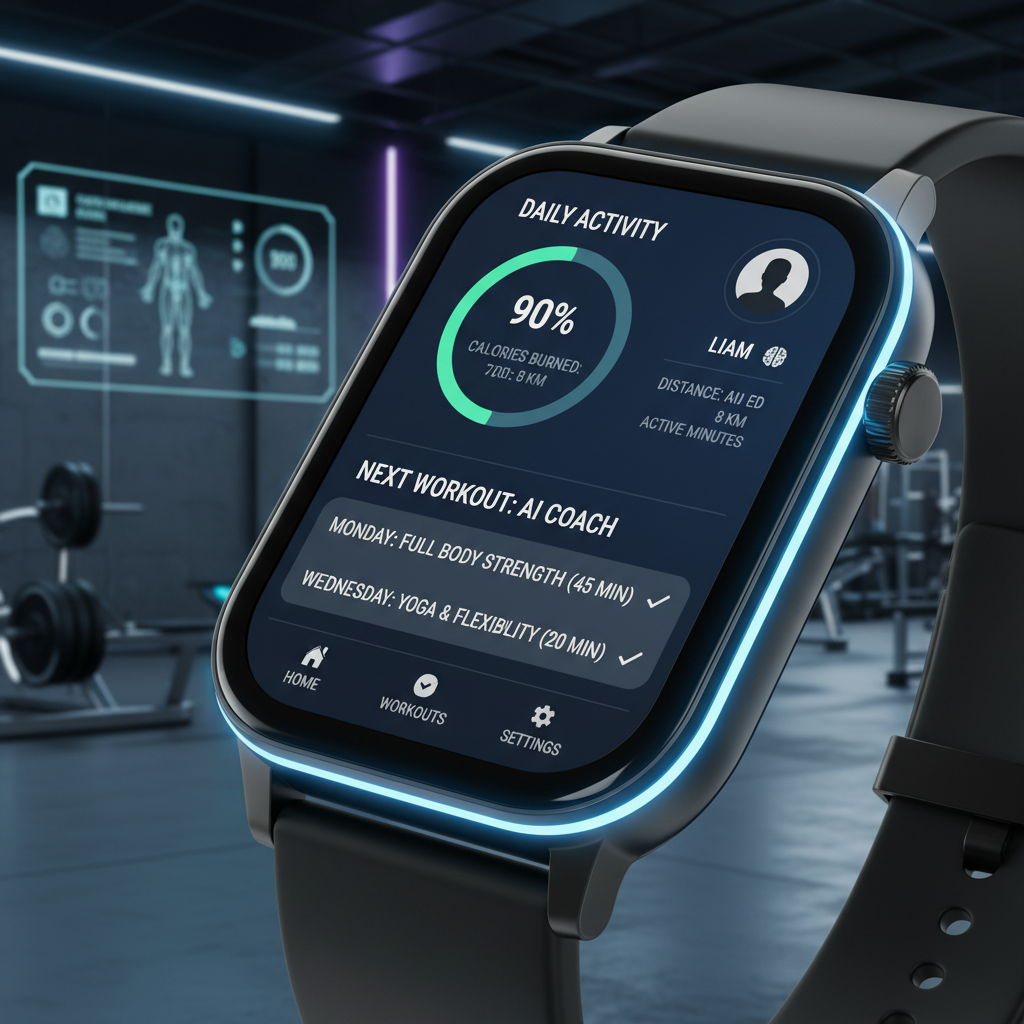
Scenario 4: Marketer’s Ad Campaign Visuals for a Tech Gadget
Challenge: A marketing team is tasked with creating eye-catching and diverse visuals for a new smartwatch campaign. They require a wide array of scenarios demonstrating the watch in active use, appealing to different demographic segments, and effectively conveying innovation and lifestyle benefits, all within an extremely tight campaign launch schedule and limited photography budget.
AI Art Application:
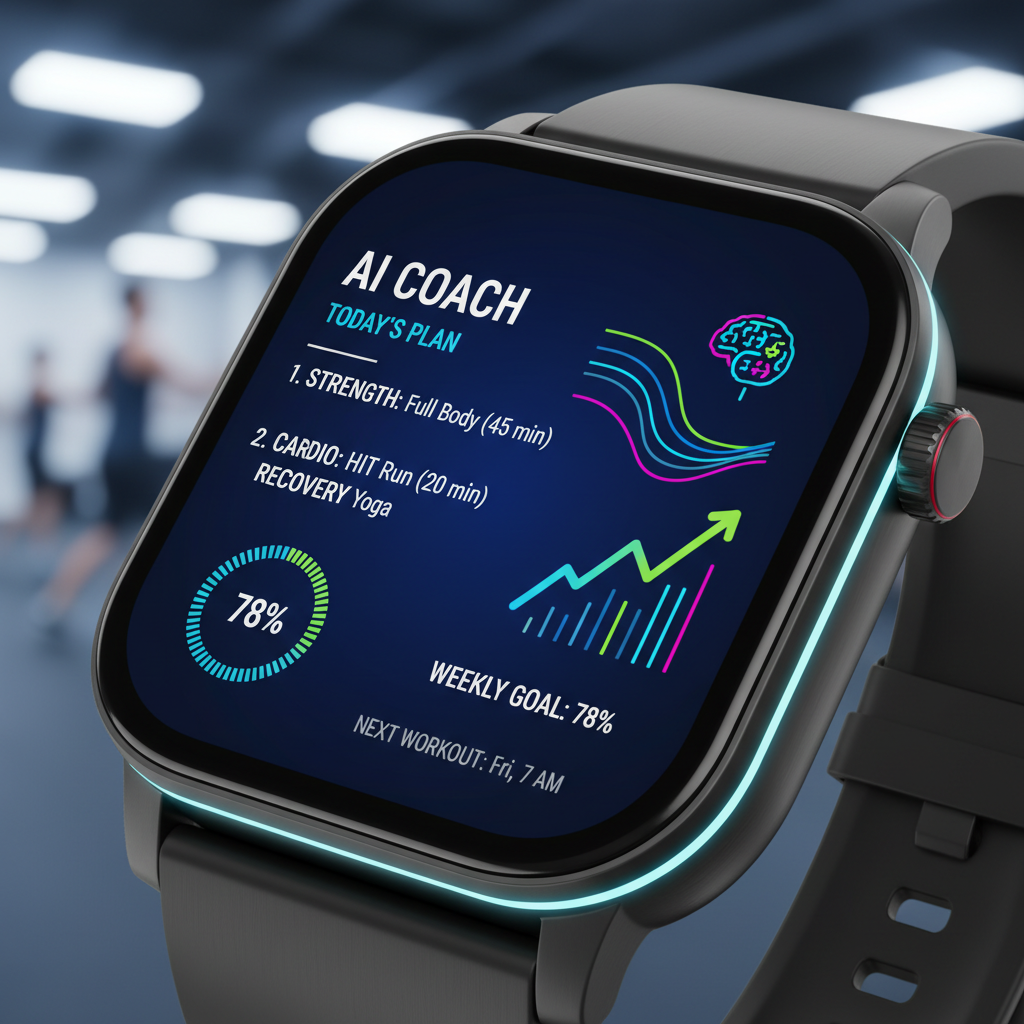
- Diverse Lifestyle Scenarios: Prompts like “person jogging in city park, wearing sleek smartwatch, dynamic motion blur, bright sunny morning, healthy active lifestyle” or “young professional using smartwatch in a minimalist office, high productivity, futuristic technology, focused expression” are used. The AI generates varied and compelling scenarios, significantly reducing the need for expensive and time-consuming photoshoots for initial conceptualization and ad testing.
- Dynamic Product Focus Shots: “Extreme close-up of a futuristic smartwatch on a glowing holographic pedestal, intricate details, reflective surface, high-tech aesthetic, dark background, volumetric lighting.” This provides a range of compelling product-focused imagery without the need for professional product photography for every single variation or angle.
- Thematic Backgrounds and Abstract Elements: “Abstract digital art background, glowing circuits, data streams, vibrant blue and purple colors, tech innovation, energy flows” to be used as compelling backdrops for ad copy, product mock-ups, or social media graphics, ensuring visual consistency and brand alignment.
Outcome: The marketing team rapidly generates a wide and diverse array of high-quality campaign visuals, allowing them to effectively test different messaging, target various audience segments, and explore diverse aesthetics before committing to final production. This not only achieves substantial cost savings and accelerates time-to-market but also ensures the campaign’s visual assets are highly innovative, uniquely engaging, and precisely targeted to maximize impact across all platforms.
These practical examples unequivocally illustrate that AI art is not merely a novelty tool for generating pretty pictures, but a strategic and transformative asset that streamlines complex design processes, fosters profound creative exploration, and ultimately leads to more innovative, impactful, and successful solutions across an extraordinarily diverse range of industries.
Frequently Asked Questions
Q: What are AI art generators and how do they fundamentally work?
A: AI art generators are sophisticated software tools that leverage artificial intelligence, specifically advanced machine learning models, to create images, illustrations, and various visual content from textual descriptions (known as “prompts”) or other inputs like existing images. The most advanced systems, such as Midjourney, DALL-E 3, and Stable Diffusion, are built upon deep learning architectures, most notably diffusion models. These models undergo extensive training on massive datasets comprising billions of images paired with their corresponding textual descriptions. During this training phase, the AI meticulously learns to recognize intricate patterns, diverse styles, myriad objects, and complex semantic relationships between words and visual elements. When a user provides a prompt, the AI essentially “reverses” this learned process: it begins with a noisy or random visual field and iteratively refines it, progressively removing noise and adding detail, guided by your textual prompt, until it synthesizes a coherent and visually compelling image that matches the description. It’s akin to giving an incredibly skilled artist a detailed creative brief, and they, drawing from an encyclopedic knowledge of art and concepts, create a unique piece.
Q: How can designers specifically benefit from integrating AI art into their daily workflow?
A: Designers can derive immense value and competitive advantage by consistently integrating AI art into their daily workflow in several transformative ways. Firstly, it serves as an unparalleled tool for overcoming creative blocks by providing an instant, diverse deluge of visual ideas based on even nascent or vague prompts, sparking new directions. Secondly, it enables rapid prototyping and iteration, allowing designers to explore hundreds of visual concepts, color schemes, and compositions in minutes rather than hours or days, drastically accelerating the ideation and refinement phases. Thirdly, it profoundly expands a designer’s visual lexicon, exposing them to novel styles, unexpected combinations, and diverse aesthetic approaches they might not have conceived independently. Fourthly, it cultivates and enhances crucial prompt engineering skills, refining their ability to precisely articulate visual intent and communicate effectively. Lastly, AI can efficiently handle the generation of base assets or variations, freeing up human designers to concentrate on higher-level strategic thinking, nuanced refinement, and adding the unique human touch, empathy, and artistic vision that truly elevates a design.
Q: Is AI art ultimately going to replace human designers, or is it a passing trend?
A: While AI art generators are undeniably powerful and rapidly evolving, the overwhelming consensus among industry experts, academics, and forward-thinking designers is that they will augment and empower, rather than replace, human designers. AI excels at generation, iteration, and pattern recognition, but it fundamentally lacks genuine intent, personal vision, emotional intelligence, deep cultural understanding, and the nuanced problem-solving capabilities unique to humans. Designers bring invaluable qualities such as empathy, critical judgment, ethical reasoning, an understanding of complex human needs, and the ability to connect a design to real-world impact and purpose. The role of the designer is evolving; rather than being solely a manual executor, they become more of a director, a discerning curator, a strategic thinker, and an ethical steward of AI output, leveraging AI for unprecedented efficiency and expansive exploration, while retaining absolute ownership of the overall creative vision, strategic intent, and final, human-centric refinement. It is a transformative tool that amplifies human creativity, not displaces it, and is far more than a passing trend.
Q: What are the best AI art generators for professional design use today?
A: Several AI art generators currently stand out for their capabilities in professional design contexts, each possessing distinct strengths that cater to different needs:
- Midjourney: Widely recognized for its exceptional artistic quality, Midjourney excels at generating visually stunning, evocative, and often surreal imagery. It’s particularly strong in understanding complex artistic styles and nuanced prompts, making it ideal for concept art, high-fidelity illustrations, and sophisticated mood boards.
- DALL-E 3 (accessed via ChatGPT Plus or Microsoft Copilot): Known for its superior understanding of complex, conversational prompts, DALL-E 3 is excellent for precise object generation, maintaining character consistency across multiple images, and accurately integrating text into generated visuals. It’s highly effective for specific illustrative requests and marketing content.
- Stable Diffusion (and its various interfaces/forks like Leonardo AI, Automatic1111): As an open-source powerhouse, Stable Diffusion offers unparalleled customization. It’s ideal for users who desire deep control, local installation capabilities, advanced features like inpainting/outpainting, and the ability to fine-tune models for highly specific styles or subjects, making it a favorite for niche creative projects and detailed asset generation.
- Adobe Firefly: Deeply integrated into the Adobe Creative Cloud ecosystem, Firefly focuses on commercial viability and features like “Generative Fill” and text effects. It’s particularly appealing for graphic designers already using Adobe products, offering a seamless workflow for enhancing existing assets and generating new ones within a familiar environment.
The “best” generator ultimately depends on the specific project requirements, the desired aesthetic, and the designer’s existing workflow and technical comfort level.
Q: How do I write effective prompts to consistently get the results I envision?
A: Crafting effective prompts is a nuanced skill that evolves with practice. To consistently get desired results, start by being exceedingly descriptive and specific. Your prompt should ideally include the primary subject, relevant adjectives (e.g., “majestic,” “vibrant,” “minimalist,” “gritty”), the desired artistic style or medium (e.g., “oil painting,” “cyberpunk anime,” “photorealistic,” “isometric vector art”), specific lighting conditions (e.g., “golden hour,” “neon glow,” “chiaroscuro”), the preferred composition or camera angle (e.g., “wide shot,” “close-up,” “dramatic low angle”), and the overall mood or atmosphere you wish to convey. Utilize evocative and precise language. Crucially, experiment with negative prompts (e.g., “–no blurry, low quality, deformed, watermark, text”) to actively exclude undesirable elements and guide the AI towards cleaner outputs. Approach it as an iterative process: generate several options from an initial prompt, then carefully refine your prompt based on what you like and dislike in those outputs. Researching keywords used by other successful artists or in specific art movements can also provide invaluable insights. Think of your prompt as a continuous, increasingly precise conversation with the AI, guiding it towards your ultimate creative vision one detail at a time.
Q: What are the key ethical concerns regarding AI art that designers should be acutely aware of?
A: The rapid advancement of AI art introduces several critical ethical concerns that designers must proactively address:
- Copyright and Ownership Ambiguity: The legal status of AI-generated art is still in flux. Many jurisdictions require human authorship for copyright. Designers must understand that purely AI-generated works might not be copyrightable, and should proceed with caution for commercial use, often requiring significant human modification to assert copyright.
- Training Data Bias: AI models learn from vast datasets that often reflect societal biases. This can lead to the AI generating stereotypical, unrepresentative, or even harmful imagery. Designers have a responsibility to be aware of these biases and actively work to counteract them through inclusive prompt engineering and critical evaluation of outputs for fairness and diversity.
- Attribution and Transparency: Ethically, designers should be transparent about the use of AI in their creative process. Clearly acknowledging AI’s involvement, even if formal legal attribution standards are ambiguous, fosters trust and an honest dialogue within the creative community and with clients.
- Misinformation and Deepfakes: The ability to create highly realistic AI-generated images carries the serious risk of generating convincing deepfakes and spreading misinformation. Responsible use demands integrity and a commitment not to deceive or manipulate public perception through AI-generated content.
Designers must commit to using AI tools ethically, transparently, and in a way that respects intellectual property, promotes inclusivity, and contributes positively to society.
Q: Can I use AI-generated art commercially, and what are the general rules or considerations?
A: The commercial use of AI-generated art is a complex area, primarily governed by the specific AI generator’s terms of service and the evolving legal landscape in your jurisdiction.
- Terms of Service are Paramount: Most commercial AI art generators (e.g., Midjourney, DALL-E 3, Adobe Firefly) explicitly grant users commercial rights to the images they create, typically under their paid subscription tiers. It is absolutely crucial to meticulously read and understand the specific terms of service for every AI tool you use, as they can vary significantly.
- Copyright Law and Human Authorship: In many countries (e.g., the United States), traditional copyright generally requires a degree of human authorship and creative input. Purely AI-generated art, without substantial human modification, may not be eligible for copyright protection, meaning it could potentially fall into the public domain or be subject to different legal frameworks. However, if a human designer significantly modifies, refines, curates, or integrates the AI output into a larger original work, human authorship can often be asserted over the resulting modified creation.
- Originality and Derivative Works: Exercise extreme caution if an AI output appears too similar to existing copyrighted works, as this could still lead to claims of derivative infringement, even if the AI itself “created” the image.
- Transparency and Licensing: For high-stakes commercial projects, it is often advisable to use AI-generated images primarily as inspiration, a base layer, or for conceptual exploration. Applying substantial human editing, creative input, and potential licensing of underlying components can help ensure originality and mitigate legal risks. Consulting legal counsel for specific advice on critical commercial projects is highly recommended.
Q: How can AI art effectively help me overcome creative blocks and consistently spark new ideas?
A: AI art is an exceptionally powerful and dynamic tool for breaking through creative blocks and fostering continuous inspiration. When faced with a lack of fresh ideas or a stagnant mental state, a designer can input even a fragmented thought, a single keyword, an abstract concept, or a challenging prompt into an AI generator. The AI will then immediately produce a myriad of visual interpretations, often in styles, compositions, or combinations that a human might not instantly conceive. This instantaneous visual feedback acts as a potent stimulant, providing new and unexpected directions, suggesting innovative juxtapositions, and offering fresh perspectives that can bypass mental barriers. It helps externalize abstract thoughts and transform them into concrete, tangible images, allowing the designer to quickly identify elements that resonate and iteratively build upon them. It’s akin to having an infinite, unbiased brainstorming partner that can generate hundreds of unique visual concepts in moments, keeping the creative flow continuous, dynamic, and ever-evolving, ensuring that inspiration is always just a prompt away.
Q: What new skills or competencies do I need to learn to effectively use AI art in my design practice?
A: To effectively leverage AI art in modern design, professionals need to cultivate a dynamic blend of traditional design mastery and crucial new AI-specific competencies:
- Advanced Prompt Engineering: This is arguably the most critical new skill – the ability to communicate effectively, precisely, and imaginatively with the AI through sophisticated textual prompts to achieve desired visual outcomes.
- Critical Curation and Selection: The capacity to judiciously discern, select, and refine high-quality, relevant, and ethically sound AI outputs from the vast array of generated images, applying a discerning eye and strong aesthetic judgment.
- Proficiency in Traditional Design Software: AI output often serves as a foundational starting point. Strong skills in traditional image editing software (like Photoshop, Illustrator, Figma, or 3D modeling tools) for refinement, compositing, post-processing, and seamless integration are absolutely essential.
- Enhanced Aesthetic Judgment and Design Principles: A profound understanding of core design principles (composition, color theory, typography, visual hierarchy, balance) is vital for effectively guiding the AI, refining its outputs, and ensuring the final design is coherent and impactful.
- Iterative and Experimental Thinking: A genuine willingness to experiment fearlessly, embrace an iterative design process, and continuously refine prompts based on generated results is key to unlocking AI’s full potential.
- Ethical AI Awareness and Responsibility: A deep understanding of the ethical implications of AI art, including copyright, bias, attribution, and responsible usage, is paramount for navigating the evolving landscape professionally.
In essence, AI elevates the designer’s role, requiring them to be more of a visionary director, a meticulous editor, and a strategic problem-solver, rather than solely a manual executor of tasks.
Q: How does AI art impact traditional design education and skill development for future designers?
A: AI art is fundamentally reshaping traditional design education and the future of skill development for emerging designers. Its impact is shifting the emphasis from purely manual execution skills towards higher-level conceptualization, critical thinking, and advanced technology integration. Future design curricula will increasingly incorporate:
- Prompt Engineering as a Core Creative Skill: Teaching students not just how to use tools, but how to effectively communicate and collaborate with AI for visual generation and conceptualization.
- AI Workflow Integration Strategies: Demonstrating how to seamlessly blend AI tools with traditional software like Photoshop, Illustrator, Figma, and 3D packages to optimize efficiency and expand creative possibilities.
- Ethical AI Design Principles: Providing comprehensive education on copyright law, inherent biases in AI, responsible AI usage, data privacy, and the broader societal and cultural impact of AI-generated content.
- Curation, Refinement, and Human Intent: Emphasizing the critical importance of human judgment in selecting, refining, and imbuing AI outputs with unique artistic vision, strategic intent, and emotional resonance.
- Enhanced Conceptual Design and Problem-Solving: Strengthening the focus on strategic thinking, empathy-driven design, user experience, and understanding complex client needs, as these remain uniquely human domains where AI currently cannot replicate genuine understanding.
Future designers will need to be agile, adaptable learners, constantly evolving their skill sets to integrate new technologies while maintaining a robust foundation in core design principles, critical thinking, and human-centered design philosophy. The goal is to train designers who can confidently and ethically leverage AI as a powerful creative assistant, enabling them to achieve new levels of innovation and impact.
Key Takeaways
- Daily engagement with AI art generators is a profound strategy for overcoming creative blocks, fostering continuous inspiration, and accelerating the ideation process.
- AI art significantly accelerates design ideation and iteration cycles, enabling rapid exploration of hundreds of diverse visual concepts, styles, and compositions.
- Mastering prompt engineering is paramount; it is the critical language for effectively communicating with AI and unlocking its full, expansive creative potential.
- Integrating AI art into the design workflow fundamentally transforms it, allowing human designers to focus on higher-level strategic thinking, artistic refinement, and conceptual development.
- Designers must cultivate a strong ethical awareness regarding issues like copyright, attribution, and biases in AI-generated content, ensuring responsible and transparent use.
- The future of design envisions AI as an increasingly integrated creative partner, augmenting human capabilities through seamless software integration, personalized models, and real-time interaction.
- Overcoming the AI art learning curve involves starting simple, embracing iterative experimentation, learning from communities, and always applying essential human post-processing and critical curation.
- AI art powerfully empowers designers to explore and deliver truly innovative solutions across an extraordinarily diverse range of industries, from graphic design and game development to architecture and marketing.
Conclusion
The journey into daily AI art for innovative design is far more than just an exploration of new digital tools; it represents a profound and exhilarating reimagining of the creative process itself. We stand at the precipice of a new era where artificial intelligence no longer solely serves as a computational engine but emerges as a legitimate, powerful, and deeply integrated partner in artistic endeavors. By actively embracing AI art generators as a regular, consistent part of their workflow, designers can unlock an unprecedented wellspring of imagination, systematically dismantle traditional creative barriers, and accelerate their path to delivering truly groundbreaking and impactful designs.
From the instantaneous generation of compelling mood boards that resonate with precise emotions to the rapid iteration of complex character concepts for immersive digital worlds, AI empowers designers to think bigger, experiment bolder, and execute faster than ever before. It fosters a continuous and dynamic feedback loop between human intuition and machine intelligence, where carefully crafted words effortlessly translate into expansive visual worlds, and fleeting thoughts materialize into vivid, tangible visuals within moments. While the ethical considerations and legal ambiguities surrounding AI art are indeed real and warrant careful navigation and ongoing diligence, the profound benefits for innovation, efficiency, and expanded creative horizons are undeniably transformative.
The unequivocal message is clear: AI is not a looming threat to the irreplaceable essence of human creativity, but rather a powerful and indispensable enhancer of it. It judiciously liberates designers from the mundane, repetitive, and labor-intensive aspects of their work, allowing them to focus their invaluable time and energy on the strategic, the conceptual, the deeply human, and the truly empathetic aspects of their craft. As we gaze into the future, the synergistic collaboration between human creativity and artificial intelligence promises to be one of the most exciting, dynamic, and profoundly transformative forces in the entire design world. So, step forward with confidence, embrace the power of the prompt, and let AI elevate your imagination to design innovations that were once only the most ambitious of dreams. The future of design is an exciting and ongoing dialogue, and AI is ready to listen, learn, and respond with unparalleled creative potential.





































Leave a Reply