

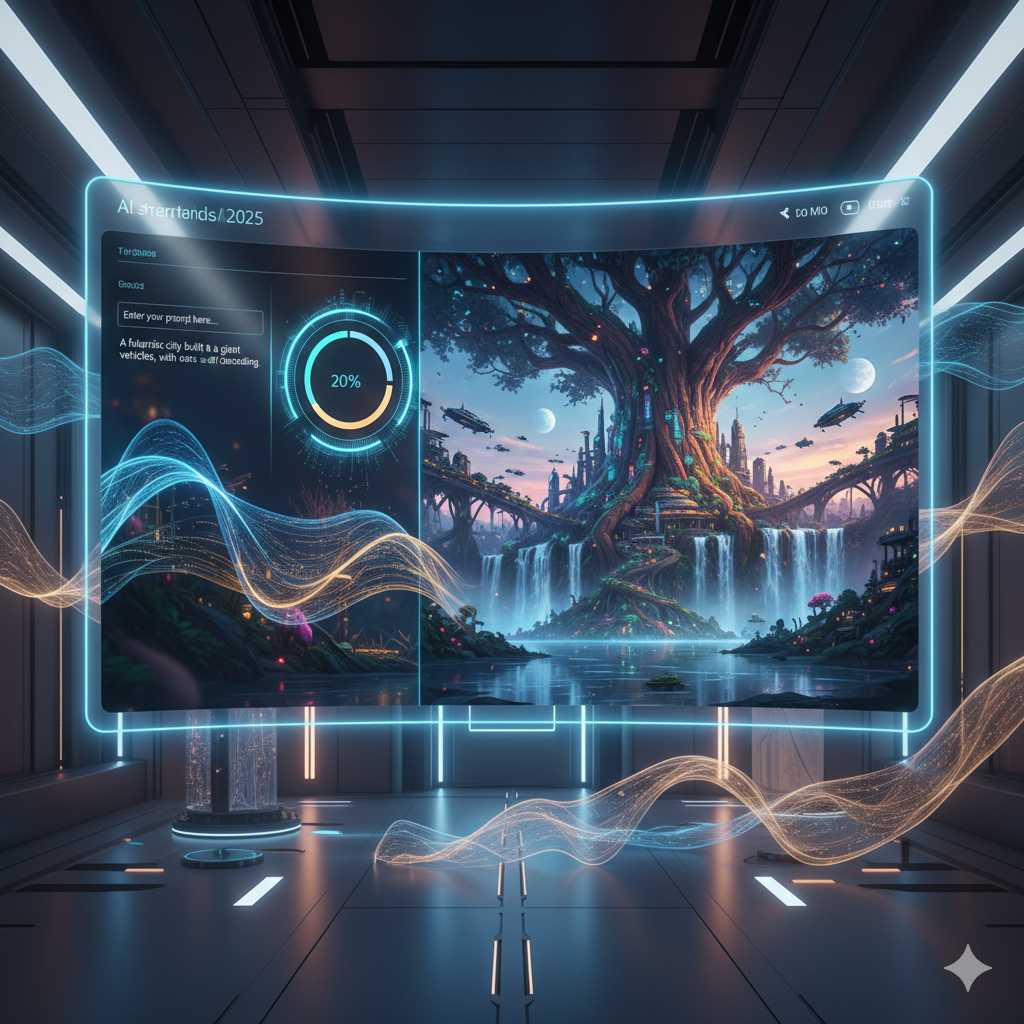
From Text to Visuals: A Deep Dive into Photorealistic AI Art Tools
In a world increasingly shaped by artificial intelligence, the ability to conjure images from mere words has transitioned from science fiction to everyday reality. AI art generation tools have democratized creativity, allowing anyone to become a visual artist with nothing more than a text prompt. However, there’s a significant leap between generating a passable image and creating something that is truly photorealistic, something that blurs the line between AI creation and a photograph captured by a high-end camera.
Achieving photorealism in AI-generated art is not just about typing a few descriptive words. It is an intricate dance of precise language, an understanding of digital imaging principles, and a deep familiarity with the nuances of the AI model you are using. It requires a strategic approach to prompt engineering, moving beyond simple keywords to craft detailed, multi-layered instructions that guide the AI towards a desired, lifelike outcome. This comprehensive guide will equip you with the advanced prompting techniques, practical insights, and knowledge of the latest tools to master the art of photorealistic AI visuals.
Whether you’re an aspiring digital artist, a content creator looking to generate stunning visuals, or simply curious about the cutting edge of AI, this article will serve as your ultimate resource. We will delve into the core mechanics of AI image generation, dissect the components of an advanced prompt, explore the power of modifiers and negative prompts, and compare the leading tools that make photorealism possible. Prepare to transform your textual ideas into breathtakingly lifelike imagery.
1. Understanding the Core Mechanics of AI Image Generation
Before we dive into the nitty-gritty of advanced prompting, it is crucial to understand the foundational technology powering these incredible transformations: Diffusion Models. At their heart, most modern text-to-image AI systems, including Stable Diffusion, Midjourney, and DALL-E 3, operate on principles rooted in diffusion. Imagine starting with pure visual noise, like static on an old television screen. The AI’s job is to iteratively remove this noise, gradually shaping it into a coherent image based on the instructions it receives from your text prompt.
1.1 The Diffusion Process Explained
A diffusion model works in two main phases: a forward diffusion process and a reverse diffusion process. In the forward pass, the model learns to gradually add noise to an image until it becomes pure noise. In the reverse pass, it learns to denoise a noisy image step by step, essentially reversing the forward process. When you give a text prompt, the AI uses a text encoder to convert your words into a numerical representation that it can understand. This numerical representation then guides the denoising process. It tells the model, “As you remove the noise, make sure the output resembles this concept.”
1.2 The Latent Space and Prompt Engineering
AI models do not generate images pixel by pixel in a literal sense. Instead, they operate within a “latent space” – a compressed, abstract representation of images. Think of it as a vast, multi-dimensional library where similar visual concepts are located close to each other. Your prompt helps the AI navigate this latent space, steering it towards the region that best matches your description. Prompt engineering, therefore, is the art and science of crafting precise instructions to effectively communicate your vision to the AI, guiding it to the exact spot in this latent space that holds your desired photorealistic image.
1.3 Guidance Scale and Image Fidelity
Another critical concept is the Classifier-Free Guidance Scale (CFG scale) or a similar parameter (like Midjourney’s Style value). This setting dictates how strongly the AI should adhere to your prompt versus how much artistic freedom it should take. A higher CFG scale means the AI will try harder to match your prompt verbatim, often resulting in images that are more structured and detailed but can sometimes feel less creative or more ‘literal’. For photorealism, finding the right balance is key. Too low, and your image might lack detail or diverge from your vision; too high, and it might over-emphasize certain elements or produce artifacts. Experimentation with this parameter is vital for fine-tuning your photorealistic outputs.
2. Deconstructing the Advanced Prompt: Beyond Simple Keywords
The journey to photorealism begins with a fundamental shift in how you construct your prompts. Gone are the days of single-word descriptors. Advanced prompting for photorealism demands a structured, layered approach that leaves little to the AI’s imagination. We need to think like a photographer setting up a shot, or a film director crafting a scene.
2.1 The Anatomy of a Powerful Photorealistic Prompt
A highly effective photorealistic prompt can often be broken down into several distinct components, each contributing to the final output:
- Subject: Clearly define what the main focus of your image is. Be specific. Instead of “man,” consider “elderly man with a weathered face.”
- Action/Pose/Emotion: What is the subject doing? How are they feeling? “Smiling gently,” “gazing into the distance,” “running through a field.”
- Environment/Setting: Where is this scene taking place? Describe the location, time of day, and any relevant atmospheric conditions. “Busy Tokyo street at night, neon lights reflecting on wet pavement.”
- Lighting: This is paramount for realism. Specify the type, direction, and color temperature of the light. “Softbox lighting from the left,” “golden hour sunlight,” “harsh fluorescent lights.”
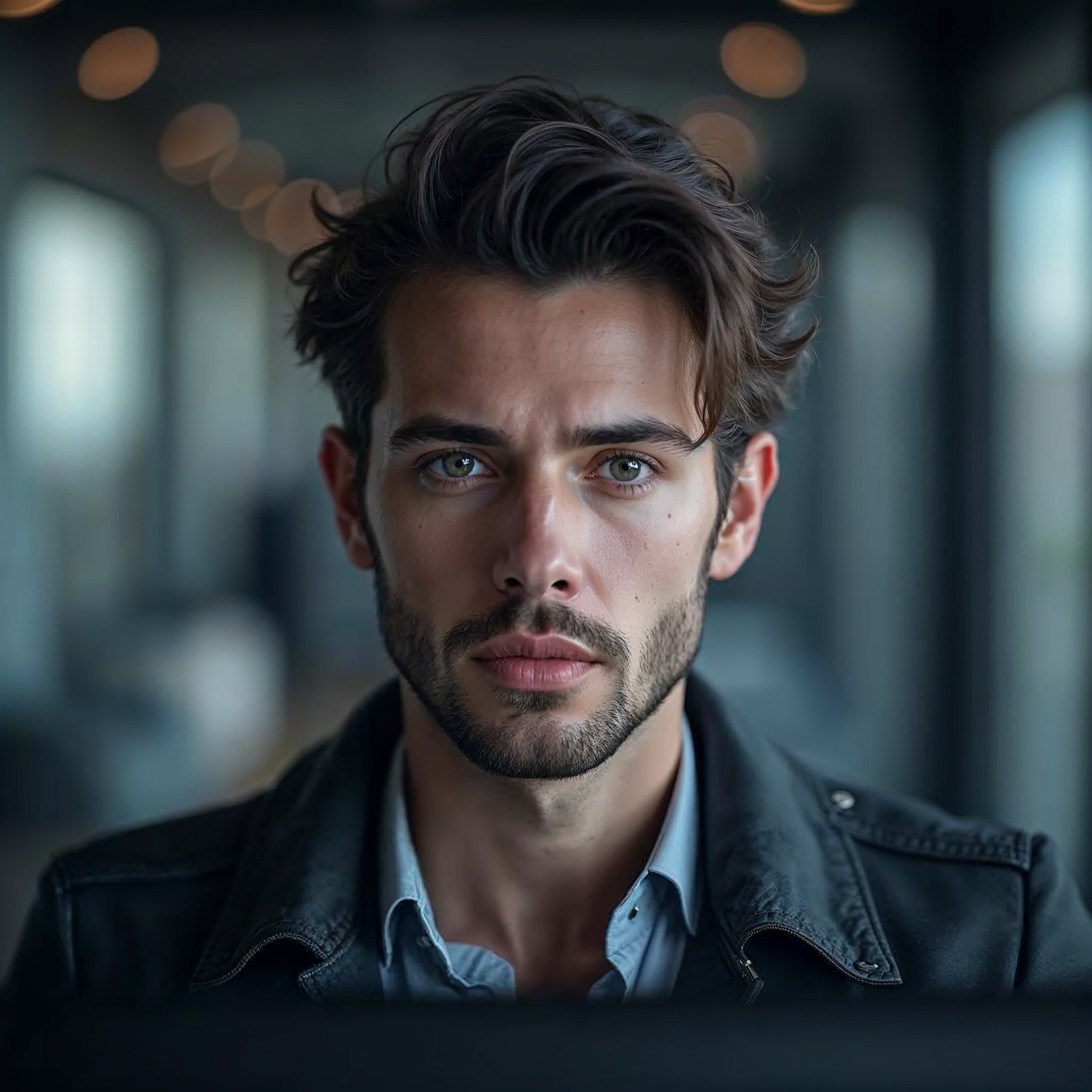
- Camera/Composition: Think like a cinematographer. What lens are you using? What’s the shot angle? What’s in focus? “Close-up portrait, 85mm lens, f/1.8, shallow depth of field, bokeh background.”
- Artistic Style/Quality Modifiers: Even for photorealism, you need to tell the AI it’s a “photo.” Use terms like “photorealistic,” “ultra detailed,” “8k,” “cinematic photo,” “award-winning photography.”
- Additional Details/Props: Any extra elements that enrich the scene. “Raindrops on a window pane,” “steaming cup of coffee on a wooden table.”
2.2 The Power of Descriptive Language and Sensory Details
The AI doesn’t just process keywords; it interprets concepts. The more descriptive and evocative your language, the better the AI can conceptualize the scene. Instead of “flowers,” try “vibrant crimson roses with dewdrops glistening on their petals.” Engage the senses: the texture of rough brick, the smell of damp earth after rain (implied visually), the sound of distant city hum (implied by the setting). Specific adjectives, adverbs, and strong verbs are your allies in painting a vivid mental picture for the AI.
2.3 Prompt Weighting and Emphasis
Some AI models allow you to assign varying degrees of importance or “weights” to different parts of your prompt. For instance, in Stable Diffusion, you might use parentheses and numbers like `(subject:1.2)` to make “subject” 20% more important than other elements. Midjourney uses a double colon syntax like `subject::2` to emphasize a term. This feature is incredibly powerful for guiding the AI’s focus and ensuring that critical elements of your photorealistic vision are prioritized. For example, if you want a specific type of lighting to dominate, you can give it a higher weight.
3. Mastering Modifiers: The Alchemy of Detail
Modifiers are the secret sauce of photorealism. They are specific keywords or phrases that fine-tune various aspects of the image, from its visual fidelity to its mood and atmosphere. Mastering them is like having an arsenal of creative controls at your fingertips.
3.1 Style and Quality Modifiers
These modifiers instruct the AI on the overall aesthetic and technical quality of the output. They are essential for signaling that you want a photographic rather than an illustrative style:
- Photorealistic: The most straightforward way to convey your intent.
- Hyperrealistic, Ultra-detailed: Pushes the boundaries of realism, adding intricate textures and fine details.
- 8K, 4K, UHD: Specifies the desired resolution and, by extension, the level of detail.
- Cinematic photo, Award-winning photography, Professional photo: Evokes a high-quality, expertly composed photographic style.
- DSLR photo, Shot on Canon EOS R5: Can suggest specific camera characteristics, like sensor size and lens quality.
- Sharp focus, High resolution, Intricate details: Reinforces the desire for clarity and fidelity.
- Vray render, Octane render, Unreal Engine: While technically rendering engines, these terms are often understood by AI to mean extremely high-quality, realistic 3D-like rendering, which translates well to photorealism.
- Film grain, Analog photo: Adds a classic, tactile feel that can enhance realism by mimicking traditional photography.
3.2 Lighting Modifiers
Lighting is perhaps the single most important factor in achieving photorealism, as it defines mood, depth, and texture. Describe the light source, its quality, direction, and color temperature:
- Golden hour, Magic hour: Warm, soft, diffused light, typically just after sunrise or before sunset. Excellent for portraits and landscapes.
- Rim light, Backlighting: Light source behind the subject, creating a glow around edges and separating it from the background.
- Softbox lighting, Studio lighting: Diffused, even light, commonly used in professional studio photography.
- Volumetric lighting, God rays: Light rays visible through atmospheric haze or dust, creating dramatic effects.
- Dramatic lighting, Chiaroscuro: High contrast between light and shadow, often used for intense emotional impact.
- Ambient light: Natural, soft, all-encompassing light, often without a distinct source.
- Contre-jour: Shooting into the light, creating silhouettes or lens flare.
- Neon lighting, Fluorescent lighting, Tungsten lighting: Specifies artificial light sources and their characteristic colors/qualities.
- Natural light: Emphasizes the absence of artificial lighting, lending an organic feel.
3.3 Camera and Composition Modifiers
These terms guide the AI in terms of framing, perspective, and depth:
- Focal length (e.g., 50mm, 85mm, 200mm wide angle): Simulates different lenses, affecting perspective and compression. 50mm is often considered closest to human vision.
- Aperture (e.g., f/1.8, f/2.8, f/11): Controls depth of field. A low f-number (e.g., f/1.8) creates shallow depth of field with creamy bokeh, while a high f-number (e.g., f/11) keeps more of the scene in focus.
- Shallow depth of field, Bokeh background: Explicitly asks for a blurred background, drawing focus to the subject.
- Wide shot, Close-up, Full shot, Medium shot: Defines the distance and framing of the subject.
- Eye-level shot, Low-angle shot, High-angle shot, Drone shot: Specifies the camera’s vertical position relative to the subject.
- Dutch angle, Tilt-shift photography: Unique compositional techniques.
- Rule of thirds, Leading lines, Symmetrical composition: Guides the AI on classical compositional principles.
- Lens flare, Vignette: Adds photographic imperfections that can enhance realism.
3.4 Texture and Material Modifiers
For truly lifelike visuals, describing textures is crucial:
- Wet, Damp, Frosty, Dusty: Adds environmental effects.
- Rough, Smooth, Gritty, Glossy, Matte: Describes surface characteristics.
- Skin texture, Hair strands, Fabric weave: Specific details for organic and manufactured elements.
- Subsurface scattering: A rendering technique where light penetrates a translucent surface, scatters, and exits at a different point (e.g., skin, wax, marble). Essential for realistic organic subjects.
4. Negative Prompts: The Art of Exclusion
While positive prompts tell the AI what you want to see, negative prompts tell it what you explicitly do not want to see. This often overlooked aspect of prompt engineering is absolutely crucial for achieving photorealism, as it helps filter out common AI artifacts and undesirable traits.
4.1 Why Negative Prompts are Essential for Realism
AI models, particularly earlier versions or less fine-tuned ones, can be prone to certain recurring issues: deformities, strange anatomy, blurry elements, or a tendency to generate illustrations when you want photos. Negative prompts act as a powerful filter, guiding the AI away from these pitfalls. They are especially effective in correcting:
- Anatomical Errors: AI often struggles with hands, feet, and facial symmetry.
- Image Quality Issues: Blurriness, low resolution, pixelation.
- Stylistic Deviations: Preventing the image from looking like a painting, drawing, cartoon, or rendering.
- Undesirable Elements: Specific objects or features you want to exclude from the scene.
4.2 Common and Advanced Negative Prompts
Here’s a list of highly effective negative prompts to incorporate into your workflow:
- General Quality:
(blurry:1.3), ugly, deformed, disfigured, poor quality, bad quality, low quality, low resolution, grainy, pixelated, jpeg artifacts, watermarks - Anatomical Corrections:
bad anatomy, extra limbs, missing limbs, malformed limbs, fused fingers, too many fingers, too few fingers, bad hands, mutated hands, extra fingers, missing fingers, malformed hands, bad eyes, poorly drawn eyes, cross-eyed, mutated, mutilated - Stylistic Exclusion:
(drawing:1.5), (painting:1.5), (illustration:1.5), (sketch:1.5), cartoon, anime, manga, 3d render, low poly, text, signature, watermark, logo, frame, border, out of frame - Color/Tone Control:
grayscale, monochrome, sepia, oversaturated, underexposed, overexposed - Specific Objects (if unwanted):
fruit, car, tree(use cautiously, only when contextually relevant to exclude) - Compositional Issues:
cropped, cut off, error, missing elements, too dark, too bright
Remember that some negative prompts might need weighting (e.g., using `(drawing:1.3)` in Stable Diffusion) to ensure the AI strongly avoids that style. The specific negative prompts and their optimal weighting can also vary slightly between different AI models and checkpoints.
5. Iteration and Refinement: The Path to Perfection
Generating a perfect photorealistic image rarely happens on the first try. AI art is an iterative process, much like traditional photography or painting. Success lies in continuous experimentation, observation, and refinement.
5.1 The Importance of Experimentation and Seed Values
Every AI image generation starts with a “seed” – a random number that initializes the noise pattern. Using the same seed with the same prompt and parameters will (usually) generate the exact same image. This is incredibly useful for making small, controlled adjustments:
- Generate an image you like but want to tweak.
- Note its seed value (most tools provide this).
- Keep the seed value, make a small change to your prompt (e.g., adjust a lighting modifier, add a new detail).
- Generate again. This allows you to see the direct impact of your prompt alteration without the variability of a new random seed.
Experiment with different seed values to explore a wider range of possibilities if your initial attempts are not hitting the mark.
5.2 Exploring Different Samplers and Checkpoints
The “sampler” or “scheduler” determines how the AI denoises the image step by step. Different samplers (e.g., Euler, DPM++ SDE Karras, DDIM, PLMS) have distinct characteristics in terms of speed, quality, and the aesthetic of the noise reduction. For photorealism, some samplers might produce sharper details or smoother gradients. It is worth experimenting with a few to see which yields the most lifelike results for your specific model and prompt.
For open-source tools like Stable Diffusion, the concept of “checkpoints” (or models) is vital. A checkpoint is a fully trained model, often fine-tuned on specific datasets. Many community-created checkpoints are explicitly trained for photorealism (e.g., Realistic Vision, Juggernaut XL, Photon, etc.). Choosing the right base model is arguably one of the most critical decisions for photorealistic output. These models have learned the nuances of real-world photography and textures, making them inherently better at generating lifelike images.
5.3 Image-to-Image (img2img) and ControlNet for Precision
When you have an existing image that you want to transform or use as a base, img2img is your go-to technique. You provide an input image along with a text prompt, and the AI will reinterpret the image based on your prompt, while still retaining some of the original’s structure or style. This is excellent for:
- Stylistic transfer (making a sketch look like a photo).
- Refining existing AI outputs.
- Adding realistic textures to a basic shape.
ControlNet, available primarily for Stable Diffusion, represents a monumental leap in precise control. It allows you to feed an input image and extract specific information from it – such as a pose (OpenPose), depth map, edge detection (Canny), or segmentation map – and then use that information to guide the AI generation. For photorealism, ControlNet is invaluable for:
- Pose Control: Ensuring human figures are in a specific, natural pose.
- Compositional Fidelity: Maintaining the layout and structure of a reference image.
- Depth and Perspective: Guiding the AI to understand the 3D space of the scene.
By using ControlNet, you can overcome many common AI limitations, especially concerning anatomical correctness and coherent scene construction, pushing the boundaries of realism.
6. Harnessing Specific AI Tools for Photorealism
The landscape of AI art tools is constantly evolving, with new capabilities emerging rapidly. While the underlying principles of prompting remain consistent, each tool has its own strengths, quirks, and optimal parameters for achieving photorealism.
6.1 Midjourney: The Aesthetic Powerhouse
Midjourney is renowned for its artistic prowess and user-friendliness. While historically leaning towards a more illustrative or painterly style, recent versions, particularly V6, have made significant strides in photorealism. Key aspects for photorealism in Midjourney include:
- V6’s Enhanced Prompt Adherence: This version is much better at understanding long, complex, and grammatically correct prompts, reducing the need for extensive keyword stuffing.
--style rawParameter: This parameter lessens Midjourney’s default artistic stylization, allowing for a more photographic and less ‘filtered’ output. It’s often essential for photorealism.- Specific Camera/Lighting Keywords: Midjourney responds exceptionally well to detailed camera models, lens types, film stocks, and lighting conditions (e.g., “shot on Arri Alexa, cinematic lighting, f/1.4”).
- Aspect Ratios (
--ar): Using standard photographic aspect ratios (e.g.,--ar 3:2,--ar 16:9) can subtly push the AI towards a photographic aesthetic. - Negative Prompts: While Midjourney primarily uses the
--noparameter for negative prompts, for V6, simply including negative concepts in the main prompt (e.g., “not cartoonish, no drawing”) can be surprisingly effective due to its improved understanding.
6.2 Stable Diffusion (SDXL): The Customizable Workhorse
Stable Diffusion, particularly the latest SDXL (Stable Diffusion XL) models, offers unparalleled flexibility and control, especially for users who can run it locally or use platforms like InvokeAI, Automatic1111, or ComfyUI. SDXL brings several advantages for photorealism:
- Higher Native Resolution: SDXL generates images at a higher base resolution (1024×1024), which means more inherent detail and less upscaling needed.
- Two-Prompt System: SDXL uses a clever architecture that processes two prompts simultaneously – a base prompt and a refiner prompt. This allows for incredibly nuanced control over both general composition and fine details.
- Vast Ecosystem of Checkpoints and LORAs: The open-source community has developed countless photorealistic checkpoints and LoRAs (Low-Rank Adaptation) that are specifically fine-tuned for generating hyperrealistic images of people, landscapes, objects, etc. This is Stable Diffusion’s greatest strength.
- ControlNet Integration: As discussed, ControlNet’s ability to precisely guide composition, pose, and depth is a game-changer for achieving specific photorealistic scenes.
- Inpainting and Outpainting: For refining parts of an image or extending its borders realistically, Stable Diffusion’s inpainting and outpainting capabilities are top-tier.
6.3 DALL-E 3: Natural Language Understanding Champion
DALL-E 3, often integrated with ChatGPT, stands out for its exceptional natural language understanding. It is remarkably good at interpreting complex, descriptive prompts without needing the intricate keyword engineering often required by other models. For photorealism, DALL-E 3 shines in:
- Interpreting Complex Scenes: Its ability to understand nuances, relationships between objects, and intricate descriptions means you can write more narrative-style prompts and still get accurate results.
- Strong Consistency: DALL-E 3 often maintains better consistency in complex scenes with multiple elements.
- Reduced Need for Technical Jargon: While technical terms still help, DALL-E 3 can infer a lot from plain English descriptions. For example, describing “a photo taken with a professional camera” might be enough to get a photorealistic output.
- Seamless Negative Prompting: Often, simply stating what you “don’t want” within your regular prompt works effectively, as DALL-E 3’s understanding helps it avoid those elements.
While DALL-E 3 offers incredible ease of use, it generally provides less granular control compared to Stable Diffusion (especially with ControlNet) or the artistic tunability of Midjourney for advanced users.
7. Case Studies: Breaking Down Photorealistic Masterpieces
Let’s put theory into practice with some detailed prompt examples and analyze how each component contributes to the photorealistic outcome.
7.1 Case Study 1: The Gritty Urban Portrait
Prompt: Close-up portrait of an elderly man with a weathered face, deep wrinkles around his eyes, piercing blue eyes, an expression of profound contemplation, standing on a dimly lit, rain-slicked street in a cyberpunk city. Neon lights from distant billboards reflect on the wet pavement. Shot with a Canon EOS R5, 85mm lens, f/1.8, shallow depth of field, subtle film grain, dramatic rim lighting from behind, professional studio photography, hyperrealistic, ultra detailed, 8k. Negative prompt: blurry, ugly, deformed, bad anatomy, cartoon, drawing, painting, extra limbs.
- Subject & Emotion: “elderly man with a weathered face, deep wrinkles around his eyes, piercing blue eyes, an expression of profound contemplation” sets up the human element and emotional depth.
- Environment & Atmosphere: “dimly lit, rain-slicked street in a cyberpunk city. Neon lights from distant billboards reflect on the wet pavement” creates a specific, detailed, and atmospheric backdrop.
- Camera & Composition: “Close-up portrait, Canon EOS R5, 85mm lens, f/1.8, shallow depth of field” directly mimics professional portrait photography settings, crucial for the ‘photograph’ look.
- Lighting: “dramatic rim lighting from behind” emphasizes the subject’s contours and separates him from the background, adding depth and drama.
- Style & Quality: “subtle film grain, professional studio photography, hyperrealistic, ultra detailed, 8k” reinforces the desired photographic fidelity and resolution.
- Negative Prompt: Filters out common AI artifacts and non-photographic styles.
7.2 Case Study 2: The Ethereal Landscape
Prompt: Majestic, ancient redwood forest, massive trees piercing through a thick, mystical fog, golden hour sunlight filtering through the canopy, creating visible light rays and atmospheric haze. Forest floor covered in vibrant green moss and ferns, with dewdrops glistening. Wide-angle shot, 24mm lens, f/11, deep depth of field, high dynamic range, cinematic landscape photography, ultra detailed, award-winning photo, sharp focus. Negative prompt: blurry, low quality, pixelated, ugly, cartoon, drawing, painting, people, structures.
- Subject & Environment: “Majestic, ancient redwood forest, massive trees piercing through a thick, mystical fog” sets the scene with a sense of grandeur and mystery. “Forest floor covered in vibrant green moss and ferns, with dewdrops glistening” adds crucial micro-details for realism.
- Lighting: “golden hour sunlight filtering through the canopy, creating visible light rays and atmospheric haze” is key for creating depth, warmth, and a magical, realistic atmosphere.
- Camera & Composition: “Wide-angle shot, 24mm lens, f/11, deep depth of field” ensures the entire grand scene is in sharp focus, typical for landscape photography. “High dynamic range” helps capture details in both shadows and highlights.
- Style & Quality: “cinematic landscape photography, ultra detailed, award-winning photo, sharp focus” further guides the AI toward a professional, high-quality output.
- Negative Prompt: Excludes common flaws and ensures no unwanted elements like people or buildings appear.
7.3 Case Study 3: The Product Showcase
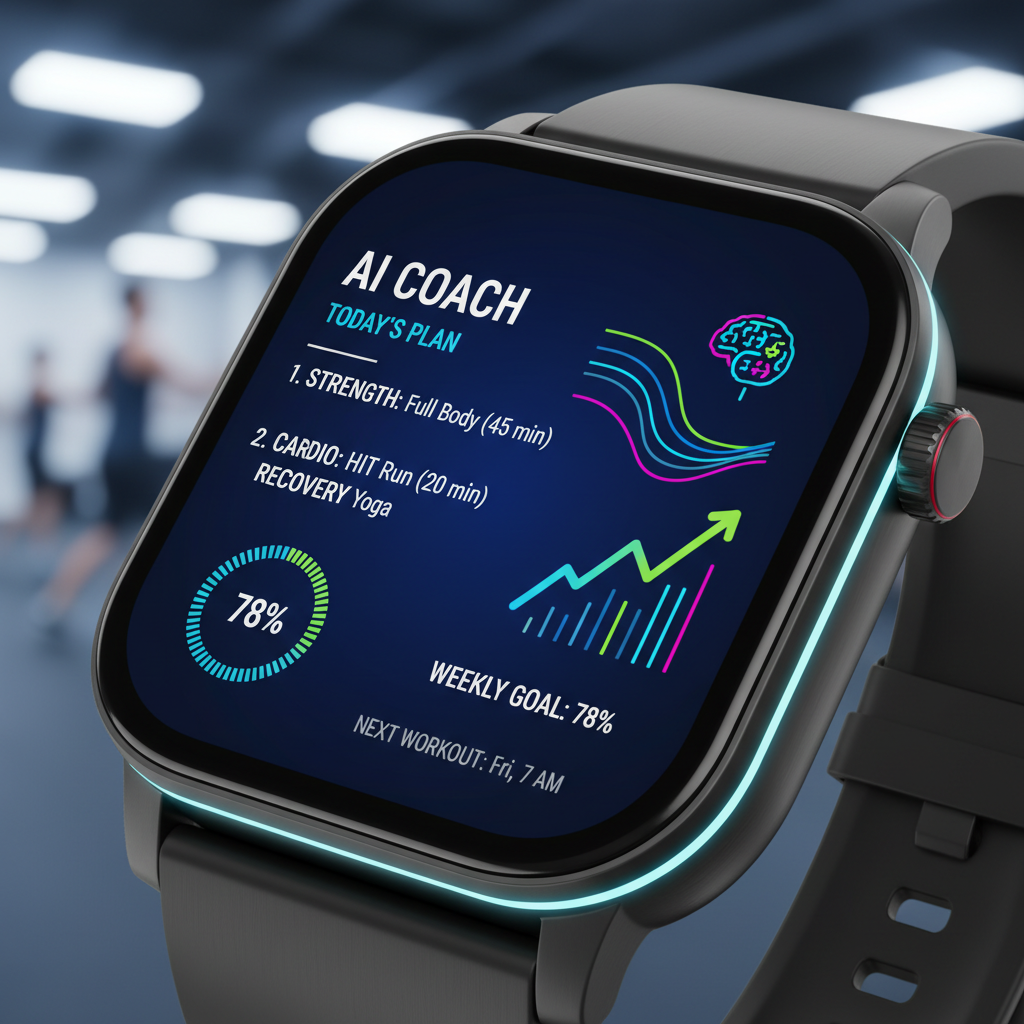
Prompt: Professional studio photograph of a sleek, minimalist smart watch, black ceramic finish, subtle reflections on its glossy surface, displaying a vibrant green digital interface. Placed on a smooth, dark grey concrete slab. Softbox lighting from above and left, casting subtle, defined shadows. Extreme close-up shot, macro lens, f/2.8, shallow depth of field, bokeh background, perfect focus on the watch face, product photography, commercial advertisement, ultra detailed, 8k, sharp focus. Negative prompt: blurry, scratches, fingerprints, low quality, cartoon, drawing, painting, text, watermark.
- Subject & Details: “sleek, minimalist smart watch, black ceramic finish, subtle reflections on its glossy surface, displaying a vibrant green digital interface” provides precise object description and material properties.
- Environment: “Placed on a smooth, dark grey concrete slab” creates a clean, professional backdrop.
- Lighting: “Softbox lighting from above and left, casting subtle, defined shadows” mimics standard product photography lighting for revealing form and texture.
- Camera & Composition: “Extreme close-up shot, macro lens, f/2.8, shallow depth of field, bokeh background, perfect focus on the watch face” uses specific technical terms for capturing fine details and isolating the product.
- Style & Quality: “product photography, commercial advertisement, ultra detailed, 8k, sharp focus” explicitly states the desired professional and high-fidelity output.
- Negative Prompt: Crucially excludes imperfections like scratches or fingerprints, and non-photographic styles.
8. Ethical Considerations and the Future of Photorealistic AI
As photorealistic AI art becomes increasingly sophisticated, it brings with it a host of ethical considerations and opens up new discussions about the nature of truth, art, and creativity.
8.1 Deepfakes and Misinformation
The ability to generate incredibly lifelike images of people, places, and events that never existed raises concerns about deepfakes and the spread of misinformation. It becomes harder to distinguish real photographs from AI-generated ones, posing challenges for journalism, social media, and public trust. The development of AI detection tools and responsible usage guidelines are critical in mitigating these risks.
8.2 Copyright, Ownership, and Attribution
Who owns the copyright to an AI-generated image? Is it the person who wrote the prompt, the developers of the AI model, or does it belong to no one? These questions are actively being debated in legal and artistic communities. Furthermore, many AI models are trained on vast datasets of existing images, often without explicit consent from the original artists. This raises questions about fair use, compensation, and the ethical sourcing of training data. Clear attribution standards and potential remuneration models for artists whose work contributes to AI training are future challenges to address.
8.3 The Evolving Role of Artists and Prompt Engineers
The rise of AI art does not diminish human creativity but transforms it. Artists are now prompt engineers, curators, and collaborators with AI. Their skill shifts from manual execution to conceptualization, guidance, and refinement. AI tools can amplify artistic vision, allowing rapid prototyping and exploration of ideas that might have been impossible or too time-consuming before. The future will likely see a hybrid approach, where AI assists human artists in achieving unprecedented levels of creative output.
8.4 Future Advancements and Implications
The pace of innovation in photorealistic AI is relentless. We can expect even more intuitive control, higher fidelity, and greater integration with other creative tools. AI models might soon understand complex physical simulations, allowing for perfectly accurate lighting, reflections, and material interactions without explicit prompting. This will open doors for hyper-realistic virtual worlds, personalized media, and entirely new forms of artistic expression. The implications for industries like advertising, gaming, film, and education are profound, promising revolutionary changes in how visual content is created and consumed.
Comparison Tables
Table 1: AI Image Generation Tools Comparison (Photorealism Focus)
| Tool | Photorealism Strength | Control Level | Best Use Case for Photorealism | Pricing Model |
|---|---|---|---|---|
| Midjourney (V6) | Excellent. Highly aesthetic and filmic quality, especially with --style raw. |
Moderate to High. Good prompt adherence in V6, but less granular control than SD. | Cinematic landscapes, artistic portraits, conceptual photography, abstract realism. | Subscription-based (monthly/yearly), usage tiers. |
| Stable Diffusion (SDXL) | Exceptional. Unrivaled customization and detail with specific models/LoRAs. | Very High. Extensive parameters, ControlNet, img2img, inpainting, custom checkpoints. | Product photography, anatomical precision, specific poses/compositions, realistic textures. | Open-source (free to run locally), cloud-based options (usage fees). |
| DALL-E 3 | Very Good. Excels at interpreting complex, natural language prompts for realistic scenes. | Moderate. Strong language understanding, but fewer explicit technical controls. | Complex narrative scenes, intricate conceptual visuals, fast prototyping of realistic ideas. | Integrated into ChatGPT Plus, Microsoft Copilot (subscription), API usage fees. |
Table 2: Advanced Prompt Modifiers and Their Impact on Realism
| Modifier Category | Example Modifier | Intended Effect | Realism Contribution |
|---|---|---|---|
| Lighting | Golden hour sunlight | Soft, warm, diffused light from low angle. | Adds natural warmth, atmospheric depth, and realistic shadow play, mimicking real photography. |
| Camera Settings | 85mm lens, f/1.8 | Telephoto perspective, shallow depth of field, blurred background (bokeh). | Mimics professional portrait photography, creating focus on the subject and realistic background blur. |
| Composition | Rule of thirds, leading lines | Aesthetically pleasing and balanced image layout. | Guides AI to create compositions that feel professionally framed and visually coherent. |
| Detail & Texture | Subsurface scattering, film grain | Light passing through translucent objects; slight visual noise of analog film. | Crucial for organic realism (skin, wax) and adding a tangible, authentic photographic feel. |
| Quality & Style | Hyperrealistic, 8K, cinematic photo | Highest possible detail, clarity, and a professional, film-like aesthetic. | Explicitly tells the AI to prioritize visual fidelity and a polished, photographic quality. |
Practical Examples
Here are a few ready-to-use advanced prompts that you can adapt for your own photorealistic AI art generation, complete with explanations.
Example 1: A Candid Street Photo
Prompt: Candid street photograph of an old man reading a newspaper on a park bench, late afternoon, dappled sunlight filtering through autumn leaves, creating intricate shadow patterns on his face. He is wearing a worn trench coat. Bokeh background of distant city life, 50mm lens, f/2.0, ISO 400, shutter speed 1/125, subtle film grain, natural light photography, sharp focus on face, ultra detailed, award-winning street photography. Negative prompt: blurry, deformed, cartoon, drawing, painting, extra fingers, bad anatomy, grayscale, low resolution.
Explanation: This prompt aims for the feel of an unplanned, authentic moment. “Candid street photograph” sets the scene. “Dappled sunlight,” “autumn leaves,” and “shadow patterns” create complex, realistic lighting. Specific camera settings like “50mm lens, f/2.0, ISO 400, shutter speed 1/125” mimic typical street photography. “Bokeh background” adds depth, and “subtle film grain” enhances the traditional photo feel. The negative prompt effectively filters out common AI issues and non-photographic styles.
Example 2: A Close-Up Product Shot
Prompt: Extreme close-up product photograph of a vintage leather-bound journal, rich brown color, fine grain texture visible, slight scuffs on the edges, lying open to a blank page. A single beam of directional studio light illuminates the texture, creating deep, soft shadows. Shot on a white seamless background. Macro lens, f/4.0, crisp focus on the leather texture, shallow depth of field, commercial photography, high resolution, professional product shot, 8k. Negative prompt: blurry, ugly, deformed, text, logo, watermark, writing, scratches, low quality, cartoon.
Explanation: This is designed for a professional commercial look. “Extreme close-up product photograph” and “macro lens” emphasize fine detail. “Vintage leather-bound journal, rich brown color, fine grain texture visible, slight scuffs” provides detailed material description. “Single beam of directional studio light” and “deep, soft shadows” are critical for highlighting texture and form. “Crisp focus on the leather texture, shallow depth of field” ensures the key visual elements are sharp and the rest artfully blurred. The negative prompt is crucial here to prevent unwanted marks, text, or logos that detract from a clean product shot.
Example 3: A Hyperrealistic Architectural Render
Prompt: Exterior shot of a minimalist modern house at dusk, sleek concrete walls, large floor-to-ceiling glass windows reflecting the twilight sky, warm interior lights glowing within. Lush, manicured garden in the foreground. Overcast sky, soft ambient light, creating even illumination. Professional architectural photography, wide-angle perspective, tilt-shift effect, sharp focus throughout, hyperrealistic, octane render, unreal engine, 8k. Negative prompt: blurry, deformed, ugly, bad proportions, cartoon, drawing, painting, low quality, pixelated, extra elements, people, cars.
Explanation: This prompt aims for a sophisticated architectural visualization. “Minimalist modern house, sleek concrete walls, large floor-to-ceiling glass windows reflecting the twilight sky, warm interior lights glowing” meticulously describes the structure and lighting within. “Lush, manicured garden” adds realistic foreground detail. “Overcast sky, soft ambient light” provides a common, flattering lighting condition for architecture. “Professional architectural photography, wide-angle perspective, tilt-shift effect, sharp focus throughout” directly uses technical terms from architectural photography to achieve the desired look. “Octane render, unreal engine” are powerful modifiers for achieving a highly realistic, almost 3D-rendered quality.
Frequently Asked Questions
Q: What is photorealistic AI art?
A: Photorealistic AI art refers to images generated by artificial intelligence systems that are designed to look like real photographs. These images aim to replicate the visual qualities, textures, lighting, and composition found in actual photographs, often making them indistinguishable from real-world captures to the untrained eye. It’s about achieving a high degree of fidelity to reality, as opposed to stylized, illustrative, or abstract AI art.
Q: Which AI tool is best for generating photorealistic images?
A: The “best” tool often depends on your specific needs, skill level, and desired level of control. Currently, Stable Diffusion (especially with SDXL models and ControlNet) offers the most granular control and customization for hyperrealism, particularly when run locally. Midjourney (V6 with `–style raw`) is excellent for producing aesthetically pleasing, cinematic, and often stunningly realistic images with less technical overhead. DALL-E 3 excels at understanding complex, natural language prompts to create realistic scenes, making it very user-friendly for intricate concepts. Many professionals use a combination of these tools for different stages of their workflow.
Q: How important are negative prompts for photorealism?
A: Negative prompts are absolutely critical for achieving photorealism. AI models can sometimes generate unwanted artifacts, deformities (especially in hands and faces), blurry elements, or default to a more illustrative style. Negative prompts act as a filter, explicitly telling the AI what to avoid (e.g., “blurry,” “deformed,” “cartoon,” “bad anatomy”). Without them, even the best positive prompts can yield suboptimal or unrealistic results, making them an indispensable tool in the photorealistic artist’s arsenal.
Q: Can I achieve perfect photorealism every time with AI?
A: While AI can generate incredibly lifelike images, achieving “perfect” photorealism every single time, especially for complex or highly specific scenarios, can still be challenging. There’s an element of randomness and iteration involved. AI models might still struggle with very fine details, anatomical perfection (e.g., subtle facial expressions, complex hand gestures), or accurately simulating certain physical phenomena. Consistent perfection often requires significant prompt engineering, multiple iterations, and sometimes post-processing or the use of advanced tools like ControlNet to guide the AI more precisely.
Q: What is prompt weighting, and how does it help with realism?
A: Prompt weighting is a feature in some AI art tools (like Stable Diffusion or Midjourney) that allows you to assign varying levels of importance to different words or phrases within your prompt. For example, you might make “dramatic lighting” more important than “red shirt.” This helps the AI prioritize certain elements of your vision. For realism, weighting is crucial because it ensures that critical aspects like lighting conditions, specific camera settings, or hyperrealistic quality modifiers are strongly emphasized, guiding the AI to render those details with higher fidelity and impact.
Q: How does ControlNet help in creating realistic images?
A: ControlNet is a revolutionary extension (primarily for Stable Diffusion) that provides unprecedented spatial control over AI image generation. It allows you to feed a reference image to the AI and extract specific structural information from it, such as a human pose (OpenPose), depth map, edge lines (Canny), or segmentation masks. The AI then uses this information to guide the generation process, ensuring that the generated image adheres to the exact pose, composition, or structural layout of the reference. This is invaluable for photorealism as it helps overcome common AI weaknesses like anatomical errors, inconsistent perspectives, and lack of precise compositional control, making it easier to create believable and lifelike scenes.
Q: What are some common mistakes to avoid when aiming for photorealism?
A: Common mistakes include using overly simplistic prompts, neglecting negative prompts, not specifying lighting or camera settings, expecting perfect results on the first try, and not iterating enough. Another mistake is using too many conflicting modifiers or using generic terms instead of precise, descriptive language. Over-reliance on “style” words without grounding them in photographic terms can also lead to more artistic than realistic outputs. Not understanding the nuances of the specific AI model you are using is also a common pitfall.
Q: Is it ethical to create photorealistic AI images?
A: The ethics of photorealistic AI art are a complex and ongoing discussion. Creating photorealistic AI images is generally ethical when done responsibly and transparently. Concerns arise when images are used to deceive (deepfakes, misinformation), infringe on existing copyrights (if training data is unethical), or create non-consensual content. It’s crucial for creators to be aware of the potential for misuse, consider the origin of the AI’s training data, and be transparent about an image’s AI origin, especially in contexts where authenticity is important. Responsible AI development and usage guidelines are key to navigating these ethical challenges.
Q: How do I choose the right model or checkpoint for Stable Diffusion photorealism?
A: For Stable Diffusion, choosing the right model or checkpoint (a trained version of the AI) is paramount. Many community-trained checkpoints are available on platforms like Civitai. Look for models specifically tagged or described as “photorealistic,” “realistic,” “cinematic,” or “photo.” Popular choices often include “Realistic Vision,” “Juggernaut XL,” “Photon,” or “Deliberate.” Read descriptions, check user reviews, and view example outputs from different models to find one that aligns with the specific type of realism you want to achieve. Experimentation with various models is the best way to discover your preferences.
Q: What role does image-to-image (img2img) play in photorealism?
A: Image-to-image (img2img) allows you to use an existing image as a starting point for AI generation, rather than just noise. This is incredibly useful for photorealism in several ways. You can input a rough sketch or a low-quality photo and have the AI “photorealize” it based on your prompt, inheriting its composition and general structure. It’s also excellent for refining existing AI outputs, making subtle adjustments to a generated image while retaining its core realism, or transforming an image into a more lifelike version while maintaining its original essence. It provides a bridge between a visual reference and the AI’s generative capabilities.
Key Takeaways
- Structured Prompting is Key: Move beyond simple keywords to detailed, multi-component prompts describing subject, environment, lighting, camera, and style.
- Master Modifiers: Utilize specific keywords for lighting (golden hour, rim light), camera settings (50mm lens, f/1.8), composition (rule of thirds), and quality (hyperrealistic, 8k) to guide the AI.
- Embrace Negative Prompts: Crucially filter out unwanted elements and common AI artifacts like blurriness, deformities, and non-photographic styles.
- Iterate and Refine: Photorealism is an iterative process. Experiment with seeds, samplers, and subtle prompt adjustments to fine-tune your results.
- Leverage Advanced Techniques: Image-to-image (img2img) allows transformation, while ControlNet offers unparalleled control over pose, depth, and composition for precision.
- Choose the Right Tool: Understand the strengths of Midjourney (cinematic aesthetics), Stable Diffusion (customization, control with SDXL and ControlNet), and DALL-E 3 (natural language understanding) for your specific photorealism goals.
- Attention to Detail: Every descriptive word, from textures to atmospheric conditions, contributes to the overall lifelike quality of the image.
- Be Mindful of Ethics: Acknowledge the ethical implications of photorealistic AI, especially concerning deepfakes and copyright, and strive for responsible creation.
Conclusion
The journey to mastering photorealistic AI art is one of continuous learning, experimentation, and a keen eye for detail. By understanding the core mechanics of AI image generation, meticulously crafting advanced prompts with powerful modifiers, and strategically employing negative prompts, you can elevate your creations from mere AI renditions to breathtakingly lifelike visuals. The tools available today, from the artistic finesse of Midjourney to the granular control of Stable Diffusion and the intuitive understanding of DALL-E 3, offer unprecedented capabilities for bringing your most vivid textual descriptions to visual reality.
This evolving field challenges our perceptions of art, photography, and creativity itself. As prompt engineers and visual storytellers, we stand at the forefront of a new artistic era, empowered to generate stunning images that blur the lines between imagination and reality. Embrace the iterative process, be precise in your language, and never stop experimenting. The photorealistic masterpieces of tomorrow are waiting to be conjured from your words today. Go forth and create, transforming the boundless potential of AI into tangible, lifelike art.

















































Leave a Reply