

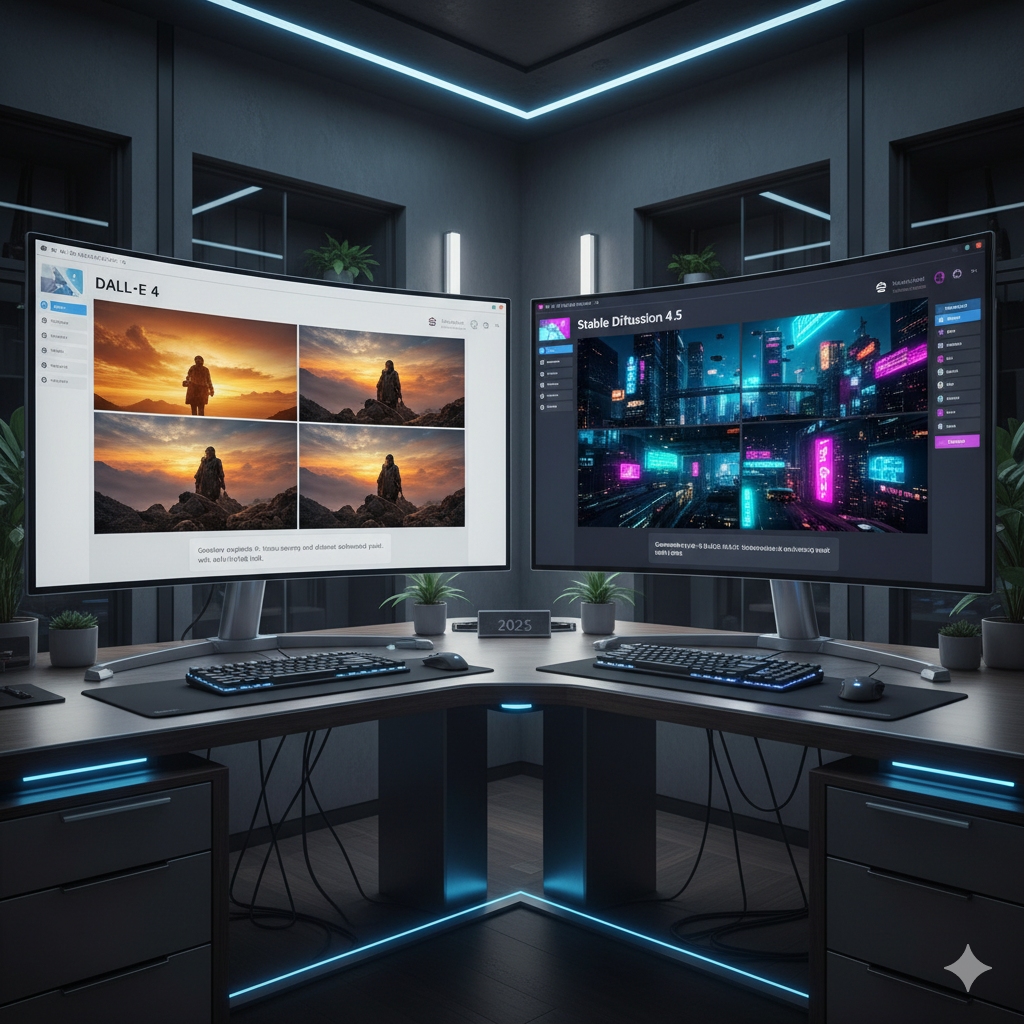
The advent of generative artificial intelligence has revolutionized the creative landscape, empowering artists, designers, and enthusiasts to conjure breathtaking visuals from simple text prompts. At the forefront of this revolution stand two titans: DALL-E, developed by OpenAI, and Stable Diffusion, an open-source model backed by Stability AI. Both have demonstrated extraordinary capabilities in transforming textual descriptions into captivating images, yet a critical question remains for those pursuing visual perfection: Which AI tool truly delivers superior photorealistic images?
In this comprehensive guide, we embark on an ultimate comparison, dissecting the nuances of DALL-E and Stable Diffusion. We will delve into their underlying architectures, operational mechanics, and unique strengths, particularly focusing on their prowess in generating images that mimic reality with astonishing fidelity. Whether you are a professional seeking the ideal tool for your projects or a curious enthusiast exploring the frontiers of AI art, this detailed analysis will provide you with the insights needed to make an informed decision.
Prepare to explore the intricacies of prompt engineering, the impact of model size and training data, the role of community contributions, and the practical implications of cost and accessibility. By the end of this comparison, you will have a clear understanding of which AI powerhouse reigns supreme in the quest for superior photorealistic imagery, helping you unlock your creative potential like never before.
Understanding the Foundations: DALL-E and Stable Diffusion Explained
Before we pit these giants against each other, it is crucial to understand their core identities, how they came into being, and what fundamental principles guide their image generation processes. While both are powerful text-to-image models, their development philosophies and operational models present distinct advantages and limitations.
DALL-E: OpenAI’s Closed-Source Powerhouse
DALL-E, a product of OpenAI, first captivated the world with its ability to create fantastical and often surreal images. Its name is a portmanteau of the artist Salvador Dalí and the Pixar robot WALL-E, aptly reflecting its blend of artistic vision and computational prowess. DALL-E has evolved significantly since its initial release, with DALL-E 2 bringing substantial improvements in resolution and photorealism, and DALL-E 3, integrated into ChatGPT Plus and Enterprise, pushing the boundaries further.
- Closed-Source and API-Driven: DALL-E operates primarily as a service through OpenAI’s API or direct integration into platforms like ChatGPT. This means users interact with a pre-trained, proprietary model without direct access to its internal workings or the ability to run it locally.
- Curated Training Data: OpenAI is known for its meticulous data curation. While the exact datasets are proprietary, they are understood to be vast and carefully filtered to ensure quality and mitigate biases, aiming for a broad understanding of concepts and styles.
- Focus on Coherence and Composition: DALL-E has historically excelled at understanding complex prompts, generating images that are conceptually coherent and aesthetically well-composed, even for abstract or unusual requests. Its ability to combine disparate concepts into a single, logical image is often cited as a key strength.
- User-Friendly Interface: For most users, DALL-E is accessed through highly intuitive interfaces, minimizing the technical overhead and allowing for quick generation.
Stable Diffusion: The Open-Source Revolution
Stable Diffusion emerged as a disruptive force, spearheaded by Stability AI, by making its core model weights openly available to the public. This open-source approach unleashed an unprecedented wave of innovation, allowing developers and enthusiasts worldwide to modify, fine-tune, and build upon the original model.
- Open-Source and Customizable: The most significant differentiator is its open-source nature. Users can download the model, run it locally on their hardware (if powerful enough), and modify it to suit specific needs. This has led to an explosion of custom models, checkpoints, and extensions.
- Community-Driven Innovation: The open-source model fosters a vibrant community of developers and artists who constantly create new tools, models (e.g., specific art styles, character models), and workflows. Platforms like Civitai host thousands of community-trained models, vastly expanding Stable Diffusion’s capabilities beyond its initial scope.
- Flexibility and Control: Stable Diffusion offers unparalleled flexibility. Users can exert fine-grained control over various parameters, including sampling methods, steps, CFG scale, seed values, and latent space manipulation. Advanced techniques like inpainting, outpainting, and ControlNet allow for precise image editing and generation guided by external inputs.
- Resource Intensive (Potentially): Running Stable Diffusion locally, especially larger models like SDXL, can demand significant computational resources, particularly a powerful GPU with ample VRAM.
The Quest for Photorealism: A Head-to-Head Analysis
When the objective is truly photorealistic images, the capabilities of DALL-E and Stable Diffusion are put to the ultimate test. Photorealism requires more than just generating an image; it demands meticulous attention to detail, accurate lighting, realistic textures, believable shadows, and a consistent understanding of physics and anatomy. Let’s break down how each tool performs.
DALL-E’s Approach to Photorealism
DALL-E, especially DALL-E 3, has made significant strides in photorealism. Its strong natural language understanding allows it to interpret complex descriptive prompts with remarkable accuracy, often leading to impressive initial outputs.
- Prompt Interpretation: DALL-E 3, particularly through ChatGPT, excels at understanding nuanced prompts. It can often infer details and context that might require explicit enumeration in other models, leading to more complete and coherent scenes. This is crucial for photorealism, as realistic images often contain subtle details.
- Coherence and Consistency: OpenAI’s models are trained on highly curated datasets, which contribute to DALL-E’s ability to maintain high coherence in generated images. Objects, subjects, and backgrounds generally align well, and composition is often strong, reducing elements that might break the illusion of realism.
- Texture and Detail: While DALL-E can produce impressive textures, its ability to render minute, hyperrealistic details consistently, such as individual strands of hair, pores on skin, or the specific grain of wood, can sometimes fall short compared to highly optimized Stable Diffusion models.
- Lighting and Shadow: DALL-E typically handles general lighting conditions well, producing convincing shadows and reflections. However, achieving specific, complex lighting scenarios (e.g., dramatic Rembrandt lighting, intricate volumetric fog) might require more iterative prompting or be less precise than what is achievable with advanced Stable Diffusion techniques.
- Anatomy and Proportions: DALL-E 3 has vastly improved in rendering human and animal anatomy, often avoiding the deformities seen in earlier versions. However, for extremely specific poses, multiple subjects, or intricate hand gestures, occasional anomalies can still occur, which are immediate detractors from photorealism.
Stable Diffusion’s Edge in Photorealism
Stable Diffusion’s open-source nature, combined with its flexibility and a massive, dedicated community, gives it a unique edge in the pursuit of photorealism. While the base Stable Diffusion model might require more effort to achieve photorealism than DALL-E out of the box, the ecosystem built around it pushes the boundaries far beyond.
- Custom Models and Checkpoints: This is arguably Stable Diffusion’s biggest advantage. The community has trained countless specialized models (checkpoints like Realistic Vision, Juggernaut XL, Photon, ICBINP, etc.) specifically optimized for photorealism. These models are trained on highly specific datasets of realistic photos, enabling them to generate incredibly lifelike images.
- Fine-Grained Control: Users can manipulate almost every aspect of the generation process. Parameters like denoising strength, clip skip, and specific samplers, combined with prompt weighting, allow for unparalleled control over the final output’s realism.
- Advanced Control Mechanisms (ControlNet): ControlNet is a game-changer for photorealism. It allows users to control the image generation process using additional input conditions, such as edge maps, depth maps, segmentation maps, or pose estimations (OpenPose). This means you can specify the exact pose of a subject, the precise layout of a scene, or the intricate details of an object, ensuring anatomical correctness and compositional integrity crucial for realism.
- Upscalers and Post-Processing: Stable Diffusion integrates seamlessly with various upscaling techniques (e.g., ESRGAN, SwinIR) and image editors. Users can generate an image, then upscale it to extremely high resolutions while adding intricate detail, further enhancing its photorealism. This multi-step workflow often yields results that are indistinguishable from photographs.
- Prompt Engineering for Detail: While DALL-E excels at broad interpretation, Stable Diffusion often thrives on detailed, descriptive prompts. Users can employ techniques like negative prompting (telling the AI what *not* to include) and adding specific artistic terms to refine realism, such as “hyperdetailed,” “cinematic lighting,” “photorealistic textures,” “8k,” and “sharp focus.”
- LoRAs and Textual Inversion: These community-driven techniques allow users to inject specific styles, characters, or objects into the model with remarkable consistency and detail, further refining the photorealistic output to match a desired aesthetic or subject.
Usability, Accessibility, and Cost: Practical Considerations
Beyond raw image quality, practical factors like ease of use, accessibility, and cost play a significant role in determining which AI tool is best suited for different users and projects.
DALL-E: Simplicity and Integration
DALL-E’s design philosophy prioritizes user experience and seamless integration, making it highly accessible for beginners and those who prefer a streamlined workflow.
- Ease of Use: DALL-E is incredibly straightforward. You type a prompt, click generate, and within seconds, you have multiple image variations. There are fewer parameters to tweak, reducing the learning curve.
- Accessibility: Available through OpenAI’s API, a web interface, and most notably, via ChatGPT Plus/Enterprise, DALL-E 3 is readily accessible from virtually any device with an internet connection. This cloud-based approach removes hardware dependency.
- Cost Model: DALL-E operates on a credit-based system. Users purchase credits, and each generation consumes a certain number of credits. While convenient, for very high-volume generation or extensive experimentation, costs can accumulate. ChatGPT Plus integration offers a fixed monthly fee with DALL-E 3 access, but there might be rate limits.
- No Local Hardware Required: Since it’s a cloud service, you don’t need a powerful computer or a dedicated GPU, making it accessible to a wider audience.
Stable Diffusion: Flexibility and Resource Management
Stable Diffusion offers unparalleled flexibility but often comes with a steeper learning curve and specific hardware requirements.
- Learning Curve: While basic generation is simple, mastering Stable Diffusion for photorealism requires understanding various parameters, models, extensions, and workflows (e.g., ControlNet, inpainting, upscaling). This necessitates a significant time investment.
- Hardware Dependency: Running Stable Diffusion locally demands a powerful GPU (e.g., NVIDIA RTX 30-series or 40-series) with at least 8GB, preferably 12GB or more, of VRAM. Without this, generation can be very slow or impossible, or users must rely on cloud-based services.
- Cost Model:
- Local Installation: Once you have the hardware, running Stable Diffusion locally is essentially free, aside from electricity costs. This makes it incredibly cost-effective for heavy users.
- Cloud Services: For those without powerful GPUs, numerous cloud platforms (e.g., RunDiffusion, Stability AI’s DreamStudio, Hugging Face Spaces, Google Colab notebooks) offer Stable Diffusion access. These typically operate on a pay-per-use basis, similar to DALL-E, or offer subscription tiers.
- Offline Capability: Running locally means you can generate images without an internet connection, offering privacy and continuous access.
Technological Underpinnings: How They Differ
A deeper dive into the technological architectures reveals fundamental differences that influence their output characteristics.
DALL-E’s Architecture (High-Level)
OpenAI’s DALL-E models are based on transformer architectures, specifically variations of the VQ-VAE (Vector Quantized Variational AutoEncoder) combined with a powerful autoregressive transformer for DALL-E 1 and a diffusion model for DALL-E 2 and 3. DALL-E 3 is notable for its integration with a large language model (like GPT-4), which significantly enhances its prompt understanding.
- Deep Language Understanding: The integration with LLMs means DALL-E 3 can rephrase or expand user prompts internally, enriching them with details and nuances that improve image generation quality and adherence to complex instructions. This pre-processing of prompts is a key differentiator.
- Massive Proprietary Training Data: OpenAI invests heavily in curating vast datasets of image-text pairs, carefully filtering for quality and safety. The sheer scale and quality of this data contribute to DALL-E’s broad knowledge base and conceptual understanding.
- End-to-End Optimization: As a closed-source system, DALL-E is optimized end-to-end by OpenAI, ensuring a cohesive and high-performing system where all components work in harmony.
Stable Diffusion’s Architecture
Stable Diffusion is a latent diffusion model. This means it operates in a compressed (latent) space, which makes it significantly more computationally efficient than pixel-space diffusion models. It consists of three main components:
- Text Encoder (CLIP): Uses a pre-trained CLIP (Contrastive Language-Image Pre-training) model to convert the text prompt into a numerical representation (embedding) that the diffusion model can understand.
- UNet: This is the core of the diffusion process. It iteratively denoises a random noise image in the latent space, guided by the text embedding, until a coherent image emerges.
- Variational Autoencoder (VAE): The VAE compresses images into the latent space for the UNet to work on and then decodes the processed latent representation back into a pixel-space image.
- Latent Space Efficiency: Working in latent space allows Stable Diffusion to generate images much faster and with fewer computational resources than models that operate directly on pixels.
- Modularity: The distinct components (text encoder, UNet, VAE) can often be swapped or fine-tuned independently. For example, different VAEs can improve image clarity or color accuracy.
- Community Models: The open nature has led to countless fine-tuned versions of the UNet and VAE, often specialized for specific styles or levels of realism, providing users with an unparalleled array of options. Stable Diffusion XL (SDXL) further refines this architecture with a larger base model and a refiner model, enhancing detail and coherence.
Ethical Considerations and Bias Mitigation
Both DALL-E and Stable Diffusion, like all AI models trained on vast internet datasets, inherit biases present in that data. Addressing these biases and ensuring ethical use are ongoing challenges.
DALL-E’s Approach to Ethics
OpenAI, being a research organization with a strong focus on AI safety, implements several measures to mitigate bias and prevent misuse:
- Content Moderation: DALL-E has robust internal content moderation filters designed to prevent the generation of harmful, illegal, or overtly biased content. This includes prohibiting hate speech, violent imagery, and sexually explicit material.
- Bias Mitigation in Training: OpenAI actively works on curating and balancing its training datasets to reduce the perpetuation of societal biases (e.g., gender, race, stereotypes) in generated images. For instance, prompting for “doctor” might yield a diverse set of genders and ethnicities rather than predominantly male Caucasians.
- Safety Guidelines: Clear usage policies and guidelines are enforced for API users and those interacting via ChatGPT, aiming to promote responsible AI deployment.
Stable Diffusion’s Open-Source Ethical Landscape
Stable Diffusion’s open-source nature presents both opportunities and challenges regarding ethical considerations:
- Community Responsibility: While Stability AI provides base models, the responsibility for how community-trained models (checkpoints, LoRAs) are developed and used largely falls on the community. This decentralization can lead to a wider range of content, some of which may be problematic.
- Censorship-Free (Potentially): Users running Stable Diffusion locally have full control and can bypass any filters if they choose to, which raises concerns about potential misuse for generating deepfakes, non-consensual imagery, or other harmful content.
- Research and Transparency: The open nature allows researchers to audit the model for biases and vulnerabilities, potentially leading to faster identification and resolution of ethical issues. It also allows for the development of “safe” models by the community.
- Stability AI’s Efforts: Stability AI itself provides moderated versions of its models (e.g., through DreamStudio) and actively works on developing robust safety features and ethical guidelines, promoting responsible use within its own ecosystem.
Comparison Tables
To provide a clear, structured overview, here are two comparison tables highlighting key aspects of DALL-E and Stable Diffusion.
Table 1: Feature Comparison for Photorealism Enthusiasts
| Feature | DALL-E (DALL-E 3 via ChatGPT) | Stable Diffusion (SDXL & Community Models) | Notes on Photorealism |
|---|---|---|---|
| Ease of Use | Very High (Type prompt, get results) | Medium to Low (Steeper learning curve for advanced results) | DALL-E is easier to get *good* results; SD requires more effort for *superior* results. |
| Photorealism Quality (Out-of-Box) | High (Excellent coherence, good detail) | Medium to High (Base models are good, but benefit from fine-tuning) | DALL-E 3 is strong initially. SDXL’s base is strong, but community models truly excel. |
| Customization & Control | Low (Limited parameters, no local tweaking) | Very High (Infinite parameters, models, extensions, local control) | Crucial for fine-tuning specific photorealistic details, lighting, and textures. |
| Hardware Requirement | None (Cloud-based service) | High (Powerful GPU recommended for local use) | Local generation for SD gives full control and is free after hardware investment. |
| Cost Model | Credit-based or subscription (e.g., ChatGPT Plus) | Free (local), Subscription/Credit (cloud services) | For heavy, custom photorealism work, SD local is often more cost-effective. |
| Prompt Interpretation | Excellent (Strong semantic understanding, LLM integration) | Good (Requires more explicit detailing, negative prompting) | DALL-E handles complex concepts better, SD benefits from highly structured prompts. |
| Community & Ecosystem | Limited (Proprietary, no public models/plugins) | Vibrant & Extensive (Thousands of models, tools, tutorials) | SD’s ecosystem is a massive advantage for specialized photorealism models and workflows. |
| Advanced Features (e.g., Inpainting, ControlNet) | Limited in-app editing, no ControlNet equivalent | Extensive (Inpainting, Outpainting, ControlNet, Upscaling, LoRAs) | These tools are indispensable for achieving precise photorealistic manipulation and consistency. |
Table 2: Technical and Operational Characteristics
| Characteristic | DALL-E (OpenAI) | Stable Diffusion (Stability AI) | Impact on User Experience / Photorealism |
|---|---|---|---|
| Model Architecture | Diffusion model with strong LLM integration for prompt re-writing. | Latent Diffusion Model (Text Encoder, UNet, VAE). | DALL-E’s LLM enhances semantic understanding. SD’s latent space is efficient and modular. |
| Training Data Size | Proprietary and extremely vast, curated by OpenAI. | Very large public datasets (e.g., LAION-5B), supplemented by fine-tuning data. | Both have massive datasets, but DALL-E’s curation leads to better initial coherence. SD’s flexibility allows targeting specific realistic data. |
| Inference Speed | Fast (Cloud-based, optimized for quick returns) | Varies (Depends on GPU, model size, steps; cloud services can be fast) | DALL-E often quicker for first-pass results. SD can be fast on strong local hardware, but more steps/larger models take longer. |
| Control Over Seed | Available, but less impactful for iterative exploration. | Crucial for reproducibility and iterative refinement. | Essential for maintaining consistency and systematically improving photorealistic outputs in SD. |
| Output Resolution | Fixed typical resolutions (e.g., 1024×1024, 1792×1024, 1024×1792). | Flexible, limited by VRAM; often upscaled for higher detail. SDXL base is 1024×1024. | SD’s ability to generate high-res images and upscale is key for capturing micro-details required for extreme photorealism. |
| Model Updates | Managed entirely by OpenAI; new versions are rolled out without user input. | Continuous development from Stability AI; community also releases constant updates/models. | SD’s rapid community iteration means new photorealism models appear frequently. |
| Openness / Transparency | Closed-source, black box for users. | Open-source, highly transparent, modifiable. | Transparency allows for greater scrutiny and specialized development of photorealism. |
Practical Examples and Use Cases
Let’s consider real-world scenarios where the strengths of DALL-E and Stable Diffusion truly shine, especially in the context of photorealistic image generation.
1. Concept Art and Ideation for Game Development / Film Production
- DALL-E: Ideal for rapid ideation and generating a wide range of initial concepts. A game designer might prompt “futuristic sci-fi city at sunset with flying cars and towering skyscrapers” and get several diverse, high-quality compositions quickly. Its strong compositional skills make it excellent for early-stage brainstorming.
- Stable Diffusion: Once a concept is chosen, Stable Diffusion excels at refining it. Using ControlNet with a basic sketch, a designer can guide the AI to render the city with photorealistic details: specific architectural styles, realistic light sources, intricate textures on buildings, and even adding dynamic elements like realistic lens flares. Artists can use specific “checkpoint models” trained on cinematic or architectural photography to achieve a hyperrealistic look.
2. Product Visualization and E-commerce Imagery
- DALL-E: Useful for quickly generating product mockups or lifestyle shots for new products without needing expensive photoshoots. For example, “a sleek silver smartphone on a marble table with a potted plant in the background, soft studio lighting.” It can create appealing, if sometimes generalized, marketing images.
- Stable Diffusion: For highly realistic product shots where specific angles, materials, and branding are crucial, Stable Diffusion is superior. An e-commerce business could photograph their product, create a depth map or a segmentation map, and then use ControlNet to place the product in various photorealistic scenes (e.g., “stainless steel espresso machine on a rustic wooden countertop with morning light filtering through a window, highly detailed, sharp focus”). LoRAs can even be trained on specific product lines to ensure consistent branding and material realism.
3. Architectural Visualization and Interior Design
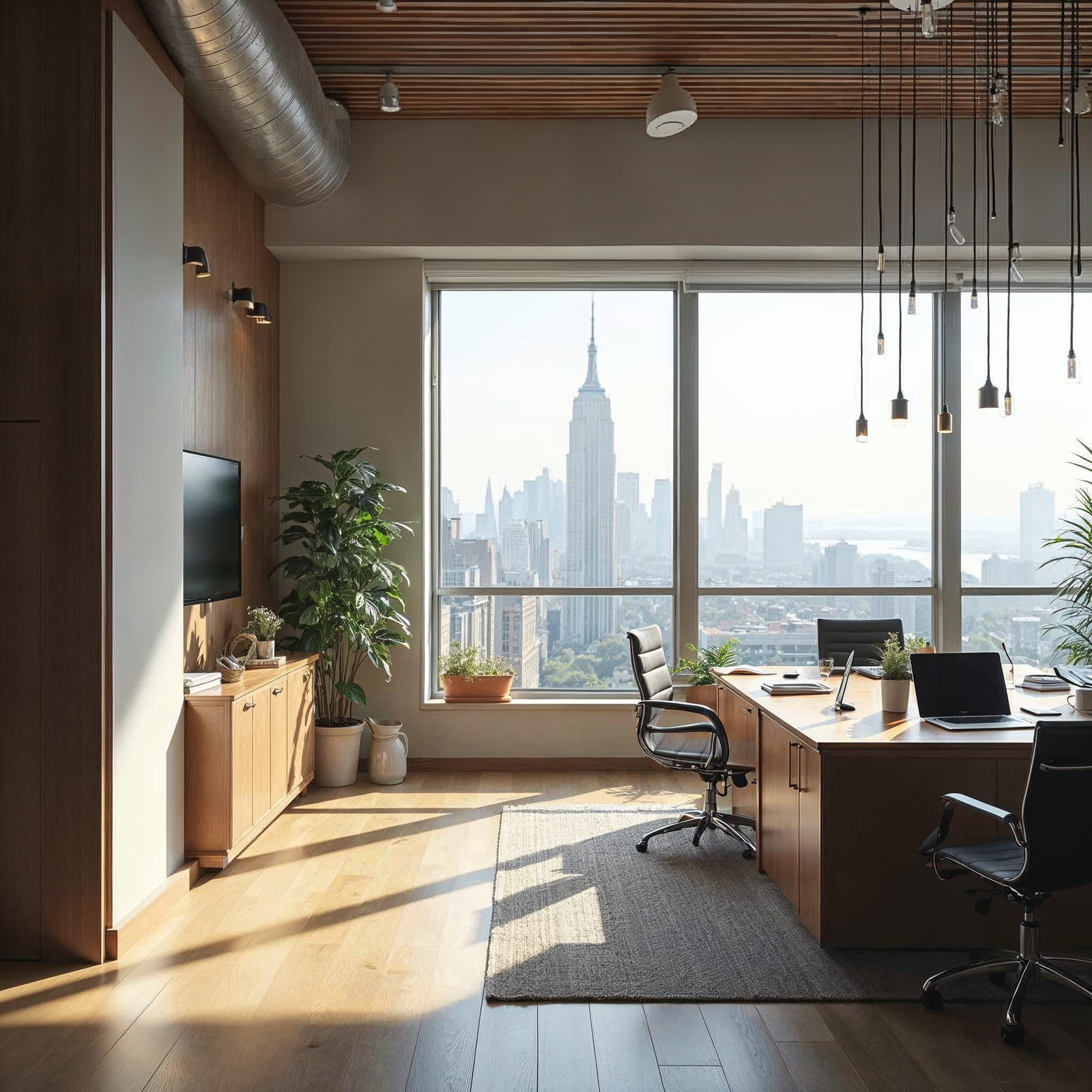
- DALL-E: Can quickly generate inspiring interior design concepts, such as “a minimalist living room with large windows overlooking a city, warm evening light, Scandinavian furniture.” It provides great starting points for aesthetic direction.
- Stable Diffusion: For architects and interior designers, achieving photorealistic renders that accurately depict materials, lighting, and spatial relationships is paramount. With ControlNet, designers can input floor plans, 3D renders (as depth maps), or even rough sketches, and guide Stable Diffusion to produce highly detailed, photorealistic interior renders with specific textures (wood grain, fabric weave, concrete finish) and lighting conditions (dynamic sunlight, artificial LED glow). This allows for precise visualization that can be mistaken for actual photographs.
4. Portrait and Character Generation
- DALL-E: Can create compelling portraits with good expressions and overall composition, e.g., “a portrait of a thoughtful young woman with red hair looking out a window, soft natural light.” It’s good for generating diverse faces for general character concepts.
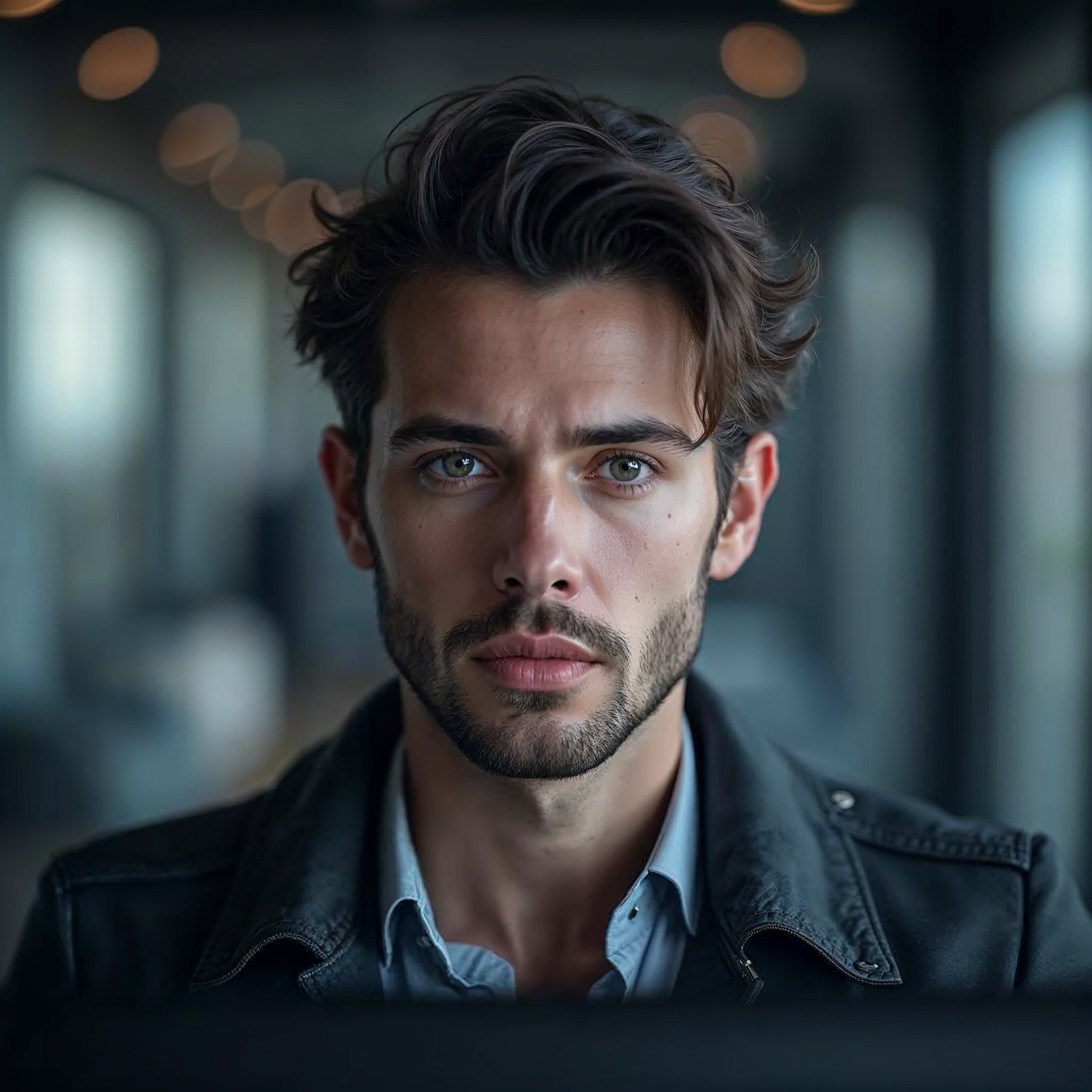
- Stable Diffusion: For hyperrealistic portraits where details like skin texture, hair strands, eye reflections, and natural human imperfections are vital, Stable Diffusion excels, especially with models fine-tuned for human realism. Artists can use LoRAs for specific character features, pose control with OpenPose, and inpainting to fix minute anatomical inaccuracies or add subtle blemishes for ultimate realism. The ability to fine-tune prompts for specific camera lenses, f-stops, and film stocks further enhances the photographic quality.
5. Scientific Illustration and Medical Imaging (Conceptual)
- DALL-E: Can generate conceptual illustrations for scientific papers or educational materials, like “a microscopic view of neurons firing in a brain, glowing connections.” It’s good for conveying abstract scientific ideas visually.
- Stable Diffusion: While not for diagnostic use, Stable Diffusion can create highly detailed, photorealistic conceptual medical illustrations. For instance, creating accurate anatomical cross-sections or visualizing complex biological processes with a high degree of detail and realistic textures (e.g., muscle fibers, cellular structures) for presentations or educational content, guided by precise input images or diagrams using ControlNet.
Frequently Asked Questions
Q: Is DALL-E better than Stable Diffusion for beginners?
A: For absolute beginners seeking quick, impressive results without diving into technical details, DALL-E (especially DALL-E 3 via ChatGPT) is generally considered more user-friendly. Its prompt understanding is very intuitive, and it requires minimal parameter tweaking. Stable Diffusion has a steeper learning curve to achieve its full potential, but many user interfaces (like Automatic1111 web UI) have made it significantly more accessible for non-developers.
Q: Which tool is cheaper for generating a large volume of images?
A: If you possess the necessary powerful hardware (a dedicated GPU with ample VRAM), running Stable Diffusion locally is by far the most cost-effective option for generating a large volume of images, as it is free after the initial hardware investment. For cloud-based generation, both DALL-E and Stable Diffusion (through services like DreamStudio or Google Colab) operate on a credit or subscription model, where costs can accumulate with high usage.
Q: Can I run DALL-E locally on my computer?
A: No, DALL-E is a proprietary, closed-source service developed by OpenAI. It runs on OpenAI’s powerful cloud infrastructure, and you interact with it through their APIs or integrated platforms like ChatGPT. You cannot download and run DALL-E on your local machine.
Q: How important is my computer’s GPU for using these tools?
A: Your computer’s GPU is crucial for running Stable Diffusion locally. A powerful GPU with at least 8GB (preferably 12GB or more) of VRAM will dramatically speed up image generation. Without a capable GPU, running Stable Diffusion locally will be very slow or impossible. For DALL-E, since it’s cloud-based, your local hardware specifications (including GPU) are irrelevant; you only need a stable internet connection.
Q: What is the main advantage of Stable Diffusion’s open-source nature?
A: The main advantage of Stable Diffusion’s open-source nature is its unparalleled flexibility and customization. It has fostered a massive, vibrant community that constantly develops new models (checkpoints, LoRAs), extensions (like ControlNet, inpainting), and workflows. This allows users to fine-tune the model for specific styles, subjects, or levels of photorealism, pushing its capabilities far beyond the base model and offering a level of creative control unmatched by proprietary tools.
Q: Does DALL-E 3 offer any unique features for photorealism?
A: DALL-E 3’s unique strength for photorealism lies in its deeply integrated language understanding, often driven by large language models like GPT-4. This allows it to interpret complex, nuanced prompts with greater accuracy and coherence, leading to more logically constructed and aesthetically pleasing photorealistic images right out of the box, especially for intricate scenes or abstract concepts that require strong semantic understanding. It often requires less prompt engineering for good initial results.
Q: How do “checkpoint models” and “LoRAs” in Stable Diffusion contribute to photorealism?
A: Checkpoint models are entire fine-tuned versions of the Stable Diffusion model, often trained on specific datasets (e.g., high-quality photographic images) to excel in generating photorealistic outputs in particular styles or for certain subjects. LoRAs (Low-Rank Adaptation) are smaller files that can be loaded on top of a base checkpoint model to impart specific styles, characters, or objects with incredible detail and consistency, making it easier to generate photorealistic images of particular people, objects, or artistic aesthetics while retaining the quality of the base model.
Q: Are there ethical concerns when generating photorealistic images with AI?
A: Yes, significant ethical concerns exist for both tools. These include the potential for creating misleading content (deepfakes), generating non-consensual or harmful imagery, copyright infringement regarding training data, and the perpetuation of societal biases present in the datasets. While DALL-E has built-in content moderation, Stable Diffusion’s open-source nature means that users running it locally can potentially bypass filters, placing greater responsibility on the individual user for ethical generation.
Q: Can AI-generated photorealistic images truly replace professional photography?
A: While AI-generated photorealistic images are becoming incredibly sophisticated, they cannot entirely replace professional photography, especially for specific contexts. Professional photographers bring unique artistic vision, human understanding of emotion, on-the-spot problem-solving, and the ability to capture authentic, unscripted moments that AI currently struggles to replicate. AI is an incredibly powerful tool for augmentation, concept development, and specific commercial applications, but the human element and authenticity in photography remain irreplaceable for many purposes.
Q: What is Stable Diffusion XL (SDXL) and how does it compare for photorealism?
A: Stable Diffusion XL (SDXL) is a significant advancement over previous Stable Diffusion models. It features a larger model size, enhanced architecture, and a two-stage process (base model plus refiner model) that dramatically improves image quality, composition, and most notably, photorealism. SDXL generates images with superior detail, better anatomy, and richer aesthetics compared to older SD versions, making it an excellent choice for photorealism, often requiring less complex prompting than its predecessors to achieve high-quality results.
Key Takeaways
Summarizing the extensive comparison, here are the crucial points to remember when choosing between DALL-E and Stable Diffusion for photorealistic image generation:
- Ease of Use: DALL-E (especially DALL-E 3) offers a simpler, more intuitive experience for generating photorealistic images quickly with less technical effort. It’s the go-to for rapid ideation and users who prefer a streamlined, cloud-based workflow.
- Ultimate Photorealism & Control: Stable Diffusion, particularly with its advanced models (SDXL), community checkpoints (e.g., Realistic Vision, Juggernaut), extensions (ControlNet), and fine-grained parameter control, offers the highest ceiling for achieving truly superior, customized photorealistic images. It empowers users with unparalleled artistic control.
- Cost Efficiency: For high-volume generation and heavy experimentation, running Stable Diffusion locally on capable hardware is the most cost-effective solution in the long run. DALL-E operates on a credit or subscription model, which can be convenient but costly for extensive use.
- Learning Curve: DALL-E has a shallow learning curve. Stable Diffusion requires more dedication to master its advanced features and achieve top-tier results, but the reward is immense creative freedom.
- Ecosystem & Community: Stable Diffusion benefits from an incredibly active and innovative open-source community, constantly developing new tools, models, and techniques that push the boundaries of photorealism. DALL-E, being proprietary, lacks this dynamic community ecosystem.
- Hardware Dependency: DALL-E is cloud-based and requires no special hardware. Stable Diffusion often necessitates a powerful GPU for efficient local operation, or reliance on paid cloud services.
- Prompt Engineering: DALL-E excels at interpreting complex, conversational prompts due to its LLM integration. Stable Diffusion often benefits from highly detailed, structured prompts and the strategic use of negative prompts.
Conclusion: The Verdict on Photorealism
After a thorough examination, the verdict on which AI tool delivers superior photorealistic images largely depends on your specific needs, technical comfort level, and creative objectives. Both DALL-E and Stable Diffusion are undeniably powerful, but they cater to slightly different user profiles and use cases.
For those prioritizing simplicity, speed, and excellent out-of-the-box results for general photorealistic concepts, DALL-E 3, especially through its integration with ChatGPT, is an outstanding choice. Its intuitive prompt interpretation and coherent compositions make it incredibly user-friendly for rapid prototyping, brainstorming, and generating high-quality images without extensive technical knowledge or specialized hardware.
However, if your goal is to achieve the absolute pinnacle of photorealism, with intricate detail, precise control, and the ability to customize every aspect of the image generation process, then Stable Diffusion reigns supreme. Its open-source nature, coupled with the vast ecosystem of community-trained models (like SDXL fine-tunes for photorealism), advanced control mechanisms (ControlNet, inpainting), and a myriad of parameters, offers an unparalleled level of creative freedom. While it demands a steeper learning curve and often significant hardware investment, the resulting hyperrealistic images can be breathtakingly lifelike, often indistinguishable from actual photographs.
In essence, DALL-E provides exceptional “smart” generation, making it easy for anyone to create great images. Stable Diffusion provides “deep” generation, offering tools for experts to craft perfect images. For the ultimate in photorealistic fidelity and control, Stable Diffusion, backed by its vibrant community and continuous innovation, offers the most powerful toolkit. The choice, therefore, comes down to whether you prefer a streamlined, accessible experience or an expansive, highly customizable platform where the only limit is your imagination and technical mastery. Both are pushing the boundaries of what’s possible, and the future of AI-generated art promises even more astounding advancements.


























































Leave a Reply