

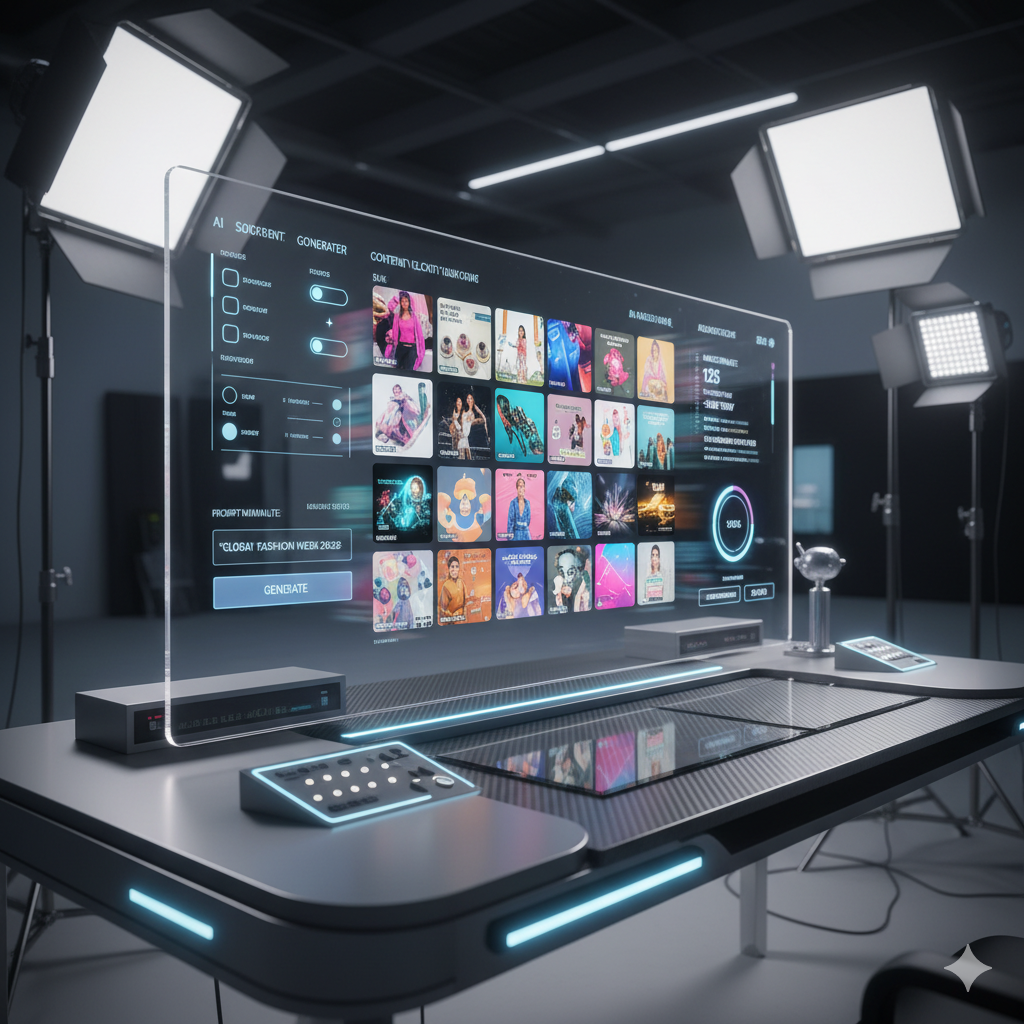
In the fiercely competitive arena of social media, where attention spans are fleeting and feeds are oversaturated, visual content reigns supreme. Businesses, marketers, and individual creators are locked in a relentless pursuit of engagement, reach, and conversion. Traditionally, this demand for high-quality, diverse, and consistent visuals has been a bottleneck, constrained by time, budget, and creative resources. However, the advent of sophisticated AI image generators has dramatically altered this landscape, ushering in an era of unprecedented content velocity and creative freedom.
This comprehensive guide delves into how AI image generators like Midjourney, DALL-E 3, Stable Diffusion, and others are not just tools for novelty, but powerful engines for optimizing social media visuals. We will explore the mechanisms behind these revolutionary technologies, dissect actionable strategies for leveraging them to achieve unrivaled content velocity, maintain brand consistency, and deeply personalize content. From mastering prompt engineering to navigating ethical considerations and measuring tangible impact, prepare to unlock the full potential of AI in your social media strategy.
The Dawn of AI-Powered Visual Creation
For decades, creating compelling visual content required a blend of artistic skill, technical proficiency with design software, and significant time investment. Photoshoots, graphic design, illustration – each step was a deliberate, often lengthy, process. The digital age accelerated distribution, but not necessarily creation. Then came AI image generators, a groundbreaking innovation that fundamentally shifts the paradigm.
At their core, AI image generators are powered by complex neural networks, often based on a technology called Generative Adversarial Networks (GANs) or more recently, Diffusion Models. These models are trained on colossal datasets of images and their corresponding text descriptions. Through this training, they learn to understand the intricate relationships between words and visual concepts. When a user provides a textual description, known as a ‘prompt,’ the AI leverages its learned knowledge to synthesize a brand-new image that aligns with the prompt’s specifications.
The journey from a textual prompt to a unique image involves several sophisticated steps. Initially, the model interprets the prompt, breaking it down into conceptual components. Then, it begins to ‘imagine’ the image, often starting from a field of random noise and iteratively refining it, adding details and structure, guided by the prompt. This process, particularly with diffusion models, is akin to gradually denoising an image until a coherent and high-fidelity output emerges. The speed at which this occurs – often mere seconds – is what makes these tools so revolutionary for content creation.
Early iterations of these tools, while impressive, often produced surreal or imperfect results. However, rapid advancements in model architecture, training data quality, and computational power have led to current generators capable of producing astonishingly realistic, artistic, and precise visuals. This evolution has transformed them from experimental novelties into indispensable assets for digital marketers and content creators seeking to maintain a competitive edge on dynamic social media platforms.
The Imperative of Content Velocity in Social Media
Social media platforms thrive on a constant stream of fresh, engaging content. Algorithms favor active accounts, and audiences expect regular updates. The digital landscape is a relentless current, and to stay afloat, brands and creators must produce content at an unprecedented pace. This concept, known as content velocity, is no longer a luxury but a fundamental necessity for maintaining relevance, fostering engagement, and driving growth.
Historically, increasing content velocity meant scaling up creative teams, investing more in external agencies, or compromising on quality – none of which were ideal solutions. Traditional content pipelines are often linear and time-consuming:
- Idea Generation
- Briefing Designers/Photographers
- Content Creation (Photoshoot, Design, Illustration)
- Review and Revisions
- Approval
- Scheduling and Publishing
Each stage introduces potential delays, and the cumulative time can be substantial, making it difficult to capitalize on trending topics or respond quickly to market changes.
AI image generators obliterate these bottlenecks. They compress the creation process from hours or days into minutes or even seconds. This dramatic acceleration allows creators to:
- Capitalize on Trends Instantly: Create visuals for trending hashtags or memes almost in real-time.
- A/B Test at Scale: Generate multiple visual variations to test audience preferences without significant additional effort.
- Maintain Consistent Presence: Ensure a steady flow of high-quality posts, keeping algorithms happy and audiences engaged.
- Diversify Content Types: Experiment with different visual styles, themes, and formats without needing specialized skills for each.
- Personalize on Demand: Tailor visuals for specific audience segments or even individual user preferences rapidly.
The ability to iterate and publish at such a speed provides a distinct competitive advantage, enabling brands to be more agile, responsive, and ultimately, more effective in their social media endeavors.
Strategies for Optimizing Social Media Visuals with AI Generators
Leveraging AI image generators effectively goes beyond simply typing a prompt and posting the result. It involves strategic planning, creative prompt engineering, and an understanding of your target audience. Here are key strategies to optimize your social media visuals for unrivaled content velocity and impact:
1. Hyper-Personalization at Scale
One of the most powerful capabilities of AI image generators is the ability to create highly personalized visuals for diverse audience segments without the overhead of traditional methods. Instead of a single generic campaign image, you can generate hundreds of variations tailored to specific demographics, interests, or geographic locations.
- Demographic Targeting: Create images featuring different age groups, ethnicities, or genders to resonate with specific audience segments. For example, a clothing brand can show their new collection modeled by people of various ages and body types.
- Interest-Based Customization: If your audience has distinct hobbies or preferences, generate visuals that incorporate those elements. A travel agency could create bespoke images of various destinations, each appealing to different adventure types (e.g., serene beaches for relaxation seekers, rugged mountains for adventurers).
- Geographic Relevance: Localize visuals by including landmarks, cultural elements, or even weather conditions relevant to specific regions. A fast-food chain could show its product in front of a famous city landmark, instantly connecting with local audiences.
This level of personalization significantly boosts engagement because content feels directly relevant to the viewer, fostering a stronger connection and encouraging interaction.
2. Accelerated A/B Testing and Iteration
Optimizing social media content often involves testing different visual approaches to see what resonates best with your audience. Traditionally, A/B testing visuals was resource-intensive. AI image generators transform this process, making it incredibly fast and efficient.
You can rapidly generate multiple variations of an image based on different styles, compositions, color palettes, or even emotional tones. For instance, for a product launch, you might generate:
- An image with a minimalist, clean aesthetic.
- Another with vibrant, energetic colors.
- A third showing the product in a lifestyle context.
- A fourth with a bold, artistic interpretation.
By deploying these variations and analyzing performance metrics (likes, shares, comments, click-through rates), you gain immediate insights into what your audience prefers. This iterative feedback loop allows for continuous improvement and refinement of your visual strategy, leading to higher-performing campaigns over time.
3. Maintaining Unwavering Brand Consistency
While AI offers creative freedom, maintaining brand consistency is paramount. AI image generators can be trained or prompted to adhere to specific brand guidelines, ensuring that all generated visuals align with your established aesthetic, color schemes, and overall brand identity.
- Consistent Style Prompts: Develop a library of specific keywords and phrases that define your brand’s visual style. Use these consistently in your prompts (e.g., “in the style of minimalist photography,” “vibrant and dynamic illustration,” “with a warm, earthy color palette”).
- Using Seed Images: Some AI models allow you to input an existing image (a ‘seed image’ or ‘image prompt’) to influence the style, composition, or even the subject of the generated output. This is invaluable for replicating brand assets or maintaining a consistent character.
- AI Model Fine-tuning: For larger organizations, fine-tuning an AI model on a proprietary dataset of brand assets can lead to even more precise and consistent outputs, effectively creating a custom AI artist that understands your brand’s unique visual language.
By integrating brand guidelines directly into your prompting strategy, you ensure that even with high content velocity, your brand’s visual identity remains strong and recognizable across all social media platforms.
4. Niche Content Creation and Community Engagement
Social media success often hinges on engaging specific niches and communities. AI image generators empower creators to produce highly specific, relevant visuals that resonate deeply with these targeted groups, fostering stronger community bonds.
- Addressing Niche Interests: Create visuals that speak directly to the unique passions of a niche audience. For a gaming community, generate character art or scenic in-game environments that don’t exist in reality but feel authentic.
- Community-Specific Memes and Inside Jokes: Leverage AI to create visual interpretations of inside jokes, memes, or cultural references unique to your community. This demonstrates an understanding and appreciation of your audience, strengthening loyalty.
- User-Generated Content (UGC) Amplification (AI-Assisted): While not truly UGC, AI can generate visuals that *look* like UGC (e.g., product in various ‘real-world’ scenarios) or even interpret and visualize user ideas submitted as text prompts, making the community feel heard and seen.
This strategy allows for deeper, more authentic engagement within specific communities, transforming passive followers into active participants and advocates.
5. Efficient Repurposing and Localization of Content
Maximizing the value of existing content is a smart strategy. AI image generators make repurposing visuals across different platforms or localizing them for global audiences incredibly efficient.
- Format Adaptation: Easily generate variations of a core visual in different aspect ratios (square for Instagram, vertical for TikTok/Reels, horizontal for YouTube thumbnails or X/Facebook posts) without redesigning from scratch.
- Visual Updates for Evergreen Content: Give old, high-performing text content a visual refresh with new AI-generated images, breathing new life into evergreen posts and extending their reach.
- Localization for Global Markets: Beyond just translating text, localize visuals to reflect cultural nuances, local fashion, or regional landscapes. An advertising campaign for a global product can have its visuals subtly (or overtly) adapted for each target country, enhancing resonance and avoiding cultural missteps.
The ability to quickly adapt and repurpose content saves immense time and resources, ensuring that your core messages reach a broader, more diverse audience effectively.
6. Real-time Marketing and Trendjacking
The ephemeral nature of social media trends demands speed. AI image generators are perfect for real-time marketing, allowing brands to quickly create relevant visuals for trending topics, news events, or cultural moments.
- Instant Response to Trends: When a new meme or viral sensation emerges, AI can generate visually engaging content related to it almost instantly, allowing your brand to participate in the conversation while it’s still hot.
- Event-Based Content: For major events (sports championships, holidays, cultural festivals), AI can rapidly produce a suite of themed visuals to capitalize on heightened public interest.
- Newsjacking with Visuals: Create visually striking images that complement commentary on breaking news, making your brand’s take more shareable and noticeable.
This agility helps brands appear timely, relevant, and engaging, boosting visibility and demonstrating a pulse on current events. However, caution is advised to ensure relevance and avoid appearing opportunistic or insensitive.
Prompt Engineering for Social Media Success
The quality of your AI-generated visuals is directly proportional to the quality of your prompts. Prompt engineering is the art and science of crafting effective text inputs to guide AI models to produce desired outputs. For social media, effective prompt engineering is crucial for achieving specific branding, styles, and messaging.
Here are key principles for mastering prompt engineering:
- Be Specific and Detailed: Vague prompts lead to generic results. Instead of “a dog,” try “a golden retriever puppy playing fetch in a sunlit park, bokeh background, professional photography, warm colors.”
- Use Descriptive Adjectives: Words like “vibrant,” “ethereal,” “gritty,” “minimalist,” “photorealistic,” “cinematic,” “cartoonish” can dramatically alter the style.
- Specify Visual Elements: Clearly describe subjects, objects, settings, actions, and even camera angles (e.g., “close-up shot,” “wide-angle lens”).
- Define Artistic Styles: If you want a particular aesthetic, include it (e.g., “Van Gogh style,” “cyberpunk aesthetic,” “Japanese ukiyo-e,” “hyperrealism,” “digital painting”).
- Control Composition and Mood: Use terms like “rule of thirds,” “leading lines,” “dramatic lighting,” “serene atmosphere,” “joyful expression.”
- Utilize Negative Prompts: Many generators allow you to specify what you *don’t* want to see (e.g., “–no blurry, ugly, low resolution”). This is crucial for refining outputs.
- Iterate and Refine: Prompting is an iterative process. Start with a broad idea, generate images, then refine your prompt based on what worked and what didn’t. Experiment with slight variations.
- Reference Artists or Photographers: Sometimes, referencing a renowned artist or photographer (e.g., “Ansel Adams style landscape”) can help the AI grasp a specific visual language.
- Understand Model Capabilities: Different AI models excel at different things. DALL-E 3 is strong with text integration, Midjourney with artistic and aesthetic quality, Stable Diffusion with customizability. Tailor your prompts to the model you’re using.
For social media, consistently using a set of core stylistic descriptors in your prompts can help maintain brand cohesion, even when generating vastly different subjects. Building a ‘prompt library’ for your brand’s visual identity is an excellent practice.
Ethical Considerations and Best Practices
While AI image generators offer immense power, their use comes with significant ethical responsibilities. Navigating these considerations is crucial for maintaining trust and credibility on social media.
- Transparency and Disclosure: Always consider whether to disclose that an image is AI-generated, especially when it depicts realistic people or events. While not legally mandated for all social media content, transparency builds trust with your audience. For news or sensitive topics, disclosure is paramount.
- Copyright and Ownership: The legal landscape around AI-generated content and copyright is still evolving. Currently, in many jurisdictions (like the US), purely AI-generated images without significant human input are not copyrightable. This means you might not have exclusive rights. Be aware of the terms of service for the AI generator you use, as they dictate usage rights. Avoid using copyrighted imagery in your prompts unless you have explicit permission or it falls under fair use.
- Deepfakes and Misinformation: The ability of AI to create hyper-realistic images carries the risk of generating deepfakes or contributing to misinformation. Never use AI to create misleading content, manipulate public opinion maliciously, or impersonate individuals without consent. This is an abuse of the technology with severe ethical and potential legal repercussions.
- Bias in Training Data: AI models are trained on vast datasets, and these datasets often reflect societal biases (e.g., underrepresentation of certain demographics, stereotypes). This can lead to AI-generated images that are biased or perpetuate stereotypes. Regularly audit your AI outputs for unintended biases and adjust prompts to counteract them. Be mindful of the representations you are creating.
- Intellectual Property and Style Mimicry: While prompting in the style of a famous artist can be creatively inspiring, be cautious about overtly mimicking living artists’ unique styles, especially for commercial use, without their consent. The line between inspiration and infringement can be blurry and is an area of ongoing debate.
- Consent for Likeness: Never use AI to generate images of identifiable individuals without their explicit consent, even if it’s not a direct ‘deepfake’ but a highly convincing look-alike.
Best practice dictates a conscious and responsible approach. Use AI as a creative assistant, not a replacement for ethical judgment. Prioritize authenticity, respect, and truthfulness in all your social media communications, regardless of the tools used to create them.
Measuring Impact and ROI of AI-Generated Visuals
The ultimate goal of optimizing social media visuals is to achieve measurable results. Understanding the ROI of your AI-powered content strategy is crucial for justifying investments and refining your approach. Fortunately, the velocity AI offers also enhances your ability to measure and learn.
Key Metrics to Track:
- Engagement Rate: Track likes, comments, shares, and saves relative to your follower count. Do AI-generated visuals lead to higher engagement than traditionally created ones?
- Reach and Impressions: Monitor how many unique users see your AI-generated content and the total number of times it’s displayed. Higher velocity often leads to more content, which can increase overall reach.
- Click-Through Rate (CTR): If your visuals are driving traffic to a website or landing page, measure the CTR. AI allows for rapid A/B testing of various calls-to-action within visuals, optimizing for higher CTR.
- Conversion Rate: For e-commerce or lead generation, track how many users convert after interacting with content featuring AI-generated visuals. Can personalized AI visuals drive more purchases or sign-ups?
- Time and Cost Savings: Quantify the resources saved by using AI. How much faster was a campaign deployed? How much less did it cost compared to traditional methods? This is a direct measure of efficiency.
- Audience Sentiment: Analyze comments and reactions to gauge how your audience perceives AI-generated content. Are they reacting positively, negatively, or indifferently?
- Brand Recall/Recognition: Over time, assess if a consistent stream of AI-generated, on-brand visuals contributes to stronger brand recognition and recall among your target audience.
Leveraging AI for Measurement and Optimization:
- Rapid A/B Testing: As discussed, AI allows for the rapid deployment of numerous visual variations. Use social media analytics tools to compare the performance of these variations and identify winning formulas.
- Trend Analysis: Use AI to quickly generate visuals based on emerging trends and then monitor their performance against non-trend-based content.
- Content Calendar Efficiency: Track the time saved in populating your content calendar with high-quality visuals. This directly translates to increased content velocity.
- Resource Reallocation: By automating visual creation for routine tasks, you can reallocate human creative talent to more strategic, high-value projects.
Regularly reviewing these metrics allows you to understand the tangible benefits of integrating AI into your social media strategy, enabling continuous refinement and optimization for maximum impact.
Comparison Tables
Table 1: Traditional Visual Creation vs. AI Image Generation for Social Media
| Feature | Traditional Visual Creation | AI Image Generation | Implication for Social Media |
|---|---|---|---|
| Time to Create Single Image | Hours to Days (e.g., photoshoot, design software) | Seconds to Minutes | Unrivaled content velocity, real-time marketing |
| Cost per Image | High (e.g., photographer fees, designer salaries, software licenses) | Low to Moderate (e.g., subscription fees, pay-per-use) | Budget efficiency, ability to scale content without budget escalation |
| Skill Required | Specialized graphic design, photography, illustration skills | Prompt engineering skills, understanding of AI capabilities | Democratizes visual creation, broadens talent pool |
| Scalability of Variations | Limited (each variation is a new effort) | High (easy to generate multiple versions with slight prompt tweaks) | Enables rapid A/B testing, personalization at scale |
| Creative Control & Specificity | Very high (direct human input, precise adjustments) | High, but requires precise prompting; can sometimes be unpredictable | Requires prompt mastery, but offers novel creative avenues |
| Ethical & Legal Considerations | Established copyright, clear ownership | Evolving copyright, potential for bias/misinformation, transparency needs | Requires careful ethical navigation and adherence to best practices |
| Uniqueness/Originality | Guaranteed original if human-made from scratch | Can be unique, but influenced by training data; potential for similar outputs across users | Offers new aesthetics, but ‘originality’ is a philosophical debate |
Table 2: Popular AI Image Generators Comparison for Social Media Marketers (as of late 2023/early 2024)
| Generator | Strengths for Social Media | Key Features | Ideal Use Case | Considerations |
|---|---|---|---|---|
| Midjourney | Highly artistic, aesthetic quality; strong for stylistic imagery and concepts. | Discord-based interface, advanced stylization options, ‘niji’ mode for anime/illustration. | Brand campaigns requiring high aesthetic appeal, abstract concepts, artistic visuals. | Less intuitive for precise text in images; can be highly stylized, less “realistic” without specific prompting. |
| DALL-E 3 (via ChatGPT Plus/Copilot Pro) | Excellent understanding of complex prompts, strong for text integration within images, good realism. | Integrated with ChatGPT for conversational prompting, easy text overlays, wide range of styles. | Product mockups, infographics, specific scenarios, images with embedded slogans/captions. | Requires a ChatGPT Plus/Copilot Pro subscription; outputs can sometimes lack artistic flair of Midjourney. |
| Stable Diffusion (various interfaces) | Highly customizable, open-source, can run locally; vast ecosystem of models and extensions. | Image-to-image capabilities, inpainting/outpainting, control over specific elements, fine-tuning. | Niche content, character consistency, generating variations from existing images, advanced users/developers. | Steeper learning curve; quality varies greatly depending on models/checkpoints used. |
| Adobe Firefly | Designed for creative professionals, integrated with Adobe Creative Cloud, focus on commercial safety. | Generative Fill, Text to Image, Text to Vector, Text Effects; commercially safe for use. | Complementing existing design workflows, creating assets for Adobe projects, commercially viable stock alternatives. | Less standalone “wild” creativity than Midjourney; currently a more curated, professional experience. |
| Canva Magic Media | Extremely user-friendly, integrated into a popular design platform, quick for basic needs. | Simple text-to-image, integrated directly into Canva’s design editor, fast generation. | Small businesses, individual creators, quick social media posts, adding simple visuals to existing designs. | Less advanced control over output, generally simpler aesthetics compared to dedicated generators. |
Practical Examples and Real-World Use Cases
The theoretical advantages of AI image generators translate into tangible benefits across various industries and social media strategies. Here are some practical examples:
- E-commerce Retailer: Dynamic Product Showcase
A small online boutique selling artisan jewelry faces the constant challenge of creating fresh product visuals. Instead of expensive photoshoots for every new piece or season, they use AI. By prompting “Close-up shot of a minimalist silver pendant with a small emerald, bokeh background, soft studio lighting, on a dark wooden surface, luxury e-commerce photography style” they generate dozens of high-quality, varied images. They can then change the prompt to “…on a model wearing a chic black dress, candid street style photography” to generate lifestyle shots. This allows them to update their product feeds daily, showcase items from multiple angles, and even create visuals for different demographics (e.g., pendant worn by a young woman vs. an older woman) without ever hiring a photographer, significantly boosting their content velocity and sales.
- Digital Marketing Agency: Tailored Ad Campaigns
An agency managing multiple client accounts needs to run highly targeted ad campaigns. For a client selling eco-friendly travel gear, they use AI to create visuals specific to different audiences. For adventurers, the prompt might be “Person hiking a majestic mountain trail at sunrise, wearing sustainable backpack, epic landscape photography.” For families, it could be “Family camping by a pristine lake, laughing around a campfire, cozy and warm atmosphere, candid lifestyle photo.” They rapidly generate hundreds of such segmented visuals, A/B test them across Facebook and Instagram, and quickly identify which visuals perform best for each niche, leading to dramatically improved conversion rates and reduced ad spend due to better targeting.
- Content Creator/Influencer: Diverse and Consistent Personal Brand
An influencer focusing on sustainable living and minimalist aesthetics needs a constant stream of unique, on-brand content. They use AI to generate inspirational quotes with custom backgrounds, create concept art for their blog posts (e.g., “a stylized illustration of a composting bin overflowing with lush greenery, vibrant colors, gentle sunlight, flat design“), and even generate fictional scenarios related to sustainable living (e.g., “a futuristic city powered by renewable energy, clean architecture, serene environment, digital art“). This ensures their feed always looks fresh and diverse, maintaining their distinct aesthetic without repetitive selfies or stock photos, allowing them to focus more on creating engaging captions and interacting with their audience.
- Small Business Owner: Localized Promotions
A local coffee shop wants to run promotions for different holidays and local events. With AI, they can generate visuals like “A steaming latte with intricate foam art, autumn leaves falling in the background through a cozy cafe window, warm inviting light, realistic photo” for fall, or “A festive holiday cookie next to a cup of hot chocolate, blurred backdrop of a bustling Christmas market street, magical atmosphere” for winter. They can even insert local elements with prompts like “Latte art with a silhouette of the local city skyline, urban cafe vibe.” This allows them to create hyper-local and timely content quickly, driving foot traffic and engagement from the local community.
- Non-Profit Organization: Raising Awareness for Specific Causes
A non-profit dedicated to ocean conservation needs compelling visuals to highlight various aspects of marine life and threats. They use AI to generate stunning images of diverse marine ecosystems (e.g., “a vibrant coral reef teeming with colorful fish, clear blue water, serene underwater photography“) and also concept images illustrating threats (e.g., “a solitary plastic bottle floating in a vast, polluted ocean, somber tones, impactful photojournalism style“). This enables them to create a wide range of emotionally resonant visuals to accompany their educational posts and fundraising campaigns, significantly amplifying their message and reach without requiring expensive underwater photographers.
These examples underscore the versatility and transformative power of AI image generators across various social media applications, demonstrating how they enable content creators to produce high-quality, targeted visuals at an unprecedented speed and scale.
Frequently Asked Questions
Q: What exactly is an AI image generator?
A: An AI image generator is a computer program powered by artificial intelligence, typically using deep learning models like Diffusion Models or GANs (Generative Adversarial Networks). It takes a text description (a ‘prompt’) as input and creates a unique, corresponding image as output. These models are trained on massive datasets of images and their textual descriptions, allowing them to understand and synthesize visual concepts based on linguistic instructions.
Q: How do AI image generators achieve such high content velocity?
A: AI image generators achieve high content velocity by automating and significantly accelerating the visual creation process. Instead of hours or days required for traditional graphic design or photography, an AI can generate multiple high-quality images in seconds or minutes. This allows marketers to rapidly iterate, A/B test, personalize content, and respond to trends almost instantly, compressing the content pipeline dramatically.
Q: Can AI image generators truly maintain brand consistency?
A: Yes, they can. Maintaining brand consistency requires a strategic approach to prompt engineering. By consistently using specific keywords that define your brand’s aesthetic (e.g., “minimalist,” “vibrant,” “corporate,” “rustic,” “pastel palette”), referencing existing brand images (image prompts), or even fine-tuning AI models on your brand’s existing visual assets, you can guide the AI to produce visuals that align with your established brand identity.
Q: What is ‘prompt engineering’ and why is it important for social media?
A: Prompt engineering is the art and science of crafting effective text inputs (prompts) to guide an AI image generator to produce the desired visual output. It’s crucial for social media because the quality and specificity of your prompt directly determine the relevance, creativity, and brand alignment of the generated image. Well-engineered prompts lead to more engaging, targeted, and high-performing social media visuals.
Q: Are AI-generated images safe to use commercially on social media?
A: The commercial use of AI-generated images is a rapidly evolving legal area. Many AI image generators (like Adobe Firefly) are specifically designed with commercial use in mind and generate images safe for business. However, some platforms’ terms of service might restrict certain commercial uses or make it unclear regarding copyright ownership. It’s essential to read the specific licensing and usage terms of the AI tool you are using and be aware of evolving copyright laws. Avoid using AI to generate copyrighted content or images of identifiable people without consent.
Q: What are the main ethical concerns with using AI image generators for social media?
A: Key ethical concerns include potential for misinformation and deepfakes (creating misleading content), perpetuation of biases present in training data (leading to stereotypes), copyright and ownership ambiguities (especially for outputs resembling existing art), and the lack of transparency if users aren’t informed content is AI-generated. Responsible use necessitates transparency, avoiding malicious intent, and actively mitigating bias.
Q: How can I ensure my AI-generated visuals resonate with my target audience?
A: To ensure resonance, combine strong prompt engineering with a deep understanding of your audience. Use prompts that incorporate elements, styles, and themes known to appeal to your target demographic. Leverage AI’s speed for rapid A/B testing of different visual variations to see what performs best, and continuously analyze social media analytics to refine your approach based on real-world engagement data.
Q: Can AI image generators replace human graphic designers or photographers?
A: No, not entirely. AI image generators are powerful tools that augment human creativity and efficiency, but they do not replace the nuanced strategic thinking, emotional intelligence, complex problem-solving, and unique artistic vision that human designers and photographers bring. They automate repetitive tasks and generate drafts, freeing up human professionals to focus on higher-level creative direction, conceptualization, and strategic brand building. They are collaborators, not replacements.
Q: What are some common pitfalls to avoid when using AI image generators for social media?
A: Common pitfalls include:
- Generic Prompts: Leading to bland, unoriginal outputs.
- Ignoring Brand Guidelines: Resulting in inconsistent visual identity.
- Lack of Curation: Posting imperfect or awkward AI generations without editing.
- Ethical Missteps: Generating deepfakes, biased content, or copyrighted material.
- Over-reliance: Neglecting human creativity and oversight.
- Poor Image Quality: Not refining prompts or outputs sufficiently for high resolution social media use.
- Lack of Diversity: Failing to prompt for diverse representations, perpetuating bias.
Avoiding these requires careful prompting, diligent review, and an ethical mindset.
Q: How do I choose the best AI image generator for my social media needs?
A: The best generator depends on your specific needs:
- For high artistic quality and abstract concepts: Midjourney.
- For precise image content, text integration, and realistic scenarios: DALL-E 3 (via ChatGPT Plus/Copilot Pro).
- For maximum customization, local hosting, and advanced workflows: Stable Diffusion.
- For integration into existing Adobe workflows and commercial safety: Adobe Firefly.
- For ease of use and quick, basic visuals within a design platform: Canva Magic Media.
Consider your budget, technical comfort level, and the primary type of visuals you need to produce.
Key Takeaways: AI for Unrivaled Social Media Content Velocity
- Accelerated Visual Creation: AI image generators dramatically reduce the time and resources needed to produce high-quality visuals, enabling unprecedented content velocity.
- Enhanced Personalization: Brands can create highly targeted and personalized visuals for diverse audience segments with ease, fostering deeper engagement.
- Efficient A/B Testing: The speed of AI generation allows for rapid iteration and testing of multiple visual concepts, leading to data-driven optimization.
- Strategic Prompt Engineering: Mastering the art of crafting detailed and specific prompts is crucial for achieving desired aesthetic, brand consistency, and message accuracy.
- Brand Consistency Maintainable: Through consistent prompting and advanced features like seed images or fine-tuning, AI can adhere to established brand guidelines.
- Real-time Marketing Advantage: AI empowers brands to quickly capitalize on trending topics and cultural moments with relevant visual content, boosting timeliness and relevance.
- Ethical Responsibility: Users must navigate evolving ethical considerations around transparency, bias, copyright, and misinformation when deploying AI-generated content.
- Measurable ROI: The impact of AI-generated visuals can be tracked through engagement rates, reach, CTR, and conversion rates, allowing for continuous strategy refinement.
- Augmentation, Not Replacement: AI tools serve as powerful collaborators, enhancing human creativity and efficiency rather than replacing the need for strategic thought and artistic direction.
Conclusion
The landscape of social media content creation has been irrevocably transformed by the emergence of AI image generators. These sophisticated tools are no longer just futuristic curiosities; they are indispensable assets for any brand or individual aiming to thrive in a visually driven digital world. The promise of unrivaled content velocity is not merely about producing more, but about producing more effectively: more relevant, more personalized, more engaging, and more consistent visuals at a speed previously unimaginable.
By strategically integrating AI image generators into your social media workflow – from mastering the nuances of prompt engineering to leveraging their power for hyper-personalization, rapid A/B testing, and real-time marketing – you unlock a new realm of creative possibilities. However, with this power comes the critical responsibility of ethical deployment. Navigating issues of transparency, bias, and copyright with integrity will be paramount to building trust and credibility with your audience.
Ultimately, AI image generators represent a profound shift in how we conceive, create, and deploy visual content online. Those who embrace this technology with an informed, strategic, and ethical approach will not only keep pace with the accelerating demands of social media but will also redefine the benchmarks for visual engagement and content excellence. The future of social media visuals is here, and it’s being shaped, at unprecedented speed, by artificial intelligence.









































Leave a Reply