

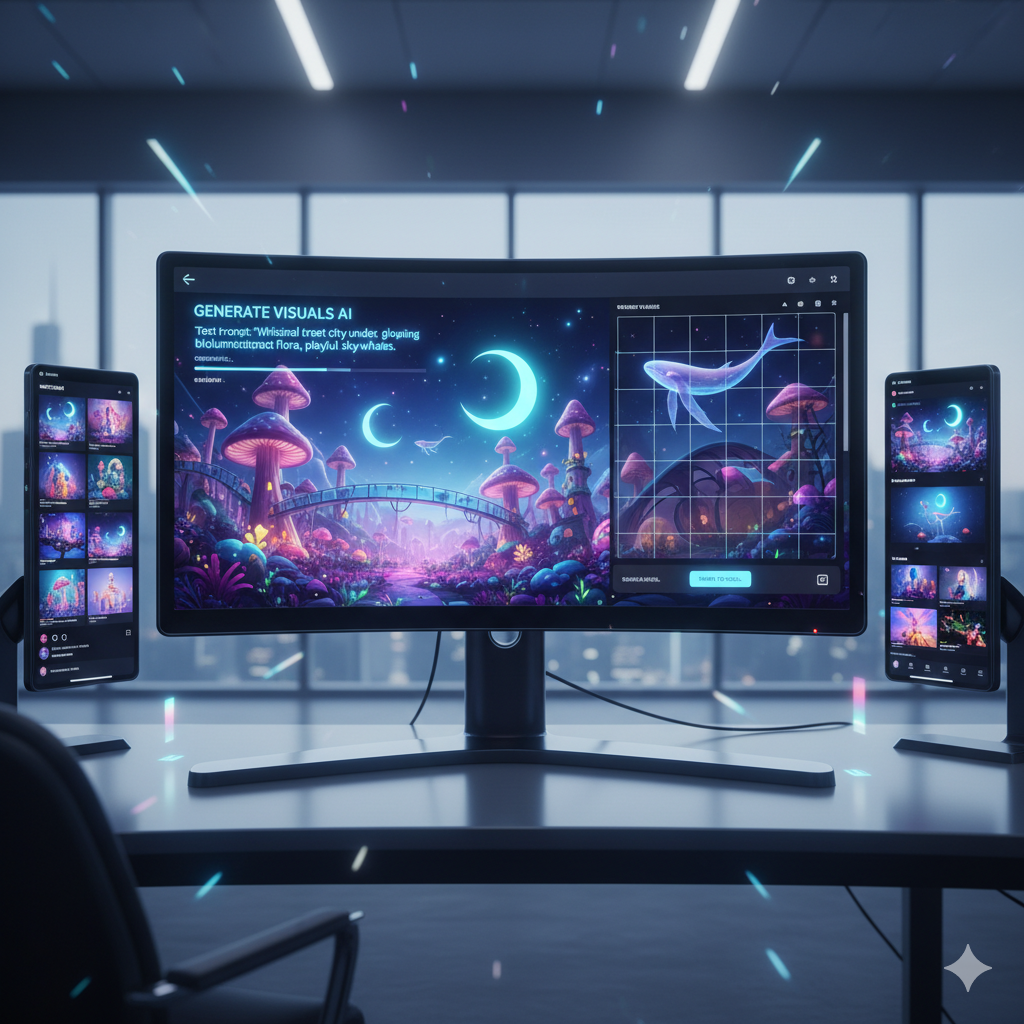
In the rapidly evolving landscape of social media, where attention spans are fleeting and visual appeal reigns supreme, the quest for truly unique and engaging content has never been more intense. Businesses, marketers, and individual creators are constantly seeking innovative ways to stand out from the noise, tell compelling stories, and connect authentically with their audiences. Enter the transformative power of Artificial Intelligence, specifically AI image generators.
These sophisticated tools are not just a fleeting trend; they represent a fundamental paradigm shift in how visual content is conceived, created, and disseminated across platforms like Instagram, TikTok, Facebook, and LinkedIn. From generating hyper-realistic product mockups to conjuring fantastical scenes that defy traditional photography, AI is empowering users to move beyond imagination and craft unique social media narratives with unprecedented speed, scale, and creativity. This comprehensive guide will delve into how AI image generators are reshaping social media content creation, exploring their capabilities, strategic advantages, practical applications, and the vital considerations that come with this powerful technology.
The AI Revolution in Visual Content: A Paradigm Shift
For decades, visual content creation for social media has been a labor-intensive process, often requiring a significant investment of time, money, and specialized skills. Brands relied heavily on professional photographers, graphic designers, stock photo libraries, or even extensive photoshoots to produce the imagery needed to fuel their online presence. This traditional model, while effective, often presented bottlenecks:
- High Costs: Professional services and stock subscriptions can be expensive, particularly for small businesses or frequent content needs.
- Time Constraints: Photoshoots, design iterations, and approval processes can be lengthy, hindering agile marketing campaigns.
- Limited Uniqueness: Stock photos, while convenient, are often generic and widely used, making it difficult for brands to establish a distinct visual identity.
- Creative Blocks: Even skilled designers can face creative plateaus, struggling to generate novel concepts for repetitive content demands.
AI image generators have emerged as a powerful antidote to these challenges, ushering in an era of democratized design and boundless creativity. These tools, powered by advanced machine learning models like Generative Adversarial Networks (GANs) and Diffusion Models, can interpret text prompts (known as “prompts”) and translate them into stunning visual outputs in mere seconds. This capability fundamentally alters the content creation workflow, allowing ideas to materialize into images almost instantaneously.
From Concept to Creation: The Workflow Transformation
The integration of AI into the content creation workflow streamlines several critical stages:
- Ideation and Brainstorming: Instead of sketching or searching for hours, marketers can quickly generate diverse visual concepts based on keywords, exploring various styles, moods, and compositions. This rapid prototyping accelerates the ideation phase, making brainstorming sessions far more productive and visually driven. Imagine a marketing team needing visuals for a new vegan snack. With AI, they can instantly see renderings of a ‘crunchy kale chip in a vibrant green field with a playful cartoon character’ or a ‘gourmet vegan burger photographed in a minimalist, high-end setting.’
- Rapid Prototyping and A/B Testing: AI enables the creation of multiple visual variations for a single campaign theme in minutes. This is invaluable for A/B testing different image styles, colors, or subject matter to determine what resonates best with specific audience segments. A fashion brand can generate dozens of models wearing the same outfit in different hypothetical locations or with varying lighting conditions, testing which visual elicits the most engagement before committing to a full photoshoot.
- Custom Asset Generation: Beyond inspiration, AI can produce final, high-quality visual assets tailored precisely to campaign requirements. Need an image of a red panda wearing a top hat for a whimsical brand campaign? AI can create it. Require a futuristic cityscape reflecting a specific architectural style? AI can render it. This level of customization ensures that social media feeds are populated with truly unique, context-specific visuals that perfectly align with the brand’s narrative.
- Localization and Personalization at Scale: For global brands, AI can generate localized content instantly, adapting visuals to cultural nuances or regional preferences without manual redesign. For personalization, specific customer segments can receive visuals tailored to their individual preferences or past interactions, fostering deeper connections. Think of a travel agency using AI to generate images of specific dream destinations based on a user’s browsing history.
The essence of this transformation lies in its ability to democratize creativity. Previously, only those with access to design tools and skills could bring complex visual ideas to life. Now, with intuitive prompt-based interfaces, anyone with an imagination can become a visual storyteller, making social media narratives richer, more diverse, and infinitely more imaginative.
Unlocking Unprecedented Creativity and Personalization
One of the most compelling aspects of AI image generators is their capacity to transcend traditional creative boundaries. Human imagination, while powerful, is often limited by existing visual references, technical constraints, or the sheer effort required to manifest complex ideas. AI, drawing from vast datasets of existing images, can synthesize entirely new concepts, styles, and compositions, often producing results that surprise and delight even seasoned creatives.
Breaking Creative Barriers and Cultivating Unique Styles
For brands and creators struggling with creative blocks or seeking to differentiate themselves in a crowded digital space, AI offers a potent solution:
- Generating Novel Concepts: AI can combine disparate elements in unexpected ways, leading to fresh and original ideas. A prompt like “a serene minimalist tea ceremony on the surface of Mars with robotic attendees” can generate a visually arresting image that immediately captures attention and sparks curiosity – a narrative impossible to stage with traditional methods.
- Exploring Artistic Styles: Users can specify artistic styles (e.g., “impressionist painting,” “cyberpunk aesthetic,” “Japanese woodblock print,” “3D Pixar style”) and apply them to any subject matter. This allows brands to experiment with a distinct visual language without hiring specialized artists for each style. Imagine a financial institution using whimsical, illustrative AI visuals to make complex topics more approachable, or a tech startup adopting a slick, futuristic aesthetic across all its content.
- Building Brand Visual Identity: AI enables brands to develop a consistent, yet unique, visual identity that is instantly recognizable. By consistently using specific prompts, style parameters, and color palettes, companies can generate an endless stream of branded imagery that reinforces their narrative and values. This moves beyond generic stock photos towards a truly bespoke visual universe. A boutique hotel could generate images showcasing its unique architectural style across various seasonal settings, always maintaining a cohesive brand aesthetic.
Tailoring Visuals for Niche Audiences and Hyper-Personalization
The ability to rapidly generate highly specific imagery allows for unprecedented levels of audience targeting and personalization:
- Niche Community Engagement: Social media is fragmented into countless niche communities. AI allows creators to generate visuals that speak directly to these specific interests, subcultures, or inside jokes. A brand catering to gamers can create highly specific fantasy characters, gaming environments, or even memes featuring their products, rather than relying on generic lifestyle shots. This deep relevance fosters stronger engagement and a sense of belonging among followers.
- Demographic and Psychographic Targeting: Marketers can fine-tune visuals based on demographic data (age, gender, location) or psychographic profiles (interests, values, lifestyle). For example, generating images featuring diverse representations of people, cultural settings, or activity types to resonate with a particular target group. This ensures that the visual message is not only seen but also truly felt by the intended audience.
- Personalized User Experiences: In more advanced applications, AI could potentially generate personalized visuals for individual users in real-time. Imagine an e-commerce platform that dynamically displays product images against backgrounds or in scenarios that match a user’s past purchase history or browsing preferences, creating a highly customized shopping experience directly within social ads or feeds.
This personalization capability transforms social media from a broadcasting platform into a more intimate, conversational space, where visuals are not just seen, but experienced as uniquely relevant to the individual. It’s about moving from broad appeal to laser-focused resonance, driven by AI’s creative engine.
Key AI Image Generation Tools Reshaping the Landscape
The market for AI image generators is dynamic and rapidly evolving, with several platforms leading the charge in functionality, accessibility, and creative output. Understanding the strengths and nuances of these tools is crucial for anyone looking to leverage AI for social media content creation.
Understanding the Nuances: Midjourney, DALL-E 3, Stable Diffusion
- Midjourney:
- Strengths: Renowned for its artistic flair and ability to generate visually stunning, often ethereal and highly aesthetic images. It excels at creating evocative scenes, abstract concepts, and concept art. Midjourney often produces outputs with a distinct, polished style, making it popular among artists and those seeking high-quality, impactful visuals. Its latest versions (V5, V6) have significantly improved photorealism and prompt adherence.
- Ease of Use: Primarily accessed via Discord commands, which can have a slight learning curve for newcomers but becomes intuitive quickly. The community aspect on Discord also offers inspiration and learning opportunities.
- Best for: Artistic concepts, mood boards, fantastical imagery, striking social media hero images, branding elements with a unique aesthetic.
- DALL-E 3 (integrated with ChatGPT Plus/Enterprise):
- Strengths: Developed by OpenAI, DALL-E is exceptional at understanding complex, lengthy, and nuanced natural language prompts. It excels at generating accurate representations of specific objects, scenes, and actions, often with text within images (which is a significant challenge for many AI models). Its integration with ChatGPT allows for conversational prompt refinement, making the process highly iterative and user-friendly.
- Ease of Use: Very user-friendly, especially through the ChatGPT interface. Users can simply describe what they want, and ChatGPT will often help craft and refine the prompt for optimal results.
- Best for: Realistic product mockups, specific object generation, detailed scene descriptions, concepts requiring precise elements, generating images with legible text, corporate communications, educational content.
- Stable Diffusion:
- Strengths: An open-source model that offers unparalleled flexibility and customization. Users can host it locally, fine-tune models with their own datasets (e.g., brand assets, specific art styles), and integrate it into various workflows. It boasts a vast ecosystem of checkpoints, models, and extensions (like ControlNet) that allow for precise control over composition, pose, and style. Its open-source nature fosters rapid innovation and a large community of developers.
- Ease of Use: Can be more complex to set up and use, especially the local versions, requiring some technical proficiency. However, numerous user-friendly web interfaces and cloud-based services (like Stability AI’s DreamStudio, Leonardo.ai) make it more accessible.
- Best for: Highly customized projects, specific brand aesthetic training, NSFW content (if unmoderated), generating large volumes of assets, researchers, developers, and users who need fine-grained control over every aspect of image generation.
Beyond these giants, other platforms like Adobe Firefly are quickly gaining traction, emphasizing ethical training data and seamless integration with existing creative suites, providing another powerful option for designers and marketers. The choice of tool often depends on the specific project requirements, desired aesthetic, budget, and technical comfort level of the user. What remains constant across all these platforms is the growing sophistication of their output and their increasing ease of use, making AI visual creation a mainstream reality for social media.
The Strategic Advantage: How AI Boosts Social Media ROI
The impact of AI image generators extends far beyond mere creative novelty; they offer tangible strategic advantages that directly contribute to a higher return on investment (ROI) for social media marketing efforts. By optimizing key aspects of content production, AI enables businesses to be more agile, efficient, and effective in their digital campaigns.
Cost-Efficiency and Speed in Content Production
Traditional visual content creation often involves significant financial outlay and time commitment. AI radically transforms this equation:
- Reduced Production Costs:
- Photography: AI can eliminate or significantly reduce the need for expensive photoshoots, models, props, and location scouting. Brands can generate high-quality product images, lifestyle shots, or conceptual scenes at a fraction of the cost.
- Graphic Design: While AI won’t replace human designers entirely, it can handle routine tasks, generate initial concepts, or create variations, freeing up designers for more complex, strategic work. This reduces outsourcing costs or internal design team workload.
- Stock Image Alternatives: Instead of purchasing expensive stock photos, businesses can generate unique, branded images that are precisely tailored to their needs, saving on subscription fees and licensing costs while avoiding generic visuals.
- Accelerated Content Velocity:
- Rapid Iteration: Ideas can be visualized and refined in minutes, not days or weeks. This allows for quick pivots in campaigns, responsive content creation to current events or trends, and faster deployment of new marketing initiatives.
- Meeting Demand: Social media demands a constant stream of fresh, engaging content. AI enables brands to keep their content calendars full without exhausting resources, ensuring a consistent and vibrant online presence. This is particularly beneficial for platforms like TikTok or Instagram Stories, which thrive on frequent updates.
- Scalability: Need 100 variations of an ad image for different A/B tests or multiple geographical regions? AI can generate them rapidly, a task that would be prohibitively time-consuming and expensive with manual methods.
Enhanced Engagement and Brand Differentiation
Beyond efficiency, AI also elevates the quality and impact of social media visuals:
- Uniqueness Drives Attention: In a cluttered feed, truly unique and original visuals cut through the noise. AI-generated images, especially those that push creative boundaries, are more likely to stop scrolls, attract clicks, and spark conversations, leading to higher engagement rates.
- Stronger Brand Storytelling: By removing visual constraints, AI allows brands to tell more imaginative and complex stories. Whether it’s creating a mascot, visualizing an abstract brand value, or depicting a product’s impact in a fantastical setting, AI provides the tools to weave compelling narratives that resonate deeply with audiences.
- Personalized Connections: As discussed, the ability to tailor visuals to specific audience segments or even individual users fosters a sense of personal connection and relevance, which is a cornerstone of effective social media marketing. This personalization can lead to increased loyalty and conversions.
- Optimized Performance Through Testing: The speed of AI image generation facilitates extensive A/B testing of various visual elements. By quickly testing different color schemes, compositions, themes, and styles, marketers can gather data-driven insights into what truly resonates with their audience, continually optimizing their campaigns for better performance and higher ROI.
Ultimately, by making visual content creation faster, cheaper, more unique, and more engaging, AI image generators are empowering businesses to maximize their social media presence, achieve their marketing objectives with greater efficiency, and establish a truly distinctive brand voice in the digital realm.
Navigating the Ethical Landscape and Future Trends
As AI image generation becomes more sophisticated and ubiquitous, it inevitably brings forth a complex array of ethical considerations and challenges. Understanding these issues is paramount for responsible and sustainable adoption of the technology.
Addressing Bias, Copyright, and Authenticity Concerns
- Bias in Training Data:
- The Issue: AI models learn from vast datasets of existing images, which often reflect societal biases present in the real world or in how that data was curated. This can lead to AI generating images that perpetuate stereotypes (e.g., specific professions always depicted with certain genders or ethnicities, unrealistic beauty standards).
- Mitigation: Developers are actively working on curating more diverse and balanced datasets, and users should be mindful of their prompts to counteract potential biases. Regularly evaluating AI outputs for fairness and representation is crucial.
- Copyright and Ownership:
- The Issue: The legal landscape around AI-generated content is still nascent. Questions arise regarding the ownership of AI-generated images: Is it the user who wrote the prompt? The AI company? What about the original artists whose work was included in the training data? There are ongoing lawsuits and debates about whether AI models “steal” from artists by learning from their copyrighted works.
- Considerations for Users: Currently, most AI companies grant users commercial rights to images generated on their platforms, but this can vary. It’s essential for users to check the terms of service of each AI tool they use. For brands, potential legal challenges regarding “style mimicry” or originality could emerge.
- Authenticity and Misinformation (“Deepfakes”):
- The Issue: AI’s ability to create highly realistic images, including faces and scenarios that never existed, raises concerns about authenticity and the spread of misinformation. “Deepfakes” – AI-generated images or videos that convincingly depict real people saying or doing things they never did – pose significant societal risks.
- Responsible Use: Transparency is key. Companies and creators should consider disclosing when images are AI-generated, especially in contexts where authenticity is critical (e.g., news, testimonials, sensitive subjects). Developing AI detection tools and promoting media literacy are ongoing efforts to combat misuse.
- Environmental Impact:
- The Issue: Training and running large AI models require substantial computational power, which consumes significant energy and contributes to carbon emissions.
- Awareness: While not directly mitigated by individual users, awareness of this issue encourages the development of more energy-efficient AI models and responsible resource consumption by AI companies.
The Road Ahead: Future Trends in AI Visual Creation
The field of AI image generation is far from stagnant. Several exciting trends are shaping its future:
- Multimodal AI: Moving beyond text-to-image, AI will increasingly integrate multiple input modalities (text, image, audio, video) to create even richer and more contextually aware visual outputs. Imagine prompting an AI with a spoken description, a reference image, and a music track to generate an animated scene.
- Real-Time Generation and Animation: The speed of generation will continue to improve, potentially allowing for real-time visual creation and manipulation, or even instant generation of short video clips and animations from text prompts. This would be revolutionary for live social media content and interactive experiences.
- Personalized AR/VR Experiences: AI could power the real-time generation of augmented reality (AR) filters, virtual try-ons, and immersive virtual reality (VR) environments tailored to individual user preferences, transforming how brands interact with consumers in digital spaces.
- Ethical AI by Design: Increased focus on developing “ethical AI” from the ground up, with built-in mechanisms to reduce bias, enhance transparency, and ensure responsible usage. Regulatory frameworks will likely evolve to address copyright and authenticity challenges.
- Deeper Integration into Creative Suites: AI tools will become even more seamlessly integrated into existing professional design software (like Adobe Creative Cloud), becoming indispensable features rather than standalone applications. This will empower designers with AI as a co-creative partner.
Navigating this future requires a balanced approach: embracing the incredible potential of AI while remaining acutely aware of its ethical implications and working collectively to steer its development towards beneficial and responsible applications. For social media content creators, this means staying informed, experimenting thoughtfully, and always prioritizing authenticity and respect for their audience.
Challenges and Considerations for AI-Powered Visuals
While AI image generators offer unparalleled opportunities, their adoption is not without challenges. Successful integration into social media strategies requires careful consideration of potential pitfalls and proactive measures to mitigate them.
Maintaining Brand Voice and the Human Touch
- Brand Consistency:
- The Challenge: AI can generate an infinite array of styles and images, which can make it difficult to maintain a consistent brand aesthetic and voice across all social media channels. Without careful guidance, AI might produce visuals that deviate from established brand guidelines, leading to a disjointed brand perception.
- Mitigation: Develop a robust “prompt library” with specific stylistic elements, color palettes, and thematic keywords that reflect your brand. Train AI models (where possible, e.g., with Stable Diffusion) on your existing brand assets. Human oversight is critical to review and curate AI outputs, ensuring they align with brand identity.
- The “Uncanny Valley” Effect:
- The Challenge: Sometimes, AI-generated images, particularly of human faces or complex scenes, can appear almost, but not quite, real. This can create a sense of unease or artificiality in viewers, diminishing engagement rather than enhancing it. Minor anatomical distortions or strange artifacts can break immersion.
- Mitigation: For highly realistic imagery, choose AI models known for their photorealism and pay close attention to details. For artistic or conceptual images, embrace the stylized nature of AI rather than striving for perfect realism if it risks falling into the uncanny valley. Sometimes, slightly abstract or clearly artistic AI renders are more appealing than imperfect “realistic” ones.
- Prompt Engineering as a Skill:
- The Challenge: While easy to use at a basic level, achieving truly outstanding and precise results from AI generators requires skill in “prompt engineering.” Crafting effective prompts that convey creative intent accurately and elicit desired outputs is an art form that takes practice and experimentation. Vague or poorly structured prompts lead to generic or irrelevant images.
- Mitigation: Invest time in learning prompt engineering techniques. Experiment with different keywords, stylistic modifiers, negative prompts (to exclude elements), and image-to-image prompting. Many AI communities offer resources and examples for mastering this skill.
- Over-Reliance on AI and Loss of Human Creativity:
- The Challenge: There’s a risk of becoming overly dependent on AI, potentially stifling human creativity or leading to generic, uninspired content if not used thoughtfully. The “human touch” – empathy, nuanced understanding of culture, and genuine emotion – is something AI cannot yet fully replicate.
- Mitigation: View AI as a co-creative partner or a powerful tool, not a replacement for human ingenuity. Use it to augment, not supplant, brainstorming and ideation. Always infuse AI-generated visuals with human insight, emotional resonance, and strategic thinking to maintain authenticity and depth in your narratives.
- Data Privacy and Security:
- The Challenge: Many cloud-based AI tools require users to upload images or input sensitive information (even if just text prompts). Concerns about data privacy, how uploaded data is used for model training, and the security of proprietary information become important.
- Mitigation: Carefully review the privacy policies and data usage terms of any AI platform before use. Avoid uploading sensitive or confidential brand assets unless the platform explicitly guarantees data privacy and non-use for model training. Consider self-hosted or enterprise-grade solutions for higher security needs.
Addressing these challenges proactively ensures that AI image generators become a powerful asset rather than a liability in your social media content strategy. It requires a thoughtful blend of technological adoption, creative oversight, and ethical awareness.
Comparative Analysis: AI Generators vs. Traditional Methods
To fully appreciate the revolution brought about by AI image generators, it’s helpful to directly compare their characteristics and outcomes against traditional visual content creation methods. This comparison highlights why so many creators and businesses are making the switch or integrating AI into their workflows.
| Feature | AI Image Generators | Traditional Visual Creation (Photography/Graphic Design) |
|---|---|---|
| Cost per Asset | Typically very low (subscription fee, sometimes per-credit) | High (photographer/designer fees, stock licenses, equipment, props, location) |
| Time to Produce | Seconds to minutes for initial drafts and variations | Hours to weeks (ideation, planning, shooting, editing, revisions) |
| Uniqueness/Originality | High; generates novel images based on prompts, potentially creating unique styles. Avoids generic stock photos. | Variable; can be highly unique with custom shoots/design, but often limited by available stock or designer’s style. |
| Scalability | Extremely high; can generate hundreds or thousands of unique images quickly. | Limited; scaling up requires more time, budget, and personnel. |
| Skill Required | Basic understanding of prompt engineering; no advanced design software knowledge needed for basic use. | Advanced photography, graphic design, and software skills. |
| Versatility | Can generate almost anything imaginable, from realistic to fantastical, in any style. | Limited by physical constraints (for photography) or designer’s style/software capabilities. |
| Brand Consistency | Requires careful prompt management and human curation to maintain. | Easier to control through established brand guidelines and human design oversight. |
| Ethical & Legal Considerations | Evolving legal landscape (copyright, ownership), potential for bias in outputs. | Well-established copyright laws, clear ownership, fewer bias concerns inherent in the tool. |
| Human Touch/Emotion | Still developing; can simulate, but often lacks genuine human emotion or nuanced understanding. | Strong; can convey deep emotion, cultural nuances, and authentic human connection. |
Comparing Leading AI Image Generation Platforms
While the previous table compared AI to traditional methods, this table provides a focused comparison of some of the leading AI image generation platforms currently dominating the space. Each platform has its unique strengths, ideal use cases, and operational nuances.
| Feature | Midjourney | DALL-E 3 (via ChatGPT Plus) | Stable Diffusion (e.g., DreamStudio, local setups) |
|---|---|---|---|
| Primary Use Case | Artistic, conceptual, aesthetic, fantastical imagery, unique branding visuals. | Realistic visuals, specific object generation, detailed scenes, images with legible text, corporate content. | Highly customizable, open-source projects, fine-tuning, specific niche content, developer control. |
| Ease of Use | Moderate (Discord-based commands, learning prompt structure is key). | Very High (natural language interaction via ChatGPT, highly intuitive). | Variable (high for hosted versions like DreamStudio; complex for local installs/advanced features). |
| Artistic Style | Distinctly artistic, often cinematic, painterly, or illustrative with a unique “Midjourney look.” | Versatile, good at realism, cartoons, illustrations; strong prompt adherence for specific styles. | Extremely versatile; depends heavily on chosen models/checkpoints and user’s fine-tuning. Can mimic any style. |
| Prompt Adherence | Good, but sometimes interprets prompts with an artistic slant; V6 improved. | Excellent, understands complex, multi-clause prompts very well. | Excellent with detailed prompts and advanced controls (e.g., ControlNet). |
| Pricing Model | Subscription-based (tiers for GPU time). | Included with ChatGPT Plus/Enterprise subscription. | Freemium for web services (DreamStudio), free for local use (requires hardware). |
| Output Resolution | Good, with upscale options. | Standard (e.g., 1024×1024), good quality. | Highly customizable, can generate very high resolutions with upscalers. |
| Community/Ecosystem | Strong, active Discord community for sharing and learning. | Integrated with large OpenAI ecosystem, but less specific image generation community. | Massive open-source community, vast number of models, extensions, and tutorials. |
| Key Advantage | Unparalleled aesthetic output and artistic vision. | Superior prompt understanding and generation of legible text. | Ultimate customization, control, and flexibility (especially for developers). |
Real-World Impact: Practical Examples and Case Studies
The theoretical benefits of AI image generation translate into tangible advantages across a diverse range of industries and use cases on social media. Here are a few practical examples demonstrating how AI is being leveraged to craft unique narratives and enhance engagement.
Case Study 1: Small Business Branding – “The Cozy Nook Cafe”
The Challenge: A small, independent coffee shop called “The Cozy Nook Cafe” in a competitive urban area needed to refresh its social media presence. They had a limited marketing budget for professional photography and wanted to convey a unique, comforting, and whimsical brand identity that set them apart from larger chains. Their existing content relied on amateur smartphone photos or generic stock images.
AI Solution: The cafe owner, with no prior design experience, started using Midjourney.
- Seasonal Promotions: Instead of hiring a photographer for each season, the owner generated images for “Autumn Pumpkin Spice Latte” (e.g., “A steaming pumpkin spice latte artfully presented on a rustic wooden table, surrounded by gently falling golden leaves, soft bokeh background, warm ambient light, cozy coffee shop interior, chiaroscuro lighting, highly detailed, photorealistic, cinematic”), “Winter Wonderland Cocoa” (e.g., “A rich hot chocolate with melting marshmallows, condensation on the mug, viewed through a frosty window pane, soft snowfall outside, cozy candlelight, hygge aesthetic, hyper-realistic”), and “Spring Blossom Iced Tea” (e.g., “A refreshing iced tea with mint and lemon, sitting on a sunlit patio table, cherry blossoms gently falling around, soft pastel colors, vibrant, spring morning light”).
- Menu Item Visualizations: For new pastries or sandwiches, AI generated professional-looking mockups without needing actual food stylists or expensive studio setups. This allowed for quick testing of new menu items’ visual appeal before launch.
- Conceptual Branding: To reinforce “The Cozy Nook” identity, they generated abstract images of “comfort,” “community,” or “inspiration” within a coffee shop setting (e.g., “Conceptual art representing shared laughter in a warm, inviting coffee shop, soft glowing lights, abstract brushstrokes, impressionistic style, feeling of community”). These were used for inspiring quote cards and brand story posts.
Result: “The Cozy Nook Cafe” saw a significant increase in Instagram engagement (likes, shares, saves) and foot traffic. The AI-generated visuals were consistently high-quality, unique, and perfectly aligned with their desired brand aesthetic, giving them a polished look typically reserved for larger businesses, all while staying within a minimal budget.
Case Study 2: Influencer Marketing – “Wanderlust Weaver” (Travel Blogger)
The Challenge: A travel influencer, “Wanderlust Weaver,” built her brand on showcasing unique destinations and experiences. However, the costs and logistics of constantly traveling to exotic locations for photo shoots were becoming unsustainable. She wanted to create visually stunning, imaginative content that went beyond typical travel photos, pushing the boundaries of what’s possible.
AI Solution: Wanderlust Weaver began integrating DALL-E 3 and Midjourney into her content strategy.
- Dream Destinations: She created images of fantastical travel scenarios that blended real-world locations with imaginative elements (e.g., “A majestic ancient temple floating amidst bioluminescent alien flora on a lush jungle planet, hyper-detailed, sci-fi travel poster, vibrant colors, cinematic lighting”, or “A cozy hobbit-hole style dwelling nestled within the roots of a giant, ancient tree overlooking a mystical valley, fog, morning light, fantasy art”). These posts were explicitly labeled as “AI-generated dreamscapes” to maintain transparency.
- Outfit Conceptualization: For fashion collaborations, she generated images of herself (or AI models resembling her) wearing specific outfits in impossible locations (e.g., “A woman in a flowing bohemian dress standing on the edge of a cliff overlooking a sea of clouds, cosmic background, dramatic lighting, epic travel photography style”). This showcased the clothing in a more captivating and unique way than standard studio shots.
- Educational Visuals: When sharing tips on travel budgeting or packing, she used AI to create illustrative graphics that were both informative and visually appealing (e.g., “A whimsical infographic showing various travel essentials neatly packed into a magical glowing backpack, cartoon style, clear labels for items”).
Result: Wanderlust Weaver’s content became more viral and shareable due to its unique, imaginative quality. Her audience loved the “dreamscape” series, actively engaging in discussions about the possibilities. This approach allowed her to maintain a high volume of visually stunning content, explore new creative avenues, and attract brand partnerships interested in her innovative storytelling.
Case Study 3: Educational Content – “Science Simplified” (YouTube Channel & Social Media)
The Challenge: “Science Simplified,” a popular channel aiming to make complex scientific concepts accessible and engaging, often struggled to find compelling visuals for abstract topics like quantum physics, black holes, or genetic engineering. Stock footage was often too literal or expensive, and custom animations were time-consuming to produce.
AI Solution: The creator started using Stable Diffusion (via an accessible web interface) for its versatility and control.
- Visualizing Abstract Concepts: For a video on quantum entanglement, they generated abstract, ethereal images (e.g., “Two shimmering, interconnected particles entangled in a swirling vortex of energy, minimalist, abstract digital art, dark background with glowing lines, high contrast”) that served as engaging backdrops or illustrative elements.
- Historical Recreations: To illustrate historical scientific breakthroughs, AI generated stylized depictions of scientists in their labs or specific experimental setups (e.g., “Marie Curie in a dimly lit laboratory, surrounded by glowing experimental apparatus, vintage photograph style, sepia tones”) without needing expensive period costumes or sets.
- Infographic Elements: For quick social media posts explaining complex diagrams, AI generated clear, stylized representations of cells, DNA strands, or planetary systems that were visually appealing and easy to understand (e.g., “A colorful, stylized diagram of a DNA double helix unwinding, clear and vibrant, vector art style, educational graphics”).
Result: “Science Simplified” was able to produce a much higher volume of visually rich and engaging content. The AI-generated visuals made abstract scientific topics more relatable and captivating, leading to increased viewership, longer watch times, and greater shares on social media. The channel’s ability to quickly visualize virtually any concept significantly accelerated its content production pipeline.
These examples underscore the versatility and impact of AI image generators, proving that they are not just tools for visual artists but powerful accelerators for anyone aiming to tell more compelling stories on social media, regardless of their budget or design expertise.
Frequently Asked Questions About AI Visual Creation for Social Media
Q: What are AI image generators, and how do they work?
A: AI image generators are artificial intelligence programs that can create unique images from textual descriptions (called “prompts”). They work by leveraging complex machine learning models, primarily Generative Adversarial Networks (GANs) or Diffusion Models, which have been trained on vast datasets of existing images. These models learn patterns, styles, objects, and relationships within images. When you provide a prompt, the AI interprets your words, draws upon its learned knowledge, and “generates” a new image pixel by pixel that aligns with your description, often in seconds. The process is akin to telling an incredibly fast and versatile artist exactly what you want them to draw, and they produce it almost instantly.
Q: Do I need advanced design skills to use AI image generators effectively for social media?
A: No, one of the greatest advantages of AI image generators is their accessibility. You don’t need advanced graphic design, photography, or artistic skills to start. The primary skill required is “prompt engineering” – learning how to effectively describe your visual ideas in text prompts to guide the AI towards your desired outcome. While design knowledge can help in refining your vision, basic English communication is usually enough to get started. Many platforms also offer user-friendly interfaces and pre-set styles that simplify the process for beginners.
Q: Which AI image generator is best for social media content creation?
A: The “best” tool depends on your specific needs, desired aesthetic, and budget.
- Midjourney excels at artistic, aesthetic, and conceptual imagery, ideal for striking hero visuals or unique branding.
- DALL-E 3 (via ChatGPT Plus) is great for precise object generation, complex scene descriptions, and generating images with legible text, suitable for detailed product visuals or educational content.
- Stable Diffusion offers unparalleled customization and flexibility, especially for users who want to fine-tune models or need specific control over every aspect, though it can be more complex to use.
Many creators use a combination of these tools to leverage their individual strengths.
Q: Can AI-generated visuals truly enhance engagement on social media?
A: Absolutely. AI-generated visuals can significantly boost engagement by offering:
- Uniqueness: Cutting through the noise with original imagery that stands out from generic stock photos.
- Novelty: Presenting imaginative, impossible, or abstract concepts that spark curiosity and conversation.
- Personalization: Tailoring visuals to specific audience segments or individual preferences, fostering deeper connection.
- Speed & Volume: Enabling rapid iteration and A/B testing of various visuals to find what resonates most, leading to optimized performance.
When used thoughtfully and creatively, AI visuals can make your social media narratives more compelling and memorable.
Q: Are there any ethical concerns I should be aware of when using AI-generated images?
A: Yes, ethical considerations are crucial. Key concerns include:
- Bias: AI models can perpetuate biases present in their training data, potentially generating stereotypical or unrepresentative images.
- Copyright: The legal ownership of AI-generated content is still evolving, and there are debates about whether AI “borrows” too heavily from original artists in its training. Always check the terms of service for commercial use.
- Authenticity/Misinformation: Highly realistic AI images can be used to create “deepfakes” or spread misinformation. Transparency about AI use is important, especially in sensitive contexts.
Responsible use involves being aware of these issues, striving for fairness, and being transparent about the use of AI.
Q: How can I maintain brand consistency when using AI for visual content?
A: Maintaining brand consistency requires a strategic approach:
- Develop a Prompt Library: Create a consistent set of keywords, styles, and aesthetic modifiers that reflect your brand’s visual identity.
- Use Reference Images: Many AI tools allow you to upload a reference image to guide the style or composition, helping the AI learn your brand’s look.
- Human Curation: Always have a human review and select the best AI outputs, ensuring they align with your brand guidelines, tone, and message.
- Fine-Tuning (Advanced): For platforms like Stable Diffusion, you can fine-tune models with your brand’s existing assets to generate images that inherently match your style.
Think of AI as a tool that needs consistent guidance from your brand strategy.
Q: Will AI image generators replace human graphic designers or photographers?
A: It’s unlikely that AI will completely replace human designers or photographers. Instead, it’s transforming their roles. AI acts as a powerful assistant, automating mundane tasks, generating initial concepts, and providing endless variations. This frees up human creatives to focus on higher-level strategic thinking, complex problem-solving, brand storytelling, and infusing the “human touch” (empathy, cultural nuance, genuine emotion) that AI currently lacks. Designers and photographers who learn to leverage AI tools will be highly valued for their augmented capabilities.
Q: What are the main limitations of AI image generation for social media?
A: While powerful, AI image generators have limitations:
- Inconsistency: Achieving perfect consistency across multiple generations can be challenging, especially for specific characters or complex scenes.
- “Uncanny Valley”: Highly realistic images of people can sometimes look slightly off, creating an unsettling effect.
- Difficulty with Text: Many AI models struggle with generating accurate, legible text within images, though DALL-E 3 has made significant progress.
- Lack of Genuine Understanding: AI doesn’t “understand” concepts or emotions in the human sense; it only correlates patterns, which can sometimes lead to nonsensical or contextually inappropriate outputs.
- Ethical and Legal Ambiguity: As mentioned, copyright and authenticity remain evolving challenges.
Awareness of these limitations helps in setting realistic expectations and effectively managing AI-powered content.
Q: Can I use AI-generated images for commercial purposes on my social media?
A: Generally, yes, most leading AI image generators (like Midjourney, DALL-E, Stable Diffusion’s official services) grant users commercial rights to the images they create using their platforms, provided you have a paid subscription or adhere to their specific terms of service. However, it’s absolutely crucial to always review the specific licensing agreements and terms of service for each AI tool you use, as policies can vary and may change. Some platforms might have restrictions or require specific attribution. Additionally, be mindful of using prompts that could infringe on existing copyrights (e.g., generating images in the exact style of a living artist or featuring famous brand characters).
Q: What are some tips for getting the best results from AI image generators for social media?
A: To maximize your output:
- Be Specific and Descriptive: Provide as much detail as possible in your prompts (subject, action, setting, lighting, mood, style, colors, composition).
- Use Negative Prompts: Tell the AI what you don’t want (e.g., “ugly, deformed, blurry, low quality”) to refine results.
- Experiment with Styles: Don’t be afraid to add artistic styles (e.g., “cinematic,” “watercolor,” “cyberpunk,” “oil painting,” “3D render”) to your prompts.
- Iterate and Refine: Treat the process as a conversation with the AI. Generate multiple options, pick the best ones, and refine your prompt based on what works.
- Use Reference Images: If the tool allows, provide an existing image as a stylistic or compositional reference.
- Learn from Communities: Engage with user communities (e.g., Discord servers) to see what prompts others are using and learn advanced techniques.
- Human Oversight: Always critically evaluate the generated images for quality, brand alignment, and ethical considerations before posting.
Practice and continuous learning are key to mastering prompt engineering.
Key Takeaways: Mastering AI Visuals for Social Media
The integration of AI image generators into social media content creation is not just a technological advancement; it’s a strategic imperative for businesses and creators aiming to thrive in the digital age. Here are the core takeaways:
- Unleashed Creativity: AI breaks down traditional creative barriers, allowing for the rapid generation of unique, imaginative, and highly stylized visuals that can set your brand apart.
- Unprecedented Efficiency: AI significantly reduces the time and cost associated with visual content production, enabling faster campaign launches, rapid iteration, and consistent content output.
- Enhanced Personalization: The ability to generate highly specific and tailored visuals facilitates deeper engagement with niche audiences and enables hyper-personalization strategies.
- Strategic Advantage: By optimizing cost, speed, and uniqueness, AI directly contributes to a higher ROI for social media marketing efforts, making campaigns more effective and impactful.
- Diverse Toolset: Platforms like Midjourney, DALL-E 3, and Stable Diffusion each offer unique strengths, catering to different creative needs and technical proficiencies. Understanding their nuances is key to selecting the right tool.
- Ethical Responsibility: Adopting AI requires careful consideration of ethical issues such as bias, copyright, and authenticity. Transparency and responsible use are paramount.
- Challenges Require Solutions: Overcoming hurdles like maintaining brand consistency, avoiding the “uncanny valley,” and mastering prompt engineering is crucial for successful AI integration.
- Augmented Human Creativity: AI serves as a powerful co-creative partner, enhancing human ingenuity rather than replacing it. The future belongs to those who learn to leverage AI to amplify their creative potential.
The Future is Visually AI-Powered
The journey into AI-powered visual creation for social media is just beginning, yet its impact is already profound. What was once confined to the realms of science fiction is now an accessible reality, empowering individuals and organizations to transcend traditional creative limits and forge compelling narratives that captivate global audiences. From small businesses seeking a competitive edge to large enterprises aiming for hyper-personalized marketing, AI image generators are fundamentally reshaping the visual language of the internet.
As these technologies continue to evolve, becoming even more intuitive, powerful, and ethically integrated, their role in social media content creation will only expand. The key to success lies in embracing this innovation thoughtfully, understanding its capabilities and limitations, and continually learning to harness its potential. By doing so, we move beyond mere imagination, stepping into an era where unique, visually stunning, and deeply engaging social media narratives are not just possible, but effortlessly crafted at the speed of thought. The future of social media content is not just AI-assisted; it is truly Beyond Imagination.













































































Leave a Reply