

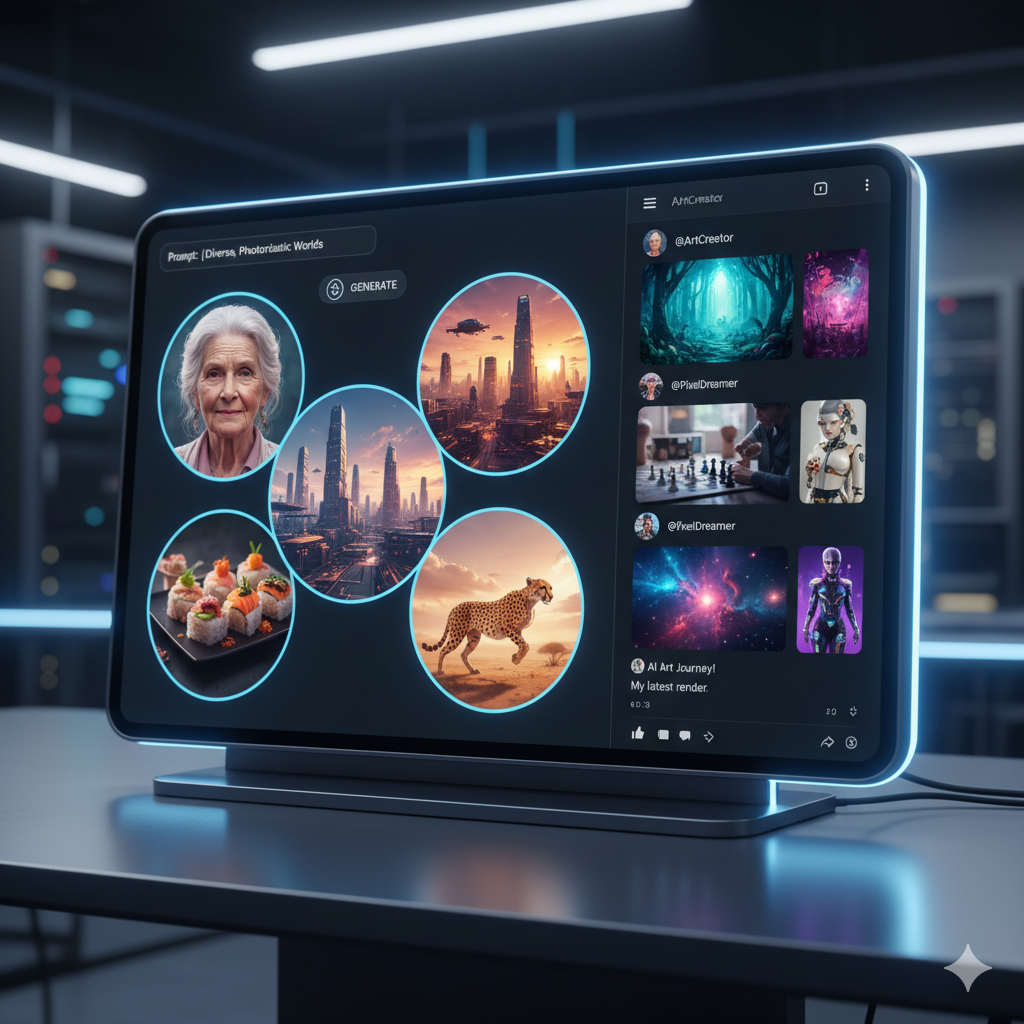
In the vibrant, ever-evolving landscape of social media, visuals are no longer just an accompaniment; they are the headline, the hook, and often, the entire message. From dazzling Instagram feeds to engaging TikTok videos and thought-provoking LinkedIn posts, compelling imagery is the undisputed king. However, for countless social media creators, influencers, small businesses, and even large brands, consistently producing high-quality, unique, and relevant visuals has always presented a formidable challenge. The traditional hurdles include significant costs for stock photos or professional designers, the steep learning curve of complex design software, and the sheer time investment required for original content creation. These obstacles often stifle creativity, limit output, and ultimately, cap potential reach.
Enter the revolutionary world of AI image generators. These cutting-edge tools are not merely a technological novelty; they represent a seismic shift in how visual content is conceived, produced, and disseminated. By translating simple text prompts into intricate, stunning images within seconds, AI is effectively democratizing the creative process. It is leveling the playing field, empowering every social media creator, regardless of their budget, design prowess, or team size, to produce visuals that were once the exclusive domain of professional studios or highly skilled artists. This blog post delves deep into how AI image tools are transforming social media content creation, making sophisticated visuals accessible to everyone, fostering unprecedented levels of creativity, and ultimately, elevating the output of every creator navigating the digital realm.
The Unstoppable Rise of Visual Content Demand
Social media platforms are inherently visual. Studies consistently show that posts with images and videos significantly outperform text-only updates in terms of engagement, shares, and reach. Our brains process visuals thousands of times faster than text, making imagery the most efficient way to capture fleeting attention in a crowded digital space. This pervasive preference for visual content has created an insatiable demand for fresh, engaging, and high-quality graphics across all platforms. Brands are fighting for eyeballs, creators are striving for virality, and individuals are curating their digital identities through carefully selected or created images.
The relentless pace of social media content calendars further exacerbates this demand. To maintain relevance and engagement, creators must post consistently, often multiple times a day. Each post ideally requires a unique, eye-catching visual that aligns with the content’s message, resonates with the audience, and upholds brand consistency. This constant need for new visual assets has historically been a bottleneck, pushing many creators to rely on generic stock photos, repetitive templates, or less-than-ideal designs simply to keep up. The traditional methods often involve:
- Hiring a professional graphic designer, which can be expensive and time-consuming.
- Subscribing to premium stock photo libraries, which offer breadth but can lack uniqueness and specific customization.
- Learning complex design software like Adobe Photoshop or Illustrator, demanding significant time and skill acquisition.
- Relying on simple, often limited, in-app editing tools.
These challenges highlight a significant gap: the disparity between the high demand for compelling visuals and the accessibility of tools and resources to create them efficiently and affordably. AI image generators are stepping into this gap with groundbreaking solutions.
What are AI Image Generators and How Do They Work?
At their core, AI image generators are sophisticated artificial intelligence models capable of producing novel images based on textual descriptions, known as “prompts.” These tools leverage advanced deep learning techniques, primarily generative adversarial networks (GANs) and diffusion models, to understand the nuanced relationships between words and visual concepts.
The Core Mechanism: Text-to-Image Generation
The most common and impactful form of AI image generation for social media creators is text-to-image. Here’s a simplified explanation of how it generally works:
- Prompt Input: A user provides a detailed text description (e.g., “An astronaut riding a horse on the moon, cinematic lighting, realistic, high detail”).
- Text Encoding: The AI model processes this text, converting it into a numerical representation that the computer can understand. This involves analyzing the semantics, style, and subject matter described.
- Image Synthesis (Diffusion Models): Modern AI image generators, particularly diffusion models, start with random noise (like static on a TV screen) and iteratively refine it. Guided by the encoded text prompt, the model gradually removes noise and adds details, shaping the image until it matches the description. This process happens over many “steps,” each step bringing the image closer to the desired output.
- Output Generation: Within seconds to minutes, the AI presents one or more unique images that visually interpret the given prompt.
Key players in this space include:
- Midjourney: Renowned for its artistic, often fantastical, and high-quality aesthetic, popular with designers and artists.
- DALL-E 3 (OpenAI): Integrates seamlessly with ChatGPT, offering impressive understanding of complex prompts and generating coherent images.
- Stable Diffusion: An open-source model, highly customizable, and favored by developers and users who want more control and local installation options.
- Adobe Firefly: Integrated into Adobe Creative Cloud, focuses on commercially safe content and offers features like text-to-image, text effects, and generative fill.
- Canva’s Magic Media: A simpler, user-friendly tool integrated directly into the popular design platform, making AI image generation accessible to a broader audience.
These tools are constantly evolving, becoming more sophisticated in their understanding of prompts, their ability to generate specific styles, and their integration into existing creative workflows.
Democratizing Creativity: Breaking Down Barriers for Creators
The most profound impact of AI image generators lies in their ability to democratize access to high-quality visual content creation. They dismantle traditional barriers, empowering a much wider range of individuals and entities to create compelling visuals.
1. Accessibility for All Skill Levels
Gone are the days when sophisticated image creation was reserved for those who had mastered complex software or possessed innate artistic talent. AI tools simplify the process to a remarkable degree:
- No Design Expertise Required: Users do not need to understand layers, masks, vectors, or color theory. Their imagination, expressed through words, is the primary interface.
- Intuitive Interfaces: Many AI platforms offer user-friendly interfaces, often resembling chat applications, making them easy to navigate for anyone familiar with basic computer usage.
- Learning by Doing: Prompt engineering, the art of crafting effective text prompts, is a skill that can be developed through experimentation and practice, not years of formal training.
This accessibility means a small business owner can generate professional-looking product images, a budding influencer can create unique background visuals for their stories, and a non-profit can design engaging campaign graphics without hiring external help or spending weeks learning a new skill.
2. Cost-Effectiveness
The financial implications of traditional visual content creation can be substantial, especially for smaller creators or startups. AI image generators offer a significantly more economical alternative:
- Reduced Design Costs: Eliminates or drastically reduces the need to hire freelance designers or invest in expensive agency services for routine visual needs.
- Fewer Stock Photo Subscriptions: While stock photos still have their place, AI can generate highly specific images that might not be available in stock libraries, reducing reliance on costly subscriptions.
- Lower Software Investment: Many AI tools offer free tiers or affordable subscription models, far less than the cost of a full suite of professional design software.
This cost-effectiveness frees up valuable budget, allowing creators to allocate resources to other crucial areas like advertising, content distribution, or community building.
3. Speed and Efficiency: From Idea to Image in Seconds
Time is a precious commodity for social media creators. The speed at which AI tools can generate images is perhaps their most immediate and impressive advantage:
- Instant Prototyping: Ideas can be visualized almost instantly, allowing for rapid iteration and experimentation with different concepts and styles.
- Batch Generation: Many tools can generate multiple variations of an image from a single prompt, offering choices and speeding up the selection process.
- Streamlined Workflow: What once took hours of searching, editing, or designing can now be accomplished in minutes, drastically improving content production timelines.
This newfound efficiency allows creators to produce a higher volume of content, react quickly to trending topics, and maintain a consistent posting schedule without sacrificing visual quality.
Enhancing Content Diversity and Uniqueness
Beyond simply making creation easier, AI tools are also injecting unprecedented levels of diversity and uniqueness into social media visuals. They unlock creative possibilities that were previously unimaginable or impractical.
1. Generating Novel and Niche Concepts
AI image generators excel at creating visuals for highly specific, unusual, or abstract ideas that would be difficult or impossible to find in stock libraries or expensive to commission. Imagine:
- A blog post about “the psychology of procrastination” visualized with a surreal image of a clock melting into a couch.
- A fantasy author promoting their new book with unique illustrations of their original characters and mythical landscapes.
- A personal finance influencer explaining complex investment concepts with bespoke infographics featuring futuristic cityscapes representing economic growth.
The ability to manifest virtually any concept provides an infinite wellspring of originality, helping creators stand out in a sea of often generic content.
2. Personalized Visuals at Scale
For creators managing multiple accounts, niche audiences, or highly segmented content strategies, AI can produce personalized visuals at a scale previously impossible:
- Audience-Specific Imagery: Tailor visuals to specific demographics, cultural contexts, or interests within your audience.
- Campaign Customization: Generate multiple visual assets for A/B testing different ad creatives or campaign themes.
- Seasonal and Event-Specific Content: Quickly create relevant visuals for holidays, trending events, or seasonal promotions without lead time.
This level of personalization can significantly boost engagement as content feels more relevant and directly targeted to the viewer.
3. Overcoming Creative Blocks
Every creator faces creative blocks. Staring at a blank canvas or an empty document can be daunting. AI image generators can act as powerful ideation partners:
- Visual Brainstorming: Input broad concepts and see what the AI generates, sparking new ideas or directions.
- Exploring Styles: Experiment with different artistic styles (e.g., “impressionistic,” “cyberpunk,” “oil painting,” “digital art”) to find a fresh aesthetic.
- Iterative Inspiration: Generate variations of an initial image, building upon successful elements to refine a concept.
By providing immediate visual feedback, AI can kickstart the creative process and help creators explore possibilities they might not have considered on their own.
Specific Use Cases for Social Media Creators
The practical applications of AI image tools for social media creators are vast and continually expanding. Here are several key areas where they are proving invaluable:
1. Engaging Post Graphics and Banners
This is arguably the most straightforward and impactful use case. Creators can generate custom images for:
- Blog Post Thumbnails: Unique and relevant images that entice clicks.
- Facebook/Instagram Posts: Visually striking graphics that stand out in crowded feeds.
- LinkedIn Articles: Professional and informative visuals that enhance credibility.
- Twitter Cards: Eye-catching images for sharing links and driving engagement.
- Product Showcases: Generate lifestyle images, abstract representations, or even product mockups in various settings without needing a photoshoot.
2. Profile Pictures, Headers, and Banners
Maintaining a consistent and professional brand identity across platforms is crucial. AI can help create:
- Unique Profile Avatars: Stylized portraits or abstract representations that are memorable.
- Custom Channel Art/Headers: Banners for YouTube, Twitch, Twitter, or LinkedIn that perfectly match brand aesthetics and messaging.
- Event Banners: Quick and customized graphics for online events, webinars, or virtual conferences.
3. Dynamic Story and Reel Backdrops
Short-form video content thrives on visual dynamism. AI can generate:
- Thematic Backgrounds: Instantly create a background for a talking-head video or a text overlay that matches the topic’s mood (e.g., a serene mountain landscape for mindfulness content, a vibrant city scene for tech reviews).
- Visual Storytelling Elements: Add unique imagery to enhance narrative without complex animation.
- Trend-Responsive Graphics: Quickly generate visuals related to trending sounds or challenges.
4. Ad Creatives and Marketing Campaigns
For those running paid campaigns, AI offers a significant competitive advantage:
- Rapid A/B Testing: Generate dozens of different ad variations (different backgrounds, characters, styles) to test which performs best, optimizing ad spend.
- Hyper-Targeted Ads: Create visuals that speak directly to specific audience segments based on their interests or demographics.
- Campaign Uniqueness: Produce creatives that don’t look like generic stock photos, helping ads stand out and capture attention.
5. Visualizing Abstract Ideas and Data
Complex or abstract concepts are often difficult to convey visually. AI can help make the intangible tangible:
- Concept Illustrations: Illustrate ideas like “innovation,” “growth,” “collaboration,” or “digital transformation” with unique, metaphorical imagery.
- Data Visualization Elements: While not generating charts directly, AI can create compelling backgrounds or supplementary graphics that make data-heavy posts more engaging.
- Metaphorical Imagery: Help explain complex scientific or philosophical ideas through creative visual metaphors.
Boosting Engagement and Strengthening Brand Identity
The ultimate goal for most social media creators is to foster engagement and build a strong, recognizable brand. AI-generated visuals play a pivotal role in achieving both.
1. Establishing Consistent Visual Branding
A strong brand identity is built on consistency. AI tools, especially those that allow for style transfer or custom model training, can help maintain a unified aesthetic:
- Style Consistency: By refining prompts and using consistent keywords (e.g., “in the style of a modern minimalist painting,” “with vibrant cyberpunk colors”), creators can generate images that adhere to a specific brand look and feel.
- Character and Mascot Creation: Generate a unique brand mascot or recurring character that becomes instantly recognizable across all content.
- Template Augmentation: AI-generated elements can be seamlessly integrated into existing brand templates, adding fresh visuals while maintaining brand guidelines.
This consistency builds trust, reinforces brand recognition, and makes content immediately identifiable to the audience.
2. Capturing Attention with Unique Visuals
In the scroll-heavy environment of social media, uniqueness is currency. AI empowers creators to produce visuals that break through the noise:
- Novelty Effect: Audiences are drawn to fresh, unexpected imagery. AI can deliver this constantly.
- High-Quality Output: The visual fidelity of modern AI generators is often on par with professionally created graphics, elevating the perceived quality of a creator’s output.
- Emotional Resonance: AI can be prompted to create images that evoke specific emotions, strengthening the connection with the audience.
By consistently delivering unique and high-quality visuals, creators can command more attention and encourage deeper engagement.
3. Facilitating A/B Testing of Visual Elements
Data-driven decisions are key to optimizing social media performance. AI simplifies the process of testing visual variables:
- Rapid Variation Generation: Quickly create multiple versions of an image, altering elements like color schemes, subject placement, or artistic styles.
- Performance Insights: Test different visuals for ads, thumbnails, or post graphics to see which resonates most with the target audience.
- Optimized Content Strategy: Use insights from A/B tests to refine future visual content creation, focusing on what performs best.
This iterative testing allows creators to continually refine their visual strategy, leading to better engagement rates and more effective content.
Addressing Ethical and Practical Considerations
While AI image generators offer immense benefits, it’s crucial for creators to be aware of the ethical implications and practical challenges associated with their use.
1. Copyright and Ownership
The legal landscape around AI-generated art is still evolving. Key questions include:
- Who owns the generated image? Policies vary by platform (e.g., Midjourney grants users full ownership for paid subscribers, DALL-E’s terms often grant users broad rights).
- What about the training data? Many AI models are trained on vast datasets of existing images, raising concerns about intellectual property rights of the original artists.
- Originality and protectability: The U.S. Copyright Office generally states that AI-generated works without significant human creative input are not copyrightable. However, if a human extensively modifies, curates, or guides the AI’s output, it might qualify.
Creators should always check the terms of service for the specific AI tool they are using and consider adding their own unique human touch to ensure distinctiveness and potential copyright protection.
2. Bias in AI Models
AI models learn from the data they are fed. If the training data contains biases (e.g., underrepresentation of certain demographics, stereotypes), these biases can be reflected in the generated images. This can lead to:
- Stereotypical representations: AI might default to certain appearances for professions, genders, or ethnicities if not explicitly prompted otherwise.
- Lack of diversity: Difficulty in generating images that reflect a diverse range of people or cultures without very specific prompting.
Creators must be mindful of potential biases and actively work to counteract them by crafting inclusive prompts and critically evaluating the AI’s output for fairness and representation. Responsible AI use involves understanding its limitations.
3. Prompt Engineering as a New Skill
While AI lowers the barrier to entry, mastering its use requires developing a new skill: prompt engineering. This involves:
- Clarity and Specificity: Learning to articulate ideas precisely to guide the AI.
- Understanding Keywords: Knowing which descriptive words (e.g., “cinematic,” “photorealistic,” “pastel colors,” “octane render”) influence style and quality.
- Iterative Refinement: The ability to tweak prompts based on initial outputs to achieve desired results.
- Negative Prompts: Learning to tell the AI what you don’t want in the image (e.g., “ugly, deformed, blurry”).
Effective prompt engineering transforms AI from a simple tool into a powerful creative partner, allowing creators to push the boundaries of what’s possible.
4. The Role of Human Oversight and Curation
AI is a tool, not a replacement for human creativity and judgment. Human oversight remains crucial for:
- Quality Control: Ensuring generated images meet aesthetic standards and brand guidelines.
- Ethical Review: Checking for bias, inappropriateness, or misrepresentation.
- Creative Direction: Guiding the AI towards a unique vision that aligns with the creator’s intent.
- Integration and Enhancement: Often, AI-generated images serve as a starting point, requiring further editing or integration into a larger design project using traditional software.
The most effective use of AI combines its generative power with human intelligence, creativity, and ethical considerations.
The Future Landscape: AI as a Creative Partner
The current capabilities of AI image generators are just the beginning. The future promises even more seamless integration and sophisticated features:
- Advanced Personalization: AI models trained on a creator’s specific style or brand assets, allowing for on-demand generation that perfectly matches their unique aesthetic.
- Multi-Modal Integration: AI tools that can generate not just images, but also videos, animations, and interactive experiences from text prompts, streamlining entire content pipelines.
- Predictive Visual Trends: AI assisting creators by identifying emerging visual trends and suggesting content ideas before they become mainstream.
- Enhanced Editing Capabilities: More intuitive and powerful generative fill, outpainting, and inpainting features that allow for precise modifications and expansions of images.
- Ethical Frameworks: Development of more robust ethical guidelines, transparent data sourcing, and tools to detect and mitigate bias.
- Accessibility for 3D Assets: Text-to-3D model generation, further revolutionizing game design, virtual reality, and intricate visual effects.
Ultimately, AI will evolve from a standalone tool to an indispensable creative partner, augmenting human capabilities and freeing creators to focus on higher-level strategic thinking, narrative development, and community engagement. The creator of tomorrow will not be replaced by AI, but empowered by it, transforming the digital content landscape into an even more vibrant and imaginative space.
Comparison Tables
Table 1: Traditional Visual Creation vs. AI Image Generation
| Feature | Traditional Visual Creation | AI Image Generation | Impact for Social Media Creators |
|---|---|---|---|
| Cost | High (designers, stock photos, software licenses) | Low to Moderate (subscription models, free tiers) | Significantly reduces budget constraints, enabling smaller creators to compete. |
| Time Investment | Hours to Days (concept, design, revisions, search) | Seconds to Minutes (prompting, quick iteration) | Accelerates content production, allowing for higher volume and responsiveness to trends. |
| Skill Required | Expertise in design software, artistic talent, photography skills | Basic computer literacy, prompt engineering skills (learnable) | Democratizes access; removes the barrier of specialized design knowledge. |
| Creative Flexibility | High, but limited by skill/budget; often reliant on existing assets | Near Infinite, limited only by imagination and prompting ability | Enables unique, niche, and highly customized visuals not found elsewhere. |
| Scalability | Low (manual process, time-intensive for many variations) | High (generate many variations quickly, batch processing) | Ideal for A/B testing, personalized campaigns, and consistent output across platforms. |
| Uniqueness | Can be unique if custom-made, but stock photos are generic | Highly unique, novel images generated from scratch | Helps content stand out in a crowded visual landscape, fostering brand recall. |
Table 2: Popular AI Image Tools Comparison for Social Media Creators
| Tool Name | Key Strengths | Best For | Typical Pricing Model | Ease of Use (1-5, 5 being easiest) |
|---|---|---|---|---|
| Midjourney | Exceptional artistic quality, highly imaginative and aesthetic results, strong community. | Artistic creators, designers, generating unique conceptual art, high-fidelity visuals. | Subscription-based (no free tier, but trials sometimes available). | 3 (Requires Discord, prompt learning curve). |
| DALL-E 3 (via ChatGPT Plus) | Excellent understanding of complex prompts, coherent and logical image generation, natural language integration. | Content creators needing accurate representation of concepts, general social media graphics, prompt refinement through chat. | Subscription-based (ChatGPT Plus). | 4 (Very user-friendly via chat interface). |
| Stable Diffusion (various interfaces) | Open-source, highly customizable, large community, local installation options, fine-tuning. | Developers, advanced users, specific artistic styles, custom model training, privacy-conscious creators. | Often free (for local use), cloud-based options vary. | 2 (Steeper learning curve, best with custom interfaces). |
| Adobe Firefly | Commercially safe for business use, integrated with Adobe Creative Cloud, focus on design-oriented features (generative fill). | Graphic designers, marketers, teams within the Adobe ecosystem, commercial content. | Included with Creative Cloud subscriptions, credit-based usage. | 4 (Intuitive interface, familiar for Adobe users). |
| Canva’s Magic Media | Extremely user-friendly, integrated into a popular design platform, quick results, good for beginners. | Beginners, small businesses, quick social media posts, non-designers needing simple visuals. | Included with Canva Pro subscription, limited free usage. | 5 (Seamless integration into Canva workflow). |
Practical Examples: AI Image Generation in Action
To truly understand the transformative power of AI image tools, let’s explore a few real-world scenarios where social media creators can leverage them:
Case Study 1: The Indie Author Launching a New Fantasy Series
Creator: Elara Vance, an indie author publishing her first epic fantasy novel.
Challenge: Elara needs compelling visuals for her book launch campaign across Instagram, Twitter, and Facebook. She can’t afford a professional illustrator for custom character art and doesn’t want generic stock photos that don’t match her unique world.
AI Solution:
- Character Visuals: Elara uses Midjourney to generate stunning portraits of her main characters (e.g., “A stoic elven warrior with glowing eyes, wearing ancient leather armor, standing in a moonlit forest, intricate details, fantasy art style”). She creates multiple poses and expressions.
- World-Building Imagery: For her world’s unique locations, she prompts for images like “A floating city powered by glowing crystals, with waterfalls cascading into a nebula, highly detailed, futuristic fantasy.” These images serve as background for quotes or world lore.
- Social Media Banners: She combines AI-generated elements with text in Canva to create eye-catching headers for her launch event and book giveaway posts.
- Ad Creatives: For Facebook Ads, she generates several variations of a book cover mockup featuring her AI-generated character art, testing different taglines and background styles to see which resonates most.
Outcome: Elara’s social media presence is vibrant, unique, and professional, drawing readers into her world without breaking her indie budget. Her posts stand out, driving engagement and pre-orders.
Case Study 2: The Small Business Owner with a Niche Online Boutique
Creator: Mark, who runs “EcoThreads,” an online store selling sustainable, handmade clothing.
Challenge: Mark needs fresh, lifestyle-oriented product photos that convey the natural, eco-friendly vibe of his brand, but he doesn’t have the resources for regular photoshoots with models and exotic locations. Stock photos often feel too corporate or generic.
AI Solution:
- Lifestyle Mockups: Mark uploads images of his clothing products to Adobe Firefly and uses its generative fill to place them on models in various natural settings (e.g., “A person wearing a linen shirt, walking through a sun-drenched meadow, natural lighting, serene atmosphere”). He can iterate quickly on different models, poses, and backgrounds.
- Mood Boards for Collections: For new collections, he generates abstract visuals that capture the “feel” of the collection (e.g., “Soft, flowing watercolor patterns in earthy tones, evoking nature and tranquility”) to use as Instagram story backgrounds or collection banners.
- Seasonal Promotions: For seasonal sales, he generates specific imagery like “A cozy knitted sweater draped over a wooden chair by a fireplace, autumn leaves outside the window, warm lighting” to promote his winter wear.
Outcome: Mark consistently produces high-quality, brand-aligned lifestyle imagery that resonates with his target audience, enhancing his product listings and social media feed without expensive photoshoots, saving him time and money while boosting his brand’s aesthetic.
Case Study 3: The Educational Content Creator on YouTube and TikTok
Creator: Dr. Anya Sharma, a science communicator explaining complex physics concepts.
Challenge: Dr. Sharma needs to visualize abstract scientific theories to make them more accessible and engaging for her audience. Finding or creating custom animations or graphics for concepts like quantum entanglement or spacetime curvature is incredibly time-consuming and often requires specialized software skills.
AI Solution:
- Concept Illustrations: For a video on quantum entanglement, she prompts DALL-E 3 with “Two glowing spheres interconnected by ethereal energy strands across a vast cosmic background, abstract art, scientific illustration.” She then uses these as still images or subtle animated backgrounds.
- Thumbnail Creation: She generates compelling thumbnails that hint at the video’s topic without revealing too much, using intriguing AI visuals (e.g., “A futuristic brain glowing with neural pathways, in a high-tech laboratory setting, dark ambiance, digital painting”).
- Myth vs. Fact Visuals: To debunk common misconceptions, she uses AI to create contrasting images: one visually representing the myth (e.g., “A simplified atom model with electrons orbiting like planets, cartoon style”) and another for the scientific reality (e.g., “An electron cloud diagram, abstract, quantum physics”).
Outcome: Dr. Sharma’s educational content becomes significantly more visually engaging and easier to digest. Her complex topics are made tangible through unique and imaginative AI-generated graphics, increasing viewership and understanding.
These examples illustrate how AI image tools are not just a luxury but a strategic asset, enabling creators across diverse niches to elevate their output, engage their audiences more effectively, and realize their creative visions with unprecedented efficiency.
Frequently Asked Questions
Q: What exactly is an AI image generator?
A: An AI image generator is an artificial intelligence model that can create images from scratch based on textual descriptions, known as “prompts.” You type in what you want to see, and the AI uses its understanding of language and visual concepts to synthesize a unique image within seconds or minutes. It’s like having an infinitely fast artist that works purely from your imagination.
Q: Do I need to be a designer or artist to use AI image tools?
A: Absolutely not! That’s one of their biggest benefits. AI image generators are designed to be accessible to everyone. While understanding “prompt engineering” (the art of writing effective prompts) can enhance your results, you don’t need any traditional design skills, knowledge of complex software, or artistic talent to start creating stunning visuals. Your imagination and ability to describe are your main tools.
Q: Can AI-generated images be copyrighted? Who owns them?
A: This is a complex and evolving area of law. Generally, if an AI generates an image with minimal human creative input, it may not be eligible for copyright in some jurisdictions (like the U.S.). However, if a human significantly guides the AI, curates the output, or modifies the generated image, it might be. Ownership typically depends on the terms of service of the specific AI tool you are using. Many platforms (especially paid versions) grant users ownership or broad usage rights to the images they create. Always check the platform’s user agreement for clarity.
Q: Are AI-generated images truly unique, or do they copy existing art?
A: Most modern AI image generators are designed to synthesize entirely new images based on the patterns and styles learned from their training data, rather than directly copying existing artwork. While they are influenced by vast amounts of existing images, the output is a novel combination of learned elements, making each generated image unique. However, if your prompt is very similar to a famous artwork, the AI might produce something stylistically similar, but it won’t be a direct copy.
Q: What are the best AI image tools for social media creators, especially beginners?
A: For beginners and general social media creators, tools like Canva’s Magic Media or DALL-E 3 (especially through ChatGPT Plus) are excellent choices due to their user-friendliness and intuitive interfaces. Midjourney is fantastic for highly artistic and imaginative visuals, but it has a slightly steeper learning curve as it operates via Discord. Adobe Firefly is great for those already in the Adobe ecosystem and seeking commercially safe content.
Q: How can I ensure the images I generate are high quality and relevant to my brand?
A: Key strategies include: 1) Detailed Prompting: Be very specific about your subject, style, colors, lighting, and mood. 2) Iterate and Refine: Don’t settle for the first output; tweak your prompts and generate variations. 3) Use Reference Images (if supported): Some tools allow you to upload an image to influence the style or composition. 4) Consistent Keywords: Use specific keywords (e.g., “cinematic,” “minimalist,” “photorealistic”) consistently to maintain a brand aesthetic. 5) Post-Processing: Don’t be afraid to do minor edits or enhancements in traditional photo editing software.
Q: Can AI image generators replace human graphic designers?
A: Not entirely. AI image generators are powerful tools that augment human creativity and efficiency, but they do not replace the nuanced understanding, strategic thinking, emotional intelligence, and complex problem-solving abilities of human designers. Designers use AI to automate repetitive tasks, generate ideas, and create initial concepts, freeing them to focus on higher-level creative direction, client communication, and final artistic refinement. AI is a creative partner, not a standalone replacement.
Q: What are the ethical considerations I should be aware of when using AI image tools?
A: The main ethical considerations include: 1) Copyright and Fair Use: Be aware of the legality of using AI-generated images, especially if the AI was trained on copyrighted material without explicit consent. 2) Bias: AI models can perpetuate biases present in their training data, potentially leading to stereotypical or exclusionary images. Creators should actively prompt for diversity and critically review outputs. 3) Authenticity: Clearly label or disclose AI-generated content when necessary to maintain transparency with your audience, especially in news or sensitive contexts. 4) “Deepfakes”: Avoid using AI to create misleading or harmful content involving real people.
Q: Is it expensive to use AI image generators?
A: The cost varies widely. Many popular tools offer free tiers with limited usage, which are great for getting started. Paid subscriptions typically offer more generations, faster processing, higher resolution, and commercial usage rights. Compared to hiring a professional designer or buying extensive stock photo licenses, AI tools are generally a much more cost-effective solution for consistent visual content creation.
Q: How can I avoid generating biased or stereotypical images with AI?
A: To mitigate bias, be extremely explicit and inclusive in your prompts. Instead of “a CEO,” try “a diverse group of CEOs, including women and people of color.” Specify diverse characteristics for gender, ethnicity, age, and ability. Regularly review the AI’s output for unintentional biases and adjust your prompts accordingly. Many AI tools are also actively working to reduce bias in their models, but user vigilance remains crucial.
Key Takeaways
The advent of AI image generators marks a pivotal moment for social media creators, offering transformative benefits and reshaping the visual content landscape. Here are the core takeaways:
- Democratization of Creativity: AI tools break down traditional barriers of cost, skill, and time, making high-quality visual content accessible to everyone from individual influencers to small businesses.
- Unprecedented Efficiency: Generate stunning, custom images in seconds or minutes, drastically accelerating content production workflows and enabling rapid iteration.
- Infinite Creative Potential: Move beyond generic stock photos to create unique, niche, and highly imaginative visuals that perfectly align with specific ideas, brands, and audiences.
- Enhanced Engagement and Branding: Consistent, high-quality, and unique visuals generated by AI help creators stand out, capture attention, reinforce brand identity, and drive higher audience engagement.
- Strategic Tool for Optimization: AI facilitates A/B testing of visual elements, allowing creators to make data-driven decisions that optimize content performance and ad campaigns.
- New Skill Sets Required: While AI lowers the barrier to entry, mastering “prompt engineering” is a valuable new skill that maximizes the effectiveness and creative output from these tools.
- Ethical Awareness is Crucial: Creators must be mindful of evolving copyright laws, potential biases in AI output, and the importance of human oversight to ensure responsible and ethical content creation.
- AI as a Creative Partner: The future sees AI not as a replacement for human creativity, but as an indispensable partner, augmenting human capabilities and allowing creators to focus on higher-level strategic thinking and storytelling.
Conclusion
The digital realm thrives on visual storytelling, and in this visually-driven age, AI image generators have emerged as a game-changer for social media creators. They are fundamentally democratizing the creation of compelling visuals, empowering individuals and organizations of all sizes to elevate their output, capture attention, and articulate their messages with unprecedented clarity and creativity. No longer constrained by budgets, technical skill, or time limitations, creators can now manifest their wildest ideas into stunning imagery, fostering deeper engagement and building stronger brand identities.
While the technology continues to evolve, bringing with it important ethical and practical considerations, the trajectory is clear: AI is not merely a passing trend but a foundational shift in how we approach content creation. It is transforming every social media platform into a richer, more diverse visual tapestry. For every social media creator, embracing and intelligently integrating AI image tools into their workflow is not just an advantage; it is becoming an essential component of a successful, future-proof content strategy. The future of social media content is collaborative, innovative, and visually limitless, with AI as the powerful brush in the hands of every creator.




































Leave a Reply