

Unlocking Creative Potential with Free AI Image Generation Tools
Introduction: Your Gateway to Limitless Creativity
The world of digital art and creative expression has undergone a revolutionary transformation, largely thanks to the breathtaking advancements in Artificial Intelligence. What once required years of artistic training, expensive software, and specialized hardware, can now be achieved with a few simple words and a click of a button, often for free. For creative beginners, this presents an unprecedented opportunity: the chance to transform abstract ideas into stunning visual realities without any prior artistic skill barrier. This comprehensive guide, “From Idea to Image: Mastering Free AI Art Generation for Creative Beginners,” is your essential companion on this exciting journey. We will demystify the process, explore the best free tools available, teach you the art of crafting effective prompts, and provide practical insights to help you harness the full potential of AI art. Whether you dream of designing unique characters, visualizing fantastical landscapes, or simply experimenting with new art forms, AI offers a canvas without limits. Get ready to unlock your creative potential and bring your imagination to life, one pixel at a time.
Gone are the days when artistic endeavors were confined to those with traditional drawing or painting skills. AI art generation democratizes creativity, making it accessible to everyone from hobbyists and writers to marketers and educators. This guide focuses specifically on free tools, ensuring that your exploration into this fascinating field comes without financial commitment. We will delve into the mechanics of how AI understands your textual descriptions and translates them into images, providing you with the knowledge to not just generate art, but to truly master the process. Expect detailed explanations, real-world examples, and a step-by-step approach to navigating the exciting world of free AI image generation. Let’s embark on this artistic adventure together and discover the boundless possibilities that await.
1. Understanding the Landscape of AI Art: How Machines Paint Dreams
Before we dive into the practicalities of generating AI art, it is crucial to understand the fundamental concepts underpinning this technology. At its core, AI art generation relies on a branch of artificial intelligence known as Generative AI. Unlike traditional AI that might classify or analyze data, generative AI is designed to create new, original content, whether that be text, music, or in our case, images. The magic happens through sophisticated algorithms that have been trained on vast datasets of existing images and their corresponding textual descriptions.
The most prominent method for generating images from text is called Text-to-Image Generation. This involves an AI model interpreting a given text prompt and then generating a visual representation that aligns with that description. While various architectures exist, Diffusion Models are currently at the forefront of this technology. Models like Stable Diffusion, which powers many free AI art platforms, work by starting with a noisy, chaotic image and then iteratively “denoising” it based on the input text prompt. Imagine a sculptor starting with a lump of clay and gradually refining it into a recognizable form, guided by a detailed description. This iterative process allows for a high degree of detail and coherence in the generated images, making them remarkably lifelike or stylized, depending on the prompt.
The journey of AI art began decades ago with simpler algorithms, but it is in recent years that breakthroughs in deep learning and neural networks have truly propelled it into the mainstream. Early models could generate abstract patterns or simple shapes. However, with the advent of powerful GPUs and massive datasets, models became capable of understanding complex semantic relationships, intricate artistic styles, and even subtle nuances in lighting and composition. This evolution means that today, a beginner with no artistic background can instruct an AI to create a hyper-realistic photograph of a cat wearing a spacesuit on Mars, an oil painting in the style of Van Gogh, or a futuristic city skyline, all with remarkable fidelity.
Understanding these foundational concepts helps us appreciate the sophistication behind the tools we will be using and empowers us to interact with them more effectively. It is not just about typing words; it is about communicating with an intelligent system that has learned the vast visual language of our world. The ability of these models to synthesize entirely new images from concepts they have never seen together explicitly in their training data is what makes AI art truly revolutionary and a boundless source of creative inspiration for everyone.
2. Choosing Your First Canvas: Exploring Free AI Art Tools
The accessibility of AI art generation is largely thanks to a growing number of platforms that offer free tiers or completely free services. For beginners, choosing the right tool can feel overwhelming, but each platform often has its own strengths and nuances. It is recommended to experiment with a few to find one that best suits your creative style and workflow. Here are some of the most popular and beginner-friendly free AI art tools:
- Stable Diffusion Online / Clipdrop: These platforms often provide direct access to various versions of the Stable Diffusion model, a powerful open-source text-to-image generator. They are generally straightforward, offering a simple text input box and a few basic settings. Stable Diffusion Online is excellent for quick experiments and getting a feel for prompt engineering without many distractions. Clipdrop, by Stability AI, provides a user-friendly interface for Stable Diffusion models, often with additional features like upscaling and background removal in its free tier. Their simplicity makes them ideal for first-time users eager to see immediate results.
- Leonardo.AI (Free Tier): Leonardo.AI stands out as a more comprehensive platform. While it offers premium plans, its free tier is remarkably generous, providing daily credits that allow users to generate numerous images. What makes Leonardo.AI particularly appealing to beginners is its focus on community, user-friendly interface, and advanced features even in the free version. It allows users to select from various fine-tuned models (e.g., specific art styles, photo realistic models), upload reference images for image-to-image generation, and offers robust prompt assistance. The platform is excellent for those looking to explore different artistic styles and models beyond basic Stable Diffusion.
- Freepik AI Image Generator / Canva AI: These tools are often integrated into larger design ecosystems. Freepik, known for its vast library of stock photos and vectors, now offers a free AI image generator that is simple and effective for creating quick visuals. Canva, a popular graphic design tool, also integrates AI image generation, allowing users to create visuals directly within their design projects. These are particularly useful for individuals who need AI-generated art for specific purposes like social media posts, presentations, or quick graphic design elements, as they seamlessly fit into existing workflows.
- DALL-E 2 (Limited Free Access): Developed by OpenAI, DALL-E 2 was one of the pioneering high-quality text-to-image models. While its free access has become more limited over time, requiring registration and often offering a small number of recurring free credits, it remains a benchmark for quality and understanding complex prompts. If you get a chance to use its free tier, it is worth experiencing its distinct artistic style and ability to interpret nuanced language.
When selecting your first tool, consider the following:
- Ease of Use: How intuitive is the interface?
- Credit System: How many images can you generate for free per day or month?
- Features: Does it offer control over styles, models, or advanced settings like image-to-image?
- Community: Is there a community or gallery to inspire you?
Starting with a simple tool like Stable Diffusion Online can provide a quick win, while diving into Leonardo.AI might offer a more enriching and feature-rich experience for those ready to explore deeper. Remember, the best tool is the one that empowers you to bring your ideas to life most effectively and enjoyably.
3. Crafting the Magic Words: Mastering Prompt Engineering
At the heart of AI art generation lies “prompt engineering” – the art and science of writing effective text prompts to guide the AI model towards your desired image. Think of the prompt as your direct line of communication with the AI, the instructions you give to make your vision a reality. A well-crafted prompt can yield breathtaking results, while a vague one might produce something entirely unexpected or underwhelming. For beginners, understanding the key components of a good prompt is paramount. Here is a breakdown of essential elements:
- Subject: This is the core of your image. Clearly define what or who you want to be depicted.
Example: “A majestic lion,” “A cyberpunk cityscape,” “An astronaut exploring a vibrant alien planet.”
- Style/Medium: Describe the artistic style, medium, or genre you envision. This can dramatically alter the output.
Example: “oil painting,” “digital art,” “pencil sketch,” “anime style,” “photorealistic,” “watercolor,” “surrealism,” “in the style of Van Gogh.”
- Environment/Setting: Provide context for your subject by describing the background, location, and overall atmosphere.
Example: “amidst a dense jungle,” “on a desolate moon surface,” “in a bustling neon-lit alley,” “during a serene sunset.”
- Lighting: Lighting plays a critical role in mood and realism. Be specific about the type and direction of light.
Example: “dramatic volumetric lighting,” “soft golden hour light,” “neon glow,” “studio lighting,” “cinematic lighting.”
- Composition/Perspective: Guide the AI on how the image should be framed.
Example: “close-up shot,” “wide angle,” “portrait orientation,” “dynamic pose,” “from a low angle,” “rule of thirds composition.”
- Details and Attributes: Add specific elements, colors, textures, or characteristics that are important to your vision.
Example: “wearing intricate armor,” “with glowing blue eyes,” “featuring ancient runes,” “intricate patterns,” “shimmering fabric.”
- Quality Modifiers: Use terms to encourage higher quality and detail in the output.
Example: “ultra detailed,” “8K resolution,” “masterpiece,” “award-winning photography,” “high quality,” “unreal engine.”
- Negative Prompts: This is an equally powerful tool. A negative prompt tells the AI what you do not want to see in your image. This is incredibly useful for avoiding common AI artifacts or undesired elements.
Example: “ugly, deformed, blurry, low quality, bad anatomy, extra limbs, watermark, text, out of frame.”
Tips for Effective Prompting:
- Be Specific, But Not Overly Restrictive: Provide enough detail for the AI to understand your vision, but leave some room for its creativity.
- Use Commas for Clarity: Separate different descriptive elements with commas for better parsing by the AI.
- Experiment with Order: Sometimes, placing more important elements at the beginning of your prompt can give them more weight.
- Start Simple, Then Elaborate: Begin with a basic prompt, generate a few images, and then add more details to refine your results.
- Learn from Others: Many platforms display prompts used for popular images. Analyze them to understand what makes them effective.
Mastering prompt engineering is an iterative process. It involves experimentation, observation, and continuous learning. With practice, you will develop an intuition for how different words and phrases influence the AI’s output, transforming you from a passive user into a skilled director of digital creativity.
4. Iteration and Refinement: Sculpting Your Vision
Generating an AI image is rarely a one-shot process. Just like a traditional artist sketches multiple ideas before committing to a final piece, you will often need to iterate and refine your AI creations. This section explores techniques to move beyond the initial generation and sculpt your images closer to your original vision, or even discover new creative directions.
- Generating Multiple Variations: Most free AI art tools allow you to generate several images from a single prompt, often simultaneously. Always generate more than one. Different “seeds” (random numbers that initialize the generation process) will produce unique images, even with the exact same prompt. By reviewing a batch of 2-4 images, you increase your chances of finding one that is closer to your desired outcome or offers an interesting unexpected element that you can build upon. Do not settle for the first image; explore the variations.
- Adjusting Prompt Weight (if available): Some advanced free tools (like Leonardo.AI) allow you to assign weight to specific words or phrases in your prompt. For example, you might use parentheses or specific syntax to tell the AI that “majestic lion” is more important than “dense jungle.” Experimenting with these weights can help you emphasize certain aspects of your image, bringing particular elements to the foreground or making them more prominent in the composition. This fine-tuning capability gives you greater control over the AI’s interpretation.
- Image-to-Image (Img2Img): While often a premium feature, some free tiers or open-source implementations of Stable Diffusion offer limited image-to-image capabilities. This technique involves providing the AI with a base image (e.g., a simple sketch, a photograph, or another AI-generated image) along with your text prompt. The AI then uses this base image as a reference, incorporating its composition, colors, or general form while applying the artistic style and elements described in your text prompt. It is a powerful way to guide the AI with visual information rather than just textual.
- Upscaling: AI-generated images, especially from free tiers, often come in relatively lower resolutions to save processing power. Upscaling uses AI to intelligently increase the resolution of an image without losing quality, often adding detail in the process. Many platforms offer built-in upscalers in their free tiers (e.g., Clipdrop, Leonardo.AI), allowing you to transform a small, interesting generation into a high-resolution piece suitable for display or further editing.
- Inpainting and Outpainting (Limited in free tiers): These are more advanced techniques that involve modifying specific parts of an image (inpainting) or extending its boundaries (outpainting). While full-featured inpainting/outpainting typically requires local installations or premium subscriptions, some free web tools might offer basic versions or allow you to conceptualize how these techniques could be used. Inpainting could be used to fix a deformed hand, while outpainting could extend a landscape beyond its original borders.
- Seed Numbers: Every AI generation is initialized with a “seed” number, which is essentially a random starting point. If you find an image you really like and want to generate similar variations or replicate a specific composition, noting down the seed number (if the platform provides it) is invaluable. You can then use the same seed with slightly modified prompts to explore subtle changes while maintaining the core structure of the original image.
Patience and experimentation are your greatest allies in this phase. Do not be afraid to tweak your prompts, generate dozens of variations, or combine different techniques. Each iteration brings you closer to mastering the art of AI image generation and truly realizing the visual stories you wish to tell.
5. Navigating the Ethical Labyrinth: Responsible AI Art Creation
As powerful and accessible as AI art generation is, it also brings forth a complex array of ethical considerations that every creator should be aware of. Engaging with AI art responsibly means understanding these challenges and striving to use the technology in a mindful and considerate manner. For beginners, it is crucial to recognize that AI art is not a neutral tool but one with societal and artistic implications.
- Copyright and Ownership: This is perhaps the most debated topic. Who owns the copyright to an AI-generated image? The answer is complex and varies by jurisdiction and the specific terms of service of the AI tool used. In many legal systems, human authorship is a prerequisite for copyright. If an AI generates an image purely from a prompt, without significant human creative input beyond the text, its copyright status can be ambiguous. Some artists argue that the human who conceptualized the idea and crafted the prompt should be considered the author. Others argue that the AI model itself, or the company that developed it, holds some claim. For practical purposes, when using free tools, always check their terms of service regarding commercial use and ownership. Be prepared for uncertainty in this rapidly evolving legal landscape.
- Bias in AI Models: AI models are trained on vast datasets of existing images. If these datasets contain biases (e.g., overrepresentation of certain demographics, underrepresentation of others, stereotypical portrayals), the AI will learn and perpetuate these biases in its generated outputs. For instance, prompting for “a CEO” might predominantly yield images of men in suits, or “a nurse” might mostly show women. Being aware of these inherent biases allows you to consciously craft prompts that challenge stereotypes and promote diversity.
- Ethical Sourcing of Training Data: A significant concern revolves around how the training data for these AI models was acquired. Many artists and creators feel that their copyrighted works were scraped from the internet without their consent or compensation to train these models, essentially “feeding” their art to an AI that might then compete with them. This raises serious questions about fair use, intellectual property, and artist compensation. While as a user of free tools you might not directly control the training data, being informed about this debate is part of responsible engagement.
- Authenticity and Misinformation: AI art can generate incredibly realistic images, making it difficult to distinguish between what is real and what is synthetically created. This capability has implications for misinformation, propaganda, and the creation of deepfakes. As an AI artist, it is important to consider the potential for your creations to be misused. Transparency, such as clearly labeling AI-generated content, can help mitigate these risks.
- Attribution: When sharing AI-generated art, it is good practice to attribute the tool used (e.g., “Generated with Leonardo.AI” or “AI art by [Your Name] using Stable Diffusion”). This not only acknowledges the technology but also contributes to transparency and helps educate others about the origins of the artwork.
Navigating the ethical labyrinth of AI art requires critical thinking and a commitment to responsible creation. While the technology offers immense creative power, it also demands an awareness of its broader impact on artists, intellectual property, and societal perceptions of reality. As a beginner, embracing these ethical considerations from the outset will make you a more thoughtful and responsible contributor to the evolving world of AI art.
6. Integrating AI Art into Your Creative Workflow: Practical Applications
The true power of free AI art generation lies not just in its ability to create standalone images, but in its potential to seamlessly integrate into and enhance various creative workflows. For beginners, this means a myriad of practical applications that can boost productivity, inspire new ideas, and add a unique flair to projects that might otherwise be out of reach. Here are several ways you can leverage AI art in real-world scenarios:
- Storytelling and Writing: For writers, AI art is an invaluable tool for visualizing characters, settings, and key scenes. Imagine being able to generate a portrait of your protagonist, a panoramic view of your fictional city, or a specific creature from your fantasy world. This not only helps solidify your own vision but can also be used to create captivating covers for your stories, illustrate internal chapters, or share visual teasers with readers. It transforms abstract ideas into tangible imagery, enriching the narrative experience.
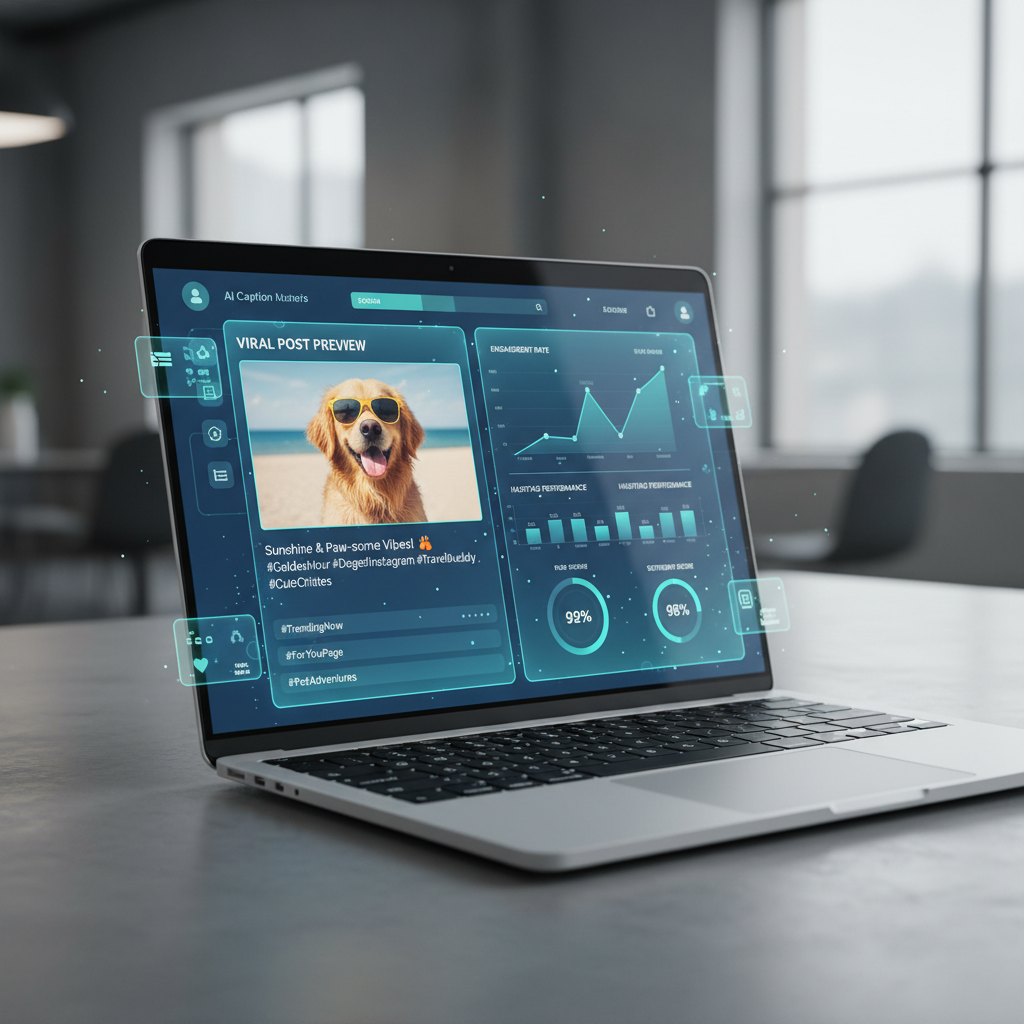
- Marketing and Social Media: In today’s visually-driven digital landscape, unique and engaging content is king. Small businesses, bloggers, and social media influencers can use free AI tools to create custom header images, social media graphics, product mockups, or ad creatives without needing a professional graphic designer or expensive stock photo subscriptions. AI can generate images tailored to specific campaigns, brand aesthetics, and target audiences, making your content stand out.
- Personal Projects and Hobbies: Beyond professional applications, AI art is fantastic for personal creative expression. Design a custom desktop wallpaper, create unique art for your home, generate album art for your personal music projects, or even craft personalized greeting cards. The possibilities for hobbyists are endless, allowing you to bring highly specific, imaginative concepts to life purely for your own enjoyment or as thoughtful gifts.
- Concept Art and Brainstorming: For aspiring artists, game developers, or designers, AI art can act as a powerful brainstorming partner. Instead of spending hours sketching initial concepts, you can rapidly generate dozens of variations for character designs, environmental concepts, architectural ideas, or fashion elements. This accelerates the ideation phase, allowing you to quickly explore different directions and pinpoint compelling visuals before committing to more labor-intensive traditional methods.
- Education and Presentations: Educators can use AI-generated images to create more engaging and visually rich learning materials. From illustrating historical events to depicting scientific concepts or creating visual aids for language learning, AI can produce bespoke images that enhance comprehension and captivate students’ attention. Similarly, professionals giving presentations can use AI to generate unique graphics that elevate their slides beyond generic stock imagery.
- Fashion and Product Design: AI can rapidly generate new textile patterns, clothing designs, or variations of product prototypes. While not ready for manufacturing, these visuals serve as powerful concept generators for designers looking for inspiration or wanting to present diverse options quickly.
The beauty of integrating AI art into your workflow is its flexibility. It can serve as a starting point, a complement to existing skills, or a complete solution for visual needs. By understanding these practical applications, beginners can strategically employ free AI tools to enhance their creative output across various domains, turning once-complex visual tasks into achievable and exciting endeavors.
7. Troubleshooting and Maximizing Free Tiers: Smart Strategies
While free AI art generation tools offer incredible value, they often come with certain limitations and occasional quirks. For beginners, learning to troubleshoot common issues and strategically manage free credits is essential for a smooth and rewarding experience. This section provides practical advice to help you get the most out of your free AI art journey.
- Dealing with “Broken” Generations: It is common for AI to produce images with strange artifacts, deformed anatomy (especially hands and faces), or illogical compositions.
- Refine Your Prompt: Often, vague or ambiguous prompts lead to poor results. Add more detail, use stronger descriptive adjectives, and specify exactly what you want.
- Utilize Negative Prompts: This is your best friend against common AI errors. Include terms like “ugly, deformed, disfigured, extra limbs, missing limbs, bad anatomy, blurry, low resolution, watermark, text, signature” in your negative prompt.
- Generate More Variations: Do not rely on a single generation. Produce several images and pick the best one. The AI often gets it right in one out of a few attempts.
- Experiment with Models/Styles: If your tool offers different base models (e.g., realistic vs. anime), try switching them. Some models are better at certain subjects or styles than others.
- Managing Credit Limits: Free tiers almost always operate on a credit system, where each generation consumes a certain number of credits.
- Be Strategic: Do not burn through credits on highly experimental or vague prompts. Refine your prompt offline before generating.
- Utilize Daily Bonuses: Many platforms refresh credits daily or offer bonuses for logging in. Make it a habit to claim these.
- Generate in Batches: If a platform allows generating multiple images for a single credit cost (or a reduced cost), take advantage of this to get more options per credit.
- Low-Resolution First: If your tool allows generating at lower resolutions for fewer credits, do so for initial brainstorming, then upscale the best image.
- Leveraging Community and Forums: The AI art community is vibrant and helpful.
- Explore Public Galleries: Websites like Lexica Art or the public galleries on Leonardo.AI allow you to see what others are creating and, crucially, the prompts they used. This is an excellent way to learn prompt engineering techniques.
- Join Discord Servers: Many AI art tools have active Discord communities where users share tips, troubleshoot issues, and provide feedback.
- Ask Questions: Do not hesitate to ask for help when you are stuck. Other users have likely encountered similar problems.
- Saving and Organizing Your Work: As you generate more images, it is crucial to keep them organized.
- Download and Backup: Always download your favorite creations, especially if you plan to use them later, as some platforms might eventually clear older generations from your history.
- Create Folders: Organize your downloaded images into folders based on projects, themes, or styles.
- Document Prompts: Save the exact prompt that led to a successful image. You can store this in a simple text file alongside the image or use the metadata often embedded in AI-generated images.
- Understanding System Requirements: For most free online tools, you primarily need a stable internet connection and a modern web browser. You do not need a powerful graphics card or a high-end computer, as the processing happens on the provider’s servers. This is one of the biggest advantages for beginners.
By adopting these smart strategies, you can minimize frustration, maximize your creative output, and make the most of the free AI art generation resources available to you. Remember that every “failed” generation is a learning opportunity that brings you closer to mastering the tool.
8. The Horizon of Creativity: Future Trends and Continuous Learning
The field of AI art generation is not static; it is a rapidly evolving landscape driven by continuous research and innovation. For beginners entering this space, understanding future trends and committing to continuous learning is key to staying ahead and maximizing their creative potential. The tools and techniques we use today will undoubtedly improve and expand tomorrow, offering even more exciting possibilities.
- Advancements in Models: Expect AI models to become even more sophisticated. Future iterations will likely offer:
- Greater Coherence and Realism: Fewer artifacts, more anatomically correct figures, and higher photographic fidelity.
- Enhanced Control: More precise control over composition, specific object placement, emotional expression, and fine details without complex prompting.
- Longer Context Windows: Ability to process much longer and more complex prompts, understanding intricate narratives.
- 3D and Video Generation: While currently in nascent stages, text-to-3D and text-to-video capabilities will become more accessible and refined, opening up entirely new creative dimensions.
- Integration with Other Creative Tools: AI art generation will increasingly integrate directly into popular creative software suites, such as photo editors, 3D modeling programs, and video editing applications. This seamless integration will allow artists and designers to leverage AI capabilities without leaving their preferred environment, making AI an indispensable assistant rather than a separate tool. Imagine generating textures directly within a 3D modeling program or creating dynamic background elements in a video editor with a simple prompt.
- Emergence of Specialized Tools: Alongside general-purpose AI art generators, expect to see more niche-specific tools emerge. These might be tailored for architectural visualization, fashion design, character concept art, or specific artistic styles. These specialized tools will likely offer highly optimized models and interfaces for particular creative tasks, making them even more efficient for focused projects.
- Importance of Community and Open Source: The open-source nature of many AI models (like Stable Diffusion) fosters rapid innovation. Community-driven fine-tuning, model sharing, and collaborative projects will continue to be a significant driving force. Staying connected with these communities will provide access to the latest models, workflows, and insights from experienced users.
- Developing Your Own AI Art Style: As models become more flexible, the opportunity to develop a distinctive “AI art style” will grow. This involves mastering specific prompting techniques, understanding how different modifiers interact, and even fine-tuning custom models (though this is beyond the scope of free beginner tools, it highlights the potential for personalized creative expression). Your unique prompts and iterative refinement processes can lead to an artistic voice that is unmistakably yours, even when using AI.
Continuous learning in this field means regularly checking for updates from AI research labs, experimenting with new free tools as they emerge, and actively participating in online communities. The future of AI art promises an even richer, more accessible, and profoundly transformative creative experience. By embracing this mindset of constant exploration, beginners can ensure they are always at the cutting edge of what is possible with AI-powered creativity.
Comparison Tables
Table 1: Free AI Art Tool Comparison
| Feature | Stable Diffusion Online / Clipdrop | Leonardo.AI (Free Tier) | Freepik AI Image Generator / Canva AI | DALL-E 2 (Limited Free) |
|---|---|---|---|---|
| Ease of Use | Very High (Simple interface) | High (Feature-rich, intuitive) | Very High (Integrated into design tools) | High (Clean, elegant) |
| Credit System | Often unlimited or daily resets (Clipdrop has credits) | Generous daily credits (typically 150-200) | Often daily limits or project-based limits | Limited free credits, often non-recurring |
| Advanced Features | Basic prompt settings, sometimes upscaling | Multiple models, Img2Img, inpainting, prompt weights | Simple generation, integration with design assets | High-quality generation, inpainting/outpainting capabilities |
| Community/Inspiration | Less integrated, relies on external sites | Strong community, public galleries, fine-tuned models | N/A (focus on integration) | Internal gallery, showcases |
| Best For | Quick experiments, testing prompts, basic generations | Exploring various styles, detailed control, learning | Quick visuals for specific design projects, marketing | Experiencing high-quality AI art, specific complex prompts |
| Learning Curve | Low | Medium (due to features) | Very Low | Low |
Table 2: Prompt Component Impact and Example
| Prompt Component | Description | Impact on Image | Example Phrase |
|---|---|---|---|
| Subject | The main entity or focus of the image. | Defines the central object(s) or character(s). | “A knight,” “a futuristic car,” “a lone tree” |
| Style/Medium | Artistic genre, technique, or medium. | Determines the overall aesthetic and visual language. | “Oil painting,” “digital art,” “anime style,” “photorealistic,” “cyberpunk” |
| Setting/Environment | The background, location, and atmosphere. | Creates the context and mood of the scene. | “In a lush forest,” “on a dystopian cityscape,” “under a starry sky” |
| Lighting | Direction, quality, and color of light. | Influences mood, depth, and realism. | “Golden hour,” “dramatic volumetric lighting,” “neon glow,” “soft ambient light” |
| Composition/View | Framing, angle, and perspective. | Dictates how the subject is presented within the frame. | “Close-up,” “wide shot,” “from above,” “dutch angle,” “rule of thirds” |
| Details/Attributes | Specific features, colors, textures, or actions. | Adds richness, specificity, and character to the subject/scene. | “Wearing intricate armor,” “with glowing eyes,” “shimmering scales,” “steam rising” |
| Quality Modifiers | Terms to enhance resolution and artistic fidelity. | Improves overall visual quality, detail, and polish. | “Ultra detailed,” “8K,” “masterpiece,” “award-winning,” “Unreal Engine” |
| Negative Prompts | What the AI should explicitly avoid. | Helps eliminate unwanted artifacts, deformities, or elements. | “Ugly, deformed, blurry, low quality, bad anatomy, text, watermark” |
Practical Examples: Realizing Your Visions
Theory is important, but seeing how AI art generation translates into real-world applications truly brings its power to life. Here are a few detailed scenarios demonstrating how beginners can use free AI tools to achieve specific creative goals:
Scenario 1: The Indie Game Developer’s Concept Art
Problem: An aspiring indie game developer needs unique concept art for alien creatures and fantastical environments but lacks traditional drawing skills and budget for professional artists.
AI Solution: Using Leonardo.AI’s free tier, the developer can rapidly generate diverse visual ideas.
- Creature Design: The developer starts with a prompt like: “A fierce, six-legged alien creature, bioluminescent skin, sharp claws, dense alien jungle background, digital art, highly detailed, cinematic lighting.” They generate several variations, using negative prompts like “ugly, blurry, deformed limbs.” After finding a compelling base, they might iterate, adding details like “glowing eyes, venomous fangs, iridescent scales” to refine the design.
- Environment Visualization: For a new planet, a prompt could be: “Alien planet surface, towering crystalline formations, two purple moons in sky, dense fog, ethereal glow, concept art, wide shot.” By iterating with different colors, times of day (e.g., “dusk,” “pre-dawn”), and landscape features, they can visualize various biomes for their game.
- Refinement: The developer uses the platform’s image-to-image feature by sketching a rough layout for a game level, then prompting the AI to “turn this sketch into a ruined ancient temple, overgrown with glowing alien flora, mystical atmosphere, 8K, concept art.”
Outcome: Within a few hours, the developer has a rich portfolio of concept art for characters, environments, and even prop designs, providing a strong visual foundation to pitch their game or guide 3D modelers.
Scenario 2: The Social Media Influencer’s Engaging Content
Problem: A lifestyle influencer needs fresh, unique, and visually appealing header images and post graphics daily to keep their audience engaged, but creating custom graphics is time-consuming.
AI Solution: The influencer utilizes Freepik’s AI Image Generator or Canva’s AI integration for quick, branded visuals.
- Branded Header: For a post about “Morning Routine,” the influencer prompts: “A cozy aesthetic living room, sunrise light, steaming coffee mug on a wooden table, warm colors, soft focus, photography, Instagram quality.” They then download and add their logo in Canva.
- Inspirational Quote Background: To accompany an inspirational quote, they generate an abstract background: “Soft pastel gradients, swirling patterns, ethereal glow, digital art, high resolution, minimalist.” They then overlay the text in Canva.
- Themed Visuals: For a “travel tips” series, they might generate: “A vintage travel suitcase filled with old maps and a compass, warm diffused light, soft shadows, photorealistic, cinematic.”
Outcome: The influencer can consistently produce high-quality, on-brand visuals in minutes, significantly improving their content’s aesthetic appeal and saving valuable time for content creation itself. The unique images help them stand out in a crowded feed.
Scenario 3: The Hobbyist Artist’s Style Experimentation
Problem: A hobbyist painter wants to experiment with new artistic styles and subjects but finds the process of physically trying out different mediums and techniques costly and messy.
AI Solution: Using Stable Diffusion Online and Clipdrop, the artist can explore countless styles digitally.
- Exploring a Subject in Different Styles: The artist picks a common subject, like “a wise old owl.” They then experiment with prompts such as:
- “A wise old owl, oil painting, dark fantasy style, dramatic lighting.”
- “A wise old owl, watercolor illustration, whimsical, bright colors.”
- “A wise old owl, abstract geometric art, minimalist, vibrant hues.”
- Combining Styles: They might then try combining elements: “A wise old owl, steampunk aesthetic, intricate gears, mixed media collage, vibrant.”
- Color Palettes: They generate abstract images with specific color palettes to inspire their physical paintings. “Abstract art, dominant colors: deep teal, burnt orange, golden yellow, flowing shapes, expressive.”
Outcome: The hobbyist gains a deeper understanding of how different styles affect a subject, discovers new artistic preferences, and gathers inspiration for their physical paintings without the cost or commitment of traditional mediums. It acts as a digital sketchbook for boundless artistic exploration.
Scenario 4: The Educator’s Visual Learning Aids
Problem: An elementary school teacher needs engaging and specific visuals for history lessons about ancient civilizations, but stock photos are often generic or not exactly what they need.
AI Solution: The teacher uses a user-friendly tool like Leonardo.AI or Stable Diffusion Online to generate custom images for their presentations and handouts.
- Ancient Egypt: For a lesson on pharaohs, the teacher prompts: “Ancient Egyptian pharaoh speaking to subjects, grand temple in background, bright desert sun, historical illustration style, detailed clothing, hieroglyphs.”
- Roman Empire: For a segment on Roman daily life, they try: “A Roman citizen walking through a bustling marketplace, ancient Rome street scene, vibrant colors, detailed architecture, historical accurate art.”
- Mythological Creatures: To illustrate Greek myths, they generate: “A majestic centaur standing in a sun-drenched Greek landscape, mythological art style, dynamic pose, detailed muscles.”
Outcome: The teacher creates unique, highly relevant, and visually captivating images that directly support their lesson plans. These tailored visuals make complex historical concepts more accessible and engaging for young students, significantly enhancing the learning experience beyond what generic images could offer.
These examples illustrate that AI art generation is a versatile tool that can be adapted to countless creative needs, empowering beginners across various domains to visualize their ideas effortlessly.
Frequently Asked Questions
Q: What is AI art generation?
A: AI art generation refers to the process of using artificial intelligence models to create visual art. These models are typically trained on vast datasets of images and text, allowing them to interpret textual descriptions (prompts) and generate unique images that match those descriptions. It is a powerful form of generative AI that transforms ideas into visual realities.
Q: Are free AI art tools truly free? What are the limitations?
A: Yes, many AI art tools offer truly free tiers, but they come with limitations. These typically include a limited number of daily or monthly “credits” for generating images, slower generation speeds, lower resolution outputs, fewer advanced features (like inpainting/outpainting), and sometimes watermarks. Despite these, the free versions are excellent for beginners to learn and experiment without financial commitment.
Q: What makes a good prompt for AI art?
A: A good prompt is clear, specific, and descriptive. It usually includes a subject, artistic style or medium, environment/setting, lighting, composition, specific details, and quality modifiers (e.g., “ultra detailed,” “8K”). Crucially, effective prompts also often include “negative prompts” to tell the AI what to avoid, helping to prevent common artifacts and improve output quality.
Q: Can I sell AI-generated art created with free tools?
A: The legality and ethics of selling AI-generated art are complex and evolving. It largely depends on the specific AI tool’s terms of service and the copyright laws of your jurisdiction. Some tools allow commercial use, while others restrict it or require a paid subscription. Always check the terms of service of the particular platform you are using. Additionally, debates about human authorship and originality in copyright law are ongoing, making the situation ambiguous in some regions.
Q: How do I overcome “AI hands” or other weird artifacts in my images?
A: Deformed hands, strange faces, or other artifacts are common AI limitations. To mitigate these: 1. Use strong negative prompts (e.g., “deformed, ugly, bad anatomy, extra fingers, missing fingers, distorted”). 2. Generate multiple variations and pick the best one. 3. Be more specific in your prompt about body parts. 4. Try different AI models or styles, as some are better at anatomy than others. 5. Consider using a human reference image for image-to-image generation if available.
Q: Is AI art considered plagiarism or stealing from artists?
A: This is a highly contentious issue. AI models are trained on vast datasets, often scraped from the internet, which can include copyrighted works without direct artist consent or compensation. While the AI doesn’t “copy-paste” art, it learns styles and concepts from existing work. Many artists feel this constitutes a form of artistic theft or exploitation. The legal and ethical debate is ongoing, and it is important for AI art creators to be aware of and sensitive to these concerns.
Q: What are negative prompts and how do they work?
A: Negative prompts are instructions given to the AI specifying what you do not want to see in the generated image. They are the inverse of a regular prompt. For example, if you want to avoid blurry images, you would add “blurry” to your negative prompt. This helps the AI steer away from undesired characteristics, improving the overall quality and adherence to your vision. Common negative prompts include “ugly, deformed, blurry, low quality, bad anatomy, watermark, text.”
Q: How can I improve my AI art generation skills?
A: Practice, experimentation, and learning from others are key. 1. Regularly experiment with different prompts, styles, and tools. 2. Analyze prompts used by experienced users in public galleries. 3. Join AI art communities (e.g., Discord servers) for tips and feedback. 4. Read guides and watch tutorials. 5. Keep a prompt journal to track what works and what does not. The more you explore, the better your intuition becomes.
Q: What’s the difference between text-to-image and image-to-image generation?
A: Text-to-image generation creates an image solely based on a textual description (prompt). Image-to-image (Img2Img) generation takes an existing image (your own photo, a sketch, or another AI-generated image) as a base, and then modifies it according to your text prompt. Img2Img gives the AI a visual starting point, often allowing for more controlled and predictable transformations.
Q: Do I need a powerful computer to generate AI art?
A: For free online AI art generation tools, no. The heavy computational processing is performed on the service provider’s powerful servers in the cloud. You only need a stable internet connection and a modern web browser on any standard computer, tablet, or smartphone. This accessibility is one of the biggest advantages for beginners.
Key Takeaways
- AI art generation democratizes creativity, allowing beginners to create stunning visuals without traditional artistic skills.
- Free tools like Leonardo.AI and Stable Diffusion Online provide accessible entry points into AI art with generous credit systems.
- Mastering prompt engineering, the art of crafting specific and detailed textual instructions, is crucial for effective AI image generation.
- Iteration and refinement techniques, including generating variations, using negative prompts, and upscaling, are essential for sculpting your vision.
- Ethical considerations such as copyright ambiguity, AI bias, and data sourcing are important aspects for responsible AI art creation.
- AI art can be integrated into diverse workflows, enhancing storytelling, marketing, personal projects, and educational materials.
- Strategic management of free credits and troubleshooting common issues will maximize your experience with free AI tools.
- The field of AI art is constantly evolving, requiring continuous learning and engagement with communities to stay updated on new trends and techniques.
- Experimentation, patience, and a willingness to learn are your most valuable assets on the journey from idea to image.
Conclusion: Embrace the AI Canvas
The journey from an abstract idea to a concrete, captivating image is now more accessible than ever, thanks to the revolutionary power of free AI art generation tools. For creative beginners, this is not just a technological advancement; it is an invitation to explore boundless imaginative landscapes, to articulate visions previously confined to the mind, and to do so without the traditional barriers of skill or expense. We have walked through the fundamental concepts, explored the most user-friendly platforms, delved deep into the art of prompt engineering, and discussed the importance of iterative refinement. We have also addressed the critical ethical considerations and highlighted the myriad practical applications that can transform your creative projects.
Remember that the beauty of AI art lies in its collaborative nature: it is a partnership between human creativity and artificial intelligence. Your imagination provides the spark, and the AI serves as an incredibly powerful brush, capable of translating your words into stunning visual realities. Do not be intimidated by the technical jargon or the initial learning curve; every expert was once a beginner. Embrace the process of experimentation, learn from every generation, and constantly seek inspiration from the vibrant AI art community.
The landscape of AI art is continuously evolving, promising even more sophisticated tools and functionalities in the future. By embracing the principles outlined in this guide – understanding the tools, mastering the prompt, refining your output, and creating responsibly – you are not just generating images; you are unlocking a new dimension of creative potential. So, take the leap, open your chosen free AI art canvas, and start bringing your extraordinary ideas to life. The future of creativity is now at your fingertips.





























Leave a Reply