

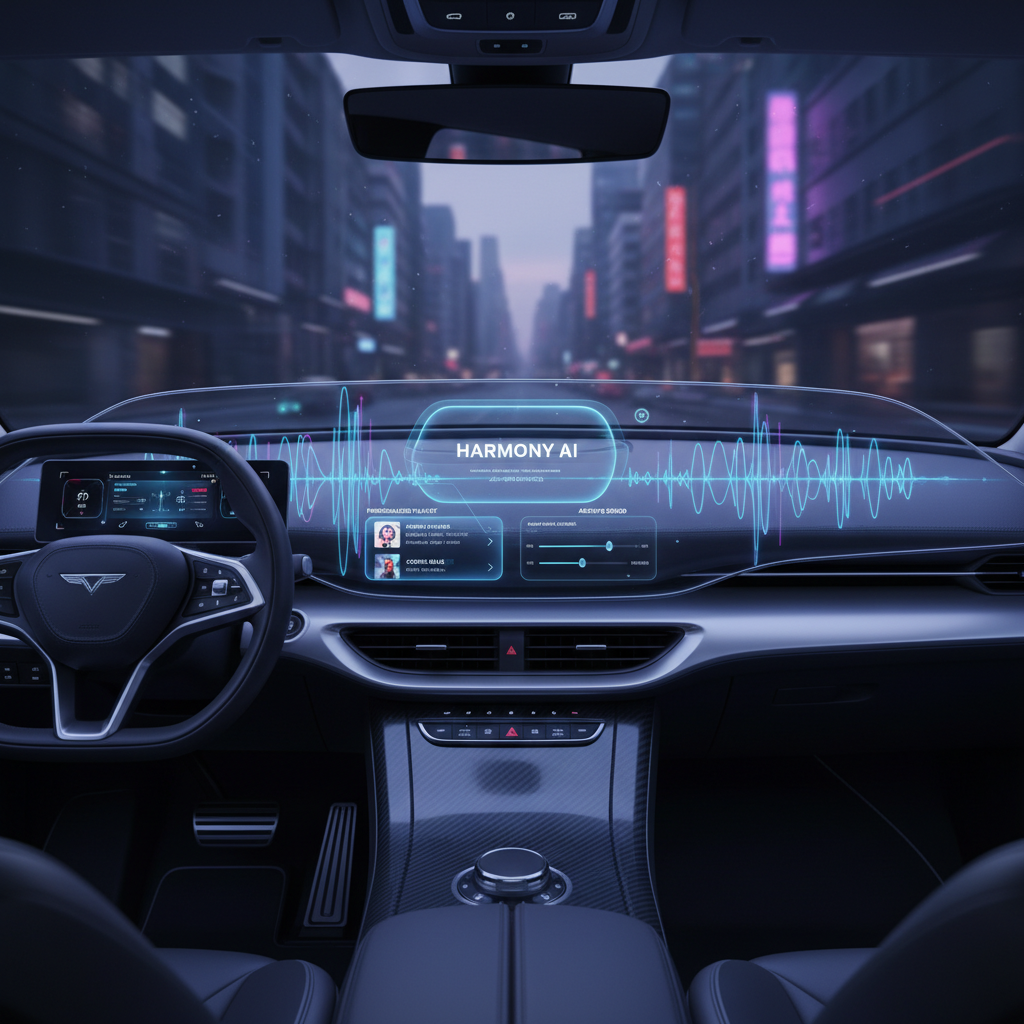
In an era where our vehicles are rapidly evolving from mere modes of transportation into sophisticated mobile hubs, the in-car experience is undergoing a profound transformation. Gone are the days when a car’s audio system was limited to a simple radio and a CD player. Today, as artificial intelligence permeates nearly every aspect of our lives, it is revolutionizing how we interact with and perceive sound within the confines of our vehicles. The promise of AI-driven personalized soundscapes is not just an incremental improvement; it is a fundamental shift towards an audio environment that is adaptive, intelligent, and uniquely tailored to each occupant.
Imagine stepping into your car, and instead of a generic audio experience, the sound system instantly recognizes your preferences, adapts to the ambient noise of your commute, and even creates individual audio zones for each passenger. This is the future AI is building for in-car audio entertainment. It is about crafting an immersive, comfortable, and safe auditory bubble that enhances every journey, whether it is a short trip to the grocery store or a cross-country adventure. This article delves deep into how artificial intelligence is meticulously weaving its magic to create these personalized soundscapes, exploring the underlying technologies, the myriad benefits, real-world applications, and the exciting challenges and opportunities that lie ahead.
The Evolution of In-Car Audio: From Radios to AI Brains
The journey of in-car audio has been a fascinating one, mirroring the broader advancements in technology over the decades. It began modestly with simple AM/FM radios, offering limited choice and fidelity. The advent of cassette tapes in the 1960s brought a rudimentary form of personalization, allowing drivers to curate their own playlists. This was followed by compact disc (CD) players, which offered superior sound quality and greater convenience in the 1980s and 90s.
The digital age ushered in another seismic shift with MP3 players and eventually, streaming services. Suddenly, an entire world of music and podcasts became accessible, transforming cars into mobile listening lounges. Bluetooth connectivity, USB ports, and smartphone integration further blurred the lines between our personal devices and the car’s entertainment system. Yet, despite these advancements, a fundamental limitation persisted: the audio experience remained largely static and universal within the vehicle’s cabin. While equalizers allowed for basic tuning, the system itself did not dynamically adapt to the ever-changing driving environment, the acoustics of the cabin, or the diverse preferences of multiple passengers.
This is where AI enters the narrative as the true game-changer. AI brings intelligence, learning, and adaptability to the otherwise passive audio system. It moves beyond simply playing sound to understanding, predicting, and optimizing the auditory experience in real-time. By leveraging sophisticated algorithms, sensor data, and user feedback, AI transforms the car’s audio system from a mere output device into an intuitive, responsive, and deeply personalized companion, ushering in an era of truly dynamic soundscapes.
What are Personalized Soundscapes?
At its core, a “personalized soundscape” in the context of in-car audio refers to an audio environment that is dynamically tailored to the individual preferences and needs of each occupant, while simultaneously adapting to the real-time conditions of the vehicle and its surroundings. It is a concept that extends far beyond simply adjusting the volume or bass; it encompasses a holistic approach to creating an optimal auditory experience for everyone inside the car.
Consider the typical challenges of in-car audio. Road noise, engine hum, wind resistance, and conversations can all compete with the desired audio content. Furthermore, different passengers often have vastly different preferences: one person might want to listen to a heavy metal playlist, another to a calming classical piece, while children in the back might be engrossed in an audiobook or a movie soundtrack. Traditional audio systems struggle to reconcile these conflicting demands, often leading to compromises or the isolation of headphones.
Personalized soundscapes, powered by AI, address these issues head-on. They employ a combination of advanced sensors, intricate AI algorithms, and sophisticated speaker arrays to achieve a truly individualized experience. The key components include:
- Individual Audio Profiles: AI learns and stores the preferences of each regular occupant, including favorite genres, preferred volume levels, equalizer settings, and even preferred audio sources.
- Real-time Environmental Adaptation: Microphones and sensors continuously monitor internal and external noise levels, allowing the AI to dynamically adjust sound output, filter out unwanted noise, or even enhance critical sounds like emergency vehicle sirens.
- Spatial Audio Zoning: Using advanced speaker placement and beamforming technologies, AI can create distinct “sound zones” within the cabin, allowing different occupants to listen to different audio streams simultaneously without interference.
- Acoustic Optimization: AI analyzes the unique acoustic properties of the car’s interior, compensating for materials, seating arrangements, and even the number of occupants to deliver the best possible sound quality.
The goal is to move from a one-size-fits-all audio experience to one that is fluid, intelligent, and deeply personal, making every journey more enjoyable, comfortable, and safe.
AI’s Role in Audio Personalization: Core Technologies
The magic behind personalized soundscapes is rooted in several interlocking AI technologies. These systems work in concert to perceive, interpret, learn, and then adapt the audio environment. Understanding these core technologies illuminates the true power of AI in transforming in-car audio.
Machine Learning for Preference Learning
At the heart of any personalized system is the ability to learn. Machine learning algorithms continuously analyze user behavior and environmental data to build a comprehensive profile for each occupant. This includes:
- Listening Habits: Tracking genre preferences, preferred artists, specific playlists, and even the time of day certain types of audio are consumed.
- Volume Tendencies: Noting preferred volume levels for different types of content and in various driving conditions.
- Environmental Context: Learning how audio preferences change during heavy traffic versus open highway driving, or during specific weather conditions.
- Interaction Patterns: Observing how users adjust settings, skip tracks, or interact with voice commands to refine future recommendations and automatic adjustments.
Over time, the AI develops a nuanced understanding of individual tastes, allowing it to proactively suggest content or automatically apply optimal settings even before the user explicitly requests them.
Adaptive Audio Processing
This category encompasses the technologies that actively manipulate sound in real-time to create the desired auditory experience.
- Real-time Noise Cancellation (Active Noise Control – ANC): This is a sophisticated technology borrowed from high-end headphones. Microphones strategically placed around the cabin detect unwanted noises from the engine, road, and wind. AI algorithms then generate anti-phase sound waves, which effectively cancel out these intrusive frequencies. The result is a significantly quieter cabin, allowing the desired audio to be heard more clearly at lower volumes, reducing listener fatigue. Advanced systems can even selectively cancel noise for specific passengers or areas of the cabin.
- Environmental Sound Enhancement and Isolation: Beyond mere cancellation, AI can intelligently manage the soundscape. It can identify and selectively amplify critical external sounds, such as emergency vehicle sirens or pedestrian warnings, ensuring driver awareness for safety. Conversely, it can isolate occupants from distracting external chatter or construction noise, creating a tranquil environment for conversations or focused listening. This intelligent sound gating ensures relevant information passes through while irrelevant noise is suppressed.
- Spatial Audio and 3D Soundscapes: This technology moves beyond traditional stereo or surround sound to create a truly immersive, three-dimensional audio experience. Using object-based audio, sounds can be precisely placed and moved around the cabin, mimicking real-world acoustics. For instance, a navigation prompt might sound as if it is coming directly from the junction you need to take, or a musical instrument might be perceived as coming from a specific point in the virtual soundstage. Crucially, spatial audio enables the creation of individual audio zones, allowing each passenger to have their own private listening bubble without the need for headphones. This is achieved through advanced speaker arrays and digital signal processing that direct sound beams precisely to specific listening positions.
Voice AI and Natural Language Processing (NLP)
Voice control has become standard in modern cars, but AI takes this to the next level. Advanced NLP allows for more natural, conversational interaction with the audio system. Users can issue complex commands like “Play something relaxing for my drive home, but make sure the kids in the back can still hear their audiobook clearly,” or “Increase the bass only on my side, and reduce the road noise slightly.” The AI understands context, nuance, and individual preferences, providing a truly hands-free and intuitive control experience, minimizing driver distraction.
Biometric Integration (Future & Emerging)
While still largely in the developmental phase, future AI systems could integrate biometric data from wearables or in-car sensors. Imagine the car sensing your stress levels from heart rate variability or detecting signs of driver fatigue from eye movements. The AI could then proactively adjust the soundscape – perhaps playing calming music, activating noise cancellation for a quieter cabin, or even delivering an invigorating audio program – to mitigate stress or prevent drowsiness. This represents the ultimate frontier of personalized, adaptive audio, where the car responds to your emotional and physical state.
These core technologies collectively paint a picture of an in-car audio system that is not just smart, but deeply empathetic and responsive, transforming every drive into a uniquely tailored auditory journey.
Benefits for the Driver and Passengers
The integration of AI into in-car audio systems delivers a wealth of benefits that fundamentally improve the driving and passenger experience. These advantages extend beyond mere entertainment, touching upon comfort, safety, and overall well-being.
Enhanced Comfort and Reduced Fatigue
One of the most immediate and appreciated benefits is the significant increase in cabin comfort. By actively canceling out intrusive road noise, engine hum, and wind turbulence, AI-powered systems create a remarkably quieter environment. This reduction in ambient noise allows occupants to enjoy their audio content at lower volumes, which in turn reduces listening fatigue on long journeys. For drivers, a quieter cabin means less mental strain from constantly processing background noise, leading to a more relaxed and focused driving experience. Passengers can converse more easily, read, or simply enjoy the tranquility of their personalized sound bubble.
Improved Safety
Safety is paramount in any vehicle, and AI-driven audio plays a crucial role in enhancing it. Traditional audio systems can sometimes drown out important auditory cues from the outside world. AI, however, is intelligent enough to selectively manage sound:
- Clearer Navigation Prompts: Navigation instructions are delivered with optimal clarity, potentially using spatial audio to make the prompt sound like it’s coming from the direction of the turn, reducing ambiguity and the need for visual confirmation.
- Selective Sound Amplification for Warnings: The system can detect and intelligently amplify external warnings, such as the sirens of an emergency vehicle, even when music is playing. It can also subtly reduce the volume of entertainment audio to ensure critical safety alerts from the vehicle itself (e.g., lane departure warnings, blind spot monitoring alerts) are heard distinctly.
- Reduced Distraction: By providing a tailored and comfortable audio experience, drivers are less likely to fiddle with controls or strain to hear, keeping their focus where it belongs – on the road. Voice commands further facilitate hands-free operation.
Individualized Entertainment Zones
This is arguably one of the most transformative benefits, particularly for families or carpooling scenarios. With AI-powered spatial audio, different occupants can listen to entirely different audio content simultaneously, all without the need for headphones. Imagine a scenario where the driver is listening to a podcast, the front passenger is enjoying classical music, and children in the rear are watching a movie with its own dedicated audio track. Each person experiences their chosen audio stream clearly and privately, without disturbing others. This dramatically reduces potential conflicts over audio choices and makes multi-occupant journeys far more harmonious and enjoyable.
Seamless Integration with Digital Life
AI audio systems are designed to integrate effortlessly with the broader digital ecosystem of the user. This means seamless connectivity with personal smartphones, smart home devices, and cloud-based streaming services. Users can continue their podcast from where they left off at home, receive notifications from their smart home, or even control compatible devices (e.g., turning on house lights as they approach) directly through the car’s voice AI. This creates a continuous, connected experience that extends beyond the vehicle itself.
Optimized Audio Quality
Beyond personalization, AI continuously works to deliver the best possible audio fidelity. It understands the unique acoustic signature of the car’s cabin, taking into account materials, speaker placement, and even the number and position of occupants. AI algorithms dynamically adjust equalization, soundstaging, and latency to compensate for these variables, ensuring that music, podcasts, and calls sound rich, clear, and perfectly balanced. This optimization happens in real-time, adapting to changes in the environment or cabin occupancy, offering a consistently premium listening experience.
In essence, AI-driven personalized soundscapes elevate the in-car audio experience from a mere utility to a sophisticated, adaptive, and deeply satisfying element of modern mobility, benefiting everyone inside the vehicle.
Current Innovations and Early Adopters
The vision of personalized soundscapes is rapidly transitioning from concept to reality, with leading automotive manufacturers and audio technology companies investing heavily in AI-driven solutions. While a fully realized, hyper-personalized cabin is still evolving, several groundbreaking innovations are already making their way into production vehicles and advanced prototypes.
One of the pioneers in this space is Harman Kardon, a subsidiary of Samsung, which has showcased technologies like “Personi-Fi.” This system leverages AI to allow each passenger to create and save their own personalized audio profile, which then travels with them to any compatible vehicle. Personi-Fi can fine-tune individual speaker performance based on personal hearing preferences and even compensate for specific types of hearing loss, creating truly bespoke audio delivery for each seat.
Bose, another titan in audio technology, has been refining its “AudioPilot” noise compensation technology for years. While not purely AI in its initial iterations, newer versions incorporate more sophisticated algorithms that continuously monitor interior sound levels and driving speed, adjusting audio parameters to maintain consistent sound quality. Furthermore, Bose is actively developing advanced spatial audio solutions for automotive applications, pushing the boundaries of individual sound zones.
Luxury car manufacturers are at the forefront of integrating these advanced AI audio features into their infotainment systems. For instance, the Mercedes-Benz MBUX Hyperscreen, a sprawling, AI-powered dashboard, offers sophisticated voice control that can manage intricate audio settings. While not fully personalized sound zones yet, the system learns driver preferences and can suggest media, adjust ambient noise settings, and even manage individual climate zones, setting the stage for future audio integration.
BMW’s Intelligent Personal Assistant, powered by AI, allows for natural language interaction to control various vehicle functions, including audio. Drivers can simply say, “Hey BMW, play something calming,” or “Adjust the audio balance slightly to the right,” and the system intelligently responds. These assistants are continuously learning from user interactions, becoming more adept at anticipating needs and personalizing responses, including audio preferences.
Other companies are focusing on specific aspects. For example, some startups are developing sensor fusion technologies that combine microphone data with radar and camera inputs to more accurately identify and localize noise sources, leading to more precise active noise cancellation. The trend is clearly towards systems that are not only aware of sound but also understand its context and the user’s interaction with it.
The role of cloud connectivity and Over-The-Air (OTA) updates is crucial in this evolution. As AI models become more sophisticated and new features are developed, OTA updates allow vehicle audio systems to improve and adapt over time, without requiring a trip to the dealership. This ensures that the in-car audio experience remains cutting-edge and continuously personalized throughout the vehicle’s lifespan.
These early adoptions and ongoing innovations indicate a clear trajectory: in-car audio is no longer a static component but a dynamic, intelligent system that is constantly learning, adapting, and striving to deliver an unparalleled auditory experience for every occupant.
Challenges and Future Outlook
While the promise of AI-driven personalized soundscapes is immense, their widespread implementation and continued evolution face several significant challenges. Overcoming these hurdles will be key to realizing the full potential of this transformative technology.
Current Challenges
- Data Privacy and Security: For AI to truly personalize the audio experience, it needs to collect and analyze a vast amount of data – listening habits, preferred genres, common routes, even potentially biometric data. This raises serious concerns about data privacy, how this data is stored, shared, and secured. Building trust with consumers regarding the ethical use of their personal data is paramount.
- Computational Power Requirements: Real-time adaptive audio processing, advanced noise cancellation, and individual sound zoning require substantial computational power. Integrating these high-performance processors into vehicles while managing cost, power consumption, and heat dissipation is a complex engineering challenge.
- Standardization Across Manufacturers: Currently, each automotive manufacturer and audio tech company develops its proprietary AI systems and algorithms. A lack of industry-wide standards can lead to fragmentation, making it challenging for third-party developers and limiting cross-platform compatibility.
- Integration Complexity: Combining sophisticated AI software with complex hardware (multiple microphones, speakers, sensors, and processing units) into the confined and demanding environment of a car cabin is an intricate task. Ensuring seamless operation, reliability, and robust performance requires meticulous design and engineering.
- Cost Implications: The advanced hardware and software required for hyper-personalized soundscapes are currently expensive. Bringing these technologies to mass-market vehicles at an affordable price point will require economies of scale and further technological refinement.
Future Outlook
Despite these challenges, the trajectory for AI in-car audio is undeniably upward. The future promises even more sophisticated and integrated experiences:
- More Advanced Biometric Feedback Loops: Beyond basic stress detection, AI could integrate with wearable tech and advanced in-car sensors to monitor a wider range of biometric signals. This could allow the audio system to not only react to a driver’s state but also to proactively influence mood, alertness, or relaxation levels through specifically curated sound programs, potentially integrating with scent diffusers or ambient lighting.
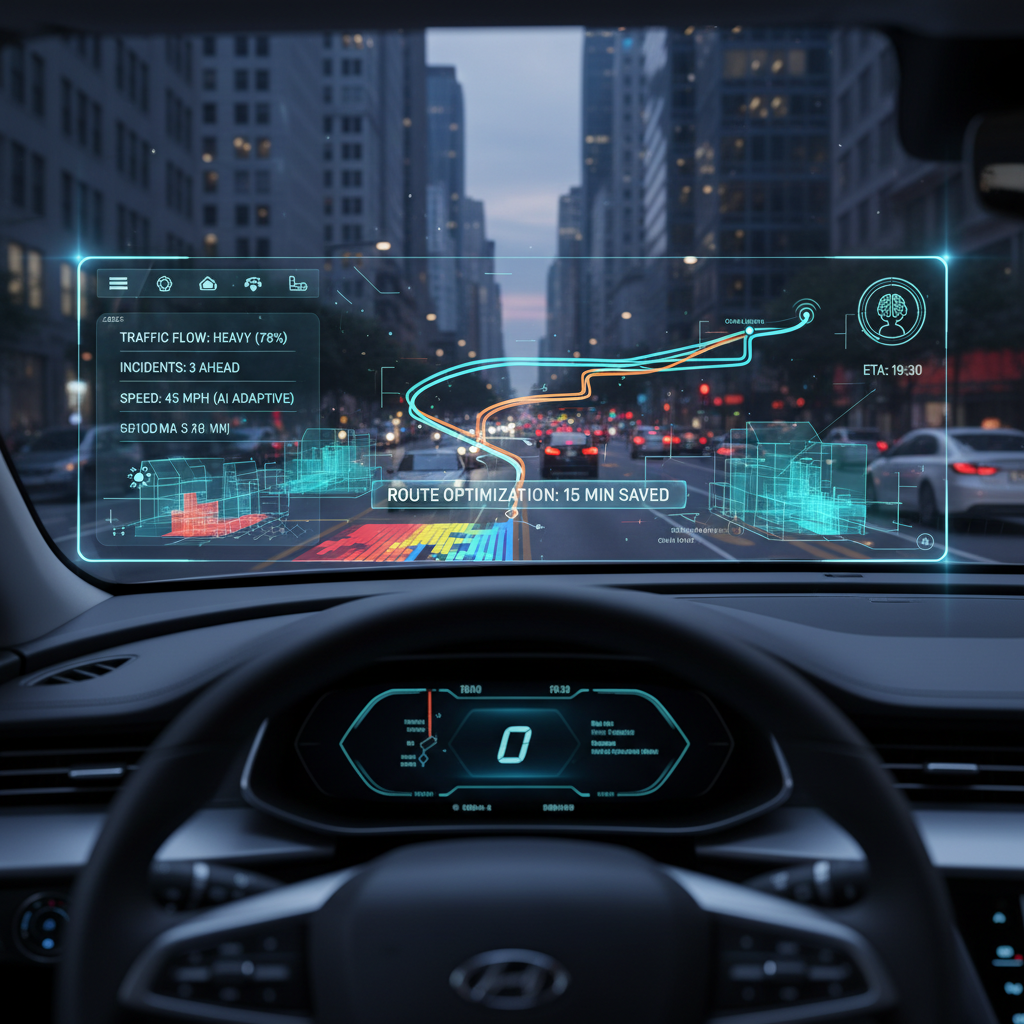
- Seamless Integration with Augmented Reality (AR): As AR heads-up displays become more common, AI audio could synchronize with visual overlays. Imagine navigation prompts not just sounding from the direction of a turn, but also having a subtle auditory cue that guides your eyes to the AR arrow projected onto the windshield. Or having a virtual concert where visual elements on the AR display are perfectly matched by object-based spatial audio.
- Hyper-Personalization Down to Individual Speaker Control: Future systems might allow for granular control over each individual speaker within a car, creating micro-zones for even greater precision. This could mean fine-tuning the sound for a specific passenger’s ear, compensating for their unique hearing profile, and even directing specific sonic elements to them while masking others.
- Generative AI for Dynamic, Mood-Adaptive Ambient Sounds: Instead of just playing pre-recorded content, generative AI could create unique, real-time ambient soundscapes tailored to the driver’s mood or desired environment. Want the sound of a gentle forest stream or a bustling café to accompany your drive? AI could dynamically compose and adapt these sounds, offering an entirely new dimension of personalized experience.
- Ethical Considerations and Regulation: As these systems become more powerful and gather more personal data, robust ethical guidelines and regulatory frameworks will become critical. Discussions around user consent, data anonymization, and the potential for manipulation (e.g., using audio to influence purchasing decisions or driving behavior) will be at the forefront.
The journey towards fully autonomous vehicles will further accelerate the demand for immersive and personalized in-car entertainment, as occupants transition from drivers to passengers with more leisure time. AI-driven soundscapes are poised to play a central role in defining this future mobility experience, making every journey not just a trip, but a curated auditory adventure.
Comparison Tables
To better understand the paradigm shift AI brings to in-car audio, let us compare traditional audio systems with their AI-powered counterparts and highlight the impact of key AI technologies.
| Feature | Traditional In-Car Audio | AI-Powered Personalized Soundscapes |
|---|---|---|
| Primary Source | Radio, CD, Auxiliary Input, Bluetooth (static) | Streaming services, personal profiles, cloud-based content (dynamic, adaptive) |
| Customization Level | Basic equalizer adjustments, balance/fader controls, preset station tuning | Individual audio profiles, personalized EQ, genre preferences, adaptive volume, content recommendations |
| Adaptability to Environment | Minimal or none; user manually adjusts volume for road noise | Real-time active noise cancellation, selective sound enhancement/suppression, dynamic volume adjustment based on speed/noise |
| Personalization Scope | Uniform audio for all occupants (shared experience) | Individual sound zones, separate content streams for each passenger without headphones |
| User Interaction | Manual buttons, touchscreens, basic voice commands | Natural language processing, intuitive voice AI, predictive recommendations, gesture control (emerging) |
| Noise Management | Passive insulation, limited soundproofing | Active Noise Control (ANC), engine sound enhancement/reduction, intelligent cabin quietness |
| Audio Quality Optimization | Static tuning for general cabin acoustics | Dynamic acoustic analysis, real-time calibration for cabin materials, occupant count, and seating positions |
| User Experience | Functional, shared, often requiring manual adjustments | Immersive, intelligent, highly personalized, proactive, effortless, comfortable |
| AI Technology | Mechanism | Primary Impact on In-Car Audio | Example Application |
|---|---|---|---|
| Machine Learning (ML) | Analyzes user listening habits, preferences, environmental data over time to build profiles. | Deep personalization of content, settings, and recommendations. Proactive system behavior. | System automatically suggests a specific playlist based on time of day and typical commute route; remembers individual EQ settings for each passenger. |
| Active Noise Control (ANC) | Microphones detect unwanted cabin noise (engine, road, wind); AI generates anti-phase sound waves to cancel it out. | Significantly quieter cabin, enhanced audio clarity, reduced listening fatigue. | Road noise is dramatically reduced, allowing conversations or music to be heard clearly at lower volumes. |
| Spatial Audio / 3D Soundscapes | Uses multi-speaker arrays and advanced digital signal processing to place and move sounds precisely in a 3D space. | Immersive listening experience, creation of individual audio zones. | Driver listens to news, front passenger enjoys a podcast, and rear passengers watch a movie, all without headphones. Navigation voice sounds like it’s coming from the specific turn. |
| Natural Language Processing (NLP) / Voice AI | Enables natural, conversational interaction with the audio system, understanding complex commands and context. | Hands-free, intuitive control; reduced driver distraction; seamless integration with digital life. | User says, “Play rock music for me, but don’t disturb the kids in the back,” and the system understands and executes. |
| Acoustic Optimization Algorithms | Real-time analysis of cabin acoustics (materials, shape, occupant count) and dynamic adjustment of audio output. | Consistent, high-fidelity sound quality regardless of cabin conditions or content type. | The soundstage adapts instantly if a rear passenger exits the vehicle or if soft materials are introduced into the cabin. |
| Sensor Fusion for Environmental Awareness | Combines data from microphones, external sensors (radar, cameras) to precisely identify and localize internal and external sounds. | Intelligent management of safety-critical sounds and precise noise cancellation. | System detects an approaching ambulance siren from outside, subtly reduces entertainment volume, and highlights the siren in specific speakers. |
Practical Examples: Real-World Use Cases and Scenarios
To truly grasp the transformative power of AI-driven personalized soundscapes, it is helpful to visualize them in everyday scenarios. These examples illustrate how AI is moving beyond theoretical capabilities to deliver tangible benefits in the real world.
Scenario 1: The Harmonious Family Road Trip
Consider a long family road trip. Traditionally, this might involve bickering over music choices, or everyone retreating into headphones. With an AI-powered soundscape, the experience is dramatically different. The driver, perhaps a fan of audiobooks, can listen to their latest thrilling novel. The front passenger, who prefers classical music for relaxation, can have their own private concerto. In the back, two children might be watching a movie on individual screens, each receiving the movie’s audio directly to their seating position without needing headphones. Simultaneously, subtle active noise cancellation ensures that the general drone of highway travel is minimized, creating a serene environment for everyone, while the AI remains vigilant, ensuring that an emergency siren is still audibly highlighted for the driver. This scenario eliminates audio conflicts and enhances individual enjoyment, making long journeys more pleasant for the entire family.
Scenario 2: The Commuter’s Sanctuary
For the daily commuter, the car often feels like an extension of their busy day. An AI-driven soundscape transforms this stressful environment into a personal sanctuary. As the driver begins their morning commute, the AI recognizes the route and time of day. During heavy traffic, it proactively increases the intensity of active noise cancellation to filter out the cacophony of horns and engine idling, simultaneously playing a pre-selected calming playlist. As the commute transitions to a quieter highway section, the AI might subtly shift to a news podcast, optimizing the volume and clarity for speech. Navigation prompts are delivered with pinpoint accuracy, perhaps sounding like a gentle voice coming from the direction of the upcoming turn, ensuring the driver is informed without being overwhelmed. If the driver seems stressed, the AI might even suggest a quick meditation track through the sound system, based on learned preferences and potential biometric inputs.
Scenario 3: The Productive Business Traveler
For professionals who spend significant time on the road, the car can become a mobile office. An AI soundscape significantly enhances productivity and communication. Imagine a business traveler needing to take an important conference call while driving. The AI system instantly creates a hyper-quiet zone around the driver’s seat, effectively isolating their voice and cancelling out background road noise for call participants. Speech clarity is maximized through targeted audio processing. Once the call concludes, the system seamlessly transitions to the traveler’s preferred genre of focus music, automatically adjusting the acoustics for optimal listening pleasure. If an important message comes through on a synced device, the AI can deliver it audibly to the driver without interrupting the music for other passengers or playing it through the main speakers, maintaining privacy.
Scenario 4: The Audiophile’s Immersive Experience
Even for the most discerning audiophile, the car cabin presents acoustic challenges. AI overcomes these limitations by meticulously optimizing sound quality. When the audiophile plays their favorite high-resolution audio track, the AI performs real-time acoustic analysis of the cabin. It considers the precise dimensions, the materials (leather, fabric, glass), the number of occupants, their weight distribution, and even the external temperature. Based on this data, the AI dynamically adjusts equalization, phase, and delay for each speaker, creating an absolutely pristine soundstage where every instrument is perfectly placed and every note is rendered with exquisite detail. It can compensate for any resonance or absorption issues specific to the vehicle, ensuring a consistent, studio-quality listening experience that is unique to that moment and those specific conditions, far surpassing what static, factory-tuned systems can achieve.
These practical examples demonstrate that AI is not just about fancy gadgets; it is about creating a fundamentally better, more personalized, and profoundly more enjoyable and productive experience within the car, tailored precisely to the needs of each individual occupant.
Frequently Asked Questions
Q: What exactly is a “personalized soundscape” in a car?
A: A personalized soundscape in a car refers to an intelligent audio environment that is dynamically tailored to the individual preferences and needs of each occupant, while also adapting in real-time to the vehicle’s internal and external conditions. It goes beyond simple volume or equalizer adjustments; it involves AI learning your tastes, managing cabin noise, and even creating individual “sound zones” so different passengers can listen to different content simultaneously without disturbing one another. The goal is to create an optimal, comfortable, and unique auditory experience for everyone inside the vehicle.
Q: How does AI know my audio preferences?
A: AI learns your audio preferences through a combination of data collection and machine learning. It analyzes your listening history (genres, artists, podcasts), preferred volume levels for different content and conditions, how often you skip tracks, and your interactions with voice commands. Over time, the AI builds a detailed personal profile, enabling it to predict your tastes, recommend new content, and automatically adjust settings to your liking even before you explicitly ask.
Q: Can different passengers listen to different things simultaneously?
A: Yes, this is one of the most significant advancements. Using advanced spatial audio technologies and precisely directed sound beams from multiple speakers, AI systems can create individual “sound zones” within the cabin. This means the driver could be listening to a podcast, the front passenger to music, and children in the back watching a movie, all at the same time and without the need for headphones, as each person’s audio is directed specifically to their seating area.
Q: Does AI-powered audio affect driving safety?
A: On the contrary, AI-powered audio is designed to enhance driving safety. By reducing overall cabin noise, it minimizes distraction and fatigue. More importantly, AI can intelligently manage sounds: it can selectively amplify critical external warnings like emergency vehicle sirens while subtly reducing entertainment volume. It also ensures navigation prompts are delivered with optimal clarity and, through natural voice commands, reduces the need for drivers to take their hands off the wheel or eyes off the road.
Q: Is this technology only for luxury cars?
A: Currently, many of the most advanced AI audio features are first appearing in premium and luxury vehicles due to the complexity and cost of the underlying technology. However, as AI hardware becomes more efficient and software development matures, these features are expected to trickle down to more mainstream and affordable car segments, much like advanced driver-assistance systems (ADAS) have.
Q: What about privacy concerns with AI learning my habits?
A: Privacy is a legitimate concern. Automotive manufacturers are implementing robust cybersecurity measures and often provide options for users to control what data is collected and how it is used. Users typically have to opt-in for certain data collection, and data is often anonymized or aggregated to protect individual privacy. As these technologies evolve, transparency and user control over personal data will remain critical ethical and regulatory considerations.
Q: How does active noise cancellation (ANC) work in a car?
A: Active Noise Cancellation in a car uses strategically placed microphones inside the cabin to detect low-frequency unwanted noises, such as engine hum, road rumble, and tire noise. An AI processor then analyzes these sound waves and immediately generates an “anti-phase” sound wave – essentially an inverted version of the noise. When this anti-phase sound wave is played through the car’s speakers, it acoustically cancels out the original unwanted noise, resulting in a significantly quieter and more serene cabin environment.
Q: What’s the difference between spatial audio and traditional surround sound in a car?
A: Traditional surround sound primarily uses channels (e.g., 5.1 or 7.1) to create an immersive experience by distributing sound around the listener. Spatial audio, on the other hand, is object-based. Instead of channels, it treats individual sounds as “objects” that can be precisely placed and moved anywhere in a three-dimensional space, including above and below the listener. This allows for more realistic sound placement, dynamic movement of sounds, and crucially, the ability to create individual sound zones for multiple listeners, offering a far more detailed and personalized immersive experience.
Q: Will I need to constantly configure settings with AI audio?
A: No, quite the opposite. The primary purpose of AI in personalized soundscapes is to reduce the need for constant manual configuration. Once the AI learns your preferences, it aims to proactively and automatically adjust settings, recommend content, and manage the audio environment for you. While initial setup or occasional fine-tuning might be required, the goal is to create an intuitive system that largely anticipates and fulfills your audio needs autonomously.
Q: What’s the future potential for AI in-car audio?
A: The future potential is vast and exciting. We can anticipate even greater levels of hyper-personalization, with AI integrating biometric data to adapt audio to a driver’s emotional or physical state (e.g., stress, fatigue). There will likely be seamless integration with augmented reality (AR) for multi-sensory experiences, and generative AI could even compose unique, real-time ambient soundscapes based on mood or environment. The car will become an even more intelligent, responsive, and deeply personal auditory space.
Key Takeaways
- AI is fundamentally transforming in-car audio from static playback to intelligent, adaptive, and highly personalized soundscapes.
- Personalized soundscapes dynamically tailor the audio experience to individual preferences and real-time environmental conditions.
- Core AI technologies driving this change include Machine Learning for preference learning, Active Noise Control for noise reduction, Spatial Audio for immersive and zoned listening, and Natural Language Processing for intuitive voice control.
- The benefits extend significantly beyond entertainment, encompassing enhanced comfort, reduced driver fatigue, improved safety through intelligent sound management, and individualized entertainment zones for all occupants.
- Leading automotive manufacturers and audio companies are already integrating advanced AI features like adaptive noise cancellation, personalized audio profiles, and sophisticated voice assistants into their latest models.
- Challenges remain, particularly concerning data privacy, the high computational demands, and standardization, but these are being actively addressed by ongoing research and development.
- The future promises hyper-personalized audio experiences, seamless integration with augmented reality, and generative AI capable of creating dynamic, mood-adaptive ambient soundscapes, making the car a truly unique auditory sanctuary.
Conclusion
The journey from rudimentary car radios to AI-powered personalized soundscapes marks a profound evolution in how we interact with our vehicles. No longer content with merely providing transportation, modern cars are becoming sophisticated extensions of our digital lives, and AI is the key orchestrator of this transformation within the auditory realm. Personalized soundscapes represent far more than just an upgrade to a premium audio system; they embody a shift towards an intelligent, empathetic, and uniquely tailored in-car experience.
From the tranquility offered by real-time active noise cancellation to the individual entertainment bubbles created by spatial audio, AI is meticulously crafting an environment that prioritizes comfort, safety, and individual preference. It learns our habits, anticipates our needs, and adapts fluidly to the ever-changing dynamics of the road and the cabin. This intelligent co-pilot for our ears ensures that whether we are battling rush hour traffic, embarking on a family adventure, or conducting a crucial business call, our auditory surroundings are optimized for our well-being and enjoyment.
While the path to a fully autonomous and hyper-personalized auditory cabin presents its share of technical and ethical challenges, the rapid pace of innovation suggests that these hurdles are surmountable. The future promises even deeper integration, with AI responding to our biometric cues, synchronizing with augmented reality, and even generating bespoke soundscapes on demand. As our vehicles become increasingly intelligent and autonomous, the importance of a rich, personalized, and adaptive in-car entertainment and information system will only grow.
Ultimately, AI is transforming the commute from a mundane necessity into an immersive and personal experience, proving that the journey itself can be as rewarding and enriching as the destination.




































































Leave a Reply