

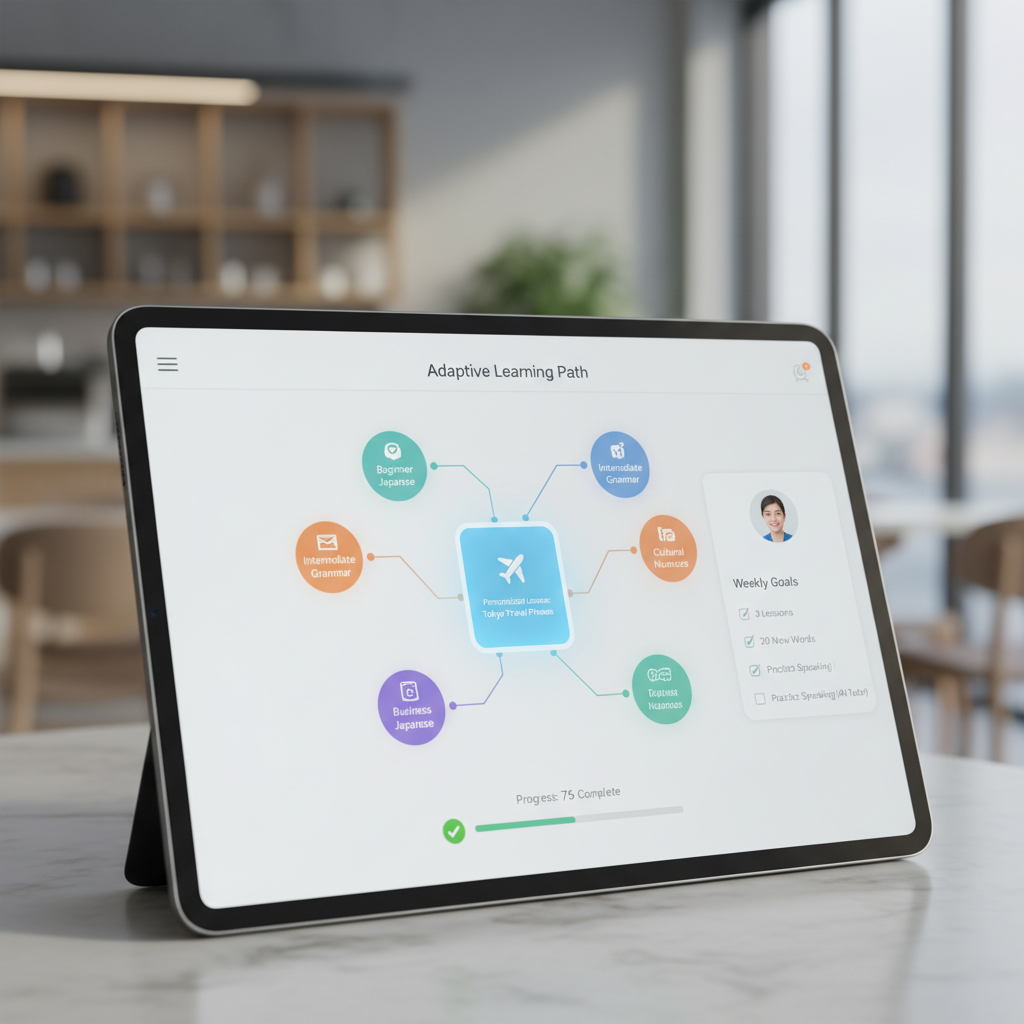
The journey to mastering a new language can often feel like navigating a dense, unfamiliar forest. Traditional learning methods, while foundational, often present a one-size-fits-all approach, leaving many learners feeling lost, frustrated, or simply disengaged. Imagine, however, a personal guide, attuned to your every learning nuance, adapting to your pace, strengths, and weaknesses, and leading you along a uniquely tailored path. This is precisely the promise and power of adaptive AI tutors in language learning.
In an era defined by technological innovation, artificial intelligence is revolutionizing nearly every facet of our lives, and language education is no exception. Gone are the days when AI was merely a fancy chatbot; today’s adaptive AI tutors are sophisticated, intelligent systems designed to replicate and even enhance the personalized attention once exclusive to one-on-one human instruction. They offer an unprecedented level of customization, making the complex process of language acquisition more efficient, enjoyable, and ultimately, more successful for learners worldwide.
This comprehensive blog post will delve deep into the world of adaptive AI tutors, exploring how they function, the cutting-edge technologies that power them, and the profound benefits they offer in creating truly personalized language pathways. We will examine their practical applications, address common questions, and look ahead to the future of language learning, providing you with a complete understanding of how these intelligent systems are transforming the way we learn, practice, and master new languages. Prepare to discover how AI can unlock your full linguistic potential, paving the way for fluency like never before.
What Exactly Are Adaptive AI Tutors?
At its core, an adaptive AI tutor for language learning is a software system that leverages artificial intelligence and machine learning algorithms to personalize the learning experience for each individual user. Unlike static language apps or textbooks, these tutors are dynamic, continuously analyzing a learner’s performance, preferences, and progress to adjust the curriculum, exercises, and feedback in real-time. They are designed to mimic the intuition and responsiveness of an excellent human tutor, but with the added advantages of infinite patience, 24/7 availability, and the ability to process vast amounts of data to identify precise learning patterns.
The ‘adaptive’ component is crucial. It means the system is not merely presenting pre-set lessons. Instead, it observes how you respond to vocabulary drills, grammar exercises, pronunciation tasks, and conversational prompts. If you consistently struggle with a particular verb conjugation, the AI will provide more focused practice on that area. If you excel in listening comprehension, it might accelerate your exposure to more complex audio content. This constant calibration ensures that you are always learning at the optimal edge of your abilities, challenged but not overwhelmed, ensuring efficient progress and sustained motivation.
Key technologies underpinning these systems include Natural Language Processing (NLP), which allows the AI to understand, interpret, and generate human language; Machine Learning (ML), which enables the system to learn from data and improve its performance over time; and Speech Recognition, which allows the AI to evaluate a learner’s pronunciation and provide immediate feedback. Together, these technologies create an immersive and highly responsive learning environment that caters to individual needs, making language acquisition more intuitive and effective.
Think of it as having a highly intelligent, dedicated personal trainer for your brain, specifically for language. This trainer doesn’t just hand you a generic workout plan; instead, it watches your form, measures your strength, notes your weaknesses, and then designs the perfect sequence of exercises to help you achieve your fitness goals. Adaptive AI tutors do precisely this for your language learning journey, creating a pathway that is uniquely yours.
The Limitations of Traditional Language Learning Approaches
Before we fully appreciate the transformative power of adaptive AI, it is important to acknowledge the inherent limitations often found in traditional language learning methods. For centuries, language education has relied on textbooks, classroom settings, and occasionally, one-on-one human tutoring. While these methods have produced many fluent speakers, they often come with significant drawbacks that can hinder progress for a large segment of learners.
- Lack of Personalization:
Classroom settings, by their very nature, must cater to a group. This means a teacher often has to teach to the middle, leaving advanced students bored and struggling students overwhelmed. The curriculum is typically fixed, offering little room for individual divergence based on specific strengths, weaknesses, or learning styles. A student who struggles with grammar but excels at vocabulary might still have to endure endless grammar drills that aren’t quite hitting the mark for their specific learning gap, or conversely, might not get enough vocabulary exposure if the class is focused on grammar.
- Infrequent and Delayed Feedback:
In a classroom, a teacher cannot provide immediate, continuous feedback to every student on every sentence they speak or write. Feedback is often delayed, coming days or even weeks after an assignment, by which time the learner may have already forgotten the specific context of their mistake. This delay significantly slows down the learning loop, making it harder to correct errors effectively and solidify correct usage. Human tutors can provide immediate feedback, but their availability is often limited.
- Limited Practice Opportunities:
Outside of structured lessons, finding consistent opportunities for authentic practice can be challenging. Many learners struggle to find native speakers for conversation, especially if they don’t live in an area with a diverse linguistic community. Textbooks offer exercises, but they lack the dynamic, interactive nature of real conversation. The result is often a disconnect between theoretical knowledge and practical application.
- Variable Quality and Cost of Human Tutors:
While one-on-one human tutoring is highly effective, its quality can vary greatly depending on the tutor’s experience, teaching methodology, and native proficiency. Furthermore, private tutoring is often prohibitively expensive for many, making consistent, long-term personalized instruction financially out of reach. This creates an accessibility barrier for quality language education.
- Motivational Challenges and Inflexibility:
Fixed schedules, rigid curricula, and the slow pace of group learning can lead to demotivation and burnout. Life commitments often make it difficult to adhere to strict class times, and missing lessons can quickly lead to falling behind. The lack of flexibility in traditional methods can make consistent learning a struggle for busy individuals.
These limitations highlight the critical need for a more dynamic, accessible, and personalized approach to language learning. This is precisely where adaptive AI tutors step in, offering solutions that directly address these longstanding challenges and pave the way for a more effective and engaging learning experience for everyone.
How Adaptive AI Tutors Personalize Learning
The core strength of adaptive AI tutors lies in their ability to create a truly individualized learning experience. This personalization is not a superficial feature but an intrinsic part of their design, driven by sophisticated algorithms and data analysis. Here’s a deeper look into the mechanisms through which AI personalizes language pathways:
- Initial Assessment and Baseline Profiling:
Most adaptive AI tutors begin with an initial assessment. This isn’t just a simple multiple-choice test; it often involves a combination of vocabulary recognition, grammar challenges, listening comprehension tasks, and even spoken prompts. The AI uses this data to establish a baseline proficiency level across various linguistic domains (reading, writing, listening, speaking, grammar, vocabulary) for the learner. It also attempts to identify the learner’s existing knowledge, common error patterns, and even their learning goals and preferred learning styles.
- Real-time Performance Tracking and Error Analysis:
As the learner progresses through exercises and interactions, the AI continuously tracks their performance. Every answer, every spoken word, every choice made provides valuable data. If a learner consistently mispronounces a particular phoneme, the AI notes it. If they struggle with differentiating between two similar grammatical structures, that becomes a data point. This detailed error analysis goes beyond simply marking an answer as right or wrong; it attempts to understand why the mistake was made. Is it a conceptual misunderstanding, a memory lapse, or a lack of exposure?
- Dynamic Curriculum Adjustment:
Based on the real-time performance tracking and error analysis, the AI dynamically adjusts the learning path. This could involve:
- Spaced Repetition Systems (SRS): AI meticulously schedules reviews of vocabulary and grammar points at optimal intervals, ensuring that information is moved from short-term to long-term memory just before it is forgotten. This is incredibly efficient for retention.
- Targeted Remediation: If a specific weakness is identified (e.g., subjunctive mood in Spanish), the AI will present more exercises focusing on that specific area until mastery is achieved, before moving on.
- Content Difficulty Scaling: Lessons and exercises automatically increase or decrease in difficulty based on the learner’s demonstrated proficiency, keeping them in the ‘zone of proximal development’ where learning is most effective.
- Diversified Exercise Types: If a learner shows higher engagement with certain types of activities (e.g., conversational practice over grammar drills), the AI can subtly prioritize those activity types while still ensuring comprehensive coverage.
- Personalized Feedback Generation:
Adaptive AI tutors provide instant and highly specific feedback. For pronunciation, they can highlight exact phonetic errors. For grammar, they can explain not just that an answer is wrong, but why it’s wrong and provide clear corrective examples. This immediate, targeted feedback loop is far more effective than delayed general corrections, allowing learners to understand and internalize corrections instantly.
- Goal-Oriented Pathways:
Many AI tutors allow learners to specify their goals (e.g., conversational fluency for travel, business proficiency, exam preparation). The AI then curates a learning path that emphasizes the skills and vocabulary most relevant to those goals, making the learning journey more purposeful and motivating.
- Adaptive Content Curation:
Beyond exercises, some advanced AI tutors can even curate relevant authentic content like news articles, videos, or podcasts based on the learner’s interests and current proficiency level. This makes learning more engaging and contextualized, as learners interact with real-world language materials that resonate with them.
Through these intricate mechanisms, adaptive AI tutors move beyond simple digital flashcards or translation tools, evolving into sophisticated, responsive learning partners. They transform the often-frustrating journey of language acquisition into a highly optimized, engaging, and uniquely personal adventure.
Key Features and Technologies Driving AI Language Learning
The sophistication of modern adaptive AI tutors is a testament to rapid advancements in several interconnected technological fields. These innovations are not just theoretical; they are integrated into features that directly impact a learner’s ability to acquire and master a new language. Understanding these underlying technologies provides insight into why AI-driven language learning is so effective.
Here are some of the pivotal features and the technologies that power them:
- Natural Language Processing (NLP) for Conversational AI:
NLP is the backbone of any AI that interacts with human language. For adaptive tutors, it enables the AI to:
- Understand input: Recognize words, parse sentences, and grasp the meaning and intent of a learner’s written or spoken responses.
- Generate coherent responses: Create grammatically correct and contextually appropriate dialogues, explanations, and questions.
- Perform sentiment analysis: Some advanced systems can even detect frustration or confusion in a learner’s written responses, prompting a change in learning approach.
This allows for dynamic, free-form conversations with chatbots, where learners can practice speaking and writing in a low-pressure environment, receiving instant feedback on grammar, vocabulary, and appropriateness.
- Speech Recognition and Synthesis for Pronunciation and Fluency:
Speech recognition technology allows the AI to “hear” and analyze a learner’s spoken language. It can:
- Evaluate pronunciation: Pinpoint specific phonemes that are mispronounced and provide visual or auditory cues for correction.
- Assess fluency: Analyze pace, rhythm, and intonation, offering suggestions for more natural speech.
- Provide instant feedback: Learners don’t have to wait for a human to correct them; they get immediate guidance.
Speech synthesis (text-to-speech) ensures that the AI can speak back to the learner with native-like pronunciation and natural intonation, providing excellent models for listening comprehension and spoken imitation. Recent advancements in neural text-to-speech have made AI voices virtually indistinguishable from humans, enhancing immersion.
- Machine Learning (ML) for Adaptive Algorithms:
ML is what makes the AI truly “adaptive.” It allows the system to:
- Learn from data: Analyze vast amounts of data from countless learners to identify common errors, effective teaching strategies, and optimal learning paths.
- Predict performance: Based on a learner’s history, predict areas where they might struggle next and proactively provide relevant content.
- Optimize content delivery: Continuously refine the timing and type of exercises, vocabulary reviews, and grammar explanations based on individual progress and retention patterns (e.g., Spaced Repetition Systems).
Reinforcement learning, a subset of ML, is particularly powerful here, allowing the AI to learn optimal teaching strategies through trial and error within the learning environment.
- Big Data Analytics for Insights and Personalization:
Every interaction a learner has with an AI tutor generates data. Big data analytics allows the AI to:
- Identify macro trends: Understand how learners generally acquire certain linguistic concepts, which can inform broader curriculum improvements.
- Create granular learner profiles: Build a highly detailed profile of each individual learner’s strengths, weaknesses, learning pace, and preferences.
- Recommend tailored content: Beyond exercises, suggest external resources (articles, videos, podcasts) that align with the learner’s interests and current proficiency.
- Gamification and Augmented Reality (AR):
While not strictly AI, these features often enhance AI-driven learning platforms:
- Gamification: Incorporating game-like elements such as points, leaderboards, streaks, and rewards to increase engagement and motivation. AI can personalize challenges and rewards based on learner performance.
- Augmented Reality: Some emerging platforms use AR to create immersive learning experiences, such as labeling real-world objects in the target language or simulating virtual interactions with AI characters in a virtual environment. This can make vocabulary acquisition and contextual understanding more intuitive and engaging.
These technologies, working in concert, transform a static language course into a dynamic, responsive, and infinitely patient personal tutor. They enable a level of customization and effectiveness that was previously unimaginable, fundamentally changing the landscape of language education. The continuous evolution of these fields promises even more sophisticated and seamless learning experiences in the years to come.
Benefits of Personalized Language Pathways
The shift towards personalized language pathways, powered by adaptive AI tutors, brings a multitude of profound benefits that address many of the limitations of traditional methods. These advantages contribute to a more efficient, engaging, and ultimately, more successful language acquisition journey for learners of all levels and backgrounds.
- Accelerated Learning and Greater Efficiency:
By focusing precisely on what a learner needs, when they need it, AI tutors eliminate wasted time on already mastered concepts or irrelevant material. Spaced repetition algorithms ensure optimal memory retention, while targeted practice addresses weaknesses directly. This hyper-efficient approach means learners can often achieve proficiency much faster than through conventional methods, maximizing their learning effort.
- Enhanced Motivation and Engagement:
Learning becomes significantly more engaging when it feels tailored and relevant. The constant progress, immediate positive reinforcement, and the feeling of being understood by the tutor dramatically boost learner motivation. Gamified elements further encourage consistent practice, turning the often-arduous task of language study into an enjoyable challenge. Learners are less likely to quit when they see tangible, personalized progress.
- Overcoming Fear of Failure and Judgment:
One of the biggest hurdles in language learning, especially speaking, is the fear of making mistakes and being judged. AI tutors provide a safe, non-judgmental space for practice. Learners can experiment with new vocabulary and grammatical structures without embarrassment, building confidence at their own pace. This psychological safety is invaluable for developing speaking fluency and reducing anxiety.
- Consistent, High-Quality, and Instant Feedback:
Unlike human teachers who might be busy with other students or have limited time, AI tutors can provide immediate, precise, and consistent feedback on every single interaction. Whether it’s correcting a pronunciation error mid-sentence, highlighting a grammatical mistake in real-time, or suggesting a better vocabulary choice, this instant feedback loop is critical for rapid learning and habit formation. Learners don’t carry their mistakes for long, reinforcing correct usage immediately.
- Flexibility and Accessibility:
Adaptive AI tutors are available 24/7, anywhere with an internet connection. This unparalleled flexibility means learners can study whenever and wherever suits their schedule – during a commute, over a lunch break, or late at night. This removes significant logistical barriers often associated with traditional classes or private human tutors, making quality language education accessible to a global audience regardless of their location or time constraints.
- Catering to Diverse Learning Styles:
AI systems can adapt not just to what a learner needs to learn, but also how they prefer to learn. If a learner is more visual, the AI might prioritize flashcards with images and visual explanations. If they are auditory, more listening exercises and spoken feedback might be provided. This multi-modal adaptability ensures that the content is presented in the most effective way for each individual, optimizing comprehension and retention across a spectrum of learners.
- Cost-Effectiveness:
While some premium AI language platforms have subscription fees, they are generally significantly more affordable than consistent one-on-one human tutoring. The ability to access personalized, high-quality instruction at a fraction of the cost democratizes access to effective language learning for a wider demographic.
In essence, personalized language pathways with adaptive AI tutors empower learners to take control of their educational journey, providing them with the tools, support, and flexibility needed to achieve fluency efficiently and enjoyably. They represent a monumental leap forward in making language mastery attainable for a broader global community.
Addressing Common Concerns: AI vs. Human Interaction
As adaptive AI tutors gain prominence, it’s natural for learners and educators alike to raise questions about their role in relation to human interaction. Can AI truly replace a human teacher? What about the nuances of culture, empathy, and spontaneous conversation that a human provides? These are valid concerns, and understanding the current capabilities and limitations of AI in this context is essential.
The Empathy and Nuance Gap
One of the most frequently cited concerns revolves around the perceived lack of empathy and nuanced understanding in AI. Human teachers can pick up on subtle cues – a slight hesitation, a look of confusion – and adapt their teaching style accordingly. They can offer encouragement that resonates on a deeper emotional level and share personal anecdotes that enrich cultural understanding. While AI is becoming increasingly sophisticated in detecting emotional states through text or voice analysis, it currently lacks genuine human empathy and the ability to spontaneously connect on a deeply personal level. Cultural nuances, humor, and idiomatic expressions are also areas where human intuition often surpasses AI’s rule-based or pattern-matching capabilities, especially in highly unstructured conversational settings.
The Role of Spontaneous, Unscripted Conversation
Another key area is the ability to engage in truly spontaneous, unscripted conversation. While AI chatbots are incredibly advanced and can maintain extended dialogues, they still operate within the parameters of their programming and training data. Real-life conversations are unpredictable, often involving shifts in topic, interruptions, sarcasm, and complex social dynamics. A human conversational partner provides an authentic environment for practicing these complex interpersonal skills, which are vital for true fluency and confidence in a new language. For high-stakes situations like job interviews or nuanced social gatherings, human practice remains invaluable.
The Teacher’s Evolving Role
Rather than replacing human teachers, adaptive AI tutors are more accurately seen as powerful tools that augment and transform the teacher’s role. Teachers can leverage AI to:
- Personalize instruction at scale: Offload repetitive drills and basic feedback to AI, freeing up time for more complex tasks.
- Focus on higher-order skills: Dedicate more time to teaching critical thinking, cultural understanding, advanced conversational strategies, and nuanced expression.
- Monitor progress and intervene strategically: Use AI-generated data to identify students who need extra help or advanced challenges, allowing for targeted human intervention.
- Facilitate group interaction: Design engaging activities and discussions that complement AI practice, fostering collaborative learning and real-world communication skills.
In this symbiotic relationship, AI handles the heavy lifting of personalized drills and immediate feedback, while human teachers focus on mentorship, cultural immersion, and fostering the interpersonal aspects of communication.
Hybrid Learning Models
The most effective language learning strategies often involve a hybrid model. This means learners use AI tutors for consistent, personalized practice, vocabulary acquisition, grammar reinforcement, and pronunciation drills, and then apply those skills in human-led conversation groups, one-on-one tutoring sessions, or immersion experiences. This blended approach offers the best of both worlds: the efficiency and personalization of AI combined with the authentic interaction and cultural depth of human engagement. The goal is not to choose between AI and humans, but to strategically integrate both for optimal outcomes.
In conclusion, while AI tutors offer unparalleled advantages in personalization, efficiency, and accessibility, they are not currently designed to fully replicate the human element of language learning. Instead, they serve as powerful complements, enabling human teachers to elevate their instruction and empowering learners with an unprecedented level of personalized support. The future of language learning likely involves a collaborative ecosystem where AI and human educators work in tandem to unlock every learner’s full potential.
The Future of Language Learning with AI
The landscape of language learning is in a perpetual state of evolution, and adaptive AI tutors are at the forefront of this transformation. Looking ahead, the capabilities of AI in language education are poised to expand even further, blurring the lines between digital instruction and real-world immersion, and making language mastery more accessible and natural than ever before.
Hyper-Realistic Conversational Partners
Advances in generative AI, particularly large language models (LLMs) like those powering sophisticated chatbots, mean that future AI tutors will be capable of even more nuanced, open-ended, and context-aware conversations. We can expect AI to engage in truly free-form discussions, debate complex topics, understand humor and sarcasm more effectively, and adapt its persona to match specific learning scenarios (e.g., a formal business meeting versus a casual chat with a friend). The goal is to make interactions with AI feel indistinguishable from talking with a highly proficient, infinitely patient human.
Proactive and Predictive Learning
Future AI tutors will move beyond merely reacting to learner input. Through more advanced machine learning and predictive analytics, they will be able to anticipate specific learning plateaus or common points of confusion even before the learner encounters them. This proactive intervention could involve pre-teaching concepts, providing tailored warm-up exercises, or offering motivational boosts at times when a learner is statistically more likely to disengage. The AI will not just guide you but will intelligently foresee and smooth out potential difficulties on your learning journey.
Seamless Integration with Augmented and Virtual Reality (AR/VR)
Imagine practicing your Spanish by walking through a virtual marketplace, interacting with AI-powered vendors who respond in real-time, or learning Japanese by navigating a virtual Tokyo street, with AI translating signs and explaining cultural etiquette. AR/VR combined with advanced AI will create fully immersive language learning environments. These simulated worlds will offer contextual learning that mirrors real-life situations, allowing learners to practice in a safe, controlled, yet highly authentic environment, bridging the gap between classroom learning and actual immersion.
Personalized Content Generation from the Web
Current AI tutors often rely on pre-programmed content or a curated selection. The future will see AI tutors capable of scouring the entire internet to generate personalized learning content on demand. Want to learn German vocabulary related to astrophysics? The AI could instantly create a lesson plan, provide relevant articles, generate custom exercises, and even synthesize audio explanations from reputable sources. This dynamic content generation will make learning incredibly relevant to individual interests and professional needs.
Emotionally Intelligent and Adaptive Tutoring
Beyond just analyzing linguistic performance, future AI tutors will become more adept at understanding a learner’s emotional state. Through facial recognition (with user consent), voice analysis, and text sentiment analysis, the AI could detect frustration, boredom, or heightened engagement. It could then adapt its approach – offering a break, switching to a more engaging activity, providing words of encouragement, or adjusting the difficulty – to optimize the emotional and cognitive state for learning. This level of emotional intelligence will create a truly empathetic digital learning companion.
Global Accessibility and Inclusivity
As AI technology becomes more widespread and affordable, the vision of high-quality, personalized language education becoming accessible to anyone, anywhere, regardless of socioeconomic status or geographical location, draws closer. AI tutors can cater to diverse learning needs, including those with learning disabilities, by adapting presentation styles and interaction methods, truly democratizing language learning on a global scale.
The future of language learning with AI is not about replacing human connection but about empowering individuals with unparalleled tools to achieve their linguistic aspirations. It envisions a world where language barriers are continually lowered, and the joy of mastering a new tongue is within everyone’s reach, guided by an intelligent, infinitely patient, and perfectly tailored digital companion.
Comparison Tables
Table 1: Traditional Classroom Learning vs. Adaptive AI Tutors
| Feature | Traditional Classroom Learning | Adaptive AI Tutors |
|---|---|---|
| Personalization | General curriculum for a group; limited individual adaptation. | Highly individualized learning path based on real-time performance, goals, and style. |
| Feedback | Delayed, often general, and sometimes infrequent. | Instant, highly specific, and continuous for every interaction (grammar, pronunciation, etc.). |
| Availability | Fixed schedules, limited hours, tied to a physical location or specific time zones. | 24/7 access, on-demand, available from anywhere with an internet connection. |
| Cost | Can be high (tuition fees, textbooks), especially for quality instruction. | Generally more affordable (subscription models), significantly less than consistent human tutoring. |
| Practice Type | Group exercises, limited individual speaking time, homework. | Interactive drills, conversational chatbots, role-playing, targeted error correction. |
| Emotional Support/Empathy | High; human teachers provide emotional connection, cultural insights, and motivation. | Limited; AI provides logical feedback and adaptive challenges, but lacks human empathy. |
| Pace | Set by the instructor or curriculum; often too fast or too slow for individuals. | Self-paced, dynamically adjusts difficulty and content to match learner’s progress. |
| Fear of Mistakes | Can be high in front of peers/teacher. | Low; safe, non-judgmental environment for unlimited practice and error correction. |
Table 2: Key AI Features in Language Learning and Their Benefits
| AI Feature | Description | Primary Benefit for Learner | Example Application |
|---|---|---|---|
| Natural Language Processing (NLP) | Enables AI to understand, interpret, and generate human language in text form. | Facilitates dynamic, context-aware written conversations and intelligent text-based feedback. | Chatbots for written practice, intelligent grammar checkers, contextual vocabulary explanations. |
| Speech Recognition | Allows AI to analyze and interpret spoken language input from the learner. | Provides precise, real-time pronunciation feedback and fluency assessment, reducing fear of speaking. | Phoneme-level error identification, intonation analysis, mock speaking exams. |
| Machine Learning (ML) Algorithms | Powers the adaptive nature, learning from user data to personalize content and difficulty. | Optimizes learning path, ensures efficient progress, and improves retention through spaced repetition. | Dynamic lesson sequencing, intelligent spaced repetition systems, predicting future learning needs. |
| Speech Synthesis (Text-to-Speech) | Generates human-like spoken language from text for audio output. | Offers native-like pronunciation models for listening practice and accurate auditory input. | AI speaking exercises, pronunciation models for new vocabulary, audio feedback. |
| Generative AI (e.g., LLMs) | Creates novel, contextually relevant content like dialogue, summaries, or explanations. | Enables open-ended conversations, generates unique practice scenarios, and provides detailed explanations. | Free-form conversational practice, generating diverse reading passages, answering complex questions. |
| Personalized Content Curation | Selects and recommends learning materials (articles, videos) based on learner interests and proficiency. | Keeps learning engaging and relevant to individual preferences, enhancing motivation. | Suggesting news articles in target language on topics the user likes, recommending level-appropriate podcasts. |
| Gamification Elements | Integrates game-like mechanics (points, levels, streaks) into the learning process. | Boosts engagement, motivation, and encourages consistent daily practice through reward systems. | Earning points for correct answers, daily streaks, unlocking new content levels. |
Practical Examples: Real-World Use Cases and Scenarios
To truly appreciate the power of adaptive AI tutors, let’s explore some real-world scenarios where they make a tangible difference in a learner’s journey. These examples illustrate how personalization caters to diverse needs and goals.
Scenario 1: The Business Professional Learning Mandarin for Market Expansion
Meet Alex: Alex is a marketing manager whose company is expanding into the Chinese market. He needs to learn Mandarin quickly, focusing on business vocabulary, negotiation phrases, and understanding cultural business etiquette. Traditional evening classes are too slow and generic, and private tutors are expensive and hard to schedule around his demanding travel itinerary.
- AI Solution: Alex signs up for an adaptive AI language platform.
- Personalized Pathway: The AI conducts an initial assessment, identifies his goal (business Mandarin), and immediately prioritizes modules on business greetings, market analysis terminology, and specific phrases for presentations. It provides role-playing scenarios where Alex practices negotiation with an AI chatbot, receiving instant feedback on his vocabulary choices and grammatical structures.
- Flexibility: He uses the tutor on his laptop during flights and on his phone during airport layovers. The AI dynamically adjusts lesson length based on his available time, offering quick 10-minute drills or longer immersive sessions.
- Pronunciation Mastery: Mandarin tones are notoriously difficult. The AI’s speech recognition technology gives him precise visual and auditory feedback on his tone accuracy, ensuring he pronounces key business terms correctly, avoiding potential misunderstandings.
- Outcome: Alex arrives in China feeling confident, able to conduct basic business conversations, understand cultural nuances in communication, and continue his learning journey with relevant, on-the-go practice.
Scenario 2: The University Student Preparing for an International Exam (IELTS/TOEFL)
Meet Sofia: Sofia is a university student aiming to study abroad, requiring a high score on the IELTS or TOEFL English proficiency exam. She struggles with the academic writing section and speaking under timed pressure. Her university English classes are general, and she can’t afford frequent specialized tutors.
- AI Solution: Sofia uses an AI tutor specifically designed for exam preparation.
- Targeted Practice: The AI identifies her weaknesses in academic vocabulary and essay structure. It generates essays prompts similar to the exam, analyzing her submissions for grammatical errors, lexical resource, coherence, and cohesion, providing detailed explanations and alternative phrasing.
- Timed Speaking Practice: For the speaking section, the AI simulates interview conditions, asking questions and recording her responses. It then evaluates her fluency, coherence, grammatical range, accuracy, and pronunciation, giving a score breakdown and actionable advice, much like an actual examiner.
- Spaced Repetition: Vocabulary critical for academic contexts is reinforced using intelligent spaced repetition, ensuring she remembers the terms when she needs them most.
- Outcome: Sofia enters her exam well-prepared, having practiced under exam-like conditions with personalized feedback, significantly improving her weak areas and boosting her confidence.
Scenario 3: The Traveler Wanting Conversational Skills for a Trip to Japan
Meet David: David is planning a trip to Japan next year and wants to be able to have basic conversations, order food, and navigate public transport. He finds traditional Japanese textbooks overwhelming and wants a more practical, conversational approach.
- AI Solution: David chooses an AI tutor that emphasizes conversational practice and practical phrases.
- Goal-Oriented Learning: He sets his goal to “conversational fluency for travel.” The AI prioritizes lessons on greetings, asking for directions, ordering food, shopping, and common polite phrases.
- Role-Playing & Scenario Simulation: The AI creates engaging role-playing scenarios: ordering sushi at a virtual restaurant, asking for directions at a train station, or checking into a hotel. David practices speaking, and the AI corrects his pronunciation and sentence structure instantly.
- Cultural Notes: Interspersed within the lessons are short cultural notes on Japanese etiquette, helping him understand when and how to use certain phrases appropriately.
- Outcome: David enjoys his trip, confident in his ability to communicate basic needs, engage with locals, and immerse himself more fully in the Japanese experience, all thanks to focused, practical AI-driven learning.
Scenario 4: The Learner with Specific Learning Preferences or Challenges
Meet Emily: Emily has dyslexia, which makes reading and traditional grammar explanations particularly challenging. She learns best through auditory and interactive methods.
- AI Solution: Emily finds an AI tutor that is highly adaptable to different learning styles.
- Auditory-First Approach: The AI detects her preference (or challenge) and provides options for auditory-first learning. Grammar rules are explained through audio lectures and interactive spoken examples rather than lengthy text. Text-based exercises can be read aloud by the AI.
- Visual Aids: Complex concepts are broken down with clear, simple infographics and animated explanations.
- Personalized Feedback: When she makes a spelling mistake, the AI doesn’t just mark it wrong but provides specific phonetic and visual cues to help her connect sounds to letters, rather than just forcing rote memorization of written words.
- Outcome: Emily makes consistent progress, something she struggled with using traditional methods. The AI’s adaptability allows her to circumvent her learning challenge by focusing on her strengths, making language learning an accessible and positive experience.
These examples demonstrate that adaptive AI tutors are not just a technological marvel but a highly practical and effective solution for a wide range of language learning needs, offering a truly personalized and empowering journey for every individual.
Frequently Asked Questions
Q: What is an adaptive AI tutor, and how is it different from a regular language app?
A: An adaptive AI tutor is a sophisticated software system that uses Artificial Intelligence and Machine Learning to dynamically tailor the learning experience to each individual user. Unlike a regular language app, which often follows a linear, pre-set curriculum, an adaptive AI tutor continuously analyzes your performance, strengths, weaknesses, learning style, and goals in real-time. It then adjusts the lessons, exercises, feedback, and content difficulty specifically for you. This means if you struggle with a particular grammar point, the AI will provide more focused practice, or if you excel in listening, it might advance you to more complex audio content. It’s like having a personalized, infinitely patient human tutor who constantly learns how you learn best.
Q: How does AI personalize the learning content for me?
A: AI personalizes content through several mechanisms:
- Initial Assessment: It starts with an evaluation to gauge your current proficiency and identify baseline strengths and weaknesses across various skills (reading, writing, speaking, listening, grammar, vocabulary).
- Real-time Performance Tracking: Every interaction, every answer, every mistake is data. The AI tracks your progress meticulously.
- Error Analysis: It doesn’t just mark answers wrong but attempts to understand the underlying reason for the mistake (e.g., conceptual misunderstanding, memory lapse).
- Dynamic Curriculum Adjustment: Based on performance, it uses algorithms like Spaced Repetition Systems (SRS) for optimal memory retention, targets weak areas with extra practice, and scales content difficulty up or down.
- Goal Alignment: If you set specific goals (e.g., business Spanish, travel French), the AI prioritizes relevant vocabulary and scenarios.
This continuous feedback loop ensures you’re always learning at the optimal edge of your ability.
Q: Can adaptive AI tutors truly replace human language teachers or tutors?
A: Currently, adaptive AI tutors are best seen as powerful complements, rather than replacements, for human teachers. While AI excels at personalized drills, immediate objective feedback, and consistent practice, human teachers provide invaluable elements like genuine empathy, nuanced cultural insights, spontaneous unscripted conversation, and the ability to understand complex social dynamics. The most effective approach is often a hybrid one, where AI handles the repetitive, individualized practice, freeing up human teachers to focus on higher-order skills, cultural immersion, and interpersonal communication.
Q: Is AI language learning effective for all skill levels, from beginners to advanced learners?
A: Yes, adaptive AI tutors are highly effective for all skill levels. For beginners, they provide structured foundations, clear pronunciation guidance, and a non-judgmental space to make initial mistakes. For intermediate learners, AI can identify specific grammatical gaps, expand vocabulary, and offer extensive practice to move towards fluency. Advanced learners benefit from nuanced error correction, exposure to complex authentic materials tailored to their interests, and opportunities for open-ended conversational practice on challenging topics, helping them refine their proficiency to near-native levels. The adaptive nature ensures the content is always appropriately challenging.
Q: What languages can AI tutors teach, and are less common languages supported?
A: The range of languages supported by AI tutors is constantly expanding. Major global languages like English, Spanish, French, German, Mandarin, and Japanese are almost universally supported and often have the most advanced AI features. However, many platforms are increasingly adding support for less common or endangered languages. The availability depends on the specific platform and the amount of data (text, audio) available for training the AI in that language. As AI technologies like Natural Language Processing and speech recognition become more robust and data-efficient, support for a wider array of languages will continue to grow.
Q: How do AI tutors handle pronunciation and accent training?
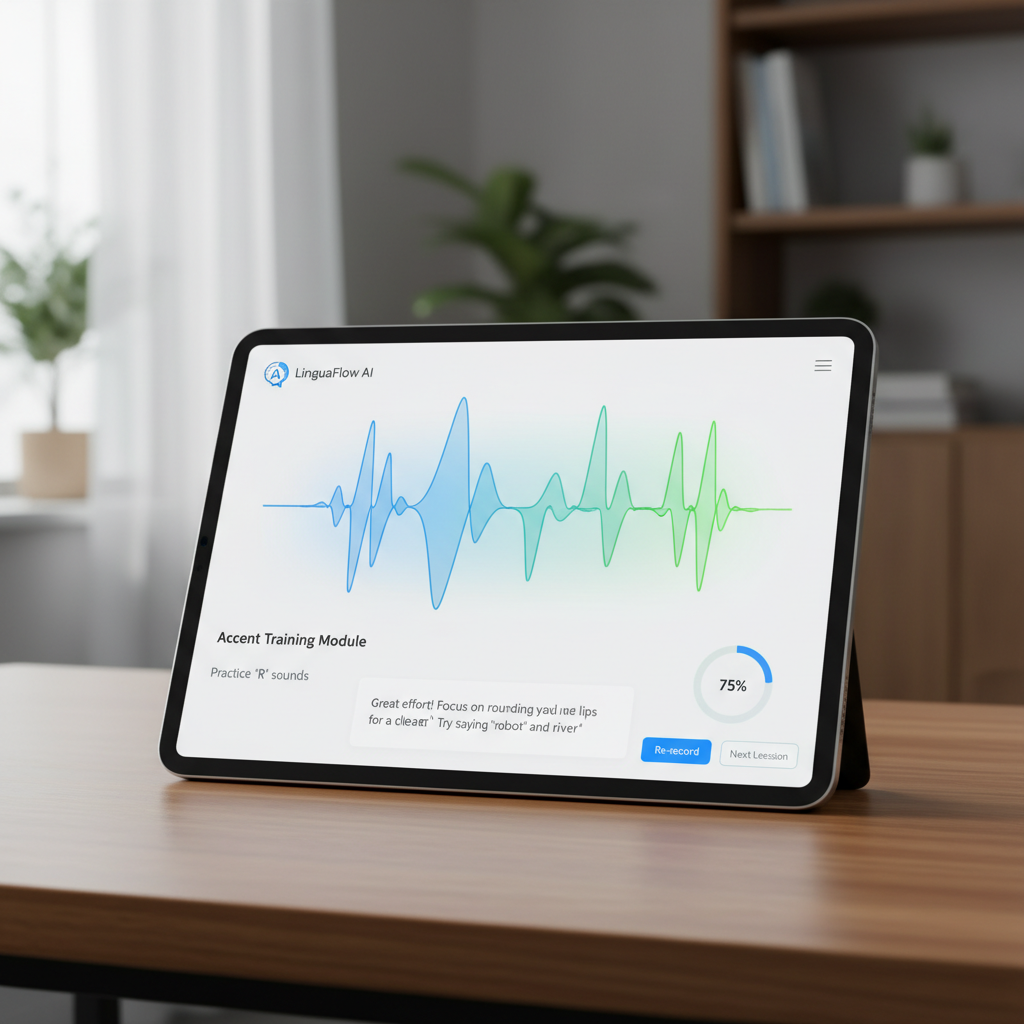
A: AI tutors excel in pronunciation and accent training through sophisticated speech recognition technology. When you speak, the AI analyzes your audio input, comparing it to native speaker models. It can pinpoint specific phonetic errors (e.g., mispronouncing a particular vowel or consonant sound), analyze intonation, stress patterns, and rhythm. Many platforms provide visual feedback (like waveforms or phonetic charts) alongside auditory cues, showing you exactly where you went wrong and how to correct it. This immediate, precise feedback is incredibly effective for improving pronunciation and reducing foreign accent.
Q: Do AI tutors also teach cultural nuances and context, or is it just about language rules?
A: While the primary focus is on linguistic rules and vocabulary, many advanced AI tutors integrate cultural nuances and context into their lessons. They might include:
- Explanations of polite forms, formal vs. informal speech, and social etiquette.
- Scenario-based role-playing that simulates culturally specific interactions (e.g., ordering food in a restaurant, greeting elders).
- Embedded notes or short articles explaining cultural traditions, holidays, or idioms.
- Curated content (news, videos, music) from the target culture to provide immersive context.
While AI might not replicate the deep, intuitive cultural understanding of a human, it can effectively provide structured exposure to and explanation of important cultural aspects.
Q: Are AI language tutors expensive, and what are the typical pricing models?
A: Compared to consistent private human tutoring, AI language tutors are generally much more affordable. Most platforms operate on a subscription model, offering monthly, quarterly, or annual plans. Prices can vary widely, from a few dollars a month for basic features to higher tiers for advanced AI capabilities, more languages, or premium content. Many also offer free trial periods or freemium models where basic features are free, and advanced features require a subscription. Some enterprise solutions might offer institutional pricing for schools or businesses. The cost-effectiveness comes from their scalability and 24/7 availability.
Q: How secure is my personal data and learning progress with AI tutors?
A: Reputable AI language tutor platforms prioritize data security and privacy. They typically adhere to strict data protection regulations (like GDPR or CCPA). Your learning progress, performance data, and personal information are usually encrypted and stored securely. Companies generally use this data anonymously and in aggregate to improve their algorithms and personalize your experience, not for unauthorized sharing or selling. It’s always advisable to review the privacy policy of any platform you use to understand how your data is collected, stored, and utilized.
Q: What are the technical requirements to use an adaptive AI language tutor?
A: Generally, the technical requirements are quite modest:
- Internet Connection: A stable internet connection is essential for real-time interaction, data processing, and content delivery.
- Device: Most platforms are accessible via web browsers on a computer (laptop or desktop) or through dedicated mobile apps for smartphones and tablets (iOS and Android).
- Microphone: For pronunciation practice and conversational exercises, a working microphone (built-in or external) is necessary.
- Speakers/Headphones: For listening exercises and audio feedback, speakers or headphones are required.
- Operating System: Compatible with common operating systems like Windows, macOS, Android, and iOS.
Advanced features like AR/VR might require specific hardware, but core AI tutoring is usually very accessible.
Key Takeaways
The emergence of adaptive AI tutors marks a pivotal moment in language education, offering a wealth of advantages that reshape the learning experience. Here are the key points to remember:
- Unparalleled Personalization: Adaptive AI tutors create unique learning pathways tailored to individual strengths, weaknesses, pace, and goals, moving beyond generic curricula.
- Real-time, Specific Feedback: Learners receive instant, precise corrections on grammar, vocabulary, and pronunciation, fostering rapid improvement and confidence.
- Enhanced Efficiency and Speed: Through mechanisms like spaced repetition and targeted practice, AI optimizes the learning process, leading to faster progress and better retention.
- High Accessibility and Flexibility: Available 24/7 from anywhere, AI tutors remove geographical and scheduling barriers, making quality language education accessible to a global audience.
- Safe and Non-Judgmental Practice: AI provides a comfortable environment for learners to make mistakes and experiment without fear of embarrassment, crucial for developing speaking fluency.
- Augmentation, Not Replacement, of Humans: AI tutors are powerful tools that complement human teachers, allowing educators to focus on higher-order skills, cultural context, and deeper interpersonal interaction.
- Powered by Cutting-Edge Technologies: NLP, Machine Learning, Speech Recognition, and Generative AI are the core technologies enabling these intelligent and responsive learning systems.
- Diverse Practical Applications: From business professionals and exam candidates to casual travelers and learners with specific needs, AI tutors offer tailored solutions for various objectives.
- Future-Proofing Language Learning: Ongoing advancements promise even more realistic conversational AI, proactive learning, and immersive AR/VR experiences, further revolutionizing how we learn languages.
- Cost-Effective Quality: Generally more affordable than consistent human tutoring, AI tutors democratize access to highly personalized and effective language instruction.
Conclusion
The journey to language mastery, once a daunting and often exclusive endeavor, is being profoundly transformed by the advent of adaptive AI tutors. These intelligent systems are not just digital textbooks; they are dynamic, responsive, and infinitely patient companions that craft a bespoke learning pathway for every individual. By leveraging the power of Natural Language Processing, Machine Learning, and Speech Recognition, they offer a level of personalization, immediate feedback, and flexibility that traditional methods simply cannot match.
We have explored how AI tutors move beyond the one-size-fits-all approach, identifying specific strengths and weaknesses, tailoring content difficulty, and employing sophisticated algorithms like spaced repetition to optimize retention. The benefits are clear: accelerated learning, sustained motivation, a safe space to practice without judgment, and unprecedented accessibility to high-quality instruction regardless of time zone or location.
While concerns about the human element are valid, the most promising future lies not in replacing human teachers but in a powerful synergy. AI handles the heavy lifting of personalized drills and immediate, objective feedback, freeing up human educators to focus on the invaluable aspects of cultural immersion, nuanced conversation, and genuine empathy. This blended learning model offers the best of both worlds, preparing learners not just with grammatical accuracy but with the confidence and cultural understanding to thrive in real-world interactions.
As AI technology continues its rapid evolution, we can anticipate even more sophisticated conversational partners, deeply immersive virtual environments, and proactive learning systems that anticipate our needs before we even realize them. The promise of adaptive AI tutors is a future where language barriers are continually lowered, where the joy and practical benefits of multilingualism are within everyone’s reach, and where the path to fluency is not a dense, unfamiliar forest, but a clear, personalized, and immensely rewarding journey. Embrace the future of language learning – embrace the power of adaptive AI.










































































Leave a Reply