
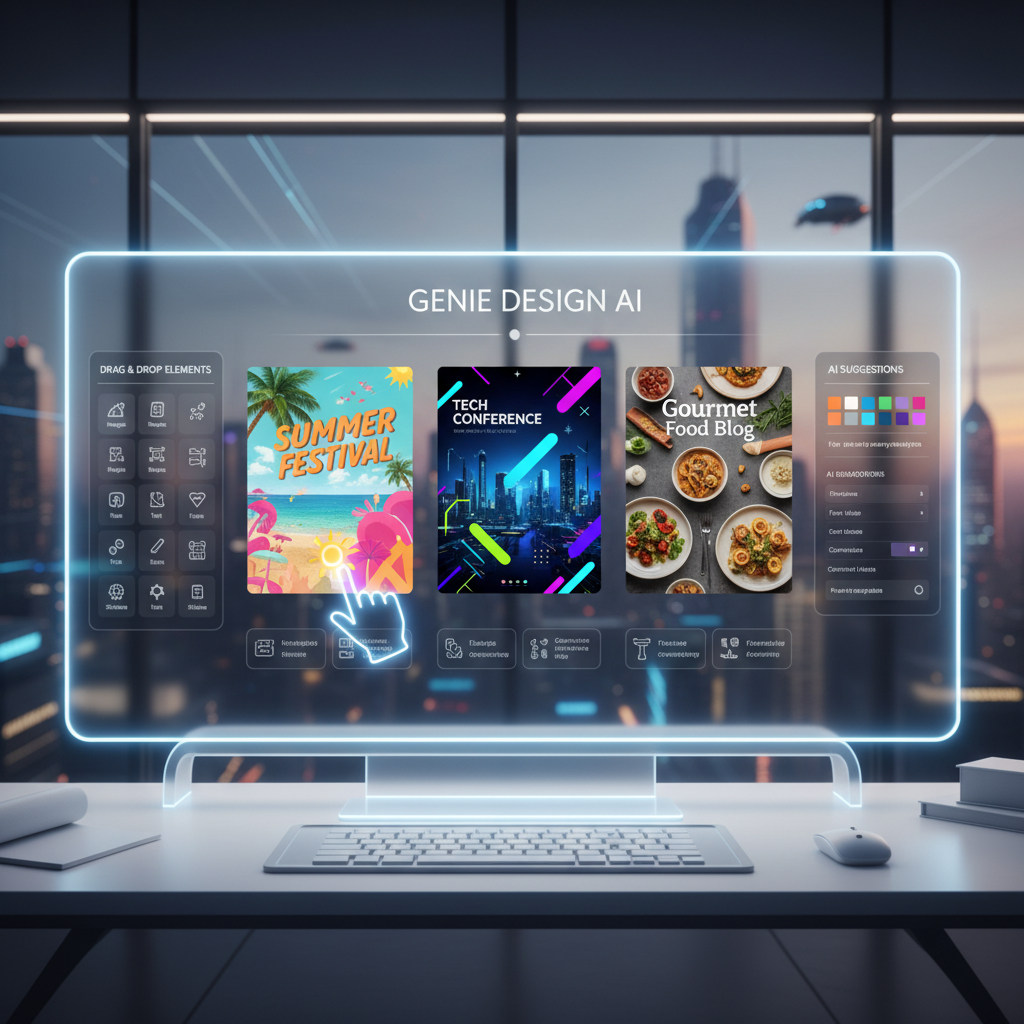
In today’s fast-paced digital landscape, social media is an undeniable powerhouse for brands, businesses, and individuals alike. To stand out amidst the endless scroll, compelling visual content is no longer a luxury, but a necessity. High-quality graphics capture attention, convey messages effectively, and drive engagement. However, creating these stunning visuals often demands significant time, skill, and resources, which can be a major hurdle for many. This is where Artificial Intelligence (AI) emerges as a revolutionary force, transforming the way we approach graphic design for social media. Welcome to the era of AI-powered tools for effortless social media content creation.
This comprehensive guide delves deep into the world of AI tools specifically designed to help you create breathtaking social graphics instantly. We’ll explore how these intelligent platforms are democratizing design, empowering everyone from seasoned marketers to small business owners to produce professional-grade visuals with unprecedented speed and ease. Get ready to unlock new levels of creativity and efficiency as we uncover the top AI tools, their features, practical applications, and best practices for leveraging them to their fullest potential.
The Visual Revolution: Why AI is a Game-Changer for Social Graphics
The demand for engaging visual content has never been higher. Platforms like Instagram, Pinterest, TikTok, Facebook, and LinkedIn thrive on compelling imagery and video. Users scroll through feeds at lightning speed, making the initial visual impression critical. Traditionally, meeting this demand required either a dedicated graphic designer, a significant investment in design software and training, or a lot of painstaking manual effort. AI has completely disrupted this paradigm.
AI’s impact on visual content creation is profound because it addresses core pain points:
- Time Constraints: AI dramatically reduces the time spent on design tasks, from concept generation to final adjustments.
- Skill Gaps: AI tools democratize design, enabling users without formal design training to create professional-looking graphics.
- Cost Efficiency: By reducing the need for expensive software licenses or outsourced design services, AI offers a more economical solution.
- Scalability: Businesses can produce a higher volume of diverse visual content to maintain a consistent presence across multiple platforms.
- Personalization: AI can assist in generating variations tailored to specific audiences or campaigns, enhancing relevance.
Imagine generating five distinct social media posts, each with a unique visual concept, in less time than it traditionally takes to design one. This is the promise of AI, and it’s already a reality for countless creators and businesses worldwide. From generating images from text prompts to resizing graphics for different platforms, AI streamlines every step of the visual creation process, making it more accessible and efficient than ever before.
Key Features to Look for in AI Graphic Design Tools
Not all AI tools are created equal. When selecting the best platform for your social media graphic needs, it’s crucial to understand the core AI-powered features that deliver the most value. Focusing on these capabilities will help you choose a tool that truly enhances your workflow and creative output.
- Text-to-Image Generation (Generative AI): This is perhaps the most captivating AI feature. By simply typing a descriptive text prompt (e.g., “A futuristic city skyline at sunset, cyberpunk aesthetic, highly detailed”), the AI can generate unique images from scratch. This capability is revolutionary for overcoming creative blocks and producing truly original visuals without needing stock photos.
- Magic Resize and Format Optimization: Social media platforms have varying image dimensions and aspect ratio requirements. An AI tool with magic resize can instantly adapt your graphic to fit perfectly on Instagram stories, Facebook banners, Pinterest pins, or LinkedIn posts, saving immense manual adjustment time.
- Background Removal and Replacement: Needing to isolate a subject from its background is a common design task. AI can accurately and quickly remove backgrounds with a single click, or even replace them with a new image or color, making product showcases or profile pictures effortless.
- Content-Aware Editing and Object Removal: Advanced AI can intelligently detect and remove unwanted objects or imperfections from an image, seamlessly filling the space based on surrounding pixels. Similarly, content-aware editing can make smart suggestions for enhancements.
- Template Generation and Smart Layouts: Some AI tools can generate entire design templates based on your input, brand guidelines, or desired theme. Smart layout features automatically arrange elements (text, images, shapes) for optimal aesthetics and readability.
- Brand Kit Integration: The ability to upload and store your brand’s logos, colors, fonts, and other assets allows AI to automatically apply your brand identity to new designs, ensuring consistency across all your social media content.
- AI-Powered Text Effects and Typography Suggestions: Beyond image generation, some AI tools can suggest font pairings, apply stylish text effects, or even generate text that matches the overall aesthetic of your graphic.
- Image Upscaling and Enhancement: AI can intelligently increase the resolution of low-quality images without pixelation, and enhance details, colors, and sharpness, breathing new life into older or suboptimal visuals.
- Image and Element Search with AI: Instead of traditional keyword searches, AI-powered search engines can understand the context of your request and find more relevant images, icons, or design elements within their extensive libraries.
By prioritizing tools that offer a strong combination of these features, you can significantly boost your productivity and the quality of your social media graphics.
Top AI Tools for Designing Stunning Social Graphics
The market for AI-powered design tools is rapidly expanding, with new innovations emerging constantly. Here’s a look at some of the leading platforms that are empowering users to create compelling social graphics with unprecedented ease and speed.
1. Canva with AI Features (Magic Design, Magic Edit, Text to Image)
Canva has long been a favorite for its user-friendly interface and extensive template library. In recent years, it has integrated powerful AI capabilities that have elevated its offering significantly. Canva’s AI features, often bundled under “Magic Studio,” allow users to:
- Magic Design: Upload an image or text prompt, and Magic Design will instantly generate a selection of customizable templates tailored to your input, complete with suggested layouts, fonts, and images.
- Magic Edit: Select an object in an image and use a text prompt to replace it with something else entirely, or simply remove unwanted elements with AI accuracy.
- Text to Image: Generate unique images from scratch by typing a description, perfect for creating bespoke visuals that don’t rely on stock photography.
- Magic Resize: Instantly transform your design into various social media formats with a single click.
- Brand Kit Application: Automatically apply your brand colors and fonts to AI-generated designs.
Canva’s strength lies in its comprehensive ecosystem, making it an all-in-one solution for both AI-powered creation and traditional design tasks. Its intuitive drag-and-drop interface ensures that even complete novices can produce stunning results.
2. Adobe Express (Generative Fill, Text to Template, Text to Image)
Adobe Express is Adobe’s answer to accessible creative content creation, now heavily infused with the power of Adobe Firefly, their suite of generative AI models. It brings professional-grade AI tools to a user-friendly platform, ideal for social media creators.
- Generative Fill: Similar to Magic Edit, this feature allows you to select areas of an image and use text prompts to add, remove, or replace content with incredible realism. Expand images beyond their original borders using Generative Expand.
- Text to Template: Describe the kind of social media post you need, and AI will generate fully editable templates with images, text, and layouts.
- Text to Image: Create unique, high-quality images from text prompts, leveraging Adobe’s extensive training data and focus on ethical AI.
- Video and Animation: While focusing on graphics, Adobe Express also offers AI-assisted video editing and animation features to diversify your social content.
Adobe Express is perfect for users who want the power of Adobe’s AI technology in a streamlined, easy-to-use package, offering a bridge between professional creative suites and everyday content creation.
3. Midjourney (Advanced Text-to-Image Generation)
Midjourney stands out for its exceptionally artistic and high-quality image generation capabilities. While it operates primarily through a Discord bot interface, its ability to translate complex text prompts into visually stunning and often surreal artwork is unparalleled.
- Artistic Output: Produces images with a distinct, often cinematic or painterly aesthetic, making it ideal for unique, eye-catching social graphics.
- Detailed Control (through prompting): While a learning curve exists for advanced prompting, users can achieve highly specific artistic styles, lighting, and compositions.
- Community-driven: Access to a vast community on Discord for inspiration and prompt sharing.
Midjourney is best suited for creators looking for truly unique, high-art visuals for their social media, often used for concept art, unique header images, or artistic content that demands a strong visual identity. It requires more effort to master prompts but the results can be truly breathtaking.
4. DALL-E 3 (Integrated with ChatGPT Plus/Teams)
Developed by OpenAI, DALL-E 3 builds upon its predecessors with improved prompt understanding and more cohesive image generation. Its integration with ChatGPT Plus/Teams is a game-changer, allowing users to converse with the AI to refine prompts and generate images.
- Natural Language Understanding: DALL-E 3 excels at interpreting nuanced and complex prompts, often generating exactly what the user intends without extensive prompt engineering.
- Iterative Creation: Through ChatGPT, you can ask the AI to modify or refine generated images (“make the sky bluer,” “add a cat,” “change the style to watercolor”) iteratively.
- High-Quality Output: Produces high-resolution images suitable for various social media needs.
DALL-E 3 is ideal for those who prefer an conversational approach to image generation and need high-quality, diverse visuals for their social media campaigns. The ability to refine ideas through dialogue with ChatGPT makes the creative process highly interactive and efficient.
5. Simplified AI (All-in-One Content Creation)
Simplified is an emerging platform aiming to be an all-in-one marketing solution, integrating AI writing, design, video editing, and social media publishing. Its design features leverage AI to streamline creation.
- AI Designer: Offers AI assistance for creating social media posts, ads, banners, and more, with smart template suggestions.
- AI Image Generation: Create images from text prompts directly within the platform.
- Content Calendar & Publishing: Design graphics and then schedule them directly to your social media channels from the same tool.
Simplified is excellent for small businesses and marketers who need a unified platform to manage multiple aspects of their content strategy, reducing the need to jump between different tools.
6. Lightricks Tools (e.g., Facetune, Videoleap with AI)
While known for mobile-first photo and video editing, Lightricks’ suite of apps (like Facetune and Videoleap) has increasingly integrated advanced AI features that are highly useful for social media visuals. These often focus on refining existing media rather than generating from scratch.
- AI Photo Enhancement: Automatic color correction, sharpening, and stylistic filters.
- Object/Person Retouching: AI-powered tools for enhancing portraits, smoothing skin, reshaping features, and removing blemishes.
- Background Editing: Advanced background blurring, removal, or replacement.
These tools are particularly strong for creators who rely heavily on photography and video shot on mobile devices and need quick, powerful AI enhancements before posting to social media.
7. Visme (AI Designer)
Visme is a versatile design platform that helps create presentations, infographics, documents, and social media graphics. Its AI features aim to speed up the design process for various visual content types.
- AI Design Generation: Input text or a concept, and Visme’s AI can suggest designs, layouts, and even generate entire slides or graphic compositions.
- Brand Kit Integration: Automatically applies brand assets for consistent design.
- Vast Asset Library: Combines AI with a rich library of stock photos, videos, icons, and illustrations.
Visme is ideal for businesses and educators who create a wide range of visual content beyond just social media, seeking AI assistance across their entire visual communication strategy.
How AI Tools Streamline Your Social Media Graphic Workflow
Integrating AI tools into your social media content creation workflow isn’t just about making things easier; it’s about making them smarter, faster, and more impactful. Here’s a look at how AI streamlines the entire process, from ideation to publication.
1. Rapid Ideation and Concept Generation
Creative blocks are a common challenge. AI tools can act as an instant brainstorming partner. Instead of staring at a blank canvas, you can input keywords related to your campaign or topic, and AI will generate multiple visual concepts or even complete graphic variations in seconds. This allows you to explore diverse artistic directions without significant time investment, fostering innovation and helping you quickly land on a winning idea.
2. Accelerated Design and Editing
The most significant time-saving benefit comes during the actual design phase. Tasks that once took minutes or even hours can now be completed in seconds:
- Image Generation: No more searching for the perfect stock photo; just describe it, and AI creates it.
- Background Removal: Isolate subjects instantly for product mockups or unique compositions.
- Object Manipulation: Effortlessly add, remove, or replace elements within an image without complex masking.
- Smart Layouts: AI can suggest optimal arrangements of text and visuals, ensuring professional presentation without manual tweaking.
- One-Click Enhancements: Improve lighting, color balance, and sharpness with automated AI adjustments.
This acceleration frees up valuable time, allowing creators to focus on strategy, messaging, and audience engagement rather than getting bogged down in intricate design details.
3. Ensured Brand Consistency
Maintaining a consistent brand identity across all social media platforms is crucial but often challenging, especially when multiple people are creating content. AI tools with brand kit features automatically apply your brand’s specific colors, fonts, and logos to every design. This ensures that every graphic, regardless of who created it, aligns perfectly with your brand guidelines, fostering a cohesive and professional online presence.
4. Effortless Repurposing and Optimization
A single compelling graphic often needs to be adapted for various platforms – Instagram Stories, Facebook feed, Twitter header, LinkedIn article thumbnail, and so on. Manually resizing and adjusting each element for different aspect ratios is tedious. AI’s “Magic Resize” features automate this process, instantly optimizing your graphic for any platform, ensuring it looks perfect everywhere without distortion or awkward cropping.
5. A/B Testing and Performance Analysis
While the AI tools themselves don’t typically perform A/B testing, their ability to rapidly generate numerous graphic variations empowers marketers to conduct more effective tests. You can quickly create five different versions of an ad graphic, deploy them, and analyze which one performs best. This data-driven approach allows you to continuously refine your visual strategy, leading to higher engagement and better campaign results.
6. Global Content Creation
For brands with an international audience, AI can even assist in language translation for text elements within graphics, or generate culturally relevant imagery based on regional prompts, making global content creation more accessible and efficient.
By leveraging these AI capabilities, social media managers and content creators can significantly boost their productivity, enhance the quality of their visuals, and maintain a vibrant, engaging presence across all digital channels.
Best Practices for Using AI in Social Graphics
While AI tools offer incredible advantages, maximizing their potential requires more than just knowing how to use them. Adopting best practices ensures you harness AI effectively, ethically, and to truly elevate your social media presence.
1. Master the Art of Prompt Engineering
The quality of AI-generated content directly correlates with the quality of your input. Learning to write clear, descriptive, and specific prompts is paramount. Experiment with keywords, styles, moods, and details. For example, instead of “a dog,” try “a golden retriever puppy playing in a field of sunflowers, dappled sunlight, photorealistic, joyous mood.” The more precise you are, the better the AI can understand and execute your vision.
2. Maintain Your Brand Identity
AI can generate diverse visuals, but it’s your responsibility to ensure they align with your brand. Utilize brand kit features where available. If using pure generative AI (like Midjourney or DALL-E), guide the AI with prompts that include your brand’s aesthetic (e.g., “minimalist design,” “vibrant colors,” “vintage style”). Always review AI-generated content to ensure it resonates with your brand voice and visual guidelines.
3. Use AI as an Assistant, Not a Replacement
Think of AI as a powerful co-pilot. It excels at generating ideas, automating repetitive tasks, and providing creative starting points. However, human oversight and artistic judgment remain irreplaceable. Always review, refine, and add your unique touch to AI-generated content. A final human edit ensures authenticity, nuance, and connection with your audience.
4. Iterate and Refine
Don’t settle for the first AI output. Generate multiple variations, experiment with different prompts, and use the AI’s editing capabilities to refine details. Most tools allow for iterative changes, so take advantage of them to perfect your visuals. This process is often faster than manual adjustments.
5. Understand AI Limitations and Biases
AI models are trained on vast datasets, which can sometimes contain biases. Be mindful that AI might generate stereotypes or less diverse imagery if not prompted carefully. Always critically evaluate the output for appropriateness, representation, and potential unintentional biases. Understand that AI might also struggle with highly complex or abstract concepts, requiring more human intervention.
6. Leverage AI for Inspiration and Exploration
When you’re experiencing a creative block, use AI to kickstart your imagination. Generate abstract concepts, explore different visual styles, or see how various elements interact. This exploratory phase can lead to unexpected and innovative design solutions that you might not have considered otherwise.
7. Stay Updated with Tool Features
AI technology evolves rapidly. Developers constantly release new features and improvements. Regularly explore the latest updates of your chosen AI tools to ensure you’re utilizing their full capabilities. What wasn’t possible last month might be a one-click solution today.
8. Prioritize Quality Over Quantity
While AI enables rapid content generation, the goal should always be to produce high-quality, engaging visuals. Don’t flood your feeds with generic AI-generated content. Instead, use AI to create unique, polished, and impactful graphics that truly resonate with your audience.
Overcoming Challenges and Ethical Considerations in AI Visual Content
While AI tools for social graphics offer immense benefits, it’s essential to acknowledge and address the challenges and ethical considerations that accompany this powerful technology. Navigating these aspects responsibly ensures sustainable and positive use of AI in creative fields.
Challenges:
- The “Uncanny Valley” Effect: Sometimes, AI-generated images, especially of people, can look almost real but possess subtle imperfections that make them feel unsettling or “off.” This can reduce credibility or engagement. Human review and refinement are crucial to mitigate this.
- Lack of Genuine Human Emotion/Nuance: While AI can depict emotions, it often lacks the authentic nuance and depth that a human artist or photographer can convey. For highly emotive campaigns, a fully AI-generated image might fall short.
- Intellectual Property and Copyright Concerns: The legal landscape around AI-generated content and copyright is still evolving. Questions arise about who owns the copyright to an AI-generated image, especially if it’s derived from training data that includes copyrighted works. Users should be aware of the terms of service of each AI tool and current legal interpretations.
- Generic Output if Not Prompted Well: Without precise and creative prompts, AI can produce generic or uninspired visuals, defeating the purpose of creating stunning graphics. Over-reliance without human input can lead to homogenized content.
- Bias in Training Data: AI models are trained on massive datasets. If these datasets contain biases (e.g., underrepresentation of certain demographics, stereotypes), the AI-generated output can inadvertently reflect and perpetuate these biases.
- Learning Curve for Advanced Features: While many tools are user-friendly, mastering advanced prompt engineering or specific AI features can still require time and practice to achieve desired results.
Ethical Considerations:
- Authenticity and Transparency: Should AI-generated content be disclosed as such? For certain contexts, like news or personal branding, transparency about AI assistance can build trust. The debate over “deepfakes” highlights the importance of distinguishing real from synthetically generated media.
- Job Displacement and Creative Labor: There are legitimate concerns about AI potentially displacing human graphic designers. While AI often augments rather than replaces, the industry needs to adapt, focusing on new roles that leverage AI for higher-level creative direction and strategic thinking.
- Data Privacy and Consent: When using AI tools that process user-uploaded images (e.g., for background removal or editing), understanding how your data is used and stored is important.
- Misinformation and Manipulation: The ability to create highly realistic fake images quickly raises concerns about the potential for spreading misinformation or manipulating public perception. Users of AI tools have a responsibility to use them ethically and for positive purposes.
- Fair Use and Attribution: If AI models are trained on vast amounts of internet data, including copyrighted works, questions of fair use and proper attribution for the original artists become critical. Some AI tools are addressing this by allowing artists to opt-out of training data or by developing attribution features.
Addressing these challenges and adhering to ethical guidelines is paramount for the responsible and successful integration of AI into social media content creation. It requires a combination of technological safeguards, legal frameworks, and user education.
The Future of AI in Visual Content Creation
The journey of AI in visual content creation has only just begun. What we see today is merely the tip of the iceberg, and the future promises even more revolutionary advancements that will redefine how we interact with and create visual media.
1. Hyper-Personalization and Dynamic Content
Imagine AI generating social graphics that are not only tailored to a specific audience segment but dynamically adapt to individual user preferences in real-time. Future AI could analyze user engagement patterns and adjust visual elements, color schemes, or even text overlays on the fly, delivering hyper-personalized content that maximizes relevance and impact for each viewer.
2. Multimodal AI Integration
The distinction between text, image, video, and audio AI will blur further. Future AI systems will likely operate more seamlessly across modalities. You could narrate a concept, and AI will not only generate an image but also write accompanying text, select background music, and even animate elements, producing a complete social media video post from a single, complex input.
3. Advanced Creative Direction and Style Transfer
AI will become even more adept at understanding and replicating specific artistic styles. You could provide a few example images of a desired aesthetic, and the AI will apply that unique style consistently across all new generated visuals, ensuring brand cohesion at an unprecedented level. AI could also act as a full-fledged creative director, offering strategic visual recommendations based on performance data and industry trends.
4. Interactive and Immersive Experiences
As virtual reality (VR) and augmented reality (AR) gain traction, AI will play a crucial role in creating immersive social graphics. Think of interactive 3D elements generated by AI that users can manipulate within an AR filter, or dynamic VR social spaces crafted instantly from text prompts. This will move social graphics beyond static images into fully interactive experiences.
5. Ethical AI and Transparent Sourcing
As the technology matures, there will be a stronger push for ethical AI development. This includes AI models trained on ethically sourced, licensed datasets, clear attribution mechanisms for AI-generated elements, and built-in tools for detecting and mitigating biases. Transparency regarding AI authorship will become more common, fostering trust between creators and their audiences.
6. AI-Powered Collaboration Tools
Teams will see enhanced collaboration through AI. Multiple users could contribute text prompts or design ideas, and the AI would intelligently merge and refine them into cohesive visuals, facilitating remote creative workflows and democratic design processes.
The future of AI in visual content creation is not about replacing human creativity but augmenting it, allowing creators to push boundaries, experiment with audacious ideas, and focus on the strategic and emotional aspects of their storytelling. The tools will become more intuitive, the outputs more sophisticated, and the possibilities for stunning social graphics truly limitless.
Comparison Tables
Table 1: Feature Comparison of Top AI Graphic Design Tools
| Feature | Canva (with AI) | Adobe Express (with AI) | Midjourney | DALL-E 3 (via ChatGPT) | Simplified AI |
|---|---|---|---|---|---|
| Text-to-Image Generation | Excellent | Excellent | Exceptional (Artistic) | Excellent (Prompt Understanding) | Good |
| Background Removal/Replacement | Yes | Yes | No (Generates from scratch) | No (Generates from scratch) | Yes |
| Magic Resize/Format Optimization | Yes | Yes | No (Fixed output or manual scaling) | No (Fixed output or manual scaling) | Yes |
| Content-Aware Editing/Generative Fill | Magic Edit | Generative Fill/Expand | No (Generates from scratch) | Limited (Iterative edits via chat) | Limited |
| Template Generation/Smart Layouts | Magic Design | Text to Template | No | No | Yes (AI Designer) |
| Brand Kit Integration | Yes | Yes | No | No | Yes |
| Ease of Use | Very High | High | Moderate (Discord interface) | High (Conversational) | High |
| Target User | All users, marketers | Designers, marketers | Artists, unique concepts | General users, quick iterations | Marketers, small businesses |
| Price Model (as of recent info) | Freemium, Paid Subscriptions | Freemium, Paid Subscriptions | Paid Subscriptions | ChatGPT Plus/Teams Subscription | Freemium, Paid Subscriptions |
Table 2: Traditional vs. AI-Powered Graphic Creation Workflow Comparison
| Aspect | Traditional Graphic Creation | AI-Powered Graphic Creation | Key Difference |
|---|---|---|---|
| Ideation & Concept | Brainstorming, sketching, mood boards; time-consuming, potential creative blocks. | Instant generation of multiple concepts from text prompts; rapid exploration. | Speed and breadth of initial concept generation. |
| Image Sourcing | Stock photo search, custom photography, drawing from scratch; licensing concerns. | Text-to-Image generation; unique, bespoke visuals on demand; fewer licensing worries. | Custom image creation vs. pre-existing asset search. |
| Design & Layout | Manual placement of elements, careful alignment, font pairing expertise required. | AI-suggested layouts, smart arrangement of elements, one-click template application. | Automation of design principles and element arrangement. |
| Editing & Refinement | Manual masking, pixel-by-pixel adjustments, layer management; labor-intensive. | AI background removal, object replacement/removal, content-aware fills; fast and precise. | Efficiency and accuracy of complex edits. |
| Adaptation for Platforms | Manual resizing and cropping for each social media platform; repetitive. | Magic Resize/auto-optimization for multiple platforms with a single click. | Automated platform optimization. |
| Skill Level Required | Requires significant design software proficiency and artistic skill. | Accessible to novices; focus shifts to clear communication with AI (prompting). | Democratization of professional-level design. |
| Time Investment | High to very high, depending on complexity. | Low to moderate, significantly faster for most tasks. | Drastic reduction in time-to-completion. |
| Cost Implications | Expensive software, potential designer fees, stock photo subscriptions. | Subscription to AI tools (often freemium), potentially lower overall cost. | Generally more cost-effective for high volume. |
Practical Examples and Real-World Use Cases
The theoretical benefits of AI in social graphics come to life through practical applications. Here are several real-world scenarios illustrating how businesses and individuals are leveraging these tools:
Case Study 1: The Small Business Owner with Limited Budget
Scenario: Maria owns a boutique online bakery. She needs to promote her new seasonal cupcakes on Instagram and Facebook but lacks design skills and a budget for a graphic designer. She used to rely on generic stock photos or simple text-only posts.
AI Solution: Maria subscribes to a freemium AI design tool like Canva with AI. She uses the “Text to Image” feature to generate unique images of “whimsical autumn cupcakes with sparkling frosting” in various styles. Then, she uses “Magic Design” to automatically create Instagram stories and Facebook feed posts from these images, adding her bakery’s logo (from her saved brand kit) and a call to action. She uses “Magic Resize” to adapt the same graphic for a Pinterest pin.
Outcome: Maria now produces professional, on-brand, and visually stunning graphics in minutes, significantly increasing her post engagement and freeing up time to focus on baking and customer service. Her social media presence looks polished and inviting, attracting more customers.
Case Study 2: The Social Media Marketing Agency
Scenario: A marketing agency manages social media for a dozen diverse clients, requiring a high volume of unique and branded content daily. Maintaining creative freshness and meeting tight deadlines is a constant challenge for their design team.
AI Solution: The agency integrates Adobe Express with AI and occasionally uses Midjourney for highly artistic concepts. For a client launching a new tech gadget, they use Adobe Express’s “Generative Fill” to place the product into various futuristic environments described by prompts. For another client in the fashion industry, they use Midjourney to generate abstract, runway-inspired backdrops for product shots. They leverage the AI’s background removal features to quickly create product cutouts and then use AI-powered template generation to assemble campaign-specific ads for multiple platforms.
Outcome: The agency dramatically reduces design time per client, allowing their designers to focus on higher-level creative strategy and client communication. They can produce more diverse content, conduct rapid A/B testing with multiple visual variations, and deliver results faster, enhancing client satisfaction and their agency’s efficiency.
Case Study 3: The Content Creator/Blogger
Scenario: John runs a popular blog about sustainable living. He needs eye-catching thumbnails for his YouTube videos, engaging visuals for his blog posts, and shareable infographics for Twitter, but he’s not a designer.
AI Solution: John uses DALL-E 3 via ChatGPT to generate unique hero images for his blog posts. He converses with ChatGPT, refining prompts like, “Generate an image of hands gently holding a small plant with a solar panel in the background, warm natural light, illustrative style” until he gets the perfect visual. He then uploads these images to Simplified AI, where he uses the AI designer to create infographics with bullet points summarizing his blog content, and applies brand colors automatically. He then uses the platform’s scheduling feature to post across his channels.
Outcome: John no longer struggles with finding relevant stock photos or creating complex visuals. He produces unique, high-quality graphics that reflect his blog’s niche, increasing click-through rates on his videos and making his blog content more shareable and visually appealing. His content stands out in a crowded online space.
Case Study 4: The Educator or Trainer
Scenario: Sarah, a corporate trainer, needs to create engaging presentation slides and supplementary social media graphics to promote her upcoming workshops on leadership skills. She needs visuals that are professional, clear, and inspiring.
AI Solution: Sarah uses Visme’s AI designer. She inputs her workshop title and key themes, and the AI suggests several slide layouts and graphic concepts. She then uses Visme’s AI image generation to create visuals of “diverse professionals collaborating in a modern office setting” or “a person climbing a metaphorical ladder of success.” For social media promotion, she leverages Visme’s templates and AI content suggestions to quickly create LinkedIn event banners and Instagram posts featuring inspiring quotes on leadership, all branded with her company’s colors and fonts.
Outcome: Sarah efficiently produces high-quality, branded visual content that enhances her workshop materials and social media outreach. The AI helps her convey complex leadership concepts through clear and professional graphics, attracting more participants to her workshops.
These examples highlight the versatility and power of AI tools across different industries and user types. They demonstrate that AI is not just a futuristic concept but a practical, accessible solution for anyone looking to elevate their social media graphics instantly.
Frequently Asked Questions About AI Tools for Social Graphics
Q: What exactly is generative AI in the context of social graphics?
A: Generative AI refers to artificial intelligence models capable of creating new, original content, such as images, text, or audio, from scratch based on learned patterns and user input. In social graphics, generative AI (like Text-to-Image models) takes a textual description (a “prompt”) and synthesizes a unique visual image that matches the description. This means you don’t need to find an existing image; the AI creates one for you, offering unparalleled creative freedom and uniqueness for your social media visuals.
Q: Do I need design experience to use AI graphic tools effectively?
A: Absolutely not! One of the biggest advantages of AI graphic tools is their ability to democratize design. Many platforms are built with user-friendly interfaces, often featuring drag-and-drop functionality and intuitive controls. While some advanced features or prompt engineering for specific generative AI tools might have a slight learning curve, the core functions are accessible to beginners. AI acts as your design assistant, handling the complex tasks so you can focus on your message and vision, regardless of your prior design experience.
Q: Are AI-generated graphics truly original, or do they copy existing images?
A: Most modern generative AI models are designed to create original images by synthesizing new pixel combinations based on the vast datasets they were trained on. They don’t typically copy existing images directly. However, the output is influenced by the styles and elements present in their training data. While the generated image itself is unique, ethical considerations around the original artists whose work was used for training are still being debated. Reputable AI tools often focus on creating novel compositions, minimizing direct replication.
Q: Can AI tools help with brand consistency across different platforms?
A: Yes, very effectively! Many AI graphic tools offer “Brand Kit” features where you can upload your brand’s logos, specific color palettes (hex codes), and preferred fonts. Once configured, the AI can automatically apply these elements to any new graphic it generates or assists in designing. Additionally, AI-powered “Magic Resize” functions ensure that your branded content is perfectly formatted for various social media platforms (Instagram, Facebook, Twitter, LinkedIn) without compromising your brand identity, ensuring a consistent visual presence everywhere.
Q: What are the best practices for writing effective prompts for AI image generation?
A: Effective prompt engineering is key. Here are some tips: be specific and descriptive (e.g., “A cozy café interior with warm lighting, vintage books, and a steaming cup of coffee on a wooden table, hyperrealistic”), include artistic styles (e.g., “oil painting,” “digital art,” “minimalist vector”), specify colors and moods (e.g., “vibrant,” “serene,” “futuristic neon”), mention composition (e.g., “close-up,” “wide shot,” “from above”), and use negative prompts (e.g., “no blurry background”) if available to guide the AI on what to avoid. Experimentation is crucial to understand what works best for a particular AI model.
Q: Are there any ethical concerns I should be aware of when using AI for social graphics?
A: Yes, several. Key concerns include intellectual property rights (who owns the AI-generated content and whether it infringed on copyrighted training data), potential biases in AI outputs (reflecting biases in the training data, leading to stereotypes), and the authenticity of AI-generated content (especially “deepfakes” or misleading visuals). It’s important to use AI tools responsibly, verify the factual accuracy of any AI-generated text in your graphics, and consider disclosing AI assistance where transparency is valued, especially in journalistic or sensitive contexts. Always check the terms of service of the AI tool regarding commercial use and copyright.
Q: How do AI tools handle different image aspect ratios for various social media platforms?
A: AI tools excel at this through features often called “Magic Resize” or “Smart Resize.” You design your graphic once, typically in a standard or ideal format. Then, with a single click, the AI automatically resizes and re-composes the elements within the graphic to fit the specific aspect ratios required by different platforms (e.g., 1:1 for Instagram feed, 9:16 for Instagram Stories/Reels, 16:9 for YouTube thumbnails, 4:5 for Facebook feed). It intelligently adjusts text, images, and other elements to maintain readability and visual integrity across all formats, saving immense manual effort.
Q: Can AI tools integrate with my social media scheduling platforms?
A: Many comprehensive AI content creation platforms, like Simplified AI, are designed as all-in-one solutions that include direct integration with social media scheduling and publishing. You can design your graphic within the tool and then schedule it to be posted across your various social media accounts directly from that same platform. For tools that specialize solely in design (e.g., Midjourney), you’d typically download the generated graphic and then upload it to your preferred separate scheduling tool (like Buffer, Hootsuite, or Later).
Q: What’s the difference between AI graphic tools and traditional graphic design software like Photoshop?
A: The core difference lies in the level of automation and required skill. Traditional software like Photoshop offers unparalleled control and precision, requiring significant manual effort, advanced technical skills, and a deep understanding of design principles. AI graphic tools, on the other hand, prioritize speed and ease of use, automating complex tasks like image generation, background removal, and layout suggestions. They act more as intelligent assistants, allowing users to achieve professional results with minimal effort and no prior design expertise. While Photoshop allows you to create anything if you know how, AI tools focus on creating common visual assets quickly and efficiently.
Q: Will AI eventually replace human graphic designers?
A: The prevailing consensus is that AI will augment, rather than entirely replace, human graphic designers. AI excels at automating repetitive tasks, generating initial concepts, and handling bulk content creation. This frees up human designers to focus on higher-level creative strategy, conceptualization, emotional storytelling, client communication, and adding the nuanced human touch that AI currently lacks. Designers who learn to effectively leverage AI tools will likely become more efficient, innovative, and valuable, evolving their roles to be more strategic and less labor-intensive.
Key Takeaways for Effortless Social Media Graphic Creation with AI
- AI Democratizes Design: AI tools empower individuals and businesses of all skill levels to create stunning, professional-grade social media graphics without extensive design training or budget.
- Unprecedented Speed and Efficiency: AI drastically reduces the time required for ideation, image generation, editing, and formatting, allowing for rapid content creation and deployment.
- Diverse AI Features: Look for tools offering Text-to-Image generation, Magic Resize, background removal, content-aware editing, and smart template generation to maximize utility.
- Top Tools Offer Varied Strengths: Canva and Adobe Express are excellent all-rounders, Midjourney and DALL-E excel in pure image generation, and platforms like Simplified AI offer integrated marketing solutions.
- Prompt Engineering is Crucial: The better your prompts, the better the AI output. Invest time in learning to communicate your vision clearly to the AI.
- Maintain Brand Consistency: Leverage brand kit features in AI tools to ensure all AI-generated content aligns perfectly with your brand’s visual identity.
- Human Oversight is Essential: AI is an assistant; always review and refine AI-generated content to inject human creativity, authenticity, and address potential biases.
- Address Ethical Considerations: Be mindful of intellectual property, potential biases, and the need for transparency when using AI for commercial or sensitive content.
- Future is Bright: Expect even more sophisticated, personalized, and multimodal AI capabilities that will further transform visual content creation and interaction.
Conclusion: The Future is Visually Stunning and AI-Powered
The journey through the landscape of AI tools for social media graphics reveals a future where stunning visual content is no longer the exclusive domain of professional designers. Artificial Intelligence has emerged as a transformative force, democratizing access to powerful creative capabilities and fundamentally reshaping the way we approach visual communication on social platforms. From generating unique images from simple text prompts to intelligently resizing graphics for every conceivable platform, AI tools are streamlining workflows, sparking creativity, and empowering creators to achieve more with less.
As we’ve explored, platforms like Canva, Adobe Express, Midjourney, and DALL-E are leading this revolution, each offering unique strengths that cater to different needs and artistic ambitions. Whether you’re a small business owner looking to elevate your brand’s online presence, a marketing agency seeking to scale content production, or an individual creator aiming for visual distinction, there’s an AI tool perfectly suited to your goals. The practical examples underscore the real-world impact of these technologies, demonstrating how they translate into tangible benefits: increased engagement, enhanced brand consistency, and significant time and cost savings.
However, with great power comes great responsibility. Navigating the ethical considerations, mastering prompt engineering, and maintaining a critical human eye over AI-generated content are paramount to truly harnessing its potential. AI is not a replacement for human creativity but a powerful augmentation, an intelligent co-pilot that frees us from mundane tasks and allows us to focus on the strategic, emotional, and truly innovative aspects of design.
Embrace these AI tools not as a shortcut to mediocrity, but as a gateway to unprecedented creative expression and efficiency. The ability to design stunning social graphics instantly is no longer a futuristic fantasy; it’s a present-day reality, waiting for you to unlock its full potential. Step into this AI-powered future and transform your social media presence from mundane to magnificent, one effortlessly created visual at a time.

































































Leave a Reply