


Topic: AI-Powered Tools for Effortless Social Media Content Creation
Introduction: The Dawn of Effortless Social Media Creation
In the vibrant, ever-evolving landscape of social media, content creators, marketers, and businesses face an unrelenting demand for high-quality, engaging, and consistent content. The sheer volume of platforms, the algorithms constantly seeking fresh material, and the ceaseless clamor for audience attention can be overwhelming. What was once a creative endeavor for many has, for some, become a treadmill of endless production, leading to burnout and a struggle to keep pace. But what if there was a way to alleviate this pressure, to amplify creativity, and to streamline the entire content creation workflow? Enter Artificial Intelligence, a transformative force that is not just changing the game, but redefining the rules of engagement for social media creators.
The integration of AI into social media strategies marks a pivotal moment. No longer relegated to the realm of science fiction, AI tools are now powerful, accessible, and indispensable allies for anyone looking to make an impact online. From generating compelling captions and innovative ideas to crafting stunning visuals and optimizing posting schedules, AI promises to automate the mundane, ignite inspiration, and free up precious time. This comprehensive guide will take a deep dive into the essential AI tools available today, exploring how they empower creators to achieve unprecedented levels of efficiency, creativity, and audience connection. We will uncover the nuances of these technologies, provide practical insights, and equip you with the knowledge to harness AI for truly effortless social media content creation. Prepare to transform your social media presence from a labor-intensive task into an intelligent, data-driven, and creatively boundless journey.
Understanding the AI Revolution in Social Media
The digital age has always been about rapid evolution, but the advent of sophisticated Artificial Intelligence has ushered in a new era of possibilities, particularly within the social media sphere. For years, social media management involved manual content creation, scheduling, and reactive engagement. Today, AI is rewriting that script, moving beyond simple automation to intelligent assistance that can understand context, predict trends, and even generate entirely new content. This isn’t just about saving time; it’s about augmenting human capabilities, allowing creators to focus on strategy and genuine connection while AI handles the heavy lifting.
At its core, the AI revolution in social media is driven by advancements in machine learning, natural language processing (NLP), computer vision, and predictive analytics. These technologies enable AI tools to perform a myriad of complex tasks that were once exclusively human domains. For instance, NLP allows AI to understand and generate human-like text, powering tools that write social media captions, blog posts, or ad copy. Computer vision enables AI to analyze images and videos, helping with everything from content moderation to generating new visual assets. Predictive analytics empower AI to forecast audience engagement, optimal posting times, and trending topics, transforming guesswork into data-driven decisions.
The impact of this revolution is multifaceted. For individual creators and small businesses, AI levels the playing field, providing access to capabilities once reserved for large agencies with significant resources. It democratizes sophisticated content creation and strategic planning. For larger organizations, AI offers unparalleled scalability, allowing them to manage vast amounts of content across multiple platforms with greater efficiency and consistency. Furthermore, AI fosters innovation by providing creative prompts, generating variations of content, and uncovering insights that might be missed by manual analysis. However, understanding this revolution also means recognizing the importance of human oversight and ethical considerations, ensuring that AI remains a tool for enhancement rather than a replacement for authentic human creativity and interaction.
AI for Content Idea Generation and Curation
One of the most persistent challenges for any social media creator is the constant need for fresh, engaging content ideas. The well of creativity can sometimes run dry, leading to content blocks or repetitive posts. This is where AI truly shines, acting as an inexhaustible brainstorming partner and a meticulous curator of relevant information. AI-powered tools can analyze vast amounts of data, including trending topics, competitor content, audience demographics, and past performance metrics, to pinpoint what resonates best with your target audience. This capability moves beyond simple keyword suggestions, delving into semantic relationships and contextual relevance to unearth truly innovative content angles.
Consider tools like ChatGPT or Google Gemini, which, when prompted effectively, can generate a plethora of content ideas based on specific keywords, industries, or target audiences. You could ask for “10 viral TikTok ideas for a sustainable fashion brand” or “5 blog post topics about remote work productivity” and receive detailed, creative suggestions. These platforms can even help refine existing ideas, offering different angles, tones, or formats. For example, if you have a general idea about “healthy breakfast recipes,” AI can suggest specific angles like “budget-friendly healthy breakfasts,” “quick protein-packed breakfasts for busy mornings,” or “plant-based breakfast bowls for glowing skin.”
Beyond idea generation, AI excels at content curation. Staying updated with industry news, competitor activities, and relevant articles is crucial but time-consuming. AI-driven content curation platforms can monitor specific topics, keywords, and sources across the web, aggregating the most pertinent and popular content into a personalized feed. Tools such as Curata or even advanced features within social media management platforms like Hootsuite can identify trending articles, news, and discussions relevant to your niche. This not only saves hours of manual searching but also ensures that the content you share is timely, authoritative, and adds value to your audience. By leveraging AI for both idea generation and curation, creators can maintain a consistently fresh and insightful content pipeline, keeping their audience engaged and their brand relevant.
AI-Powered Writing Assistants for Captions and Blog Posts
Writing engaging copy is a cornerstone of effective social media. From punchy captions that grab attention in a crowded feed to long-form blog posts that establish authority and drive organic traffic, text-based content requires skill, creativity, and often, a significant time investment. AI-powered writing assistants have emerged as game-changers in this arena, democratizing high-quality copywriting and making it accessible to creators of all skill levels. These tools leverage sophisticated Natural Language Processing (NLP) models to understand context, generate human-like text, and even adapt to specific brand voices or tones.
For social media captions, brevity and impact are key. AI tools like Jasper.ai, Copy.ai, or Writesonic can generate multiple caption options based on a few keywords or a short description of your visual content. Imagine needing to craft captions for a new product launch, a behind-the-scenes peek, or an engaging question for your audience. Instead of staring at a blank screen, you can input your core message, desired tone (e.g., witty, informative, inspiring), and target audience, and within seconds, receive several polished options. These tools can even incorporate relevant emojis, hashtags, and calls to action, saving immense time and ensuring consistency in your brand’s voice.
When it comes to longer-form content like blog posts, articles, or even scripts for video content, AI writing assistants provide even more extensive support. They can help outline entire articles, generate introductory and concluding paragraphs, expand on specific points, and even rewrite sentences for clarity and conciseness. For example, if you have a research paper or a complex topic, an AI writing tool can help simplify the language for a general audience, making your content more accessible and engaging. Some advanced platforms integrate SEO features, suggesting keywords to include for better search engine visibility, optimizing your content not just for readability but also for discoverability. While these tools are incredibly powerful, it’s important to remember they are assistants. Human oversight is crucial for ensuring accuracy, originality, and maintaining the authentic voice and nuanced perspective that only a human creator can provide. They are best utilized as accelerators, allowing you to produce high-quality written content at a speed and scale previously unimaginable.
AI Tools for Visual Content Creation (Images, Videos)
In the visually-driven world of social media, captivating images and videos are paramount to capturing audience attention. However, not every creator is a professional graphic designer or videographer, and commissioning such work can be costly and time-consuming. Generative AI has revolutionized visual content creation, putting powerful design capabilities into the hands of anyone. These tools can transform text prompts into stunning images, generate unique illustrations, and even assist in video editing and animation, all with remarkable speed and precision.
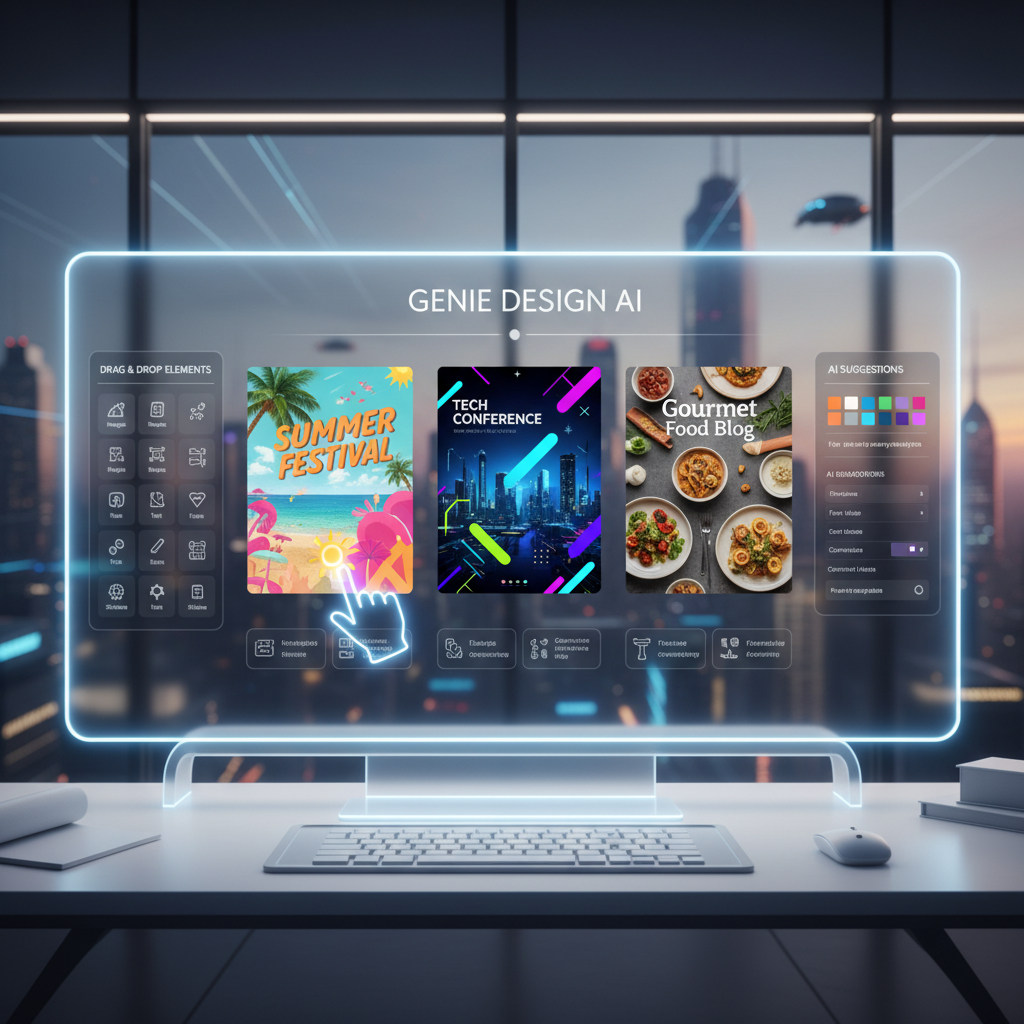
For image generation, platforms like Midjourney, DALL-E 2, and Adobe Firefly have opened up a new frontier. By simply typing a descriptive text prompt – for instance, “a futuristic city at sunset with flying cars, in the style of cyberpunk art” – these AIs can generate a multitude of unique images in various styles. This capability is invaluable for creating custom social media graphics, blog post headers, ad creatives, or even unique profile pictures without needing any drawing or graphic design skills. You can experiment with different aesthetics, moods, and compositions until you achieve the perfect visual to complement your message. Furthermore, some tools offer in-painting and out-painting features, allowing you to add or extend elements within an existing image, further enhancing creative possibilities.
Video content, increasingly dominant across platforms like TikTok, Instagram Reels, and YouTube Shorts, also benefits immensely from AI. Tools like Synthesia can generate realistic AI avatars speaking from text scripts, complete with various languages and accents, making professional-looking explainer videos or social media updates remarkably easy. For more traditional video editing, AI features in platforms like InVideo or Pictory AI can automate tasks such as generating captions, cutting footage to music, identifying key moments, and even suggesting stock footage based on your script. These tools significantly reduce the manual effort involved in post-production, allowing creators to produce high-quality video content at a much faster pace. While human creativity remains essential for conceptualization and direction, AI empowers creators to bring their visual ideas to life with unprecedented ease and efficiency, making visual content creation accessible and scalable for everyone.
AI for Scheduling, Publishing, and Analytics
Beyond content creation, the operational aspects of social media management – scheduling posts, publishing across multiple platforms, and analyzing performance – can be incredibly time-consuming. Fortunately, AI is making significant inroads here, transforming these laborious tasks into streamlined, data-driven processes. By intelligently automating these functions, creators can ensure consistent brand presence, reach their audience at optimal times, and gain actionable insights without constant manual intervention.
AI-powered scheduling tools are a prime example. While traditional schedulers allow you to set specific times, AI takes this a step further. Platforms like Sprout Social, Buffer, or Later integrate AI algorithms that analyze your audience’s online behavior, engagement patterns, and even competitor activity to suggest the absolute best times to publish your content. This optimization ensures your posts have the highest chance of visibility and interaction, maximizing your reach and impact. Imagine having a personalized assistant constantly monitoring your audience’s habits and advising you on the perfect moment to drop your next viral post. Furthermore, these tools often offer cross-platform publishing capabilities, allowing you to manage all your social media channels from a single dashboard, further enhancing efficiency.
The true power of AI in this domain comes to life in analytics. Understanding what content performs well, who your audience is, and how they engage is critical for refining your social media strategy. AI-driven analytics tools go far beyond basic metrics like likes and shares. They can identify sentiment in comments, pinpoint emerging trends, segment your audience based on behavior, and even predict future performance. For example, AI can analyze thousands of comments to gauge overall sentiment about a product or campaign, providing nuanced feedback that would be impossible to quantify manually. It can also identify specific keywords or phrases used by your audience, informing future content strategy. Tools like Brandwatch or social media management platforms’ built-in AI analytics (Hootsuite Insights, AgoraPulse) can generate comprehensive reports, highlight critical insights, and even recommend adjustments to your content strategy, posting frequency, or audience targeting. This intelligent analysis transforms raw data into strategic intelligence, empowering creators to make informed decisions that drive growth and engagement, truly making social media management effortless and effective.
AI for Engagement and Community Management
Social media isn’t just about broadcasting content; it’s fundamentally about building communities and fostering engagement. Responding to comments, direct messages, and managing community discussions can be incredibly time-consuming, especially as your audience grows. AI is now stepping in to assist with these vital engagement and community management tasks, ensuring that your audience feels heard and valued, while freeing up your time for more strategic interactions.
Chatbots and AI-powered messaging tools are at the forefront of this revolution. Platforms like ManyChat or MobileMonkey can be integrated into Facebook Messenger, Instagram DMs, or even website chat to handle a wide range of inquiries automatically. From answering frequently asked questions about products or services to providing instant customer support, these chatbots can maintain 24/7 responsiveness. They can guide users through FAQs, provide links to relevant content, collect leads, or even direct complex queries to a human team member. This immediate response capability significantly enhances user experience, reduces response times, and ensures that potential customers or engaged followers receive the information they need without delay.
Beyond direct messaging, AI can also assist in managing broader community engagement. Sentiment analysis, often a feature within advanced social listening tools, allows AI to monitor comments and mentions across social media platforms, identifying posts that express positive, negative, or neutral sentiment. This helps creators quickly spot potential PR crises, identify brand advocates, or understand general public opinion about their content or products. Some AI tools can even flag comments that require immediate human attention, such as those indicating a complaint, a technical issue, or a high-priority question. Furthermore, AI can help identify influential members of your community, suggesting opportunities for collaboration or recognition.
It’s crucial to remember that while AI can automate many aspects of engagement, the human touch remains irreplaceable. AI should augment, not replace, genuine human interaction. Utilizing AI for initial screening, basic query resolution, and sentiment monitoring allows creators to dedicate their valuable time to personalized responses, fostering deeper connections, and engaging in meaningful conversations that build loyalty and trust. The goal is to create a seamless experience where AI handles the repetitive tasks, allowing human creativity and empathy to shine in the most impactful interactions.
The Ethical Implications and Best Practices of AI Use
While the benefits of AI in social media content creation are immense, it’s equally important to approach its use with a strong understanding of the ethical implications and to adhere to best practices. As AI becomes more sophisticated, issues surrounding originality, bias, transparency, and data privacy come to the forefront. Ignoring these aspects can lead to reputational damage, legal issues, and a loss of audience trust.
One primary concern is the **originality and authenticity** of AI-generated content. While AI can create compelling text and visuals, the output is often derived from patterns in existing data. This raises questions about true originality and potential plagiarism, even if unintentional. Best practice dictates that AI-generated content should always be reviewed, edited, and fact-checked by a human. It should serve as a starting point or an assistant, not as a complete replacement for human creativity and unique perspective. Disclosing the use of AI, particularly for highly creative or journalistic content, can also foster transparency and trust with your audience.
**Bias** is another significant ethical consideration. AI models are trained on vast datasets, and if these datasets contain inherent biases (e.g., racial, gender, cultural), the AI’s output will reflect and potentially amplify these biases. This can lead to content that is exclusionary, stereotypical, or even offensive. Creators must be vigilant in reviewing AI-generated content for unintended biases and actively work to diversify their inputs and prompts to encourage more inclusive outputs. Testing different prompts and being aware of the sources an AI model typically draws from can help mitigate this risk.
**Data privacy and security** are paramount. Many AI tools require access to your content, audience data, or even personal information to function effectively. It is crucial to understand how these tools use and store your data. Always choose reputable AI platforms that clearly outline their data privacy policies and comply with relevant regulations like GDPR or CCPA. Be cautious about sharing sensitive information with unverified AI tools. Ensure that any AI platform you use has robust security measures in place to protect your and your audience’s data.
Finally, **transparency and accountability** are essential. Audiences are becoming increasingly aware of AI’s capabilities. Misrepresenting AI-generated content as purely human creation can erode trust. While you don’t need to brand every social media caption as “AI-assisted,” it’s advisable to be transparent when AI plays a significant role in content that might otherwise be perceived as entirely human creative work (e.g., an AI-generated image used in an ad campaign). Ultimately, the goal is to use AI responsibly and ethically, enhancing your creative process without compromising integrity or trust. Human judgment, critical thinking, and ethical consideration should always be the final gatekeepers for any content published with AI assistance.
Integrating AI Tools into Your Workflow: A Step-by-Step Guide
Successfully integrating AI tools into your existing social media workflow can seem daunting, but with a structured approach, it becomes an intuitive process that unlocks immense efficiency and creative potential. The key is to start small, experiment, and gradually scale your AI adoption. Here’s a step-by-step guide to effectively weave AI into your daily social media operations.
- Audit Your Current Workflow: Identify Pain Points.
Before jumping into tools, take stock of your current social media creation process. Where do you spend the most time? What tasks are repetitive or least enjoyable? Is it brainstorming ideas, writing captions, designing graphics, scheduling posts, or analyzing performance? Pinpointing these pain points will help you identify which AI tools will provide the most immediate and significant value. For example, if caption writing is a struggle, an AI writing assistant is a priority.
- Research and Select the Right Tools.
Based on your identified pain points, research AI tools that specifically address those needs. Don’t try to adopt every tool at once. Focus on one or two high-impact areas first. Look for tools that are user-friendly, offer a good balance of features for their price, and integrate well with your existing platforms (e.g., social media management software). Read reviews, watch tutorials, and consider free trials to test their effectiveness for your specific needs.
- Start with Small, Defined Tasks.
Avoid overwhelming yourself by trying to automate entire complex processes from day one. Begin by using AI for discrete, manageable tasks. For example, use an AI writing assistant to generate 5 variations of a caption, or use an AI image generator for one specific social media graphic. This allows you to learn the tool’s capabilities, understand its quirks, and build confidence without disrupting your entire workflow.
- Learn Prompt Engineering and Refinement.
The quality of AI output is heavily dependent on the quality of your input (prompts). Invest time in learning how to write effective prompts. Be specific, provide context, define the desired tone, format, and target audience. Experiment with different wording and iteratively refine your prompts based on the AI’s responses. The better you get at prompting, the more valuable the AI’s output will be.
- Review, Edit, and Humanize AI Output.
Never publish AI-generated content without human review. AI is an assistant, not a replacement. Always check for accuracy, relevance, brand voice consistency, and originality. Edit for nuance, add your unique perspective, and inject personality. This step is crucial for maintaining authenticity and ensuring the content truly resonates with your audience and reflects your brand.
- Integrate Gradually and Systematically.
Once you’re comfortable with one AI tool and its integration, consider adding another. Perhaps you’ve mastered AI for captions; now explore AI for visual content. Systematically integrate tools, focusing on how they complement each other and enhance different stages of your content creation pipeline. For instance, an AI idea generator could feed into an AI writing assistant, which then feeds into an AI image generator.
- Measure Impact and Adapt.
Continuously monitor the performance of your AI-assisted content. Are engagement rates improving? Is your content production faster? Are you saving time? Use your social media analytics (perhaps AI-enhanced ones!) to track key metrics. Based on these insights, adapt your use of AI tools. You might discover some tools are more effective than others for certain tasks, or that you need to adjust your approach to prompting or editing.
By following these steps, creators can smoothly integrate AI into their social media workflow, transforming tedious tasks into opportunities for innovation and achieving a truly effortless content creation process.
Comparison Tables: AI Tools at a Glance
Table 1: AI Tool Categories and Key Benefits for Social Media Creators
| AI Tool Category | Examples of Tools | Primary Benefit for Creators | Typical Use Case | Complexity Level |
|---|---|---|---|---|
| Content Idea Generation | ChatGPT, Google Gemini, Jasper.ai | Overcome creative blocks, identify trending topics, niche-specific ideas | Brainstorming viral post concepts, generating blog post outlines | Low to Medium |
| AI Writing Assistants | Jasper.ai, Copy.ai, Writesonic, Rytr | Drafting captions, ad copy, blog posts, scripts; consistent tone of voice | Creating engaging Instagram captions, writing YouTube video descriptions | Medium |
| AI Image Generation | Midjourney, DALL-E 2, Adobe Firefly, Canva AI | Creating unique visuals from text, enhancing existing images | Designing custom social media graphics, illustrating blog posts | Medium to High (depending on prompt complexity) |
| AI Video Creation/Editing | Synthesia, Pictory AI, InVideo (AI features) | Automating video production, generating realistic avatars, scripting | Producing explainer videos, converting blog posts to video, adding captions | Medium to High |
| Scheduling & Publishing (AI-enhanced) | Sprout Social, Buffer, Later (AI features) | Optimal posting times, cross-platform management, audience insights | Maximizing post reach, managing multiple social profiles efficiently | Low to Medium |
| Analytics & Performance Tracking (AI-enhanced) | Brandwatch, Hootsuite Insights, Sprout Social (AI reports) | Deep audience insights, trend prediction, sentiment analysis, strategy recommendations | Understanding campaign performance, identifying audience sentiment shifts | Medium to High |
| Engagement & Community Management | ManyChat, MobileMonkey (Chatbots), Mention (AI alerts) | Automated responses, lead qualification, sentiment monitoring, query routing | Handling FAQs in DMs, proactive crisis management, identifying influencers | Medium |
Table 2: Feature Comparison of Popular AI Writing Tools for Social Media
| Feature / Tool | Jasper.ai | Copy.ai | Writesonic | ChatGPT Plus (GPT-4) |
|---|---|---|---|---|
| Primary Focus | Long-form content & marketing copy | Short-form marketing copy & social media | Diverse content types, SEO & ads | General purpose conversational AI, content generation |
| Content Types | Blog posts, social captions, ads, emails, scripts | Social media captions, ad copy, sales copy, product descriptions | Articles, blog posts, ads, product descriptions, landing pages | Any text-based content, brainstorming, coding, summarization |
| Brand Voice / Tone Customization | Strong, with Brand Voice feature & recipes | Good, multiple tone options & custom brand voices | Moderate, with predefined tones & custom options | Excellent, highly responsive to prompt instructions |
| SEO Integration | Yes, with Surfer SEO integration | Limited direct integration, more for copy | Yes, built-in SEO checker & optimization | Can generate SEO-friendly content based on prompts |
| Multi-language Support | Yes, over 25 languages | Yes, over 25 languages | Yes, over 25 languages | Excellent, native multi-language capability |
| Team Collaboration Features | Yes | Yes | Yes | Limited in standard UI, third-party integrations possible |
| Pricing Model | Subscription-based (tiered by word count) | Subscription-based (tiered by word count) | Subscription-based (tiered by word count) | Subscription for Plus, API usage-based |
| Best For | Businesses & marketers needing scale for various content | Quick, creative marketing copy & social media snippets | Full content generation, from blogs to ads with SEO focus | General content generation, complex problem solving, research |
Practical Examples: Real-World Use Cases
Understanding the theory behind AI tools is one thing; seeing them in action provides a clearer picture of their transformative potential. Here are a few practical examples demonstrating how different social media creators can leverage AI to achieve their goals.
Case Study 1: The Solo Entrepreneur Boosting Engagement with AI
Creator: Sarah, who runs an online store selling handmade eco-friendly jewelry.
Challenge: Sarah struggles to consistently post engaging content on Instagram and Facebook. She spends hours brainstorming ideas, writing captions, and creating simple graphics, leaving little time for order fulfillment and customer service. Her engagement is stagnant.
AI Solution:
- Content Idea Generation: Sarah uses ChatGPT (or Google Gemini) to generate a list of “15 eco-friendly jewelry marketing ideas for Instagram” and “10 questions to ask my audience about sustainable fashion.”
- Caption Writing: For each new product photo, she feeds a brief description into Copy.ai, specifying a “playful, inspiring” tone. Copy.ai generates 3-5 caption options, complete with relevant emojis and hashtags, which Sarah then tweaks slightly to add her personal touch.
- Visual Content: Instead of relying solely on product photos, Sarah uses Canva’s AI features to quickly generate background images or design simple quote cards about sustainability. She inputs a prompt like “minimalist background with green leaves and soft lighting” to create unique visuals for her Instagram stories.
- Optimal Scheduling: She integrates her social accounts with Buffer, which uses AI to analyze her audience’s activity and suggests the best times to post on both Instagram and Facebook, maximizing her reach.
Outcome: Sarah’s content calendar is now full for the next month. She spends significantly less time on content creation (from 8 hours per week down to 3) and more time on her business. Her engagement metrics (likes, comments, shares) have increased by 25% because her content is more consistent, varied, and posted at optimal times, leading to a noticeable uptick in website traffic and sales inquiries.
Case Study 2: The Influencer Streamlining Video Content Production
Creator: Mark, a fitness influencer primarily active on TikTok and YouTube Shorts, known for quick workout tutorials and motivational content.
Challenge: Mark constantly needs to produce short, dynamic video content. While he enjoys filming, the editing process (transcribing, adding captions, finding trending music, cutting to rhythm) is time-consuming and often delays his content release.
AI Solution:
- Video Scripting: Mark uses Writesonic to quickly draft concise scripts or bullet points for his tutorial videos, ensuring he covers all key information efficiently. He might prompt, “Script for a 60-second TikTok on ‘3 exercises for core strength’ with a motivational tone.”
- Automated Captions: After recording, he uploads his raw video footage to Pictory AI. Pictory automatically transcribes the video and generates accurate captions, saving him hours of manual typing. It can also highlight key moments for easier cutting.
- Music and Cuts: InVideo, with its AI features, helps him select trending, royalty-free music that matches the mood of his video and can even suggest cuts and transitions based on the audio rhythm, speeding up the basic editing process.
- Content Repurposing: He uses ChatGPT to summarize his longer YouTube videos into 15-second TikTok hooks and Instagram Reels descriptions, making it effortless to repurpose content across platforms.
Outcome: Mark has halved his video post-production time, allowing him to produce twice as much content without increasing his workload. His TikTok views and YouTube Shorts watch times have increased due to more consistent posting and professional-looking captions, leading to higher brand deal opportunities.
Scenario 3: A Marketing Agency Scaling Client Content with AI
Client: A marketing agency managing social media for 10 diverse clients (from tech startups to local restaurants).
Challenge: The agency needs to create high-volume, diverse content across many industries while maintaining unique brand voices for each client, all within tight deadlines and budgets.
AI Solution:
- Idea Generation & Research: For each client, the agency uses Google Gemini to generate industry-specific content calendars and trend reports. For a tech client, they might ask for “5 blog post topics on AI in cybersecurity” and for a restaurant, “10 seasonal promotion ideas for a Italian eatery.”
- Mass Content Creation: Jasper.ai, with its Brand Voice feature, is customized for each client. This allows the agency to quickly generate blog outlines, various social media ad copies, and email newsletters, ensuring consistency in tone and style across all client content.
- Visuals at Scale: Designers within the agency use Adobe Firefly to rapidly generate unique background images or conceptual art for clients’ social media campaigns, significantly reducing reliance on stock photo subscriptions and speeding up design cycles.
- Smart Scheduling & Analytics: Sprout Social’s AI-enhanced scheduling automatically optimizes posting times for each client’s specific audience. Its advanced analytics provide deep insights into audience sentiment and competitor activity across all client accounts, allowing account managers to quickly identify successful strategies and areas for improvement.
- Automated Engagement: For clients with high customer inquiry volumes, they deploy ManyChat chatbots on Facebook Messenger to handle FAQs, collect leads, and direct urgent queries to the human customer service team.
Outcome: The agency has increased its client capacity by 40% without hiring additional staff. Content production is faster, more diverse, and more data-driven. Clients report higher satisfaction due to improved content quality, better engagement, and quicker response times to customer inquiries. The agency has also saved significantly on design costs and manual research hours.
These examples illustrate that AI isn’t just a futuristic concept; it’s a practical, accessible tool that is already empowering social media creators across various niches to work smarter, not harder, and achieve remarkable results.
Frequently Asked Questions
Q: What exactly is ‘AI-powered content creation’?
A: AI-powered content creation refers to the use of Artificial Intelligence tools and algorithms to assist, automate, or generate various forms of content. This includes text (like captions, blog posts, scripts), images, videos, and even audio. AI leverages machine learning and natural language processing to understand prompts, analyze data, and produce relevant, coherent, and often creative outputs, significantly streamlining the content creation process for social media creators.
Q: Is AI going to replace human social media creators?
A: It is highly unlikely that AI will entirely replace human social media creators. Instead, AI serves as a powerful assistant and augmentation tool. While AI can handle repetitive, data-intensive, or brainstorming tasks, it currently lacks the nuanced understanding of human emotion, cultural context, unique personal voice, and genuine creativity that human creators bring. The most effective approach involves humans collaborating with AI, leveraging AI for efficiency while retaining human oversight for authenticity, strategy, and connection.
Q: How accurate is AI-generated content, especially for facts and figures?
A: The accuracy of AI-generated content can vary widely depending on the AI model, its training data, and the complexity of the request. While modern AI models are impressive, they are prone to “hallucinations” – generating plausible-sounding but incorrect or fabricated information. Therefore, it is absolutely critical for human creators to always fact-check any AI-generated content, especially when dealing with statistics, factual statements, or sensitive topics. AI should be used as a draft generator or idea source, not a definitive source of truth.
Q: Are AI content creation tools expensive?
A: The cost of AI content creation tools varies significantly. Many tools offer free trials or freemium versions with limited features, making them accessible for individuals or small businesses to get started. Paid subscriptions typically range from affordable monthly fees (e.g., $10-$50 for basic plans) to hundreds or even thousands of dollars per month for advanced, enterprise-level solutions. Pricing often depends on usage limits (e.g., word count, image generations), features included, and team access. It’s advisable to start with a free trial to assess value before committing to a paid plan.
Q: Can AI help me create content in multiple languages?
A: Yes, many advanced AI writing and translation tools are highly proficient in generating and translating content in multiple languages. Tools like ChatGPT (GPT-4), Jasper.ai, and Writesonic can understand prompts and produce content directly in various languages, or translate existing content. This capability is incredibly valuable for creators targeting a global audience or managing social media for international brands, breaking down language barriers in content creation.
Q: How do I ensure my AI-generated content still sounds authentic and unique?
A: To maintain authenticity and uniqueness, always treat AI-generated content as a first draft or a foundation. After AI generates the content, you should: 1. Edit and refine it to match your specific brand voice and tone. 2. Inject your personality, unique insights, and personal anecdotes. 3. Fact-check and verify all information. 4. Add human elements that AI cannot replicate, such as empathy, specific cultural references, or current events commentary. The goal is to elevate the AI output with your distinctive human touch.
Q: What are the main ethical concerns with using AI for social media content?
A: Key ethical concerns include: 1. **Bias:** AI models can perpetuate biases present in their training data, leading to stereotypical or exclusionary content. 2. **Originality/Plagiarism:** While AI generates new text, it’s based on existing patterns, raising questions about true originality and potential for accidental plagiarism. 3. **Transparency:** Audiences may feel deceived if AI-generated content is misrepresented as purely human creation. 4. **Misinformation:** AI can inadvertently or deliberately generate false information. 5. **Job Displacement:** Concerns about AI replacing human roles. Responsible use requires human oversight, bias checks, transparency, and fact-checking.
Q: How can I choose the best AI tool for my specific social media needs?
A: Choosing the best AI tool involves several steps: 1. **Identify your biggest pain points:** Where do you need the most help (e.g., writing, visuals, scheduling)? 2. **Define your budget:** Are you looking for free, freemium, or paid solutions? 3. **Research:** Look for tools that specialize in your specific needs. 4. **Read reviews:** See what other creators say about ease of use, output quality, and customer support. 5. **Utilize free trials:** Test a few promising tools to see how they fit into your workflow and if their output meets your quality standards before committing to a subscription.
Q: What role does ‘prompt engineering’ play in using AI tools effectively?
A: Prompt engineering is crucial. It refers to the art and science of crafting effective inputs (prompts) to guide an AI model to produce the desired output. A well-engineered prompt is clear, specific, provides context, defines tone, format, and target audience. The quality of AI output is directly proportional to the quality of the prompt. Learning to write effective prompts is key to unlocking the full potential of AI tools, enabling you to generate highly relevant, accurate, and creative content efficiently.
Q: Will using AI tools make my social media content less personal or authentic?
A: Not necessarily. While AI automates aspects of content creation, its goal is to *assist* you, not replace your unique voice. By using AI for brainstorming, drafting, or generating variations, you free up mental energy to focus on adding your personal touch, insights, and creativity. The key is to always review, edit, and humanize the AI’s output. When used thoughtfully, AI can actually help you maintain a more consistent and high-quality personal brand, allowing your authentic self to shine through more reliably by reducing the burden of repetitive tasks.
Key Takeaways: Mastering AI for Social Media Success
- AI is an Augmentation, Not a Replacement: View AI tools as powerful assistants that enhance your capabilities, freeing you to focus on strategy, creativity, and genuine human connection.
- Automate Tedious Tasks: Leverage AI to streamline repetitive processes like idea generation, initial caption drafts, basic graphic design, and optimal scheduling, significantly boosting efficiency.
- Amplify Creativity: AI can be a boundless source of inspiration, helping you overcome creative blocks and explore new content angles and visual styles you might not have considered.
- Data-Driven Decisions: AI-powered analytics provide deeper insights into audience behavior, content performance, and market trends, enabling more informed and effective social media strategies.
- Visuals Made Easy: Generative AI tools make high-quality image and video creation accessible, allowing creators without design expertise to produce stunning visual content rapidly.
- Engage More Effectively: AI chatbots and sentiment analysis tools can manage routine inquiries and monitor community sentiment, ensuring your audience feels heard and valued around the clock.
- Human Oversight is Non-Negotiable: Always review, fact-check, and humanize AI-generated content to ensure accuracy, maintain authenticity, and uphold ethical standards.
- Prompt Engineering is Key: Invest time in learning how to craft precise and detailed prompts to get the best possible output from AI tools.
- Integrate Incrementally: Start by addressing specific pain points with one or two tools, then gradually expand your AI toolkit as you become more comfortable and see tangible benefits.
- Stay Adaptable and Ethical: The AI landscape is evolving rapidly. Stay informed about new tools and best practices, always prioritizing ethical considerations like bias, transparency, and data privacy.
Conclusion: The Future is Automated, Creative, and Human-Centric
The journey through the essential AI tools for social media creators reveals a landscape teeming with innovation, efficiency, and unprecedented creative potential. We’ve seen how AI can act as your tireless brainstorming partner, your swift copywriter, your instant graphic designer, and your astute data analyst, all while automating the mundane tasks that once consumed hours of your precious time. From generating viral ideas and crafting perfect captions to creating stunning visuals, optimizing posting schedules, and even managing audience engagement, AI is redefining what’s possible for anyone looking to make a mark in the digital world.
However, the true power of AI doesn’t lie in its ability to replace human effort, but rather in its capacity to augment it. The future of social media content creation is not about AI acting alone, but about a seamless, intelligent partnership between human ingenuity and artificial intelligence. Creators who embrace AI responsibly and strategically will find themselves empowered to produce higher quality content, reach wider audiences, and foster deeper connections, all while reclaiming valuable time and energy previously spent on repetitive tasks.
As we navigate this exciting new era, remember that the most successful creators will be those who master the art of working with AI. They will be the ones who understand how to prompt intelligently, who meticulously review and humanize AI outputs, and who prioritize ethical considerations above all else. The tools are here, ready to transform your workflow and elevate your social media presence. Embrace the AI revolution, unlock your creative potential, and step into a future where effortless, impactful social media content creation is not just a dream, but a tangible reality. Your audience awaits, and with AI by your side, you are now better equipped than ever to captivate and inspire them.






















































































Comments (1)
Streamline Business Communication: Essential AI Tools for Professional Writing - techswaraj.comsays:
November 10, 2025 at 2:20 pm[…] on “The Best AI Writing Tools to Boost Everyday Productivity,” will delve into the essential AI tools that are revolutionizing professional writing. We will explore various categories of AI assistants, […]