

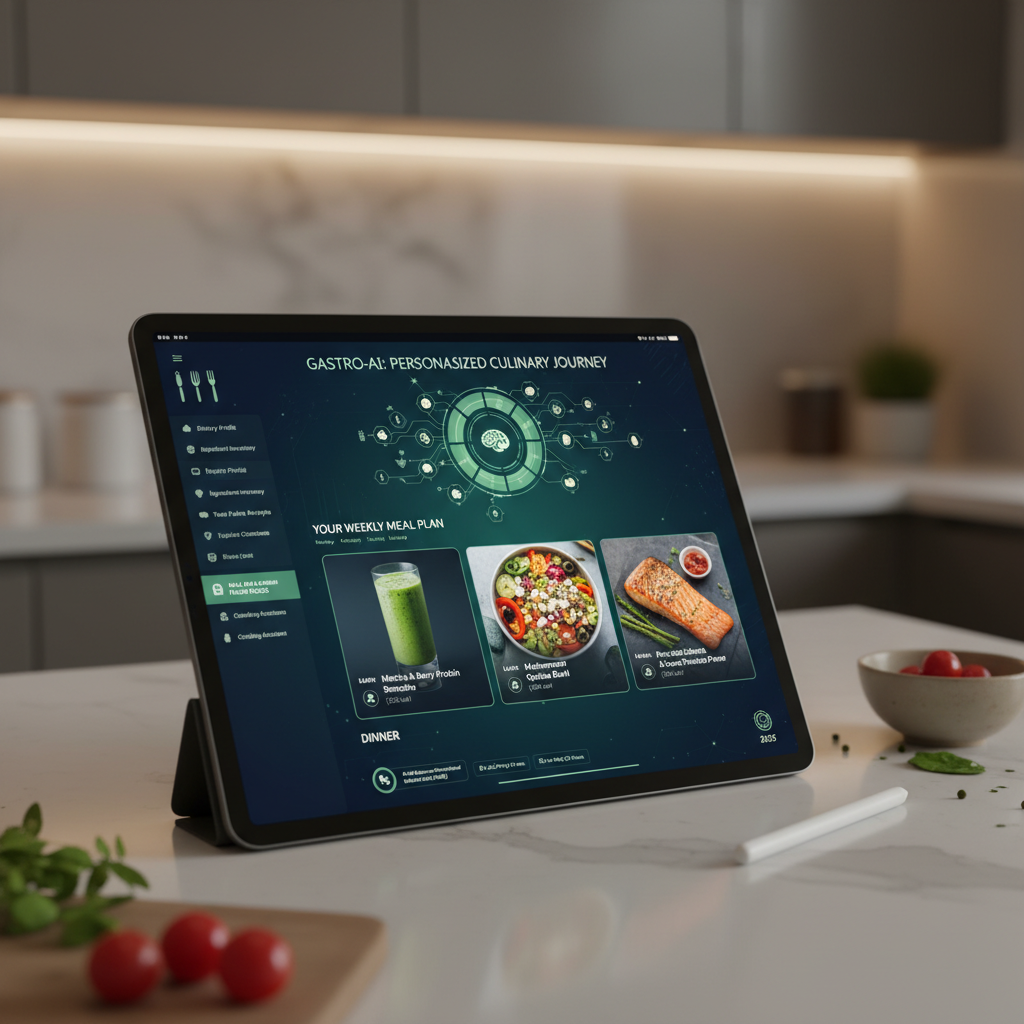
In a world where culinary inspiration often feels like a cyclical journey through the same old cookbooks and online archives, a revolutionary force is emerging to transform our kitchens: Artificial Intelligence. For too long, home cooks have grappled with recipe fatigue, the struggle of adapting dishes to dietary restrictions, or the perplexing challenge of utilizing disparate ingredients lingering in the pantry. Enter AI, not merely as a helper, but as a genuine creative partner, capable of curating unique culinary experiences tailored precisely to individual needs and desires. This isn’t just about finding a recipe; it’s about reinventing the entire process of meal preparation, from discovery to plate, making every dish an adventure and every meal a personalized masterpiece.
The promise of AI in the kitchen extends far beyond simple ingredient substitutions or scaling recipes. We are entering an era of algorithmic gastronomy, where sophisticated models analyze vast datasets of flavors, textures, cooking techniques, and nutritional information to generate novel and inspiring dishes. Imagine an intelligent system that understands your evolving palate, remembers your past successes and failures, and even anticipates your cravings before you do. This comprehensive guide will delve into how AI is redefining home cooking, exploring the tools, techniques, and transformative potential that lie “beyond basic recipes.” We will uncover how AI learns your tastes, generates personalized meals, assists with holistic meal planning, integrates with smart kitchen appliances, and what ethical considerations accompany this exciting technological shift. Prepare to embark on a flavorful journey into the future of food, where your kitchen becomes a hub of innovation, guided by the unseen hand of artificial intelligence.
The Dawn of Algorithmic Gastronomy: How AI Learns Our Tastes
At the heart of AI’s transformative power in the culinary world is its unparalleled ability to learn, adapt, and predict. Unlike static cookbooks that offer one-size-fits-all instructions, AI systems are designed to evolve with you, understanding your unique preferences, dietary needs, and even the contents of your refrigerator. This learning process is intricate, leveraging various forms of data to build a comprehensive profile of your culinary identity.
Understanding AI’s Data Palate
AI’s comprehension of taste goes beyond mere likes or dislikes. It processes a multifaceted array of data points, creating a rich tapestry of information from which to draw culinary inspiration. This data can originate from several sources:
- User Input and Feedback: The most direct way AI learns is through your interactions. When you rate recipes, mark ingredients as liked or disliked, or specify dietary restrictions (vegan, gluten-free, low-carb, allergen-avoidant), the AI incorporates this information into its learning model. Explicit feedback on flavors, textures, and cooking methods helps refine its understanding of your palate.
- Food Databases and Ontologies: AI platforms tap into massive databases containing information on thousands of ingredients, their flavor profiles, nutritional content, common pairings, and chemical properties. These ontologies map relationships between foods, allowing AI to understand why certain combinations work well or what ingredients can serve as substitutes.
- Culinary Science and Gastronomy Principles: Beyond raw data, AI is trained on established culinary principles, flavor wheels, and gastronomic theories. It understands the science behind browning reactions (Maillard effect), the impact of different cooking methods (roasting vs. braising), and the balance of tastes (sweet, sour, salty, bitter, umami) that define delicious food.
- Global Cuisines and Cultural Contexts: To offer diverse and unique experiences, AI systems ingest data from countless global cuisines, understanding the typical ingredient combinations, cooking styles, and flavor profiles associated with different culinary traditions. This allows it to suggest authentic dishes or daring fusion creations.
By analyzing these diverse data streams, AI builds a dynamic profile. It doesn’t just know you like “Italian food”; it understands you prefer creamy pasta dishes over tomato-based ones, with a strong affinity for truffle oil and a mild aversion to bell peppers, all while maintaining a low-sodium diet. This level of granular understanding is what sets AI apart.
Predictive Power: From Preference to Plate
With a robust data palate, AI moves from understanding to prediction. Its algorithms identify patterns and correlations within the data to anticipate what you might enjoy next. This predictive power manifests in several ways:
- Taste Profile Matching: AI can identify users with similar taste profiles. If another user with similar preferences enjoyed a particular lesser-known dish, the AI might recommend it to you, expanding your culinary horizons.
- Ingredient Combination Forecasting: Based on the chemical compatibility and historical success of ingredient pairings, AI can suggest novel combinations that are likely to be delicious. It might propose adding an unexpected herb to a stew or a unique fruit to a savory dish, based on underlying flavor harmonies it detects.
- Contextual Recommendations: AI considers context. If it’s a cold winter evening, it might prioritize hearty stews or comforting baked goods. If you’ve logged several high-calorie meals, it might suggest lighter, nutrient-dense options. It learns your routines and adapts accordingly, even suggesting meals that fit within the time you have available to cook.
- Nutritional Impact Assessment: Beyond taste, AI predicts the nutritional outcome of a recipe. It can adjust ingredients or portion sizes to meet specific caloric, macronutrient, or micronutrient goals, ensuring your meals are not only delicious but also align with your health objectives.
The result is a culinary journey that feels intuitively guided, where every recommendation is a step further into a world of personalized flavor. AI becomes more than a recipe database; it transforms into an evolving, intelligent companion that continuously learns and refines its suggestions, bringing a truly unique experience to your home kitchen.
Personalized Recipe Generation: Your Digital Sous Chef
The ability of AI to generate truly unique and personalized recipes on demand is one of its most compelling features. Moving beyond merely adapting existing recipes, AI can act as a sophisticated digital sous chef, capable of inventing dishes that cater to a precise set of criteria, making culinary creativity accessible to everyone.
Adapting to Dietary Needs and Restrictions
One of the most significant challenges for home cooks is catering to diverse dietary requirements, whether for personal health, ethical choices, or family members with specific needs. AI excels in this domain, becoming an indispensable tool for ensuring delicious and compliant meals.
- Allergen Avoidance: For individuals with severe allergies (e.g., nuts, dairy, soy, shellfish), AI can meticulously filter out problematic ingredients and suggest safe, flavorful alternatives. This significantly reduces the stress and risk associated with meal preparation.
- Specialized Diets: Whether you follow a vegan, ketogenic, paleo, low-FODMAP, or Mediterranean diet, AI can generate recipes that strictly adhere to these guidelines. It understands the allowed and disallowed ingredients, as well as the macronutrient ratios specific to each diet, ensuring compliance without sacrificing taste or variety.
- Health-Specific Customizations: For conditions like diabetes (low sugar, controlled carbs), hypertension (low sodium), or kidney disease (controlled protein, potassium, phosphorus), AI can formulate recipes that meet precise nutritional parameters, often collaborating with dietitians’ guidelines where available.
- Ethical and Lifestyle Choices: Beyond health, AI respects ethical choices like vegetarianism or flexitarianism, providing plant-based options or suggesting ways to reduce meat consumption without compromising flavor.
The intelligence lies in AI’s capacity to not just omit ingredients but to creatively substitute them, maintaining the integrity and flavor profile of the original dish concept. For example, replacing dairy with cashew cream or gluten-containing flours with almond or rice flour, all while ensuring the texture and taste remain appealing.
Ingredient-Based Innovation
How many times have you stared at your refrigerator, wondering what to make with a few leftover items? AI turns this common kitchen dilemma into an opportunity for culinary innovation. Its ability to create recipes based on available ingredients is a game-changer for reducing food waste and inspiring creativity.
Imagine telling your AI kitchen assistant: “I have chicken breasts, broccoli, half an onion, and some leftover rice. What can I make?” The AI wouldn’t just pull up existing recipes; it could generate a brand new one, perhaps a ‘Lemon-Herb Chicken and Broccoli Stir-Fry with Garlic Rice’ or a ‘Creamy Chicken and Broccoli Casserole,’ complete with precise instructions and suggestions for pantry staples to enhance the dish. This capability is immensely practical:
- Waste Reduction: By helping utilize ingredients before they spoil, AI contributes significantly to reducing household food waste, a major environmental and economic concern.
- Spontaneity and Flexibility: It empowers cooks to be spontaneous, adapting meals to whatever is on hand rather than strictly adhering to a shopping list.
- Cost Savings: Making the most of existing ingredients means fewer trips to the grocery store and less money spent on impulse purchases.
- Creative Constraint: Working within given constraints often sparks unexpected creativity, and AI can guide this process, offering surprisingly delicious outcomes from humble beginnings.
Exploring Global Cuisines and Fusion Flavors
For adventurous foodies or those seeking to broaden their culinary horizons, AI serves as an unparalleled guide to global cuisines and the exciting realm of fusion flavors. It acts as a cultural bridge, bringing the world’s kitchens to your home.
AI can introduce you to obscure regional dishes from remote corners of the globe, providing authentic recipes and cultural context. More interestingly, it excels at generating fusion concepts, intelligently blending elements from different culinary traditions to create something entirely new and harmonious. For instance:
- Thai-Italian Fusion: Imagine an AI suggesting ‘Green Curry Risotto’ or ‘Pad Thai Pasta,’ where it intelligently combines the aromatic spices of Thai cuisine with the comforting textures of Italian dishes.
- Mexican-Japanese Blends: How about ‘Sushi Burritos’ with a spicy chipotle mayo or ‘Taco-inspired Ramen’? AI can identify complementary flavors and textures that bridge seemingly disparate food cultures.
- Unexpected Ingredient Pairings: Beyond cuisine types, AI can recommend surprising but delicious ingredient combinations, perhaps pairing savory ingredients with fruits (e.g., rosemary with peaches, balsamic with strawberries) or unusual spice blends that elevate familiar dishes.
This capability allows home cooks to break free from culinary ruts, encouraging experimentation and discovery without the need for extensive research or guesswork. AI’s ability to cross-reference vast amounts of culinary data makes it a pioneer in the art of innovative recipe generation, truly making it your personal digital sous chef.
Beyond Recipes: AI for Comprehensive Meal Planning and Management
While personalized recipe generation is a significant leap, AI’s true power in the home kitchen extends to the holistic management of your entire meal ecosystem. It transforms the often-stressful task of meal planning, grocery shopping, and nutritional tracking into a seamless, intelligent process, acting as a complete kitchen coordinator.
Smart Meal Planning and Scheduling
The dread of “what’s for dinner?” can be a daily burden. AI steps in to alleviate this, optimizing your weekly meal plan based on far more than just what sounds good. It considers a multitude of factors to create a balanced, efficient, and enjoyable eating schedule.
- Personalized Preferences Integration: The AI remembers all your liked and disliked dishes, dietary needs, and flavor profiles, ensuring every meal aligns with your tastes.
- Time Constraints: It learns your schedule. If Tuesday evenings are busy, it suggests quick 30-minute meals or pre-prepped options. Weekend meals might allow for more elaborate culinary projects.
- Ingredient Freshness and Usage: AI intelligently sequences meals to use up perishable ingredients first, minimizing waste. If you buy a large pack of chicken, it might plan chicken dishes for two different nights to ensure it’s fully utilized before spoiling.
- Variety and Repetition Management: To combat meal fatigue, AI ensures a healthy rotation of cuisines, proteins, and cooking methods, preventing you from eating the same thing too often.
- Batch Cooking and Leftover Planning: It can identify opportunities for batch cooking, recommending larger portions of certain dishes that can be repurposed or enjoyed as leftovers, saving time later in the week.
- Seasonal and Local Produce Awareness: Advanced AI might even integrate with local farmer’s market availability or seasonal produce guides, suggesting recipes that make the most of fresh, in-season ingredients.
The result is a dynamic meal plan that adapts to your life, not the other way around. It removes the mental load of planning, allowing you to enjoy cooking and eating without the daily decision-making fatigue.
Automated Grocery Lists and Ingredient Sourcing
Once a meal plan is established, generating a grocery list is the next logical, and often tedious, step. AI streamlines this process, creating smart, efficient shopping lists and even facilitating ingredient sourcing.
- Intelligent List Generation: Based on your chosen meal plan, AI automatically compiles a comprehensive grocery list, categorizing items by aisle (e.g., produce, dairy, pantry) for efficient shopping.
- Pantry Integration: Many AI recipe apps allow you to input your current pantry inventory. The AI then subtracts these items from the generated grocery list, ensuring you only buy what you truly need and avoiding redundant purchases.
- Smart Substitutions and Brand Preferences: If a specific ingredient is unavailable or expensive, AI can suggest suitable substitutions. Some platforms even learn your preferred brands or common purchase sizes.
- Direct Shopping Integration: The ultimate convenience comes from direct integration with online grocery retailers. With a few clicks, your AI-generated shopping list can be sent directly to your preferred online supermarket for delivery or curbside pickup, saving immense time and effort.
- Cost Optimization: Some AI systems can even compare prices across different stores or suggest alternative ingredients that are more budget-friendly while still meeting the recipe’s requirements.
This automated process transforms grocery shopping from a chore into a seamless extension of your meal planning, significantly reducing time spent on logistics and minimizing the chances of forgotten items.
Nutritional Optimization and Health Goals
For many, cooking at home is intertwined with health and wellness goals. AI elevates nutritional tracking and optimization to an unprecedented level, helping you achieve specific health outcomes without compromising on flavor or satisfaction.
- Calorie and Macronutrient Tracking: Whether you’re aiming for weight loss, muscle gain, or maintenance, AI can curate meal plans that precisely meet your daily caloric and macronutrient targets (protein, carbohydrates, fats). It calculates these values for each recipe and the entire daily/weekly plan.
- Micronutrient Focus: Beyond macros, advanced AI can analyze the micronutrient content of meals, ensuring you’re getting adequate vitamins and minerals. It can suggest incorporating specific ingredients to address potential deficiencies or boost intake of certain nutrients (e.g., iron, Vitamin C).
- Goal-Oriented Meal Adjustments: If you input a specific health goal (e.g., lower cholesterol, manage blood sugar, increase fiber), AI can tailor recipes and meal plans accordingly, prioritizing ingredients and cooking methods that support these objectives.
- Portion Control Guidance: AI can provide precise portion recommendations based on your individual needs and goals, helping you avoid overeating or undereating.
- Feedback Loop for Improvement: By tracking your intake and progress, AI can continuously refine its recommendations, learning what works best for your body and your goals, making the nutritional journey more personalized and effective than ever before.
With AI handling the complex calculations and planning, you can focus on the enjoyment of cooking and eating, secure in the knowledge that your meals are perfectly aligned with your health and wellness aspirations.
The Evolution of Kitchen Gadgets: AI in Smart Appliances
The integration of AI isn’t confined to apps and software; it’s rapidly making its way into the physical infrastructure of our kitchens. Smart appliances, once a novelty, are now becoming genuine AI-powered assistants, capable of guiding, automating, and optimizing the cooking process itself, bringing science fiction closer to kitchen reality.
Smart Ovens and Cooktops
Ovens and cooktops are perhaps the most common appliances to receive AI upgrades, transforming them from mere heating elements into intelligent cooking partners.
- Auto-Adjusting Temperatures and Timers: Many smart ovens now feature sensors that detect the doneness of food. They can automatically adjust temperature and cooking time to ensure perfect results, whether roasting a chicken or baking a cake, eliminating guesswork.
- Guided Cooking Programs: Integrated AI interfaces can walk you through recipes step-by-step directly on the appliance screen. They might prompt you to add ingredients, preheat to a specific temperature, or even show video tutorials. Some can download entire recipes from an app and execute them autonomously.
- Remote Control and Monitoring: Forget rushing home to preheat the oven. AI-enabled smart ovens can be controlled remotely via smartphone apps, allowing you to preheat, start, or stop cooking from anywhere. Internal cameras allow you to monitor food progress without opening the door.
- Predictive Maintenance: AI can also monitor the performance of your appliance, predicting potential issues before they arise and alerting you to schedule maintenance or order replacement parts, ensuring longevity and efficiency.
Companies like June Oven and Tovala have pioneered this space, offering ovens that can identify food items placed inside and suggest optimal cooking programs, essentially turning novice cooks into culinary experts with minimal effort. This level of automation ensures consistency and reduces cooking stress.
AI-Powered Food Processors and Blenders
Even smaller kitchen appliances are getting smarter with AI integration, offering precision and automation that was previously unimaginable.
- Optimal Blending Times and Textures: AI-powered blenders can analyze the contents and adjust blending speed and duration to achieve desired textures, whether a smooth smoothie or a chunky salsa. Some even have pre-programmed settings for specific recipes, ensuring perfect consistency every time.
- Ingredient Recognition: Some advanced food processors might use optical sensors to recognize ingredients, then suggest appropriate cutting, chopping, or mixing programs.
- Recipe Execution: Certain smart food processors can work in conjunction with an AI recipe app to execute specific steps of a recipe, such as kneading dough for a precise duration or chopping vegetables to a uniform size.
Robotic Kitchen Assistants
While still largely in the developmental and high-end niche stages, the ultimate vision for AI in kitchen gadgets involves robotic assistants capable of fully preparing meals. Companies like Moley Robotics have showcased prototypes of robotic kitchens that can follow complex recipes, mimic human hand movements to chop, stir, and even plate dishes.
- Full Meal Preparation: These robots aim to handle every aspect of cooking, from ingredient preparation to cooking on the stove and oven, requiring minimal human intervention.
- Precision and Consistency: Robotics offers unparalleled precision, ensuring consistent results every time a recipe is executed.
- Safety and Hygiene: Robots can operate in environments optimized for hygiene and safety, reducing risks associated with sharp objects or hot surfaces.
While widespread adoption of fully robotic kitchens is still some years away due to cost and complexity, these developments highlight the trajectory of AI in the kitchen – moving towards a future where intelligent machines can assist, or even entirely manage, the physical act of cooking, freeing up home cooks for other activities or simply to savor the experience of a perfectly prepared meal.
Ethical Considerations and Future Outlook
As AI becomes more ingrained in our kitchens and daily lives, it’s crucial to consider the ethical implications and broader societal impacts. While the benefits are clear, we must also address concerns around data privacy, potential biases, and the evolving role of human creativity in an AI-driven culinary world.
Data Privacy and Security
AI recipe platforms thrive on data: your preferences, dietary restrictions, shopping habits, and even health goals. This deeply personal information, if mishandled, could pose significant privacy risks.
- Personal Information Collection: Users entrust these platforms with sensitive details about their health, family’s needs, and daily routines. Ensuring this data is encrypted, anonymized, and protected from breaches is paramount.
- Data Monetization: Questions arise about how companies use this data. Is it shared with third parties for advertising? Is it used to influence purchasing decisions beyond recipe recommendations? Transparency in data policies is crucial for building user trust.
- Consent and Control: Users should have clear control over their data, including the ability to access, modify, and delete their information. Opt-in mechanisms for data sharing should be standard.
Developers of AI culinary tools must prioritize robust security measures and clear, ethical data governance policies to protect user information and maintain trust. Regulations like GDPR and CCPA provide frameworks for consumer data protection that should be adhered to rigorously.
Algorithmic Bias in Food Suggestions
AI systems learn from the data they are fed. If this data is biased, the AI’s recommendations can perpetuate and amplify those biases, leading to a lack of diversity or unintentional exclusions.
- Cultural and Ethnic Bias: If the training data predominantly features Western cuisines, AI might struggle to generate authentic or diverse recipes from other cultures, potentially reinforcing culinary stereotypes or limiting global food exploration.
- Socioeconomic Bias: Recommendations might unintentionally favor expensive or hard-to-find ingredients if the training data is skewed towards a certain demographic, making AI cooking less accessible for budget-conscious users.
- Nutritional Bias: If not carefully designed, AI could inadvertently promote unhealthy eating patterns or neglect specific dietary needs if its underlying models prioritize taste over health in a biased way.
Addressing algorithmic bias requires diverse training datasets, continuous auditing of AI outputs, and the integration of fairness metrics in algorithm development. The goal is to create an AI that is inclusive, culturally aware, and promotes healthy, diverse eating habits for all users.
The Role of the Human Chef in an AI-Driven Kitchen
With AI taking on more roles in recipe generation and meal planning, a natural question arises: Will AI diminish the joy of cooking or the role of the human chef? The consensus among experts and early adopters is that AI serves as an enhancer, not a replacement.
- AI as an Assistant, Not a Dictator: AI frees up time and mental energy by handling repetitive tasks, planning, and initial brainstorming. This allows home cooks to focus on the more enjoyable, creative aspects of cooking: experimenting, plating, and savoring the sensory experience.
- Fostering Creativity: By offering novel ingredient combinations or introducing new cuisines, AI can spark human creativity, providing a springboard for further experimentation rather than stifling it.
- The Human Touch: The intuition, improvisation, and sensory judgment (smell, taste, touch) that come with human cooking cannot be fully replicated by AI. The joy of sharing a meal, the stories behind a family recipe, and the personal satisfaction of creating something delicious remain uniquely human experiences.
- Skill Development: For beginners, AI can act as a patient mentor, guiding them through complex recipes and helping them build confidence. For experienced cooks, it can be a source of continuous inspiration and a tool for pushing culinary boundaries.
Ultimately, AI in the kitchen is about augmentation. It empowers home cooks to explore new culinary avenues, manage their meals more efficiently, and achieve their health goals with greater ease, all while retaining the essential human elements of passion, creativity, and enjoyment that define the art of cooking. The future kitchen will likely be a collaborative space, where human ingenuity and AI intelligence work hand-in-hand to create truly extraordinary culinary experiences.
Current AI Tools and Platforms for Home Cooks
The landscape of AI-powered culinary tools is rapidly expanding, offering home cooks an array of options to enhance their kitchen experiences. From general-purpose AI assistants to specialized recipe generators and integrated smart kitchen systems, there’s a tool for almost every need and preference. Here’s an overview of some notable categories and examples:
- Generative AI Assistants (e.g., ChatGPT, Google Bard, Microsoft Copilot): These large language models (LLMs) are versatile and accessible. You can simply type a prompt like “Give me a healthy dinner recipe with chicken, spinach, and quinoa, that’s ready in 30 minutes, and gluten-free,” and they will generate a comprehensive recipe, including ingredients, instructions, and even nutritional estimates. Their strength lies in their flexibility and ability to handle complex, nuanced requests, making them excellent for brainstorming and initial recipe creation.
- Dedicated AI Recipe Generation Apps (e.g., Whisk, Yummly, Chefling, Plant Jammer): These apps are specifically designed for culinary applications.
- Whisk (by Samsung) leverages AI to offer personalized meal planning, recipe recommendations, and smart grocery lists based on your preferences and available ingredients. It integrates with smart appliances.
- Yummly uses AI to learn your tastes and dietary needs, recommending recipes that fit your profile. Its “smart shopping list” can organize ingredients and suggest substitutions.
- Chefling functions as an AI kitchen assistant, offering smart inventory management, meal planning, and recipe suggestions based on what’s in your pantry.
- Plant Jammer focuses on plant-based cooking, using AI to help users create vegetarian and vegan recipes from ingredients they have, emphasizing flavor combinations and nutritional balance.
- Meal Kit Services with AI Integration (e.g., HelloFresh, Blue Apron): While primarily known for delivering pre-portioned ingredients, many meal kit companies are increasingly using AI behind the scenes. AI helps them personalize menu recommendations, predict ingredient demand, optimize delivery routes, and even develop new recipes based on customer feedback and popularity trends. Some offer ‘smart’ recipe cards or in-app guidance that leverages AI.
- Smart Appliance Ecosystems (e.g., June Oven, Tovala Smart Oven, Samsung SmartThings Cooking): These platforms integrate AI directly into kitchen hardware.
- June Oven uses AI-powered cameras to identify food and automatically suggest cooking programs, adjusting temperature and time for perfect results.
- Tovala combines a smart oven with a meal delivery service, using AI to optimize cooking parameters for their proprietary meals and offer personalized recipe suggestions.
- Samsung SmartThings Cooking links various Samsung smart appliances, using AI to recommend recipes based on your fridge contents, create meal plans, and send cooking instructions directly to your oven or cooktop.
- Diet and Nutrition Tracking Apps (e.g., MyFitnessPal, Cronometer with AI features): While not solely recipe generators, these apps increasingly use AI to analyze your food intake, recommend meals that fit your nutritional goals, and even suggest recipes to fill nutrient gaps. They often integrate with recipe databases to provide accurate nutritional breakdowns.
Each of these tools leverages AI in distinct ways, from natural language processing for recipe generation to machine learning for preference prediction and computer vision for food recognition. As the technology evolves, we can expect even more sophisticated and integrated solutions that further simplify and enrich the home cooking experience, catering to every facet of culinary management.
Comparison Tables
To better understand the paradigm shift AI brings to the kitchen, let’s compare traditional cookbooks with modern AI recipe generators, and then look at different types of AI culinary platforms.
Table 1: Traditional Cookbooks vs. AI Recipe Generators
| Feature | Traditional Cookbooks | AI Recipe Generators |
|---|---|---|
| Personalization | Static, one-size-fits-all recipes. Requires manual adaptation for preferences or dietary needs. | Highly personalized based on user history, preferences, dietary restrictions, and available ingredients. Continuously learns and adapts. |
| Adaptability | Limited to published content. Adjustments (e.g., ingredient substitutions, scaling) must be done manually by the cook. | Dynamic, can generate new recipes or modify existing ones instantly based on real-time inputs (e.g., “What’s in my fridge?”). |
| Discovery | Relies on browsing by category, author, or cuisine. Limited by the book’s scope. | Proactive recommendations based on taste profiles, trending dishes, seasonal ingredients, or exploration of new cuisines. |
| Shopping Integration | No direct integration. Manual list creation from selected recipes. | Automated grocery list generation, often integrating directly with online grocery stores for seamless ordering. |
| Waste Reduction | Cooks might buy ingredients specifically for one recipe, leading to leftovers or spoilage. | Optimizes ingredient usage by suggesting recipes based on existing pantry items, actively reducing food waste. |
| Nutritional Planning | May include nutritional information, but no dynamic adjustment for individual health goals. | Calculates and adjusts recipes to meet specific caloric, macro, and micronutrient goals, supporting health and diet plans. |
| Learning Curve | Generally low, familiar format. | Varies by platform; initial input for preferences can take time, but then becomes very intuitive. |
Table 2: Types of AI Culinary Platforms
| Platform Type | Key Features & AI Capabilities | Customization Level | Typical Cost Model | Learning Curve | Best For |
|---|---|---|---|---|---|
| Generative AI Assistants (e.g., ChatGPT) | Natural language processing for free-form recipe generation, ingredient substitutions, meal planning ideas. Broad knowledge base. | High; entirely driven by user prompts. | Often free (basic versions); subscription for advanced features/faster access. | Low; conversational interface. | Brainstorming, quick custom recipes, complex requests, fusion ideas. |
| Dedicated AI Recipe & Meal Planning Apps (e.g., Yummly, Whisk) | Personalized recipe recommendations, smart shopping lists, pantry management, dietary filtering, step-by-step guidance. Learns preferences over time. | Medium to High; based on explicit user input and inferred preferences. | Freemium (basic features free, premium subscription for full access). | Medium; requires initial setup of preferences and pantry. | Daily meal planning, managing dietary needs, reducing food waste, integrated shopping. |
| Smart Appliance Integration (e.g., June Oven, Tovala) | AI-powered cooking (food recognition, auto-adjusting cooking parameters), remote control, guided recipes on appliance screen. Integration with app. | Medium; primarily for cooking execution based on pre-set or identified recipes. | High (initial appliance cost); some offer subscription for meal kits. | Low to Medium; often push-button operation once food is identified. | Automated, precise cooking, convenience, perfect results with minimal effort. |
| Meal Kit Services (with AI elements) | AI for menu personalization, ingredient demand forecasting, logistics optimization. Often provides physical ingredients. | Medium; selection from curated weekly menus, some personalization. | Subscription-based per meal/week. | Very Low; minimal decision-making, ingredients delivered. | Convenience, trying new recipes with pre-portioned ingredients, reduced food waste (at individual level). |
Practical Examples: Real-World Scenarios in Your Kitchen
To truly grasp the impact of AI in home cooking, let’s look at how it can solve everyday culinary challenges for different types of home cooks.
Scenario 1: The Busy Professional
Meet Sarah, a marketing executive with a demanding job and limited time for cooking. She wants healthy, varied meals but often defaults to takeout or repetitive simple dishes due to lack of time for planning and preparation.
AI Solution: Sarah uses an AI meal planning app. She inputs her dietary preference (pescatarian), her goal (balanced nutrition), and her typical weekday schedule (only 30 minutes for cooking Monday-Thursday, more time on weekends). The AI generates a weekly meal plan that prioritizes quick-cook recipes for weekdays, like ‘Sheet Pan Lemon Herb Salmon with Asparagus’ or ‘Speedy Lentil Soup.’ It schedules a slightly longer recipe, like a ‘Hearty Chickpea and Vegetable Tagine,’ for Sunday, with the suggestion to double the batch for Monday’s lunch. The app automatically creates a categorized grocery list, which Sarah sends directly to her preferred online supermarket for Friday evening delivery. She no longer spends her precious weekend hours agonizing over meal ideas or grocery runs, and her diet is more varied and nutritious than ever.
Scenario 2: The Adventurous Foodie
David loves experimenting with new cuisines and bold flavors but sometimes struggles to find truly unique recipes or blend diverse ingredients harmoniously. He’s tired of the same old “fusion” dishes.
AI Solution: David uses a generative AI assistant, prompting it with ideas like: “Create a unique recipe blending Japanese and Peruvian flavors for a main course, using seafood, sweet potatoes, and a hint of ginger.” The AI suggests a ‘Miso-Glazed Corvina with Aji Amarillo Sweet Potato Puree and Pickled Ginger Garnish,’ providing a detailed recipe and explaining the flavor synergies. Excited, David then asks for “three creative ways to use black sesame paste in a savory dish beyond just dressings.” The AI offers a recipe for ‘Black Sesame Crusted Tofu with a Spicy Peanut Dipping Sauce,’ a ‘Savory Black Sesame and Mushroom Tart,’ and even ‘Black Sesame-infused Ramen Broth,’ inspiring him to new culinary heights and expanding his repertoire with genuinely innovative dishes.
Scenario 3: Managing Dietary Restrictions for the Family
The Miller family faces a complex culinary challenge: John is gluten-intolerant, their daughter Lily is allergic to dairy, and their son Tom is a picky eater who dislikes most vegetables. Mealtime is often a struggle to find dishes everyone can enjoy.
AI Solution: The Millers adopt a family-focused AI recipe app. They input each family member’s specific dietary needs and preferences. The AI system processes this complex matrix, then generates a weekly meal plan where every dish is simultaneously gluten-free, dairy-free, and incorporates vegetables in ways that are generally appealing to children (e.g., pureed into sauces, grated finely, or served with dips). For instance, it might suggest a ‘Shepherd’s Pie with Sweet Potato Topping’ (gluten-free, dairy-free) where vegetables are blended into the meat sauce, or ‘Chicken and Veggie Nuggets’ made with gluten-free breading and a cashew-based dipping sauce. The AI ensures cross-contamination avoidance and even suggests alternative serving methods for picky eaters, turning mealtime from a source of stress into an enjoyable family experience.
Scenario 4: Reducing Food Waste
Maria is conscientious about food waste but often finds herself with a handful of aging vegetables, half a block of cheese, and some leftover cooked grains that are about to expire. She struggles to combine them into a coherent meal.
AI Solution: Maria uses an AI pantry management app. She scans in her recent grocery purchases and manually inputs leftovers. One evening, staring at wilting spinach, a nearly-finished container of feta, some cooked farro, and a sad-looking bell pepper, she tells the app, “I have these ingredients; what can I make for dinner?” The AI instantly suggests a ‘Warm Mediterranean Farro Salad with Roasted Bell Pepper, Wilted Spinach, and Crumbled Feta,’ providing a simple recipe that uses up all her odds and ends. It even suggests a lemon-tahini dressing made from pantry staples she already has. By consistently using the AI to build recipes around her existing inventory, Maria significantly reduces her household food waste, saves money, and feels more resourceful in the kitchen.
These examples illustrate how AI is not just a futuristic concept but a practical, immediate solution to many of the common culinary frustrations faced by home cooks today, empowering them with creativity, efficiency, and peace of mind.
Frequently Asked Questions
As AI continues to revolutionize our kitchens, many questions naturally arise. Here are some frequently asked questions about using AI for unique culinary experiences for home cooks:
Q: What exactly is AI in the context of cooking for home cooks?
A: In the context of home cooking, AI refers to intelligent systems and algorithms that can learn from data, understand human language, and make recommendations or generate content. For home cooks, this means AI can analyze your preferences, dietary needs, available ingredients, and culinary goals to suggest recipes, create meal plans, optimize nutrition, and even guide cooking processes in smart appliances. It moves beyond simple search filters to provide dynamic, personalized, and often novel culinary solutions, acting as your personal, ever-learning digital chef.
Q: How does AI personalize recipes specifically for me?
A: AI personalizes recipes by collecting and analyzing a variety of data points unique to you. This includes your explicit inputs, such as dietary restrictions (e.g., vegan, gluten-free), ingredient preferences (likes and dislikes), and health goals (e.g., weight loss, muscle gain). It also learns implicitly from your past interactions, such as which recipes you’ve saved, rated, or cooked frequently. Advanced AI can even track seasonal ingredients, local availability, and the contents of your smart pantry, tailoring suggestions not just to your taste but also to your current kitchen inventory and lifestyle. This continuous learning process refines its understanding of your palate and needs over time, making recommendations increasingly accurate and unique to you.
Q: Can AI really create original recipes, or does it just modify existing ones?
A: Modern AI, particularly advanced generative AI models, can indeed create truly original recipes. While they learn from vast datasets of existing recipes, ingredient pairings, and culinary science, they don’t just “copy-paste.” Instead, they can understand the underlying principles of flavor, texture, and cooking chemistry, allowing them to synthesize new combinations and instructions. You can give an AI a unique prompt, like “Create a dessert that combines the flavors of matcha and passion fruit, suitable for a dinner party,” and it will generate a recipe that likely doesn’t exist verbatim anywhere else, complete with ingredient lists and step-by-step instructions. They act as creative collaborators, pushing culinary boundaries.
Q: Is using AI for recipes expensive? What are the typical costs?
A: The cost of using AI for recipes varies widely. Many basic AI recipe generation features are available for free through general AI assistants like ChatGPT (free tier) or through freemium dedicated recipe apps (like Yummly or Whisk, which offer core features for free and premium subscriptions for advanced functionalities). Premium subscriptions for dedicated apps usually range from $5 to $15 per month and unlock features like advanced filtering, pantry integration, or direct grocery ordering. If you’re looking at smart kitchen appliances with integrated AI (like a June Oven), the initial hardware cost can be significant (hundreds to thousands of dollars), but the AI features are often included or come with an optional subscription for expanded services like meal kit delivery. Overall, there are many affordable or free entry points to leverage AI in your kitchen.
Q: How does AI help with specific dietary restrictions or allergies?
A: AI is exceptionally powerful for managing dietary restrictions and allergies. When you input your specific requirements (e.g., vegan, gluten-free, nut allergy, low-sodium), the AI system filters out all recipes containing problematic ingredients. More importantly, it can intelligently substitute those ingredients with safe alternatives that maintain the dish’s flavor and texture profile. For example, if a recipe calls for dairy, AI might suggest a cashew cream or coconut milk substitute. It can also generate entirely new recipes from scratch that adhere to all your specified constraints, ensuring every meal is safe, compliant, and delicious, reducing the mental load and risk associated with cooking for special diets.
Q: What about ingredient availability and substitutions? Will AI suggest things I can’t find?
A: Good AI recipe tools are designed to be practical. Many allow you to specify your geographic location or even integrate with local grocery store inventories to suggest ingredients that are readily available. If a recipe calls for an ingredient you don’t have or can’t find, you can ask the AI for substitutions. It will typically offer multiple viable alternatives, considering flavor, texture, and culinary role, and even adjust the recipe instructions if necessary. Some advanced systems can even learn your preferred substitutes or suggest common pantry items you likely already have, minimizing the chances of suggesting obscure ingredients.
Q: Is my personal data safe with AI recipe apps and platforms?
A: Data safety is a critical concern, and reputable AI recipe apps and platforms prioritize user privacy. They typically employ robust encryption, anonymization techniques, and secure servers to protect your personal information (preferences, dietary needs, health goals, shopping habits). Most platforms adhere to data protection regulations like GDPR or CCPA. However, it’s always important to read the privacy policy of any app you use to understand what data is collected, how it’s used, and whether it’s shared with third parties. Choosing platforms from established and trusted companies can also add an extra layer of assurance regarding data security.
Q: Will AI replace the joy of traditional cooking or experimenting in the kitchen?
A: No, AI is designed to augment and enhance the joy of cooking, not replace it. It frees up mental energy by handling the tedious parts of meal planning, grocery list generation, and basic recipe ideation, allowing home cooks to focus on the more creative, sensory, and enjoyable aspects of the culinary process. AI can inspire new ideas, introduce novel flavor combinations, and act as a guide for complex techniques, pushing your culinary boundaries. The human elements of intuition, improvisation, the joy of sharing a meal, and the personal satisfaction of creating something delicious remain uniquely human experiences that AI complements, rather than diminishes.
Q: How accurate are AI-generated cooking instructions and recipe details?
A: The accuracy of AI-generated cooking instructions and recipe details has significantly improved, often matching or exceeding the clarity of many human-written recipes. AI models are trained on vast amounts of culinary data, including detailed instructions, cooking times, and ingredient measurements. While minor adjustments might occasionally be needed based on individual equipment or ingredient variations, AI strives for precision. For smart appliances, AI takes it a step further by directly controlling cooking parameters for optimal results. It’s always a good idea to use common sense and personal judgment, especially when trying a completely novel AI-generated recipe for the first time, but generally, the instructions are reliable and comprehensive.
Q: What are the main benefits for an average home cook using AI for their meals?
A: The main benefits for an average home cook are numerous and transformative:
- Reduced Meal Fatigue: AI introduces variety and novel dishes, preventing boredom.
- Time Savings: Automates meal planning, grocery list creation, and even some cooking steps.
- Personalized Nutrition: Tailors meals to specific dietary needs, allergies, and health goals.
- Reduced Food Waste: Helps utilize existing pantry ingredients effectively.
- Enhanced Creativity: Inspires new flavor combinations and introduces global cuisines.
- Improved Cooking Skills: Provides step-by-step guidance and simplifies complex recipes.
- Stress Reduction: Eliminates the daily “what’s for dinner?” dilemma.
- Cost Efficiency: Helps shop smarter and use what you already have, saving money.
Essentially, AI transforms cooking into a more efficient, enjoyable, and personalized experience for everyone, regardless of their culinary skill level.
Key Takeaways
The integration of AI into home kitchens represents a profound shift in how we approach food preparation, discovery, and enjoyment. Here are the key takeaways from our exploration of AI’s role in curating unique culinary experiences:
- AI Offers Deep Personalization: Beyond simple filters, AI learns your unique tastes, dietary requirements, and cooking habits to generate recipes and meal plans that are precisely tailored to you, continuously adapting over time.
- From Static Recipes to Dynamic Creation: AI can move beyond modifying existing dishes to truly generate novel, original recipes based on complex prompts and a vast understanding of culinary principles, unlocking unprecedented creativity.
- Holistic Meal Management: AI’s utility extends far beyond individual recipes to encompass comprehensive meal planning, automated grocery list generation, and precise nutritional optimization, streamlining the entire food preparation process.
- Smart Kitchen Integration: AI is increasingly embedded in kitchen appliances like ovens and food processors, enabling features such as automated cooking adjustments, guided preparation, and remote control, enhancing efficiency and consistency.
- Practical Solutions for Everyday Challenges: AI effectively addresses common home cooking frustrations, including recipe fatigue, managing diverse dietary restrictions, reducing food waste, and simplifying meal preparation for busy schedules.
- Ethical Considerations are Crucial: While transformative, the rise of culinary AI necessitates careful attention to data privacy, mitigating algorithmic bias to ensure diverse recommendations, and understanding the evolving collaboration between human cooks and AI.
- AI as an Augmentation, Not a Replacement: AI tools serve as powerful assistants, freeing up time and sparking creativity, allowing home cooks to focus on the joy, artistry, and social aspects of cooking, rather than replacing the human element.
- Accessibility and Evolution: With various tools ranging from free generative AI assistants to specialized apps and integrated smart appliances, AI in the kitchen is accessible at multiple levels and is rapidly evolving, promising even more sophisticated and seamless experiences in the future.
Conclusion
We stand at the precipice of a culinary revolution, one where the digital intelligence of AI converges with the age-old art of cooking to redefine our relationship with food. The days of struggling through bland repetitions, wrestling with complex dietary adaptations, or letting precious ingredients go to waste are swiftly becoming relics of the past. Artificial Intelligence is not just a technological fad; it is a profound paradigm shift, empowering home cooks of all skill levels to move “beyond basic recipes” and embrace a world of unique, personalized, and effortlessly curated culinary experiences.
From understanding the nuances of your palate to crafting bespoke meal plans that align with your health goals and even guiding your smart appliances, AI is transforming every facet of the kitchen. It is a tireless digital sous chef, a knowledgeable nutritionist, and an endlessly creative inventor, all rolled into one. By leveraging the power of algorithmic gastronomy, we unlock new flavors, explore global cuisines with ease, and minimize the mundane aspects of meal preparation, allowing us to rediscover the sheer joy and artistry of cooking.
As we navigate this exciting new era, it is imperative to do so thoughtfully, ensuring that the benefits of AI are accessible to all, that data privacy is respected, and that the human touch remains at the heart of our culinary endeavors. Embrace this technological leap; let AI be your guide to a more efficient, creative, and delicious future. The kitchen of tomorrow is here today, ready to serve up an endless array of unique culinary experiences, one intelligent recipe at a time.



















































































Leave a Reply