


In an age where our homes are becoming increasingly intelligent, the lines between convenience and vulnerability are often blurred. Smart homes, equipped with an array of interconnected devices, promise unparalleled comfort, efficiency, and security. From automated lighting and climate control to sophisticated surveillance systems and smart locks, artificial intelligence (AI) is the invisible conductor orchestrating this symphony of technology. However, with great innovation comes significant responsibility, particularly when it comes to safeguarding your digital sanctuary from the ever-present threat of cyberattacks.
This comprehensive guide delves deep into the crucial topic of cybersecurity for AI-powered homes, specifically focusing on how to protect your smart security system from malicious hacks. We will explore the inherent vulnerabilities of smart home ecosystems, unveil the transformative power of AI in proactive threat detection and defense, and provide actionable strategies you can implement today to fortify your digital perimeter. Prepare to embark on a journey that will empower you to understand, manage, and ultimately master the cybersecurity landscape of your AI home, ensuring peace of mind in your connected living space.
The Evolution of Smart Home Security and Its Vulnerabilities
The concept of a smart home has evolved dramatically from simple remote controls to complex, interconnected ecosystems powered by artificial intelligence. Early smart homes primarily offered convenience features, such as programmable thermostats or automated lighting schedules. Today, however, AI is integrated into almost every aspect of home automation, from learning your daily routines to recognizing faces at your doorstep and intelligently managing energy consumption. This evolution has brought immense benefits, transforming houses into responsive, intuitive living spaces that adapt to their occupants’ needs.
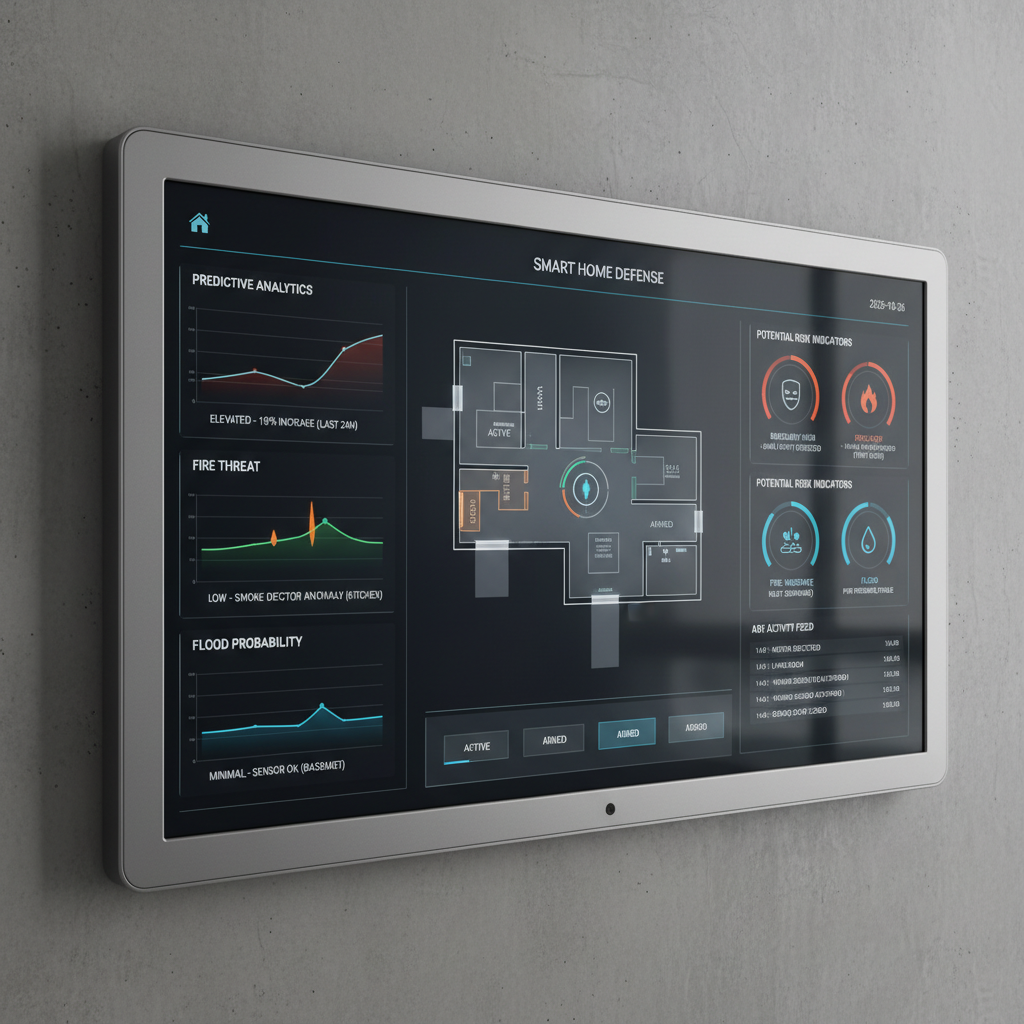
Alongside these advancements, the nature of home security has also undergone a profound transformation. Traditional security systems relied on simple sensors, alarms, and manual monitoring. Modern smart security systems, however, leverage AI to offer proactive protection, enabling features like advanced motion detection, facial recognition for access control, voice authentication for smart assistants, and even predictive analytics to anticipate potential threats. These systems are no longer just reacting to intrusions; they are designed to prevent them by constantly learning and adapting to their environment.
Despite their sophistication, this increased interconnectedness and reliance on software introduce a new array of vulnerabilities that can be exploited by cybercriminals. Each smart device, from a smart bulb to a security camera, represents a potential entry point into your home network. The more devices you have, the larger your attack surface becomes. Common vulnerabilities include:
- Weak Default Passwords: Many smart devices ship with easily guessable or generic default passwords that users often fail to change.
- Unpatched Software and Firmware: Manufacturers frequently release updates to fix security flaws, but many users neglect to install these, leaving devices exposed.
- Insecure Network Configurations: Poorly secured Wi-Fi networks (e.g., using outdated encryption like WEP or WPA, or having no password) provide an open invitation for hackers.
- IoT Device Vulnerabilities: The rapid development cycle of IoT devices sometimes means security is an afterthought, leading to inherent flaws in their design or coding.
- Lack of Encryption: Data transmitted between devices, or between a device and the cloud, might not always be sufficiently encrypted, making it vulnerable to interception.
- Phishing and Social Engineering: Attackers can trick homeowners into revealing credentials or installing malicious software through convincing fake emails or messages.
These vulnerabilities are not theoretical; they represent real-world threats. A compromised smart security camera could allow an attacker to spy on your family, a hacked smart lock could grant unauthorized entry, and an infected smart thermostat could become part of a botnet, impacting your internet service or being used to launch attacks on others. The appeal to hackers is multifaceted: data theft, espionage, property intrusion, or using your devices as stepping stones for larger attacks. Understanding these risks is the first critical step toward building a truly resilient AI home security system.
How AI Revolutionizes Smart Home Security
The advent of artificial intelligence marks a paradigm shift in how we approach smart home security. Traditional security systems operate on predefined rules: if a sensor is triggered, an alarm sounds. While effective to a degree, this rule-based approach is often reactive and lacks the adaptive intelligence required to combat increasingly sophisticated cyber threats. AI, however, introduces a layer of dynamic, proactive defense that can learn, predict, and respond to threats in ways conventional systems simply cannot.
At its core, AI’s power in security lies in its ability to process vast amounts of data and identify patterns that would be imperceptible to humans or traditional algorithms. Your smart home generates an enormous volume of data every second: camera feeds, sensor readings, network traffic logs, device usage patterns, and environmental data. AI algorithms can sift through this data, establish a baseline of “normal” behavior for your home, and then flag any deviations as potential anomalies or threats.
Here’s how AI fundamentally changes the game:
- Predictive Analytics: Instead of merely reacting to an event, AI can analyze historical data and current conditions to predict potential threats before they materialize. For example, by learning the typical patterns of visitors, delivery times, and even local crime statistics, an AI system might identify suspicious activity hours before a traditional system would trigger an alarm.
- Anomaly Detection: AI builds a profile of your home’s normal operation – when doors typically open, what devices communicate with each other, who usually accesses the system. Any departure from this learned normal, such as a smart lock attempting to open at an unusual time or an unknown device joining your network, is immediately flagged as an anomaly. This goes beyond simple motion detection; it’s about context and behavioral understanding.
- Behavioral Biometrics: AI can recognize unique behavioral patterns, such as the way someone walks, their typing cadence, or their voice inflections. This can be used for more robust authentication, ensuring that even if a password is stolen, an intruder cannot mimic the legitimate user’s unique behavioral signature.
- Proactive Threat Intelligence: Advanced AI security systems can integrate with global threat intelligence feeds. This means your home’s AI isn’t just learning from your specific environment, but also from a vast network of cybersecurity incidents and known vulnerabilities worldwide. If a new type of attack targeting a specific smart device emerges globally, your AI system can potentially update its defenses before your device is even targeted.
- Automated, Intelligent Response: Beyond detection, AI can be programmed to initiate automated responses to identified threats. This could range from isolating a compromised device from the network to locking all smart doors, activating enhanced surveillance, or directly alerting emergency services and your mobile device, all within seconds.
In essence, AI transforms smart home security from a static defense into a dynamic, learning, and evolving shield. It shifts the paradigm from simply monitoring to actively predicting, detecting, and responding to a broad spectrum of threats, both digital and physical, making your home significantly more resilient against hacking attempts and physical intrusions.
Key AI-Powered Security Features
The integration of AI into smart home security systems has given rise to a suite of advanced features designed to offer multi-layered protection. These features go beyond basic alerts, providing intelligent monitoring, authentication, and response capabilities that significantly enhance the overall security posture of your home.
Intrusion Detection Systems (IDS) Powered by AI
Traditional intrusion detection systems rely on simple sensors to detect breaches, often leading to false alarms from pets or natural events. AI-powered IDS, however, operates on a much more sophisticated level. These systems learn the typical movement patterns within your home, distinguishing between a family member, a pet, and a potential intruder. By analyzing video feeds, sound patterns, and sensor data, AI can accurately identify unusual activities. For example, it can differentiate between the rustling of leaves outside a window and the sound of someone trying to force entry. If a predefined anomaly threshold is crossed – such as movement detected in an unoccupied room at an odd hour, or an unfamiliar person lingering near your property – the AI system can trigger specific alerts, record higher-resolution video, or even activate deterrents like loud alarms or smart lighting changes.
Facial Recognition and Biometrics for Access Control
AI-driven facial recognition and other biometric technologies are revolutionizing access control in smart homes. Instead of relying solely on keys or passcodes, smart locks and entry systems can now use facial scans, fingerprints, or even iris recognition to grant access. AI algorithms excel at rapidly and accurately verifying identities, comparing live scans against a database of authorized individuals. This not only enhances security by making it much harder for unauthorized individuals to gain entry but also adds convenience. Imagine your front door unlocking automatically as you approach with groceries, or your security system disarming when it recognizes your child returning from school. These systems can also maintain logs of who enters and exits, providing a valuable audit trail, and can send alerts if an unrecognized face is detected attempting to gain access.
Voice Authentication for Smart Assistants and Device Control
Smart assistants like Amazon Alexa or Google Assistant have become central to many AI homes. AI-powered voice authentication adds a critical layer of security to these devices. By analyzing unique vocal characteristics, AI can distinguish your voice from others, ensuring that only authorized individuals can issue commands to unlock doors, disarm the alarm, or access sensitive information. This prevents unauthorized individuals from shouting commands through a window or even using a recording of your voice to bypass security measures. Advanced systems employ technologies that can detect nuances in speech, such as intonation, rhythm, and specific frequencies, making them highly resistant to impersonation attempts.
Behavioral Analytics for Anomaly Detection
Behavioral analytics is arguably one of the most powerful AI applications in smart home security. This feature involves AI continuously monitoring and learning the routines and interactions of occupants and devices within the home. It builds a comprehensive behavioral profile, understanding when lights are usually turned on, at what times doors are typically opened, the normal network traffic patterns, and even the usual sequence of events. When an activity deviates significantly from this learned normal behavior – for instance, a bathroom light turning on at 3 AM when the residents are typically asleep, or a smart plug for a non-essential appliance suddenly showing unusual power consumption – the AI system flags it as an anomaly. This could indicate anything from a device malfunction to a potential intrusion or a compromised device acting maliciously.
Threat Intelligence Integration
Modern AI security systems can go beyond local learning by integrating with global threat intelligence feeds. These feeds compile data on newly discovered vulnerabilities, active cyberattack campaigns, malware signatures, and known malicious IP addresses from around the world. Your home’s AI system can pull this information, effectively giving it an early warning system against emerging threats. For example, if a new zero-day exploit targets a specific brand of smart camera, an AI system with integrated threat intelligence can proactively update its detection parameters or even quarantine affected devices before they are compromised. This keeps your home’s defenses current and resilient against the latest cyber threats.
Automated Incident Response
One of the most significant advantages of AI in smart home security is its capacity for automated, intelligent incident response. Once a threat is detected and verified, the AI system doesn’t just send an alert; it can initiate a series of predefined or dynamically determined actions to mitigate the risk. This could include:
- Automatically locking all smart doors and windows.
- Activating all surveillance cameras to record at maximum resolution.
- Triggering internal and external alarms.
- Notifying emergency services or private security patrols.
- Isolating a potentially compromised device from the rest of the network to prevent lateral movement of malware.
- Flashing lights or playing specific sounds to deter intruders.
- Sending detailed notifications to your smartphone with video clips and sensor data.
This rapid and coordinated response, executed within milliseconds, can be crucial in preventing successful breaches and minimizing damage, offering a level of protection far superior to manual intervention alone.
Protecting Your Network: The Foundation of AI Home Security
Your home network serves as the central nervous system for all your smart devices, including your AI security system. Just as a strong foundation is crucial for a physical house, a robustly secured network is absolutely essential for the digital integrity of your AI home. Even the most advanced AI security features can be undermined if the underlying network is vulnerable to attack.
Strong Wi-Fi Security (WPA3)
The first line of defense for your network is strong Wi-Fi encryption. Many older routers still use WPA2, which, while generally secure, has known vulnerabilities. The latest standard, WPA3, offers enhanced encryption and protection against brute-force attacks and eavesdropping, especially on public networks, but its benefits extend to home networks too. Ensure your router supports WPA3 and activate it if available. Always use a strong, unique, and complex password for your Wi-Fi network – a long passphrase that combines uppercase and lowercase letters, numbers, and symbols is ideal. Avoid using personal information or common dictionary words.
Network Segmentation for IoT Devices
One of the most effective strategies for smart home network security is segmentation. This involves creating separate networks or “VLANs” (Virtual Local Area Networks) within your home. You can establish a primary network for your computers, smartphones, and sensitive data, and a separate “guest” or “IoT network” specifically for your smart home devices. This creates a firewall between your general computing devices and your potentially less secure IoT gadgets. If an attacker manages to compromise a smart bulb or a connected appliance on the IoT network, they will find it significantly harder to “jump” to your main network where more sensitive data resides. Some modern routers offer built-in guest network functionality that can serve this purpose, or you may need a more advanced router to create true VLANs.
VPNs for Remote Access
When you access your smart home security system remotely – perhaps to check camera feeds or unlock a door – you are sending data over the internet. Using a Virtual Private Network (VPN) creates an encrypted tunnel for this communication, safeguarding your data from interception by malicious actors. Many smart home hubs or routers now offer built-in VPN server capabilities, allowing you to establish a secure connection back to your home network from anywhere in the world. This is particularly important when connecting from unsecured public Wi-Fi networks.
AI-Powered Network Monitoring
Just as AI monitors your physical space, it can also monitor your network traffic. AI-powered network security tools can analyze data packets, identify suspicious traffic patterns, detect unusual port scans, or flag unauthorized attempts to access network resources. These systems learn what “normal” network activity looks like for your home – which devices communicate, when, and with whom – and can immediately alert you to anomalies. For instance, if your smart thermostat suddenly tries to communicate with a server in a foreign country, the AI could flag it as suspicious, indicating a potential compromise.
Router Security
Your router is the gateway to your home network, making its security paramount.
- Change Default Credentials: Always change the default username and password for your router’s administration interface immediately after setup. Default credentials are a common attack vector.
- Keep Firmware Updated: Router manufacturers frequently release firmware updates that include critical security patches. Enable automatic updates if your router supports it, or regularly check for and install updates manually.
- Disable UPnP (Universal Plug and Play): While convenient for automatically configuring devices, UPnP can introduce significant security risks by allowing devices to open ports without explicit user permission. Disable it if possible and manually configure port forwarding only when absolutely necessary.
- Enable a Firewall: Most routers have a built-in firewall. Ensure it is enabled and configured to block unsolicited incoming connections.
- Consider Intrusion Prevention Systems (IPS): Some advanced routers or dedicated security appliances offer IPS features, which can actively block malicious network traffic based on known attack signatures or behavioral anomalies.
By meticulously securing your home network, you create a robust digital perimeter that protects all your smart devices and, by extension, your entire AI home security system from external threats. This foundational security is non-negotiable for a truly safe and intelligent living environment.
Securing Smart Devices: From Gadgets to Gateways
While a secure network forms the backbone of your AI home’s defense, each individual smart device acts as a potential endpoint – a door or window that an attacker might try to exploit. From smart light bulbs and thermostats to security cameras and door locks, every connected gadget needs its own layer of protection. Neglecting even one device can create a weak link that compromises your entire smart security ecosystem.
Regular Software and Firmware Updates
This cannot be stressed enough: keeping your devices updated is arguably the single most important cybersecurity practice. Manufacturers constantly discover and patch security vulnerabilities in their device software and firmware. These updates are essentially digital vaccinations against known threats.
- Enable Automatic Updates: Many smart devices and hubs offer the option for automatic updates. Enable this feature whenever possible.
- Manual Checks: For devices without automatic updates, make it a habit to periodically check the manufacturer’s website or the device’s companion app for new firmware.
- Criticality: Prioritize updates for core security devices like cameras, smart locks, and your central smart home hub, but extend this practice to all connected devices.
Failing to update leaves your devices vulnerable to exploits that are often publicly known and easily leveraged by attackers.
Strong, Unique Passwords for Each Device
The temptation to reuse passwords or stick with default ones is high, especially with numerous smart devices. However, this is a critical security flaw. If one device’s password is compromised (e.g., through a data breach on the manufacturer’s server), an attacker could gain access to all other devices sharing that password, effectively opening your entire smart home.
- Use Unique Passwords: Every single smart device and its associated app should have a unique, strong password.
- Complexity: Passwords should be long (at least 12-16 characters), and combine uppercase and lowercase letters, numbers, and special symbols.
- Password Manager: Consider using a reputable password manager to securely store and generate complex, unique passwords for all your accounts and devices.
Two-Factor Authentication (2FA)
Two-Factor Authentication (also known as Multi-Factor Authentication, MFA) adds an essential layer of security by requiring a second form of verification in addition to your password. This usually involves a code sent to your phone via SMS, an authentication app, or a physical security key. Even if an attacker manages to steal your password, they cannot access your device or account without this second factor. Enable 2FA on every smart device or service that offers it, especially for critical systems like your smart home hub, security cameras, and smart locks.
Disabling Unnecessary Features and Ports
Many smart devices come with features or services enabled by default that you may not need or use. Each enabled feature, especially those that open ports or allow remote access, represents a potential attack surface.
- Review Device Settings: Go through the settings of each smart device and its associated app.
- Disable UPnP on Devices: Just like on your router, disabling UPnP on individual smart devices can prevent them from automatically opening network ports.
- Turn Off Remote Access: If you don’t need to access a device remotely, disable that functionality.
- Physical Ports: If a device has unused physical ports (e.g., USB, Ethernet), consider disabling them in the settings or physically securing them if possible.
The principle here is to minimize your attack surface: if a feature isn’t needed, it shouldn’t be enabled.
Reviewing App Permissions
The companion apps for your smart devices often request extensive permissions on your smartphone or tablet. Always review these permissions carefully before granting them.
- Question Excessive Permissions: Does a smart light bulb app really need access to your contacts or location data? Probably not.
- Grant Least Privilege: Only grant the absolute minimum permissions required for the app to function.
- Regular Audits: Periodically review the app permissions on your mobile devices, especially after app updates, as permissions can sometimes change.
Overly permissive apps can potentially collect sensitive data or be exploited to gain deeper access to your network or other device functionalities.
Purchasing from Reputable Brands
The market is flooded with smart home devices, many of which are inexpensive generic brands. While appealing, these often come with significant security risks.
- Prioritize Security: Reputable manufacturers with a track record in cybersecurity are more likely to invest in secure product development, provide regular security updates, and offer better support.
- Research Before Buying: Look for reviews that discuss security, privacy practices, and update frequency.
- Avoid Unknown Devices: Be wary of unbranded or extremely cheap devices from unknown manufacturers, as they may have inherent security flaws, poor update support, or even malicious backdoors.
Investing in quality, security-conscious brands for your smart home devices is an investment in your home’s overall safety and privacy.
The Human Element: Your Role in an AI-Secured Home
While AI brings unprecedented capabilities to smart home security, it is not a magic bullet. The most sophisticated AI system can still be circumvented if the human element – you, the homeowner – neglects fundamental security practices. You are an integral part of your AI home’s defense strategy, and your vigilance, understanding, and proactive engagement are crucial for maintaining a truly secure environment. The interaction between human behavior and AI intelligence forms the ultimate shield against evolving threats.
Understanding the Technology
You don’t need to be a cybersecurity expert, but a basic understanding of how your smart home devices and AI security system function is vital.
- Read Manuals: Take the time to read the user manuals and security guidelines provided by manufacturers for your smart hub, cameras, and other critical devices.
- Learn AI Capabilities: Understand what your AI security system is designed to do, what data it collects, and how it makes decisions. This knowledge empowers you to properly configure it and recognize when something is amiss.
- Stay Informed: Follow reputable tech news and cybersecurity blogs to stay updated on new threats, vulnerabilities, and best practices for smart home security.
Ignorance can lead to misconfigurations, overlooked warnings, or a false sense of security.
Being Vigilant and Trusting Your Instincts
AI is excellent at anomaly detection, but your intuition and direct observation remain invaluable.
- Monitor Alerts: Pay attention to the alerts and notifications generated by your AI system. Don’t dismiss them without understanding why they were triggered.
- Observe Physical Changes: Notice any unusual physical changes around your home – a moved camera, a detached sensor, or a new device you don’t recognize.
- Review Logs: Periodically review the activity logs of your smart home hub and security system. Look for unusual access attempts, device disconnections, or unexpected commands.
If something feels off, investigate it. Your human judgment can sometimes catch nuances that even advanced AI might miss.
Educating Family Members
A smart home’s security is only as strong as its weakest link, and family members can inadvertently create vulnerabilities.
- Password Discipline: Teach everyone about the importance of strong, unique passwords for their own smart home accounts and devices.
- Phishing Awareness: Educate them about identifying phishing emails, suspicious texts, and fake websites that might try to trick them into revealing credentials.
- Device Usage: Explain safe practices for interacting with smart devices, especially those related to security like smart locks and cameras.
- Guest Access: Set up secure guest access for visitors rather than sharing primary network passwords or device credentials.
A collective effort from all household members significantly bolsters your home’s overall security.
Avoiding Phishing Scams and Social Engineering
Cybercriminals often target humans directly, as it can be easier than hacking a robust technical system.
- Be Skeptical: Treat unsolicited emails, messages, or calls asking for personal information or credentials with extreme suspicion.
- Verify Sources: If you receive an email seemingly from your smart device manufacturer or service provider asking you to click a link, verify the sender’s email address and hover over links to check their destination before clicking. It’s safer to navigate directly to the official website.
- Strong Passwords for Email: Your email account is often the gateway to resetting passwords for many other services, including your smart home accounts. Ensure your email has a very strong, unique password and 2FA enabled.
Social engineering attacks are designed to exploit human trust and can bypass even the best technical defenses.
Regular Security Audits
Periodically conducting a mini-security audit of your smart home can identify overlooked vulnerabilities.
- Inventory Devices: Keep an up-to-date list of all smart devices connected to your network.
- Check for Updates: Verify that all devices and your router have the latest firmware.
- Review Passwords: Ensure all passwords are strong and unique, and consider changing critical ones every few months.
- Inspect Network Settings: Confirm your Wi-Fi is using WPA3 (or WPA2-AES) and that network segmentation is correctly implemented.
- Review App Permissions: Check app permissions on your mobile devices.
- Physical Inspection: Ensure all cameras are correctly positioned, sensors are intact, and no new, unknown devices have appeared.
Treating your smart home’s security as an ongoing process, rather than a one-time setup, is key to long-term protection. By embracing your role as a proactive guardian, you augment your AI system’s capabilities and build a truly resilient smart sanctuary.
Future Trends: Quantum-Resistant AI and Edge AI Security
The landscape of cybersecurity is ever-evolving, and the threats of tomorrow demand even more sophisticated defenses. As AI homes become more prevalent and powerful, so too will the methods used by those seeking to exploit them. Two significant emerging trends promise to further revolutionize smart home security: quantum-resistant AI and Edge AI security.
Quantum Computing Threats and Post-Quantum Cryptography
Quantum computing, currently an advanced research area, holds the potential to solve complex problems far beyond the capabilities of today’s classical computers. While it offers immense promise for fields like medicine and material science, it also poses a profound threat to current cryptographic standards. Many of the encryption algorithms that secure our internet communications, including those protecting smart home data, could theoretically be broken by powerful quantum computers. This prospect, though not imminent for widespread attacks, necessitates proactive development of “post-quantum cryptography” (PQC).
AI plays a crucial role here. AI algorithms are being developed to design, analyze, and implement PQC protocols. Future AI home security systems might integrate quantum-resistant encryption from the ground up, ensuring that data transmitted between devices, stored in the cloud, or used for authentication remains secure even against future quantum attacks. This involves AI systems learning and adapting to new mathematical challenges posed by quantum threats, potentially even generating new encryption keys that are quantum-safe. The transition to PQC will be a massive undertaking across all digital infrastructure, and smart homes, with their sensitive data and critical functions, will be an early and important beneficiary.
Edge AI Security: Faster, More Private, More Resilient
Currently, many smart home AI features rely on cloud computing. Data from your devices is sent to remote servers for processing, analysis, and decision-making. While powerful, this approach has drawbacks:
- Latency: Delays can occur as data travels to and from the cloud, impacting real-time security responses.
- Bandwidth: Constant data streaming consumes significant internet bandwidth.
- Privacy Concerns: Sending all data to the cloud raises questions about data ownership and potential for breaches or misuse.
- Reliance on Internet: Cloud-dependent systems can fail if your internet connection goes down.
Edge AI, or “AI at the Edge,” aims to address these issues by bringing AI processing capabilities directly onto the devices themselves (the “edge” of the network) or a local hub within the home. Instead of sending raw video feeds to the cloud, a smart camera with Edge AI can perform facial recognition or anomaly detection locally. Only processed information, or alerts, are then sent to the cloud or your smartphone.
The security implications of Edge AI are significant:
- Enhanced Privacy: Sensitive data, such as video feeds or voice commands, can be processed locally without ever leaving your home, significantly reducing privacy risks.
- Faster Response Times: Local processing means near-instantaneous threat detection and response, crucial for critical security functions like unlocking doors or activating alarms.
- Offline Capability: Edge AI systems can continue to function and provide security even if your internet connection is disrupted, maintaining a continuous layer of protection.
- Reduced Attack Surface: Less data traveling to the cloud means fewer opportunities for interception during transmission.
- Distributed Intelligence: Instead of a single point of failure in the cloud, intelligence is distributed across multiple devices, potentially making the system more resilient.
Comparison Tables
Table 1: Traditional vs. AI-Powered Smart Home Security Features
| Feature Category | Traditional Security System | AI-Powered Smart Security System | Key AI Advantage |
|---|---|---|---|
| Intrusion Detection | Basic motion/door sensors, glass break detectors; alarm siren activates upon trigger. | AI-driven image/sound recognition, behavioral analytics, facial recognition; learns normal patterns, distinguishes threats from false alarms. | Proactive & Contextual: Detects anomalies based on learned behavior, reducing false alarms and identifying threats before physical breach. |
| Monitoring & Surveillance | Static cameras, limited recording, often manual review of footage. | Smart cameras with AI object detection, facial recognition, person tracking, real-time alerts, cloud/edge storage with intelligent search. | Intelligent & Efficient: Identifies specific objects/persons, filters irrelevant footage, provides smart notifications, saves time in review. |
| Access Control | Keypads, physical keys, simple smart locks with passcodes. | Smart locks with AI facial recognition, voice authentication, biometric (fingerprint/iris) scans, time-based access control. | Secure & Convenient: Multi-factor authentication using biometrics, personalized access, real-time audit logs of who entered/exited. |
| Threat Response | Alarm siren, professional monitoring service calls. | Automated incident response (lock doors, activate lights, isolate devices), direct alerts to authorities, detailed notifications to homeowner. | Rapid & Coordinated: Executes multiple protective actions simultaneously and automatically, minimizing response time and potential damage. |
| Network Security | Basic router firewall, user configured passwords. | AI-powered network monitoring, anomaly detection in traffic, automated quarantine of suspicious devices, integration with threat intelligence. | Adaptive & Predictive: Learns network behavior, identifies malicious traffic patterns, can pre-emptively block known cyber threats. |
| System Learning | None, static rule-based operation. | Continuously learns user habits, environmental factors, network patterns, and global threat data. | Evolving & Resilient: Adapts to new threats and changing home environments, improving security over time without manual reconfiguration. |
| Privacy Management | User’s responsibility, minimal system features. | Local (Edge AI) processing of sensitive data, granular privacy controls for data sharing, anonymization options. | Enhanced Control: Allows for more data processing on-device, reducing reliance on cloud and giving users finer control over their data. |
Table 2: Common Smart Home Vulnerabilities and AI Solutions
| Smart Home Vulnerability | Description of Risk | AI-Powered Solution | How AI Addresses It |
|---|---|---|---|
| Weak Default/Reused Passwords | Easy access for hackers if default passwords are not changed or if a single password compromise affects multiple devices. | AI-driven password strength recommendations, biometric authentication (facial, voice, fingerprint), 2FA enforcement, behavioral biometrics. | AI systems can enforce strong password policies, reduce reliance on passwords via biometrics, and detect if unusual login patterns suggest a compromised credential. |
| Unpatched Software/Firmware | Known security flaws in device software or firmware can be exploited by attackers. | Automated AI-driven update scheduling/reminders, proactive threat intelligence integration, AI-powered vulnerability scanning. | AI can monitor for missing updates, alert users, and even pre-emptively protect devices if known exploits for unpatched software emerge via global threat feeds. |
| Insecure Network (Wi-Fi) | Poor Wi-Fi encryption (e.g., WEP/WPA), open networks, or compromised router allows network interception and device access. | AI-powered network traffic analysis, anomaly detection, automated network segmentation recommendations, WPA3 integration/enforcement. | AI continuously monitors network for suspicious activity, identifies unauthorized devices, suggests optimal configurations, and helps enforce secure protocols. |
| IoT Device Vulnerabilities | Inherent flaws in device design, limited security features on budget devices, or manufacturer backdoors. | AI-powered device behavior profiling, automated vulnerability assessment, network isolation for suspicious devices, threat intelligence integration. | AI learns each device’s “normal” behavior, flagging anything anomalous. It can also identify known vulnerabilities from global databases and quarantine risky devices. |
| Phishing/Social Engineering | Users tricked into revealing credentials or installing malware through deceptive messages. | AI-driven spam/phishing detection in communications, behavioral biometric authentication (even if credentials are stolen), AI security awareness training (future). | AI can filter malicious communications and, if an attack succeeds in stealing credentials, behavioral biometrics can still prevent unauthorized access to the smart home system itself. |
| Data Privacy Risks | Sensitive personal data (video, audio, location) collected by smart devices is stored and potentially exposed in the cloud. | Edge AI for local processing, AI-powered data anonymization, granular privacy settings, AI monitoring of data access logs. | AI at the edge reduces data sent to the cloud. When data is sent, AI can help anonymize it or ensure strict access controls and detect unusual data access patterns. |
Practical Examples: Real-World Use Cases and Scenarios
To truly grasp the power and practical applications of AI in smart home security, let’s explore a few real-world scenarios where AI goes beyond traditional methods to protect your sanctuary.
Scenario 1: AI Detects an Insider Threat with Unusual Behavior
The Situation: You have a cleaning service that comes every Tuesday morning. Your AI security system has learned their typical entry patterns, the areas of the house they usually access, and the duration of their stay. One Tuesday, the AI system recognizes an authorized person (a member of the cleaning crew) entering the house via facial recognition at the smart lock. However, the system then detects unusual behavior: the individual attempts to access a locked study, an area they’ve never entered before, and lingers longer than usual in a hallway where no cleaning tasks are typically performed. They also try to connect an unfamiliar USB device to your smart hub.
AI’s Response:
- The AI’s behavioral analytics engine immediately flags the deviation from the established routine.
- It silently activates all internal cameras to record high-definition footage of the suspicious activity.
- An alert is sent to your smartphone: “Unusual activity detected: Authorized user [name] attempting access to restricted area. Video verification recommended.”
- The AI system, recognizing the attempt to connect an unknown device, automatically quarantines the smart hub from the main network to prevent potential malware infection.
- If the unusual behavior persists or escalates, the AI might subtly activate additional deterrents, such as randomly turning lights on and off in different rooms, making the intruder feel observed, or even send a discreet alert to a monitoring service.
Outcome: Instead of simply ignoring an authorized entry, the AI identifies a potential insider threat or a compromised individual acting against your interests, allowing you to intervene proactively or provide evidence if an incident occurs.
Scenario 2: AI Identifies a Stealthy Network Intrusion
The Situation: An attacker, perhaps after compromising a different smart home in your neighborhood, attempts to silently scan your network for vulnerabilities. They use sophisticated techniques to mask their presence, avoiding triggering simple firewall rules. They then try to introduce a new, unauthorized device (a rogue IoT gadget) onto your Wi-Fi network, hoping to use it as a backdoor to access your other smart devices or sensitive data.
AI’s Response:
- Your AI-powered network monitoring system, which has learned the normal network traffic patterns and connected devices in your home, detects the subtle, unusual probing activity that a traditional firewall might miss.
- When the unauthorized device attempts to join the network, the AI flags it as an “unknown device attempting connection.”
- Instead of allowing it, the AI automatically blocks its connection and assigns it to a highly restricted “quarantine network segment,” preventing it from communicating with any other devices or your main network.
- You receive an immediate notification: “Suspicious device [MAC address/device type] attempted to join your network. Connection blocked and quarantined.”
- The AI logs all attempted actions by the rogue device within the quarantined segment for later analysis.
Outcome: The attempted network intrusion is foiled before any damage can occur, with the AI acting as a vigilant, invisible guardian of your digital perimeter, identifying and neutralizing threats that would bypass less intelligent systems.
Scenario 3: AI Mitigates a Physical Home Invasion
The Situation: While you are away on vacation, a burglar attempts to force open a back window of your home. They manage to bypass a simple window sensor, but the sound of the forced entry is slightly unusual (e.g., a specific cracking sound that indicates a weak spot). Your external security cameras are also obscured by a new, temporary obstruction placed by the intruder.
AI’s Response:
- Your AI-powered audio analytics system, which has been trained on various sounds, detects the specific “forced entry” sound, distinguishing it from ambient noises, even through the obscured camera feed.
- Simultaneously, the AI on your external cameras, despite the obstruction, uses its understanding of typical human movement and object recognition to identify a subtle, unusual shadow or partial movement pattern at the obscured window. It correlates this with the suspicious sound.
- The system rapidly cross-references this with environmental data (e.g., no strong winds, no sudden weather changes that would cause similar sounds).
- Recognizing a high-confidence threat, the AI initiates a full automated incident response:
- All smart lights inside and outside the house flash erratically, disorienting the intruder.
- Loud, jarring music or a piercing alarm is played through internal smart speakers.
- All smart doors and windows, if not already locked, automatically secure themselves.
- A pre-recorded verbal warning: “Intruder detected. Law enforcement has been notified. This property is under surveillance” is broadcast.
- High-resolution video streams and sensor data are sent instantly to emergency services and your mobile device.
Outcome: The multi-sensory AI detection, combined with an immediate and coordinated defensive response, deters the intruder and provides crucial evidence to authorities, significantly increasing the chances of preventing a successful burglary and apprehending the culprits.
Frequently Asked Questions
Q: What exactly is an AI home security system?
A: An AI home security system is an advanced security setup that utilizes artificial intelligence and machine learning algorithms to monitor, learn, and adapt to your home environment. Unlike traditional systems that rely on predefined rules (e.g., a sensor triggers an alarm), an AI system can analyze vast amounts of data from cameras, sensors, and network traffic to identify patterns, detect anomalies, and make intelligent decisions. This includes capabilities like facial recognition, behavioral analytics, predictive threat assessment, and automated incident response, providing a more proactive and sophisticated layer of protection against both physical and cyber threats. It continuously learns from your daily routines and adjusts its security protocols accordingly, making it highly responsive and resilient.
Q: How does AI detect threats that traditional systems often miss?
A: AI excels at identifying subtle deviations from established norms, which traditional, rule-based systems typically overlook. For instance, a traditional system might trigger an alarm if a door opens. An AI system, however, learns who usually opens that door, when they open it, and what other actions typically follow. If an unfamiliar face tries to open the door, or if it opens at an unusual hour, the AI flags it as suspicious, even if it’s an authorized attempt. Furthermore, AI can process complex data streams from multiple sensors simultaneously, correlating seemingly unrelated events (e.g., a faint unusual sound with a subtle network spike) to pinpoint potential threats that would be imperceptible to simpler systems. It’s about context, prediction, and learning, rather than just simple triggers.
Q: Are AI home security systems expensive to implement and maintain?
A: The cost of AI home security systems can vary widely depending on the level of sophistication, the number of devices, and chosen features. While initial setup costs for comprehensive AI-powered systems can be higher than basic traditional systems, the long-term benefits in terms of enhanced security and reduced false alarms often justify the investment. Many modern smart home hubs and devices now incorporate AI features, making them more accessible. Maintenance typically involves ensuring software updates are applied, which can often be automated, and subscription fees for cloud storage or premium AI features. The cost-effectiveness can be seen in preventing potential losses from theft or property damage, which far outweigh the security investment.
Q: Can AI home security systems themselves be hacked?
A: Unfortunately, any connected system can potentially be targeted by hackers, and AI home security systems are no exception. While AI significantly enhances security, it’s not impervious. Hackers might attempt to exploit vulnerabilities in device firmware, compromise cloud servers where data is stored, or use social engineering tactics against homeowners. However, AI systems are generally designed with multiple layers of defense, including encryption, robust authentication (like 2FA), and AI-driven anomaly detection to identify and mitigate hacking attempts. The key is implementing a comprehensive security strategy that includes strong passwords, regular updates, network segmentation, and user vigilance, making it extremely difficult for attackers to succeed.
Q: What’s the difference between AI and machine learning in the context of security?
A: Machine learning (ML) is a subset of artificial intelligence (AI). AI is the broader concept of creating machines that can perform tasks that typically require human intelligence, such as problem-solving, understanding language, or recognizing patterns. ML specifically refers to the techniques that enable computers to learn from data without being explicitly programmed. In security, ML algorithms are used by AI systems to analyze data, identify patterns of “normal” behavior, and then detect deviations (anomalies) that indicate a threat. So, your AI home security system uses ML algorithms to learn your routines, recognize faces, and flag suspicious activities. ML is the engine, and AI is the intelligent system built around that engine.
Q: How important are software updates for AI security, and do they happen automatically?
A: Software and firmware updates are critically important for AI security systems. They frequently include patches for newly discovered security vulnerabilities, performance improvements, and sometimes even new AI features. Neglecting updates leaves your system exposed to known exploits that hackers can easily leverage. Many reputable manufacturers offer automatic updates for their smart devices and hubs, which is highly recommended. However, it’s always wise to periodically check your device settings to ensure automatic updates are enabled and to manually check for updates for devices that don’t support automation. Staying current with updates is a non-negotiable aspect of maintaining a secure AI home.
Q: Should I use Two-Factor Authentication (2FA) for all my smart home devices?
A: Absolutely, you should enable Two-Factor Authentication (2FA) on every smart home device and service that offers it, especially for your smart home hub, security cameras, smart locks, and any accounts linked to them (like cloud storage or manufacturer portals). 2FA adds a crucial layer of security by requiring a second form of verification (e.g., a code from your phone) in addition to your password. This means that even if a hacker manages to steal your password, they won’t be able to access your devices or accounts without that second factor, significantly reducing the risk of unauthorized access. It’s a simple yet incredibly effective security measure.
Q: What is network segmentation and why is it important for smart homes?
A: Network segmentation involves dividing your home network into multiple, isolated subnetworks. For smart homes, this typically means creating a separate “IoT network” for your smart devices (cameras, lights, thermostats) and keeping your primary network (for computers, smartphones, and sensitive data) distinct. This is important because IoT devices can sometimes have more vulnerabilities than traditional computers. If an attacker compromises a smart device on your IoT network, network segmentation prevents them from easily “jumping” to your main network to access more sensitive data or devices. It limits the potential damage of a breach, creating a protective barrier around your most valuable digital assets. Many modern routers offer guest network features that can partially serve this purpose, or you can use advanced routers for more robust VLAN segmentation.
Q: How does AI protect my privacy in a smart home?
A: While AI systems collect data, they can also be designed to enhance privacy. Edge AI, for example, allows sensitive data processing (like facial recognition or voice commands) to happen directly on the device within your home, meaning raw data doesn’t need to be sent to the cloud. This significantly reduces the risk of data interception or unauthorized access by third parties. AI can also be used to anonymize data before it leaves your home, or to enforce strict data access controls, ensuring only authorized individuals or services can view specific information. Furthermore, AI can monitor access logs and data flow to detect and alert you to any unusual or unauthorized attempts to access your private information, acting as a vigilant privacy guardian.
Q: What are the biggest risks homeowners face with smart security in terms of hacks?
A: The biggest risks for homeowners primarily stem from a combination of technical vulnerabilities and human error. Key risks include: 1) Remote Access Exploits: Hackers gaining unauthorized access to cameras, locks, or other devices through software flaws or weak passwords, leading to surveillance, physical intrusion, or data theft. 2) Network Compromise: An attacker breaching your Wi-Fi network to gain control of all connected devices or to siphon off data. 3) Data Breaches: Sensitive personal data (video footage, access logs, routines) stored on cloud servers being compromised. 4) Social Engineering/Phishing: Homeowners being tricked into revealing credentials, bypassing even strong technical defenses. 5) Botnet Inclusion: Smart devices being hijacked and used as part of a larger network of compromised devices for distributed denial-of-service (DDoS) attacks, consuming your bandwidth and potentially leaving you liable.
Key Takeaways
- AI is Transformative for Home Security: Artificial Intelligence fundamentally changes smart home security from reactive to proactive, offering intelligent threat detection, predictive analytics, and automated responses that traditional systems cannot match.
- Layered Security is Essential: No single solution is foolproof. A robust AI home security system relies on a multi-layered approach, combining AI capabilities with strong network security, secure device configurations, and diligent user practices.
- Your Network is the Foundation: A secure Wi-Fi network (using WPA3, strong passwords, and network segmentation) is the critical first line of defense for all your smart devices and your AI security system.
- Device Security is Paramount: Each smart gadget is a potential entry point. Regular software updates, unique and strong passwords, and Two-Factor Authentication (2FA) for every device are non-negotiable.
- The Human Element Matters: Even the most advanced AI system can be undermined by human error. Homeowner vigilance, understanding of the technology, education of family members, and awareness of social engineering tactics are crucial for maintaining security.
- Privacy and Security Go Hand-in-Hand: AI can enhance privacy through local (Edge AI) processing and granular control over data, reducing reliance on cloud storage for sensitive information.
- Stay Ahead of Emerging Threats: Future trends like quantum-resistant AI and Edge AI security promise to further bolster defenses against evolving cyber threats, but ongoing awareness and adaptation are key.
- Regular Audits and Proactive Management: Treat your smart home’s security as an ongoing process. Periodically review settings, check for updates, and verify the integrity of your system.
Conclusion
The vision of a smart home, once a futuristic fantasy, is now a tangible reality, profoundly enhancing our comfort, convenience, and daily lives. At the heart of this revolution lies Artificial Intelligence, transforming our residences into intuitive, responsive sanctuaries. Yet, with this unprecedented connectivity comes the undeniable imperative to fortify our digital perimeters against an ever-evolving landscape of cyber threats. Protecting your AI-powered smart security system from hacks is not merely an option; it is a fundamental responsibility for anyone embracing the smart home lifestyle.
As we have explored, AI brings an unparalleled level of sophistication to home security, moving beyond simple rule-based reactions to offer predictive analysis, intelligent anomaly detection, and automated incident response. Features like AI-powered intrusion detection, facial recognition, behavioral analytics, and threat intelligence integration collectively form a formidable shield. However, this advanced technology works best when complemented by diligent human practices: securing your network, meticulously protecting each smart device, and maintaining an educated vigilance against phishing and social engineering.
The journey towards a truly secure AI home is continuous, requiring ongoing attention to software updates, strong authentication, and the adoption of emerging security paradigms like Edge AI and post-quantum cryptography. By understanding the vulnerabilities, leveraging the full potential of AI, and embracing your role as an informed homeowner, you can transform your smart residence into a fortress of digital safety. Embrace the convenience and innovation of your AI home with confidence, knowing that you have implemented the robust measures necessary to protect your sanctuary from hacks and ensure lasting peace of mind.











































































Leave a Reply