


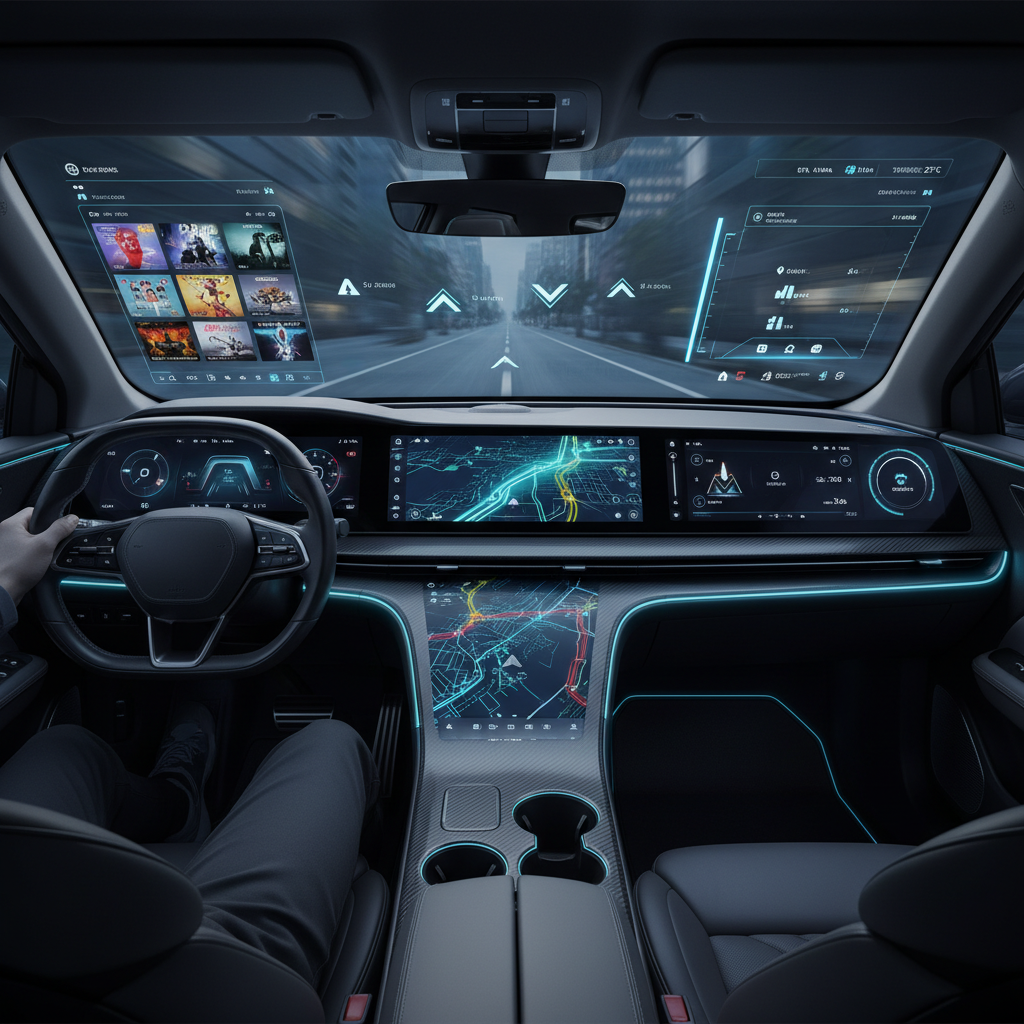
Imagine stepping into your car, and it already knows your preferred temperature, has your favorite morning playlist queued up, and has seamlessly plotted a route that not only avoids traffic but also takes into account your usual stops and even the scenic bypass you sometimes enjoy. This isn’t a scene from a science fiction movie; it’s the rapidly approaching reality of AI personalization in our daily drive. For years, our vehicles have been getting smarter, moving from simple machines to complex computers on wheels. Now, with the advent of advanced Artificial Intelligence and machine learning, this intelligence is evolving from generic utility to deeply personal understanding. We are moving beyond basic directions and one-size-fits-all entertainment to a bespoke driving experience tailored uniquely to you.
The topic of ‘Enhancing Your Commute: AI Navigation and Entertainment Solutions’ often conjures images of more efficient routes or vast media libraries. However, AI personalization elevates this to an entirely new level. It’s about your car anticipating your needs, understanding your habits, and learning from your interactions to create an environment that is not just convenient but intuitively comfortable and proactively helpful. This article delves into the transformative power of AI personalization, exploring how it’s revolutionizing navigation, entertainment, safety, efficiency, and comfort, making every journey more engaging, less stressful, and truly yours. We will uncover the technologies driving these changes, examine real-world applications, address critical questions about data and privacy, and peer into the exciting future of the personalized automotive experience.
The Dawn of Intelligent Commutes: What is AI Personalization in Vehicles?
AI personalization in vehicles refers to the ability of a car’s systems to learn, adapt, and tailor various functions and experiences to the individual driver and passengers based on their preferences, habits, and real-time context. It moves beyond simple user profiles or presets to a dynamic, evolving understanding of what makes your drive optimal. This involves leveraging sophisticated algorithms, sensor data, user input, and cloud connectivity to create a truly bespoke environment. Instead of merely reacting to commands, AI in your car begins to anticipate your needs, offering proactive suggestions and adjustments that make the driving experience seamless and intuitive.
At its core, AI personalization relies heavily on machine learning models that analyze vast amounts of data. This data includes your driving patterns, frequently visited destinations, preferred routes, media consumption habits, climate control settings, seating adjustments, and even your vocal commands and gestures. Over time, the AI system builds a comprehensive profile, allowing it to make intelligent decisions without explicit instruction. For instance, if you consistently listen to news podcasts on your morning commute and switch to a specific music genre on your evening drive, the AI will learn these patterns and automatically adjust the audio experience. If you always set the cabin temperature to 21 degrees Celsius and turn on the seat warmer on cold mornings, the car can begin to do this for you before you even ask, potentially even before you get in the car if integrated with smart home systems.
From Static Maps to Dynamic Journeys: The Evolution of Navigation
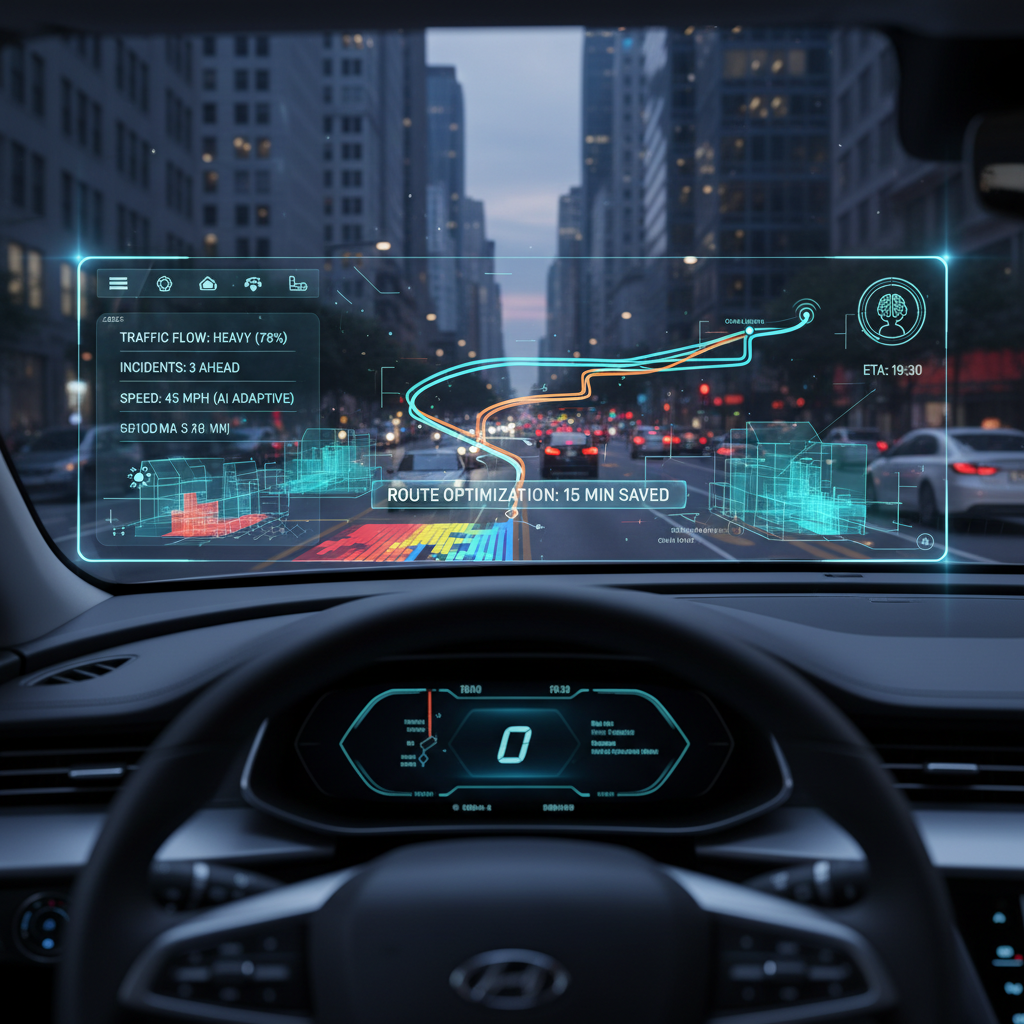
Navigation is perhaps the most obvious beneficiary of AI personalization. Traditional navigation systems, while functional, offer a relatively static experience. They provide the shortest or fastest route based on current traffic data. AI-personalized navigation, however, goes much further. It learns your preferred driving style, for example, if you consistently avoid highways or prefer routes with specific types of roads (e.g., more scenic, less congested even if slightly longer). It integrates with your calendar and external apps, suggesting destinations based on your appointments or social plans. If your calendar shows a meeting across town, the navigation can proactively suggest a departure time accounting for predicted traffic, parking availability at your destination, and even recommend coffee shops along the way if you typically grab a latte before work.
Moreover, AI-powered navigation considers not just traffic but also environmental factors, road conditions, and even your driving history in certain areas. It can predict potential delays more accurately by analyzing historical traffic data combined with real-time events. For drivers of electric vehicles, AI navigation intelligently plans routes that incorporate charging stops based on battery level, charger availability, your preferred charging network, and even your habit of taking breaks during long drives. This dynamic and predictive capability transforms navigation from a simple tool for directions into an intelligent co-pilot that understands and adapts to your journey’s unique context.
Tailored Entertainment: Your Car, Your Concert Hall or Podcast Studio
The car has long been a private space for entertainment, but AI personalization is taking this to unprecedented levels. No longer are we confined to manually flipping through radio stations or scrolling through endless playlists. AI-driven entertainment systems learn your musical tastes, preferred genres, artists, and even specific podcasts or audiobooks based on your listening history across various platforms. This includes not only what you play in the car but also what you stream on your phone or smart home devices, creating a truly unified listening experience.
Imagine getting into your car, and it recognizes that you’re heading to a gym session, automatically queuing up your high-energy workout playlist. Or perhaps it’s a Sunday morning, and it intuitively starts a relaxing jazz station or a thought-provoking podcast you’ve been meaning to catch up on. These systems can also adapt to the passengers. If your children are in the car, the AI can switch to their favorite audiobooks or children’s music, recalling their individual profiles or recognizing their presence through facial recognition or weight sensors. This multi-user personalization ensures that everyone in the vehicle enjoys their preferred media experience without constant manual adjustments.
Seamless Integration with Personal Ecosystems
The power of AI in car entertainment extends to its seamless integration with your broader digital ecosystem. Modern vehicles are becoming extensions of our smart homes and offices. AI personalizes your in-car experience by linking to your streaming subscriptions (Spotify, Apple Music, Audible, etc.), your smart home devices (controlling lights, thermostats, or security systems from your car), and even your work calendar and communication tools. For instance, your car’s AI might remind you of an upcoming video conference and offer to dial in, projecting the call onto your infotainment screen, all while adjusting the cabin’s acoustics for optimal clarity.
This deep integration means your preferences and data follow you across devices, creating a continuous and context-aware experience. If you were listening to a podcast on your smart speaker at home, the car can pick up exactly where you left off. If you schedule an event on your phone, the car’s navigation automatically registers it as a potential destination. This level of connectivity transforms the car into a truly personalized mobile hub, adapting its entertainment, communication, and even productivity features to your immediate needs and long-term habits, making your commute not just a transit period but an integrated part of your daily digital life.
Proactive Safety and Predictive Maintenance: AI as Your Co-Pilot and Mechanic
While often associated with comfort and convenience, AI personalization plays a crucial role in enhancing vehicle safety and reliability. Beyond standard advanced driver-assistance systems (ADAS) like automatic emergency braking or lane-keeping assist, AI personalization introduces a layer of anticipatory safety and predictive vehicle health management. It uses learned patterns and real-time data to prevent incidents before they occur and to keep your vehicle in optimal condition.
Beyond ADAS: Anticipatory Safety Measures
AI can personalize safety by understanding individual driving behaviors and environmental contexts. For example, if the system learns that a driver tends to brake harder in specific weather conditions or on particular stretches of road, it can proactively adjust sensitivity settings for collision warnings or even pre-charge brake systems. Driver monitoring systems, often AI-powered, go beyond detecting drowsiness; they can learn a driver’s typical alertness levels and recognize subtle deviations that might indicate fatigue or distraction more accurately than generic algorithms. This personalized monitoring can trigger earlier or more nuanced alerts, like a gentle steering wheel vibration rather than an abrupt audible alarm, making the intervention more effective and less startling.
Furthermore, AI can analyze external data, such as real-time weather forecasts combined with road conditions, to offer personalized safety advice. If a sudden localized downpour is detected ahead on your usual route, the AI might recommend an alternative path that is known to drain better or suggest reducing speed and increasing following distance, tailored to your vehicle’s capabilities and your typical driving habits in adverse conditions. This proactive, context-aware approach to safety shifts from reactive intervention to predictive prevention, significantly enhancing the driver’s security.
Vehicle Health Monitoring and Predictive Insights
Predictive maintenance is another powerful application of AI personalization. Modern vehicles are equipped with hundreds of sensors that collect vast amounts of data about engine performance, brake wear, tire pressure, battery health, and more. AI algorithms analyze this data in real-time, looking for anomalies and subtle trends that indicate potential issues before they escalate into costly breakdowns. This is personalized because the AI learns the specific wear patterns and operational norms of your vehicle, taking into account your driving style, mileage, and environmental factors.
Instead of relying on generic service intervals, your car’s AI can send personalized alerts for maintenance needs. For instance, it might detect a slight drop in engine performance that suggests an oil change is due earlier than scheduled, or it might notice a consistent but minor tire pressure loss that indicates a slow puncture. The system can then not only notify you but also suggest reputable service centers, schedule appointments based on your calendar availability, and even pre-order necessary parts. For electric vehicles, AI can meticulously monitor battery cell health, predict range degradation, and recommend specific charging behaviors to prolong battery life. This level of personalized, predictive care saves drivers time, money, and prevents unexpected roadside emergencies, transforming vehicle ownership into a more seamless and worry-free experience.
Optimizing Efficiency and Comfort: The Smart Cabin Experience
Beyond navigation and entertainment, AI personalization deeply impacts the overall efficiency and comfort of the cabin, making every drive a more pleasant and productive experience. From managing the climate to finding parking, AI systems work tirelessly in the background to fine-tune your environment.
Personalized Climate Control and Seating
One of the most noticeable aspects of a comfortable commute is the cabin environment. AI personalization learns your preferred temperature settings, not just as a static number but dynamically, adapting to outside weather conditions, time of day, and even the number of occupants. If you tend to prefer a cooler cabin in the summer and warmer seats in the winter, the AI will remember and automatically adjust fans, vents, and heated/ventilated seats. Advanced systems can even detect individual preferences for different zones within the car, ensuring that each passenger experiences their ideal microclimate without manual intervention. Some cutting-edge systems incorporate biometric data (e.g., from wearables) to gauge your body temperature and adjust the climate accordingly, offering a truly individualized thermal experience.
Seating preferences are also personalized. Many luxury vehicles offer extensive seat adjustments. AI systems can store and recall not just a few presets but a highly detailed profile of your ideal seating position, including lumbar support, headrest height, and even massage settings. If multiple drivers use the vehicle, the AI can recognize them (e.g., via key fob, facial recognition, or smartphone pairing) and automatically adjust the seat, mirrors, and steering wheel to their saved preferences before they even touch a button. This attention to detail significantly enhances ergonomic comfort and reduces the time spent on manual adjustments at the start of each journey.
Intelligent Route Optimization and Traffic Prediction
AI’s impact on efficiency extends to intelligent route optimization that goes far beyond simply avoiding traffic jams. It learns your preferred times to travel, specific road segments you like or dislike, and even your driving style to calculate the most efficient path for *you*. For instance, if you consistently avoid high-speed toll roads, the AI will prioritize toll-free routes even if they’re slightly longer in terms of distance. If you’re an EV driver, the system factors in charging station availability, elevation changes, and your average energy consumption to ensure you reach your destination without range anxiety.
Moreover, AI-powered traffic prediction uses a combination of historical data, real-time traffic feeds, weather patterns, local event calendars, and even anonymized data from other vehicles to provide highly accurate predictions. It can foresee congestion forming before it happens and proactively reroute you. This means fewer frustrating delays and more predictable journey times, allowing you to plan your day with greater certainty. The system might even suggest alternative modes of transport if, for example, a major incident makes driving impractical for a segment of your journey, offering integrated public transit information.
The Role of Machine Learning and Data in AI Personalization
The core engine behind AI personalization is machine learning (ML), a subset of AI that enables systems to learn from data without being explicitly programmed. For in-car personalization, ML algorithms are fed vast amounts of user-generated data, vehicle sensor data, and external contextual information. This continuous stream of data allows the AI to identify patterns, make predictions, and refine its understanding of your preferences over time.
Learning Your Habits: Algorithms at Work
At a fundamental level, supervised and unsupervised learning algorithms are at play. Supervised learning occurs when the system is trained on labeled data – for example, associating your selection of a specific playlist with a particular time of day or destination. Unsupervised learning helps the system discover hidden patterns in data without explicit labels, such as recognizing that you always accelerate gently and prefer wider turns, classifying this as a “relaxed” driving style.
Reinforcement learning is particularly powerful for personalization. Here, the AI takes actions and receives feedback (rewards or penalties) based on whether those actions align with your preferences. For instance, if the AI suggests a route and you consistently ignore it for another, the AI ‘learns’ that your preference deviates from its initial suggestion and adjusts its routing algorithm for future journeys. If it plays a song you immediately skip, it receives a ‘penalty’ signal, refining its music recommendation model. This iterative learning process is what makes AI personalization so dynamic and adaptive, constantly evolving with your changing habits and moods.
Data Privacy and Security Considerations
The collection and analysis of such extensive personal data naturally raise significant concerns about privacy and security. Vehicle manufacturers and technology providers are acutely aware of these challenges and are implementing robust measures to protect user data. Key considerations include:
- Anonymization and Aggregation: Much of the data used for broad AI model training is anonymized and aggregated, meaning it cannot be traced back to an individual user. This helps improve general system performance without compromising personal identities.
- Data Encryption: All data transmitted between the vehicle, cloud services, and your personal devices is heavily encrypted to prevent unauthorized access.
- Consent and Control: Users are typically required to provide explicit consent for data collection and sharing. Many systems offer granular controls, allowing drivers to choose which types of data they are comfortable sharing (e.g., location data but not media preferences).
- Edge Computing: Increasingly, AI processing is performed directly on the vehicle’s hardware (edge computing) rather than solely in the cloud. This reduces the amount of sensitive data transmitted externally and enhances response times.
- Regular Audits and Compliance: Companies are subject to strict data protection regulations (like GDPR and CCPA) and undergo regular security audits to ensure compliance and protect against breaches.
It is crucial for consumers to understand the data policies of their vehicle manufacturers and to actively manage their privacy settings to ensure a comfortable balance between personalization benefits and data security concerns. Transparency from manufacturers is paramount in building trust in these sophisticated AI systems.
Future Horizons: Autonomous Vehicles and Hyper-Personalization
The current advancements in AI personalization are just the beginning. As we move towards higher levels of autonomous driving, the scope for hyper-personalization will expand exponentially, fundamentally reshaping our relationship with our vehicles. In a future where the car drives itself, the focus shifts entirely from the act of driving to the experience within the cabin, opening up a realm of possibilities for personalized services and environments.
The Fully Autonomous, Personalized Pod
Imagine a Level 5 autonomous vehicle – a true self-driving pod where human intervention is rarely, if ever, needed. In this scenario, the vehicle transforms into a highly personalized mobile space: an office, a living room, a entertainment hub, or even a serene meditation chamber. AI personalization will orchestrate this transformation seamlessly. Before you even enter, the car will have already prepared the cabin based on your intended activity for the journey. If you have a video conference scheduled, the seats might reconfigure to a meeting layout, privacy screens deploy, and appropriate lighting activate. If it’s a leisure trip, the windows might dim, ambient music play, and the interior lighting adapt to a relaxing hue, while the infotainment system projects personalized content onto large interior displays.
Emotional AI, or affective computing, will play a significant role. Systems will be able to gauge your mood through facial expressions, voice tone, and even physiological data (e.g., from integrated wearables). If the AI detects stress, it might automatically initiate a calming playlist, adjust ambient lighting to soft greens or blues, and even offer a guided meditation program. If it senses boredom during a long trip, it could suggest interactive games, educational content, or even virtual reality experiences tailored to your interests.
Furthermore, hyper-personalization in autonomous vehicles will extend to truly adaptive performance. While the AI drives, it will learn your comfort preferences for acceleration, braking, and cornering, mimicking a ‘personalized’ driving style even without human input. This ensures that the ride itself is tailored to your individual comfort levels, creating a consistent and familiar experience, regardless of who owns the vehicle or what the external conditions are. The vehicle will no longer be just a means of transport but a truly personal, intelligent companion for every journey.
Comparative Analysis: Traditional vs. AI-Personalized Driving Experiences
To truly grasp the impact of AI personalization, it helps to compare it directly with the more traditional automotive experiences many of us are accustomed to. The following table highlights key differences across various aspects of the daily drive.
| Feature Category | Traditional Navigation & Entertainment Systems | AI-Personalized Navigation & Entertainment Systems |
|---|---|---|
| Traffic Information | Real-time data for major roads; simple congestion reporting. Relies heavily on static maps and broad traffic feeds. | Predictive, context-aware, learns individual preferences (e.g., avoids specific types of congestion like construction, or prioritizes scenic routes). Integrates historical patterns. |
| Route Selection | Primarily shortest/fastest path algorithms; limited consideration for user preferences beyond basic settings. | Optimizes based on driver’s past choices, current mood, preferred road types (e.g., highways vs. backroads), scenic routes, fuel efficiency goals, and calendar events. |
| Point of Interest (POI) Suggestions | Generic, proximity-based suggestions (e.g., nearest gas station, restaurant). Requires explicit search queries. | Contextual, personalized based on driver’s interests, calendar, past visits, time of day (e.g., suggests your favorite coffee shop on your usual morning route, or a specific type of restaurant based on past dining habits). |
| Voice Interaction | Command-based, limited understanding of natural language, often frustrating with specific phrasing requirements. | Natural language processing, conversational, anticipates needs, learns voice patterns and accents, understands complex requests and context. |
| Media Recommendations | Basic radio, manually selected media from external devices, or pre-programmed playlists. No learning. | Intuitively suggests music, podcasts, or audiobooks based on past listening habits, time of day, current journey, and even passenger profiles, seamlessly integrating streaming services. |
| Cabin Environment Control | Manual climate adjustments, fixed seat presets, basic interior lighting options. | Learns preferred temperature, fan speed, seat heating/cooling settings, mirror positions, and ambient lighting. Automatically adjusts based on driver recognition, external weather, and time. |
| Multi-User Experience | Limited to a few stored profiles requiring manual selection. | Recognizes individual drivers/passengers (e.g., via key, phone, facial recognition) and instantly applies their full suite of preferences across navigation, media, and cabin settings. |
Understanding the Investment: AI Personalization Levels and Their Implications
AI personalization isn’t a monolithic feature; it exists on a spectrum. The level of sophistication often correlates with vehicle segment, technology packages, and associated costs. This table provides a general overview of different personalization levels and their typical implications.
| Personalization Level | Key Features | Benefits for Driver | Typical Cost Implication (Relative) |
|---|---|---|---|
| Basic (Entry-Level AI) | Adaptive cruise control, lane-keeping assist, basic voice commands, limited profile recall for radio presets. | Enhanced safety features for common scenarios, minor convenience improvements, very slight reduction in driver fatigue on long drives. | Low to Medium (often standard in many new mid-range vehicles, or part of basic safety packages). |
| Intermediate (Connected AI) | Advanced voice assistants (e.g., Hey Mercedes, BMW Intelligent Personal Assistant), personalized media suggestions, smart climate control based on basic learning, route optimization considering real-time data and some learned preferences. | More intuitive interaction, tailored entertainment experiences, improved cabin comfort, better route planning that saves some time and stress. Integration with smartphone apps. | Medium (often part of premium technology packages or higher trim levels, potentially with subscription services for connectivity). |
| Advanced (Proactive AI) | Predictive maintenance alerts, comprehensive driver monitoring (drowsiness, distraction), highly personalized route and POI suggestions, anticipatory cabin adjustments (e.g., pre-heating), learning individual driving styles. Seamless smart device integration. | Proactive vehicle care avoiding breakdowns, significantly enhanced safety through real-time driver insights, truly tailored driving environment, substantial time and stress savings, greater overall convenience. | Medium to High (typically found in luxury vehicles or as high-tier options/subscriptions in mainstream brands, reflecting advanced sensor arrays and AI processing). |
| Hyper-Personalized (Future AI & Autonomous) | Full autonomous capability with personal preference integration, seamless smart home/office integration, emotional AI (mood detection), multi-modal interaction (gaze, gesture), adaptive vehicle performance based on occupant comfort. | Ultimate convenience, safety, and efficiency; vehicle transforms into a highly adaptive personal space (mobile office, lounge, entertainment hub). Driving becomes an optional activity, maximizing personal time. | High (expected in future premium autonomous models, likely with extensive subscription-based services for bespoke experiences and ongoing AI development). |
Real-World Scenarios: AI Personalization in Action
Let’s illustrate how AI personalization translates into tangible benefits in everyday driving situations through a few practical examples.
Scenario 1: The Commuter’s Morning Rush
Meet Sarah, a marketing professional with a demanding schedule. Her AI-personalized car understands her morning routine. At 7:30 AM, five minutes before she usually leaves, the car remotely pre-conditions the cabin to her preferred 20°C and starts a gentle seat massage. As she steps in, her preferred news podcast automatically resumes from where she left off at home. The navigation system, having integrated with her work calendar, has already accounted for a sudden lane closure on her usual route and suggests a slightly longer but faster alternative through a less congested residential area, which it knows she prefers over highway detours. It also highlights a new drive-thru coffee shop along the revised route, knowing she frequently stops for coffee. During her drive, the AI monitors her alertness; if it detects signs of fatigue, it might gently suggest a short break or play a more upbeat track. This seamless orchestration turns a potentially stressful commute into a calm, productive transition into her workday.
Scenario 2: The Family Road Trip
The Rodriguez family is embarking on a cross-country adventure. Their AI-enabled minivan simplifies the journey considerably. For the driver, Maria, the navigation system has intelligently planned charging stops for their EV, factoring in charger availability at their preferred network and optimal battery levels for efficient charging, while also considering the family’s preferred lunch breaks. For the kids in the back, integrated personalized entertainment screens are running their favorite movies and games, all managed via voice commands and separate user profiles. The AI even adjusts the rear climate zones based on individual preferences. When they reach a new city, the AI proactively suggests family-friendly attractions and restaurants based on their past travel history and online searches. If the kids are getting restless, the AI might suggest a nearby park with a playground. This dramatically reduces parental stress and enhances the enjoyment for everyone, making the long journey feel shorter and more manageable.
Scenario 3: The Urban Explorer
David loves exploring new neighborhoods and hidden gems in his city. His AI-personalized vehicle acts as his ultimate urban guide. Instead of just giving directions to a specific address, the AI learns his affinity for historical sites, indie bookstores, and artisanal coffee shops. When he drives into an unfamiliar district, the navigation system highlights nearby points of interest tailored to his tastes, sometimes even suggesting a slight detour to discover a highly-rated, off-the-beaten-path cafe. The car’s parking assistant, enhanced by AI, learns his preferred parking garages or street parking zones and proactively guides him to available spots, often predicting availability based on historical data. If he typically parks further away for a cheaper rate, the AI prioritizes that. After a long day of exploration, as he heads home, the AI detects his fatigue and automatically turns on ambient interior lighting and plays a calming playlist, ensuring a relaxing end to his adventurous day.
Scenario 4: The Eco-Conscious Driver
For Emily, minimizing her carbon footprint is paramount. Her AI-personalized car helps her achieve this. The AI-powered navigation consistently prioritizes routes that optimize fuel or energy efficiency, even if they are not the absolute fastest. It provides real-time coaching on her driving style, suggesting smoother acceleration and braking techniques to conserve energy, personalized to her vehicle’s specific powertrain characteristics. The predictive maintenance system proactively alerts her to any issues that might reduce efficiency, such as a slightly underinflated tire or a dirty air filter, and recommends an immediate fix. For her EV, the AI learns her charging habits and recommends optimal charging times and durations to maximize battery health and minimize electricity costs, often integrating with her smart home energy management system. This holistic approach empowers Emily to drive more sustainably and efficiently without constant manual effort.
Frequently Asked Questions
Q: What exactly is AI personalization in a car?
A: AI personalization in a car refers to the vehicle’s ability to learn, adapt, and tailor various functions and experiences to the individual driver and passengers. This includes adjusting navigation routes, media preferences, climate control, seating positions, and even safety warnings based on learned habits, real-time context, and user input. Unlike static presets, AI personalization continuously evolves, making the car’s systems feel intuitively responsive and unique to each user.
Q: How does my car learn my preferences?
A: Your car learns your preferences through a combination of sensors, your interactions, and data analysis. It collects data on your driving patterns (routes, speeds, braking habits), media consumption (music, podcasts, streaming services), climate settings, seating adjustments, voice commands, and even gestures. This data, often anonymized and aggregated, is fed into machine learning algorithms that identify patterns and predict your needs. For instance, if you consistently listen to rock music on Friday evenings, the AI learns to suggest it. If you always take a specific detour to avoid a certain intersection, the AI will factor that into future route suggestions. The more you use the system, the smarter and more personalized it becomes.
Q: Is AI personalization only for luxury vehicles?
A: While advanced AI personalization features often debut in luxury vehicles, the technology is rapidly democratizing. Many mainstream car brands are now integrating various levels of AI personalization into their mid-range and even entry-level models. Basic personalization features, such as adaptive cruise control that learns your preferred following distance or infotainment systems that recall recent destinations, are becoming increasingly common. The sophistication might vary, but the trend is towards making personalized driving experiences accessible across a broader spectrum of the automotive market.
Q: What about data privacy and security with so much personal data being collected?
A: Data privacy and security are paramount concerns for vehicle manufacturers and tech companies. Reputable companies employ robust measures, including strong data encryption, anonymization and aggregation of data for general model training, and strict adherence to global data protection regulations like GDPR and CCPA. Users typically have control over what data they share and can often adjust privacy settings within the vehicle’s infotainment system. It is important to review your vehicle’s privacy policy and customize settings to your comfort level.
Q: Can different drivers have different personalized profiles in the same car?
A: Absolutely, multi-user personalization is a core aspect of advanced AI systems. Modern vehicles often allow for multiple individual profiles to be stored. The car can recognize different drivers through various methods, such as their specific key fob, smartphone pairing, facial recognition cameras, or even voice recognition. Once a driver is identified, the car automatically adjusts all personalized settings – including seats, mirrors, climate control, navigation preferences, and media profiles – to match that individual’s saved preferences. This ensures a tailored experience for everyone who uses the vehicle.
Q: How does AI help with vehicle maintenance?
A: AI significantly enhances vehicle maintenance through predictive analytics. Sensors throughout the vehicle continuously collect data on component performance, fluid levels, tire pressure, engine health, and more. AI algorithms analyze this data to detect subtle anomalies or wear patterns that indicate a potential issue before it becomes critical. Instead of relying solely on fixed service intervals, the AI can provide personalized alerts for maintenance, recommend specific repairs, suggest optimal times for service, and even help schedule appointments with preferred dealerships, saving time and preventing unexpected breakdowns.
Q: Will AI personalization make me a less attentive driver?
A: The goal of AI personalization is to enhance the driving experience, reduce cognitive load, and improve safety, not to encourage inattentiveness. By handling routine tasks, anticipating needs, and optimizing routes, AI aims to free up the driver’s mental capacity to focus on the road and respond to unexpected situations. However, drivers must always remain engaged and responsible for operating their vehicle. While AI assists, it does not replace the need for driver attentiveness. Many AI systems also include driver monitoring to ensure engagement and warn against distraction or drowsiness.
Q: What are the current limitations of in-car AI personalization?
A: Current limitations include the reliance on data availability (especially in rural areas), the need for continuous software updates, the challenge of interpreting complex emotional cues, and potential over-reliance if drivers become too passive. Data privacy concerns and the ethical implications of AI decision-making also remain ongoing areas of development. Furthermore, fully seamless integration across all external devices and services can still be challenging due to varying industry standards and proprietary systems.
Q: How do I update my car’s AI system?
A: Most modern vehicles with AI capabilities support Over-The-Air (OTA) updates, similar to how your smartphone updates its operating system. These updates are typically downloaded wirelessly via a cellular connection or Wi-Fi when the car is parked. Manufacturers regularly release updates to improve performance, add new features, fix bugs, and enhance security. Your car’s infotainment system will usually notify you when an update is available and guide you through the installation process. Some more significant updates might require a visit to a dealership, but this is becoming less common for software improvements.
Q: What’s the difference between ADAS and AI personalization?
A: ADAS (Advanced Driver-Assistance Systems) are a set of safety and convenience features that help drivers with specific tasks, such as lane keeping, adaptive cruise control, automatic emergency braking, or blind-spot monitoring. These are generally rule-based or reactive systems. AI personalization, on the other hand, refers to the broader capability of the car’s systems to learn and adapt to individual user preferences and context across various functions (navigation, entertainment, climate, etc.). While ADAS can be enhanced by AI (e.g., AI-powered driver monitoring for more personalized safety warnings), AI personalization encompasses a wider range of proactive and adaptive features designed to create a bespoke driving experience.
Key Takeaways: The Future is Personal
- Beyond Basic Functions: AI personalization transforms the driving experience from generic utility to a deeply intuitive, bespoke journey tailored to individual preferences and habits.
- Intelligent Navigation: AI-powered navigation goes beyond traffic avoidance, learning preferred routes, integrating with personal calendars, and offering proactive, context-aware suggestions.
- Tailored Entertainment: In-car entertainment adapts to individual and passenger tastes, seamlessly integrating personal streaming services and learning media consumption patterns.
- Proactive Safety and Maintenance: AI enhances safety through anticipatory warnings based on learned driver behavior and provides predictive maintenance insights to prevent breakdowns and optimize vehicle health.
- Optimized Comfort and Efficiency: Personalized climate control, seating adjustments, and intelligent route planning create a consistently comfortable and efficient cabin environment.
- Data-Driven Learning: Machine learning algorithms continuously analyze user interactions and sensor data to refine personalization, constantly adapting to evolving needs.
- Privacy is Paramount: While data collection is central, robust measures like encryption, anonymization, and user consent controls are crucial for data privacy and security.
- Future of Mobility: As autonomous driving evolves, hyper-personalization will transform vehicles into versatile, adaptive mobile spaces that cater to every aspect of an occupant’s life.
Conclusion: Driving Towards a Smarter, More Personal Future
The journey beyond basic directions is well underway, and AI personalization is steering us towards a future where our daily drive is not just a means to an end but a truly enhanced, intuitive, and enjoyable experience. From the moment we step into our vehicles, AI is working tirelessly to anticipate our needs, cater to our preferences, and proactively make our commutes safer, more comfortable, and incredibly efficient. It’s about a car that doesn’t just respond to commands but truly understands its driver, adapting its entire ecosystem to create a harmonious extension of one’s personal life.
As technology continues to advance, fueled by increasingly sophisticated machine learning models and ubiquitous connectivity, the level of personalization we can expect will only grow. The distinction between our digital lives and our driving experiences will blur further, leading to a seamless, integrated mobility solution that adapts to our ever-changing needs and moods. While questions of data privacy and ethical implementation remain important considerations, the immense benefits of AI personalization in terms of convenience, safety, and efficiency are undeniable.
We are standing at the precipice of a new era in automotive technology, one where the car is no longer just a machine for transport but an intelligent, learning companion that evolves with us. The personalized daily drive is not just a luxury; it’s becoming a fundamental expectation for the modern commuter, promising a future where every journey is a testament to the power of intelligent design and a truly personal touch.

































































Leave a Reply