


Mastering Language Learning with Intelligent AI Tutors
Introduction: Breaking Through the Intermediate Plateau
For many language learners, reaching an intermediate level feels like a significant accomplishment. You can hold basic conversations, understand common phrases, and navigate everyday situations with relative ease. However, this is often where the real challenge begins: the dreaded intermediate plateau. Moving beyond merely functional communication to true fluency, where you can express complex ideas, understand nuanced humor, engage in sophisticated debates, or specialize in professional terminology, requires a fundamental shift in strategy. Traditional learning methods, while foundational, often fall short in providing the personalized, dynamic, and context-rich environment needed for this advanced leap. The limitations of classroom settings or even one-on-one human tutoring can become apparent as learners grapple with the sheer volume of nuanced vocabulary, intricate grammatical structures, and subtle cultural cues that define advanced proficiency.
Enter AI tutoring systems. What was once the realm of science fiction is now a tangible reality, with intelligent AI tutors evolving rapidly from simple flashcard apps to sophisticated conversational partners. These systems are not just digitizing old textbooks; they are fundamentally reshaping how we approach advanced language acquisition. Leveraging breakthroughs in natural language processing (NLP), machine learning (ML), and generative AI, these platforms offer an unprecedented level of personalization. They adapt to individual strengths and weaknesses, provide instantaneous and granular feedback, and create immersive environments that were previously only possible through extensive time abroad or prohibitively expensive human tutoring. This comprehensive article will delve into how cutting-edge AI tutoring systems can be strategically leveraged to move beyond basic phrases and unlock advanced language strategies, helping you achieve true mastery, cultural competency, and seamless fluency.
The AI Revolution in Advanced Language Learning: A Paradigm Shift
The landscape of language learning has been dramatically transformed by artificial intelligence, particularly in the last few years with the advent of generative AI. Early AI applications in language education were often limited to grammar checkers, dictionary lookups, or rule-based chatbots that offered predictable, often rigid, interactions. While these tools provided basic utility, they lacked the depth, flexibility, and intelligence required to truly assist advanced learners in grappling with the complexities of a foreign language.
However, recent advancements have ushered in a new era. Modern intelligent AI tutors are powered by large language models (LLMs) that can understand context, generate remarkably human-like responses, and adapt their teaching methods in real-time. This revolution means they can now:
- Analyze Complex Input: AI can now interpret nuanced questions, detect subtle errors in spoken or written output, and understand the implied meaning behind a learner’s expressions.
- Generate Dynamic Content: Instead of static exercises, AI can create an infinite array of customized lessons, role-playing scenarios, and discussion prompts tailored to a learner’s current proficiency, interests, and professional goals.
- Provide Granular Feedback: Feedback is no longer just “right or wrong.” AI can explain *why* something is incorrect, suggest multiple ways to improve, and even offer insights into the cultural appropriateness of a phrase.
- Personalize Learning Paths: By tracking performance across various linguistic domains (grammar, vocabulary, pronunciation, fluency), the AI can continuously adjust the learning path, prioritizing areas of weakness and reinforcing strengths, ensuring efficient progress through the advanced stages.
For advanced learners, this translates into an unprecedented level of support. Imagine an AI constructing a legal debate scenario in German, analyzing your argument structure and use of technical terms; or explaining the intricate historical context of a literary allusion in Japanese poetry. This is the promise of the AI revolution: a highly personalized, infinitely patient, and continuously evolving learning partner that makes the path to advanced fluency more accessible, more efficient, and far more engaging than ever before.
Mastering Nuance and Idiomatic Expressions with AI Tutoring Systems
Understanding the Subtle Art of Native-Like Speech
One of the most significant hurdles for advanced language learners is moving beyond literal translation to fully grasp and naturally use idiomatic expressions, slang, proverbs, and cultural references. These are the linguistic elements that infuse a language with its unique character and often baffle intermediate learners because their meaning cannot be deduced simply from the individual words. A phrase like “to kick the bucket” or “to spill the beans” makes no literal sense but carries a rich, specific meaning within an English-speaking cultural context. Similarly, understanding the appropriate use of specific honorifics in Japanese or the indirect communication style in certain Latin cultures requires a deep dive into cultural nuance.
AI tutoring systems excel in breaking down these linguistic and cultural puzzles, transforming them from intimidating barriers into navigable learning opportunities. Unlike a static dictionary or a phrasebook, an intelligent AI tutor can:
- Provide Contextual Explanations: Leveraging its vast knowledge base, AI can explain the origin of an idiom, its appropriate usage scenarios (formal vs. informal), and common variations. It can present examples from authentic media like film clips, news articles, song lyrics, or snippets of literature, showing the idiom in its natural habitat. It can even explain the underlying cultural values or historical events that gave rise to a particular saying.
- Generate Dynamic Practice Scenarios: Imagine an AI tutor creating a role-playing scenario where you need to use specific idioms naturally and appropriately. For instance, you might be asked to comfort a friend who is “feeling under the weather” at a party, or discuss a difficult business decision where someone had to “bite the bullet.” These scenarios are highly adaptable, evolving based on your responses.
- Offer Real-Time Feedback and Correction: If you attempt to use an idiom incorrectly, in an inappropriate context, or with incorrect grammatical structure, the AI can immediately correct you. Crucially, it won’t just say “wrong”; it will explain *why* it doesn’t fit, suggest alternatives, and highlight the subtle implications of different choices. This instant feedback loop is paramount for rapid and accurate improvement.
- Curate Personalized Learning Paths: Based on your errors, successes, and stated interests, the AI can identify patterns in your understanding of idiomatic expressions. It can then curate a personalized learning path, focusing on the types of idioms you struggle with most, or those highly relevant to your specific goals (e.g., legal idioms for a law student, informal slang for social interaction, proverbs for literary analysis).
- Differentiate Subtle Nuances: AI can help learners distinguish between similar idioms or phrases that have slightly different connotations or levels of formality, ensuring that you choose the most fitting expression for any given situation.
By immersing learners in a rich, interactive environment where idiomatic language and cultural nuance are explained, practiced, and corrected with precision, AI tutors provide an unparalleled advantage in mastering these often elusive aspects of a foreign language, truly making your speech sound more native and authentic.
Advanced Grammar and Syntax Deconstruction for Precision
Beyond Conjugations: Unpacking Complex Sentence Structures
While basic grammar covers verb conjugations, simple sentence structures, and fundamental tenses, advanced grammar delves into the intricate mechanics of a language. This includes mastering subordinate clauses (e.g., relative, adverbial, noun clauses), the subjunctive mood (for expressing doubt, desire, or hypothetical situations), complex conditional statements (especially the third conditional and mixed conditionals), advanced usage of perfect tenses, sophisticated passive voice transformations, reported speech with nuanced mood shifts, and the precise application of prepositions and conjunctions that dramatically alter meaning. These elements are not just academic; they are essential for expressing sophisticated thoughts, arguments, and subtleties with precision and eloquence, enabling you to participate in higher-level discussions and understand complex texts.
AI tutoring systems provide an extraordinarily powerful toolkit for deconstructing, understanding, and mastering these advanced grammatical and syntactical concepts:
- Granular and Explanatory Error Analysis: Unlike a simple grammar checker, advanced AI goes beyond merely flagging an error. If you incorrectly use a verb tense, for instance, the AI will not only correct it but also explain the underlying grammatical rule that was violated, provide detailed examples of correct usage in various contexts, and offer different ways to rephrase your sentence to achieve greater clarity or precision. For example, if you incorrectly use a past simple instead of a past perfect, the AI can explain the concept of sequence of events and how the past perfect clarifies which action occurred first, providing clear, actionable insights.
- Interactive and Customized Grammar Drills: AI can generate an infinite number of highly customized grammar exercises based on your specific weaknesses. These aren’t just multiple-choice questions; they can involve sentence completion tasks that require precise application of complex rules, sentence transformation exercises (e.g., converting active to passive voice, direct to reported speech), error identification in advanced texts, or even prompting you to create original sentences using specific advanced grammatical structures like compound-complex sentences or specific subjunctive constructions.
- Contextual Application of Rules: AI excels at presenting advanced grammatical concepts within relevant, real-world contexts. For instance, you might practice the subjunctive mood by composing polite requests or expressing doubts in a simulated formal conversation, or practice conditional statements by discussing hypothetical business scenarios. This helps move grammar from abstract rules to practical application.
- Comparison and Contrast of Similar Structures: Many advanced grammatical points involve subtle differences in meaning or usage. AI can help learners differentiate between seemingly similar structures, such as various perfect tenses (e.g., present perfect continuous vs. past perfect continuous) or the nuances of different modal verbs, by providing side-by-side comparisons and practice opportunities.
- Progress Tracking and Intelligent Reinforcement: The AI maintains a detailed, longitudinal record of your grammar performance. It identifies recurring mistakes, tracks your mastery of specific rules, and ensures that persistent problem areas are revisited and reinforced through spaced repetition and varied exercises until mastery is achieved. This adaptive learning approach ensures that no grammatical stone is left unturned and your learning is highly efficient.
With the sophisticated analytical and generative capabilities of AI, learners can dissect the most complex sentences, understand the function of each linguistic component, and then confidently reconstruct their own grammatically precise, coherent, and sophisticated expressions, bridging the crucial gap between simply being understood and speaking or writing with true precision, elegance, and eloquence.
Developing Advanced Conversational Fluency and Pronunciation with AI
Speaking Like a Native: Intonation, Rhythm, and Dynamic Dialogue
Achieving advanced fluency isn’t just about knowing an extensive vocabulary or complex grammar; it’s fundamentally about speaking naturally, confidently, and with the correct rhythm, stress, intonation, and flow of a native speaker. It involves being able to engage in dynamic, unscripted conversations, express nuanced opinions, argue points persuasively, and understand subtle cues. Many advanced learners struggle with this aspect because traditional methods often don’t provide sufficient opportunities for real-time, spontaneous conversation and incredibly detailed, objective pronunciation feedback.
AI tutoring systems, particularly those powered by advanced speech recognition and generative AI, offer groundbreaking capabilities in these critical areas:
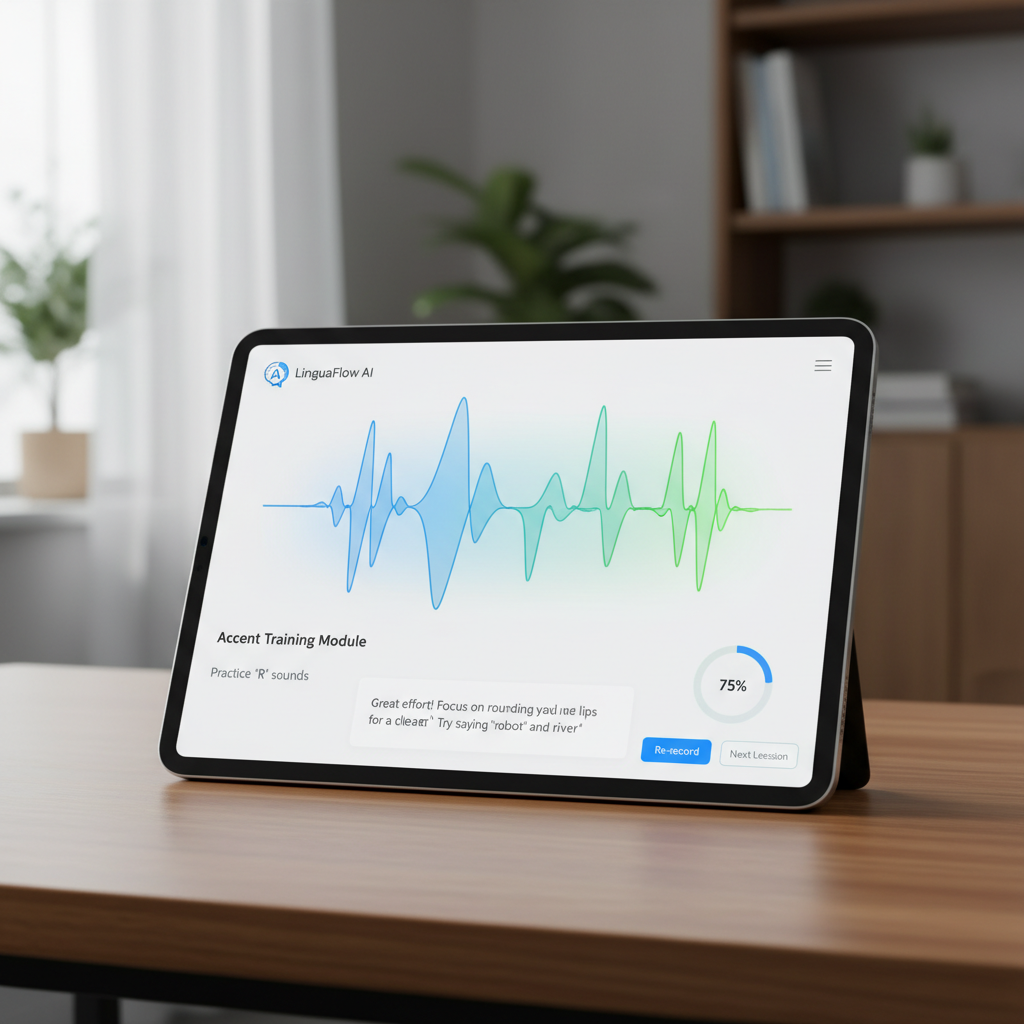
- Sophisticated Speech Recognition and Phonetic Analysis: Modern AI systems go far beyond simple word recognition. They can analyze your spoken output for subtle nuances like intonation patterns (e.g., rising vs. falling intonation in questions and statements), word stress (e.g., whether you emphasize the correct syllable), sentence rhythm, and even the accuracy of individual phonemes (the smallest units of sound). For example, if you mispronounce a tricky vowel sound, place stress on the wrong syllable, or use an unnatural intonation contour, the AI can highlight this, show you a visual waveform comparison, and allow you to compare your pronunciation directly to a native speaker’s model, providing targeted exercises for improvement.
- Dynamic Conversational Agents for Unscripted Practice: AI can simulate incredibly realistic conversations on a vast array of topics. Unlike older, scripted chatbots, these advanced agents can respond dynamically, ask insightful follow-up questions, challenge your arguments, and engage in genuine back-and-forth dialogue. This allows learners to practice spontaneous speech, develop quick thinking in the target language, and build confidence in unpredictable conversational settings, simulating real-life interactions without the pressure of a human interlocutor.
- Advanced Role-Playing and Scenario Practice: AI can set up complex, open-ended role-playing scenarios, such as a high-stakes job interview, a formal debate, a delicate negotiation, a casual social gathering, or even resolving a conflict. These simulations force learners to apply their language skills under pressure, using appropriate register, politeness levels, persuasive language, and culturally specific communication strategies. The AI evaluates your performance across multiple dimensions.
- Feedback on Cohesion, Coherence, and Discourse Markers: Beyond just grammar and vocabulary, AI can assess the overall flow, logic, and naturalness of your spoken responses. It can provide feedback on how well your ideas are connected, whether your arguments are structured clearly, and if you are effectively using transition words, discourse markers (e.g., “however,” “on the other hand,” “by the way”), and fillers (e.g., “um,” “like” – if appropriate) to create cohesive and natural-sounding speech.
- Custom Accent Training: Some highly advanced AI systems can even adapt to help learners target specific accents or regional variations within a language (e.g., British English vs. American English, Castilian Spanish vs. Latin American Spanish), offering tailored exercises and feedback for precise phonetic acquisition and stylistic mirroring.
By providing a safe, accessible, infinitely patient, and scientifically precise environment for extensive speaking practice, coupled with incredibly detailed and actionable pronunciation analysis, AI tutors are invaluable tools for refining conversational fluency to a near-native level, making your spoken language not just correct, but truly natural and effortless.
Domain-Specific Language and Professional Communication
Tailoring Your Language Skills for Niche Fields and Career Advancement
For professionals operating in an increasingly globalized world, language learning often extends far beyond general fluency to mastering domain-specific terminology and communication styles. Whether you are a doctor, lawyer, engineer, business analyst, diplomat, or artist, communicating effectively in your field in a foreign language requires a highly specialized vocabulary, a deep understanding of industry-specific jargon, and familiarity with professional communication protocols, cultural norms, and ethical considerations. Generic language courses simply cannot provide this depth.
AI tutoring systems are uniquely positioned to assist with this highly specialized and often career-critical learning, offering unprecedented customization:
- Specialized Vocabulary Acquisition from Authentic Sources: Advanced AI can ingest vast amounts of domain-specific texts (e.g., medical journals, legal precedents, technical manuals, financial reports, diplomatic communiqués) from the target language. It can then automatically extract key terminology, create targeted flashcards with contextual usage examples, generate quizzes, and facilitate sentence-building exercises that are entirely tailored to your specific profession or industry. This ensures you learn the exact vocabulary you need, as it’s used in real professional settings.
- Simulated Professional Scenarios for Applied Practice: Imagine an AI creating a simulated business meeting where you need to present a complex proposal, negotiate a contract with a challenging counterpart, or participate in a cross-cultural team discussion on a technical project. For medical professionals, it could simulate patient consultations, allowing you to practice explaining complex diagnoses, discussing treatment plans, or taking detailed medical histories. These realistic, interactive simulations force learners to apply their specialized language skills under pressure, using appropriate register, politeness levels, persuasive language, and industry-specific communication strategies.
- Document Generation and Analysis for Professional Output: AI can help you draft and refine professional communications such as emails, formal reports, presentations, academic papers, or even legal briefs in the target language. It can provide sophisticated feedback on clarity, conciseness, adherence to formal conventions, appropriate tone, and grammatical accuracy specific to professional documentation standards. Conversely, you can feed real-world professional documents into the AI, and it can help you understand complex jargon, explain intricate structures, or highlight cultural implications.
- Industry-Specific Case Studies and Problem-Solving: AI can present detailed case studies relevant to your field, asking you to analyze them, propose solutions, and discuss your findings in the target language. This integrates critical thinking and problem-solving skills with advanced language application, mimicking real professional challenges.
- Cultural Protocols in Professional Settings: Beyond just language, AI can offer invaluable insights into cultural norms within professional environments, such as meeting etiquette, negotiation styles, presentation protocols, and communication hierarchies. It can explain subtle differences in professional greetings, the importance of indirect communication in certain cultures, or how feedback is typically delivered, which are all crucial for successful international collaboration and avoiding misunderstandings.
By transforming generic language lessons into highly relevant, career-focused training, AI tutors enable professionals to not just speak a language generally, but to confidently and effectively operate within their globalized fields, providing a significant competitive advantage.
Leveraging AI for Cultural Immersion and Contextual Understanding
Beyond Words: Embracing the Heart of a Language for True Mastery
True language mastery extends far beyond grammatical correctness and vocabulary size; it goes hand-in-hand with profound cultural understanding. Language is not merely a tool for communication; it is a reflection of a culture’s history, values, humor, social norms, and ways of thinking. Without grasping the cultural context, many nuances of a language – from idiomatic expressions and colloquialisms to polite expressions and indirect communication – can be missed, misinterpreted, or used inappropriately, leading to communication breakdowns even with perfect grammar.
AI tutoring systems offer innovative and highly accessible ways to bridge this cultural gap, fostering genuine cultural immersion and contextual understanding even without physically being present in the target country:
- Contextualized Authentic Media Analysis: AI can help you deeply engage with authentic cultural content from the target language. For example, you can input a scene from a foreign film, an excerpt from a news article, a challenging poem, or the lyrics of a popular song. The AI can then go beyond simple translation, explaining slang, cultural jokes, historical references, political allusions, or literary devices that a non-native speaker might easily miss. It can provide context for specific events, figures, or social movements mentioned, enriching your understanding far beyond mere linguistic decoding.
- Explanation and Simulation of Social Etiquette: AI can provide comprehensive guidance on appropriate social etiquette. It can simulate various social interactions (e.g., a formal dinner, a casual gathering, an initial introduction) and offer insights into culturally appropriate greetings, farewells, gestures, levels of formality, conversational topics to avoid, and expected responses. For instance, it can explain why direct eye contact might be respectful in one culture but confrontational in another, or how indirect communication is preferred in specific social settings.
- Interactive Cultural Deep Dives: Leveraging its vast, continuously updated knowledge base, AI can provide comprehensive summaries and facilitate interactive discussions on various aspects of a culture, such as major festivals, significant traditions, pivotal historical events, prominent cultural figures, artistic movements, and societal values. You can ask specific questions (e.g., “What is the significance of the cherry blossom festival in Japan?”), and the AI will provide detailed, often multi-faceted, research-backed answers, guiding your exploration.
- Role-Playing Cultural Scenarios: The AI can create immersive role-playing scenarios that focus on cultural interaction. This could include navigating a local market, ordering at a traditional restaurant, participating in a family gathering, or responding to a culturally specific compliment. The AI guides you through culturally appropriate responses, explains the underlying customs, and provides feedback on your linguistic and cultural performance.
- Understanding Humor, Irony, and Sarcasm: Humor is notoriously difficult to translate and understand across cultures. AI can dissect jokes, sarcasm, and irony, explaining the linguistic structures, cultural references, and shared assumptions that make them funny (or not). This helps learners develop a deeper appreciation for the target culture’s worldview and communication style.
By seamlessly integrating rich cultural explanations and immersive experiences into the language learning process, AI tutors help advanced learners develop not just linguistic fluency, but also profound cultural competency. This holistic approach is vital for genuine communication, meaningful connection, and truly integrating into a foreign language environment, ensuring you don’t just speak the words, but understand the world they represent.
Integrating AI with Traditional Learning Methods: A Synergistic Approach
Maximizing Your Learning Potential Through Blended Strategies
While AI tutoring systems offer revolutionary capabilities and unparalleled convenience, it is crucial to understand that they are not intended to completely replace traditional learning methods. Instead, they are powerful tools designed to augment, enhance, and streamline the learning process. The most effective approach to advanced language acquisition often involves a thoughtful blend of AI-driven tools with human interaction, structured classroom study, and authentic real-world experiences. This synergistic approach leverages the strengths of both technology and human expertise.
Here’s how AI can be strategically integrated into a comprehensive and holistic learning strategy:
- AI as an Always-Available Practice Partner: Use AI for daily, flexible practice of speaking, listening, writing, and reading. It can reinforce concepts learned in human-led classes or textbooks, allowing you to practice spontaneous conversation, rehearse complex presentations, or write essays at any time of day or night without judgment or scheduling constraints. It’s an infinitely patient and accessible conversational partner for consistent practice.
- Targeted Weakness Remediation: If your human tutor or a diagnostic test identifies a specific grammar point (e.g., advanced subjunctive usage) or a persistent pronunciation issue (e.g., a particular vowel sound), use AI to generate endless targeted exercises for that exact weakness. The AI can create personalized drills, provide specific feedback, and ensure that those problem areas are revisited through spaced repetition until mastery is achieved, freeing up valuable human tutor time for higher-level interactions.
- Pre-Class Preparation and Post-Class Reinforcement: AI can be an excellent tool for “flipping the classroom.” You can use AI to pre-learn vocabulary, grammar topics, or background information before attending a class or meeting with a human tutor, making you better prepared for active participation and deeper engagement. After a class, AI can solidify newly learned concepts through interactive exercises, quizzes, and application-based scenarios, ensuring retention.
- Access to Diverse and Curated Content: AI can curate and simplify authentic content from the target language (news articles, podcasts, literary excerpts, academic papers) that might initially be too challenging. It can provide on-demand explanations for difficult vocabulary, complex sentence structures, or cultural references, making advanced native materials accessible for graded reading and listening practice, thereby expanding your exposure beyond textbooks.
- Performance Tracking and Data-Driven Insights: Many AI tutors provide detailed progress reports, tracking your performance across various linguistic domains over time. This data can be invaluable to share with your human teacher. These insights into your learning patterns, persistent errors, and areas of rapid improvement allow the human teacher to focus their valuable in-person time more effectively on your most critical needs, guiding discussions and providing personalized strategies based on real data.
- Cost-Effective Extensive Practice: While human tutors are irreplaceable for certain aspects like deep cultural nuances, empathetic support, and highly personalized discussion, their time is often expensive. AI offers an incredibly affordable way to get vast amounts of high-quality, personalized practice, thereby reducing the overall cost of achieving advanced fluency. This allows you to allocate human tutor sessions for higher-level discussion, nuanced correction that requires human intuition, and invaluable cultural exchange.
By thoughtfully integrating AI into a broader, well-rounded learning framework, advanced learners can create a highly efficient, profoundly personalized, and robust pathway to true language mastery. This blended approach leverages the best of both technological innovation (precision, endless practice, data-driven adaptation) and human expertise (empathy, cultural intuition, nuanced discussion), ensuring a comprehensive and accelerated journey to fluency.
The Future of AI in Advanced Language Learning: Glimpses into an Even More Intelligent Tomorrow
Anticipating the Next Wave of Breakthroughs
The current capabilities of AI tutoring systems are already incredibly impressive and transformative for advanced language learners, but the field of artificial intelligence is evolving at a breathtaking pace. Looking ahead, we can anticipate even more sophisticated, immersive, and seamlessly integrated experiences that will further redefine and accelerate advanced language acquisition. The trajectory of AI development points towards a future where the learning process becomes almost intuitive, hyper-personalized, and deeply embedded in our daily lives.
Here are some exciting glimpses into what the future of AI in advanced language learning might hold:
- Hyper-Personalized Adaptive Pathways with Predictive Analytics: Future AI will move beyond just reacting to errors. It will incorporate advanced predictive analytics, analyzing not only your explicit performance but also implicit signals. This could include eye-tracking data (where you look, how long you gaze), voice biometrics (detecting hesitation or confidence), and even potentially physiological data (e.g., stress levels during challenging conversations) to anticipate your learning needs. It might proactively adapt content, presenting a topic in a completely different format (visual, auditory, kinesthetic) based on your real-time cognitive engagement and optimal learning style, before you even realize you need it.
- True Embodied AI Tutors in Immersive Environments: Imagine AI tutors presented as highly realistic, emotionally expressive avatars in sophisticated virtual reality (VR) or augmented reality (AR) environments. These tutors could not only converse with unparalleled naturalness but also use appropriate body language, facial expressions, and even simulate cultural gestures and proxemics, making the interaction incredibly lifelike and fostering a profound sense of presence and immersion. You could ‘live’ in a virtual foreign city, interacting with AI residents.
- Seamless Real-World Integration and Ambient Learning: Future AI might be seamlessly integrated into everyday devices like smart glasses, wearable tech, or even directly into smart homes. This could provide real-time, context-aware language assistance and cultural explanations as you navigate a foreign city, interact with native speakers in person, read a foreign menu, or attend international events. This concept of “ambient learning” would make language acquisition a continuous, effortless process embedded directly into your daily life and interactions.
- Neurolinguistic Interfaces and Brain-Computer Integration: While still speculative and in early research phases, advancements in brain-computer interfaces (BCI) could eventually allow AI to directly understand and interpret cognitive states related to language processing. This could lead to AI offering feedback or content delivery optimized at a neural level, potentially bypassing traditional input methods and dramatically accelerating the acquisition of grammar, vocabulary, and even cognitive fluency by directly interacting with learning centers in the brain.
- Emotionally Intelligent and Empathetic AI: Future AI tutors might be able to more accurately detect a learner’s emotional state—frustration, boredom, excitement, anxiety. They could then adjust their teaching style, pacing, tone of voice, or content selection to maintain optimal engagement, provide tailored encouragement, and manage motivation, mimicking the best qualities of human teachers in fostering a positive learning environment.
- Hyper-Realistic Multi-Modal Content Generation: AI will be able to generate entire fictional worlds, narratives, and characters with complex backstories and personalities, all within the target language and culture. This could include interactive novels, personalized movies, or dynamic theatre pieces where learners are not just spectators but active participants, driving the narrative through their linguistic choices.
The trajectory of AI development suggests a future where language learning becomes an almost effortless, deeply personalized, and profoundly engaging journey. For advanced learners, this means the promise of achieving truly native-like proficiency, profound cultural understanding, and effortless communication is closer than ever before, paving the way for a generation of truly multilingual and culturally astute global citizens.
Comparison Tables
Table 1: AI Tutoring vs. Traditional Methods for Advanced Language Learners
| Feature | AI Tutoring Systems (Advanced Capabilities) | Human Tutors / Classroom (Advanced Focus) |
|---|---|---|
| Personalization & Adaptability | Highly adaptive, personalized learning paths based on real-time performance data. Content dynamically adjusts to strengths/weaknesses and learner interests. | Personalization depends heavily on tutor’s skill, class size, and curriculum constraints; often less dynamic adaptation during a session. |
| Availability & Flexibility | 24/7 access, on-demand practice from anywhere in the world. Highly flexible scheduling to fit busy lives. | Limited by tutor’s availability or fixed class schedules. Requires advance booking and adherence to external timelines. |
| Feedback Depth & Speed | Instant, highly granular feedback on pronunciation (phoneme/intonation level), complex grammar, precise vocabulary usage, coherence, and discourse markers. | Feedback can be deep, empathetic, and insightful, but often delayed. Pronunciation feedback may be less scientifically precise than AI’s analysis. |
| Cost Efficiency | Generally more affordable, especially for unlimited practice time and access to vast content. Subscription models are common. | Significantly higher hourly rates for individual, specialized tutoring. Intensive class tuition can also be substantial, with limited practice time. |
| Idiomatic & Nuance Mastery | Excels at explaining origins, cultural context, and appropriate usage through diverse examples and infinite role-playing scenarios. | Provides authentic examples, personal anecdotes, and deep cultural insights from lived experience, but practice opportunities are limited by session length. |
| Domain-Specific Language | Can ingest vast industry-specific texts to generate tailored vocabulary, professional communication scenarios, and document analysis. | Requires a tutor with specific expertise in that exact domain, which can be challenging to find and often more expensive. |
| Cultural Immersion (Digital) | Offers rich contextual explanations for media, social etiquette, and norms via interactive simulations and authentic content analysis. | Provides authentic cultural insights from lived experience, personal stories, and nuanced interpersonal understanding. |
| Emotional & Motivational Support | Improving with emotionally intelligent AI, but still lacks true human empathy, intuition, and the ability to build deep rapport. | Excellent for building rapport, providing empathetic emotional support, understanding individual motivations, and holistic guidance. |
Table 2: Advanced AI Tutoring System Capabilities for Higher-Level Fluency
| Capability Type | Description for Advanced Learners | Example Features/Technologies | Benefit for Fluency & Mastery |
|---|---|---|---|
| Generative AI (LLMs) | Creates realistic, unscripted conversational interactions, custom content (e.g., essays, reports), and dynamic scenarios based on user input and specific learning goals. Explains complex concepts in multiple tailored ways. | ChatGPT-powered tutors, custom GPTs, advanced conversational AI platforms. | Enables infinite, varied practice in spontaneous conversation, content creation, and nuanced expression, fostering adaptability, creativity, and critical thinking in the target language. |
| Adaptive Learning AI | Analyzes learner performance data across all linguistic domains (grammar, vocab, pronunciation) to continuously adjust difficulty, content, and sequence of lessons, precisely targeting persistent weaknesses and optimizing learning efficiency. | Spaced Repetition Systems (SRS) integrated with diagnostic algorithms, personalized curriculum generators, AI-driven progress tracking. | Ensures highly efficient and focused learning by prioritizing efforts where they are most needed, preventing stagnation on the intermediate plateau and accelerating mastery. |
| Advanced Speech AI & NLP | Offers highly granular, scientific feedback on pronunciation (phoneme level), intonation, word stress, sentence rhythm, and accent. Detects subtle phonetic errors and provides visual/auditory comparison to native speakers. Analyzes spoken output for coherence and cohesion. | Sophisticated Automatic Speech Recognition (ASR), phonetic analysis tools, voice comparison features, prosodic analysis. | Refines spoken language to near-native levels, dramatically improving clarity, confidence, naturalness, and authenticity in dynamic conversation and presentations. |
| Natural Language Understanding (NLU) & Sentiment Analysis | Interprets complex user input, understands nuances, infers meaning, detects sentiment (e.g., sarcasm, irony), and corrects contextually, not just grammatically, allowing for more natural and sophisticated interactions. | Semantic analysis engines, sentiment analysis models, coreference resolution, intent recognition. | Allows for more natural, less rigid interaction, enabling practice with complex questions, abstract concepts, and emotionally charged topics, mirroring real human conversation. |
| Immersive & Contextual AI (VR/AR) | Integrates language learning into virtual or augmented reality environments, simulating highly realistic, interactive real-world scenarios for applied practice in a safe space. | VR/AR language apps, interactive 3D environments for cultural simulation, digital role-play scenarios. | Provides a deep sense of presence and rich context, making learning more engaging, memorable, and directly transferable to real-life social and professional situations. |
| Content Curation & Analysis AI | Automatically finds, processes, and presents authentic target language content (news articles, academic papers, literature, podcasts, videos) relevant to learner interests, with integrated, on-demand explanations for complex vocabulary, grammar, and cultural references. | AI-powered news aggregators, literary analysis tools, personalized reading lists with glossaries and contextual notes. | Expands exposure to rich, authentic language, deepens cultural understanding, and makes complex native materials accessible and digestible for advanced study. |
Practical Examples: AI in Action for Advanced Learners
Case Study 1: The Global Business Development Manager
Maria, a driven business development manager in a tech startup, was tasked with expanding her company’s operations into the German-speaking market. While she had a solid B2 level in German, she needed to master the intricacies of professional German communication – leading high-stakes negotiations, delivering persuasive presentations, and understanding nuanced cultural protocols in a corporate setting. Her challenge wasn’t basic conversation but confidently operating at a C1/C2 level in a demanding business environment. She enrolled in an AI tutoring system that offered advanced modules for business German.
How AI Helped Maria:
- Role-Playing Complex Negotiations: The AI simulated various negotiation scenarios, playing the role of a challenging German client, a skeptical partner, or a regulatory official. Maria practiced using sophisticated conditional clauses (“Wenn wir X Konzessionen machen würden, wären Sie bereit, Y neu zu bewerten?” – “If we were to make X concessions, would you be willing to re-evaluate Y?”), hedging phrases (“Vielleicht könnten wir erkunden…” – “Perhaps we could explore…”), and persuasive arguments. The AI provided instant, detailed feedback on her word choice, formal tone, grammatical accuracy in a professional context, and even cultural appropriateness of her communication style.
- Industry-Specific Vocabulary and Jargon: The system identified gaps in her business and tech-specific German vocabulary (e.g., terms for venture capital, intellectual property, market penetration, regulatory compliance) by analyzing her input and generating custom exercises. It created tailored flashcards, quizzes, and sentence-building exercises that used these terms in realistic business contexts.
- Cultural Etiquette and Communication Styles: Before simulated meetings, the AI offered interactive modules on German business etiquette, explaining nuances like the importance of formal address (Sie vs. du), the directness of communication, specific meeting protocols, and the value placed on punctuality and thoroughness. It even provided feedback if she used overly direct or informal language inappropriate for a formal setting.
- Presentation Practice with Q&A Simulation: Maria uploaded her presentation slides for a mock pitch. The AI acted as a critical, engaged audience, asking complex, probing questions about her proposal in German. This forced her to articulate responses clearly, concisely, and spontaneously, receiving feedback on her flow, coherence, and the pronunciation of technical terms.
Result: Maria reported feeling significantly more confident and prepared for her real-world challenges. She successfully led her first major international project in Germany, earning praise for her precise communication and cultural sensitivity, ultimately securing a significant promotion.
Case Study 2: The Aspiring Literary Translator
David, a graduate student in comparative literature, harbored a passion for translating contemporary Japanese poetry but struggled with understanding its complex metaphors, intricate cultural allusions, and highly nuanced grammar structures. He found that traditional dictionaries and even basic human instruction didn’t fully capture the depth required. He turned to an advanced AI tutor designed for literary analysis.
How AI Helped David:
- Deep Textual and Contextual Analysis: David fed excerpts of Japanese poetry into the AI system. The AI not only provided definitions for archaic words, regional dialects, or specific poetic lexicon but also offered multiple potential interpretations of complex metaphors, explained profound cultural references (e.g., allusions to classical Japanese literature, Buddhist philosophy, or Shinto mythology), and analyzed highly intricate sentence inversions and grammatical ellipses typical in poetry. It provided historical context for specific word choices or imagery.
- Advanced Grammar Deconstruction in Context: For particularly dense or abstract sentences, the AI could break down the grammatical structure meticulously. It identified the function of each particle, analyzed complex verb forms and conjugations, clarified the relationships between multiple subordinate clauses, and explained how subtle grammatical choices contribute to the poem’s overall meaning and emotional impact.
- Contextual Querying for Cultural Nuance: David could ask the AI highly specific questions like, “What are the historical and spiritual connotations of this particular cherry blossom imagery in 20th-century Japanese poetry, beyond its literal meaning?” or “How does this specific honorific express social hierarchy and speaker’s intent in this specific line, and how might that affect translation?” The AI would provide detailed, research-backed answers drawing from vast literary and cultural databases.
- Vocabulary Expansion for Poetic Language: The AI curated lists of specialized literary vocabulary, common poetic devices, and stylistic elements specific to Japanese poetry, providing multiple examples of their usage within the texts David was studying and from other similar works.
Result: David gained a profound, multi-layered understanding of the nuances of Japanese literary expression. This enabled him to produce more accurate, culturally sensitive, and stylistically resonant translations for his academic work, earning him critical acclaim and advancing his scholarly pursuits.
Case Study 3: The Medical Professional Relocating Abroad
Dr. Chen, an experienced physician from China, relocated to Germany to further her career and practice medicine. While she had achieved general fluency in German, she desperately needed to achieve a C1 level in Medical German for her licensing exams and to confidently communicate complex diagnoses and treatment plans with both patients and colleagues. The highly specialized nature of medical language posed a significant challenge.
How AI Helped Dr. Chen:
- Extensive Medical Terminology Modules: The AI provided comprehensive modules on German medical vocabulary, including anatomical terms, disease names, pharmacological language, surgical procedures, and diagnostic terminology. It generated interactive flashcards, vocabulary quizzes, and sentence-building exercises specifically using these terms in clinically relevant contexts.
- Simulated Patient Consultation Practice: Dr. Chen practiced simulated patient consultations. The AI played the role of various German patients presenting with diverse symptoms and medical histories. She practiced asking diagnostic questions, explaining conditions in understandable, empathetic terms (using both medical and laymen’s language), and discussing treatment options. The AI provided immediate, specific feedback on her clarity, empathy, medical accuracy, and appropriate communication style.
- Clinical Report Writing and Analysis: She used the AI to review and refine her German clinical reports, patient notes, and discharge summaries. The AI ensured correct medical terminology, appropriate professional tone, grammatical accuracy specific to medical documentation standards, and adherence to German legal and ethical reporting requirements.
- Colleague Discussion and Case Presentation: The AI simulated discussions with fellow medical professionals (e.g., senior doctors, specialists, nurses). This allowed Dr. Chen to practice presenting patient cases, discussing research findings, debating treatment protocols, and collaborating on complex diagnoses using advanced medical German, focusing on precision and logical flow.
- Ethical and Cultural Nuances in Healthcare: The AI also provided insights into German healthcare culture, explaining patient-doctor dynamics, consent processes, and communication styles concerning sensitive health topics, which are crucial for effective and ethical practice.
Result: Dr. Chen successfully passed her rigorous Medical German proficiency exam and confidently integrated into the German healthcare system. She felt fully equipped to communicate effectively and empathetically with both patients and peers, greatly accelerating her professional integration and success.
Frequently Asked Questions
Q: How do AI tutors help with mastering idiomatic expressions and cultural nuances?
A: AI tutors excel in this area by providing multifaceted support. They can explain the literal and figurative meanings of idioms, their origins, and appropriate contexts through text, audio, and visual examples. Advanced systems can generate dynamic role-playing scenarios where you must naturally use these expressions, offering real-time feedback on correct usage and cultural appropriateness. They can also analyze authentic media (films, songs, news articles, literary excerpts) and explain embedded cultural references, historical context, social etiquette, and underlying values, helping you understand not just the words but the cultural heart behind them. This goes far beyond static dictionaries by offering interactive, contextualized, and continuously updated learning experiences.
Q: Can AI really provide advanced grammar explanations that go beyond basic rules?
A: Absolutely. Modern AI, particularly systems powered by sophisticated large language models, can deconstruct and explain highly complex grammatical structures, such as the subjunctive mood, intricate conditional clauses (including mixed conditionals), advanced usage of perfect tenses, nuanced passive voice constructions, and precise applications of conjunctions and prepositions. Instead of just flagging an error, the AI can explain the underlying rule in detail, provide multiple varied examples, contrast correct versus incorrect usage, and even generate custom exercises focused precisely on your specific grammatical weaknesses. It can illustrate how subtle changes in grammar can dramatically alter meaning, which is crucial for achieving advanced precision, eloquence, and native-like accuracy in expression.
Q: Is AI pronunciation feedback as good as a human teacher’s for advanced learners?
A: For advanced learners, AI pronunciation feedback can be incredibly precise and objective, often surpassing what a human teacher can consistently provide in terms of scientific detail. Advanced Automatic Speech Recognition (ASR) AI can meticulously analyze your intonation patterns, word stress, sentence rhythm, and even the accuracy of individual phonemes (the smallest units of sound) with scientific precision. It can visually show you sound waves, highlight problematic areas, and let you compare your pronunciation directly against a native speaker’s model, providing targeted exercises for improvement. While a human teacher offers empathetic guidance and can observe overall speech flow in a holistic manner, AI provides a level of granular, objective analysis that is invaluable for refining subtle phonetic details to near-native perfection. For areas requiring emotional nuance or specific accent mimicry, a human tutor remains a valuable complement.
Q: How do I choose the right AI tutoring system for advanced language learning?
A: Choosing the right system depends heavily on your specific advanced goals and learning style. Look for platforms that offer:
- Dynamic and Unscripted Conversational Practice: Ability to engage in natural, spontaneous dialogues with AI.
- Detailed Grammar & Syntax Analysis: Explanations that go beyond basic corrections to cover underlying rules and nuances.
- Sophisticated Pronunciation Feedback: Focus on intonation, stress, rhythm, and specific phoneme accuracy.
- Content Customization and Upload Capabilities: The ability to upload your own texts (e.g., professional documents, literary works) for analysis, discussion, or practice.
- Domain-Specific Modules: Essential if you need business, medical, legal, or other specialized language training.
- Cultural Context Integration: Comprehensive explanations of social norms, etiquette, and cultural references embedded in the language.
- Adaptive Learning Paths: Systems that continually adjust based on your performance data.
Many reputable platforms offer free trials or introductory periods, so it is highly recommended to test a few to see which interface, AI interaction style, and feature set resonate best with your individual learning preferences and objectives.
Q: Can AI help with specific professional vocabulary and communication styles?
A: Yes, this is one of AI’s most powerful applications for advanced learners, particularly professionals. Advanced AI can process vast amounts of industry-specific content (e.g., medical journals, legal documents, financial reports, technical specifications) to automatically extract and teach specialized vocabulary and jargon. It can then create highly realistic simulations for professional scenarios like business meetings, client pitches, patient consultations, or legal arguments. You can practice drafting professional emails, reports, or presentations and receive granular feedback on appropriate tone, formal language use, industry-specific terminology, and adherence to professional documentation standards, making it an invaluable tool for career advancement and effective international collaboration.
Q: What are the current limitations of AI language tutoring for advanced learners?
A: While incredibly powerful, AI still has certain limitations, especially when compared to human interaction. It may struggle with:
- Genuine Emotional Nuance and Empathy: AI currently lacks true human empathy and intuition, which can be crucial for highly sensitive conversations, nuanced cultural interpretation that requires lived experience, or providing deep motivational support.
- Truly Unpredictable Human Interaction: While advanced, AI conversations, even with generative models, can sometimes still feel somewhat artificial or lack the spontaneous, unpredictable, and highly fluid nature of interaction with a real human native speaker.
- Abstract Cultural Insights from Lived Experience: While AI can explain cultural facts and norms, it cannot replicate the subjective lived experience or the intuitive, implicit understanding of a human native speaker who has grown up within that culture.
- Complex Non-Verbal Cues: AI has limited ability to interpret or teach complex non-verbal communication like subtle body language, nuanced facial expressions, or contextual gestures in real-time, which are vital components of holistic communication.
Therefore, integrating AI with targeted human interaction (e.g., a human tutor for high-level discussions or cultural exchange) often yields the most comprehensive and rewarding results for advanced learners.
Q: How much does AI language tutoring typically cost, especially for advanced features?
A: The cost of AI language tutoring systems varies widely depending on the platform, its sophistication, and the specific advanced features it offers. Many reputable platforms operate on freemium models, where basic features are free, and advanced capabilities (such as unlimited conversational AI, specialized domain-specific modules, highly detailed speech analysis, or advanced grammar explanations) are available through monthly or annual subscription plans. Prices can typically range from $10 to $50 per month for individual subscriptions, making them significantly more affordable than regular one-on-one human tutoring sessions, especially given the 24/7 access and personalized content. Some premium or enterprise solutions tailored for professional language training might incur higher costs.
Q: Can AI help with developing a more natural flow and rhythm in spoken language?
A: Absolutely, and this is an area where advanced AI truly excels. AI speech analysis focuses not just on individual sounds but also on the prosody of your speech—the rhythm, stress patterns, and intonation contours that collectively make a language sound natural and native-like. It can meticulously identify where your pacing is off, where you’re stressing the wrong syllables in words or sentences, or if your intonation doesn’t match a native speaker’s typical pattern for questions, statements, or expressions of emotion. By providing clear visual and auditory feedback on these often-overlooked elements, AI helps you fine-tune the “musicality” and natural flow of your speech, moving beyond simply being understood to sounding genuinely authentic and effortless.
Q: Is AI tutoring suitable for absolute beginners, or is it primarily for advanced learners?
A: AI tutoring systems are beneficial and adaptable across all proficiency levels, but their utility for advanced learners is particularly transformative and unique. For beginners, AI can provide structured lessons, vocabulary drills, and basic conversational practice, helping to build foundational skills. However, for advanced learners, AI truly shines by offering highly nuanced feedback on complex grammar, sophisticated and unscripted conversational practice, unparalleled assistance in mastering idiomatic expressions and cultural references, and the ability to acquire domain-specific language. These advanced capabilities are precisely what’s needed to address the unique challenges of breaking through the intermediate plateau and achieving true mastery that traditional apps and methods often cannot provide.
Q: How often should I use an AI tutor for advanced learning to see significant progress?
A: For advanced learning, consistency is paramount. Ideally, you should aim for regular, even daily, interaction with your AI tutor, perhaps for 20-30 minutes per session. The key advantage of AI is its 24/7 availability, allowing you to seamlessly integrate practice into your busy schedule whenever convenient, rather than adhering to rigid appointments. Frequent, shorter sessions are often more effective for retention and skill development than infrequent, long ones. Furthermore, consistent interaction allows the AI’s adaptive learning algorithms to build a more accurate and detailed profile of your evolving strengths and weaknesses, leading to even more tailored, personalized, and effective learning pathways over time.
Key Takeaways: Elevating Your Language Journey with Intelligent AI
- Hyper-Personalized Mastery: Advanced AI tutors provide bespoke learning paths, dynamically adapting to your unique advanced goals, learning style, and specific weaknesses, moving far beyond generic curricula.
- Nuance Unlocked: These systems are invaluable for dissecting and mastering idiomatic expressions, cultural references, slang, and subtle linguistic nuances that are the hallmarks of native-like fluency.
- Grammar Precision: AI offers in-depth analysis, comprehensive explanations, and targeted correction for complex grammar and syntax, explaining the ‘why’ behind errors and generating endless customized practice.
- Conversational Sophistication: Dynamic AI conversational agents and advanced speech recognition refine pronunciation (including intonation, stress, and rhythm), spontaneous dialogue, and discourse coherence for true, natural-sounding fluency.
- Professional Edge: AI systems can tailor learning to highly specific, domain-specific vocabulary and communication styles, which is crucial for career advancement and effective international professional collaboration.
- Cultural Bridge: They facilitate a deeper cultural understanding by explaining etiquette, analyzing authentic media, and simulating culturally rich scenarios, fostering true intercultural competence.
- Synergistic Approach: AI is most effectively viewed as a powerful, always-available complement to human interaction (tutors, classes) and traditional methods, creating a robust, blended learning environment.
- Future-Proof Learning: The rapid evolution of AI promises even more immersive, intelligent, and seamlessly integrated language learning experiences in the near future, making advanced mastery more attainable than ever.
Conclusion: The Dawn of Advanced Language Mastery
The journey to advanced language mastery has historically been perceived as arduous, fraught with frustrating plateaus, elusive nuances, and the daunting pursuit of native-like fluency. However, the advent of sophisticated AI tutoring systems has fundamentally altered this landscape, offering unprecedented opportunities for dedicated learners. These intelligent tools are no longer confined to basic vocabulary drills or simple grammar checks; they have evolved into powerful, dynamic partners capable of guiding learners through the intricate labyrinth of advanced grammar, the subtle art of idiomatic expression, the precise nuances of pronunciation, and the specialized demands of professional communication.
By offering unparalleled personalization, immediate and granular feedback, and access to an infinite array of highly relevant practice scenarios, AI tutors empower advanced learners to break free from the limitations of traditional methods. They provide a safe, accessible, and infinitely patient space to experiment with complex language, make mistakes without judgment, and learn from them with scientifically precise guidance, all while continuously adapting to individual progress and preferences. This powerful synergy between human ambition and cutting-edge artificial intelligence is not just enhancing language education; it is creating a new era of language acquisition, one where true fluency, profound cultural understanding, and effortless communication are not merely aspirational goals, but highly achievable realities for dedicated learners worldwide. Embrace these intelligent allies, strategically integrate them into your learning journey, and unlock your full potential in the fascinating and rewarding world of advanced language. The future of mastering a language is here, and it’s smarter, more personalized, and more effective than ever before.















































































Leave a Reply