


In a world relentlessly buzzing with notifications, endless digital streams, and an ever-increasing demand for our attention, the ability to focus has become a precious commodity. We are constantly battling a deluge of distractions, making deep work and sustained concentration seem like an unattainable ideal. Traditional productivity methods, while still valuable, often fall short in addressing the sheer complexity and pervasiveness of modern-day attentional challenges. This is where Artificial Intelligence (AI) steps in, not just as another layer of technology, but as a transformative force, reshaping how we approach focus and productivity.
Gone are the days when productivity apps merely offered glorified to-do lists or basic calendar functions. Today’s innovative AI applications are moving beyond basic task management, delving into personalized cognitive support, adaptive scheduling, smart distraction filtering, and even environmental optimization. They act as intelligent co-pilots, learning our habits, anticipating our needs, and proactively creating conditions conducive to sustained focus. This article will take you on a journey beyond basic productivity, exploring the cutting-edge AI tools that are redefining what it means to concentrate in the 21st century, offering practical insights and real-world examples to help you reclaim your precious attention.
The Relentless Battle for Focus in the Digital Age
Our modern environment is a double-edged sword. While technology has granted us unprecedented access to information and connectivity, it has simultaneously fragmented our attention into a myriad of tiny pieces. The digital landscape, designed to keep us engaged, often inadvertently sabotages our ability to engage deeply with a single task.
Understanding the Erosion of Focus
The challenges to maintaining focus are multifaceted and deeply ingrained in our daily routines:
- Notification Overload: Every app, every email, every social media platform vies for our attention with constant pings, banners, and vibrations. Each interruption, no matter how brief, incurs a “context switching cost,” requiring our brain to re-engage with the original task.
- Information Deluge: The sheer volume of information available online can be overwhelming. Research tasks often lead down rabbit holes, and the fear of missing out (FOMO) keeps us constantly checking updates.
- Multitasking Myth: The pervasive belief that we can effectively juggle multiple tasks simultaneously is largely a myth. What we perceive as multitasking is often rapid task-switching, which drastically reduces efficiency and increases errors.
- Digital Environment Design: Websites and applications are meticulously designed to maximize engagement, often employing psychological triggers that make it difficult to disengage, drawing us into endless scrolling or clicking cycles.
- Lack of Structured Workflows: Many individuals lack clear systems for task prioritization, time blocking, and distraction management, leaving them vulnerable to external stimuli.
- Cognitive Fatigue: The constant bombardment of stimuli leads to mental exhaustion, making sustained focus even harder to achieve. Decision fatigue also plays a significant role, where the sheer number of choices throughout the day depletes our cognitive resources.
The cumulative effect of these factors is a widespread “attention deficit” that impacts productivity, creativity, and overall well-being. Individuals and organizations alike are grappling with how to foster environments where deep, meaningful work can thrive amidst the digital din.
AI as Your Personal Focus Co-pilot: A Paradigm Shift
Traditional productivity tools rely heavily on manual input and user discipline. You set a timer, you block an app, you prioritize a list. While effective to a degree, this approach often requires significant willpower and constant effort. AI, however, offers a fundamentally different paradigm. It transforms productivity from a battle of willpower into a partnership, where intelligent systems work alongside you to optimize your environment and workflow for maximum focus.
How AI Elevates Focus Beyond Basic Tools
AI’s strength lies in its ability to process vast amounts of data, learn from patterns, and make autonomous, intelligent decisions. For focus and productivity, this translates into several key advantages:
- Personalization and Adaptability: AI tools can learn your unique work patterns, peak productivity times, preferred working styles, and even your emotional state. They adapt their suggestions, schedules, and interventions in real-time, offering a truly bespoke focus experience.
- Proactive Distraction Management: Instead of reactively blocking distractions, AI can proactively identify potential disruptions and mitigate them before they impact your focus. This could be anything from smart notification filtering to intelligently optimizing your schedule to create uninterrupted blocks of deep work.
- Automation of Mundane Tasks: By automating routine scheduling, data entry, summarization, and reminder setting, AI frees up significant cognitive load. This allows your brain to dedicate more energy to complex, high-value tasks that require genuine focus.
- Predictive Insights: AI can analyze your past performance, project deadlines, and energy levels to predict optimal times for certain types of work, suggest realistic timelines, and even warn you about potential burnout.
- Environmental Optimization: Beyond digital tools, AI can influence your physical environment. Think of smart lighting or sound systems that adjust based on your activity to create an ideal focus zone.
- Cognitive Augmentation: Some AI tools are designed to actively enhance cognitive functions, providing tailored audio environments or prompting techniques that boost concentration and learning.
This shift from reactive management to proactive co-piloting is what makes AI not just an incremental improvement, but a true revolution in the pursuit of sustained focus.
Innovative AI Apps for Hyper-Focus and Deep Work
The market is rapidly evolving, with a new generation of AI-powered applications emerging to tackle the multifaceted challenge of focus. These tools leverage machine learning, natural language processing, and advanced algorithms to offer intelligent assistance across various dimensions of our work and personal lives.
1. AI-Powered Time Management and Scheduling
Apps like Motion, Akiflow, Reclaim.ai
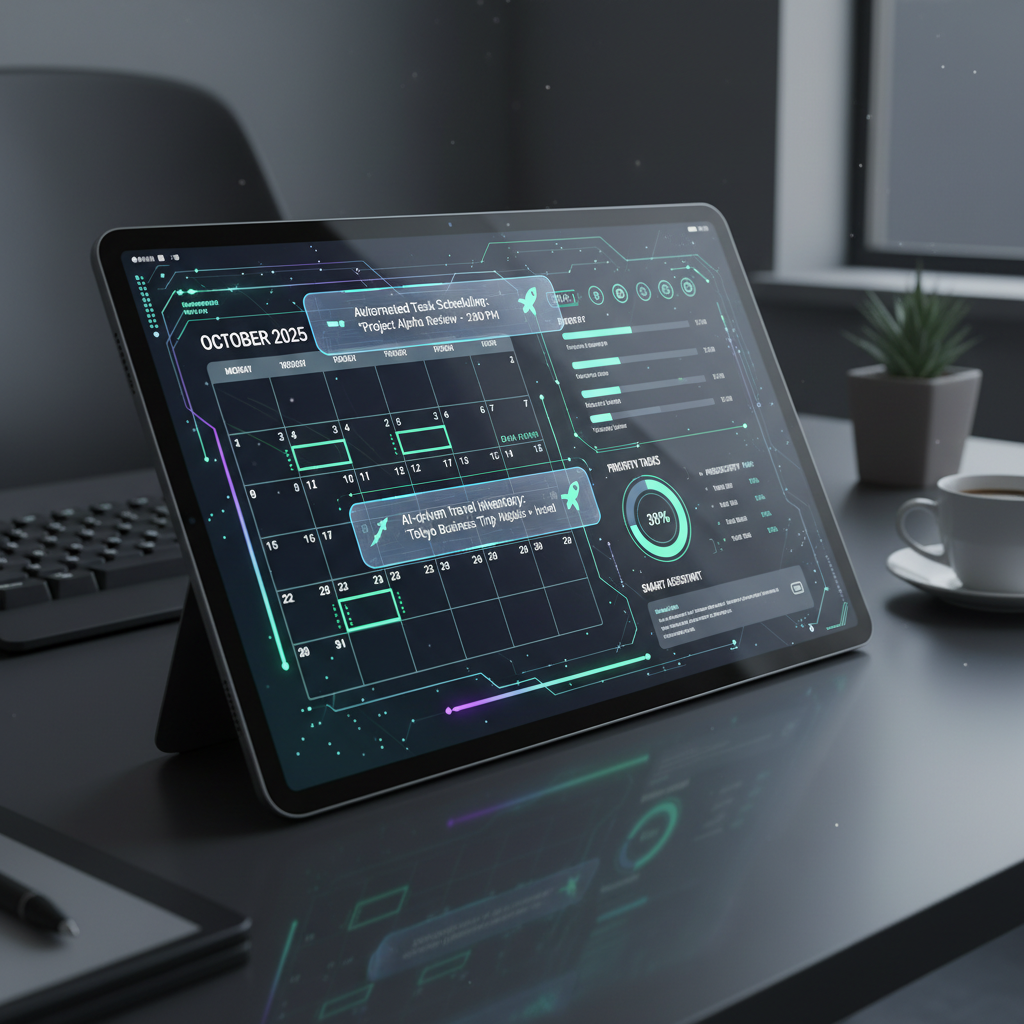
These applications go far beyond simple calendar reminders. They use AI to intelligently schedule your day, factoring in not just meetings and tasks, but also your personal preferences, energy levels, and even travel time. They aim to create optimal blocks for deep work and minimize scheduling conflicts.
- Motion: An AI assistant that manages your entire workday. You input your tasks and meetings, and Motion’s AI automatically builds your daily schedule, dynamically adjusting it as new priorities emerge or existing plans change. It identifies and blocks out time for focused work, making sure you actually get to those important tasks.
- Reclaim.ai: Specializes in automatically scheduling “Smart Habits” (e.g., exercise, learning, focused work) and “Smart Meetings” (finding the best time for everyone). Its AI learns your availability and preferences, then proactively defends your calendar against interruptions, ensuring you have time for what truly matters. It can prioritize different types of tasks and habits, adapting your schedule on the fly.
- Akiflow: While not exclusively AI, Akiflow integrates deeply with calendars, task managers, and communication tools. Its AI-powered features help consolidate tasks from various sources, suggest optimal scheduling slots based on availability, and allow for quick time blocking, significantly reducing the manual effort of organizing a complex schedule.
The core benefit here is the automation of complex scheduling decisions, freeing up mental bandwidth and guaranteeing dedicated focus time without constant manual effort.
2. Smart Notification Management and Digital Detox
Apps like Forest (with AI elements), Freedom, Opal
These tools are designed to create digital boundaries, preventing distractions from social media, news sites, and other tempting apps. Modern versions incorporate AI to personalize and optimize these boundaries.
- Freedom: A powerful app and website blocker that prevents access to distracting websites and applications across all your devices. While not strictly AI in its core blocking mechanism, its integration with schedules and ability to create custom blocking lists allows users to build highly personalized focus sessions based on learned behaviors and work patterns. Advanced features can analyze usage to suggest optimal blocking periods.
- Opal: Designed for iOS and macOS, Opal provides robust app blocking, scheduling, and insights into your screen time. Its “Deep Focus” mode not only blocks apps but can also provide insights based on your usage data, suggesting optimal focus times and helping you understand your distraction triggers. Future iterations are integrating more AI to personalize recommendations for digital detox periods.
- Forest: A gamified app that helps you stay focused by planting a virtual tree. If you leave the app before your timer is up, your tree dies. While its core is gamification, some versions offer advanced insights into your most distracting apps based on usage patterns, subtly guiding users towards better digital habits.
These apps move beyond simple “off switches” to intelligent, data-driven approaches that help users build sustainable habits for digital minimalism and focused work.
3. AI for Task Prioritization and Workflow Optimization
Apps like ClickUp (AI assistant), Monday.com (AI features), Sunsama
These platforms leverage AI to help users make sense of their task lists, prioritize what truly matters, and streamline workflows, reducing cognitive overhead and decision fatigue.
- ClickUp (AI Assistant): A comprehensive project management tool that has integrated a powerful AI assistant. This AI can help generate task descriptions, break down complex projects into smaller, manageable subtasks, summarize comments and documents, and even suggest optimal workflows based on project type. This significantly reduces the mental energy required for task setup and organization.
- Monday.com (AI features): Similar to ClickUp, Monday.com offers AI capabilities within its work operating system. Its AI can automate routine tasks, suggest next steps based on project progress, identify potential bottlenecks, and even generate content for tasks or communication. This helps teams focus on execution rather than administrative overhead.
- Sunsama: While not a full-fledged AI like the others, Sunsama emphasizes intentional planning and deep work. It helps users plan their day, set realistic goals, and track their focus time. Its intelligent nudges and daily review features, informed by user data, guide users towards more focused and productive routines.
By intelligently organizing, simplifying, and even generating elements of our workflow, these AI tools ensure that our mental resources are directed towards actual work rather than managing the work itself.
4. Cognitive Enhancement and Environmental Adapters
Apps like Endel, Brain.fm, Focus@Will
These unique applications utilize AI to create personalized auditory environments designed to enhance concentration, relax the mind, or promote specific cognitive states.
- Endel: Generates personalized, adaptive soundscapes using AI. It takes into account factors like time of day, weather, heart rate, and even your location to create soundscapes optimized for focus, relaxation, sleep, or walking. The AI dynamically adjusts the sound profile to maintain the desired cognitive state, effectively tuning out distractions.
- Brain.fm: Delivers functional music designed to improve focus, relaxation, meditation, and sleep. Its AI-generated music is engineered with patented rhythmic auditory neural entrainment, designed to subtly guide brainwave activity. Users report a significant improvement in their ability to concentrate on tasks within minutes of listening.
- Focus@Will: Uses AI to create scientifically optimized instrumental music that helps users focus, reducing distractions and increasing productivity. It offers various channels tailored to different work types and brain states, using principles of neuroscience to deliver adaptive audio experiences.
These tools highlight AI’s capacity to interact with our fundamental cognitive processes, creating external conditions that actively support internal focus.
5. AI-Driven Learning and Skill Acquisition Aids
Apps like Mem, Notion AI, Perplexity AI
AI is transforming how we learn, research, and retain information, making these processes more efficient and less prone to distraction. These tools act as intelligent knowledge managers and research assistants.
- Mem: A self-organizing knowledge base powered by AI. It helps you capture notes, ideas, and information from various sources. Its AI then automatically links related “Mems,” summarizes content, and helps you recall information contextually, significantly reducing the time spent searching for data and boosting knowledge retention.
- Notion AI: Integrated directly into the popular workspace, Notion AI can summarize long documents, brainstorm ideas, draft content, translate, and even rewrite text. This empowers users to quickly process information, generate new insights, and overcome writer’s block, allowing them to focus on higher-level thinking rather than grunt work.
- Perplexity AI: Acts as an “answer engine” that provides direct, cited answers to complex questions, summarizing information from multiple sources. For research-intensive tasks, it minimizes the need to sift through countless articles, allowing users to quickly grasp key concepts and focus on analysis rather than information gathering.
By automating information synthesis and retrieval, these AI tools allow learners and researchers to dedicate their full attention to understanding, analyzing, and creating, rather than just consuming information.
6. AI for Meeting Summarization and Communication Streamlining
Apps like Otter.ai, Fathom, Fireflies.ai
Meetings are notorious for derailing focus, not just during the meeting itself but also in the time spent on note-taking and follow-ups. AI is revolutionizing this by automating key aspects of meeting management.
- Otter.ai: Provides real-time transcription and AI-generated summaries of meetings, lectures, and interviews. It identifies speakers, extracts action items, and highlights key decisions. This allows participants to fully engage in the discussion without the distraction of frantic note-taking, knowing that a comprehensive summary will be available afterward.
- Fathom: Integrates with popular video conferencing platforms (Zoom, Google Meet) to record, transcribe, and summarize calls. Its AI automatically extracts highlights, action items, and key moments, which can then be easily shared or synced to CRM systems. This ensures focus remains on the conversation, not on documenting every detail.
- Fireflies.ai: Similar to Otter and Fathom, Fireflies.ai records, transcribes, and summarizes voice conversations. It can identify questions, tasks, and key points, making it easy to review meetings and extract critical information. This drastically reduces post-meeting administrative tasks, freeing up valuable time and mental energy for focused work.
These tools fundamentally change the dynamics of communication, ensuring that meetings are more productive and that the cognitive burden of information capture is significantly reduced, thus enhancing overall focus.
7. AI for Personalized Well-being and Burnout Prevention
Apps like Calm (AI features), Headspace (AI integration for personalized mindfulness), Wysa
Sustained focus is intimately linked to mental well-being. Burnout, stress, and anxiety are major detractors of concentration. AI is now being integrated into well-being apps to provide personalized support, indirectly enhancing focus by improving overall mental health.
- Calm (AI features): While primarily a meditation and sleep app, Calm is increasingly using AI to personalize content recommendations. Based on user feedback and usage patterns, its AI can suggest meditations, sleep stories, or breathing exercises tailored to individual needs, helping users manage stress and improve sleep, both crucial for maintaining focus.
- Headspace (AI integration for personalized mindfulness): Similar to Calm, Headspace employs AI to offer more personalized mindfulness journeys. Its AI can adapt guided meditations based on user progress, reported moods, and specific goals (e.g., reducing anxiety, improving concentration), thereby providing more effective tools for mental regulation and focus enhancement.
- Wysa: An AI chatbot that provides mental health support and coaching. Wysa uses natural language processing to understand user input and offer evidence-based techniques like Cognitive Behavioral Therapy (CBT) and Dialectical Behavior Therapy (DBT). By helping users manage stress, anxiety, and negative thought patterns, Wysa indirectly supports their ability to concentrate and engage in deep work without mental blockers.
By addressing the root causes of distraction and poor concentration—stress, fatigue, and mental clutter—these AI-powered well-being apps serve as a foundational layer for sustaining high levels of focus.
Comparing Leading AI Focus and Productivity Tools
To better understand the landscape of AI-powered focus tools, let’s compare some of the leading applications across different categories, highlighting their unique AI contributions.
| Tool Name | Primary Focus Area | Key AI Mechanism | Distinct AI Benefit for Focus | Best Suited For |
|---|---|---|---|---|
| Motion | Time Management & Scheduling | Dynamic schedule optimization, task prioritization engine, calendar conflict resolution. | Automatically builds and adjusts your entire day, guaranteeing deep work blocks without manual effort. | Busy professionals, managers, freelancers with complex schedules. |
| Reclaim.ai | Smart Calendar & Habit Planning | Intelligent habit scheduling, dynamic meeting optimization, availability learning. | Defends your calendar by finding optimal times for recurring habits (e.g., focus time, breaks) and smart meetings. | Individuals/teams needing to balance habits with flexible work/meeting demands. |
| Endel | Cognitive Enhancement (Sound) | Adaptive soundscape generation, physiological data integration (heart rate, weather). | Creates real-time, personalized audio environments to guide your brain into focus, relaxation, or sleep states. | Anyone needing an auditory boost for concentration, relaxation, or improved sleep. |
| Brain.fm | Cognitive Enhancement (Music) | Patented rhythmic auditory neural entrainment, AI-generated functional music. | Delivers music specifically engineered to quickly shift your brain into desired states like deep focus or meditation. | Users who respond well to music for focus, needing quick state changes. |
| Otter.ai | Meeting Productivity & Summarization | Real-time transcription, speaker identification, AI summary generation, action item extraction. | Allows full participation in meetings without the distraction of note-taking, providing immediate, searchable summaries. | Professionals, students, or teams regularly involved in meetings and discussions. |
| Notion AI | Knowledge Management & Content Creation | NLP for summarization, content generation, brainstorming, language translation. | Streamlines information processing and content creation, freeing cognitive resources for deeper thought. | Writers, researchers, students, and teams managing large amounts of information. |
| Freedom | Distraction Blocking | Personalized blocking lists, scheduled sessions, sync across devices. | Creates a highly customizable, distraction-free digital environment based on user’s known triggers. | Anyone struggling with digital addiction or needing strict focus blocks. |
AI for Specific Focus Challenges: A Feature Comparison
Let’s delve into another table comparing how different AI tools address specific challenges related to maintaining focus, categorizing them by their primary intervention strategy.
| Focus Challenge | AI-Powered Solution | Example Tools / Features | AI’s Role in Overcoming Challenge | Impact on Focus |
|---|---|---|---|---|
| Fragmented Schedule / Lack of Deep Work Blocks | Intelligent Time Blocking & Dynamic Rescheduling | Motion, Reclaim.ai: Auto-schedule deep work, adjust for conflicts. | Learns your availability & priorities to proactively carve out uninterrupted focus time, adapting on the fly. | Ensures dedicated time for complex tasks, reduces scheduling stress. |
| Digital Distractions / Notification Overload | Smart Notification Filtering & Adaptive Blocking | Opal, Freedom: Context-aware app/website blocking, usage insights. | Identifies distracting patterns, intelligently blocks apps, or suggests optimal ‘unplugged’ periods. | Creates a distraction-free digital environment, reduces impulse checking. |
| Cognitive Fatigue / Difficulty Concentrating | Personalized Auditory Environments | Endel, Brain.fm, Focus@Will: AI-generated soundscapes/music. | Dynamically adjusts audio based on physiological data or neuroscience principles to induce a state of focus. | Enhances mental clarity, sustained attention, and reduces external noise interference. |
| Information Overload / Research Inefficiency | AI-Powered Summarization & Knowledge Synthesis | Notion AI, Perplexity AI, Mem: Summarize articles, generate insights, link ideas. | Processes vast amounts of information quickly, extracting key points, allowing focus on analysis rather than data collection. | Reduces cognitive load from information processing, speeds up research, prevents overwhelm. |
| Meeting Overload / Note-Taking Burden | Automated Meeting Transcription & Summarization | Otter.ai, Fathom, Fireflies.ai: Real-time transcription, action item extraction. | Eliminates the need for manual note-taking, allowing full engagement in discussions and quick post-meeting review. | Maximizes presence during meetings, frees up mental energy for critical thinking. |
| Poor Task Prioritization / Workflow Friction | AI-Assisted Task Management & Automation | ClickUp AI, Monday.com AI: Task breakdown, workflow suggestions, content generation. | Analyzes tasks, suggests optimal sequences, automates routine elements, and clarifies instructions. | Reduces decision fatigue, streamlines task execution, ensures focus on high-impact activities. |
Real-World Impact: Practical Examples and Case Studies
Theoretical benefits are one thing; seeing AI apps in action provides a clearer picture of their transformative potential. Here are a few hypothetical case studies demonstrating how individuals are leveraging innovative AI tools to redefine their focus and productivity.
Case Study 1: The Freelance Designer
Challenge: Sarah, a freelance graphic designer, struggles with erratic client requests, constant communication, and the need for intense creative focus. Her day often feels like a reactive scramble, leading to missed deadlines and creative blocks.
AI Solution:
- Motion: Sarah uses Motion to manage her client projects and personal tasks. Instead of manually blocking time, she feeds Motion her project deadlines, client meetings, and desired creative blocks. Motion dynamically schedules her day, ensuring dedicated, uninterrupted time for design work, automatically moving less urgent tasks if a critical client meeting arises.
- Freedom & Opal: During her designated “deep design” blocks, Sarah activates Freedom across all her devices and initiates an Opal “Deep Focus” session on her phone. This blocks social media, email, and news sites, creating a pristine digital environment.
- Endel: For highly creative tasks, Sarah uses Endel’s “Focus” soundscape. She finds its adaptive audio helps her tune out ambient noises in her shared workspace and enter a flow state more quickly, sustaining her creative energy for longer periods.
Outcome: Sarah reports a significant reduction in stress and a dramatic increase in her creative output. She consistently meets deadlines, feels more in control of her schedule, and experiences fewer creative blocks. The AI tools have become her silent partners, ensuring her day is structured for optimal performance.
Case Study 2: The Project Manager
Challenge: Mark, a project manager at a growing tech company, juggles multiple projects, a large team, and an endless stream of meetings. He spends hours summarizing discussions, assigning tasks, and chasing updates, leaving little time for strategic planning or focused problem-solving.
AI Solution:
- Fireflies.ai: Every virtual meeting Mark attends is recorded and transcribed by Fireflies.ai. Post-meeting, he receives an AI-generated summary with key decisions, action items, and speaker identification. This eliminates the need for him to take detailed notes during calls, allowing him to fully engage in discussions.
- ClickUp AI: Using ClickUp’s AI assistant, Mark quickly processes the output from Fireflies.ai. The AI helps him break down complex action items into granular tasks, assign them to team members, and even draft initial instructions or updates within ClickUp, saving him hours of administrative work.
- Reclaim.ai: Mark uses Reclaim.ai to manage his team’s shared calendar and his personal focus time. Reclaim’s AI identifies optimal slots for his strategic planning sessions, automatically blocking them off and protecting them from new meeting requests, even finding suitable times for recurring “sync” meetings that minimize disruption for everyone.
Outcome: Mark’s team communication has become significantly more efficient. He spends less time on administrative tasks and more on high-level strategic thinking, team coaching, and proactive problem-solving. His ability to recall meeting details is flawless, and his team appreciates the clarity of AI-generated action items. His focus on strategic initiatives has dramatically improved project outcomes.
Case Study 3: The Student Scholar
Challenge: Emily, a university student pursuing a demanding double major, struggles with information overload from lectures and research, maintaining concentration during long study sessions, and prioritizing her academic workload across multiple courses.
AI Solution:
- Notion AI & Perplexity AI: For research papers and complex readings, Emily uses Perplexity AI to get quick, summarized answers with sources, saving hours of sifting through articles. She then pastes relevant notes and articles into Notion, where Notion AI helps her summarize lengthy texts, brainstorm essay outlines, and even generate flashcards for studying.
- Opal & Forest: During her dedicated study blocks, Emily activates Opal’s “Deep Focus” mode on her phone and tablet, blocking all social media and games. She also uses Forest, gamifying her study time to prevent procrastination and reward her sustained focus.
- Brain.fm: For intensive problem-solving or essay writing, Emily listens to Brain.fm’s “Focus” music. She finds it helps her enter a highly concentrated state much faster and maintain it without feeling mentally fatigued.
Outcome: Emily has transformed her study habits. She processes information more efficiently, spends less time on administrative tasks, and enjoys longer, more productive study sessions. Her grades have improved, and she feels less overwhelmed by her demanding academic schedule. The AI tools act as her academic partners, enhancing her learning and information processing capabilities.
Frequently Asked Questions
Q: What exactly are AI productivity apps?
A: AI productivity apps are software applications that leverage artificial intelligence, including machine learning, natural language processing (NLP), and advanced algorithms, to automate, personalize, and optimize various aspects of work and personal management. Unlike traditional productivity tools that often require manual input and strict adherence to rules, AI apps learn from your behavior, data, and preferences to proactively assist you, make intelligent suggestions, and perform tasks that enhance efficiency, focus, and decision-making.
Q: How do AI apps actually help with focus?
A: AI apps help with focus in several profound ways. They minimize distractions by intelligently filtering notifications or blocking distracting content based on your activity and goals. They optimize your schedule to create dedicated blocks for deep work, handling complex scheduling logistics autonomously. Some AI tools generate adaptive soundscapes or functional music to guide your brain into a state of concentration. Others automate mundane tasks like summarization, task breakdown, or data synthesis, freeing up your cognitive energy for higher-level thinking. Essentially, they create an optimal environment and workflow that supports sustained attention.
Q: Are these AI tools truly personalized?
A: Yes, personalization is one of AI’s core strengths in this domain. Many AI focus tools learn from your unique patterns, such as your peak productivity times, preferred work rhythms, communication habits, and even physiological data (e.g., heart rate if integrated). They use this information to adapt their recommendations, scheduling decisions, and environmental adjustments in real-time, offering a truly bespoke experience that evolves with your changing needs and habits. This makes them significantly more effective than one-size-fits-all solutions.
Q: What’s the difference between a standard productivity app and an AI one?
A: The main difference lies in autonomy and intelligence. A standard productivity app (like a basic calendar or to-do list) acts as a passive tool that executes your manual instructions. You tell it what to do, and it does it. An AI productivity app, on the other hand, is an active partner. It can analyze your data, learn from your actions, make predictions, offer proactive suggestions, and even perform tasks autonomously without explicit instruction. For example, a standard calendar requires you to manually block focus time; an AI calendar might automatically find and protect that time for you based on your workload and habits.
Q: Can AI apps really replace human decision-making in scheduling?
A: AI apps can significantly augment and automate many aspects of scheduling, reducing the burden of human decision-making for routine or complex logistical tasks. They excel at finding optimal times, resolving conflicts, and adjusting schedules dynamically. However, they don’t fully replace human judgment, especially for strategic planning, prioritizing based on nuanced personal values, or handling unexpected emotional dynamics. They are best viewed as powerful assistants that execute scheduling logistics, freeing up humans to focus on higher-level decisions and interpersonal aspects.
Q: Are there privacy concerns with using AI focus apps?
A: As with any application that processes personal data, privacy is a valid concern. AI focus apps often collect data on your usage patterns, calendar entries, task lists, and sometimes even communication. It’s crucial to choose reputable apps from established companies that have clear privacy policies outlining how your data is collected, stored, and used. Look for apps that emphasize data encryption, anonymization, and adherence to privacy regulations like GDPR or CCPA. Always read the terms of service and privacy policy before committing to an AI app.
Q: How do I choose the right AI focus app for me?
A: Choosing the right AI focus app depends on your specific challenges and goals. Consider these steps: 1. Identify your biggest focus blockers: Is it notifications, scheduling, information overload, or difficulty concentrating? 2. Research apps that address those specific areas: Look into tools for time management, distraction blocking, cognitive enhancement, or knowledge management. 3. Check compatibility: Ensure the app integrates with your existing tools and devices. 4. Read reviews and try free trials: Get a sense of user experience and effectiveness. 5. Consider your budget: Many powerful AI apps come with subscription fees. Start with one or two key areas, implement them, and then expand as needed.
Q: Can AI apps help with ADHD or other attention disorders?
A: While AI apps are not a substitute for professional medical diagnosis or treatment for ADHD or other attention disorders, they can be incredibly beneficial as supplementary tools. Many features—like automated scheduling, smart reminders, distraction blocking, and structured workflows—can provide the external scaffolding and executive function support that individuals with ADHD often find challenging. By reducing mental friction and automating organizational tasks, these apps can help manage symptoms and create a more conducive environment for focus. Always consult with a healthcare professional regarding ADHD management strategies.
Q: What are the limitations of current AI focus tools?
A: Current AI focus tools, while powerful, do have limitations. They are dependent on the data they receive, so poor input can lead to suboptimal results. They may not fully grasp complex human nuances, emotional states, or highly contextual situations. Over-reliance on AI without developing personal discipline can also be detrimental. Furthermore, the technology is still evolving; some apps might be more sophisticated than others, and there’s a learning curve to effectively integrate them into your workflow. They are tools to assist, not to replace, human agency and self-awareness.
Q: What’s the future of AI in productivity and focus?
A: The future is incredibly promising. We can expect AI to become even more integrated, predictive, and personalized. Imagine AI assistants that not only manage your schedule but also understand your cognitive load, suggest breaks before you burnout, and even dynamically adjust your environment (lighting, temperature) for optimal focus. AI will likely move towards truly “ambient intelligence,” seamlessly assisting us without requiring explicit commands, anticipating our needs, and proactively creating conditions for peak performance and well-being. The line between AI and human cognitive support will continue to blur, leading to unprecedented levels of focus and productivity.
Key Takeaways for Mastering Focus with AI
Embracing AI in your quest for focus is not about replacing human effort, but amplifying it. Here are the core insights to remember:
- AI is a Co-pilot, Not a Replacement: View AI tools as intelligent assistants that augment your capabilities, not substitutes for your inherent will or strategic thinking.
- Proactive, Not Reactive: The most innovative AI apps shift focus management from a reactive battle against distractions to a proactive creation of conditions for deep work.
- Personalization is Key: AI’s ability to learn your unique patterns and adapt its assistance is what makes it so powerful and effective in fostering sustained attention.
- Multifaceted Support: AI addresses focus challenges from various angles – scheduling, distraction blocking, cognitive enhancement, information processing, and well-being.
- Automation Frees Mental Bandwidth: By automating mundane and logistical tasks, AI allows your brain to dedicate its energy to complex, high-value work requiring genuine focus.
- Experiment and Integrate: The best approach is to experiment with different AI tools that address your specific pain points and gradually integrate them into your existing workflows.
- Ethical Consideration: Be mindful of privacy and data usage when choosing AI applications, opting for reputable providers with transparent policies.
- A Foundation for Well-being: AI-powered tools also contribute to overall mental well-being by reducing stress and preventing burnout, which are crucial for sustained focus.
Conclusion: Embracing the Future of Focused Work
The battle for focus in the digital age is real, and the traditional arsenal of willpower and basic productivity hacks often proves insufficient against the onslaught of modern distractions. However, the emergence of innovative AI applications presents a revolutionary opportunity to reclaim our attention and redefine our capacity for deep work. From intelligently optimizing our schedules and creating distraction-free digital environments to enhancing our cognitive states with adaptive soundscapes and streamlining information processing, AI is proving to be an indispensable ally in our pursuit of sustained concentration.
These AI tools are not mere technological novelties; they are intelligent co-pilots learning from our habits, anticipating our needs, and proactively sculpting environments conducive to unparalleled focus. They empower us to move beyond simply managing tasks to truly mastering our attention, unlocking new levels of productivity, creativity, and mental well-being. As we continue to navigate an increasingly complex and demanding world, integrating these smart AI solutions into our daily lives will not just be an advantage but a necessity.
The future of focused work is here, and it is intelligent. By embracing these innovative AI apps, we are not just adopting new tools; we are investing in a fundamentally different and more effective way of engaging with our work, our learning, and ultimately, our lives. Take the leap, explore the possibilities, and experience firsthand how AI can redefine your ability to focus and thrive.





















































































Leave a Reply