


In an age where information inundates us, the way we interact with the internet defines our productivity, learning, and entertainment. For decades, our primary tool for navigating this vast digital ocean has been the keyword search. We type a few words, hit enter, and hope to stumble upon the relevant pages amidst a sea of results. This approach, while foundational, often falls short in delivering truly intelligent, contextual, and personalized answers to our complex queries. Enter Atlas Browser, a groundbreaking platform that is redefining web navigation by seamlessly integrating the power of ChatGPT, moving us decisively beyond the limitations of mere keywords to a new era of intelligent web interaction. This article will delve deep into how Atlas Browser leverages this advanced AI to offer a browsing experience that is not just smarter, but genuinely transformative.
The promise of artificial intelligence has long been to augment human capabilities, and nowhere is this potential more evident than in our daily interaction with the web. Atlas Browser isn’t just another internet browser; it’s a paradigm shift. By embedding a sophisticated large language model like ChatGPT directly into its core functionality, Atlas empowers users to engage with the web in a conversational, intuitive manner, understanding intent, context, and nuance in ways that traditional search engines simply cannot. This integration isn’t merely about asking questions; it’s about having a proactive, intelligent assistant at your fingertips, one that can summarize, analyze, compare, and even anticipate your needs, making your online journey significantly more efficient and insightful.
The Evolution of Web Navigation: From Keywords to Contextual Understanding
The journey of web navigation began with rudimentary directory listings and simple keyword matching. Early search engines, while revolutionary for their time, operated on the principle of finding exact or closely related keyword matches within their indexed pages. This system served us well for a long time, enabling us to locate specific pieces of information or websites with relative ease. However, as the web grew exponentially in size and complexity, so did the challenges associated with this keyword-centric approach.
Consider a scenario: you’re planning a trip and search for “best hotels London.” The results will be vast, ranging from review sites to booking platforms, luxury hotels to budget accommodations, often requiring extensive sifting to find what truly aligns with your preferences. The search engine doesn’t inherently understand your budget, your travel style, or your specific dates; it only sees the keywords. This is where the limitations become apparent. Traditional search engines are excellent at retrieving information, but less adept at interpreting intent or synthesizing knowledge.
The advent of semantic search marked a significant step forward, aiming to understand the meaning behind queries, not just the keywords. Technologies like Google’s Knowledge Graph began to connect entities, facts, and relationships, providing more direct answers and rich snippets. Yet, even with these advancements, the interaction remained largely one-sided: you ask, the engine provides a list of links. The onus was still on the user to click, read, and synthesize the information themselves. The integration of advanced AI models like ChatGPT within a browser fundamentally changes this dynamic. It shifts from a retrieval-based model to a conversational, understanding, and generative one, where the AI actively participates in your information-gathering process, offering not just links, but synthesized knowledge, summaries, and even follow-up questions to refine your search, truly understanding your needs in context.
Understanding Atlas Browser’s Core Philosophy
Atlas Browser’s core philosophy is built on the premise that web browsing should be an intelligent, intuitive, and personalized experience, not a chore of sifting through endless links. It aims to transform the browser from a mere window to the internet into a powerful co-pilot for your digital life. At the heart of this philosophy is the belief that a browser, augmented by advanced artificial intelligence, can do more than just display web pages; it can understand them, analyze them, and present their content in a way that is most useful and relevant to the individual user at that specific moment.
This vision extends beyond simply integrating a chatbot. It’s about creating a seamless interaction where the AI is context-aware, learning from your browsing habits, understanding the content of the pages you visit, and anticipating your next steps. For instance, if you are reading a complex scientific paper, Atlas might proactively offer to summarize a dense paragraph or explain a technical term with a simple click. If you are shopping, it could compare product features across multiple sites without you having to open numerous tabs.
The design principles guiding Atlas include:
- Contextual Awareness: The browser should understand the current page content, your search history, and your active task to provide highly relevant assistance.
- Intuitive Interaction: Engaging with the AI should feel natural, like conversing with a knowledgeable assistant, rather than typing rigid commands.
- Personalization: The browsing experience should adapt and evolve based on individual user preferences, learning over time to deliver bespoke insights.
- Efficiency and Productivity: By automating mundane tasks and quickly synthesizing information, Atlas aims to significantly reduce the time and effort spent on online research and navigation.
- Empowerment: Users should feel empowered to tackle complex information and tasks with the AI as a capable partner, enhancing their understanding and decision-making.
This holistic approach ensures that Atlas Browser is not just a tool, but an intelligent companion designed to make your digital interactions more meaningful and less fragmented.
How ChatGPT Integrates: Beyond Simple Search Bars
The integration of ChatGPT within Atlas Browser goes far beyond merely embedding a chatbot into a sidebar or replacing the traditional search bar with a conversational interface. While those functionalities are certainly present, the true power lies in how the Large Language Model (LLM) permeates various aspects of the browsing experience, making it deeply contextual and proactive.
Deep Contextual Understanding
Unlike standalone chatbot applications, Atlas Browser’s ChatGPT integration operates with a keen awareness of your current browsing context. When you are on a webpage, the AI can “read” and comprehend its content. This means if you ask a question related to an article you are viewing, the AI doesn’t just pull general knowledge; it specifically uses the information on that page, along with its vast general knowledge, to formulate an answer. For example, if you are reading a news article about a new technological breakthrough and ask, “What are the potential implications of this for small businesses?”, the AI will analyze the article’s specifics about the breakthrough and then synthesize its implications, offering a much more precise and relevant response than a generic search would.
Conversational Search and Query Refinement
The traditional search experience is often iterative and frustrating. You type a query, get results, click a few links, refine your query, and repeat. Atlas with ChatGPT transforms this into a fluid conversation. You can start with a broad question like, “Tell me about climate change,” and then follow up with, “What are the latest policies in Europe regarding renewable energy?” or “How does this compare to the policies in the US?” The AI maintains the context of your previous questions, allowing for a natural progression of inquiry and a deeper exploration of topics without constantly rephrasing or starting over.
Generative Capabilities in Action
ChatGPT’s generative capabilities are not limited to answering questions. Within Atlas, these capabilities can be harnessed for various practical tasks:
- Content Creation: Need help drafting an email based on information from a few tabs? Atlas can assist. Looking for ideas to start a blog post about a topic you just researched? The AI can generate outlines or introductory paragraphs.
- Summarization: Instantly summarize lengthy articles, reports, or research papers directly from the page you are viewing. This saves immense time and helps you quickly grasp the main points without reading every word.
- Explanation: Encounter a complex technical term or concept? Ask Atlas to explain it in simpler terms, or provide analogies. It can break down intricate subjects into digestible pieces, enhancing your learning experience.
- Translation: Translate selected text or entire web pages on the fly, maintaining context and nuance far better than simple word-for-word translation tools.
Proactive Assistance
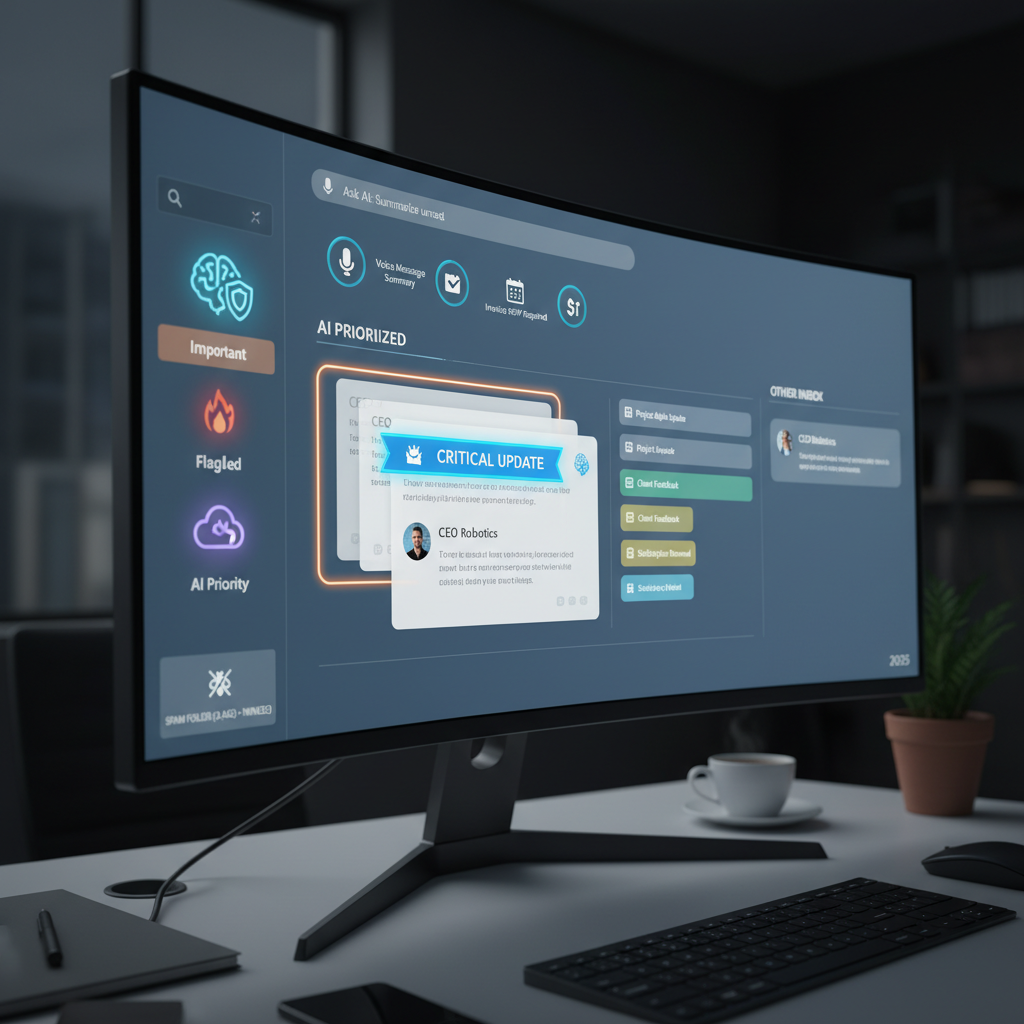
In some advanced implementations, the AI can offer proactive suggestions. If it detects you are spending a long time on a comparison page for products, it might suggest, “Would you like me to compare prices from five other retailers?” or “Here’s a summary of user reviews for these models.” This anticipatory assistance elevates the browsing experience from reactive to genuinely intelligent and helpful.
By integrating ChatGPT so deeply and contextually, Atlas Browser moves beyond being a mere tool for accessing information; it becomes an active participant in your web journey, understanding your needs, processing information intelligently, and generating relevant insights to empower your online activities.
Contextual Understanding and Semantic Search
The cornerstone of Atlas Browser’s intelligent navigation lies in its robust contextual understanding, which is fundamentally powered by its ChatGPT integration. This goes significantly beyond traditional keyword-based search, which often struggles with ambiguity and the true intent behind a user’s query. Semantic search, while an improvement, still primarily focuses on the meaning of individual words and their relationships in a database.
Atlas, with ChatGPT, takes this to the next level by understanding the context of your entire interaction. This includes:
- Query Intent: When you ask “Where can I find a good Italian restaurant that’s open late?”, the AI understands you’re not just looking for “Italian restaurants” or “restaurants open late” separately. It grasps the combined intent of a specific cuisine, quality (good), and operational hours. It can then leverage location data (if permitted) and real-time operating hours to provide highly relevant and actionable suggestions, perhaps even filtering for user ratings or proximity.
- Webpage Content Awareness: As discussed, the AI can ‘read’ and comprehend the content of the active tab. If you’re on a product review page and ask, “What are the common complaints about this model?”, Atlas will specifically analyze that page, and potentially others it has processed in your current session, to extract common grievances, rather than performing a generic web search. This hyper-focused analysis saves significant time and effort.
- Conversational History: The AI maintains a memory of your ongoing conversation. If you first ask about “electric vehicles” and then follow up with “What about the charging infrastructure?”, it understands that “this” refers to electric vehicles, allowing for a natural, flowing dialogue that builds upon previous inquiries. This is a critical departure from stateless keyword searches, where each new query is treated as an isolated event.
- User Profile and Preferences (Opt-in): Over time, and with user permission, Atlas can learn your preferences. If you frequently research eco-friendly products, future searches for consumer goods might subtly prioritize sustainable options in its summaries or recommendations. This personalized semantic understanding tailors results not just to the query, but to the user’s evolving interests and values.
The synergy between contextual understanding and semantic search within Atlas Browser creates an unparalleled browsing experience. It means:
- Reduced Ambiguity: Less time spent rephrasing queries or adding more keywords to get the right results. The AI helps clarify intent.
- Higher Relevance: Answers and summarized information are far more precise because they are grounded in the full context of your interaction and the content you are currently engaging with.
- Deeper Insights: The AI can synthesize information from multiple sources and present a coherent answer, rather than just a list of links, allowing you to gain insights more rapidly.
- Proactive Information Delivery: In some cases, the AI can anticipate your next question or point of interest based on the current context, offering relevant information before you even explicitly ask for it.
This advanced level of understanding transforms web navigation from a tedious information hunt into an intelligent dialogue, making Atlas a powerful ally in the pursuit of knowledge and task completion.
Personalized Browsing Experiences with AI
One of the most profound impacts of Atlas Browser’s ChatGPT integration is its ability to deliver truly personalized browsing experiences. Traditional browsers, while allowing for some customization through extensions and settings, have largely remained generic interfaces. Atlas, however, leverages AI to adapt and evolve with the user, creating a dynamic environment that caters to individual needs, preferences, and browsing habits. This personalization goes far beyond simply remembering your favorite websites or autofilling forms; it’s about intelligent adaptation at a deeper, more meaningful level.
Adaptive Content Summarization
Imagine you’re a busy professional who needs to stay updated on industry news. Atlas can learn your preferred level of detail. For critical articles, you might want a comprehensive summary, while for general news, a brief bulleted overview suffices. The AI can adjust its summarization length and focus based on your past interactions, providing information in the format that is most efficient for you. It can even highlight specific aspects of an article that are particularly relevant to your known interests, such as financial implications, technological advancements, or regulatory changes.
Tailored Research Assistance
For students or researchers, the AI becomes an invaluable assistant. If you consistently research topics in biology, Atlas might prioritize scientific journals and peer-reviewed articles in its suggested resources or when answering your questions. If you are preparing for a presentation, it could offer to help structure your findings or identify key arguments from your research materials. The AI acts as an extension of your research methodology, adapting to your specific academic or professional domain.
Customized Information Filtering and Recommendations
The web is a noisy place. Atlas can act as an intelligent filter, reducing clutter and highlighting what truly matters to you. If you have shown a preference for learning through video tutorials, when you search for a new skill, the AI might prioritize YouTube tutorials or educational platforms over text-based guides. Similarly, in e-commerce, if you typically favor products from brands known for sustainability, Atlas could gently nudge you towards similar options even if your initial search was generic.
Proactive Learning and Adaptation
The AI in Atlas is designed to learn from your interactions over time. Every query, every article summarized, every piece of information you engage with helps the model build a richer understanding of your individual “user profile” (always with strict adherence to privacy protocols and user consent). This continuous learning allows the browser to become increasingly effective at:
- Anticipating your next information need.
- Suggesting relevant follow-up questions or related topics.
- Filtering out irrelevant information more accurately.
- Optimizing its responses to match your communication style and preferred level of detail.
This proactive learning leads to an ever-improving, deeply personalized browsing experience that makes finding, understanding, and utilizing information dramatically more efficient and enjoyable. The browser doesn’t just respond to your commands; it actively anticipates and supports your journey through the vast landscape of the internet, making it feel truly tailored to you.
AI-Powered Content Summarization and Analysis
One of the most immediate and tangible benefits of Atlas Browser’s ChatGPT integration is its unparalleled ability to summarize and analyze web content. In an era of information overload, where long-form articles, detailed reports, and extensive documentation are commonplace, the capacity to quickly distill key information is an enormous advantage. Atlas transforms this challenge into a seamless process, empowering users to grasp essential insights without the laborious task of reading every word.
Instant and Customizable Summaries
Imagine you land on a lengthy news article or a complex research paper. Instead of scrolling and skimming, Atlas allows you to request an instant summary. The AI can provide this summary in various formats:
- Bullet Points: A concise list of the most critical facts and arguments.
- Paragraph Form: A more coherent, narrative overview of the entire content.
- Specific Length: You can even request a summary of a certain length, for example, “summarize this in three sentences” or “give me a 200-word overview.”
Crucially, these summaries are not just keyword extractions; they are intelligently generated syntheses of the content, maintaining logical flow and capturing the core message, much like a human would after reading and understanding the text. This capability is particularly invaluable for students, researchers, journalists, and professionals who need to process vast amounts of text efficiently.
Deep Content Analysis and Insight Extraction
Beyond simple summarization, Atlas can perform deeper analytical tasks. This means the AI isn’t just regurgitating information; it’s providing insights:
- Key Argument Identification: For argumentative essays or opinion pieces, the AI can identify the main arguments, counter-arguments, and the author’s stance.
- Data Extraction: If a page contains tables or complex data, the AI can extract specific data points or trends you’re interested in, such as “What was the growth rate in Q3 according to this report?”
- Comparison: Open two different articles on the same topic and ask Atlas to “compare and contrast the main points of these two documents.” The AI can highlight similarities, differences, and unique perspectives presented in each.
- Sentiment Analysis: In product reviews or public opinion pieces, the AI can often give an overview of the prevailing sentiment, indicating whether it’s generally positive, negative, or neutral.
- Terminology Explanation: Encountering jargon or technical terms? Atlas can explain these terms in context or provide simpler definitions, enhancing comprehension without needing to open new tabs for definitions.
This level of AI-powered content analysis transforms how we interact with information. It turns passive reading into an active, guided process where the AI acts as an intelligent interpreter and assistant, helping you to not just consume content, but to truly understand and leverage it. For anyone who deals with a high volume of online text, Atlas Browser’s summarization and analysis features represent a significant leap forward in productivity and information mastery.
Enhanced Productivity and Research Capabilities
The integration of ChatGPT into Atlas Browser is a game-changer for productivity and research, fundamentally altering how users gather, process, and utilize information online. By automating tedious tasks and providing intelligent assistance, Atlas empowers individuals to accomplish more in less time, with greater accuracy and deeper understanding.
Streamlined Information Gathering
Traditional research often involves opening numerous tabs, copying and pasting snippets, and manually organizing information. Atlas streamlines this process:
- Consolidated Answers: Instead of sifting through multiple search results, the AI can synthesize information from various sources on the web to provide a single, coherent answer to your complex questions, often citing its sources.
- Cross-Referencing: If you’re comparing products or services, Atlas can pull relevant features, prices, and reviews from different websites and present them in an organized format, saving you the effort of navigating back and forth.
- Quick Fact-Checking: While reading an article, you can quickly ask the AI to verify a claim or statistic, prompting it to search for corroborating evidence or counter-arguments, enhancing the reliability of your research.
Accelerated Learning and Skill Acquisition
For those looking to learn a new skill or delve into a complex subject, Atlas acts as a personalized tutor:
- Concept Simplification: Ask the AI to explain intricate concepts in layman’s terms or provide analogies, breaking down barriers to understanding.
- Learning Path Suggestions: Based on your stated learning goals, Atlas might suggest a structured learning path, recommending specific articles, tutorials, or resources.
- Interactive Q&A: As you read educational content, you can constantly query the AI for clarifications, examples, or deeper dives into specific sub-topics, turning passive reading into an active learning dialogue.
Automated Task Assistance
Beyond research, Atlas can assist with a range of everyday tasks:
- Email Drafting: Based on the context of your browsing (e.g., a customer service page or a project brief), the AI can help draft professional emails, saving time and ensuring clarity.
- Content Refinement: If you’re writing a blog post or a report in a web-based editor, Atlas can offer suggestions for grammar, style, tone, or even help expand on certain ideas, leveraging its generative capabilities.
- Meeting Preparation: If you have calendar access and are viewing a meeting invitation, Atlas could quickly summarize relevant documents or websites linked in the invitation, giving you a quick overview before the meeting.
- Data Organization: For simple data sets viewed in a browser, the AI might assist in categorizing, sorting, or even suggesting visualizations if the data permits, making raw information more manageable.
By integrating these powerful AI capabilities directly into the browsing environment, Atlas transforms the browser from a passive window into an active, intelligent workstation. It’s about working smarter, not harder, enabling users to elevate their productivity and deepen their understanding across virtually every online activity.
Addressing Privacy and Ethical Considerations
The integration of powerful AI models like ChatGPT into a web browser naturally raises important questions about privacy, data security, and ethical use. Atlas Browser, recognizing these concerns, places a strong emphasis on responsible AI development and user-centric privacy controls. It’s crucial for users to understand how their data is handled and the ethical guidelines that govern the AI’s operations.
Data Privacy and Security
Atlas Browser is designed with privacy at its core. Key aspects include:
- User Consent: Any feature that involves sending browsing data to the AI model (e.g., for summarization of a page or contextual answers) requires explicit user consent. Users are typically prompted before such data is shared, giving them full control.
- Anonymization and De-identification: When data is processed by the AI, especially for model training or improvement (if applicable and consented), it is typically anonymized and de-identified to remove any personally identifiable information.
- Secure Data Transmission: All communications between the browser and the AI servers are encrypted, protecting data from interception.
- No Unconsented Data Sales: Atlas Browser explicitly states that it does not sell user data to third parties. Its business model (if any, often freemium or subscription for advanced AI features) is built on providing value, not exploiting personal information.
- Local Processing Options: Where technically feasible and performant, some AI features might even be processed locally on the user’s device, further minimizing data transmission.
Users are provided with clear privacy policies and terms of service that detail how their data is collected, used, and protected, fostering transparency and trust.
Ethical AI Development and Use
The ethical implications of AI are complex, and Atlas Browser addresses them through several commitments:
- Bias Mitigation: AI models can inadvertently inherit biases present in their training data. Atlas developers are committed to continuously monitoring and mitigating biases in the ChatGPT integration to ensure fair and equitable responses. This involves diverse training datasets and active feedback loops.
- Transparency: While the inner workings of LLMs are complex, Atlas aims to be transparent about the capabilities and limitations of its AI. Users should understand when an answer is generated by the AI versus when it’s directly from a webpage.
- Fact-Checking and Accuracy: While powerful, AI can sometimes “hallucinate” or provide incorrect information. Atlas encourages critical thinking and provides tools for users to verify AI-generated answers by linking to sources where possible. It’s not a definitive oracle but a highly intelligent assistant.
- User Control and Override: Users always have the option to disable AI features or revert to traditional browsing methods. The AI is an enhancement, not a mandatory replacement for human judgment.
- Prevention of Misuse: Measures are put in place to prevent the AI from being used for harmful activities, such as generating hate speech, promoting misinformation, or facilitating illegal actions. This includes content filters and user reporting mechanisms.
By prioritizing privacy, security, and ethical considerations, Atlas Browser aims to build not just a smarter browsing experience, but a responsible and trustworthy one, ensuring that the benefits of AI are harnessed safely and for the good of the user.
Comparison Tables: Traditional vs. Atlas Browser & Feature Breakdown
To further illustrate the transformative impact of Atlas Browser’s ChatGPT integration, let’s look at how it stacks up against traditional browsing methods and then compare its key AI features.
Table 1: Traditional Browsing vs. Atlas AI-Integrated Browsing
| Feature Category | Traditional Browser Experience | Atlas Browser with ChatGPT Integration |
|---|---|---|
| Information Retrieval | Keyword-based search, returns a list of links. Requires manual sifting and clicking. | Conversational AI understands intent, synthesizes answers from multiple sources, provides direct responses. |
| Content Understanding | Passive display of content. User manually reads and interprets text. | Active AI reads and comprehends page content, offers summaries, explanations, and key insights. |
| Productivity | Manual copying/pasting, opening multiple tabs, time-consuming research. | Automated summarization, cross-page comparisons, AI-assisted drafting, streamlined research. |
| Personalization | Limited; based on search history and cookies. Generic results. | Deeply personalized answers and suggestions based on conversational context, learning user preferences over time. |
| Interaction Style | Transactional: type, click, read. | Conversational: ask, discuss, refine, generate. AI acts as a co-pilot. |
| Learning Support | User finds and interprets educational materials independently. | AI explains concepts, provides analogies, suggests learning paths, and answers follow-up questions in real-time. |
| Ambiguity Handling | Struggles with ambiguous queries, often requires rephrasing or adding more keywords. | Leverages context and natural language processing to clarify intent and provide more accurate responses. |
Table 2: Key AI Features: Atlas Browser vs. Standard Browser AI (e.g., basic search assistant)
| Atlas Browser’s ChatGPT Integration Feature | Benefit | Typical Standard Browser AI / Search Assistant (if any) |
|---|---|---|
| Contextual Summarization | Quickly grasp main points of any webpage; customizable length and focus. | Limited or no ability to summarize active page content. |
| Conversational Search | Natural, iterative Q&A with context retention; refine searches fluidly. | Keyword-based search bar; each query is often treated independently. |
| Cross-Page Comparison | Synthesize information from multiple open tabs for product, service, or concept comparisons. | Requires user to manually switch between tabs and compare information. |
| AI-Assisted Content Generation | Help draft emails, reports, social media posts, or outlines based on browsing context. | Generally absent; may offer basic autofill or grammar checks. |
| Real-time Information Analysis | Analyze live data on web pages (e.g., stock prices, weather) and provide insights. | Relies on pre-indexed data; no live analysis of arbitrary webpage content. |
| Proactive Suggestions | Anticipate user needs and offer relevant assistance or follow-up questions. | Rare or non-existent; typically reactive to direct user input. |
| Deep Learning & Personalization | Learns user preferences and browsing habits to tailor future interactions and responses. | Limited personalization (e.g., ad targeting) but not in conversational context. |
| Multi-modal Interaction | (Future potential) Voice input, image analysis within context. | Primarily text-based input for searches. |
These tables clearly demonstrate that Atlas Browser, through its deep integration with ChatGPT, is not merely an incremental improvement but a fundamental reimagining of the web browsing experience. It shifts from a passive tool to an active, intelligent partner in navigating the digital world.
Practical Examples: Real-World Use Cases and Scenarios
Understanding the theoretical benefits of Atlas Browser’s AI integration is one thing, but seeing it in action through practical, real-world examples truly highlights its transformative power. Here are several scenarios where Atlas Browser with ChatGPT would dramatically enhance the user experience:
Scenario 1: In-depth Research for a University Project
Traditional Approach: A student is researching “the impact of artificial intelligence on employment in the healthcare sector.” They would open Google, type the query, open 10-15 different articles, skim through each, copy relevant paragraphs into a document, try to synthesize conflicting information, and constantly refine their search terms. This is a time-consuming and often overwhelming process.
Atlas Browser Approach: The student starts by asking Atlas, “What are the primary impacts of AI on healthcare employment?” Atlas provides a summarized overview, perhaps referencing a few key studies. The student then clicks on one of the recommended articles. As they read, they highlight a dense paragraph and ask, “Explain this paragraph in simpler terms.” Atlas instantly rephrases it. They then open a second article and ask, “How do the conclusions of this article compare to the previous one regarding job displacement?” Atlas analyzes both documents and provides a concise comparison. Later, they might ask, “Can you suggest some key statistics on AI adoption in healthcare and its effect on nursing roles?” Atlas retrieves and synthesizes this information, potentially even generating an outline for their research paper or suggesting further research questions based on the current context. The entire process is conversational, guided, and significantly more efficient.
Scenario 2: Planning a Weekend Trip
Traditional Approach: A user wants to plan a weekend trip to a new city. They search for “things to do in [city name],” “best restaurants [city name],” “hotels [city name],” “local events [city name].” They open numerous tabs for tourist sites, food blogs, booking sites, and event calendars, manually cross-referencing information and struggling to piece together a coherent itinerary.
Atlas Browser Approach: The user starts by asking, “Plan a fun, cultural weekend trip to Kyoto for a solo traveler in early April, focusing on traditional experiences and good food.” Atlas proposes a basic itinerary. The user then opens a page about cherry blossom festivals and asks, “What are the best places to see cherry blossoms in Kyoto during that period, and how do I get there using public transport?” Atlas provides specific recommendations and detailed directions. While browsing a restaurant guide, they can ask, “Can you find highly-rated vegetarian restaurants near Gion that are open late?” and Atlas will filter and suggest options. It can even help draft booking emails for specific accommodations or tours, making the entire planning process integrated and highly personalized.
Scenario 3: Shopping for a New Gadget
Traditional Approach: A consumer wants to buy a new smartphone. They visit several tech review sites, compare specifications manually on different e-commerce platforms, read dozens of user reviews, and get overwhelmed by the sheer volume of information and contradictory opinions.
Atlas Browser Approach: The consumer opens a tech review site and asks Atlas, “What are the pros and cons of the latest XYZ phone model, according to reviews on this page?” Atlas quickly summarizes. They then open another tab with a competing model and ask, “How does the camera performance of this phone compare to the XYZ model we just discussed, particularly in low light?” Atlas cross-references information from both pages (and its general knowledge base) to provide a detailed comparison. They can then ask, “Find me the best current deals for the XYZ phone from reputable retailers, including shipping times.” Atlas aggregates this information, potentially even highlighting warranty differences. The AI acts as a sophisticated personal shopper, simplifying the decision-making process.
Scenario 4: Learning a New Coding Language
Traditional Approach: A developer wants to learn Python. They find an online tutorial, but when they encounter a complex concept like “decorators,” they pause, open a new tab, search for “Python decorators explained,” read through multiple explanations, and then try to apply it back to their original tutorial.
Atlas Browser Approach: As the developer follows the Python tutorial in Atlas, they encounter “decorators.” They simply ask Atlas, “Explain Python decorators in simple terms, with a practical example.” Atlas provides a clear explanation and a code snippet. If they have a question about the example, they can ask a follow-up, like, “How would I use a decorator to measure the execution time of a function?” Atlas generates the specific code and explanation. This iterative, immediate feedback loop dramatically accelerates the learning process, keeping the user in the flow of their primary learning resource.
These examples illustrate how Atlas Browser moves beyond being a mere portal to the internet, evolving into an intelligent, proactive assistant that anticipates needs, simplifies complex tasks, and fundamentally enhances the way we interact with digital information, making every online session more productive, insightful, and enjoyable.
Frequently Asked Questions
Q: What is Atlas Browser, and how does it differ from traditional web browsers?
A: Atlas Browser is an innovative web browser that deeply integrates advanced Artificial Intelligence, specifically a Large Language Model like ChatGPT, into its core functionality. Unlike traditional browsers that primarily serve as passive windows to the internet and rely on keyword-based search, Atlas acts as an intelligent co-pilot. It understands your queries in context, summarizes web pages, provides direct answers, offers personalized insights, and assists with various tasks, transforming browsing from a transactional search-and-read process into a conversational and highly efficient information-gathering and task-completion experience.
Q: How does ChatGPT integration actually work within Atlas Browser?
A: The ChatGPT integration in Atlas Browser works by allowing the AI to “read” and comprehend the content of the web pages you are visiting, as well as maintaining a memory of your ongoing conversation and browsing history (with user consent). When you ask a question or request assistance, the AI processes your query, considers the current page context, and leverages its vast knowledge base to generate relevant, synthesized answers, summaries, or perform specific actions. This means it doesn’t just return links; it provides processed information, much like having an expert assistant analyzing the web on your behalf.
Q: Is Atlas Browser secure and private? How is my data handled?
A: Yes, Atlas Browser prioritizes security and privacy. All communication with the AI servers is encrypted. For features requiring the AI to access webpage content or understand your browsing context, explicit user consent is always requested. Data that is sent for AI processing is typically anonymized and de-identified where possible. Atlas Browser explicitly states that it does not sell user data to third parties. Users are provided with clear privacy policies, and often have control over which AI features are enabled and how their data is used, allowing them to browse with confidence.
Q: Does using Atlas Browser’s AI features cost anything?
A: The pricing model for Atlas Browser and its AI features can vary. Often, there might be a free version of the browser with basic AI capabilities, while more advanced, computationally intensive AI features (like unlimited deep summarization, complex research assistance, or higher-tier AI models) might be offered as part of a premium subscription or a freemium model. It’s best to check the official Atlas Browser website or app store listing for the most current pricing and feature tiers.
Q: What are the main benefits of using Atlas Browser over other popular browsers?
A: The main benefits include significantly enhanced productivity through automated summarization and analysis, faster and more accurate research via conversational search and cross-page comparison, deeply personalized browsing experiences that learn your preferences, and a more intuitive, conversational interaction with the web. It moves beyond simply finding information to actively understanding, synthesizing, and presenting it in the most useful way, saving users immense time and mental effort.
Q: How does Atlas Browser’s AI compare to traditional search engines like Google or Bing?
A: Atlas Browser’s AI goes beyond traditional search engines by providing synthesized answers and intelligent assistance within the browsing context, rather than just a list of links. While Google and Bing are excellent at indexing the web and finding relevant pages, Atlas, with ChatGPT, understands the intent and context of your queries conversationally. It can summarize content from live pages, compare information across multiple open tabs, and even help generate content, making it a more interactive and analytical tool than a pure search engine.
Q: Can Atlas Browser’s AI understand complex or nuanced queries?
A: Yes, thanks to the advanced natural language processing capabilities of ChatGPT, Atlas Browser’s AI is designed to understand complex and nuanced queries far better than keyword-based systems. It can interpret context, ambiguity, and multi-part questions, allowing for a more natural and human-like interaction. You can ask follow-up questions, refine your initial query, and engage in extended conversations, similar to talking with a knowledgeable human expert.
Q: How does Atlas Browser handle real-time information and breaking news?
A: Atlas Browser’s ChatGPT integration can access and process real-time information from the web as you browse. If you’re on a news site, it can summarize the latest headlines. When you ask questions about current events, it leverages its ability to quickly search and synthesize up-to-date data, similar to how an LLM accesses current information through its training data or real-time web access plugins. While LLMs have a knowledge cut-off, their integration into a browser often allows them to fetch and interpret recent information from the pages you are viewing or those it can actively search.
Q: Is Atlas Browser available on all devices (desktop, mobile)?
A: Like many modern browsers, Atlas Browser aims for multi-platform availability. It is typically available for major desktop operating systems (Windows, macOS, Linux) and often for mobile platforms (iOS, Android). The full range of AI features may sometimes vary slightly between platforms due to hardware limitations or specific operating system integrations, but the core AI-powered browsing experience is generally consistent across supported devices. Check their official website for specific platform availability.
Q: What is the future roadmap for Atlas Browser’s AI capabilities?
A: The future roadmap for Atlas Browser’s AI capabilities is likely to include continuous improvements in understanding, personalization, and task automation. This could involve deeper integration with other AI tools, more sophisticated proactive assistance (where the AI anticipates needs even better), multi-modal AI (processing images and voice more natively within browsing context), advanced content creation features, and even more seamless integration with other productivity apps and cloud services. The goal is to make the browser an even more indispensable and intelligent digital assistant.
Key Takeaways
- Atlas Browser moves beyond traditional keyword search, leveraging ChatGPT for contextual understanding and intelligent web navigation.
- It transforms browsing into a conversational experience, allowing users to ask complex questions and receive synthesized answers.
- Key features include AI-powered content summarization, deep analysis, and cross-page comparisons, significantly boosting productivity.
- The browser offers a deeply personalized experience, learning user preferences and adapting its assistance over time.
- Atlas enhances research capabilities by streamlining information gathering and accelerating learning with interactive explanations.
- It prioritizes user privacy and ethical AI development, ensuring data security and transparent, responsible AI interactions.
- Practical applications range from academic research and trip planning to efficient online shopping and skill acquisition.
- Atlas Browser aims to be an intelligent co-pilot, not just a window to the internet, making digital interactions more efficient and insightful.
Conclusion
The internet has long been a vast, unorganized library, and our browsers, while essential, have largely functioned as basic card catalogs. Atlas Browser, with its groundbreaking integration of ChatGPT, is fundamentally changing this dynamic. It’s ushering in an era where our browser is no longer a passive tool but an active, intelligent partner, capable of understanding, synthesizing, and even anticipating our needs. By moving beyond the archaic limitations of keyword-centric navigation, Atlas empowers users to engage with the digital world on a deeper, more intuitive, and significantly more productive level.
The shift from merely retrieving links to receiving intelligently processed, context-aware information represents not just an incremental upgrade but a revolutionary leap. Whether you’re a student grappling with complex research, a professional needing to distill vast amounts of data, or simply an everyday user seeking more efficient online interactions, Atlas Browser offers a glimpse into the future of intelligent web navigation. It promises an online experience that is less about sifting through noise and more about directly accessing insights, fostering a more engaging, efficient, and ultimately, more human way to interact with the boundless information of the world wide web. The era of truly intelligent web browsing has arrived, and Atlas Browser is at the forefront, guiding us beyond keywords to a smarter digital future.



















































































Leave a Reply