


Welcome to the cutting edge of digital artistry, where imagination meets artificial intelligence. The ability to generate stunningly realistic images using AI has revolutionized countless industries, from advertising and entertainment to product design and scientific visualization. However, moving beyond rudimentary generations to truly hyperrealistic AI images requires more than just basic prompts; it demands a deep understanding of expert prompt engineering strategies. This comprehensive guide will unravel the intricate techniques, nuanced model parameters, and creative methodologies that empower you to coax incredibly lifelike visuals from advanced AI models.
In this journey, we will explore the fundamental building blocks of effective prompts, delve into advanced modifiers, and examine the critical role of AI model selection. You will learn to fine-tune your inputs, understand the iterative nature of the creative process, and navigate the ethical landscape of AI-generated content. Prepare to transform your approach to AI image generation and unlock an unparalleled level of visual fidelity.
The Anatomy of a Powerful Prompt for Realism
Achieving hyperrealism begins with deconstructing the prompt into its essential components. Think of your prompt as a detailed blueprint for the AI, leaving no aspect to chance. A powerful prompt is not merely a collection of keywords; it is a structured narrative that guides the AI toward your vision with precision. Understanding and meticulously crafting each element is paramount.
Subject Definition and Detail
The core of your image is the subject. For hyperrealism, vague descriptions simply will not suffice. Instead of “a dog,” consider “a golden retriever puppy, 8 weeks old, with fluffy fur, bright intelligent eyes, slightly wet nose, playful expression.” Every adjective, every specific detail, contributes to the AI’s understanding of what to render. Specify breed, age, color, texture, and even subtle emotional cues.
- Specificity is Key: Be as granular as possible about your subject. Include details about its material, condition, and any unique characteristics.
- Quantifiers and Adjectives: Use words like “crisp,” “detailed,” “intricate,” “photorealistic,” “high resolution,” “ultra-detailed” to explicitly instruct the AI on the desired level of fidelity.
- Character Description: If human or animal, specify age, gender, ethnicity, clothing, posture, and even micro-expressions.
Environmental and Contextual Elements
A hyperrealistic image rarely features a subject floating in a void. The environment provides context and grounds the subject in reality. Describe the setting with similar precision.
- Location: “New York City street,” “ancient forest clearing,” “futuristic laboratory,” “sun-drenched beach.”
- Time of Day: “Golden hour sunset,” “dawn light,” “midday harsh shadows,” “moonlit night.”
- Weather Conditions: “Light drizzle,” “foggy morning,” “bright sunny day,” “snow falling gently.”
- Background Details: What is visible behind or around the subject? “Blurred city lights in the distance,” “dense foliage,” “industrial machinery.”
Lighting and Atmospheric Conditions
Lighting is perhaps the single most crucial element in achieving photorealism. It dictates mood, emphasizes textures, and defines form. Poor lighting will always betray an AI’s synthetic origin.
- Type of Light: “Natural sunlight,” “studio lighting,” “cinematic lighting,” “fluorescent lights,” “neon glow.”
- Direction of Light: “Backlit,” “side lighting,” “front lighting,” “overhead light.” This impacts shadows and highlights significantly.
- Quality of Light: “Soft light,” “hard light,” “diffused light,” “specular highlights.”
- Color Temperature: “Warm light (golden hour),” “cool light (dawn/dusk, moonlight),” “neutral white light.”
- Atmospheric Effects: “Volumetric lighting,” “god rays,” “lens flare,” “mist,” “smoke,” “dust particles.”
Camera and Compositional Directives
Simulating a real photograph means thinking like a photographer. Incorporate camera terminology and compositional principles into your prompts.
- Camera Type/Lens: “Shot on a Canon EOS R5,” “with a 50mm prime lens,” “macro photography,” “telephoto shot.”
- Perspective/Angle: “Low angle shot,” “high angle view,” “eye-level perspective,” “Dutch tilt,” “bird’s-eye view.”
- Framing: “Close-up shot,” “medium shot,” “wide shot,” “full body shot.”
- Depth of Field: “Shallow depth of field,” “bokeh background,” “deep focus.”
- Compositional Rules: “Rule of thirds,” “leading lines,” “symmetrical composition,” “golden ratio.”
Art Style and Realism Cues
While the goal is hyperrealism, sometimes specifying the *type* of realism can help. Words explicitly instructing the AI to render a photograph are essential.
- Keywords: “Photorealistic,” “ultra photoreal,” “raw photo,” “unretouched,” “hyper detailed,” “8k,” “4k,” “cinematic,” “film grain,” “award-winning photo.”
- Negative Prompts: Equally important are negative prompts to exclude undesirable styles. We will discuss these in more detail, but common ones include “illustration,” “painting,” “drawing,” “cartoon,” “render,” “cgi,” “blurry,” “distorted.”
Mastering Modifiers and Keywords: The Lexicon of Realism
Beyond the basic components, the true power of prompt engineering for hyperrealism lies in the skillful application of modifiers and specific keywords. These are the tools that allow you to fine-tune every pixel, every shadow, and every texture to achieve maximum fidelity.
Positive and Negative Prompts
Most advanced AI image generators utilize both positive and negative prompts. The positive prompt describes what you want to see, while the negative prompt specifies what you don’t want to see. This dual-pronged approach is incredibly effective for guiding the AI.
For hyperrealism, negative prompts are invaluable. They prevent the AI from defaulting to stylized, cartoonish, or overly smooth renderings. Common negative prompts include:
- “cartoon, anime, illustration, painting, drawing, sketch, low resolution, blurry, distorted, ugly, tiling, poor anatomy, bad hands, fake, watermark, text, signature, low quality, pixelated, grain, abstract, rendering, 3D render.”
Using a robust negative prompt alongside a detailed positive prompt is a cornerstone of hyperrealistic generation.
Weighting and Emphasis
Many AI models allow you to assign varying degrees of importance or “weight” to specific parts of your prompt. For example, in Stable Diffusion, you might use parentheses `( )` or square brackets `[ ]` with numbers to increase or decrease emphasis. Midjourney implicitly understands emphasis based on keyword placement and repetition, though it offers more explicit weighting options with `::`.
Example concept (syntax varies by model): (hyperrealistic:1.3) photograph of a [beautiful woman:0.8] in a forest. This tells the AI that “hyperrealistic” is more important, while “beautiful woman” is slightly less emphasized, allowing other elements to shine.
Experimenting with weighting can significantly alter the output, allowing you to prioritize elements that contribute most to realism, such as lighting, texture, or facial details.
Using Stylistic and Technical Modifiers
These are the specialized terms that push the AI towards a professional photographic aesthetic.
- Photographic Terms: “Depth of field,” “bokeh,” “sharp focus,” “out of focus background,” “cinematic depth,” “grainy,” “anamorphic flare,” “vignette.”
- Materiality: “Textured skin,” “glossy lips,” “matte finish,” “wet fur,” “metallic sheen,” “translucent fabric,” “subsurface scattering.”
- Camera Settings: While you don’t input actual f-stops or ISO, descriptive terms can approximate their effects: “long exposure,” “high shutter speed,” “wide aperture.”
- Artist References (Subtle): Sometimes, referencing a real-world photographer known for realism (e.g., “by Annie Leibovitz,” “photography by Mario Testino”) can subtly guide the AI, but this can also introduce unwanted stylistic biases, so use with caution and only if it aligns perfectly with your vision of realism.
Iterative Refinement and Keyword Libraries
Prompt engineering is an iterative process. Rarely will your first prompt yield a perfect hyperrealistic image. Start with a strong base, generate, analyze, and refine.
- Analyze Outputs: What works? What doesn’t? Are details missing? Is the lighting off?
- Adjust Keywords: Add more descriptive words, swap out weaker adjectives for stronger ones.
- Experiment with Order: The order of keywords can sometimes influence the AI’s interpretation.
- Keyword Libraries: Maintain a personal library of effective keywords for various categories (lighting, textures, environments, emotions, camera types). Services like PromptBase or Lexica offer inspiration, but building your own tailored list is crucial.
- A/B Testing: Test subtle variations of your prompt against each other to see which yields better results.
Harnessing Advanced Prompting Techniques and External Controls
As AI image generation evolves, so do the methods for controlling its output. Beyond simple text prompts, advanced techniques integrate various forms of input and control mechanisms to achieve unparalleled precision and realism.
Chaining and Segmenting Prompts
For highly complex scenes with multiple subjects or distinct elements, chaining or segmenting prompts can be incredibly effective. This involves breaking down your overall vision into smaller, manageable parts.
- Multi-part Prompts: Some models allow combining different prompt segments, often with a separator (e.g., “a woman sitting on a bench” AND “a cat sleeping next to her”). This ensures both elements are well-defined.
- Inpainting/Outpainting: While not strictly text prompting, these techniques (available in tools like Stable Diffusion and DALL-E 3) allow you to selectively modify parts of an existing image or extend its boundaries. You provide a prompt for the specific area you want to change, ensuring consistency while allowing for targeted realism enhancements. For example, you might generate a realistic landscape, then use inpainting to add a hyperrealistic deer to the scene, carefully defining its details.
Image-to-Image Generation and Control Inputs
Text-to-image is powerful, but image-to-image capabilities unlock a new dimension of control, especially for maintaining specific structures, poses, or styles while introducing new elements or realism.
- Reference Images: Providing a source image alongside your prompt can guide the AI significantly. If you have a photograph of a person, you can use it as a reference to generate a hyperrealistic version of that person in a different setting or with different clothing, while maintaining their likeness.
- Structural Guidance (Concept of ControlNet): Some advanced tools allow you to provide non-visual inputs like depth maps, pose skeletons (OpenPose), or edge detection maps. These inputs dictate the underlying structure or pose of the generated image, ensuring anatomical correctness or precise composition, even as the AI fills in hyperrealistic textures and details based on your text prompt. Imagine generating a perfectly posed hyperrealistic human figure by providing a stick-figure drawing as a guide.
- Style Transfer with Control: While traditional style transfer often makes things artistic, with careful prompting and control, you can use a realistic image as a style reference to ensure textures and lighting are consistent with a real photograph.
Multi-modal Prompting
The future of prompting lies in multi-modal inputs, where text is just one component. Combining text, reference images, audio, or even 3D models can give the AI an even richer understanding of the desired output.
- Text and Image Blending: Tools like Midjourney allow blending images with text prompts, often resulting in a hybrid that takes elements from both. This is excellent for ensuring specific details from a real photo are present in an AI-generated scene.
- Sketch-to-Image: Some interfaces allow you to draw a rough sketch, and then your text prompt guides the AI to render that sketch as a hyperrealistic image. This is particularly useful for precise spatial arrangements.
These advanced techniques represent a paradigm shift from merely describing to actively directing the AI’s creative process, providing unprecedented control over the final hyperrealistic output.
The Role of AI Models and Generation Parameters
The choice of AI model and the meticulous adjustment of its generation parameters are just as crucial as the prompt itself in achieving hyperrealistic results. Different models have distinct strengths and weaknesses, and understanding their internal mechanisms allows for more informed and effective prompting.
Understanding Different AI Models
- Midjourney: Known for its exceptional aesthetic quality and artistic flair, Midjourney often excels at generating stunning, often cinematic, imagery. Its ability to interpret nuanced stylistic prompts makes it a strong contender for realistic yet visually striking scenes. However, it can sometimes lean towards an “AI art” look if not carefully guided with photorealism cues.
- DALL-E 3 (via ChatGPT Plus/Copilot): Integrated into conversational AI, DALL-E 3 boasts superior prompt understanding, especially for complex, multi-clause requests. It’s excellent at generating images that precisely match textual descriptions, making it easier to dictate specific scenes and objects for realism. It can generate highly realistic images, though its artistic style might be less flexible than Midjourney’s without specific directives.
- Stable Diffusion (and its myriad variations/checkpoints): This open-source model offers unparalleled flexibility and customization. With a vast ecosystem of community-trained checkpoints (models trained on specific datasets for particular styles, like photorealism, anime, etc.), custom LoRAs (Low-Rank Adaptations), and extensions like ControlNet, Stable Diffusion is the ultimate tool for granular control and pushing the boundaries of realism. It requires more technical setup and understanding but rewards users with extreme precision.
The best model for hyperrealism often depends on your specific use case and willingness to engage with technical details. For ease of use and good results, DALL-E 3 is strong. For artistic realism, Midjourney. For maximum control and customization, Stable Diffusion.
Key Generation Parameters and Their Impact
Beyond the text prompt, these settings profoundly influence the output’s quality and realism:
- Seed Value: This numerical value determines the initial noise pattern from which the image is generated. Using the same seed, prompt, and parameters will yield identical (or nearly identical) results. This is invaluable for making small iterative changes while maintaining consistency for hyperrealistic details.
- Sampling Method/Sampler: AI models use different algorithms (samplers like DPM++ 2M Karras, Euler A, DDIM, etc.) to convert noise into an image. Some samplers are known for better detail, sharper edges, or faster generation, which directly impacts the perception of realism. Experimentation is key to finding the best sampler for hyperrealistic outputs on your chosen model.
- Sampling Steps (Iteration Steps): This dictates how many times the AI refines the image from noise. More steps generally lead to more detailed and coherent images, especially for complex hyperrealistic scenes. However, diminishing returns apply; too many steps can be redundant and just increase generation time. A common range for realism is 20-50 steps.
- CFG Scale (Classifier-Free Guidance Scale) / Prompt Weight: This parameter controls how strictly the AI adheres to your prompt. A higher CFG scale means the AI will try harder to match your prompt, potentially leading to stronger, more saturated images but also sometimes to “overcooked” or artificial-looking results. Lower values allow the AI more creative freedom but might deviate from the prompt. For realism, finding the sweet spot is crucial – often between 7 and 12, depending on the model and prompt complexity.
- Resolution/Aspect Ratio: While not strictly a parameter you directly “set” in every tool (some handle it automatically), the output resolution is critical for perceived realism. Higher resolutions allow for more minute details. Ensure your desired aspect ratio (e.g., 16:9 for cinematic, 1:1 for square) is specified or selected to fit your composition.
Mastering these parameters alongside expert prompt engineering is the true path to unlocking consistent, high-fidelity hyperrealistic AI images.
Iteration, Feedback Loops, and Community Learning
Prompt engineering is not a one-shot process, particularly when striving for hyperrealism. It is an art and a science of continuous refinement, learning from every generated image, and leveraging the collective knowledge of the AI art community.
The Iterative Nature of Prompt Engineering
Consider prompt engineering as sculpting. You start with a rough block (your initial prompt) and gradually chip away, add detail, and refine the form until you achieve your masterpiece. Each AI generation is a step in this sculpting process.
- Initial Prompt: Begin with your best guess, incorporating the elements discussed earlier (subject, lighting, composition).
- Generate and Analyze: Carefully examine the output. What worked? What didn’t? Where are the imperfections or departures from realism?
- Diagnose Issues: Is the lighting too flat? Are the textures unnatural? Is a specific object missing or distorted? Are the details insufficient?
- Refine the Prompt:
- Add more descriptive keywords for problematic areas.
- Adjust negative prompts to eliminate unwanted elements (e.g., “blurry,” “cartoonish,” “deformed”).
- Tweak parameters (CFG scale, steps, seed for consistency).
- Experiment with keyword weighting.
- Repeat: Generate again and compare. This loop continues until you achieve the desired level of hyperrealism.
Sometimes, even a single comma or a slightly different word choice can dramatically alter the outcome, highlighting the sensitivity of these models.
Establishing Effective Feedback Loops
A structured approach to feedback can accelerate your learning and improvement:
- Screenshot and Annotate: Take screenshots of generations and use an image editor to mark areas that need improvement or specific successes.
- Prompt Version Control: Keep a log of your prompts and the corresponding results. Note which variations worked best and why. Simple text files or specialized prompt management tools can be invaluable. This prevents you from repeating mistakes or losing successful prompt combinations.
- “One Change at a Time”: When refining, try to change only one significant aspect of your prompt or one parameter at a time. This allows you to isolate the impact of each adjustment, making it easier to understand cause and effect.
Leveraging Community Learning and Resources
The AI art community is vibrant and constantly evolving, offering a wealth of knowledge and inspiration.
- Study Successful Prompts: Websites like Lexica, Civitai (for Stable Diffusion), and Midjourney’s public galleries are treasure troves of successful prompts. Analyze how expert users construct their prompts for hyperrealistic outputs. Pay attention to their choice of keywords, modifiers, and parameter settings.
- Join Forums and Discord Servers: Actively participate in communities focused on AI image generation. Ask questions, share your results, and learn from others’ experiences. Many experts freely share their insights and advanced techniques.
- Tutorials and Workshops: Follow tutorials from experienced prompt engineers. Many online courses and videos break down complex strategies into understandable steps.
- Reverse Engineering: Find an AI image you admire for its realism. Try to reverse engineer the prompt that might have created it. This is an excellent exercise in understanding prompt structure and keyword effectiveness.
By embracing this iterative process and actively engaging with the community, you transform prompt engineering from a trial-and-error endeavor into a deliberate, skilled craft.
Ethical Considerations and Responsible AI Image Creation
As the capabilities of AI image generation advance, particularly in hyperrealism, the ethical implications become increasingly significant. Responsible prompt engineering involves not only technical skill but also a strong awareness of these ethical boundaries and potential societal impacts.
The Challenge of Deepfakes and Misinformation
Hyperrealistic AI images have the potential to be indistinguishable from real photographs, raising serious concerns about deepfakes and the spread of misinformation. Creating convincing but entirely fabricated images of events, individuals, or statements poses a significant threat to trust and truth.
- Intentional Deception: Using AI to create misleading images for malicious purposes (e.g., political propaganda, character defamation, financial scams) is a serious ethical violation and often illegal.
- Unintentional Misinformation: Even without malicious intent, highly realistic AI-generated images can be misinterpreted as real, contributing to confusion and the erosion of media literacy.
Responsible practice: Always disclose when an image is AI-generated, especially if it depicts real-world scenarios or individuals. Avoid creating images that could plausibly be mistaken for real news or events in a deceptive way.
Copyright, Ownership, and Training Data Bias
The training data for most AI image models is vast and often sourced from the internet, which inevitably includes copyrighted works and data reflecting societal biases.
- Copyright Infringement: When AI models generate images that closely mimic the style or specific elements of copyrighted artworks or photographs, questions of infringement arise. While the legal landscape is still evolving, creating derivatives too close to existing works can be problematic.
- Ownership of AI-Generated Content: Who owns an AI-generated image? The user who wrote the prompt? The AI company? The issue is complex, with different jurisdictions and platforms having varying policies.
- Bias in Training Data: AI models learn from the data they are fed. If this data is biased (e.g., predominantly featuring certain demographics, portraying stereotypes), the AI will perpetuate and amplify these biases in its output. This can lead to underrepresentation, misrepresentation, or stereotypical portrayals, especially for hyperrealistic images of people.
Responsible practice: Be mindful of intellectual property. If using reference images, ensure you have the right to do so. Actively work against perpetuating biases by intentionally prompting for diverse and inclusive representations, challenging the AI’s default tendencies.
Harmful Content and Content Moderation
The ability to generate any image from text also means the potential to create harmful, explicit, violent, or discriminatory content. AI platforms generally have strict content policies and moderation systems, but these are not always foolproof.
- Ethical Boundaries: There are clear ethical lines regarding what kind of content should and should not be created, regardless of legality. This includes hate speech, exploitation, non-consensual imagery, and glorification of violence.
- Platform Responsibility: AI developers have a responsibility to build models and moderation tools that prevent the generation of harmful content.
Responsible practice: Adhere strictly to platform guidelines and internal ethical compass. Do not attempt to bypass safety filters to create harmful content. Use AI as a tool for positive and constructive creation.
Promoting Transparency and Digital Literacy
As AI-generated hyperrealism becomes more common, fostering transparency and improving digital literacy are crucial societal defenses against misuse.
- Disclosure: Explicitly labeling AI-generated content helps viewers understand its origin and context.
- Education: Educating the public about how AI images are created, their capabilities, and their limitations is vital for critical consumption of digital media.
Responsible practice: Advocate for and practice transparency. Contribute to the conversation about responsible AI use and the development of tools for AI content detection.
Crafting hyperrealistic AI images is a powerful capability that comes with significant responsibility. By understanding and actively addressing these ethical considerations, prompt engineers can contribute to a future where AI enhances creativity without undermining trust or perpetuating harm.
Future Trends in Hyperrealistic AI Image Generation
The field of AI image generation is evolving at a breathtaking pace, with new breakthroughs and applications emerging constantly. Looking ahead, several key trends promise to push the boundaries of hyperrealism even further, transforming how we interact with and create digital visuals.
Real-time Generation and Interactive Prompts
Current generation times, while impressive, still involve a slight delay. The future promises near-instantaneous image generation, making the creative process far more fluid and interactive.
- Live Feedback: Imagine typing a prompt and seeing the image evolve in real-time as you refine your text or adjust parameters. This would transform prompt engineering into a direct, dynamic interaction, allowing for immediate visual feedback and quicker iteration towards hyperrealism.
- Interactive Canvas: Users might be able to draw rough shapes or place objects on a canvas, with the AI instantly rendering them into photorealistic elements based on accompanying prompts, blurring the line between sketching and photo generation.
Deeper Integration with 3D Modeling and Game Engines
The convergence of AI image generation with 3D technologies is a particularly exciting frontier for hyperrealism.
- AI-Generated 3D Assets: Instead of just 2D images, AI could generate high-fidelity 3D models from text prompts, complete with realistic textures, lighting data, and even animation rigs. This would revolutionize content creation for video games, film VFX, and architectural visualization.
- Photorealistic Scene Generation: AI could generate entire hyperrealistic 3D scenes or environments directly from descriptions, allowing users to navigate and view them from any angle, pushing beyond static 2D images.
- Neural Radiance Fields (NeRFs) and Gaussian Splatting: These advanced rendering techniques can create incredibly realistic 3D scenes from 2D photos. AI will likely play a role in generating and manipulating these fields from text, offering truly volumetric and photorealistic outputs.
Personalized AI Models and Fine-tuning Accessibility
As AI becomes more accessible, we will see a trend towards personalized models tailored to individual creative styles and needs.
- Personalized Checkpoints/LoRAs: Users will more easily fine-tune models with their own datasets (e.g., personal photographs, specific artistic styles) to create AI tools that generate images perfectly aligned with their unique vision, ensuring consistency across a body of work.
- AI Assistants for Prompt Engineering: AI itself will become a more sophisticated co-creator, suggesting prompt improvements, identifying potential biases, and even generating variations of prompts to explore different avenues for realism.
Generative AI for Video and Dynamic Content
The ultimate frontier for hyperrealism is moving beyond static images to dynamic video content.
- Text-to-Video Generation: AI models are already capable of generating short video clips from text prompts. The next step is longer, coherent, hyperrealistic video sequences with consistent characters, detailed environments, and complex actions, all controlled by advanced prompts.
- Interactive Narratives: Imagine prompting an AI to create a hyperrealistic short film, where you can modify character actions, environmental details, or camera movements with a simple text command, opening new possibilities for storytelling.
These trends indicate a future where hyperrealistic AI image generation will be faster, more integrated into various workflows, more personalized, and capable of generating dynamic, interactive content, further blurring the lines between the real and the artificially created.
Comparison Tables
Table 1: Key Differences in AI Image Generation Models for Hyperrealism
| Feature | Midjourney | DALL-E 3 (via ChatGPT Plus/Copilot) | Stable Diffusion (e.g., SDXL) |
|---|---|---|---|
| Primary Strength for Realism | Aesthetic appeal, cinematic look, strong artistic interpretation. Excels with evocative descriptive prompts. | Exceptional prompt understanding, strong adherence to complex instructions, good for specific scenes/objects. | Unparalleled customization, vast ecosystem of fine-tuned models (checkpoints/LoRAs) for specific realism styles, ControlNet integration. |
| Ease of Use | Relatively easy, Discord-based, intuitive commands. | Very easy, integrated into conversational AI, good for natural language prompts. | Moderate to High, requires more technical setup (local install or web UIs like Automatic1111/ComfyUI), steeper learning curve for advanced features. |
| Control Over Output | Good for general style and mood, limited granular control over specific details/poses without advanced techniques. | Good for conceptual control, precise object placement, and scene description. | Maximum control over every aspect (style, pose, lighting, composition, object properties) through checkpoints, LoRAs, ControlNet. |
| Cost/Accessibility | Subscription required. | Included with ChatGPT Plus/Copilot subscriptions. | Free (open-source for local use), cloud services vary in cost. Requires powerful GPU for local generation. |
| Ideal Use Case for Hyperrealism | Stunning portraits, landscape art, conceptual photography where strong aesthetics are key. | Creating specific product shots, accurately described scenes, complex character interactions. | Professional asset creation, highly specific character design, architectural visualization, photorealistic human models, niche realistic styles. |
Table 2: Impact of Prompt Elements on Hyperrealism
| Prompt Element Category | Impact on Realism | Example Prompt Component for Realism | Potential Pitfall (without careful prompting) |
|---|---|---|---|
| Subject Details | Defines physical appearance, texture, material properties. | “An elderly man, deeply wrinkled skin, grey stubble, piercing blue eyes, wearing a worn leather jacket.” | Vague details lead to generic, often smoothed or artificial-looking subjects. |
| Lighting | Crucial for depth, form, mood, and perceived texture. Simulates real-world physics. | “Dramatic studio lighting, harsh shadows, volumetric lighting, god rays, golden hour, rim light.” | Flat, even lighting that lacks naturalistic shadows and highlights, making the image look rendered. |
| Environment/Context | Grounds the subject in a believable setting, provides depth cues. | “Urban alleyway, wet cobblestones, neon signs reflecting in puddles, distant city hum, foggy atmosphere.” | Subject floating in an abstract or simplistic background, breaking immersion. |
| Camera/Composition | Mimics real photography, establishes perspective, depth of field. | “Shot on a Canon EOS R5, 85mm f/1.4 lens, shallow depth of field, bokeh, cinematic angle, low angle, rule of thirds.” | Unnatural perspectives, flat focus, or compositions that don’t reflect professional photography. |
| Style/Quality Cues | Explicitly instructs the AI on the desired output fidelity. | “Photorealistic, ultra-detailed, 8k, award-winning photography, raw photo, unedited, intricate textures.” | Defaulting to an artistic, stylized, or low-fidelity output. |
| Negative Prompts | Eliminates undesirable artificial elements or styles. | “No blur, no cartoon, no painting, no illustration, no 3D render, no distorted, no ugly, no watermark.” | Presence of artifacts, artistic styles, or imperfections that detract from realism. |
Practical Examples and Case Studies
Understanding the theory is one thing; seeing it in action provides invaluable insight. Here are a few practical examples demonstrating how expert prompt engineering strategies can be applied to achieve hyperrealistic AI images in real-world scenarios.
Case Study 1: Hyperrealistic Product Photography for E-commerce
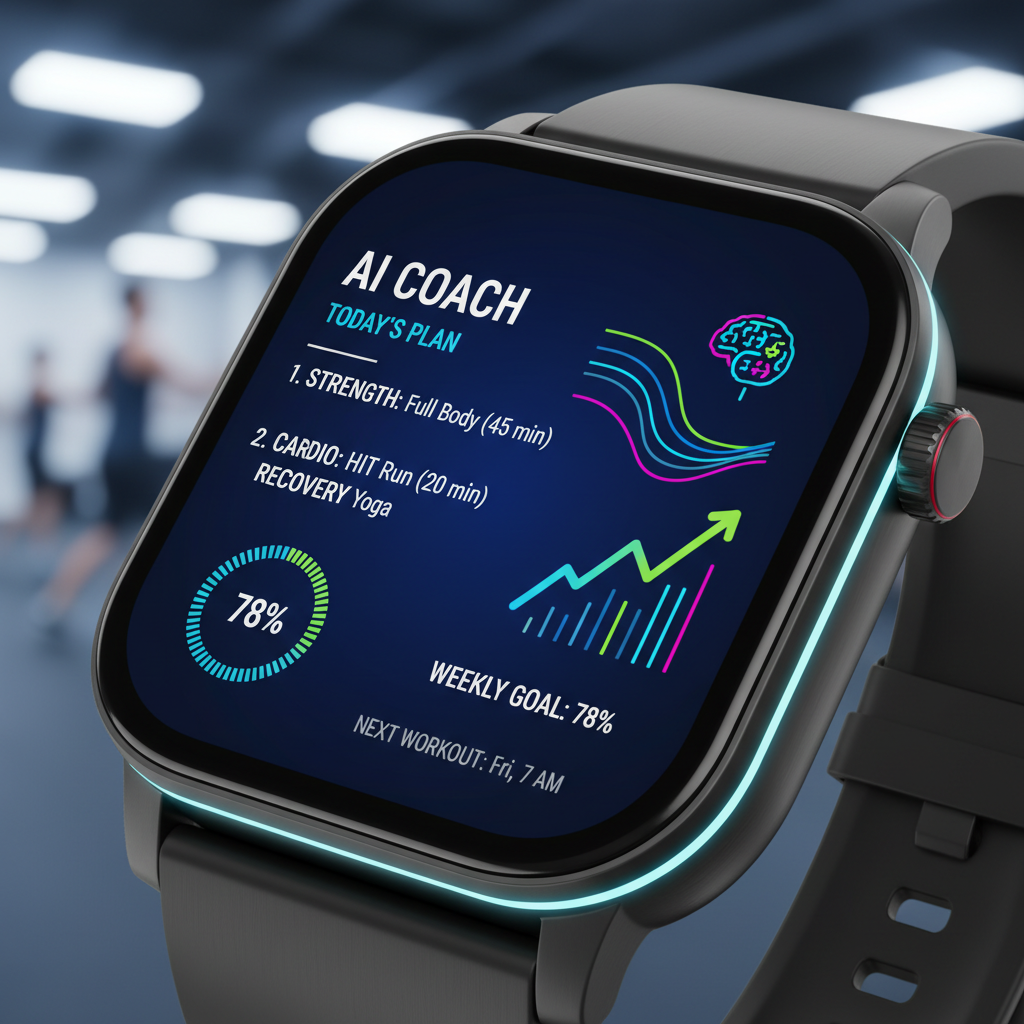
Goal: Generate a photorealistic image of a sleek, modern smartwatch for an online store, suitable for a hero image.
Initial Attempt (Simple Prompt): “A smartwatch on a table.”
Result: Generic, likely cartoonish or poorly rendered watch, flat lighting, uninteresting background. Not suitable for e-commerce.
Expert Prompt Engineering Strategy:
- Subject Definition: Focus on brand-specific details, materials, and features.
“A brand new ‘ChronoX’ smartwatch, black titanium casing, sapphire glass screen displaying a crisp digital clock, soft silicone strap, meticulously clean.”
- Lighting: Mimic professional studio lighting.
“Softbox lighting from above and left, subtle fill light from the right, creating gentle, even illumination, diffused light, studio photography.”
- Environment/Context: A clean, elegant, neutral background to emphasize the product.
“On a polished dark wood table, with a subtly blurred grey concrete wall in the background, minimalist, clean aesthetic.”
- Camera/Composition: Product photography standards.
“Close-up shot, shallow depth of field with bokeh effect on the background, eye-level perspective, focused on the watch face, product photography style.”
- Realism Cues & Negative Prompts: Explicitly demand photorealism and exclude artificiality.
“Ultra photorealistic, 8k, hyper detailed, perfect reflections, sharp focus, professional product photography, –no blurry, render, cartoon, illustration, low quality, distortion, text.”
Outcome: A stunning, hyperrealistic product shot with exquisite detail, appropriate lighting, and a clean presentation, ready for marketing use, saving time and cost compared to traditional photography.
Case Study 2: Conceptual Character Design for Film Production
Goal: Create a hyperrealistic concept art image of a futuristic rogue agent for a science fiction film, showcasing detailed cybernetics and gritty realism.
Initial Attempt (Simple Prompt): “A futuristic agent.”
Result: Vague, cartoonish, or generic character, lacking specific details, often with unnatural proportions.
Expert Prompt Engineering Strategy:
- Subject Definition: Detailed physical and attire description.
“A hyperrealistic portrait of a female rogue agent, 30s, sharp angular features, short cropped silver hair, intense gaze, intricate cybernetic implants visible on her left arm, worn black leather jacket with intricate stitching, tactical gear, scar over right eye.”
- Lighting: Dramatic, cinematic lighting to enhance mood and texture.
“Low-key lighting, strong rim lighting from behind, casting long shadows, volumetric smoke effects, neon glow from a distant source, cinematic lighting.”
- Environment/Context: A gritty, futuristic setting.
“Standing in a dimly lit, rain-slicked cyberpunk alleyway, blurred neon signs in the background, heavy atmosphere.”
- Camera/Composition: Action-oriented, close-up to show detail.
“Medium close-up shot, slightly Dutch angle, 50mm lens, shallow depth of field on the background, intense stare, capturing texture of leather and metallic implants.”
- Realism Cues & Negative Prompts: Maximize realism and prevent artistic deviation.
“Ultra photorealistic, film still, 8k, intricate details, cinematic quality, professional photography, raw photo, –no painting, illustration, drawing, cartoon, blurry, deformed hands, CGI, low quality.”
Outcome: A powerful, hyperrealistic character concept, rich with detail and atmospheric realism, immediately conveying the character’s persona and the film’s aesthetic.
Case Study 3: Architectural Visualization for Real Estate
Goal: Generate a photorealistic exterior view of a modern luxury villa at sunset for a real estate brochure.
Initial Attempt (Simple Prompt): “A modern house.”
Result: A basic, often blocky 3D render look, lacking natural lighting and environmental integration.
Expert Prompt Engineering Strategy:
- Subject Definition: Detailed architectural features and materials.
“A hyperrealistic exterior shot of a luxury modern villa, clean lines, large floor-to-ceiling windows, natural stone cladding, dark wood accents, integrated infinity pool, lush tropical landscaping.”
- Lighting: Evocative sunset lighting.
“Golden hour sunset lighting, soft warm glow illuminating the facade, long subtle shadows, interior lights subtly glowing through windows, dramatic sky with hues of orange and purple.”
- Environment/Context: Integrate seamlessly into a desirable landscape.
“Situated on a gentle hillside overlooking a pristine ocean, clear blue water, a few palm trees, meticulously maintained garden, serene atmosphere.”
- Camera/Composition: Professional architectural photography perspective.
“Wide-angle shot from a slightly elevated perspective, showcasing the entire villa and its surroundings, leading lines from the pathway, sharp focus throughout, architectural photography.”
- Realism Cues & Negative Prompts: Demand photographic quality and eliminate CG look.
“Ultra photorealistic, 8k, intricate details, highly detailed reflections in glass and pool, natural light, award-winning architectural photography, –no render, CGI, cartoon, low resolution, blurry, distorted, sketch.”
Outcome: A breathtakingly realistic architectural visualization, indistinguishable from a high-end photograph, perfect for attracting potential buyers and conveying luxury.
Frequently Asked Questions
Q: What exactly is prompt engineering for hyperrealism?
A: Prompt engineering for hyperrealism is the specialized skill of crafting highly detailed, specific, and nuanced text instructions (prompts) for AI image generation models. The goal is to guide the AI to produce images that are virtually indistinguishable from real photographs, focusing on elements like realistic lighting, textures, composition, and fine details, while actively avoiding artificial or stylized outputs.
Q: How important is prompt specificity for achieving realism?
A: Prompt specificity is absolutely paramount for realism. AI models don’t “understand” concepts in the human sense; they interpret keywords and their relationships. Vague prompts lead to generic, often unrealistic results because the AI fills in the blanks with its generalized understanding. Detailed prompts, on the other hand, leave less to chance, directing the AI to render every aspect with precision, from the type of light to the texture of a surface.
Q: Can I use real-world references (like specific photographers or camera types) in my prompts?
A: Yes, you can. Many prompt engineers find success by including references to renowned photographers (e.g., “by Annie Leibovitz,” “by Steve McCurry”), camera models (e.g., “shot on a Canon EOS R5”), or lens types (e.g., “50mm prime lens”). These references can subtly guide the AI towards a specific photographic style, depth of field, or aesthetic associated with those elements. However, use them judiciously, as they can also introduce unintended stylistic biases if not carefully chosen.
Q: What are negative prompts and why are they so useful for realism?
A: Negative prompts are instructions given to the AI about what you explicitly do not want to see in the image. They are incredibly useful for realism because they help filter out common artifacts, artistic styles, or imperfections that AI models might otherwise include. For example, using “cartoon, illustration, painting, blurry, low resolution, deformed” in your negative prompt helps ensure the AI avoids these undesirable elements, pushing the output closer to a clean, photorealistic image.
Q: Do different AI models (Midjourney, DALL-E 3, Stable Diffusion) require different prompting styles for realism?
A: Yes, they do, to some extent. While the core principles of specificity and detail remain, each model has its own nuances. Midjourney often thrives on evocative, artistic language. DALL-E 3 is excellent at understanding complex natural language descriptions and logical relationships. Stable Diffusion, especially with its various custom models and extensions, responds very well to highly structured prompts with specific technical keywords and parameter adjustments. Experimentation with each model is key to understanding its optimal prompting style for realism.
Q: How can I achieve consistent character appearances across multiple hyperrealistic images?
A: Achieving consistent character appearances is one of the more challenging aspects. Strategies include: 1) Using a highly detailed and consistent character description across all prompts. 2) Utilizing the same seed value, if your chosen AI model supports it, for minor variations. 3) Employing image-to-image techniques, where you feed an initial realistic character image back into the AI as a reference. 4) Leveraging specialized tools like ControlNet in Stable Diffusion to dictate specific poses and body shapes while maintaining the character’s likeness.
Q: What are some common pitfalls to avoid when trying to generate hyperrealistic AI images?
A: Common pitfalls include: 1) Being too vague in your prompt, leading to generic results. 2) Forgetting to use negative prompts, resulting in stylistic elements or artifacts that break realism. 3) Not iterating and refining your prompts; expecting perfection on the first try. 4) Overloading the prompt with too many contradictory instructions. 5) Neglecting critical elements like lighting and camera settings, which are vital for photorealism. 6) Ignoring the impact of generation parameters like CFG scale or sampling steps.
Q: Is it ethical to use AI for hyperrealistic images, especially with the rise of deepfakes?
A: The ethics of hyperrealistic AI images are complex. While the technology itself is neutral and offers immense creative potential, its misuse for deepfakes, misinformation, or harmful content is a serious concern. Responsible use requires transparency (disclosing AI origin), avoiding deceptive intent, respecting intellectual property, and actively working against biases in generated content. Adhering to platform terms of service and personal ethical guidelines is paramount.
Q: How can I learn more about advanced prompt engineering techniques?
A: To deepen your knowledge, actively engage with the AI art community on platforms like Discord, Reddit, and dedicated forums. Study successful prompts on sites like Lexica or Civitai. Experiment extensively with different models and parameters, keeping a log of your findings. Follow tutorials and workshops from experienced prompt engineers, and consider using prompt management tools to organize and refine your strategies. Continuous learning and hands-on practice are crucial.
Q: What’s the role of parameters like CFG scale and sampling steps in achieving hyperrealism?
A: These parameters critically influence realism. The CFG (Classifier-Free Guidance) scale dictates how strongly the AI adheres to your prompt; too low might make it ignore details, too high can make it “overcook” the image, losing naturalism. Sampling steps determine the number of iterations the AI takes to refine the image; more steps typically lead to more detail and coherence, vital for realism, but diminishing returns exist. Finding the optimal balance for these parameters is a key skill in advanced prompt engineering.
Key Takeaways for Expert Prompt Engineering
- Specificity is Your Superpower: Be relentlessly detailed in your subject, environment, lighting, and camera descriptions. Every word counts.
- Master Positive and Negative Prompts: Use both to define what you want and, just as importantly, what you absolutely do not want (e.g., “no cartoon, no blur”).
- Prioritize Lighting and Composition: These are the bedrock of photorealism. Describe light source, direction, quality, color, and cinematic framing.
- Understand Your AI Model: Different models (Midjourney, DALL-E 3, Stable Diffusion) have unique strengths and respond differently to prompts and parameters.
- Tweak Generation Parameters: Experiment with seed values, sampling methods, sampling steps, and CFG scale to fine-tune the output’s fidelity.
- Embrace Iteration and Feedback: Prompt engineering is a cyclical process of generating, analyzing, refining, and repeating. Keep a log of your successful prompts.
- Leverage Advanced Techniques: Explore image-to-image, structural controls (like ControlNet concepts), and multi-modal prompting for unprecedented control.
- Learn from the Community: Study successful prompts, participate in forums, and share knowledge to accelerate your learning curve.
- Practice Responsible AI Creation: Be aware of ethical implications, avoid misuse, and strive for transparency and inclusivity in your hyperrealistic creations.
Conclusion
The journey to crafting hyperrealistic AI images is a testament to the blend of technical understanding and creative vision. It transcends simple keyword entry, evolving into a sophisticated art form demanding precision, patience, and a deep appreciation for the nuances of digital image generation. By diligently applying expert prompt engineering strategies—meticulously detailing every aspect from subject to lighting, leveraging powerful modifiers, and understanding the intricate dance of AI models and their parameters—you unlock the true potential of these groundbreaking tools.
The landscape of AI image generation is ceaselessly expanding, promising even more intuitive controls, real-time feedback, and deeper integrations with other creative mediums. As you continue to experiment, refine, and learn from every pixel generated, remember the ethical responsibilities that come with such powerful capabilities. Embrace the iterative process, engage with the vibrant community, and push the boundaries of what is visually possible. The future of hyperrealistic artistry is not just about what the AI can create, but about how expertly you can guide it. Start prompting with purpose, and prepare to be amazed by the lifelike worlds you can bring into existence.






































































Leave a Reply