


In the rapidly evolving landscape of digital marketing, visual content reigns supreme. From captivating social media posts to compelling website hero images and engaging ad campaigns, visuals are the unsung heroes driving engagement, conversions, and brand recall. For decades, marketers relied on stock photo libraries, professional photographers, or graphic designers. While these avenues remain valuable, a new, transformative power has emerged: Artificial Intelligence visual generation. This technology is not merely a tool for novelty; it is a strategic asset that, when wielded effectively, can revolutionize how brands create and deploy visual assets at an unprecedented scale and speed.
However, the true magic of AI visual generation doesn’t lie solely in the sophistication of the algorithms or the power of the platforms. It resides in the hands of the user, specifically in their ability to communicate their vision effectively to the AI. This is where prompt engineering enters the spotlight. Prompt engineering is the art and science of crafting precise, descriptive text commands – known as “prompts” – that guide an AI model to generate the desired visual output. Think of it as speaking the AI’s language, understanding its nuances, and learning how to coax out the stunning, high-impact visuals that resonate with your target audience.
This comprehensive guide will take you on a journey through the intricate world of prompt engineering for digital marketing. We will move beyond basic commands to explore advanced techniques, delve into strategic applications across various marketing channels, address ethical considerations, and provide you with a robust framework to consistently generate visuals that not only catch the eye but also achieve your marketing objectives. Prepare to unlock a new dimension of creativity and efficiency in your digital marketing endeavors.
Understanding the AI Visual Landscape: Beyond Stock Photos
The advent of generative AI has fundamentally shifted the paradigm of visual content creation. Historically, marketers faced a trilemma: high quality meant high cost and long lead times, while speed often compromised originality or aesthetic appeal. AI, particularly advanced models like Midjourney, DALL-E 3, and Stable Diffusion, shatters this limitation by offering a fourth option: high quality, high originality, high speed, and relatively low cost.
Consider the limitations of traditional approaches:
- Stock Photos: While convenient, they often lack uniqueness, can feel generic, and may not perfectly align with specific brand aesthetics or niche campaign themes. Overuse can lead to visual fatigue and a loss of authenticity.
- Professional Photography/Illustration: Offers unparalleled customizability and quality but comes with significant financial investment and time commitment for concept, shoot, and post-production. Not always feasible for rapid iteration or large volumes of content.
- Graphic Design: Essential for branding and layout, but relies on existing assets or manual creation, which can be time-consuming for generating new, original imagery from scratch.
AI visual generation, conversely, offers a compelling alternative. It allows marketers to:
- Generate Hyper-Specific Visuals: Need an image of a sentient toaster baking a croissant on the moon for a quirky ad campaign? AI can do that. It removes the constraints of what exists and opens up a realm of limitless possibilities tailored precisely to your imaginative brief.
- Achieve Brand Consistency: By refining prompts with specific stylistic elements, color palettes, and thematic cues, marketers can generate visuals that consistently align with their brand’s identity, creating a cohesive and recognizable visual language.
- Iterate Rapidly: Experiment with hundreds of variations of an image concept in minutes, allowing for quick A/B testing and optimization without incurring significant costs.
- Reduce Costs and Time: Drastically cuts down on expenses associated with photography, illustration, and design for many visual needs, freeing up budget for other marketing initiatives.
- Personalize at Scale: Create unique visual content for segmented audiences or individualized marketing messages, fostering deeper connections.
The strategic advantage of AI visual generation in marketing is undeniable. It’s about empowering marketers to be visual storytellers, limited only by their imagination and their ability to articulate that imagination through prompts.
The Anatomy of an Effective Prompt: Decoding the Core Elements
A “perfect” prompt is not a single, universal string of words. It is a carefully constructed instruction set that guides the AI towards your desired outcome. Think of it as a blueprint for a visual masterpiece. While different AI models have their own nuances, several core elements are universally impactful in prompt engineering.
Specificity is Key: Defining Your Vision
Vagueness is the enemy of good AI output. Instead of “a person running,” try “a fit woman in vibrant athletic wear sprinting through a sun-drenched urban park, morning light, blurred background, dynamic motion.” Every added detail refines the AI’s understanding.
- Subject: Clearly define what the main focus of the image is. Is it a person, an object, an animal, a landscape? Be precise about its characteristics (e.g., “a golden retriever puppy,” “an antique pocket watch,” “a sprawling cyberpunk city”).
- Action/Context: What is the subject doing, or what is happening in the scene? (e.g., “drinking coffee,” “flying through space,” “being polished by hand”).
- Environment/Setting: Where is this happening? Describe the location (e.g., “a cozy cafe,” “on the surface of Mars,” “a dimly lit workshop”).
Style and Aesthetics: Setting the Mood
This is where you infuse the image with personality and artistic direction. Describing the style helps the AI understand the overall look and feel you’re aiming for.
- Artistic Style: Specify a particular art movement or aesthetic (e.g., “impressionistic painting,” “hyperrealistic digital art,” “pixel art,” “Japanese woodblock print,” “Bauhaus architecture”).
- Medium: If applicable, describe the medium (e.g., “oil painting,” “watercolor,” “charcoal sketch,” “3D render,” “photograph”).
- Mood/Emotion: Convey the desired feeling (e.g., “serene,” “energetic,” “mysterious,” “joyful,” “futuristic and sleek,” “vintage and nostalgic”).
- Color Palette: Mention specific colors or a general color scheme (e.g., “monochromatic blue tones,” “vibrant neon colors,” “earthy muted tones,” “pastel colors”).
Composition and Framing: Guiding the Camera
Just like a photographer or cinematographer, you can instruct the AI on how the scene should be framed and composed.
- Shot Type: (e.g., “wide shot,” “close-up,” “macro shot,” “full body shot,” “medium shot”).
- Angle: (e.g., “low angle,” “high angle,” “Dutch angle,” “eye-level shot”).
- Perspective: (e.g., “aerial view,” “worm’s-eye view,” “POV shot”).
- Compositional Rules: (e.g., “rule of thirds,” “golden ratio,” “symmetrical composition,” “leading lines”).
Lighting and Atmosphere: Controlling the Emotion
Lighting is crucial for setting the tone and highlighting details. Atmosphere adds depth and realism.
- Light Type: (e.g., “soft studio lighting,” “dramatic chiaroscuro,” “golden hour lighting,” “backlighting,” “rim light,” “cinematic lighting”).
- Light Source: (e.g., “natural sunlight,” “candlelight,” “fluorescent lights,” “neon glow”).
- Time of Day: (e.g., “dawn,” “midday sun,” “twilight,” “nighttime”).
- Weather/Atmospherics: (e.g., “foggy,” “rainy,” “smoky,” “misty,” “clear sky,” “dust particles in the air”).
Keywords and Modifiers: Precision in Language
These are individual words or short phrases that act as powerful levers for the AI.
- Adjectives: “lush,” “ancient,” “gleaming,” “rugged,” “ethereal.”
- Verbs: “hovering,” “glowing,” “erupting,” “flowing.”
- Quality Modifiers: “ultra realistic,” “photorealistic,” “8K resolution,” “highly detailed,” “intricate,” “sharp focus.”
- Artist/Photographer References: (e.g., “in the style of Van Gogh,” “photography by Annie Leibovitz,” “illustrated by Moebius”). Use sparingly and thoughtfully.
Negative Prompts: What to Avoid
Often overlooked, negative prompts are instructions to tell the AI what not to include or what characteristics to suppress. This is incredibly powerful for refinement.
- Common Negatives: “blurry,” “distorted,” “deformed,” “ugly,” “low resolution,” “extra limbs,” “bad anatomy,” “text,” “watermark.”
- Specific Negatives: If the AI consistently adds an unwanted element (e.g., “no hats,” “no cars,” “no trees”).
By combining these elements thoughtfully, you transition from simply asking the AI for an image to actively directing its creative process, much like a film director guides their crew.
Advanced Prompt Engineering Techniques for Marketing Success
Once you’ve mastered the basics, you can explore more sophisticated techniques to gain even finer control and achieve highly specific, impactful results for your marketing campaigns.
Iterative Prompting: The Art of Refinement
Rarely does the perfect image appear on the first try. Iterative prompting is a crucial workflow for prompt engineering. It involves a cycle of:
- Generate: Create an initial image with your base prompt.
- Analyze: Evaluate the output. What worked? What didn’t? What’s missing?
- Refine: Adjust your prompt based on your analysis. Add details, remove elements, change styles, or introduce negative prompts.
- Regenerate: Generate new images with the refined prompt.
This process is akin to a sculptor chipping away at a block of marble, slowly revealing the final form. For example, if you want “a futuristic cityscape at sunset,” and the first output lacks dynamism, you might add “neon glow, flying vehicles, vibrant reflections, volumetric lighting” to your next iteration.
Blending and Referencing: Creative Combinations
Many advanced AI tools allow you to blend multiple image inputs or use existing images as references. This is incredibly useful for:
- Style Transfer: Apply the artistic style of one image to the content of another.
- Concept Blending: Combine elements, themes, or moods from several source images into a single new creation.
- Character Consistency: If you need a consistent character across multiple visuals, you can feed the AI an initial image of that character as a reference for subsequent generations.
- Brand Asset Integration: Blend your brand’s existing logo, product packaging, or specific visual motifs into new AI-generated scenes, ensuring seamless integration.
This technique moves beyond pure text prompting, allowing for a hybrid approach that leverages existing visual assets to inform new creations.
Prompt Weighting and Parameters: Fine-Tuning Control
Many AI platforms offer advanced parameters that allow you to assign “weights” or specific instructions for how much emphasis the AI should place on certain parts of your prompt. For example, in Midjourney, you can use `::` to separate concepts and assign numerical weights (e.g., “futuristic cityscape::3 sunset::1”).
- Controlling Emphasis: Increase the weight of keywords that are crucial to your vision (e.g., making sure a specific product is prominent).
- Adjusting Stylistic Influence: Control how much a referenced artist’s style influences the output versus the subject matter.
- Aspect Ratios: Crucial for marketing, allows you to specify dimensions suitable for different platforms (e.g., Instagram stories, website hero images, banner ads). Common parameters include `–ar 16:9`, `–ar 9:16`, `–ar 1:1`.
- Chaos/Stylize Parameters: Adjust the level of randomness or artistic interpretation the AI applies, allowing you to fine-tune between adherence to your prompt and creative flair.
Storytelling Through AI Visuals: Sequence Prompting
For campaign narratives or sequential content, you can develop a series of prompts that maintain thematic consistency while depicting different moments or perspectives. This involves:
- Establishing Core Elements: Define key characters, settings, and overarching themes that remain constant across all images.
- Varying Action/Emotion: Adjust the action, emotion, or specific details in each subsequent prompt to tell a story or show progression.
- Maintaining Style: Use consistent style descriptors and perhaps even an initial reference image to ensure a cohesive visual aesthetic across the entire sequence.
This technique is invaluable for creating engaging content series, animated marketing videos (by stitching together image sequences), or interactive web experiences.
Strategic Prompting for Diverse Marketing Objectives
The true power of AI visual generation for marketers lies in its versatility. By tailoring your prompts to specific marketing goals, you can unlock unparalleled efficiency and impact.
Brand Awareness and Engagement
Objective: Create visuals that grab attention, convey brand personality, and encourage interaction.
- Prompt Focus: Bold, unique, emotionally resonant, or visually striking imagery. Integrate brand colors subtly.
- Example: “A whimsical, dreamlike illustration of a fox wearing a crown, gazing at a galaxy in a teacup, vibrant pastel colors, intricate details, storybook style, brand’s signature blue and gold accents, for social media header.”
- Why it works: Evokes curiosity, aligns with playful brand identity, and is highly shareable.
Product Promotion and E-commerce
Objective: Showcase products attractively, highlight features, and drive purchase intent.
- Prompt Focus: High-fidelity, detailed product shots. Focus on lighting, texture, and context of use.
- Example: “Ultra-realistic studio shot of a sleek, minimalist smart humidifier, dewdrops visible on its surface, soft diffused lighting, white background with subtle volumetric fog, perfect focus, high resolution, e-commerce product photography style.”
- Why it works: Emphasizes product elegance and functionality, ideal for online stores.
Social Media and Content Marketing
Objective: Generate a high volume of diverse, engaging visuals optimized for various platforms.
- Prompt Focus: Adaptable aspect ratios, diverse styles (infographics, illustrations, photos), and content relevant to trending topics or user-generated content themes.
- Example: “A group of diverse young people laughing genuinely while sharing a picnic in a sun-drenched city park, vibrant natural lighting, candid photojournalistic style, Instagram feed optimization, –ar 1:1.”
- Why it works: Relatable, authentic feel, suitable for social platforms, promotes inclusivity.
Ad Campaigns and Lead Generation
Objective: Create visuals that compel action, convey urgency, or highlight benefits.
- Prompt Focus: Direct, clear messaging through imagery. Focus on problem-solution, aspiration, or emotional connection.
- Example: “A person looking relieved and happy after solving a complex puzzle, bright clean office environment, crisp commercial photography, sense of accomplishment, aspirational, ideal for tech solution ad, –ar 16:9.”
- Why it works: Visualizes the benefit of a solution, creating an emotional appeal for a product or service.
Integrating AI-Generated Visuals Across Digital Channels
The true value of AI-generated visuals is realized when they are seamlessly integrated into your broader digital marketing ecosystem. Effective prompt engineering enables you to create visuals specifically tailored for each channel’s unique requirements and audience expectations.
Website and Landing Page Optimization
Your website is often the first touchpoint for potential customers, and hero images, banners, and supporting graphics play a critical role in conveying professionalism and brand message.
- Hero Images: Require high resolution, often specific aspect ratios (e.g., wide landscape), and a strong central message or mood.
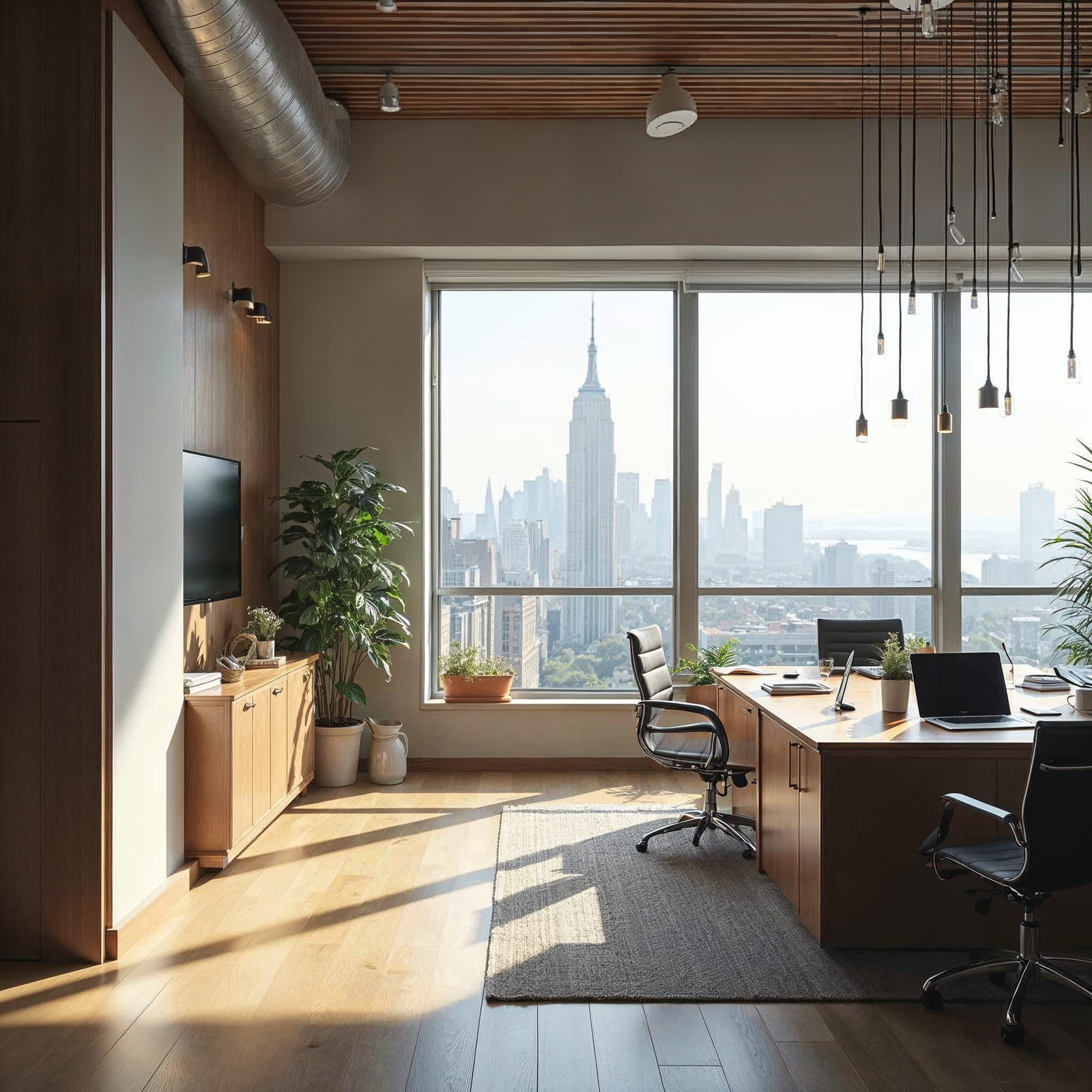
- Prompt Example: “Panoramic view of a serene, modern workspace bathed in natural sunlight, large windows overlooking a vibrant green cityscape, minimalist design, feeling of productivity and calm, corporate website hero image, ultra-wide angle, photorealistic, –ar 21:9.”
- Call-to-Action (CTA) Graphics: Need to be clear, attention-grabbing, and supportive of the CTA text.
- Prompt Example: “Abstract geometric pattern with flowing vibrant gradients in blues and greens, subtle arrows pointing towards the right, sleek, modern digital art style, ideal for ‘Learn More’ button background.”
- Blog Post Banners: Should be engaging and relevant to the article’s topic, often with space for text overlays.
- Prompt Example: “Conceptual illustration of interlocking gears made of glowing data points, representing complex problem-solving, dark background with bright ethereal light, digital abstract art, banner format for blog post about AI solutions.”
Email Marketing Campaigns
Email visuals need to be optimized for quick loading, mobile responsiveness, and compelling storytelling within a concise format. They should break up text and draw the reader’s eye to key information.
- Header Graphics: Introduce the email’s theme or offer.
- Prompt Example: “Stylized image of an open gift box emitting a gentle golden glow, surrounded by floating confetti, clean minimalist background, vibrant colors, email header graphic, –ar 3:1.”
- Product Showcases: Highlight new products or collections with clean, focused imagery.
- Prompt Example: “Close-up of a new organic skincare serum bottle, natural light from the side, elegant minimalist design, bokeh background with soft greenery, perfect focus, high-end product photography, for email newsletter.”
- Event Promotions: Create a sense of excitement and urgency.
- Prompt Example: “Dynamic illustration of a diverse group of professionals networking at a vibrant conference, modern architecture, energetic atmosphere, bright and inviting colors, for event invitation email.”
Video Content and Animations (Image Sequences)
While AI directly generates static images, sequences of AI-generated visuals can be powerful assets for animated explainers, social media video loops, or even as storyboards for more complex video productions.
- Storyboarding: Generate consistent character designs and sequential scenes to visualize a video narrative.
- Prompt Example (Scene 1): “A young entrepreneur, determined expression, working late at a laptop in a dimly lit, cozy home office, warm glow from screen, cinematic lighting, –s 750 –c 50.”
- Prompt Example (Scene 2): “The same young entrepreneur, smiling confidently, presenting a successful product to a small, engaged audience in a brightly lit modern meeting room, professional presentation, cinematic lighting, –s 750 –c 50.”
- Animated Gifs/Short Loops: Create slight variations of an image to generate a subtle animation, perfect for social media or banner ads.
- Prompt Example (Frame 1): “A single red rosebud just beginning to unfurl its petals, soft morning dew, macro photography, –ar 1:1.”
- Prompt Example (Frame 2): “A single red rosebud slightly more unfurled, soft morning dew, macro photography, –ar 1:1.” (Repeat with incremental changes)
The key to effective integration is understanding the technical and aesthetic requirements of each platform and crafting prompts that cater to them precisely.
Top AI Image Generation Platforms: A Comparative Look
The AI image generation space is dynamic, with new tools and updates emerging regularly. Each platform has its unique strengths, interfaces, and pricing models. Choosing the right tool depends on your specific needs, budget, and desired style.
| Platform | Key Features | Strengths for Marketing | Potential Limitations |
|---|---|---|---|
| Midjourney | Discord-based, highly artistic and aesthetic outputs, consistent style, strong community. Iterative generation, remix feature. | Exceptional for creative, high-quality, unique artistic visuals; excellent for branding, social media, and conceptual campaigns. Known for its aesthetic appeal. | Discord interface can be less intuitive for some. Less control over specific details like text or fine anatomy compared to others. Not open source. |
| DALL-E 3 (via ChatGPT Plus/API) | Integrates with ChatGPT, making prompt generation easier. Excellent object recognition and composition. Strong for photorealism and textual integration. | Ideal for generating specific objects, scenes, and characters with high accuracy. Strong ability to include legible text within images. Good for product shots, educational content. | Can sometimes lack the raw “artistic flair” of Midjourney for abstract concepts. Less stylistic variety out-of-the-box compared to some. |
| Stable Diffusion (various interfaces like InvokeAI, Automatic1111, DreamStudio) | Open-source, highly customizable, large ecosystem of models and extensions. Inpainting, outpainting, controlNet for precise pose/composition. | Unparalleled control for advanced users, ideal for generating highly specific content, iterative design, and modifying existing images. Great for niche marketing and highly custom assets. | Requires more technical knowledge and setup (for local installs). DreamStudio (web version) is easier but offers less control than local versions. Can be overwhelming for beginners. |
| Adobe Firefly | Integrated with Adobe Creative Cloud. Focus on commercial viability and safety. Text-to-image, text effects, generative fill, recolor vector art. | Excellent for marketers already in the Adobe ecosystem. Focus on “safe for commercial use” content. Strong for generating assets that can be easily edited or integrated into existing design workflows. | Still evolving, library of styles and concepts might be less diverse than more mature models. Outputs can be slightly more “generic” at times. |
| Prompt Component | Impact on Output | Marketing Application Example |
|---|---|---|
| Subject & Action | Defines the core focus and narrative of the image. | “A happy dog playing fetch on a beach at sunset” for a pet product ad. |
| Artistic Style | Sets the overall aesthetic and mood (e.g., photorealistic, watercolor, cyberpunk). | “Vibrant pop art illustration of a person drinking a smoothie” for a trendy beverage brand. |
| Composition & Angle | Controls how the scene is framed and viewed (e.g., close-up, wide shot, low angle). | “Macro shot of a shimmering diamond ring on velvet, bokeh background” for luxury jewelry. |
| Lighting & Atmosphere | Influences emotion, depth, and realism (e.g., golden hour, dramatic chiaroscuro, foggy). | “A cozy living room with warm fairy lights, soft focus, hygge aesthetic” for home decor. |
| Color Palette | Guides the dominant colors and overall visual harmony. | “Monochromatic blues and whites, minimalist design” for a tech company’s visual. |
| Quality Modifiers | Enhances detail, resolution, and overall fidelity (e.g., 8K, ultra realistic, highly detailed). | “Photorealistic portrait of a confident CEO, 8K, sharp focus” for corporate branding. |
| Negative Prompts | Instructs the AI what to omit or avoid (e.g., “no blurry, no text, no distortions”). | Ensuring a product shot is “no low quality, no bad anatomy” for a clean, professional look. |
| Aspect Ratio (–ar) | Defines the image dimensions, crucial for platform compatibility. | “A bustling cafe interior, –ar 9:16” for an Instagram story background. |
Ethical Considerations and Best Practices in AI Visuals
As powerful as AI visual generation is, its deployment in marketing comes with significant ethical and practical considerations. Responsible use is paramount to maintain brand trust and adhere to legal standards.
Copyright and Ownership
The legal landscape around AI-generated content is still evolving. Currently, in many jurisdictions, including the U.S., AI-generated art might not be eligible for copyright protection if there’s no “human authorship.”
- Platform Terms of Service: Always review the terms of service for the AI tool you are using. Some platforms grant you full commercial rights to images you generate, while others may retain some rights or have specific usage restrictions.
- Derivative Works: Be cautious when using prompts that reference specific artists or styles too closely, as this could lead to issues if the generated image is deemed a derivative work of an existing copyrighted piece.
- Originality: Strive for originality in your prompts and be aware that AI models are trained on vast datasets, potentially including copyrighted material. While the output is technically “new,” similar results might exist.
Bias and Representation
AI models are trained on existing data, which often reflects societal biases. This can lead to outputs that are stereotypical, exclusionary, or perpetuate harmful representations.
- Diverse Prompts: Actively prompt for diversity. Instead of “a professional,” try “a diverse group of professionals from various ethnic backgrounds.” Specify genders, ages, and abilities if relevant to challenge stereotypes.
- Review and Critique: Critically review AI outputs for unintended biases. Does the AI consistently generate certain demographics in specific roles? Challenge these patterns by refining your prompts.
- Inclusivity: Ensure your generated visuals reflect the diversity of your target audience and broader society in an authentic and respectful manner.
Transparency and Disclosure
As AI-generated content becomes more sophisticated, the line between real and artificial blurs. Transparency builds trust.
- When to Disclose: For sensitive topics, news, or whenever authenticity is crucial, consider disclosing that an image is AI-generated. This prevents misrepresentation and fosters transparency with your audience.
- Brand Integrity: Determine your brand’s stance on AI-generated content. Will you be upfront about its use? How will it integrate with your brand’s authenticity message?
- Deepfakes and Misinformation: Be extremely vigilant against any potential for your AI-generated visuals to be misinterpreted as real events or individuals, especially when creating human likenesses. Misusing AI to create misleading content can severely damage brand reputation.
Adopting these best practices ensures that your use of AI visual generation is not only effective but also ethical, responsible, and aligned with your brand’s values.
Practical Examples: Real-World Use Cases and Scenarios
Let’s dive into some concrete examples of how marketers can leverage expert prompt engineering to achieve specific visual goals for different marketing contexts.
Scenario 1: Launching a New Eco-Friendly Skincare Line
Goal: Create a hero image for a landing page that conveys natural ingredients, luxury, and sustainability.
- Initial Prompt: “Skincare product, natural, luxurious.” (Too vague, likely generic output)
- Refined Prompt: “Ultra-realistic studio shot of a minimalist glass bottle containing an amber-hued organic serum, placed elegantly on a smooth, river-polished stone, surrounded by subtle, dew-kissed green moss and delicate fern fronds. Soft, diffused natural sunlight from above, creating gentle highlights on the glass. Bokeh background with blurred natural elements. High-end product photography, focus stack, depth of field, natural luxury, clean aesthetics. –ar 16:9.”
- Why it works: Specifies product details, natural elements, lighting, composition, and brand values (natural luxury, clean). Aspect ratio is optimized for a landing page.
Scenario 2: Social Media Campaign for a Coffee Shop Promoting a New Seasonal Drink
Goal: Generate an Instagram-friendly image for a pumpkin spice latte that feels cozy, inviting, and unique.
- Initial Prompt: “Pumpkin spice latte.” (Basic, could be any stock photo)
- Refined Prompt: “Close-up, top-down shot of a beautifully frothed pumpkin spice latte in a rustic ceramic mug, intricate latte art of a maple leaf, steam gently rising. It sits on a dark wooden table next to a scattering of cinnamon sticks and miniature pumpkins. Cozy autumn afternoon light streaming through a window, shallow depth of field, warm inviting tones, hyperrealistic photography. Ideal for Instagram. –ar 1:1.”
- Why it works: Detailed description of the drink, specific accessories (cinnamon, pumpkins), precise lighting (autumn afternoon), and composition (top-down, close-up) create an inviting scene. Instagram-optimized aspect ratio.
Scenario 3: Banner Ad for an Online Course on Digital Art
Goal: Create a compelling banner ad visual that inspires creativity and highlights digital artistry, suitable for a wider ad network.
- Initial Prompt: “Digital art course banner.” (No visual direction)
- Refined Prompt: “A dynamic and inspiring digital painting of a hand holding a glowing stylus, sketching an intricate, vibrant galaxy that swirls out onto a vast canvas. The background is a blend of nebulous purples and blues, with sharp, colorful digital brushstrokes. High-resolution, futuristic, creative energy, digital art illustration style. Banner dimensions. –ar 16:9.”
- Why it works: Conveys creativity and digital medium through the stylus and galaxy motif. “Dynamic,” “vibrant,” and specific colors enhance appeal. Aspect ratio is standard for banners.
Scenario 4: Blog Post Header for an Article on ‘Future of Remote Work’
Goal: Generate an evocative image that represents flexibility, technology, and global connectivity in remote work.
- Initial Prompt: “Remote work.” (Could be a generic person on a laptop)
- Refined Prompt: “Conceptual illustration of diverse professionals from different continents collaborating seamlessly. Each person is in their own unique, aesthetically pleasing home office setting, connected by glowing neural pathways forming a global network. Soft, futuristic lighting, clean lines, minimalist design, vibrant yet harmonious color palette, sense of interconnectedness. Corporate blog header art. –ar 3:1.”
- Why it works: Uses symbolism (neural pathways, global network) to represent abstract concepts. “Diverse professionals” addresses inclusivity. Specific aesthetic (futuristic, minimalist) for a modern tech blog.
Frequently Asked Questions
Q: What is prompt engineering?
A: Prompt engineering is the specialized skill of crafting precise and detailed text commands (prompts) to guide artificial intelligence models, particularly those for image or text generation, to produce specific and desired outputs. It involves understanding how AI models interpret language and using keywords, stylistic descriptors, and parameters to achieve optimal results. For visual AI, it’s about telling the AI exactly what you want to see, how it should look, and what mood it should convey.
Q: Which AI image generator is best for marketing?
A: The “best” AI image generator depends on your specific marketing needs. Midjourney excels at highly artistic, aesthetically pleasing, and unique visuals ideal for branding and creative campaigns. DALL-E 3 (via ChatGPT Plus) is strong for specific object generation, accurate compositions, and including legible text. Stable Diffusion offers unparalleled control and customization for advanced users, suitable for highly niche or iterative design. Adobe Firefly integrates well with existing Adobe workflows and focuses on commercial safety. Many marketers use a combination of these tools for different purposes.
Q: How long should a prompt be for high-impact visuals?
A: There’s no fixed length, but generally, longer and more detailed prompts tend to yield better results for high-impact visuals. A good prompt is comprehensive, including subject, action, style, composition, lighting, and any specific modifiers. While a few keywords can generate an image, a prompt with 50-150 words (or even more, depending on complexity) that articulates your vision clearly will provide the AI with enough context to create something truly unique and aligned with your intent. The key is precision, not just length.
Q: Can AI-generated images include text?
A: Historically, AI image generators struggled significantly with legible text. However, models like DALL-E 3 have made substantial advancements in this area, often capable of generating short, accurate text within images. Other models like Stable Diffusion can achieve it with specific add-ons (like ControlNet) or through iterative refinement and inpainting techniques. For critical text, it’s often still best practice to generate the image without text and then add the text in a graphic design tool like Photoshop or Canva for perfect legibility and branding.
Q: Are AI-generated images truly unique?
A: Yes, AI-generated images are considered unique creations. While AI models are trained on vast datasets of existing images, they do not “copy” or “paste” parts of those images. Instead, they learn patterns, styles, and concepts, then synthesize entirely new pixels to form a novel image based on your prompt. The probability of two identical images being generated from different prompts, or even slightly varied prompts, is virtually zero, making each output distinct.
Q: How do I ensure brand consistency with AI-generated visuals?
A: Achieving brand consistency requires a systematic approach. Firstly, consistently use your brand’s specific color palette, themes, and stylistic guidelines in your prompts. Secondly, utilize reference images of existing brand assets (logos, product shots) where platforms allow blending or image-to-image prompting. Thirdly, maintain a library of successful prompts and negative prompts that yield on-brand results. Lastly, use advanced parameters like “seed” values (if available) or “style” parameters to maintain a cohesive aesthetic across different generations.
Q: What are negative prompts and why are they important?
A: Negative prompts are instructions given to the AI specifying what elements or characteristics to avoid in the generated image. They are crucial for refinement because they help filter out undesirable outcomes, improving the quality and relevance of the final visual. For example, adding “blurry, deformed, bad anatomy, ugly, watermark, text” can prevent common issues. They act as a powerful counter-balance to your positive prompt, guiding the AI away from unwanted results.
Q: Is it ethical to use AI-generated images in marketing?
A: Yes, it is generally ethical, but responsible use is key. Marketers should be mindful of potential biases in AI outputs and actively prompt for diverse and inclusive representations. Transparency about the use of AI, especially for sensitive topics, is also important to maintain trust. Avoid generating or using images that could be misleading, perpetuate stereotypes, or infringe on existing copyrights (though copyright law around AI is still evolving). Adhering to platform terms of service regarding commercial use is also a must.
Q: How can I integrate AI-generated visuals into my existing marketing workflow?
A: Start by identifying areas where visual content creation is a bottleneck or costly. AI can generate mockups, social media visuals, blog headers, email graphics, and ad creative faster. Establish clear guidelines for prompt engineering within your team. Use AI to generate initial concepts or a high volume of variations for A/B testing. For final assets, AI-generated images can serve as a strong base, often requiring minor touch-ups or text overlays in traditional graphic design software (like Canva or Adobe Creative Suite) to perfectly align with brand guidelines and add necessary calls to action.
Q: What are common mistakes to avoid in prompt engineering for marketing?
A: Common mistakes include being too vague (“create a cool image”), over-prompting (adding too many conflicting details), not using negative prompts, failing to iterate and refine, neglecting aspect ratios for different platforms, and not aligning the prompt with the specific marketing objective. Another mistake is assuming the AI understands context or nuance like a human; prompts need to be explicit and literal in their descriptions.
Key Takeaways
- Prompt Engineering is Paramount: The quality of your AI-generated visuals directly correlates with the precision and detail of your prompts.
- Comprehensive Prompts Win: Include subject, action, style, composition, lighting, and modifiers for optimal results.
- Iterate and Refine: Treat prompt engineering as an iterative process, constantly adjusting and improving based on generated outputs.
- Master Advanced Techniques: Leverage blending, weighting, and sequential prompting for greater control and storytelling.
- Align with Marketing Objectives: Tailor prompts specifically for brand awareness, product promotion, social media, or ad campaigns.
- Optimize for Each Channel: Consider aspect ratios, content type, and audience expectations for websites, emails, and social media.
- Choose the Right Tools: Different AI platforms excel in different areas; select the one that best suits your creative and technical needs.
- Practice Ethical AI: Be mindful of copyright, bias, and transparency in your use of AI visuals to maintain brand integrity and trust.
- AI Enhances, Not Replaces: AI tools are powerful accelerators that empower marketers, often best used in conjunction with traditional design and strategic oversight.
Conclusion
The journey into crafting perfect prompts for high-impact AI visuals is an exciting frontier for digital marketers. It represents a paradigm shift from traditional content creation methods, offering unparalleled speed, scale, and creative freedom. By understanding the intricate language of AI models, mastering the art of prompt engineering, and thoughtfully integrating these tools into your marketing strategy, you gain a significant competitive advantage.
From generating hyper-specific product shots to conceptualizing entire brand narratives, AI visual generation empowers marketers to be more agile, innovative, and visually compelling than ever before. It’s not just about creating images; it’s about translating your marketing vision into captivating visual stories that resonate deeply with your audience. As AI technology continues to evolve, the ability to effectively communicate with these powerful tools will only become more crucial. Embrace the challenge, hone your prompt engineering skills, and unleash a new era of high-impact visual marketing.
















































Leave a Reply