


In today’s fast-paced digital world, the sheer volume of emails can feel like a relentless tide, threatening to drown our productivity and overwhelm our focus. From critical project updates and client communications to internal discussions and newsletters, our inboxes have become sprawling digital landscapes demanding constant attention. Sifting through lengthy messages to extract key information is a time-consuming chore, often leading to missed deadlines, delayed responses, and increased stress. But what if there was a way to instantly distill the essence of every email, allowing you to grasp the core message in seconds rather than minutes?
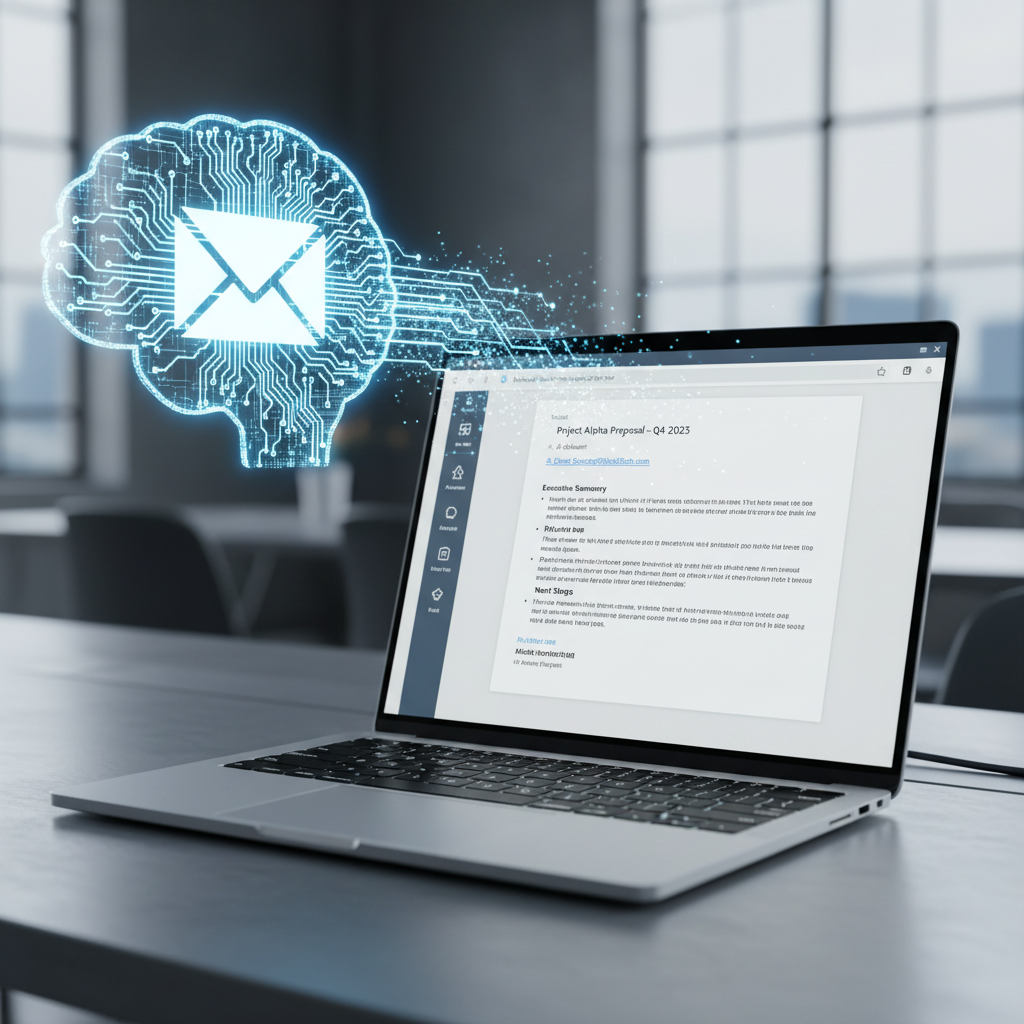
Enter the revolutionary world of AI email summarization tools. Leveraging cutting-edge artificial intelligence, these innovative solutions are transforming how we interact with our inboxes. They are designed not just to save you time, but to empower you with clarity, efficiency, and a renewed sense of control over your digital communication. This comprehensive guide will explore the best AI tools currently available for instant email summarization, delve into the technology that powers them, provide practical examples of their use, and answer your most pressing questions about integrating them into your daily workflow. Prepare to reclaim your inbox and boost your productivity like never before.
What is AI Email Summarization and Why Do You Need It?
AI email summarization refers to the process where artificial intelligence algorithms analyze the content of an email or an entire email thread and generate a concise, coherent summary that captures the main points. This is not just about shortening text; it’s about intelligent extraction and synthesis of information, presenting it in an easily digestible format.
The Problem: Email Overload and Information Fatigue
Consider these statistics:
- The average office worker receives over 120 emails per day.
- Professionals spend an estimated 28 percent of their workweek managing email.
- Reading and responding to emails can consume over 2.5 hours daily for many employees.
This constant barrage leads to:
- Information Overload: Too much data to process, leading to vital details being missed.
- Reduced Productivity: Time spent reading long emails takes away from core tasks.
- Decision Paralysis: Difficulty making quick decisions due to the effort required to gather relevant information from dense communications.
- Increased Stress and Burnout: The feeling of being constantly “behind” on emails contributes to mental fatigue.
The Solution: Instant Clarity with AI
AI email summarization directly addresses these pain points by offering:
- Time Savings: Quickly grasp the gist of an email in seconds, eliminating the need to read every word of lengthy messages or extensive threads.
- Enhanced Focus: Spend less time deciphering long emails and more time concentrating on high-priority tasks.
- Improved Decision-Making: Get straight to the critical information needed to make informed and timely decisions.
- Reduced Cognitive Load: Alleviate the mental burden of processing vast amounts of text, leading to less stress and mental fatigue.
- Better Prioritization: Rapidly identify urgent emails and allocate your attention where it’s most needed.
By delegating the initial information extraction to AI, you free up valuable mental bandwidth and time, transforming your inbox from a source of dread into a powerful hub of actionable insights.
The Core Technology Behind Email Summarization
Understanding the technological backbone of AI summarization tools can help you appreciate their capabilities and limitations. At its heart, email summarization relies heavily on Natural Language Processing (NLP) and advanced machine learning models.
Natural Language Processing (NLP)
NLP is a branch of AI that enables computers to understand, interpret, and generate human language. For email summarization, NLP techniques are employed to:
- Tokenization: Breaking down text into smaller units (words, phrases).
- Part-of-Speech Tagging: Identifying the grammatical role of each word (noun, verb, adjective).
- Named Entity Recognition (NER): Identifying and classifying key entities like names, organizations, dates, and locations.
- Semantic Analysis: Understanding the meaning and context of words and sentences.
Machine Learning and Deep Learning Models
Modern AI summarization tools leverage sophisticated deep learning models, particularly those based on the Transformer architecture. Models like BERT, GPT (Generative Pre-trained Transformer) variants, and similar large language models (LLMs) are central to this process.
- Training Data: These models are trained on vast datasets of text, learning patterns, grammar, and semantic relationships. This training allows them to understand context and generate human-like summaries.
- Attention Mechanisms: Transformers use “attention mechanisms” that allow them to weigh the importance of different words in a sentence or across an entire document. This is crucial for identifying key information.
Extractive vs. Abstractive Summarization
There are two primary approaches to AI summarization:
- Extractive Summarization: This method identifies the most important sentences or phrases from the original text and stitches them together to form a summary. It essentially “extracts” key pieces of information without generating new text.
- Pros: High factual accuracy, as it uses original sentences. Less prone to “hallucination” (making up facts).
- Cons: Can sometimes lack fluency or coherence, as sentences might be taken out of their original flow. May include redundant information if two extracted sentences convey similar ideas.
- Abstractive Summarization: This more advanced method involves the AI understanding the text and then generating new sentences that convey the core meaning. It’s akin to a human summarizing a document in their own words.
- Pros: Produces highly coherent, fluent, and concise summaries. Can synthesize information from multiple parts of the text into a single new sentence.
- Cons: More computationally intensive. Higher risk of “hallucinations” or misinterpretations if the model is not perfectly aligned or trained. Requires a deeper semantic understanding.
Many contemporary tools employ a hybrid approach, combining the reliability of extractive methods with the fluidity of abstractive techniques to deliver the best of both worlds. The continuous advancement in LLMs is rapidly pushing abstractive summarization to new levels of sophistication and reliability.
Top AI Tools for Instant Email Summarization
The market for AI-powered productivity tools is booming, and email summarization is a significant area of innovation. Here are some of the leading tools and platforms offering instant email summarization capabilities, catering to a range of users from individuals to large enterprises:
1. Microsoft Copilot (for Outlook)
Microsoft Copilot is an AI-powered assistant deeply integrated across the Microsoft 365 ecosystem, including Outlook. For email, Copilot can:
- Summarize Email Threads: Quickly condense long email conversations into key points, identifying sender, core issues, and suggested actions.
- Draft Replies: Generate context-aware replies based on the summarized content and your intent.
- Identify Action Items: Automatically extract tasks and action items from emails.
- Integration: Seamlessly built into Outlook (web and desktop) and Teams, providing a cohesive experience for Microsoft 365 users.
- Ideal For: Businesses heavily invested in the Microsoft ecosystem, users seeking a unified AI experience across their productivity suite.
2. Google Workspace Duet AI (now Gemini for Workspace)
Google’s answer to intelligent assistance, Duet AI (now rebranded as Gemini for Workspace), offers similar robust capabilities for Gmail and other Google Workspace applications.
- Summarize Emails & Threads: Get instant summaries of individual emails or entire conversation threads in Gmail.
- Draft & Refine Emails: Assist in composing emails, improving tone, and suggesting content.
- Integration: Native integration with Gmail, Google Docs, Sheets, Slides, and Meet, creating a powerful AI assistant across your Google workflow.
- Ideal For: Individuals and organizations relying on Google Workspace for their daily operations, aiming for enhanced productivity within the Google ecosystem.
3. ChatGPT (and Third-Party Integrations/Extensions)
While not a dedicated email client, OpenAI’s ChatGPT is a powerful large language model that can be incredibly effective for email summarization when used strategically.
- Versatile Summarization: You can copy-paste email content into ChatGPT and ask it to summarize, extract action items, or even rephrase for clarity.
- Customizable Prompts: Leverage specific prompts to tailor the summary to your needs (e.g., “Summarize this email for a busy executive,” “Extract pros and cons”).
- Browser Extensions: Numerous third-party browser extensions integrate ChatGPT-like functionality directly into your email client (Gmail, Outlook web), allowing for one-click summarization.
- Ideal For: Users who want a highly customizable summarization experience, those who work across various platforms, or developers building custom solutions via API.
4. SaneBox (Smart Summaries)
SaneBox is an advanced email management service that goes beyond simple filtering to offer intelligent organization and summarization features.
- SaneLater Summaries: For emails automatically filtered into less urgent folders (like SaneLater), SaneBox provides a daily digest with summaries of those emails, allowing you to quickly scan and decide if you need to act.
- Focus on Prioritization: Its core strength lies in helping you prioritize your inbox, and summaries are a key part of ensuring you don’t miss anything important even in less urgent folders.
- Integration: Works with virtually any email client (Gmail, Outlook, Apple Mail, etc.) by connecting to your email server.
- Ideal For: Users struggling with overwhelming inboxes who need intelligent filtering, prioritization, and digestible summaries of less urgent communications.
5. Mailman AI
Mailman AI is a relatively newer entrant focusing on intelligent email processing, including summarization, to reduce interruptions and improve focus.
- Summarize Digests: Mailman AI can summarize daily email digests, providing key highlights without you needing to open every email.
- Batch Delivery: Allows you to receive emails in hourly batches or at specific times, and can summarize those batches.
- Customizable Filters: Offers extensive customization for when and how you receive emails, aiming to keep your inbox clean.
- Integration: Primarily for Gmail and Outlook users, integrates as a browser extension or directly with your email account.
- Ideal For: Individuals who want to control when they receive emails and quickly digest information in batches, reducing constant pings.
6. SummarizeBot (and similar general summarization APIs/tools)
While not strictly email-focused, tools like SummarizeBot (and other general text summarization APIs or web services) can be adapted for email summarization. You typically copy and paste the email content into their interface.
- Versatile Text Summarization: Can summarize any text, including emails, articles, documents, etc.
- API Access: Many provide APIs, allowing developers to integrate summarization capabilities into custom applications or internal tools.
- Ideal For: Users needing on-demand summarization for various text sources, or developers looking to add summarization to their custom email management solutions.
The choice of tool often depends on your existing tech stack (Microsoft 365 vs. Google Workspace), your specific needs for customization, and your preference for a built-in solution versus a standalone service or extension.
Key Features to Look for in an AI Summarization Tool
When selecting an AI email summarization tool, consider the following critical features to ensure it meets your specific needs and enhances your workflow effectively:
- Accuracy and Coherence: The summary must be factually correct and easy to understand. Poor summaries can be more detrimental than no summaries at all. Look for tools that provide both extractive and abstractive capabilities for flexibility.
- Speed of Summarization: The essence of “instant” summarization is speed. The tool should be able to process emails and generate summaries in mere seconds.
- Integration with Your Email Client: Seamless integration with your primary email platform (Gmail, Outlook, Apple Mail, etc.) is crucial for a smooth workflow. Browser extensions, native integrations, or server-side solutions are common.
- Summarization of Email Threads: The ability to summarize entire email conversations, not just individual messages, is vital for understanding context and progress on ongoing projects.
- Customization Options: Can you control the length of the summary? Can you specify what aspects to focus on (e.g., action items, questions, decisions)?
- Security and Privacy: Email often contains sensitive information. Ensure the tool has robust data encryption, privacy policies, and complies with relevant regulations (e.g., GDPR, HIPAA if applicable). Understand how your data is processed and stored.
- User Interface (UI) and Experience (UX): An intuitive and easy-to-use interface makes adoption effortless. The summary should be presented clearly without clutter.
- Identification of Key Entities/Action Items: Beyond just summarizing, some tools can highlight names, dates, locations, action items, or critical questions, adding another layer of value.
- Multi-Language Support: If you receive emails in multiple languages, a tool that can summarize across different languages is a significant advantage.
- Cost and Pricing Model: Evaluate whether it’s a subscription service, a one-time purchase, or freemium. Compare features offered at different pricing tiers.
- Reliability and Uptime: The tool should be consistently available and perform reliably without frequent glitches or downtime.
- Support and Updates: Active development, regular updates, and responsive customer support are indicators of a well-maintained and future-proof tool.
Benefits Beyond Just Summarization
While instant summarization is the core function, the ripple effects of adopting these AI tools extend far beyond simply shortening emails. They fundamentally transform your approach to communication and productivity:
1. Enhanced Decision-Making
By quickly extracting salient points, AI empowers you to make faster, more informed decisions. No longer will you be bogged down trying to piece together information from scattered emails. You get the facts, context, and implied next steps almost instantly.
2. Reduced Cognitive Load and Stress
The constant mental effort required to parse through hundreds of words per email contributes significantly to mental fatigue. AI summarization offloads this cognitive burden, freeing up your brainpower for more complex, creative, and strategic tasks. This leads to reduced stress levels and a healthier relationship with your inbox.
3. Proactive Engagement and Response
Knowing the core of an email immediately allows you to identify urgent matters and respond proactively. You can address critical issues before they escalate, fostering a reputation for responsiveness and efficiency. This is particularly valuable for roles in customer service, sales, and project management.
4. Improved Focus and Deeper Work
By minimizing the time spent on email, you create larger, uninterrupted blocks for “deep work.” This is where true innovation and high-quality output occur. AI tools act as a barrier against constant email distractions, helping you maintain flow state.
5. Better Information Retention
Paradoxically, by reading less, you might remember more. Concise summaries strip away fluff and repetition, presenting only the most critical information. This focused delivery aids memory and understanding, ensuring key details stick.
6. Enhanced Team Communication and Collaboration
When everyone on a team can quickly grasp the essence of shared communications, discussions become more efficient. AI-generated summaries can be easily shared within team chats (e.g., Slack, Teams) to provide instant context for colleagues, streamlining project updates and decision points.
7. Accessibility and Inclusivity
For individuals with cognitive disabilities, reading difficulties, or those for whom English is not their first language, AI summarization can be a game-changer. It makes information more accessible and reduces barriers to understanding, promoting a more inclusive communication environment.
Challenges and Considerations
While AI email summarization tools offer immense benefits, it’s crucial to approach their adoption with a clear understanding of their limitations and potential challenges.
1. Accuracy and Nuance
- Potential for Misinterpretation: AI models, especially abstractive ones, can sometimes misinterpret context or miss subtle nuances, leading to summaries that slightly distort the original meaning.
- Missing Critical Details: In very complex or highly technical emails, the AI might inadvertently omit a seemingly minor detail that is, in fact, crucial.
- Hallucinations: Although rare with modern LLMs, there’s always a slight risk of the AI generating information that isn’t present in the original text (hallucination), particularly with abstractive summaries.
2. Security and Privacy Concerns
- Data Handling: When you use a third-party tool, your emails are sent to their servers for processing. Understanding how these tools handle your sensitive data, their encryption standards, and compliance with privacy regulations (GDPR, CCPA) is paramount.
- Trust in Vendors: You are essentially trusting a vendor with access to your private communications. Thoroughly vetting their security protocols and reputation is essential.
3. Over-Reliance and Loss of Critical Reading Skills
- Diminished Attention Span: Constant reliance on summaries might gradually reduce one’s ability to engage with and comprehend long-form text, potentially impacting critical analysis skills.
- Missing Context: Sometimes, the “fluff” in an email (e.g., tone, emotional cues, background information) provides context that an AI summary might strip away, leading to misunderstandings in human interactions.
4. Cost and Integration Complexities
- Subscription Fees: Most advanced AI summarization tools operate on a subscription model, which can add to your operational costs, especially for teams.
- Integration Hurdles: While many tools offer seamless integration, some organizations might face challenges integrating them with legacy systems or highly customized email environments.
5. Bias in AI Models
- Training Data Bias: AI models are trained on vast datasets, and if these datasets contain biases (e.g., gender, racial, cultural), the summaries generated by the AI might inadvertently reflect or perpetuate those biases.
To mitigate these challenges, it’s advisable to:
- Start with less critical emails: Initially use summarization for newsletters or internal updates before relying on it for high-stakes communications.
- Cross-verify important information: For critical emails, a quick scan of the original text after reading the summary can ensure no vital details were missed.
- Choose reputable vendors: Select tools from established companies with strong privacy policies and security track records.
- Educate users: Train individuals on how to use these tools effectively and understand their limitations.
Future Trends in AI Email Management
The landscape of AI in email management is continually evolving. We can anticipate several exciting trends that will further enhance our ability to manage communications:
- Hyper-Personalized Summarization: AI will become even more adept at understanding individual user preferences, summarizing emails not just generally, but specifically for your role, priorities, and communication style. It might learn to highlight details relevant only to your projects.
- Proactive AI Agents: Beyond summarization, AI will evolve into proactive agents that can anticipate your needs. Imagine an AI that not only summarizes a client email but also pulls up relevant CRM data, schedules a follow-up meeting based on your calendar, and drafts a preliminary response, all before you’ve even fully processed the summary.
- Multi-Modal Summarization: Future tools might summarize not just text, but also extract key information from attached documents, images, or even voice notes embedded within an email, presenting a comprehensive, holistic summary.
- Ethical AI and Transparency: As AI becomes more pervasive, there will be an increased focus on ethical AI development, ensuring fairness, accountability, and transparency in how these tools process and summarize information. Users will demand clearer explanations of how summaries are generated and what data is used.
- Seamless Integration with Workflow Tools: Expect even deeper integration with project management platforms (e.g., Asana, Trello, Jira), CRM systems, and communication apps (e.g., Slack, Microsoft Teams), turning email summaries into actionable tasks and updates across your entire digital workspace.
- Voice and Conversational AI: The ability to verbally ask your AI assistant to “summarize my unread emails from John Doe” or “tell me the action items from the latest team update” will become commonplace, integrating email management into natural conversational flows.
- Predictive Analytics for Email: AI could analyze your email patterns to predict potential bottlenecks, suggest optimal times for sending emails for better engagement, or even flag emails that might lead to conflict or require immediate intervention.
These advancements promise an even more intelligent, responsive, and less demanding email experience, allowing us to focus on human connection and high-value work rather than the mechanics of communication.
Comparison Tables
Table 1: Leading AI Email Summarization Tools – Feature Comparison
| Tool | Core Strength | Integration | Summarization Type (Primary) | Key Unique Feature | Pricing Model |
|---|---|---|---|---|---|
| Microsoft Copilot (Outlook) | Deep integration with MS 365, drafting assistance | Outlook (native), Teams, Word, Excel, PowerPoint | Abstractive & Extractive | Contextual drafting of replies and action items within MS apps | Subscription (Microsoft 365 Copilot add-on) |
| Google Workspace Duet AI (Gemini) | Native integration with Google Workspace, content generation | Gmail (native), Docs, Sheets, Slides, Meet | Abstractive & Extractive | Unified AI assistant across Google productivity suite | Subscription (Google Workspace add-on) |
| ChatGPT (with extensions) | Highly customizable summaries, broad applicability | Browser extensions (e.g., ChatGPT for Chrome), Copy/Paste, API | Abstractive | Versatile with custom prompts for various summarization needs | Freemium (Paid tiers for advanced models) |
| SaneBox | Intelligent email filtering and priority management | Works with any email client (server-side integration) | Extractive & Abstractive (for digests) | SaneLater digests with summaries for less urgent emails | Subscription |
| Mailman AI | Batch email delivery and summary digests | Gmail, Outlook (browser extension / account integration) | Extractive & Abstractive (for digests) | “Do Not Disturb” mode with summarized email batches | Subscription |
| SummarizeBot (general text summarizers) | General purpose text summarization | Web interface, API for developers | Extractive & Abstractive (configurable) | Flexible for summarizing various types of text content | Freemium / API usage-based |
Table 2: Benefits of AI Summarization vs. Manual Reading
| Aspect | AI Summarization | Manual Reading |
|---|---|---|
| Time Efficiency | High (seconds per email/thread) | Low (minutes per email/thread) |
| Information Retention | Improved focus on key points, aiding retention | Can be poor due to information overload and distraction |
| Stress Level | Significantly reduced, less overwhelm | High, contributes to digital fatigue and burnout |
| Decision Making | Faster, more informed due to instant clarity | Slower, requires more effort to gather insights |
| Actionability | Easier to identify and act on tasks quickly | Action items can be buried in long text |
| Scalability | Highly scalable for large volumes of emails | Limited by human reading speed and endurance |
| Cognitive Load | Low, offloads processing to AI | High, drains mental energy |
| Missing Nuance | Potential risk for very subtle context | Better for understanding subtle cues and tone (but time-consuming) |
Practical Examples and Real-World Use Cases
The impact of AI email summarization spans across various roles and industries, empowering professionals to manage their communications more effectively. Here are several practical examples:
1. For the Busy Executive
Scenario: An executive receives dozens of daily reports, internal memos, and external communications, often while traveling or between meetings.
AI Solution: Using Microsoft Copilot in Outlook, the executive can quickly get a summary of a lengthy departmental performance report before a board meeting, highlighting key metrics, challenges, and proposed solutions. For a long email thread about a new marketing campaign, Duet AI in Gmail can distill the entire conversation into a few bullet points showing the decision made, responsible parties, and next steps.
Benefit: The executive stays informed, makes rapid decisions, and walks into meetings fully prepared without having to spend hours reading through extensive documentation.
2. For the Project Manager
Scenario: A project manager is juggling multiple projects, receiving constant updates, bug reports, and team discussions via email, often in long threads.
AI Solution: SaneBox’s Smart Summaries can provide a quick digest of less urgent project updates (e.g., “SaneLater” folder), allowing the PM to quickly scan for anything critical. For an active thread on a specific task, a ChatGPT browser extension can summarize the latest 20 emails, identifying pending questions, blockers, and completed milestones.
Benefit: The PM can quickly get up to speed on project statuses, identify immediate action items, and address blockers efficiently, ensuring projects stay on track.
3. For the Sales Professional
Scenario: A sales professional manages a pipeline of leads and existing clients, requiring quick understanding of client queries, follow-up history, and internal discussions about client accounts.
AI Solution: Before a client call, the sales pro can use Google Duet AI to summarize the entire email history with that client, instantly recalling their pain points, previous proposals, and open questions. For an internal email chain discussing a complex deal, Copilot can condense the points of contact, agreed terms, and any internal considerations.
Benefit: The sales professional is always prepared with relevant client context, enabling personalized interactions, faster responses, and ultimately, closing more deals.
4. For Customer Support Teams
Scenario: A customer support agent handles a high volume of complex customer inquiries, often involving lengthy descriptions of issues and technical troubleshooting steps.
AI Solution: When a customer sends a detailed email outlining a problem, an integrated AI summarizer (either built into their helpdesk software or a custom API integration with tools like SummarizeBot) can instantly distill the core issue, customer history, and requested resolution. This allows the agent to grasp the problem much faster.
Benefit: Agents can understand customer issues more quickly, reduce response times, and resolve queries efficiently, leading to higher customer satisfaction.
5. For Researchers and Academics
Scenario: A researcher subscribes to numerous academic newsletters, receives updates on conferences, and participates in scholarly discussions, all contributing to a massive influx of information.
AI Solution: Using Mailman AI, the researcher can receive daily or weekly digests of these newsletters with AI-generated summaries, allowing them to quickly identify relevant articles or announcements without sifting through every word. For long email discussions on research methodology, ChatGPT can summarize the different viewpoints and proposed approaches.
Benefit: Researchers can stay abreast of the latest developments in their field, manage information flow more effectively, and spend more time on actual research rather than administrative tasks.
6. For Human Resources (HR) Professionals
Scenario: HR professionals deal with sensitive and often lengthy employee communications, policy updates, and legal discussions.
AI Solution: For long internal email threads discussing benefits changes or new policy implementations, a tool like Copilot or Duet AI can summarize the key decisions, affected parties, and rollout timelines. When responding to employee queries, the AI can help draft clear, concise answers based on summarized policy documents.
Benefit: HR can process complex information faster, ensure consistent communication, and respond to employee concerns efficiently while adhering to policy guidelines.
These examples illustrate how AI email summarization tools are not just a convenience but a strategic imperative for individuals and organizations seeking to thrive in an information-rich environment.
Frequently Asked Questions
Q: How accurate are AI summaries?
A: The accuracy of AI summaries has significantly improved with advancements in large language models. Modern tools are generally highly accurate, especially for emails with clear, structured content. However, they can occasionally miss subtle nuances, sarcasm, or highly complex technical details. It’s always a good practice to quickly skim the original email for critical information if the stakes are high, especially with abstractive summaries that generate new text.
Q: Is my email data private and secure when using these tools?
A: Reputable AI email summarization tools prioritize data security and privacy. They typically use encryption for data in transit and at rest, and comply with privacy regulations like GDPR and CCPA. However, it’s crucial to review the privacy policy and terms of service of any tool you use. Be cautious with lesser-known or free tools that might not have robust security measures. For corporate users, enterprise-grade solutions like Microsoft Copilot and Google Duet AI benefit from the overarching security infrastructure of their respective platforms.
Q: Can AI summarize emails in different languages?
A: Yes, many advanced AI summarization tools and large language models (like those powering ChatGPT, Copilot, and Duet AI) are multilingual. They can process and summarize emails written in various languages and often translate summaries into a preferred language. This capability is particularly useful for international teams or businesses dealing with global clients.
Q: What’s the difference between extractive and abstractive summarization?
A: Extractive summarization works by identifying and extracting the most important sentences or phrases directly from the original text and stitching them together to form a summary. It’s like highlighting key passages. Abstractive summarization, on the other hand, understands the original text’s meaning and then generates new sentences to convey that meaning concisely, similar to how a human would rephrase content. Abstractive summaries are often more coherent and natural-sounding but can be more complex to create accurately.
Q: Are these tools easy to integrate with my existing email client?
A: Most leading AI summarization tools are designed for ease of integration. Solutions like Microsoft Copilot and Google Duet AI are natively built into their respective email clients (Outlook and Gmail). Others, like SaneBox and Mailman AI, integrate by connecting to your email server or acting as browser extensions. ChatGPT-based tools often work through copy-pasting or via third-party browser extensions. The integration process is typically straightforward and user-friendly.
Q: Can AI tools summarize entire email threads or just individual emails?
A: The most advanced AI tools, such as Microsoft Copilot and Google Duet AI, are capable of summarizing entire email threads, providing a chronological overview of key points, decisions, and action items across a long conversation. This is a significant advantage, as understanding the context of a thread is often more valuable than summarizing a single email in isolation.
Q: What about the cost of these tools? Are there free options?
A: Many advanced, deeply integrated AI summarization tools are typically offered as part of a paid subscription (e.g., as an add-on to Microsoft 365 or Google Workspace). There are also standalone subscription services like SaneBox and Mailman AI. Free options often exist in the form of limited freemium versions, general-purpose AI models like the free tier of ChatGPT (though not email-specific without manual input), or basic browser extensions. For robust, reliable, and secure solutions, a paid subscription is generally required.
Q: Can AI summarization replace human understanding entirely?
A: No, AI summarization is a powerful assistant, not a complete replacement for human understanding. While it excels at extracting facts and key points, it may miss subtle emotional cues, unspoken implications, or highly nuanced contexts that a human can pick up. It’s best used as a first-pass filter and productivity enhancer, allowing humans to focus their attention on deeper analysis, empathy, and strategic thinking where it truly matters.
Q: How do I choose the best AI summarization tool for my needs?
A: Consider your existing tech ecosystem (Microsoft vs. Google), your primary email client, the volume and complexity of your emails, your budget, and your specific needs (e.g., thread summarization, action item extraction, multi-language support). Start with tools that integrate natively with your current setup for the smoothest experience. Most tools offer free trials, allowing you to test their effectiveness before committing to a subscription.
Q: What are the potential downsides of relying on AI summarization?
A: Potential downsides include over-reliance leading to a reduction in critical reading skills, the risk of missing subtle nuances or critical details if the summary isn’t perfect, and privacy concerns if the tool’s data handling policies aren’t robust. There’s also the initial learning curve and the cost associated with premium tools. It’s important to use AI summarization judiciously and complement it with human oversight, especially for high-stakes communications.
Key Takeaways
- Email Overload is Real: The sheer volume of daily emails significantly impacts productivity and mental well-being.
- AI is the Solution: AI email summarization tools are transforming inbox management by providing instant clarity and efficiency.
- Two Main Approaches: Summarization primarily uses extractive (extracting key sentences) and abstractive (generating new summary text) methods, often in combination.
- Leading Tools Offer Deep Integration: Microsoft Copilot and Google Duet AI (Gemini) provide seamless, native AI capabilities within their respective ecosystems.
- ChatGPT is Versatile: While not a dedicated email client, ChatGPT can be a powerful custom summarization tool via copy-paste or browser extensions.
- Specialized Services Add Value: Tools like SaneBox and Mailman AI combine summarization with intelligent filtering and email delivery management.
- Key Features Matter: When choosing a tool, prioritize accuracy, integration, thread summarization, security, and customization.
- Benefits Extend Beyond Time Savings: AI summaries enhance decision-making, reduce stress, improve focus, and foster proactive responses.
- Understand Limitations: Be aware of potential issues with accuracy, privacy, and over-reliance; use AI as an assistant, not a replacement.
- The Future is More Intelligent: Expect hyper-personalized summaries, proactive AI agents, multi-modal capabilities, and deeper workflow integrations.
Conclusion
The era of drowning in an endless sea of emails is rapidly drawing to a close. AI email summarization tools are not just a technological novelty; they are an indispensable asset for anyone seeking to reclaim control over their digital communication and supercharge their productivity. By transforming lengthy, dense messages into concise, actionable insights, these tools empower professionals across all industries to save precious time, reduce cognitive load, and make faster, more informed decisions.
Whether you’re deeply embedded in the Microsoft or Google ecosystem, or prefer a flexible, standalone solution, there’s an AI summarization tool poised to revolutionize your inbox experience. While it’s essential to understand the technology’s nuances and exercise due diligence regarding privacy and accuracy, the benefits far outweigh the challenges. Embrace these intelligent assistants, and you’ll find yourself not just keeping up with your emails, but staying ahead, fostering a more focused, productive, and less stressful work life. The future of email management is here, and it’s smarter, faster, and incredibly efficient.
























































































Leave a Reply