

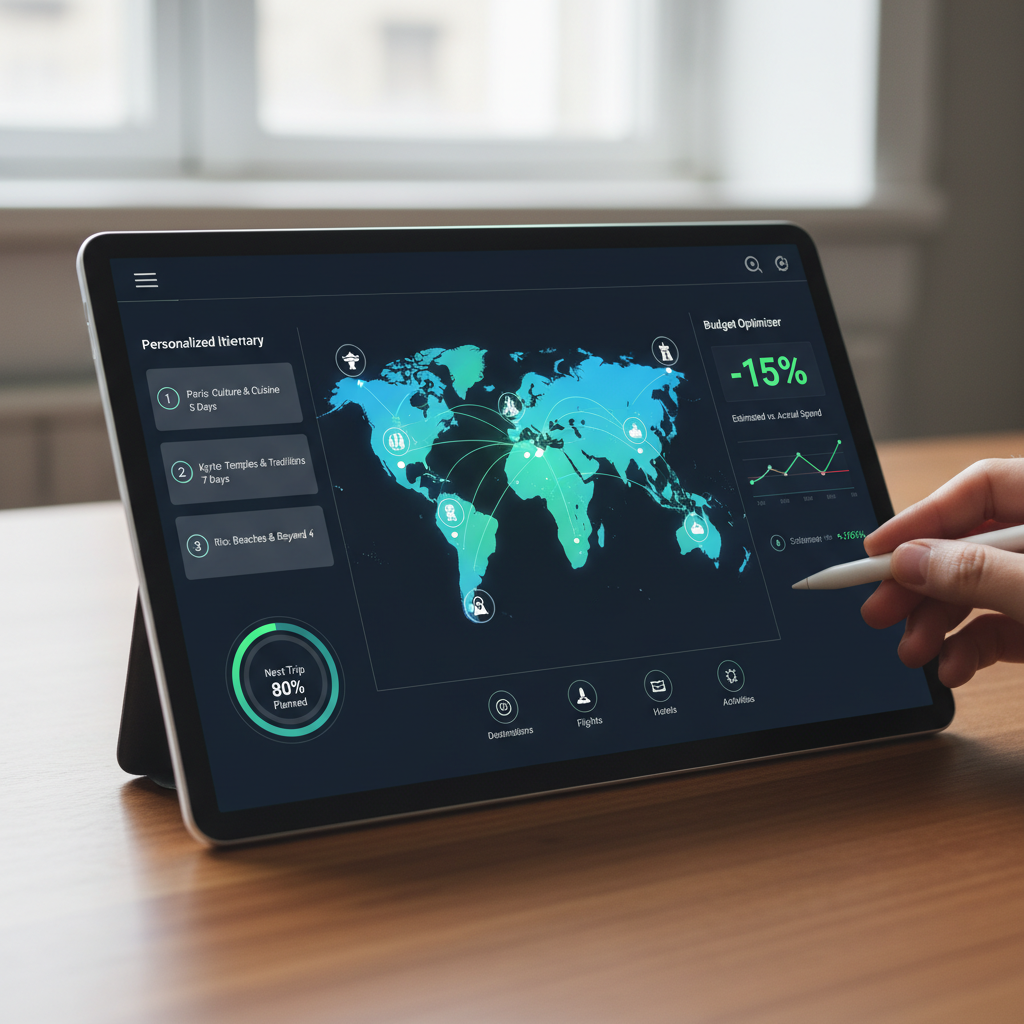
Topic: AI Travel Planners: Simplifying Your Next Vacation Discovery
In an age where information overload can be as daunting as planning a trip itself, the dream of a perfectly curated, stress-free vacation often feels like an elusive mirage. We spend countless hours sifting through reviews, comparing prices, and mapping out itineraries, only to wonder if we’ve truly unearthed the best a destination has to offer. What if there was a way to bypass the endless research, to instantly uncover unique experiences tailored precisely to your desires, and to stumble upon those magical, off-the-beaten-path locations that only locals seem to know? Enter the transformative world of AI-powered travel tools. These cutting-edge platforms are not just simplifying vacation discovery; they are revolutionizing it, promising an era where every journey is a personalized masterpiece, filled with delightful surprises and authentic moments.
Imagine a personal travel assistant that knows your preferences better than you do, capable of sifting through billions of data points in mere seconds to craft an itinerary that aligns perfectly with your budget, interests, and even your mood. From suggesting a charming, family-run restaurant tucked away in a quiet alley to pinpointing the optimal time to visit a popular attraction to avoid crowds, AI is becoming the discerning eye and intelligent brain behind our wanderlust. This blog post will take you on a deep dive into how artificial intelligence is empowering travelers to move beyond the tourist traps, discover hidden gems, and truly transform their vacation planning from a chore into an exciting part of the adventure itself. Get ready to explore a future where your next unforgettable trip is just a few clicks away, guided by the unparalleled intelligence of AI.
The Evolution of Travel Planning: From Guidebooks to AI Brains
For centuries, the ritual of planning a journey has been a blend of anticipation, effort, and sometimes, sheer guesswork. Early explorers relied on word-of-mouth, crude maps, and the bravery of venturing into the unknown. As civilizations advanced, so did our methods of preparing for travel. The advent of printed guidebooks in the 19th century marked a significant milestone, offering standardized information, recommended routes, and historical context. These heavy tomes became indispensable companions, providing a foundational layer of knowledge about foreign lands. However, they were inherently static, often outdated by the time they hit the shelves, and offered a one-size-fits-all perspective that rarely catered to individual whims or unforeseen circumstances.
The late 20th and early 21st centuries ushered in the digital age, bringing with it the internet and a tidal wave of information. Online travel agencies (OTAs), review platforms, and countless travel blogs democratized access to travel planning. Suddenly, travelers could compare flight prices in real-time, read reviews from fellow tourists, and build itineraries using a patchwork of digital resources. While this offered unprecedented flexibility and choice, it also introduced a new challenge: information overload. The sheer volume of options, conflicting opinions, and fragmented data often led to decision paralysis, making the planning process itself almost as stressful as the trip’s demands. Finding truly authentic, unique experiences amidst the commercial noise became like searching for a needle in a digital haystack, often leading travelers back to the same well-trodden paths recommended by the masses.
This is where Artificial Intelligence steps in, not just as another tool, but as a paradigm shift. AI travel planners represent the next evolutionary leap, moving beyond mere aggregation of data to intelligent interpretation and personalized recommendation. Unlike static guidebooks or overwhelming online forums, AI systems can learn from your past travel history, stated preferences, and even your real-time interactions to predict what you might enjoy. They can process vast amounts of unstructured data – from millions of social media posts and blog entries to local news and weather patterns – to identify emerging trends, pinpoint lesser-known attractions, and even forecast crowd levels. This intelligent processing transforms travel planning from a reactive search into a proactive, predictive, and profoundly personal experience. The AI brain acts as your ultimate travel concierge, constantly learning, adapting, and suggesting, ensuring your journey is not just planned, but perfectly orchestrated to your unique rhythm and desires.
Personalized Itineraries: Beyond One-Size-Fits-All
The notion of a truly personalized travel experience has long been the holy grail for adventurers and vacationers alike. Traditional travel agencies often relied on broad categories or, at best, a few direct questions to craft an itinerary. Online platforms, while offering filters for budget and destination, still largely presented a generic framework. The result was often a compromise, a trip that was good, but perhaps not perfectly aligned with the nuanced desires that make a journey truly unforgettable. AI travel planners, however, are fundamentally reshaping this dynamic, moving beyond simple filtering to deeply understanding and predicting individual preferences, thereby delivering itineraries that are as unique as the traveler themselves.
How do they achieve this remarkable feat? At the core lies sophisticated machine learning algorithms. These algorithms don’t just process the data you explicitly input – like your budget, travel dates, or preferred type of accommodation. They also analyze a much wider array of implicit data. This can include your past travel bookings, your browsing history, interactions with various travel content online, and even demographic data to infer broader preferences. For instance, if your past trips show a consistent interest in outdoor activities and local cuisine, an AI planner will prioritize these elements, suggesting hiking trails, kayaking excursions, and authentic food markets, rather than high-end shopping or crowded museums.
Moreover, AI tools can delve into the specifics that often get overlooked. Do you have dietary restrictions, such as being vegan or gluten-free? AI can scour restaurant menus and reviews to recommend eateries that cater to these needs, even in obscure locations. Are you traveling with young children and need child-friendly attractions and hotels with specific amenities? The AI can filter for playgrounds, interactive museums, and accommodations with kids’ clubs. Are you a solo traveler seeking social experiences, or a couple desiring romantic seclusion? The AI adapts, suggesting group tours or intimate boutique hotels accordingly.
Beyond initial preferences, AI-powered itineraries are dynamically adjustable. Life happens, plans change, and sometimes a new interest sparks mid-trip. Imagine you’re in Rome, and a local acquaintance mentions a fantastic, lesser-known art gallery. You input this new interest into your AI planner. Immediately, the system can re-evaluate your existing itinerary, suggesting how to incorporate the gallery, perhaps by shifting a less preferred activity or optimizing travel time between locations. This real-time adaptability, driven by continuous learning and data processing, transforms a rigid travel plan into a fluid, responsive companion. It ensures that every moment of your vacation is not just spent, but thoughtfully invested in experiences that genuinely resonate with your personal vision of adventure and relaxation, truly making the journey beyond one-size-fits-all.
Unearthing Hidden Gems: AI’s Predictive Power
For many travelers, the ultimate reward of a journey isn’t just seeing the famous landmarks, but discovering those special, lesser-known places that offer an authentic taste of the local culture and create truly unique memories. These “hidden gems” are often obscured by the overwhelming popularity of tourist traps and the sheer volume of online information. Traditionally, finding them required extensive local knowledge, meticulous research, or fortunate encounters. Now, AI’s predictive power is democratizing access to these treasures, making it easier than ever for ordinary travelers to step off the beaten path.
The secret lies in AI’s unparalleled ability to analyze vast and diverse datasets that no human could ever fully process. Think about the sheer volume of information available online: millions of user-generated reviews across various platforms, local blogs written by residents, social media posts with geotags, niche travel forums, government tourism data, historical archives, and even academic papers on local culture. AI algorithms are designed to not just read this data, but to understand its context, sentiment, and interconnectedness.
For example, an AI system might identify a small, family-run bakery that consistently receives glowing reviews from locals on a less popular social media platform, even if it has minimal presence on major tourist-focused sites. It might notice a pattern where multiple independent bloggers mention a particular quiet viewpoint that offers stunning sunset views, but isn’t listed in any mainstream guidebooks. By cross-referencing these subtle signals across disparate data sources, AI can identify locations, activities, and eateries that consistently delight locals and savvy travelers but have yet to reach mass-market visibility.
Beyond just identifying places, AI can also leverage its predictive capabilities to enhance the experience of visiting them. It can analyze real-time data on foot traffic, public transport delays, and local event schedules to recommend the optimal time to visit a particular spot. Imagine being advised to visit a popular market on a Tuesday morning rather than a Saturday afternoon to avoid crowds, or being directed to a specific entrance of a museum that typically has shorter lines. AI can even predict which areas might be prone to overcrowding based on historical data and current events, guiding you towards alternative, equally enriching experiences nearby.
Furthermore, AI can help travelers discover experiences that align with specific, niche interests. Are you fascinated by street art? The AI can map out a walking tour of the best murals, even those constantly changing. A connoisseur of artisanal cheese? It can direct you to small, independent producers. By connecting your unique passions with the nuanced understanding derived from massive data analysis, AI empowers you to not just visit a place, but to truly explore its deeper layers, unearthing hidden gems that make your journey profoundly more authentic and memorable.
Seamless Logistics and Real-Time Adaptability
Travel, by its very nature, is susceptible to unforeseen challenges. A delayed flight, an unexpected closure of an attraction, a sudden change in weather, or a traffic snarl can quickly unravel even the most meticulously planned itinerary, turning excitement into frustration. Historically, travelers had to contend with these issues manually, scrambling to find alternatives on the fly, often losing precious vacation time in the process. AI-powered travel tools are now transforming this chaotic aspect of travel into a seamless, adaptive experience, providing real-time support and ensuring your journey stays on track, no matter what surprises emerge.
One of the most significant contributions of AI in logistics is its ability to aggregate and process real-time information from countless sources simultaneously. This includes live flight tracking data, public transport schedules and delays, local traffic reports, weather forecasts, news alerts about local events or disruptions, and even social media chatter indicating potential issues. Unlike a human who can only monitor a few sources at once, an AI system is continuously scanning this vast digital landscape for any updates that might impact your trip.
Consider a scenario: you’ve planned a day trip from Rome to Pompeii. Your AI travel planner is monitoring your flight arrival, the train schedules from Rome to Pompeii, and even the real-time crowd levels at the archaeological site. If your flight is delayed, the AI can immediately re-evaluate your train booking, suggest alternative departure times, or even recommend a completely different activity for the remaining part of your arrival day if the Pompeii trip becomes unfeasible. It can then automatically re-route your subsequent days’ activities, ensuring minimal disruption to your overall plan.
This adaptability extends to almost every facet of your journey. If a specific restaurant you planned to visit suddenly announces an unexpected closure, the AI can instantly provide a list of equally suitable alternatives nearby, based on your dietary preferences, budget, and desired cuisine. If a sudden downpour threatens your outdoor museum visit, the AI can suggest indoor alternatives like a nearby gallery or a local café, complete with directions and opening hours. It can even alert you to local protests or public holidays that might affect transport or accessibility to certain areas, allowing you to adjust your plans proactively.
Furthermore, AI-powered tools can optimize your movement within a city. By analyzing traffic patterns, public transport efficiency, and walking distances, they can recommend the most efficient mode of transport between attractions, saving you time and stress. They can integrate with ride-sharing apps, public transport schedules, and even walking directions, presenting a unified logistical solution. This constant monitoring and proactive problem-solving by AI ensure that your vacation remains fluid and enjoyable, allowing you to focus on the experience rather than the logistics, turning potential travel mishaps into minor, easily resolved adjustments.
AI-Powered Budget Optimization and Smart Savings
Managing a travel budget is often one of the most challenging aspects of vacation planning. The constant fluctuation of flight prices, hotel rates, and activity costs can make it incredibly difficult to stick to a budget, let alone find genuine savings. Many travelers resort to manual comparisons across multiple websites, hoping to stumble upon a good deal. However, AI-powered tools are now bringing unprecedented intelligence and efficiency to budget optimization, helping travelers stretch their dollars further without compromising on the quality of their experience.
The core capability of AI in this domain is its ability to analyze colossal amounts of pricing data in real-time. This includes historical price trends for flights and accommodations, current market rates across hundreds of booking platforms, and even predictive analytics for future price movements. Instead of simply showing you the cheapest option available right now, AI can advise you on the optimal time to book your flight or hotel, often weeks or months in advance, based on complex algorithms that identify booking sweet spots. For example, it might predict that flight prices for your chosen destination are likely to drop next Tuesday, or that a particular hotel often offers last-minute deals a week before check-in, empowering you to make informed booking decisions.
Beyond flights and hotels, AI extends its savings expertise to local activities and dining. It can scour local event listings for free festivals, discounted museum days, or happy hour deals at highly-rated restaurants. If your itinerary includes a particular attraction, the AI might suggest purchasing a city pass that bundles multiple entries, or recommend visiting during off-peak hours when ticket prices might be lower. It can even recommend cost-effective transport options, comparing the price of a taxi, ride-share, or public transport for each leg of your journey, factoring in time savings and convenience.
Moreover, AI can help you manage your spending while you are on your trip. Some advanced tools offer expense tracking features, categorizing your spending and alerting you if you are nearing your daily or weekly budget. If you find yourself over budget in one area, the AI can suggest more economical alternatives for subsequent activities or meals, ensuring you stay on track without feeling deprived. For instance, if you splurged on a fancy dinner, the AI might suggest a delicious, highly-rated street food market for lunch the next day, or a free walking tour instead of a paid excursion.
AI’s role in budget optimization isn’t just about finding the cheapest options; it’s about finding the best value for your money. It helps you make intelligent trade-offs, prioritizing experiences that align most with your interests while still respecting your financial limits. By providing transparent insights into pricing trends and offering smart alternatives, AI-powered tools transform budget planning from a source of stress into an empowering strategy, allowing you to enjoy a richer, more fulfilling vacation without breaking the bank.
Overcoming Language Barriers and Cultural Nuances
Traveling to a foreign country, particularly one where a different language is spoken, often presents a unique set of challenges. Language barriers can make simple tasks like ordering food, asking for directions, or understanding local customs incredibly daunting. Furthermore, cultural nuances, though subtle, can significantly impact the quality of interactions and overall travel experience. Misunderstandings can lead to awkward situations or missed opportunities. AI-powered travel tools are now acting as invaluable bridges, helping travelers navigate these complexities with unprecedented ease and confidence, fostering deeper immersion and more respectful engagement with local cultures.
The most immediate and obvious benefit of AI in this context is sophisticated language translation. While basic translation apps have existed for a while, integrated AI travel planners take this to the next level. These tools often incorporate real-time, context-aware translation features. Imagine pointing your phone at a restaurant menu written in an unfamiliar script, and the AI instantly provides an accurate translation, not just word-for-word, but often explaining local dishes and ingredients. Conversational AI can facilitate spoken interactions, translating your questions into the local language and the local’s response back to you, often with surprisingly natural intonation. This capability empowers travelers to engage directly with locals, fostering genuine connections that transcend linguistic divides.
Beyond literal translation, AI can also provide crucial insights into cultural nuances. By analyzing vast amounts of data, including travel blogs, etiquette guides, and even academic resources on cultural anthropology, AI can offer practical advice on local customs. For example, an AI planner might alert you to the importance of tipping conventions in a particular country, or advise on appropriate dress codes for visiting religious sites. It could suggest common greetings and farewells in the local language, or explain local traditions regarding bargaining in markets. These small but significant pieces of information can prevent unintentional gaffes and demonstrate a respectful attitude towards the host culture, significantly enriching your interactions.
Furthermore, AI can help in understanding local context. If you encounter an unfamiliar local holiday or tradition, the AI can provide immediate explanations, helping you appreciate the cultural significance rather than being merely confused. It can also help you understand local signage, public announcements, and even local jokes or colloquialisms, bringing you closer to the heart of the destination. Some AI tools can even analyze your travel style and personality to suggest culturally appropriate experiences, like recommending a traditional tea ceremony for someone interested in quiet reflection, or a bustling street festival for a more outgoing individual.
By effectively dismantling the barriers of language and illuminating the intricacies of cultural norms, AI-powered travel tools transform travel from a potentially isolating experience into one of profound connection and understanding. They don’t just help you get by; they help you truly belong, if only for the duration of your trip, allowing for richer, more authentic, and deeply respectful cultural immersion.
The Future is Now: Emerging AI Travel Trends
The rapid advancements in artificial intelligence are not just refining existing travel experiences; they are actively shaping the future of how we discover, plan, and embark on our journeys. What seems like science fiction today is quickly becoming the standard for tomorrow’s travelers. The landscape of AI in travel is evolving at an exhilarating pace, introducing innovations that promise even more personalized, intuitive, and immersive adventures.
Generative AI for Itinerary Creation
One of the most significant recent breakthroughs is the rise of generative AI, exemplified by models like ChatGPT and similar large language models. These tools can now understand complex, nuanced prompts and generate entire, coherent travel itineraries from scratch. Instead of simply matching your preferences to existing data points, generative AI can create suggestions. You could prompt it with something as specific as, “Plan a 10-day family trip to Japan for two adults and two children (ages 6 and 9) in April, focusing on ancient history, interactive museums, and unique food experiences, with a mid-range budget, avoiding crowds as much as possible, and suggesting kid-friendly accommodations.” The AI can then produce a detailed day-by-day itinerary, complete with links, estimated costs, and travel times, often incorporating creative and previously unconsidered suggestions based on its vast training data. This moves beyond recommendation to true co-creation of your travel dream.
Voice-Activated Travel Assistants
The convenience of voice commands is steadily making its way into travel planning. Imagine simply speaking your travel desires to a smart speaker or your smartphone, “Hey AI, find me a quiet beach getaway in Southeast Asia for November, with yoga classes and healthy food options,” and receiving immediate, tailored suggestions. These voice assistants are becoming increasingly sophisticated, capable of not just understanding natural language but also managing bookings, providing real-time updates, and even acting as a personal concierge during your trip, all through intuitive voice interactions. This hands-free approach will make travel planning and management more accessible and effortless.
Virtual and Augmented Reality Integration
Beyond planning, AI is integrating with immersive technologies to enhance the pre-trip and in-trip experience. Virtual Reality (VR) is already allowing travelers to “sample” destinations before booking, offering virtual tours of hotels, attractions, and even entire cities. This helps in making more informed decisions and building anticipation. Augmented Reality (AR) tools, often integrated into smartphone apps, can act as real-time digital guides. Point your phone at a historic building, and AR can overlay historical facts, architectural details, or even reconstructed images of how it once looked. It can guide you through complex airport layouts, translate foreign signs in real-time through your camera, or even help you visualize hotel room layouts. This blending of the digital and physical worlds promises a richer, more interactive exploration experience.
These emerging trends are not just about convenience; they are about profound transformation. They promise a future where travel planning is deeply personal, highly intuitive, and almost entirely seamless. AI is paving the way for a new era of exploration, one where every traveler can unlock their ideal journey with an unprecedented level of ease, insight, and delight.
Comparison Tables
Table 1: Traditional Travel Planning vs. AI-Powered Travel Planning
| Feature | Traditional Travel Planning | AI-Powered Travel Planning |
|---|---|---|
| Information Sourcing | Guidebooks, travel agents, personal recommendations, multiple websites (manual research). | Aggregates and analyzes billions of data points (reviews, social media, blogs, local news) in real-time from diverse sources. |
| Personalization Level | Limited; based on broad categories, few explicit questions, or agent’s general knowledge. | Deeply personalized; learns from past travel, browsing history, implicit preferences, dietary needs, activity levels, interests. |
| Itinerary Creation | Static, often pre-designed templates; rigid once planned. | Dynamic, generative, adaptable; real-time adjustments for delays, closures, or new interests. |
| Hidden Gem Discovery | Relies on luck, local contacts, or extensive manual, time-consuming research; prone to missing unique spots. | Identifies unique, off-the-beaten-path locations by analyzing nuanced data patterns and local sentiment. |
| Budget Optimization | Manual price comparisons; limited insight into future price fluctuations. | Predictive pricing, optimal booking windows, smart savings suggestions, real-time expense tracking. |
| Real-Time Support | Minimal; dependent on manual checks, local assistance, or travel insurance support lines. | Continuous monitoring of flights, weather, traffic, events; proactive alerts and alternative suggestions. |
| Language & Culture | Requires separate translation tools or phrasebooks; cultural insights often general. | Integrated real-time translation, context-aware cultural etiquette advice, local custom explanations. |
Table 2: Types of AI Travel Tools and Their Primary Benefits
| AI Tool Category | Primary Function | Key Benefit for Travelers |
|---|---|---|
| Personalized Itinerary Generators | Creates bespoke day-by-day travel plans based on user preferences, budget, and interests. | Eliminates planning stress, ensures every activity aligns with personal desires, uncovers niche experiences. |
| Predictive Pricing & Deal Finders | Monitors flight/hotel prices, predicts future fluctuations, and alerts users to optimal booking times. | Maximizes savings, helps secure the best deals, optimizes travel budget without constant manual checking. |
| Real-Time Logistics & Navigators | Provides live updates on traffic, weather, flight delays, public transport, and offers alternative routes/plans. | Minimizes travel disruptions, reduces stress on the go, keeps itinerary flexible and efficient. |
| Hidden Gem & Local Experience Discoverers | Analyzes social media, local blogs, and niche reviews to identify unique, authentic, and less-touristy spots. | Enables authentic cultural immersion, helps avoid tourist traps, creates truly unique and memorable moments. |
| AI-Powered Translators & Cultural Guides | Offers real-time language translation (text/voice) and provides context-aware cultural etiquette advice. | Breaks down language barriers, fosters respectful cultural engagement, enhances local interactions. |
| Generative AI Travel Assistants | Generates complete, nuanced itineraries from complex natural language prompts, often with creative suggestions. | Transforms abstract ideas into detailed plans, offers boundless creativity in trip design, acts as a true co-planner. |
Practical Examples
To truly grasp the power of AI in transforming vacation discovery, let’s explore a few real-world scenarios where these intelligent tools make a tangible difference in the travel experience.
Scenario 1: The Romantic, Dietary-Specific Getaway
Meet Sarah and Mark, a couple planning a romantic 7-day anniversary trip to Italy. Sarah is a strict vegetarian, and Mark has a significant nut allergy. Traditionally, their planning would involve countless hours cross-referencing restaurant menus, calling ahead, and often settling for limited culinary experiences. With an AI-powered travel planner, their experience is dramatically simplified and enriched.
- Personalized Itinerary: Sarah and Mark input their destination (e.g., Amalfi Coast), travel dates, budget, interest in scenic beauty, historical sites, and crucially, their dietary restrictions. The AI immediately crafts an itinerary that not only suggests charming boutique hotels with stunning views but also pre-filters all recommended restaurants, ensuring they are vegetarian-friendly and explicitly free of nuts, complete with digital menus and reservation options.
- Hidden Culinary Gems: Instead of directing them to tourist-trap restaurants, the AI uses its knowledge base to unearth small, family-run trattorias in Positano or Ravello that are known for their fresh, local, and customizable dishes, with reviews from locals praising their flexibility for dietary needs. It might even suggest a vegetarian cooking class with a local chef who can accommodate Mark’s allergy, turning a meal into an immersive cultural experience.
- Seamless Logistics: If a recommended restaurant is unexpectedly closed or fully booked, the AI instantly offers equally suitable alternatives nearby, even providing directions and estimated travel times. It also coordinates transfers between picturesque towns, suggesting scenic, less-crowded ferry routes or private drivers, ensuring their romantic journey remains smooth and stress-free.
Scenario 2: The Solo Adventurer on a Budget Seeking Off-the-Beaten-Path Thrills
David is a solo traveler with a modest budget, yearning for an authentic, adventurous experience in Southeast Asia, specifically Thailand. He wants to avoid popular tourist hubs and immerse himself in local culture, perhaps trying a unique homestay or an unconventional trekking route. AI is his ultimate guide.
- Budget Optimization: David sets his daily budget. The AI scans flight prices from his home city to various Thai airports, suggesting the cheapest dates and even alternative, less-frequented entry points. For accommodation, it prioritizes highly-rated hostels, local guesthouses, or unique homestay experiences outside major cities, often offering better value than mainstream hotels.
- Hidden Gem Discovery: David expresses his desire for adventure and authenticity. The AI delves into niche travel blogs, local forums, and social media from Thai residents to identify lesser-known trekking paths in northern Thailand, serene beaches on remote islands, or villages offering genuine cultural immersion away from the crowds of Phuket or Bangkok. It might suggest a unique overnight stay with a hill tribe community or a lesser-known national park with incredible wildlife viewing opportunities.
- Real-Time Adaptability & Cultural Immersion: Once in Thailand, the AI acts as a live guide. It translates local signs and conversations, provides etiquette tips for interacting with monks or visiting temples, and suggests local markets for authentic street food. If David decides to extend his stay in a particular village, the AI quickly re-calculates his remaining budget and adjusts subsequent travel plans, even recommending local, inexpensive activities or transport options he might not have found otherwise.
Scenario 3: The Family Trip with Young Children and Diverse Interests
The Chen family – parents, a 4-year-old, and a 7-year-old – are planning a week-long trip to London. They need activities that cater to both young children, historical interests for the parents, and a balanced pace to avoid meltdowns. AI handles the complex juggling act.
- Personalized Itinerary & Pacing: The Chens input their family composition, ages of children, and interests (e.g., historical landmarks, interactive museums, playgrounds, child-friendly dining). The AI crafts a flexible itinerary, balancing a visit to the Tower of London with a trip to the Science Museum’s children’s exhibits, and allocating ample time for breaks, meals, and playground stops. It ensures no two consecutive activities are too demanding for little ones.
- Hidden Family-Friendly Gems: Beyond obvious attractions, the AI might suggest lesser-known, yet highly-rated, local parks with unique play structures, specific child-friendly sections within larger museums that are often overlooked, or even recommend a puppet show at a local theater. It could also pinpoint cafes and restaurants known for their welcoming atmosphere for families and kid-friendly menus, even in busy tourist areas.
- Seamless Logistics & Real-Time Support: The AI monitors public transport in London, suggesting the easiest routes with strollers in mind, avoiding crowded tube lines during peak hours. If the weather suddenly turns rainy, it proactively suggests indoor alternatives nearby, like a soft play center or an interactive exhibit, complete with directions and opening hours. It even provides information on family restrooms and baby-changing facilities near their planned stops, demonstrating an intuitive understanding of family travel needs.
These examples illustrate how AI is not just a futuristic concept but a practical, powerful tool actively enhancing travel discovery and management for a diverse range of travelers, making every trip smoother, more personalized, and filled with delightful, unique experiences.
Frequently Asked Questions
Q: What exactly is an AI travel planner, and how is it different from a regular travel website?
A: An AI travel planner goes beyond the simple aggregation and filtering of information found on regular travel websites. While traditional sites allow you to search for flights, hotels, or activities based on your input, an AI planner uses machine learning and natural language processing to understand your deeper preferences, analyze vast datasets (reviews, social media, blogs, news) for insights, and then proactively generate personalized, dynamic itineraries and recommendations. It learns from your interactions and adapts in real-time, acting more like a personal concierge than a search engine.
Q: How do AI tools find “hidden gems” and off-the-beaten-path locations?
A: AI tools discover hidden gems by analyzing unstructured data from a multitude of sources that humans would find impossible to process manually. This includes millions of social media posts, local blogs, niche forums, and independent review sites. The AI looks for patterns, positive sentiment, and repeated mentions of specific places or experiences that are popular with locals or discerning travelers but aren’t widely promoted by mainstream tourism. It can identify subtle cues that indicate authenticity and uniqueness, guiding you away from overcrowded tourist traps to more genuine local experiences.
Q: Are AI travel suggestions truly personalized, or are they just glorified algorithms?
A: AI travel suggestions are indeed highly personalized. They utilize sophisticated algorithms that learn from your explicit inputs (budget, dates, interests) as well as implicit data (past bookings, browsing history, travel style). Over time, the AI builds a comprehensive profile of your preferences, even recognizing nuances like your activity level, dietary restrictions, or desire for social versus solitary experiences. This continuous learning allows the AI to predict what you’ll enjoy, ensuring recommendations are tailored precisely to your unique travel desires, far beyond what simple filters can achieve.
Q: Can AI travel tools genuinely help me save money on my vacation?
A: Absolutely. AI tools are highly effective at budget optimization. They analyze historical pricing data and real-time market trends for flights, accommodations, and activities across hundreds of providers. This allows them to predict optimal booking times, alert you to price drops, and suggest alternative, more cost-effective options without sacrificing quality. Some tools even offer in-trip expense tracking and suggest budget-friendly alternatives if you’re overspending, ensuring you get the best value for your money.
Q: How accurate are AI predictions for things like crowd levels or weather changes?
A: AI predictions for crowd levels and weather changes are remarkably accurate, often surpassing human capabilities due to the sheer volume of data they process. For crowds, AI analyzes historical foot traffic, event schedules, public holidays, and real-time social media data to forecast congestion. For weather, it integrates hyper-local, real-time meteorological data. While no prediction is 100% infallible, AI provides highly probable scenarios and proactive alerts, allowing you to adjust your plans dynamically and avoid unpleasant surprises or long queues.
Q: What about privacy and data security when using AI travel planners?
A: Privacy and data security are critical considerations for AI travel planners, just as they are for any online service. Reputable AI travel platforms adhere to strict data protection regulations (like GDPR) and employ robust encryption technologies to protect your personal and financial information. They typically anonymize and aggregate data for pattern analysis, rather than using individual, identifiable data for purposes other than personalizing your direct experience. It’s always wise to review the privacy policy of any AI tool you use to understand how your data is handled.
Q: Do I still need human input or traditional research if I use AI travel planners?
A: While AI travel planners are incredibly powerful, they are best viewed as sophisticated assistants rather than complete replacements for human intuition and curiosity. Many travelers still enjoy the serendipity of discovering things themselves or the reassurance of human recommendations. AI can greatly reduce the research burden and uncover options you might never find, but a balance often yields the best results. You might use AI for the core itinerary and logistics, then add personal touches or seek specific human advice for very niche interests. AI empowers you to be more efficient, not necessarily to relinquish all control.
Q: Are there any downsides or limitations to relying on AI for travel planning?
A: While highly beneficial, AI travel tools do have some limitations. They might struggle with highly abstract or subjective requests that lack clear data patterns. The recommendations are only as good as the data they are trained on, so very new or extremely niche attractions might take longer to appear. Over-reliance on AI could also potentially diminish the joy of spontaneous discovery for some travelers. Furthermore, AI cannot replicate the emotional intelligence or nuanced problem-solving of a human travel agent in highly complex or emotionally charged situations.
Q: How can AI travel tools address language barriers and cultural differences?
A: AI travel tools excel at overcoming language barriers through integrated real-time translation features for both text and voice, allowing for smoother communication in foreign countries. They also provide crucial insights into cultural differences by analyzing vast amounts of data on local customs, etiquette, and traditions. This helps travelers avoid unintentional social gaffes, show respect for local norms, and engage more deeply and authentically with the host culture, enhancing the overall immersion experience.
Q: How can I get started with using AI travel tools for my next vacation?
A: Getting started is easy! Begin by exploring popular AI-powered travel platforms or apps that offer itinerary generation, deal finding, or discovery features. Many are available on both web and mobile. You’ll typically start by inputting your destination, dates, budget, and key interests. The more information you provide, the more personalized the recommendations will be. Don’t be afraid to experiment with different prompts and explore the diverse suggestions. Read reviews of different AI tools to find one that best suits your travel style and needs.
Key Takeaways
- AI travel tools are revolutionizing vacation discovery by offering unparalleled personalization and efficiency.
- They move beyond traditional methods by leveraging machine learning to understand deep preferences and adapt in real-time.
- AI excels at unearthing hidden gems and unique local experiences by analyzing vast, unstructured datasets.
- These tools provide seamless logistics and real-time adaptability, mitigating travel disruptions effectively.
- Budget optimization is a core strength, with AI predicting price trends and suggesting smart savings.
- AI helps travelers overcome language barriers and provides crucial cultural insights for richer immersion.
- Emerging trends like generative AI and AR/VR integration promise an even more intuitive and immersive future for travel.
- While powerful, AI tools complement human planning rather than completely replacing it, offering a balanced approach.
- Embracing AI in travel planning leads to more personalized, authentic, and stress-free adventures.
Conclusion
The journey of vacation discovery has truly entered a new era, one where the seemingly impossible is now within reach thanks to the remarkable capabilities of Artificial Intelligence. We’ve moved far beyond the limitations of static guidebooks and overwhelming online searches to a future where every trip can be a uniquely tailored masterpiece. AI-powered tools are not just assisting in planning; they are actively transforming the way we dream, research, book, and experience our travels.
From crafting itineraries that resonate with your deepest desires and uncovering those magical, unheralded local gems, to seamlessly navigating real-time logistical challenges and smartly optimizing your budget, AI is your ultimate travel ally. It breaks down language barriers, illuminates cultural nuances, and provides a level of personalization that was once only the domain of ultra-luxury travel agents. As generative AI, voice assistants, and immersive technologies continue to evolve, the possibilities for even richer, more intuitive, and profoundly personal adventures are limitless.
Embracing AI in your travel planning isn’t just about convenience; it’s about unlocking a world of authentic experiences, minimizing stress, and maximizing the joy of exploration. It’s about confidently stepping off the well-trodden path, knowing that a smart, adaptive companion is guiding you every step of the way. So, as you begin to dream of your next escape, consider leveraging the intelligence of AI. Let it be the catalyst for discovering not just a destination, but a version of your ideal vacation you never knew was possible. The future of travel is here, and it’s intelligent, personal, and utterly transformative. Your next hidden gem is waiting to be found.


















































































Leave a Reply