

Free AI Image Generators: Powerful Options for Budget-Conscious Creators
Introduction: Unlocking Visual Potential Without Breaking the Bank
In today’s visually-driven digital landscape, captivating imagery is no longer a luxury; it is a fundamental necessity for cutting through the noise. Whether you are a blogger, a social media manager, a small business owner, an educator, or a budding artist, the demand for high-quality, unique visuals for your content is relentless. However, creating such visuals often comes with significant hurdles: the cost of stock photos can quickly add up, hiring graphic designers can be expensive, and even producing your own photography or illustrations requires time, skill, and equipment.
This is where the transformative power of Artificial Intelligence steps in. AI image generators have rapidly evolved, moving from niche tools to accessible platforms capable of producing stunning, contextually relevant visuals from simple text prompts. What is even more exciting for individuals and organizations operating on a tight budget is the proliferation of robust, feature-rich free AI image generators. These tools are democratizing content creation, enabling anyone to conjure compelling images that can elevate their message and engage their audience without spending a single penny.
This comprehensive guide will take you on a journey through the fascinating world of free AI image generation. We will explore how these innovative tools work, highlight the leading free platforms available today, delve into the art of crafting effective prompts, discuss crucial ethical considerations, and provide practical examples of how you can leverage AI to create high-impact visuals for various applications. By the end of this article, you will be equipped with the knowledge and resources to confidently integrate AI-generated imagery into your content strategy, transforming your creative output and amplifying your message.
The Visual Revolution: Why AI-Generated Images Matter for Your Content Strategy
We are living in an era where attention spans are fleeting and competition for audience engagement is fierce. Visuals are the universal language that transcends barriers, communicating complex ideas and emotions instantly. Studies consistently show that content with relevant images gets significantly more views and shares than content without. A well-placed image can break up long blocks of text, convey brand identity, evoke a mood, or simply make information more digestible and memorable.
Traditionally, securing high-quality visuals involved a trade-off between cost, time, and uniqueness. Stock photo libraries offer convenience but often lead to generic, overused images that fail to resonate deeply with your brand’s unique voice. Custom photography or design, while offering unparalleled authenticity, demands substantial financial investment and time commitment. For many creators and small businesses, these options are simply out of reach, forcing them to compromise on visual quality or frequency.
Enter AI image generators, a game-changer for this dilemma. These tools offer a third, incredibly powerful alternative: the ability to create entirely new, unique images tailored precisely to your specific needs, on demand, and often for free. This means you can:
- Achieve Uniqueness: Generate visuals that no one else has, ensuring your content stands out from the crowd.
- Ensure Relevance: Produce images that perfectly match the nuanced themes and tones of your article, social post, or presentation.
- Save Time and Money: Eliminate the need for expensive subscriptions or design services, drastically reducing your content production costs and turnaround times.
- Foster Creativity: Experiment with countless styles, concepts, and compositions without any artistic skill required, unlocking new creative avenues.
- Maintain Consistency: Develop a consistent visual style for your brand by using specific prompts and refining outputs.
The impact of AI on visual content creation is profound, empowering budget-conscious creators to compete visually with larger, better-funded entities. It is not just about convenience; it is about democratizing access to high-impact visual storytelling, allowing every voice to be heard and seen more clearly.
Understanding How Free AI Image Generators Work: From Text to Masterpiece
At its core, an AI image generator is a sophisticated piece of software that uses complex algorithms, often powered by neural networks, to transform text descriptions (prompts) into visual images. While the underlying technology can be highly technical, understanding the basic principles helps in utilizing these tools more effectively. Most modern AI image generators, including the popular free options, primarily rely on a class of models known as diffusion models.
The Diffusion Process in Simple Terms:
- Noise Injection: Imagine starting with an image that is pure static or random noise.
- Denoising: The AI model is trained to gradually “denoise” this static image. It learns to reverse the process of adding noise, effectively transforming noise back into a recognizable image.
- Text Conditioning: The crucial step for text-to-image generation is “text conditioning.” During training, the AI learns to associate specific words and phrases with visual elements. So, when you provide a text prompt like “a whimsical watercolor painting of a cat wearing a monocle,” the AI uses its learned associations to guide the denoising process towards an image that matches that description.
This iterative denoising process, guided by your prompt, is what sculpts the random noise into the coherent and often stunning images you see. The AI has been trained on immense datasets of images and their corresponding text descriptions (often billions of pairs), allowing it to understand the relationship between words and visual concepts. This vast knowledge base is what enables it to generate a seemingly infinite variety of images.
Key Components and Considerations:
- Prompt Engineering: This is the art and science of crafting effective text prompts to guide the AI. As humans, we think abstractly, but AI needs specific, detailed instructions. We will explore this in more detail later.
- Training Data: The quality and diversity of the data the AI was trained on heavily influence its output. Bias in training data can lead to biased or stereotypical image generation.
- Model Architecture: Different models (like DALL-E, Stable Diffusion, Midjourney) have different underlying architectures and training methodologies, leading to distinct artistic styles and capabilities. Many free tools are built upon or heavily influenced by open-source models like Stable Diffusion.
- Free Tier Mechanics: Free AI image generators often operate on a credit system, where you receive a certain number of free generations per day or per month. Some might have slower generation times, watermark their images, or offer fewer advanced features compared to their paid counterparts. Understanding these limitations is key to managing expectations.
By understanding these foundational concepts, you can approach AI image generation with a more informed perspective, allowing you to iterate more effectively and achieve superior results with the free tools at your disposal.
Top Free AI Image Generators: A Deep Dive into Powerful Options
The landscape of free AI image generators is constantly evolving, with new tools emerging and existing ones receiving updates. Here, we highlight some of the most powerful and accessible options available to budget-conscious creators today, discussing their strengths, weaknesses, and ideal use cases.
1. Leonardo.ai: The Creator’s Canvas with Fine-Tuned Control
Leonardo.ai stands out as a top-tier platform, widely praised for its balance of ease of use and advanced customization options, even within its free tier. It offers a generous daily credit allowance, enabling frequent experimentation.
- Key Features (Free Tier): Access to various community-trained models (including fine-tuned Stable Diffusion versions), image generation with detailed prompts and negative prompts, image-to-image capabilities, AI Canvas for editing, upscaling and image enhancement, and a vibrant community feed for inspiration. Users typically receive 150 daily credits, which refresh every 24 hours.
- Pros:
- Extensive Model Library: Access to a vast array of community-made models, allowing for highly specific art styles.
- Fine-Tuned Control: Offers granular control over aspects like prompt strength, image dimensions, and tiling.
- Intuitive Interface: Despite its advanced features, the user interface is remarkably user-friendly.
- Image Editing Tools: Includes features like background removal, image upscaling, and an AI canvas for more creative control.
- Cons:
- Credit System: While generous, the daily credit limit can be restrictive for very heavy users.
- Learning Curve for Advanced Features: Utilizing all custom models and settings effectively requires some experimentation.
- Ideal For: Digital artists, concept designers, content creators needing highly specific or stylized images, and anyone looking for fine-tuned control over their AI art.
2. Stable Diffusion (via online interfaces): The Open-Source Powerhouse
Stable Diffusion is not a single website but an open-source model that forms the backbone for many other AI image generators. Its open nature means it can be run locally (if you have powerful hardware) or accessed through various free online interfaces and applications. It offers unparalleled flexibility and the ability to generate a wide range of content.
- Key Features (via free interfaces like Hugging Face Spaces, Civitai, or specific web UIs): Text-to-image generation, image-to-image, inpainting/outpainting, and access to a massive ecosystem of custom models (check specific platform offerings).
- Pros:
- Ultimate Flexibility: Highly adaptable and capable of generating almost any style or concept.
- Vast Community & Resources: A huge ecosystem of tutorials, custom models (check Civitai for examples), and ongoing development.
- No Watermarks (on many platforms): Images are often generated without forced watermarks.
- Cons:
- Interface Dependent: User experience varies greatly depending on the specific free interface you use. Some can be complex.
- Resource Intensive: Running it locally requires significant computing power. Online versions might have queues or limitations.
- Less Guided: Can feel less curated than platforms like Leonardo.ai, requiring more prompt engineering effort.
- Ideal For: Developers, researchers, advanced prompt engineers, and users who want maximum control and flexibility, willing to explore various community-driven platforms.
3. Clipdrop by Stability AI: Quick and Innovative Visual Tools
Clipdrop is a suite of AI-powered tools developed by Stability AI, the creators of Stable Diffusion. While it offers a range of tools, several of its functionalities, especially image generation and enhancements, come with generous free tiers that are exceptionally user-friendly.
- Key Features (Free Tier): Text-to-image generation (often powered by newer Stable Diffusion models), image upscaler, background remover, relight, clean-up, and replace.
- Pros:
- High Quality & Speed: Generates impressive images quickly, often leveraging the latest Stable Diffusion advancements.
- Focus on Utility: Excellent for specific image manipulation tasks beyond just generation.
- Extremely User-Friendly: Clean, intuitive interface makes it easy for beginners.
- Cons:
- Credit Limits: Free usage is limited by daily or monthly credits for certain features.
- Less Creative Control for Generation: More focused on quick results than deep customization for generating new images from scratch compared to Leonardo.ai or raw Stable Diffusion.
- Ideal For: Graphic designers, social media managers, and anyone needing quick, high-quality image generation and enhancement tools for specific tasks.
4. DreamStudio by Stability AI: For the More Advanced Stable Diffusion User
DreamStudio is Stability AI’s official web interface for their Stable Diffusion models. It offers direct access to the latest versions of Stable Diffusion, providing a clean and powerful platform for image generation, often with initial free credits upon signup.
- Key Features (Free Tier): Text-to-image generation with various Stable Diffusion models, image-to-image, inpainting, outpainting, negative prompts, custom seeds, and resolution control. Users typically receive a certain amount of free credits upon registration, with options to purchase more.
- Pros:
- Direct Access to Latest Models: Often features the newest Stable Diffusion iterations before they become widely available elsewhere.
- Fine-Tuned Control: Offers a good balance of user-friendliness and detailed controls for prompt engineering.
- High-Quality Output: Capable of producing highly detailed and artistic images.
- Cons:
- Credit-Based System: Free credits are usually finite and do not always refresh daily, pushing users towards paid tiers for sustained use.
- Can Be Overwhelming for Beginners: The array of options might be a bit much for absolute novices.
- Ideal For: Users who want direct, high-quality access to Stable Diffusion models with good control, willing to manage a credit budget, or those considering a paid subscription in the future.
5. NightCafe Creator: A Community Hub for AI Art Enthusiasts
NightCafe Creator is an AI art generator and community platform that has been around longer than many newer tools. It supports multiple AI algorithms, including various Stable Diffusion models, and offers a fun, gamified approach to AI art generation with daily free credits and community challenges.
- Key Features (Free Tier): Daily free credits, text-to-image generation using Stable Diffusion, VQGAN+CLIP, CLIP-Guided Diffusion, and other algorithms; image evolution, community challenges, and print-on-demand options.
- Pros:
- Multi-Algorithm Support: Experiment with different AI art styles beyond just diffusion models.
- Strong Community Aspect: A great place to share, discover, and get inspiration from other creators.
- Generous Free Credits: Plenty of ways to earn free credits through daily log-ins, challenges, and voting.
- Cons:
- Interface Can Be Busy: With many options and community features, the interface might feel less streamlined for some.
- Credit Management: Requires active participation to consistently earn credits for heavy use.
- Ideal For: AI art enthusiasts, hobbyists, and those who enjoy a community aspect to their creative process and want to experiment with different generative algorithms.
6. Dream by WOMBO: Mobile-First Creativity for Artistic Flair
Dream by WOMBO (often just called WOMBO Dream) is a popular AI art app primarily known for its mobile experience, though a web version is also available. It emphasizes artistic styles and ease of use, making it incredibly accessible for quick, stylized generations.
- Key Features (Free Tier): Text-to-image generation with a wide array of predefined artistic styles (e.g., Mystical, Fantasy Art, Vibrant, Dark Fantasy), no credit limits for basic generation (though paid features exist).
- Pros:
- Extremely Easy to Use: Simple interface, perfect for beginners and mobile users.
- Instant Artistic Styles: Quickly apply a distinct artistic filter to your generated image.
- No Hard Credit Limits (for basic generation): Allows for extensive experimentation without worrying about daily limits for core functions.
- Cons:
- Less Control: Limited customization options for fine-tuning prompts or image settings compared to more advanced tools.
- Stylistic Bias: Outputs tend to have a distinct artistic, often abstract, flair, which might not suit all needs for realism or precise imagery.
- Watermarks: Free images usually come with a WOMBO Dream watermark.
- Ideal For: Casual users, social media creators, mobile-first artists, and anyone looking for quick, aesthetically pleasing, and highly stylized AI art without a steep learning curve.
7. Microsoft Designer (Image Creator): Integrated and Accessible DALL-E 3 Power
Microsoft Designer’s Image Creator (formerly Bing Image Creator) is a powerful, free tool built upon OpenAI’s DALL-E 3 model. It is integrated directly into Microsoft’s ecosystem, making it incredibly convenient for users of Edge, Bing, and other Microsoft services. DALL-E 3 is renowned for its ability to understand complex prompts and generate images with excellent textual accuracy.
- Key Features (Free Tier): Generous daily “boosts” (fast generations), text-to-image generation, high-quality output, excellent prompt understanding (especially for text in images), integrated with Microsoft services.
- Pros:
- DALL-E 3 Quality: Leverages one of the most advanced AI models for image generation, resulting in high-quality, relevant outputs.
- Exceptional Prompt Understanding: Particularly good at interpreting nuanced and lengthy prompts, including text for inclusion in images.
- User-Friendly: Simple interface, very accessible for general users.
- No Watermarks: Images are typically generated without watermarks.
- Cons:
- Daily Boost Limits: While generous, the “boost” system means slower generation after exhausting fast credits.
- Less Customization: Fewer fine-tuning controls compared to platforms like Leonardo.ai or Stable Diffusion’s advanced UIs.
- Ideal For: Mainstream users, content creators, marketers, and anyone who wants high-quality, precise image generation with excellent prompt understanding, especially those within the Microsoft ecosystem.
Maximizing Your Prompts: The Art of AI Communication
The output of an AI image generator is only as good as the input it receives. This input, your text description, is known as a “prompt.” Crafting effective prompts is a skill, often referred to as prompt engineering, and it is the most critical factor in achieving the high-impact visuals you desire from free AI tools.
Think of prompt engineering as giving clear, concise, and creative instructions to a highly intelligent but literal artist. The AI does not understand implied meaning or emotional subtext unless you explicitly state it. Here is how to master the art of prompt engineering:
1. Be Specific and Detailed:
Do not just say “a house.” Instead, describe the house, its surroundings, the time of day, and the mood.
- Weak Prompt: “A house.”
- Stronger Prompt: “A cozy cottage with a thatched roof, surrounded by a vibrant flower garden, under a soft morning light, hyperrealistic, volumetric lighting, peaceful atmosphere.”
2. Structure Your Prompt:
A good prompt often follows a logical flow to help the AI understand priorities.
- Subject: What is the main focus? (e.g., “A lone astronaut”)
- Action/Context: What is the subject doing or where is it? (e.g., “floating gracefully above a distant alien planet”)
- Style/Medium: What artistic style do you want? (e.g., “digital painting, sci-fi art, highly detailed, octane render”)
- Details/Modifiers: Specific elements, lighting, colors, mood. (e.g., “neon glowing flora, purple skies, cinematic lighting, epic scale”)
Example: “A lone astronaut floating gracefully above a distant alien planet, digital painting, sci-fi art, highly detailed, octane render, neon glowing flora, purple skies, cinematic lighting, epic scale.”
3. Use Keywords and Adjectives:
Think like a search engine. Use descriptive adjectives and powerful keywords that convey your desired aesthetic.
- Art Styles: Oil painting, watercolor, cyberpunk, steampunk, manga, pixel art, abstract, photorealistic, cinematic still, concept art.
- Lighting: Volumetric lighting, rim light, golden hour, soft light, hard light, neon glow.
- Camera Angles: Wide shot, close-up, Dutch angle, bird’s eye view.
- Quality/Detail: Highly detailed, intricate, sharp focus, 8k, ultra realistic, trending on ArtStation.
- Mood/Emotion: Serene, chaotic, mysterious, joyful, melancholic.
4. Leverage Negative Prompts:
Many tools allow you to specify what you do not want to see in the image. This is incredibly powerful for refinement.
- Example Negative Prompt: “blurry, distorted, ugly, low quality, duplicate, poorly drawn, extra limbs, bad anatomy, watermark, text”
5. Experiment and Iterate:
Prompt engineering is an iterative process. Generate several images, analyze what worked and what did not, then tweak your prompt. Small changes can lead to significant differences.
Remember that each AI model might interpret prompts slightly differently, so what works perfectly on Leonardo.ai might need slight adjustments for Microsoft Designer. The key is to be patient, experiment freely, and learn from each generation to refine your approach.
Ethical Considerations and Best Practices in AI Art
While the advent of AI image generators brings immense creative potential, it also introduces a new set of ethical considerations and responsibilities. As a creator utilizing these powerful tools, it is important to be aware of these aspects to ensure responsible and respectful use.
1. Copyright and Ownership:
The legal landscape around AI-generated art and copyright is still evolving and varies by jurisdiction. Generally:
- Who Owns It? In many places, an AI cannot be the author of a copyrighted work. The human who prompts and significantly modifies or curates the AI output is often considered the author. However, this is not universally decided.
- Commercial Use: Most free AI image generators state in their terms of service whether images generated on their platform can be used for commercial purposes. Always check the specific tool’s terms. For example, images from Microsoft Designer are generally free for commercial use, but some other tools might have restrictions on their free tiers.
- Deepfakes and Misinformation: Be extremely cautious and responsible. Generating realistic images of real people, especially in misleading or harmful contexts, can have severe ethical and legal repercussions. Never use AI to create or spread misinformation.
2. Bias in Training Data:
AI models are trained on vast datasets of existing images, often scraped from the internet. If these datasets contain biases (e.g., underrepresentation of certain demographics, overrepresentation of stereotypes), the AI can perpetuate and amplify these biases in its generated output. For instance, prompting for “a doctor” might predominantly yield images of male doctors. Be mindful of this and actively prompt for diversity and inclusivity.
3. Artist’s Rights and Style Replication:
Many AI models learn from the styles of human artists. While generating “in the style of Van Gogh” is common, directly mimicking living artists without their consent, especially for commercial gain, raises ethical questions. Some artists feel that their work is being used without compensation or permission to train models that then compete with them. It is important to consider the potential impact on human artists.
4. Transparency and Disclosure:
In many contexts, it is good practice, and sometimes legally required, to disclose when content has been generated or significantly assisted by AI. This builds trust with your audience and contributes to transparency in digital media.
Best Practices for Responsible Use:
- Read the Terms of Service: Always check the specific platform’s guidelines on commercial use, ownership, and content restrictions.
- Avoid Harmful Content: Refrain from generating discriminatory, hateful, violent, or sexually explicit content. Most platforms have strict content moderation policies.
- Prioritize Diversity: When appropriate, actively prompt for diverse representation in your images to counteract potential biases.
- Be Transparent: Consider adding a disclaimer like “AI-generated image” or “Image created with AI assistance” in contexts where transparency is important.
- Respect Privacy: Never use AI to generate images that violate the privacy or consent of individuals.
By adhering to these ethical considerations and best practices, you can harness the power of AI image generators responsibly, contributing positively to the creative landscape while mitigating potential harms.
Overcoming Common Challenges with Free AI Tools
While free AI image generators are incredibly powerful, they are not without their quirks and challenges. Understanding these common hurdles can help you navigate them more effectively and achieve better results.
1. Inconsistent Results and “Prompt Drift”:
Even with the same prompt, an AI might produce slightly different images each time. This is due to the inherent randomness in the generative process. Sometimes, the AI might also “drift” away from your initial intent, especially with complex prompts.
- Solution: Generate multiple variations and pick the best one. Use specific seeds (if the platform allows) to replicate results. Iterate on your prompt by adding or removing keywords to bring the AI back on track.
2. Dealing with Artifacts and Distortions:
AI-generated images, especially at lower resolutions or with less precise prompts, can sometimes exhibit strange artifacts, distorted limbs, unusual textures, or garbled text. Hands and faces, in particular, can be challenging for AI to render perfectly.
- Solution: Use negative prompts (e.g., “blurry, deformed, extra fingers, bad anatomy”). Use higher-quality models or upscaling tools. For critical areas like faces, consider using face-restoration options if available, or manually editing in image software.
3. The Learning Curve of Prompt Engineering:
Crafting effective prompts is a skill that takes time to develop. It can be frustrating when the AI does not understand your vision.
- Solution: Start with simple prompts and gradually add complexity. Study other successful prompts on community platforms (like Leonardo.ai or NightCafe). Experiment constantly. Many platforms offer prompt guides or examples to get you started.
4. Credit Limitations and Slow Generations:
Free tiers often come with daily credit limits or slower generation speeds. This can interrupt your workflow if you need many images quickly.
- Solution: Plan your generation needs. Prioritize essential images. Utilize platforms that offer more generous daily credits or easy ways to earn them (e.g., NightCafe). Consider rotating between different free tools to maximize your daily output.
5. Watermarks:
Some free AI tools place watermarks on their generated images, which may not be suitable for professional use.
- Solution: Choose tools that do not watermark free images (e.g., Stable Diffusion interfaces, Microsoft Designer). If a watermark is present, consider if the image is suitable for your use case or if you can crop/edit it out without violating terms of service (be careful with this).
6. Evolving Features and Interface Changes:
The AI landscape is dynamic. Tools are constantly updated, interfaces change, and features come and go. What works today might be different tomorrow.
- Solution: Stay updated by following official blogs or community forums. Be adaptable and willing to learn new features as they are introduced.
By acknowledging these challenges and actively seeking solutions, you can turn potential frustrations into opportunities for learning and ultimately harness the full power of free AI image generators for your creative endeavors.
Comparison Tables: A Snapshot of Free AI Image Generators
Table 1: Feature Comparison of Popular Free AI Image Generators
| Generator | Primary Free Offering | Ease of Use (Prompting) | Output Quality (Free Tier) | Unique Selling Proposition | Watermarks (Free Tier) |
|---|---|---|---|---|---|
| Leonardo.ai | 150 daily credits, custom models, AI Canvas | Medium-High (great control) | Excellent | Fine-tuned control, custom community models, editing tools | No |
| Stable Diffusion (via UIs) | Varies by UI, direct model access | Low-Medium (can be complex) | Excellent | Maximum flexibility, open-source, vast ecosystem of models | Usually No |
| Clipdrop by Stability AI | Limited daily generations/credits, suite of tools | High (very intuitive) | Very Good | Quick, high-quality specific task tools (upscale, background removal) | No |
| DreamStudio by Stability AI | Initial free credits (finite), direct Stable Diffusion access | Medium-High (good control) | Excellent | Direct access to latest Stable Diffusion models, granular control | No |
| NightCafe Creator | Daily free credits, earn more via community | Medium (many options) | Good-Very Good | Community-focused, multi-algorithm support, gamified experience | No |
| Dream by WOMBO | Unlimited basic generation (specific styles) | Very High (super simple) | Good (stylized) | Mobile-first, instant artistic styles, highly accessible | Yes |
| Microsoft Designer (Image Creator) | Daily “boosts” (fast generations), DALL-E 3 based | High (excellent prompt understanding) | Excellent | DALL-E 3 quality, superb prompt understanding, text accuracy | No |
Table 2: Ideal Use Cases and Limitations for Free AI Image Generators
| Generator | Ideal Use Cases | Common Limitations (Free Tier) | Learning Curve for Optimal Results |
|---|---|---|---|
| Leonardo.ai | Concept art, character design, unique blog headers, detailed illustrations. | Daily credit limit, advanced features require learning. | Moderate |
| Stable Diffusion (via UIs) | Experimental art, very specific themes, developers, users wanting deep customization. | Can be complex, varying UI quality, potential for slow generation. | High |
| Clipdrop by Stability AI | Quick social media graphics, image enhancements, background removal, product mockups. | Limited generations, less creative control for pure generation. | Low |
| DreamStudio by Stability AI | Professional-grade concept art, precise textual prompts, iterating on specific styles. | Finite free credits, less community focus. | Moderate |
| NightCafe Creator | Artistic exploration, community engagement, trying various AI algorithms, selling prints. | Credit management can be involved, interface can feel busy. | Moderate |
| Dream by WOMBO | Quick abstract art, mobile phone wallpapers, fun social media posts, artistic inspiration. | Stylistic bias, watermarks, minimal control over output details. | Very Low |
| Microsoft Designer (Image Creator) | Accurate illustrations, text-heavy graphics, marketing visuals, general purpose content creation. | “Boost” system means slower generation after fast credits run out, fewer customization sliders. | Low |
Practical Examples: Real-World Applications for Budget-Conscious Creators
The true power of free AI image generators lies in their practical application across various content creation needs. Here are several real-world scenarios where these tools can provide immense value without requiring a financial investment:
1. Elevating Blog Posts and Articles:
A compelling header image or an engaging visual within an article can dramatically increase reader engagement. Instead of relying on generic stock photos, a blogger can generate unique, context-specific images.
- Scenario: A travel blogger is writing about “Hidden Cafes of Paris.”
- AI Solution: Using Leonardo.ai, they could prompt: “A cozy, dimly lit Parisian cafe interior, vintage aesthetic, soft rain outside the window, steam rising from coffee cups, warm color palette, cinematic shot, highly detailed.” This creates a bespoke image that perfectly matches the article’s tone.
2. Supercharging Social Media Graphics:
Social media feeds are highly visual. Custom images help brands and individuals stand out. Free AI tools allow for rapid creation of diverse visuals for platforms like Instagram, Facebook, LinkedIn, and Twitter.
- Scenario: A small business selling handmade eco-friendly products needs daily Instagram content.
- AI Solution: With Microsoft Designer’s Image Creator, they can prompt: “A minimalist studio shot of an eco-friendly bar of soap with natural ingredients, soft sunlight, pastel colors, clean background, product photography style.” They can then generate variations for different product lines, ensuring a fresh feed every day.
3. Designing Marketing Materials and Advertisements:
From digital ad banners to simple flyers, unique visuals can capture attention and convey a message effectively. AI can rapidly prototype visual concepts.
- Scenario: A startup is launching a new productivity app and needs a banner for a landing page.
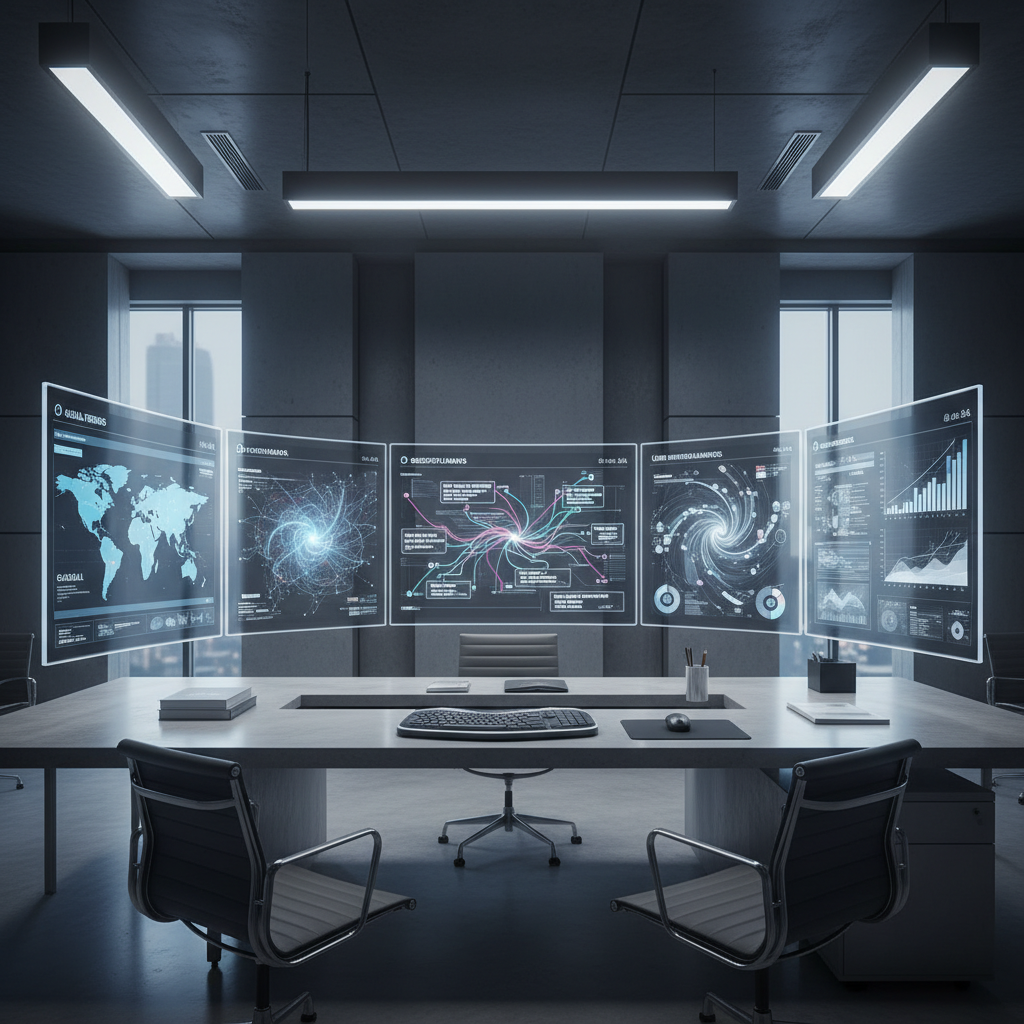
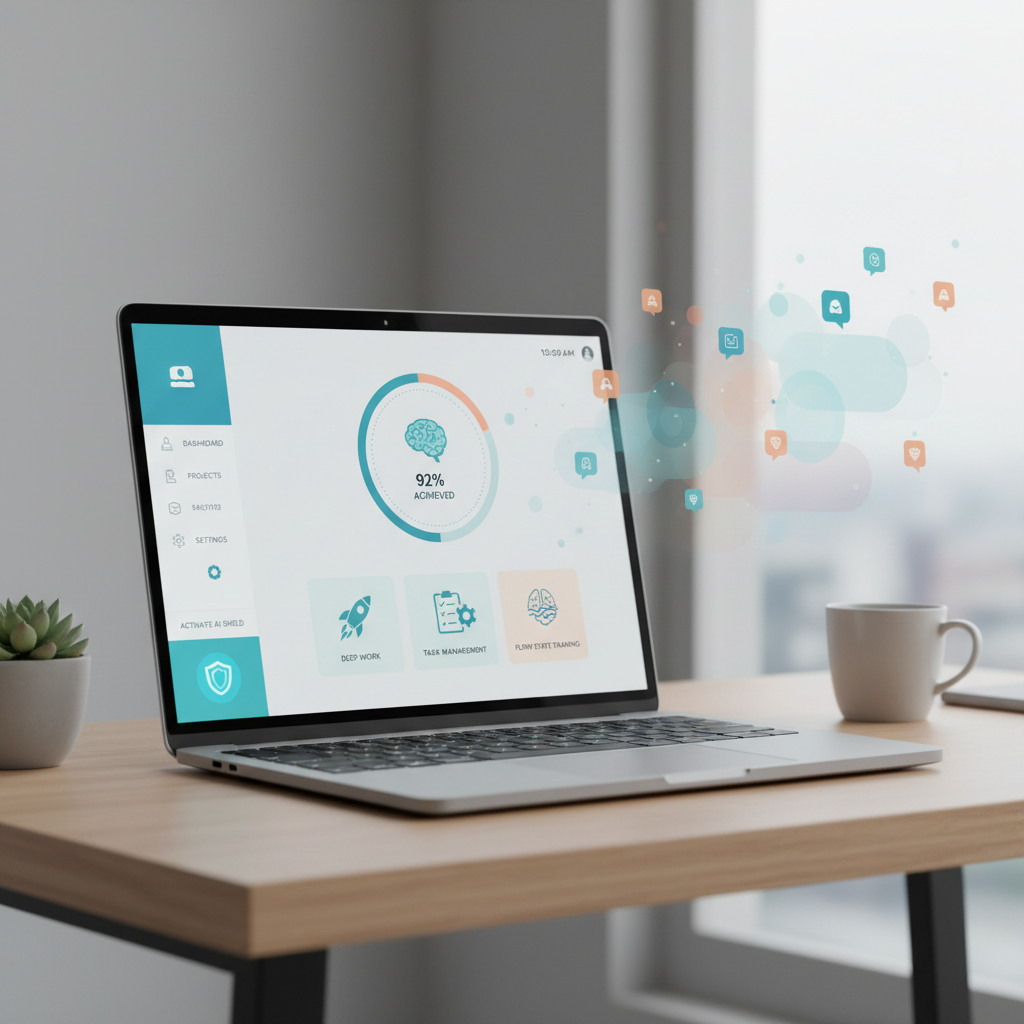
- AI Solution: Using DreamStudio, they could prompt: “A dynamic illustration of a person effortlessly managing tasks on multiple glowing screens, futuristic office environment, vibrant blues and greens, abstract data flowing around, minimalist design, focused, productive.” This provides a unique visual identity for their campaign.
4. Creating Educational Content and Presentations:
Teachers, trainers, and presenters often need clear, engaging illustrations to explain complex concepts or break up text-heavy slides. AI can provide these without artistic skill requirements.
- Scenario: A science educator needs an image to illustrate “quantum entanglement” for a high school presentation.
- AI Solution: They could use a Stable Diffusion interface (like a Hugging Face Space) and prompt: “Two entangled particles visually represented as glowing, interconnected ethereal spheres in a dark cosmic void, intricate energy lines between them, abstract, sci-fi art, deep space background, conceptual illustration.”
5. Personal Projects and Creative Exploration:
Hobbyists, writers, and game designers can use AI to visualize characters, settings, or mood boards for their personal projects, fostering creativity without commitment.
- Scenario: An aspiring fantasy novelist wants to visualize the main character of their book.
- AI Solution: Using NightCafe Creator, they might experiment with: “A stoic elven warrior with glowing eyes, intricate leather armor, holding an ancient sword, standing in a magical forest, digital painting, epic fantasy art, volumetric light.” They can iterate until the character matches their vision.
6. Generating Product Mockups and Variations:
For e-commerce or small product-based businesses, AI can quickly generate mockups or variations of products in different settings, saving time and photography costs.
- Scenario: An Etsy seller of unique ceramic mugs wants to show their mug in different home settings.
- AI Solution: Using Clipdrop’s tools, they could upload a picture of their mug, then use the text-to-image or image-to-image feature with prompts like “a ceramic mug on a rustic wooden table with morning coffee” or “a ceramic mug on a modern minimalist desk with a laptop and plants.”
These examples illustrate the versatility and accessibility of free AI image generators. By creatively applying these tools, budget-conscious creators can produce a wealth of stunning, unique visuals that were once only achievable with significant financial or artistic investment.
Frequently Asked Questions About Free AI Image Generators
Q: What exactly are free AI image generators?
A: Free AI image generators are online tools or software applications that use artificial intelligence algorithms to create unique images from text descriptions (known as prompts) or existing images, without requiring a direct payment. They typically offer a certain number of daily credits, specific features, or lower resolutions for free, allowing users to experiment and generate visuals without a financial barrier.
Q: Are the images generated by these free tools truly free to use commercially?
A: This is a critical question, and the answer varies. While many free AI image generators allow commercial use of the images created on their platforms (e.g., Microsoft Designer, Leonardo.ai for free tier images), some might have restrictions or require attribution on their free tiers. It is absolutely essential to always check the specific terms of service or licensing agreement of each individual AI tool you use before employing its output for commercial purposes to avoid any legal issues.
Q: What is “prompt engineering” and why is it important?
A: Prompt engineering is the art and science of crafting effective text descriptions (prompts) to guide an AI image generator to produce the desired visual output. It is crucial because the AI is literal; it generates images based precisely on the words you provide. A well-engineered prompt includes details about the subject, style, lighting, mood, and specific elements, significantly improving the quality, relevance, and accuracy of the generated image. It transforms generic outputs into high-impact visuals.
Q: Can AI generate images in specific artistic styles, like ‘oil painting’ or ‘cyberpunk’?
A: Yes, absolutely! One of the most powerful features of AI image generators is their ability to understand and replicate various artistic styles, mediums, and aesthetics. By including keywords like “oil painting,” “watercolor,” “digital art,” “anime,” “photorealistic,” “cyberpunk,” “steampunk,” “fantasy art,” or “concept art” in your prompt, you can direct the AI to produce images in that particular style. Experimenting with these stylistic modifiers is a key part of prompt engineering.
Q: What are the common limitations or downsides of using free AI image generators?
A: Common limitations of free AI image generators include: daily credit limits or slower generation speeds (after exhausting “fast” credits); potential watermarks on images from some platforms; less granular control over certain aspects of the image compared to paid versions; occasional generation of distorted features (especially hands or text); and a potential learning curve for effective prompt engineering. The quality can also vary depending on the model and the complexity of the prompt.
Q: How accurate are AI-generated images, particularly for realistic scenarios?
A: The accuracy of AI-generated images, particularly for realistic scenarios or specific details, has improved dramatically. Tools utilizing advanced models like DALL-E 3 (as in Microsoft Designer) and newer Stable Diffusion iterations can generate surprisingly accurate and photorealistic images, even understanding complex scene compositions and text inclusions. However, generating perfectly anatomically correct humans, especially hands or very specific brand logos, can still be challenging and may require multiple generations or post-editing.
Q: Is it ethical to use AI-generated images, and what should I be mindful of?
A: Using AI-generated images is generally ethical, but it comes with responsibilities. Key ethical considerations include: checking commercial use licenses; being aware of potential biases in AI training data (and actively prompting for diversity); respecting artists’ rights when replicating styles; and avoiding the creation or spread of misinformation or harmful content (like deepfakes). Transparency about AI use is also often recommended. Responsible AI usage ensures the technology benefits everyone.
Q: How often are these free AI image generator tools updated or improved?
A: The field of AI is incredibly fast-paced, and AI image generator tools are updated and improved frequently. Developers constantly release new models, enhance existing algorithms, add new features, and refine their interfaces. This means that a tool might look or perform differently even after a few weeks or months. Staying informed through the platforms’ official blogs or community forums is a good way to keep up with the latest developments and leverage new capabilities.
Q: Can I edit AI-generated images after they are created?
A: Yes, absolutely! AI-generated images serve as an excellent starting point and can be further refined using traditional image editing software (like Adobe Photoshop, GIMP, or Canva). You can crop, resize, adjust colors, add text, blend with other elements, or even fix minor imperfections that the AI might have created. Some AI platforms, like Leonardo.ai with its AI Canvas or Clipdrop with its various enhancement tools, also offer built-in editing capabilities.
Q: What’s the best way for a beginner to get started with free AI image generators?
A: For beginners, the best approach is to start with user-friendly platforms that have a low learning curve. Microsoft Designer (Image Creator) and Dream by WOMBO are excellent choices for their simplicity and immediate results. Leonardo.ai is also very accessible while offering more control. Begin with simple, clear prompts, experiment with different keywords and styles, and do not be afraid to generate many images to see what works. Engage with community examples to learn prompt engineering techniques, and remember that practice is key!
Key Takeaways: Empowering Your Visual Content Strategy
The world of free AI image generators is a rapidly evolving and incredibly empowering space for budget-conscious creators. Harnessing these tools can fundamentally transform how you approach visual content creation. Here are the main points to remember:
- Democratization of Design: Free AI tools break down barriers to creating high-quality, unique visuals, making professional-grade imagery accessible to everyone, regardless of budget or artistic skill.
- Diverse Toolset: There is a rich ecosystem of free AI image generators, each with its unique strengths, interfaces, and output styles. Options like Leonardo.ai, Stable Diffusion (via various UIs), Clipdrop, DreamStudio, NightCafe, Dream by WOMBO, and Microsoft Designer offer capabilities ranging from highly controlled, detailed creations to quick, stylized art.
- Prompt Engineering is Key: The quality of your AI-generated images directly correlates with the effectiveness of your text prompts. Mastering the art of descriptive, structured, and iterative prompting is crucial for success.
- Versatile Applications: AI-generated images can serve a multitude of purposes, from enhancing blog posts and social media graphics to designing marketing materials, educational aids, and personal creative projects.
- Ethical Responsibility: While powerful, AI art comes with ethical considerations regarding copyright, bias, deepfakes, and artist’s rights. Always use these tools responsibly, check terms of service, and strive for transparency.
- Embrace Iteration and Experimentation: The best results often come from generating multiple variations, refining prompts based on outputs, and continuously experimenting with different tools and settings.
- Stay Updated: The AI landscape changes rapidly. Keep an eye on updates and new features to leverage the latest advancements in your creative workflow.
By integrating these insights and practices, you can effectively leverage free AI image generators to produce stunning, impactful visuals that will captivate your audience and elevate your content strategy without any financial burden.
Conclusion: The Future of Visual Content is Here and Free
The journey through the realm of free AI image generators reveals a landscape brimming with innovation, accessibility, and limitless creative potential. What once required significant investment in time, money, or specialized skills is now at the fingertips of virtually anyone with an internet connection and a spark of imagination. These powerful tools are not just fleeting novelties; they represent a fundamental shift in how we approach visual content creation, offering an unprecedented opportunity for empowerment.
For the budget-conscious creator, the implications are profound. You no longer need to compromise on visual quality due to financial constraints. You can generate unique, tailored visuals that perfectly articulate your message, differentiate your brand, and deeply resonate with your audience. Whether you are a small business owner trying to stand out on social media, a student creating a compelling presentation, a blogger needing endless fresh header images, or an artist exploring new mediums, free AI image generators provide the means to achieve your visual goals.
As AI technology continues its rapid evolution, these tools will only become more sophisticated, intuitive, and capable. The boundaries of what is possible will continue to expand, offering even greater creative freedom. The most successful creators in this new era will be those who embrace these advancements, understand their nuances, and apply them thoughtfully and ethically.
So, take the leap. Dive into the world of free AI image generators. Experiment with prompts, explore different platforms, and unleash your visual creativity without restraint. The future of high-impact visual content is not only here; it is freely accessible, waiting for you to shape it.



























Leave a Reply