


In an age where our homes are becoming increasingly connected and intelligent, the concept of security is also undergoing a profound transformation. Gone are the days when a simple alarm system or a deadbolt were the sole guardians of our sanctuaries. Today, we stand on the cusp of a new era, one where artificial intelligence (AI) is not just enhancing but fundamentally redefining how we protect what matters most. At the forefront of this revolution is facial recognition technology, an advanced AI application that is rapidly moving from the realm of science fiction into the practical reality of our daily lives, particularly at the very threshold of our homes.
Imagine a security system that doesn’t just react to threats but intelligently recognizes who is at your door, distinguishing between a beloved family member, a trusted delivery person, or an unexpected stranger. Picture a world where your home literally knows you, granting seamless access while maintaining an impenetrable barrier against unauthorized entry. This isn’t a futuristic fantasy; it is the present-day promise of AI-powered facial recognition security. This comprehensive guide will delve deep into how this groundbreaking technology functions, its myriad benefits, the crucial considerations surrounding its implementation, and its boundless potential to create a smarter, safer, and more secure living environment for everyone.
Join us as we explore how these sophisticated AI guards are transforming smart home security, standing vigilant at your doorstep with an unprecedented level of precision and personalized protection, offering not just peace of mind, but a truly intelligent guardian for your modern home.
The Evolution of Smart Home Security: From Motion Sensors to AI Vision
The journey of home security has been a fascinating trajectory, mirroring advancements in technology over the decades. What began with rudimentary mechanical locks and watchdogs evolved into sophisticated alarm systems in the 20th century. These early systems primarily relied on simple sensors: magnetic contacts on doors and windows to detect forced entry, and passive infrared (PIR) motion detectors to sense movement within a protected area. While effective for their time, they were often prone to false alarms triggered by pets, falling objects, or even sudden changes in temperature. They operated on a binary logic: either the system was armed and triggered, or it was disarmed. There was little to no intelligence, no context, and certainly no ability to differentiate between legitimate and illegitimate activity beyond basic parameters.
The dawn of the smart home era brought about a significant leap. Connected sensors, smart cameras, and integrated hubs allowed homeowners to monitor and control their security systems remotely via smartphones. Notifications became smarter, distinguishing between a tripped alarm and a motion event. Video doorbells provided visual confirmation, letting us see who was at the door before opening it. However, even these advancements still largely relied on human interpretation of data. A video doorbell would show you a person, but it was up to you to recognize them. If it was a stranger, you might react. If it was a delivery person, you might simply observe. The system itself didn’t ‘understand’ who was there; it merely presented information.
The true paradigm shift arrived with the integration of Artificial Intelligence. AI brings capabilities that transcend simple sensor triggers and remote viewing. It introduces intelligence, learning, and prediction into the security equation. Instead of just detecting motion, AI can analyze the nature of the motion. Instead of just recording a video, AI can interpret the video, identifying objects, people, and specific actions. This profound capability elevates security from a reactive mechanism to a proactive, intelligent guardian. AI allows systems to learn from patterns, adapt to environments, and make informed decisions, vastly reducing false positives and providing actionable, context-rich insights.
Within this AI revolution, facial recognition stands out as a pivotal game-changer for home security. Unlike generic object detection or motion sensing, facial recognition offers an unparalleled level of personalization and identity verification. It moves beyond knowing something is there to knowing who is there. This distinction is critical. For the first time, your home can differentiate between a family member returning from school, a trusted pet sitter, a regular delivery driver, or a genuinely suspicious individual. This ability to identify and categorize individuals at the point of entry is what makes AI-powered facial recognition the next frontier in smart home security, transforming a passive surveillance tool into an active, intelligent gatekeeper.
How Facial Recognition AI Works at Your Doorstep
Understanding the inner workings of facial recognition AI at your doorstep demystifies its impressive capabilities and highlights the sophistication involved. It’s not magic, but a complex interplay of optics, algorithms, and deep learning that allows a device to ‘see’ and ‘understand’ a face. The process typically involves several key stages, each powered by advanced computational techniques.
Image Capture and Data Acquisition
The first step is for the security device, often a smart doorbell or a dedicated camera, to capture an image or video stream of the person approaching your door. Modern devices use high-resolution cameras, often equipped with wide-angle lenses and infrared capabilities for low-light conditions. When a person enters the camera’s field of view, the system’s motion detection triggers, initiating the capture process. More advanced systems can even predict an approach based on gait or general human form detection before specific facial features are visible.
Face Detection and Alignment
Once an image is captured, the AI’s initial task is to locate any faces within that image. This is known as face detection. Using algorithms trained on vast datasets of human faces, the system identifies facial features like eyes, nose, and mouth. After detection, the system aligns the face, adjusting for variations in pose, head tilt, and expression. This normalization step ensures that the face is presented to the recognition algorithm in a consistent manner, regardless of how the person initially stood or moved.
Feature Extraction (Biometric Template Creation)
This is where the ‘recognition’ truly begins. Instead of storing actual images of faces, which would be both storage-intensive and a privacy concern, facial recognition systems extract unique mathematical representations, or ‘biometric templates’, from the detected face. This involves analyzing hundreds or even thousands of distinctive nodal points on a face, such as the distance between the eyes, the width of the nose, the depth of the eye sockets, the shape of the cheekbones, and the contour of the jawline. These measurements are then converted into a unique numerical code or vector, a sort of ‘face print’, which is far more efficient and secure than storing raw image data.
Machine Learning Models: Deep Learning and Neural Networks
The accuracy and sophistication of feature extraction and subsequent comparison are heavily reliant on advanced machine learning models, particularly deep learning and convolutional neural networks (CNNs). These neural networks are trained on enormous datasets of faces, learning to identify minute patterns and distinctions that even the human eye might miss. They can discern subtle variations that make each face unique, making the recognition process robust against changes in lighting, angles, expressions, and even minor alterations like new hairstyles or glasses. These models continuously improve as they are exposed to more data and refined through algorithmic updates.
Template Comparison and Identification
Once the biometric template of the detected face is generated, it is compared against a database of pre-enrolled templates. This database typically contains the face prints of authorized individuals, such as family members, trusted friends, or regular service providers. The AI performs a rapid comparison, calculating the similarity score between the live template and each template in its database. If a high enough similarity score is achieved (e.g., above a certain threshold of 90-95%), the system identifies the individual. This comparison can happen in milliseconds, providing near real-time identification.
Edge Computing vs. Cloud Processing: Benefits and Trade-offs
A crucial aspect of where and how these computations occur lies in the choice between edge computing and cloud processing.
- Edge Computing: In this model, the processing of facial recognition occurs directly on the device itself (at the ‘edge’ of the network), such as within the smart doorbell or camera.
- Benefits: Enhanced privacy (data doesn’t leave your home network as raw images), faster processing times (no internet latency), and continued operation even during internet outages.
- Trade-offs: Requires more powerful and thus potentially more expensive hardware, limited capacity for complex AI models, and less flexibility for extensive database lookups or system-wide learning.
- Cloud Processing: Here, captured images or feature templates are sent over the internet to powerful cloud servers for processing and comparison.
- Benefits: Leverages vast computational power for highly accurate and complex AI models, larger database capacity, easier updates, and lower cost for individual devices.
- Trade-offs: Reliance on internet connectivity, potential latency issues, and increased privacy concerns as data (even if encrypted templates) is transmitted and stored externally.
Many modern systems employ a hybrid approach, performing initial detection and some processing at the edge, then sending only anonymized templates or specific event data to the cloud for deeper analysis or storage, striking a balance between privacy, performance, and features.
Enrollment Process: Training Your System
For the system to recognize authorized individuals, they must first be ‘enrolled’. This typically involves a one-time setup where individuals stand in front of the camera, allowing the system to capture multiple images from various angles and lighting conditions. These images are then used to generate and store their unique biometric template in the system’s database. Users usually manage this through a dedicated mobile app, where they can add or remove recognized faces, assign names, and define access permissions. This initial training is crucial for the system’s accuracy and personalized security features.
Beyond Basic Recognition: Advanced AI Features for Home Security
While identifying who is at your door is a foundational capability, modern AI facial recognition systems extend far beyond this basic function, integrating a suite of advanced features that elevate home security to unprecedented levels of intelligence and responsiveness. These enhancements address common vulnerabilities, improve user experience, and provide a more comprehensive layer of protection.
Liveness Detection: Foiling Spoofing Attempts
One of the most critical advanced features is liveness detection. Early facial recognition systems were susceptible to ‘spoofing’ – where an unauthorized person could trick the system using a photograph, a video played on a screen, or even a sophisticated mask. Liveness detection algorithms are designed to counteract this by verifying that the face presented is indeed that of a live human being. This is achieved through various techniques:
- 3D Depth Sensing: Using specialized cameras (like structured light or time-of-flight sensors), the system creates a 3D map of the face, making it impossible for flat images or simple masks to deceive it.
- Active Liveness Tests: Prompting the person to perform a simple action, such as blinking, smiling, or turning their head slightly, which a static image or video cannot replicate.
- Infrared Analysis: Detecting heat signatures or unique reflective properties of living skin that differ from printed materials or masks.
- Micro-expression and Gaze Tracking: Analyzing subtle, involuntary movements of facial muscles or eye movements characteristic of a live person.
This feature is paramount for preventing unauthorized access and maintaining the integrity of the security system, ensuring that only genuine individuals are recognized and granted access.
Anomalous Behavior Detection and Contextual Awareness
AI’s true power lies in its ability to learn and identify patterns. Beyond simply recognizing a face, advanced systems can analyze behavior in context. This means detecting activities that deviate from normal patterns or indicate potential threats:
- Loitering Detection: If an unrecognized individual lingers near your property for an unusual amount of time, paces back and forth, or repeatedly approaches and retreats from your door, the system can flag this as suspicious activity and send an alert.
- Package Theft Monitoring: The AI can differentiate between a package being delivered and a package being removed by an unauthorized person. It can identify common delivery uniforms and logos, logging legitimate deliveries and immediately alerting you if an unknown person approaches and takes a package.
- Vehicle Identification: Some systems can extend their recognition capabilities to vehicles, noting unfamiliar cars repeatedly driving by or stopping near your home.
- Crowd Detection and Analysis: While less common for residential, more advanced systems can identify unusually large gatherings near an entrance, which could be relevant for larger properties or community gates.
By understanding the context of actions, these systems provide proactive security, alerting you to potential issues before they escalate into serious threats.
Integration with Other Smart Home Devices
The true intelligence of a smart home security system comes from its ability to orchestrate a coordinated response. Facial recognition AI guards don’t operate in isolation; they integrate seamlessly with other smart home devices to create a comprehensive, automated security ecosystem:
- Smart Locks: Upon recognizing an authorized family member, the system can automatically unlock the smart door, providing frictionless entry. It can also auto-lock if an unrecognized face lingers too long or after a set period.
- Smart Lighting: If an unknown person is detected, exterior lights can be automatically turned on to deter them and improve camera visibility. Conversely, lights can be adjusted for known individuals arriving home.
- Sirens and Alarms: In the event of an identified threat (e.g., an unauthorized person attempting entry after being unrecognized), the system can trigger a loud siren, strobe lights, or other deterrents.
- Voice Assistants: Integration with platforms like Amazon Alexa or Google Assistant allows for voice commands to check who’s at the door, unlock doors for recognized guests, or review recent activity logs.
- Security Cameras: The facial recognition camera can trigger other security cameras on the property to begin recording or adjust their focus to track a suspicious individual’s movements around the perimeter.
This interconnectedness ensures that the security system is not just a collection of devices, but a unified, intelligent defense network that acts swiftly and effectively.
Real-time Alerts and Personalized Notifications
A key benefit of AI facial recognition is the intelligence behind its notifications. Instead of generic “motion detected” alerts, you receive highly specific information:
- “[Name of Family Member] just arrived home.”
- “Unknown person detected at the front door.”
- “Delivery person from [Company] dropped off a package.”
- “Suspicious loitering detected near the main entrance.”
These detailed, real-time alerts are pushed directly to your smartphone, smartwatch, or other connected devices, often accompanied by a live video feed or a snapshot. This allows you to quickly assess the situation and take appropriate action, whether it’s unlocking the door for a child, speaking to a delivery driver, or alerting authorities about a potential intruder. The personalization means you’re not bombarded with irrelevant alerts, focusing only on what truly requires your attention.
The Unprecedented Precision and Reliability of AI-Powered Guards
The leap from traditional security methods to AI-powered facial recognition represents a significant advancement in both precision and reliability. While older systems were often plagued by false alarms and limitations in identification, modern AI has overcome many of these hurdles, offering a level of certainty previously unattainable in residential security. This unprecedented accuracy is what truly sets these intelligent guards apart.
Minimizing False Positives and Negatives
One of the most frustrating aspects of traditional security systems is the incidence of false alarms (false positives) or, worse, failing to detect a genuine threat (false negatives).
- False Positives: Traditional motion sensors can be triggered by pets, shadows, or even strong winds rustling nearby foliage. AI facial recognition drastically reduces these false positives by confirming whether the detected entity is actually a human face, and more specifically, an unauthorized human face. This means fewer unnecessary alarms and less disruption to your daily life.
- False Negatives: Equally critical is the ability to reliably detect true threats. Traditional systems might miss an intruder if they navigate around sensors or enter through an unprotected area. AI, with its continuous monitoring and sophisticated recognition algorithms, is far less likely to miss an unauthorized individual attempting to gain access, especially with features like loitering detection and liveness verification.
The goal is to achieve a very high true positive rate (correctly identifying authorized individuals and true threats) and a very low false positive and negative rate, a balance that AI is uniquely positioned to achieve through continuous learning and refinement.
Adaptability: Learning and Evolving with You
Human appearance isn’t static. We change hairstyles, grow beards, wear glasses, put on hats, and age over time. A static, template-based system would struggle with these variations, potentially failing to recognize an authorized individual. AI facial recognition, however, is designed to be adaptable and learn from these changes.
- Continuous Learning: As the system captures more images of authorized individuals over time, it updates their biometric templates, incorporating minor changes in appearance. This means a new haircut or a pair of prescription glasses won’t confuse the system.
- Robustness to Variations: Advanced algorithms are trained on diverse datasets that include faces with various accessories, expressions, lighting conditions, and angles. This training enables the system to recognize a face even if it’s partially obscured, viewed from an unusual angle, or under challenging lighting.
- Aging Resilience: Over years, our faces change. AI systems are continually being developed and refined to account for the natural aging process, ensuring long-term recognition reliability without constant re-enrollment.
This adaptability ensures the system remains highly effective and convenient over the long term, reducing the need for manual adjustments.
Performance in Varying Conditions
A doorstep security camera needs to perform reliably in all sorts of environmental conditions, which can be challenging for traditional vision systems. AI excels here:
- Low Light and Night Vision: Many facial recognition cameras integrate infrared (IR) night vision, allowing them to capture clear images even in complete darkness. AI algorithms are specifically trained to process these IR images effectively for recognition.
- Harsh Weather: Rain, snow, fog, or bright sunlight can degrade image quality. AI models are trained to filter out noise, enhance features, and perform recognition even with sub-optimal visual input, maintaining reliability where human observation or simpler algorithms might fail.
- Angle and Distance: While there are optimal angles and distances for recognition, advanced AI can perform remarkably well even when a person is not directly facing the camera or is at the edge of the camera’s effective range, thanks to sophisticated perspective correction and feature mapping.
This robust performance across diverse conditions makes AI guards reliable guardians, day or night, rain or shine.
Continuous Improvement Through Updates and Data
Unlike static hardware, AI-powered systems are constantly evolving. Manufacturers push over-the-air (OTA) software updates that introduce new algorithms, enhance existing recognition models, and improve overall performance.
- Algorithmic Enhancements: As AI research progresses, new, more efficient, and more accurate algorithms are developed. These can be pushed to your device, making your system smarter without needing new hardware.
- Data-Driven Refinement: While respecting privacy, aggregated and anonymized data (e.g., failed recognition attempts, false positives that are manually corrected) can be used to further train and improve the core AI models used by the provider, benefiting all users.
- Security Patches: Regular updates also include critical security patches, protecting your system against newly discovered vulnerabilities and ensuring the integrity of your biometric data.
This iterative improvement cycle means your AI security guard doesn’t just stay current; it gets better over time, constantly enhancing its ability to protect your home with unparalleled precision.
Addressing the Elephant in the Room: Privacy and Data Security
While the benefits of AI facial recognition in home security are compelling, the technology also raises significant privacy and data security concerns that cannot be overlooked. As powerful as these systems are, their implementation must be approached with careful consideration for the individual’s right to privacy and the secure handling of sensitive biometric data. Addressing these concerns head-on is crucial for fostering trust and ensuring responsible adoption.
Encryption of Biometric Data
The most fundamental aspect of biometric data security is encryption. When your face is scanned and converted into a unique mathematical template, that template must be encrypted both at rest (when stored) and in transit (when being sent for processing or comparison).
- End-to-End Encryption: Reputable manufacturers employ end-to-end encryption for all data flowing between your device, their servers (if cloud-based), and your mobile app. This ensures that even if data is intercepted, it remains unreadable and unusable to unauthorized parties.
- Hashing and Salting: Instead of storing raw biometric templates, many systems use cryptographic hashing functions, often combined with a ‘salt’ (random data), to create irreversible, unique digital fingerprints. This means even if a hashed template is compromised, it cannot be reverse-engineered to reconstruct your face or identify you.
Strong encryption protocols are non-negotiable for any biometric security system. Users should always verify that a product prioritizes these measures.
Local vs. Cloud Storage Implications
The decision of where biometric data is stored and processed has profound privacy implications:
- Local Storage (Edge Computing): When data is processed and stored entirely on the device (e.g., on an SD card or internal memory) within your home, the privacy benefits are significant. Your biometric data never leaves your property, minimizing the risk of remote breaches or unauthorized access by third parties. This model provides maximum user control over their data.
- Cloud Storage: If biometric templates or related data are uploaded to cloud servers, while offering benefits like remote access and powerful processing, it introduces additional vectors for attack. Cloud providers must adhere to stringent security standards, and users must trust that the company’s data handling policies are robust. It also means your data resides on servers managed by another entity, which can be a point of concern for some.
Many systems offer a hybrid approach, storing only encrypted, anonymized templates in the cloud, or allowing users to choose local-only processing for maximum privacy, striking a balance between privacy, performance, and features. Understanding a product’s specific architecture is key.
Data Retention Policies and User Control
Transparency regarding data retention is paramount. Users should have clear information and control over how long their biometric data is stored and the ability to delete it at any time.
- User Deletion: The system should provide an intuitive way for users to delete their biometric profile from the device and any associated cloud services. This might be necessary if someone moves, sells their home, or simply no longer wishes to use the feature.
- Clear Policies: Companies should publish clear, easy-to-understand data retention policies, detailing what data is collected, how it’s used, how long it’s kept, and why. Ambiguity in these areas is a red flag.
- Opt-in vs. Opt-out: Ideally, facial recognition features should be opt-in, meaning users actively choose to enable them and enroll their faces, rather than being a default setting.
Empowering users with control over their data is a cornerstone of ethical AI implementation.
Compliance with Privacy Regulations (GDPR, CCPA)
As biometric data is highly sensitive, its collection and processing are increasingly subject to stringent legal regulations.
- General Data Protection Regulation (GDPR): In Europe, GDPR classifies biometric data as a ‘special category’ of personal data, requiring explicit consent for processing and imposing strict obligations on data controllers regarding data protection, transparency, and user rights.
- California Consumer Privacy Act (CCPA): In the United States, CCPA and similar state-level laws grant consumers rights regarding their personal information, including biometrics, giving them the right to know what is collected and to request its deletion.
- Emerging Biometric Privacy Laws: Several states and localities are enacting specific biometric privacy laws (e.g., Illinois’ BIPA), which may further regulate how companies handle this data.
While these regulations primarily target businesses, smart home device manufacturers must comply, and consumers should be aware that products from reputable companies will adhere to these higher standards, even for residential use.
Ethical Considerations and Public Perception
Beyond legal compliance, there are broader ethical considerations and public perception issues surrounding facial recognition.
- Surveillance vs. Security: The line between enhancing security and enabling surveillance can be blurry. Homeowners must consider the impact on neighbors, public spaces captured by cameras, and the potential for misuse.
- Bias and Accuracy: Historically, some facial recognition algorithms have shown biases, performing less accurately on certain demographics (e.g., women, people of color) due to biases in training data. While significant progress has been made, users should be aware of these historical challenges and look for systems that demonstrate high accuracy across diverse populations.
- Mission Creep: Ensuring that the technology is used strictly for its intended purpose (home security) and not for other, unauthorized applications (e.g., sharing data with law enforcement without consent, marketing).
Manufacturers and users alike share a responsibility to deploy and use these powerful tools ethically, prioritizing individual privacy and societal well-being alongside security benefits. Choosing a transparent and privacy-conscious brand is key.
Installation, Integration, and User Experience
The practical application of AI facial recognition security in a smart home extends beyond its technical capabilities; it encompasses the entire user journey, from initial setup to daily interaction. A truly effective system must be not only powerful but also user-friendly, seamlessly integrating into the existing smart home ecosystem and offering a hassle-free experience for the homeowner.
DIY vs. Professional Installation
The installation process for facial recognition security systems can vary, largely depending on the complexity of the device and the homeowner’s technical comfort level.
- DIY Installation: Many smart doorbells and standalone facial recognition cameras are designed for easy, consumer-friendly installation. This often involves replacing an existing doorbell, mounting a camera, and connecting it to your home’s Wi-Fi network. Manufacturers typically provide step-by-step instructions, video tutorials, and all necessary mounting hardware. DIY is cost-effective and provides immediate gratification but requires basic technical aptitude and comfort with simple electrical wiring (for hardwired doorbells).
- Professional Installation: For more complex integrated systems, or for homeowners who prefer expert handling, professional installation services are available. This is often recommended for multi-camera setups, systems requiring intricate wiring, or those integrated with a larger home automation platform. Professional installers ensure optimal placement, proper wiring, and thorough system testing, providing peace of mind and maximizing system performance. While more expensive, it guarantees a correct and robust setup.
The choice often depends on the specific product, the homeowner’s technical skills, and budget.
Compatibility with Existing Smart Home Ecosystems
A major draw of smart home technology is the ability for devices to communicate and work together. Facial recognition security devices are no exception, and their compatibility with popular smart home ecosystems is a crucial factor for a cohesive user experience.
- Apple HomeKit: Devices compatible with HomeKit can be controlled via the Apple Home app, integrate with Siri voice commands, and participate in automation routines involving other HomeKit-enabled devices. This provides a unified experience for Apple users.
- Google Home / Google Assistant: Systems that integrate with Google Home can be managed through the Google Home app, respond to Google Assistant voice commands, and trigger routines involving other connected Google devices. This is popular for Android users and those invested in the Google ecosystem.
- Amazon Alexa: Devices compatible with Alexa allow for voice control via Echo devices, integration into Alexa Routines, and viewing camera feeds on Echo Show devices. This is a common choice for many smart home enthusiasts.
- IFTTT (If This Then That): Some systems offer IFTTT integration, enabling custom automation recipes that connect the facial recognition system with hundreds of other smart devices and web services, offering unparalleled flexibility for personalized automations.
Checking compatibility before purchase ensures that your new facial recognition guard fits seamlessly into your existing smart home setup, enhancing its overall intelligence and utility.
User Interface: Mobile Apps and Voice Control
The gateway to controlling and interacting with your facial recognition security system is primarily through its dedicated mobile application, complemented by voice control options.
- Intuitive Mobile Apps: A well-designed app is essential. It should provide a clear dashboard for viewing live camera feeds, reviewing event history, managing recognized faces (adding/deleting profiles), configuring alert preferences, and adjusting system settings. Features like two-way audio communication through the doorbell, quick-response options, and secure access to recorded footage are standard. The app should be user-friendly, offering a smooth and responsive experience.
- Voice Control: Integration with voice assistants (Alexa, Google Assistant, Siri via HomeKit) adds a layer of convenience. You can ask “Alexa, who’s at the front door?” or “Hey Google, unlock the door for John” (after facial recognition confirms John’s identity). This hands-free operation is particularly useful when you’re busy or simply prefer verbal commands.
The user interface plays a critical role in how effectively homeowners can manage and benefit from their AI security system, making ease of use a significant consideration.
Ease of Management and Updates
Maintaining a high-tech security system should not be a burdensome task. Modern facial recognition systems are designed for minimal ongoing effort:
- Over-the-Air (OTA) Updates: Firmware and software updates, which bring new features, performance improvements, and security patches, are typically delivered wirelessly. This ensures your system stays current and protected without manual intervention.
- Simple User Management: Adding a new family member, a pet sitter, or a new frequent guest should be a straightforward process within the app, often involving a quick scan and name assignment. Removing profiles should be equally simple.
- Notification Customization: Users can typically customize the types of alerts they receive, the times they receive them, and who receives them, ensuring that the system is tailored to their specific needs without being overly intrusive.
Ultimately, a good AI facial recognition security system empowers the homeowner with advanced protection while remaining simple to manage and a pleasure to use, truly embodying the promise of smart home technology.
Future Trends and the Road Ahead for Facial Recognition in Smart Homes
The trajectory of AI facial recognition in smart home security is one of continuous innovation and expansion. What we see today is merely the foundational layer of what promises to be a deeply integrated, highly predictive, and incredibly personalized security experience. The future will bring even more sophisticated capabilities, blurring the lines between security, convenience, and holistic home intelligence.
Multi-modal Biometrics for Enhanced Verification
While facial recognition offers impressive precision, the next wave of security will likely combine multiple biometric modalities for even higher accuracy and security.
- Facial + Voice Recognition: Imagine a system that not only recognizes your face but also verifies your identity through your unique voiceprint. This adds another layer of authentication, making spoofing exponentially more difficult and enhancing security, especially for sensitive actions like unlocking doors or disarming alarms.
- Facial + Gait Analysis: Systems could analyze how a person walks, their posture, and their stride length—unique biometric indicators that can identify individuals even from a distance or with partially obscured faces. This could allow for earlier detection of authorized or unauthorized individuals approaching the property.
- Facial + Fingerprint/Palm Vein: For higher security areas within the home, integration with traditional fingerprint or advanced palm vein scanners could provide localized, multi-factor authentication, ensuring only specific individuals can access certain rooms or safes.
This multi-modal approach will significantly bolster security, providing a more robust and fault-tolerant identification process.
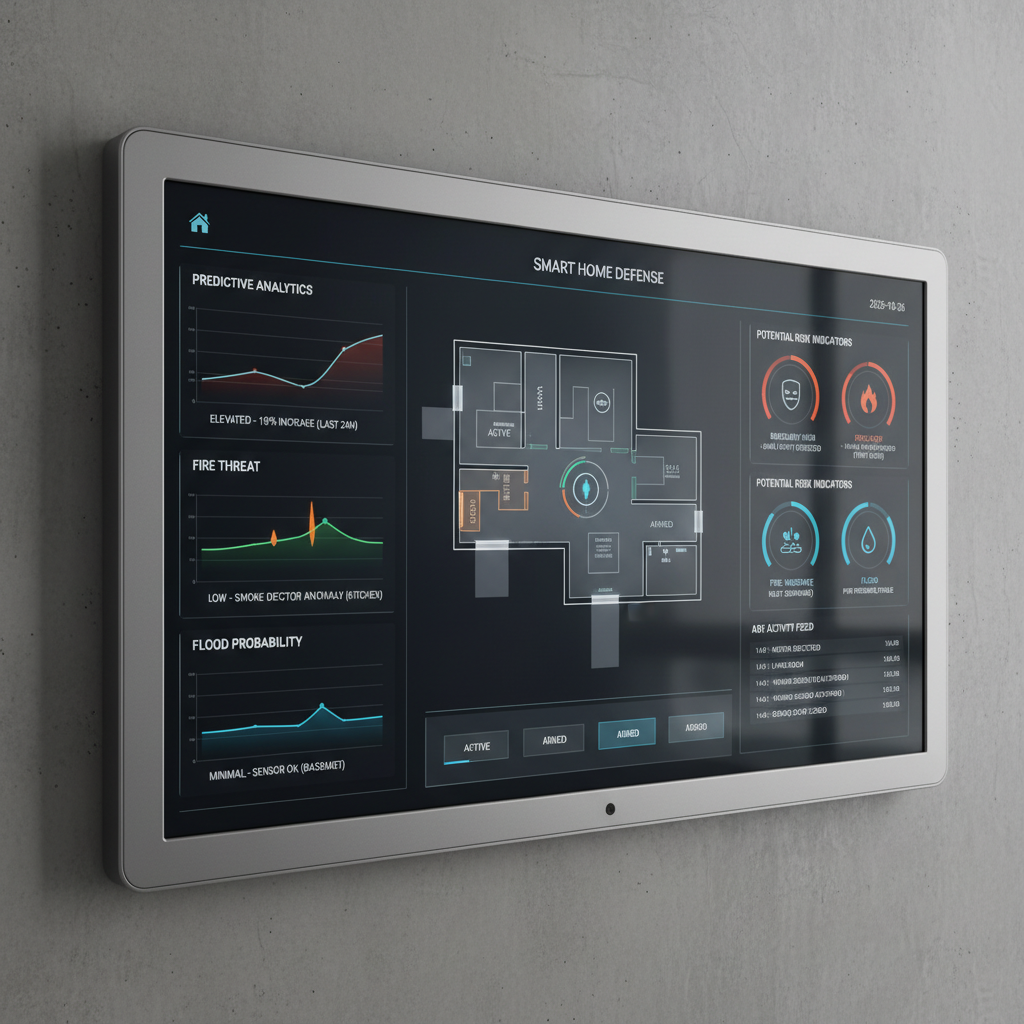
Predictive Security Analytics and Proactive Threat Mitigation
Current AI systems are largely reactive, albeit intelligently so. The future will see a shift towards highly predictive capabilities, where AI anticipates potential threats before they materialize.
- Pattern Recognition of Pre-Criminal Behavior: By continuously analyzing activity patterns (e.g., specific loitering behaviors, unusual vehicle movements, repeated approaches to neighboring properties), AI could identify individuals or groups exhibiting patterns often associated with casing a property or preparing for a crime.
- Environmental Data Integration: Combining facial recognition data with broader environmental data (local crime statistics, weather patterns, social media trends in the vicinity) could allow the AI to assess overall risk levels and proactively recommend security adjustments or heightened vigilance.
- Self-Learning Anomaly Detection: Systems will become even more adept at distinguishing between truly unusual events and routine occurrences, continuously refining their understanding of ‘normal’ and ‘abnormal’ behavior around your home.
The goal is to move from simply alerting you to a present threat to warning you about an emerging threat, allowing for truly proactive security measures.
Hyper-personalization of Home Environments
As facial recognition becomes more intelligent, it will not only secure your home but also personalize your living environment in unprecedented ways based on who is present.
- Personalized Welcome: When you arrive home, the system could automatically adjust lighting, thermostat settings, play your preferred music, or even start brewing your coffee, all based on your recognized identity and pre-set preferences.
- Contextual Access Control: Different family members could have different access permissions. A child might be recognized and granted access to the front door, but a parent’s recognition might be required to unlock a home office or medicine cabinet.
- Guest-Specific Settings: For recognized regular guests, the system could temporarily enable specific smart home automations (e.g., turning on guest room lights) or grant access to certain entertainment systems.
This hyper-personalization transforms the home from a static environment into one that dynamically adapts to its occupants, blending security with ultimate convenience and comfort.
Miniaturization and Ubiquity of Sensors
The hardware supporting facial recognition will also evolve, becoming smaller, less conspicuous, and more pervasive.
- Invisible Integration: Cameras will be seamlessly integrated into architectural elements, light fixtures, or even smart mirrors, becoming virtually invisible while maintaining broad surveillance capabilities.
- Low-Power Edge Devices: Continued advancements in chip design will enable highly powerful AI processing to occur on extremely small, low-power edge devices, extending facial recognition capabilities to more areas of the home without large, obtrusive cameras.
- Affordability and Accessibility: As the technology matures and manufacturing scales, facial recognition hardware and software will become even more affordable, making advanced security accessible to a wider demographic.
The future of facial recognition in smart homes is not just about identifying faces; it’s about creating an intelligent, responsive, and intuitively secure sanctuary that understands and anticipates the needs of its inhabitants, all while pushing the boundaries of what home security can truly be.
Comparison Tables
To further illustrate the advantages and nuances of facial recognition security, let’s examine two comparative tables. The first table compares different tiers of facial recognition security systems, highlighting the features you might expect at various price points and sophistication levels. The second table provides a direct comparison between traditional home security approaches and the modern AI-powered facial recognition systems, underscoring the revolutionary shift this technology brings.
Table 1: Comparison of Facial Recognition Security System Tiers
| Feature/Tier | Basic System (Entry-Level) | Advanced System (Mid-Range) | Professional System (High-End) |
|---|---|---|---|
| Price Range | $100 – $300 (Device) + optional subscription | $300 – $800 (Device) + monthly subscription | $800 – $2000+ (Hardware & Installation) + comprehensive subscription |
| Face Detection | Yes, basic human shape/face detection | Yes, accurate face detection with good angles | Highly accurate, multi-angle, even partial face detection |
| Recognition Accuracy | Good (70-85%), struggles with variations | Very Good (85-95%), adaptable to some changes | Excellent (95-99.9%), highly robust to variations, aging |
| Database Capacity | Limited (10-20 known faces) | Moderate (50-100 known faces) | Extensive (1000s of known faces) |
| Liveness Detection | Basic (e.g., simple motion detection for spoofing) | Moderate (e.g., eye blink detection, 2D anti-spoofing) | Advanced (e.g., 3D depth sensing, multi-spectral analysis, active liveness) |
| Processing Location | Hybrid (some edge, mostly cloud) | Hybrid (more edge processing) or Cloud-optimized | Primarily Edge (for speed and privacy) or high-security cloud |
| Integration | Limited (basic smart home platforms) | Good (major smart home ecosystems, IFTTT) | Seamless (broadest ecosystem support, custom APIs) |
| Behavioral Analytics | Basic (motion zones, human vs. animal) | Moderate (loitering detection, package drop-off/pickup) | Advanced (anomaly detection, crowd analysis, custom rule sets) |
| Alerts/Notifications | Generic “person detected” / “recognized [name]” | Personalized “recognized [name]” / “unknown person detected” | Highly detailed, contextual, multi-channel (SMS, email, app, voice) |
| Data Security | Standard encryption | Strong encryption, user control over data retention | Military-grade encryption, local storage options, strict privacy compliance |
Table 2: Traditional Home Security vs. AI Facial Recognition Security
| Feature | Traditional Home Security (e.g., Basic Alarm & Camera) | AI Facial Recognition Security |
|---|---|---|
| Identification Method | Door/window sensors, motion sensors; human identifies from video feed. | Automated biometric identification (who is at the door). |
| Alert Specificity | Generic “motion detected,” “door opened,” “alarm triggered.” | Highly specific “[Name] arrived home,” “Unknown person detected,” “Package delivered.” |
| False Alarms | Higher likelihood (pets, shadows, tree branches, wind). | Significantly reduced (AI filters irrelevant events, distinguishes humans). |
| Access Control | Manual keys/keypads, remote disarming. | Automated unlocking for recognized individuals, intelligent lock/unlock. |
| Spoofing/Bypassing | Can be bypassed with physical tools, alarms can be ignored. | Liveness detection prevents spoofing; real-time alerts for unauthorized entry attempts. |
| Adaptability | Static; doesn’t learn or adapt to changes. | Learns over time, adapts to appearance changes (glasses, hats, aging). |
| Proactivity | Reactive (responds after an event). | Proactive (detects suspicious loitering, warns of potential threats). |
| Integration Complexity | Often standalone or basic integration. | Seamless integration with broader smart home ecosystems (locks, lights, voice assistants). |
| Data Collection | Basic event logs, video recordings. | Biometric templates (encrypted), detailed event logs, behavioral patterns. |
| Privacy Concerns | Lower, but still involves video recording. | Higher due to biometric data, mitigated by strong encryption and user controls. |
Practical Examples: Real-World Use Cases and Scenarios
To truly grasp the transformative power of facial recognition security AI, it’s helpful to explore its application in various real-world scenarios. These examples demonstrate how the technology moves beyond theoretical capabilities to provide tangible benefits, enhancing safety, convenience, and peace of mind for diverse households.
Case Study 1: The Busy Family Home
Consider the typical modern family, juggling work, school, and extracurricular activities. Children often return home before parents, and various service providers (dog walkers, cleaners, tutors) may need access during the day.
- Seamless Entry for Family: When the children arrive home after school, the facial recognition system instantly identifies them. Instead of fumbling with keys or remembering a code, the smart lock automatically disengages, granting them secure entry. Parents receive a “[Child’s Name] just arrived home” notification on their smartphone, instantly alleviating worries about their safe return.
- Managing Service Providers: The family has a regular dog walker. They can enroll the dog walker’s face for specific days and times. When the dog walker arrives, they are recognized, the door unlocks, and the system logs their entry and exit. The homeowner receives a notification: “Dog walker arrived,” and later “Dog walker departed.” This eliminates the need for spare keys, provides an auditable log, and ensures access only when authorized.
- Deterring Package Theft: A common frustration is package theft. The AI system not only identifies the legitimate delivery person but also observes if an unrecognized individual approaches the doorstep and attempts to take a package. In such a scenario, it can trigger an immediate alert to the homeowner, activate a siren, or even verbally warn the individual through the doorbell speaker, often deterring the theft before it occurs.
- Alerting to Strangers: If an unknown person lingers suspiciously near the property, the system sends an alert, complete with a live video feed. The homeowner can then remotely engage in two-way communication, activate lights, or even notify neighbors, adding a proactive layer of defense.
For a busy family, this translates to reduced stress, enhanced safety for children, and streamlined management of home access.
Case Study 2: Elderly Care and Independent Living
Facial recognition AI offers profound benefits for elderly individuals living independently, providing both security and a discreet form of monitoring for caregivers or family members.
- Visitor Verification: Many elderly individuals are vulnerable to scams or unwanted solicitations. The system identifies all visitors, sending alerts to family members if an unknown person approaches. If a caregiver or a medical professional is expected, their arrival is confirmed. For unexpected visitors, the elderly resident can choose to ignore, or a remote family member can intervene via two-way audio.
- Automated Access for Caregivers: Designated caregivers can be granted scheduled access. Their face acts as their key, allowing entry without the need for key exchanges or codes that might be forgotten or compromised. Family members receive notifications of their arrival and departure, ensuring the elderly loved one is attended to.
- Emergency Response Integration: While not direct facial recognition, in a more advanced integrated system, if an elderly person experiences a fall near the doorway (detected by other sensors or a wide-angle camera with fall detection AI) and a family member or first responder arrives, their recognition can automatically unlock the door, saving precious seconds in an emergency.
- Peace of Mind for Family: Family members can discretely monitor who comes and goes, without being intrusive. They know trusted individuals are accessing the home and are alerted to any unusual or suspicious activity, offering critical peace of mind when they cannot be physically present.
This technology supports independence by providing a robust safety net, making independent living safer and more manageable for the elderly and their families.
Case Study 3: Vacation Properties and Remote Monitoring
Owners of vacation homes, rental properties, or secondary residences face unique security challenges, primarily due to extended periods of vacancy. Facial recognition AI is an ideal solution for remote monitoring and access management.
- Remote Oversight: Owners can receive real-time alerts whenever anyone approaches their property. They immediately know if it’s a scheduled cleaner, a maintenance worker, a tenant, or an unknown individual. This eliminates anxiety about unoccupied periods.
- Controlled Access for Service Providers: Cleaners, landscapers, or repair personnel can be granted temporary, scheduled access via facial recognition. This prevents the need for physical key handovers, secures against lost keys, and provides a precise log of who entered and when, even from thousands of miles away.
- Tenant Management (for rental properties): For short-term rentals, tenants can be temporarily enrolled, allowing them keyless entry for their stay. This provides a modern, convenient experience for renters and a secure, auditable access log for owners.
- Deterrence and Evidence: If an unauthorized person attempts to tamper with the property, the system’s presence (and potentially audible warnings) acts as a deterrent. If an incident occurs, high-quality video footage with confirmed identification (if available) serves as invaluable evidence for authorities.
For vacation property owners, AI facial recognition provides a robust, intelligent, and remotely manageable security solution, turning a vacant property into a monitored and controlled asset.
Case Study 4: Secure Package and Mail Delivery
Package theft, often referred to as “porch piracy,” is a growing concern. Facial recognition AI can significantly mitigate this by adding intelligence to the delivery process.
- Verified Delivery: The system can be trained to recognize common delivery personnel uniforms or logos from major carriers (UPS, FedEx, Amazon). When a recognized delivery driver approaches, it registers the event as a legitimate delivery.
- Package Drop-off Confirmation: When the delivery person places a package down, the AI can confirm the drop-off and send a notification: “Package delivered by FedEx.” Some advanced systems can even detect the package’s presence on the porch.
- Alerting to Unauthorized Package Removal: If, shortly after a package is delivered, an unrecognized individual approaches and attempts to pick up the package, the system immediately flags this as suspicious. An alert is sent to the homeowner, and the system can trigger an alarm, activate lights, or initiate two-way communication to deter the thief.
- Evidence for Claims: Should a theft unfortunately occur, the high-resolution video footage, potentially identifying the perpetrator through facial recognition (if they are known or later identified by authorities), provides crucial evidence for police reports and insurance claims.
This specialized application of facial recognition effectively transforms your doorstep into an intelligent package drop-off point, greatly enhancing the security of your deliveries.
These practical examples underscore the versatility and tangible benefits of integrating facial recognition AI into smart home security. From enhancing the safety of everyday family life to safeguarding vulnerable individuals and protecting remote assets, this technology is redefining what it means to be truly secure and connected in the modern world.
Frequently Asked Questions
As facial recognition technology becomes more prevalent in smart home security, it naturally raises a host of questions regarding its functionality, security, privacy, and practical implementation. Here, we address some of the most common inquiries to provide clarity and comprehensive understanding.
Q: How accurate is facial recognition in smart homes, and what factors affect it?
A: Modern AI facial recognition systems used in smart homes are highly accurate, often achieving recognition rates of 95% to 99.9% under optimal conditions. Factors that influence accuracy include:
- Lighting Conditions: Best performance in good, consistent lighting. Low light or strong backlighting can reduce accuracy, though infrared capabilities mitigate this significantly.
- Angle and Distance: Direct frontal views at a moderate distance are ideal. Extreme angles or very long distances can challenge the system.
- Facial Obscuration: Hats, scarves, large sunglasses, or medical masks can partially obscure features, potentially lowering accuracy. Advanced algorithms are better at partial recognition.
- Expression: Extreme facial expressions (e.g., exaggerated smiles, frowns) can sometimes alter facial geometry enough to momentarily impact recognition, though most systems are trained to handle common expressions.
- System Quality: The quality of the camera hardware, the sophistication of the AI algorithms, and the robustness of the training data set all play a crucial role. Higher-end systems generally offer superior accuracy.
- Enrollment Quality: The more varied and clear the images used during the initial enrollment process (different angles, expressions, lighting), the more robust the system’s ability to recognize the individual later on.
Despite these factors, continuous improvements in deep learning and 3D sensing technology are steadily enhancing accuracy and resilience to real-world variations.
Q: Is facial recognition legal for home security in a residential setting?
A: Generally, using facial recognition for your personal home security on your private property is legal in most jurisdictions. The legality primarily depends on where the camera is pointed and how the data is used.
- Private Property: Recording within your property boundaries, including your immediate doorstep, is typically permissible.
- Public Spaces: If your camera’s field of view extends significantly into public areas (e.g., public sidewalks, neighbor’s property, public streets), it enters a greyer area. While recording in public isn’t inherently illegal, using facial recognition on people in public without their consent might be subject to specific privacy laws (like Illinois’ BIPA or certain EU GDPR interpretations).
- Data Usage: The key legal and ethical consideration is how the biometric data is stored, processed, and shared. Reputable manufacturers adhere to data protection laws, but users should be aware of a product’s privacy policy, especially regarding data sharing with third parties or law enforcement.
It’s always advisable to be aware of local laws and regulations regarding surveillance and privacy, especially if your camera captures any public space.
Q: What about privacy concerns? Where is my biometric data stored?
A: Privacy is a paramount concern with facial recognition. Reputable systems offer various storage and processing options, each with different privacy implications:
- Local (Edge) Storage: Some systems process and store all biometric templates and video footage directly on the device (e.g., on an SD card) or a local hub within your home. This offers the highest level of privacy as your data never leaves your property.
- Cloud Storage: Other systems upload encrypted biometric templates (not raw images) and video footage to secure cloud servers managed by the manufacturer. While convenient for remote access and processing, it means your data is off-site. Manufacturers use strong encryption and robust security protocols, but users rely on their trust in the company’s data handling practices.
- Hybrid Approaches: Many systems use a combination, performing initial processing locally and sending only necessary, encrypted, and anonymized data to the cloud for advanced features or backup.
Always check the product’s specifications and privacy policy to understand exactly how your data is handled, stored, and protected. Look for transparency and options for local storage or user-controlled deletion.
Q: Can someone spoof the system with a photo or mask?
A: Early facial recognition systems were indeed vulnerable to spoofing attempts using high-resolution photos or videos. However, modern AI-powered systems incorporate sophisticated ‘liveness detection’ technology specifically to prevent this.
- 3D Depth Sensing: Advanced cameras use structured light or time-of-flight sensors to create a 3D map of the face, instantly distinguishing a real, three-dimensional face from a flat image or a simple mask.
- Active Liveness: Some systems prompt the user to perform a minor action like blinking, smiling, or turning their head, which cannot be replicated by a static photo or a simple video loop.
- Infrared Analysis: Detecting skin texture, subtle blood flow, or heat signatures that are unique to living tissue.
- Micro-expression Analysis: Recognizing minute, involuntary facial muscle movements that indicate a live person.
While no system is 100% foolproof against the most extreme and sophisticated attempts, these liveness detection features make it extremely difficult for casual or even moderately determined spoofing to succeed, significantly enhancing the security of the system.
Q: What happens if my internet goes down? Will the facial recognition still work?
A: The functionality during an internet outage depends on whether the system uses edge computing or cloud processing:
- Edge-Processed Systems: If your system performs all facial recognition locally on the device, it will generally continue to function for identification and basic alerts even without an internet connection. It can compare faces against its locally stored database and trigger local actions (like unlocking a door). However, you won’t receive remote notifications to your smartphone, and cloud-dependent features like remote viewing or cloud storage will be unavailable.
- Cloud-Processed Systems: Systems that rely heavily on cloud servers for recognition processing will likely cease to identify individuals during an internet outage. They may still record video locally (if equipped with local storage), but the AI-powered recognition features will be offline.
It is crucial to check the specifications of any system you consider, focusing on its offline capabilities if continuous recognition is a priority for you during internet disruptions.
Q: Is it expensive to install and maintain an AI facial recognition security system?
A: The cost varies widely based on the system’s sophistication, features, and whether you opt for DIY or professional installation:
- Hardware Cost: Entry-level smart doorbells with basic facial recognition start around $100-$300. More advanced, dedicated facial recognition cameras or integrated systems can range from $300 to over $1000.
- Installation: DIY installation is free if you’re comfortable with it. Professional installation can add $100-$500 or more, especially for complex setups.
- Subscription Fees: Many systems, particularly those relying on cloud storage, advanced AI features, or professional monitoring, come with monthly or annual subscription fees. These can range from $5 to $30+ per month. This covers cloud storage, advanced analytics, feature updates, and customer support.
- Maintenance: Generally low. The main ongoing cost is the subscription. Devices typically require firmware updates (often automatic), and occasionally cleaning of the camera lens. Battery-powered devices will need battery changes or recharging.
While the initial investment can be higher than a basic doorbell camera, the enhanced security, convenience, and peace of mind often justify the cost for many homeowners.
Q: Can AI facial recognition recognize pets or animals?
A: Most facial recognition systems for home security are specifically trained to recognize human faces and distinguish them from other objects or animals. While the underlying AI might have general object detection capabilities that allow it to identify a “dog” or “cat,” it typically won’t perform “facial recognition” on a pet in the same way it does for humans.
- Human-centric Training: The algorithms are optimized for human facial features and patterns.
- Object Detection: Many smart cameras can identify animals as a general category (e.g., “animal detected”) and filter these alerts to reduce false alarms. So, while it won’t know if it’s “Max the Golden Retriever,” it will likely know it’s a dog and not a human intruder.
- Customization: Some advanced systems might allow you to ‘enroll’ specific pets for basic detection (e.g., “Dog detected”), but this is less about facial recognition and more about specific animal recognition or filtering based on size/shape.
So, while your system likely won’t greet your cat by name, it will usually be smart enough to differentiate it from a person.
Q: How does it handle guests or one-time visitors who aren’t enrolled?
A: Facial recognition systems are designed to manage non-enrolled visitors intelligently:
- “Unknown Person” Alerts: For anyone not enrolled in your database, the system will classify them as an “unknown person” or “stranger.” You’ll receive an alert, often with a live video feed or snapshot, allowing you to see who it is.
- Two-Way Audio: You can then use the system’s two-way audio feature to communicate with the visitor, whether it’s a delivery driver, a solicitor, or an unexpected friend.
- Remote Granting of Access: If it’s a trusted guest you weren’t expecting to enroll, you can remotely unlock a smart lock via your app after verifying their identity visually.
- Temporary Enrollment: For frequent guests, babysitters, or contractors, you can easily enroll their face for temporary access, setting specific schedules or expiry dates for their recognition profile.
- Visitor Logs: All detected individuals, whether known or unknown, are typically logged with timestamped video clips, providing a comprehensive record of who approached your door.
The system provides flexibility, allowing you to manage access and interaction with both familiar faces and unexpected guests efficiently.
Q: What are the main benefits of AI facial recognition over a traditional doorbell camera?
A: AI facial recognition offers significant upgrades over a basic doorbell camera:
- Intelligent Identification: A traditional camera shows you a person; facial recognition tells you who that person is (e.g., “Your daughter arrived”) or that they are an “unknown person.”
- Personalized Alerts: Instead of generic motion alerts, you get specific notifications about recognized individuals, deliveries, or suspicious activity, reducing notification fatigue.
- Automated Access: For recognized individuals, smart locks can automatically unlock, offering unparalleled convenience for family members.
- Enhanced Security against Spoofing: Liveness detection in facial recognition systems prevents unauthorized access attempts using photos or videos, a vulnerability for many traditional cameras.
- Proactive Threat Detection: AI can analyze behavior (loitering, suspicious patterns) to alert you to potential issues before they become a threat, rather than just recording an event as it happens.
- Reduced False Alarms: AI can differentiate between humans, animals, vehicles, and inanimate objects, significantly cutting down on irrelevant alerts from motion detection.
- Seamless Smart Home Integration: Facial recognition can trigger a cascade of smart home actions (lights, alarms, temperature adjustments) based on who is at the door, creating a truly intelligent and responsive home.
In essence, facial recognition transforms a surveillance tool into an intelligent, proactive, and personalized security guardian.
Q: How does the AI system learn and improve over time?
A: AI facial recognition systems are designed for continuous learning and improvement through several mechanisms:
- User Feedback: When the system makes a mistake (e.g., misidentifies someone or fails to recognize a known person), users often have the option to correct it within the app. This feedback is invaluable for refining the AI models.
- Exposure to New Data: As the system captures more images of enrolled individuals under various conditions (different lighting, angles, accessories), it updates their biometric templates, making recognition more robust.
- Software Updates: Manufacturers regularly release over-the-air (OTA) firmware and software updates. These updates often include newer, more advanced AI algorithms that have been trained on larger and more diverse datasets, leading to improved accuracy, speed, and new features.
- Aggregated Anonymized Data: While respecting user privacy, manufacturers may use aggregated and anonymized data (e.g., general patterns of unrecognized events) to identify common challenges and improve their core AI models for all users.
- Adaptability to Changes: The AI learns to adapt to changes in an individual’s appearance over time, such as aging, new hairstyles, or facial hair, without requiring re-enrollment, becoming more personalized and effective with extended use.
This continuous learning cycle ensures that your facial recognition security system doesn’t just remain static; it intelligently evolves, becoming more precise, reliable, and effective in guarding your doorstep.
Key Takeaways
The integration of AI facial recognition into smart home security marks a pivotal moment, offering a blend of precision, convenience, and advanced protection previously unimaginable. As we’ve explored the intricacies of this technology, several key insights emerge, highlighting its transformative potential:
- AI Revolutionizes Home Security: Facial recognition transcends traditional sensor-based security, providing intelligent identification and context-aware alerts that move beyond simple detection to true understanding of who is at your doorstep.
- Unparalleled Precision and Reliability: Modern AI algorithms offer high accuracy, significantly reducing false alarms and adapting to changes in appearance and varying environmental conditions, ensuring consistent and dependable performance.
- Beyond Basic Recognition: Advanced features like liveness detection, anomalous behavior detection (e.g., loitering, package theft monitoring), and seamless integration with other smart home devices create a comprehensive, intelligent defense network.
- Critical Privacy Considerations: While powerful, the technology necessitates strong encryption, clear data retention policies, and user control over biometric data. Choosing systems with robust privacy safeguards and local processing options is paramount.
- Ease of Integration and User Experience: Designed for intuitive management via mobile apps and voice control, these systems integrate smoothly into existing smart home ecosystems, enhancing convenience and providing detailed, personalized notifications.
- Future-Proof Security: The road ahead promises multi-modal biometrics, predictive security analytics, and hyper-personalization of home environments, making our homes not just secure but truly intelligent and responsive to our needs.
- Practical Benefits for Diverse Households: From busy families managing access and deterring theft, to aiding independent elderly living, and providing remote oversight for vacation properties, AI facial recognition offers tangible solutions for real-world security challenges.
Embracing AI facial recognition is about upgrading from reactive alarms to a proactive, intelligent guardian that offers peace of mind through precise identification and smart automation, securing your sanctuary with remarkable foresight and efficiency.
Conclusion
The journey through the intricate world of AI facial recognition security reveals a technology poised to redefine the very essence of smart home protection. We’ve moved far beyond simple alarms and motion sensors, entering an era where our homes are not just guarded, but intelligently understood. The precision with which AI can identify, analyze, and respond to individuals at our doorstep is nothing short of revolutionary, offering a personalized layer of security that was once confined to the pages of science fiction.
From its sophisticated operational mechanics involving deep learning and biometric template creation, to its advanced features like liveness detection and behavioral analytics, AI facial recognition systems stand as vigilant sentinels. They are adaptable, continuously learning from our environments and our appearances, ensuring a level of reliability that traditional security measures simply cannot match. While the critical dialogue around privacy and data security remains paramount, responsible innovation is leading the way in developing systems that prioritize user control, robust encryption, and ethical deployment.
The benefits extend far beyond mere threat deterrence, ushering in an age of unprecedented convenience. Imagine a home that truly knows you, unlocking its doors upon your arrival, managing deliveries with intelligent oversight, and notifying you with precise, actionable information about every interaction at your threshold. These systems integrate seamlessly into our connected lives, becoming an intuitive extension of our desire for safety and comfort.
Looking ahead, the convergence of multi-modal biometrics, predictive analytics, and hyper-personalization promises an even smarter, more responsive sanctuary. Our doorsteps will no longer be just entry points but intelligent gateways, managed by AI that not only identifies but anticipates, protects, and customizes our living experience. Embracing this technology is not just about adopting a new gadget; it’s about investing in a future where our homes are genuinely intelligent guardians, safeguarding our peace of mind with unparalleled precision and foresight. The future of smart home security is here, standing vigilant at your doorstep, ready to protect your sanctuary with unmatched intelligence and care.










































































Leave a Reply