

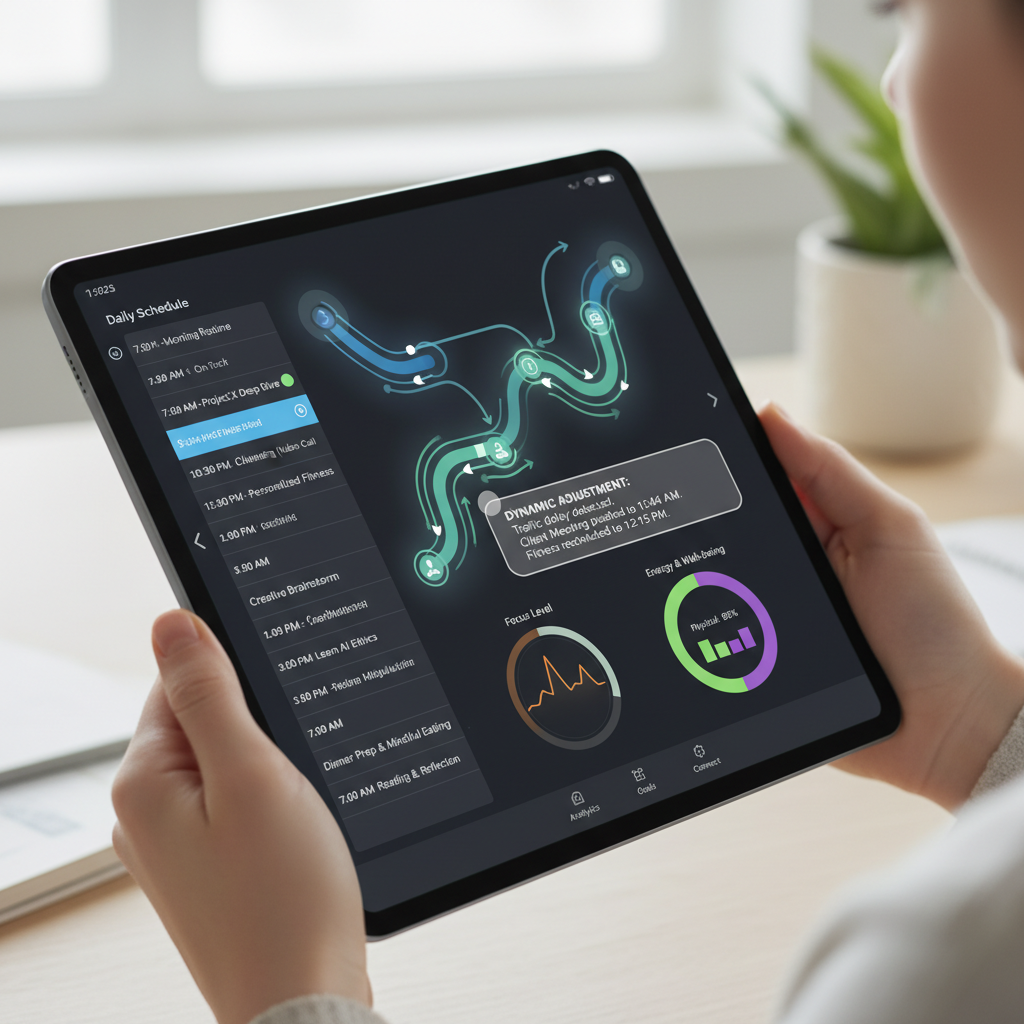
Introduction: Reclaiming Your Day with AI
In our increasingly fast-paced world, managing a daily schedule can feel like an Olympic sport. We juggle work commitments, personal appointments, family responsibilities, and the ever-present desire to carve out time for self-care and personal growth. Traditional planning methods, from paper diaries to static digital calendars, often fall short. They lack the adaptability and foresight needed to navigate the inevitable disruptions and shifting priorities that define modern life. The result? Stress, missed deadlines, overlooked tasks, and a perpetual feeling of being overwhelmed.
Imagine a planner that doesn’t just list your tasks, but truly understands them. A system that knows your peak productivity hours, accounts for your commute, adjusts for unexpected meetings, and even reminds you to take a much-needed break. This isn’t science fiction; it’s the reality of Intelligent Planning powered by Artificial Intelligence. AI-powered planners are revolutionizing how we approach our daily routines, moving beyond simple scheduling to create a dynamic, personalized blueprint for your day that actively works for you, not against you.
This comprehensive guide will delve deep into the world of AI-powered planning. We will explore the core mechanisms that enable AI to craft such sophisticated routines, examine the myriad benefits it offers, and look at real-world examples of how individuals are transforming their productivity and well-being. Get ready to discover how AI can help you achieve a personalized daily routine that truly works, maximizing your efficiency, minimizing stress, and ultimately, giving you back control of your precious time.
The Evolution of Planning: From Paper to Personalized AI
The journey of planning tools has been a long and fascinating one, mirroring our evolving relationship with time and productivity. For centuries, humanity relied on rudimentary methods: scribbled notes, memory, and simple calendars. The advent of structured paper planners and diaries brought a new level of organization, allowing individuals to visually lay out their days, weeks, and months. These tools, while foundational, were inherently rigid. A sudden change, a new priority, or an unforeseen event meant scratching out, rewriting, and often, a cascade of adjustments that were both time-consuming and frustrating.
The digital revolution ushered in the era of electronic calendars and task managers. Tools like Google Calendar, Outlook Calendar, and dedicated to-do list apps offered immense advantages: easy editing, synchronization across devices, reminders, and the ability to share schedules. However, even these sophisticated digital solutions largely remained passive. They were excellent receptacles for information but lacked the ability to think, adapt, or optimize. You still had to manually input every detail, prioritize tasks yourself, and constantly re-arrange when circumstances changed.
Enter Artificial Intelligence. AI represents the next quantum leap in planning. Instead of just storing information, AI-powered planners actively process, analyze, and learn from your data. They don’t just show you your schedule; they help you create the most effective one, anticipating needs, identifying conflicts, and suggesting optimal pathways. This transformation moves planning from a static, manual chore to a dynamic, intelligent partnership, offering a level of personalization and adaptability that was previously unimaginable. AI planners aren’t just digital assistants; they are proactive strategists for your time.
What Makes AI Planning ‘Intelligent’? Unpacking the Core Technologies
The “intelligence” in AI-powered planning isn’t magic; it’s a sophisticated blend of various artificial intelligence and machine learning technologies working in concert. Understanding these core mechanisms helps demystify how these tools provide such profound benefits.
Machine Learning (ML) for Pattern Recognition and Prediction
- Learning Your Habits: ML algorithms are the brain of the AI planner. They continuously analyze your past behavior – how long tasks typically take you, when you’re most productive, your preferred working hours, and common patterns in your schedule. For instance, if you consistently take longer to write reports on Monday mornings, the AI will learn this and allocate more time for similar tasks on future Mondays.
- Predictive Analytics: Beyond just learning, ML enables prediction. It can forecast potential conflicts, estimate completion times with greater accuracy, and even predict when you might be prone to procrastination based on past data. This allows the planner to proactively suggest adjustments before problems arise.
- Adaptation: As your routine changes, or as you provide feedback, the ML model adapts. It’s a continuous learning loop, ensuring the planner remains relevant and optimized for your current needs and preferences.
Natural Language Processing (NLP) for Intuitive Input
- Understanding Your Language: Many AI planners incorporate NLP, allowing you to interact with them using natural language. Instead of clicking through menus, you might simply type or speak, “Schedule a meeting with John for an hour on Tuesday afternoon about the Q3 report” or “Remind me to call mom at 7 PM tonight.” The AI parses this information, identifies key entities (John, Tuesday, 7 PM, call mom), and schedules it appropriately.
- Contextual Interpretation: NLP helps the AI understand the context of your requests. It can differentiate between a “quick chat” and a “strategic discussion,” allocating appropriate time based on inferred complexity and past interactions.
Optimization Algorithms for Scheduling Efficiency
- Complex Problem Solving: At the heart of personalized scheduling are advanced optimization algorithms. These algorithms can take a multitude of variables into account simultaneously: task priorities, deadlines, your availability, energy levels, travel time, and even the interdependencies between tasks.
- Dynamic Rescheduling: When an unexpected event occurs (e.g., a meeting gets canceled, traffic delays you), these algorithms can instantly re-evaluate your entire schedule and suggest the most efficient way to accommodate the change, minimizing disruption and ensuring critical tasks are still met.
- Load Balancing: The algorithms strive to create a balanced workload, preventing burnout by distributing tasks intelligently and even suggesting breaks or downtime when your schedule appears overly packed.
Integration Capabilities for a Holistic View
Modern AI planners don’t operate in a vacuum. They integrate with a wide array of other applications to gather a comprehensive understanding of your life:
- Calendars: Google Calendar, Outlook Calendar, Apple Calendar.
- Task Managers: Todoist, Asana, Trello.
- Communication Tools: Slack, Microsoft Teams, Gmail.
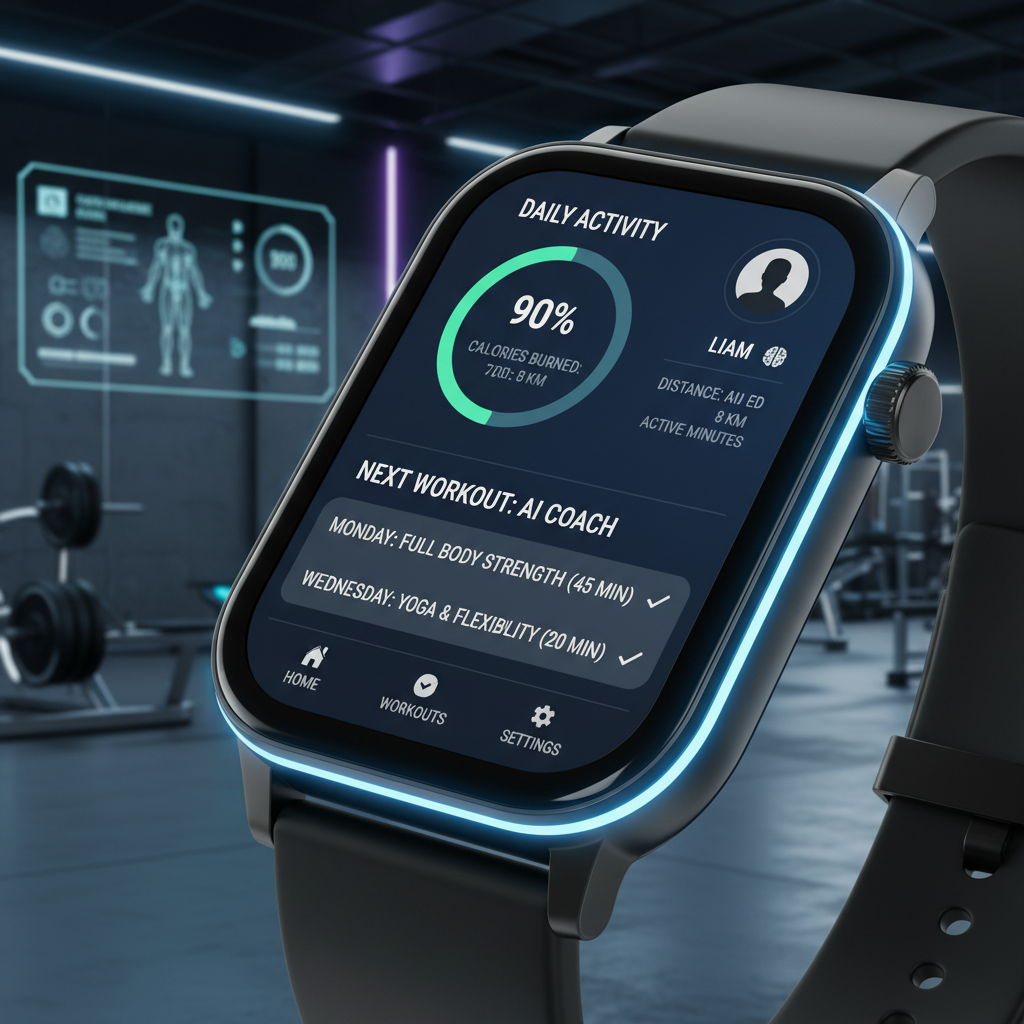
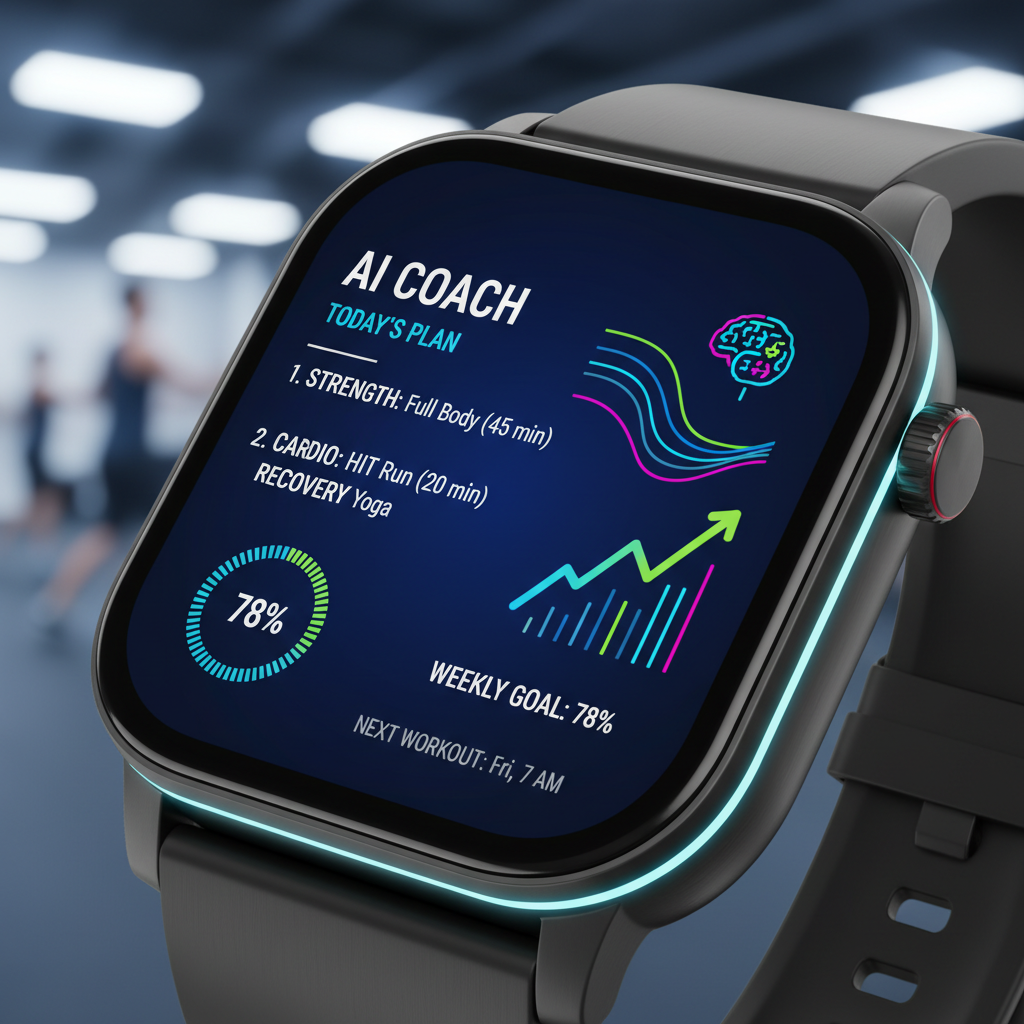
- Fitness Trackers & Wearables: Apple Watch, Fitbit (for energy levels, sleep patterns).
- Location Services: Google Maps (for commute times, travel).
- Email & Document Management: Extracting tasks and appointments directly from communications.
By leveraging these interconnected technologies, AI planners move beyond simple automation to truly intelligent assistance, crafting a routine that is not just organized, but optimized for your unique life.
Core Mechanisms: How AI Personalizes Your Routine
The journey from raw data to a perfectly tailored daily routine involves several sophisticated steps where AI truly shines. It’s an intricate dance of data ingestion, contextual understanding, intelligent prioritization, dynamic optimization, and continuous learning.
1. Data Ingestion: Building Your Digital Twin
The first step for any AI planner is to gather as much relevant information about your life as possible. This is where seamless integration becomes critical. It pulls data from:
- Existing Calendars and Tasks: All your pre-scheduled meetings, appointments, and to-do lists are imported.
- Email and Communication Platforms: AI can scan emails for actionable items, meeting invitations, and deadlines, adding them to your schedule automatically.
- Fitness Trackers and Health Apps: Data on sleep quality, heart rate, activity levels, and stress can be used to infer your energy levels throughout the day.
- Location Data: For accurate travel time estimates and to group geographically close tasks.
- User Input: Direct preferences you explicitly state, such as “I prefer deep work in the mornings” or “I need a 30-minute lunch break every day.”
- Work Management Tools: Project deadlines, team meetings, and assigned tasks from platforms like Jira, Asana, or Monday.com.
This creates a holistic digital profile, a “digital twin” of your professional and personal life, allowing the AI to see the complete picture.
2. Contextual Understanding: Beyond Just Time Slots
Unlike traditional planners that see tasks as mere blocks of time, AI understands the context surrounding each activity. This involves:
- Task Nature: Is it a creative task requiring focus, a quick administrative chore, a collaborative meeting, or a physical activity?
- Importance and Urgency: AI can interpret priority levels based on deadlines, tags, or even by analyzing the language used in task descriptions (e.g., “critical,” “urgent,” “must be done today”).
- Interdependencies: Understanding that Task B cannot start before Task A is completed, or that a certain document needs to be reviewed before a meeting.
- Personal Biometrics/Energy Levels: If your fitness tracker shows poor sleep, the AI might suggest scheduling less cognitively demanding tasks for the morning, or even recommend a short power nap.
- External Factors: Real-time traffic conditions, weather forecasts (e.g., suggesting an indoor workout if it’s raining), public holidays, and office closures.
This deep contextual awareness allows the AI to make truly informed scheduling decisions.
3. Intelligent Prioritization: What Truly Matters
Prioritization is where many individuals struggle, often leading to important but non-urgent tasks being perpetually deferred. AI-powered planners excel here by:
- Applying Frameworks: The AI can apply prioritization matrices like the Eisenhower Matrix (Urgent/Important, Not Urgent/Important, Urgent/Not Important, Not Urgent/Not Important) based on your inputs and learned patterns.
- Dynamic Re-prioritization: As new tasks emerge or deadlines shift, the AI constantly re-evaluates and re-prioritizes your entire workload, ensuring that the most critical items are always brought to the forefront.
- Flagging Potential Conflicts: Before you even notice, the AI can alert you to potential missed deadlines or overcommitted periods, giving you time to adjust.
4. Dynamic Optimization: The Art of the Perfect Flow
Once data is ingested and understood, the AI’s optimization algorithms spring into action to craft the optimal schedule. This is a continuous process:
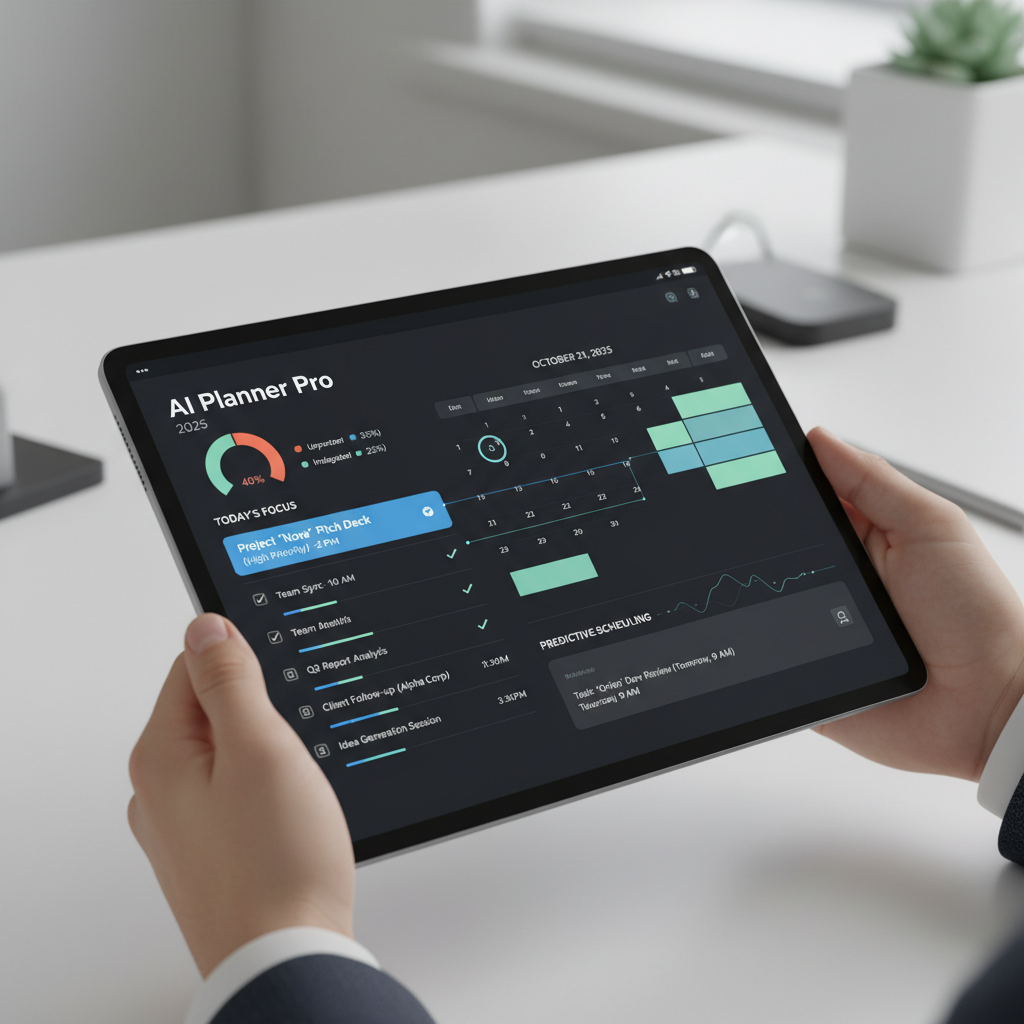
- Smart Scheduling: The AI places tasks strategically. It might schedule your most complex work during your peak productivity hours (e.g., 9 AM – 12 PM), group similar tasks together to minimize context switching, and block out “focus time” to prevent interruptions.
- Buffer Zones: It can automatically add small buffer times between meetings or tasks to allow for transition, quick breaks, or unexpected overruns.
- Real-time Adjustments: If a meeting runs over, or traffic causes a delay, the AI doesn’t just leave a blank space. It instantly re-shuffles subsequent tasks, finding the best possible fit to minimize cascading delays.
- Work-Life Balance Promotion: The AI can be configured to ensure you don’t overschedule, reminding you to take breaks, finish work at a reasonable hour, and dedicate time to personal activities.
5. Continuous Learning and Feedback: Getting Smarter Every Day
An AI planner isn’t a static tool; it’s a living system that improves over time. This continuous learning loop involves:
- User Feedback: You can explicitly tell the AI if a task took longer or shorter than expected, or if a suggested schedule wasn’t ideal. This feedback is crucial for refinement.
- Behavioral Analysis: The AI observes how you interact with your schedule. Do you consistently defer certain types of tasks? Do you often move meetings from a specific day? These patterns inform future planning.
- Refining Predictions: With more data, the AI’s predictions about task duration, energy levels, and optimal scheduling become increasingly accurate, leading to an even more personalized and effective routine.
Through these mechanisms, AI-powered planners go beyond simple automation, becoming indispensable personal strategists that adapt and evolve with your life, truly delivering a routine that works for you.
Beyond Scheduling: AI for Well-being and Productivity
The impact of AI-powered planning extends far beyond merely organizing your time. By creating truly optimized and personalized routines, these intelligent tools significantly enhance both your overall well-being and your productivity in profound ways.
Enhanced Focus and Flow State Optimization
One of the biggest detractors from productivity is constant context-switching and a scattered schedule. AI planners tackle this head-on:
- Batching Similar Tasks: By grouping similar activities (e.g., responding to emails, making calls, creative writing), AI minimizes the mental effort required to shift gears, allowing you to enter and sustain a state of deep focus, often referred to as “flow.”
- Dedicated Focus Blocks: AI can automatically block out uninterrupted “deep work” periods in your schedule, protecting them from meetings and notifications, based on your known peak concentration times. This reduces distractions and improves the quality of your output.
Stress Reduction and Improved Work-Life Balance
The mental load of managing a complex schedule is a major source of stress. AI alleviates this by:
- Reducing Cognitive Burden: No longer do you need to constantly remember deadlines, prioritize tasks, or mentally re-arrange your day. The AI handles these cognitive tasks, freeing up your mental energy for more important work.
- Preventing Overscheduling: By understanding your capacity and existing commitments, AI can actively prevent you from taking on too much, gently suggesting when you might be overcommitted and helping you adjust expectations.
- Guaranteed Personal Time: You can set parameters for personal time (e.g., family dinner, gym, hobbies), and the AI will prioritize and protect these blocks, ensuring you have dedicated time for rest and rejuvenation, fostering a healthier work-life balance.
- Proactive Conflict Resolution: The AI flags potential scheduling conflicts well in advance, giving you ample time to resolve them without last-minute panic or having to disappoint others.
Better Habit Formation and Goal Achievement
Consistency is key to habit formation and achieving long-term goals. AI planners can be powerful allies:
- Strategic Habit Integration: Want to start meditating daily or go for a morning run? The AI can intelligently weave these habits into your schedule at optimal times, ensuring they don’t conflict with other priorities and increasing the likelihood of adherence.
- Progress Tracking: Some advanced AI planners can track your progress on recurring habits or long-term projects, offering insights and encouragement, and helping you stay accountable.
- Breaking Down Goals: For large goals, AI can assist in breaking them down into manageable, actionable steps and strategically placing those steps into your daily and weekly schedule, making daunting objectives feel achievable.
Enhanced Well-being Through Mindfulness and Breaks
AI can actively promote your physical and mental health:
- Scheduled Breaks: Based on principles like the Pomodoro Technique or your personal preferences, the AI can schedule short, regular breaks, preventing fatigue and burnout. It might even suggest specific activities for these breaks, like “stand up and stretch” or “grab a glass of water.”
- Mindfulness Prompts: Some AI planners can integrate with mindfulness apps or offer gentle prompts to take a moment for deep breathing or reflection, helping to center you throughout a busy day.
- Sleep Optimization: By analyzing your sleep patterns from wearables, the AI can suggest optimal bedtimes or wake-up times, or even adjust your morning schedule to accommodate a slightly later start if you’ve had a particularly poor night’s sleep.
In essence, AI-powered planning transforms your daily routine from a static list of obligations into a dynamic, supportive framework that not only maximizes your output but also nurtures your well-being, leading to a more fulfilling and less stressful life.
Overcoming Challenges and The Future of AI Planning
While the benefits of AI-powered planning are undeniable, like any burgeoning technology, it comes with its own set of challenges and considerations. Addressing these is crucial for its widespread adoption and continued evolution. Furthermore, looking ahead, the future promises even more sophisticated and integrated intelligent planning solutions.
Current Challenges and Considerations
- Data Privacy and Security: AI planners require access to highly personal information – your schedule, communications, location, and even health data. Ensuring robust data encryption, clear privacy policies, and user control over data sharing is paramount. Users must trust that their sensitive information is protected from breaches and misuse.
- Over-reliance and Loss of Intuition: There’s a potential risk of becoming overly dependent on AI to the point where individuals might lose the ability to intuitively plan and prioritize on their own. It’s important to view AI as an assistant, not a replacement for critical thinking.
- “Black Box” Problem: Sometimes, AI makes suggestions that aren’t immediately clear in their reasoning. Users might feel a lack of control or understanding if they don’t comprehend why a particular schedule was proposed. Transparency in AI decision-making will be vital.
- Initial Setup and Learning Curve: While designed to be smart, AI planners still require an initial investment of time to set up integrations, input preferences, and “learn” your habits. For some, this learning curve might be a barrier to adoption.
- Ethical AI Considerations: As AI delves deeper into personal well-being, ethical questions arise. For instance, should an AI nudge you towards more productive but less enjoyable tasks? Who decides what constitutes an “optimal” life, and whose values are embedded in the algorithms?
- Cost: While some basic versions are free, the most advanced AI planners with extensive features and integrations often come with subscription fees, which might not be accessible to everyone.
The Future Landscape of AI Planning
The trajectory of AI in planning points towards even greater sophistication, integration, and a more proactive, personalized experience:
- Proactive ‘Pre-emption’: Future AI planners won’t just react to changes; they’ll proactively pre-empt them. Imagine an AI detecting early signs of a project falling behind, not just rescheduling, but suggesting a quick stand-up meeting with key stakeholders or automatically flagging it to your manager before it becomes critical.
- Emotional Intelligence (EQ) Integration: Future AI might integrate with biometric sensors or even analyze communication patterns to gauge your emotional state. If it detects signs of stress or frustration, it could suggest calming activities, a break, or lighten your immediate workload, prioritizing your mental health even more deeply.
- Hyper-Personalized Wellness Journeys: Beyond scheduling breaks, AI could co-create comprehensive wellness plans, integrating nutrition suggestions, personalized exercise routines, and mindfulness practices directly into your schedule, adapting them based on your real-time health data and expressed goals.
- Seamless Augmented Reality (AR) Integration: Imagine your AI planner not just on a screen but as an overlay in your environment. AR could highlight relevant documents on your desk for an upcoming meeting, display task lists on a whiteboard, or guide you through a morning routine with visual cues in your home.
- Cross-Domain AI Collaboration: Your planning AI might seamlessly collaborate with other specialized AIs. For example, your health AI might tell your planning AI to prioritize sleep, while your learning AI might suggest optimal times for skill development based on your cognitive load.
- Enhanced Contextual Awareness: Leveraging more sophisticated sensor data and real-time environmental inputs, AI will gain an even deeper understanding of your physical and social context. It could adapt your schedule based on crowd density in your commute, unexpected weather changes, or even the mood of your team members.
- AI for Team and Organizational Planning: The principles of personalized AI planning will extend to teams and entire organizations, optimizing collective schedules, resource allocation, and project timelines, while respecting individual preferences and capacities.
The future of intelligent planning is not just about managing time; it’s about creating a truly symbiotic relationship between humans and AI, fostering an environment where individuals can thrive, achieve their potential, and experience a profound sense of balance and control over their lives.
Choosing the Right AI Planner for You
With a growing number of AI-powered planning tools entering the market, selecting the one that best fits your needs can be a daunting task. Here’s a guide to help you make an informed decision:
- Identify Your Core Needs:
- Are you an individual looking to optimize personal productivity? Focus on features like smart scheduling, habit integration, and work-life balance.
- Are you part of a team needing collaborative planning? Look for robust sharing features, project management integration, and shared task management.
- Do you primarily struggle with specific areas? For instance, if travel time is a pain point, prioritize strong location integration. If over-scheduling is an issue, look for capacity planning features.
- Evaluate Integration Capabilities:
- What tools do you already use daily? (e.g., Google Calendar, Outlook, Slack, Zoom, Todoist, Asana, Gmail). Ensure the AI planner offers seamless, two-way integration with these platforms to avoid manual data entry and create a unified system.
- Do you use wearables or health apps? If you want the AI to factor in sleep or activity levels, check for compatible integrations.
- Assess Personalization and Learning Capabilities:
- How deep is the AI’s learning? Does it learn your preferences, energy levels, and task durations over time, or is it more rule-based?
- Can you provide feedback? The ability to tell the AI when it got something wrong or right is crucial for its continuous improvement.
- Does it offer customizability? Can you set your own “focus time” blocks, preferred break durations, or define task priorities effectively?
- Consider User Interface and Experience (UI/UX):
- Is it intuitive and easy to use? A powerful AI planner is useless if its interface is overly complex or difficult to navigate. Look for clean, clear design.
- Is it available on your preferred devices? (Desktop, web, iOS, Android).
- Does it visually represent your schedule in a way that makes sense to you? Some prefer a calendar view, others a list, some a more visual timeline.
- Review Data Privacy and Security Policies:
- How is your data stored and used? Read the privacy policy carefully. Is it encrypted? Is it shared with third parties?
- Do you have control over your data? Can you export or delete your data easily?
- Check for Support and Community:
- Is there good customer support? For any technical issues or questions, reliable support is invaluable.
- Is there an active user community? This can be a great resource for tips, tricks, and feature requests.
- Understand Pricing Models:
- Is there a free tier? Many offer a basic free version that allows you to test the waters.
- What features are locked behind a paid subscription? Compare the value of the paid features against the cost.
- Is it a one-time purchase or a recurring subscription?
Examples of popular AI-powered planners include Sunsama (focus on daily planning and flow), Motion (AI scheduling and team collaboration), Reclaim.ai (smart time blocking and meeting management), Akiflow (integrating all tasks and calendars), and SkedPal (advanced optimization for complex schedules). Each has its strengths, so try a few free trials to see which one resonates most with your working style and needs. The best AI planner is the one that seamlessly integrates into your life and helps you achieve your unique goals.
Comparison Tables
Table 1: Traditional Planning vs. AI-Powered Planning
| Feature | Traditional Planning (Paper/Basic Digital) | AI-Powered Planning |
|---|---|---|
| Methodology | Static, manual input, rule-based if digital | Dynamic, intelligent automation, machine learning-driven |
| Personalization | Limited, relies solely on user’s manual input and preferences | Deeply personalized, learns habits, preferences, and adapts to energy levels and context |
| Adaptability to Change | Low; requires manual re-arrangement, prone to cascading disruptions | High; real-time automatic rescheduling, proactive conflict resolution |
| Time Management | User manually allocates time, often leads to over-scheduling or procrastination | Optimizes time allocation, creates focus blocks, suggests breaks, prevents overload |
| Integration | Minimal or basic calendar sync; often siloed | Extensive integration with calendars, task managers, communication tools, wearables |
| Cognitive Load | High; user constantly prioritizes, remembers, and manages changes | Low; AI handles prioritization, reminders, and dynamic adjustments, freeing mental energy |
| Goal & Habit Support | Requires strong self-discipline to consistently schedule and track | Intelligently weaves habits into schedule, tracks progress, helps break down goals |
| Focus on Well-being | Primarily user’s responsibility to schedule breaks and self-care | Actively promotes breaks, prevents burnout, can integrate wellness activities |
Table 2: Key AI Planner Features and Their Benefits
| AI Feature | Description | Core Benefit for User |
|---|---|---|
| Smart Time Blocking | Automatically allocates specific time blocks for tasks based on duration, priority, and user availability. | Ensures critical tasks are scheduled, reduces procrastination, creates structure. |
| Dynamic Rescheduling | Automatically adjusts the schedule in real-time when plans change (e.g., new meeting, traffic). | Minimizes disruption, reduces stress, maintains overall schedule integrity effortlessly. |
| Contextual Understanding | Analyzes task type, location, tools needed, and dependencies to schedule intelligently. | Groups similar tasks, optimizes travel, ensures resources are available, improves efficiency. |
| Productivity Zone Identification | Learns your peak productivity hours and schedules cognitively demanding tasks during those times. | Maximizes deep work, improves task quality, reduces mental fatigue. |
| Capacity Planning | Understands your total workload and warns you if you’re overcommitted, suggesting adjustments. | Prevents burnout, promotes work-life balance, helps manage expectations. |
| Intelligent Reminders | Provides smart reminders that consider context, urgency, and upcoming events, not just fixed times. | Ensures you’re prepared for tasks and meetings, reduces missed deadlines, prompts action at optimal moments. |
| Integration Hub | Connects with multiple calendars, task managers, communication apps, and wearables. | Centralizes all commitments, provides a holistic view, eliminates manual data transfer. |
| Habit Nudging & Tracking | Schedules recurring habits at optimal times and tracks consistency. | Supports habit formation, promotes self-improvement, fosters long-term goal achievement. |
Practical Examples: AI Planning in Action
To truly grasp the transformative power of AI-powered planning, let’s explore a few real-world scenarios where it makes a tangible difference in people’s lives.
Case Study 1: The Busy Professional – Sarah, a Marketing Manager
Sarah is a marketing manager juggling multiple client accounts, team meetings, creative campaigns, and an ambitious goal to learn a new digital marketing skill. Her traditional calendar was a nightmare of overlapping events, forgotten tasks, and a constant feeling of being behind.
- Before AI: Sarah would manually block out time for tasks, but frequently got interrupted by urgent client calls or unexpected team requests. Her learning goal was always pushed to the evenings, leading to burnout. Commute times were an afterthought, causing her to be late or rushed.
- With AI: Sarah integrates her work calendar, project management tool (Asana), email, and personal calendar into her AI planner.
- The AI learns that Sarah’s peak creative hours are between 9 AM and 11 AM. It automatically blocks out this time for creative campaign development, protecting it from meeting invites.
- When an urgent client email comes in requesting a quick report, the AI scans it, identifies the deadline, and intelligently shuffles a lower-priority task later in the day to make space for the report, while still ensuring her other critical tasks are met.
- It integrates with her commute app, automatically adjusting travel time to her hybrid work office based on real-time traffic, and even groups her coffee run with an upcoming local errand to optimize her morning.
- Her goal to learn a new skill is broken down into small, manageable modules. The AI finds consistent 45-minute slots three times a week during her afternoon “dip” period, making learning a sustainable part of her routine rather than an exhausting add-on.
- On days with heavy meeting loads, the AI proactively schedules a 15-minute “recharge break” between back-to-back calls, prompting her to stand up or grab a drink.
- Outcome: Sarah feels less stressed, meets deadlines consistently, makes significant progress on her learning goal, and has more energy at the end of the day. Her productivity has soared, and her work-life balance has noticeably improved.
Case Study 2: The Student Juggling Multiple Commitments – David, a University Student
David is a full-time university student majoring in computer science, working a part-time job, and trying to maintain a healthy social life. His life is a constant battle against deadlines and conflicting commitments.
- Before AI: David relied on a mix of a physical planner for classes and separate apps for assignments and work shifts. He often forgot about assignments until the last minute, leading to late-night cram sessions. He struggled to find time for studying for exams without sacrificing social activities or sleep.
- With AI: David uses an AI planner that integrates his university timetable, assignment deadlines (often pulled from LMS), work schedule, and personal social events.
- When a new assignment is posted, the AI automatically breaks it down into smaller study sessions and spreads them out before the deadline, prioritizing based on course difficulty and his historical performance.
- It learns his preferred study locations and times. If he marks “library study” it won’t schedule it during his work shift or when his favorite study spot is typically crowded.
- If a friend invites him to an impromptu movie night, the AI quickly analyzes his schedule, finds a suitable gap, and if needed, suggests a minor reshuffle of a less urgent study block to accommodate the social event without impacting critical deadlines.
- Leading up to exams, the AI automatically allocates larger, more frequent study blocks, ensuring he has ample preparation time without over-stressing his schedule or sacrificing sleep.
- Outcome: David feels more in control, submits assignments on time, performs better in exams, and maintains a balanced social life. He also gets more consistent sleep, improving his overall well-being and academic performance.
Case Study 3: The Freelancer with Variable Workload – Maria, a Graphic Designer
Maria is a freelance graphic designer whose workload fluctuates dramatically. She struggles with estimating project times, managing client expectations, and ensuring she has enough time for administrative tasks and pitching new clients.
- Before AI: Maria would manually track projects in a spreadsheet and use her calendar for client meetings. She often underestimated project duration, leading to rushed work and late nights. Administrative tasks like invoicing or marketing herself were often neglected until they became urgent.
- With AI: Maria integrates her client management system, project deadlines, and personal calendar.
- As new projects come in, the AI analyzes the project scope (based on keywords or past similar projects) and suggests realistic timelines, blocking out design time, revision time, and buffer periods.
- It learns her typical design speed for different types of projects and adjusts future estimates, becoming more accurate over time.
- The AI automatically schedules recurring blocks for “admin tasks” and “client outreach” during her non-peak design hours, ensuring these crucial business development activities are consistently addressed.
- If a client requests an urgent revision, the AI can instantly show Maria the impact on her other projects and deadlines, allowing her to communicate realistic revised timelines to the client without overcommitting.
- It also ensures she schedules breaks and “creative recharge” time, preventing burnout and keeping her inspiration flowing.
- Outcome: Maria delivers projects on time, has a more balanced workload, proactively manages her business, and reduces the stress associated with unpredictable freelance life. Her reputation for reliability improves, leading to more consistent client work.
These examples illustrate how AI-powered planning moves beyond simple organization to become a true partner in managing the complexities of modern life, empowering individuals to achieve their goals with greater ease and less stress.
Frequently Asked Questions
Q: What exactly is an AI-powered planner, and how is it different from a regular digital calendar?
A: An AI-powered planner is much more than just a digital calendar. While a regular digital calendar allows you to manually input events and tasks, an AI planner uses artificial intelligence and machine learning algorithms to intelligently manage, optimize, and personalize your schedule. It actively learns your habits, preferences, energy levels, and task durations. It can automatically schedule, reschedule, prioritize, and even suggest how to best allocate your time, taking into account a multitude of real-time factors like traffic, task dependencies, and deadlines. It’s a proactive assistant rather than a passive repository for your entries.
Q: How does AI personalize my daily routine?
A: AI personalizes your routine through several mechanisms:
- Learning from Data: It analyzes your past behavior, such as when you typically complete certain tasks, your preferred working hours, and how long various activities take.
- Contextual Awareness: It integrates information from your calendars, emails, task lists, location data, and even wearables (for energy levels), understanding the context and importance of each item.
- Predictive Analytics: It anticipates potential conflicts, estimates task durations, and optimizes scheduling to align with your personal productivity peaks.
- User Feedback: It continuously refines its understanding based on your direct feedback, adapting and improving its suggestions over time.
This continuous learning and adaptation ensure your routine is uniquely tailored to your needs and evolving life.
Q: Is my data safe with AI-powered planners? What about privacy concerns?
A: Data privacy and security are critical considerations for AI planners. Reputable AI planning companies implement robust security measures, including data encryption, secure servers, and adherence to privacy regulations like GDPR and CCPA. They typically have clear privacy policies outlining how your data is collected, stored, and used. It’s crucial for users to review these policies before committing to a service. Most AI planners process data locally on your device or use anonymized data where possible to improve algorithms without directly linking to your personal identity. However, like any cloud-based service, there’s always an inherent, albeit small, risk, so choosing a trusted provider is essential.
Q: Can AI planners integrate with the other apps I already use, like Google Calendar, Outlook, or Slack?
A: Yes, seamless integration is a cornerstone of most effective AI-powered planners. They are designed to be central hubs that pull information from and push updates to a wide array of existing tools. Common integrations include:
- Calendars: Google Calendar, Outlook Calendar, Apple Calendar.
- Task Managers: Todoist, Asana, Trello, Jira.
- Communication Tools: Slack, Microsoft Teams, Gmail.
- Video Conferencing: Zoom, Google Meet.
- Notes/CRM: Evernote, Salesforce.
- Wearables/Health Apps: For insights into sleep and energy levels.
This comprehensive integration prevents data silos and gives the AI a holistic view of your commitments.
Q: Are AI planners suitable for everyone, or just for highly organized people?
A: AI planners are designed to benefit a wide spectrum of users, from those who are naturally organized but seek efficiency, to those who struggle with planning and need significant assistance. For highly organized individuals, AI can elevate their existing systems, freeing up mental bandwidth and optimizing their routines even further. For less organized individuals, AI provides a structured framework and intelligent guidance, helping them establish routines, prioritize tasks, and reduce overwhelm, effectively teaching them better planning habits without the manual effort. So, regardless of your current organizational level, an AI planner can offer significant value.
Q: What happens if I need to make a last-minute change to my schedule? Will the AI mess it up?
A: On the contrary, dynamic rescheduling is one of the core strengths of AI-powered planners. If you need to make a last-minute change – a meeting runs over, an urgent task comes in, or you decide to take an impromptu break – the AI doesn’t “mess it up.” Instead, it instantly re-evaluates your entire schedule, identifies the best possible way to accommodate the change, and suggests an optimized revised routine. It minimizes cascading delays, ensures critical tasks are still addressed, and takes the stress out of manual reshuffling. This adaptability is a key differentiator from traditional planners.
Q: How much do AI-powered planners typically cost? Are there free options?
A: The pricing for AI-powered planners varies widely. Many offer a free basic tier that allows you to experience some core AI features, often with limitations on integrations or advanced functionalities. Paid subscriptions usually range from approximately $8 to $30 per month, depending on the breadth of features, number of integrations, and level of AI sophistication. Team-based plans typically cost more per user. Some offer annual discounts. It’s common to find free trials for premium versions, which is highly recommended to test the tool’s compatibility with your workflow before committing to a subscription.
Q: How do I get started with an AI-powered planner? What’s the first step?
A: Getting started is relatively straightforward:
- Research and Choose: Explore a few popular AI planners (e.g., Motion, Reclaim.ai, Sunsama, SkedPal) and compare their features, pricing, and integration capabilities based on your needs.
- Sign Up for a Free Trial: Most offer a free trial period. This is crucial for hands-on experience.
- Integrate Your Existing Tools: Connect your primary calendars (Google, Outlook), task managers, and communication apps. This feeds the AI the necessary data.
- Input Initial Preferences: Tell the AI your preferred working hours, break durations, and any non-negotiable personal commitments.
- Start Adding Tasks: Begin adding your to-do items and appointments, letting the AI suggest optimal placement.
- Provide Feedback: Actively use the feedback mechanisms within the app. If a task took longer or shorter, or a suggested schedule wasn’t ideal, let the AI know so it can learn and improve for you.
The more you use it and provide feedback, the better and more personalized your routine will become.
Q: Can an AI planner help me achieve specific goals, like learning a new language or training for a marathon?
A: Absolutely! This is one of the significant advantages of AI planners. By breaking down large goals into smaller, actionable steps, the AI can strategically weave these steps into your daily and weekly schedule. For instance:
- For learning a language, it can block out consistent 30-minute study sessions, ensuring daily progress.
- For marathon training, it can integrate specific running workouts into your schedule, taking into account your availability, recovery needs, and even weather forecasts.
The AI ensures these goal-oriented activities aren’t overlooked or constantly pushed aside by more urgent tasks, fostering consistency and accountability, which are key to long-term success.
Q: What if I don’t want the AI to manage every single aspect of my day? Can I retain some manual control?
A: Yes, almost all AI-powered planners offer a spectrum of control, allowing you to choose how much autonomy you give to the AI. You can typically:
- Pin critical tasks: Designate certain tasks or events as fixed, meaning the AI won’t move them.
- Define flexible vs. fixed blocks: Mark periods as ‘flexible’ for AI optimization, or ‘fixed’ for personal choice.
- Review and approve suggestions: Many AI planners will propose schedule changes that you can accept, modify, or reject.
- Exclude certain data: You can often choose which integrations to enable and what data to share.
The goal of an AI planner is to assist and empower you, not to dictate your entire life. You remain in control, leveraging the AI’s intelligence as a powerful tool to support your preferences.
Key Takeaways: Embracing the Future of Productivity
- AI Revolutionizes Planning: Moves beyond static calendars to dynamic, intelligent, and adaptable scheduling.
- Deep Personalization: AI learns your unique habits, preferences, and even energy levels to create a routine that truly works for you.
- Core Technologies: Machine Learning, Natural Language Processing, and advanced optimization algorithms power intelligent planning.
- Holistic Integration: Connects with calendars, task managers, communication tools, and wearables for a comprehensive view of your life.
- Boosts Well-being: Reduces stress, prevents over-scheduling, promotes work-life balance, and encourages breaks and self-care.
- Enhances Productivity: Optimizes focus time, batches similar tasks, and intelligently prioritizes to maximize output and achieve goals.
- Dynamic Adaptability: Instantly reschedules and adjusts to real-time changes, minimizing disruption and manual effort.
- Continuous Learning: AI planners get smarter over time, refining suggestions based on your feedback and evolving patterns.
- Choosing Wisely: Evaluate integration, personalization, user experience, and privacy when selecting an AI planner.
- Future Potential: Future developments promise even greater proactivity, emotional intelligence, and seamless integration for an even more symbiotic planning experience.
Conclusion: Your Personalized Blueprint for Success
The quest for an optimal daily routine is a journey many undertake, often fraught with frustration and the feeling of never quite getting it right. Traditional planning methods, while useful, inherently lacked the dynamism and intelligence required to navigate the complexities of modern life. We’ve seen how the advent of AI-powered planners marks a pivotal shift in this journey, transforming a tedious chore into a powerful, personalized partnership.
By leveraging sophisticated machine learning, natural language processing, and advanced optimization algorithms, these intelligent tools don’t just organize your schedule; they actively craft a personalized blueprint for your day. They learn your unique rhythms, adapt to unexpected changes, prioritize what truly matters, and even nudge you towards healthier habits and a better work-life balance. From the overwhelmed marketing manager to the diligent student and the adaptable freelancer, AI is proving its worth by delivering tangible benefits: reduced stress, enhanced productivity, and a newfound sense of control over one’s time.
While challenges around data privacy and over-reliance remain valid considerations, the future of intelligent planning promises even more integrated, proactive, and emotionally intelligent solutions. Embracing an AI-powered planner isn’t about surrendering control; it’s about empowering yourself with a highly capable assistant that allows you to focus your mental energy on what you do best, leaving the intricate dance of scheduling and optimization to a system designed to excel at it. It’s time to move beyond simply managing your time and start truly mastering it, creating a personalized daily routine that doesn’t just work for you, but actively helps you thrive.
























































Leave a Reply