


Learning a new language is often likened to running a marathon, not a sprint. It demands consistent effort, daily engagement, and a resilient spirit to overcome the inevitable plateaus and challenges. While the initial burst of enthusiasm can carry us for a few weeks or even months, maintaining that motivation over the long haul often proves to be the greatest hurdle. Life gets in the way, progress seems to slow, and the sheer volume of vocabulary and grammar rules can become overwhelming. This is where the burgeoning field of Artificial Intelligence (AI) is stepping in, offering revolutionary tools in the form of intelligent AI tutors designed not just to teach, but crucially, to keep learners engaged and motivated day after day.
In the realm of language acquisition, AI tutors are emerging as powerful allies, transforming the learning landscape by providing personalized, adaptive, and highly interactive experiences. These digital companions are more than just fancy apps; they are sophisticated systems engineered to understand individual learning patterns, offer immediate feedback, and create an environment conducive to sustained practice. This comprehensive article delves into how leveraging AI tutors can be the game-changer for anyone struggling to maintain daily motivation and achieve consistent progress in their language learning journey. We will explore the mechanisms through which AI fosters engagement, addresses common pitfalls, and ultimately helps learners not just start, but truly master a new language.
The Persistent Challenge of Language Learning Motivation
Before diving into the solutions AI offers, it is crucial to understand the deeply rooted challenges that sap motivation from language learners. Many embark on their linguistic adventures with high hopes, only to find themselves gradually losing steam. This common experience is often attributed to several key factors:
- Lack of Consistency and Routine: Modern life is busy, and finding dedicated time each day for language practice can be incredibly difficult. Missed days often lead to guilt, which can snowball into complete abandonment.
- Feeling of Stagnation (Plateaus): After the initial rapid progress, learners often hit a plateau where improvements seem marginal despite continued effort. This can be incredibly demotivating, making one question the effectiveness of their methods or even their own ability.
- Absence of Immediate Feedback: Unlike many skills where results are instantly visible, language learning, especially without a native speaker or tutor, can lack immediate validation. Errors might go uncorrected for too long, hindering progress and fostering bad habits.
- Boredom and Repetitive Drills: Traditional learning methods often involve rote memorization and repetitive exercises that can quickly become monotonous, leading to disengagement.
- Fear of Making Mistakes: The anxiety of mispronouncing words or constructing incorrect sentences can prevent learners from practicing speaking, which is a vital component of language acquisition.
- Lack of Personalized Learning Paths: Generic textbooks and courses may not cater to an individual’s specific learning style, pace, or areas of difficulty, making the process less efficient and more frustrating.
- Difficulty in Finding Practice Partners: Especially for less commonly spoken languages, finding native speakers or advanced learners to practice with can be a significant hurdle, limiting opportunities for real-world application.
These challenges are not unique to a few individuals; they are universal pain points in the language learning community. Recognizing them is the first step toward understanding how AI tutors are uniquely positioned to offer effective, sustainable solutions.
What Are AI Tutors and How Do They Work?
AI tutors for language learning are sophisticated software applications designed to simulate the role of a human language instructor. They leverage a combination of cutting-edge artificial intelligence technologies to provide an interactive, personalized, and engaging learning experience. At their core, these tutors are built upon:
- Natural Language Processing (NLP): This technology allows AI to understand, interpret, and generate human language. It’s crucial for understanding a learner’s input (spoken or written), analyzing their grammar and vocabulary, and formulating coherent responses.
- Machine Learning (ML): AI tutors use ML algorithms to learn from vast datasets of language and user interactions. This enables them to identify patterns in a learner’s performance, predict areas of difficulty, and adapt their teaching strategies over time. For example, if a learner consistently struggles with a particular verb conjugation, the AI can present more exercises specifically targeting that area.
- Adaptive Learning Algorithms: These algorithms are designed to tailor the learning experience dynamically. They adjust the difficulty of exercises, the type of content presented, and the pace of instruction based on the learner’s real-time progress, strengths, and weaknesses. This ensures that the material is always challenging enough to promote growth but not so difficult as to cause frustration.
- Speech Recognition and Synthesis: For pronunciation practice, AI tutors employ speech recognition to analyze a learner’s spoken input, comparing it against native speaker pronunciations and offering immediate, precise feedback. Speech synthesis (text-to-speech) provides natural-sounding audio for new vocabulary and phrases, aiding listening comprehension.
- Conversational AI (Chatbots): Many AI tutors integrate advanced chatbot capabilities, allowing learners to engage in free-form conversations. These bots can simulate real-life scenarios, role-play, answer questions, and correct mistakes in a natural, interactive dialogue format.
Examples of such AI integration can be found in platforms like Duolingo (with its adaptive exercises and bot conversations), Babbel (with speech recognition), and more advanced AI companions like Replika for conversational practice, or dedicated AI language learning apps that offer direct AI tutoring sessions. The sophistication varies, but the underlying goal is consistent: to provide a highly responsive and personalized learning environment that mimics, and in some areas, surpasses the capabilities of traditional instruction.
Personalization: The Core of AI-Driven Motivation
One of the most significant advantages of AI tutors is their unparalleled ability to personalize the learning journey. Unlike a one-size-fits-all textbook or a group class, an AI tutor can create a truly bespoke experience for each individual. This hyper-personalization is not just a convenience; it’s a powerful motivational tool because it addresses key reasons learners often disengage:
- Individualized Pace: AI tutors allow learners to progress at their own speed. If you grasp concepts quickly, the AI will advance you to more challenging material. If you need more time on a particular grammar point, it will provide additional exercises and explanations without judgment or pressure. This eliminates the frustration of being held back in a class or feeling overwhelmed by a fast-paced curriculum.
- Adaptive Content Delivery: Based on your performance, the AI selects and presents content that is most relevant to your needs. This means you spend less time reviewing what you already know and more time focusing on areas where you need improvement. For instance, if the AI detects you consistently mix up ‘ser’ and ‘estar’ in Spanish, it will automatically generate specific drills and contextual examples to solidify your understanding.
- Tailored Learning Styles: Some learners are visual, others auditory, and some kinesthetic. While AI might not perfectly replicate all learning styles, advanced platforms are experimenting with diverse content formats – videos, interactive games, audio clips, and writing prompts – to cater to a broader range of preferences. The AI observes which formats you respond to best and prioritizes them.
- Targeted Weakness Identification: Through continuous assessment, AI tutors can pinpoint specific grammar rules, vocabulary items, or pronunciation patterns that a learner struggles with. This diagnostic capability allows for highly targeted interventions, ensuring that practice is always efficient and effective. This focus on individual areas of improvement makes every practice session feel productive and purposeful.
- Dynamic Difficulty Adjustment: The AI constantly adjusts the difficulty level of tasks to keep the learner in their “zone of proximal development” – challenging enough to encourage growth, but not so difficult as to lead to frustration. This continuous adjustment prevents both boredom (from tasks too easy) and demotivation (from tasks too hard).
By making the learning experience intensely personal, AI tutors ensure that every interaction feels meaningful and directly contributes to the learner’s progress. This sense of personal relevance and continuous, tailored challenge is a potent antidote to flagging motivation.
Instant Feedback and Error Correction
One of the most critical aspects of effective learning, especially in language acquisition, is immediate and accurate feedback. In traditional settings, feedback can be delayed, generic, or intimidating. AI tutors revolutionize this by providing instant, non-judgmental corrections, which has profound motivational benefits:
- Real-time Correction: When you make a grammatical error, mispronounce a word, or use incorrect vocabulary, the AI tutor provides immediate feedback. This instant correction helps solidify correct patterns in your memory and prevents the reinforcement of errors. Imagine practicing speaking and getting an instant ‘no, that syllable should be stressed differently’ rather than waiting until your next class.
- Specific and Actionable Insights: Beyond simply flagging an error, advanced AI tutors can explain *why* something is incorrect and offer precise suggestions for improvement. For example, instead of just saying “wrong word,” it might say, “You used ‘saber’ here, but ‘conocer’ is more appropriate for knowing a person.” This level of detail is invaluable for true understanding.
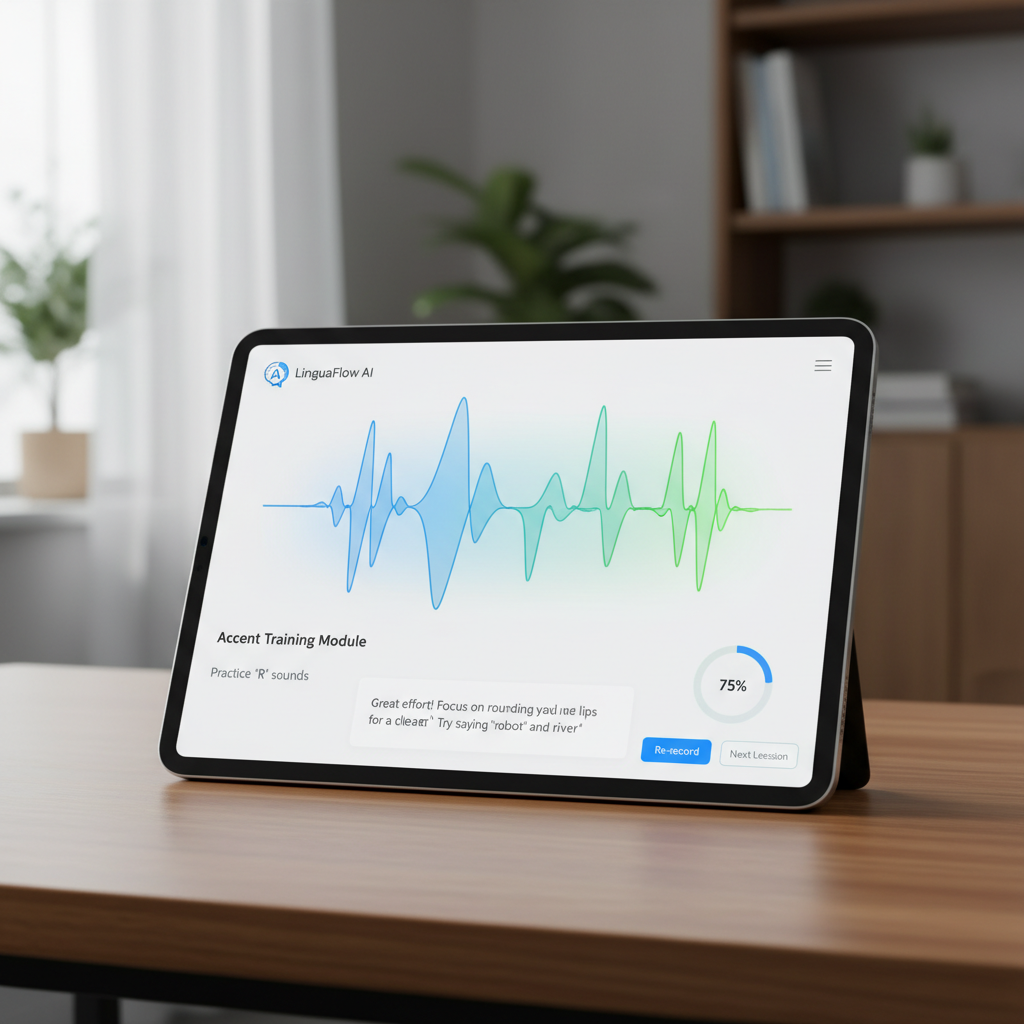
- Pronunciation Analysis: Many AI tutors come equipped with sophisticated speech recognition technology that can analyze your pronunciation, identify specific sounds or intonations that are off, and provide visual cues (like waveforms) or auditory examples to help you correct them. This immediate, objective feedback can significantly boost confidence in speaking.
- Reduced Fear of Mistakes: Practicing with an AI tutor eliminates the social anxiety associated with making errors in front of a human teacher or peers. The AI is infinitely patient, non-judgmental, and always available. This creates a safe space where learners feel comfortable experimenting and making mistakes, which is a crucial part of the learning process. The ability to fail privately and learn immediately is a huge motivator.
- Grammar and Vocabulary Checks: For written practice, AI tutors can act as advanced proofreaders, not only correcting spelling and grammar but also suggesting more natural phrasing, appropriate idioms, and alternative vocabulary to enrich expression. This continuous refinement builds confidence in written communication.
The psychological impact of instant, specific, and non-judgmental feedback cannot be overstated. It transforms errors from embarrassing failures into immediate learning opportunities, fostering a growth mindset and encouraging learners to keep pushing their boundaries.
Gamification and Engagement Strategies
Maintaining daily motivation requires more than just effective teaching; it requires engaging the learner in a way that feels less like a chore and more like an enjoyable activity. AI tutors excel in this domain by integrating sophisticated gamification and engagement strategies into their platforms:
- Streaks and Daily Goals: Many AI language apps prominently feature “streaks,” encouraging users to practice every single day to maintain a continuous record. This simple psychological trigger leverages our desire for consistency and achievement, making daily practice a habit. Setting achievable daily goals (e.g., “complete 1 lesson,” “learn 10 new words”) provides a clear target and a sense of accomplishment upon completion.
- Points, Badges, and Leaderboards: AI tutors often award points for correct answers, completed lessons, or reaching specific milestones. These points can unlock virtual badges or allow learners to compete on leaderboards with friends or a global community. This element of friendly competition and visible achievement can be a powerful motivator, tapping into our innate desire for recognition and status.
- Interactive Scenarios and Role-Playing: Beyond rote drills, AI tutors can create immersive, interactive scenarios where learners apply their language skills in simulated real-world contexts. Imagine ordering food in a virtual restaurant, navigating customs at an airport, or having a casual chat with an AI character. These engaging activities make practice relevant and exciting.
- Personalized Rewards and Celebrations: Some AI platforms personalize rewards or celebrate milestones. This could be a virtual congratulatory message, unlocking new content, or even a summary of your achievements to remind you how far you’ve come. Positive reinforcement, even from an AI, is incredibly effective in sustaining motivation.
- Spaced Repetition Systems (SRS): While not strictly gamification, SRS is a highly effective engagement strategy. AI tutors use algorithms to reintroduce vocabulary and grammar points at optimal intervals, just before you’re about to forget them. This ensures efficient memory retention and makes learning feel less like an endless struggle and more like a steady accumulation of knowledge. Seeing your mastery grow over time is inherently motivating.
- Variety in Exercises: To combat boredom, AI tutors typically offer a wide array of exercise types: multiple-choice, fill-in-the-blank, listening comprehension, speaking practice, translation, sentence construction, and more. This constant variety keeps the mind engaged and prevents monotony.
By making language learning feel like a game or an exciting challenge, AI tutors cleverly harness intrinsic motivation, turning what could be a mundane task into an addictive and rewarding daily habit.
Flexibility and Accessibility: Learning Anytime, Anywhere
The constraints of traditional language learning—fixed class schedules, geographical limitations, and often prohibitive costs—are major barriers for many aspiring polyglots. AI tutors dismantle these barriers, offering unprecedented flexibility and accessibility that directly supports consistent daily practice and motivation.
- 24/7 Availability: AI tutors are always online, always ready. Whether it’s 3 AM or 3 PM, on a weekday or a holiday, your AI language companion is available to provide a lesson or a practice session. This removes the logistical headache of scheduling human tutors or attending fixed classes, allowing learners to integrate practice seamlessly into their lives, no matter how unpredictable their schedule may be.
- Location Independence: With an internet connection, you can learn from anywhere in the world. This is particularly beneficial for individuals living in areas without access to native speakers or specialized language schools. It also means you can utilize otherwise unproductive time, such as during commutes, while waiting in line, or even during a short break at work.
- Cost-Effectiveness: While some premium AI language apps come with subscription fees, these are generally a fraction of the cost of regular sessions with a human tutor or enrollment in a traditional language course. Many platforms also offer substantial free tiers. This affordability makes high-quality language instruction accessible to a much broader audience, removing a significant financial barrier that often deters potential learners.
- Adaptability to Short Bursts of Learning: AI tutors are perfectly suited for micro-learning, allowing learners to engage in productive practice sessions that can be as short as 5-10 minutes. This “bite-sized” approach makes daily practice far more manageable and less daunting than committing to an hour-long session. These short, frequent interactions are often more effective for long-term retention than infrequent, longer sessions.
- Integration with Daily Life: By being available on smartphones, tablets, and computers, AI tutors become part of the digital ecosystem we interact with daily. This seamless integration makes it easier to form a consistent habit, as the learning tool is always within reach.
The freedom to learn on one’s own terms—whenever, wherever, and for whatever duration—is a powerful motivator. It empowers learners to take full control of their journey, making consistent daily practice not just possible, but often effortless to fit into a busy lifestyle.
Overcoming Plateaus with AI-Powered Practice
The “plateau phase” is a well-documented phenomenon in language learning, where progress seems to grind to a halt despite continued effort. This can be incredibly frustrating and is a major killer of motivation. AI tutors are particularly adept at helping learners navigate and overcome these stagnant periods through intelligent, data-driven strategies.
- Data-Driven Weakness Identification: As discussed, AI continuously collects data on a learner’s performance. It can identify subtle patterns of error that a human might miss or misinterpret. For instance, if a learner consistently makes mistakes with specific prepositions or certain grammatical tenses across various contexts, the AI will flag this as a critical area for improvement. This objective, data-backed assessment helps pinpoint the exact nature of the plateau.
- Targeted Remedial Exercises: Once a weakness is identified, the AI tutor doesn’t just point it out; it generates or selects specific exercises designed to address that particular deficiency. If the problem is with the subjunctive mood, the AI will provide a focused series of drills, explanations, and contextual examples until mastery is demonstrated. This surgical approach ensures that practice is maximally efficient and directly contributes to breaking through the plateau.
- Spaced Repetition Reinforcement: Plateaus often occur because learners forget previously learned material, requiring them to constantly re-learn. AI-powered Spaced Repetition Systems (SRS) are crucial here. They schedule reviews of vocabulary and grammar points at optimal intervals, just before the learner is likely to forget them. This continuous reinforcement ensures that knowledge is consolidated and maintained, preventing regression and allowing learners to build upon a solid foundation.
- Introduction of Varied Contexts: Sometimes, a plateau isn’t about not knowing a rule, but about not being able to apply it flexibly in different contexts. AI tutors can present the same grammatical structure or vocabulary item in a multitude of sentences, scenarios, and types of exercises, forcing the learner to apply their knowledge creatively and adaptively. This broadens understanding and strengthens retention beyond rote memorization.
- Tracking and Visualization of Progress: AI platforms often provide clear visual representations of a learner’s progress, highlighting areas of improvement and persistent challenges. Seeing charts and graphs that demonstrate growth in specific skills (e.g., vocabulary size, listening comprehension accuracy, speaking fluency) can be incredibly motivating during a plateau, offering tangible proof that progress is indeed being made, albeit perhaps in less obvious ways.
By intelligently diagnosing issues, providing hyper-targeted solutions, and ensuring efficient knowledge retention, AI tutors equip learners with the tools to systematically dismantle plateaus, transforming periods of frustration into opportunities for deep, focused learning and renewed motivation.
The Human Touch (Supplementing, Not Replacing)
While AI tutors offer an incredible array of benefits for consistent practice and motivation, it is vital to approach them with a balanced perspective. They are powerful tools and companions, but they are not (yet) a complete replacement for human interaction in language learning. The most effective strategy often involves leveraging AI as a robust supplement to traditional methods and real-world engagement.
Here’s why the human touch remains indispensable and how AI tutors can best complement it:
- Nuance and Cultural Understanding: Human teachers can convey cultural nuances, idiomatic expressions, and subtle social cues that AI currently struggles to fully grasp and teach. A native speaker can share personal anecdotes, explain humor, and provide context that goes beyond linguistic rules.
- Emotional Connection and Empathy: A human tutor can offer empathy, encouragement, and understanding in ways that an AI cannot. They can read body language, detect frustration, and adapt their approach based on emotional intelligence, creating a supportive bond that is highly motivating for many learners.
- Complex Conversational Flow: While AI chatbots are becoming increasingly sophisticated, true free-flowing, unpredictable human conversation still presents a challenge. AI might struggle with abstract discussions, sarcasm, or understanding subtle implications in complex dialogues.
- Real-World Application: Ultimately, language is for communication with other humans. Practicing with native speakers, participating in language exchange groups, or immersing oneself in a target language environment is crucial for developing fluency and confidence in real-world scenarios.
- Ethical and Philosophical Discussions: For advanced learners, engaging in deep, philosophical, or ethical discussions requires a human’s capacity for complex reasoning, abstract thought, and nuanced understanding of human experience.
How AI complements human interaction:
- Preparation for Human Interaction: AI tutors can build a strong foundation in grammar, vocabulary, and basic conversational patterns, making learners more confident and prepared for actual human interactions.
- Bridging the Gap Between Sessions: AI provides consistent practice opportunities between human tutor sessions, ensuring that learning momentum is maintained and skills don’t atrophy.
- Targeted Practice for Weaknesses: After a human tutor identifies a specific weakness (e.g., a particular verb tense), the AI can be used for intensive, targeted practice to solidify understanding before the next human session.
- Supplementing Immersion: For those not in an immersive environment, AI tutors can provide a daily dose of language interaction that simulates parts of the immersion experience.
In conclusion, AI tutors are invaluable for their consistent availability, personalization, and immediate feedback, making them exceptional tools for daily practice and maintaining motivation. However, viewing them as complementary to human interaction and real-world usage unlocks the most comprehensive and effective language learning journey. The synergy between AI’s efficiency and a human’s nuance is truly powerful.
Comparison Tables
Table 1: Traditional Human Tutor vs. AI Language Tutor
| Feature | Traditional Human Tutor | AI Language Tutor |
|---|---|---|
| Cost per Session | High (often $20-$100+ per hour) | Low to Moderate (subscription models, often $5-$30 per month, or free tiers) |
| Availability | Limited by tutor’s schedule, geographical constraints | 24/7, accessible from anywhere with internet |
| Personalization | Highly personalized if good tutor, but limited by tutor’s bandwidth | Hyper-personalized, adaptive algorithms based on continuous data |
| Feedback | Qualitative, nuanced, sometimes delayed; emotionally intelligent | Instant, objective, specific, non-judgmental; lacks emotional context |
| Motivation Strategy | Human connection, encouragement, structured lessons, accountability | Gamification, streaks, instant rewards, adaptive challenge, progress tracking |
| Scope of Interaction | Deep cultural insights, complex human conversation, emotional support | Repetitive drills, conversational practice, targeted grammar/vocab, pronunciation analysis |
| Overcoming Plateaus | Tutor’s experience and diagnostic skill; can feel subjective | Data-driven identification of weaknesses, targeted remedial exercises |
| Consistency of Practice | Requires active scheduling, prone to cancellations | Facilitates daily micro-learning, always available for quick sessions |
Table 2: Key AI Tutor Features and Their Motivational Impact
| AI Tutor Feature | Core Functionality | Direct Motivational Impact |
|---|---|---|
| Adaptive Learning Algorithms | Adjusts content, pace, and difficulty based on learner’s performance. | Prevents boredom (too easy) or frustration (too hard); keeps learners in the optimal learning zone. |
| Instant Feedback & Correction | Provides immediate, specific feedback on grammar, vocabulary, pronunciation. | Reduces fear of mistakes; fosters a growth mindset; makes learning feel efficient and productive. |
| Conversational AI / Chatbots | Simulates real-life conversations, role-playing, and interactive dialogues. | Boosts confidence in speaking; makes practice engaging and relevant; reduces social anxiety of talking to humans. |
| Gamification Elements | Incorporates points, streaks, badges, leaderboards, daily goals. | Turns learning into an enjoyable challenge; leverages desire for achievement and competition; encourages daily habit formation. |
| Spaced Repetition Systems (SRS) | Schedules reviews of learned material at scientifically optimal intervals. | Ensures efficient long-term memory retention; makes progress feel continuous and less like re-learning forgotten material. |
| Speech Recognition & Analysis | Analyzes spoken input, compares to native pronunciation, offers specific guidance. | Provides objective guidance for pronunciation improvement; builds confidence in speaking clearly and accurately. |
| Progress Tracking & Analytics | Visualizes learning progress, identifies strengths and weaknesses over time. | Offers tangible proof of progress, especially during plateaus; validates effort and encourages continued effort. |
Practical Examples: Real-World Use Cases and Scenarios
To truly appreciate the power of AI tutors, let’s consider a few real-world scenarios where they make a tangible difference in a learner’s motivation and consistency:
Case Study 1: The Busy Professional Mastering Japanese on the Go
Meet Sarah, a marketing manager with a demanding job and two young children. She dreams of being fluent in Japanese for an upcoming business trip and personal interest but struggles to find consistent time for traditional lessons.
- The Challenge: Sarah’s schedule is erratic. Evening classes are impossible, and finding a human tutor to fit her constantly shifting availability is a non-starter. She tried learning with textbooks, but found it lonely and hard to stay motivated without feedback.
- AI Tutor Solution: Sarah downloads an AI-powered Japanese learning app. She uses her 20-minute train commute each morning for quick lessons focusing on vocabulary and grammar. During her lunch break, she spends another 15 minutes engaging with the AI chatbot, role-playing scenarios like ordering food or asking for directions in Tokyo. In the evenings, after putting her kids to bed, she does a quick 10-minute pronunciation drill using the app’s speech recognition.
- Motivational Impact: The AI tutor’s 24/7 availability allows her to integrate learning into her existing routine without disrupting it. The app’s streak counter motivates her to practice daily, even if it’s just for 10 minutes. Instant feedback on her pronunciation and grammar boosts her confidence, and the gamified elements keep her engaged, turning otherwise tedious commutes into productive learning sessions. She feels a sense of accomplishment each day, fostering consistent practice.
Case Study 2: Overcoming Pronunciation Anxiety in French
David is an intermediate French learner who understands grammar well and has a decent vocabulary, but he is incredibly self-conscious about his pronunciation. He avoids speaking in class and finds himself stuck in a loop of passive learning.
- The Challenge: David is afraid of sounding “silly” or being corrected by his human teacher. This anxiety prevents him from practicing speaking, which is essential for improving pronunciation. He knows the rules but struggles to apply them orally.
- AI Tutor Solution: David starts using an AI tutor specifically designed with advanced speech analysis for French. The AI breaks down his spoken words syllable by syllable, highlighting exact sounds that need correction. It provides phonetic spellings and demonstrates correct native pronunciation, allowing him to listen and repeat countless times in private. The AI also offers specific exercises for troublesome sounds like the French ‘r’ or nasal vowels.
- Motivational Impact: The non-judgmental environment of the AI tutor allows David to practice speaking without fear. He can make mistakes, immediately see where he went wrong, and correct himself repeatedly until he gets it right. This private, iterative practice builds his confidence dramatically. He begins to enjoy speaking and, armed with improved pronunciation, feels more comfortable participating in real conversations with his human tutor, ultimately breaking through his speaking plateau.
Case Study 3: The Beginner Building a Foundation in Korean
Maria is a complete beginner in Korean with no prior language learning experience. She’s excited but overwhelmed by the new alphabet (Hangul) and drastically different grammar structure.
- The Challenge: The initial learning curve for Korean is steep. Maria finds it difficult to remember new characters, vocabulary, and sentence structures without constant review and reinforcement. She worries about getting lost and giving up.
- AI Tutor Solution: Maria begins her Korean journey with an AI tutor that features a structured, gamified curriculum. The AI introduces Hangul progressively, using interactive quizzes and visual aids. It uses a spaced repetition system to ensure she reviews new characters and vocabulary just as she’s about to forget them. Each lesson is short, engaging, and ends with a small reward (points, a virtual “star”). The AI also provides simple conversational drills to get her speaking basic phrases from day one.
- Motivational Impact: The structured, step-by-step approach prevents Maria from feeling overwhelmed. The gamification (streaks, points, badges) makes her daily practice feel like a fun game, encouraging her to “win” each day. The spaced repetition ensures she remembers what she’s learned, giving her a tangible sense of progress rather than constantly feeling like she’s starting over. She develops a strong foundation and maintains her initial enthusiasm, consistently practicing every day because it feels rewarding and manageable.
These examples illustrate how AI tutors cater to diverse needs, leveraging their unique capabilities to address specific learning obstacles and foster a consistent, motivated approach to language acquisition.
Frequently Asked Questions
Q: How accurate are AI tutors in correcting mistakes?
A: The accuracy of AI tutors has significantly improved with advancements in Natural Language Processing (NLP) and machine learning. For grammar, spelling, and vocabulary, they are generally highly accurate. For pronunciation, advanced speech recognition can detect subtle nuances and provide precise feedback, often comparable to or even more detailed than a human ear. However, they may sometimes miss very subtle contextual nuances or complex idiomatic errors that a native human speaker would instantly pick up.
Q: Can AI tutors replace human teachers entirely?
A: While AI tutors are incredibly powerful and effective tools for consistent practice, personalization, and overcoming many learning challenges, they are not currently designed to fully replace human teachers. Human teachers offer irreplaceable benefits such as deep cultural insights, emotional intelligence, truly free-form and nuanced conversation, and the ability to adapt to complex interpersonal dynamics. AI tutors are best viewed as highly effective supplements that greatly enhance and accelerate the learning process, making learners better prepared for real human interaction.
Q: Are AI tutors only effective for beginner language learners?
A: Not at all. While AI tutors are excellent for beginners in building foundational grammar and vocabulary, many advanced platforms offer features tailored for intermediate and advanced learners. These include advanced conversational AI for complex discussions, targeted exercises for nuanced grammar points, sophisticated writing analysis tools, and access to authentic materials like news articles or podcasts with integrated AI support. AI can help advanced learners refine specific skills, overcome plateaus, and maintain fluency through consistent, challenging practice.
Q: What kind of technology do I need to use an AI tutor?
A: Most AI tutors are accessible through standard smartphones, tablets, or computers with an internet connection. Many platforms offer dedicated mobile apps. For speaking practice, you’ll need a device with a working microphone (most smartphones and laptops have one built-in). No specialized or expensive equipment is usually required, making them highly accessible to most people.
Q: How do AI tutors keep me motivated long-term?
A: AI tutors employ several sophisticated strategies for long-term motivation. These include: 1) Personalization, ensuring the content is always relevant and at the right difficulty level; 2) Gamification, with streaks, points, and badges to make learning feel like a fun challenge; 3) Instant, non-judgmental feedback that encourages continuous improvement; 4) Progress tracking, allowing you to visualize your achievements; and 5) Flexibility, enabling you to practice anytime, anywhere, fitting learning seamlessly into your daily life and preventing burnout.
Q: Is my personal data safe with AI language learning apps?
A: Reputable AI language learning platforms adhere to strict data privacy policies. They typically collect data on your learning progress to personalize your experience and improve their algorithms. It is crucial to choose well-known apps and always review their privacy policy to understand how your data is collected, stored, and used. Look for apps that comply with regulations like GDPR or CCPA.
Q: Can AI tutors help with learning less common languages?
A: Yes, AI tutors can be particularly beneficial for less common languages. While human tutors for niche languages can be expensive and hard to find, AI platforms can often support a wider range of languages. Their algorithms are trained on vast text corpora and can adapt to different linguistic structures. This democratizes access to learning resources for languages that might otherwise be inaccessible to many learners.
Q: What if I feel the AI tutor is not challenging enough or too challenging?
A: Most advanced AI tutors have built-in adaptive learning algorithms designed to adjust difficulty. If you feel it’s too easy, try to demonstrate mastery more quickly, and the AI should escalate the challenge. If it’s too difficult, spend more time on foundational concepts; the AI will detect your struggle and provide more remedial exercises. Some platforms also offer manual difficulty settings, allowing you to explicitly adjust the level of challenge to match your comfort zone.
Q: How do AI tutors handle different accents and dialects?
A: Modern AI speech recognition systems are increasingly robust in handling a variety of accents and dialects, especially for widely spoken languages. They are trained on diverse datasets of spoken language. However, very strong or non-native accents might sometimes present a challenge. For generating speech, most AI tutors offer a standard native accent, and some advanced ones allow you to choose between different regional accents (e.g., Castilian Spanish vs. Latin American Spanish).
Q: Are there any limitations to AI conversational practice?
A: While AI conversational practice is excellent for building confidence and practicing common scenarios, it does have limitations. AI chatbots may not fully grasp sarcasm, subtle humor, complex human emotions, or engage in truly open-ended, spontaneous discussions that can veer off in unexpected directions. They excel at structured role-play and drilling specific phrases but still lack the full depth and unpredictability of genuine human interaction. Therefore, it’s best used as a preparation for, rather than a replacement for, conversations with native speakers.
Key Takeaways
- Motivation is the Cornerstone: Consistent daily practice is paramount for language mastery, and maintaining motivation is the biggest challenge.
- AI Tutors are Motivation Catalysts: They leverage advanced AI to keep learners engaged, prevent burnout, and foster a consistent learning habit.
- Personalization is Key: AI adapts to individual learning styles, paces, and weaknesses, ensuring efficient and relevant practice.
- Instant Feedback Builds Confidence: Real-time, non-judgmental corrections reduce fear of mistakes and accelerate learning.
- Gamification Drives Engagement: Streaks, points, and interactive scenarios transform learning into an enjoyable and rewarding activity.
- Flexibility Promotes Consistency: 24/7 availability and accessibility on various devices allow seamless integration into daily life.
- AI Tackles Plateaus Systematically: Data-driven diagnostics and targeted exercises help learners break through periods of stagnation.
- AI Supplements Human Interaction: While powerful, AI tutors are best used in conjunction with human teachers and real-world practice for comprehensive language acquisition.
- Accessibility for All: AI tools make high-quality language learning more affordable and available to a global audience.
Conclusion
The journey to mastering a new language is a testament to perseverance and consistent effort. For many, the initial excitement inevitably wanes, leading to abandoned goals and unrealized potential. However, the advent of intelligent AI tutors marks a significant turning point, offering a powerful, accessible, and deeply personal solution to the age-old problem of maintaining motivation and ensuring daily practice.
As we have explored, AI tutors are not simply digital textbooks; they are dynamic learning companions capable of understanding individual needs, providing immediate and precise feedback, and transforming the often-arduous process of language learning into an engaging and rewarding experience. From leveraging gamification to creating hyper-personalized learning paths, and from providing instant pronunciation analysis to strategically overcoming plateaus, AI is reshaping what consistent language practice looks like.
While the human element—the rich cultural insights, the nuanced conversations, and the emotional connection offered by human teachers—remains invaluable, AI tutors brilliantly fill the gaps, providing the consistent, judgment-free, and adaptive practice that is essential for true mastery. They empower learners to integrate language practice into the rhythm of their daily lives, turning idle moments into productive learning opportunities and making the dream of fluency a tangible, achievable reality.
Embracing AI tutors is not just about adopting new technology; it is about embracing a smarter, more sustainable, and ultimately more successful approach to language acquisition. So, if you’ve ever struggled to stay motivated or maintain consistency in your language learning journey, now is the time to explore the incredible potential that intelligent AI tutors offer. Your path to linguistic mastery might just be a click away, making daily practice not just a goal, but a truly enjoyable and consistent habit.














































































Leave a Reply