


Smart Home Security: How AI Protects Your Sanctuary
In an increasingly complex world, the concept of home security has evolved dramatically. Gone are the days when a simple alarm system and a few locks were considered adequate. Today, our homes are not just structures; they are our sanctuaries, repositories of our most valuable possessions, and safe havens for our loved ones. Protecting these spaces demands a level of sophistication that traditional security methods simply cannot provide. This is where Proactive AI Home Defense steps in, ushering in a new era where threats are not just reacted to, but actively unmasked and neutralized before they ever have a chance to materialize.
Imagine a security system that doesn’t just alert you to an intruder once they’ve broken in, but one that can identify suspicious behavior hours before an attempted entry. Picture a system that doesn’t merely detect smoke after a fire has started, but one that can predict appliance malfunctions or electrical anomalies that could lead to a blaze. This is the promise of proactive AI home defense: a vigilant, intelligent guardian leveraging the power of Artificial Intelligence to transform your home into an impregnable fortress of anticipation and prevention. This comprehensive guide will delve into the intricate workings of this revolutionary approach, exploring the technologies, benefits, and future implications of making your home truly intelligent and inherently secure.
The Paradigm Shift: From Reactive to Proactive Security
Historically, home security has been largely reactive. A sensor trips, an alarm blares, and then you or the authorities respond. While effective to a degree, this approach inherently means that an incident has already occurred or is in the immediate process of occurring. Whether it’s a break-in, a flood, or a fire, the damage is often underway by the time the traditional system springs into action. This reactive stance leaves a critical window of vulnerability that proactive AI systems aim to eliminate.
Proactive AI security, conversely, operates on the principle of prediction and prevention. It leverages advanced algorithms, machine learning models, and a network of intelligent sensors to constantly monitor, analyze, and interpret patterns of activity and environmental conditions. Instead of waiting for an event to happen, it actively seeks out anomalies, deviations from established norms, and subtle indicators that might signal an impending threat. This fundamental shift allows for interventions to be initiated much earlier, often deterring potential threats before any harm can be done. For instance, an AI might observe a pattern of an unfamiliar vehicle repeatedly driving by your home, or a person loitering suspiciously at your property line. While a traditional system would do nothing until a physical breach, a proactive AI system can identify this behavior as potentially malicious, escalate its monitoring, and even trigger deterrents like smart lighting or audible warnings, effectively unmasking the threat long before it escalates to an intrusion attempt.
This evolution from reactive to proactive isn’t just about speed of response; it’s about fundamentally changing the security posture of your home. It transforms your security system from a simple alarm into a highly sophisticated, continuously learning intelligent guardian. This guardian isn’t just reacting to the present; it’s constantly analyzing the past to predict and shape a safer future for your home.
The Brains Behind the Brawn: AI and Machine Learning in Home Defense
At the heart of any proactive AI home defense system lies a sophisticated engine powered by Artificial Intelligence and Machine Learning. These technologies are what enable the system to move beyond simple rule-based alerts and into complex pattern recognition, anomaly detection, and predictive analytics. It’s not just about if a door is open; it’s about why it’s open, and what patterns preceded that event.
Computer Vision and Deep Learning for Enhanced Surveillance
One of the most critical applications of AI in home defense is in the realm of computer vision. High-definition cameras, equipped with AI algorithms, are no longer just recording devices. They become intelligent observers capable of:
- Object Recognition: Distinguishing between a person, a pet, a vehicle, or a falling leaf. This drastically reduces false alarms triggered by innocent movements.
- Facial Recognition (with privacy considerations): Identifying known individuals (family, friends, regular service providers) versus unknown individuals. Some systems can even detect specific emotional states or suspicious masks.
- Activity and Behavioral Analysis: AI can learn typical patterns of movement around your property. It can identify loitering, unusual approaching patterns, or attempts to obscure camera views. For example, if a person repeatedly walks circles around your house or peers into windows for an extended period, the AI flags this as suspicious.
- Anomaly Detection: Recognizing deviations from normal routines. If your usual mail delivery happens at 2 PM, but a vehicle resembling a delivery truck is at your door at 3 AM, the AI will note this unusual activity.
Deep learning, a subset of machine learning, is particularly powerful here. Neural networks can be trained on vast datasets of images and videos to accurately identify and classify objects and behaviors, even in varying lighting conditions or adverse weather. This continuous learning process means the system becomes smarter and more accurate over time, refining its understanding of what constitutes a genuine threat versus everyday occurrences.
Machine Learning for Environmental and Pattern Analysis
Beyond visual data, machine learning algorithms analyze data from various other sensors to build a comprehensive risk profile:
- Environmental Sensor Data: AI analyzes readings from smoke detectors, CO detectors, water leak sensors, and temperature gauges. It can correlate unusual temperature spikes with specific appliance usage patterns or detect subtle changes in air quality that might precede a fire.
- Acoustic Analysis: Microphones integrated into the system can use AI to distinguish between normal household sounds (a dog barking, children playing) and suspicious sounds (glass breaking, unusual footsteps, loud voices). Advanced systems can even detect the specific frequency of glass shattering or the distinct sound of a door being forced open, triggering an alert before a full breach.
- Network Traffic Analysis: For smart homes heavily reliant on IoT devices, AI can monitor network traffic for unusual activity, potential cyberattacks, or unauthorized access attempts, protecting your digital perimeter.
- User Behavior Patterns: AI learns your family’s routines: when people usually leave and return, when lights are typically on or off, door usage patterns. Any significant deviation from these learned patterns can be flagged for review, indicating a potential issue like an unattended child leaving the house at an odd hour, or someone entering using an unauthorized entry method.
The combination of these AI-driven analyses creates a multi-layered defense that is far more resilient and intelligent than any traditional system. It’s about recognizing the subtle precursors, the “tells” that betray an impending threat, and acting upon them with swift, automated precision.
Advanced Sensory Networks: The Eyes and Ears of Your Smart Home
The intelligence of a proactive AI defense system is only as good as the data it receives. This data is collected through a sophisticated network of advanced sensors, each playing a crucial role in painting a complete picture of your home’s environment and external perimeter. These are not merely ON/OFF switches; they are sophisticated data collectors, constantly feeding information to the central AI for analysis.
Visual and Motion Sensors: Beyond Basic Detection
- High-Resolution AI Cameras: These are the primary visual sensors, equipped with the computer vision capabilities discussed earlier. They capture footage in 4K or higher, often with advanced low-light performance, infrared capabilities for night vision, and wide-angle lenses to cover larger areas. Crucially, they integrate directly with AI for real-time analysis, not just recording.
- Thermal Imaging Cameras: Unlike standard cameras, thermal cameras detect heat signatures. They are invaluable for detecting hidden intruders in foliage, through smoke, or in complete darkness where visible light cameras might struggle. They can also detect abnormal heat patterns indoors, signaling potential electrical fires or overheating appliances.
- Lidar and Radar Sensors: These sensors provide highly accurate depth mapping and motion detection, especially useful for outdoor perimeter defense. Lidar (Light Detection and Ranging) uses pulsed laser light to measure distances, creating detailed 3D maps of an environment and detecting precise movements. Radar can penetrate adverse weather conditions like fog or heavy rain, making it excellent for all-weather outdoor monitoring and detecting movements that might be obscured from cameras.
- PIR (Passive Infrared) and Microwave Motion Sensors: While traditional, modern versions are enhanced with AI. AI helps them differentiate between human and animal motion, and analyze the speed and direction of movement, reducing false alarms from pets or swaying branches.
Acoustic and Environmental Sensors: Listening and Feeling for Danger
- AI-Powered Microphones: These are not just for listening to voice commands. Integrated into cameras or standalone units, they use AI to identify specific acoustic signatures of threats: glass breaking, unusual bangs, screams, specific vehicle sounds, or even the distinct sound of a drone approaching.
- Environmental Sensors (Smoke, CO, Gas, Water): Modern environmental sensors are connected and smart. They don’t just alarm; they provide granular data. A smart smoke detector can report not just smoke, but its density and rate of increase, allowing AI to estimate the severity of a fire. Water leak sensors can pinpoint the exact location of a leak. Natural gas and carbon monoxide detectors monitor ambient levels and alert if they begin to rise, not just when critical thresholds are reached.
- Vibration and Contact Sensors: Placed on doors, windows, and even walls, these sensors detect vibrations indicative of forced entry attempts, drilling, or impacts, often before an actual breach occurs. AI helps distinguish between a door being slammed accidentally and an intentional forceful entry.
Specialized and Integrated Sensors: Expanding the Scope of Defense
- Magnetic Field Sensors: Detect changes in magnetic fields, useful for detecting tampering with specific devices or the presence of certain metals.
- Barometric Pressure Sensors: Can detect subtle changes in air pressure that might indicate a door or window being opened even slightly, especially useful for sealed environments.
- Air Quality Sensors: Beyond just smoke and CO, these can detect volatile organic compounds (VOCs), allergens, or other harmful pollutants, contributing to overall home safety and health.
- Smart Doorbells and Locks: These are integral parts of the sensor network, offering visual identification, two-way communication, and remote access control, all integrated with the AI’s threat analysis.
The seamless integration of these diverse sensors creates a robust, multi-modal data stream that feeds the AI’s analytical engine. Each sensor acts as a piece of a larger puzzle, providing a unique perspective that, when combined by AI, creates an incredibly detailed and predictive understanding of the home’s security posture. This redundancy and diversity of data are key to minimizing blind spots and enhancing detection accuracy.
Predictive Analytics: Anticipating Threats Before They Materialize
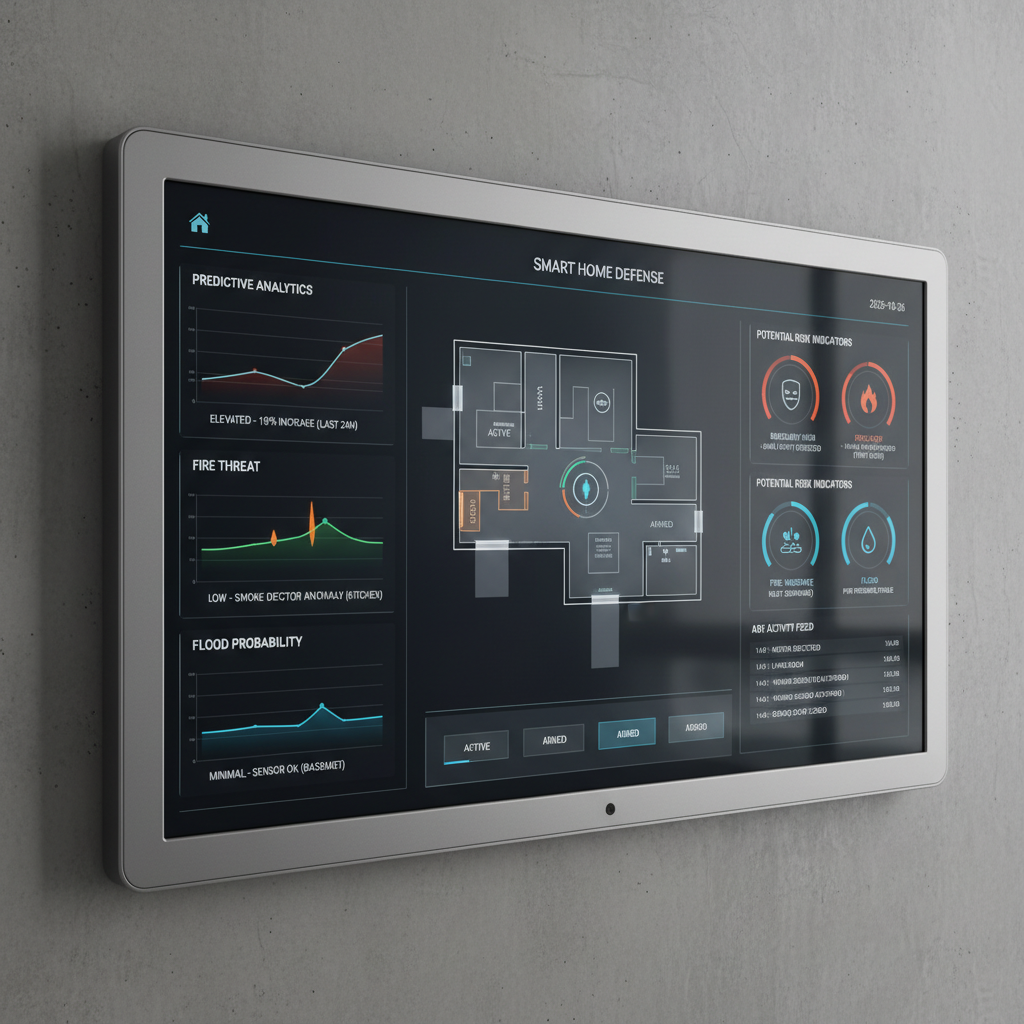
The true magic of proactive AI home defense lies in its ability to harness predictive analytics. This is where the raw data from the extensive sensor network is transformed into actionable intelligence, allowing the system to anticipate potential threats rather than merely reacting to them. Predictive analytics leverages machine learning algorithms to identify patterns, forecast probabilities, and alert users to risks that are still in their nascent stages.
Behavioral Pattern Recognition
AI systems continuously observe and learn the “normal” patterns of your home and its surroundings. This includes:
- Occupancy Patterns: When family members typically leave and return, which doors are used most often, and during what hours.
- Vehicle Traffic: Usual flow of cars on your street, regular delivery schedules, and common visitor vehicle types.
- Environmental Norms: Typical temperature fluctuations, ambient noise levels, and expected weather conditions.
- Device Usage: How and when smart appliances and lighting are typically used.
By establishing these baselines, the AI can then immediately flag any deviation as an anomaly. If a vehicle that is not recognized parks near your home for an unusually long duration, or if a person is observed repeatedly walking past your property at odd hours, the system recognizes this as an aberrant behavior pattern. It can then cross-reference this with other data points, such as time of day, weather conditions, and recent local crime reports, to assess the level of potential threat.
Anomaly Detection and Risk Scoring
Once an anomaly is detected, the AI doesn’t jump to conclusions. Instead, it assigns a risk score based on multiple factors:
- Severity of Deviation: How much does the observed event differ from the norm? A slight flicker in a light bulb is low risk; a sustained power surge is high risk.
- Contextual Relevance: Is the anomaly isolated, or are there multiple correlating events? One unusual car might be innocent; an unusual car combined with a person loitering and attempting to obscure a camera creates a higher risk profile.
- Historical Data: Has similar anomalous behavior in the past led to actual incidents? The AI learns from past events, both false positives and genuine threats, to refine its risk assessment.
- External Data Integration: Some advanced systems can integrate with external data sources like local police crime maps, weather alerts, or even social media chatter (if permission is granted) to add further context to an anomaly. For example, a sudden increase in local break-ins reported can elevate the risk score of an observed loiterer.
Based on this dynamic risk scoring, the system determines whether to issue a low-level alert, escalate to a full alarm, or initiate automated deterrents. This layered approach prevents unnecessary panic while ensuring timely action when a genuine threat emerges.
Predicting Environmental Hazards
Predictive analytics isn’t solely focused on human intruders. It extends its capabilities to environmental risks as well:
- Electrical Fire Prediction: By monitoring the power consumption and temperature of smart outlets and appliances, AI can detect subtle electrical anomalies, overheating components, or unusual power draws that could precede an electrical fire.
- Water Damage Forewarning: Combining data from smart water meters, leak sensors, and even historical weather data, AI can predict areas prone to leaks or potential flooding during heavy rains or pipe bursts, alerting homeowners to take preventative measures.
- Air Quality Alerts: AI can analyze trends in air pollutant levels and cross-reference with external data (e.g., local industrial activity, pollen counts) to issue warnings about deteriorating air quality, suggesting air purification or ventilation actions.
By constantly analyzing vast amounts of real-time and historical data, proactive AI home defense systems move beyond simple detection to true prediction. They empower homeowners with the knowledge and lead time to mitigate threats effectively, often before any damage is done, embodying the essence of genuine security.
Intelligent Automation and Rapid Response Protocols
Detecting and predicting threats is only half the battle; the other half is responding effectively and swiftly. Proactive AI home defense systems excel here through intelligent automation and meticulously designed rapid response protocols. These systems don’t just send an alert; they orchestrate a symphony of automated actions designed to deter, mitigate, and communicate.
Automated Deterrence: Making Your Home an Unattractive Target
Upon detecting a high-risk anomaly, the AI can trigger a series of non-lethal, automated deterrents aimed at making your home seem like too much trouble for a potential intruder:
- Dynamic Lighting Control: Smart lights can suddenly flash, change colors, or illuminate specific areas where suspicious activity is detected, creating the impression of active occupancy or observation. For example, if someone is loitering near your back gate, the floodlights in that area might suddenly blast on at full brightness.
- Auditory Warnings: Integrated speakers can emit loud, attention-grabbing sounds – not just a generic alarm, but potentially pre-recorded messages like “You are being recorded,” a dog barking, or even simply loud music, designed to startle and deter.
- Smart Blinds and Shades: If an intruder is peering into windows, AI can automatically lower smart blinds or close drapes, obscuring visibility and making the target less appealing.
- Automated Sprinklers: In outdoor perimeter defense, smart irrigation systems could be activated in a targeted zone, soaking an unwanted presence.
These actions are often taken before an actual breach, based on predictive analysis, and are designed to make the intruder believe they have been spotted and that the home is not an easy target. This proactive deterrence is incredibly effective in preventing incidents from escalating.
Emergency Protocols and Communication
When a threat is confirmed or reaches a critical risk score, the AI system initiates comprehensive emergency protocols:
- Instant Notifications: Homeowners receive immediate, detailed notifications via multiple channels – push notifications on smartphones, emails, SMS, and even smart speaker announcements – specifying the nature and location of the threat. These notifications often include live video feeds or snapshots from relevant cameras.
- Direct Emergency Services Contact: Many systems offer professional monitoring services, where human operators verify the threat using the AI data and then directly dispatch police, fire, or medical services with crucial, real-time information. Increasingly, AI is paving the way for direct automated dispatch to emergency services, cutting down response times significantly.
- Two-Way Communication: Integrated smart doorbells and cameras allow homeowners (or monitoring centers) to communicate directly with individuals at the property, whether it’s to confirm identity or verbally warn off an intruder.
- Safe Mode Activation: In scenarios like a confirmed fire, the AI can automatically unlock smart doors for emergency access (if safe to do so), shut off gas lines, turn on exhaust fans, and illuminate escape routes, helping both occupants and first responders. For an intrusion, it might activate interior locks, creating safe zones within the home.
Integration with Smart Home Ecosystems
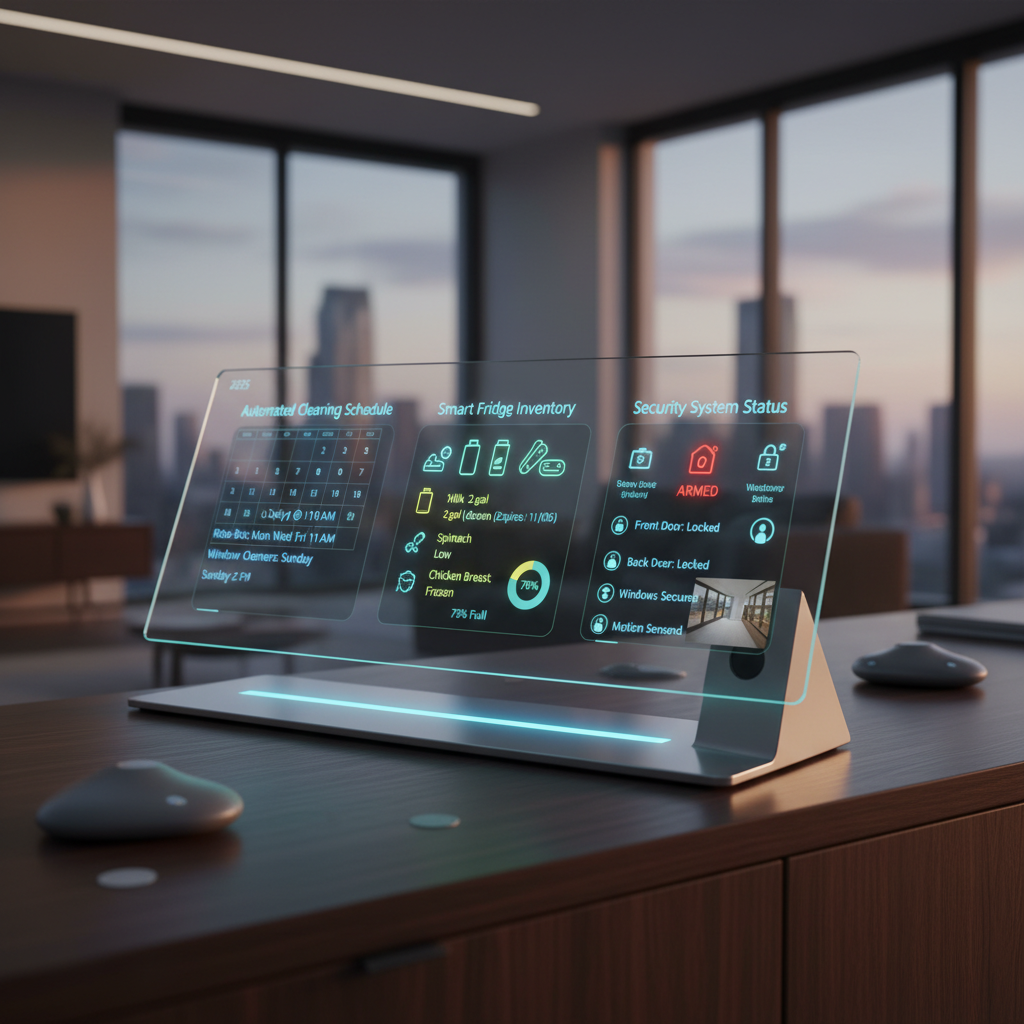
The true power of intelligent automation is amplified by its seamless integration with the broader smart home ecosystem. AI security isn’t an isolated silo; it’s a central nervous system:
If a water leak is detected:
- The AI identifies the leak’s location.
- It automatically shuts off the main water supply to prevent further damage.
- It alerts the homeowner and potentially a plumbing service.
- Smart lights in the affected area might turn on to help locate the source.
This level of interconnected intelligence means that your security system isn’t just a guard; it’s a comprehensive manager for your home’s safety and well-being, capable of intricate, multi-faceted responses to protect your sanctuary.
Beyond Burglary: Comprehensive Threat Detection
While deterring intruders is a primary function, proactive AI home defense extends its protective umbrella far beyond just burglary prevention. It offers a holistic approach to home safety, addressing a myriad of potential threats that can impact your family and property. This comprehensive scope is a key differentiator from traditional security systems.
Fire and Environmental Hazards: Early Warning and Mitigation
- Advanced Fire Prevention: As discussed, AI goes beyond smoke detection. It monitors electrical currents, appliance temperatures, and unusual heat signatures. It can identify failing electronics or overloaded circuits before they ignite, alerting you to unplug devices or inspect wiring. In case of smoke, it can pinpoint the source, helping firefighters.
- Carbon Monoxide and Gas Leak Detection: Smart sensors continuously monitor for CO and natural gas. AI tracks concentration trends, identifying gradual buildups that might not trigger a conventional alarm but indicate a slow leak. It can also automatically shut off smart gas valves.
- Water Damage Prevention: Leak sensors, integrated with smart water meters and AI, can detect minor drips or burst pipes, immediately shutting off the main water supply to prevent extensive flooding. AI can even predict potential pipe bursts in freezing conditions based on external temperature data and pipe insulation status.
- Air Quality Monitoring: Advanced systems include sensors for volatile organic compounds (VOCs), particulate matter (PM2.5), and allergens. AI analyzes these levels, alerts residents to poor air quality, and can activate smart purifiers or ventilation systems.
Personal Safety and Health Emergencies
- Elderly and Vulnerable Resident Monitoring: AI-powered cameras and passive infrared sensors can monitor activity levels without invasive constant surveillance. If unusual inactivity is detected for a prolonged period, or if a fall is detected (using skeletal tracking or specific motion patterns), the system can alert family members or emergency contacts. This offers peace of mind for caregivers without compromising privacy significantly.
- Child Safety: Geofencing can alert parents if a child leaves designated safe zones. AI can also monitor for unusual sounds or activity in a child’s room (e.g., prolonged crying, entry by unknown individuals) and notify parents.
- Medical Emergency Response: Integration with wearable health devices or smart buttons can trigger AI-driven emergency protocols, dispatching help and providing relevant medical information to first responders.
Package Theft and Property Monitoring
- Smart Package Protection: AI-powered doorbells and cameras can detect package deliveries. If a package is left for an extended period, or if someone approaches the package after delivery who is not recognized as the homeowner, the AI can trigger deterrents (lights, audio warnings) and notify the homeowner, sending a live feed.
- Vandalism and Property Damage: Outdoor cameras with AI can detect spray painting, object throwing, or other acts of vandalism in progress, alerting authorities and capturing evidence.
Cybersecurity for the Smart Home
- IoT Device Security: As smart homes become more interconnected, they also become potential targets for cyberattacks. AI can monitor network traffic for suspicious activity, unauthorized access attempts to smart devices, or unusual data transmissions, safeguarding your digital privacy and preventing hackers from compromising your physical security systems.
By extending its intelligent vigilance across such a broad spectrum of threats, proactive AI home defense truly provides a comprehensive shield for your sanctuary. It transforms your home into an intelligent entity that not only guards against the obvious but also anticipates the subtle and unforeseen dangers, ensuring peace of mind across all facets of safety.
Ethical Considerations and Privacy in AI Home Security
While the benefits of proactive AI home defense are compelling, it’s crucial to address the significant ethical considerations and privacy concerns that naturally arise with such powerful technology. Deploying AI with constant surveillance capabilities requires a careful balance between security and individual rights.
Data Privacy and Security
AI systems collect vast amounts of data – video, audio, environmental, and behavioral. Protecting this data from unauthorized access, breaches, and misuse is paramount.
- Encryption: All data, both in transit and at rest, must be strongly encrypted to prevent interception.
- Local Processing vs. Cloud: Wherever possible, processing of sensitive data (like facial recognition for known individuals) should occur on the device itself (edge computing) rather than being sent to the cloud. This reduces the risk of data exposure during transmission and storage.
- Anonymization and De-identification: For aggregate data used to train AI models, sensitive personal identifiers should be anonymized.
- Vendor Trustworthiness: Choosing reputable security providers with strong privacy policies and a proven track record of data security is crucial.
- Transparency: Users should be fully informed about what data is collected, how it is used, who has access to it, and for how long it is retained.
Minimizing False Positives and Bias
AI models, particularly those based on machine learning, can sometimes exhibit biases if the training data is not diverse enough. This can lead to:
- False Alarms: Over-sensitivity or misinterpretation of benign events, leading to unnecessary alerts or even automated deterrents. While improved algorithms are constantly reducing these, they can still be a nuisance.
- Algorithmic Bias: In facial recognition or behavioral analysis, AI models could potentially misidentify individuals from certain demographics more frequently due to skewed training data. Manufacturers must actively work to ensure their AI models are trained on diverse and representative datasets to minimize such biases.
Regular updates and user feedback mechanisms are vital for refining AI models and reducing both false positives and potential biases over time.
User Control and Consent
Homeowners must maintain granular control over their AI security systems and understand what they are consenting to:
- Opt-in Features: Highly sensitive features like facial recognition should be opt-in, allowing users to consciously decide if they want to enable them.
- Configurable Privacy Zones: Users should be able to define specific zones within their property where cameras do not record or AI processing is limited, for instance, a neighbor’s yard or a private indoor area.
- Access Logs: Transparency about who has accessed security footage or data, and when, is important for accountability.
- Easy Disablement: Users should be able to easily disable specific AI features or even the entire system when desired, without complicated procedures.
The “Big Brother” Effect and Societal Impact
The widespread adoption of proactive AI home defense also raises broader societal questions:
- Normalization of Surveillance: Does the increased use of AI surveillance in private homes contribute to a societal normalization of constant monitoring, potentially eroding privacy expectations in public spaces as well?
- Digital Divide: Will access to advanced AI security create a greater divide between those who can afford superior protection and those who cannot, potentially leading to unequal security outcomes?
- Legal Frameworks: As AI security evolves, legal frameworks will need to adapt to address issues like liability in case of AI errors, data ownership, and the responsible use of predictive policing technologies that might integrate with home security data.
Addressing these ethical and privacy considerations isn’t just about compliance; it’s about building trust and ensuring that these powerful technologies serve to enhance human well-being and security without inadvertently undermining fundamental rights and freedoms. Continuous dialogue between developers, policymakers, and consumers will be essential in navigating this complex landscape responsibly.
The Future Landscape of Proactive AI Home Defense
The trajectory of proactive AI home defense is one of continuous innovation and integration. The systems we see today are merely the foundation for what is to come, promising even more intelligent, seamless, and integrated protective measures for our homes.
Enhanced Sensor Fusion and Quantum Computing
- Hyper-Integrated Sensor Networks: Expect even greater synergy between diverse sensor types, including bio-sensors, chemical sniffer sensors, and micro-electromechanical systems (MEMS), all contributing to a richer data tapestry. AI will become even more adept at fusing these disparate data streams into a single, highly accurate situational awareness model.
- Quantum Computing’s Role: While still in early stages, quantum computing could revolutionize AI processing speed and capability, enabling near-instantaneous analysis of vast datasets, highly complex predictive modeling, and even more robust encryption for unparalleled data security.
Swarm Robotics and Autonomous Response
- Drone Surveillance: Miniature autonomous drones could be integrated into home defense systems, providing aerial surveillance of property perimeters in response to specific alerts, offering dynamic viewpoints and live streaming capabilities.
- Robotic Patrols: Small, autonomous ground robots equipped with sensors could conduct routine patrols of large properties or respond to specific indoor alerts, providing visual and auditory context without human intervention.
Advanced Biometrics and Non-Invasive Identification
- Behavioral Biometrics: Beyond facial recognition, AI will increasingly identify individuals by their gait, voice patterns, typing rhythm, or even their unique movement patterns, offering more subtle and continuous verification of authorized individuals.
- Non-Contact Health Monitoring: Integrated sensors could passively monitor the health parameters of occupants (e.g., heart rate, breathing patterns) without requiring wearables, providing another layer of care for the elderly or infirm in emergencies.
Proactive Cyber-Physical Security Integration
- Unified Threat Intelligence: The integration of physical home security AI with advanced cybersecurity AI will become seamless. The system will not only detect a physical threat but also identify if a simultaneous cyber attack (e.g., disabling a camera feed) is occurring, orchestrating a dual-layer defense.
- Self-Healing Networks: Smart home networks, powered by AI, could automatically detect and isolate compromised devices, patch vulnerabilities, or reconfigure themselves to maintain security integrity in the face of cyber threats.
Hyper-Personalization and Adaptive Learning
- Emotion and Intent Detection: Future AI systems may begin to interpret subtle cues from individuals to better gauge intent, further enhancing their ability to differentiate between benign presence and malicious intent.
- Self-Adapting Security Postures: The system will dynamically adjust its security parameters based on learned patterns, external data (e.g., local crime rates, weather forecasts), and even the emotional state or perceived vulnerability of occupants, offering a truly responsive and personalized defense.
The future of proactive AI home defense envisions a living, learning, and continuously evolving protective ecosystem for your home. It promises a level of safety and peace of mind that was once confined to science fiction, making our sanctuaries not just smarter, but inherently safer by anticipating the future rather than simply reacting to the present.
Comparison Tables
Table 1: Reactive vs. Proactive AI Home Security
| Feature | Reactive Security System | Proactive AI Security System |
|---|---|---|
| Core Principle | Detects and alerts after an event has started (e.g., door opened, smoke detected). | Predicts and prevents before an event occurs or escalates. |
| Primary Tools | Basic sensors (door/window contacts, simple motion detectors), audible alarms. | AI cameras (computer vision), multi-modal sensors (thermal, Lidar, acoustic), machine learning analytics. |
| Threat Detection | Limited to direct breach or immediate environmental change. | Behavioral analysis, anomaly detection, pattern recognition, predictive modeling. |
| Response Time | Alerts typically sent seconds to minutes after an incident is underway. | Alerts and deterrents initiated minutes to hours before an incident potentially escalates. |
| Intervention | Audible alarm, notification to owner/monitoring. | Automated deterrents (lights, sounds), early warnings, specific instructions, pre-emptive actions (e.g., shut off water). |
| Learning Capability | None; fixed rules. | Continuously learns from data, refines predictions, reduces false positives over time. |
| Scope of Protection | Intrusion, fire, basic environmental (smoke/CO). | Intrusion, fire, flood, gas leaks, health emergencies, package theft, cyber threats, property damage. |
| False Alarms | Often higher due to simple triggers (pets, wind). | Lower, as AI differentiates real threats from benign events. |
Table 2: Key AI Sensors and Their Proactive Capabilities
| Sensor Type | Data Collected | Proactive Insight & Action |
|---|---|---|
| AI-Powered Cameras | Video footage, object detection, facial recognition, movement tracking. | Identifies suspicious loitering, unknown individuals, unusual approaching patterns, package theft attempts. Can trigger dynamic lighting, verbal warnings. |
| Thermal Cameras | Heat signatures, temperature differentials. | Detects hidden intruders in darkness/foliage, overheating appliances, potential electrical hotspots before fire. |
| Acoustic Sensors (AI-enabled) | Audio patterns, sound classification. | Distinguishes glass breaking, specific vehicle sounds, aggressive voices, or unusual bangs from ambient noise. Can trigger targeted alerts or recordings. |
| Water Leak Sensors (Smart) | Presence of water, humidity levels. | Detects early signs of leaks (drips, moisture buildup), can pinpoint leak location. Triggers water shut-off valves, sends maintenance alerts. |
| Smart Environmental Sensors (Smoke, CO, Gas) | Smoke density, CO/gas levels, temperature changes. | Monitors rising levels before critical thresholds, detects rapid temperature increases. Can trigger ventilation, gas shut-off, emergency services. |
| PIR/Microwave Motion Sensors (AI-enhanced) | Movement, speed, direction. | Differentiates human from animal motion, tracks movement patterns outside property perimeter, identifies unusual entry attempts. Activates early deterrence. |
| Lidar/Radar Sensors | 3D depth mapping, precise motion detection, obstacle avoidance. | Highly accurate perimeter breach detection, identifies objects in adverse weather, mapping of property for anomaly detection. |
| Smart Locks/Doorbell Cameras | Entry/exit data, visual identification, two-way audio. | Monitors unusual access attempts, identifies unknown visitors, detects package delivery/theft attempts. Enables remote access control, communication. |
Practical Examples: Real-World Use Cases and Scenarios
To truly understand the impact of proactive AI home defense, let’s explore some real-world scenarios where it makes a tangible difference.
Example 1: Preventing a Break-in Before it Starts
Imagine it’s a quiet Tuesday afternoon. An AI-powered camera monitoring your backyard detects a person slowly walking along your fence line, peering into windows. A traditional system would do nothing at this point. However, your proactive AI system, having learned normal pedestrian traffic, flags this behavior as suspicious. It cross-references with local crime data indicating a recent spike in daytime burglaries. The AI quietly activates a thermal camera in the backyard to get a clearer view and identifies the person is wearing a hood, obscuring their face, and carrying a backpack. The system’s risk score escalates.
Proactive Response:
- The AI triggers a soft, almost imperceptible alert to your smartphone, sending live footage.
- Since the person is still outside, the AI activates smart outdoor floodlights in the backyard, not flashing, but simply turning on brightly, as if someone just came home.
- Simultaneously, an integrated speaker near the fence emits the sound of a large dog barking, then a male voice saying, “Can I help you?”
- Startled, the individual glances at the lights and sound, hesitates, and then quickly leaves the property, deciding it’s not worth the risk.
You receive a final notification: “Suspicious individual deterred from property. Event logged.” No actual breach occurred, no police were dispatched unnecessarily, and your peace of mind remains intact.
Example 2: Mitigating a Fire Hazard
You’re away on vacation. A smart plug connected to your older toaster oven detects an unusual spike in power consumption, followed by a sustained increase in its operating temperature, even though the oven is supposed to be off. Your smart smoke detector’s temperature sensor also notes a slight, but persistent, rise in the kitchen temperature.
Proactive Response:
- The AI analyzes these correlated data points. It understands that this specific toaster oven has shown similar, though less severe, anomalies in the past, marking it as a potential hazard.
- The system immediately sends an urgent notification to your phone: “Potential electrical fire risk detected in kitchen (toaster oven). Abnormal power draw and temperature spike.”
- Without waiting for a full blaze, the AI automatically cuts power to the smart plug connected to the toaster oven, isolating the faulty appliance.
- It also alerts your professional monitoring service, providing them with the exact data points and the action taken. They can then advise you on further steps, such as contacting a neighbor to check on the situation or dispatching fire services if necessary.
In this scenario, the AI prevented a potential disaster by identifying and neutralizing the threat before any smoke was even visible, saving your home from significant damage.
Example 3: Preventing Package Theft
A delivery driver drops off a valuable package at your doorstep while you are at work. Your AI-powered doorbell camera confirms the delivery through object recognition. Later, a different individual approaches your porch, not recognized as a family member or regular visitor. They linger, glancing around, and make a move towards the package.
Proactive Response:
- The AI system detects the package theft attempt based on the individual’s suspicious behavior and proximity to the package.
- It immediately sends a live video feed to your phone with an alert: “Package theft attempt in progress!”
- Simultaneously, the smart doorbell’s speaker activates: “Hello, can I help you? You are being recorded.” The porch light also flashes brightly.
- The potential thief, realizing they have been detected, quickly abandons the attempt and leaves, leaving your package safe.
This proactive intervention ensures your deliveries remain secure, saving you the hassle and cost of dealing with stolen goods.
Example 4: Supporting Elderly Residents
An elderly parent lives alone, and you rely on an AI-powered monitoring system for their well-being. The system uses passive infrared sensors and strategically placed cameras (with strict privacy zones) to monitor movement patterns. One morning, the AI detects an unusual absence of activity in your parent’s bedroom and common areas during their typical waking hours. There’s no movement detected for an extended period, significantly deviating from their established routine.
Proactive Response:
- The AI sends an alert to your phone: “Unusual inactivity detected at [Parent’s Address]. No movement detected since [Time].”
- You attempt to call your parent, but there’s no answer.
- You use the system’s two-way audio feature on an indoor camera to call out to them, but still no response.
- The AI, based on your pre-set emergency protocol for this scenario, automatically alerts your sibling and a designated neighbor. It also provides the option to directly contact emergency services with the collected data.
This proactive monitoring allows for early intervention in a potential medical emergency, ensuring your loved one receives help quickly, without requiring constant, intrusive surveillance.
These examples illustrate how proactive AI home defense moves beyond simple alerts to provide intelligent, contextual, and timely interventions, making your home not just smarter, but genuinely safer.
Frequently Asked Questions
Q: What exactly is proactive AI home defense?
A: Proactive AI home defense is an advanced security approach that uses Artificial Intelligence and Machine Learning to predict and prevent threats before they fully materialize. Unlike traditional reactive systems that alert you after an event has begun, proactive systems analyze patterns, detect anomalies, and anticipate potential dangers (like intrusions, fires, or floods) to trigger early warnings and automated deterrents, often neutralizing a threat before any harm occurs.
Q: How does AI predict threats?
A: AI predicts threats by continuously collecting and analyzing vast amounts of data from various smart sensors (cameras, motion, acoustic, environmental). It uses machine learning algorithms to establish “normal” patterns of activity and behavior around your home. When it detects significant deviations or anomalies from these norms, or recognizes suspicious patterns (like loitering, unusual vehicle movements, or subtle environmental changes), it flags these as potential threats and assigns a risk score, allowing for early intervention.
Q: Is proactive AI security expensive?
A: The initial investment for a comprehensive proactive AI home defense system can be higher than traditional security systems due to the advanced technology involved. However, the cost varies widely based on the features, number of sensors, and level of integration. Many providers offer scalable solutions, and the long-term benefits of enhanced safety, reduced property damage, and peace of mind can often outweigh the upfront costs, making it a valuable investment.
Q: What about false alarms? Will AI reduce them?
A: Yes, AI significantly reduces false alarms. Traditional systems are often triggered by benign events like pets, swaying branches, or sudden weather changes. AI, through computer vision and sophisticated pattern recognition, can differentiate between these harmless occurrences and genuine threats. It learns what is “normal” for your home, leading to much more accurate threat detection and fewer irritating false positives.
Q: How does it protect my privacy with all the surveillance?
A: Reputable AI security providers prioritize privacy through several measures. These include robust data encryption, on-device (edge) processing of sensitive data to minimize cloud transmission, customizable privacy zones (e.g., blocking off neighbor’s properties from camera views), user-controlled access to data, and clear transparency policies on data usage. It’s crucial to choose systems from trusted manufacturers with strong privacy commitments.
Q: Can I integrate it with my existing smart home devices?
A: Most modern proactive AI home defense systems are designed for seamless integration with popular smart home ecosystems (e.g., Apple HomeKit, Google Home, Amazon Alexa, Zigbee, Z-Wave). This allows your security system to interact with smart lights, thermostats, locks, and other devices to create intelligent, automated responses to detected threats, enhancing overall home safety and convenience.
Q: What happens during a power outage or internet failure?
A: Robust proactive AI systems are built with redundancy. They typically include battery backups to maintain power during outages and often have cellular backup for internet connectivity. This ensures that the system can continue monitoring and communicate alerts even if your home’s power or primary internet connection is disrupted, maintaining continuous protection.
Q: Is it difficult to set up and manage?
A: While the underlying technology is complex, many proactive AI home defense systems are designed for user-friendliness. Professional installation is often recommended for optimal sensor placement and calibration. However, daily management and monitoring are typically handled through intuitive smartphone apps, allowing easy access to live feeds, alerts, settings adjustments, and review of event histories.
Q: How does it differentiate between family members and intruders?
A: AI systems use various methods to differentiate between authorized occupants and potential intruders. These can include facial recognition (for opt-in systems with registered family members), behavioral biometrics (recognizing familiar movement patterns), and credentials like smart locks or unique access codes. The system learns who belongs and flags anyone else as suspicious, only escalating to an alert if behavior becomes truly threatening.
Q: What are the main benefits over traditional security systems?
A: The main benefits include superior prevention (stopping threats before they occur), fewer false alarms, comprehensive protection against a wider range of threats (not just intrusion), intelligent automation for tailored responses, continuous learning and improvement over time, and enhanced peace of mind through proactive vigilance. It transforms your home security from a reactive barrier into a truly intelligent, anticipatory guardian.
Key Takeaways
- Proactive, Not Reactive: AI home defense shifts the paradigm from reacting to incidents to predicting and preventing them.
- Intelligent Threat Detection: Leverages AI and Machine Learning for advanced computer vision, behavioral analysis, and anomaly detection to identify threats early.
- Multi-Modal Sensory Networks: Utilizes a diverse array of sensors (thermal, Lidar, acoustic, environmental) to gather comprehensive data.
- Predictive Analytics Power: Analyzes patterns and historical data to anticipate potential dangers like intrusions, fires, and floods before they escalate.
- Automated Responses: Triggers intelligent deterrents (lights, sounds) and coordinates emergency protocols, often without direct human intervention.
- Comprehensive Protection: Extends beyond burglary to include fire, flood, gas leaks, health emergencies, package theft, and cybersecurity.
- Ethical Considerations are Key: Data privacy, false positives, and user control are critical aspects that reputable providers actively address.
- Future-Proof Security: The technology is continuously evolving, promising even more sophisticated and integrated defense mechanisms for our homes.
- Enhanced Peace of Mind: Offers a deeper sense of security by safeguarding your sanctuary with always-on, intelligent vigilance.
Conclusion
The journey from rudimentary alarm systems to proactive AI home defense marks a monumental leap in how we envision and implement security for our most cherished spaces. No longer content with merely reacting to an already unfolding crisis, homeowners can now empower their sanctuaries with an intelligent guardian capable of foresight, prevention, and precision. This isn’t just about deterrence; it’s about anticipation, understanding the subtle cues that precede a threat, and acting upon them with a symphony of integrated technologies.
From AI-powered cameras that see intent, to environmental sensors that predict hazards, and algorithms that learn your home’s unique rhythm, every component works in concert to weave an invisible yet impenetrable shield around your property and loved ones. While ethical considerations surrounding privacy and data security remain paramount, the industry is diligently working to build trust through transparency, user control, and robust protective measures.
Embracing proactive AI home defense means choosing a future where your home is not just smart, but inherently safe. It’s an investment in unparalleled peace of mind, knowing that your sanctuary is guarded by an ever-vigilant, continuously learning intelligence, unmasking threats before they ever have the chance to arrive. The future of home security is here, and it’s brilliantly proactive.










































































Leave a Reply