

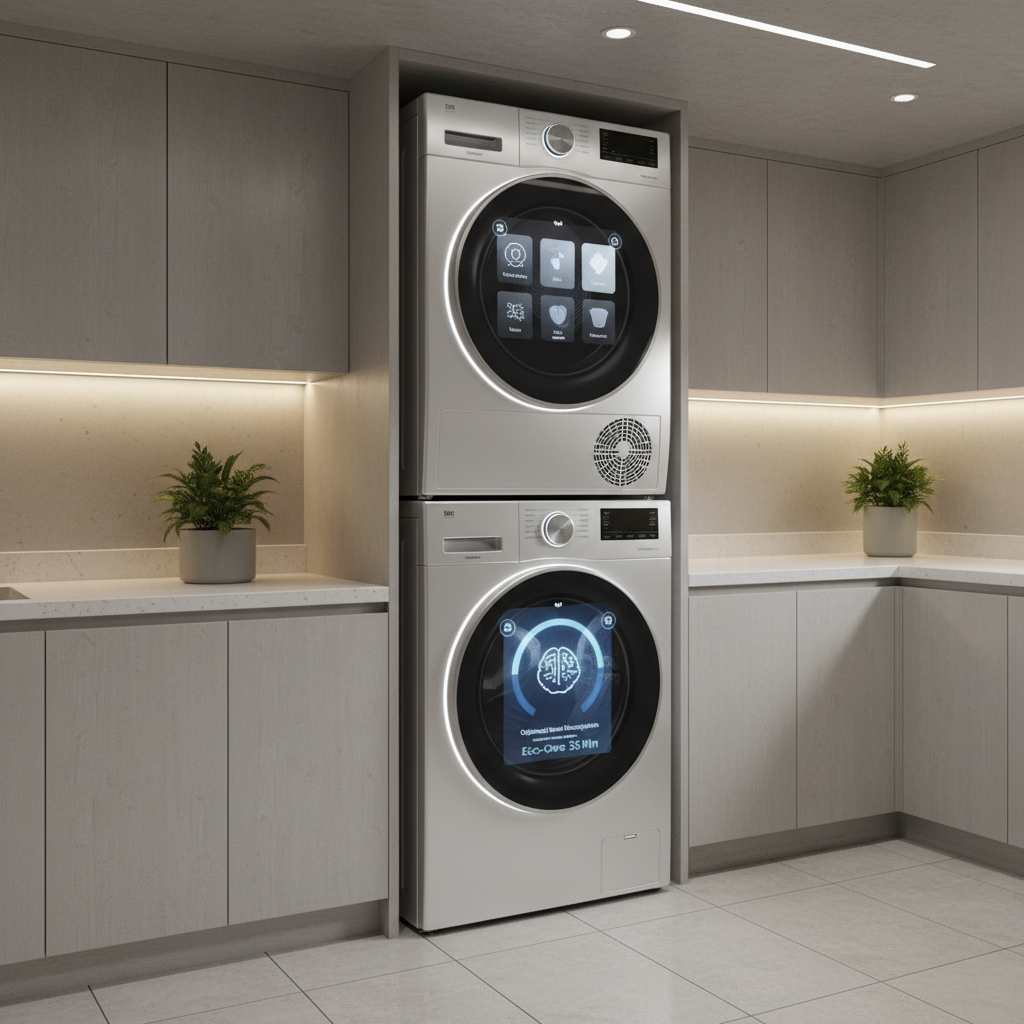
In the relentless rhythm of modern life, time is arguably our most precious commodity. Amidst work, family, social commitments, and personal pursuits, mundane household chores often become a significant drain on our schedules and mental energy. Among these, laundry frequently tops the list – a never-ending cycle of sorting, washing, drying, folding, and putting away. What if you could significantly reduce the time and effort dedicated to this pervasive task, not by outsourcing it, but by empowering your home with intelligent assistance? Welcome to the era of AI-powered helpers for laundry, where advanced technology is transforming the arduous into the effortless, allowing you to truly reclaim your time and focus on what matters most.
This comprehensive guide delves into the exciting world of artificial intelligence in laundry care, exploring how these innovative gadgets are making households smarter, more efficient, and undeniably more convenient. We will unpack the science behind these smart solutions, examine current market offerings, highlight the myriad benefits, address practical considerations, and cast a gaze into the future of laundry automation. Get ready to discover how AI is not just a futuristic concept but a practical, present-day ally in simplifying one of life’s most persistent chores.
The Laundry Dilemma: A Universal Chore and Its Hidden Costs
For centuries, laundry has been an inescapable part of human existence. From riverside washing to manual scrubbing boards, and eventually to mechanical marvels, the core process has remained largely the same: clean clothes, dry them, and put them away. Despite the advancements of traditional washing machines and dryers, the chore still demands considerable attention and time. The sheer volume of laundry for an average family can be staggering, leading to overflowing hampers, piles of clean clothes awaiting folding, and the constant mental load of remembering cycles, sorting colors, and ensuring proper care for delicate garments.
Consider the typical steps involved:
- Sorting: Separating whites from colors, delicates from sturdy items, towels from everyday wear. This requires knowledge of fabric types and potential color bleeding.
- Stain Pre-treatment: Identifying stains and applying appropriate treatments, often requiring specific products and techniques.
- Loading and Detergent Dosing: Estimating load size, selecting the right amount of detergent, and choosing any additives like fabric softener or bleach. Incorrect dosing can lead to residue, inefficient cleaning, or wasted product.
- Cycle Selection: Deciphering various wash cycles (normal, heavy duty, delicate, quick wash, sanitize) and temperature settings, often a guessing game for optimal results.
- Transferring to Dryer: Moving wet clothes, remembering to clean the lint trap.
- Drying Cycle Selection: Choosing appropriate heat levels and times to avoid shrinking, excessive wear, or insufficient drying.
- Folding and Putting Away: The final, often most dreaded, step of neatly folding and storing clothes, consuming significant manual labor and time.
Each of these steps, though seemingly minor, collectively consumes hours each week for households globally. Beyond the time investment, there are hidden costs: wasted water and energy from inefficient cycles, damaged garments due to incorrect washing or drying, and the environmental impact of excessive detergent use. This is precisely where artificial intelligence steps in, promising a paradigm shift from burden to background operation.
What is AI in Laundry? Defining the Smart Revolution
Artificial Intelligence (AI) in the context of laundry appliances refers to the integration of advanced algorithms, sensors, and machine learning capabilities that allow machines to perform tasks with human-like intelligence, adapting and optimizing their operations without direct human intervention. It’s about moving beyond pre-programmed cycles to dynamic, responsive processes that learn and improve over time.
Core Components of AI in Laundry Appliances:
- Sensors: High-precision sensors are the eyes and ears of AI laundry machines. These include:
- Weight Sensors: To accurately determine load size.
- Soil Level Sensors (Turbidity Sensors): To measure the dirtiness of the water, indicating how soiled the clothes are.
- Fabric Type Sensors: Some advanced systems can even infer fabric types based on load characteristics.
- Moisture Sensors: Crucial for dryers to detect the precise moment clothes are dry, preventing over-drying.
- Vibration Sensors: For noise reduction and identifying load imbalance.
- Algorithms and Machine Learning: This is the brain of the AI system.
- Optimization Algorithms: Based on sensor data (load size, soil level, fabric type), these algorithms dynamically adjust water levels, detergent amounts, wash times, rinse cycles, and spin speeds for optimal cleaning and garment care.
- Pattern Recognition: Learning user preferences and common laundry habits to suggest or automatically apply preferred settings.
- Predictive Maintenance: Analyzing operational data to foresee potential issues, scheduling maintenance, or ordering replacement parts before a breakdown occurs.
- Connectivity (IoT – Internet of Things): AI-powered laundry appliances are inherently smart, meaning they connect to your home network. This enables:
- Remote Control: Starting, pausing, or monitoring cycles from anywhere via a smartphone app.
- Notifications: Alerts when a cycle is finished, or if there’s an issue.
- Integration: Connecting with other smart home devices (e.g., voice assistants like Alexa or Google Assistant) for hands-free operation.
- Software Updates: Receiving over-the-air updates to improve performance, add new features, or fix bugs.
In essence, an AI-powered laundry machine isn’t just following a recipe; it’s intelligently assessing the ingredients (your clothes) and dynamically adjusting the cooking process (the wash or dry cycle) to achieve the best possible outcome with the least amount of resources.
Evolution of Laundry Technology: From Manual Labor to Intelligent Automation
To fully appreciate the impact of AI on laundry, it’s helpful to glance at the journey laundry technology has taken:
- Pre-18th Century: Mostly manual labor, using washboards, lye, and beating clothes against rocks in rivers.
- 18th – 19th Century: Early mechanical washing machines emerge, often hand-cranked or animal-powered, primarily in North America and Europe. These were labor-saving but still required significant manual input.
- Early 20th Century: Electric washing machines become available, gradually moving into homes. Agitators and spin cycles reduce physical exertion.
- Mid-20th Century: Automatic washing machines and electric dryers gain popularity. Pre-set programs (e.g., “whites,” “colors”) introduce a degree of automation.
- Late 20th Century: Microprocessors are introduced, allowing for more precise control over cycles, temperature, and spin speed. Features like delayed start become common.
- Early 21st Century (The Digital Age): Digital displays, touch controls, and more specialized programs. Energy efficiency becomes a major focus.
- Current Era (The Smart Home Integration): Wi-Fi connectivity, smartphone app control, and basic sensor-based adjustments (like auto-load sensing for water level). This laid the groundwork for true AI.
- AI Revolution (Present & Future): Beyond simple sensing, AI integrates advanced algorithms and machine learning to make decisions, optimize performance dynamically, and adapt to individual needs and environmental conditions. This is the leap from automation to intelligence.
The progression has been steady, each stage aiming to reduce human effort. However, AI represents a fundamental shift – it’s not just automating a task, but adding intelligence to the automation, making the process smarter, more efficient, and truly autonomous in many aspects.
Current AI-Powered Laundry Solutions: Revolutionizing Your Routine
Today’s market offers a compelling array of AI-infused laundry appliances that promise to simplify your life. These aren’t just incremental upgrades; they represent a fundamental rethinking of how laundry is done.
1. Smart Washing Machines
Modern AI washers are the cornerstone of the smart laundry room. They come equipped with a suite of features designed to optimize every wash cycle:
- Automatic Detergent Dosing: Perhaps one of the most celebrated features. AI washing machines, like those from Samsung’s Bespoke AI line or LG’s ThinQ, come with built-in reservoirs for detergent and fabric softener. Using load size sensors and soil level detection, the machine precisely dispenses the exact amount of detergent needed, preventing waste, avoiding residue on clothes, and ensuring optimal cleaning. This also means you don’t need to add detergent for every wash, often lasting for multiple loads.
- Fabric and Soil Level Detection: Advanced sensors identify the weight of the load, the turbidity (dirtiness) of the water, and in some cases, can even infer fabric types. Based on this data, the AI algorithm automatically selects the optimal wash cycle, water temperature, wash duration, and spin speed. This prevents harsh treatment for delicates and ensures thorough cleaning for heavily soiled items, all without you having to choose a single setting.
- Cycle Optimization and Customization: Beyond automatic selection, AI systems learn your habits. If you frequently wash certain types of loads, the machine can adapt and suggest custom cycles. Through companion apps, you can download specialized cycles for specific items (e.g., gym clothes, pet bedding) or fine-tune existing ones.
- Vibration Reduction and Noise Control: AI can detect load imbalance earlier and more effectively, adjusting spin speeds and internal movements to minimize vibration and noise, making laundry less disruptive, especially in open-plan living spaces.
- Predictive Maintenance: AI systems constantly monitor component health. If they detect unusual patterns or potential issues with the motor, pump, or sensors, they can alert you via the app, often suggesting troubleshooting steps or proactively scheduling a service appointment.
- Smart Pairing: Many brands offer smart washing machines that communicate directly with their compatible smart dryers. Once a wash cycle is complete, the washer can send data about the load (e.g., fabric type, load size) to the dryer, which then automatically selects the most appropriate drying cycle. This seamless transfer eliminates guesswork and saves time.
2. Intelligent Dryers
AI-powered dryers are equally impressive, focusing on efficiency, garment care, and convenience:
- Advanced Moisture Sensing: While traditional dryers have moisture sensors, AI dryers use more sophisticated algorithms to detect residual moisture levels with greater precision. This prevents over-drying, which can damage fabrics, cause shrinkage, and waste energy. Clothes are dried just enough, preserving their integrity and extending their lifespan.
- Wrinkle Prevention and Freshness: Features like “Wrinkle Care” or “Steam Fresh” use AI to periodically tumble clothes after the drying cycle is complete, or introduce steam, to prevent wrinkles from setting in. This significantly reduces the need for ironing, saving you valuable time. Some even offer freshness cycles to lightly tumble clothes that have been sitting for a while.
- Energy Optimization: By precisely detecting dryness and optimizing heat levels and cycle duration, AI dryers are remarkably energy efficient. They can integrate with smart home energy management systems, potentially even scheduling drying cycles during off-peak electricity hours to save money and reduce strain on the grid.
- Smart Pairing and Remote Operation: As mentioned, many AI dryers can receive data from their paired washers, automatically selecting the ideal drying cycle. They also offer full remote control and monitoring via smartphone apps, allowing you to start, stop, or extend a cycle from anywhere.
3. Automated Laundry Folders and Robotics (Emerging/Niche)
While fully autonomous folding robots for consumer homes have been a challenging endeavor (e.g., Laundroid, FoldiMate, which largely failed to gain market traction due to cost, size, and complexity), the concept remains a frontier for AI. Currently, AI in this space focuses more on systems that simplify the folding process or integrate with commercial laundry solutions.
- Current Reality: Consumer-grade solutions mostly involve dryers with advanced wrinkle-prevention features that minimize the need for manual folding, rather than standalone robots.
- Future Potential: Research continues into more compact, affordable, and versatile robotic arms capable of handling various fabric types and folding styles. AI’s role here would be advanced computer vision for garment recognition and precise robotic manipulation.
4. Smart Detergent and Supply Management
Beyond the machines themselves, AI is making inroads into managing laundry supplies:
- Automated Reordering: Some smart laundry systems can monitor detergent and fabric softener levels in their reservoirs and automatically reorder supplies when they run low, through integrated services like Amazon Dash Replenishment or proprietary brand subscriptions.
- Personalized Detergent Recommendations: As AI learns your typical load types and water hardness, it could potentially recommend specific detergent formulations or additives for optimal results.
The convergence of these intelligent solutions creates a truly seamless and efficient laundry ecosystem, dramatically reducing the mental load and physical effort associated with laundry day.
The Tangible Benefits: How AI Transforms Your Laundry Day
The integration of AI into laundry appliances offers a multitude of benefits that extend far beyond mere convenience. These advantages contribute to a smarter, more sustainable, and ultimately more enjoyable household experience.
1. Significant Time Savings
This is perhaps the most immediate and appreciated benefit. AI eliminates numerous time-consuming steps:
- No More Sorting: While some basic separation might still be recommended for very delicate items, AI’s ability to sense fabric and soil often allows for mixed loads, reducing pre-wash sorting time.
- No More Manual Dosing: Automated detergent dispensing saves seconds every wash that add up over a week or month. It also removes the mental effort of guessing.
- No More Cycle Selection Guesswork: The machine chooses the best settings, freeing you from reviewing labels and deciphering complex control panels.
- Less Monitoring: Remote control and notifications mean you don’t need to be physically present to start or check on cycles. You can do other tasks or even leave the house.
- Reduced Ironing: Advanced wrinkle prevention in dryers drastically cuts down on post-drying ironing time.
- Fewer Rewashes: Optimal cleaning and drying mean fewer instances of needing to re-wash or re-dry items due to incorrect settings.
Imagine reclaiming an hour or more each week that was previously spent on laundry. That’s time for hobbies, family, work, or simply relaxation.
2. Remarkable Energy and Water Efficiency
AI’s core strength lies in optimization. This translates directly into resource conservation:
- Precise Water Usage: Sensors accurately determine load size and soil level, ensuring only the necessary amount of water is used, unlike traditional machines that often use a fixed amount or rely on broad settings.
- Optimized Cycle Duration: By assessing dirtiness and fabric type, AI can reduce wash times for lightly soiled items, saving both water and electricity.
- Efficient Drying: Advanced moisture sensors prevent over-drying, which is a major energy drain. Clothes are dried just to the point of readiness, conserving electricity.
- Smart Grid Integration: Future AI systems may communicate with smart grids to run cycles during off-peak hours, not only saving money but also reducing demand on power infrastructure during peak times.
These efficiencies not only benefit your wallet through lower utility bills but also contribute positively to environmental sustainability.
3. Enhanced Garment Care and Longevity
One of the silent heroes of AI laundry is its ability to protect your clothes:
- Customized Care: By tailoring wash and dry cycles to the specific needs of the fabrics in each load, AI minimizes wear and tear. This means less stretching, fading, and pilling.
- Preventing Shrinkage: Precise temperature control and moisture sensing in dryers virtually eliminate the risk of shrinking clothes due to excessive heat.
- Optimal Detergent Use: Correct detergent dosing prevents excessive soap residue that can stiffen fabrics or lead to dullness, and also avoids insufficient detergent that can leave clothes unclean.
- Gentler Treatment: AI can adjust agitation and spin speeds to be gentler on delicate items while still ensuring effective cleaning.
By extending the life of your clothing, AI laundry systems can save you money on replacements and reduce textile waste.
4. Unmatched Convenience and Reduced Mental Load
The convenience offered by AI laundry systems is transformative:
- Remote Control and Monitoring: Start a load on your way home, check its progress from your office, or receive notifications when the cycle is done – all from your smartphone.
- Voice Control: Integrate with smart home assistants for hands-free operation. “Hey Google, start the washing machine” is no longer science fiction.
- Predictive Features: Beyond maintenance, some systems can learn your schedule and suggest optimal times to run loads or even reorder supplies before you run out.
- Less Decision Fatigue: With the machine making intelligent choices, you have fewer decisions to make about settings, detergents, and cycle types. This significantly reduces the mental energy expended on laundry.
The psychological benefit of less mental load cannot be overstated. Freeing up cognitive space from mundane chores allows for greater focus on more engaging or important tasks.
5. Environmental Impact and Sustainability
Beyond personal benefits, AI laundry systems also contribute to a greener planet:
- Reduced Resource Consumption: Less water, less energy, less detergent translates directly to a smaller environmental footprint.
- Waste Reduction: Longer-lasting garments mean less textile waste ending up in landfills. Precise detergent dosing minimizes chemical runoff.
- Smart Energy Management: Integration with renewable energy sources or smart grids could further optimize energy consumption.
Choosing AI-powered laundry appliances is not just a personal convenience; it’s a step towards a more sustainable lifestyle.
Emerging Technologies and the Future of Laundry
While current AI laundry solutions are impressive, the horizon of innovation promises even more sophisticated and integrated systems. The future of laundry is likely to be even more autonomous, personalized, and environmentally conscious.
1. Advanced Stain Detection and Pre-treatment
Imagine a washing machine that can not only identify stains but also pre-treat them. Future AI systems could incorporate advanced optical sensors and machine learning algorithms to:
- Identify Stain Types: Differentiate between oil-based, protein-based, or pigment-based stains.
- Localized Pre-treatment: Apply a targeted spray of a specific pre-treatment solution directly onto the stain before the main wash cycle begins, optimizing its removal.
- Personalized Stain Library: Learn which stains are common in your household and suggest proactive treatments.
This would virtually eliminate the need for manual stain inspection and treatment, a significant time-saver.
2. Seamless Integration with Smart Home Ecosystems
The concept of a truly interconnected smart home will extend further into the laundry room:
- Energy Management: Laundry appliances could coordinate with solar panels to run cycles when solar energy generation is highest, or with smart meters to wash during the cheapest energy rates.
- Personalized Profiles: Each family member could have a profile, and the machine could recognize who loaded the laundry (perhaps through wearable tech or facial recognition, though this raises privacy concerns) and apply their preferred settings for their garments.
- Voice and Gesture Control: Even more advanced voice commands, or simple gestures, could initiate or modify laundry cycles.
3. Garment Health Monitoring and Repair
Beyond cleaning, future AI could play a role in maintaining garment integrity:
- Wear and Tear Detection: Sensors could identify early signs of wear, fraying, or thinning fabrics, and suggest repair or replacement.
- Micro-Repair: Could future machines have capabilities to mend small snags or loose threads? This is a more distant concept but not entirely out of the realm of possibility.
4. Water Recycling and Filtration Systems
Environmental sustainability will drive innovations in water management:
- Greywater Recycling: Washing machines could be integrated with home systems to filter and reuse greywater for flushing toilets or watering gardens, significantly reducing fresh water consumption.
- Microplastic Filtration: Advanced filters could capture microplastic fibers shed during washing, preventing them from entering waterways.
5. Fully Autonomous Load and Unload Systems
While folding robots have struggled, the ultimate dream is a machine that can take clothes from a hamper, load them, wash, dry, fold, and even put them away. This would require significant advancements in robotics, computer vision, and manipulation, but research continues in this direction for commercial and industrial applications, eventually trickling down to the consumer market in simplified forms.
The trajectory of AI in laundry points towards an increasingly intelligent, autonomous, and resource-efficient future, promising a household where laundry is truly a set-it-and-forget-it chore.
Challenges and Considerations for Adopting AI Laundry
While the benefits of AI-powered laundry appliances are compelling, it’s important to approach adoption with a clear understanding of the potential challenges and considerations.
1. Initial Cost of Investment
AI-enabled washing machines and dryers often come with a higher upfront price tag compared to their traditional counterparts. This premium reflects the advanced technology, sensors, and software integrated into the appliances. For some households, the initial investment might be a barrier, even if long-term savings in energy, water, and garment replacement are projected.
2. Connectivity Requirements and Reliability
For most AI features to function optimally (remote control, updates, smart pairing, predictive maintenance), a stable home Wi-Fi connection is essential. If your Wi-Fi is unreliable or your laundry room has poor signal strength, the smart features may not work as intended, limiting the overall user experience. This also means you’re reliant on your home network infrastructure.
3. Data Privacy and Security Concerns
Smart appliances collect data – about your usage patterns, cycle preferences, and potentially even diagnostic information. This data is often sent to the manufacturer’s cloud servers. Users need to be aware of the manufacturer’s data privacy policies and ensure that their personal information is protected. Like any internet-connected device, there’s a theoretical risk of cyber vulnerabilities, though manufacturers invest heavily in security.
4. Learning Curve and User Interface Complexity
While AI aims to simplify, the initial setup and understanding of advanced features might involve a slight learning curve. Navigating companion apps, setting up integrations with voice assistants, or understanding diagnostic alerts can take some time. However, most modern interfaces are designed to be intuitive, and the “set it and forget it” aspect of AI often means less interaction once configured.
5. Long-Term Support and Software Updates
The longevity of smart features relies on continuous software support and updates from the manufacturer. Will an appliance purchased today still receive critical updates and app compatibility in 5, 10, or 15 years? This is a valid concern for any smart home device. Reputable brands typically offer good support, but it’s worth considering the manufacturer’s track record.
6. Repair and Maintenance Specifics
Repairing an AI-powered appliance might be more complex and potentially more expensive than a traditional one due to the sophisticated electronics and sensors involved. While predictive maintenance can help prevent major breakdowns, specialized technicians might be required for repairs, and parts could be proprietary. This is balanced by the potential for AI to self-diagnose and guide users through simpler fixes.
7. Environmental Disposal of Electronics
As these appliances are laden with more electronic components, their end-of-life disposal needs careful consideration. Proper recycling of e-waste is crucial to prevent environmental pollution. Consumers should look for manufacturers with robust recycling programs.
Despite these considerations, the rapid pace of technological development and increasing competition are steadily addressing many of these challenges. Prices are becoming more accessible, connectivity is more robust, and manufacturers are improving privacy and support. The long-term benefits for many users often outweigh these initial hurdles.
Comparison Tables
Table 1: AI-Powered Washing Machine Features Comparison (Illustrative Examples)
| Feature Category | Samsung Bespoke AI OptiWash | LG ThinQ AI DD (Direct Drive) | Bosch Home Connect with i-DOS |
|---|---|---|---|
| Detergent Dosing | Auto Dispense System; automatically detects load weight & soil level to dispense optimal detergent/softener. Reservoir holds up to 30 loads. | EZ Dispense Automatic Dispenser; holds detergent for up to 18 loads, automatically dispenses based on load. | i-DOS Automatic Dosing System; determines exact detergent & water amount for each load, based on fabric, soil, and water hardness. |
| Fabric & Soil Sensing | AI OptiWash senses soil level and fabric type, then adjusts wash time and detergent. | AI DD technology detects weight & fabric softness, then selects optimal wash pattern (tumbles, scrubs, etc.) for garment care. | Automatic load detection and sensor-controlled wash programs tailored to fabric type and degree of soiling. |
| Smart Pairing (Washer-Dryer) | Yes, sends wash cycle info to compatible Samsung AI Dryer to pre-select optimal dry cycle. | Yes, Smart Pairing feature automatically sets compatible LG Dryer based on washer’s cycle. | Yes, Home Connect allows communication between compatible appliances, can suggest dry cycle. |
| Remote Control & Monitoring | SmartThings app for remote start/stop, cycle selection, notifications, and energy monitoring. | LG ThinQ app for remote control, cycle download, energy monitoring, and notifications. | Home Connect app for remote start/stop, program selection, notifications, and appliance status. |
| Predictive Maintenance | Yes, SmartThings app provides diagnostic solutions and service requests. | Yes, Smart Diagnosis feature helps troubleshoot issues via app. | Yes, Home Connect app provides diagnostics and tips, can connect to service. |
| Unique AI Feature | AI Smart Dial learns and recommends favorite cycles. Super Speed Wash for 28-min full load. | TurboWash360 for powerful wash in under 30 minutes. Allergiene Cycle reduces allergens. | AntiStain System targets 16 common stains. SpeedPerfect and EcoPerfect options. |
Table 2: Estimated Time and Resource Savings: Traditional vs. AI-Powered Laundry (Approximate Averages)
| Category | Traditional Laundry (Manual) | AI-Powered Laundry (Automated) | Estimated Savings / Improvement |
|---|---|---|---|
| Time Spent Per Week (Hours) | 3-5 hours (sorting, dosing, checking, folding) | 1-2 hours (less sorting, auto-dosing, remote monitoring, less ironing) | 50-70% reduction in active time |
| Water Usage Per Load (Gallons) | 15-25 gallons (fixed or broad settings) | 10-18 gallons (optimized based on load/soil) | Up to 40% reduction |
| Energy Consumption (kWh/Year for Washer & Dryer) | 600-900 kWh (average older models, inefficient cycles) | 300-500 kWh (Energy Star certified, optimized cycles) | Up to 50% reduction |
| Detergent Usage (Per Load) | Often over-dosed or under-dosed manually | Precisely dosed, minimum waste | Up to 20-30% reduction (less waste) |
| Garment Lifespan | Can be reduced by incorrect washing/drying | Extended due to optimized, gentle care | 10-25% increase in garment longevity |
| Mental Load/Effort | High (constant decision-making, planning) | Low (machine makes intelligent decisions) | Significant reduction in cognitive burden |
Note: These figures are approximate and can vary based on appliance model, usage habits, and specific features. “Traditional Laundry” refers to non-smart, typically older appliances requiring full manual input.
Practical Examples: Real-World Use Cases and Scenarios
To truly grasp the impact of AI-powered laundry, let’s look at how it transforms everyday scenarios for different types of households.
Case Study 1: The Busy Professional – Sarah and Her Remote Control
Sarah is a marketing manager who often works long hours and commutes for an hour each way. Her biggest laundry challenge used to be finding enough time on weekends, or dealing with clothes sitting wet in the washer after a cycle finished while she was still at work, leading to mildew smells and rewashes.
Before AI: Sarah would rush home, throw a load in, try to remember to move it to the dryer, and often forget, only to find musty clothes hours later. Weekends were consumed by laundry piles, limiting her social time and relaxation.
With AI: Sarah now has a smart washing machine and dryer. Before leaving for work, she might pre-load the washer with her clothes and fill the auto-dispenser. During her lunch break, she simply opens her smartphone app, checks the load, and starts the wash cycle remotely. As she’s commuting home, she receives a notification that the wash is done. Since her washer and dryer are paired, the dryer automatically starts the appropriate cycle when the clothes are transferred. She arrives home to perfectly dry clothes, ready for a quick fold (thanks to the wrinkle guard feature) and put away. She has reclaimed valuable weeknight evenings and weekends for herself.
Case Study 2: The Large Family – The Johnsons and Optimal Efficiency
The Johnson family – two parents, three children, and a dog – generates an enormous amount of laundry. Their previous routine involved constant sorting, endless cycles, and frequent arguments over who left dirty socks mixed with whites.
Before AI: Mrs. Johnson spent hours each week sorting mountains of clothes by color and fabric, meticulously measuring detergent for each of the 10+ loads, and constantly adjusting settings for everything from sports uniforms to delicate blouses. Their utility bills were high due to inefficient water and energy use.
With AI: The Johnsons invested in a high-capacity AI washer and dryer. Now, everyone knows to simply toss their clothes into designated hampers. On laundry day, Mrs. Johnson can mix most loads, as the washer’s AI fabric and soil sensors adapt. The auto-dosing system ensures no detergent is wasted, and the optimized cycles mean even heavily soiled soccer uniforms come out spotless without excessive water or energy. The paired dryer ensures everything is dried perfectly, preventing shrinkage of expensive kids’ clothes. The children even get notifications on their tablets when their specific load of laundry is done, encouraging them to help move it and put it away. The family saves money on utilities, and Mrs. Johnson has significantly more free time.
Case Study 3: The Eco-Conscious Consumer – Mark and His Green Footprint
Mark is deeply committed to reducing his environmental footprint. He carefully monitors his energy and water consumption and tries to make eco-friendly choices in all aspects of his life, including home appliances.
Before AI: Mark did his best to use cold water and full loads, but he was always worried about how much energy his older dryer was using, and if he was truly optimizing his water consumption. He sometimes ran cycles during peak energy hours unknowingly.
With AI: Mark’s AI laundry system connects to his smart home energy monitor. The AI washer automatically detects the load size and soil level, ensuring minimal water and energy for each wash. His AI dryer precisely senses moisture, preventing any energy waste from over-drying. Crucially, the system is programmed to run his drying cycles during off-peak hours, when electricity is cheaper and often sourced from cleaner grids. He receives detailed reports via his app on water and energy consumption, allowing him to track his impact and reinforce his sustainable lifestyle. He feels confident that his laundry routine is as green as possible, without having to micromanage it.
Case Study 4: The Garment Care Enthusiast – Emily and Her Delicates
Emily loves fashion and invests in high-quality, often delicate, clothing. Her biggest fear was always damaging her favorite silk blouses or cashmere sweaters in the wash, forcing her to hand wash or dry clean frequently.
Before AI: Emily had a strict hand-wash-only rule for many items, which was incredibly time-consuming. When she did use her machine, she meticulously sorted, selected the gentlest cycle, and prayed her clothes wouldn’t shrink or get damaged. Dry cleaning bills added up quickly.
With AI: Emily’s new AI washer can detect fabric softness and weight, automatically adjusting agitation and water temperature to be incredibly gentle on even her most delicate items. She can confidently place many previously hand-wash-only items into a specific AI-optimized delicate cycle, knowing the machine will provide tailored care. The AI dryer’s precise moisture sensing prevents any shrinkage, and its wrinkle-care feature means her silk blouses need minimal, if any, ironing. Her clothes last longer, look better, and her dry-cleaning bills have significantly decreased, all while saving her precious time.
These practical examples underscore how AI-powered laundry solutions aren’t just theoretical advancements; they are practical tools delivering real-world value and a tangible improvement in quality of life for diverse individuals and families.
Frequently Asked Questions
Q: What exactly is AI in a washing machine, beyond just smart features?
A: AI in a washing machine goes beyond simple pre-programmed “smart” features like Wi-Fi control. It involves the machine’s ability to “think” and adapt dynamically. This is achieved through an array of sensors (for load weight, soil level, fabric softness, water hardness) that collect real-time data. AI algorithms then use this data to make intelligent decisions: precisely adjusting water levels, detergent amounts, wash duration, temperature, and spin speed for each unique load. Crucially, true AI systems often employ machine learning to learn from past cycles and user preferences, continually optimizing performance and becoming more efficient over time. It’s about responsive, adaptive intelligence rather than just following fixed commands.
Q: Are AI laundry appliances worth the investment? How do I justify the higher cost?
A: The worth of AI laundry appliances depends on your priorities and usage. While the upfront cost is higher, the investment can be justified by several factors: significant time savings (less sorting, no manual dosing, fewer rewashes), lower utility bills due to optimized water and energy consumption, extended garment lifespan from tailored care, and the sheer convenience of remote operation and reduced mental load. For busy individuals, large families, or those prioritizing sustainability and convenience, the long-term savings and quality-of-life improvements often outweigh the initial premium. Consider it an investment in both your time and your household’s efficiency.
Q: How do these systems save energy and water?
A: AI laundry systems save energy and water primarily through intelligent optimization. Washing machines use sensors to detect the precise load size and soil level, ensuring only the necessary amount of water is used, unlike traditional machines that might use a fixed amount for various loads. They also adjust wash times; a lightly soiled load doesn’t need the same energy-intensive wash as a heavily soiled one. AI dryers, with advanced moisture sensors, detect exactly when clothes are dry, preventing over-drying which wastes significant energy. Some systems can even integrate with smart home energy management to run during off-peak hours or when renewable energy generation is high, further enhancing savings.
Q: Can AI systems damage my clothes?
A: On the contrary, AI systems are designed to enhance garment care and reduce damage. By accurately sensing fabric types, load sizes, and soil levels, the AI dynamically adjusts wash and dry cycles to be optimal for the specific items being cleaned. This means delicate fabrics receive gentler treatment, while tougher items get a more thorough wash, without being over-agitated. Precise detergent dosing prevents excessive chemical exposure or residue. Advanced moisture sensors in dryers prevent over-drying, which is a common cause of shrinkage and fabric degradation. Ultimately, AI aims to extend the lifespan of your clothes by treating them with individualized care.
Q: Do I need a special internet connection for AI laundry appliances?
A: Most AI laundry appliances connect to your existing home Wi-Fi network, just like a smart TV or smartphone. You typically don’t need a “special” internet connection. However, a stable and reliable Wi-Fi signal in your laundry area is crucial for the smart features (remote control, notifications, software updates, smart pairing) to function correctly. If your laundry room has poor Wi-Fi coverage, you might need a Wi-Fi extender to ensure seamless operation. The core washing and drying functions will still work without Wi-Fi, but you’d miss out on the AI-driven convenience and optimization features.
Q: What about data privacy concerns with these connected appliances?
A: Data privacy is a valid concern with any connected device. AI laundry appliances collect data on usage patterns, cycle selections, and diagnostic information, which is typically transmitted to the manufacturer’s cloud servers. Reputable manufacturers have robust data encryption and privacy policies to protect this information. It’s important to review the privacy policy of the specific brand you choose to understand what data is collected, how it’s used, and whether it’s shared with third parties. You often have control over certain data-sharing settings within the appliance’s app. Manufacturers use this data primarily for improving product performance, offering personalized services, and diagnosing issues, not for intrusive surveillance.
Q: Can AI laundry systems detect and remove stains automatically?
A: Current AI laundry systems are very good at optimizing the wash cycle for overall cleanliness based on soil level. Some advanced models may have specific stain programs that, when manually selected, will apply an optimized cycle for common stain types. However, fully automatic stain detection and localized pre-treatment (where the machine identifies a specific stain and applies a spot treatment without human intervention) are still largely emerging technologies or are in research phases. The future holds promise for more sophisticated optical sensors and robotic elements that could achieve this, but for now, most stubborn stains still require manual pre-treatment before loading.
Q: How often do these systems need maintenance compared to traditional appliances?
A: AI-powered appliances typically do not require more frequent physical maintenance than traditional ones. In fact, they often assist with maintenance. Many AI systems include predictive maintenance features that monitor component health and can alert you to potential issues (e.g., a clogged filter, a needing-to-be-cleaned dispenser) before they become major problems. This proactive approach can sometimes extend the overall lifespan of the appliance and reduce unexpected breakdowns. Regular user maintenance, such as cleaning the lint trap and detergent dispenser, remains important for all types of laundry machines.
Q: Are there AI solutions for small apartments or limited space?
A: Yes, AI technology is being integrated into a variety of appliance sizes. Many manufacturers offer compact AI-enabled washing machines and ventless dryer options (like heat pump dryers) that are ideal for smaller apartments or homes without external venting. These smaller units still incorporate the same core AI principles of sensor-based optimization, automatic detergent dosing, and remote connectivity, bringing smart laundry benefits to virtually any living space. Some brands also offer all-in-one washer-dryer combo units with AI features for ultimate space saving.
Q: What is the lifespan of an AI-powered appliance compared to a traditional one?
A: The lifespan of an AI-powered appliance is generally comparable to that of a high-quality traditional appliance, often ranging from 10 to 13 years with proper care. There’s no inherent reason for an AI appliance to have a shorter lifespan. In fact, features like predictive maintenance and optimized, gentler garment care could potentially contribute to a longer lifespan by reducing wear and tear on both the appliance and your clothes. Longevity also depends heavily on the quality of manufacturing, brand reputation, and regular user maintenance. Software support and updates are a factor for smart features, but the core mechanical components are built to last.
Key Takeaways
The advent of AI-powered helpers for laundry represents a significant leap forward in home automation, fundamentally reshaping how we approach this ubiquitous chore. Here are the core benefits and insights:
- Time Reclaimed: AI significantly reduces the active time spent on laundry by automating sorting, detergent dosing, cycle selection, and minimizing the need for ironing.
- Unprecedented Efficiency: Smart sensors and algorithms optimize water, energy, and detergent usage, leading to substantial savings on utility bills and a reduced environmental footprint.
- Superior Garment Care: AI tailors wash and dry cycles to specific fabrics and soil levels, preventing damage, shrinkage, and extending the lifespan of your clothing.
- Enhanced Convenience: Remote control, smart pairing between washer and dryer, and voice integration offer unparalleled flexibility and ease of use, reducing the mental load of laundry.
- Proactive Maintenance: Many AI systems offer predictive diagnostics, alerting you to potential issues before they become major problems, improving appliance reliability.
- A Smarter Home: AI laundry appliances seamlessly integrate into the broader smart home ecosystem, contributing to a more connected and efficient household.
- Future Potential: Emerging technologies promise even more advanced features, such as automatic stain detection, personalized care profiles, and enhanced sustainability measures.
- Considerations: While the benefits are vast, factors like initial cost, reliable internet connectivity, and data privacy should be considered before adoption.
Embracing AI in your laundry room is not just about upgrading an appliance; it’s about upgrading your lifestyle, freeing up precious time, and contributing to a more sustainable future.
Conclusion
Laundry has long been perceived as an inevitable, time-consuming burden – a repetitive cycle demanding constant attention and physical effort. However, with the integration of artificial intelligence, this age-old chore is undergoing a profound transformation. AI-powered washing machines and dryers are no longer just machines that clean and dry; they are intelligent companions that learn, adapt, and optimize, working tirelessly in the background to simplify your life.
From the precise automatic dosing of detergent and the intelligent selection of cycles based on fabric and soil, to the remote control capabilities and advanced wrinkle prevention, AI is meticulously designed to liberate you from the mundane. It’s about more than just clean clothes; it’s about reclaiming hours of your week, reducing your utility bills, extending the life of your wardrobe, and significantly lessening the mental load associated with household management. This technology empowers you to spend less time in the laundry room and more time pursuing your passions, enjoying your family, or simply relaxing.
As these smart solutions become more accessible and sophisticated, the future of home chores looks brighter and more effortless than ever before. Investing in AI-powered laundry helpers is not just an appliance upgrade; it’s an investment in a smarter, more efficient, and ultimately more enjoyable way of living. Embrace the intelligence, reclaim your time, and experience the transformative power of AI in simplifying one of life’s most persistent tasks. Your future self will thank you.
























































Comments (1)
Maximize Productivity: How AI Transforms Your Email Workflow - techswaraj.comsays:
November 10, 2025 at 2:21 pm[…] into how AI is not just assisting but fundamentally transforming email management, helping you reclaim your time, reduce stress, and significantly boost your productivity. We’ll explore the core challenges […]