


In today’s hyper-competitive digital landscape, a brand’s visual presentation is paramount. It is often the first, and sometimes only, chance to capture a customer’s attention, communicate value, and forge an emotional connection. For decades, creating high-quality, diverse product visuals has been an expensive, time-consuming, and resource-intensive endeavor, often involving professional photographers, elaborate studio setups, models, and extensive post-production. These traditional methods, while effective, place a significant burden on budgets and creative timelines, especially for small to medium-sized businesses and startups.
Enter the era of Artificial Intelligence. Specifically, the groundbreaking advancements in generative AI are not just optimizing existing processes; they are fundamentally redefining what’s possible in visual content creation. AI-powered product mockups are emerging as a transformative force, offering an unparalleled ability to generate unique, high-fidelity, and contextually rich product imagery with unprecedented speed and at a fraction of the traditional cost. This technology is not merely a tool; it is a strategic advantage that allows brands to iterate faster, personalize content at scale, and engage audiences in ways previously unimaginable.
This comprehensive guide delves into the world of AI mockups, exploring how they function, the profound cost savings they unlock, and the tangible boost in engagement they deliver. We will examine the underlying technology, walk through practical applications, address common challenges, and peer into the future of this exciting field. If you are a brand owner, marketer, e-commerce professional, or simply interested in the cutting edge of digital innovation, prepare to discover how AI mockups are set to revolutionize the way products are presented to the world.
The Evolution of Product Mockups: From Physical to Digital, Now AI-Powered
To truly appreciate the revolutionary impact of AI mockups, it is helpful to understand the journey of product visualization. For a long time, the gold standard for showcasing products was professional photography. This involved:
- Physical Photography: Products were meticulously staged in studios, with carefully selected props, lighting, and often professional models. This process demanded significant investment in equipment, space, personnel, and time for setup, shooting, and retouching. While it produced authentic, tangible results, its scalability was inherently limited, and any changes required repeating much of the process.
- 3D Rendering and CGI: As digital technology advanced, so did the ability to create photorealistic product visuals without a physical camera. 3D rendering and Computer-Generated Imagery (CGI) allowed brands to design products digitally, build virtual environments, and render images from any angle. This offered greater flexibility, especially for products that didn’t yet exist physically or were difficult to photograph. However, 3D rendering still required specialized software, highly skilled artists, and considerable computational power, making it a substantial investment in both time and money. Complex scenes could take hours or even days to render, and artistic revisions still carried significant costs.
- Templated Digital Mockups: A more accessible solution emerged in the form of pre-made digital mockups. These templates, often available in design software formats, allowed designers to quickly place a product’s logo or design onto a pre-existing image of a t-shirt, mug, or phone screen. While fast and affordable, these templated solutions often lacked uniqueness, variety, and the ability to customize environments or models extensively. They were excellent for quick proofs but rarely offered the bespoke, high-engagement visuals needed for premium marketing campaigns.
Each stage represented an improvement in efficiency and accessibility, yet each carried its own set of limitations regarding cost, speed, flexibility, and the sheer volume of unique content that could be produced. This is precisely where AI-powered mockups step in, offering a paradigm shift that addresses many of these longstanding challenges, making sophisticated visual content creation accessible to a much broader audience and at an unprecedented scale.
How AI Generative Models Work for Mockups
The magic behind AI mockups lies in advanced generative AI models, primarily based on architectures like Generative Adversarial Networks (GANs) and more recently, Diffusion Models. These models are trained on massive datasets of images and their corresponding textual descriptions, learning the intricate relationships between visual elements, styles, contexts, and semantic meanings. This deep understanding allows them to generate entirely new images based on simple text prompts or a combination of text and existing imagery.
Understanding the Core Technologies:
- Generative Adversarial Networks (GANs): Pioneered by Ian Goodfellow and his colleagues in 2014, GANs consist of two neural networks: a Generator and a Discriminator. The Generator creates new images, while the Discriminator tries to distinguish between real images from the training data and fake images produced by the Generator. Through this adversarial process, both networks improve iteratively. The Generator learns to produce increasingly realistic images that can fool the Discriminator, while the Discriminator becomes better at detecting fakes. While powerful, GANs can be challenging to train and control, often suffering from mode collapse (where the generator produces a limited variety of outputs).
- Diffusion Models: A more recent and increasingly dominant approach, diffusion models work by learning to reverse a process of gradually adding noise to an image. During training, they are shown images and progressively corrupted with noise. Then, they learn to ‘denoise’ these images step by step, effectively learning how to reconstruct a clean image from pure noise. At inference time (when generating new images), the model starts with random noise and iteratively refines it, guided by a text prompt, until a coherent, high-quality image emerges. Popular models like Stable Diffusion, DALL-E 2/3, and Midjourney are built on variations of this diffusion architecture. They are highly effective at generating diverse, high-fidelity images and offer greater control over output through prompt engineering.
The AI Mockup Workflow:
- Input Product Image (Optional but Recommended): You start by providing a clean, isolated image of your product, typically on a white or transparent background. This serves as the AI’s reference for the product itself.
- Text Prompt Engineering: This is where the creative direction comes in. You describe the desired scene, environment, mood, lighting, and any specific elements you want to include. For example: “A minimalist skincare bottle on a marble countertop in a sunlit bathroom, with a small green plant in the background, clean aesthetic, high-resolution.”
- Reference Styles/Images (Optional): Some platforms allow you to provide additional reference images to guide the style, composition, or color palette of the generated mockup.
- AI Generation: The AI model processes your inputs, understands the product’s form and texture, and then ‘paints’ it into the described scene, ensuring realistic lighting, shadows, reflections, and perspective. It essentially contextualizes your product within a new, AI-imagined environment.
- Iteration and Refinement: Rarely is the first generation perfect. You can refine your prompts, adjust parameters, or select variations generated by the AI until you achieve the desired result. Many platforms offer in-painting or out-painting capabilities to edit specific areas or extend the scene.
The beauty of this process is its speed and flexibility. With just a few lines of text, a product can be envisioned in countless scenarios, catering to diverse marketing needs without ever needing to physically create or photograph those scenes.
Unprecedented Cost Savings with AI Mockups
One of the most compelling advantages of AI mockups is their ability to dramatically slash visual content production costs. Traditional methods, while yielding excellent results, come with a hefty price tag that can be prohibitive for many businesses. Let’s break down where AI delivers significant savings:
Eliminating Traditional Production Expenses:
- Photography Studio Costs: Renting a professional studio, often equipped with specialized lighting and backdrops, can cost hundreds to thousands of dollars per day. AI eliminates this overhead entirely.
- Professional Photographer Fees: Highly skilled product photographers command significant fees, ranging from hundreds to several thousands of dollars per shoot, depending on their experience, location, and project complexity. AI generation drastically reduces the need for such extensive human input.
- Models and Stylists: If your product requires lifestyle shots, engaging professional models, hair stylists, makeup artists, and fashion stylists adds substantial costs, including their daily rates, agency fees, and sometimes travel expenses. AI can generate diverse “models” and place your product convincingly within various lifestyle scenarios without these expenses.
- Props and Set Design: Creating an appealing set often involves purchasing or renting numerous props, furniture, and decorative elements. This can quickly add up, especially for varied campaign themes. AI generates these elements digitally, at virtually no material cost.
- Travel and Logistics: For location-based shoots, travel, accommodation, and logistical planning can incur considerable costs and time. AI mockups are generated from a desk, removing all such expenditures.
Reducing Post-Production and Iteration Costs:
- Graphic Designer Hours: Traditional post-production (retouching, color grading, compositing) is time-consuming and expensive. While some minor AI post-processing might still be desired, the AI generates a near-final image, significantly reducing manual editing hours. Revisions that might have required a re-shoot or extensive editing can often be accomplished with a few prompt tweaks.
- Reduced Re-shoots: If a traditional photoshoot doesn’t yield the desired results, a costly re-shoot might be necessary. With AI, iterations are fast, cheap, and can be done instantly until the perfect visual is achieved.
Scalability Without Linear Cost Increase:
The real power of AI lies in its scalability. Once you have a working prompt and an understanding of the AI’s capabilities, generating hundreds or thousands of unique mockups for different products, contexts, or campaign variations incurs minimal additional cost per image. Unlike traditional methods where each additional image or setup adds linearly to the expense, AI’s marginal cost of production approaches zero. This allows brands to flood their marketing channels with fresh, highly relevant visuals, test different concepts, and personalize content without fear of budget overruns.
For a startup launching a new product line, or an established e-commerce store needing constant content refreshes, the cost savings are not just incremental; they are transformational, freeing up budget for other critical marketing initiatives or product development.
Boosting Engagement and Conversion Through Dynamic Visuals
Beyond cost savings, AI mockups are a potent tool for enhancing customer engagement and driving conversion rates. In a scroll-heavy digital world, captivating visuals are crucial for standing out. AI enables brands to create visuals that are not only high-quality but also highly relevant and engaging to specific audiences.
Personalization at Scale:
Consumers today expect personalized experiences. AI mockups make it feasible to generate product visuals tailored to different demographic segments, geographic locations, or even individual customer preferences. Imagine:
- A skincare brand showing its product used by models representing various age groups and ethnicities.
- A clothing brand displaying its apparel on diverse body types in different seasonal settings relevant to the viewer’s location.
- An e-commerce platform automatically generating lifestyle shots based on a customer’s browsing history, displaying products in contexts similar to items they previously engaged with.
This level of dynamic personalization creates a stronger connection with the consumer, making the product feel more relevant and aspirational to them directly.
Unprecedented Variety and Fresh Content:
Maintaining a fresh and diverse visual content stream across multiple marketing channels (social media, ads, website, email) is a monumental task with traditional methods. AI mockups solve this by enabling the rapid generation of:
- A/B Testing Visuals: Quickly create dozens of variations of a product shot (different backgrounds, lighting, models, props, moods) to test which visuals resonate most with your target audience, optimizing for clicks, engagement, and conversions.
- Seasonal and Thematic Campaigns: Effortlessly adapt product visuals for holidays, seasonal promotions, or specific marketing themes without needing new photoshoots. Your product can appear in a festive winter scene one week and a vibrant summer setting the next.
- Addressing Niche Audiences: Generate specific scenarios that appeal to niche markets that would be too expensive to target with custom photography.
This continuous influx of novel and contextually rich imagery keeps your brand’s presence dynamic and prevents content fatigue, ensuring your message always feels new and exciting.
Realistic and Emotionally Resonant Scenarios:
AI’s ability to create highly realistic scenarios allows brands to showcase products not just in isolation, but in authentic, relatable contexts. This helps customers visualize themselves using the product and understand its benefits in a real-world setting. Whether it’s a coffee mug on a cozy home office desk, a tech gadget in the hands of a busy professional, or outdoor gear in a breathtaking natural landscape, these contextualized images evoke emotions and build desire far more effectively than a sterile product shot.
By making visuals more diverse, personalized, and emotionally engaging, AI mockups directly contribute to higher click-through rates, increased time on page, and ultimately, improved conversion rates, turning casual browsers into loyal customers.
Streamlining the Creative Workflow: Speed and Efficiency
Beyond cost and engagement, AI mockups fundamentally transform the creative workflow, injecting unparalleled speed and efficiency into the visual content generation process. This operational advantage is critical in fast-paced markets where rapid iteration and responsiveness are key to staying ahead.
Rapid Prototyping of Visual Concepts:
Before AI, developing a new visual concept for a product launch or campaign involved significant lead times. Conceptualization, mood board creation, scouting locations, coordinating shoots, and post-production could take weeks or even months. With AI, a marketing team can generate numerous visual prototypes within minutes or hours. They can experiment with different themes, color palettes, environments, and even product placements by simply tweaking text prompts. This allows for:
- Instant Brainstorming: Quickly visualize abstract ideas or marketing slogans into tangible images.
- Faster Decision Making: Stakeholders can see and react to potential visual directions much earlier in the process, enabling quicker approvals and reducing miscommunications.
- Reduced Risk: Test out bold or unconventional visual approaches without the significant financial commitment of a traditional shoot. If an idea doesn’t work, it’s easy and cheap to pivot.
Instant Iteration and Feedback Loops:
The ability to instantly iterate on visuals is a game-changer. Imagine a scenario where a marketing manager requests a slight change in lighting, a different background element, or a shift in the model’s posture. In a traditional workflow, this could mean another day of retouching or even a partial reshoot. With AI, such changes often involve a minor adjustment to the prompt and a re-generation, delivering a new visual in seconds. This tightens feedback loops, allowing creative teams to:
- Respond immediately to client or internal feedback.
- Fine-tune visuals to exacting specifications without escalating costs.
- Empower designers to focus on higher-level strategic and creative tasks rather than repetitive manual adjustments.
Democratizing Design and Content Creation:
AI mockups lower the barrier to entry for creating high-quality visual content. Small businesses, solo entrepreneurs, and non-profits often struggle to afford professional photography or highly skilled graphic designers. AI tools, with their intuitive text-to-image interfaces, empower individuals with limited design skills to generate professional-grade product visuals. This democratizes access to sophisticated marketing assets, leveling the playing field and allowing even the smallest brands to present themselves with polish and professionalism.
Furthermore, it expands the capacity of existing design teams. Instead of spending hours on mundane image manipulation, designers can leverage AI to generate a baseline, then refine and add their unique artistic touch, allowing them to scale their output and focus on truly creative challenges.
Integration with Design and E-commerce Workflows:
Many AI mockup tools are designed with integration in mind. They can often accept product images directly from existing e-commerce platforms or integrate as plugins within popular design software. This seamless integration ensures that AI-generated visuals can be easily incorporated into existing marketing automation and content management systems, further streamlining the distribution of fresh, engaging content across all brand touchpoints.
In essence, AI mockups are not just about doing things cheaper; they are about doing things faster, more flexibly, and with greater creative freedom, enabling brands to be more agile and responsive in their visual storytelling.
Overcoming Challenges and Ethical Considerations
While the benefits of AI mockups are immense, it is crucial to address the challenges and ethical considerations that come with adopting this powerful technology. Navigating these aspects thoughtfully ensures responsible and effective implementation.
1. Prompt Engineering Learning Curve:
Generating the perfect AI mockup is often less about technical coding and more about the art of “prompt engineering.” Crafting precise, detailed, and effective text prompts to guide the AI requires practice and experimentation. Users need to learn:
- Specificity: How to provide enough detail (e.g., “minimalist white ceramic mug on a weathered wooden table, natural sunlight from left, shallow depth of field, cozy atmosphere”) without being overly verbose.
- Keywords and Modifiers: Understanding which keywords (e.g., “photorealistic,” “cinematic,” “studio lighting,” “bokeh”) significantly impact the output style.
- Negative Prompts: Learning to use “negative prompts” to tell the AI what *not* to include (e.g., “ugly, distorted, blurry, bad anatomy”) to improve quality.
- Iterative Refinement: The process is often iterative, starting with a broad idea and refining the prompt based on initial generations.
While intuitive, mastering prompt engineering takes time and practice, which can be a initial hurdle for new users.
2. Maintaining Brand Consistency:
One of the biggest concerns for brands is ensuring that AI-generated visuals align perfectly with their established brand guidelines, tone, and aesthetic. While AI can create diverse images, maintaining consistent colors, styles, and overall brand identity across a vast array of AI-generated content requires careful management:
- Reference Images: Using specific product images as a consistent reference point is crucial.
- Style Guides in Prompts: Incorporating brand style elements directly into prompts (e.g., “in the style of [Brand X’s previous campaigns], clean, vibrant colors”) can help.
- Post-Generation Review: Manual review and minor adjustments in traditional graphic design software (like Photoshop) might still be necessary for absolute consistency.
- Custom AI Models: Larger brands might even invest in fine-tuning their own AI models on their specific brand imagery to achieve unparalleled consistency.
3. Copyright and Ownership of AI-Generated Content:
The legal landscape surrounding AI-generated content is still evolving and varies by jurisdiction. Key questions include:
- Who owns the copyright? The user who generated the image? The AI model developer? Or is it uncopyrightable?
- Training Data Concerns: Were the images used to train the AI model ethically sourced and licensed? This is a major ongoing debate and subject to lawsuits.
- Originality: Is an AI-generated image sufficiently “original” to warrant copyright protection, especially if it draws heavily from existing artistic styles?
Brands must stay informed about these legal developments and choose AI platforms that offer clear terms of service regarding commercial use and intellectual property. Consulting legal counsel for specific use cases is highly advisable.
4. The ‘Uncanny Valley’ Effect and Quality Control:
While AI has made incredible strides, sometimes generated images can fall into the “uncanny valley” – appearing almost, but not quite, human or real, leading to a sense of unease or artificiality. This is particularly noticeable with human faces or complex anatomies. Other quality issues can include:
- Distorted Features: Hands, eyes, or complex objects can sometimes appear malformed.
- Inconsistent Physics: Objects might not interact with light or gravity realistically.
- Minor Artifacts: Small imperfections or unnatural textures.
Rigorous quality control and the ability to generate multiple variations (and discard flawed ones) are essential. Advanced prompt engineering and iterative refinement often mitigate these issues, but human oversight remains critical.
5. Ethical Use and Potential for Misrepresentation:
The power of AI to generate highly realistic, yet entirely fabricated, images brings significant ethical responsibilities:
- Avoiding Deepfakes and Misinformation: Brands must ensure AI is not used to create misleading or deceptive content, especially concerning product claims or endorsements.
- Bias in Training Data: AI models can inherit biases present in their training data, potentially leading to stereotypical or exclusionary representations (e.g., lack of diversity in generated models). Brands must be vigilant in prompting for inclusive and diverse outputs.
- Transparency: While not always mandatory, transparency about using AI-generated visuals can build trust with an audience, especially for sensitive products.
Brands must establish clear internal guidelines for the ethical and responsible use of AI in their visual content creation, ensuring transparency and accuracy are maintained.
Despite these challenges, the rapid pace of AI development suggests that many of these hurdles will be continually addressed and mitigated through improved models, better user interfaces, and evolving best practices. Embracing AI requires a strategic approach that balances innovation with careful oversight.
Future Trends and Advanced Capabilities of AI Mockups
The current capabilities of AI mockups are just the beginning. The field of generative AI is evolving at an astonishing pace, promising even more sophisticated and integrated tools that will further redefine brand presentation.
1. 3D AI Mockups and Video Mockups:
While current AI mockups primarily generate 2D images, the next frontier is 3D and video. Imagine:
- AI-Generated 3D Models: Soon, you might be able to input a 2D product image and a text prompt to generate a fully textured 3D model of your product, ready for use in virtual environments, games, or augmented reality.
- Dynamic Video Mockups: Instead of static images, AI will be able to generate short video clips of your product in action, featuring subtle movements, changing lighting, or interactive elements, all from a text description. This will bring product showcases to life in an entirely new way, making ads and social media content significantly more engaging.
2. Integration with AR/VR for Interactive Experiences:
Augmented Reality (AR) and Virtual Reality (VR) are set to become integral parts of the shopping experience. AI mockups will play a pivotal role in this:
- AI-Powered Virtual Try-On: Imagine using AI to generate realistic mockups of clothing or accessories on a customer’s real-time AR feed, adapting to their body shape and movements.
- Immersive Product Showcases: Brands could use AI to create entire virtual showrooms where customers can walk around, interact with AI-generated products, and customize them in real-time, blurring the line between digital and physical shopping.
3. Hyper-Personalization Based on User Data:
As AI’s understanding of user preferences grows, so will its ability to hyper-personalize visuals:
- Individualized Ad Creative: AI could generate unique product mockups for each individual viewer based on their past purchase history, demographic data, geographic location, and even real-time emotional responses detected through other AI systems. This would optimize ad relevance to an unprecedented degree.
- Dynamic Website Content: E-commerce websites could dynamically display product lifestyle shots that resonate most with an individual’s inferred style preferences or typical usage scenarios.
4. AI-Driven Trend Analysis for Optimal Mockup Generation:
Future AI systems will not only generate images but also analyze vast amounts of data to predict visual trends and optimize content for maximum impact:
- Predictive Visual Marketing: AI could analyze social media trends, competitor campaigns, and consumer psychology to suggest the most effective visual styles, colors, and compositions for new product mockups, ensuring content is always fresh, relevant, and high-performing.
- Automated A/B Testing and Optimization: AI systems will autonomously generate multiple mockup variations, test them in live campaigns, analyze performance data, and then automatically refine prompts to generate even better-performing visuals without human intervention.
5. Real-Time Interactive Mockup Creation:
Imagine a real-time collaborative environment where marketers and designers can sculpt AI-generated scenes almost like a video game. Users could drag and drop products, adjust lighting with a slider, select different environments from a menu, and see the photorealistic mockup update instantly. This level of interactivity will make visual content creation an even more intuitive and fluid process.
The trajectory of AI mockups points towards an increasingly intelligent, integrated, and immersive future for brand presentation. Brands that embrace these emerging capabilities will be exceptionally well-positioned to captivate audiences, drive innovation, and maintain a competitive edge in the evolving digital marketplace.
Comparison Tables
Table 1: Traditional Mockups vs. AI-Powered Mockups
| Feature | Traditional Mockups (Photography/3D Rendering) | AI-Powered Mockups | Impact on Brand Presentation |
|---|---|---|---|
| Cost per Unique Image | High (studio, photographer, models, props, post-production) | Very Low (subscription to AI tool, computational cost) | Drastically reduces budget requirements, enables more visual content. |
| Time to Generate | Days to weeks (planning, shooting, rendering, editing) | Minutes to hours (prompt engineering, generation, minor refinement) | Accelerates time-to-market for products and campaigns, increases agility. |
| Variety & Diversity | Limited by budget and logistical constraints of each shoot/render. | Virtually limitless (diverse environments, models, styles from prompts). | Allows extensive A/B testing, personalization, and fresh content streams. |
| Customization & Iteration | Expensive and time-consuming for major changes (reshoots/re-renders). | Fast and inexpensive via prompt adjustments. | Enables rapid prototyping and refinement to meet precise marketing needs. |
| Scalability | Linear cost increase with more images/variations. | Near-zero marginal cost for additional images/variations. | Supports massive content generation for large product catalogs or diverse campaigns. |
| Realism Potential | Extremely high, especially with top professionals. | Very high, often indistinguishable, but can sometimes have ‘uncanny’ elements. | Provides professional-grade visuals accessible to all. |
| Skill Required | Professional photography, 3D artistry, advanced design software. | Proficiency in prompt engineering, basic image editing, creative vision. | Democratizes high-quality visual content creation. |
| Resource Overhead | Physical studio, equipment, large team, significant logistical planning. | Computer, internet connection, AI tool subscription. | Minimizes physical and human resource dependencies. |
Table 2: Investment vs. Output Quality/Variety Across Visual Generation Methods
| Method | Initial Investment | Per-Image Cost (Approx.) | Output Quality | Output Variety & Customization | Time to Market | Best Use Case |
|---|---|---|---|---|---|---|
| In-House Photography (Basic) | Medium (entry-level gear, basic setup) | Medium-High (staff time, props, basic editing) | Good (can be inconsistent without expertise) | Low-Medium (limited by available props, space, time) | Medium | Small product lines, internal content, quick social posts. |
| Professional Photography Studio | High (agency fees, models, stylists, studio, licenses) | Very High (each shot is a significant cost) | Excellent (highly controlled, bespoke) | Medium (costly to create many diverse setups) | Slow | Hero product launches, premium ad campaigns, high-end editorial. |
| Traditional 3D Rendering (Custom) | Very High (software, skilled artists, render farms) | High (complex models, environments, revisions) | Excellent (precise, perfect for non-existent products) | High (once assets are built, variations are easier) | Slow | Industrial design, conceptual products, complex animations. |
| Templated Digital Mockups | Low (template purchase, basic design software) | Very Low (minimal design time) | Medium-Good (can look generic) | Low (limited by template options) | Fast | Quick proofs, internal presentations, very basic social media. |
| AI-Powered Mockup Generation | Low-Medium (AI tool subscription, learning prompts) | Very Low (computational cost per generation) | Excellent (photorealistic, diverse styles) | Very High (infinite variations via prompt engineering) | Very Fast | E-commerce, rapid content testing, diverse marketing campaigns, small to large businesses. |
Practical Examples: Real-World Use Cases and Scenarios
The theoretical advantages of AI mockups translate into tangible benefits across a myriad of industries and use cases. Here are several real-world scenarios illustrating how businesses can leverage AI to revolutionize their brand presentation:
1. E-commerce: Showcasing Products in Diverse, Engaging Settings
An online fashion retailer, Chic Threads, traditionally struggled with the immense cost and logistical challenge of photographing new collections on models in various locations. With AI mockups, they can:
- Generate a new dress on diverse models of different body types, ethnicities, and age groups, immediately increasing inclusivity.
- Place the dress in multiple lifestyle contexts: strolling through a Parisian street café, attending a garden party, or relaxing on a beach, all without a single physical photoshoot.
- Rapidly create seasonal content: the same dress can be shown with winter coats in one image and lightweight accessories for summer in another.
- A/B test different background scenarios for product ads to see which drives the highest click-through rate, optimizing their ad spend.
This allows Chic Threads to present a vast array of engaging visuals, catering to different customer segments, keeping their online store fresh, and driving higher conversion rates by helping customers visualize the product in their own lives.
2. Food and Beverage Brands: Appealing to Tastes and Moods
A new organic coffee brand, Aroma Essence, wants to convey the artisanal quality and comforting experience of their beans. Traditionally, this would involve elaborate food styling and photography. Using AI, they can:
- Show their coffee bags and cups in various inviting settings: a cozy home kitchen bathed in morning light, a bustling urban café, or an outdoor camping scene with a rustic mug.
- Experiment with different moods: serene and meditative, energetic and inspiring, or warm and social, all through prompt engineering.
- Generate mockups that highlight specific ingredients or flavor notes, such as coffee beans next to a hint of cocoa or citrus zest, visually enhancing the product description.
Aroma Essence can thus create a rich visual narrative around their brand, evoking specific emotions and appeal to different consumer preferences, making their product stand out in a crowded market.
3. SaaS and Software Companies: Visualizing User Experience
A Software-as-a-Service (SaaS) company, SyncFlow, develops project management software. It’s often challenging to visually represent software benefits beyond screenshots. AI mockups allow them to:
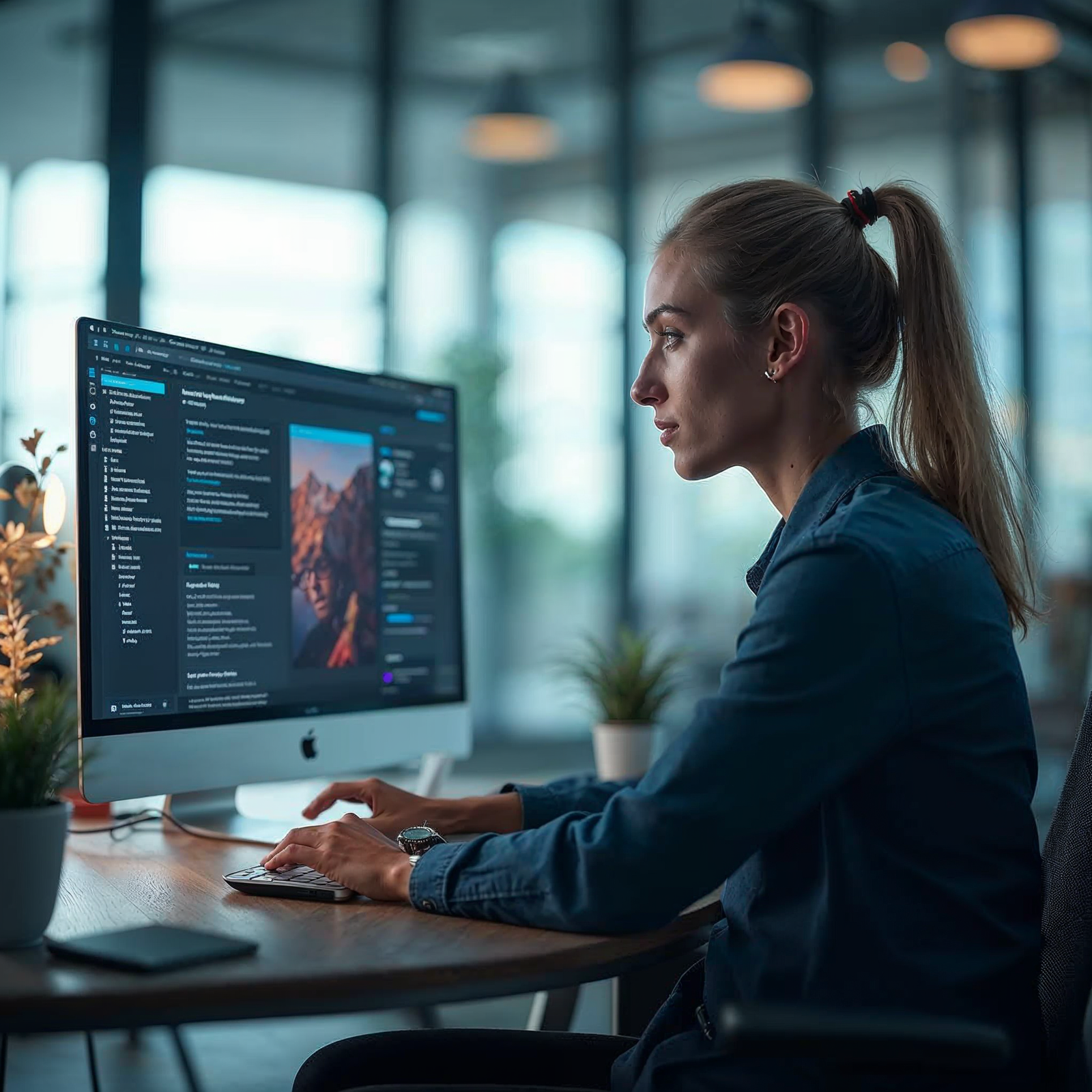
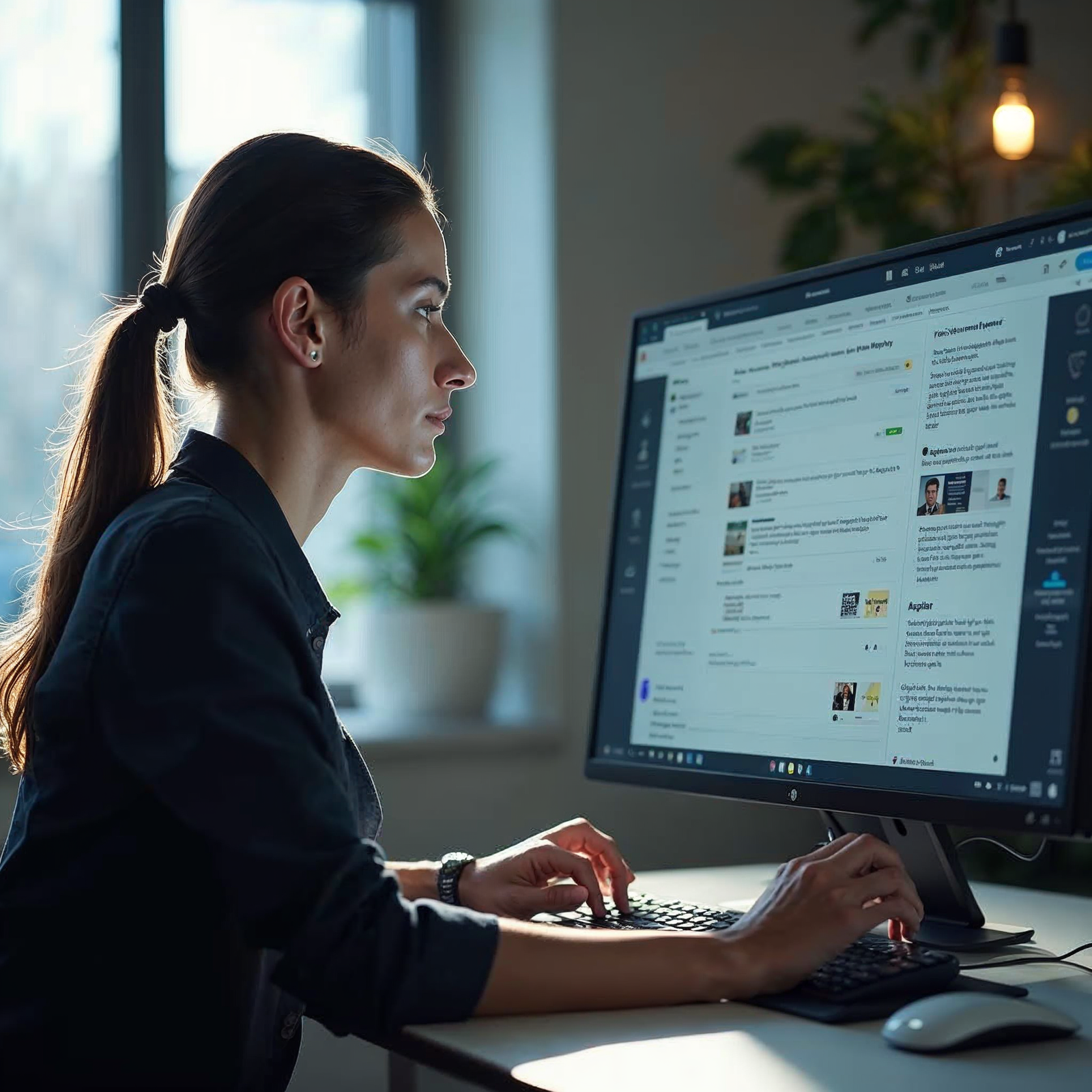
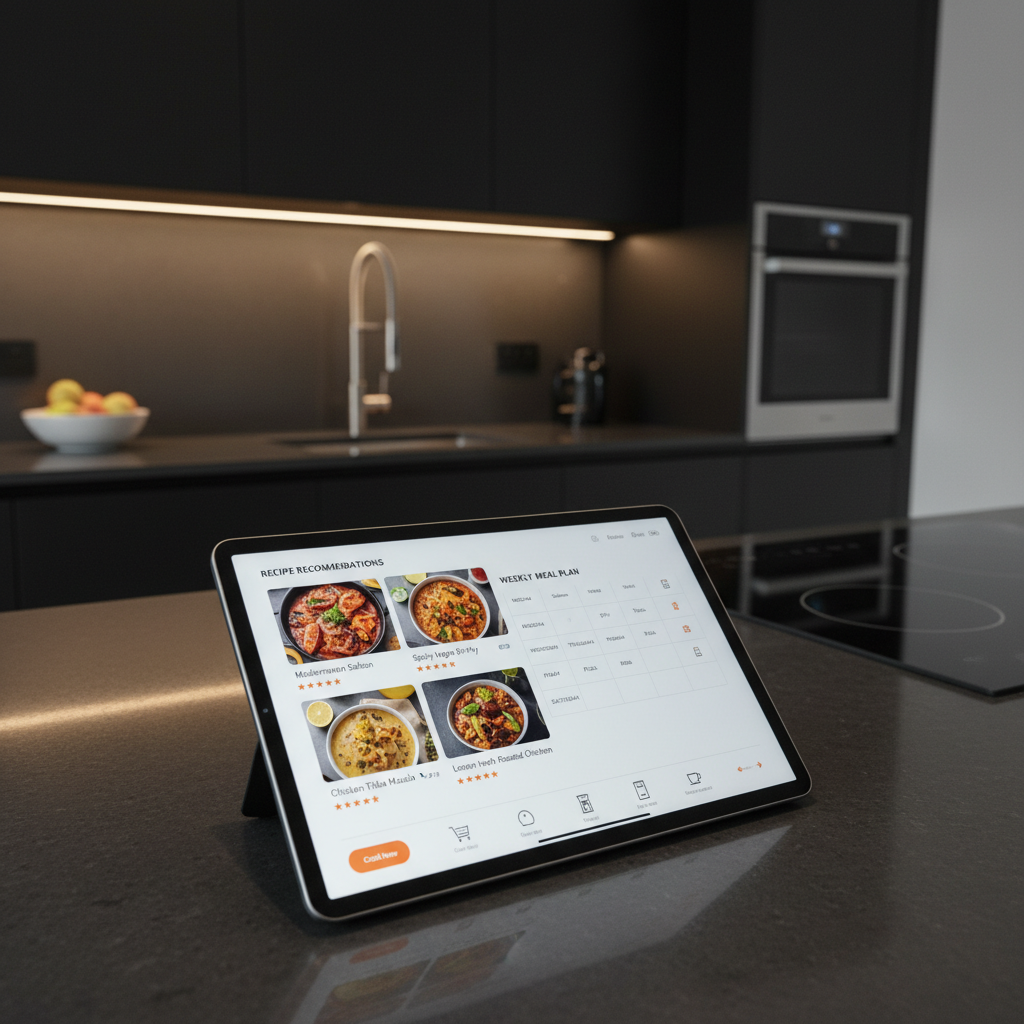
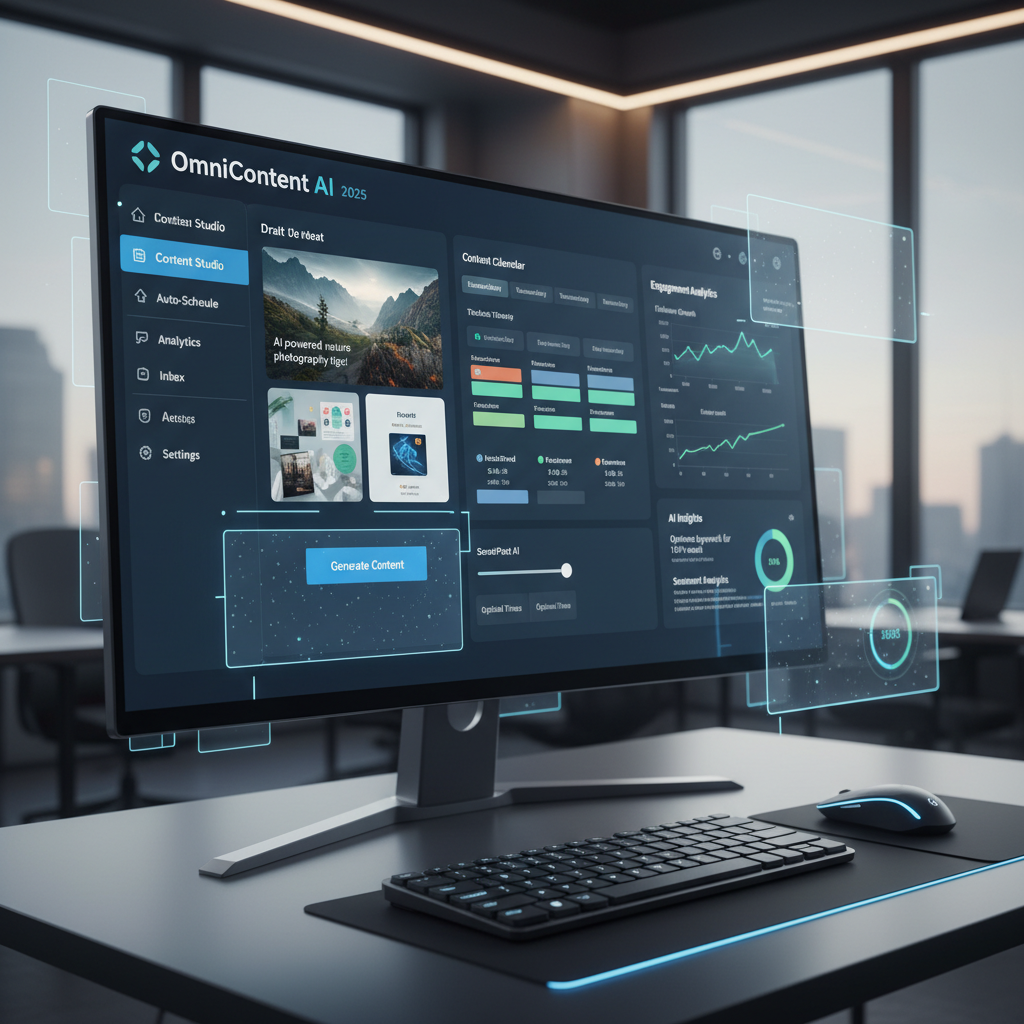
- Display their software’s user interface (UI) realistically on various devices (laptops, tablets, large desktop monitors) being used by diverse professionals in different work environments (home office, co-working space, corporate board room).
- Generate “in-use” scenarios showing individuals collaborating effectively, solving problems, or achieving goals with their software, giving a human touch to a technical product.
- Create conceptual mockups for new features or dashboards before they are even developed, allowing for early feedback and compelling marketing material for beta programs.
This helps SyncFlow illustrate the tangible impact and user experience of their product, making abstract software benefits more relatable and appealing to potential clients.
4. Cosmetics and Skincare: Diversity, Texture, and Results
A skincare brand, Glow & Bloom, emphasizes natural ingredients and visible results. AI mockups are invaluable for them:
- Generating product bottles and jars in elegant bathroom settings, amidst natural plants, or on clean, minimalist surfaces, aligning with their brand aesthetic.
- Showcasing product textures (creams, serums, oils) on diverse skin tones, emphasizing how they look and feel for a wide audience.
- Creating aspirational lifestyle shots of individuals with healthy, glowing skin, subtly suggesting the product’s benefits without making explicit, potentially unverified claims.
This enables Glow & Bloom to highlight product attributes and benefits through visually appealing and inclusive imagery, building trust and desire among a broad consumer base.
5. Home Goods and Decor: Virtual Staging and Lifestyle Integration
An online retailer specializing in unique home decor items, Nest & Nook, faces the challenge of helping customers visualize how products fit into their homes. With AI mockups, they can:
- Place a new throw pillow on various sofa styles in different living room aesthetics (boho, modern, farmhouse, Scandinavian), giving customers a clear idea of how it would look.
- Show a piece of wall art hanging above different types of furniture in various lighting conditions.
- Virtually stage entire rooms with their products, allowing customers to envision a cohesive look without hiring an interior designer or staging a physical space.
This drastically improves the customer’s ability to imagine products in their own environment, reducing purchase hesitancy and potentially lowering return rates due to mismatched expectations.
These examples underscore that AI mockups are not a niche tool but a versatile solution with broad applicability, empowering businesses across sectors to create compelling, cost-effective, and highly engaging visual content at scale.
Frequently Asked Questions
Q: What exactly are AI mockups?
A: AI mockups are high-quality, photorealistic images of products generated using artificial intelligence, typically from a text description (prompt) and an existing product image. Unlike traditional mockups that rely on physical photography, 3D rendering, or pre-made templates, AI models create entirely new, unique scenes with your product seamlessly integrated into diverse environments, often featuring AI-generated models, props, and lighting, all without the need for a physical photoshoot or complex 3D software.
Q: How do AI mockups differ from traditional 3D renders?
A: While both can produce photorealistic images, the key differences lie in the creation process and skill requirement. Traditional 3D rendering involves skilled artists manually modeling products, designing environments, setting up lighting, and rendering images using specialized software. This is highly precise but time-consuming and expensive. AI mockups, on the other hand, are generated through text prompts and an existing product image, leveraging large language and image models. They are significantly faster and cheaper to produce, requiring prompt engineering skills rather than deep 3D artistry. AI mockups excel at generating diverse contextual scenes quickly, whereas 3D rendering offers ultimate control over every minute detail of an object or environment.
Q: What skills do I need to create AI mockups?
A: The primary skill required is “prompt engineering,” which is the art of crafting effective text descriptions to guide the AI. This involves learning how to be specific, use appropriate keywords, understand negative prompts, and iterate on your descriptions to achieve desired results. While no coding or advanced graphic design skills are strictly necessary for basic generation, a good eye for aesthetics, an understanding of marketing objectives, and basic image editing knowledge (for minor post-production tweaks) are beneficial.
Q: Are AI-generated mockups truly unique?
A: Yes, AI-generated mockups are designed to be unique. While the AI models are trained on vast datasets of existing images, they generate novel compositions, lighting, and scenarios that are not direct copies of any single source image. The combination of your specific product, your unique text prompt, and the probabilistic nature of AI generation ensures that each output is a distinct creation. The vast number of potential variations means the likelihood of generating an identical image is practically zero.
Q: Can AI mockups replace professional photographers entirely?
A: While AI mockups can significantly reduce the need for traditional photoshoots for many types of marketing content, they are unlikely to entirely replace professional photographers. For highly specialized shoots, complex product interactions, specific brand authenticity requirements, or unique artistic visions, the nuanced eye and human control of a professional photographer remain invaluable. AI is a powerful tool that complements and augments creative teams, freeing photographers to focus on more complex, high-value projects rather than repetitive tasks. It democratizes access to visuals but doesn’t negate the art of human photography.
Q: What are the typical costs associated with AI mockup tools?
A: Costs vary widely. Many AI mockup tools and generative AI platforms (like Midjourney, Stable Diffusion’s web interfaces, or DALL-E) operate on a subscription model, often with tiered pricing based on the number of image generations, features, or computational power (“credits”). Free trials or limited free tiers are common. Expect to pay anywhere from $10 to $100+ per month for professional-grade access, depending on your usage volume and the specific platform’s capabilities. This is generally a fraction of the cost of a single professional photoshoot.
Q: How can I ensure brand consistency with AI-generated visuals?
A: Ensuring brand consistency requires a strategic approach. Use your actual product images as consistent inputs for the AI. Develop a detailed “AI visual style guide” that includes preferred aesthetic keywords (e.g., “minimalist,” “vibrant,” “vintage”), color palettes, lighting styles, and ideal model types, and incorporate these elements into your prompts. Regularly review AI outputs against your brand guidelines. For critical assets, minor post-production in traditional photo editing software might be necessary. Some advanced platforms also allow fine-tuning AI models on your specific brand imagery for even greater consistency.
Q: What are the ethical implications of using AI mockups?
A: Key ethical considerations include: (1) Copyright and ownership of AI-generated content (which is still a legally evolving area). (2) Bias in training data, which can lead to stereotypical or non-inclusive outputs; brands must actively prompt for diversity. (3) Transparency with consumers about using AI-generated visuals to maintain trust. (4) The potential for misrepresentation or deepfakes if AI is used to create misleading product claims or scenarios. Responsible use requires diligence in prompt selection, review processes, and adherence to ethical guidelines.
Q: Can AI generate mockups for any product?
A: AI can generate mockups for a vast range of products, from physical goods (fashion, cosmetics, electronics, food and beverage, home decor) to digital interfaces (software UIs on devices). The quality and realism can vary depending on the product’s complexity, the clarity of the input image, and the sophistication of the AI model. Products with highly intricate details or complex interactive elements might require more sophisticated prompting or post-processing, but generally, AI is highly versatile.
Q: How do I get started with AI mockups for my brand?
A: Begin by identifying your specific visual content needs (e.g., e-commerce product pages, social media ads, website banners). Explore popular generative AI platforms or dedicated AI mockup tools (e.g., Midjourney, Stable Diffusion variants, or specialized mockup generators). Start with a clear, isolated image of your product. Experiment with simple prompts first, gradually adding detail and modifiers. Pay attention to how different keywords impact the output. Review and iterate, saving the most successful prompts and images. Consider starting with a trial or a lower-cost subscription to gain experience before scaling up.
Key Takeaways
The advent of AI-powered mockups marks a significant turning point in brand presentation and visual content creation. Here are the essential points to remember:
- Unprecedented Cost Savings: AI mockups dramatically reduce expenses associated with traditional photoshoots, models, studios, and extensive post-production, making high-quality visuals accessible to businesses of all sizes.
- Boosted Engagement and Conversion: By enabling the creation of highly diverse, personalized, and contextually rich product visuals at scale, AI helps brands connect more deeply with audiences, drive higher engagement, and improve conversion rates.
- Streamlined Creative Workflow: AI accelerates content generation from weeks to minutes, allowing for rapid prototyping, instant iteration, and greater creative agility in marketing campaigns.
- Democratization of Design: This technology empowers even small businesses and individuals with limited design resources to produce professional-grade visual assets, leveling the playing field in competitive markets.
- Strategic Business Advantage: Brands leveraging AI mockups gain a competitive edge through faster time-to-market, enhanced personalization capabilities, and the ability to test and optimize visual content continuously.
- Continuous Evolution: The field of generative AI is rapidly advancing, promising even more sophisticated capabilities like 3D and video mockups, AR/VR integration, and hyper-personalization, further transforming future brand presentation.
- Challenges and Ethics Require Diligence: While powerful, adopting AI requires navigating challenges such as prompt engineering, maintaining brand consistency, understanding copyright, and addressing ethical considerations related to bias and misrepresentation.
- Complementary, Not Replacement: AI mockups serve as a powerful complement to traditional creative methods, augmenting the capabilities of human designers and photographers rather than fully replacing them.
Conclusion
The landscape of brand presentation is undergoing a profound transformation, and at the heart of this revolution are AI-powered mockups. What was once a prohibitively expensive and time-consuming endeavor is now becoming an agile, cost-effective, and infinitely scalable process. Brands are no longer constrained by the limitations of physical production or the linear costs of human-intensive rendering; they are empowered by intelligent algorithms that can conjure any scene, any context, and any style with remarkable speed and realism.
From the burgeoning e-commerce startup needing to visualize hundreds of products on a budget, to the established enterprise seeking to personalize marketing campaigns at an unprecedented scale, AI mockups offer a compelling and indispensable solution. They are not merely a fancy new tool; they represent a fundamental shift in how visual stories are told, how products are introduced, and how customer relationships are built in the digital age.
Embracing AI mockups is more than just adopting new technology; it is about embracing a future where creativity is unbounded by traditional constraints, where every brand can tell its story with compelling, diverse, and engaging visuals, and where the competitive advantage belongs to those who dare to innovate. The time to revolutionize your brand presentation is now, by harnessing the incredible power of AI to cut costs, boost engagement, and secure your place at the forefront of visual marketing innovation.

























Leave a Reply