


Introduction: Reclaiming Your Inbox from the Deluge
In our hyper-connected world, email remains an indispensable communication tool for personal and professional interactions. However, what was once a beacon of efficiency has, for many, transformed into a relentless torrent of notifications, spam, newsletters, and low-priority messages. The average professional receives well over a hundred emails daily, a significant portion of which is unsolicited or irrelevant. This constant barrage not only consumes valuable time but also exacts a heavy toll on productivity, focus, and mental well-being. The act of sifting through an overcrowded inbox to find truly important communications has become a daily chore, leading to missed opportunities, delayed responses, and increased stress.
The traditional methods of email management, relying on manual sorting, folder creation, and basic keyword filters, often prove insufficient against the sophisticated tactics of modern spammers and the sheer volume of legitimate-but-unimportant emails. We’ve all experienced the frustration of important messages getting lost in the noise or spending precious minutes deleting dozens of spam emails. This is where Artificial Intelligence (AI) steps in, not just as a futuristic concept but as a tangible, powerful solution to an everyday problem. AI-powered tools are fundamentally reshaping how we interact with our inboxes, moving beyond simplistic rules to intelligent, adaptive systems that learn our preferences, identify genuine threats, and elevate the truly important conversations.
This comprehensive guide will delve deep into the transformative potential of AI in email management. We will explore how AI technologies, such as machine learning and natural language processing, are being leveraged to build smarter, more resilient email filters, effectively silencing the spam. Beyond just filtering, we will also uncover how AI empowers us to prioritize our inboxes, ensuring that critical messages stand out and receive the attention they deserve. Prepare to discover a new paradigm of email productivity, where your inbox becomes a curated space designed to support your focus and enhance your efficiency, rather than a source of constant distraction.
The Ever-Growing Email Problem: A Daily Battle for Attention
Email overload is not merely an inconvenience; it’s a pervasive problem with significant ramifications for individuals and organizations alike. Consider the statistics: it’s estimated that nearly 350 billion emails are sent and received worldwide every day, a number that continues to climb. A substantial percentage of these, often upwards of 50%, consists of spam, phishing attempts, or unsolicited marketing. This means that for every two legitimate emails you receive, there’s likely one or more messages clamoring for your attention that offers little to no value, and potentially poses a risk.
The impact of this deluge is multifaceted. For starters, there’s the sheer time drain. Research suggests that professionals spend, on average, over two hours each day managing their inboxes. A significant portion of this time is dedicated to deleting, archiving, or scanning irrelevant emails. This isn’t just lost time; it’s time taken away from core tasks, strategic thinking, and creative work. The constant context switching required to check emails repeatedly throughout the day fragments attention, making it harder to engage deeply with complex tasks. Each notification, even if quickly dismissed, forces a momentary shift in focus, which can take several minutes to fully recover from.
Beyond productivity, there are significant security implications. Phishing attacks, ransomware, and other cyber threats frequently arrive via email, disguised as legitimate communications. While traditional filters catch many of these, sophisticated attacks often slip through, relying on social engineering and expertly crafted messages to trick recipients. The sheer volume of emails makes it harder for human users to remain vigilant, increasing the likelihood of falling victim to a malicious link or attachment. Moreover, the constant anxiety of missing an important email or, conversely, clicking on a dangerous one, contributes to digital stress and burnout. The “ping” of a new email often triggers a dopamine hit, creating a compulsive checking habit that further entrenches the problem.
The problem isn’t just spam, though spam is a major component. It’s also the vast quantity of newsletters, promotional offers, social media notifications, and internal communications that, while not malicious, contribute to an overwhelming inbox. Many of these are legitimate subscriptions or services that we opted into at some point, but they still add to the cognitive load of deciding what to open, what to read, and what to ignore. This highlights the need for a solution that can not only identify and block outright threats but also intelligently categorize and prioritize the sheer volume of information, allowing us to focus on what truly matters.
Traditional Filtering vs. AI: A Paradigm Shift in Email Security
For decades, email filtering has relied on a set of fundamental principles: keyword matching, sender blacklists/whitelists, and rule-based systems. These methods, while effective to a degree, have inherent limitations that leave them vulnerable to the ever-evolving tactics of spammers and the complexities of modern email communication.
Traditional Filtering Mechanisms:
- Keyword Matching: Filters would flag emails containing suspicious words or phrases like “viagra,” “lottery winner,” or “urgent financial request.” While simple, spammers quickly learned to bypass this by using variations, misspellings, or embedding text in images.
- Blacklists and Whitelists: Blacklists block emails from known spamming domains or IP addresses. Whitelists, conversely, allow emails only from pre-approved senders. Both require constant manual updates and are reactive rather than proactive. Blacklists are easily circumvented by spammers using new domains, and whitelists can be restrictive and lead to legitimate emails being blocked.
- Rule-Based Systems: Users or administrators can set up rules, such as “move all emails from sender X to folder Y,” or “delete emails with ‘free money’ in the subject line.” These are useful for specific, predictable scenarios but are rigid. They cannot adapt to new threats or nuances in language, making them high-maintenance and prone to errors (false positives or negatives).
- Heuristic Analysis: More advanced traditional filters use heuristics, which are sets of predefined rules that analyze various email characteristics like sender reputation, formatting irregularities, presence of executable attachments, and unusual header information. While better than simple keyword matching, these are still based on fixed rules and struggle with subtle variations.
These methods are like a static fortress, designed to defend against known attack patterns. The problem is that spammers are agile and constantly innovating. They use polymorphic techniques, changing their language, sender addresses, and even the underlying code to evade detection. What worked yesterday might be ineffective today. This constant arms race leaves traditional filters perpetually playing catch-up, requiring frequent updates and manual intervention.
The AI Advantage: A Dynamic and Adaptive Defense
AI, particularly through machine learning (ML), represents a fundamental paradigm shift. Instead of relying on rigid, pre-programmed rules, AI systems learn from vast datasets of emails, identifying patterns and anomalies that humans or static rules would miss. This makes them significantly more sophisticated, proactive, and adaptive.
- Learning from Data: ML algorithms are trained on millions of emails, labeled as either “spam” or “ham” (legitimate email). They analyze numerous features – not just keywords, but also sentence structure, grammar, sender behavior, recipient engagement, time of sending, IP reputation, embedded links, image content, and even emotional tone.
- Pattern Recognition: AI can detect subtle correlations between various features that indicate spam. For example, a combination of unusual sender domain, slightly off grammar, and a link to an unknown shortener might collectively signal spam, even if individually each element seems benign.
- Adaptability and Evolution: Crucially, AI models can continuously learn and adapt. As new spam tactics emerge, the models can be retrained with new data, allowing them to evolve their detection capabilities without requiring manual rule updates. This makes them significantly more resilient to novel threats.
- Contextual Understanding: Natural Language Processing (NLP), a branch of AI, allows systems to understand the context and sentiment of an email. This means AI can differentiate between a legitimate email about an “urgent payment” from your bank and a phishing attempt using similar phrasing.
- Personalization: AI can also learn individual user preferences. If you consistently mark certain types of newsletters as spam, the system can learn to filter similar future emails for you, even if they wouldn’t be classified as general spam for others. This level of personalization is impossible with traditional rule-based systems.
In essence, traditional filtering builds a wall based on known threats, while AI builds a dynamic, intelligent guard that learns to recognize the intent and context of every incoming message, constantly improving its ability to protect and prioritize your inbox.
How AI Learns to Filter Spam: The Science Behind the Silence
The magic of AI-powered spam filtering isn’t really magic; it’s the result of sophisticated algorithms and vast amounts of data. The core of this process lies in machine learning, where computers learn from experience without being explicitly programmed for every single scenario. Let’s break down the key mechanisms:
1. Data Collection and Labeling
The foundation of any effective machine learning model is a massive, diverse, and accurately labeled dataset. For spam filtering, this means collecting millions, if not billions, of emails and categorizing them as either “spam” or “ham” (non-spam). This labeling is often done manually by human annotators in the initial stages, or through feedback from users marking emails as spam. The quality and breadth of this data directly impact the AI’s performance.
2. Feature Extraction
Once the data is collected, the AI system doesn’t “read” an email like a human. Instead, it extracts numerous “features” from each email. These features are quantifiable characteristics that the algorithm can process. Examples include:
- Textual Features:
- Individual words (unigrams), pairs of words (bigrams), or sequences of words (n-grams).
- Presence of specific keywords (e.g., “discount,” “free,” “limited offer”).
- Sentence length, grammar errors, unusual capitalization.
- Emotional tone (sentiment analysis).
- Ratio of text to images, or text to links.
- Header Features:
- Sender’s IP address and its reputation score.
- Sender’s domain age and reputation.
- Email authentication records (SPF, DKIM, DMARC) – whether the sender is who they claim to be.
- Number of recipients.
- Geographical origin of the email server.
- Structural Features:
- Presence of suspicious attachments (e.g., executables, ZIP files).
- Unusual HTML formatting or embedded scripts.
- Obfuscated URLs or URL shorteners.
- Number and type of links within the email.
- Behavioral Features (Post-delivery):
- Click-through rates on links (in aggregate, anonymized data).
- Open rates.
- Whether the email was moved to spam by other users.
- Whether the sender has been blocked by other users.
3. Machine Learning Algorithms
With features extracted, these numerical representations are fed into machine learning algorithms. Common algorithms used in spam filtering include:
- Naive Bayes: A probabilistic classifier that calculates the probability of an email being spam based on the occurrence of certain words or features. It’s simple yet surprisingly effective.
- Support Vector Machines (SVMs): These algorithms find the optimal hyperplane that separates spam from ham in a high-dimensional feature space.
- Decision Trees and Random Forests: These create a tree-like model of decisions and their possible consequences, where each internal node represents a “test” on an attribute (e.g., “does this email contain a suspicious link?”), and each leaf node represents a class label (spam or ham).
- Deep Learning (Neural Networks): Particularly powerful for complex pattern recognition, deep learning models (like Recurrent Neural Networks for sequential data like text, or Convolutional Neural Networks for image content) can automatically learn intricate features from raw data, often outperforming traditional ML methods by detecting very subtle indicators of spam.
During the training phase, the algorithm adjusts its internal parameters to minimize the error in classification – meaning it tries to correctly classify as many emails as possible as either spam or ham based on the labeled dataset. This process involves complex mathematical optimization.
4. Continuous Learning and Adaptation
The learning process doesn’t stop after initial training. Modern AI spam filters are designed to be dynamic:
- User Feedback: When you mark an email as spam or “not spam,” you are actively contributing to the model’s learning. This feedback loop helps the AI personalize its filtering and improve its accuracy over time for your specific inbox.
- Global Feedback Loops: Aggregated, anonymized feedback from millions of users worldwide helps the AI quickly identify new spam campaigns and adapt its detection patterns across the entire network. If many users suddenly mark similar emails from a new domain as spam, the system learns to recognize this new threat rapidly.
- Threat Intelligence Updates: AI systems often integrate with global threat intelligence feeds, which provide real-time information about new malware, phishing campaigns, and compromised domains. This allows for proactive blocking before new spam even reaches the training data.
By continuously analyzing, learning, and adapting, AI spam filters offer a far more robust and intelligent defense against unsolicited and malicious emails than any static, rule-based system could ever achieve. They evolve with the threats, providing a dynamic shield for your inbox.
Beyond Spam: AI for Smart Email Prioritization
While silencing spam is a significant win, AI’s capabilities extend far beyond mere filtration. One of its most powerful applications is in intelligent email prioritization, transforming a chaotic inbox into a streamlined workflow. The goal is to ensure that your most important messages are surfaced immediately, while less critical ones are neatly organized for later review, or even automated away entirely.
The Challenges of Prioritization:
Humans struggle with email prioritization for several reasons:
- Volume: Too many emails make it hard to quickly distinguish between urgent and non-urgent.
- Urgency Cues: Subject lines can be misleading, and important information might be buried deep within an email.
- Emotional Bias: We might open emails from certain senders out of habit or curiosity, even if they’re not critical.
- Cognitive Load: Constantly making prioritization decisions is mentally exhausting.
AI addresses these challenges by applying advanced analytical techniques to understand the true context and importance of each email.
How AI Prioritizes Emails:
- Sender Analysis:
- Relationship History: AI learns which senders you frequently interact with, reply to, or keep in your address book. Emails from these “VIP” senders are given higher priority.
- Organizational Hierarchy: For corporate users, AI can understand internal reporting structures, prioritizing messages from managers, direct reports, or key collaborators.
- Reputation: Beyond spam, AI can assess the general trustworthiness and relevance of a sender’s domain, even for legitimate marketing emails, helping to sort out valuable newsletters from unwanted promotions.
- Content and Contextual Understanding (NLP):
- Keyword and Phrase Detection: Not just for spam, but for importance. AI identifies terms like “urgent,” “deadline,” “action required,” “meeting,” or specific project names relevant to your work.
- Sentiment Analysis: AI can gauge the emotional tone of an email. A message with a negative or anxious sentiment might be flagged as potentially urgent, especially if it’s from a client.
- Intent Recognition: Advanced NLP can infer the sender’s intent. Is it an information request, a task assignment, a meeting invitation, or a simple update? This helps in categorizing emails for appropriate action.
- Behavioral Patterns:
- Your Past Actions: AI observes which types of emails you open immediately, reply to quickly, move to specific folders, or mark as important. It learns your personal definition of “important.”
- Time Sensitivity: AI can recognize patterns indicating time-sensitive requests, such as calendar invitations for upcoming meetings, flight updates, or delivery notifications.
- Engagement Metrics: For newsletters, AI can track whether you actually open and click links within them, prioritizing those you engage with and deprioritizing others.
- Integration with Other Tools:
- Many AI email tools integrate with your calendar, CRM, project management software, and other business applications. This allows them to contextualize emails further. For example, an email about a client you have a meeting with today will be prioritized.
Practical Applications of AI Prioritization:
- Smart Inbox Categories: Automatically sorts emails into “Primary,” “Promotions,” “Social,” “Updates,” “Forums,” and custom categories, like Gmail’s tabs.
- VIP Notifications: Only alerts you for emails from designated important contacts or those flagged as highly urgent by AI.
- Digest Emails: Bundles less critical emails (e.g., newsletters, daily reports) into a single digest delivered at a specific time, reducing constant interruptions.
- Actionable vs. Informational: Separates emails requiring a response or action from those that are purely for information, helping you focus on tasks.
- Automated Follow-ups: Some AI tools can even draft polite follow-up reminders for emails that haven’t received a reply within a certain timeframe, especially for critical threads.
By intelligently prioritizing your emails, AI not only reduces the mental load of managing your inbox but also empowers you to concentrate on high-value tasks, improve response times for critical communications, and ultimately achieve a more serene and productive digital life. It transforms the inbox from a reactive chore into a proactive productivity hub.
Key AI Technologies at Play in Email Management
The intelligent email filtering and prioritization we’ve discussed don’t rely on a single AI technique but rather a sophisticated orchestration of several interconnected technologies. Understanding these components helps demystify how these tools work and why they are so effective.
1. Machine Learning (ML)
At the core of almost all AI-powered email solutions is machine learning. ML algorithms enable systems to learn from data without explicit programming for every scenario. In email management, ML models are trained on vast datasets of labeled emails (spam/ham, important/unimportant) to identify complex patterns and make predictions. Key ML techniques include:
- Supervised Learning: This is the most common approach, where models learn from input-output pairs. For example, an email and its corresponding label (spam/ham). Classification algorithms like Naive Bayes, Support Vector Machines (SVMs), and Random Forests are widely used here to categorize emails.
- Unsupervised Learning: Used for tasks like clustering similar emails together without prior labels. This can help identify new types of spam or group newsletters by topic.
- Reinforcement Learning: While less common for direct filtering, it can be used in dynamic prioritization systems, where the system learns the best strategy to present emails based on user interaction and feedback over time, aiming to maximize user satisfaction or productivity.
2. Natural Language Processing (NLP)
Emails are primarily text, making Natural Language Processing crucial. NLP is a branch of AI that focuses on enabling computers to understand, interpret, and generate human language. Its applications in email management are extensive:
- Text Classification: Identifying the type of email (e.g., invoice, marketing, personal, support request) based on its content.
- Keyword and Phrase Extraction: Beyond simple keyword matching, NLP can identify key topics, entities (people, organizations, locations), and critical phrases within an email.
- Sentiment Analysis: Determining the emotional tone of an email (positive, negative, neutral, urgent, anxious). This is vital for prioritizing customer support emails or detecting potential issues.
- Named Entity Recognition (NER): Identifying and classifying names, dates, organizations, and other specific entities mentioned in the text, which helps in contextual understanding and integration with other data.
- Language Detection: Automatically identifying the language of an email to apply language-specific filtering rules or routing.
- Grammar and Syntax Analysis: Detecting unusual sentence structures or grammatical errors that are often indicators of spam or phishing attempts.
3. Deep Learning
A subset of machine learning, deep learning uses neural networks with multiple layers (hence “deep”) to learn increasingly abstract representations of data. Deep learning models, particularly Recurrent Neural Networks (RNNs) and Transformers, have revolutionized NLP tasks and are increasingly applied to email content analysis:
- Contextual Understanding: Deep learning models excel at understanding the context of words within a sentence and across an entire email, leading to more accurate classification than traditional ML methods that might treat words in isolation.
- Anomaly Detection: They can detect highly sophisticated and novel spam patterns that might elude simpler models, by learning subtle deviations from normal email structures and language.
- Image and Attachment Analysis: Deep learning can be used in Computer Vision tasks to analyze images within emails (e.g., detecting hidden text, suspicious logos) and even scrutinize the content of attachments for malicious code or unusual characteristics.
4. Predictive Analytics
This technology uses historical data to predict future outcomes. In email management, predictive analytics can:
- Proactive Spam Detection: By analyzing trends in spam campaigns and sender behavior, predictive models can anticipate and block new threats even before they become widespread.
- Personalized Prioritization: Based on your past interactions, predictive models can forecast which emails you are most likely to engage with, open quickly, or reply to, thereby tailoring your inbox experience.
- Resource Optimization: For email service providers, predictive analytics can help allocate resources more efficiently, anticipating peak email traffic and potential server loads.
5. Behavioral Analytics
This involves analyzing user and system behavior to identify patterns. In the context of email:
- User Behavior: Monitoring how you interact with different types of emails (open, reply, delete, forward, mark as spam) helps personalize filtering and prioritization.
- Sender Behavior: Analyzing the sending patterns of an email address or domain (e.g., sudden burst of emails, unusual sending times, sending to many unrelated recipients) can be a strong indicator of malicious activity or spam.
- Network-wide Behavior: Aggregating behavioral data across millions of users helps identify emerging threats or large-scale spam campaigns very quickly.
By combining these powerful AI technologies, modern email management systems offer a dynamic, intelligent, and highly effective defense against spam and a personalized approach to inbox prioritization, significantly enhancing user productivity and security.
Benefits of AI-Powered Email Management: More Than Just a Clean Inbox
The adoption of AI in email management brings a cascade of benefits that extend far beyond simply having a cleaner inbox. These advantages impact productivity, security, and overall digital well-being for both individuals and organizations.
1. Significant Time Savings and Increased Productivity
- Reduced Sifting Time: AI automatically handles the tedious task of sorting and filtering, eliminating the need for users to manually delete dozens of spam emails or endlessly scroll through irrelevant messages to find the important ones.
- Improved Focus: By minimizing distractions from non-critical emails and reducing the cognitive load of inbox management, AI allows users to maintain focus on high-priority tasks and deeper work, leading to greater output and higher quality results.
- Faster Response Times: Critical emails are surfaced immediately, ensuring that important communications, client requests, or urgent internal matters are addressed promptly, improving efficiency and customer satisfaction.
- Automated Workflows: Advanced AI tools can automate routine tasks, such as flagging specific emails for follow-up, archiving certain types of newsletters, or even suggesting quick replies, further streamlining workflows.
2. Enhanced Security Against Evolving Threats
- Proactive Threat Detection: AI’s ability to learn and adapt means it can identify and block new and sophisticated phishing, malware, and ransomware attacks much faster and more effectively than traditional, rule-based systems. It spots subtle anomalies that human eyes or static filters would miss.
- Reduced Risk of Human Error: By automatically flagging suspicious emails, AI significantly reduces the chances of users inadvertently clicking on malicious links or opening dangerous attachments, bolstering an organization’s overall cybersecurity posture.
- Real-time Protection: AI models are constantly updating and learning from global threat intelligence, providing near real-time defense against the latest attack vectors.
3. Personalized Inbox Experience
- Tailored Prioritization: AI learns your individual email habits, preferences, and relationships, customizing your inbox to highlight messages that are most relevant and important to you specifically. This means fewer false positives for “important” messages and a truly personalized stream.
- Contextual Relevance: Beyond simple sender/subject analysis, AI understands the context of your work and personal life (e.g., current projects, upcoming meetings) to prioritize emails that are contextually relevant to your immediate needs.
- Reduced Digital Clutter: By intelligently categorizing newsletters, promotions, and social notifications, AI helps declutter your inbox, presenting a clean and organized interface that is less overwhelming.
4. Better Decision Making and Strategic Focus
- Clearer Overview: With AI handling the noise, your inbox becomes a clearer reflection of your true communication priorities, allowing for better strategic decision-making based on the most relevant information.
- Reduced Stress and Burnout: The constant anxiety associated with email overload and the fear of missing something important is significantly mitigated, leading to a less stressful digital experience and preventing burnout.
- Improved Communication Flow: For teams, AI can help ensure that support tickets are routed to the correct department, project updates reach relevant team members, and urgent client communications are never overlooked.
5. Scalability and Efficiency for Organizations
- Consistent Enforcement: AI solutions can enforce consistent email security and categorization policies across an entire organization, ensuring uniform protection and efficiency for all employees.
- Reduced IT Burden: Automated filtering and prioritization reduce the manual workload on IT departments who previously spent time managing complex rulesets and responding to phishing incidents.
- Compliance Support: Advanced AI tools can aid in compliance by intelligently archiving or flagging emails based on regulatory requirements, improving data governance.
In essence, AI-powered email management transforms the inbox from a source of anxiety and distraction into a powerful tool for productivity, security, and focused work, ultimately contributing to a more efficient and less stressful digital life.
Choosing the Right AI Email Solution: What to Consider
With a growing number of AI-powered email solutions available, selecting the right one can feel daunting. The “best” solution largely depends on your specific needs, whether you’re an individual seeking personal productivity or an enterprise needing robust security and scalability. Here’s a guide to key considerations:
1. Core Functionality: Filtering vs. Prioritization vs. Automation
- Spam Filtering Accuracy: This is paramount. Look for solutions with high detection rates for spam, phishing, and malware, and low false positive rates (legitimate emails incorrectly flagged).
- Prioritization Capabilities: How intelligent is the system at sorting? Does it learn your personal habits? Can it create smart categories (e.g., “Primary,” “Promotions,” “Updates”)? Does it offer VIP sender recognition or urgency detection?
- Automation Features: Does it offer more than just filtering? Can it suggest replies, summarize emails, schedule follow-ups, or integrate with your calendar for automatic meeting updates?
2. Integration and Compatibility
- Email Client/Service Compatibility: Ensure the AI solution integrates seamlessly with your existing email provider (Gmail, Outlook, Apple Mail, custom mail servers). Some are standalone apps, others are plugins or built directly into the email service.
- Third-Party Integrations: For business users, check if it integrates with your CRM, project management tools, calendar, or other productivity software. Seamless integration enhances the AI’s ability to contextualize and prioritize.
- Platform Support: Is it available on desktop, web, and mobile? Consistent experience across devices is crucial.
3. Customization and Learning Capabilities
- Personalized Learning: Does the AI learn from your actions (marking as spam, replying quickly, moving to folders)? Can you “train” it to better understand your preferences over time?
- Rule Customization: While AI reduces the need for manual rules, some flexibility to create custom rules or exceptions can be beneficial for specific use cases.
- Feedback Mechanisms: How easy is it to provide feedback (e.g., “this is spam,” “this is important”) to help the AI improve?
4. Security and Privacy
- Data Handling: Understand how the service handles your email data. Is it anonymized? Encrypted? Do they sell or share your data with third parties? Review their privacy policy carefully.
- Compliance: For businesses, ensure the solution complies with relevant data protection regulations (e.g., GDPR, CCPA).
- Reputation: Choose reputable providers with a proven track record in email security and data privacy.
5. Performance and Reliability
- Accuracy: Look for solutions that boast high accuracy rates for both spam detection and legitimate email delivery. False positives (blocking important emails) can be more detrimental than some spam getting through.
- Latency: Does the AI processing add noticeable delays to email delivery? It shouldn’t significantly impact real-time communication.
- Scalability: For organizations, ensure the solution can handle your current and future email volume without performance degradation.
6. Cost and Pricing Model
- Free vs. Paid: Many basic AI features are integrated into major email services (like Gmail’s smart categories). Dedicated third-party solutions often come with subscription fees, which can vary based on features, number of users, and email volume.
- Value for Money: Evaluate the cost against the benefits received (time saved, increased security, reduced stress).
7. User Experience and Support
- Ease of Use: Is the interface intuitive? Is it easy to set up and manage?
- Customer Support: What kind of support is offered? Is it responsive and helpful?
By carefully evaluating these factors, you can select an AI email solution that not only silences the spam but also intelligently organizes and prioritizes your communications, transforming your inbox into a powerful productivity tool tailored to your needs.
Future Trends in AI Email Management: The Next Frontier
The evolution of AI in email management is far from over. As AI capabilities continue to advance, we can anticipate even more sophisticated and integrated solutions that will further redefine our relationship with our inboxes. Here are some key trends shaping the future:
1. Hyper-Personalization and Proactive Intelligence
- Truly Predictive Prioritization: Beyond current behavior, AI will leverage deeper contextual understanding (e.g., your calendar, current tasks, news relevant to your industry, even your mood detected via device usage patterns) to proactively identify what’s important *before* you even know it. Imagine an email about a competitor’s new product being surfaced because AI knows you’re preparing for a strategic review.
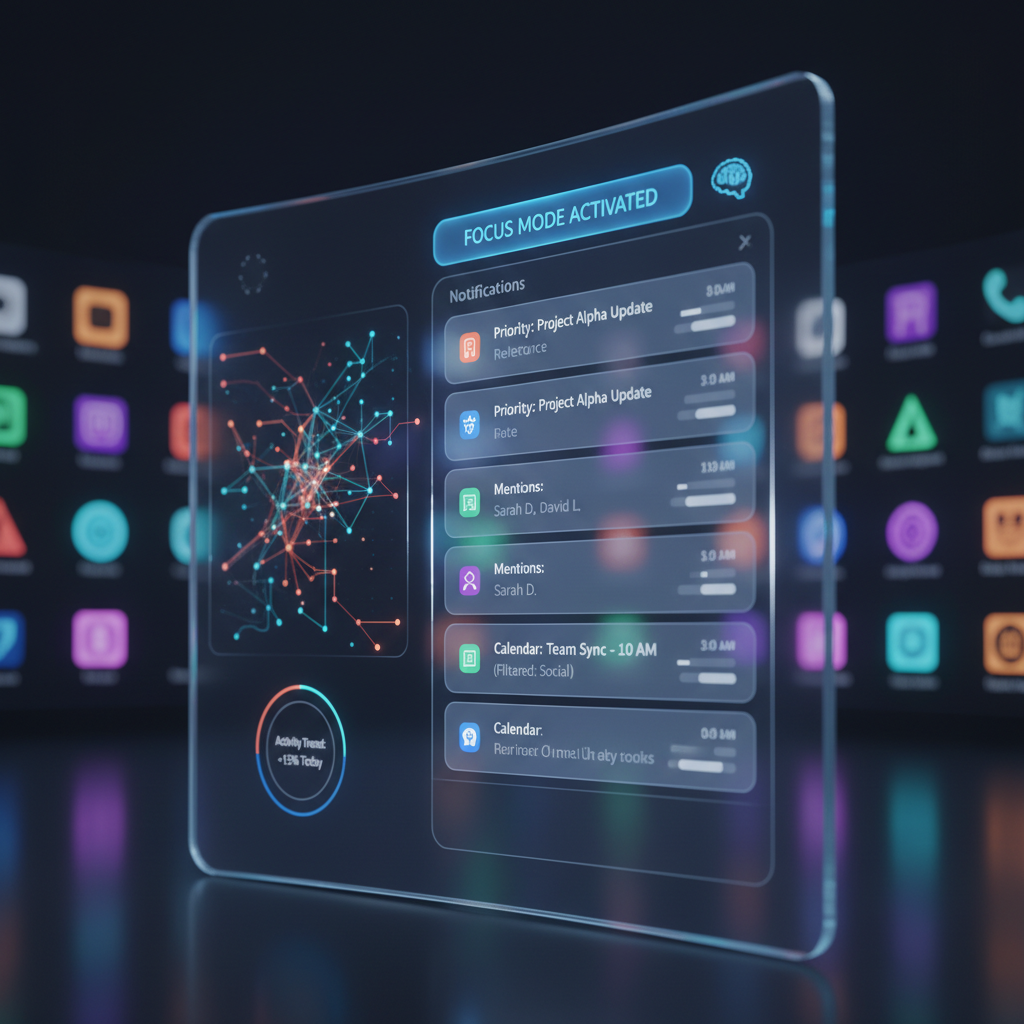
- Personalized “Do Not Disturb”: AI will learn your optimal work patterns and proactively manage notifications, silencing non-urgent emails during deep work sessions and only surfacing critical messages when you’re most receptive.
- Cross-Channel Context: AI will integrate email context with other communication channels (chat, video calls, project management tools) to provide a holistic view of your conversations and tasks, further enriching prioritization and reducing missed context.
2. Generative AI for Email Creation and Management
- Automated Drafts and Replies: Generative AI models will move beyond simple smart replies to drafting comprehensive email responses based on the context of the incoming message and your past communication style. This could range from acknowledging receipt to composing detailed proposals.
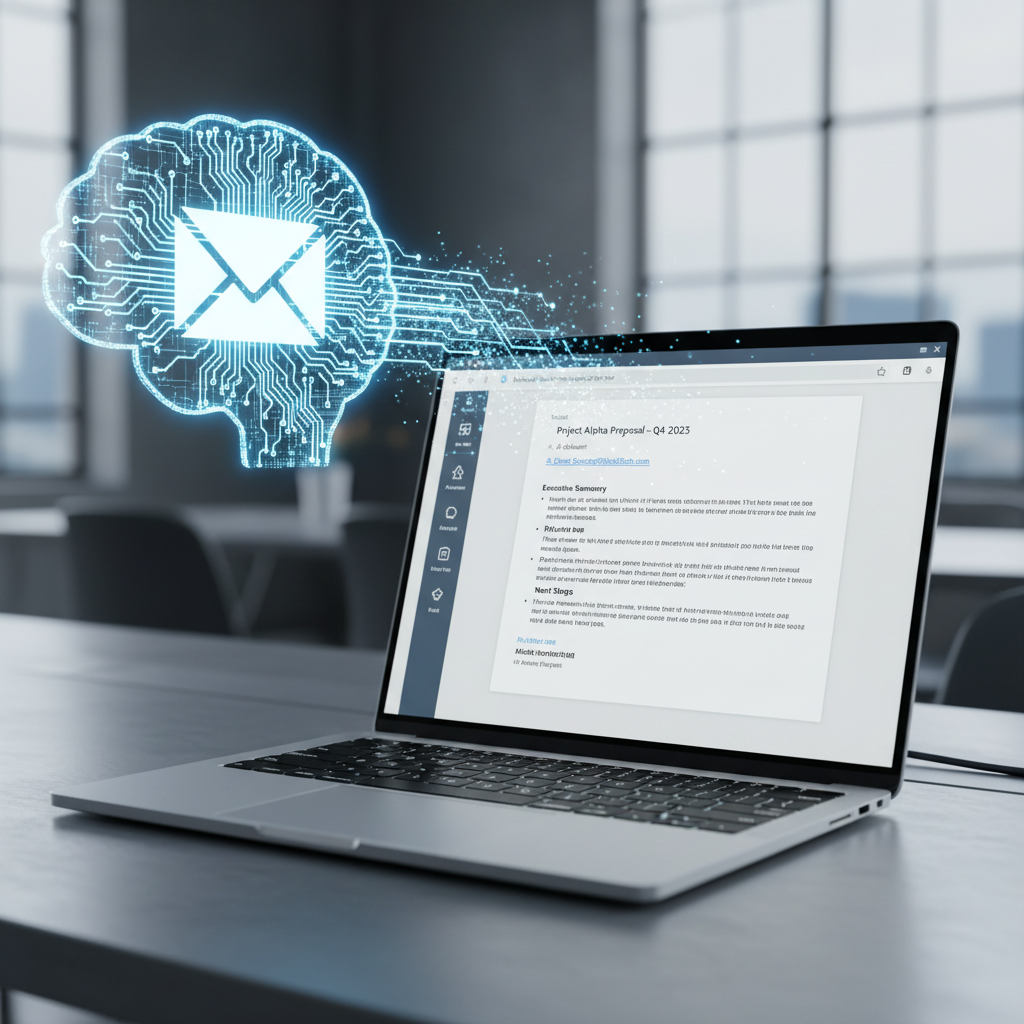
- Email Summarization and Condensation: For lengthy email threads, AI will be able to provide concise summaries, extracting key decisions, action items, and participants, saving significant reading time.
- Tone Adjustment and Politeness Filters: AI could help users refine their email tone, ensuring messages are professional, empathetic, or assertive as needed, and even flag potentially inflammatory language before sending.
3. Enhanced Security and Threat Anticipation
- Zero-Day Attack Prediction: Leveraging advanced deep learning and behavioral analytics, AI will become even better at predicting and mitigating entirely new, never-before-seen phishing and malware attacks, rather than just reacting to known signatures.
- Biometric and Behavioral Authentication: Future email systems might integrate with device-level biometrics or even behavioral patterns (e.g., typing cadence) to add another layer of security against unauthorized access or account takeovers.
- Real-time Deception Detection: AI will be able to analyze emails for subtle psychological manipulation techniques often employed in advanced spear-phishing, providing warnings that go beyond technical indicators.
4. Voice and Conversational AI Integration
- Voice-Activated Email Management: Imagine managing your inbox entirely through voice commands, having AI read out important emails, dictating replies, or asking “What’s my most urgent email today?”
- Conversational Interfaces: Interacting with your email system through natural language queries, allowing you to ask questions like “Find all emails from Sarah about Project X” and receive intelligent, synthesized answers.
5. Ethical AI and Transparency
- Explainable AI (XAI): As AI becomes more powerful, there will be a greater demand for transparency. Future systems will need to explain *why* an email was flagged as spam, prioritized, or suggested a certain action, building user trust and allowing for clearer feedback.
- Bias Mitigation: Developers will continue to focus on ensuring AI models are free from biases that could lead to unfair prioritization or filtering, particularly in enterprise settings.
- User Control: While AI will be powerful, users will likely demand even greater control over how their data is used, how the AI learns, and the level of automation applied to their inbox.
These trends point towards a future where email is not just managed, but truly *understood* by AI, becoming an even more intuitive, secure, and highly personalized communication hub. The inbox will transform from a digital burden into a powerful, intelligent assistant.
Comparison Tables: AI vs. Traditional & Solution Types
Table 1: Traditional Email Filtering vs. AI-Powered Filtering
| Feature | Traditional Filtering | AI-Powered Filtering | Impact on User |
|---|---|---|---|
| Detection Mechanism | Rule-based, keyword matching, blacklists/whitelists, basic heuristics. | Machine Learning, Deep Learning, Natural Language Processing, behavioral analysis, pattern recognition. | Static vs. Dynamic/Adaptive Protection |
| Adaptability to New Threats | Low; requires manual updates for new spam/phishing patterns. Reactive. | High; continuously learns from new data and user feedback. Proactive and adaptive. | Vulnerable to new threats vs. Resilient to evolving threats |
| False Positives/Negatives | Moderate to High; rigid rules can block legitimate emails or miss sophisticated spam. | Low; learns context, reducing misclassifications. Constantly improving accuracy. | Frustration from missed emails/too much spam vs. Reliable inbox |
| Processing Speed | Generally fast for simple rules. | Can be slightly more computationally intensive but optimized for speed; results in real-time. | Immediate action vs. Intelligent, real-time action |
| Personalization | Very Low; relies on global rules or user-defined specific rules. | High; learns individual user preferences, interactions, and priorities. | Generic experience vs. Tailored inbox |
| Resource Management | Primarily server-side rules. | Utilizes cloud-based AI models, leveraging significant computational power. | Basic server load vs. Advanced cloud-scale intelligence |
Table 2: Common AI Email Solution Categories and Their Characteristics
| Solution Category | Primary Focus | Target User/Org | Key Features | Pros | Cons |
|---|---|---|---|---|---|
| Built-in Email Service AI (e.g., Gmail, Outlook) | Basic spam filtering, smart categorization, simple prioritization. | Individuals, small businesses. | Smart Inbox tabs (Primary, Promotions, Social), smart replies, basic spam/phishing detection. | Free, seamless integration, easy to use, continuous updates by major tech companies. | Limited customization, less advanced features, privacy concerns (for some). |
| Third-Party AI Email Clients/Plugins | Advanced prioritization, productivity tools, enhanced filtering. | Individuals, power users, small to medium businesses. | AI-powered inbox sorting, newsletter management, read receipts, follow-up reminders, quick actions, deeper analytics. | More features than built-in, greater customization, often cross-platform. | Subscription cost, may add another layer to your email client, potential learning curve. |
| Enterprise-Grade Email Security Gateways | Robust, multi-layered security, advanced threat protection, data loss prevention (DLP), compliance. | Large enterprises, government, highly regulated industries. | Deep learning for advanced phishing/malware, sandboxing, behavioral analysis, extensive reporting, integration with SIEM. | Highest level of security, comprehensive features, centralized management. | High cost, complex deployment and management, may require dedicated IT staff. |
| AI-Powered Virtual Assistants (e.g., scheduling tools) | Automation of specific tasks, scheduling, meeting coordination. | Executives, busy professionals, teams. | Natural language scheduling, meeting summaries, task delegation via email. | Automates repetitive tasks, saves significant time on coordination. | Limited to specific functions, may require access to calendar/contacts, occasional misunderstandings. |
Practical Examples: AI in Action Across Industries
To truly appreciate the power of AI in email management, let’s look at some real-world scenarios illustrating its diverse applications:
1. The Overwhelmed Small Business Owner
Scenario: Sarah runs a burgeoning online boutique. She’s constantly juggling customer inquiries, supplier communications, marketing emails, and personal messages. Her inbox often feels like a black hole, with important client orders getting buried under promotional offers and spam.
AI Solution: Sarah implements an AI-powered email client plugin that integrates with her existing Gmail. The AI instantly categorizes her incoming mail into “Customers,” “Suppliers,” “Promotions,” and “Personal.” Crucially, it learns that emails containing “Order #” or from specific client domains are high priority. It also identifies urgent customer service requests (e.g., containing “broken,” “refund,” “urgent”) and flags them for immediate attention. Promotional newsletters are automatically bundled into a daily digest, allowing her to review them when she has time, rather than being constantly interrupted.
Impact: Sarah’s response time to customer queries drops by 50%, improving customer satisfaction and repeat business. She no longer misses critical supplier updates, preventing stock shortages. The reduction in inbox noise allows her to focus on product development and marketing, leading to business growth.
2. The Remote Software Engineer
Scenario: Mark is a software engineer working remotely. He’s part of multiple project teams, subscribes to several technical newsletters, and receives daily build notifications. The constant influx of emails, many of which are informational but not immediately actionable, makes it hard to maintain deep focus for coding.
AI Solution: Mark uses an enterprise-grade AI email security gateway provided by his company, which also includes advanced prioritization features. This system integrates with his company’s project management tool (Jira). Emails mentioning specific Jira ticket numbers assigned to him, or from his direct manager, are prioritized and marked “Urgent.” Build notifications are automatically filtered into a “Notifications” folder, while newsletters are moved to a “Read Later” category. The AI also detects potential phishing attempts disguised as internal IT alerts, protecting the company’s intellectual property.
Impact: Mark experiences fewer interruptions, allowing him to concentrate on complex coding tasks. He’s confident that he won’t miss any critical project updates or urgent requests from his team lead. The enhanced security also gives him peace of mind, knowing that sophisticated threats are being caught before they reach his inbox.
3. The Busy Sales Professional
Scenario: Jessica is a sales professional whose success hinges on timely follow-ups and prioritizing hot leads. Her inbox is flooded with new lead notifications, internal communications, CRM updates, and replies from prospects. Manually sifting through these to identify actionable leads is time-consuming and prone to error.
AI Solution: Jessica’s company deploys an AI-powered email assistant that integrates directly with their CRM. The AI analyzes incoming emails, identifying new leads from specific domains and categorizing them by “Hot,” “Warm,” or “Cold” based on keywords (e.g., “demo request,” “pricing,” “immediate need”). It prioritizes replies from existing prospects she’s actively engaging with. The AI can also suggest personalized follow-up emails based on previous interactions and even remind her to follow up if a high-priority email hasn’t received a response within 24 hours.
Impact: Jessica’s response time to hot leads significantly improves, increasing her conversion rates. She spends less time manually sorting emails and more time actively selling. The automated follow-up reminders ensure no potential deal falls through the cracks, leading to higher revenue generation.
4. The Customer Support Team
Scenario: A large e-commerce company’s customer support team receives thousands of emails daily, ranging from simple order inquiries to urgent technical issues and complaints. Manually triaging these emails to the correct department and ensuring timely responses is a logistical nightmare.
AI Solution: The company implements an enterprise email routing system with advanced NLP capabilities. The AI analyzes each incoming support email, determines its intent (e.g., “shipping query,” “technical support,” “billing issue,” “complaint”), and automatically routes it to the most appropriate support agent or team. It also identifies emails with highly negative sentiment or keywords indicating urgency (e.g., “system down,” “critical error”) and flags them for immediate escalation to a senior agent.
Impact: Customer support tickets are resolved faster and more efficiently, as they reach the right person immediately. Urgent issues are handled with priority, preventing customer churn. The overall customer experience improves, and the support team’s workload is distributed more intelligently, reducing agent stress and improving morale.
These examples demonstrate that AI is not just a theoretical improvement; it’s a practical, transformative force making email management more efficient, secure, and user-friendly across a wide spectrum of daily professional activities.
Frequently Asked Questions
Q: What exactly is AI email filtering, and how is it different from traditional filters?
A: AI email filtering uses machine learning algorithms to analyze vast amounts of email data, learning to distinguish between legitimate messages and spam/phishing attempts based on complex patterns. Unlike traditional filters that rely on fixed rules (keywords, blacklists), AI constantly adapts and evolves. Traditional filters are static and react to known threats; AI is dynamic, learning from new threats and user feedback to proactively identify and classify emails based on context, sender behavior, and even subtle linguistic cues.
Q: How does AI learn what is important to me for prioritization?
A: AI learns your prioritization preferences by observing your behavior over time. This includes which emails you open immediately, reply to quickly, mark as important, move to specific folders, or even ignore. It also considers factors like your frequent contacts, your calendar appointments, and the keywords relevant to your current projects. The more you interact with your inbox, the better the AI becomes at understanding your personal definition of importance and relevance.
Q: Is my privacy compromised when using AI email solutions?
A: Data privacy is a significant concern, and it’s crucial to choose reputable providers. Most legitimate AI email solutions process your email data using anonymized techniques and strong encryption. They learn from patterns without necessarily “reading” your personal content in a human sense, and they typically commit not to share or sell your data. Always review the privacy policy of any AI service you use to understand how your data is handled and what measures are in place to protect your privacy.
Q: Can AI email filters block legitimate emails (false positives)?
A: While AI aims for high accuracy, no filtering system is 100% perfect. False positives (legitimate emails incorrectly flagged as spam) can occur, though AI-powered systems generally have a lower rate than traditional filters due to their contextual understanding. Most AI solutions provide a way for users to mark an email as “not spam” or “important,” which helps the AI learn and correct future classifications, continuously improving its accuracy for your specific inbox.
Q: How do AI email solutions protect against advanced phishing and malware?
A: AI excels at detecting advanced threats by analyzing multiple indicators simultaneously. This includes suspicious sender behavior (e.g., spoofed domains, unusual sending patterns), malicious links (even those disguised by URL shorteners), unusual attachments, and social engineering cues in the text. Deep learning models can spot subtle anomalies that traditional filters miss, making them highly effective against sophisticated phishing, ransomware, and zero-day attacks that haven’t been seen before.
Q: Do I need to be tech-savvy to use AI email tools?
A: Not at all. Most AI email solutions are designed for ease of use. Many are integrated directly into popular email services (like Gmail’s Smart Inbox features) or offered as user-friendly plugins. While the underlying technology is complex, the user interface is typically intuitive, requiring minimal setup and allowing the AI to learn from your natural email interactions. You simply use your email as normal, and the AI works in the background.
Q: What if I don’t like how the AI categorizes or prioritizes my emails? Can I override it?
A: Yes, absolutely. User control is a key aspect of good AI design. You can typically move emails between categories, mark them as spam or not spam, or manually adjust priority levels. Every action you take serves as feedback to the AI, helping it refine its understanding of your preferences. Over time, the system becomes more aligned with your specific needs, but you always retain the ability to override its decisions.
Q: Are AI email solutions expensive?
A: The cost varies widely. Many basic AI features (like smart categorization and spam filtering) are included free with major email services like Gmail and Outlook. Dedicated third-party AI email clients or plugins often come with a monthly or annual subscription fee, which can range from a few dollars for individual users to hundreds or thousands for enterprise-grade solutions with advanced security and management features. The value often outweighs the cost in terms of time saved and enhanced security.
Q: How quickly does AI learn my preferences?
A: The learning speed depends on the complexity of the AI model and the volume of your email interactions. Basic preferences can be learned within a few days to a week of active use. More nuanced prioritization and filtering might take several weeks to months to fully optimize. The more consistent you are with your feedback (e.g., marking spam, moving emails), the faster and more accurately the AI will adapt to your specific patterns.
Q: Can AI help me manage newsletters and promotional emails better?
A: Yes, this is one of AI’s strengths. Many AI email solutions can automatically identify and categorize newsletters and promotional content, often placing them into a dedicated “Promotions” or “Updates” folder, or even bundling them into a daily digest. This keeps them out of your primary inbox, allowing you to review them at your leisure without disrupting your workflow, or easily unsubscribe from those you no longer wish to receive.
Key Takeaways: A Smarter Inbox is Within Reach
- Email Overload is a Real Problem: The constant deluge of spam and low-priority emails severely impacts productivity, focus, and digital well-being for individuals and organizations.
- AI Offers a Dynamic Solution: Unlike static, rule-based traditional filters, AI (through machine learning and NLP) dynamically learns, adapts, and intelligently classifies emails, providing a robust defense against evolving threats.
- Beyond Spam to Prioritization: AI not only silences spam but also intelligently prioritizes your inbox, surfacing critical messages based on sender, content, context, and your personal behavior patterns.
- Multiple AI Technologies at Play: Effective AI email management combines Machine Learning, Natural Language Processing, Deep Learning, Predictive Analytics, and Behavioral Analytics to deliver comprehensive solutions.
- Significant Benefits: AI-powered email management leads to substantial time savings, enhanced security, personalized inbox experiences, improved focus, and better decision-making.
- Choosing Wisely is Key: When selecting an AI solution, consider its core functionalities, integration capabilities, customization options, security and privacy policies, cost, and user experience.
- The Future is Even Smarter: Upcoming trends include hyper-personalization, generative AI for drafting emails, proactive threat prediction, and seamless voice integration, promising an even more intuitive and powerful email experience.
- Your Inbox Can Be a Productivity Hub: By embracing AI, you can transform your email from a source of stress into a streamlined, intelligent tool that actively supports your work and personal life.
Conclusion: Embrace the Intelligent Inbox for Unprecedented Productivity
The quest to master our inboxes has long been a challenge, a relentless uphill battle against the ever-increasing volume of digital communications. Traditional methods, while serving us for decades, are simply no match for the sophistication of modern spam and the sheer quantity of legitimate-but-distracting emails that demand our attention daily. The mental toll, the lost productivity, and the inherent security risks of a cluttered and unfiltered inbox are no longer sustainable.
However, the narrative is shifting dramatically with the advent of Artificial Intelligence. As we have explored, AI is not just another incremental improvement; it represents a fundamental paradigm shift in how we manage and interact with our email. From its uncanny ability to discern the most subtle indicators of spam and phishing to its intelligent capacity to learn your personal priorities and surface the truly important, AI is transforming the inbox from a chaotic chore into a highly efficient, personalized, and secure command center.
Imagine an inbox that understands your professional relationships, knows your project deadlines, anticipates your needs, and intelligently shields you from distractions, allowing you to focus on high-value tasks. This is no longer a futuristic fantasy but a present-day reality, driven by the continuous advancements in machine learning, natural language processing, and deep learning. The benefits extend beyond mere convenience; they encompass enhanced cybersecurity, significant time savings, reduced cognitive load, and a profound improvement in overall digital well-being.
As AI continues to evolve, promising even more hyper-personalized, proactive, and generative capabilities, the future of email management looks brighter than ever. It’s a future where your inbox works for you, rather than you working for it. Now is the time to embrace these intelligent solutions, to silence the spam, and to reclaim your valuable time and focus. By integrating AI into your email workflow, you are not just adopting a new tool; you are stepping into a new era of unprecedented digital productivity and peace of mind.

















































































Leave a Reply