
The dream of speaking a foreign language with the fluidity and authenticity of a native speaker is a common aspiration for language learners worldwide. For decades, achieving this level of pronunciation mastery was often seen as an elusive goal, primarily dependent on immersion, extensive interaction with native speakers, or costly one-on-one coaching. The subtle nuances of accent, intonation, rhythm, and stress are notoriously difficult to grasp and even harder to correct without consistent, expert feedback. Yet, the landscape of language learning is undergoing a profound transformation, powered by the remarkable advancements in Artificial Intelligence.
Intelligent AI tutors are emerging as game-changers, offering unprecedented opportunities to refine pronunciation with precision, accessibility, and personalized attention that was once unimaginable. These sophisticated tools leverage cutting-edge speech recognition, machine learning, and phonetic analysis to provide learners with real-time, actionable feedback, effectively bridging the gap between simply being understood and truly sounding like a native. No longer confined to traditional methods, learners can now practice anytime, anywhere, receiving detailed insights into their speech patterns and targeted exercises to overcome specific challenges.
This comprehensive guide delves into the fascinating world of AI-powered pronunciation coaching. We will explore the technological backbone that enables these tutors to meticulously analyze speech, the innovative ways they deliver personalized feedback, and the myriad of features designed to polish every facet of your spoken language. From dissecting individual phonemes to mastering complex intonation patterns, we will uncover how AI is not just assisting but actively perfecting your journey towards native-like pronunciation. Prepare to discover a future where speaking flawlessly is no longer a distant dream, but an achievable reality, thanks to your intelligent AI language companion.
The Enduring Challenge of Native-Like Pronunciation
Learning a new language is an exhilarating journey, yet for many, achieving native-like pronunciation remains one of its most formidable hurdles. It is a nuanced skill that goes far beyond simply knowing vocabulary and grammar rules. Pronunciation encompasses a complex interplay of sounds, rhythm, stress, and intonation, elements that are often deeply ingrained in our native linguistic habits.
Why is Pronunciation So Hard to Master?
- Subtle Phonetic Differences: Many languages contain sounds that do not exist in a learner’s native tongue. Distinguishing and accurately producing these new phonemes requires careful listening and precise muscular control of the mouth, tongue, and throat. For instance, the distinction between the ‘l’ and ‘r’ sounds in Japanese for English speakers, or the various ‘th’ sounds in English for many non-native speakers, can be incredibly challenging.
- Intonation and Rhythm: Beyond individual sounds, the melody and rhythm of a language are crucial for natural-sounding speech. English, for example, is a stress-timed language, meaning certain syllables are emphasized while others are reduced. Incorrect stress or intonation can not only make speech sound unnatural but can also alter the meaning of a sentence, leading to misunderstandings.
- Fossilization: This linguistic phenomenon occurs when errors become ingrained and resistant to correction over time. Without immediate and accurate feedback, learners often continue to make the same pronunciation mistakes, solidifying incorrect habits that are difficult to break later on.
- Lack of Immediate and Expert Feedback: In traditional classroom settings or self-study, consistent, precise, and immediate feedback on pronunciation is often scarce. A human tutor might correct errors, but they cannot monitor every sound a student makes. Peers might not have the linguistic expertise to offer correct guidance. This lack of continuous feedback hinders progress significantly.
- Auditory Perception Challenges: Learners often struggle to even hear their own pronunciation errors, let alone correct them. Their ears are accustomed to the sound patterns of their native language, making it difficult to discern subtle deviations in a foreign language that native speakers would immediately notice.
- Psychological Barriers: There is often a significant psychological aspect to pronunciation. Many learners feel self-conscious or embarrassed about their accent, which can lead to a reluctance to speak or experiment with new sounds, further slowing down their progress. The fear of making mistakes can be a powerful inhibitor.
These challenges highlight a critical need for accessible, unbiased, and highly precise tools that can guide learners through the intricate landscape of foreign language pronunciation. Traditional methods, while valuable for other aspects of language acquisition, frequently fall short in delivering the consistent, detailed, and non-judgmental feedback required to truly perfect one’s accent. This is precisely where AI tutors step in, offering a revolutionary solution to these age-old problems.
The Technological Leap: How AI Analyzes Your Speech
The ability of AI tutors to pinpoint and correct pronunciation errors with astonishing accuracy is not magic, but rather the culmination of decades of research and development in fields like computational linguistics, machine learning, and digital signal processing. Understanding the technological backbone reveals the immense power these tools bring to language learning.
Automatic Speech Recognition (ASR) at its Core
At the heart of any AI pronunciation tutor is Automatic Speech Recognition (ASR) technology. ASR systems convert spoken language into text, but for pronunciation coaching, they go much further than simple transcription. Modern ASR uses sophisticated models trained on vast datasets of human speech, allowing them to dissect audio signals with incredible granularity.
From Sound Waves to Meaningful Data
- Acoustic Modeling: When you speak into an AI tutor app, your voice is captured as an audio waveform. This waveform is then broken down into tiny segments, typically 10-25 milliseconds long. For each segment, the system extracts a set of acoustic features that represent the sound’s unique characteristics. These features are essentially numerical representations of the sound’s frequency, amplitude, and temporal properties.
- Phonetic Analysis: This is where the magic for pronunciation really happens. Instead of just recognizing words, AI tutors perform a deep phonetic analysis. They compare your acoustic features against established models of how native speakers produce individual phonemes (the smallest units of sound that distinguish meaning in a language). For example, in English, the ‘p’ sound in ‘pin’ is a phoneme. The AI identifies if you produced that ‘p’ sound correctly according to native speaker norms.
-
Prosodic Analysis: Beyond individual sounds, AI also analyzes prosodic features, which include:
- Intonation: The rise and fall of your voice. Is your question rising at the end? Is your statement falling?
- Stress: Which syllables or words are emphasized within a word or sentence. Misplaced stress can significantly alter clarity and naturalness.
- Rhythm: The timing and flow of your speech. Is your speech too choppy, or does it flow smoothly like a native speaker’s?
Advanced AI models can even detect aspiration (the puff of air that accompanies sounds like ‘p’, ‘t’, ‘k’ in English) or subtle differences in vowel length, which are critical in many languages.
-
Machine Learning and Neural Networks: The accuracy of phonetic and prosodic analysis is continuously refined through machine learning, particularly deep learning and neural networks. These networks are trained on massive corpora of spoken language from diverse native speakers. This allows them to learn the intricate patterns and variations in human speech, enabling them to:
- Identify common learner errors.
- Adapt to different accents of native speakers.
- Improve their understanding of non-native speech over time, providing more robust feedback.
- Comparison and Scoring: After analyzing your speech, the AI compares your production to a database of native speaker utterances. It calculates a “score” or provides specific feedback on how closely your pronunciation matches the target model. This comparison isn’t just about ‘right’ or ‘wrong’; it’s about identifying exactly where the deviation occurred – whether it’s a mispronounced vowel, incorrect consonant articulation, or an off-target intonation curve.
This intricate process, often happening in milliseconds, allows AI tutors to provide a level of diagnostic precision that was previously only available through highly specialized linguistic analysis. It transforms the abstract concept of “sounding native” into concrete, measurable components that learners can understand and work on.
Personalized Feedback: The Core of AI Pronunciation Coaching
The true power of AI tutors lies not just in their ability to analyze speech, but in how they translate that analysis into actionable, personalized feedback. This tailored approach is what distinguishes them from generic language learning apps and traditional methods, propelling learners towards native-like pronunciation with unprecedented efficiency.
Instant, Granular, and Unbiased Feedback
Unlike a human tutor who might be limited by time or subjective perception, AI tutors offer instant feedback on every utterance. This immediacy is crucial for learning, as it allows learners to make corrections in real-time and reinforce correct habits before errors become entrenched. The feedback is also highly granular, meaning it can pinpoint problems down to individual sounds, syllables, or even specific acoustic features.
- Phoneme-Level Correction: If you mispronounce a vowel sound, the AI won’t just tell you the word was wrong; it will highlight the specific vowel and explain why it was incorrect, often comparing it to the correct native production. For example, it might indicate that your ‘ee’ sound in “sheep” was too close to the ‘i’ sound in “ship.”
-
Visual Feedback Mechanisms: Many AI tutors employ sophisticated visual aids to make abstract phonetic concepts tangible:
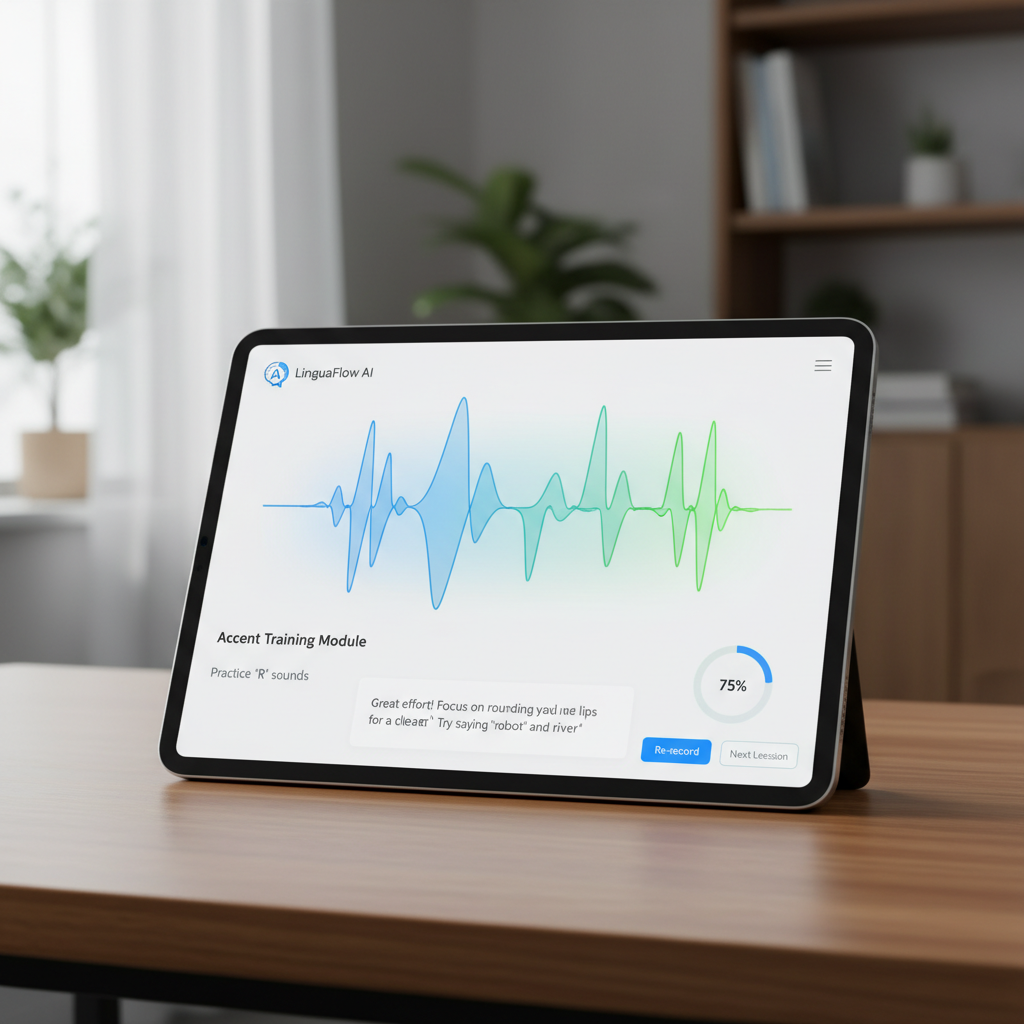
- Spectrograms: These visual representations show the frequency, amplitude, and duration of sounds over time. Learners can see the difference between their pronunciation and a native speaker’s, often revealing issues with vowel quality or consonant articulation.
- Waveforms: These display the amplitude of the sound over time, useful for analyzing rhythm, pauses, and stress patterns.
- Pitch Contours: A line graph showing the rise and fall of your voice, crucial for correcting intonation patterns in questions, statements, and expressions of emotion.
- Articulatory Guides: Some advanced AI systems can even provide visual guides or animations showing correct tongue and lip positioning for specific sounds, using 3D models or simplified diagrams.
- Targeted Exercises Based on Individual Weaknesses: A key advantage of AI is its ability to learn from your mistakes. Over time, the AI can identify recurring pronunciation challenges unique to you, perhaps certain vowel distinctions or consonant clusters. It then generates personalized exercises specifically designed to address these weaknesses, moving beyond generic drills to highly focused practice. This adaptive learning path ensures that every minute spent practicing is maximally effective.
- Comparison with Native Speaker Models: Learners can record themselves and then listen back, comparing their speech side-by-side with a native speaker’s model. This direct comparison is invaluable for developing auditory discrimination skills – the ability to hear subtle differences between sounds – which is a prerequisite for accurate self-correction. The AI often overlays your pitch contour or spectrogram onto the native speaker’s, making discrepancies visually obvious.
- Confidence Building: The non-judgmental nature of an AI tutor fosters a safe environment for experimentation. Learners can practice repeatedly without fear of embarrassment, which is critical for developing the confidence needed to speak a new language naturally and fluently. The AI’s objective feedback empowers learners to take ownership of their progress.
By combining instant diagnostics with tailored practice and rich visual feedback, AI tutors create a powerful feedback loop that accelerates pronunciation mastery. They transform the abstract goal of “sounding native” into a series of manageable, achievable steps, guiding learners systematically towards their linguistic aspirations.
Advanced Features: Beyond Basic Sound Repetition
While mastering individual phonemes is foundational, achieving native-like pronunciation involves much more than just accurate sound production. It demands an understanding of the rhythm, stress, and intonation that give a language its characteristic flow and melody. Modern AI tutors are equipped with advanced features that delve into these complex aspects, offering a holistic approach to pronunciation perfection.
Holistic Pronunciation Refinement
- Accent Reduction Modules: Many AI platforms offer specialized modules aimed at accent reduction. These are often tailored for learners from specific linguistic backgrounds, understanding that a Spanish speaker will have different pronunciation challenges in English than a Chinese speaker. These modules focus on the most common interference errors, systematically working through them with targeted drills and feedback. They break down complex accent features into manageable components, such as dentalizing consonants or differentiating between similar vowel pairs.
-
Intonation and Rhythm Correction: This is a critical area where AI excels. As mentioned earlier, AI can visualize your pitch contour and rhythm patterns. Advanced features allow you to:
- Practice sentence-level stress: The AI identifies if you are stressing the correct words or syllables within a sentence, which is vital for conveying meaning and sounding natural.
- Master rising and falling intonation: For questions, statements, lists, or expressing emotions (e.g., surprise, anger, sarcasm), the AI guides you to produce the appropriate pitch changes.
- Improve speech rhythm: By analyzing pauses, syllable duration, and overall flow, the AI helps you smooth out choppy speech and match the natural cadence of a native speaker. This can involve exercises on connected speech, reductions, and linking sounds.
- Mimicry and Shadow Repetition Exercises: These techniques are highly effective for pronunciation training, and AI tutors facilitate them seamlessly. Learners listen to native speakers and then immediately repeat, with the AI providing instant feedback on how closely their rendition matches the original in terms of sounds, intonation, and rhythm. Some platforms even offer “shadowing” modes where you speak simultaneously with a native speaker model, allowing the AI to analyze subtle deviations in real-time.
- Role-Playing and Conversational Practice with AI: Moving beyond mere repetition, some advanced AI tutors enable interactive conversational practice. You can engage in simulated dialogues, where the AI plays the role of a shopkeeper, a doctor, or a friend. The AI not only assesses your pronunciation in a more natural context but also evaluates your fluency and appropriateness of response. This builds confidence in using learned pronunciation skills in spontaneous communication. These simulations can range from simple Q&A to more complex scenarios requiring negotiation or storytelling.
- Pronunciation Dictionaries and Sound Libraries: Comprehensive digital pronunciation dictionaries are often integrated, allowing learners to look up any word and hear its native pronunciation, often in multiple regional accents. These are usually accompanied by phonetic transcriptions (like IPA – International Phonetic Alphabet) and even videos showing articulatory movements. Sound libraries provide examples of specific sounds in different contexts, helping learners to identify and reproduce difficult phonemes more easily.
- Feedback on Connected Speech: Languages often sound different when words are spoken together versus in isolation. AI tutors are increasingly capable of analyzing connected speech phenomena such as elision, assimilation, and linking. For example, in English, “going to” often becomes “gonna.” The AI can provide feedback on whether you are effectively applying these natural reductions to sound more native.
These advanced features transform AI tutors from simple pronunciation checkers into comprehensive speech coaches. They provide a dynamic and interactive environment where learners can systematically dismantle their pronunciation challenges, from the smallest sound unit to the overarching melody of the language, paving the way for truly native-like communication.
AI Tutors vs. Human Tutors: A Complementary Approach
The rise of AI tutors often sparks a debate: Can AI replace human language teachers, especially for something as nuanced as pronunciation? The answer, in short, is not entirely, but they certainly offer a powerful complementary approach. Both AI and human tutors possess unique strengths and weaknesses, and understanding these allows learners to leverage each effectively for optimal results.
Strengths of AI Tutors:
- Unparalleled Accessibility and Availability: AI tutors are available 24/7, anywhere with an internet connection. This eliminates geographical barriers, scheduling conflicts, and the need for significant financial investment often associated with human tutors. Learners can practice in short bursts whenever convenient, fitting language learning into busy schedules.
- Instant, Consistent, and Objective Feedback: AI provides immediate feedback on every single utterance, something a human tutor simply cannot do. This feedback is entirely objective, based on precise acoustic analysis, free from human biases or fatigue. It is consistent across all practice sessions, ensuring a standardized learning experience.
- Granular and Diagnostic Precision: AI can analyze speech at a micro-level, identifying specific phonemes, allophones, or prosodic features that are problematic. This diagnostic capability allows for highly targeted practice. A human ear, no matter how trained, cannot achieve this level of objective, real-time acoustic breakdown.
- Non-Judgmental Practice Environment: Practicing with an AI tutor eliminates the fear of embarrassment or judgment often associated with making mistakes in front of a human. This fosters a safe space for experimentation and repeated attempts, which is crucial for building confidence and overcoming pronunciation hurdles.
- Data-Driven Personalized Learning Paths: AI tutors track a learner’s progress and recurrent errors over time. They can then dynamically adapt the curriculum, offering personalized exercises and focusing on specific weaknesses, leading to highly efficient and effective learning.
- Cost-Effectiveness: While some premium AI services have subscription fees, they are generally significantly more affordable than regular sessions with qualified human tutors, making high-quality pronunciation coaching accessible to a broader audience.
Strengths of Human Tutors:
- Cultural Nuance and Context: Human tutors bring invaluable cultural insights, explaining when and how certain pronunciations or intonations convey specific social meanings or emotions that AI might not fully grasp or explain. They can provide context that goes beyond linguistic correctness.
- Empathy, Motivation, and Encouragement: A human connection provides emotional support, motivation, and encouragement. Tutors can understand a learner’s frustrations, celebrate their successes, and adapt their teaching style to individual learning preferences and personalities.
- Advanced Conversational Dynamics: For spontaneous, complex, and unscripted conversation, human tutors are currently superior. They can engage in true back-and-forth dialogue, offer nuanced feedback on fluency, conversational strategies, and the overall impression a speaker makes, which is difficult for AI to replicate fully.
- Correction of Non-Verbal Communication: Pronunciation is often accompanied by body language, facial expressions, and eye contact. A human tutor can provide feedback on these non-verbal cues that contribute to effective communication.
- Holistic Problem Solving: Human tutors can identify and address a broader range of learning difficulties, not just pronunciation. They can adapt their teaching on the fly based on a learner’s emotional state, cognitive load, or emergent questions that fall outside the programmed scope of an AI.
A Synergistic Future:
The most effective approach is to view AI tutors and human tutors not as rivals, but as complementary tools in a modern language learning toolkit.
- Use AI for Foundation and Drills: Leverage AI for daily, repetitive pronunciation drills, immediate error correction, mastering individual sounds, intonation patterns, and building muscle memory. This frees up human tutor time for higher-level interactions.
- Use Human Tutors for Application and Nuance: Engage with human tutors for conversational practice, cultural context, clarifying complex linguistic rules, and receiving motivational support. They can review the progress made with AI and offer personalized strategies for applying those skills in real-world scenarios.
By combining the precision, accessibility, and consistency of AI with the empathy, cultural depth, and adaptability of human instructors, language learners can forge an incredibly powerful and efficient path to native-like pronunciation and overall language mastery.
The Future of AI in Pronunciation Learning
The current capabilities of AI tutors for pronunciation are already impressive, but the field is continuously evolving at a rapid pace. What we see today is just the beginning of what intelligent systems will be able to offer language learners in the near future. The trajectory points towards even more immersive, hyper-personalized, and diagnostically powerful experiences.
Pioneering Advancements on the Horizon
- Real-time 3D Articulation Models: Imagine not just hearing and seeing a native speaker, but also having a real-time 3D model of your own mouth, tongue, and lips, showing you exactly how they are moving in comparison to the correct articulation for a specific sound. AI could analyze video input of your mouth and provide instant visual feedback on tongue placement, lip rounding, and jaw position, offering unparalleled insight into precise motor control for speech. This would revolutionize the way learners understand and correct their own speech mechanics.
- Integration with Virtual Reality (VR) and Augmented Reality (AR): VR and AR hold immense potential for immersive language practice. Future AI tutors could create virtual environments where learners interact with AI-driven avatars in realistic scenarios. Imagine a virtual coffee shop where you order a drink, and the AI assesses not only your pronunciation but also your gaze, posture, and even your non-verbal cues. AR could overlay pronunciation guides directly onto real-world objects, allowing for contextual learning and practice. This provides a truly immersive experience without the need for physical travel or human interaction.
- Emotion Detection in Speech: Beyond phonetic accuracy, the way we convey emotions through our voice (prosody) is critical for native-like communication. Future AI could analyze your tone, pitch variations, and rhythm to determine if you are conveying the intended emotion (e.g., surprise, questioning, assertiveness) and provide feedback on how to adjust your vocal delivery for greater emotional authenticity. This takes pronunciation from merely intelligible to truly expressive.
- Hyper-Personalized, Predictive Learning Paths: As AI collects more data on individual learners, it will become even more adept at identifying subtle, predictive patterns in pronunciation errors based on their native language, specific learning style, and previous mistakes. It could then proactively suggest tailored exercises and learning modules even before a pattern of error fully emerges, optimizing the learning journey for maximum efficiency. AI could create a truly unique and dynamically adapting curriculum for each individual.
- Biometric Integration: While still in early research phases, future AI could potentially integrate with biometric data. For example, sensors could detect muscle tension in the jaw or throat, providing feedback on areas of unnecessary tension that impede natural pronunciation. This level of physiological feedback could open new avenues for physical pronunciation training.
- Cross-Lingual Transfer Learning for Pronunciation: AI models could leverage knowledge gained from training on one language to improve pronunciation training for another. This means that as AI becomes better at understanding the nuances of English phonetics, it could accelerate its ability to provide accurate feedback for, say, Mandarin Chinese, by identifying common cross-linguistic interference patterns.
- Ethical Considerations and Data Privacy: As AI becomes more sophisticated and integrated into our daily lives, ethical considerations regarding data privacy and bias in AI algorithms will become even more paramount. Ensuring that AI tutors are fair, unbiased, and protect user data will be a continuous challenge and focus for developers.
The future of AI in pronunciation learning promises a transformative experience, making native-like speech more attainable, engaging, and personalized than ever before. These innovations will not only improve linguistic accuracy but also enhance the overall confidence and communicative effectiveness of language learners worldwide.
Choosing the Right AI Pronunciation Tutor
With an increasing number of AI-powered language learning applications entering the market, selecting the right pronunciation tutor can feel overwhelming. Not all platforms are created equal, and what works best for one learner might not be ideal for another. To make an informed decision, it’s essential to consider several key factors that align with your learning goals and preferences.
Key Features to Look For:
- Accuracy of Speech Recognition and Feedback: This is paramount. The AI must be highly accurate in recognizing your speech and providing precise, specific feedback. Look for platforms that offer phoneme-level analysis, not just overall word scoring. Read reviews that specifically mention the precision of pronunciation correction.
- Types of Feedback Offered: Does the tutor provide visual feedback (spectrograms, pitch contours, articulatory guides)? Does it highlight errors clearly? Is the explanation of errors easy to understand and actionable? Visual feedback is incredibly helpful for many learners.
-
Breadth of Content and Exercises: Does it offer more than just single-word repetition? Look for features like:
- Sentence-level practice.
- Intonation and rhythm exercises.
- Connected speech practice.
- Role-playing or conversational simulations.
- A comprehensive library of words, phrases, and dialogues.
- Personalization and Adaptive Learning: Can the AI identify your specific weaknesses and create a customized learning path? Does it track your progress over time and adjust recommendations accordingly? A truly intelligent tutor will adapt to you.
- Target Language and Accent Support: Ensure the platform supports the specific language you are learning and, if applicable, the particular accent you wish to acquire (e.g., British English vs. American English, Castilian Spanish vs. Latin American Spanish).
- User Interface and Experience (UI/UX): An intuitive, engaging, and easy-to-navigate interface can significantly impact your motivation and consistency. Is the app clean, uncluttered, and enjoyable to use?
- Platform Compatibility: Is the tutor available on your preferred devices (iOS, Android, web browser)? Seamless integration across devices allows for flexible practice.
- Pricing Model and Value: Many apps offer freemium models, free trials, or subscriptions. Evaluate the cost against the features and value provided. Be wary of overly expensive apps that don’t deliver on their promises or free apps that are riddled with ads or lack depth.
- Community and Support: Does the platform offer any community features, forums, or customer support in case you encounter issues or have questions?
- Data Privacy: As you will be recording your voice, understand the platform’s data privacy policy. How is your data stored and used?
Trial and Error is Key:
The best way to find the right AI pronunciation tutor is often through personal experimentation. Most reputable platforms offer a free trial period or a basic free version. Take advantage of these to test out the features, assess the accuracy of the feedback, and see if the learning style resonates with you before committing to a subscription. Engage with the app for several days to get a realistic feel for its effectiveness and how well it integrates into your daily learning routine.
By carefully evaluating these aspects, you can confidently select an AI pronunciation tutor that will genuinely accelerate your journey towards speaking like a native.
Comparison Tables
To further illustrate the distinct advantages and evolving landscape of pronunciation learning, let’s examine how AI tutors stack up against traditional methods and highlight their key features.
Table 1: AI Pronunciation Tutors vs. Traditional Pronunciation Learning Methods
| Feature | AI Pronunciation Tutors | Human Tutors / Language Class | Self-Study (e.g., listening/repeating) |
|---|---|---|---|
| Feedback Type | Instant, objective, granular (phoneme/prosody level), visual | Delayed, subjective, general, sometimes detailed | None to limited (self-perception) |
| Availability | 24/7, on-demand, anywhere | Scheduled appointments, fixed class times | Anytime, but lacks external correction |
| Cost | Generally affordable (subscription models), sometimes free tier | High (hourly rates, course fees) | Low (materials cost), but inefficient without feedback |
| Personalization | Highly adaptive, data-driven, tailored exercises based on individual errors | Can be personalized, but depends on tutor’s attentiveness and time | Generic, learner struggles to identify specific weaknesses |
| Practice Environment | Non-judgmental, safe, repeatable without social pressure | Can be intimidating, performance anxiety, limited repetition | Comfortable, but prone to fossilization of errors |
| Scope of Analysis | Individual sounds, stress, intonation, rhythm, connected speech | Overall impression, common errors, context-driven | Limited to what learner can consciously perceive |
| Motivation | Gamification, progress tracking, objective improvement | Human connection, encouragement, structured goals | Self-discipline, intrinsic motivation |
Table 2: Key Features of Advanced AI Pronunciation Tutors and Their Benefits
| Advanced Feature | Description | Primary Benefit for Learner |
|---|---|---|
| Phoneme-Level Analysis | Identifies specific mispronounced individual sounds within words. | Pinpoints exact errors, enabling highly targeted correction and efficient practice. |
| Visual Spectrogram/Pitch Contours | Graphical representation of sound frequency, duration, and vocal pitch. | Helps learners ‘see’ their errors, making abstract phonetic concepts tangible and easier to correct. |
| Intonation & Rhythm Drills | Exercises focusing on the melody and timing of speech. | Develops natural flow and expressiveness, crucial for sounding native and conveying correct meaning. |
| Accent Reduction Modules | Targeted lessons designed to address common accent interference patterns. | Systematically breaks down and corrects ingrained habits from native language, leading to clearer articulation. |
| Role-Playing & Conversation AI | Simulated dialogues with AI characters in various scenarios. | Builds confidence in applying pronunciation skills in spontaneous speech, preparing for real-world interactions. |
| Connected Speech Feedback | Analyzes how words blend together in natural speech (e.g., elision, assimilation). | Helps learners achieve a smoother, more fluid, and genuinely native-like speaking rhythm and sound. |
| Articulatory Guides (3D/Animated) | Visual demonstrations of correct tongue, lip, and jaw placement for sounds. | Provides clear physical instructions, aiding in the correct motor control required for accurate sound production. |
| Progress Tracking & Analytics | Monitors a learner’s improvement and identifies recurring error patterns. | Offers insights into strengths and weaknesses, allowing for adaptive learning paths and sustained motivation. |
Practical Examples: Real-World Use Cases and Scenarios
The theoretical benefits of AI tutors become truly compelling when viewed through the lens of practical application. Let’s explore several real-world scenarios where AI pronunciation coaches are making a tangible difference in language learners’ journeys.
Case Study 1: The Business Professional Seeking Polish
Scenario: Maria, a marketing executive from Brazil, frequently conducts presentations and virtual meetings in English. While fluent, she notices that clients sometimes struggle to understand specific words or phrases due to her strong accent. She feels her pronunciation hinders her confidence and the impact of her message. She has limited time for traditional classes due to her demanding schedule.
AI Solution: Maria subscribes to an AI pronunciation tutor that offers advanced accent reduction modules for Portuguese speakers learning English.
- Daily Drills: Each morning, she spends 15-20 minutes practicing specific vowel distinctions (e.g., ‘beach’ vs. ‘bitch’) and consonant sounds (e.g., ‘th’ vs. ‘d’ or ‘z’) identified by the AI as her key challenges. The AI provides instant visual feedback on pitch and articulation, showing her exactly where her tongue and lips should be.
- Presentation Practice: Before important presentations, Maria uploads her script to the AI tutor. The AI analyzes her reading, highlighting words where her stress or intonation deviates from native English speakers, particularly for technical terms. It helps her practice the rhythm and flow of complex sentences, ensuring her message is delivered clearly and confidently.
- Role-Playing for Meetings: The AI’s conversational mode allows her to simulate meeting scenarios, practicing common phrases, and receiving feedback on her spontaneous speech. This builds muscle memory and reduces her anxiety during actual meetings.
Outcome: Within a few months, Maria observes a noticeable improvement in her clarity. Clients stop asking for repetitions, and she feels more confident and authoritative in her presentations. The AI’s 24/7 availability allows her to integrate practice seamlessly into her busy work-life balance.
Case Study 2: The Student Preparing for International Exams
Scenario: Kenji, a Japanese university student, plans to study abroad and needs to achieve a high score on the IELTS speaking test. He knows that pronunciation is a crucial component of the assessment, and he struggles with English rhythm, intonation, and certain consonant clusters common for Japanese speakers.
AI Solution: Kenji utilizes an AI tutor designed for exam preparation, specifically focusing on pronunciation benchmarks for tests like IELTS.
- Targeted Phoneme Training: The AI identifies Kenji’s difficulty with differentiating ‘L’ and ‘R’ sounds, as well as final consonant sounds, which are often softened in Japanese. It provides intensive drills with minimal pairs and context-specific exercises.
- Fluency and Coherence Drills: The platform offers exercises where Kenji records himself speaking for a minute on a given topic, mimicking the IELTS speaking test format. The AI then assesses not just individual sounds but also his overall rhythm, intonation, and pacing, offering suggestions to make his speech flow more naturally.
- Shadowing and Mimicry: Kenji uses the AI’s shadowing feature to practice repeating native speaker recordings of IELTS sample answers, focusing on matching their intonation contours and speech rhythm.
Outcome: Kenji’s IELTS speaking score significantly improves, particularly in the pronunciation criteria. He develops a stronger awareness of English prosody and feels more prepared to speak spontaneously and clearly under exam conditions. The AI’s objective scoring helps him track his progress against exam standards.
Case Study 3: The Traveler Wanting Deeper Cultural Connection
Scenario: Sarah is planning a solo trip through rural Spain. She has a basic grasp of Spanish vocabulary but wants to be able to converse more naturally with locals and avoid sounding like a tourist. Her main goal is to improve her Spanish ‘r’ rolls and ensure her intonation sounds authentic.
AI Solution: Sarah downloads an AI language app with a strong focus on Spanish pronunciation, particularly Castilian Spanish.
- ‘R’ Roll Mastery: The AI provides specific exercises and visual guides for rolling her ‘r’s, offering immediate feedback on her tongue placement and vibration. It breaks down the sound into manageable steps.
- Everyday Conversation Practice: She uses the AI’s role-playing feature to simulate conversations like ordering food, asking for directions, or chatting with shopkeepers, focusing on using natural Spanish intonation and common colloquialisms. The AI corrects her pronunciation within these real-life contexts.
- Listening and Repeating: The app has a library of short audio clips featuring native Spanish speakers discussing everyday topics. Sarah listens, repeats, and gets feedback on her ability to mimic their natural speech patterns.
Outcome: Sarah arrives in Spain feeling much more confident. Her improved pronunciation, especially her ‘r’ rolls and natural intonation, allows her to engage in more meaningful conversations with locals, leading to richer cultural experiences and a deeper connection with the people she meets.
These examples demonstrate that AI pronunciation tutors are not just theoretical tools but practical, effective solutions for a diverse range of language learning needs, enabling individuals to achieve their native-like speech goals.
Frequently Asked Questions
Q: How accurate is AI pronunciation feedback?
A: Modern AI pronunciation feedback is remarkably accurate, especially for major languages. Leveraging advanced Automatic Speech Recognition (ASR) and deep learning, these systems can perform granular phonetic analysis, pinpointing errors down to individual phonemes, stress patterns, and intonation contours. They compare your speech to vast databases of native speaker utterances, often providing visual feedback like spectrograms or pitch graphs that a human ear cannot objectively produce. While not infallible, their precision for diagnostic purposes is often superior to a human tutor for specific acoustic deviations. The technology continues to improve rapidly, making feedback increasingly reliable.
Q: Can AI replace a human tutor for pronunciation?
A: No, AI tutors are best seen as a powerful complement to, rather than a replacement for, human tutors. AI excels at providing instant, objective, granular, and repeatable feedback on phonetic accuracy, rhythm, and intonation, and it offers a non-judgmental environment for high-volume practice. However, human tutors provide invaluable benefits like cultural context, nuanced emotional feedback, motivation, dynamic conversational practice, and the ability to adapt to complex, unscripted social interactions and address broader learning difficulties. The most effective approach combines the precision and accessibility of AI with the empathy and holistic guidance of a human instructor.
Q: Is AI pronunciation coaching suitable for all language levels?
A: Yes, AI pronunciation coaching is beneficial for learners at all levels. Beginners can use it to establish correct foundational sounds and reduce the risk of fossilizing errors from the outset. Intermediate learners can refine their accent, tackle subtle intonation patterns, and improve fluency. Advanced learners can use AI to polish minor imperfections, master complex prosodic features, and truly aim for native-like authenticity, especially in areas where even skilled speakers might have residual interference from their native language. Many AI platforms offer adaptable exercises catering to different proficiencies.
Q: What languages do AI tutors typically support for pronunciation?
A: AI tutors most commonly support widely spoken languages such as English (often with options for American, British, or other accents), Spanish, French, German, Mandarin Chinese, Japanese, Korean, Italian, and Portuguese. Support for other languages is growing, but the accuracy and depth of feedback might vary depending on the language’s complexity and the availability of large speech datasets for training the AI models. Always check the specific language offerings of any platform you consider.
Q: How often should I practice with an AI tutor for pronunciation?
A: Consistency is key for pronunciation improvement. Short, frequent practice sessions are generally more effective than long, infrequent ones. Aim for at least 15-30 minutes daily, or several times a week. Daily exposure helps build muscle memory in your mouth and tongue, and continuous feedback allows for faster identification and correction of errors before they become ingrained. Regular practice reinforces correct habits and accelerates progress towards native-like speech.
Q: Can AI help with specific accents (e.g., British vs. American English)?
A: Absolutely. Many advanced AI pronunciation tutors offer the ability to select a specific target accent (e.g., General American, Received Pronunciation, Australian English, Castilian Spanish, Mexican Spanish). They are trained on datasets from speakers of these particular accents and can provide tailored feedback that guides you towards achieving the phonetic and prosodic characteristics of your chosen accent. This allows for highly specific and effective accent acquisition or reduction.
Q: Are AI pronunciation tutors expensive?
A: The cost varies widely. Many AI pronunciation tutors offer a free tier with basic features, allowing you to try them out. Premium subscriptions typically range from a few dollars to twenty or thirty dollars per month, or offer annual plans that reduce the monthly cost. Compared to the hourly rates of human tutors, AI tutors are generally a significantly more affordable option for consistent, high-quality pronunciation coaching, making them accessible to a broader range of learners.
Q: What if the AI doesn’t understand me, or gives incorrect feedback?
A: While AI accuracy is high, occasional errors can occur, especially if your pronunciation is significantly far from the target or if there’s background noise. If the AI consistently misunderstands a particular word or sound, try saying it slowly and clearly, and then listen carefully to the native model again. Sometimes, breaking down a word into syllables or practicing a single problematic phoneme in isolation can help. If issues persist, it might indicate a fundamental error in your articulation that requires more focused attention, perhaps by looking at articulatory guides or seeking input from a human tutor for clarification. Providing feedback to the app developers can also help improve the AI’s performance over time.
Q: How does AI handle intonation and rhythm, which are so subjective?
A: While intonation and rhythm can feel subjective, they follow predictable patterns in languages. AI handles these through prosodic analysis. It measures your pitch contour (the melody of your voice), stress patterns (which syllables/words you emphasize), and rhythm (the timing and duration of sounds/pauses). By comparing these objective acoustic measurements to those of native speakers, the AI can identify deviations. Many platforms provide visual representations (e.g., pitch graphs) to help you ‘see’ your intonation and rhythm compared to the native model, making it very concrete and less subjective for learning.
Q: What’s the best way to integrate AI tutors into my learning routine?
A: The best way is to use them consistently and strategically. Dedicate specific time slots for pronunciation practice using the AI, perhaps as a warm-up before other language activities or as a cool-down. Focus on areas the AI identifies as your weaknesses. Use it to reinforce correct pronunciation of new vocabulary or grammatical structures you’re learning. Combine AI practice with other methods: for instance, practice phrases with the AI, then try to use them in a conversation with a human tutor, asking for their overall impression. Use AI as your personal, tireless drilling partner to build foundational accuracy and confidence.
Key Takeaways
- Revolutionary Precision: AI tutors leverage advanced Automatic Speech Recognition (ASR) and phonetic analysis to provide instant, granular, and objective feedback on every aspect of pronunciation.
- Personalized Learning: These tools identify individual weaknesses and create adaptive learning paths with targeted exercises, accelerating mastery.
- Rich Visual Feedback: Features like spectrograms, pitch contours, and articulatory guides help learners ‘see’ their pronunciation errors and correct them effectively.
- Beyond Basic Sounds: Modern AI tutors address complex elements like intonation, rhythm, stress, accent reduction, and connected speech, offering a holistic approach.
- Complementary, Not Replacement: AI tutors are powerful complements to human interaction, offering consistent practice and diagnostic precision that frees human tutors for nuanced cultural and conversational coaching.
- Accessibility and Affordability: Available 24/7 and generally more cost-effective than human tutors, AI makes high-quality pronunciation coaching accessible to a wider audience.
- Future is Immersive: Future AI will integrate with VR/AR, provide 3D articulation models, and detect emotional nuance, promising even more engaging and effective learning experiences.
- Strategic Choice: Selecting the right AI tutor requires evaluating its accuracy, feedback types, content breadth, personalization features, and language support to match your specific learning goals.
- Consistency is Crucial: Regular, short practice sessions with an AI tutor are highly effective for building muscle memory and making steady progress towards native-like speech.
Conclusion
The journey to speaking a new language like a native has always been one of the most challenging yet rewarding aspects of language acquisition. For too long, the subtle art of pronunciation remained largely inaccessible to many, hindered by a lack of consistent, expert feedback and the sheer complexity of training one’s vocal apparatus to produce unfamiliar sounds and rhythms. However, the advent of intelligent AI tutors has ushered in a new era, democratizing access to high-quality pronunciation coaching and fundamentally reshaping what is possible for language learners.
We have seen how cutting-edge AI technology meticulously analyzes speech, offering instant, granular, and visual feedback that transcends the limitations of traditional methods. From dissecting individual phonemes and correcting subtle articulation errors to mastering the intricate dance of intonation and rhythm, AI tutors provide an unparalleled level of precision and personalization. They serve as tireless, non-judgmental coaches, available at your beck and call, empowering you to practice without fear and build confidence with every correct utterance.
Looking ahead, the future of AI in pronunciation learning is brimming with even more exciting possibilities. Imagine 3D articulation models, immersive VR experiences, and AI capable of understanding the emotional resonance of your voice. These innovations promise to make the path to native-like speech not just achievable, but profoundly engaging and tailored to every individual’s unique needs.
Embracing AI tutors is not about replacing the invaluable human element of language learning, but rather augmenting it, creating a synergistic approach that combines the best of both worlds. By leveraging the precision and accessibility of AI alongside the cultural depth and empathy of human interaction, language learners are now equipped with an incredibly powerful toolkit. The dream of speaking like a native is no longer a distant aspiration but an attainable goal, brought within reach by the intelligent design and relentless innovation of AI language tutors. It is time to harness this technology and unlock your full potential to communicate with authentic voice and undeniable confidence.






































































Leave a Reply