


In an era defined by rapid technological advancement, few innovations have captured the imagination quite like Artificial Intelligence (AI) image generators. These sophisticated tools are not just creating pretty pictures; they are fundamentally reshaping how we conceive, produce, and consume visual content. From generating stunning landscapes with a simple text prompt to designing intricate product mockups in seconds, AI image generators are ushering in a creative revolution, democratizing design, and empowering a new generation of artists, marketers, and innovators.
This comprehensive article delves into the fascinating world of AI image generation, exploring its underlying technology, diverse applications, ethical implications, and the profound impact it promises to have on various industries. We will uncover how tools like DALL-E, Midjourney, and Stable Diffusion are not merely changing workflows but are inspiring entirely new forms of creative expression, making visual content creation more accessible, efficient, and imaginative than ever before. Join us as we explore the future of visual content, where the only limit is the imagination itself.
The Dawn of AI-Powered Creativity
What are AI Image Generators?
AI image generators are advanced machine learning models capable of creating unique images from textual descriptions, existing images, or a combination of both. At their core, these systems learn from vast datasets of images and their corresponding textual labels, identifying intricate patterns, styles, objects, and concepts. This deep understanding allows them to synthesize entirely new visual compositions that align with a user’s prompt. Think of it as instructing a highly skilled digital artist who can instantly conjure any visual you describe, from the mundane to the fantastical.
Leading examples include OpenAI’s DALL-E (and its successor, DALL-E 3), Midjourney, and Stability AI’s Stable Diffusion. While each has its unique characteristics, strengths, and interfaces, they all share the fundamental capability of transforming abstract ideas into concrete visuals, offering unprecedented creative power to users across the globe. These tools represent a paradigm shift, moving visual creation from a highly skilled, time-consuming endeavor to an accessible, rapid, and iterative process.
A Brief History and Evolution
The concept of AI-generated art has roots tracing back to early algorithmic art experiments, but the true breakthrough for image generation came with the advent of deep learning. Key milestones include:
- Generative Adversarial Networks (GANs): Introduced by Ian Goodfellow and colleagues in 2014, GANs involved two neural networks—a generator and a discriminator—pitted against each other. The generator creates images, and the discriminator tries to tell if they are real or fake. This adversarial process drives the generator to produce increasingly realistic outputs. Early GANs could generate faces, but often struggled with coherence.
- Style Transfer: Pioneering works demonstrated the ability to transfer the artistic style of one image onto the content of another, allowing users to transform photos into paintings by famous artists. This showcased the AI’s ability to decompose and recompose visual elements.
- Text-to-Image Synthesis: The real game-changer arrived with models that could generate images directly from text. DALL-E, released by OpenAI in 2021, was a monumental step, demonstrating the ability to understand complex textual prompts and create novel, often surreal, images. Its successor, DALL-E 2, improved fidelity and resolution significantly.
- Diffusion Models: More recent and currently dominant, diffusion models like those powering Stable Diffusion and Midjourney have surpassed GANs in terms of quality and control. These models work by learning to reverse a process of gradually adding noise to an image. Starting from pure noise, they iteratively remove noise, guided by a text prompt, until a coherent image emerges. This process allows for incredibly detailed, high-fidelity, and diverse outputs.
- ControlNet and Advanced Conditioning: Innovations like ControlNet for Stable Diffusion have allowed for even finer-grained control over generation, enabling users to guide the AI with sketches, poses, depth maps, and more, blending generative power with precise creative direction. This moves beyond mere text prompts to a multimodal input approach.
This rapid evolution from crude, often distorted outputs to photorealistic and artistically sophisticated creations in just a few years underscores the exponential progress in AI research and its profound implications for visual content.
How They Work: Understanding the Magic
While the underlying mathematics can be complex, the core mechanism of modern AI image generators, particularly diffusion models, can be understood conceptually:
- Training Data: AI models are trained on immense datasets containing billions of images paired with descriptive text. This data teaches the AI what objects look like, how different concepts relate visually (e.g., “a cat sitting on a mat”), and various artistic styles. It builds a vast internal representation of the visual world.
- Encoder-Decoder Architecture: Many models utilize an encoder to convert text prompts into a numerical representation (a “latent space”) that the image generator can understand. The decoder then translates this latent representation into a visual output.
- Noise and Denoising: Diffusion models start with an image of pure random noise. The model then iteratively “denoises” this image, step by step, gradually refining it into a coherent visual.
- Text Conditioning: At each denoising step, the AI refers to the encoded text prompt to guide its choices. It learns to remove noise in a way that aligns with the descriptive elements and stylistic cues provided in the prompt. This “guidance” is crucial for producing relevant and high-quality images.
- Iterative Refinement: This denoising process happens over many thousands of steps, each one slightly improving the image’s coherence and detail, until a final high-resolution image is rendered. The quality of the output often depends on the sophistication of the model, the richness of its training data, and the precision of the input prompt.
The “magic” lies in the AI’s ability to not just recall existing images but to synthesize entirely new combinations of elements, styles, and compositions, driven by the user’s textual instructions. It’s a generative process, not merely a search-and-display function.
Democratizing Design and Unleashing Imagination
Lowering the Barrier to Entry
One of the most significant impacts of AI image generators is their ability to democratize visual content creation. Historically, producing high-quality visuals required specialized skills, expensive software, and often considerable time. Graphic designers, illustrators, and photographers underwent years of training to master their crafts. AI tools dramatically lower this barrier:
- For Small Businesses and Startups: These entities often operate on tight budgets and may lack the resources to hire professional designers. AI generators allow them to create professional-looking logos, social media graphics, product mockups, and website imagery quickly and affordably. A local bakery can now generate unique promotional images for new pastries without needing a photoshoot or a design agency.
- For Individuals and Hobbyists: Aspiring writers can create stunning book covers, bloggers can generate unique header images, and individuals can simply explore their creativity without needing artistic talent or technical expertise. The barrier to entry has shifted from artistic skill to effective communication through prompts.
- Rapid Prototyping and Ideation: Designers and marketing teams can quickly generate multiple visual concepts for campaigns or products, iterating on ideas far faster than traditional methods allow. This speeds up the ideation phase, allowing for more experimentation and refinement.
The consequence is a dramatic increase in the volume and diversity of visual content being created, empowering individuals and organizations that previously faced significant hurdles in their creative endeavors.
Empowering Artists and Creators
While some fear AI might replace human artists, many view these tools as powerful collaborators and extensions of human creativity.
- Overcoming Creative Blocks: When an artist hits a wall, an AI generator can provide fresh perspectives, generate new visual stimuli, or quickly prototype various compositions, sparking new ideas and directions. It acts as a brainstorming partner.
- Speeding Up Workflow: Artists can use AI to generate base images, textures, background elements, or reference material, saving countless hours on tedious tasks. A concept artist might generate 50 variations of a spaceship design in minutes, then refine the most promising ones manually.
- Exploring New Styles and Mediums: AI can blend disparate styles or simulate complex artistic techniques that would be difficult or impossible for a human to replicate manually, opening up new avenues for artistic expression.
- Personalized Assistance: An artist can train an AI model on their own style, allowing it to generate new works in their unique aesthetic, acting as a personal assistant that understands their creative language.
The role of the artist evolves from solely executing a vision to guiding and curating an AI’s output, infusing it with their unique voice and artistic intent. It’s about collaboration, not replacement.
Bridging the Gap Between Concept and Reality
Before AI, translating an abstract idea into a tangible visual often required significant effort. A writer imagining a fantastical creature, an architect envisioning a unique building, or a marketer conceptualizing an abstract campaign theme would need to describe it in detail, often collaborating with an artist or relying on mental visualization. AI image generators dramatically shrink this gap:
- Instant Visualization: A complex idea described in text can be instantly visualized, allowing for immediate feedback and refinement. This is particularly valuable in brainstorming sessions.
- Enhanced Communication: Visuals are universally understood. By generating images from concepts, teams can communicate ideas more effectively, ensuring everyone is on the same page regarding design, mood, and aesthetic.
- Rapid Iteration: The ability to quickly generate variations of a concept allows for extensive exploration of different design directions, leading to more robust and innovative solutions. Instead of days to produce a single rendering, dozens can be generated and compared in minutes.
This capability accelerates the creative process, makes ideation more fluid, and ultimately leads to better, more innovative outcomes across a multitude of fields.
Transformative Applications Across Industries
Marketing and Advertising
The marketing and advertising industry thrives on captivating visuals, and AI image generators are proving to be invaluable:
- Personalized Ad Creatives: AI can generate countless variations of ad creatives tailored to specific audience segments, demographics, or even individual users, leading to higher engagement rates. Imagine an ad showing a product in a kitchen that perfectly matches the user’s home decor style.
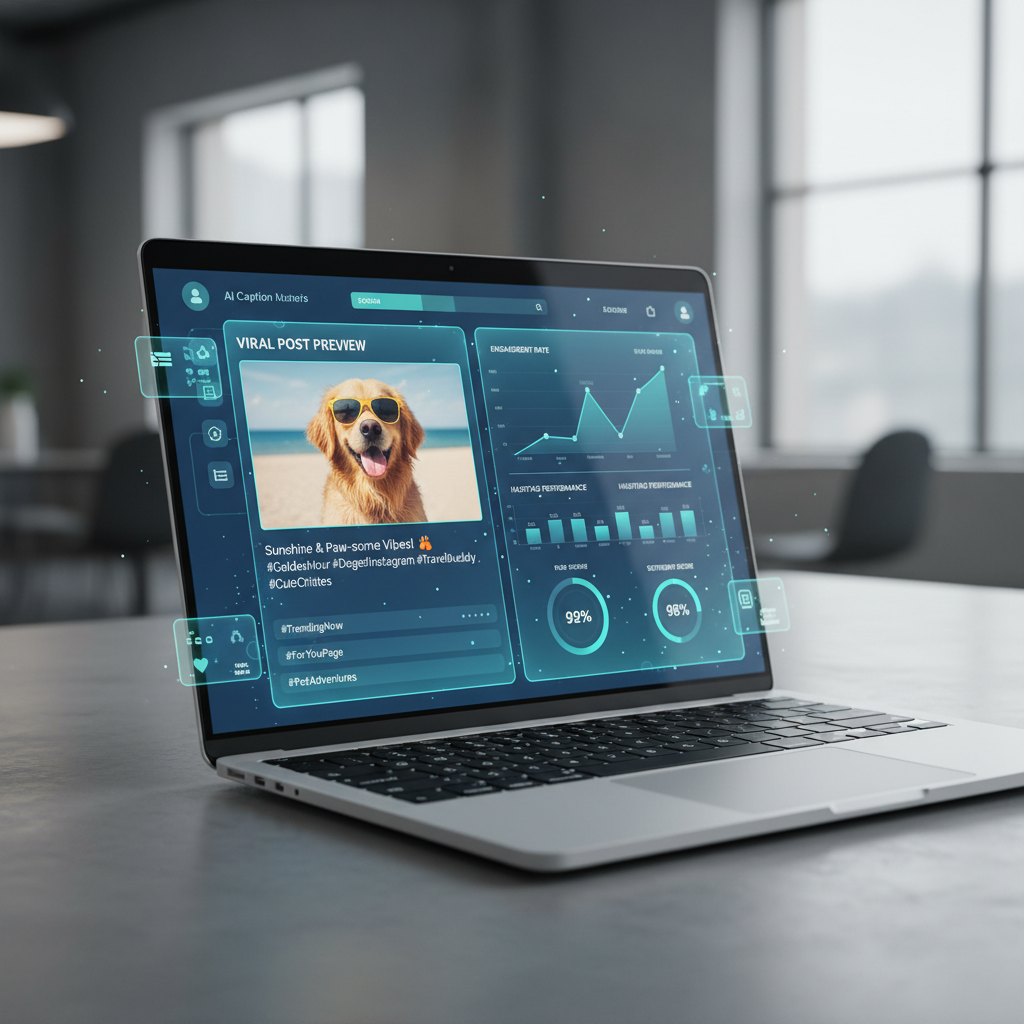
- Social Media Content: Rapidly producing unique, eye-catching images for social media posts, stories, and campaigns is a game-changer for content creators struggling to keep up with demanding posting schedules.
- Campaign Ideation: Marketers can visualize abstract campaign themes (e.g., “happiness in urban jungles” or “the feeling of freedom”) to quickly test different visual directions before committing to costly production.
- A/B Testing Visuals: Generate hundreds of image variations for A/B testing on landing pages or ads to optimize for conversion without extensive photo shoots or design work.
- Stock Photo Alternatives: Businesses can generate unique images that precisely match their brand aesthetic and message, avoiding generic stock photos and potential licensing issues.
Companies like Adidas have experimented with AI-generated models and campaigns, pushing the boundaries of traditional advertising. Small businesses are finding it easier to compete visually with larger enterprises, leveling the playing field.
Game Development and Virtual Reality
Creating immersive virtual worlds requires an immense volume of visual assets, from character designs to environmental textures. AI is revolutionizing this process:
- Asset Generation: AI can generate diverse textures (e.g., stone, wood, metal), foliage, rocks, and other environmental elements, dramatically speeding up the asset creation pipeline for game designers.
- Concept Art and Character Design: Artists can quickly generate variations of creatures, characters, vehicles, and architectural concepts, accelerating the pre-production phase. Imagine generating hundreds of unique alien species designs in an hour.
- Environment Design: AI can create entire landscapes, cities, or fantastical realms based on textual descriptions, serving as starting points for detailed level design.
- NPC and Avatar Customization: In games requiring many unique non-player characters or player avatars, AI can generate diverse appearances based on specific parameters, adding richness to the virtual world.
This allows development teams to focus more on gameplay and narrative, knowing that much of the visual grunt work can be handled or augmented by AI.
Fashion and Product Design
The design world is inherently visual, and AI offers powerful new tools:
- Concept Visualization: Fashion designers can quickly visualize new garment designs, fabric patterns, and accessory concepts on virtual models. A designer can prompt for “a cyberpunk-inspired dress made of iridescent silk with glowing accents” and get immediate visual feedback.
- Material and Texture Generation: AI can generate realistic fabric textures, leather patterns, or novel material composites, aiding in product development and rendering.
- Mood Boards and Trend Exploration: Designers can generate expansive mood boards reflecting specific aesthetics, color palettes, or cultural influences, helping to define the direction of new collections.
- Product Mockups: For industrial designers, AI can create photorealistic mockups of products in various settings and with different material finishes, facilitating design review and client presentations.
This capability accelerates the design cycle, allows for more experimentation, and helps designers bring their visions to life with unprecedented speed.
Architecture and Interior Design
Architects and interior designers rely heavily on visuals to convey their plans and visions:
- Conceptual Renderings: AI can rapidly generate multiple conceptual renderings of buildings, interiors, and landscapes based on design parameters, saving weeks of traditional rendering time.
- Material and Finish Exploration: Designers can visualize how different materials (e.g., wood, concrete, glass) and finishes would look in a space, iterating quickly to find the perfect combination.
- Client Presentations: Generate compelling visual proposals for clients, helping them to better understand and approve design concepts. Imagine instantly showing a client their living room with ten different furniture layouts or wall colors.
- Urban Planning Visuals: AI can help visualize the impact of new developments on existing urban landscapes, aiding in planning and public consultation.
The ability to quickly visualize complex spatial concepts empowers architects to explore more options and communicate their designs more effectively.
Education and Research
Visual aids are critical for understanding complex topics, and AI can enhance this aspect of learning:
- Illustrating Abstract Concepts: AI can generate bespoke illustrations for educational materials, explaining complex scientific principles, historical events, or philosophical ideas in a visually engaging manner.
- Personalized Learning Aids: Create unique visual examples or diagrams tailored to a student’s specific learning style or needs.
- Research Visualization: Researchers can generate visualizations of data, theoretical models, or hypothetical scenarios, aiding in the communication of complex findings.
- Historical Recreations: Visualize historical scenes, ancient cities, or lost artifacts based on textual descriptions and historical data.
This makes learning more accessible and engaging, fostering deeper understanding across various subjects.
Media and Entertainment
From film production to digital publishing, AI image generators are finding roles in streamlining creative processes:
- Storyboarding: Quickly generate visual frames for storyboards, helping directors and cinematographers visualize scenes before shooting.
- Concept Art for Film/TV: Aid in creating characters, creatures, sets, and props for pre-production.
- Book Cover Design: Authors can generate unique, professional-quality book covers, especially useful for independent publishers and self-published authors.
- Visual Effects Prototyping: Rapidly prototype visual effects concepts or background plates for film and television.
The entertainment industry, ever reliant on captivating visuals, stands to gain immense efficiency and creative leverage from these tools.
Challenges, Ethical Considerations, and the Road Ahead
Intellectual Property and Copyright
One of the most pressing and complex challenges revolves around intellectual property. When an AI generates an image, who owns it?
- Ownership: Is it the user who provided the prompt, the developer of the AI model, or does the AI itself hold some claim? Current legal frameworks struggle to address this, as they are largely based on human authorship.
- Training Data: Many AI models are trained on vast datasets of images, some of which may be copyrighted. Does this constitute fair use, or is it a form of infringement? Artists whose work was included in training data without their consent raise valid concerns about their intellectual property being used to create new works that may compete with theirs.
- Originality: Can an AI-generated image be considered “original” enough to warrant copyright protection, especially if it heavily draws inspiration from existing styles or works?
Governments and legal bodies worldwide are grappling with these questions, and it is likely that new laws and regulations will emerge to define the landscape of AI-generated content ownership. Some jurisdictions, like the U.S. Copyright Office, have stated that works solely created by AI are not copyrightable, but works with significant human input might be.
Bias and Representation
AI models are only as unbiased as the data they are trained on. If the training data contains biases (e.g., underrepresentation of certain demographics, stereotypes), these biases will be reflected, and often amplified, in the generated images.
- Stereotypes: Prompting for “a doctor” might predominantly generate images of men, while “a nurse” might generate women, reflecting societal biases present in the training data.
- Underrepresentation: Certain ethnic groups, body types, or cultural contexts might be underrepresented, leading to less diverse and less accurate outputs when prompted for those subjects.
- Harmful Content: AI can inadvertently (or intentionally, if misused) generate harmful, offensive, or inappropriate content based on problematic elements in its training data or malicious prompts.
Developers are actively working on mitigating these biases through curated datasets, filtering mechanisms, and fine-tuning models to promote diversity and ethical representation. However, it remains an ongoing challenge requiring continuous vigilance.
The Future of Human Creativity
A pervasive concern is whether AI will diminish or even replace human creativity.
- Automation of Tasks: Routine and repetitive visual tasks may increasingly be automated, freeing up human creatives for more complex, conceptual, and strategic work.
- Evolution of Roles: The role of the “artist” or “designer” may evolve from solely executing designs to becoming a “prompt engineer,” “AI art director,” or “curator” of AI-generated content. New skills in guiding AI and critical evaluation of its outputs will become paramount.
- Augmentation, Not Replacement: Many view AI as a powerful tool for augmentation, enhancing human capabilities rather than replacing them. It allows humans to produce more, explore more, and innovate faster, while retaining the unique spark of human intuition and emotional depth.
The future likely involves a synergistic relationship where human ingenuity and AI efficiency combine to unlock unprecedented creative potential.
Deepfakes and Misinformation
The ability of AI to generate highly realistic, convincing images also presents a significant risk: the creation of deepfakes and the spread of misinformation.
- Fabricated Evidence: AI can generate fake images that appear to be genuine photographs or video stills, potentially used to create false narratives, defame individuals, or influence public opinion.
- Erosion of Trust: If distinguishing between real and AI-generated images becomes increasingly difficult, it could erode public trust in visual media, making it harder to discern truth from fabrication.
- Malicious Use: In the wrong hands, AI image generators could be used for malicious purposes, ranging from creating fraudulent documents to generating explicit content without consent.
Developing robust detection methods for AI-generated content, promoting digital literacy, and implementing ethical guidelines for AI usage are crucial steps in addressing these threats.
Environmental Impact
Training and running large AI models, especially those for image generation, consume significant computational resources and energy.
- Energy Consumption: The process of training models on billions of data points involves massive data centers that run continuously, contributing to carbon emissions.
- Carbon Footprint: While the energy cost per individual image generation is low, the cumulative impact of widespread AI usage is a growing concern.
As AI becomes more ubiquitous, there’s a need for more energy-efficient AI architectures and a shift towards renewable energy sources for data centers to mitigate its environmental footprint.
Mastering the Prompt: The New Creative Language
The Art of Prompt Engineering
With AI taking on the role of the digital artisan, the human’s role shifts towards becoming a master of communication—specifically, prompt engineering. A prompt is the textual instruction given to the AI, and its quality directly correlates with the quality of the generated image.
- Specificity is Key: Vague prompts (“a dog”) will yield generic results. Specificity (“a golden retriever puppy playing with a red ball in a sunlit field, photorealistic, shallow depth of field”) will produce far more detailed and tailored images.
- Descriptive Adjectives and Verbs: Use rich descriptive language to convey mood, lighting, action, and style. Words like “serene,” “vibrant,” “dynamic,” “cinematic,” “ethereal” all guide the AI.
- Artistic Styles: Specify styles (e.g., “impressionistic,” “surrealist,” “digital painting,” “anime style,” “concept art by Greg Rutkowski”) to guide the AI towards a desired aesthetic.
- Camera Angles and Lenses: For more photographic results, include terms like “wide shot,” “close-up,” “f/1.8,” “85mm lens,” “bokeh.”
- Negative Prompts: Many advanced generators allow for “negative prompts,” where you specify what you don’t want in the image (e.g., “ugly, distorted, blurry, extra limbs, watermark”). This helps refine outputs by excluding undesirable elements.
- Keywords and Modifiers: Experiment with keywords that emphasize certain qualities (e.g., “hyperdetailed,” “4K,” “volumetric lighting,” “ornate”).
Prompt engineering is becoming a skill in itself, a new form of digital literacy that merges linguistic precision with visual imagination. It’s less about coding and more about creative articulation.
Iteration and Refinement
Generating an ideal image rarely happens on the first try. The process is iterative:
- Start Broad, Then Refine: Begin with a simpler prompt to get a general idea, then progressively add details, modifiers, and stylistic cues based on the initial results.
- Experiment with Variations: Slight changes to wording, adding or removing a single adjective, or rearranging the order of terms can dramatically alter the output.
- Seed Values: Many generators use a “seed” number to initialize the random noise from which an image is generated. Using the same seed with slightly altered prompts can help maintain consistency while exploring variations.
- Upscaling and Post-processing: Once a satisfactory image is generated, it can often be upscaled to a higher resolution using AI tools and then refined further in traditional image editing software (e.g., Photoshop) to add final touches or correct minor imperfections.
This iterative feedback loop between human intention and AI generation is central to achieving mastery in using these tools. It transforms the user into a conductor, guiding the AI orchestra to play the desired symphony.
The Economic Impact and New Job Roles
Emergence of Prompt Engineers and AI Artists
As AI image generation capabilities grow, so too does the demand for individuals skilled in leveraging these tools.
- Prompt Engineers: These specialists are experts at crafting precise, effective textual prompts to achieve desired AI outputs. They understand how different models interpret language and can translate complex creative briefs into actionable prompts. This role is crucial for businesses looking to integrate AI into their visual content strategy.
- AI Artists/Curators: These individuals combine traditional artistic sensibilities with AI proficiency. They use AI as a tool to create art, often blending AI-generated elements with manual edits, ensuring the final output reflects a unique artistic vision and meets high aesthetic standards. Their role involves guiding, refining, and curating AI outputs.
- AI Content Strategists: Professionals who plan and oversee the integration of AI-generated visuals into broader content strategies, ensuring brand consistency and effective communication.
These new roles highlight an evolving job market where human-AI collaboration is not just accepted but actively sought after.
Reshaping Traditional Creative Industries
The impact extends to traditional creative sectors, causing a shift in workflows and business models.
- Graphic Design Agencies: Agencies can offer faster turnaround times and more iterations for clients, potentially streamlining internal processes and reducing costs for certain projects.
- Stock Photography: The rise of AI-generated images poses a challenge to traditional stock photo agencies. Users can generate unique images on demand, potentially reducing the reliance on generic stock libraries. This will push stock agencies to offer more niche, high-quality, or specialized human-created content, or to integrate AI tools themselves.
- Advertising Production: The cost and time associated with creating visual assets for advertising campaigns can be significantly reduced, leading to more dynamic and agile campaign development.
- Publishing Industry: From magazine layouts to book illustrations, AI offers publishers a cost-effective and rapid means of generating bespoke visuals, potentially empowering smaller presses and independent authors.
While some roles may be automated or transformed, the overall impact is likely to be a reallocation of human effort towards higher-value, more strategic, and uniquely human creative endeavors.
Opportunities for Niche Content Creation
AI image generators unlock possibilities for creating highly specific, niche visual content that would have been cost-prohibitive or too time-consuming to produce traditionally.
- Hyper-Specific Visuals: Imagine needing an image of “a Victorian-era detective inspecting glowing fungal spores in a swamp on an alien planet.” Previously, this would require custom illustration; now, it’s a prompt away.
- Personalized Storytelling: AI can create unique illustrations for personalized children’s books, or visual narratives for niche online communities.
- Micro-Niche Marketing: Businesses targeting very specific demographics or interests can now generate visuals that resonate precisely with their target audience, without needing a large creative budget.
- Experimental Art: Artists can explore extremely niche or abstract concepts, pushing the boundaries of visual expression without the physical limitations of traditional mediums.
This proliferation of hyper-specific visual content enriches the digital landscape, catering to diverse tastes and interests like never before.
Comparison Tables
To better understand the landscape of AI image generators, let’s compare some of the leading platforms, highlighting their unique strengths and typical use cases.
| Feature / Platform | DALL-E 3 (via ChatGPT Plus/Copilot) | Midjourney v6 | Stable Diffusion XL (SDXL) |
|---|---|---|---|
| Strengths | Exceptional prompt understanding, integrates seamlessly with natural language models, excels at generating text within images, strong for highly conceptual and stylistic images. | Unparalleled aesthetic quality, photorealism, and artistic style, highly cinematic and visually striking outputs, excellent for creative exploration and high-fidelity art. | Open-source, highly customizable, large active community, runs locally (with sufficient hardware), excellent for fine-grained control and specific artistic styles via extensions/models. |
| Ease of Use | Very high (natural language chat interface, no complex commands needed). | Moderate (Discord-based commands, but very intuitive once learned). | Low to Moderate (requires understanding of parameters, models, potentially local installation; web UIs like Fooocus simplify it). |
| Control & Customization | Good (relies on prompt engineering, iterative feedback in chat). | High (various parameters like aspect ratio, stylize, chaos, pan, zoom, consistent character). | Very High (innumerable models, LORAs, ControlNet, inpainting, outpainting, fine-tuning). |
| Typical Use Cases | Marketing, social media content, basic design concepts, blog illustrations, generating text overlays, quick ideation. | High-end concept art, digital illustrations, artistic photography, cinematic visuals, character design, fashion concepts, premium marketing assets. | Custom art generation, research, niche content creation, game asset development, NSFW generation (where legally permissible), fine-tuning on personal datasets, advanced creative workflows. |
| Cost Model | Subscription (e.g., ChatGPT Plus, Microsoft Copilot Pro). | Subscription (various tiers). | Free (open-source model), but may incur costs for cloud hosting or powerful local hardware. |
Next, let’s look at how the workflow for creating visual content differs when using traditional methods versus AI-powered generators.
| Attribute | Traditional Workflow | AI-Generated Workflow | Impact |
|---|---|---|---|
| Time to First Draft | Hours to Days (sketching, photoshoots, initial design) | Seconds to Minutes (single prompt generation) | Dramatic acceleration of ideation and concept visualization. |
| Cost per Asset | High (designer fees, stock licenses, equipment, models) | Low (subscription fees or free, no per-asset cost typically) | Significantly reduces financial barrier to high-quality visuals. |
| Required Skill Level | High (graphic design, photography, illustration expertise) | Moderate (prompt engineering, critical evaluation, minor editing) | Democratizes design, empowering non-specialists. |
| Iteration Speed | Slow (manual revisions, re-shoots, redraws) | Very Fast (quick prompt adjustments, regenerate) | Enables extensive exploration and rapid refinement of ideas. |
| Uniqueness of Output | Limited by human creativity and available resources | Potentially infinite variations, highly unique and bespoke images | Offers truly custom content, avoiding generic stock imagery. |
| Ethical / Legal Overhead | Clearer (copyright, licensing established) | Complex (IP ownership, bias, misinformation, evolving laws) | Requires careful consideration of new legal and ethical landscapes. |
Practical Examples: Real-World Use Cases and Scenarios
The theoretical benefits of AI image generators come to life in countless practical applications. Here are a few real-world scenarios illustrating their transformative power:
-
A Small Business Creating Engaging Social Media Content:
Scenario: “The Cozy Corner Cafe” wants to promote its new seasonal pumpkin spice latte. Historically, this meant hiring a photographer, staging a photoshoot, or using generic stock photos.
AI Solution: The cafe owner, with no design background, uses DALL-E 3 via ChatGPT. They type: “A steaming pumpkin spice latte on a rustic wooden table, with autumn leaves and a cozy knitted scarf in the background, soft warm lighting, photorealistic, depth of field.” Within seconds, they generate several unique, high-quality images perfectly matching their brand aesthetic. They iterate to add “a small latte art heart” and get an even more charming result. This allows them to create fresh, relevant content daily, increasing engagement without a significant budget.
-
A Game Developer Rapidly Prototyping Assets and Concepts:
Scenario: A small indie game studio is developing a fantasy RPG set in a unique steampunk world. They need hundreds of asset designs for creatures, weapons, and architectural styles, but time and budget are limited.
AI Solution: Their concept artists use Midjourney to generate initial ideas. For example, a prompt like “Steampunk airship with brass plating and intricate gears, flying over a futuristic Victorian city, cinematic lighting, concept art, highly detailed” can generate dozens of variations in minutes. They then feed these results into Stable Diffusion with ControlNet to generate textures and character poses, accelerating their asset pipeline dramatically. This allows them to visualize and iterate on complex concepts in hours, not weeks, focusing their human artists’ time on refining the most promising designs and ensuring artistic coherence.
-
An Architect Visualizing Different Material and Design Options for a Client:
Scenario: An architect is presenting a new residential design to a client who is undecided between several exterior finishes and landscaping options. Traditionally, creating multiple high-quality renderings for each option is time-consuming and expensive.
AI Solution: The architect inputs their basic 3D model or sketch into an AI tool that supports image-to-image generation (like Stable Diffusion with ControlNet). They then use prompts to generate variations: “Modern minimalist house, concrete facade, large glass windows, lush green garden, sunny afternoon” vs. “Modern minimalist house, wooden slat facade, stone pathway, arid desert landscaping, golden hour.” They can instantly generate photorealistic views of each option, allowing the client to visualize and choose their preferred aesthetics on the spot, streamlining the decision-making process.
-
A Self-Published Author Designing Unique Book Covers:
Scenario: An independent author has written a fantasy novel about a mischievous forest spirit and needs a captivating book cover to attract readers. Hiring a professional illustrator is beyond their budget.
AI Solution: The author uses Midjourney to generate various cover concepts. They might prompt: “A whimsical forest spirit, glowing eyes, hidden among ancient mossy trees, magical forest clearing, mystical atmosphere, vibrant colors, fantasy book cover art.” They iterate on prompts, experimenting with different spirit appearances, forest types, and lighting conditions until they find a cover that perfectly encapsulates their novel’s mood and genre. They can then add text overlays using a traditional image editor, resulting in a professional-looking, unique cover at a fraction of the cost and time of traditional illustration.
-
A Marketing Agency Generating Personalized Ad Creatives at Scale:
Scenario: A large e-commerce brand wants to run a highly personalized ad campaign for different customer segments, showcasing their products in contexts relevant to each group (e.g., active lifestyle, home decor, luxury).
AI Solution: The marketing agency uses an AI image generator to create thousands of unique ad variations. For a “young, urban professional” segment, they might generate: “Stylish woman jogging in a city park wearing new running shoes, dynamic, natural light.” For a “home decor enthusiast,” they might generate: “Elegant living room with a new throw blanket draped over a sofa, soft, inviting, cozy.” By automating the visual creation, they can A/B test a far wider range of creatives, optimize for conversion rates, and deliver highly relevant ads without massive production costs, leading to more effective and efficient campaigns.
These examples illustrate that AI image generators are not just futuristic concepts; they are practical tools being deployed today to solve real-world creative and business challenges, enabling greater efficiency, personalization, and imaginative output.
Frequently Asked Questions
Q: What exactly are AI image generators?
A: AI image generators are artificial intelligence programs that can create new, unique images from scratch based on textual descriptions (known as prompts), existing images, or other forms of input. They learn from vast datasets of images and text, understanding patterns, styles, and objects, which allows them to synthesize visuals that match your instructions. Popular examples include DALL-E 3, Midjourney, and Stable Diffusion.
Q: How do AI image generators work?
A: Most modern AI image generators, like Stable Diffusion and Midjourney, are based on a technology called “diffusion models.” They work by starting with an image of pure random noise and then gradually “denoising” it over many iterative steps. At each step, the AI uses its learned understanding of images and your text prompt to guide the denoising process, slowly transforming the noise into a coherent, detailed image that matches your description. They essentially reverse a process of gradually adding noise to an image.
Q: Are AI-generated images copyrighted? Who owns them?
A: This is a complex and evolving legal area. In many jurisdictions, including the United States, works created solely by an AI without significant human creative input are currently not eligible for copyright protection. The U.S. Copyright Office has stated that human authorship is a prerequisite for copyright. However, if a human artist significantly modifies, selects, or arranges AI-generated elements, that human input might be copyrightable. Ownership of raw AI outputs often defaults to the user under the terms of service of specific platforms, but this is still being debated and refined in legal frameworks globally.
Q: Will AI image generators replace human artists and designers?
A: While AI tools will certainly automate certain repetitive tasks and change workflows, the consensus among many experts is that they are more likely to augment human creativity rather than replace it entirely. AI can act as a powerful assistant for ideation, rapid prototyping, and generating initial concepts, freeing human artists to focus on higher-level creative direction, emotional storytelling, curation, and the unique human touch that AI cannot replicate. New roles, like “prompt engineer” and “AI artist,” are also emerging.
Q: What are the main ethical concerns surrounding AI image generation?
A: Key ethical concerns include: 1. Intellectual Property: The use of copyrighted works in training data and the ownership of AI-generated outputs. 2. Bias and Representation: AI models can perpetuate or amplify biases present in their training data, leading to stereotypical or unrepresentative images. 3. Deepfakes and Misinformation: The ability to create highly realistic fake images can be misused to spread false information or create malicious content. 4. Job Displacement: Concerns about the impact on creative industries and job roles. 5. Environmental Impact: The significant energy consumption required to train and run large AI models.
Q: How can I start using AI image generators? Do I need to be a programmer?
A: No, you typically do not need to be a programmer. Many AI image generators are designed for user-friendliness. You can start by trying:
- Web-based platforms: Midjourney (via Discord), DALL-E 3 (integrated into ChatGPT Plus or Microsoft Copilot), Leonardo.ai, Ideogram.ai. These usually involve typing prompts into a user-friendly interface.
- Open-source models: Stable Diffusion XL can be used via various web UIs (e.g., Fooocus, Automatic1111’s Web UI) or even locally on your own computer if you have sufficient hardware (a dedicated GPU is highly recommended).
Many platforms offer free trials or limited free usage to get started.
Q: What is “prompt engineering,” and why is it important?
A: Prompt engineering is the skill of crafting precise, effective, and detailed textual instructions (prompts) to guide an AI image generator to produce the desired visual output. It’s crucial because the AI’s understanding of your request directly impacts the quality and relevance of the generated image. A well-engineered prompt includes descriptive adjectives, artistic styles, lighting conditions, camera angles, and other specific details to achieve highly tailored results. It’s a new form of creative communication.
Q: Can AI generators create unique artistic styles, or do they just copy?
A: AI image generators don’t simply “copy” images from their training data. They learn patterns, features, and concepts from billions of images and can then synthesize these elements in novel ways to create entirely new compositions. They can mimic existing artistic styles, combine different styles, or even generate outputs that exhibit a distinct “AI aesthetic” that wasn’t explicitly programmed. The resulting style is often a blend of influences from its training data, guided by the prompt, allowing for truly unique and often unexpected artistic outcomes.
Q: What’s the main difference between DALL-E, Midjourney, and Stable Diffusion?
A: While all generate images from text:
- DALL-E 3 (OpenAI): Known for excellent prompt understanding, strong coherence with complex instructions, and integration with natural language processing (like ChatGPT), making it very user-friendly for conceptual images and text overlays.
- Midjourney: Renowned for its unparalleled aesthetic quality, artistic flair, and cinematic, photorealistic outputs. It excels at generating visually stunning, high-fidelity art and is often favored by artists and designers for its distinctive look.
- Stable Diffusion XL (Stability AI): An open-source model that offers immense customization and control. It can be run locally, has a vast ecosystem of custom models and tools (like ControlNet), and is popular with technical users and researchers for its flexibility and ability to create highly specific, controllable outputs.
Q: Is there a cost associated with using these tools?
A: Most popular AI image generators operate on a freemium or subscription model.
- Subscription: Platforms like Midjourney and DALL-E 3 (via ChatGPT Plus) require a monthly subscription fee for access and higher usage limits.
- Freemium: Some platforms offer a limited number of free generations per month, after which you need to subscribe or purchase credits.
- Open Source: Models like Stable Diffusion XL are free to download and use, but running them locally requires powerful hardware (a dedicated GPU), which is an upfront investment. Cloud-based services offering Stable Diffusion may charge for computational time.
The cost varies significantly based on the platform, usage, and features required.
Key Takeaways
- Transformative Technology: AI image generators are fundamentally changing how visual content is created, offering unprecedented speed, affordability, and creative breadth.
- Democratization of Design: These tools lower the barrier to entry for high-quality visual content, empowering small businesses, individuals, and non-designers to create professional-looking assets.
- Augmentation, Not Replacement: AI is increasingly seen as a powerful collaborator for human artists and designers, enhancing their capabilities, speeding up workflows, and overcoming creative blocks.
- Diverse Industry Applications: AI image generation is revolutionizing sectors from marketing and game development to fashion, architecture, education, and media, optimizing processes and fostering innovation.
- Emergence of New Skills: “Prompt engineering” is becoming a crucial skill, focusing on articulating precise textual instructions to guide AI models effectively.
- Ethical and Legal Complexities: Significant challenges remain regarding intellectual property, copyright, bias in AI outputs, potential for misinformation (deepfakes), and the environmental impact of large models. These require ongoing discussion and evolving regulations.
- Future of Creativity: The creative landscape is shifting towards a symbiotic relationship between human ingenuity and AI efficiency, leading to an explosion of personalized, unique, and dynamic visual content.
Conclusion
The advent of AI image generators marks a pivotal moment in the history of visual content creation. We stand at the precipice of a true creative revolution, where the power to manifest imaginative ideas into tangible visuals is no longer confined to a select few with specialized skills and expensive equipment. Tools like DALL-E, Midjourney, and Stable Diffusion are not just novelties; they are powerful engines driving innovation, democratizing design, and fundamentally altering workflows across every imaginable industry.
While the path forward is not without its complexities—ethical dilemmas surrounding intellectual property, bias, and misinformation demand careful consideration and proactive solutions—the overarching narrative is one of immense opportunity. For artists, these tools offer new brushes and palettes; for businesses, they provide unparalleled efficiency and personalization; and for humanity, they unlock new avenues for expression and understanding. The future of visual content is collaborative, dynamic, and breathtakingly imaginative, where human creativity, guided by sophisticated AI, will continue to push the boundaries of what we thought possible. The creative revolution is here, and it’s painting a vivid future.


















Leave a Reply