


Introduction: Welcoming the AI Era in Digital Storytelling
In the blink of an eye, the digital landscape has transformed, and at its heart lies social media—a bustling marketplace of ideas, emotions, and stories. For years, the creation of compelling social content has been a demanding endeavor, requiring immense creativity, strategic foresight, and countless hours of meticulous execution. Marketers, content creators, and businesses have constantly sought ways to break through the noise, capture attention, and foster genuine connection with their audiences. The challenge has always been to maintain consistency, personalize experiences at scale, and innovate at the speed of the internet. This quest for efficiency and impact has led us to the precipice of a monumental shift: the integration of Artificial Intelligence into the very fabric of digital storytelling.
Today, AI is no longer a futuristic concept confined to science fiction; it is a tangible, powerful force reshaping industries, and its impact on social media content creation is nothing short of revolutionary. From generating captivating headlines and crafting engaging captions to producing stunning visuals and even full-length videos, AI-powered tools are empowering creators to achieve more with less, pushing the boundaries of what’s possible in digital communication. This article will embark on an in-depth exploration of how AI is fundamentally altering the landscape of social content, offering unprecedented opportunities for efficiency, creativity, and personalization. We will delve into the underlying technologies, examine the profound benefits they bring, confront the ethical challenges, and peer into the exciting future that AI promises for digital storytelling. Prepare to discover how AI is not just a tool, but a transformative partner in crafting the narratives of tomorrow.
Understanding the AI Shift in Content Creation
From Manual Efforts to Automated Brilliance
For decades, content creation has been a predominantly manual process, a craft honed by human ingenuity, intuition, and skill. Writers painstakingly drafted articles, designers meticulously crafted visuals, and video editors spent hours piecing together narratives. This human-centric approach, while invaluable for its authenticity and depth, often faced significant bottlenecks: time constraints, budget limitations, the sheer volume of content required to maintain engagement, and the constant pressure to innovate. The traditional workflow involved numerous stages, from brainstorming and ideation to creation, editing, scheduling, and performance analysis, each demanding considerable human effort and expertise.
The advent of Artificial Intelligence has introduced a paradigm shift, transforming these labor-intensive processes into streamlined, often automated, workflows. AI tools are now capable of performing tasks that once required a human touch, such as generating text, creating images, editing videos, and even optimizing content for specific platforms and audiences. This shift is not about replacing human creativity entirely, but rather augmenting it, providing creators with powerful co-pilots that handle the repetitive, data-heavy, or time-consuming aspects of content production. Imagine an AI brainstorming ideas for your next social campaign in seconds, or generating ten different variations of a caption tailored for Instagram, Twitter, and LinkedIn simultaneously. This move from purely manual efforts to an era of automated brilliance frees up human creators to focus on higher-level strategy, deeper creative direction, and the nuanced aspects of storytelling that only human empathy can provide.
The Imperative for Speed and Scale in the Digital Age
The contemporary digital environment is characterized by an insatiable demand for content. Social media feeds are dynamic, ever-refreshing streams of information, and to stay relevant, brands and creators must maintain a consistent, high-volume presence. Audiences expect fresh, engaging content multiple times a day across various platforms, each with its own unique format and best practices. Furthermore, the global nature of digital platforms means that content often needs to be localized, translated, and culturally adapted for diverse demographics, adding another layer of complexity and demand.
Meeting this imperative for speed and scale through traditional methods is exceptionally challenging, if not impossible, for most organizations. Hiring larger teams, while sometimes necessary, incurs significant costs and management overhead. This is where AI truly shines. AI-powered tools can generate content at an unprecedented pace and volume, far exceeding human capabilities. They can rapidly produce variations of a single message, adapt content for different platforms, and even translate and localize it, all within a fraction of the time it would take a human team. This capability allows businesses to maintain a constant, engaging presence, respond swiftly to trending topics, and scale their content strategies globally without a proportional increase in human resources. By leveraging AI, brands can ensure their storytelling is not only compelling but also ubiquitous, reaching the right audience with the right message at the right moment, consistently and efficiently.
Key AI Technologies Driving Social Content Revolution
The revolution in social content is powered by a suite of sophisticated AI technologies, each playing a crucial role in different facets of the content creation pipeline. Understanding these technologies is key to appreciating their transformative potential.
Generative AI for Text: Crafting Compelling Narratives
Generative AI for text, spearheaded by large language models (LLMs) like OpenAI’s GPT series (e.g., GPT-4) and Google’s Gemini, forms the backbone of AI-powered content writing. These models are trained on vast datasets of text, enabling them to understand, generate, and manipulate human language with remarkable fluency and coherence. For social media, their applications are boundless:
- Caption and Headline Generation: AI can churn out multiple catchy captions for a single image or video, tailored for different social platforms and target demographics, complete with relevant emojis and hashtags.
- Blog Post Outlines and Drafts: From a simple prompt, AI can create structured outlines for blog posts or even draft entire articles, providing a solid foundation for human editors to refine.
- Scriptwriting for Short Videos: For platforms like TikTok and Instagram Reels, AI can generate concise, engaging video scripts, dialogue, and even suggest visual cues.
- Idea Brainstorming and Topic Discovery: AI can analyze current trends, audience interests, and competitor strategies to suggest novel content ideas and angles.
- Persona-Specific Content: These models can be fine-tuned to adopt specific brand voices or personas, ensuring consistency across all generated text.
- Response Generation: AI can draft responses to customer comments and DMs, improving engagement and customer service efficiency.
The power of generative text AI lies in its ability to significantly reduce the time and effort spent on the initial stages of writing, allowing human creators to focus on strategic oversight, fact-checking, and adding that unique human touch.
AI for Image and Video Generation: Visual Storytelling Redefined
Visual content dominates social media feeds, and AI is dramatically changing how images and videos are created. Tools like Midjourney, DALL-E, Stable Diffusion for images, and emerging platforms like RunwayML, Synthesys, and Descript for video, are democratizing visual production.
- Text-to-Image Synthesis: AI can generate unique, high-quality images from simple text descriptions. This eliminates the need for stock photos or expensive photoshoots for many scenarios, allowing brands to create bespoke visuals that perfectly match their message and aesthetic. Imagine describing a “futuristic cityscape with flying cars and neon lights” and having a unique image generated in seconds.
- Image Editing and Manipulation: AI can perform complex editing tasks, such as removing backgrounds, upscaling low-resolution images, changing styles (e.g., turning a photo into a painting), or even generating missing parts of an image (inpainting/outpainting).
- Text-to-Video and Avatar Generation: More advanced AI systems can create short video clips from text prompts, generate realistic avatars that speak specified scripts, and even animate still images. This is revolutionizing explainer videos, personalized marketing messages, and educational content.
- Automated Video Editing: AI can analyze raw footage, identify key moments, remove filler words, add captions, and even suggest background music, drastically cutting down video editing time.
These visual AI tools empower creators to produce stunning, diverse, and custom visual assets at an unprecedented speed and scale, making high-quality visual storytelling accessible to everyone.
AI-Powered Content Curation and Personalization
Beyond creation, AI excels at understanding audience preferences and curating content that resonates deeply. This involves machine learning algorithms analyzing vast amounts of data—user behavior, engagement metrics, demographic information, and past content performance—to inform future content decisions.
- Audience Segmentation: AI can identify intricate patterns in user data to segment audiences far beyond basic demographics, allowing for highly targeted content strategies.
- Content Recommendations: Based on individual user history and preferences, AI can recommend specific content pieces, ensuring that users see what is most relevant and engaging to them.
- Dynamic Content Adaptation: AI can personalize elements of content, such as headlines, calls to action, or even product recommendations within an ad, in real-time based on individual user profiles.
- Trend Prediction and Topic Discovery: AI analyzes social listening data to identify emerging trends, popular topics, and hashtag performance, helping creators jump on relevant conversations quickly.
This level of personalization, driven by AI, moves beyond broad strokes to deliver truly individual experiences, fostering deeper engagement and stronger connections with the audience.
Automated Scheduling, Publishing, and Analytics
The final crucial piece of the AI content puzzle lies in optimizing its delivery and understanding its impact. AI-powered scheduling and analytics tools enhance content strategy significantly.
- Optimal Posting Time Prediction: AI algorithms analyze past performance data, audience activity patterns, and platform-specific metrics to suggest the best times to publish content for maximum reach and engagement.
- Multi-Platform Publishing: AI tools can automate the process of adapting and publishing content across various social media platforms, ensuring consistency and efficiency.
- Performance Monitoring and Reporting: AI continuously monitors content performance in real-time, identifying what works and what doesn’t. It can generate detailed reports, highlight key insights, and even suggest actionable recommendations for improvement.
- Sentiment Analysis: AI can analyze comments and mentions to gauge audience sentiment towards content, products, or campaigns, providing valuable qualitative feedback at scale.
By automating these operational tasks and providing deep insights, AI allows content strategists to make data-driven decisions, refine their approach continuously, and maximize the return on their content investment.
Benefits of AI-Powered Content for Marketers and Creators
The integration of AI into social content creation offers a myriad of compelling benefits that are reshaping how marketers and creators approach their craft.
Unlocking Unprecedented Efficiency and Productivity
Perhaps the most immediate and tangible benefit of AI is the dramatic increase in efficiency and productivity. What once took hours or even days can now be accomplished in minutes. AI tools can rapidly generate initial drafts of text, produce numerous visual options, and automate repetitive tasks like scheduling and data analysis. This acceleration of the content pipeline allows teams to:
- Produce a higher volume of content: Meeting the constant demand of social media platforms becomes more manageable.
- Accelerate content cycles: Brands can respond to trends and current events almost instantly, staying relevant and timely.
- Free up human resources: Creative teams can delegate mundane or repetitive tasks to AI, allowing them to focus on higher-level strategic thinking, complex problem-solving, and truly innovative projects that require human nuance.
- Reduce operational costs: By streamlining workflows and reducing the need for extensive manual labor, businesses can allocate resources more strategically.
This newfound efficiency is not just about doing more; it is about doing more effectively and with greater strategic focus.
Enhancing Creativity and Overcoming Creative Blocks
Counter-intuitively, AI does not stifle creativity; it often enhances it. For many creators, staring at a blank page or struggling to come up with fresh ideas is a common hurdle. AI acts as an incredible brainstorming partner and idea generator:
- Idea Generation: AI can quickly generate a multitude of diverse ideas, concepts, and angles based on a simple prompt, pulling from vast datasets of existing content and trends. This provides a starting point, sparking new directions for human creativity.
- Content Expansion: If a creator has a basic idea, AI can expand upon it, suggesting different narrative structures, character developments, or stylistic approaches.
- Breaking Monotony: AI can introduce novel perspectives or unexpected combinations of themes, helping creators break out of habitual thinking patterns and explore uncharted creative territory.
- Experimentation: The speed of AI generation allows for rapid experimentation with different tones, styles, and formats without significant time investment, encouraging more daring creative risks.
By providing a constant stream of inspiration and handling the initial heavy lifting, AI empowers creators to overcome blocks and focus their energy on refining, personalizing, and injecting their unique voice into the content.
Achieving Hyper-Personalization at Scale
In an increasingly crowded digital space, personalization is no longer a luxury but a necessity. Audiences expect content that speaks directly to their interests, needs, and preferences. Traditional personalization methods are often limited by the effort required to manually segment audiences and tailor content for each group. AI changes this equation dramatically:
- Individualized Content Delivery: AI can analyze individual user data (past interactions, demographics, purchase history) to deliver highly relevant content, whether it is a specific product recommendation, a tailored ad, or a blog post topic.
- Dynamic Content Adaptation: Elements within content, such as headlines, call-to-action buttons, or even imagery, can be dynamically adjusted by AI in real-time to resonate with the specific viewer.
- Language and Cultural Localization: AI can effortlessly translate and adapt content to various languages and cultural nuances, making global personalization a reality without extensive manual oversight.
This ability to achieve hyper-personalization at scale means brands can forge deeper, more meaningful connections with their audience members, leading to higher engagement rates, improved customer loyalty, and ultimately, better conversion rates.
Data-Driven Optimization and Performance
The true measure of social content success lies in its performance. AI brings a sophisticated, data-driven approach to optimization that far surpasses manual analysis:
- Predictive Analytics: AI can analyze historical data to predict which content types, formats, or messaging will perform best with specific audiences at particular times.
- A/B Testing Automation: AI can automatically generate multiple versions of content (e.g., different headlines or images), test them with small audience segments, and then automatically deploy the best-performing version at scale.
- Real-time Insights: AI dashboards provide continuous, real-time feedback on content performance, highlighting trends, identifying underperforming assets, and flagging opportunities for improvement.
- Automated Adjustments: In some advanced systems, AI can even make autonomous adjustments to campaigns or content schedules based on real-time performance data, optimizing for engagement or conversion without constant human intervention.
By leveraging AI for optimization, marketers can move beyond guesswork and intuition, making informed decisions that continuously refine their content strategy, maximize reach, and achieve superior ROI.
Challenges and Ethical Considerations in AI Content
While the benefits of AI in social content are profound, it is crucial to acknowledge and address the significant challenges and ethical considerations that accompany its widespread adoption. Responsible implementation demands a thoughtful approach to these complexities.
Ensuring Authenticity and Brand Voice
One of the primary concerns with AI-generated content is maintaining authenticity and a consistent brand voice. While AI can mimic specific styles and tones, the nuances of genuine human emotion, unique brand personality, and distinct storytelling flair can be challenging to replicate entirely. There is a risk that overly reliance on AI could lead to:
- Generic Content: If not properly guided and refined, AI can produce content that feels bland, repetitive, or indistinguishable from competitors, diluting a brand’s unique identity.
- Loss of Human Touch: Audiences connect with stories and brands that feel human. An over-automation of content risks alienating audiences who perceive a lack of genuine connection.
- Inconsistent Messaging: Without careful oversight, different AI models or prompts could inadvertently generate conflicting messages, harming brand consistency.
To combat this, human oversight remains paramount. AI should be viewed as a co-pilot, not an autonomous creator. Regular review, editing, and strategic direction from human content specialists are essential to ensure AI-generated content truly reflects the brand’s authentic voice and resonates with its audience on an emotional level.
Addressing Bias and Misinformation
AI models learn from the data they are trained on, and if that data contains biases or inaccuracies, the AI will inevitably perpetuate them. This can lead to significant ethical concerns:
- Algorithmic Bias: If training data reflects societal biases (e.g., gender stereotypes, racial prejudices), AI-generated content could inadvertently produce discriminatory or exclusionary narratives. This is particularly dangerous in image generation, where AI might default to certain demographics for specific roles unless explicitly prompted otherwise.
- Misinformation and Hallucinations: Generative AI can sometimes “hallucinate” information, presenting false or misleading facts as truth. For brands, this poses a reputational risk if AI generates incorrect product information or makes unsubstantiated claims.
- Echo Chambers: AI’s ability to personalize content can inadvertently create echo chambers, where users are only shown content that reinforces their existing beliefs, potentially limiting exposure to diverse perspectives.
Mitigating bias requires careful data curation, continuous monitoring of AI output, and the implementation of ethical AI guidelines. Fact-checking by humans is indispensable, especially for content intended for public consumption, to prevent the spread of misinformation.
Copyright and Ownership Complexities
The rise of generative AI has introduced complex questions around copyright, ownership, and intellectual property. When an AI generates an image or a piece of text, who owns the copyright? The user who provided the prompt? The developer of the AI model? The AI itself? These questions are currently being debated in legal and creative communities globally:
- Originality: Is AI-generated content considered “original” in the legal sense if it’s derived from existing data? The threshold for human creativity in copyright law is being challenged.
- Infringement Risks: If an AI model is trained on copyrighted material, there is a risk that its output could inadvertently infringe upon existing works, creating legal liabilities for users.
- Attribution: How should AI-generated content be attributed? Should it be disclosed as AI-generated?
As legal frameworks catch up with technological advancements, creators and businesses must stay informed about evolving regulations and best practices to navigate these complex issues responsibly. Transparency with audiences about AI usage may also become increasingly important.
The Human Element: Maintaining Connection
Ultimately, social media thrives on human connection, empathy, and authenticity. While AI can mimic these qualities, it cannot genuinely experience or express them. An over-reliance on AI without strategic human integration risks eroding the very essence of social interaction:
- Loss of Empathy: AI struggles with nuanced emotional understanding. Content generated purely by AI might lack the empathy required for sensitive topics or truly resonant storytelling.
- Reduced Engagement Depth: While AI can boost superficial engagement metrics, deep, meaningful conversations often require human facilitators who can understand context, respond with genuine warmth, and adapt to unforeseen emotional complexities.
- Skill Attrition: There’s a concern that over-reliance on AI for basic content creation might lead to a decline in fundamental writing, design, and critical thinking skills among human creators.
The goal should always be to use AI to augment human capabilities, not to replace the irreplaceable human touch. By focusing on AI as a tool for efficiency and scale, while reserving strategic oversight, creative direction, and empathetic interaction for humans, brands can maintain the vital human element that drives true social connection.
The Evolution of Digital Storytelling with AI
Digital storytelling has always been about captivating audiences through compelling narratives and engaging formats. With AI, this evolution is accelerating, leading to entirely new dimensions of content creation and consumption.
Interactive and Immersive Experiences
AI is pushing the boundaries of passive content consumption towards more interactive and immersive experiences. Imagine stories that adapt based on user choices or learning preferences.
- Personalized Narrative Paths: AI can facilitate “choose-your-own-adventure” style content where the storyline, visuals, and even character dialogues adjust in real-time based on viewer interaction, creating a uniquely tailored narrative journey for each individual.
- Dynamic Content Generation in Real-time: In areas like gaming or virtual events, AI can generate dynamic backgrounds, non-player character dialogue, or even entire scenes on the fly, making every experience unique.
- Augmented Reality (AR) Enhancements: AI-powered AR filters and experiences on platforms like Instagram and Snapchat can transform how users interact with brands and stories, overlaying digital content onto the real world in engaging ways. AI assists in creating these filters efficiently and personalizing their effects.
This shift towards interactive and immersive storytelling powered by AI promises to deepen engagement, making audiences not just observers, but active participants in the narrative.
Cross-Platform Content Adaptability
One of the recurring challenges for content creators is adapting a single story or message across numerous social platforms, each with its unique technical specifications, audience expectations, and optimal content formats. AI streamlines this complex process significantly.
- Automated Resizing and Reformatting: An image or video created for Instagram’s square format can be automatically resized, cropped, and optimized by AI for TikTok’s vertical video, YouTube’s horizontal, or Facebook’s varied aspect ratios, all while maintaining visual integrity.
- Text Adaptation: A long-form blog post can be condensed by AI into a series of Twitter threads, a LinkedIn article summary, bullet points for an Instagram carousel, or a script for a short video, ensuring the core message remains intact but is optimized for each platform’s native style.
- Tone and Voice Adjustment: AI can adapt the tone of a message from formal and professional for LinkedIn to casual and playful for TikTok, ensuring brand consistency while matching platform nuances.
This cross-platform adaptability, driven by AI, not only saves immense amounts of time and effort but also ensures that brands maintain a consistent and optimized presence across their entire digital footprint, maximizing reach and impact without compromising quality.
Personalized Story Arcs and Journeys
Beyond individual content pieces, AI is enabling the creation of entire personalized story arcs and customer journeys. Instead of a one-size-fits-all approach, AI helps craft a sequence of content that evolves with the individual user.
- Adaptive Content Funnels: Based on how a user interacts with an initial piece of content, AI can dynamically select the next piece of content to deliver, guiding them through a tailored journey that addresses their specific needs and interests. For example, if a user watches a product demo video, AI might follow up with content highlighting customer testimonials; if they abandon a cart, AI might send a personalized reminder with a discount.
- Progressive Storytelling: For educational or brand awareness campaigns, AI can deliver information in digestible, sequential chunks, ensuring the user grasps concepts at their own pace and is progressively introduced to new aspects of the story or brand.
- Sentiment-Driven Responses: In interactive storytelling, AI can analyze a user’s emotional responses (through text analysis or even facial recognition if privacy allows and user consents) and adapt the narrative’s direction or tone accordingly, creating a more empathetic and engaging experience.
This sophisticated level of personalized storytelling, orchestrated by AI, transforms generic campaigns into deeply resonant, individual conversations, fostering stronger loyalty and more effective communication over time.
Future Trends: What’s Next for AI and Social Content
The pace of AI development is relentless, and what seems cutting-edge today will be commonplace tomorrow. The future of AI in social content promises even more integrated, sophisticated, and symbiotic relationships between humans and machines.
AI as a Creative Partner, Not Just a Tool
The current generation of AI tools often functions as assistants, automating tasks or generating drafts. The future will see AI evolve into a more integral creative partner, engaging in genuine co-creation with humans.
- Collaborative Brainstorming Sessions: AI will participate more actively in brainstorming, not just suggesting ideas but critically analyzing human ideas, offering counterpoints, and exploring divergent thinking paths.
- Adaptive Style Learning: AI will learn a creator’s unique artistic or writing style with greater nuance, allowing for more seamless integration of AI-generated elements that are indistinguishable from human work.
- Augmented Creativity Workflows: Instead of separate AI tools for text, image, and video, we will see integrated platforms where AI can iterate across different modalities simultaneously, automatically generating visuals that match text, or vice-versa, based on a single creative brief.
This shift implies a deeper, more fluid collaboration where AI acts as an extension of the human mind, amplifying creativity and efficiency in ways previously unimaginable.
Integration with Metaverse and Web3
The emerging concepts of the Metaverse and Web3 present fertile ground for AI to redefine social content. These decentralized, immersive virtual worlds will rely heavily on AI for their functionality and content generation.
- Dynamic Virtual Environments: AI will power the creation of dynamic, responsive virtual spaces, generating unique landscapes, objects, and characters in real-time within the Metaverse.
- AI-Powered Avatars and NPCs: AI will give lifelike personalities and intelligent conversational capabilities to user avatars and non-player characters (NPCs) within virtual worlds, facilitating richer social interactions and storytelling experiences.
- NFT Content Generation: AI could generate unique, verifiable digital assets (NFTs) that form part of social content or immersive experiences within Web3 environments, offering new monetization and ownership models for creators.
As these new digital frontiers develop, AI will be fundamental in shaping their content, experiences, and social interactions, blurring the lines between the digital and physical worlds.
Predictive Content Strategy
Beyond current performance analysis, future AI will excel at truly predictive content strategy, anticipating trends and audience shifts before they fully materialize.
- Proactive Trend Identification: AI will move beyond identifying current trends to predicting future cultural shifts, emerging topics, and changes in consumer behavior, allowing brands to be first movers in content creation.
- Long-term Campaign Optimization: AI will be able to model the long-term impact of content strategies, advising on optimal pacing, sequencing, and thematic development to achieve sustained audience engagement and brand growth.
- Crisis Prevention and Management: By analyzing sentiment and public discourse, AI could potentially identify brewing PR crises related to content before they escalate, suggesting preemptive communication strategies.
This predictive capability will enable brands to adopt a far more proactive and strategic approach to social content, staying several steps ahead in the ever-evolving digital conversation.
Comparison Tables: A Glimpse into AI’s Impact
Table 1: AI Content Generation Tools Comparison
Understanding the landscape of AI tools available can help creators and marketers choose the right solutions for their specific needs. Here’s a comparison of different categories of AI content generation tools and their primary benefits for social content.
| Tool Category | Key Features | Strengths for Social Content | Best For |
|---|---|---|---|
| Text Generation (e.g., GPT-4 based tools like Jasper, Copy.ai) | Article writing, caption generation, script outlines, idea brainstorming, summarization, translation, tone adjustment. | Rapid content creation, SEO optimization, diverse tone application, overcoming writer’s block, consistency in messaging across platforms. | Copywriters, bloggers, social media managers, SEO specialists for text-heavy campaigns, generating diverse ad copy. |
| Image Generation (e.g., Midjourney, DALL-E 3, Stable Diffusion) | Creating unique visuals from text prompts, style transfers, image editing, background removal, generating specific art styles. | Visual appeal, custom graphics, overcoming stock photo limitations, creating branded imagery, rapid visual experimentation. | Graphic designers, marketers needing unique visual assets, artists exploring new styles, small businesses without large design budgets. |
| Video Generation & Editing (e.g., Synthesys, Descript, RunwayML) | Automated video creation from text, avatar creation, voiceovers, video editing (e.g., removing filler words, adding captions), generating video clips from images/text. | Scalable video production, accessibility features (auto-captions), dynamic storytelling, rapid iteration of video ads, efficient podcast editing. | Video marketers, educators, content creators needing high-volume video, podcasters, businesses producing explainer videos. |
| Content Curation & Scheduling (e.g., Buffer AI, Hootsuite AI, Sprout Social) | Trend analysis, optimal posting times, performance predictions, content suggestions, automated queue management, sentiment analysis. | Time efficiency, audience engagement optimization, data-driven strategy, consistent content delivery, identifying viral opportunities. | Social media strategists, community managers, marketing agencies managing multiple clients, businesses seeking to maximize reach. |
| Audio Generation (e.g., ElevenLabs, Play.ht) | Text-to-speech conversion, voice cloning, generating realistic voiceovers in multiple languages and emotional tones. | High-quality voiceovers for videos/podcasts, accessibility for visually impaired users, consistent brand voice across audio content, efficient localization. | Podcasters, video creators, e-learning developers, brands creating audio ads or interactive voice experiences. |
Table 2: Traditional vs. AI-Powered Content Creation
To fully appreciate the revolution brought by AI, it’s helpful to compare it directly with traditional content creation methods across several key dimensions.
| Aspect | Traditional Content Creation | AI-Powered Content Creation | Impact on Social Storytelling |
|---|---|---|---|
| Time to Produce | High: Requires extensive manual research, writing, design, and editing. Days to weeks for complex projects; hours for simple posts. | Low: Can generate drafts, visuals, and outlines in minutes to hours. Significant time savings across the entire content pipeline. | Enables rapid response to trends, increased posting frequency, agile campaign deployment, and the ability to test more ideas quickly. |
| Cost | Potentially high: Labor-intensive, requires skilled professionals (writers, designers, videographers, strategists) and often expensive software/equipment. | Potentially lower: Reduces need for extensive manual labor, scales efficiently, lower per-piece cost. Subscription fees for tools are often less than hiring full-time staff. | Democratizes content creation, allows smaller businesses and individual creators to compete visually and narratively with larger brands. |
| Scalability | Limited: Directly tied to available human resources, budget, and bandwidth. Difficult and expensive to scale quickly or globally. | High: Can generate vast amounts of content across multiple platforms, languages, and formats simultaneously with minimal incremental effort. | Facilitates global campaigns, consistent brand messaging across diverse audiences, and effortless content repurposing. |
| Personalization | Labor-intensive for individual tailoring. Often limited to segment-based personalization due to manual effort. | Hyper-personalization at scale: Adapts content based on individual user data, preferences, and behaviors in real-time. | Creates more relevant and engaging user experiences, boosts engagement rates, conversion rates, and fosters stronger customer loyalty. |
| Idea Generation | Relies on human brainstorming, market research, creative intuition, and potentially long ideation meetings. | Assisted by AI: Generates diverse ideas, identifies trending topics, fills creative gaps, suggests novel angles based on data. | Overcomes creative blocks, uncovers niche content opportunities, ensures content relevance, and speeds up the ideation phase. |
| Performance Analysis | Manual data collection, limited real-time insights, retrospective adjustments, often time-consuming to compile comprehensive reports. | Real-time analytics, predictive insights, automated A/B testing, optimization suggestions: Continuous monitoring and automated reporting. | Enables proactive content adjustments, continuous improvement, maximizes ROI, and allows for rapid iteration of strategies. |
| Uniqueness/Originality | Human-driven originality, distinct creative vision. Potential for truly groundbreaking, unexpected content. | AI generates based on patterns in training data. Risk of generic output without human guidance. Potential for unique combinations but requires careful prompting. | Demands human guidance and refinement to imbue AI output with unique brand personality and avoid generic or uninspired content. |
| Ethical Considerations | Primarily concerns around factual accuracy, bias of human creators, and representation. | Concerns around algorithmic bias, misinformation (hallucinations), copyright of AI-generated work, and data privacy. | Requires strict ethical guidelines, human oversight, fact-checking, and transparency regarding AI usage to maintain trust and credibility. |
Practical Examples: AI in Action Across Social Platforms
Theory is one thing, but seeing AI in real-world application truly illustrates its transformative power. Here are practical scenarios and case studies demonstrating AI’s impact on social content creation.
Case Study 1: E-commerce Brand Boosting Engagement with AI-Generated Ads
Scenario: A fast-growing online fashion retailer, “StyleSync,” wanted to launch a new collection of sustainable apparel. They needed to create hundreds of ad variations across Instagram, Facebook, and Pinterest, targeting different demographics and interests, all within a tight deadline.
- AI Solution: StyleSync leveraged an AI-powered content generation platform (e.g., combining capabilities of Jasper for text and DALL-E 3 for images).
- How it worked:
- Visuals: For unique product imagery, the marketing team fed existing product photos into an AI image editor to generate variations with different models, backgrounds, and lighting to appeal to various target groups (e.g., “young professional in urban setting,” “eco-conscious hiker,” “casual brunch with friends”). They also generated abstract lifestyle images that resonated with the sustainable theme.
- Copy: The AI text generator received prompts about the new collection’s features (sustainable materials, ethical production, comfort, style) and the target audience segments. It then produced dozens of ad headlines, body copy variations, and calls-to-action, specifically optimized for each platform’s character limits and engagement patterns. For instance, Instagram captions were more evocative and used relevant emojis, while Facebook ads were slightly longer and highlighted product benefits.
- A/B Testing and Optimization: An AI-driven ad platform automatically A/B tested these generated variations, identifying the highest-performing combinations of visuals and copy for each audience segment in real-time. It then automatically allocated more budget to the winning ads.
- Results: StyleSync saw a 35% increase in click-through rates (CTR) and a 20% reduction in customer acquisition cost (CAC) compared to previous campaigns. The speed of content creation allowed them to launch their campaign two weeks earlier than projected, capturing market attention faster. The human creative team spent their time refining the best-performing AI outputs and conceptualizing the next big collection, rather than drafting endless copy variations.
Case Study 2: Non-Profit Organization Leveraging AI for Personalized Donor Outreach
Scenario: “Global Hope,” a non-profit focused on disaster relief, needed to increase donor engagement and personalize their outreach during an ongoing humanitarian crisis. Their traditional email blasts and social posts often felt generic and failed to resonate deeply with individual donors.
- AI Solution: They integrated an AI-powered personalization engine with their CRM and social media management tool.
- How it worked:
- Donor Segmentation: The AI analyzed donor history, engagement with past campaigns, geographic location, and donation preferences (e.g., interest in specific types of aid like food, medical, or shelter). It automatically segmented their donor base into highly specific micro-groups.
- Personalized Storytelling: For each segment, the AI generated customized social media posts and direct messages. For example, a donor who previously supported medical aid might receive a post highlighting the impact of medical supplies with a specific statistic. A donor interested in local community initiatives might receive content about efforts in their region. The AI ensured the tone was empathetic and urgent without being overwhelming.
- Optimal Outreach Timing: The AI also predicted the best time to send messages or post content for each individual donor based on their past engagement patterns, maximizing the likelihood of them seeing and interacting with the content.
- Results: Global Hope observed a significant 40% increase in social media engagement for their personalized posts and a 25% uplift in donation conversions from their targeted campaigns. Donors reported feeling more connected to the cause, as the content directly spoke to their specific interests and past contributions. The AI allowed their small marketing team to run a highly sophisticated, personalized campaign that would have been impossible with manual efforts.
Case Study 3: Small Business Optimizing Content Calendar with AI Analytics
Scenario: “GreenThrive,” a small organic grocery store with a limited marketing budget, struggled to consistently create engaging social media content. They often ran out of ideas and weren’t sure what content truly resonated with their local community on Facebook and Instagram.
- AI Solution: GreenThrive adopted an AI-driven social media management and content idea generation tool (e.g., combining functionalities found in Hootsuite Insights and a basic AI text generator).
- How it worked:
- Trend Analysis: The AI tool continuously monitored local trends, popular hashtags related to organic food and healthy living, and competitor activity in their area. It identified recurring topics like “seasonal produce recipes,” “health benefits of local foods,” and “eco-friendly shopping tips.”
- Content Idea Generation: Based on these trends, the AI suggested specific content ideas for GreenThrive, such as “Top 5 Autumn Recipes Using Local Squash,” “Meet Your Farmer Mondays,” or “Zero-Waste Shopping Hacks.” It also generated initial drafts for captions and suggested relevant images (or advised on what types of photos to take).
- Optimal Scheduling: The AI analyzed GreenThrive’s past post performance and their local audience’s online activity to recommend the precise best times to post each day, ensuring maximum visibility for their content.
- Performance Feedback: After posts went live, the AI provided immediate feedback on engagement, identifying which topics, visuals, and posting times were most effective.
- Results: GreenThrive saw a 60% increase in their social media reach and a 50% boost in average post engagement. Their community manager found content planning much easier and less time-consuming, consistently generating fresh, relevant ideas. This led to increased foot traffic to the store and a more engaged online community, all without hiring additional staff. The AI empowered them to act like a much larger marketing department.
Frequently Asked Questions About AI and Social Content
Q: What exactly is generative AI in the context of social media?
A: Generative AI refers to artificial intelligence models capable of producing new, original content, rather than simply analyzing or classifying existing data. In social media, this means AI can generate text (captions, headlines, blog posts), images (unique graphics, product variations), videos (short clips, talking avatars), and even audio from simple text prompts or existing data. For example, you can ask a generative AI to “create an Instagram caption for a new coffee shop, featuring an image of latte art and using a friendly, inviting tone,” and it will produce a unique caption along with suitable hashtags.
Q: Can AI truly replace human content creators?
A: While AI can automate many aspects of content creation and assist significantly, it cannot entirely replace human content creators. AI excels at efficiency, scale, data analysis, and generating variations, but it lacks genuine empathy, nuanced understanding of human culture, subjective creativity, ethical reasoning, and the unique brand voice that comes from a human perspective. AI is best viewed as a powerful co-pilot or assistant, augmenting human creativity and handling repetitive tasks, thereby freeing up creators to focus on strategy, innovation, emotional connection, and adding the irreplaceable human touch that truly resonates with audiences.
Q: How does AI ensure content remains authentic to my brand voice?
A: Ensuring authenticity with AI requires careful guidance and human oversight. You can train or fine-tune AI models with your existing brand guidelines, style guides, and a significant body of your past content (blogs, social posts, marketing materials). This allows the AI to learn your specific tone, vocabulary, and preferred messaging. Additionally, providing detailed prompts to the AI that explicitly state your desired brand voice (e.g., “formal and authoritative,” “playful and casual,” “empathetic and informative”) helps guide its output. Ultimately, human editors must review and refine AI-generated content to ensure it aligns perfectly with the brand’s authentic identity before publishing.
Q: What are the biggest ethical concerns with using AI for social content?
A: The biggest ethical concerns include: 1. Bias: AI models can perpetuate biases present in their training data, leading to discriminatory or exclusionary content. 2. Misinformation/Hallucinations: AI can generate false or misleading information presented as fact, which can damage brand credibility. 3. Copyright and Ownership: Ambiguity around who owns AI-generated content and potential infringement if AI is trained on copyrighted material. 4. Authenticity and Transparency: The risk of generating generic, inauthentic content, and the ethical responsibility to disclose when AI has been used. 5. Deepfakes and Manipulation: The potential for AI to create hyper-realistic but fabricated images or videos that spread disinformation or harm reputations.
Q: How can small businesses start incorporating AI into their social media strategy?
A: Small businesses can start by focusing on accessible, user-friendly AI tools for specific pain points:
- Content Idea Generation: Use tools like ChatGPT for brainstorming blog topics, social media themes, or campaign ideas.
- Caption and Headline Writing: Employ AI writing assistants (e.g., Jasper, Copy.ai’s free tiers) to generate multiple options for social media captions, ad copy, or email subject lines.
- Basic Image Creation: Experiment with free or low-cost AI image generators (e.g., Canva’s AI features, Bing Image Creator) for unique visuals to avoid stock photo fatigue.
- Optimal Scheduling: Utilize AI features within social media management platforms (e.g., Buffer, Hootsuite) to identify the best times to post for their audience.
- Repurposing Content: Use AI summarizers to turn longer articles into short social posts or bulleted lists.
Start small, experiment, and integrate AI gradually into your existing workflow.
Q: Is AI content detectable, and does it affect SEO?
A: Yes, AI-generated content can be detectable, though the accuracy of detection tools varies and improves over time. Google has stated that it prioritizes helpful, high-quality, and original content, regardless of whether it’s created by AI or humans. However, if AI is used to create low-quality, spammy, or factually incorrect content, it can negatively affect SEO rankings. The key is to use AI to *assist* in creating content that is genuinely valuable, accurate, and unique for your audience, rather than relying on it to churn out unedited, generic material. Human editing, fact-checking, and value-add are crucial for SEO success with AI.
Q: How can I personalize content at scale using AI?
A: AI enables hyper-personalization at scale through several mechanisms:
- Audience Segmentation: AI analyzes vast user data (demographics, behavior, preferences) to create highly granular audience segments.
- Dynamic Content Generation: AI can dynamically generate or adapt content elements (headlines, images, CTAs) in real-time based on individual user profiles.
- Predictive Recommendations: AI predicts what content an individual user is most likely to engage with next, ensuring a tailored journey.
- Automated Localization: AI translates and culturally adapts content for diverse global audiences, making personalization accessible internationally.
By combining these, AI allows for truly individualized content experiences for millions of users simultaneously, something impossible with manual methods.
Q: What role does human oversight play in AI-powered content creation?
A: Human oversight is absolutely critical. AI should be seen as a powerful tool, but not an autonomous decision-maker. Human creators are essential for:
- Strategy and Direction: Defining goals, target audience, brand voice, and ethical guidelines.
- Prompt Engineering: Crafting clear, detailed prompts to guide AI output effectively.
- Fact-Checking and Accuracy: Verifying information generated by AI, especially for sensitive topics.
- Refinement and Nuance: Editing AI output to ensure it aligns with brand authenticity, adds unique insights, and possesses true emotional resonance.
- Ethical Scrutiny: Monitoring for bias, misinformation, and copyright issues.
- Creative Enhancement: Infusing AI-generated content with unique human creativity, humor, and empathy.
Without human oversight, AI content risks being generic, inaccurate, or off-brand.
Q: What are some of the most accessible AI tools for social media content creation today?
A: Many accessible AI tools are available for different aspects of social media content:
- Text Generation: ChatGPT, Jasper, Copy.ai, Writesonic (often have free trials or freemium versions).
- Image Generation: Bing Image Creator (free), Canva’s Magic Media (integrated into their platform), Midjourney (requires Discord), DALL-E 3 (via ChatGPT Plus or Copilot).
- Video Editing/Generation: Descript (for editing podcasts/videos with text), CapCut (mobile video editing with AI features), Synthesys (for AI avatars and voiceovers).
- Scheduling & Analytics: Buffer, Hootsuite, Sprout Social (integrating AI features into their platforms).
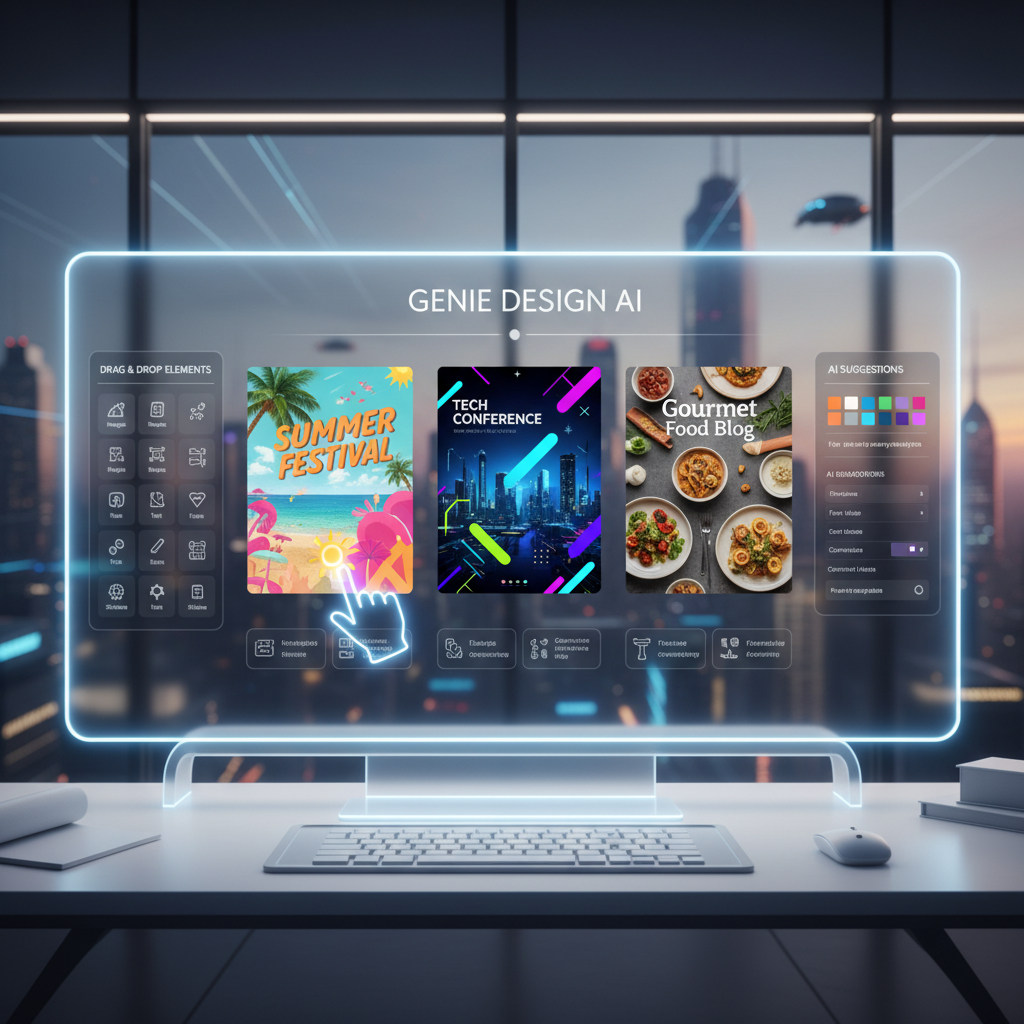
- Design: Adobe Express (AI features for template customization), Glorify (e-commerce design with AI).
Many of these tools are designed with user-friendly interfaces, making them suitable for beginners.
Q: How will AI integrate with emerging platforms like the Metaverse or Web3 for social content?
A: AI will be foundational for content in the Metaverse and Web3. It will:
- Generate Dynamic Environments: Create and populate virtual worlds with objects, landscapes, and experiences on the fly.
- Power Intelligent Avatars/NPCs: Give conversational abilities and unique personalities to virtual characters, enhancing interaction.
- Enable Personalized Experiences: Adapt virtual events, advertising, and storytelling within the Metaverse based on user behavior and preferences.
- Facilitate Content Ownership (NFTs): Potentially generate unique digital assets (NFTs) for creators and brands, linking content to verifiable ownership on blockchain.
- Translate & Localize: Provide real-time translation and cultural adaptation for global, immersive social interactions.
AI will make these future digital spaces more dynamic, engaging, and personalized than anything we’ve seen on current social platforms.
Key Takeaways: Navigating the AI-Powered Content Landscape
The journey through the AI revolution in social content reveals a landscape rich with opportunity and potential. To summarize the critical insights:
- AI is a Game-Changer for Efficiency: It dramatically accelerates content creation, allowing for unprecedented speed, volume, and consistency across platforms, freeing up human creators for strategic tasks.
- Creativity is Amplified, Not Replaced: AI acts as a powerful co-pilot, overcoming creative blocks and generating diverse ideas, enabling human creators to focus on refining, personalizing, and injecting unique brand voice.
- Hyper-Personalization is Now Scalable: AI analyzes vast data to deliver tailored content experiences to individual users, fostering deeper engagement and more effective communication than ever before.
- Data-Driven Decisions are Standard: AI provides real-time analytics, predictive insights, and automated optimization, empowering marketers to make informed choices that maximize content ROI.
- Ethical Considerations Demand Vigilance: Addressing issues of bias, misinformation, copyright, and authenticity requires continuous human oversight, ethical guidelines, and transparency in AI usage.
- The Human Touch Remains Irreplaceable: While AI automates and augments, the strategic direction, emotional intelligence, and genuine human connection vital for truly impactful social storytelling can only come from people.
- Future Integration is Deep and Expansive: Expect AI to evolve into a more seamless creative partner, deeply integrating with emerging platforms like the Metaverse and Web3, and offering advanced predictive content strategies.
- Accessibility is Increasing: A growing array of user-friendly AI tools makes this technology accessible to businesses and creators of all sizes.
Conclusion: Embracing the Future of Digital Storytelling
The future of social content is not just about using AI; it is about intelligently integrating AI to enhance human creativity, amplify reach, and forge deeper connections. We stand at the cusp of an exciting era where the once-daunting task of constant content creation is being transformed into an effortless, intuitive, and highly effective process. AI is providing the tools to tell stories that are more personalized, more dynamic, and more impactful than ever before, pushing the boundaries of digital communication.
However, this revolution comes with a mandate for responsibility. The power of AI must be wielded with care, ensuring that ethical considerations, authenticity, and the invaluable human element remain at the forefront. As AI tools continue to evolve, the most successful brands and creators will be those who master the art of collaboration with these intelligent systems, leveraging their capabilities for efficiency and scale while always prioritizing the unique voice, empathy, and strategic vision that only humans can provide. Embrace this future, experiment with its possibilities, and get ready to revolutionize your digital storytelling in ways you never thought possible. The future of social content is indeed here, and it is brilliantly powered by AI, ready for you to shape its narrative.





















































































Leave a Reply