
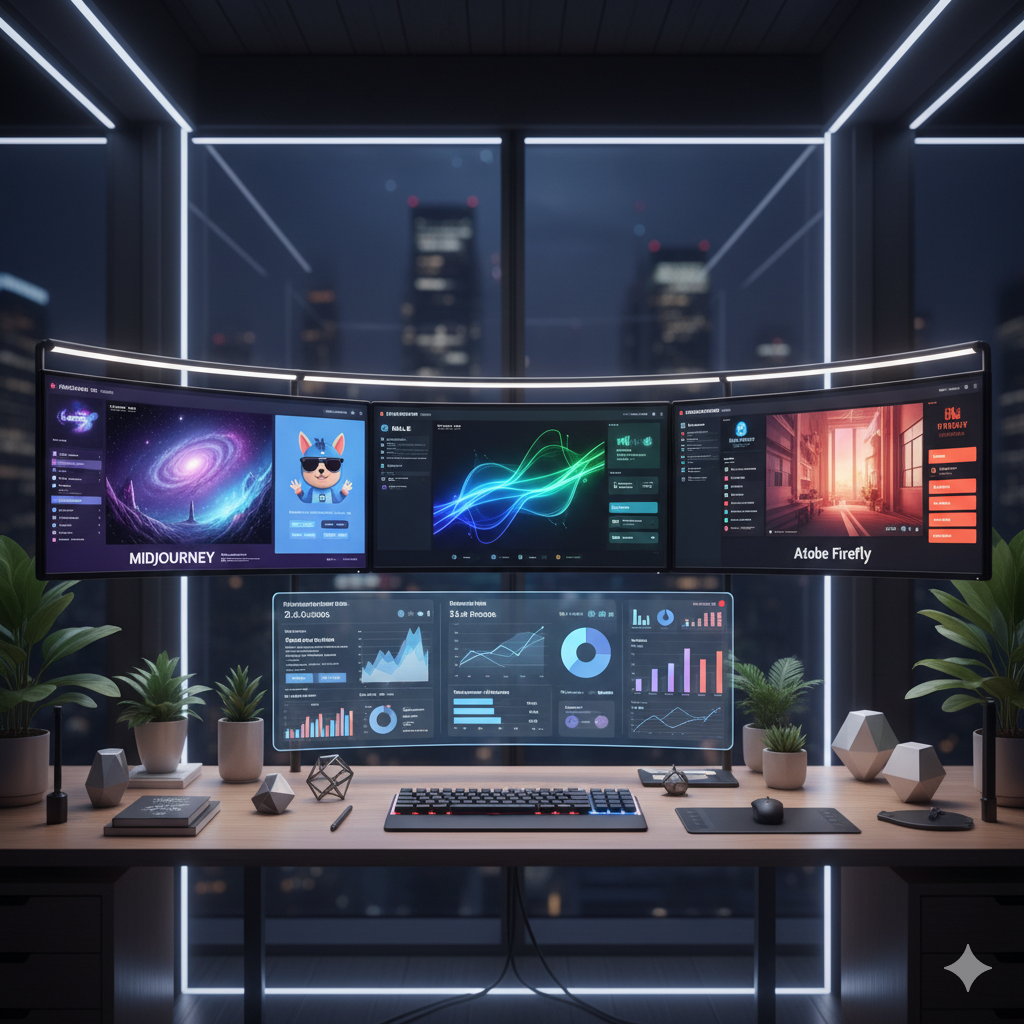
In the dynamic and hyper-competitive landscape of digital marketing, visuals are no longer just an accompaniment to content; they are the content itself. From captivating social media posts to compelling ad campaigns and immersive website experiences, high-quality, relevant imagery is paramount for capturing audience attention and driving engagement. For marketing agencies, the relentless demand for fresh, diverse, and impactful visual assets can often strain resources, time, and budget. This is where Artificial Intelligence (AI) image tools emerge not just as a trend, but as a transformative force, revolutionizing how agencies approach visual content creation.
This comprehensive guide is designed to equip marketing agencies with the knowledge and insights needed to strategically harness the power of AI image tools. We will delve into the leading platforms, explore their functionalities, discuss practical integration into agency workflows, address crucial ethical considerations, and cast a gaze into the future of AI-driven visual marketing. Prepare to discover how these innovative tools can unlock unprecedented levels of efficiency, creativity, and scalability for your agency, enabling you to deliver more engaging and effective visual campaigns for your clients.
Understanding the Shift: Why AI in Visual Content is Essential for Agencies
The digital realm moves at an astonishing pace, and content consumption habits evolve even faster. Audiences expect a constant stream of fresh, highly tailored visuals across multiple platforms. For marketing agencies, meeting this expectation presents significant challenges:
- High Demand for Volume: Modern marketing strategies require a vast quantity of unique images for A/B testing, personalized campaigns, and diverse platform requirements.
- Budget Constraints: Traditional methods like professional photoshoots, stock photo subscriptions, or manual graphic design can be costly and time-consuming.
- Time Sensitivity: Campaigns often need to be launched quickly, leaving little room for lengthy creative processes.
- Creative Block: Even the most talented designers can face creative fatigue or struggle to produce novel concepts continuously.
- Scalability Issues: Expanding visual content production often means hiring more staff or outsourcing, which introduces further overheads and management complexities.
AI image tools directly address these pain points by offering unprecedented efficiency, scalability, and creative potential. They allow agencies to:
- Generate Ideas Rapidly: Brainstorm and visualize concepts in minutes, turning text prompts into a myriad of image possibilities.
- Reduce Costs Significantly: Minimize reliance on expensive stock photo licenses or elaborate photoshoots.
- Accelerate Production Cycles: Create multiple variations of an image or entirely new images in a fraction of the time it would take a human designer.
- Enhance Existing Assets: Upscale low-resolution images, remove unwanted objects, or apply stylistic changes with remarkable precision and speed.
- Personalize at Scale: Produce hyper-specific visuals tailored to niche audiences or individual user preferences, a cornerstone of modern digital marketing.
- Foster Creativity: Act as a co-creator, pushing creative boundaries and exploring visual styles that might not have been conceived through traditional means.
By embracing AI, agencies can not only streamline their visual content pipelines but also gain a significant competitive advantage, offering clients more innovative, cost-effective, and impactful campaigns.
Core AI Image Tool Categories for Marketing Agencies
The landscape of AI image tools is diverse, with various categories designed to address different aspects of visual content creation. For marketing agencies, understanding these distinctions is key to selecting the right tools for specific tasks.
1. Generative AI Tools (Text-to-Image)
These are perhaps the most exciting and widely discussed AI tools. They can create entirely new images from textual descriptions (prompts). This category is invaluable for generating unique concepts, mood boards, social media graphics, and advertising visuals that don’t exist anywhere else.
- Key Functionality: Generating images, art, illustrations, and photorealistic scenes from text prompts.
- Agency Use Cases: Creating unique brand mascots, conceptualizing campaign visuals, generating diverse character representations, rapid prototyping of ad creatives, producing social media content on demand.
2. AI-Powered Image Editing and Enhancement Tools
These tools leverage AI to augment or improve existing images, often performing complex tasks that traditionally required significant manual effort and skill. They are perfect for refining client assets, preparing images for different platforms, or giving a professional polish to generated visuals.
- Key Functionality: Upscaling resolution, denoising, sharpening, removing backgrounds or objects, applying advanced filters, color correction, image extension, generative fill.
- Agency Use Cases: Improving client-provided low-resolution logos, cleaning up product photography, removing distracting elements from lifestyle shots, preparing images for print or high-resolution displays, quickly adapting aspect ratios.
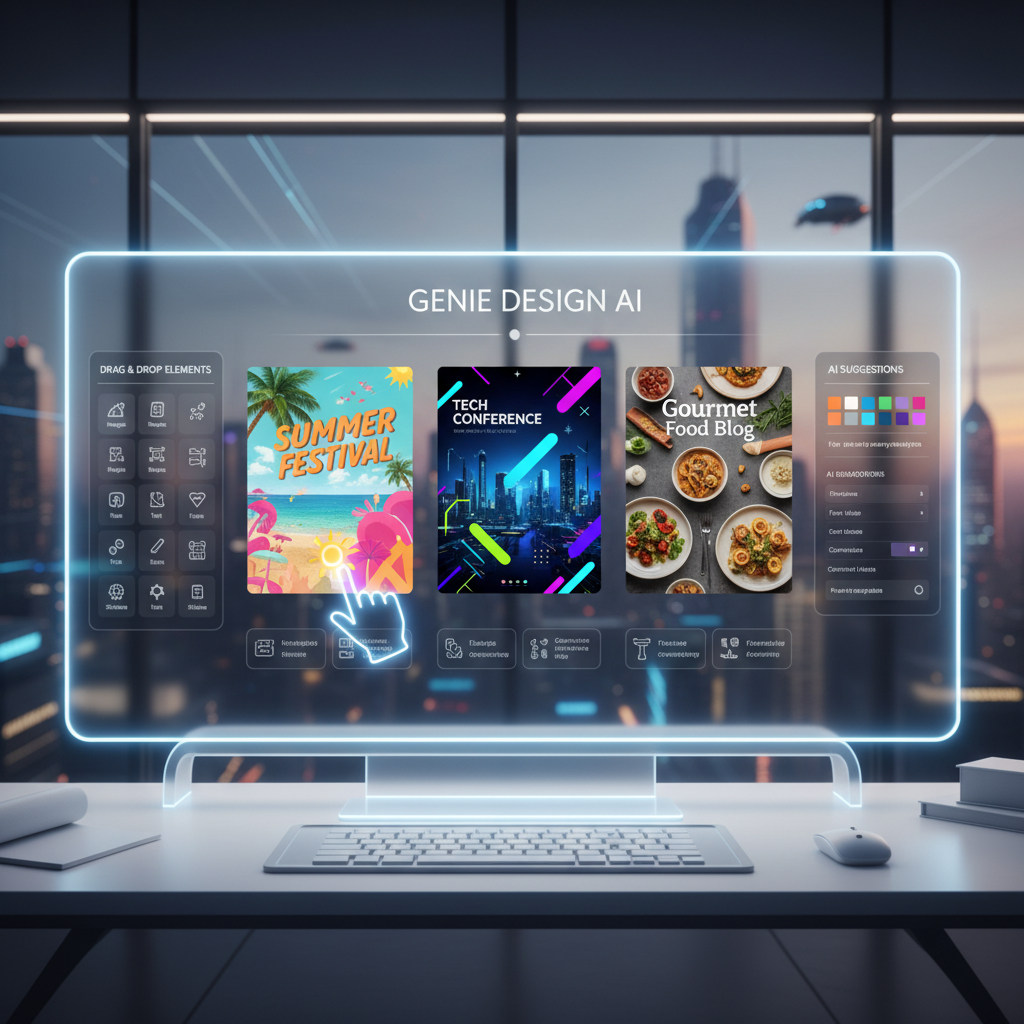
3. AI-Assisted Design Platforms
Some platforms integrate AI capabilities directly into a broader design suite, providing smart recommendations, template generation, or automated layout adjustments. While not solely focused on image generation, their AI features streamline the overall design process.
- Key Functionality: Smart templates, content-aware design suggestions, automated branding application, video editing assistance.
- Agency Use Cases: Rapidly creating branded presentations, generating variations of ad banners, quickly assembling short promotional videos with stock footage and AI-generated elements.
By strategically combining tools from these categories, marketing agencies can build a robust visual content pipeline that is both efficient and creatively limitless.
Top AI Image Generation Tools for Marketing Agencies
The market for generative AI image tools is rapidly evolving, with several platforms standing out for their capabilities and suitability for marketing agency use. Here, we examine some of the most prominent players.
1. Midjourney
Midjourney is renowned for its exceptional artistic quality and ability to produce highly aesthetic, often surreal or evocative, imagery. It excels in creating visually stunning and unique conceptual art, illustrations, and photorealistic scenes.
- Strengths:
- Artistic Prowess: Produces images with a distinct, often beautiful, artistic flair. Excellent for mood boards, creative concepts, and unique branding elements.
- Rapid Iteration: Quickly generates multiple variations from a single prompt, allowing for exploration of different styles and compositions.
- Community & Inspiration: A vibrant community provides inspiration and prompt-sharing, fostering learning.
- Advanced Features: Offers sophisticated parameters for aspect ratios, stylization, image weights, and now coherent character generation with consistency.
- Weaknesses:
- Control Complexity: Achieving precise control over specific elements or consistent character features can require significant prompt engineering and experimentation.
- User Interface: Primarily Discord-based, which can be less intuitive for those accustomed to traditional graphical user interfaces.
- Photorealism: While greatly improved with V6, achieving perfect, unblemished photorealism can still sometimes be challenging compared to more controlled environments.
- Pricing: Subscription-based, offering various tiers depending on usage needs.
- Agency Use Cases:
- Generating unique hero images for website landing pages.
- Creating abstract or stylized visuals for social media campaigns that stand out.
- Developing visual concepts for client pitches and presentations.
- Designing unique brand mascots or stylistic elements for new brands.
- Producing a consistent visual tone for an entire ad series.
2. DALL-E 3 (via ChatGPT Plus/API)
Developed by OpenAI, DALL-E 3 builds upon its predecessors with enhanced prompt understanding and an ability to generate more detailed and contextually relevant images. Its integration with ChatGPT makes it incredibly user-friendly for non-designers.
- Strengths:
- Prompt Understanding: Exceptional at interpreting complex, nuanced prompts and translating them into accurate visuals, often improving on initial text prompts.
- Ease of Use: The conversational interface through ChatGPT Plus makes it highly accessible, requiring less technical prompt engineering for good results.
- Contextual Generation: Can maintain context across multiple image generations within a conversation, aiding in iterative design.
- Safety & Compliance: OpenAI has strong content moderation policies, making it a safer choice for commercial use in terms of preventing inappropriate content.
- Weaknesses:
- Artistic Stylization: While versatile, it might not always achieve the same unique artistic flair or “wow factor” that Midjourney often delivers for highly stylized concepts.
- Direct Control: Less direct parameter control compared to Stable Diffusion or even Midjourney for fine-tuning specific visual attributes.
- Pricing: Included with ChatGPT Plus subscriptions, also available via API for developers.
- Agency Use Cases:
- Quickly generating diverse social media post visuals for daily content calendars.
- Creating concept art for blog posts or articles that perfectly match the narrative.
- Designing realistic mock-ups of products or scenarios.
- Generating varied character illustrations for explainer videos or brand storytelling.
- Producing images with specific text overlays or complex scenes easily.
3. Stable Diffusion (Various Interfaces: Automatic1111, Leonardo.AI, Stability AI APIs)
Stable Diffusion is unique for its open-source nature, allowing for unparalleled customization and flexibility. It’s a powerful tool for agencies that want deep control over their image generation process, including fine-tuning models with their own data.
- Strengths:
- Customization & Control: Offers the most granular control over image generation parameters, including seed values, sampling methods, negative prompts, and control networks (ControlNet).
- Open-Source Ecosystem: A vast community contributes models (e.g., via Civitai), extensions, and interfaces, leading to endless possibilities.
- Local Deployment: Can be run locally on powerful hardware, offering privacy and potentially unlimited generations without subscription costs (aside from electricity and hardware).
- Fine-Tuning: Agencies can train custom models (LoRAs) on client-specific branding, products, or aesthetics for highly consistent and relevant output.
- Weaknesses:
- Steep Learning Curve: Mastering advanced features and prompt engineering can be challenging and time-consuming.
- Hardware Requirements: Running locally demands a powerful GPU, which can be a significant upfront investment.
- Inconsistent Quality: Without careful prompt engineering and model selection, output quality can be more varied compared to commercial offerings.
- Pricing: Core model is free. Cloud-based services and APIs (like Stability AI’s DreamStudio, Leonardo.AI, Clipdrop) offer tiered subscription models or pay-as-you-go credits.
- Agency Use Cases:
- Developing highly specific visual assets for niche industries or complex campaigns.
- Creating variations of product shots with specific lighting or environmental conditions.
- Fine-tuning models to generate visuals perfectly aligned with a client’s brand guidelines, including specific product variations or model likenesses.
- Generating consistent characters or environments across a series of marketing materials.
- Leveraging ControlNet for precise pose, composition, or depth control based on reference images.
4. Adobe Firefly
Adobe Firefly is Adobe’s suite of creative generative AI models, designed to be integrated seamlessly into the Adobe Creative Cloud ecosystem. Its focus is on commercial viability and ease of use for designers already familiar with Adobe products.
- Strengths:
- Creative Cloud Integration: Deeply integrated into Photoshop, Illustrator, and other Adobe apps, streamlining workflows for existing Adobe users.
- Commercial Safety: Trained on licensed images from Adobe Stock, open-licensed content, and public domain content, offering greater confidence for commercial use without copyright infringement concerns.
- Generative Fill & Expand: Revolutionary features that allow for effortless image expansion and object manipulation directly within Photoshop.
- User-Friendly: Designed with creatives in mind, offering intuitive controls and familiar interfaces.
- Weaknesses:
- Newer Entrant: While powerful, it’s still evolving compared to more established pure-play generative AI tools.
- Stylistic Range: Currently, it might have a slightly more “expected” aesthetic compared to the artistic exploration possible with Midjourney.
- Pricing: Included with Creative Cloud subscriptions, with credit-based usage.
- Agency Use Cases:
- Extending backgrounds or changing aspect ratios of existing client images with Generative Expand.
- Adding or removing objects from photographs with Generative Fill for flawless retouching.
- Creating custom textures, patterns, and brushes for graphic design projects.
- Rapidly generating variations of design elements within a familiar environment.
- Producing commercial-safe marketing collateral with confidence.
AI-Powered Image Editing and Enhancement Tools
Beyond generating entirely new images, AI also significantly enhances the process of editing and improving existing visual assets. These tools can save countless hours, achieve results previously only possible with advanced skills, and breathe new life into old or low-quality images.
1. Adobe Photoshop (AI Features)
As the industry standard for image manipulation, Photoshop has deeply integrated AI capabilities, making it an indispensable tool for agencies.
- Generative Fill: Allows users to select an area of an image and fill it with AI-generated content based on a text prompt. This is revolutionary for removing objects, adding elements, or changing backgrounds seamlessly.
- Generative Expand: Extends the canvas beyond the original image boundaries and intelligently fills the new space with AI-generated content, perfect for changing aspect ratios or widening scenes.
- Neural Filters: A collection of AI-powered filters that can perform complex tasks like smart portrait retouching (changing expressions, age, gaze), style transfer, colorization of black-and-white photos, and more, all with non-destructive editing.
- Content-Aware Tools: Advanced versions of familiar tools like Content-Aware Fill and Healing Brush leverage AI for incredibly effective object removal and background blending.
- Agency Use Cases:
- Seamlessly adapting existing client imagery to new aspect ratios for different social media platforms.
- Removing distracting elements from product shots or lifestyle photography without meticulous cloning.
- Adding new elements to an existing scene (e.g., a prop, a person) while maintaining visual consistency.
- Quickly retouching portraits for campaign visuals, adjusting lighting or expressions.
- Restoring and enhancing old client assets for modern campaigns.
2. Topaz Labs Suite (Gigapixel AI, DeNoise AI, Sharpen AI)
Topaz Labs specializes in highly focused AI tools that excel at specific image enhancement tasks, delivering professional-grade results.
- Gigapixel AI: Uses AI to upscale images by up to 600% while intelligently adding detail, preventing pixelation, and maintaining sharpness. Ideal for preparing web images for print or enhancing low-resolution client assets.
- DeNoise AI: Removes noise from photos while preserving crucial image detail, making it invaluable for images shot in low light or with high ISO settings.
- Sharpen AI: Corrects blur (motion blur, out-of-focus blur) and enhances overall image sharpness, making soft images crisp.
- Agency Use Cases:
- Transforming small, low-resolution client logos or images into high-resolution assets suitable for large prints or detailed web use.
- Salvaging client photos taken in challenging conditions by removing noise and sharpening details.
- Ensuring all visual assets, regardless of their original quality, meet the high standards required for professional marketing campaigns.
- Creating stunning, crisp visuals even from less-than-perfect source material.
3. Luminar Neo
Luminar Neo by Skylum is an AI-powered photo editor designed to simplify complex editing tasks and offer creative enhancements with ease.
- Sky AI: Automatically detects and replaces skies in photos, adjusting lighting and reflections to match the new sky. Perfect for making outdoor shots more dramatic or brand-aligned.
- Relight AI: Intelligently analyzes image depth and allows users to relight specific areas of a photo, adjusting brightness and warmth for a more professional look.
- Portrait AI Enhancements: Features like Face AI, Skin AI, and Body AI allow for quick, natural-looking adjustments to portraits, including smoothing skin, reshaping facial features, and enhancing eyes.
- Content-Aware Erase: Smartly removes unwanted objects from images, similar to Photoshop’s content-aware fill, but often with a more streamlined workflow.
- Agency Use Cases:
- Rapidly enhancing lifestyle imagery for social media or advertisements, creating perfect weather conditions or ideal lighting.
- Batch processing product photos for consistent visual style and quality.
- Quickly retouching model photos for fashion or beauty campaigns.
- Adding creative flair and artistic effects to visuals without extensive manual editing.
These tools, when integrated into an agency’s workflow, empower designers and content creators to produce higher quality visuals faster, allowing them to focus on strategic creative direction rather than laborious manual tasks.
Integrating AI Tools into Agency Workflows
The true power of AI image tools is realized when they are thoughtfully integrated into an agency’s existing creative and operational workflows. This isn’t just about adopting new software; it’s about evolving processes, upskilling teams, and redefining creative collaboration.
1. Strategic Planning and Identification of Opportunities
- Identify Bottlenecks: Pinpoint areas where visual content creation is slow, expensive, or creatively constrained. Is it stock photo hunting? Iterating on ad concepts? Producing high volumes of social media graphics?
- Define Use Cases: Clearly outline how AI tools can address these bottlenecks. For example, “use generative AI for initial concept exploration and mood boards” or “use AI enhancement for client-provided low-res images.”
- Start Small: Begin with pilot projects or specific campaign types to test the waters, gather feedback, and refine processes before full-scale adoption.
2. Building a “Prompt Engineering” Culture
- Training and Upskilling: Invest in training for designers, copywriters, and content creators on effective prompt engineering techniques. Understanding how to communicate with AI models is a new core skill.
- Shared Prompt Libraries: Create internal databases of successful prompts, negative prompts, and stylistic parameters for consistent brand output and accelerated creation.
- Collaborative Prompting: Encourage designers and copywriters to collaborate on prompts, combining visual intuition with descriptive language for richer results.
3. Workflow Integration and Process Refinement
- Pre-Production: Use generative AI for early-stage brainstorming, rapid visualization of concepts, mood board creation, and character/scene development. This saves time on initial sketches or extensive stock photo searches.
- Production:
- Generate unique campaign assets (social media visuals, ad banners, website hero images).
- Enhance existing client assets (upscaling, denoising, object removal).
- Perform iterative design changes quickly, generating multiple variations for A/B testing.
- Post-Production: Utilize AI tools within traditional editors (e.g., Photoshop’s Generative Fill) for final touch-ups, background extensions, or object removal, streamlining the finishing process.
- Quality Assurance: Implement new QA checkpoints to ensure AI-generated content aligns with brand guidelines, maintains accuracy, and meets ethical standards. Human oversight remains crucial.
4. Establishing Internal Guidelines and Best Practices
- Brand Consistency: Develop specific guidelines for using AI to ensure output consistently reflects client brand identities. This might involve using specific models, recurring prompt elements, or post-processing techniques.
- Ethical Framework: Create an agency policy on AI usage, covering aspects like intellectual property, bias mitigation, and transparency with clients.
- Archiving and Version Control: Establish clear procedures for saving and organizing AI-generated assets, along with their associated prompts, for future reference and iteration.
5. Client Communication and Value Proposition
- Educate Clients: Explain how AI tools are being used to enhance efficiency, creativity, and cost-effectiveness. Highlight the benefits, such as faster turnaround, more diverse options, and increased personalization.
- Transparency: Be transparent about AI assistance in the creative process where appropriate, especially concerning commercial rights and originality.
- Showcase Results: Demonstrate the tangible improvements and innovations brought about by AI-driven visuals in campaign performance and creative output.
By treating AI tools as powerful assistants rather than replacements, agencies can empower their teams, amplify their creative output, and deliver exceptional value to their clients.
Comparison Tables
Table 1: Comparison of Leading Generative AI Image Tools for Agencies
| Feature/Tool | Midjourney | DALL-E 3 (via ChatGPT Plus) | Stable Diffusion (e.g., Leonardo.AI) | Adobe Firefly |
|---|---|---|---|---|
| Primary Strength | Artistic quality, unique aesthetics, strong community | Prompt understanding, ease of use (conversational), contextual iteration | Customization, open-source flexibility, deep control, fine-tuning | Creative Cloud integration, commercial safety focus, generative fill |
| Best Use Cases | Conceptual art, mood boards, unique brand visuals, artistic campaigns | Quick social media graphics, blog imagery, diverse character generation, complex scene generation | Highly specific niche content, brand-trained models, precise control over composition, iterative design | Image extension, object removal/addition, commercial asset creation, integration into existing design workflows |
| User Interface | Discord-based (command line) | Conversational (via ChatGPT) | Web UI (e.g., Leonardo.AI) or Local UI (Automatic1111) | Integrated into Adobe Creative Cloud apps & web app |
| Learning Curve | Medium-High (for advanced control) | Low (for basic use), Medium (for optimized prompting) | High (for advanced customization), Medium (for web UIs) | Low (for Adobe users), Medium (for non-Adobe users) |
| Commercial Rights | Generally requires paid subscription, check terms for specifics | Generally allows commercial use with paid subscription, check terms | Varies by specific model/platform; generally free for open-source, check licensed services | Designed for commercial use, trained on commercially safe content |
| Key Differentiator | Aesthetic appeal, distinctive style, constant evolution of artistic capabilities | Natural language interaction, exceptional prompt comprehension, ease of iteration within chat | Unparalleled control, open-source community, ability to run locally or fine-tune custom models | Seamless integration with professional design software, focus on commercial reliability and creative extension |
Table 2: Comparison of AI-Powered Image Enhancement Tools for Agencies
| Feature/Tool | Adobe Photoshop (AI Features) | Topaz Labs Suite (Gigapixel AI, DeNoise AI, Sharpen AI) | Luminar Neo |
|---|---|---|---|
| Primary Function | Generative editing, object manipulation, selective enhancements | Specialized image quality improvement (upscaling, noise reduction, sharpening) | Creative photo editing, automated scene enhancements, portrait retouching |
| Strengths | Industry standard, deep integration with design workflow, versatile generative capabilities (fill, expand) | Unmatched quality in specialized tasks, excellent for recovering poor-quality images, batch processing | Intuitive interface, powerful AI filters (Sky AI, Relight AI), rapid creative style application |
| Best Use Cases | Complex photo retouching, background removal/extension, object addition/removal, aspect ratio changes | Upscaling small logos for print, cleaning noisy event photos, sharpening slightly blurry product shots, enhancing archival imagery | Quick creative edits, consistent stylistic application across a photo series, professional portrait enhancements, dramatic sky changes |
| Integration | Core of Adobe Creative Cloud ecosystem | Standalone desktop applications, often used pre/post-Photoshop | Standalone photo editor, can export to other editors |
| Target User | Professional designers, photo retouchers, digital artists | Photographers, agencies needing high-quality image restoration/enhancement | Photographers, content creators, agencies seeking fast creative edits |
| Subscription/License Model | Creative Cloud subscription | Perpetual license per product (with optional upgrades) | Subscription-based |
Practical Examples and Real-World Use Cases
Understanding the tools is one thing; seeing them in action is another. Here are several practical examples of how marketing agencies can leverage AI image tools across various client campaigns and internal processes.
1. Social Media Campaign for a New Coffee Brand
- Challenge: Launch a new coffee brand with a unique aesthetic, needing a high volume of diverse, engaging visuals daily. Budget for photoshoots is limited.
- AI Solution:
- Generative AI (Midjourney/DALL-E 3): Use prompts like “a steaming mug of artisanal coffee on a minimalist wooden table, morning light, cozy atmosphere, warm colors, cinematic” to generate hundreds of variations of coffee shots.
- AI Editing (Luminar Neo): Apply consistent color grading and atmospheric enhancements across all generated images to maintain brand cohesion. Use Sky AI to add dramatic skies if outdoor elements are present.
- Photoshop AI: For specific product shots, use Generative Fill to remove distracting backgrounds and replace them with branded textures or minimalist backdrops. Use Generative Expand to adapt images to various aspect ratios (stories, reels, square posts).
- Outcome: A visually rich and varied social media feed, engaging a broad audience without the cost and time of traditional photography, allowing for rapid A/B testing of different visual styles.
2. Developing Ad Creatives for an E-commerce Fashion Client
- Challenge: Create diverse ad sets for A/B testing different product styles, models, and backgrounds for an online fashion retailer. Manual creation is slow and expensive.
- AI Solution:
- Generative AI (Stable Diffusion with a fine-tuned model or ControlNet): Train a custom model on the client’s product catalog and model aesthetics. Use ControlNet to maintain consistent poses or compositions while varying outfits, settings, and lighting. Prompt for diverse models to ensure inclusivity.
- Photoshop AI: Use Generative Fill to quickly swap out clothing items on a base image or change backgrounds to match different campaign themes (e.g., urban, nature, studio). Use Neural Filters for quick facial retouching.
- Outcome: Rapid generation of hundreds of unique ad creatives for extensive A/B testing, leading to optimized campaign performance and a significant reduction in production costs and time.
3. Enhancing Visuals for a Real Estate Agency Website
- Challenge: Client provides low-resolution, often grainy photos of properties, with cluttered interiors or dull exteriors. Professional photography is not always an option for every listing.
- AI Solution:
- Topaz Labs Suite (Gigapixel AI, DeNoise AI, Sharpen AI): Upscale all provided images to high resolution for web display. Run DeNoise AI to remove graininess from interior shots and Sharpen AI to bring clarity to architectural details.
- Photoshop AI / Luminar Neo: Use Generative Fill to remove unwanted items (e.g., personal belongings, trash cans) from property photos. Use Sky AI in Luminar Neo to replace overcast skies with bright, appealing ones in exterior shots.
- Outcome: All property listings feature high-quality, professional-looking images that better showcase the properties, leading to increased visitor engagement and perceived value.
4. Creating Unique Illustrations for a Tech Blog
- Challenge: A tech client’s blog needs a continuous supply of unique, conceptual illustrations to accompany articles on complex topics, avoiding generic stock imagery.
- AI Solution:
- Generative AI (Midjourney/DALL-E 3): Provide detailed prompts based on article themes (e.g., “AI brain thinking, neural network connections, digital abstract art, vibrant colors, clean lines” or “futuristic city with self-driving cars, low poly style, pastel tones”).
- AI Editing: Perform minor clean-ups or stylistic adjustments in Photoshop if needed.
- Outcome: The blog features distinctive and relevant illustrations that enhance readability, reinforce brand identity, and elevate the overall user experience, all created much faster than commissioning human illustrators.
5. Rapid Prototyping for Client Pitch Presentations
- Challenge: Quickly visualize complex campaign ideas for a client pitch, needing diverse visual examples to convey the concept effectively.
- AI Solution:
- Generative AI (DALL-E 3/Midjourney): Use descriptive prompts to generate rapid visual mock-ups of ad placements, campaign themes, or specific imagery envisioned for the campaign.
- Adobe Firefly: Utilize Generative Fill within presentation slides (or design software) to add or adjust elements to these mock-ups, demonstrating versatility.
- Outcome: Clients are presented with highly visual, compelling, and custom-tailored concepts that clearly communicate the agency’s vision, increasing the likelihood of winning the pitch.
These examples illustrate just a fraction of the transformative potential AI image tools hold for marketing agencies, enabling them to operate with greater agility, creativity, and cost-efficiency.
Ethical Considerations and Best Practices
While AI image tools offer immense advantages, their use also brings forth important ethical considerations that marketing agencies must navigate responsibly. Adhering to best practices ensures not only legal compliance but also maintains client trust and agency reputation.
1. Copyright and Intellectual Property
- Understanding Licenses: Different AI tools have varying terms of service regarding the commercial use and ownership of generated images. Agencies must thoroughly understand and comply with these licenses. Some tools (like Adobe Firefly) specifically train on commercially licensed data to mitigate copyright risks, while others (like Stable Diffusion) may have more ambiguous or user-defined terms.
- Originality vs. Infringement: Be cautious of prompts that explicitly request images in the style of a living artist or that mimic copyrighted characters. While AI can transform inputs, generating something too close to an existing work could still pose a risk.
- Derivative Works: If AI is used to modify existing copyrighted material (e.g., a client’s photo), ensure the agency has the rights to modify that original material.
- Agency Ownership: Clarify with clients who owns the AI-generated images created for their campaigns. Typically, as part of a work-for-hire agreement, the client would retain rights, but explicit documentation is wise.
2. Bias and Representation
- Training Data Bias: AI models are trained on vast datasets, which often reflect existing societal biases. This can lead to AI-generated images perpetuating stereotypes (e.g., showing only certain demographics in leadership roles, or misrepresenting cultures).
- Conscious Prompting: Agencies have a responsibility to counteract bias by intentionally crafting inclusive and diverse prompts. Actively seek to represent a wide range of ethnicities, genders, ages, abilities, and body types relevant to the target audience.
- Review and Critique: Always review AI-generated output for unintended biases or stereotypical representations before using them in campaigns. Educate teams on identifying and mitigating these issues.
3. Deepfakes and Misinformation
- Veracity of Images: The ability of AI to create highly realistic but entirely fabricated images raises concerns about misinformation. Agencies must ensure that AI-generated visuals are not used to deceive or misrepresent facts, especially in news-sensitive or factual content.
- Transparency: In certain contexts, it may be appropriate or even necessary to disclose that an image has been AI-generated, particularly when the image purports to be a real photograph or portrays sensitive subjects.
- Brand Reputation: Using AI irresponsibly can severely damage an agency’s and its clients’ reputations if discovered to be misleading or unethical.
4. Transparency with Clients and Audience
- Client Communication: Agencies should have open conversations with clients about the integration of AI tools, explaining how they enhance efficiency and creativity while addressing any concerns about originality or IP.
- Disclosure (where relevant): For certain types of content or campaigns, especially those involving sensitive topics or public figures, a clear disclosure that imagery is AI-generated might be necessary to maintain trust and ethical standards.
5. Data Privacy
- Input Data: Be mindful of any sensitive client or proprietary data used as input for AI models. Ensure that using such data does not violate privacy agreements or expose confidential information, especially with cloud-based services.
By establishing clear internal guidelines, fostering a culture of responsible AI use, and prioritizing ethical considerations, marketing agencies can harness the power of AI image tools while maintaining integrity and building enduring trust with their clients and audiences.
Measuring ROI and Impact of AI-Generated Visuals
For marketing agencies, the adoption of any new technology must demonstrate a tangible return on investment (ROI). AI image tools are no exception. Measuring their impact goes beyond just cost savings; it encompasses efficiency gains, creative expansion, and ultimately, enhanced campaign performance.
1. Quantifying Time Savings and Efficiency Gains
- Content Creation Time: Track the average time taken to create a specific visual asset (e.g., a social media graphic, an ad banner) before and after implementing AI tools. Compare the manual design time versus AI generation + human refinement time.
- Iteration Speed: Measure how quickly an agency can produce multiple variations of a creative for A/B testing or client feedback. AI significantly reduces the cycle time for creative iterations.
- Resource Reallocation: Identify how many hours previously spent on mundane, repetitive tasks (like stock photo searching or basic background removal) are now freed up for more strategic or complex creative work.
2. Evaluating Cost Reduction
- Stock Photography Savings: Calculate the reduction in expenditure on stock photo subscriptions or individual licenses by generating custom images with AI.
- Photoshoot Expenses: For specific campaign types, compare the cost of traditional photoshoots versus AI-generated visuals, especially for conceptual or highly specific scenes that might be expensive to stage.
- Outsourcing/Freelance Costs: If AI reduces the need for external illustrators or basic graphic design freelancers for certain tasks, quantify these savings.
3. Enhancing Scalability and Volume
- Volume of Content: Track the sheer number of unique visual assets produced over a period. AI enables agencies to produce significantly more content, supporting larger or more frequent campaigns.
- Campaign Diversity: Measure the variety of visual styles, themes, and formats an agency can now offer to clients, expanding their creative portfolio.
4. Campaign Performance Metrics
- Engagement Rates: Compare the click-through rates (CTR), likes, shares, comments, and overall engagement of campaigns using AI-generated visuals versus those using traditionally sourced imagery.
- Conversion Rates: For performance marketing campaigns, monitor how AI-generated ad creatives or landing page visuals impact conversion rates.
- A/B Testing Insights: AI allows for the rapid creation of numerous creative variations. Analyze which AI-generated variations perform best and extract insights for future campaigns.
- Brand Recall & Recognition: While harder to directly measure, unique and consistently branded AI visuals can contribute to stronger brand recall over time.
5. Client Satisfaction and Retention
- Faster Turnaround: Client feedback on quicker delivery of creative assets.
- More Options: Client satisfaction with a wider range of visual concepts and iterations to choose from.
- Innovation: Clients appreciating the agency’s embrace of cutting-edge technology and its ability to deliver innovative solutions.
- Project Wins: Quantify new client projects or expanded scopes directly attributed to the agency’s enhanced visual capabilities through AI.
By diligently tracking these metrics, marketing agencies can not only justify their investment in AI image tools but also demonstrate the tangible value they bring to both internal operations and client success. This data-driven approach allows for continuous optimization and strategic integration of AI into the core business model.
Future Trends: What’s Next for AI in Visual Marketing
The evolution of AI in visual content creation is relentless, with new advancements emerging at a breathtaking pace. Marketing agencies must stay abreast of these trends to maintain their competitive edge and continue delivering innovative solutions to clients.
1. Hyper-Personalization at Scale
- Individualized Visuals: Imagine dynamic ad creatives that automatically adjust product colors, models, or backgrounds based on individual user demographics, browsing history, or even real-time weather conditions. AI will enable the generation of truly personalized visuals for every single audience member.
- AI-Driven Customer Journeys: Visual content will be tailored to each stage of the customer journey, from awareness to conversion, with AI seamlessly generating appropriate imagery.
2. Text-to-Video and 3D Model Generation
- Video from Text: The current text-to-image capabilities will rapidly expand to robust text-to-video generation. Agencies will be able to create short, compelling video ads or social media clips simply by describing the scene and action, drastically reducing video production costs and timelines.
- 3D Asset Creation: AI will generate 3D models and environments from text or 2D images, opening new avenues for immersive experiences, augmented reality (AR) campaigns, and virtual product placements. This will transform sectors like e-commerce and gaming marketing.
3. Real-Time and Interactive AI Visuals
- Live Content Generation: AI might soon generate visuals in real-time based on live events, audience reactions, or trending topics, allowing for unprecedented agility in reactive marketing.
- Interactive Experiences: Expect more interactive AI-generated content, where users can influence the visual outcome through their engagement, creating unique and memorable brand experiences.
4. Deeper Integration into Creative Suites and Automation Platforms
- Seamless Workflows: AI functionalities will become even more deeply embedded within existing creative software (like Adobe Creative Cloud) and marketing automation platforms. This will create truly seamless workflows where AI acts as an omnipresent assistant throughout the entire content lifecycle.
- Autonomous Content Pipelines: AI might eventually manage entire content pipelines, from conceptualization and generation to scheduling and performance analysis, with human oversight focused on strategy and ethical review.
5. The Evolving Role of the Human Creative
- AI as Co-Pilot: Human creatives will transition from manual execution to becoming “AI whisperers” or “creative directors of AI.” Their role will involve strategic prompt engineering, curating AI output, refining concepts, and injecting unique human insight and emotional intelligence.
- Focus on Strategy and Narrative: With AI handling much of the repetitive visual creation, human creatives can dedicate more time to understanding audience psychology, developing compelling brand narratives, and crafting overarching campaign strategies.
The future of AI in visual marketing is not about machines replacing human creativity, but about augmenting it to unlock new dimensions of possibility. Agencies that embrace these evolving trends will be best positioned to innovate, lead, and deliver unparalleled value in the digital age.
Frequently Asked Questions
Q: What are AI image tools and how do they benefit marketing agencies?
A: AI image tools are software applications that leverage artificial intelligence to generate, modify, or enhance visual content. For marketing agencies, they offer immense benefits by drastically increasing efficiency, reducing costs, and expanding creative possibilities. They can generate unique images from text prompts, upscale low-resolution photos, remove unwanted objects, and apply complex stylistic changes in a fraction of the time it would take human designers, allowing agencies to produce more diverse and engaging visual content faster and more affordably.
Q: Which AI image generator is best for a marketing agency?
A: The “best” tool depends on the agency’s specific needs. Midjourney excels in artistic and unique visuals for conceptual campaigns. DALL-E 3 (via ChatGPT) is excellent for quick, diverse, and contextually accurate image generation with an easy-to-use interface. Stable Diffusion offers unparalleled customization and control for niche content or specific brand training. Adobe Firefly integrates seamlessly with Creative Cloud for commercial-safe content and powerful editing features like Generative Fill. Many agencies find success by using a combination of these tools for different tasks.
Q: Is it legal to use AI-generated images for commercial marketing campaigns?
A: Generally, yes, but it’s crucial to understand the terms of service and licensing agreements of each specific AI tool. Many reputable platforms (like Adobe Firefly and paid tiers of DALL-E 3 or Midjourney) explicitly state that commercial use is permitted for images generated under their subscriptions. For open-source tools like Stable Diffusion, the commercial rights often depend on the specific model used and its associated license. Agencies must always verify these terms to avoid potential copyright or intellectual property issues.
Q: How can marketing agencies ensure brand consistency with AI-generated visuals?
A: Ensuring brand consistency requires a strategic approach. Agencies should develop specific prompt guidelines for clients, including keywords for style, color palettes, and recurring elements. Using tools that allow for fine-tuning with brand-specific data (like Stable Diffusion) can help. Additionally, AI-generated images should always undergo human review and be polished or integrated into existing branded templates using traditional design software to ensure alignment with brand guidelines and visual identity.
Q: What is “prompt engineering” and why is it important for agencies?
A: Prompt engineering is the art and science of crafting effective text prompts to guide AI models in generating desired outputs. It involves using precise language, descriptive adjectives, stylistic cues, and sometimes negative prompts to achieve specific visual results. For agencies, it’s crucial because well-engineered prompts directly lead to higher quality, more relevant, and on-brand visuals, saving time on iterations and maximizing the efficiency of AI tools.
Q: Can AI image tools replace human graphic designers in an agency?
A: No, AI image tools are powerful assistants, not replacements, for human graphic designers. They automate repetitive tasks and accelerate content generation, allowing designers to focus on higher-level creative strategy, conceptualization, brand storytelling, and refining AI output. Human designers provide the critical artistic direction, emotional intelligence, brand understanding, and ethical judgment that AI currently lacks. The role of a designer evolves to that of an “AI creative director” or “prompt engineer.”
Q: How do AI image tools help with A/B testing in marketing?
A: AI image tools significantly streamline A/B testing by enabling the rapid creation of numerous visual variations for ads, landing pages, or social media posts. Agencies can generate multiple versions of an image with different colors, compositions, styles, or even models very quickly. This allows for more comprehensive and efficient testing to identify which visuals resonate most effectively with target audiences, leading to optimized campaign performance and better ROI.
Q: What are the ethical concerns agencies should be aware of when using AI images?
A: Key ethical concerns include copyright and intellectual property issues (ensuring commercial rights), bias in AI-generated imagery (e.g., perpetuating stereotypes due to biased training data), and the potential for deepfakes or misinformation. Agencies must implement best practices such as verifying licenses, consciously promoting diverse representation through prompts, ensuring transparency with clients and audiences about AI usage, and maintaining human oversight for ethical review.
Q: How can agencies integrate AI image tools into their existing workflow?
A: Integration involves several steps: first, identify bottlenecks where AI can add value; next, train staff on prompt engineering and tool usage; then, establish clear internal guidelines for brand consistency and ethical use. AI tools can be used for pre-production brainstorming, rapid content generation during production, and post-production enhancement. They should augment, not disrupt, the existing creative process, with human oversight at every critical stage.
Q: What are the future prospects of AI in visual content for marketing agencies?
A: The future is incredibly dynamic. We can expect hyper-personalization of visuals tailored to individual users, advancements in text-to-video and 3D model generation, real-time and interactive AI visuals, and even deeper integration of AI into full creative suites and automation platforms. The human role will shift towards strategic direction, curation, and ethical stewardship, with AI empowering unprecedented creative scale and efficiency.
Key Takeaways
- AI image tools are revolutionizing visual content creation for marketing agencies by offering unparalleled efficiency, scalability, and creative potential.
- These tools address critical pain points like high demand for volume, budget constraints, time sensitivity, and creative block.
- Key categories include Generative AI (text-to-image) and AI-Powered Image Editing/Enhancement tools, each serving distinct purposes.
- Top generative tools like Midjourney, DALL-E 3, Stable Diffusion, and Adobe Firefly offer diverse strengths, from artistic flair and ease of use to deep customization and commercial safety.
- AI-powered enhancement tools such as Adobe Photoshop’s AI features, Topaz Labs Suite, and Luminar Neo provide significant gains in image quality improvement, retouching, and stylistic application.
- Successful integration into agency workflows requires strategic planning, prompt engineering training, process refinement, and clear internal guidelines.
- Ethical considerations like copyright, bias, deepfakes, and transparency are paramount, requiring responsible usage and human oversight.
- Measuring ROI involves tracking time savings, cost reduction, content volume, campaign performance metrics, and client satisfaction.
- Future trends point towards hyper-personalization, text-to-video/3D generation, real-time visuals, and deeper automation, continually evolving the creative landscape.
- Ultimately, AI tools empower human creatives, shifting their focus from manual execution to strategic direction and innovative problem-solving.
Conclusion
The journey into the world of AI image tools for marketing agencies is not merely an exploration of new technology; it is an imperative for staying relevant, competitive, and innovative in an ever-accelerating digital marketing landscape. From generating unique campaign visuals in minutes to enhancing client assets with unparalleled precision and efficiency, AI offers a potent toolkit that can transform an agency’s operational capabilities and creative output.
By strategically adopting tools like Midjourney, DALL-E 3, Stable Diffusion, and Adobe Firefly, and integrating them thoughtfully into existing workflows, agencies can overcome traditional barriers of time, cost, and scale. This empowers creative teams to push boundaries, explore diverse visual narratives, and deliver highly personalized and engaging content that truly resonates with target audiences. However, the true mastery of AI lies not just in its technical application, but in its responsible and ethical deployment, ensuring fairness, transparency, and adherence to intellectual property rights.
As AI continues its rapid evolution, the role of the human creative is not diminished but elevated. Agencies that embrace AI as a powerful co-pilot, fostering a culture of continuous learning and responsible innovation, will be uniquely positioned to craft not just engaging visual campaigns, but truly transformative brand experiences. The ultimate guide to AI image tools is an ongoing narrative, and by understanding its current chapters and anticipating future trends, your marketing agency can confidently write its own success story in the visual content revolution.




























Leave a Reply