


In an age where information overload is a common challenge, planning a vacation can feel less like an exciting adventure and more like a demanding full-time job. From sifting through countless flight deals and hotel options to meticulously crafting itineraries that suit everyone’s preferences and budgets, the process can quickly become overwhelming. Enter Artificial Intelligence (AI) travel planners, a revolutionary solution designed to transform the way we conceptualize, plan, and execute our trips. This article delves deep into how these intelligent systems are not just simplifying your next vacation discovery but are fundamentally optimizing your vacation budget, allowing you to travel smarter, not harder.
Gone are the days of spending hours comparing prices across dozens of websites or struggling to find that perfect balance between adventure and affordability. AI-powered tools leverage sophisticated algorithms, machine learning, and vast datasets to analyze your preferences, predict optimal pricing, and curate bespoke travel experiences that align perfectly with your financial constraints and wanderlust. We will explore the mechanisms behind their efficiency, shed light on their multifaceted benefits, and provide practical insights into harnessing their power for your next unforgettable journey. Prepare to unlock a new era of travel planning where your dream vacation is not only achievable but also surprisingly affordable.
What are AI Travel Planners? Defining a New Era of Trip Planning
AI travel planners are sophisticated digital platforms that utilize artificial intelligence and machine learning technologies to automate, personalize, and optimize various aspects of travel planning. Unlike traditional online travel agencies (OTAs) or manual research methods, these tools go beyond simple search and booking. They act as intelligent assistants, capable of understanding complex user needs, processing massive amounts of data, and making recommendations that are highly tailored to individual preferences, budget, and travel style.
At their core, AI travel planners are built upon powerful algorithms that learn from user interactions, historical data, and real-time information. This allows them to predict trends, identify patterns, and offer proactive suggestions. Imagine an assistant who knows your preferred airline, your ideal hotel amenities, your dietary restrictions, your interest in art museums versus hiking trails, and your absolute maximum budget for a seven-day trip to Europe – all without you having to explicitly state it every single time. That is the promise of AI in travel.
The Evolution from Basic Search to Intelligent Recommendation
- Early Days of Online Travel (Late 1990s – Early 2000s): The internet revolutionized travel planning by consolidating information. Websites like Expedia and Travelocity allowed users to search for flights and hotels in one place, replacing phone calls to travel agents. However, these were largely database-driven search engines, requiring users to know exactly what they were looking for and to manually compare options.
- Meta-Search Engines (Mid 2000s): Sites like Kayak emerged, aggregating results from multiple OTAs and airline websites, offering a broader view of prices. While useful for price comparison, they still required significant user effort to filter and interpret data.
- Personalization with Rule-Based Systems (Late 2000s – Early 2010s): Some platforms started incorporating basic personalization based on past bookings or explicit user inputs (e.g., “show me hotels with a pool”). These were often rule-based systems, limited by predefined logic.
-
The Rise of AI and Machine Learning (Mid 2010s – Present): This is where true AI travel planners began to shine. Utilizing machine learning, natural language processing (NLP), and big data analytics, modern AI planners can:
- Understand natural language queries: You can ask “Plan a romantic weekend getaway to a beach destination for under 1000 dollars in October” and get relevant results.
- Learn from past behavior: They remember your preferences, frequently visited destinations, and spending habits to refine future recommendations.
- Analyze vast datasets: They process millions of data points on flights, accommodations, activities, reviews, weather, local events, and even social media sentiment to offer highly relevant suggestions.
- Predict dynamic pricing: Using predictive analytics, they can advise on the best time to book flights and hotels to secure the lowest prices.
- Generate entire itineraries: From flight to hotel to daily activities and dining, AI can construct a full trip plan based on your parameters.
Today’s AI travel planners are more than just search tools; they are intelligent companions that assist throughout the entire travel lifecycle, from initial inspiration to post-trip reflection. They transform the daunting task of planning into an exciting, seamless, and often more affordable experience.
The Core Problem: Why Traditional Travel Planning Fails Your Budget and Sanity
Before AI stepped onto the scene, the traditional approach to travel planning, while deeply ingrained, was often riddled with inefficiencies, stress, and missed opportunities for savings. Understanding these inherent flaws highlights the necessity and transformative power of AI solutions.
Time-Consuming Research Overload
The sheer volume of information available online is both a blessing and a curse. Travelers spend countless hours bouncing between airline websites, hotel booking platforms, review sites, travel blogs, and activity aggregators. Each search yields hundreds, if not thousands, of results, leading to decision fatigue and often an inability to compare like-for-like options effectively.
- Flight Fiasco: Checking multiple dates, different airlines, various layover options, and comparing direct bookings with OTA prices. This can involve dozens of browser tabs open simultaneously.
- Accommodation Agony: Beyond price, factors like location, amenities, star rating, recent reviews, cancellation policies, and proximity to attractions must be weighed for hundreds of hotels, hostels, or rental properties.
- Activity Exhaustion: Researching local tours, museums, restaurants, transportation options, and entertainment, all while trying to ensure they fit into a logical itinerary and your budget, adds another layer of complexity.
This exhaustive research eats up precious time that could be spent anticipating the trip or, indeed, doing anything else more productive.
The Budget Black Hole: Hidden Costs and Missed Savings
Budget management is arguably the most critical and often the most challenging aspect of travel planning. Traditional methods leave travelers vulnerable to overspending due to a lack of comprehensive real-time insights and predictive capabilities.
- Dynamic Pricing Dilemma: Flight and hotel prices fluctuate constantly based on demand, seasonality, booking patterns, and even the device you’re using. Without sophisticated tools, it’s nearly impossible to know the “best” time to book, often leading to paying more than necessary.
- Hidden Fees and Upsells: What starts as an attractive base price can quickly escalate with baggage fees, resort fees, city taxes, booking charges, and optional extras, making accurate budget forecasting a nightmare.
- Lack of Package Optimization: Travelers often book flights, hotels, and activities separately, unaware that bundling these elements or making slight adjustments to travel dates could unlock significant savings. Identifying these optimal combinations manually is practically impossible.
- Currency Exchange Conundrum: For international travel, fluctuating exchange rates and foreign transaction fees can add unexpected costs, which are rarely factored into initial budget estimates.
- Underestimating Incidentals: Meals, local transport, tips, souvenirs, and unplanned activities are often underestimated, leading to budget blowouts during the trip itself.
Inflexibility and Suboptimal Itineraries
Manual planning, by its nature, tends to be linear and rigid. Once a booking is made, it can be cumbersome to adjust, even if better options emerge or priorities change. This inflexibility can lead to suboptimal itineraries that don’t fully leverage local opportunities or accommodate unexpected circumstances.
- Rigid Routes: Planners might miss more efficient travel routes or connections that involve slightly different dates or departure points, simply because the manual search parameters were too narrow.
- Missed Experiences: Without comprehensive knowledge of local events, festivals, or temporary attractions, travelers might miss unique experiences that coincide with their visit.
- Logistical Headaches: Coordinating transfers, ensuring sufficient time between activities, and optimizing routes for maximum sightseeing efficiency are complex tasks that often result in rushed experiences or wasted travel time.
The cumulative effect of these challenges is a planning process that is stressful, inefficient, and frequently results in vacations that are more expensive and less fulfilling than they could be. AI travel planners address these pain points directly, offering a smarter, more cost-effective, and enjoyable path to your next adventure.
How AI Optimizes Your Vacation Budget: Precision and Predictive Power
The true brilliance of AI travel planners lies in their ability to not just simplify planning but to actively seek out and secure the best financial outcomes for your trip. They do this through several sophisticated mechanisms that traditional planning methods simply cannot replicate.
Dynamic Pricing Analysis and Predictive Analytics
One of the most significant ways AI saves you money is by mastering the art of dynamic pricing. Prices for flights, hotels, and even some activities fluctuate constantly, often by the minute, based on demand, supply, time of booking, historical data, and even factors like your browsing history.
- Real-time Data Aggregation: AI planners continuously monitor millions of data points across countless airlines, hotels, and booking sites. They are always checking for the absolute latest prices.
- Historical Trend Analysis: By analyzing years of past pricing data for specific routes, destinations, and dates, AI can identify patterns. It knows, for example, that flights to Paris in April tend to be cheapest if booked 60-90 days in advance, or that a particular hotel often drops its rates for last-minute bookings during off-peak weekdays.
- Demand Forecasting: AI algorithms can predict future demand based on current bookings, upcoming events, public holidays, and even social media sentiment. If a major festival is announced in a city, the AI can anticipate price hikes and advise you to book before they occur.
- Best Time to Book Notifications: Instead of you guessing, the AI tells you precisely when to book. It might send an alert saying, “Prices for your Rome flight are likely to increase by 15% next week; consider booking now,” or “Wait another two weeks; prices for your Lisbon hotel are expected to drop.” This eliminates the anxiety of timing your purchases.
This predictive capability empowers travelers to make informed decisions, ensuring they secure the lowest possible prices for core travel components.
Personalized Deal Discovery and Recommendation Engines
Beyond just timing purchases, AI excels at finding deals that are specifically relevant to you. Traditional deal sites often offer generic “flash sales” that might not align with your travel preferences or budget.
- Profile-Based Matching: As you interact with an AI planner, it builds a profile of your travel habits, preferences, and budget constraints. This includes your preferred class of travel, accommodation type, interest in adventure versus relaxation, dietary needs, and even your tolerance for layovers.
- Hyper-Personalized Alerts: Instead of a generic email about cheap flights to random destinations, you receive alerts for deals that truly matter to you. For example, “A 4-star boutique hotel in Florence, matching your preferences for historical sites and within your per-night budget, just became available with a 20% discount for your travel dates.”
- Alternative Suggestions: If your initial search is too expensive, AI can intelligently suggest slightly different dates, alternative airports (that might be cheaper and still convenient), or even similar but more affordable destinations that meet your criteria. “You wanted Santorini for 2000 dollars, but consider Malta – similar beautiful beaches, rich history, and we found a package for 1500 dollars.”
- Bundling Optimization: AI can identify optimal bundles for flights, hotels, and even car rentals or activities, often finding package deals that are significantly cheaper than booking each component separately. It crunches millions of permutations instantly to find the most cost-effective combination.
Cost-Effective Itinerary Generation and Budget Tracking
AI doesn’t stop at finding cheap flights and hotels; it integrates budget optimization into the entire itinerary creation process.
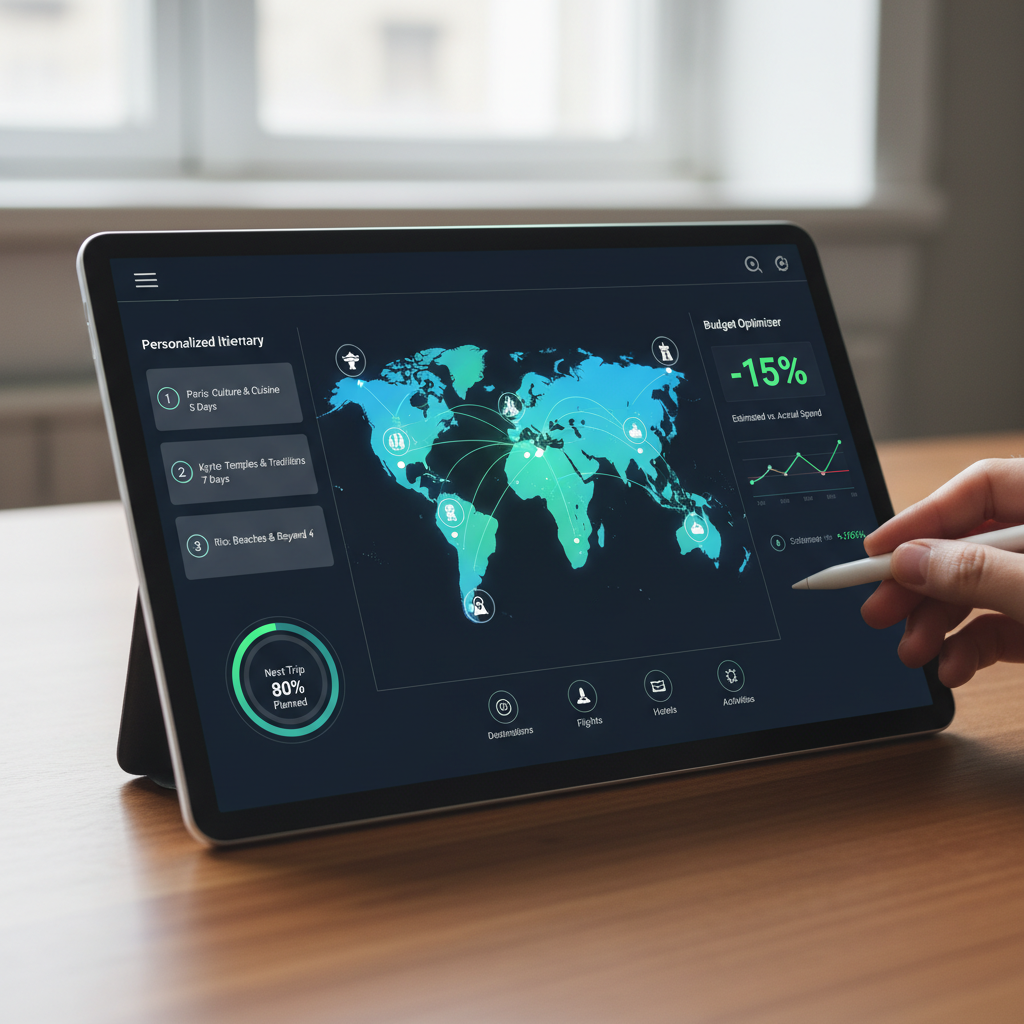
- Budget-Constrained Itineraries: You can input your total budget for a trip, and the AI will generate an entire itinerary – including flights, accommodation, daily activities, meals, and local transport – that adheres to that limit. It will suggest free attractions, recommend affordable dining options, and optimize routes to minimize transport costs.
- Cost Breakdowns and Transparency: Many AI planners provide a detailed cost breakdown for each element of your trip, making it easy to see where your money is going and to adjust spending as needed. Some even allow you to track your actual expenses against the planned budget during the trip.
- Optimization for Value: It’s not always about the absolute cheapest option, but the best value. AI can recommend experiences that offer a high return on investment in terms of enjoyment and cultural immersion, even if they are not the absolute rock-bottom price. For instance, suggesting a local cooking class instead of an overpriced tourist trap restaurant.
- Scenario Planning: Want to see how much more a few extra days would cost? Or how upgrading to a business class flight impacts the overall budget? AI can instantly run these scenarios, providing real-time financial implications without manual recalculations.
By leveraging these advanced capabilities, AI travel planners ensure that every dollar you spend on your vacation is maximized for value and enjoyment, transforming travel from a budget guessing game into a precisely orchestrated financial plan.
Beyond Budget: The Full Spectrum of AI’s Benefits for Travelers
While budget optimization is a compelling advantage, AI travel planners offer a much broader array of benefits that collectively transform the entire travel experience. They address not just the financial aspects but also the emotional and logistical burdens of planning.
Time-Saving and Efficiency
Perhaps the most immediate and universally appreciated benefit of AI travel planners is the dramatic reduction in planning time. What used to take days or even weeks of extensive research can now be accomplished in minutes or hours.
- Instant Itinerary Generation: Provide a few parameters (destination, dates, budget, interests), and the AI can generate a comprehensive, day-by-day itinerary instantly. No more manual searching for attractions, checking opening hours, or figuring out logical routes.
- Automated Booking Processes: Some advanced AI planners can even facilitate or automate the booking of flights, hotels, and activities once you approve the suggested options, streamlining the entire reservation process.
- Centralized Information: All your travel details – flight numbers, hotel confirmations, activity tickets, restaurant reservations, and even local transportation info – are consolidated in one easy-to-access place, often within the app itself.
- Dynamic Updates: Should a flight be delayed, a gate change occur, or a restaurant reservation be modified, the AI can often push real-time updates directly to your device, saving you the hassle of constantly checking for changes.
Stress Reduction and Peace of Mind
The pre-trip anxiety stemming from uncertainty about prices, logistics, and having “missed a better deal” is significantly mitigated by AI.
- Confidence in Best Deals: Knowing that an intelligent system has scoured millions of options and advised you on the optimal booking time instills confidence that you’ve secured the best value, reducing buyer’s remorse.
- Elimination of Overwhelm: By presenting curated, relevant options rather than an unfiltered deluge of choices, AI prevents decision paralysis and makes the planning process enjoyable rather than daunting.
- Contingency Planning: Some AI tools can even offer suggestions for alternative plans in case of unexpected events (e.g., “It’s raining today in London, here are 5 indoor activities near your hotel”).
- 24/7 Virtual Assistant: Having a digital assistant accessible at all times, capable of answering travel-related questions or providing information, offers a profound sense of security, especially in unfamiliar territories.
Enhanced Personalization and Unique Experiences
AI’s ability to understand individual preferences leads to truly bespoke travel experiences that cater to your unique interests and desires.
- Tailored Recommendations: Beyond generic tourist traps, AI can suggest hidden gems, local favorites, and activities perfectly aligned with your hobbies – whether it’s obscure art galleries, specific culinary experiences, niche historical sites, or less-traveled hiking trails.
- Adaptable Itineraries: Not a morning person? Love late dinners? AI can factor these lifestyle preferences into your schedule, ensuring the pace and timing of activities suit you perfectly.
- Dietary and Accessibility Needs: AI can filter accommodation and dining options based on specific dietary restrictions (vegan, gluten-free) or accessibility requirements, removing a significant hurdle for many travelers.
- Multilingual Support: Many AI platforms offer multilingual support, breaking down language barriers and making travel planning more accessible for a global audience.
- Contextual Awareness: Advanced AI can even consider real-time context, like current weather conditions or local events, to adjust recommendations on the fly, ensuring your trip is always optimized for enjoyment.
In essence, AI travel planners don’t just optimize your budget; they elevate the entire journey from a logistical exercise to a truly personalized, stress-free, and memorable adventure, allowing you to fully immerse yourself in the experience rather than worrying about the details.
Choosing the Right AI Travel Planner: Features to Prioritize
With the proliferation of AI tools, selecting the right travel planner can itself feel like a mini-project. Not all AI planners are created equal, and their capabilities can vary significantly. To make an informed choice, consider the following key features and functionalities.
Essential Features for Budget Optimization and Efficiency
- Dynamic Pricing Alerts and Prediction: This is paramount for budget travelers. Look for tools that actively monitor price fluctuations for flights and hotels and notify you when prices are lowest or are expected to rise. Platforms like Hopper are renowned for this, using predictive analytics to advise on buying or waiting.
- Comprehensive Search and Aggregation: The planner should pull data from a vast array of sources – airlines, hotels, OTAs, car rentals, and activity providers – to ensure you’re seeing the broadest possible selection of options and prices.
- Customizable Budget Tracking: The ability to set a total trip budget and have the AI generate an itinerary within those confines, along with detailed cost breakdowns for each component, is invaluable. Some tools even allow for in-trip expense tracking.
- Personalized Recommendations: The AI should learn from your preferences (e.g., luxury vs. budget, adventure vs. relaxation, dietary needs) and offer tailored suggestions for accommodations, activities, and dining. The more intelligent the personalization engine, the better.
- Itinerary Generation and Optimization: A robust AI planner can build a day-by-day itinerary, including travel times between locations, opening hours of attractions, and even restaurant suggestions, all optimized for efficiency and your interests.
- Flexibility and Re-planning Capabilities: Life happens. A good AI planner should allow for easy modifications to your itinerary and recalculate costs or suggest alternatives if plans change (e.g., extending a stay, swapping an activity).
Advanced Features for Enhanced Experience
- Natural Language Processing (NLP): The ability to interact with the AI using conversational language (e.g., “Plan a family trip to Disney World for five days in July, including flights and a kid-friendly hotel, under 5000 dollars”) makes the planning process incredibly intuitive. Many newer AI chatbots integrate this heavily.
- Real-time Notifications and Alerts: Beyond price drops, look for alerts for flight delays, gate changes, weather warnings, or local event updates that might impact your trip.
- Document and Confirmation Management: A centralized hub for all your booking confirmations, tickets, and travel documents, accessible offline if needed.
- Collaborative Planning Features: If you’re traveling with others, the ability to share the itinerary and allow multiple users to contribute or vote on options can be very useful.
- Post-Trip Analytics and Feedback Loop: Some advanced platforms might offer insights into your spending patterns post-trip or solicit feedback to further refine future recommendations.
- Integration with Other Services: Seamless integration with mapping services, ride-sharing apps, or local public transport apps can enhance the in-destination experience.
Popular AI Travel Planning Tools (Examples)
While the landscape is constantly evolving, here are a few examples of tools that leverage AI to varying degrees:
- Hopper: Primarily known for its price prediction algorithms for flights and hotels, advising users when to buy or wait.
- Trip.com: Integrates AI for personalized recommendations and deals, especially strong in the Asian market.
- Kayak (Explore feature): Uses AI to help users discover destinations based on budget and interests.
- Google Flights/Hotels (and general Google AI): While not a dedicated “planner,” Google’s underlying AI provides highly personalized search results and insights based on your location, history, and current trends.
- Emerging AI Travel Assistants/Chatbots: New platforms leveraging large language models (LLMs) like ChatGPT, Gemini, or specialized travel AI interfaces are rapidly developing, offering conversational itinerary generation and dynamic re-planning. Examples include tools integrated into travel agencies or independent startups focused solely on AI-driven itineraries.
When evaluating an AI travel planner, consider your primary needs: Is it purely budget optimization? Or do you value comprehensive itinerary generation and deep personalization? Test a few options, read reviews, and see which one best fits your travel style and objectives.
Addressing Concerns: Data Privacy, Over-Reliance, and the Human Touch
While the benefits of AI travel planners are compelling, it’s crucial to address legitimate concerns that arise with any powerful technology. Transparency, user control, and a balanced perspective are key to harnessing AI effectively and ethically.
Data Privacy and Security
For AI to provide hyper-personalized recommendations and optimize budgets, it needs access to a significant amount of personal data. This includes travel preferences, booking history, budget constraints, and sometimes even demographic information.
- The Concern: The primary worry is how this data is collected, stored, and used. Will it be shared with third parties without consent? Is it vulnerable to data breaches? Could it lead to discriminatory pricing (e.g., showing higher prices to users perceived as having higher incomes based on their data)?
-
What to Look For:
- Clear Privacy Policies: Reputable AI planners should have easily accessible and understandable privacy policies that outline exactly what data is collected, why, and how it is used and protected.
- Data Encryption: Ensure the platform uses robust encryption protocols to protect your personal and financial information.
- Opt-Out Options: You should have the ability to control what data is shared and to opt out of certain types of data collection or personalized tracking.
- Reputation: Stick to well-known, reputable platforms that have a track record of good data security practices.
- Best Practice: Be mindful of the information you share. While more data often means better personalization, only provide what you’re comfortable with. Use strong, unique passwords for your accounts.
Over-Reliance and Loss of Spontaneity
There’s a fear that AI could diminish the joy of discovery or lead to overly structured, generic trips, eroding the adventurous spirit of travel.
- The Concern: Will we stop exploring independently if AI tells us exactly where to go and what to do? Could AI lead to echo chambers, only recommending things we already like, preventing us from discovering new passions? Will it eliminate the serendipitous moments that often define memorable trips?
-
What to Consider:
- AI as a Tool, Not a Master: View AI as a powerful assistant that presents options and insights, rather than a definitive authority. You always have the final say.
- Hybrid Approach: Use AI for the heavy lifting (flights, accommodation, overall itinerary structure) but leave room for spontaneity. For example, let AI plan your major activities, but reserve an afternoon for simply wandering and discovering local gems.
- Customization and Iteration: Good AI planners allow you to tweak and refine their suggestions. Don’t accept the first itinerary blindly; adjust it to reflect your desire for exploration.
- The Balance: The goal is to free up mental energy from logistical planning so you can *more* effectively embrace spontaneity and unique experiences, not to eliminate them. AI can suggest off-the-beaten-path options you might never find manually.
The Importance of the Human Touch
Despite AI’s capabilities, certain aspects of travel planning and experience still benefit from human interaction and judgment.
- Complex or Niche Travel: For highly complex trips (e.g., multi-country safaris with very specific requirements, accessible travel for unique needs, or highly specialized adventure expeditions), a human travel agent with deep domain expertise might still be invaluable. They can offer insights that current AI models might struggle to synthesize.
- Crisis Management: While AI can provide real-time updates, handling complex travel disruptions (e.g., major cancellations, medical emergencies abroad) often requires empathetic, flexible, and nuanced human intervention that AI cannot replicate.
- Emotional Connection and Storytelling: Human travel advisors can offer personal anecdotes, recommendations based on their own experiences, and a level of emotional engagement that AI currently lacks.
Ultimately, AI travel planners are incredibly powerful tools that enhance the travel experience. By being aware of their limitations and potential pitfalls, and by approaching them with a balanced perspective, travelers can leverage AI to its fullest potential without sacrificing privacy, spontaneity, or the invaluable human element when it’s needed most.
The Future of AI in Travel: A Glimpse into Tomorrow’s Journeys
The current state of AI in travel is impressive, but it’s just the beginning. As AI technologies continue to evolve, we can anticipate even more transformative changes that will make travel planning and execution even more seamless, personalized, and deeply immersive. The future promises a convergence of intelligence, reality, and personalized service unlike anything we’ve seen before.
Hyper-Personalization and Predictive Analytics on Steroids
- Anticipatory Travel: Imagine an AI that not only suggests the best deals but anticipates your travel needs before you even think of them. Based on your work schedule, family events, and even social media activity, it might proactively suggest “a relaxing beach getaway in February after your big project completion, considering flights are cheapest then.”
- Contextual Awareness Everywhere: Future AI will integrate more deeply with wearable technology, smart home devices, and location services to understand your real-time context. This means recommendations that adapt instantly to your mood, energy levels, and unexpected changes during your trip. “You’ve walked 10 miles today; perhaps a short, relaxing boat tour instead of another museum?”
- Emotional Intelligence: AI could develop the ability to interpret emotional cues from your interactions, leading to recommendations that truly resonate with your current state of mind or your desired travel outcome (e.g., “You seem stressed; I’ve found a yoga retreat in Bali that aligns with your budget and travel dates”).
Immersive Planning and In-Destination Experiences
- Virtual and Augmented Reality Integration: Planning will become an immersive experience. You could “walk through” a hotel room in VR before booking, or use AR to preview what a restaurant looks like from the street. In-destination, AR overlays on your phone could provide real-time translations of menus, historical information about landmarks as you view them, or directions to hidden gems.
- Seamless Multi-Modal Transportation: AI will integrate all forms of transport – flights, trains, buses, ride-shares, scooters, and even autonomous vehicles – into a single, optimized journey plan, dynamically adjusting to traffic or delays. Booking an entire door-to-door trip, regardless of the modes involved, will be effortless.
- AI-Powered Local Guides: Beyond pre-planned itineraries, AI chatbots will serve as intelligent, real-time local guides. Ask “Where’s the best street food nearby?” or “What’s the history of that building?” and get instant, context-aware answers, possibly even with AR visual overlays.
Ethical AI and Sustainability in Travel
- Sustainable Travel Recommendations: AI will play a critical role in promoting sustainable tourism. It could recommend eco-friendly accommodations, low-carbon transportation options, local businesses that support ethical practices, and even suggest destinations less impacted by over-tourism. It might calculate the carbon footprint of various travel choices and offer greener alternatives.
- Ethical Considerations and Bias Mitigation: As AI becomes more pervasive, there will be an increased focus on developing ethical AI models that minimize bias in recommendations and pricing. Transparency in how algorithms work and robust data privacy measures will be paramount.
- Accessibility Features: AI will make travel more accessible for everyone. From planning routes that avoid stairs for wheelchair users to providing real-time audio descriptions for visually impaired travelers, AI can tailor experiences to specific physical and cognitive needs.
The future of AI in travel is not about replacing human decision-making or the magic of discovery, but rather about augmenting it. It’s about removing the mundane, reducing the stress, and unlocking possibilities that allow every traveler to experience the world in a way that is uniquely tailored, effortlessly managed, and deeply enriching. Travel will become less about the logistics and more about the journey itself.
Comparison Tables: Traditional vs. AI-Powered Planning & AI Planner Features
Table 1: Traditional vs. AI-Powered Travel Planning
This table highlights the fundamental differences in approach and outcome between relying on manual, traditional methods and embracing AI for your travel planning needs. It underscores how AI addresses many of the long-standing pain points.
| Feature | Traditional Planning (Manual) | AI-Powered Planning | Impact on Traveler |
|---|---|---|---|
| Research Effort | Hours to days of manual searching across multiple websites, comparing options manually. High mental load. | Minutes to hours. AI aggregates data, filters, and presents curated options. Low mental load. | Significantly reduces time spent planning, allowing more time for other activities or trip anticipation. |
| Budget Optimization | Hit-or-miss. Relies on luck, timing, and extensive manual price comparison. Prone to overspending due to dynamic pricing. | Proactive. Uses predictive analytics, dynamic pricing alerts, and deal discovery. Finds optimal booking times and package deals. | Maximizes savings, minimizes unnecessary expenses, and provides confidence in getting the best value. |
| Personalization | Limited to explicit searches. No learning curve for personal preferences over time. Generic suggestions. | Deeply personalized. Learns from past behavior, preferences, and implicit cues. Offers tailored recommendations. | Creates bespoke itineraries and experiences that genuinely match individual interests and travel style. |
| Itinerary Creation | Manual construction. Requires knowledge of logistics, timings, and geographical layout. Prone to inefficiencies. | Automated. Generates logical, optimized day-by-day plans, considering travel times, opening hours, and flow. | Streamlines the trip flow, reduces logistical stress, and ensures efficient use of travel time. |
| Flexibility & Adaptability | Difficult to modify once booked. Re-planning is a major effort. Limited real-time adjustments. | Dynamic. Can easily adjust itineraries, re-calculate costs, and suggest alternatives in real-time if plans change. | Allows for spontaneous changes or necessary adjustments without significant hassle or cost penalties. |
| Crisis Management | Manual tracking of flight delays, weather. Personal responsibility to rebook or find alternatives. | Real-time alerts for delays, gate changes, weather. Can suggest immediate alternative solutions or contingency plans. | Reduces stress during unexpected disruptions, providing proactive solutions. |
| Overall Experience | Stressful, time-consuming, often leads to compromise on budget or experience. | Seamless, efficient, cost-effective, and highly personalized. Enhances enjoyment and reduces anxiety. | Transforms travel planning from a chore into an exciting, empowering part of the travel journey. |
Table 2: Key Features Comparison of Popular AI Travel Planner Categories
This table provides a generalized comparison across different categories of AI-powered tools available today, showcasing their primary strengths and how they cater to various traveler needs.
| Feature Category | Price Prediction/Deal Aggregators (e.g., Hopper, Kayak Explore) | Comprehensive Itinerary Planners (e.g., specialized AI trip builders) | Conversational AI Assistants (e.g., ChatGPT-based travel tools) |
|---|---|---|---|
| Primary Focus | Optimizing booking timing and finding the cheapest flights/hotels. | Generating full, detailed day-by-day itineraries based on extensive criteria. | Interactive, dynamic planning through natural language conversation. |
| Budget Optimization | Excellent. Predictive algorithms advise when to buy/wait for lowest prices. Strong for flights/hotels. | Very Good. Generates itineraries within a set budget, identifies cost-effective activities, and bundles. | Good. Can incorporate budget constraints into recommendations; may require iterative refinement. |
| Personalization Level | Moderate. Basic filtering by preferences (e.g., 4-star hotels, non-stop flights). | High. Learns from past trips, integrates detailed preferences (interests, pace, dietary needs). | Very High. Adapts based on ongoing conversation, context, and immediate feedback. |
| Itinerary Generation | Limited. Focus on individual components, not full trip flow. | Excellent. Creates logical, optimized daily schedules with transport, activities, dining. | Very Good. Can generate detailed itineraries; excels at quick adjustments based on new inputs. |
| Real-time Adaptability | Moderate. Alerts for price changes; less for in-trip changes. | Good. Can recalculate and adjust if major components change. | Excellent. Highly responsive to in-trip changes, offers instant alternative suggestions. |
| User Interaction | Primarily search, filter, and notification-based. | Detailed input forms and preference settings for initial planning. | Conversational, text-based (or voice in future), highly intuitive and natural. |
| Suitability For | Budget-conscious travelers, flexible dates, finding best flight/hotel deals. | Travelers wanting a complete, structured, and personalized trip plan without extensive research. | Travelers who prefer natural interaction, dynamic adjustments, and a highly interactive planning process. |
Practical Examples: AI Travel Planners in Action
To truly understand the impact of AI travel planners, let’s explore a few real-world scenarios where they make a tangible difference in budget optimization and overall travel experience.
Scenario 1: The Spontaneous Budget Traveler
The Traveler: Maya, a 28-year-old freelance graphic designer, wants a spontaneous European getaway but has a strict budget of $1500 for a 5-day trip, excluding flights, for late next month. She’s open to destinations but loves art, good food, and walkable cities.
The Traditional Headache: Maya would spend hours on travel blogs, checking numerous city guides for attractions, researching budget-friendly hotels in each city, mapping out transportation, and then painstakingly calculating if she could afford it all. She’d likely miss out on specific deals or cheaper alternative cities.
AI Solution in Action:
- Maya inputs her criteria into an AI planner: “5-day trip to Europe for under $1500 (excluding flights), late next month, interested in art, food, walkable cities.”
- The AI analyzes millions of data points, considering typical costs for accommodation, meals, transport, and attractions in various European cities for that specific timeframe.
- It suggests several options: “Lisbon, Portugal: Average cost for 5 days: $1200. Highlights: Vibrant street art, amazing seafood, historic Alfama district. I’ve found a highly-rated boutique hotel for $100/night and free walking tours.” It might also suggest Budapest or Bologna as alternatives with similar profiles.
- Maya selects Lisbon. The AI instantly generates a day-by-day itinerary: Day 1: Arrival, check-in, explore Alfama. Day 2: Belém Tower, Jerónimos Monastery, Pastéis de Belém. Day 3: LX Factory, street art tour. Each day includes estimated costs for meals and local transport, ensuring she stays within her $1500 limit. It even highlights free museum days or affordable local eateries.
Outcome: Maya gets a perfectly tailored, budget-compliant itinerary in minutes, without the stress of endless research. She discovers a charming, affordable destination she might not have considered, all while maximizing her budget for experiences rather than planning.
Scenario 2: The Family Vacation Planner
The Travelers: The Chen family (two adults, two children aged 8 and 12) wants a week-long beach vacation to Florida in July. They need child-friendly activities, a resort with a pool, and flights from Chicago, with a total budget of $4000 for everything.
The Traditional Headache: Finding a family-friendly resort that fits the budget, booking four separate flights, coordinating airport transfers, and then figuring out daily activities that appeal to both children and adults would be a logistical nightmare involving dozens of price comparisons and cross-referencing reviews.
AI Solution in Action:
- Mr. Chen uses an AI travel planner, inputting: “Florida beach vacation, 1 week in July, 2 adults, 2 kids (8 & 12), flights from Chicago, total budget $4000, need pool and kid-friendly activities.”
- The AI searches for family packages, flights, and hotels. It flags specific resorts known for their kid-friendly amenities and proximity to attractions. It also analyzes flight prices for their specific dates, potentially suggesting a departure a day earlier or later for significant savings.
- It presents options like “Clearwater Beach: 7-day package including flights and a resort with a water park for $3850. Daily itinerary includes beach time, marine aquarium visit, pirate ship cruise, and local dining options. All within budget.”
- The AI then generates a detailed itinerary, complete with links to book specific activities and estimated costs for meals and souvenirs, ensuring the family has a clear picture of their spending. It even notes specific attractions that offer family discounts.
Outcome: The Chen family receives a comprehensive, budget-conscious plan for a fun-filled week. The AI handles the complex coordination of flights, accommodation, and activities, freeing the parents to focus on enjoying time with their children rather than agonizing over planning details.
Scenario 3: The Business Traveler with a Weekend Extension
The Traveler: Sarah, a business executive, is flying to Seattle for a conference from Monday to Wednesday. She wants to extend her stay for the weekend for some personal sightseeing, but her company covers only the initial business flight and hotel. She needs to book the return flight change and two extra nights affordably.
The Traditional Headache: This involves coordinating with her company’s travel department for the initial booking, then manually researching how much it costs to extend her flight, finding a separate (or extending the same) hotel for the weekend, and planning personal activities – all while managing her work schedule. Price fluctuations for flight changes can be unpredictable.
AI Solution in Action:
- Sarah inputs her existing business travel details (flight info, conference hotel) into an AI planner. She then adds her personal request: “Extend stay in Seattle until Sunday, find affordable hotel near Pike Place Market for Thursday-Sunday, suggest interesting non-business activities.”
- The AI first checks the cost of modifying her return flight to Sunday. It identifies if leaving on Sunday instead of Wednesday is cheaper or more expensive and advises her accordingly, possibly suggesting flying out of a different, nearby airport if it significantly reduces the cost of the extension.
- Concurrently, it searches for highly-rated, budget-friendly hotels near Pike Place Market for her extended stay, cross-referencing available amenities and guest reviews.
- It then generates a weekend itinerary for Sarah: “Thursday: Chihuly Garden and Glass. Friday: Pike Place Market exploration, ferry to Bainbridge Island. Saturday: Discovery Park hike. Sunday: Depart.” Each suggestion includes transport options and estimated costs.
Outcome: Sarah efficiently extends her business trip into a personal vacation without hassle or breaking her personal budget. The AI seamlessly integrates with her existing plans and handles the complexities of flight modifications and separate accommodation bookings, all while providing personalized sightseeing options.
These examples demonstrate that AI travel planners are not just futuristic concepts but practical tools offering real-time solutions for diverse travel needs, making smarter, more affordable, and more personalized travel accessible to everyone.
Frequently Asked Questions About AI Travel Planners
Q: What exactly is an AI travel planner and how is it different from a regular travel website?
A: An AI travel planner goes beyond the simple search and booking functions of a regular travel website (like Expedia or Booking.com). While traditional sites aggregate options, an AI planner uses advanced algorithms, machine learning, and natural language processing to understand your preferences, analyze vast datasets (including real-time pricing and historical trends), and proactively generate highly personalized recommendations and entire itineraries. It acts as an intelligent assistant, predicting optimal booking times for savings, curating experiences based on your interests, and dynamically adjusting plans, rather than just displaying options for you to sift through manually.
Q: How do AI travel planners help me save money on my vacation?
A: AI planners save you money through several key mechanisms:
- Dynamic Pricing Analysis: They continuously monitor price fluctuations for flights and hotels, predicting the best time to book to secure the lowest rates.
- Personalized Deal Discovery: They match you with specific deals and discounts that align with your budget and preferences, avoiding generic promotions.
- Bundling Optimization: AI can identify the most cost-effective combinations of flights, hotels, and activities, often finding package deals cheaper than booking separately.
- Budget-Constrained Itineraries: You can set a total budget, and the AI will generate an entire trip plan (including accommodation, activities, meals) that adheres to that limit, suggesting free attractions or affordable dining.
- Alternative Suggestions: If your desired options are too expensive, AI can suggest alternative dates, airports, or similar, more affordable destinations.
Q: Is it safe to share my personal data and preferences with an AI travel planner?
A: Reputable AI travel planners prioritize data privacy and security. They typically use encryption to protect your personal and financial information. However, it’s crucial to always review the privacy policy of any platform you use to understand what data is collected, how it’s used, and whether it’s shared with third parties. Stick to well-known services with a good reputation for data security. You often have control over what information you share, and you can generally opt out of certain tracking features. Always use strong, unique passwords for your accounts.
Q: Can AI planners truly create a unique, personalized itinerary, or will it be generic?
A: Yes, AI planners are designed for deep personalization. They learn from your explicit inputs (e.g., interests, budget, travel companions) and often implicitly from your past interactions and choices. This allows them to suggest not just popular tourist spots, but also hidden gems, local experiences, dining options that cater to your dietary needs, and activities that align with your pace and energy levels. The more you interact with the AI, the better it understands your unique travel style, leading to increasingly tailored and less generic itineraries.
Q: What if my travel plans change unexpectedly? Can an AI planner help me adjust?
A: Absolutely. One of the significant advantages of AI planners is their dynamic nature. If your plans change – a flight gets delayed, you decide to extend your stay, or you want to swap an activity – you can often input these changes into the AI. It will then recalculate costs, suggest alternative flights or accommodations, and reorganize your itinerary instantly. Some advanced systems can even provide real-time alerts for delays or offer contingency plans, significantly reducing stress during travel disruptions.
Q: Are AI travel planners suitable for all types of travel, like solo, family, or business trips?
A: Yes, AI travel planners are highly versatile and can cater to various travel types.
- For solo travelers, they can suggest safe, interesting, and budget-friendly activities.
- For families, they can filter for child-friendly resorts, activities suitable for different age groups, and accommodate specific needs like strollers or car seats.
- For business travelers, they can integrate conference schedules, suggest efficient transport, and even help plan personal extensions affordably.
Their adaptability allows them to tailor recommendations based on the specific dynamics and constraints of each travel group.
Q: Do I still need a human travel agent if I use an AI travel planner?
A: For most standard leisure trips, an AI travel planner can handle nearly all aspects efficiently. However, a human travel agent might still be beneficial for:
- Highly complex, multi-country, or specialized trips (e.g., intricate safaris, round-the-world cruises).
- Travelers with very specific accessibility needs or medical conditions requiring nuanced planning.
- When you prefer a personal touch, emotional support, and anecdotal advice that AI cannot yet provide.
- Major crisis management during a trip where human empathy and complex problem-solving are paramount.
Many travelers adopt a hybrid approach, using AI for initial planning and a human agent for complex bookings or emergency support.
Q: What are some of the current limitations or challenges of AI in travel planning?
A: While powerful, AI in travel still has limitations:
- Nuance and Empathy: AI may struggle with highly subjective preferences, cultural nuances, or complex emotional considerations that a human might pick up on.
- Data Bias: If the data AI is trained on contains biases (e.g., predominantly Western travel preferences), its recommendations might reflect those biases.
- Lack of Spontaneity Control: While AI can leave room for spontaneity, some fear over-reliance could diminish the joy of unplanned discovery.
- Connectivity Dependency: Many features require internet access, which can be an issue in remote areas.
- Ethical Concerns: Issues around data privacy, potential discriminatory pricing, and job displacement are ongoing considerations.
These are areas of active development as the technology matures.
Q: How can I choose the best AI travel planner for my needs?
A: To choose the best AI travel planner, consider the following:
- Identify your primary needs: Are you focused purely on budget, or is detailed itinerary generation more important?
- Evaluate key features: Look for dynamic pricing alerts, strong personalization engines, comprehensive search capabilities, and robust itinerary builders.
- User interface: Does the platform feel intuitive and easy to use?
- Read reviews: See what other travelers say about its accuracy, customer support, and reliability.
- Check privacy policy: Ensure you are comfortable with its data handling practices.
- Try a few: Many offer free trials or basic versions. Test a couple to see which best fits your travel style.
Popular options include Hopper for price predictions, and emerging AI chatbot tools for conversational planning.
Q: Will AI eventually replace all human jobs in the travel industry?
A: It’s unlikely AI will completely replace all human jobs in the travel industry. Instead, it will likely transform them. AI excels at repetitive, data-intensive tasks, freeing up human agents to focus on more complex problem-solving, personalized consulting, relationship building, and crisis management that require empathy and nuanced judgment. Roles may shift from booking agents to travel experience designers, AI supervisors, or specialized niche consultants. AI is more likely to augment human capabilities rather than fully replace them, creating new roles and efficiencies within the industry.
Key Takeaways: Smart Travel Through AI
Embracing AI travel planners marks a significant shift in how we approach our vacations, transforming a once daunting task into an efficient, enjoyable, and budget-friendly process. Here are the core benefits and insights to remember:
- Unprecedented Budget Optimization: AI excels at finding the best deals by leveraging dynamic pricing analysis, predictive analytics, and personalized deal discovery. It ensures you pay less for flights, hotels, and activities.
- Massive Time Savings: What used to take hours or days of manual research can now be accomplished in minutes, thanks to automated itinerary generation and comprehensive data aggregation.
- Hyper-Personalized Experiences: AI learns your unique preferences, interests, and travel style, delivering tailored recommendations and itineraries that go beyond generic suggestions.
- Reduced Stress and Enhanced Confidence: Knowing that an intelligent system has optimized your plan and budget instills confidence, reducing pre-trip anxiety and decision fatigue.
- Dynamic Flexibility: AI planners can quickly adapt to changing plans, recalculating costs and suggesting alternatives in real-time, making your trip more resilient to unexpected events.
- Considerate Use: While powerful, it’s crucial to use AI planners thoughtfully, paying attention to data privacy, balancing planned activities with spontaneity, and recognizing that for highly complex or nuanced trips, a human touch may still be beneficial.
- The Future is More Immersive: Upcoming advancements in AI, including VR/AR integration and deeper predictive capabilities, promise an even more seamless, intuitive, and sustainable travel experience.
Conclusion: Your Passport to Smarter, More Affordable Adventures
The era of travel smarter, not harder, is not a distant dream; it is here, powered by the incredible capabilities of Artificial Intelligence. AI travel planners are fundamentally reshaping the landscape of vacation discovery and budgeting, empowering every traveler to unlock experiences that were once deemed too complex, too expensive, or too time-consuming to plan. By automating the arduous research, pinpointing the optimal booking times, and curating itineraries tailored to your deepest desires and financial parameters, these intelligent tools remove the barriers between you and your dream vacation.
No longer must you sacrifice precious hours poring over endless tabs, nor must you compromise on your travel aspirations due to budget constraints. Instead, AI liberates you to focus on the excitement of the journey itself, the joy of new discoveries, and the creation of indelible memories. It is an invitation to explore the world with unprecedented efficiency, personalized precision, and a newfound sense of financial control.
As we look to the horizon, the continued evolution of AI promises even more magical transformations – from anticipatory planning that understands your needs before you voice them, to immersive virtual previews and sustainable travel choices seamlessly integrated into your journey. The future of travel is not just about going places; it is about how intelligently and joyfully you get there. Embrace the power of AI travel planners today, and take the first step towards your next unforgettable, perfectly budgeted adventure. Your smarter journey awaits.





















































































Leave a Reply