

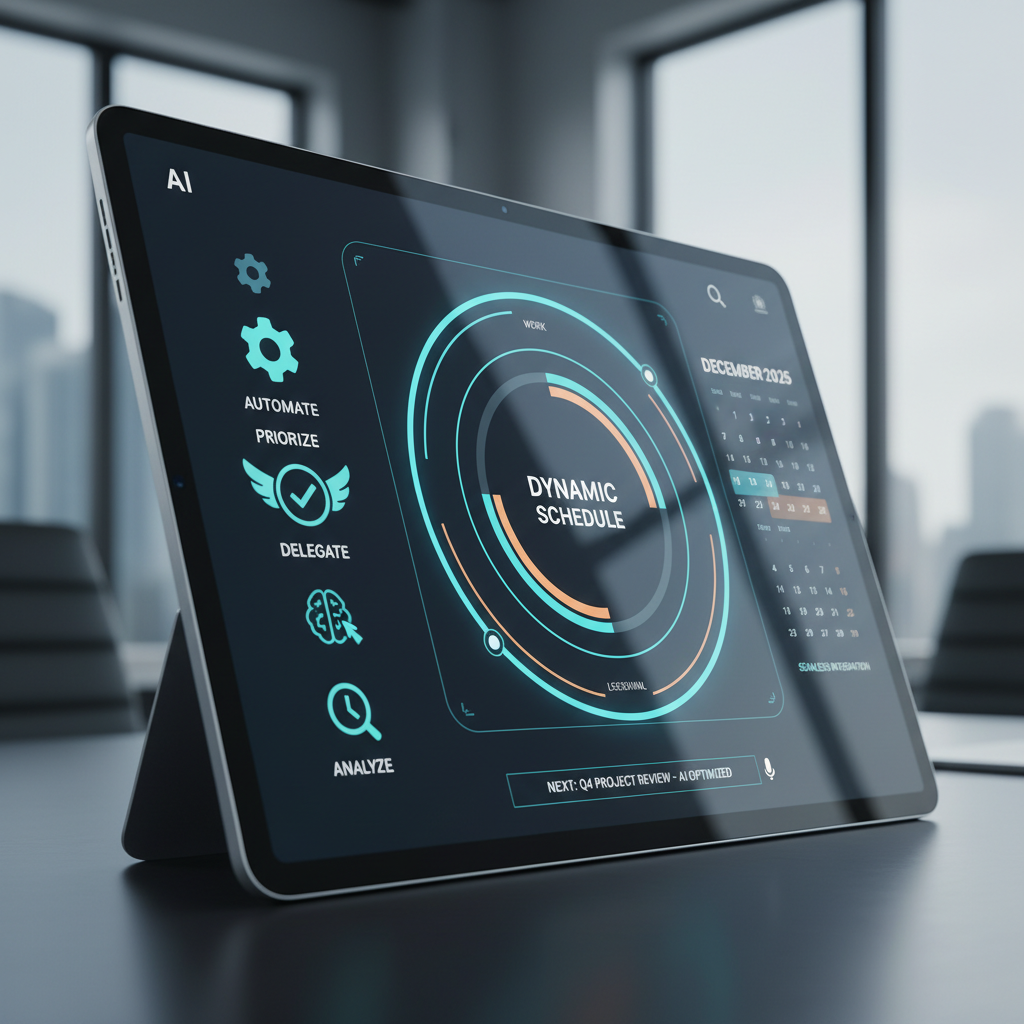
In our increasingly demanding world, the quest for optimal productivity feels like a relentless marathon. We juggle professional deadlines, personal commitments, creative pursuits, and self-care, often feeling overwhelmed by the sheer volume of tasks awaiting our attention. Traditional calendars and to-do lists, while foundational, often fall short of providing the dynamic, intelligent support needed to truly master our schedules. They are static tools in a fluid, ever-changing environment, leaving us to manually prioritize, reschedule, and adapt.
Enter the revolutionary realm of AI-powered planners. Far beyond mere digital calendars, these intelligent systems are reshaping how we approach task management, transforming it from a chore into an effortless, intuitive process. Imagine a personal assistant that not only remembers your tasks but understands their urgency, evaluates your capacity, and strategically allocates your time for maximum impact. This is no longer a futuristic fantasy; it is the present reality offered by advanced AI planners.
This comprehensive guide will delve deep into how AI-powered planners are revolutionizing daily schedules. We will explore their core functionalities, highlight their unparalleled benefits, provide practical examples of their transformative power, and address common questions. Prepare to discover the secret to not just managing your tasks, but truly owning your time and unleashing unprecedented levels of productivity.
The Productivity Paradox: Why Traditional Methods Fall Short
For decades, our arsenal against the onslaught of tasks has consisted primarily of paper planners, sticky notes, and basic digital calendars. While these tools have served us well, they possess inherent limitations that often contribute to, rather than solve, the productivity paradox – the feeling of being busy without being truly productive. The core challenge lies in their static nature and lack of contextual intelligence.
Consider the typical scenario: you meticulously list your tasks, assign deadlines, and perhaps even block out time slots. But what happens when an urgent request unexpectedly lands in your inbox? Or when a planned meeting runs over? Traditional planners offer no immediate solutions. You are left to manually shuffle priorities, erase and rewrite entries, and recalculate your entire schedule on the fly. This constant micro-management is not only time-consuming but also mentally exhausting, leading to decision fatigue and increased stress.
Furthermore, traditional methods struggle with dynamic prioritization. A task that seems low priority on Monday morning might become critical by Tuesday afternoon, but your static list won’t alert you to this shift. There’s no mechanism to consider your energy levels, project interdependencies, or the true cost of context-switching between dissimilar tasks. The result is often a chaotic cycle of firefighting, missed deadlines, and a persistent sense of being behind, regardless of how many hours you put in.
The human brain, while remarkably adaptable, is not optimally designed for the constant, complex recalculations required to manage a modern, multifaceted schedule. We often fall prey to biases, such as prioritizing urgent but less important tasks over important but less urgent ones, or underestimating the time required for certain activities. This inherent human fallibility creates a significant gap in our ability to achieve peak productivity consistently. It’s this very gap that AI-powered planners are specifically engineered to bridge, offering a dynamic, intelligent, and proactive approach that traditional methods simply cannot match.
Decoding the AI Planner: More Than Just a Digital Calendar
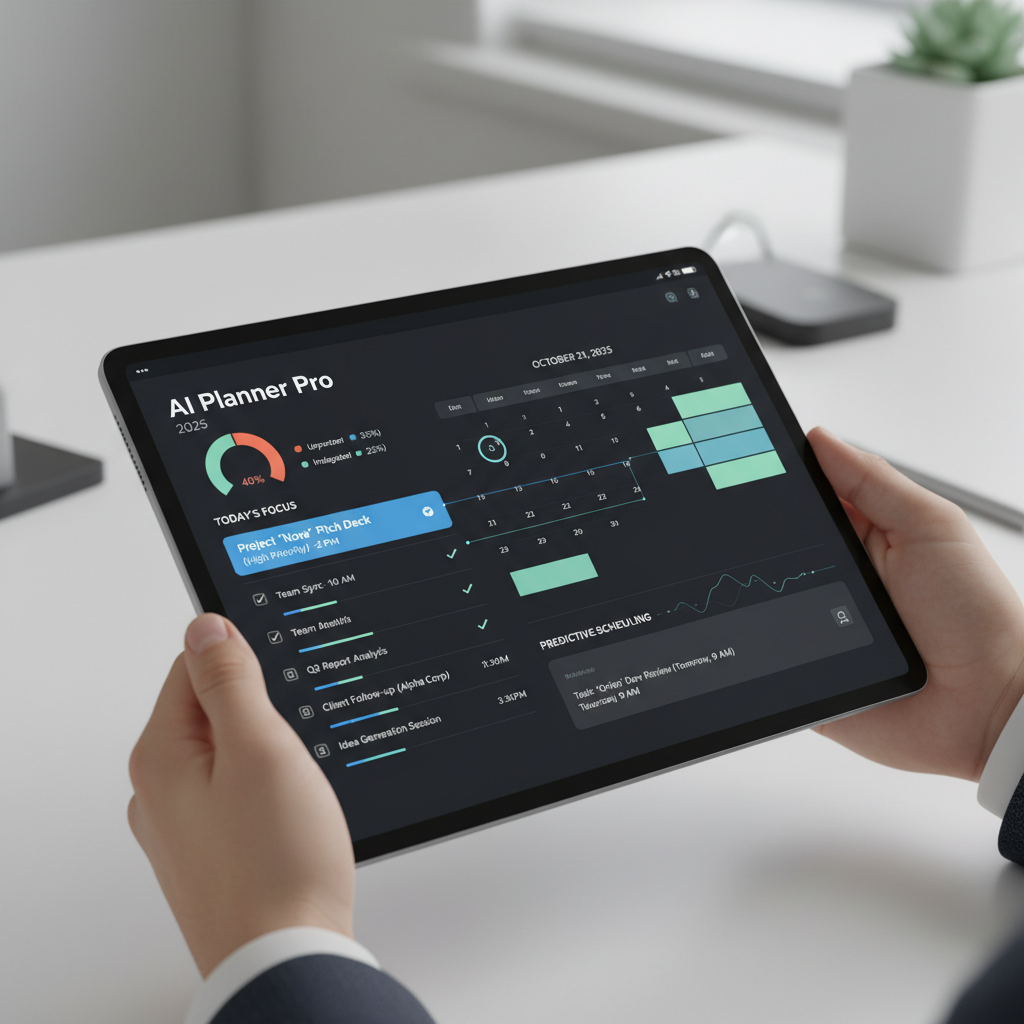
To truly appreciate the transformative power of AI planners, it is crucial to understand that they are fundamentally different from the digital calendars or simple task managers we’ve grown accustomed to. While they certainly incorporate scheduling functionalities, their intelligence goes far beyond merely displaying dates and times. An AI planner is essentially a sophisticated digital assistant that leverages artificial intelligence, machine learning, and often natural language processing to understand, anticipate, and optimize your schedule.
At its heart, an AI planner functions by collecting and analyzing vast amounts of data related to your work habits, preferences, task types, deadlines, and even your personal energy cycles. Instead of just holding a list of tasks, it intelligently processes this information to make informed decisions about when and how those tasks should be tackled. It learns from your past behaviors – how long certain tasks typically take you, when you are most productive for specific types of work, and what interruptions frequently occur.
Consider the key difference: a traditional digital calendar is a passive repository of information that you input. It will remind you of an event because you told it to. An AI planner, on the other hand, is an active participant in your planning process. It doesn’t just remind you; it suggests the optimal time for a task, rearranges your schedule when priorities shift, and even breaks down large projects into manageable steps. It’s akin to having a highly efficient, data-driven personal assistant meticulously organizing your day, predicting potential bottlenecks, and ensuring you stay on track.
The ‘AI’ in AI planner signifies its ability to adapt, learn, and reason. It’s not operating on fixed rules but on algorithms that continuously refine their understanding of your unique productivity rhythm. This means that the more you use an AI planner, the smarter and more personalized its recommendations become. It evolves with you, offering a level of dynamic support that is simply unattainable through manual planning or non-AI digital tools, making the pursuit of effortless task management a tangible reality.
The Core Pillars of AI Planner Functionality
The true genius of AI-powered planners lies in their foundational capabilities, which elevate them far beyond rudimentary organizational tools. These core pillars – personalization, intelligent prioritization, seamless automation, and continuous adaptation – work in concert to create a uniquely effective and responsive productivity system.
Personalization: Tailoring Your Day to Your Unique Rythm
Unlike one-size-fits-all templates, AI planners are designed to understand you. Through initial setup and continuous learning, they map your unique working style, peak productivity hours, preferred breaks, and even your propensity for certain types of tasks. For instance, if the AI observes you consistently tackle creative tasks best in the morning and administrative work in the afternoon, it will intelligently schedule accordingly. This goes beyond simple time blocking; it’s about optimizing your cognitive energy and leveraging your natural flow states for maximum output. The result is a schedule that feels less like a rigid constraint and more like a natural extension of your personal work style.
Intelligent Prioritization: Focusing on What Truly Matters
One of the biggest challenges in task management is discerning true priorities amidst a sea of demands. AI planners tackle this head-on by employing sophisticated algorithms to evaluate tasks based on multiple factors: deadlines, estimated effort, dependencies, user-defined importance, and even potential impact. Instead of a flat to-do list, the AI dynamically reorders and highlights tasks, guiding your attention to what needs it most. Some advanced systems can even use urgency-importance matrices (like the Eisenhower Matrix) or critical path analysis to ensure that high-value, impactful work is always at the forefront, preventing less crucial tasks from derailing your progress.
Seamless Automation: Erasing Repetitive Drudgery
Manual scheduling, rescheduling, and micro-managing small tasks consume valuable cognitive bandwidth. AI planners liberate you from this drudgery through automation. They can automatically add recurring tasks, break down large projects into smaller, actionable steps, and even reallocate time blocks when an unforeseen event occurs. For example, if a meeting is moved, the AI doesn’t just shift the meeting; it intelligently adjusts all subsequent dependent tasks and commitments, ensuring your entire day remains optimized without any manual intervention. This not only saves time but also significantly reduces the mental overhead associated with constant logistical adjustments.
Continuous Adaptation: Learning and Evolving with You
Perhaps the most powerful aspect of AI planners is their capacity for continuous learning and adaptation. Every interaction, every completed task, every adjustment you make provides the AI with valuable data. Did a task take longer than estimated? The AI updates its estimates for similar future tasks. Are you consistently delaying a certain type of work? The AI might suggest breaking it down further or scheduling it during a different time of day. This iterative process ensures that your planner isn’t a static tool but a dynamic partner that grows smarter and more attuned to your needs over time, providing increasingly accurate and helpful recommendations for sustained peak productivity.
Unlocking Unprecedented Efficiency: How AI Planners Transform Your Day
The integration of AI into our daily planning brings about a profound shift in how we experience our workday, moving us from reactive management to proactive mastery. The benefits extend far beyond simply getting things done; they encompass a holistic improvement in well-being and a significant boost in the quality and quantity of our output.
Eliminating Decision Fatigue and Cognitive Load
One of the most insidious drains on productivity is decision fatigue. Every time you have to decide what to do next, how long it will take, or when to reschedule, you expend valuable mental energy. AI planners absorb this cognitive load. By automatically prioritizing, scheduling, and adjusting tasks, they free up your brain to focus on the work itself, rather than the logistics of the work. This reduction in mental overhead allows for deeper concentration, more creative problem-solving, and a greater sense of clarity throughout the day.
Optimizing Time Allocation and Preventing Overwhelm
AI planners excel at time optimization. They don’t just fill your schedule; they fill it intelligently, taking into account your capacity, existing commitments, and task interdependencies. This prevents the common pitfall of overcommitting and feeling perpetually behind. By suggesting realistic schedules and automatically factoring in buffer times for unexpected delays, AI planners ensure your day is structured for success, reducing feelings of overwhelm and promoting a sustainable pace of work. You get a clear, actionable plan that respects your limits and maximizes your available productive hours.
Enhancing Focus and Minimizing Distractions
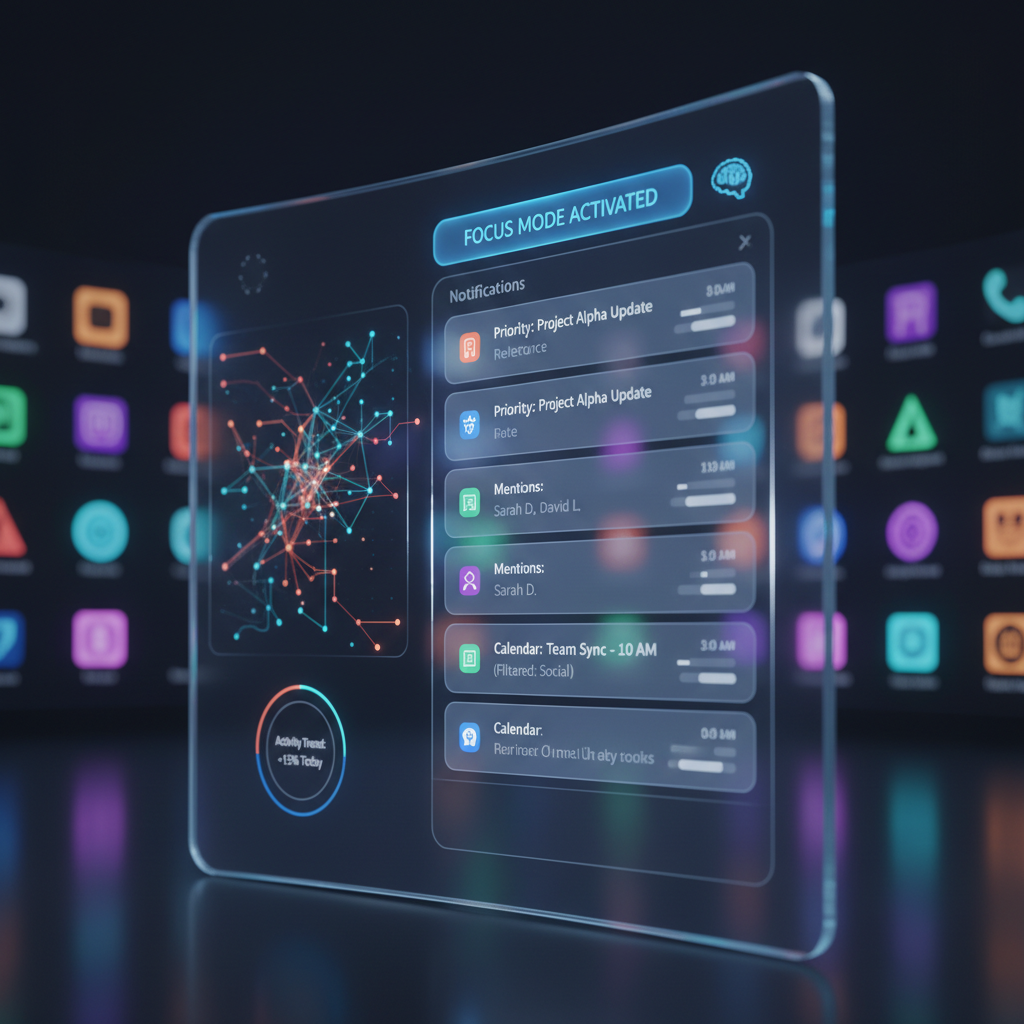
With a meticulously crafted, AI-optimized schedule, your path forward is clear. This clarity inherently enhances focus. When you know exactly what task you should be working on and for how long, the temptation to multitask or get sidetracked diminishes. Many AI planners also offer features like ‘focus modes’ or ‘do not disturb’ integrations that further shield you from digital distractions, creating an environment conducive to deep work. By providing a structured framework, the AI planner acts as a guardrail, keeping you on the productive track.
Fostering a Sense of Accomplishment and Reducing Stress
The consistent ability to tackle important tasks and meet deadlines, guided by an intelligent system, fosters a powerful sense of accomplishment. This positive feedback loop is crucial for motivation and long-term productivity. Furthermore, by taking the guesswork and constant reshuffling out of your schedule, AI planners significantly reduce stress levels. Knowing that an intelligent system is managing the complexities of your day allows you to approach your work with greater confidence and less anxiety, leading to improved mental well-being and a healthier work-life balance.
Advanced Features: Beyond Basic Scheduling with Predictive Intelligence
While the core functionalities of personalization, prioritization, and automation are groundbreaking, the latest generation of AI planners is pushing the boundaries even further, incorporating advanced features that leverage predictive intelligence to anticipate needs and proactively optimize your day in ways previously unimaginable. These sophisticated capabilities transform the planner from a helpful tool into an indispensable strategic partner.
Predictive Scheduling and Proactive Re-optimization
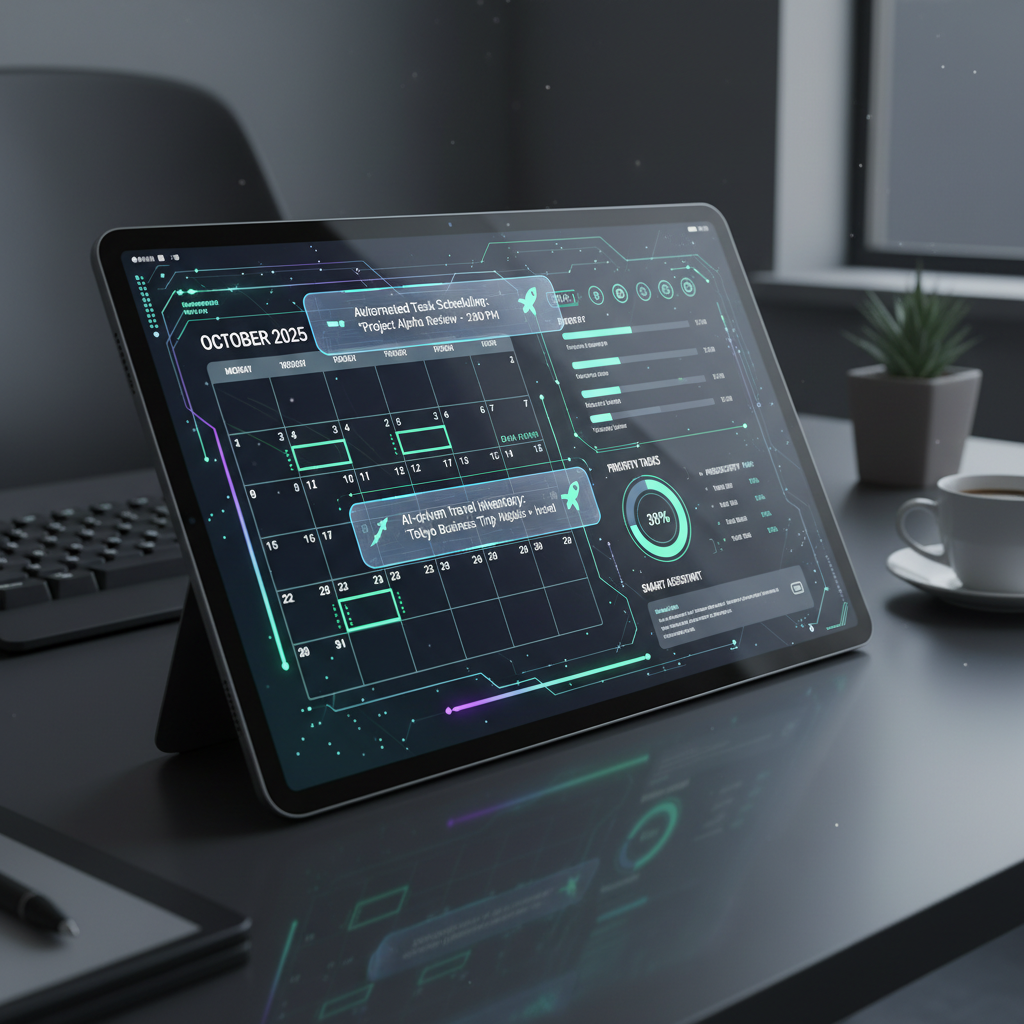
One of the most impressive advanced features is predictive scheduling. Instead of merely reacting to changes, these AI planners analyze historical data, current workload, and external factors (like traffic patterns for appointments or weather forecasts for outdoor tasks) to anticipate potential disruptions. If a project is falling behind, the AI might proactively suggest reallocating resources or adjusting future deadlines before it becomes a crisis. If an important client meeting is moved, the system doesn’t just shift that event; it intelligently recalculates the entire dependent workflow for the day and week, offering optimal new time slots for affected tasks and even suggesting buffer times to prevent future bottlenecks. This proactive re-optimization ensures you’re always ahead of potential issues.
Intelligent Reminders and Context Awareness
Gone are the days of generic pop-up reminders. Advanced AI planners understand context. A reminder for “send report” might trigger differently based on your location (e.g., at your office vs. at home), the time of day, or even whether you’ve opened relevant project files recently. Some systems can integrate with your communication tools, reminding you to follow up on an email if no response has been received within a specified timeframe. This context-aware prompting ensures that reminders are delivered precisely when and where they are most actionable, minimizing interruption and maximizing impact.
Integration with Ecosystems and Data Synthesis
Modern productivity rarely happens in a vacuum. Advanced AI planners are designed to integrate seamlessly with your existing digital ecosystem – email clients, CRM software, project management platforms, cloud storage, and even wearable devices. This deep integration allows the AI to synthesize data from various sources, providing a holistic view of your commitments and progress. For instance, an email flagged as urgent in your inbox could automatically generate a high-priority task in your planner. Meeting notes from a video conference might be processed to extract action items, which are then scheduled directly. This data synthesis creates a powerful, interconnected web of productivity, ensuring no task falls through the cracks and all relevant information is considered in your planning.
“Smart Breaks” and Energy Level Management
Beyond task management, some cutting-edge AI planners are incorporating features for holistic well-being. “Smart breaks” suggest optimal times for short rests or focus intervals based on your work patterns and estimated cognitive load. Some even integrate with biometric data from smartwatches to gauge energy levels or stress indicators, adapting your schedule to prevent burnout. If the AI detects a dip in your typical productivity, it might suggest a quick walk or a mindfulness exercise, rather than pushing through. This focus on sustainable productivity acknowledges the human element, ensuring you not only get more done but do so in a healthier, more balanced way.
Realizing Your Goals: The Strategic Advantage of AI Planners
While the immediate benefits of effortless daily task management are compelling, the true strategic advantage of AI planners emerges in their capacity to facilitate the achievement of larger, long-term goals. These intelligent systems bridge the gap between aspirational objectives and the concrete daily actions required to realize them, turning abstract ambitions into actionable plans.
Breaking Down Goals into Achievable Steps
Many ambitious goals remain elusive because they feel overwhelming. AI planners excel at deconstructing these grand objectives into smaller, manageable, and time-bound tasks. You can input a major goal – say, “Launch new product in 6 months” – and the AI, often through natural language processing, can help you brainstorm or even suggest a phased breakdown: market research, product development, testing, marketing strategy, etc. Each phase is then further broken down into specific tasks, complete with estimated durations and dependencies. This systematic decomposition makes daunting goals appear attainable and provides a clear roadmap for progress.
Consistent Progress Tracking and Accountability
Keeping track of progress across multiple projects and goals can be complex. AI planners automate this. As you complete tasks, the system updates your progress towards associated goals, providing visual indicators and real-time reports. This immediate feedback loop is incredibly motivating, showing you how your daily efforts contribute to the bigger picture. Furthermore, some AI planners can be configured to send periodic progress reports or flag when certain milestones are at risk, creating a subtle layer of accountability that keeps you engaged and on track.
Dynamic Goal Adjustment and Re-prioritization
Life is unpredictable, and goals often need to adapt. An AI planner is not a rigid blueprint; it’s a dynamic strategic partner. If market conditions change, or if you decide to pivot a project, the AI can rapidly re-evaluate your existing tasks, suggest new priorities, and re-optimize your schedule to align with the revised goal. This flexibility is crucial for long-term success, allowing you to iterate and adjust without losing sight of your overarching objectives. It ensures that your daily efforts are always aligned with your most current and relevant strategic direction.
Preventing Goal Drift and Maintaining Momentum
Without an intelligent system, it’s easy for daily emergencies and routine tasks to overshadow long-term objectives, leading to “goal drift.” AI planners actively combat this. By intelligently weaving goal-oriented tasks into your daily schedule – even small, incremental steps – they ensure that progress is consistently made. The AI will gently prompt you to allocate time for strategic work, preventing important but non-urgent tasks from being perpetually delayed. This sustained momentum is vital for transforming aspirations into achievements, ensuring that your long-term vision remains at the forefront of your daily actions.
Navigating the AI Planner Landscape: Choosing Your Perfect Co-pilot
The burgeoning market of AI-powered planners offers a diverse range of tools, each with its unique strengths and specialties. Selecting the right one is crucial for maximizing your productivity gains. It requires a thoughtful evaluation of your specific needs, existing workflow, and comfort level with new technology. Here’s a guide to help you choose your ideal AI co-pilot:
-
Identify Your Primary Productivity Challenges
Before diving into features, articulate your biggest pain points. Are you struggling with prioritization, time estimation, procrastination, or balancing multiple projects? Different AI planners excel in different areas. Some are geared towards intense project management, offering robust dependency tracking and team collaboration features. Others prioritize personal scheduling and habit formation. Understanding your core challenges will narrow down the options considerably.
-
Evaluate Core Features and AI Sophistication
Look for the fundamental AI capabilities discussed earlier: intelligent prioritization, automation, and personalization. Beyond that, consider the level of AI sophistication. Does it offer predictive scheduling? Context-aware reminders? Natural language processing for task input? The more advanced the AI, generally, the more dynamic and tailored its recommendations will be. However, a simpler AI might be sufficient if your needs are less complex, and it often comes with a shallower learning curve.
-
Consider Integration Capabilities
Your AI planner shouldn’t exist in a silo. Assess its ability to integrate with the other tools you use daily: email (Gmail, Outlook), calendar (Google Calendar, Apple Calendar), project management software (Jira, Asana, Trello), note-taking apps (Evernote, Notion), and even communication platforms (Slack, Microsoft Teams). Seamless integration ensures a unified workflow, preventing data fragmentation and enhancing the AI’s ability to get a holistic view of your commitments.
-
User Interface and User Experience (UI/UX)
Even the most powerful AI is ineffective if its interface is cumbersome or difficult to navigate. Look for an intuitive, clean, and visually appealing design. The learning curve should be manageable, and interactions should feel natural. Many AI planners offer free trials, which are invaluable for testing the UI/UX and ensuring it aligns with your preferred way of working. A planner that feels frustrating to use will quickly be abandoned.
-
Security, Privacy, and Data Handling
Since AI planners will handle sensitive information about your schedule and tasks, data security and privacy are paramount. Investigate the company’s policies on data encryption, storage, and how your personal data is used. Look for certifications or compliance with relevant privacy regulations (e.g., GDPR, CCPA). Understanding these aspects will build trust and ensure your valuable information is protected.
-
Scalability and Future-Proofing
Consider if the planner can grow with your needs. If your responsibilities expand or your team grows, will the tool still be capable? Some planners offer tiered pricing with increasing features for teams or larger organizations. Evaluating the roadmap of the product and its commitment to continuous development can also be a good indicator of its long-term viability and ability to adapt to future productivity trends.
Comparison Tables: Understanding the AI Advantage
Table 1: Traditional Planner vs. AI-Powered Planner
To fully grasp the paradigm shift brought about by AI planners, it’s helpful to compare them directly with their traditional counterparts, highlighting the fundamental differences in approach and capability.
| Feature/Aspect | Traditional Planner (Paper/Basic Digital) | AI-Powered Planner |
|---|---|---|
| Task Input & Management | Manual entry, static lists. Requires user to remember all details. | Natural language input, automatic parsing of deadlines, priorities. Intelligent task breakdown. |
| Prioritization | Manual, based on user’s subjective assessment. Static. | Dynamic, intelligent prioritization based on deadlines, dependencies, impact, and user habits. |
| Scheduling & Time Blocking | Manual drag-and-drop or written entries. User responsible for time estimates and conflicts. | Automatic scheduling based on availability, energy levels, task type, and estimates. Proactive conflict resolution. |
| Adaptability to Changes | Manual re-writing, re-organizing. Time-consuming and prone to errors. | Automatic, instantaneous re-optimization of entire schedule when priorities or events change. |
| Learning & Personalization | None. Static tool. | Learns user’s work patterns, productivity cycles, and task completion times to offer personalized suggestions. |
| Integration with Other Tools | Limited to basic calendar sync for digital versions. | Seamless integration with email, calendars, project management, CRM, communication tools. |
| Reminders & Notifications | Basic, time-based alerts. | Context-aware, intelligent reminders based on location, active tasks, and urgency. |
| Goal Alignment | User must manually connect daily tasks to long-term goals. | Helps break down goals, tracks progress, and intelligently schedules goal-related tasks to ensure consistent advancement. |
| Cognitive Load Reduction | Minimal; user bears full mental burden of planning. | Significant; offloads planning, prioritization, and adjustment to the AI, freeing up mental energy. |
Table 2: Types of AI Planner Capabilities: Basic vs. Advanced
The AI planner market offers a spectrum of features. This table illustrates the distinction between basic AI functionalities and more advanced, cutting-edge capabilities you might find in sophisticated solutions.
| Capability | Basic AI Planner (Entry-Level) | Advanced AI Planner (Premium/Sophisticated) |
|---|---|---|
| Task Recognition | Parses simple natural language (e.g., “Meeting tomorrow at 10 AM”). | Understands complex phrases, extracts tasks from emails, transcribes action items from voice notes. |
| Scheduling Logic | Suggests time slots based on availability and basic task duration. | Predictive scheduling, considering energy levels, cognitive load, dependencies, and external factors (e.g., traffic). |
| Prioritization Depth | Simple priority flagging (High, Medium, Low). | Multi-factor prioritization (impact, urgency, effort, dependencies, user history, project critical path). |
| Automation Level | Automates recurring tasks, basic rescheduling upon conflict. | Proactive re-optimization of entire workflows, intelligent task breakdown, automated follow-ups. |
| Learning & Adaptation | Learns task duration estimations over time. | Learns full user profile (peak hours, procrastination patterns, preferred work blocks), suggests “smart breaks,” adapts to goal changes. |
| Context Awareness | Basic location-based reminders. | Integration with device sensors, calendar events, active applications to provide highly relevant, just-in-time nudges. |
| Ecosystem Integration | Syncs with main calendar (Google, Outlook) and basic email. | Deep, two-way integration with a wide array of productivity tools (CRM, project management, communication apps, file storage). |
| Analytics & Reporting | Simple task completion rates. | Detailed productivity analytics, bottleneck identification, goal progress tracking, time spent by project/category. |
| Collaboration Features | Limited sharing of tasks/calendars. | Shared projects, team task assignments, progress monitoring for teams, intelligent load balancing suggestions for groups. |
Practical Examples: AI Planners in Action
To illustrate the tangible benefits of AI-powered planners, let’s explore a few real-world scenarios where these intelligent tools transform daily struggles into seamless productivity. These examples highlight how diverse individuals can leverage AI to master their unique challenges.
Case Study 1: The Overwhelmed Entrepreneur
Scenario: Sarah runs a small e-commerce business. Her day is a whirlwind of marketing, product development, customer service, and administrative tasks. She constantly feels like she’s dropping balls, missing opportunities, and working reactively, leading to long hours and high stress.
AI Planner’s Impact: Sarah integrates an AI planner with her email, CRM, and inventory management software. When a customer inquiry comes in, the AI identifies its urgency and schedules a response block. It notices a dip in sales for a particular product and prompts Sarah to allocate time for a marketing campaign analysis. It breaks down her larger goal of “expanding product line” into smaller tasks: research suppliers, develop prototypes, photograph products, schedule launch posts. The AI observes Sarah’s peak creative hours in the late morning and schedules product development then, leaving customer service and administrative tasks for the afternoon. When an unexpected supplier delay occurs, the AI instantly re-optimizes her product launch timeline and alerts her to the new critical path, allowing her to adapt proactively instead of panicking. Sarah now operates with a clear roadmap, knowing exactly what to focus on at any given moment, significantly reducing her stress and allowing her to strategically grow her business.
Case Study 2: The Busy Student Juggling Academics and Part-Time Work
Scenario: Mark is a university student balancing a demanding engineering curriculum with a part-time job and a passion for coding side projects. He often feels overwhelmed by conflicting deadlines, forgets assignments, and struggles to find time for personal learning and relaxation.
AI Planner’s Impact: Mark inputs all his course syllabi, assignment deadlines, and work shifts into his AI planner. The AI automatically identifies all critical dates and breaks down large assignments (e.g., “Final Project”) into daily actionable steps. It schedules study blocks for specific subjects, factoring in his historical performance and estimated effort. On days he has long shifts, the AI ensures lighter academic loads and prompts him to take necessary breaks. When a professor announces an unannounced quiz, Mark quickly adds it, and the AI dynamically shuffles his study schedule to accommodate extra review time for that subject, pushing less critical tasks to later. The planner also intelligently carves out small, consistent blocks of time for his coding side project, preventing it from being perpetually delayed. Mark now has a transparent view of his entire academic and work load, allowing him to stay on top of all commitments, reduce last-minute cramming, and even pursue his hobbies without guilt.
Case Study 3: The Remote Team Lead Managing Global Projects
Scenario: Emily leads a distributed team across three continents, managing complex software development projects. Time zone differences, diverse team member availabilities, and managing multiple project dependencies make scheduling meetings and tasks incredibly challenging, leading to communication gaps and project delays.
AI Planner’s Impact: Emily’s AI planner integrates directly with her team’s project management software (e.g., Jira) and collaborative calendar (e.g., Google Workspace). When a new project is initiated, the AI ingests project requirements, identifies key tasks, and automatically assigns them to team members based on their availability, skills, and current workload, considering time zones. It then intelligently schedules cross-team meetings at times that minimize disruption for all participants. If a critical task is delayed by one team member, the AI flags potential downstream impacts, alerts Emily, and suggests alternative re-allocations or adjustments to other team members’ schedules to keep the project on track. The AI also analyzes team productivity patterns, suggesting optimal times for code reviews or creative brainstorming sessions. With the AI planner, Emily gains a real-time, optimized overview of her global projects, ensuring smoother collaboration, fewer scheduling conflicts, and accelerated project delivery.
Frequently Asked Questions About AI Planners
Q: What exactly is an AI-powered planner and how is it different from a regular digital calendar?
A: An AI-powered planner is an advanced digital tool that uses artificial intelligence and machine learning to go beyond simple scheduling. While a regular digital calendar passively records events and reminders you input, an AI planner actively analyzes your tasks, deadlines, habits, and preferences. It intelligently prioritizes, automatically schedules optimal times for tasks, re-optimizes your schedule when changes occur, and continuously learns from your behavior to provide personalized and proactive recommendations. It acts more like a dynamic, intelligent personal assistant rather than just a static logbook.
Q: Is my data safe with an AI planner? What about privacy concerns?
A: Data security and privacy are critical considerations for any tool handling personal information. Reputable AI planner providers employ robust encryption protocols, secure servers, and adhere to strict data privacy regulations (like GDPR and CCPA). They should clearly outline their data handling policies. While the AI learns from your data to personalize your experience, this learning typically happens algorithmically and anonymously, without human intervention. It’s crucial to choose a trusted provider and always review their privacy policy before committing to a service.
Q: Can an AI planner truly understand my unique productivity style?
A: Yes, that’s one of its core strengths. Through continuous learning and interaction, an AI planner builds a profile of your unique productivity style. It observes patterns like when you are most focused for certain types of work, how long tasks typically take you, your preferred break times, and even your energy fluctuations throughout the day. The more you use it and provide feedback, the more accurately it understands and adapts to your rhythm, offering increasingly precise and helpful scheduling suggestions.
Q: How do AI planners help with procrastination?
A: AI planners tackle procrastination in several ways. Firstly, by breaking down large, daunting tasks into smaller, manageable steps, they reduce the initial psychological barrier to starting. Secondly, their intelligent prioritization ensures you know exactly what to work on next, eliminating decision paralysis. Thirdly, they create realistic schedules with built-in buffers, reducing the feeling of overwhelm that often fuels procrastination. Finally, consistent nudges, context-aware reminders, and visibility of progress towards goals provide gentle accountability and motivation to stay on track.
Q: Are AI planners suitable for everyone, or just for certain professions?
A: While often embraced by professionals with complex schedules (e.g., project managers, entrepreneurs, remote workers), AI planners are designed to benefit anyone looking to improve their time management and productivity. Students can use them to manage assignments and study time, parents can organize household tasks and family activities, and individuals can balance personal projects, hobbies, and self-care. The flexibility and adaptability of AI allow them to be tailored to a vast range of personal and professional needs, making peak productivity accessible to a wider audience.
Q: What is the typical cost of an AI-powered planner? Are there free options?
A: The cost of AI-powered planners varies significantly based on their features and sophistication. Many offer a freemium model, providing basic AI functionalities for free and charging for premium features like advanced integrations, predictive scheduling, or team collaboration. Paid subscriptions can range from a few dollars per month for individual users to significantly higher fees for business or enterprise plans. Free trials are common for premium versions, allowing you to test the full capabilities before subscribing. It’s advisable to start with a free trial to determine if a specific planner meets your needs before investing.
Q: What if the AI makes a mistake or schedules something incorrectly?
A: While AI is highly advanced, it’s not infallible, especially during the initial learning phase. If the AI schedules something incorrectly or makes a suggestion that doesn’t fit, you can (and should) provide feedback or manually adjust the schedule. This interaction is crucial, as it helps the AI learn and refine its understanding of your preferences and actual task durations. Over time, the accuracy and relevance of its suggestions will significantly improve, reducing the likelihood of errors.
Q: Can AI planners integrate with my existing tools like Google Calendar or Outlook?
A: Absolutely. Most modern AI planners prioritize seamless integration with popular calendars (Google Calendar, Outlook Calendar, Apple Calendar), email clients (Gmail, Outlook), and other productivity tools (e.g., Trello, Asana, Slack, Zoom). This ensures that your AI planner has a holistic view of your commitments and can pull in relevant information or push scheduled tasks to your existing systems. Deep integration is a key factor to consider when choosing a planner, as it enhances the AI’s ability to optimize your entire workflow without data silos.
Q: How long does it typically take to get comfortable using an AI planner?
A: The learning curve for AI planners can vary depending on the tool’s complexity and your familiarity with new technology. Generally, it takes a few days to a couple of weeks to get comfortable with the interface and initial functionalities. The true power of an AI planner, however, unfolds over a longer period (several weeks to a few months) as the AI learns your patterns and begins to provide increasingly personalized and predictive suggestions. Consistency in usage is key to maximizing its learning and effectiveness.
Q: What are the main limitations of AI-powered planners?
A: While incredibly powerful, AI planners do have limitations. They rely heavily on the quality of data input; “garbage in, garbage out” applies. They cannot fully account for human emotions or sudden, highly unpredictable personal events that fall outside typical work patterns. There can be a learning curve initially, and some users might feel a loss of direct control over their schedule, even if it’s for optimization. Furthermore, over-reliance without critical human oversight can lead to complacency. It’s essential to view them as intelligent assistants, not replacements for human judgment and initiative.
Key Takeaways: Mastering Your Time with AI
The journey into the world of AI-powered planners reveals a profound shift in how we can approach productivity and task management. Here are the core insights to remember:
- AI Planners are Proactive Assistants: Unlike static calendars, AI planners actively analyze, prioritize, schedule, and re-optimize your tasks, acting as an intelligent co-pilot for your day.
- Personalization is Paramount: They learn your unique work habits, energy cycles, and preferences to craft a schedule that’s perfectly tailored to your individual rhythm.
- Decision Fatigue is Minimized: By automating prioritization and scheduling, AI planners free up significant cognitive load, allowing you to focus your mental energy on actual work rather than planning logistics.
- Efficiency and Focus Soar: They optimize time allocation, prevent overwhelm, and create clear paths for deep work, leading to significantly enhanced productivity and reduced distractions.
- Goals Become Attainable: AI planners excel at breaking down large goals into actionable steps, tracking progress, and dynamically adjusting plans to ensure consistent momentum towards your long-term ambitions.
- Advanced Features Redefine Planning: Predictive scheduling, context-aware reminders, and deep integration with digital ecosystems push the boundaries of what’s possible in intelligent task management.
- Choosing Wisely is Key: Evaluate your needs, the AI’s sophistication, integration capabilities, and privacy policies to select the right AI planner that aligns with your specific workflow.
- They Complement, Not Replace, Human Judgment: While powerful, AI planners are tools to augment human capability, requiring initial input and occasional oversight to ensure optimal effectiveness.
Conclusion: Embrace the Future of Effortless Productivity
The relentless pursuit of productivity in the modern era has often been characterized by manual effort, constant adjustment, and the nagging feeling of never quite catching up. However, the advent of AI-powered planners marks a pivotal turning point, offering a sophisticated, dynamic, and truly intelligent solution to the age-old challenge of managing our time and tasks effectively.
We’ve explored how these advanced tools move beyond the limitations of traditional methods, providing unparalleled personalization, intelligent prioritization, and seamless automation. They don’t just help you remember what to do; they help you understand when and how to do it for maximum impact, aligning your daily actions with your biggest goals. From freeing you from decision fatigue to proactively anticipating challenges, AI planners transform chaotic schedules into harmonious, optimized workflows.
The future of productivity is here, and it’s intelligent, adaptive, and incredibly empowering. By embracing an AI-powered planner, you’re not just adopting a new tool; you’re gaining a strategic partner that learns, adapts, and evolves with you, tirelessly working to ensure your time is spent on what truly matters. The secret to effortless task management is no longer a mystery; it’s waiting for you to unlock with the power of artificial intelligence. Take the leap, experiment with these transformative technologies, and unleash your peak productivity to build the life and career you envision, with less stress and more accomplishment.



































































Leave a Reply