


Topic: AI Travel Planners: Simplifying Your Next Vacation Discovery
The allure of travel has always been the promise of new experiences, breathtaking sights, and cherished memories. Yet, behind every dream vacation often lies a labyrinth of planning: endless research, comparing prices, juggling bookings, and the perennial fear of missing out on hidden gems. What if there was a way to bypass the stress and dive straight into the adventure? Welcome to the era of AI vacation planning software, a revolutionary tool transforming how we discover, plan, and enjoy our travels. This comprehensive guide will navigate you through the intricate world of AI travel planners, revealing how these intelligent systems are not just simplifying, but enriching, every step of your journey.
The Evolution of Travel Planning: From Manual to AI-Powered
For decades, planning a trip involved a laborious process. Picture this: stacks of guidebooks, scribbled notes, countless browser tabs open for flights, hotels, and attractions, cross-referencing reviews, and perhaps a consultation with a traditional travel agent. This analog and often overwhelming approach consumed valuable time and energy, sometimes draining the excitement even before the trip began. Travelers frequently grappled with decision fatigue, budget overruns, and the nagging suspicion that they could have found a better deal or a more authentic experience.
The advent of the internet brought the first wave of digital transformation, offering online travel agencies (OTAs) and review sites. While certainly an improvement, these platforms still required significant manual input and comparison. You could book flights and hotels more easily, but crafting a cohesive, personalized itinerary that factored in your unique preferences, budget, and real-time conditions remained largely a human endeavor, prone to errors and inefficiencies.
Today, we stand at the precipice of the next major evolution: Artificial Intelligence. AI vacation planning software represents a paradigm shift, moving beyond mere aggregation of data to intelligent analysis, prediction, and personalization. These sophisticated tools leverage advanced algorithms to understand individual traveler profiles, scour the vast digital landscape for the best options, and construct dynamic itineraries tailored to an unprecedented degree. The pain points of the past – time consumption, stress, missed opportunities, and budget woes – are now being systematically addressed by intelligent systems designed to make travel planning genuinely effortless and enjoyable.
What Exactly is AI Vacation Planning Software?
At its core, AI vacation planning software is a digital assistant powered by artificial intelligence, designed to automate and personalize the complex process of organizing a trip. Far more than just a search engine or booking platform, these applications utilize a suite of advanced technologies to act as your personal travel concierge, capable of understanding your desires and crafting a bespoke travel experience.
The intelligence behind these platforms is primarily driven by three key technological pillars:
- Machine Learning (ML): This is the brain of the operation. ML algorithms learn from vast datasets, including millions of past travel itineraries, booking patterns, user reviews, pricing fluctuations, and geographical information. Critically, they also learn from your interactions. The more you use the software, the more it understands your preferences – your ideal pace of travel, preferred accommodation types, dietary restrictions, interests (e.g., history, adventure, food), and even your tolerance for crowds. This continuous learning allows the software to refine its recommendations over time, making each subsequent trip planning experience even more precise and satisfying.
- Natural Language Processing (NLP): NLP enables the software to understand and process human language. Instead of clicking through endless menus, you can often simply tell the AI planner what you envision: “I want a relaxing beach vacation in Southeast Asia for two weeks in October, under 3000 dollars, with some cultural excursions.” The NLP engine interprets your request, breaks it down into actionable parameters, and begins its search. This intuitive interface makes planning feel more like a conversation with a knowledgeable expert rather than a chore.
- Big Data Analytics: Travel is a data-rich industry. AI planners tap into immense reservoirs of data – real-time flight prices, hotel availability, weather forecasts, local event calendars, public transport schedules, restaurant reviews, tourist attraction peak times, and even social media trends. Big Data analytics allows the software to process this information rapidly, identify patterns, predict future trends (like price increases), and make informed decisions that optimize for cost, convenience, and enjoyment. For example, it can predict which flight routes are likely to become more expensive and recommend booking quickly, or suggest visiting a popular attraction during off-peak hours based on historical crowd data.
By synergizing these technologies, AI vacation planning software moves beyond simple automation. It predicts, recommends, optimizes, and adapts, transforming abstract travel dreams into concrete, actionable, and personalized itineraries with an efficiency and detail that manual planning simply cannot match.
Key Features and Capabilities of Modern AI Travel Planners
Modern AI travel planning software offers a robust suite of features designed to cover every aspect of your journey, from the initial spark of an idea to the smooth execution of your trip. These capabilities work in concert to deliver a seamless and highly personalized planning experience:
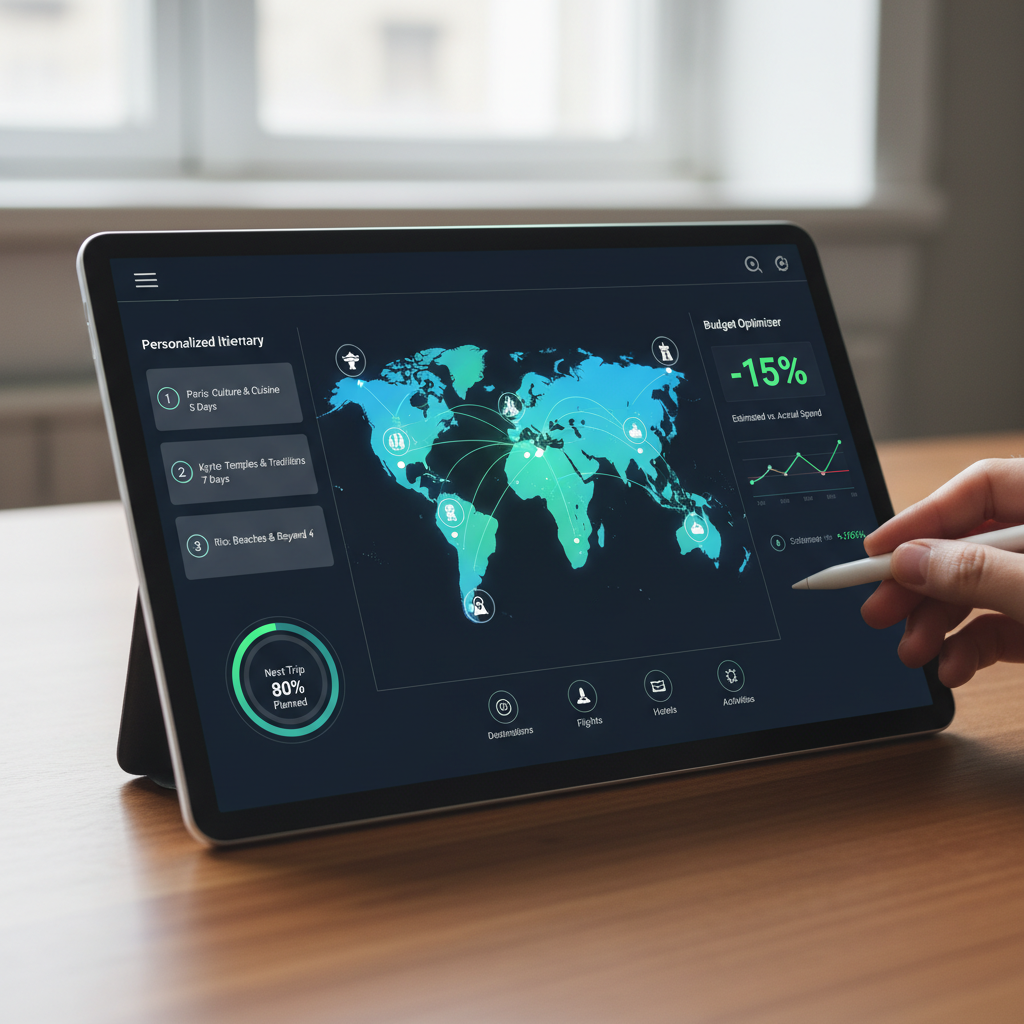
- Personalized Itinerary Generation: This is arguably the flagship feature. Based on your input (destination, dates, budget, interests) and its learned understanding of your travel style, the AI can generate a day-by-day, hour-by-hour itinerary. It considers travel times between locations, opening hours of attractions, meal breaks, and even provides suggestions for evening entertainment. Furthermore, these itineraries are dynamic, meaning they can adjust on the fly if your plans change.
- Real-time Price Tracking and Optimization: Forget constantly checking flight and hotel prices. AI planners monitor millions of data points in real-time, alerting you to optimal booking times and price drops. Some can even predict when prices are likely to rise, helping you secure the best deals for flights, accommodations, and activities. This proactive approach ensures cost efficiency without constant manual effort.
- Smart Accommodation Recommendations: Beyond just filtering by stars or price, AI delves deeper. It considers your preferred neighborhood (e.g., quiet, lively, close to attractions), specific amenities (e.g., pool, pet-friendly, coworking space), past booking history, and even reviews mentioning aspects important to you (e.g., “comfortable bed,” “excellent breakfast”). It can suggest boutique hotels, eco-lodges, hostels, or luxury resorts that genuinely align with your profile.
- Activity and Experience Suggestions: AI doesn’t just list popular tourist spots; it uncovers experiences aligned with your specific interests. If you love art, it might suggest local galleries, street art tours, or specific museum exhibits. If you’re a foodie, it could recommend hidden culinary gems, cooking classes, or food markets. It can also integrate with local event calendars to suggest festivals, concerts, or unique seasonal attractions.
- Dynamic Route Planning and Navigation: Once your itinerary is set, the AI can provide optimal routes for inter-city travel (flights, trains, buses) and intra-city navigation (public transport, walking, ride-sharing). Some platforms integrate with mapping services to offer real-time traffic updates, public transport schedules, and even walking directions, ensuring you spend less time getting lost and more time exploring.
- Budget Management and Spending Insights: AI tools can help you set and stick to a budget. You input your total budget, and the software allocates funds across different categories (flights, accommodation, food, activities). Throughout your trip, you can log expenses, and the AI provides real-time tracking, alerting you if you’re overspending in certain areas and suggesting more affordable alternatives or adjustments to future plans.
- Multilingual Support and Local Insights: Traveling abroad often involves language barriers and cultural nuances. Many AI planners offer built-in translation features for common phrases or even instant translation of menus and signs through camera integration. They also provide valuable local insights, such as tipping customs, local etiquette, safety tips, and recommendations for authentic experiences away from tourist traps.
- Crisis Management and Real-time Alerts: While we hope for smooth trips, unexpected events can occur. AI planners can monitor external factors like severe weather warnings, flight delays, public transport strikes, or local unrest. They can proactively alert you, suggest alternative routes, or even help rebook arrangements in real-time, providing an invaluable layer of security and peace of mind.
- Group Travel Coordination: Planning a trip for multiple people with varying preferences can be a nightmare. Some advanced AI tools allow group members to input their interests and availability, and the AI synthesizes this data to create an itinerary that maximizes satisfaction for everyone, identifying common interests and negotiating compromises automatically.
These features combine to create a powerful, intelligent travel planning ecosystem that significantly reduces the complexity and stress traditionally associated with organizing a vacation, empowering travelers to focus purely on the joy of discovery.
The Unprecedented Benefits of Embracing AI for Your Travels
Adopting AI vacation planning software isn’t just about technological novelty; it unlocks a myriad of tangible benefits that fundamentally transform the travel experience. These advantages extend beyond mere convenience, impacting your time, money, and overall enjoyment.
- Significant Time Savings: This is perhaps the most immediate and appreciated benefit. What once took hours, if not days, of meticulous research across countless websites can now be accomplished in minutes. AI instantly sifts through millions of data points – flights, hotels, activities, reviews – to present optimized options, freeing up your valuable time to focus on other preparations or simply relax.
- Enhanced Cost Efficiency: AI’s ability to track real-time prices and predict market fluctuations is a game-changer for budget-conscious travelers. By identifying optimal booking windows and uncovering deals you might otherwise miss, AI planners can lead to substantial savings on flights, accommodation, and even activities. They help prevent impulse overspending and guide you towards value-for-money options.
- Unparalleled Personalization: Generic itineraries are a thing of the past. AI learns your unique travel preferences, interests, pace, and budget, crafting a trip that feels genuinely designed for you. Whether you’re an adrenaline junkie, a history buff, a gourmet food lover, or seeking tranquil relaxation, the AI ensures your itinerary reflects your true desires, making every moment count.
- Reduced Stress and Decision Fatigue: The sheer volume of choices in travel planning can be overwhelming. AI streamlines this process by filtering out irrelevant options and presenting curated selections. This significantly reduces the mental load and anxiety associated with making countless decisions, allowing you to approach your trip feeling refreshed and excited, not exhausted.
- Discovery of Hidden Gems and Authentic Experiences: Beyond the well-trodden tourist paths, AI can uncover local favorites, off-the-beaten-path attractions, and authentic cultural experiences that align with your profile. Its vast data processing capabilities allow it to connect disparate pieces of information to suggest unique, memorable activities you might never have found manually.
- Increased Flexibility and Adaptability: Life happens, and travel plans often need to change. AI-powered itineraries are inherently dynamic. If a flight is delayed, weather conditions worsen, or you simply decide to change your mind, the software can quickly re-optimize your schedule, suggest alternatives, and even rebook elements of your trip, minimizing disruption and stress.
- Promotion of Sustainable Travel Options: Many AI platforms are integrating features that allow travelers to make more environmentally conscious choices. This could include recommending lower-carbon transport options, suggesting eco-friendly accommodations, or highlighting tour operators committed to sustainable tourism practices, helping you reduce your carbon footprint while exploring the world.
- Improved Safety and Preparedness: With real-time alerts for weather, local conditions, and travel advisories, AI provides an extra layer of safety. It keeps you informed and allows you to make proactive adjustments, enhancing your peace of mind throughout your journey.
In essence, AI vacation planning software transforms travel planning from a burdensome task into an empowering and enjoyable prelude to your adventure. It’s about maximizing value, minimizing effort, and truly experiencing the world on your own terms.
How AI Vacation Planning Software Works: A Technical Glimpse
Understanding the underlying mechanics of AI vacation planning software reveals the sophistication behind its seemingly magical capabilities. It’s a multi-layered process involving data ingestion, intelligent processing, and iterative refinement:
-
Data Ingestion and Aggregation:
- User Input: The process begins with your explicit input: desired destination, travel dates, budget, number of travelers, and initial preferences (e.g., “adventure,” “relaxing,” “cultural”).
- Historical Travel Data: The AI draws from an enormous repository of past travel data, including millions of flight and hotel bookings, popular routes, common itinerary structures, and seasonal trends.
- Real-time Feeds: It continuously pulls data from live sources: flight availability and pricing APIs, hotel booking systems, weather services, local event calendars, public transport schedules, news feeds for travel advisories, and restaurant/attraction review platforms.
- Geographical Information Systems (GIS): Detailed mapping data helps in understanding distances, travel times, and spatial relationships between points of interest.
-
Preference Profiling and Learning:
- Explicit Preferences: Based on your direct answers to questions about interests, activity levels, food preferences, and accommodation styles.
- Implicit Learning: As you interact with the software – liking certain suggestions, discarding others, modifying proposed itineraries, and even providing feedback on past trips – the ML algorithms refine your profile. This is crucial for personalization; the AI adapts its recommendations to truly match your evolving tastes.
- Contextual Understanding: The AI considers the context of your trip (e.g., solo travel, family vacation, romantic getaway, business trip) as this significantly influences recommendations.
-
Recommendation Engines:
- Collaborative Filtering: Suggests items (hotels, activities) based on what similar users (those with similar profiles or past behaviors) have liked.
- Content-Based Filtering: Recommends items that are similar to what you have liked in the past or what matches your explicit preferences (e.g., if you like museums, it will suggest more museums).
- Hybrid Approaches: Most sophisticated systems use a combination of these methods to provide diverse and accurate recommendations.
-
Optimization Algorithms:
- Constraint Satisfaction: The AI operates within the constraints you set (budget, dates, travel time, specific interests). It finds the best possible combination of flights, hotels, and activities that satisfy these constraints.
- Multi-Objective Optimization: Travel planning often involves balancing competing objectives (e.g., lowest price vs. shortest travel time vs. highest rating). AI uses algorithms to find solutions that achieve the best balance across these multiple objectives.
- Dynamic Programming: For itinerary generation, AI breaks down the problem into smaller, manageable parts (e.g., planning day 1, then day 2) and uses dynamic programming to build an optimal overall schedule, considering logical flow and efficiency.
- Predictive Analytics: Algorithms analyze historical data and current trends to forecast future events, such as price increases for flights or potential crowd levels at attractions, allowing the AI to make proactive recommendations.
-
User Interface and Interaction:
- Natural Language Interface: As mentioned, NLP allows for conversational input.
- Interactive Map Displays: Visualizing the itinerary on a map, showing travel times and distances.
- Real-time Adjustments: The ability for users to easily modify elements of a proposed itinerary and see immediate impacts on budget and schedule.
- Notification System: Alerts for price changes, schedule updates, or important travel information.
This intricate interplay of data, learning, and optimization allows AI vacation planners to move beyond simple search, offering a truly intelligent and adaptable solution for complex travel logistics.
Choosing the Right AI Travel Planner: What to Look For
The market for AI vacation planning software is growing, with various platforms offering different strengths and specializations. Selecting the right one for your needs requires careful consideration of several key factors:
- User Interface and Ease of Use: A powerful AI is only effective if it’s intuitive to use. Look for a clean, user-friendly interface that makes inputting your preferences simple and understanding the generated itinerary clear. Is it easy to navigate, make edits, and access supporting information? A complex interface can negate the time-saving benefits of AI.
- Level of Customization Options: How much control does the AI give you? Can you easily tweak suggested itineraries, swap out activities, or specify very niche preferences? The best AI planners offer a balance between intelligent automation and user flexibility, allowing you to override suggestions when needed.
- Data Privacy and Security: You’ll be sharing sensitive information, including travel dates, preferences, and potentially payment details. Investigate the platform’s privacy policy and security measures. Does it comply with data protection regulations? How is your personal data stored and used? Opt for services that prioritize strong data encryption and transparent privacy practices.
- Integration with Other Services: A truly comprehensive AI planner should seamlessly integrate with major flight and hotel booking engines, car rental services, and activity booking platforms. This reduces the need to switch between multiple apps and ensures that recommendations are actionable and bookable directly or through easy links. Look for integrations with popular mapping services and local transport apps for real-time navigation.
- Scope of Destinations and Activities: Does the planner cover your desired destinations, especially if you’re looking at less common locales? Some AI tools are stronger in popular tourist regions, while others boast global coverage. Check if their activity database aligns with your interests (e.g., specialized tours, outdoor adventures, specific culinary experiences).
- Real-time Information and Responsiveness: How quickly does the AI update with real-time data like price changes, weather alerts, or availability? A good AI planner should be highly responsive and adaptive, capable of making on-the-fly adjustments to your itinerary based on current conditions.
- Customer Support and Community: While AI automates much of the process, human support can be invaluable when issues arise. Does the platform offer responsive customer service? Is there an active user community or forum where you can find tips and advice?
- Pricing Model: AI travel planners range from free basic versions to subscription-based premium services. Understand what features are included in each tier. Free versions might offer general planning, while premium subscriptions could unlock advanced personalization, real-time alerts, and dedicated support. Evaluate if the features justify the cost for your travel needs.
By carefully evaluating these criteria, you can select an AI vacation planning software that not only meets your requirements but genuinely enhances your entire travel journey, from inspiration to execution.
Addressing Concerns: Privacy, Bias, and Over-reliance
While the benefits of AI vacation planning are compelling, it’s essential to address legitimate concerns that arise with any powerful technology. Transparency and responsible usage are key to harnessing AI’s potential while mitigating its drawbacks.
1. Data Privacy and Security:
- The Concern: AI planners require a significant amount of personal data – preferences, travel history, possibly even location data – to deliver personalized recommendations. There’s a valid concern about how this data is collected, stored, and used, and the risk of breaches or misuse.
- Mitigation: Reputable AI travel platforms employ robust encryption protocols and adhere to strict data protection regulations (like GDPR and CCPA). They should have clear, transparent privacy policies outlining what data is collected, why, and how it’s protected. Users should always review these policies, use strong, unique passwords, and be mindful of the information they share. The trend is towards privacy-preserving AI techniques where personalization can occur without directly exposing highly sensitive data.
2. Algorithmic Bias:
- The Concern: AI systems learn from data, and if the training data reflects existing biases (e.g., favoring certain demographics, travel styles, or destinations), the AI’s recommendations might perpetuate these biases, leading to a lack of diversity or exclusion. For example, if most training data comes from luxury travelers, budget-friendly options might be underrepresented.
- Mitigation: Developers are increasingly aware of algorithmic bias and are implementing strategies to counteract it. This includes diversifying training datasets, actively testing algorithms for bias, and introducing mechanisms for “explainable AI” that show why a particular recommendation was made. Users can also provide feedback to help refine the algorithms, and by actively seeking diverse options, they can guide the AI to broader suggestions.
3. Over-reliance and Loss of Spontaneity:
- The Concern: The convenience of AI could lead to over-reliance, potentially stifling human spontaneity, curiosity, and the joy of unplanned discovery. Will every trip become a perfectly optimized, predictable sequence of events, losing the magic of stumbling upon something unexpected?
- Mitigation: AI should be viewed as an assistant, not a replacement for human agency. The best AI planners offer flexibility and allow for manual intervention. Users can choose to use AI for the “heavy lifting” of logistics while intentionally leaving gaps in their itinerary for spontaneous exploration. Many platforms also offer “surprise me” or “offbeat” options to encourage discovery. It’s about finding the right balance where AI enhances, rather than dictates, your travel experience.
4. Impersonal Experience:
- The Concern: Could AI, despite its personalization, still feel cold and impersonal compared to the human touch of a dedicated travel agent or the organic discovery process?
- Mitigation: While AI lacks human empathy, its ability to meticulously cater to individual preferences often creates a deeply personal and satisfying experience. The key is in the continuous learning and refinement of AI models. As AI becomes more sophisticated, it aims to anticipate needs and provide recommendations that feel genuinely thoughtful, rather than generic. Many platforms also integrate user-generated content and reviews, adding a human element to the recommendations.
By being aware of these concerns and choosing platforms committed to ethical AI development and user control, travelers can confidently embrace the future of AI-powered vacation planning.
The Future of AI in Travel: Beyond Current Capabilities
The current state of AI vacation planning is impressive, but it’s merely the beginning. The trajectory of technological advancement suggests an even more integrated, intuitive, and immersive future for travel. Here’s a glimpse into what we might expect:
- Hyper-Personalization with Biometric Data: Imagine an AI that understands your stress levels, fatigue, or excitement through wearable tech or subtle biometric inputs. It could then dynamically adjust your itinerary – perhaps suggesting a relaxing spa treatment when you’re tired, or a thrilling activity when your energy levels are high. While raising privacy questions, this level of personalization promises trips perfectly attuned to your real-time physical and emotional state.
- Seamless Integration with Virtual and Augmented Reality: Before you even book, AR/VR could allow you to virtually “walk through” your hotel room, experience a simulated roller coaster ride at a theme park, or explore a historical site. AI would curate these VR experiences based on your preferences, giving you a taste of your trip before you commit and helping you make more informed decisions.
- Predictive Analytics for Crowd Avoidance and Dynamic Pricing: Current AI predicts price changes; future AI will predict crowd movements with even greater accuracy. Imagine your AI advising you, “Visit the Eiffel Tower between 9:00 AM and 10:30 AM tomorrow to avoid the peak crowds, which are expected to be 40% higher after noon.” It will also offer hyper-dynamic pricing for activities based on real-time demand and availability, potentially leading to last-minute deals or smart bookings months in advance.
- Fully Autonomous Travel Agents and Conversational AI: Advancements in NLP and generative AI will lead to truly conversational AI travel agents. You could simply state, “Plan my dream honeymoon to a secluded tropical island next summer, focusing on luxury and unique experiences,” and the AI would engage in a natural dialogue, asking clarifying questions and presenting a fully detailed, bookable itinerary, adjusting in real-time based on your feedback.
- Proactive Problem Solving and Self-Correction: Beyond merely alerting you to problems, future AI could proactively solve them. A delayed flight might trigger the AI to automatically rebook your connecting flight, inform your hotel, and arrange alternative transport, all without your direct intervention, then send you an updated itinerary.
- Smart Tourism Ecosystems and City Integration: AI will power “smart cities” that communicate directly with your travel planner. Your itinerary could integrate seamlessly with local public transport, restaurant waitlists, and museum entry systems, providing a truly frictionless experience within a destination.
- Ethical AI and Sustainable Travel Optimization: As AI grows, so will the emphasis on ethical considerations. Future AI will increasingly prioritize sustainable options, offering detailed environmental impact assessments of travel choices and nudging travelers towards eco-friendly alternatives, without compromising on experience.
The future of AI in travel promises a world where every journey is effortlessly optimized, deeply personalized, and more connected to the world around us. It’s an exciting horizon where technology empowers us to explore with unprecedented freedom and insight.
Comparison Tables
Table 1: AI Travel Planner Features vs. Traditional Manual Planning
| Feature Category | AI Travel Planner Capabilities | Traditional Manual Planning Limitations |
|---|---|---|
| Itinerary Generation | Personalized, dynamic day-by-day itineraries based on preferences, real-time conditions, and travel flow optimization. Adjusts automatically to changes. | Static, time-consuming manual creation. Difficult to adjust quickly; requires significant manual research and cross-referencing. |
| Price Optimization | Real-time tracking of flights, hotels, activities; predicts price changes; identifies optimal booking windows for maximum savings. | Requires constant manual checking across multiple sites; difficult to predict market trends; prone to missing best deals. |
| Personalization Depth | Learns individual preferences (interests, pace, budget, style) over time; suggests hidden gems tailored to user profile. | Limited to general searches; relies heavily on user’s own knowledge or generic reviews; less able to uncover niche experiences. |
| Time & Effort | Significantly reduces planning time from hours/days to minutes; automates research and comparison. | Extremely time-consuming and effort-intensive; high risk of decision fatigue and stress. |
| Adaptability & Alerts | Real-time alerts for delays, weather, local issues; dynamic re-optimization of plans. Proactive problem-solving. | Relies on user vigilance for external factors; re-planning is manual and complex; reactive rather than proactive. |
| Discovery | Suggests unique, off-the-beaten-path experiences aligned with specific interests, leveraging vast data. | Limited to popular searches, guidebooks, or personal networks; difficult to uncover truly unique local insights. |
| Group Planning | Synthesizes multiple travelers’ preferences and availability to create balanced itineraries. | Extremely challenging to coordinate diverse interests and schedules; often leads to compromises or conflicts. |
Table 2: Comparative Cost-Benefit Analysis of Travel Planning Methods
| Planning Method | Upfront Monetary Cost (Typical) | Time Investment (Pre-Trip) | Potential Cost Savings (Travel) | Stress Level | Personalization |
|---|---|---|---|---|---|
| AI Travel Planner (Subscription) | $0 – $20/month (or one-time fee) | Low (Minutes to 1-2 hours) | High (10-30% on flights/hotels, deals) | Very Low | Very High (Learns over time) |
| AI Travel Planner (Free Version) | $0 | Low (Minutes to 2-3 hours) | Moderate (5-15% on general deals) | Low | High (Limited learning) |
| Traditional Travel Agent | $50 – $500 (commission/fee) | Low (Consultation time) | Moderate (Access to some wholesale rates) | Low to Moderate | High (Depends on agent’s expertise) |
| Manual Online Research | $0 | Very High (Hours to Days) | Moderate (If diligent and lucky) | Very High | Moderate (Limited to self-discovery) |
| Guidebooks/Word-of-Mouth | $15 – $50 (Books) | High (Reading, cross-referencing) | Low (No real-time price info) | Moderate | Low (Generic recommendations) |
Practical Examples: Real-World Use Cases and Scenarios
To truly grasp the power of AI vacation planning software, let’s explore how it addresses diverse travel needs through real-world scenarios:
Scenario 1: The Busy Professional Planning a Family Trip to Europe
Meet the Millers: John and Sarah Miller, both working professionals with two young children (ages 6 and 9), dream of a two-week summer trip to Italy. They want a mix of history, kid-friendly activities, good food, and some relaxation, all within a reasonable budget of $8,000 for flights and accommodation. Their biggest challenge is time; they simply don’t have hours to spend researching.
How AI Helps:
- Initial Input: Sarah inputs “Italy, 2 weeks, summer, family with young kids, budget $8,000, interested in history, food, and light adventure.” She also specifies preferred accommodation (apartment rentals with kitchenettes) and travel pace (not too rushed).
- Itinerary Generation: The AI suggests a multi-city itinerary: 4 days in Rome (Colosseum, Vatican, Gladiator School for kids), 3 days in Florence (Uffizi, Pisa, gelato-making class), 2 days in a Tuscan farmhouse (cooking class, pool time), and 5 days in Venice (gondola ride, St. Mark’s Square, glass blowing demonstration). It automatically factors in travel time between cities via high-speed trains.
- Budget Optimization: The AI identifies the cheapest direct flights based on their dates and provides apartment recommendations within their budget for each city. It even suggests family-friendly restaurants with specific price ranges and highlights free activities.
- Kid-Friendly Adjustments: Recognizing the “young kids” input, the AI ensures historical tours are broken up with playground visits or interactive experiences. It suggests parks, child-friendly museums, and gelato shops.
- Dynamic Adjustments: A week before departure, John gets an urgent work call, delaying their flight by a day. He updates the AI. Immediately, the software shuffles their itinerary, extending one stay and slightly shortening another, re-checking all bookings, and presenting a revised, optimized plan within minutes, minimizing disruption.
Outcome: The Millers enjoy a perfectly balanced trip, avoiding planning headaches and maximizing their family time. The AI handled the logistics, allowing them to focus on creating memories.
Scenario 2: The Solo Adventure Seeker on a Tight Budget
Meet Alex: Alex is a 25-year-old solo traveler with a passion for backpacking, hiking, and immersing himself in local cultures. He wants a three-week trip through Peru, focusing on outdoor adventures and authentic experiences, all while adhering to a strict budget of $2,500 (excluding international flights).
How AI Helps:
- Detailed Preferences: Alex specifies “Peru, 3 weeks, solo, backpacking, hiking, local markets, budget $2,500, hostel accommodation, public transport.” He mentions a desire to hike the Inca Trail and explore the Amazon.
- Budget-Conscious Itinerary: The AI crafts an itinerary starting in Lima (local food tours, hostel stays), then flying to Cusco for the Inca Trail (suggesting reputable budget tour operators), followed by a bus journey to Arequipa, and finally a multi-day Amazon jungle trek from Puerto Maldonado. It prioritizes hostels and local eateries.
- Activity Matching: It recommends specific hiking trails, identifies reputable and affordable Inca Trail tour operators, and finds highly-rated budget-friendly Amazon lodges. It also pinpoints local markets and authentic culinary experiences.
- Logistics Optimization: The AI maps out efficient bus routes between cities, providing estimated travel times and costs, emphasizing overnight buses to save on accommodation. It even provides a detailed packing list tailored for multi-day hikes and jungle excursions.
- Safety and Local Insights: The software includes practical advice on altitude sickness prevention for Cusco, safety tips for solo travelers, and information on local customs and basic Spanish phrases, all relevant for a deeper immersion.
Outcome: Alex embarks on an incredible, budget-friendly adventure, confident in his well-planned itinerary and equipped with practical local knowledge, all thanks to the AI’s meticulous planning.
Scenario 3: The Business Traveler Needing Efficient Multi-City Planning
Meet Maria: Maria is a sales executive who frequently travels for work, often requiring visits to three different cities in a single week. Her upcoming trip involves meetings in London, Paris, and Berlin over five days. She needs efficient travel between cities, centrally located hotels, and some downtime for brief sightseeing.
How AI Helps:
- Multi-City Input: Maria enters her three destinations, meeting dates/times in each, and preferred hotel chain. She specifies a need for efficient inter-city travel (high-speed rail where feasible, otherwise short flights) and a request for “brief cultural breaks.”
- Optimal Route and Schedule: The AI analyzes flight and train schedules, recommending the fastest and most cost-effective sequence of travel: London to Paris via Eurostar, then Paris to Berlin via a short flight. It meticulously schedules travel times around her meetings, ensuring she arrives with ample time.
- Accommodation & Logistics: It automatically books rooms at her preferred hotel chain in central locations in each city, close to her meeting venues. It also integrates local taxi/ride-share information and public transport routes to help her navigate quickly.
- Integrated Downtime: During her free hours, the AI suggests short, impactful sightseeing options near her hotels or meeting locations – a quick visit to the Louvre in Paris, a walk around Brandenburg Gate in Berlin – allowing her to experience a bit of the city without compromising her schedule.
- Expense Tracking: Maria uses the integrated expense tracker to log all travel and meal costs, which the AI automatically categorizes for easy reporting upon her return.
Outcome: Maria completes her demanding business trip feeling productive and organized. The AI handles all complex logistical arrangements, allowing her to focus entirely on her work while still enjoying small moments of cultural engagement.
Frequently Asked Questions
Q: What is AI vacation planning software?
A: AI vacation planning software is a smart digital tool that uses Artificial Intelligence, including machine learning and natural language processing, to help you plan your trips. Instead of you manually searching for flights, hotels, and activities, the AI learns your preferences, analyzes vast amounts of data in real-time, and generates personalized, optimized itineraries that save you time, money, and stress.
Q: How does AI personalize my travel plans?
A: AI personalizes your plans by learning from your input and your interactions. When you specify your destination, dates, budget, and interests (e.g., adventure, relaxation, food), the AI uses this data to build a profile. Over time, as you use the software, like or dislike suggestions, or modify itineraries, its machine learning algorithms refine its understanding of your unique travel style, leading to increasingly accurate and tailored recommendations.
Q: Is AI vacation planning free?
A: Many AI vacation planning platforms offer a freemium model. This means there are often free basic versions that provide core planning functionalities. However, premium features such as advanced personalization, real-time alerts, dedicated customer support, or multi-user collaboration tools might require a paid subscription or a one-time purchase. It’s best to check the pricing structure of each specific platform.
Q: How accurate are the price predictions and savings claims?
A: AI-powered price predictions are generally quite accurate because they analyze massive datasets of historical pricing trends, real-time market fluctuations, and demand patterns. While no prediction is 100% guaranteed, these tools can offer significant savings by identifying optimal booking windows and alerting you to price drops that you might miss otherwise. Actual savings can vary depending on the destination, travel dates, and flexibility.
Q: Can AI help with last-minute trip planning?
A: Yes, AI vacation planning software is exceptionally good at last-minute planning. Its ability to quickly process real-time data on availability, prices, and logistics means it can generate efficient and optimized itineraries even with very short notice. It can identify the best available options that fit your criteria, minimizing the stress typically associated with spontaneous trips.
Q: What about data privacy and security with these tools?
A: Data privacy and security are critical concerns. Reputable AI travel planners use strong encryption to protect your personal information and adhere to strict data protection regulations (like GDPR). They should have clear privacy policies that explain how your data is collected, stored, and used. It’s always advisable to choose platforms with transparent privacy practices and use strong, unique passwords.
Q: Can I override the AI’s suggestions or customize the itinerary?
A: Absolutely. Most AI vacation planning software is designed to be a helpful assistant, not a dictator. You should always have the flexibility to edit, modify, or completely change any aspect of the suggested itinerary. The best platforms allow for seamless manual adjustments, and the AI will then re-optimize the rest of the plan around your changes.
Q: Does AI planning reduce the spontaneity of travel?
A: Not necessarily. While AI can create highly structured itineraries, many travelers use it for the core logistics (flights, major hotels) and then intentionally leave gaps for spontaneous exploration. Some AI tools even offer “surprise me” or “offbeat” suggestions to encourage discovery. It’s about finding a balance where AI handles the mundane, freeing you to embrace the unexpected.
Q: Can AI help with group travel planning?
A: Yes, some advanced AI travel planners offer features specifically for group travel. They can allow multiple users to input their preferences, availability, and budgets. The AI then synthesizes this information to create an itinerary that aims to maximize satisfaction for all members, identifying common interests and negotiating potential conflicts in scheduling or activities.
Q: What if something goes wrong during my trip? Can the AI help?
A: Many advanced AI travel planners offer real-time assistance. They can monitor for external factors like flight delays, severe weather, or local disruptions. In such cases, the AI can proactively alert you, suggest alternative routes, or even help rebook elements of your trip, providing an invaluable layer of support and peace of mind during unexpected events.
Key Takeaways
Embracing AI vacation planning software is a definitive step towards a more efficient, personalized, and enjoyable travel future. Here are the core benefits and insights:
- Time Efficiency: AI drastically cuts down planning hours, allowing you to focus on the excitement of your trip.
- Cost Savings: Real-time price tracking and predictive analytics help secure the best deals on flights, accommodation, and activities.
- Unmatched Personalization: AI learns your unique preferences, delivering itineraries truly tailored to your interests and travel style.
- Stress Reduction: Automated research and optimized planning minimize decision fatigue and travel-related anxiety.
- Dynamic Adaptability: AI itineraries are flexible, capable of adjusting to real-time changes like delays or weather disruptions.
- Discovery of Unique Experiences: These tools can uncover hidden gems and authentic local experiences aligned with your profile.
- Empowered Exploration: AI acts as an intelligent assistant, enhancing your travel experience without diminishing spontaneity.
- Future-Proof Travel: The technology is continuously evolving, promising even more integrated and immersive experiences ahead.
- Considerations Matter: While beneficial, it’s important to be mindful of data privacy, potential biases, and balancing AI assistance with personal discovery.
Conclusion
The days of overwhelming spreadsheets, endless browser tabs, and generic guidebooks dictating your travel plans are rapidly becoming a relic of the past. AI vacation planning software has emerged not just as a convenient tool, but as a transformative force, fundamentally reshaping how we approach and experience our adventures. By harnessing the power of machine learning, natural language processing, and big data analytics, these intelligent systems are unlocking unparalleled levels of personalization, efficiency, and discovery for every traveler.
From crafting bespoke itineraries that perfectly align with your deepest desires and budget, to proactively identifying the best deals and seamlessly adjusting to unexpected changes, AI is taking the stress out of travel planning. It empowers you to move beyond the logistical burdens and fully immerse yourself in the joy of exploration, connecting with new cultures, breathtaking landscapes, and unforgettable moments.
As this technology continues to evolve, we can anticipate an even more seamless, intuitive, and hyper-personalized future for travel – one where your digital travel companion anticipates your needs before you even voice them, and guides you towards experiences you never knew existed. The ultimate guide to effortless adventures is no longer a wishful thought; it’s a reality powered by AI. So, for your next vacation, consider inviting an AI travel planner into your journey. Embrace the future of travel discovery, and unlock truly effortless, personalized, and memorable adventures that await you.





















































































Leave a Reply