

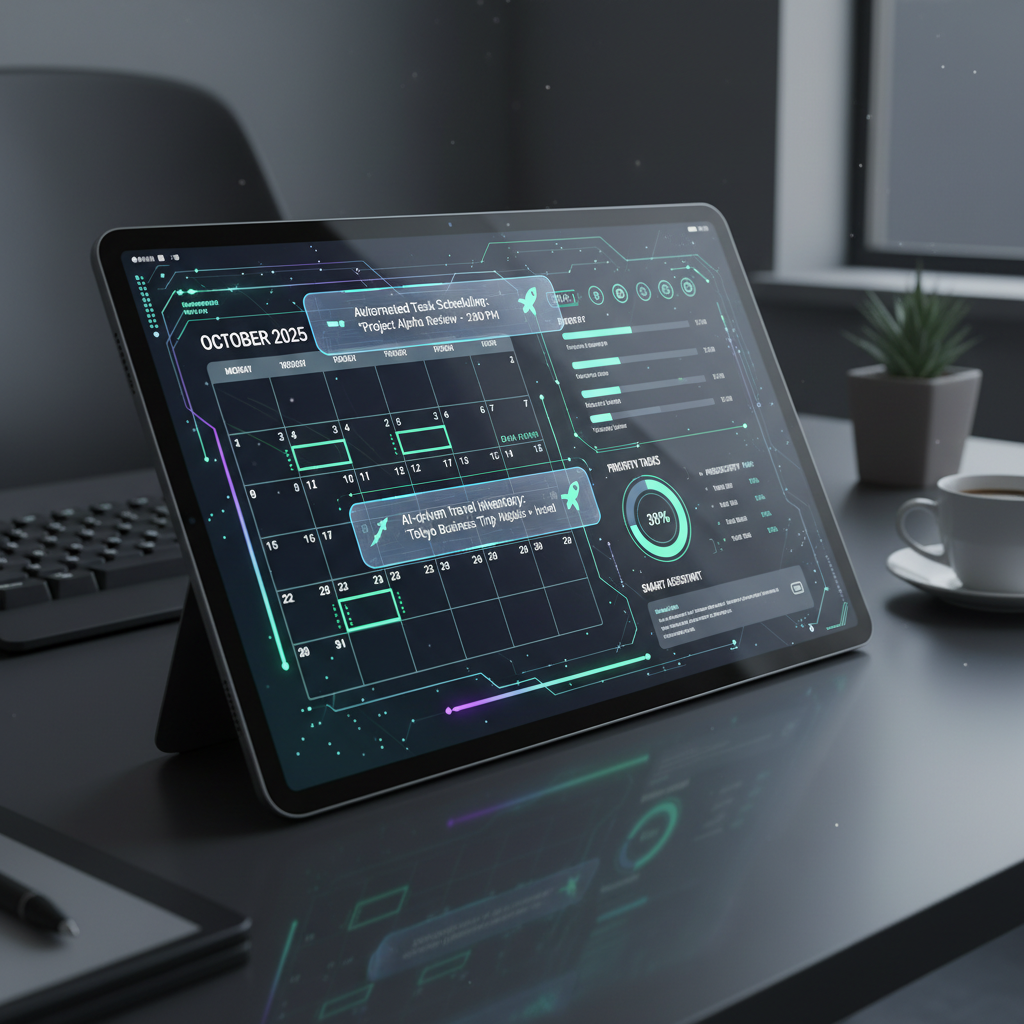
In the relentless pursuit of productivity, many of us find ourselves caught in a paradoxical loop: we spend valuable time planning our day, only to feel overwhelmed by the planning itself. The digital age, with its myriad distractions and ever-increasing demands, has exacerbated this challenge, turning what should be a strategic exercise into another source of busywork. But what if there was a way to reclaim that time, to offload the cognitive burden of organizing, prioritizing, and scheduling, and instead focus entirely on meaningful work? Enter the AI co-pilot, a revolutionary approach to daily planning that promises to transform your workflow, dramatically maximize your output, and virtually eliminate the drudgery of administrative tasks.
This comprehensive guide delves deep into the world of AI-powered planners, exploring how these intelligent systems go far beyond simple digital calendars or to-do lists. We will unpack their core capabilities, illustrate their impact through real-world examples, and provide practical insights into integrating an AI co-pilot into your personal and professional life. Prepare to discover how artificial intelligence is not just a futuristic concept, but a present-day reality ready to redefine how you approach your daily schedule, turning planning from a chore into a seamless, automated advantage.
Understanding the Planning Paradox: The Unseen Costs of Manual Organization
For decades, the mantra of “plan your work, then work your plan” has been a cornerstone of productivity advice. While sound in theory, its practical application often falters under the weight of modern complexities. Traditional planning methods, whether using paper notebooks, basic digital calendars, or simple task managers, require significant manual effort and cognitive load. This is what we call the “planning paradox”: the more meticulously you try to plan, the more time and mental energy you expend on the planning process itself, potentially diverting resources from the actual execution of tasks.
Consider the invisible costs associated with manual planning:
- Time Consumption: Manually inputting tasks, setting deadlines, estimating durations, and reorganizing schedules after unexpected events can consume hours each week. This is time that could be spent on high-value work or personal pursuits.
- Decision Fatigue: Every choice, no matter how small, depletes our mental reserves. Deciding which task to tackle first, how long to allocate, or where to fit an impromptu meeting contributes to decision fatigue, leaving less mental clarity for critical thinking.
- Cognitive Load: Constantly holding an entire schedule in your mind, along with dependencies, priorities, and potential conflicts, creates a significant cognitive burden. This can lead to stress, overwhelm, and a reduced capacity for creative problem-solving.
- Inefficient Prioritization: Without an objective system, humans often prioritize based on urgency rather than importance, or simply tackle the easiest tasks first. This can lead to neglected strategic goals and a feeling of perpetual catch-up.
- Lack of Adaptability: Life is unpredictable. A sudden meeting, an urgent request, or a personal emergency can throw a meticulously planned day into disarray. Manually re-jigging an entire schedule on the fly is frustrating and often inefficient.
- Missed Opportunities: When bogged down in planning minutiae, we might miss opportunities for synergistic task grouping, optimal resource allocation, or even a timely break that could boost overall productivity.
These unseen costs accumulate, leading to a sense of exhaustion before the day even truly begins. The goal of planning should be to empower, not to encumber. Recognizing this fundamental flaw in traditional approaches paves the way for understanding the profound necessity and benefit of an AI co-pilot.
What is an AI Co-Pilot for Planning? More Than Just a Digital Calendar
An AI co-pilot for planning is not merely a fancy digital calendar or a glorified to-do list. It is an intelligent, adaptive, and proactive assistant that leverages artificial intelligence to understand your goals, analyze your work patterns, and optimize your schedule with minimal human input. Think of it as having a highly efficient, perpetually updated personal assistant dedicated solely to managing your time and tasks.
At its core, an AI planning co-pilot utilizes advanced AI techniques, including:
- Natural Language Processing (NLP): This allows the co-pilot to understand and process human language. You can input tasks by simply speaking them or typing natural sentences, and the AI will interpret the intent, extract key information (deadlines, stakeholders, context), and add it to your schedule. For example, “Schedule a meeting with John about the Q3 report for next Tuesday afternoon” will be understood and acted upon.
- Machine Learning (ML): The AI learns from your habits, preferences, and past performance. It observes how long certain tasks take you, your peak productivity times, your preferred work-life balance, and even recurring patterns of delays. Over time, it refines its recommendations and predictions, becoming increasingly personalized and accurate.
- Predictive Analytics: Based on historical data and current inputs, the AI can anticipate future needs, potential conflicts, or impending overloads. It might suggest moving a task if it predicts you are running behind, or alert you to a looming deadline you might have forgotten.
- Automated Task Management: This involves more than just reminders. The AI can automatically generate sub-tasks, suggest necessary resources, identify dependencies between tasks, and even initiate follow-up actions based on your predefined rules.
- Optimization Algorithms: These complex algorithms work in the background to continuously adjust and re-prioritize your schedule in real-time. They can find the most efficient sequence of tasks, consolidate similar activities, and allocate time blocks to maximize focus and minimize context switching.
Unlike a static digital tool, an AI co-pilot is dynamic and responsive. It interacts with your other digital platforms – your email, communication apps, project management software, and even health trackers – to create a holistic view of your commitments and capacity. It doesn’t just display your schedule; it actively helps to craft and maintain it, ensuring you are always working on the right thing at the right time, with minimal effort spent on coordination.
Core Features and Capabilities of Modern AI-Powered Planners
The innovation in AI-powered planning tools is rapidly evolving, offering a suite of sophisticated features designed to cater to a diverse range of users, from individual professionals to large teams. These capabilities move beyond simple calendaring, providing truly intelligent assistance.
Intelligent Task Prioritization and Dependency Mapping
One of the most significant advantages of an AI co-pilot is its ability to go beyond basic “urgent vs. important” matrices. It analyzes tasks based on multiple factors: deadlines, estimated effort, strategic impact, associated projects, and even your personal energy levels. It can then dynamically prioritize your to-do list, suggesting the optimal sequence of tasks. Furthermore, it excels at dependency mapping, understanding when one task cannot begin until another is completed, and automatically adjusting schedules to reflect these relationships. If a prerequisite task is delayed, the AI will proactively reschedule dependent tasks and notify relevant stakeholders.
Dynamic Schedule Optimization and Time Blocking
AI planners don’t just put tasks on a calendar; they optimize the entire sequence. They can analyze your calendar for available blocks, your historical work patterns (e.g., you’re most productive for creative tasks in the morning), and the nature of the task itself to suggest the ideal time slot. This often takes the form of “smart time blocking,” where the AI reserves specific, uninterrupted blocks of time for focused work, automatically moving or compressing less critical items. If a new, high-priority item emerges, the AI can instantly re-shuffle your existing blocks to accommodate it, minimizing manual intervention.
Contextual Reminders and Proactive Nudges
Beyond simple alarm-based reminders, AI co-pilots provide contextual nudges. This might include a reminder to prepare for a meeting an hour beforehand, including links to relevant documents, or a location-based reminder to pick up groceries when you are near the store. They can also provide “proactive nudges” based on predictive analysis, such as reminding you that a deadline is approaching faster than anticipated, or suggesting a short break if your focus time has exceeded your typical attention span, based on your learned patterns.
Automated Task Creation and Delegation
Imagine receiving an email that clearly outlines an action item. An AI co-pilot can be configured to scan your inbox, identify such action items, and automatically create a draft task in your planner, pre-filling details like the deadline, sender, and even suggesting a category. Similarly, in a team setting, certain types of tasks might be automatically delegated to team members based on their roles, availability, and past performance, streamlining project management overhead.
Performance Analytics and Insight Generation
A truly intelligent co-pilot isn’t just about scheduling; it’s about continuous improvement. These tools collect data on how you spend your time, how long tasks actually take versus your estimates, and where your bottlenecks typically occur. They then generate insightful reports and visualizations, showing you how much time you spend on meetings versus focused work, or identifying common distractions. This feedback loop is invaluable for understanding your own productivity patterns and making informed adjustments to your workflow and habits.
Natural Language Understanding and Conversational Interface
The ability to interact with your planner using natural language, either by voice or text, makes the experience intuitive and efficient. Instead of navigating menus, you can simply tell your co-pilot, “Add ‘review Q2 financials’ to my schedule for tomorrow morning, and remind me to follow up with Sarah on Monday.” The AI processes these complex requests, extracts all necessary information, and integrates it seamlessly into your schedule, providing an experience akin to speaking with a human assistant.
These features, working in concert, empower individuals and teams to move beyond merely managing tasks to intelligently orchestrating their entire daily flow, ensuring maximum efficiency and minimal wasted effort.
Maximizing Output: How AI Supercharges Your Productivity
The true power of an AI co-pilot lies in its capacity to fundamentally shift how you approach work, enabling a level of output that feels effortless yet impactful. It’s not just about doing more; it’s about doing the right things, at the right time, with optimal focus.
Enhanced Focus and Deep Work
One of the greatest adversaries of modern productivity is distraction and the constant pull of context switching. An AI co-pilot actively combats this by intelligently grouping similar tasks, scheduling uninterrupted blocks for deep work, and minimizing the need for you to constantly check or adjust your schedule. By offloading the mental overhead of “what should I do next?”, the AI frees up your cognitive resources to fully immerse yourself in the task at hand, leading to higher quality work and greater creative output.
Example: An AI co-pilot identifies that you have three reports due this week, all requiring data analysis. It might suggest blocking off a dedicated “Data Analysis Focus” session where you tackle all three consecutively, rather than switching between tasks, vastly reducing the mental ramp-up time for each.
Strategic Time Allocation and Goal Alignment
AI doesn’t just prioritize; it strategizes. By understanding your long-term goals and linking them to daily tasks, it ensures that your efforts are consistently aligned with what truly matters. It can highlight tasks that contribute most significantly to your objectives, even if they aren’t immediately urgent. This proactive alignment ensures you’re spending your valuable time on high-leverage activities, moving you closer to your aspirations rather than just reacting to incoming demands.
Example: Your goal is to launch a new product feature. The AI identifies all related tasks – market research, design, development, testing – and ensures that critical path items are prioritized and scheduled, even pushing back less important administrative tasks to keep the core project on track.
Proactive Problem Solving and Bottleneck Prevention
Before a potential overload or missed deadline becomes a crisis, your AI co-pilot can flag it. By continuously monitoring your schedule, commitments, and historical data, it can predict when you might be overcommitted or when a specific project is falling behind. This early warning system allows you to adjust, delegate, or communicate potential delays proactively, preventing issues from escalating and saving significant time and stress down the line.
Example: The AI observes that your estimated time for a client proposal, combined with other scheduled meetings, will push you past your typical working hours on a given day. It suggests either re-scheduling a less critical meeting or extending the proposal deadline if feasible, giving you options before you’re overwhelmed.
Reduction of Decision Fatigue
Every time you have to decide what to do next, how to fit something in, or what to postpone, you expend mental energy. The AI co-pilot significantly reduces this decision fatigue by presenting an optimized, pre-planned day. It makes many of the micro-decisions for you, based on your preferences and goals, freeing up your mental bandwidth for the complex, creative, and critical thinking that only humans can do. This leads to sustained cognitive performance throughout the day.
Case Study: The Ambitious Marketing Director
Sarah, a marketing director, juggled multiple campaigns, team management, and strategic planning. Before her AI co-pilot, her days felt like a series of reactive fire drills. Emails piled up, important tasks often got pushed, and she frequently worked late. With her AI co-pilot, her entire workflow transformed:
- Email Integration: The AI scans her inbox, automatically creating tasks for client follow-ups or campaign adjustments from emails, complete with deadlines extracted from the text.
- Project Sync: It integrates with her project management software, pulling in tasks and deadlines for various campaigns, then intelligently slotting them into her calendar based on priority and dependencies.
- Smart Time Blocking: The AI learned her peak creative hours (9-11 AM) and automatically blocked these for strategic planning and content creation, protecting them from meetings.
- Meeting Optimization: For internal meetings, it found optimal times across team members’ calendars and sent invites, reducing back-and-forth emails.
- Analytics: Sarah discovered she was spending 40% of her time in meetings. The AI helped her identify which meetings were high-value and suggested strategies for reducing time in others.
The result? Sarah gained 10-15 hours of focused work per week, her team hit deadlines more consistently, and her stress levels plummeted. She moved from feeling constantly overwhelmed to proactively driving marketing strategy, maximizing her output and impact.
Minimizing Busywork: Automating the Mundane to Free Up Your Time
Busywork – the administrative, repetitive, and often low-value tasks that consume our time – is a universal enemy of productivity. An AI co-pilot is specifically designed to identify and eliminate this type of work, liberating individuals to focus on activities that truly leverage their skills and creativity.
Eliminating Manual Data Entry and Information Capture
How often do you jot down a task on a sticky note, only to re-enter it into your digital planner later? Or manually transcribe notes from a meeting into actionable items? AI planning tools can automate this entirely. Through integration with voice notes, OCR (Optical Character Recognition) for physical notes, or direct parsing of digital documents and communication, tasks, deadlines, and relevant context can be captured and inserted into your schedule without a single manual keystroke. This significantly reduces the chances of forgetting important details and saves valuable minutes throughout the day.
Example: You dictate a quick memo into your phone about “calling supplier X regarding new order by end of week.” Your AI co-pilot automatically transcribes this, creates a task, sets a reminder, and might even pull up contact information for supplier X from your CRM.
Routine Task Automation and Recurring Events
Many tasks are repetitive: weekly reports, monthly budget reviews, daily check-ins. While traditional calendars can handle recurring events, an AI co-pilot takes it further. It can automatically generate pre-filled tasks for these routines, link them to specific templates or dashboards, and even suggest small optimizations based on how you typically perform them. For instance, if you always allocate an hour for a weekly report but finish it in 45 minutes, the AI might suggest using the saved 15 minutes for another short, pending task.
Smart Meeting Scheduling and Logistics
The back-and-forth emails to find a suitable meeting time are a classic example of busywork. AI co-pilots integrate with your calendar and the calendars of your colleagues or external contacts (with appropriate permissions) to identify mutually available slots instantly. They can then send invitations, add video conference links, and even include relevant meeting agendas or documents automatically. Some advanced systems can even suggest optimal meeting durations based on the topic and attendees, preventing unnecessarily long discussions.
Example: You need to schedule a review meeting with five team members. Instead of emailing everyone to check availability, you simply tell your AI, “Schedule a Q3 review with the team for 30 minutes sometime next week.” The AI checks everyone’s calendars, finds the best slot, sends out invites, and even attaches the Q3 report for pre-reading.
Automated Information Retrieval and Contextual Setup
Before starting a task or joining a meeting, we often spend time gathering relevant information: documents, emails, previous notes, or project dashboards. An AI co-pilot can proactively retrieve and present this information to you. For instance, 15 minutes before a client call, it could pop up with a summary of past interactions, the client’s current project status, and any outstanding action items related to them, ensuring you are fully prepared without any manual searching.
Reducing Context Switching Through Task Grouping
Context switching, the act of jumping between different types of tasks or projects, is a major productivity killer. It creates mental friction and reduces efficiency. An AI co-pilot minimizes this busywork by intelligently grouping similar tasks together or scheduling related activities sequentially. This ensures that when you dive into a specific type of work, all the necessary components are available, and you can maintain focus without needing to constantly re-orient your thoughts.
By automating these often tedious and time-consuming administrative tasks, an AI co-pilot effectively frees up significant portions of your day. This not only increases your capacity for impactful work but also reduces mental fatigue and the feeling of being constantly overwhelmed by small, repetitive duties, leading to a more satisfying and less stressful work experience.
Choosing the Right AI Planning Tool: A Guide for Every Need
The market for AI-powered planning tools is expanding rapidly, with solutions ranging from general productivity assistants to highly specialized project management platforms. Selecting the right AI co-pilot requires careful consideration of your specific needs, existing workflow, and technical comfort level. Here’s a breakdown of factors to consider:
1. Integration Ecosystem
Perhaps the most critical factor is how well the AI planning tool integrates with your existing digital environment. Does it seamlessly connect with your email client (Gmail, Outlook), calendar (Google Calendar, Apple Calendar), communication platforms (Slack, Microsoft Teams), project management software (Asana, Trello, Jira), and CRM (Salesforce)? The more integrated it is, the less manual input you’ll need, and the more comprehensive a view the AI will have of your commitments.
2. Customization and Adaptability
Your workflow is unique. Can the AI tool be customized to your specific preferences, prioritization methods, and daily routines? Look for features that allow you to:
- Set personal productivity peaks and low periods.
- Define custom task categories and tags.
- Establish rules for automatic task creation or delegation.
- Adjust the level of AI intervention (e.g., full automation vs. AI suggestions requiring approval).
A good AI co-pilot learns from you, but a great one also allows you to teach it your specific nuances.
3. Learning Curve and User Experience
While AI aims to simplify, some tools can be complex to set up. Assess the learning curve. Is the interface intuitive and user-friendly? Does it offer clear onboarding processes and helpful tutorials? A tool that is too difficult to learn will likely be abandoned, regardless of its advanced features. Look for a balance between powerful capabilities and ease of use.
4. Pricing Model and Value Proposition
AI planning tools come with various pricing models: free tiers with limited features, subscription-based models (monthly/annually), and enterprise-level solutions. Evaluate the value you receive for the cost. Does the tool offer features that genuinely save you time or increase your output significantly enough to justify the expense? Many tools offer free trials, which are excellent for testing their real-world applicability to your needs.
5. Data Privacy and Security
Since these tools handle highly personal and often sensitive information about your schedule, tasks, and communications, data privacy and security are paramount. Investigate the company’s data handling policies, encryption standards, and compliance with regulations like GDPR or CCPA. Ensure you are comfortable with how your data is collected, stored, and used to train the AI model.
6. Specific Use Case: Individual, Team, or Enterprise
Different tools are optimized for different scales:
- Individual Use: Focus on personal productivity, habit tracking, and individual goal alignment. Examples might include advanced personal AI assistants or smart calendar apps.
- Small Team / Project Management: Look for collaboration features, task delegation, shared project views, and integration with team communication tools. These often lean into AI-enhanced project management platforms.
- Enterprise Solutions: Require robust security, extensive integration capabilities with enterprise resource planning (ERP) systems, advanced analytics, and scalable user management.
7. Natural Language Processing (NLP) Capabilities
If you prefer to interact with your planner through voice commands or natural text input, assess the AI’s NLP accuracy and flexibility. Some tools are exceptional at understanding complex requests and extracting context, while others might be more rigid. Test this feature during a trial period.
By carefully evaluating these factors against your unique requirements, you can identify an AI planning co-pilot that not only fits seamlessly into your workflow but also genuinely amplifies your productivity and reduces administrative burden, rather than adding to it.
Integrating Your AI Co-Pilot into Your Daily Workflow for Seamless Operations
Adopting an AI co-pilot for daily planning is a journey that requires intentional integration and a willingness to adapt. Simply signing up for a tool won’t automatically transform your productivity; you need to strategically weave it into the fabric of your existing routines. Here’s a practical guide to achieving seamless operations:
1. Start Small and Build Momentum
Don’t try to overhaul your entire planning system on day one. Begin by integrating one or two core features of your AI co-pilot. For instance, start by using it exclusively for task capture via natural language, or by allowing it to optimize your meeting schedule. Once you experience the benefits of these initial integrations, you’ll gain confidence and motivation to expand its role.
Practical Tip: Choose a recurring, low-stakes task that typically consumes some time (e.g., scheduling a weekly team sync) and let the AI handle it completely. Observe the efficiency gain.
2. Connect with Your Essential Tools First
The power of an AI co-pilot multiplies when it can communicate with your other essential digital tools. Prioritize connecting it to your primary calendar, email client, and any project management software you regularly use. These integrations provide the AI with a richer dataset about your commitments and enable it to automate more effectively.
Practical Tip: Ensure bidirectional sync is enabled where possible. If you update a task in your project management tool, it should reflect in your AI planner, and vice-versa.
3. Customize and Train Your AI
An AI co-pilot is only as good as the data it learns from and the rules you set. Invest time in customizing its settings to match your personal preferences:
- Define your work hours and preferred break times.
- Categorize tasks consistently (e.g., “Deep Work,” “Admin,” “Meetings”).
- Provide feedback: If the AI suggests a time for a task that doesn’t work, manually adjust it. The AI will learn from these corrections over time.
- Teach it your priorities: Explicitly mark high-importance tasks or set strategic goals within the tool so the AI can prioritize effectively.
Think of it as training a new assistant; the more context and feedback you provide, the more effective it becomes.
4. Establish Trust and Overcome Skepticism
It’s natural to be skeptical of an AI taking over parts of your planning. Begin by using the AI’s suggestions as a starting point, then manually review and tweak them. As you see the AI consistently making good decisions and saving you time, your trust will grow. Gradually allow it more autonomy. This iterative process of review and increasing trust is crucial for long-term adoption.
Practical Tip: Keep a traditional planner or basic digital list alongside your AI for a week or two, comparing the AI’s output with your manual planning. This can help build confidence.
5. Develop New Habits Around AI Interaction
Successful integration means forming new habits. Instead of manually adding a task to your calendar, make it a habit to speak it to your AI. Instead of manually searching for meeting availability, use the AI’s scheduling assistant. Consistency in these new interaction patterns is key to fully leveraging the tool’s capabilities and making it an indispensable part of your routine.
Practical Tip: Set a specific time each day (e.g., 15 minutes at the end of the workday) to review the AI’s suggestions for the next day and make any necessary adjustments.
6. Continuously Review and Refine
Your needs and workflow will evolve. Regularly review the performance analytics provided by your AI co-pilot. Are there specific types of tasks where the AI is consistently inaccurate? Are there new integrations that could further streamline your workflow? Treat your AI co-pilot as a living system that requires periodic review and refinement to remain optimally effective.
By approaching integration with a mindful and strategic mindset, your AI co-pilot can transition from a novel tool to an indispensable partner, enabling truly seamless operations and unlocking unprecedented levels of productivity.
The Future of AI in Daily Planning: Predictive, Proactive, and Personalized
The current capabilities of AI co-pilots for planning are impressive, but they are merely a glimpse into a future where these intelligent assistants become even more integral to our daily lives. The trajectory of AI development suggests a future where planning tools are not just smart, but truly predictive, proactively anticipating our needs, and hyper-personalized to our unique cognitive and emotional states.
Hyper-Personalization and Emotional Intelligence
Future AI co-pilots will likely integrate more deeply with biometric and mood data. Imagine an AI that, based on your sleep patterns from a wearable device, or even subtle cues from your voice or typing speed, suggests adjusting your schedule to include more restorative breaks or shifting cognitively demanding tasks to times when you are naturally more alert. They might even understand your emotional state and proactively suggest tasks that align with your current mood, such as creative work during periods of inspiration or administrative tasks during times of low energy. This level of emotional intelligence will lead to truly bespoke planning that maximizes both output and well-being.
Advanced Predictive Analytics: Anticipating Needs Before You Do
Current AI can predict task durations and potential conflicts. Future iterations will go much further. They might analyze your career goals and suggest specific learning modules or networking opportunities to schedule. They could scan market trends relevant to your industry and proactively block time for you to research emerging topics. In essence, the AI will not just react to your inputs but will anticipate opportunities and challenges, guiding you towards strategic actions before you even conceive of them.
Seamless Integration with the Internet of Things (IoT) and Smart Environments
As our homes and workplaces become smarter, AI planning will extend beyond our screens. Imagine an AI that knows you’re running late for a meeting and automatically preheats your car, adjusts the thermostat in your office to your preferred temperature before you arrive, or queues up relevant data on your smart display. This level of environmental integration will remove friction points throughout your day, creating an almost invisible layer of support.
AI as a “Digital Twin” for Workflow Optimization
The concept of a “digital twin” – a virtual model of a physical object or process – could apply to our personal and professional workflows. An AI could create a dynamic digital twin of your day, running simulations to test different scheduling scenarios, resource allocations, and task sequences. This would allow for optimal planning without real-world trial and error, identifying the most efficient path to your goals.
Ethical Considerations and Human-AI Collaboration
As AI becomes more sophisticated, ethical considerations surrounding data privacy, algorithmic bias, and human autonomy will become increasingly important. Future developments will need to prioritize transparency, user control, and ensuring that AI remains a tool that augments human capability rather than replacing critical thinking. The relationship will be less about delegation and more about sophisticated collaboration, where the AI handles the complexity, and the human provides direction, creativity, and judgment.
The future of AI in daily planning is not about creating a robotic existence, but about empowering us to live and work more thoughtfully, purposefully, and efficiently. It promises a future where busywork is largely obsolete, and our cognitive energy is freed to tackle the challenges that truly require human ingenuity and spirit.
Comparison Tables
To further illustrate the transformative impact of AI-powered planning, let’s compare traditional planning methods with the capabilities of an AI co-pilot, and then examine some common features of AI planning tools.
Table 1: Traditional Planning vs. AI-Powered Planning
| Feature/Aspect | Traditional Planning (e.g., paper, basic digital calendar) | AI-Powered Planning (AI Co-Pilot) |
|---|---|---|
| Task Input & Capture | Manual entry, typing, writing; prone to forgetting details. | Natural language processing (voice/text), auto-capture from email/notes; intelligent detail extraction. |
| Prioritization | Manual, often based on urgency or personal bias; static lists. | Dynamic, intelligent prioritization based on multiple factors (deadlines, dependencies, impact, personal capacity); real-time adjustments. |
| Scheduling & Time Allocation | Manual drag-and-drop, static time blocks; fixed. | Dynamic schedule optimization, smart time blocking, automatic re-scheduling for conflicts; real-time adaptation. |
| Busywork Reduction | Minimal; requires manual coordination (e.g., meeting scheduling, information retrieval). | Significant; automates meeting invites, information gathering, routine tasks, follow-ups. |
| Adaptability to Change | Low; requires significant manual effort to re-plan when unexpected events occur. | High; automatically adjusts schedules, notifies dependencies, suggests alternatives. |
| Personalization & Learning | None; purely a tool. | Learns user habits, productivity peaks, task durations; provides increasingly accurate and tailored suggestions. |
| Insights & Analytics | None; user must manually track and analyze. | Detailed reports on time usage, productivity patterns, bottlenecks, and goal progress. |
| Integration with Other Tools | Limited, often manual copy-pasting. | Seamless, deep integrations with calendars, email, CRM, project management, and communication apps. |
| Cognitive Load | High; constant mental effort to manage and remember details. | Low; offloads mental overhead, frees up cognitive resources for focused work. |
Table 2: Common AI Planning Tool Capabilities and Their Benefits
| AI Capability | How AI Enhances Planning | Example Benefit to User |
|---|---|---|
| Intelligent Prioritization | Analyzes task importance, urgency, dependencies, and user capacity to suggest optimal task order. | Ensures focus on high-impact tasks; reduces decision fatigue on “what to do next.” |
| Dynamic Scheduling | Automatically allocates tasks to available time slots, considering user preferences and real-time changes. | Optimizes daily flow; protects deep work blocks; adapts effortlessly to new events. |
| Natural Language Processing (NLP) | Understands and processes verbal or written commands for task creation and management. | Faster task input; hands-free interaction; more intuitive planning. |
| Automated Task Creation | Scans emails, notes, or messages to identify action items and create tasks automatically. | Eliminates manual data entry; ensures no task falls through the cracks. |
| Contextual Reminders | Provides smart alerts based on location, time, project phase, or upcoming dependencies. | Minimizes missed deadlines; ensures preparedness for meetings/tasks. |
| Performance Analytics | Tracks time spent, task completion rates, and identifies productivity patterns. | Offers insights into work habits; helps identify bottlenecks and areas for improvement. |
| Smart Meeting Scheduling | Finds optimal meeting times across multiple calendars and handles logistics automatically. | Eliminates back-and-forth emails; saves time for all participants. |
| Proactive Problem Solving | Predicts potential overloads or missed deadlines based on current schedule and historical data. | Allows for early intervention; reduces stress and last-minute scrambling. |
Practical Examples: Real-World Use Cases and Scenarios
The theoretical benefits of an AI co-pilot come to life through practical, real-world applications. Here are a few scenarios illustrating how different individuals and teams can leverage AI to maximize output and minimize busywork.
Case Study 1: The Freelancer’s Dynamic Day
Maya is a freelance graphic designer juggling projects for multiple clients, managing her own marketing, and handling administrative tasks like invoicing. Her biggest challenge was context switching and ensuring she allocated enough time to high-paying client work while keeping her business operations running smoothly.
- Scenario: Maya receives an email from Client A requesting urgent revisions, while Client B just approved a new project, and she has an overdue invoice to send.
- AI Co-Pilot in Action:
- The AI scans her email, automatically creating a “Client A Revisions” task with a priority flag (due to urgency) and linking to the email thread.
- It also creates a “Client B New Project Setup” task, pre-filling details based on the approval email, and prompting her to break it down into sub-tasks (e.g., “Create mood board,” “Draft initial concepts”).
- Concurrently, the AI flags the overdue invoice and, knowing Maya’s typical workflow, suggests bundling all administrative tasks (invoicing, checking analytics) into a dedicated “Admin Block” for later in the day, after her peak creative hours.
- If the Client A revisions are predicted to take longer than estimated, the AI proactively shifts a less critical task, like social media planning, to the next day, ensuring the urgent client work gets done without pushing Maya into overtime.
- Outcome: Maya reduces time spent on manual prioritization and task creation, ensures client deadlines are met, and strategically dedicates time to high-value design work, leading to happier clients and increased earnings.
Case Study 2: The Project Manager’s Collaborative Control
David is a project manager overseeing a complex software development project with a distributed team. His main struggles involve tracking dependencies, identifying potential bottlenecks early, and facilitating efficient team communication without endless meetings.
- Scenario: A critical development sprint is underway. A key developer falls ill, impacting several dependent tasks. Simultaneously, a client requests an impromptu status meeting.
- AI Co-Pilot in Action:
- The AI, integrated with the team’s project management software, immediately identifies the affected tasks when the developer’s status changes. It then flags all dependent tasks, notifying David and relevant team members of the cascading impact.
- It automatically suggests alternative developers who might be able to pick up parts of the work, based on their skills and current workload, or proposes adjusting the sprint timeline with minimal disruption.
- For the client meeting request, David simply tells his AI, “Schedule a 15-minute status update with the client team ASAP today.” The AI checks his and the client’s available slots, sends the meeting invite with a video conference link, and attaches the latest project progress report, all within minutes.
- The AI also monitors team communication (e.g., Slack channels), identifies unresolved queries, and suggests scheduling quick syncs or creating specific tasks for clarification, reducing the need for David to manually sift through messages.
- Outcome: David gains real-time visibility into project health, proactively mitigates risks, and streamlines communication, ensuring the project remains on track despite unforeseen challenges, while spending less time on administrative coordination.
Case Study 3: The Student’s Academic Edge
Chloe is a university student balancing multiple courses, part-time work, and extracurricular activities. She often feels overwhelmed by conflicting deadlines, large assignments, and the challenge of consistent study.
- Scenario: Chloe receives a syllabus for a new course with five major assignments, each with different due dates. She also needs to prepare for a midterm in another course next week and wants to fit in gym time.
- AI Co-Pilot in Action:
- Chloe uploads the syllabus, and the AI automatically extracts all assignment deadlines, creates tasks for each, and breaks down larger projects (e.g., “Research paper”) into manageable sub-tasks (e.g., “Outline,” “Find sources,” “Draft introduction”).
- It then cross-references these with her existing schedule (other courses, work shifts) and her personal preferences (e.g., “study critical theory in the library,” “gym in the evenings”).
- The AI creates a dynamic study plan, allocating specific time blocks for each task, including revision time for her midterm. If a work shift changes, it automatically shuffles her study blocks to accommodate.
- Contextual reminders pop up: “Remember to bring your laptop charger for your library study session” or “Time to head to the gym for your workout.”
- Outcome: Chloe experiences significantly reduced academic stress, maintains a consistent study routine, meets all deadlines, and balances her personal well-being, enhancing her overall academic performance and quality of life.
Case Study 4: The Entrepreneur’s Growth Engine
Mark is an entrepreneur scaling a startup. He needs to balance strategic vision, investor relations, product development oversight, and personal time, often feeling pulled in a million directions.
- Scenario: Mark has a packed week with investor pitches, critical product development meetings, and a need to carve out time for strategic thinking, but his inbox is overflowing with operational issues.
- AI Co-Pilot in Action:
- The AI scans his calendar and inbox, identifying all high-priority investor meetings and product development sprints. It blocks protected “Deep Work” time for strategic planning, ensuring these crucial tasks are not interrupted.
- It categorizes incoming emails: “Urgent Operational” vs. “For Review Later.” The “Urgent Operational” emails are flagged, and the AI suggests a dedicated “Operational Sync” block where Mark can quickly address them, or even draft responses for less complex issues.
- The AI pulls data from his CRM and project management tools, creating a concise daily briefing on key metrics and team progress, saving him hours of manual data aggregation.
- Knowing Mark values personal well-being, the AI proactively suggests when to take short breaks or schedule his exercise, integrating these into his dynamic schedule.
- Outcome: Mark gains clarity on his highest-leverage activities, effectively delegates or automates operational busywork, and maintains a strategic focus essential for startup growth, all while preventing burnout.
These examples highlight how AI co-pilots are not just productivity tools but strategic partners that adapt to diverse needs, freeing up human potential from the tyranny of busywork and enabling more impactful outcomes.
Frequently Asked Questions
Q: What exactly is an AI Co-Pilot for planning?
A: An AI Co-Pilot for planning is an advanced intelligent assistant that uses artificial intelligence, including natural language processing and machine learning, to understand your tasks, goals, and habits. It proactively optimizes your schedule, prioritizes tasks, automates routine actions, and provides insights to maximize your productivity and minimize manual planning efforts. It goes far beyond a traditional calendar or to-do list by dynamically adapting to your changing needs and learning from your behavior.
Q: How is it different from a regular calendar or to-do list app?
A: The key difference lies in its intelligence and proactivity. A regular calendar or to-do list app is a static tool that simply stores information you input. An AI Co-Pilot, on the other hand, actively processes, analyzes, and optimizes that information. It can intelligently prioritize tasks, dynamically re-schedule based on conflicts or new inputs, automate task creation from emails, learn your optimal work times, and provide predictive suggestions, all with minimal manual intervention from you. It’s an active manager, not just a passive repository.
Q: Is AI planning secure and private?
A: The security and privacy of AI planning tools are critical considerations. Reputable AI planning services employ robust security measures such as end-to-end encryption for data in transit and at rest, multi-factor authentication, and compliance with global data protection regulations (e.g., GDPR, CCPA). Most services anonymize data used for general AI model training. However, it is crucial for users to review the privacy policy and terms of service of any specific AI planning tool they choose to ensure they are comfortable with how their data is handled and stored. Always opt for tools from trusted providers.
Q: Can an AI really understand my priorities?
A: Yes, an AI can learn to understand your priorities through a combination of explicit input and implicit learning. You can explicitly set priorities for tasks, define project goals, and categorize different types of work. Implicitly, the AI learns from your behavior: which tasks you complete first, which deadlines you consistently meet, how you respond to its suggestions, and even how you manage unexpected events. Over time, as it accumulates more data about your patterns and preferences, its ability to accurately reflect and optimize your schedule according to your true priorities improves significantly.
Q: What’s the learning curve like for these tools?
A: The learning curve for AI planning tools varies by product, but most are designed to be intuitive. Many offer natural language interfaces, meaning you can interact with them as you would a human assistant, which reduces the initial barrier to entry. While basic functionality might be immediately accessible, maximizing the AI’s potential often requires a period of training the AI by consistently using it and providing feedback. This “teaching” phase might take a few days or weeks, but the long-term benefits of a highly personalized and efficient system typically outweigh the initial effort.
Q: Can AI planning tools integrate with other apps I use?
A: Absolutely, seamless integration is one of the core strengths of modern AI planning co-pilots. Most leading tools offer extensive integrations with popular platforms such as Google Calendar, Outlook Calendar, Gmail, Microsoft Outlook, Slack, Microsoft Teams, Zoom, Asana, Trello, Jira, Salesforce, and many more. These integrations allow the AI to pull information from various sources (emails, meetings, project tasks) and push updates, creating a unified and dynamic view of your commitments without manual data transfer.
Q: Are AI planning tools expensive?
A: The pricing for AI planning tools varies widely. Many offer free tiers with basic functionality, which can be a great way to start experiencing the benefits. Paid subscriptions typically range from a few dollars a month for individual users to more substantial enterprise-level pricing, depending on the features, number of users, and level of support. The value proposition is often measured by the time saved and productivity gained, which for many, quickly justifies the investment. Free trials are common, allowing you to assess the ROI before committing.
Q: What if the AI makes a mistake or a bad suggestion?
A: Like any AI, a planning co-pilot isn’t infallible, especially during its initial learning phase. If the AI makes a mistake or a suggestion that doesn’t align with your needs, it’s crucial to provide feedback. Most tools allow you to manually adjust tasks, reschedule, or override suggestions. This feedback loop is vital because the AI learns from your corrections. The more you guide it, the better it becomes at understanding your preferences and making accurate recommendations. It’s a collaborative process where your input helps refine its intelligence.
Q: Will AI planning make me lazy or less capable of planning myself?
A: On the contrary, AI planning is designed to augment, not replace, human capabilities. By offloading the mundane, repetitive, and mentally draining aspects of planning, it frees up your cognitive energy for higher-level tasks like strategic thinking, creative problem-solving, and decision-making. While the AI handles the logistics, you remain in control of your goals and priorities. It empowers you to become a more effective planner by providing insights into your habits and allowing you to focus on the “what” and “why” of your work, rather than getting bogged down in the “how” and “when.”
Q: How do I choose the best AI planning tool for my needs?
A: To choose the best tool, consider several factors: your specific use case (individual, small team, enterprise), the level of integration required with your existing software ecosystem (email, calendar, CRM, project management), the importance of natural language processing for your input style, your budget, and the tool’s data privacy policies. Look for tools that offer customization options to match your workflow, have a reasonable learning curve, and provide a free trial period so you can test their efficacy in your real-world scenarios before making a commitment.
Key Takeaways
The journey towards maximizing output and minimizing busywork in daily planning is fundamentally transformed by the advent of AI co-pilots. Here are the core takeaways:
- AI Co-Pilots are Intelligent Assistants: They transcend basic digital tools by actively learning, adapting, and optimizing your schedule using advanced AI.
- Eliminate the Planning Paradox: By automating planning overhead, AI frees up significant time and mental energy previously spent on manual organization.
- Maximize Output Through Focus: AI enhances deep work, enables strategic time allocation, and proactively prevents bottlenecks, leading to higher quality work.
- Minimize Busywork Through Automation: Tedious tasks like manual data entry, meeting scheduling, and information retrieval are largely automated, creating efficiencies.
- Core Features Include: Intelligent prioritization, dynamic scheduling, contextual reminders, automated task creation, and performance analytics.
- Integration is Key: The power of an AI co-pilot is amplified through seamless connections with your email, calendar, and other essential productivity tools.
- Customization and Feedback are Crucial: To fully leverage an AI co-pilot, users must invest time in customizing settings and providing feedback to help the AI learn and adapt.
- Future is Predictive and Personalized: AI planning will continue to evolve with greater personalization, emotional intelligence, and integration with smart environments, proactively anticipating needs.
- AI Augments, Not Replaces: These tools empower individuals to be more strategic and focused, offloading administrative burdens while preserving human creativity and judgment.
Conclusion
The traditional paradigm of daily planning, characterized by endless manual input, reactive adjustments, and the silent drain of decision fatigue, is rapidly becoming a relic of the past. Your AI co-pilot is not merely a technological advancement; it is a fundamental shift in how we interact with our time, our tasks, and ultimately, our potential. By intelligently orchestrating your schedule, understanding your unique work patterns, and automating the administrative busywork that once consumed invaluable hours, these AI-powered tools liberate you to focus on what truly matters: creating, innovating, leading, and living a more balanced and fulfilling life.
Embracing an AI co-pilot means stepping into a future where your daily schedule is not a source of stress but a perfectly optimized blueprint for success. It signifies moving beyond merely managing tasks to proactively mastering your entire workflow, ensuring every moment is spent intentionally and effectively. The revolution in daily planning is here, powered by AI, and it’s inviting you to take control, maximize your output, and finally minimize the busywork that has held you back. Explore the possibilities, integrate wisely, and unlock a new era of personal and professional productivity.














































































Leave a Reply