


The daily commute is often cited as one of the most stressful parts of modern life. For millions around the globe, the morning rush hour is a frustrating, time-consuming ordeal filled with gridlock, unexpected delays, and a constant battle against the clock. But what if there was a way to reclaim your morning, to transform that dreaded journey into a smoother, more predictable experience? Enter Artificial Intelligence (AI) navigation – a powerful ally in the quest to beat traffic and arrive at your destination feeling calmer and more prepared.
Under the broader topic of ‘Enhancing Your Commute: AI Navigation and Entertainment Solutions’, this blog post delves deep into how AI is revolutionizing the way we navigate our cities. We will explore the sophisticated strategies AI employs, from predictive analytics to real-time data processing, to guide you through the urban jungle with unparalleled efficiency. By understanding and leveraging these cutting-edge technologies, you can significantly reduce your commute time, lower fuel costs, and ultimately, improve your overall quality of life. Get ready to master your morning and take control of your drive like never before.
The Persistent Commute Challenge: A Universal Struggle
For decades, the daily commute has been an inescapable reality for a vast majority of the working population. Urban sprawl, increased population density, and the fundamental design of our cities often mean that the journey between home and work can be a significant drain on time, energy, and resources. Studies consistently show that prolonged commutes contribute to higher stress levels, reduced job satisfaction, and even negative health outcomes.
Consider Sarah, a marketing professional living in a bustling metropolitan area. Her office is only 15 miles away, but during peak hours, this short distance can easily stretch into an hour-long ordeal. A sudden lane closure, a minor fender-bender miles ahead, or just the sheer volume of vehicles on the road can turn a predictable drive into a nightmare of stop-and-go traffic. Traditional navigation methods, relying on static maps or basic GPS, often fall short in these dynamic environments, offering little more than a predetermined path that quickly becomes obsolete when real-world conditions change.
The economic impact of traffic congestion is also staggering. Lost productivity, wasted fuel, and increased vehicle wear and tear amount to billions of dollars annually worldwide. More importantly, it’s the personal cost – the lost moments with family, the delayed start to the workday, the elevated blood pressure – that truly resonates. This pervasive challenge underscores the urgent need for more intelligent, adaptive solutions to help individuals reclaim their mornings and improve their daily routines.
The Evolution of Navigation: From Static Maps to Dynamic AI
The journey of navigation has been a fascinating one, mirroring humanity’s relentless pursuit of better ways to find our path. From ancient maps etched on clay tablets to the printed road atlases that once graced every glove compartment, the initial goal was simply to provide a static representation of the world. The advent of satellite technology brought a significant leap forward with Global Positioning Systems (GPS) in the 1990s and early 2000s. Suddenly, you could know your precise location and receive turn-by-turn directions, a revelation for many drivers.
However, early GPS systems, while groundbreaking, still operated largely on static data. They knew the roads and speed limits but had little to no awareness of real-time conditions. A traffic jam caused by an accident that occurred just five minutes ago was completely unknown to these devices. This limitation often led to drivers being guided directly into gridlock, fostering frustration and undermining confidence in the technology.
The true revolution began with the integration of real-time data and, crucially, Artificial Intelligence. Modern AI navigation systems go far beyond simple GPS coordinates. They are sophisticated platforms that continuously collect, process, and analyze vast amounts of data from a multitude of sources. This paradigm shift means navigation is no longer about finding the shortest path on a map, but about finding the fastest, most efficient, and often the least stressful path in a constantly changing environment. AI has transformed navigation from a reactive tool into a proactive, predictive personal assistant for your journey.
How AI Navigation Works: Beyond Basic GPS
At its core, AI navigation leverages complex algorithms and machine learning models to provide dynamic, intelligent routing. It’s a symphony of data collection, processing, and predictive analysis that far surpasses the capabilities of traditional GPS. Here’s a deeper look into the mechanisms:
1. Real-Time Data Aggregation
The foundation of effective AI navigation is its ability to gather and synthesize real-time data from an astonishing array of sources. This includes:
- Crowdsourced Information: Millions of users running navigation apps on their smartphones anonymously contribute data on their speed, location, and even reported incidents (accidents, hazards, police presence). This is perhaps the most powerful and immediate source of real-time traffic conditions.
- Sensor Networks: Traffic cameras, road sensors, and inductive loops embedded in roadways provide continuous updates on vehicle flow, speed, and density at key intersections and highways.
- Historical Traffic Patterns: AI systems store and analyze years of historical traffic data. They understand that certain roads are routinely congested on specific days of the week or at particular times, even without a current incident. This helps in predicting recurring bottlenecks.
- Public Data Feeds: Information from municipal transportation departments, weather services, news agencies, and social media can all be fed into the AI, providing context on road closures, construction, special events, or severe weather conditions.
2. Predictive Analytics and Machine Learning
Once the data is collected, AI’s true power comes into play. Machine learning algorithms analyze these massive datasets to identify patterns, predict future conditions, and make informed routing decisions. This involves:
- Traffic Flow Modeling: AI builds complex models of traffic flow, understanding how a blockage in one area might ripple through the entire network. It can simulate scenarios and predict how traffic will evolve over the next 10, 30, or even 60 minutes.
- Incident Impact Assessment: When an accident is reported, AI doesn’t just register it; it calculates its likely impact on surrounding roads, considering factors like road capacity, alternative routes, and the typical duration of such incidents.
- Personalized Predictions: Some advanced systems can even learn a user’s driving habits and preferences, such as avoiding tolls, preferring highways, or seeking scenic routes, integrating these into their predictions.
3. Dynamic Route Optimization
Based on the real-time and predictive analysis, AI navigation systems continuously recalculate and optimize routes. This means your route isn’t static; it’s a living entity that adapts as conditions change:
- Initial Route Calculation: Upon starting your journey, the AI provides an optimal route based on current and predicted conditions.
- Continuous Monitoring: As you drive, the system constantly monitors incoming data. Is traffic suddenly slowing ahead? Has a faster alternative opened up?
- Proactive Rerouting: If a significant delay is detected or a faster route becomes available, the AI will proactively suggest an alternative. This isn’t just about finding another way; it’s about finding an objectively faster or more efficient way, often factoring in not just speed but also potential future congestion on the alternative.
- Estimated Time of Arrival (ETA) Refinement: The ETA is constantly updated to reflect current conditions, giving you a much more accurate sense of your arrival time. This is invaluable for planning and managing expectations.
By combining these elements, AI navigation transforms the chaotic unpredictability of traffic into a manageable, often predictable, journey. It’s not just telling you where to go; it’s helping you navigate the complexities of modern transportation in real-time.
Key Features of Advanced AI Navigation Systems
Modern AI navigation applications are packed with features designed to make your commute not just faster, but also safer and more enjoyable. These capabilities extend far beyond simple turn-by-turn directions:
1. Hyper-Accurate Real-Time Traffic Information
Gone are the days of guessing. AI apps provide incredibly granular data on traffic flow, often distinguishing between slow-moving traffic, heavy congestion, and complete gridlock. This information is updated continuously, sometimes every few seconds, giving you an almost live view of the road ahead.
2. Predictive Routing and ETA
This is where AI truly shines. It doesn’t just react to current traffic; it predicts it. By analyzing historical data and current trends, AI can anticipate where bottlenecks will form and proactively guide you away from them, even before they become major problems. Your Estimated Time of Arrival (ETA) is therefore much more reliable, helping you plan your day with greater certainty.
3. Incident and Hazard Reporting
Many AI navigation apps, particularly those with strong crowdsourcing elements like Waze, allow users to report accidents, road hazards, police presence, speed cameras, and even potholes. This community-driven data provides an immediate, localized warning system that is invaluable for drivers. AI then processes these reports and incorporates them into routing decisions for all affected users.
4. Lane Guidance and Junction View
Navigating complex multi-lane highways or intricate urban interchanges can be daunting. Advanced AI systems offer visual lane guidance, showing you exactly which lane to be in for an upcoming turn or exit. Some even provide a realistic 3D junction view, making it much easier to confidently approach complicated intersections.
5. Voice Control and Hands-Free Operation
For safety and convenience, most modern AI navigation systems integrate robust voice control. You can speak your destination, ask for alternative routes, or inquire about traffic conditions without ever taking your hands off the wheel or your eyes off the road. This hands-free functionality is crucial for minimizing distractions while driving.
6. Parking Assistance and Point-of-Interest (POI) Search
Reaching your destination is only half the battle; finding parking can be another nightmare. Some AI navigation apps offer integrated parking assistance, showing available parking garages or street parking options near your destination, sometimes even with real-time availability and pricing. Comprehensive POI search allows you to find gas stations, restaurants, coffee shops, and other amenities along your route or near your destination.
7. Fuel Price Comparisons
Certain apps integrate data on local fuel prices, helping you locate the cheapest gas stations along your route or within a specified radius. This feature can lead to significant savings over time, especially for frequent commuters.
8. Toll and Road Type Customization
Users can often customize their preferences to avoid tolls, ferries, highways, or unpaved roads. This allows for a more personalized navigation experience tailored to individual needs and desires.
Leveraging Predictive Analytics for Proactive Routing
The true magic of AI in navigation lies in its predictive capabilities. Unlike older GPS systems that merely reacted to current conditions, advanced AI anticipates future scenarios. This proactive approach is what allows commuters to genuinely beat traffic, rather than just find the least bad option once congestion has already formed.
The Science Behind Prediction
Predictive analytics in AI navigation isn’t guesswork; it’s a sophisticated statistical and machine learning endeavor. Algorithms are trained on vast datasets of historical traffic patterns, correlating variables such as:
- Time of Day and Day of Week: Knowing that Mondays at 8 AM are different from Saturdays at 10 AM.
- Seasonal and Calendar Events: Recognizing that traffic patterns change during holidays, school breaks, or major sporting events.
- Weather Conditions: Understanding how rain, snow, or fog impacts speed and congestion.
- Local Event Schedules: Integrating data from concert venues, sports stadiums, and convention centers that might create temporary traffic surges.
- Road Network Topology: How interconnected are roads? How quickly can traffic disperse or bottleneck in certain areas?
By continuously analyzing these factors, AI can build a dynamic model of traffic flow that looks not just at the present, but projects into the near future. If an incident occurs, the AI doesn’t just see a slowdown now; it estimates how that slowdown will intensify or dissipate over the next 15-30 minutes, and crucially, how it will affect alternative routes that might initially appear clear.
Proactive Rerouting in Action
Imagine you’re driving to work, and your AI navigation system alerts you to a potential congestion point 10 miles ahead. This isn’t because traffic is already stopped there, but because the AI has predicted, based on current conditions and its predictive models, that traffic will likely become heavy by the time you reach that point. It then offers an alternative route that might be slightly longer in distance but is projected to be significantly faster due to avoiding the anticipated bottleneck.
This proactive approach means you can make a decision to change your route before you get stuck, saving you valuable time and reducing stress. It turns you from a passive recipient of traffic information into an active participant in optimizing your journey. For instance, if you usually take a particular highway, but the AI predicts a higher-than-usual volume due to a small incident that’s just occurred and will likely worsen, it might suggest a less common arterial road that it anticipates will remain free-flowing for longer. This foresight is the true game-changer for daily commuters.
Integrating AI Navigation with Smart City Infrastructure
The vision of a truly optimized commute extends beyond individual smartphones to a broader ecosystem of interconnected technologies: the Smart City. AI navigation is not an isolated solution; its full potential is realized when it integrates seamlessly with urban infrastructure, creating a dynamic, responsive environment for all road users.
Real-Time Traffic Management Systems
Smart cities are deploying advanced traffic management systems that utilize AI to analyze traffic flow, detect incidents, and dynamically adjust traffic signals. For example, if a major artery experiences sudden congestion, AI-powered traffic lights on parallel routes can be programmed to stay green longer, allowing traffic to flow more freely on alternative paths. Conversely, signals leading into the congested area might be held, preventing more vehicles from entering a gridlock situation. When personal AI navigation apps can communicate with these city-wide systems, the synergy is immense. Your app might suggest a route that aligns with the city’s overall traffic flow strategy, rather than just finding the quickest path for you, potentially creating a better outcome for everyone.
Connected Vehicles (V2X Communication)
The future of mobility includes vehicles that can communicate directly with each other (V2V – Vehicle-to-Vehicle) and with infrastructure (V2I – Vehicle-to-Infrastructure). This Vehicle-to-Everything (V2X) communication allows for an unparalleled level of data exchange. Imagine your car receiving a direct alert from a construction zone ahead, or from another vehicle that has just encountered black ice. This real-time, hyperlocal information can be instantly fed into your AI navigation system, providing immediate and highly accurate updates that are even more granular than crowdsourced data alone.
With V2X, AI navigation could do more than just reroute; it could advise on optimal speed to hit green lights, warn about pedestrians around a blind corner, or even coordinate with other autonomous vehicles to optimize intersection traversal.
Public Transportation Integration
For many, the commute isn’t just by car. AI navigation is increasingly integrating public transportation options. Smart city platforms can provide real-time bus and train schedules, predict delays, and suggest multimodal routes that combine driving, public transit, and even ride-sharing. Your AI navigation app might tell you, “Driving will take 45 minutes, but if you park here and take the express train, you’ll be there in 30.” This holistic approach offers commuters greater flexibility and the ability to choose the most efficient option based on real-time conditions.
Ultimately, the goal is to create a truly intelligent transportation system where individual navigation choices contribute to, and benefit from, a broader, optimized urban network. This interconnectedness promises not only smoother individual commutes but also a more sustainable and efficient urban environment for everyone.
The Future of Commuting: Hyper-Personalized AI Assistance
As AI technology continues to advance, the future of commuting promises an even more personalized and integrated experience. We are moving towards a paradigm where your navigation system isn’t just a guide; it’s a predictive, learning, and highly integrated personal mobility assistant.
Proactive Commute Management
Imagine waking up to a notification on your smart display or smartwatch: “Good morning! Your usual commute to the office looks clear today, estimated 28 minutes. However, a major concert downtown tonight means traffic will build rapidly from 4 PM. Suggested departure time for your evening meeting in the city center: 3:30 PM, taking the alternate route via the river bypass.” This level of proactive, context-aware advice will become standard. AI will learn your recurring appointments, preferred routes, and even your personal tolerance for traffic, optimizing recommendations long before you even get in the car.
Multimodal Integration with Lifestyle
Future AI navigation won’t just focus on driving. It will seamlessly integrate all modes of transport – driving, public transit, ride-sharing, cycling, and even walking – into a single, cohesive journey plan. If a sudden rain shower hits, your AI might suggest leaving your bike at home and taking a ride-share for the first leg of your journey, then hopping on a covered metro. It will also connect with your calendar, weather apps, and even smart home devices. For example, if your smart thermostat knows you’re leaving early due to a traffic alert, it might adjust the home’s temperature accordingly.
Augmented Reality (AR) Navigation
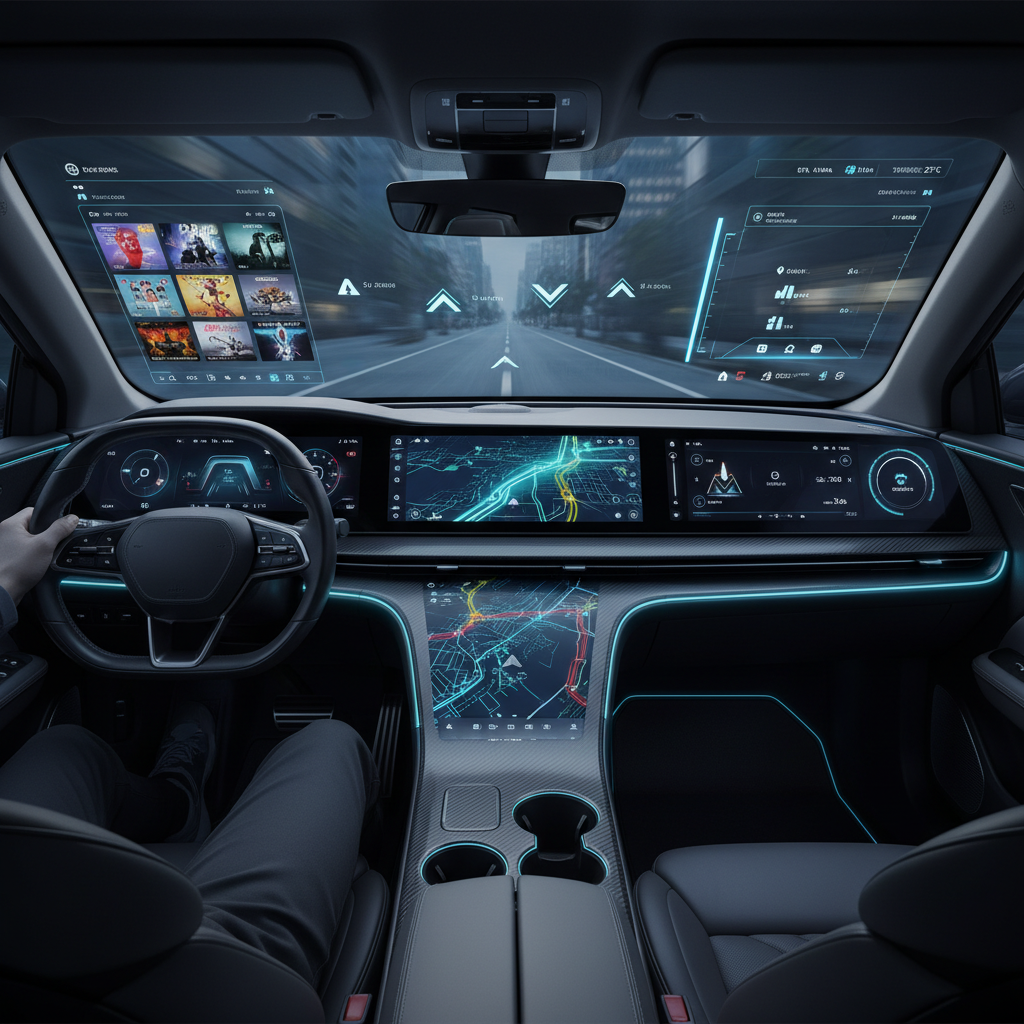
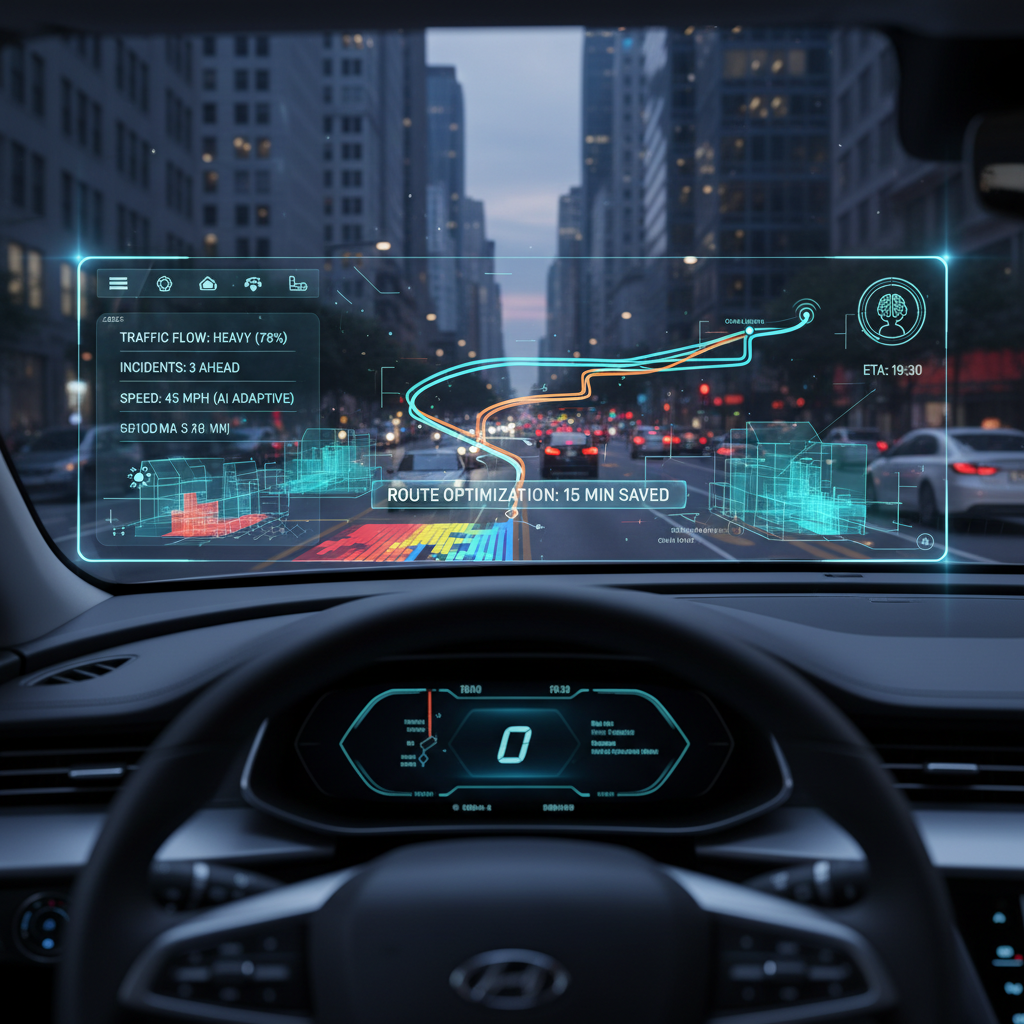
The windshield of your car could become a dynamic display, overlaying navigation directions directly onto the road ahead. AR navigation could highlight your lane, point out specific buildings for turns, and even identify available parking spaces as you approach your destination. This visual clarity reduces cognitive load, making navigation more intuitive and less distracting, especially in complex urban environments.
Emotion-Aware Routing
While still in its early stages, research into emotion-aware AI could lead to navigation systems that adapt to your stress levels. Through biometric data from wearables or subtle voice analysis, if the AI detects you’re feeling particularly stressed, it might suggest a slightly longer but less congested and more scenic route, prioritizing a calmer journey over the absolute fastest one. This moves beyond mere efficiency to truly enhancing well-being.
The future of AI navigation is about creating a truly adaptive and empathetic travel experience, turning the often-dreaded commute into a predictable, personalized, and even pleasant part of your day.
Choosing the Right AI Navigation App for Your Needs
With a growing number of AI navigation apps available, selecting the right one can feel overwhelming. Each app has its strengths and caters to slightly different user preferences. Understanding these nuances is key to optimizing your morning commute.
Consider Your Priorities
- Real-Time Traffic Accuracy: If beating traffic is your absolute top priority, look for apps with strong crowdsourcing capabilities and a robust data aggregation engine.
- User Interface and Ease of Use: Do you prefer a minimalistic design or one rich with features and visual aids? Test out a few to see which feels most intuitive.
- Voice Control and Hands-Free Features: For safety and convenience, evaluate the accuracy and responsiveness of voice commands.
- Integration with Other Services: Do you want an app that connects with your calendar, music streaming, or smart car system?
- Privacy Concerns: Understand how each app collects and uses your data. Some users prefer to limit data sharing where possible.
- Specific Features: Are parking assistance, fuel price comparisons, speed camera alerts, or public transport options important to you?
Popular AI Navigation Apps and Their Strengths
- Waze: Renowned for its unparalleled crowdsourced, real-time traffic data, incident reporting, and strong community features. Excellent for avoiding unexpected traffic and police traps.
- Google Maps: A versatile all-rounder, offering excellent traffic predictions, robust POI search, street view, and comprehensive public transport options. Integrates deeply with the broader Google ecosystem.
- Apple Maps: Continuously improving, known for its clean interface, integration with Apple CarPlay, and growing accuracy in traffic data, especially for iPhone users. Offers excellent Look Around feature in some cities.
- HERE WeGo: Strong for offline maps (downloadable for entire regions), public transport, and ride-sharing options, making it a good choice for international travel or areas with patchy connectivity.
Many drivers find benefit in having more than one app on their phone. You might use Waze for its real-time traffic alerts on congested days, and Google Maps for exploring new areas or planning multimodal journeys. Experimentation is encouraged to find the best fit for your unique commuting habits and preferences.
Comparison Tables
Table 1: Comparison of Popular AI Navigation Apps
| Feature | Waze | Google Maps | Apple Maps | HERE WeGo |
|---|---|---|---|---|
| Real-Time Traffic & Crowdsourcing | Excellent (community-driven) | Excellent (diverse data sources) | Good (improving) | Good (sensor & historical data) |
| Predictive Routing & ETA | Very Good | Excellent | Good | Good |
| Incident/Hazard Reporting | Extensive (user-reported) | Good (user & official sources) | Limited (official sources) | Limited (official sources) |
| POI Search & Discovery | Good | Excellent (integrates Google Search) | Very Good (integrates Yelp, etc.) | Good |
| Public Transport Integration | Limited | Excellent | Very Good | Excellent |
| Offline Maps | Limited (downloaded areas) | Very Good (downloadable areas) | Limited (cached routes) | Excellent (full region downloads) |
| Fuel Price/Parking Info | Good (user-reported fuel) | Very Good (parking availability) | Limited (parking integrations) | Good (parking info) |
| Voice Control Integration | Very Good | Excellent (Google Assistant) | Excellent (Siri) | Good |
| User Interface | Playful, icon-heavy | Clean, functional | Sleek, modern | Clean, focused on utility |
Table 2: Potential Savings with AI Navigation vs. Traditional Methods (Illustrative Estimates)
These figures are illustrative and can vary greatly based on individual commute distance, traffic conditions, fuel prices, and specific AI usage patterns. They represent potential averages for a daily round trip commute over a year.
| Category | Traditional GPS/No Navigation (Reactive) | AI Navigation (Proactive/Predictive) | Potential Annual Savings/Benefit |
|---|---|---|---|
| Average Daily Time Saved (minutes) | 0-5 | 10-20 | 50-100 hours per year |
| Fuel Efficiency Improvement (%) | 0% (stop-and-go driving) | 5-15% (smoother routes, less idling) | $100-$500+ (based on fuel price & mileage) |
| Vehicle Wear & Tear Reduction | Higher (frequent braking, idling) | Lower (smoother driving, less strain) | Minor savings on maintenance (e.g., brakes, transmission) |
| Stress Levels | High (unpredictable delays) | Moderate (more predictable journey) | Significant improvement in well-being |
| Punctuality Rate | 70-80% | 90-95% | Increased reliability for appointments |
| Accurate ETA | +/- 15-30 minutes | +/- 5-10 minutes | Better time management |
Practical Examples: Real-World Use Cases and Scenarios
Understanding the features of AI navigation is one thing; seeing them in action illustrates their true power. Here are a few real-world scenarios where AI navigation strategies can make a tangible difference in your morning commute:
Scenario 1: The Unexpected Highway Closure
The Problem: You’re 15 minutes into your commute on the main highway, and suddenly, traffic grinds to a halt. A major accident has closed several lanes ahead, and conventional radio alerts are just starting to broadcast the news, often too late to take an effective detour.
AI Solution: Your AI navigation app (like Waze or Google Maps) receives immediate crowdsourced data or sensor alerts about the lane closure. Within seconds, it processes this information, predicts the massive backlog that will form, and proactively suggests an entirely new route through side streets or an alternative highway. It might even calculate that the alternative route, despite being longer in distance, will save you 25 minutes compared to staying on the congested highway. You get the alert and reroute before most other drivers are even aware of the scale of the problem, arriving at work on time and significantly less stressed.
Scenario 2: Navigating Recurring Bottlenecks
The Problem: Every Tuesday morning, a specific intersection near your office becomes a choke point due to a combination of school drop-offs and increased delivery traffic. You know it’s coming, but manually finding an alternative usually means adding extra time to your drive or getting lost on unfamiliar roads.
AI Solution: Your AI navigation system has learned these historical patterns. Even without a specific incident, it knows that on Tuesday mornings between 8:00 AM and 8:30 AM, that intersection is a guaranteed slowdown. Long before you leave, or as you start your journey, it suggests a pre-emptive alternative route that cleverly bypasses this bottleneck, guiding you through a series of less-trafficked roads you might not even know exist. It leverages its predictive capabilities to optimize your route before the problem even fully manifests.
Scenario 3: The Multimodal Commuter
The Problem: You live in the suburbs and often drive to a park-and-ride station to catch a train into the city. On days with heavy traffic, the drive to the station can be longer than the train ride itself, and you often miss your preferred train, leading to delays.
AI Solution: An advanced AI navigation app (like Google Maps or HERE WeGo) integrates real-time traffic data with public transport schedules. It calculates that due to an accident on the road to the park-and-ride, you won’t make your usual 7:30 AM train. Instead, it instantly suggests leaving 10 minutes earlier, taking a slightly different route to a different, less-congested park-and-ride station, and catching the 7:40 AM train, ensuring you still arrive at your office meeting on time. It can even tell you the real-time availability of parking spots at various stations, minimizing frustration upon arrival.
Scenario 4: Saving on Fuel and Finding Amenities
The Problem: Your fuel tank is low, and you need to fill up during your commute. You also realize you forgot your lunch and need to grab a quick coffee.
AI Solution: While navigating, you simply use voice command, “Hey Google, find the cheapest gas station on my route.” The AI instantly overlays options, showing current prices. Then you might say, “Find a coffee shop with a drive-thru near my next turn.” The AI reroutes you efficiently, adding minimal time to your journey while ensuring you get your needs met. This integrated service saves time and money, transforming mundane tasks into seamless parts of your journey.
These examples highlight how AI navigation isn’t just about getting from A to B; it’s about making the journey smarter, less stressful, and more efficient by anticipating challenges and offering intelligent solutions in real-time.
Frequently Asked Questions
Q: How do AI navigation apps get their real-time traffic data?
A: AI navigation apps gather real-time traffic data from a diverse array of sources. The most significant input often comes from crowdsourcing, where millions of users with the app running on their phones anonymously contribute data on their speed and location. This creates a highly accurate picture of current traffic flow. Additionally, apps integrate data from government traffic sensors, road cameras, historical traffic patterns, public transportation feeds, and even social media for incident reports. Machine learning algorithms then process this vast amount of information to provide highly accurate and predictive traffic conditions.
Q: Is AI navigation always accurate, or can it make mistakes?
A: While AI navigation is remarkably accurate and constantly improving, it is not infallible. Its accuracy relies heavily on the quality and volume of data it receives. In areas with sparse user data or during highly unusual events (like sudden, widespread power outages or unexpected large-scale demonstrations), its predictions might be less precise. Additionally, construction that isn’t reported or very new road changes can sometimes confuse the system. However, the continuous learning nature of AI means it quickly adapts and improves over time, generally offering a much more accurate picture than traditional methods.
Q: Do AI navigation apps drain my phone battery quickly?
A: Yes, running AI navigation apps can be battery intensive. They constantly use GPS, mobile data, and keep the screen active, all of which consume significant power. For regular commuting, it’s highly recommended to keep your phone plugged into a car charger or power bank, especially for longer journeys. Newer phones and more optimized app versions are generally more energy-efficient, but continuous use without external power will deplete your battery faster than normal.
Q: What about data privacy when using AI navigation?
A: Data privacy is a significant concern for many users. AI navigation apps collect location data, speed, and sometimes even driving habits. Most reputable apps anonymize and aggregate this data, meaning your individual movements are not directly linked to your identity for public use or sharing. However, it’s crucial to review the privacy policy of any app you use to understand what data is collected, how it’s used, and whether it’s shared with third parties. Many apps offer privacy settings that allow you to control some aspects of data sharing.
Q: Can AI navigation help me save money on fuel?
A: Absolutely. By guiding you on the most efficient routes that avoid stop-and-go traffic, AI navigation reduces idling time and promotes smoother driving, which directly translates to better fuel economy. Less time stuck in traffic means less fuel wasted. Furthermore, some apps provide features that highlight gas stations with the cheapest fuel prices along your route, allowing you to make informed decisions that save money at the pump over time.
Q: Is it safe to use AI navigation while driving?
A: Safety is paramount. While AI navigation aims to reduce stress, interacting with a phone screen while driving can be distracting. It is highly recommended to set your destination and review the route before starting your journey. Utilize voice commands for hands-free operation as much as possible, and ensure your phone is securely mounted in a location that doesn’t obstruct your view. Many modern cars offer integration with Apple CarPlay or Android Auto, which project the navigation interface onto your car’s built-in display, making it safer and easier to use.
Q: How does AI navigation handle road closures or construction?
A: AI navigation apps are particularly adept at handling road closures and construction. They receive updates from various sources, including official government data feeds, crowdsourced reports from other drivers, and real-time sensor data. When a closure or significant construction is detected, the AI quickly recalculates your route, providing alternative directions to bypass the affected area. For planned construction, updates are often pre-loaded into the system, allowing for proactive routing.
Q: Can AI navigation learn my personal preferences or driving style?
A: Yes, advanced AI navigation systems can indeed learn over time. They observe your preferred routes, even if they aren’t the absolute fastest, or if you consistently avoid tolls or specific types of roads. Some systems can even adapt to your typical driving speed, providing more realistic ETAs. This personalization improves the more you use the app, tailoring the navigation experience to your individual habits and needs, making the recommendations even more relevant.
Q: What is the difference between AI navigation and traditional GPS?
A: Traditional GPS primarily relies on static map data and simply finds the shortest or fastest route based on posted speed limits. It has limited or no real-time traffic information and cannot predict future congestion. AI navigation, on the other hand, integrates vast amounts of real-time data from multiple sources (crowdsourcing, sensors, historical patterns, weather) with machine learning. This allows it to dynamically adjust routes, predict future traffic, and proactively guide you away from potential delays, offering a far more intelligent and adaptable navigation experience.
Q: Do I need internet access for AI navigation to work?
A: For full functionality, including real-time traffic updates, incident reporting, and dynamic rerouting, an internet connection (mobile data or Wi-Fi) is essential. Without it, the AI cannot receive the crucial live data that makes it so effective. However, many apps allow you to download maps for offline use. In offline mode, the app can still provide turn-by-turn directions based on the downloaded maps, but it will not have access to real-time traffic information or be able to offer dynamic rerouting based on current conditions. Therefore, while basic navigation might work offline, the “AI” aspect of beating traffic requires connectivity.
Key Takeaways
- AI Navigation is Transformative: It moves beyond static maps and basic GPS to provide dynamic, intelligent routing based on real-time and predictive data.
- Data is King: AI systems leverage crowdsourcing, sensor networks, historical patterns, and public data feeds to build a comprehensive picture of traffic.
- Predictive Analytics is Key: AI doesn’t just react; it anticipates future traffic conditions, enabling proactive rerouting to avoid bottlenecks before they form.
- Feature-Rich Apps Enhance Commutes: Modern apps offer hyper-accurate traffic, incident reporting, lane guidance, voice control, parking assistance, and fuel price comparisons.
- Integration with Smart Cities: The full potential of AI navigation is realized when it interacts with smart city infrastructure, connected vehicles, and multimodal transportation systems.
- The Future is Hyper-Personalized: Expect proactive commute management, multimodal integration, augmented reality, and potentially even emotion-aware routing.
- Choose Wisely: Select an AI navigation app that aligns with your specific priorities for traffic accuracy, user interface, features, and privacy.
- Significant Benefits: Utilizing AI navigation can lead to substantial savings in time, fuel costs, and greatly reduce commute-related stress, improving overall well-being.
Conclusion
The daily commute, once a source of endless frustration and unpredictability, is being fundamentally reshaped by the power of Artificial Intelligence. No longer are we passive participants, resigned to the whims of traffic jams and unexpected delays. With advanced AI navigation strategies, we gain an active, intelligent partner in our journey – one that predicts, optimizes, and guides us with an unprecedented level of foresight and accuracy.
By understanding how these sophisticated systems work, from their intricate data aggregation methods to their powerful predictive analytics, you are empowered to make informed choices that dramatically enhance your morning commute. Whether it’s the real-time prowess of crowdsourced alerts, the proactive rerouting that avoids nascent bottlenecks, or the seamless integration with a broader smart city ecosystem, AI is proving to be an indispensable tool for modern mobility. Embracing these technologies means reclaiming precious time, saving valuable resources, and significantly reducing the daily stress associated with navigating urban landscapes.
As AI continues to evolve, promising even more personalized and integrated experiences, the future of commuting looks brighter, smoother, and more efficient than ever before. It’s time to master your morning, take control of your journey, and let AI navigate you towards a calmer, more productive start to your day.

































































Leave a Reply