

In our hyper-connected world, digital distractions are not just an annoyance; they are a pervasive threat to our productivity, creativity, and overall well-being. From the incessant ping of notifications to the infinite scroll of social media feeds and the siren call of streaming services, our attention is constantly fragmented. This digital deluge has led to a significant decline in our ability to engage in deep work, a state of focused concentration without distraction that pushes our cognitive capabilities to their limit. The consequences are far-reaching, affecting everything from project deadlines and academic performance to mental health and personal development. We find ourselves in a perpetual state of “attention residue,” where the mental remnants of a previous task or distraction linger, making it harder to fully immerse ourselves in the next. The mere presence of a smartphone within sight can reduce cognitive performance, even if it is turned off. This phenomenon underscores the profound impact of our digital environment on our ability to concentrate.
For decades, individuals have sought manual solutions to combat this challenge, employing techniques like the Pomodoro Technique, creating physical distraction-free zones, or simply willpower. While these methods offer some relief, they often fall short in the face of increasingly sophisticated digital platforms designed to capture and retain our attention. The human brain, after all, is hardwired to seek novelty and reward, making it particularly vulnerable to the dopamine hits offered by likes, shares, and new content. This is where Artificial Intelligence (AI) emerges as a powerful ally. AI is uniquely positioned to understand our digital habits, predict potential distractions, and implement intelligent interventions that go beyond simple blocking. By leveraging machine learning, natural language processing, and behavioral analytics, AI-powered applications can provide personalized, adaptive, and highly effective strategies to reclaim our focus. These aren’t just mere blockers; they are intelligent companions that learn from our behavior, adapt to our needs, and create an environment conducive to sustained concentration. They represent a fundamental shift in how we approach productivity, moving from reactive self-discipline to proactive, technologically augmented focus management.
The Pervasive Problem of Digital Distractions
Before diving into the solutions, it’s crucial to fully grasp the scope of the problem. Digital distractions manifest in numerous forms, each chipping away at our precious attention span. At its core, the issue stems from the design of modern digital platforms. Social media companies, news outlets, and entertainment providers employ sophisticated algorithms and user interface (UI) designs that are specifically engineered to maximize engagement. This often means creating an experience that is addictive, characterized by endless feeds, autoplay features, and personalized recommendations that keep users hooked for as long as possible. The business models of many tech giants are predicated on capturing and monetizing user attention, leading to an arms race for our cognitive resources.
Consider the typical workday. An email notification pings, interrupting a complex task. A quick check turns into scrolling through headlines, then a brief peek at a social media feed, and suddenly, fifteen minutes have vanished. This is not an isolated incident but a recurring cycle that can repeat dozens of times throughout the day. Each interruption, no matter how brief, incurs a “switching cost.” Research suggests it can take an average of 23 minutes and 15 seconds to return to the original task after an interruption. These costs accumulate, leading to reduced overall productivity, increased errors, and heightened stress levels. The constant context-switching exhausts cognitive reserves, making it harder to engage in deep analytical thinking or creative problem-solving. Furthermore, the fear of missing out (FOMO) and the psychological need for constant validation contribute significantly to our susceptibility to digital interruptions. We are conditioned to respond immediately, creating a feedback loop that reinforces distractibility.
Beyond external pings, internal distractions are also amplified by our digital habits. The easy access to information and entertainment means that whenever we hit a mental block or encounter a challenging part of a task, our brains are quick to suggest a digital escape. This creates a vicious cycle where discomfort with a task leads to distraction, which in turn makes it harder to return to the task. The long-term consequences are alarming: decreased attention spans, reduced critical thinking abilities, and a diminished capacity for sustained effort. For organizations, this translates into millions of dollars lost in productivity, delayed projects, and a workforce struggling to maintain focus in an increasingly complex work environment. Therefore, the need for effective, intelligent solutions to combat this pervasive problem has never been more urgent. AI offers a glimmer of hope, providing tools that can help us regain control over our digital lives and cultivate environments conducive to deep, meaningful work.
How AI Intervenes: A New Era of Focus Management
Artificial Intelligence brings a paradigm shift to the fight against digital distractions. Unlike traditional methods that rely solely on willpower or rigid blocking schedules, AI-powered applications offer dynamic, personalized, and adaptive solutions. The core strength of AI lies in its ability to process vast amounts of data, recognize patterns, and make intelligent decisions without explicit programming for every scenario. This capability allows AI tools to go beyond simple “on-off” switches and instead create a nuanced, responsive environment tailored to individual needs and current tasks.
One of the primary ways AI intervenes is through predictive analytics. By analyzing your past behavior—when you get distracted, which apps you tend to open during work hours, or how long you typically spend on certain websites—AI can anticipate potential distractions. For instance, if the AI observes that you frequently check social media between 2 PM and 3 PM, it can proactively suggest a blocking session or offer a gentle nudge before you even open the distracting app. This predictive capability transforms distraction management from a reactive measure into a proactive strategy, preventing interruptions before they occur. It moves beyond simply blocking, towards a more sophisticated understanding of personal productivity rhythms and common pitfalls.
Another powerful AI capability is contextual awareness. Modern AI focus apps can understand the context of your work. Are you in a meeting? Are you writing an important report? Are you in a “deep work” session? By integrating with your calendar, project management tools, and even using sensors to detect your activity (e.g., typing speed, active applications), AI can dynamically adjust its intervention strategy. During a critical writing task, it might implement a stricter blocking policy, while during a break, it might relax restrictions. Some advanced AI systems can even use natural language processing (NLP) to analyze the content you are working on, further refining its understanding of your current needs. For example, if you are working on a coding project, the AI might allow access to developer documentation sites but block all social media and news portals. This level of granular control and adaptive behavior is impossible with non-AI solutions, making the focus management experience far more seamless and less disruptive to legitimate activities.
Furthermore, AI facilitates personalized learning and adaptation. Every individual’s distraction patterns and productivity peaks are unique. AI-powered apps learn from your interactions, feedback, and success rates over time. If a particular blocking schedule proves ineffective, the AI can suggest modifications. If a certain type of notification consistently pulls you away, the AI can learn to filter or postpone those notifications more aggressively. This continuous learning process means the AI system becomes more effective and tailored to your specific habits the longer you use it. It’s like having a personal productivity coach that constantly observes, analyzes, and optimizes your digital environment for maximum focus. This iterative improvement is crucial, as our digital habits are dynamic, and a static solution will eventually become obsolete. AI offers a living, evolving solution to a living, evolving problem, empowering users to truly reclaim their attention and cultivate environments optimized for peak performance.
Key Categories of AI-Powered Focus Applications
The landscape of AI applications designed to minimize distractions and boost workflow is diverse, each category addressing specific facets of the problem. Understanding these categories helps in choosing the right tools for your individual needs.
AI-Powered Website and Application Blockers
These are perhaps the most direct form of distraction management. Traditional blockers often rely on static blacklists or whitelists, but AI takes this a step further. AI-powered blockers can analyze your browsing and app usage patterns to identify your most common time sinks. They can learn to differentiate between productive use of an application (e.g., using social media for marketing research) and unproductive procrastination. Some advanced versions can even use behavioral cues, like how frequently you switch tabs or how long you dwell on a page, to intelligently trigger blocking sessions or warnings. They can also offer “focus modes” that dynamically adjust access based on your calendar or active tasks. For example, if your calendar indicates a meeting, the AI might automatically block communication apps not relevant to the meeting. Popular examples include features found in some versions of Freedom, Cold Turkey, or browser extensions with AI features that learn your habits over time.
Smart Notification Management Systems
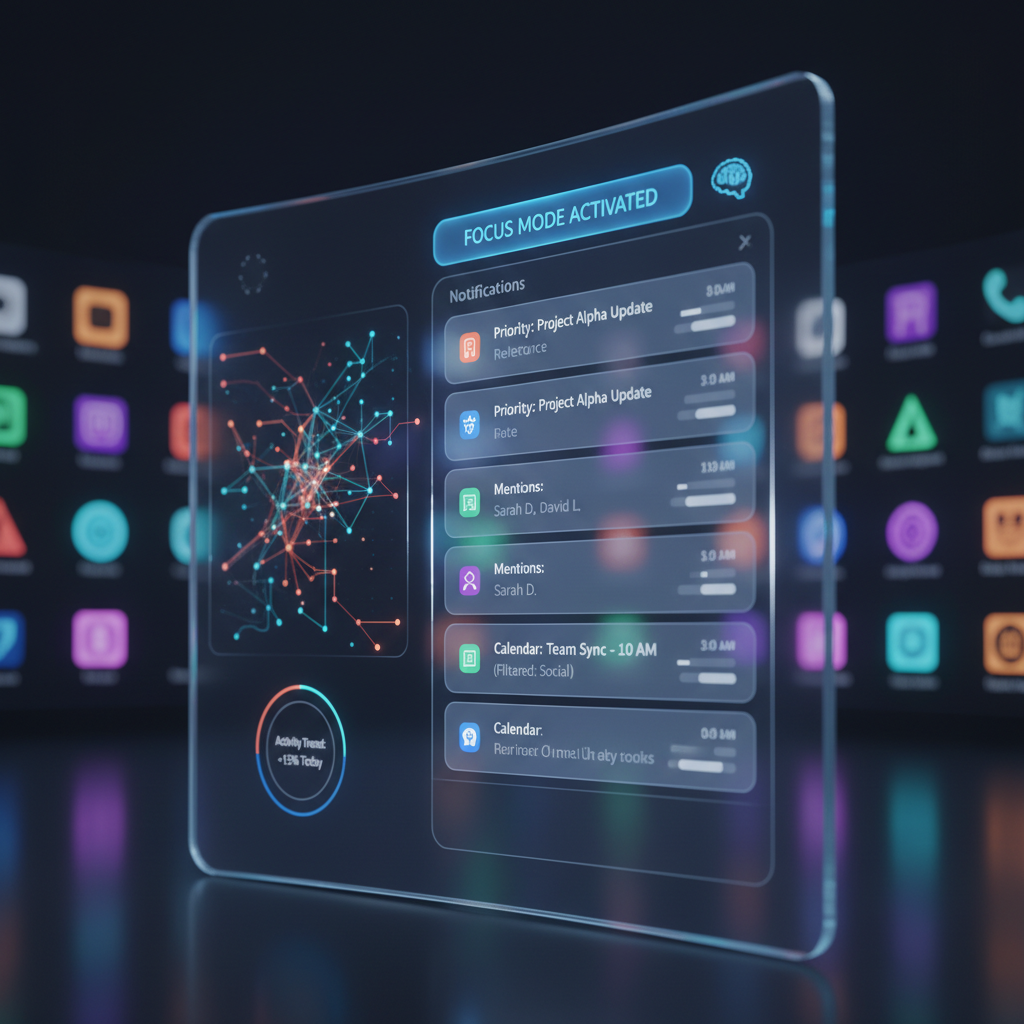
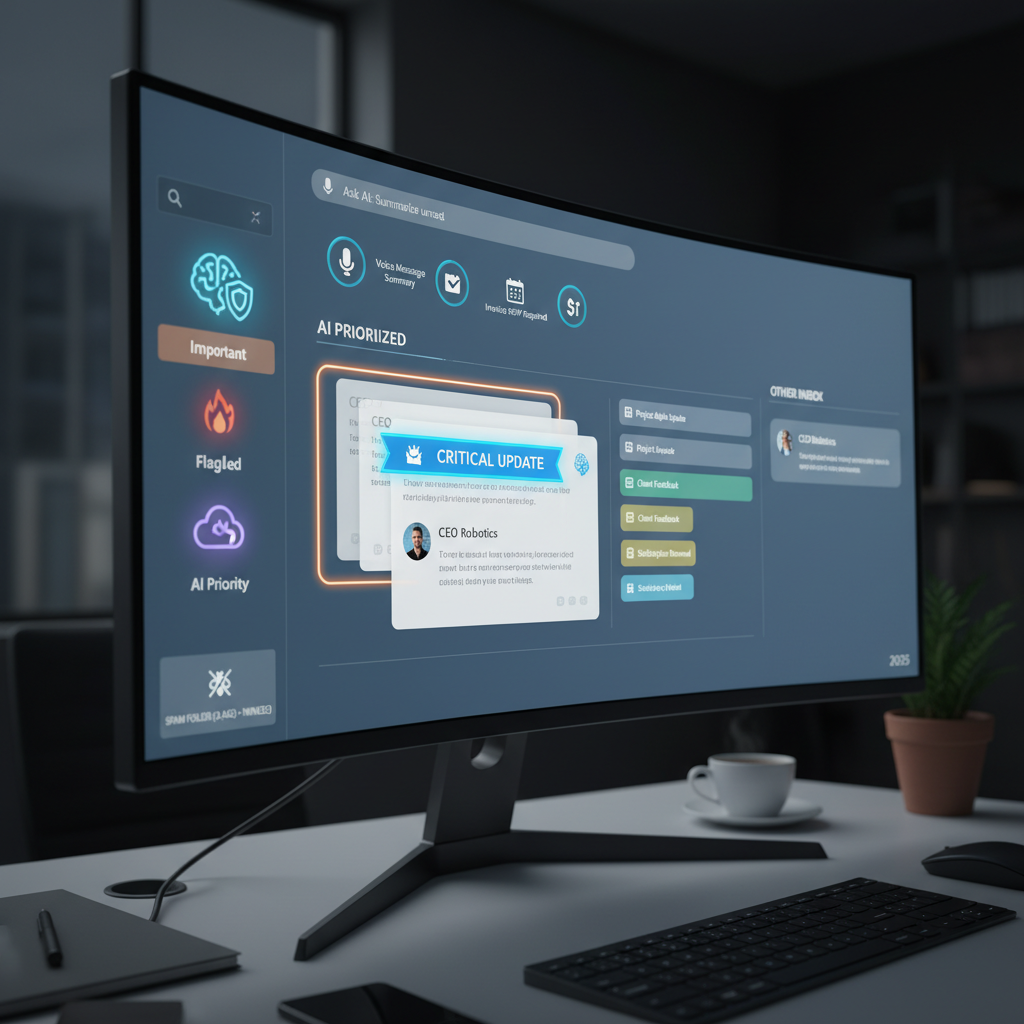
Notifications are a primary culprit of fragmented attention. AI-driven notification managers don’t just silence everything; they intelligently filter, prioritize, and bundle notifications based on context and importance. Using natural language processing (NLP) and machine learning, these systems can discern the urgency of an email, a message, or an alert. For instance, an email from your boss marked “Urgent” during a scheduled work block might be allowed, while a social media notification is silently queued for a designated break. They can also learn your preferences—who is important, which apps are critical, and what times are sacred for deep work. Some AI systems can even summarize notifications, allowing you to quickly grasp the gist without fully engaging with the original message. This prevents the constant cognitive load of deciding whether to respond to each ping, instead presenting you with a curated, less disruptive flow of information.
AI Personal Assistants for Task Prioritization and Management
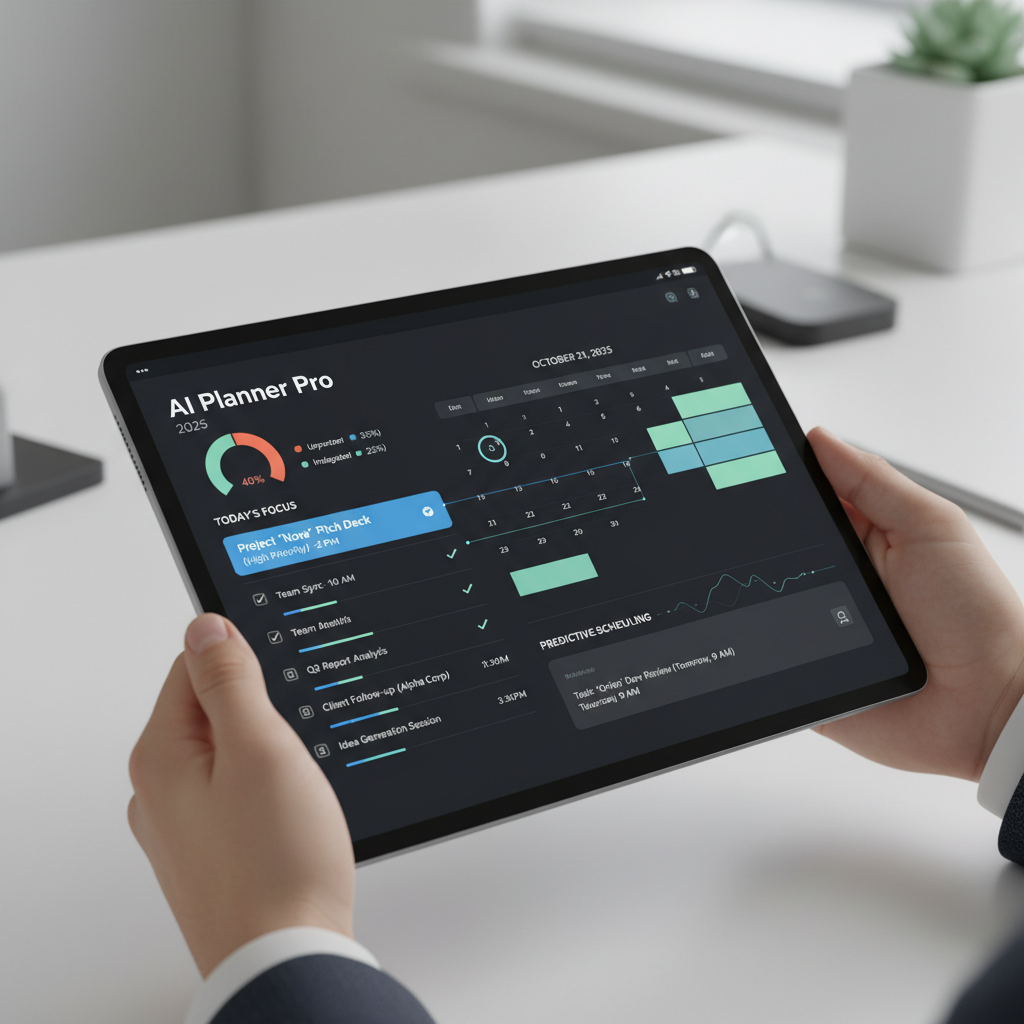
Beyond blocking distractions, AI can actively help you organize your work to prevent overwhelm, a common precursor to distraction. AI personal assistants analyze your tasks, deadlines, and working patterns to intelligently prioritize your to-do list. They can suggest optimal times to tackle certain tasks based on your energy levels (learned over time), integrate with your calendar to allocate focus blocks, and even break down larger projects into manageable steps. Some assistants use algorithms to identify dependencies between tasks and recommend the most efficient sequence. By reducing the mental burden of planning and decision-making, these AI tools free up cognitive resources for execution. Examples include features within advanced project management software or standalone AI scheduling apps that learn your personal productivity rhythms and automate aspects of your workday.
AI Tools for Focus Enhancement and Deep Work
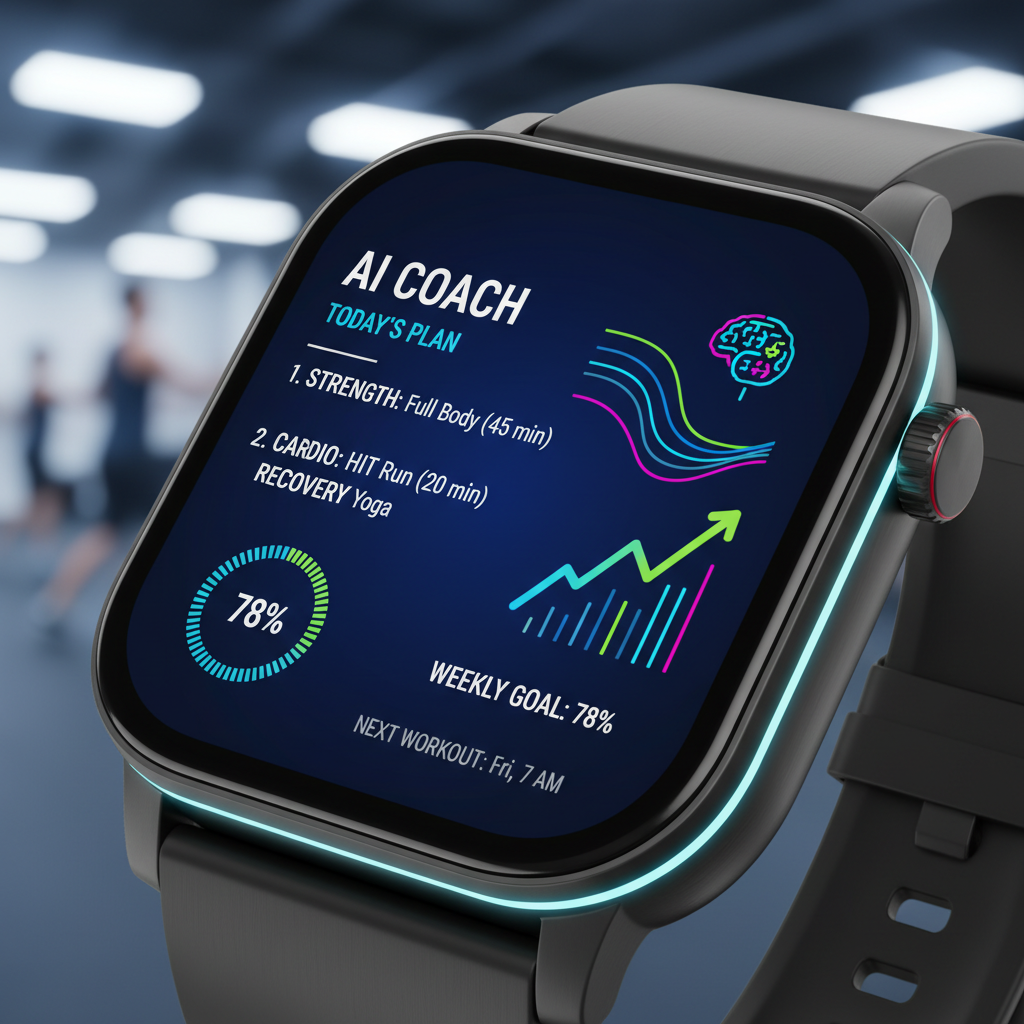
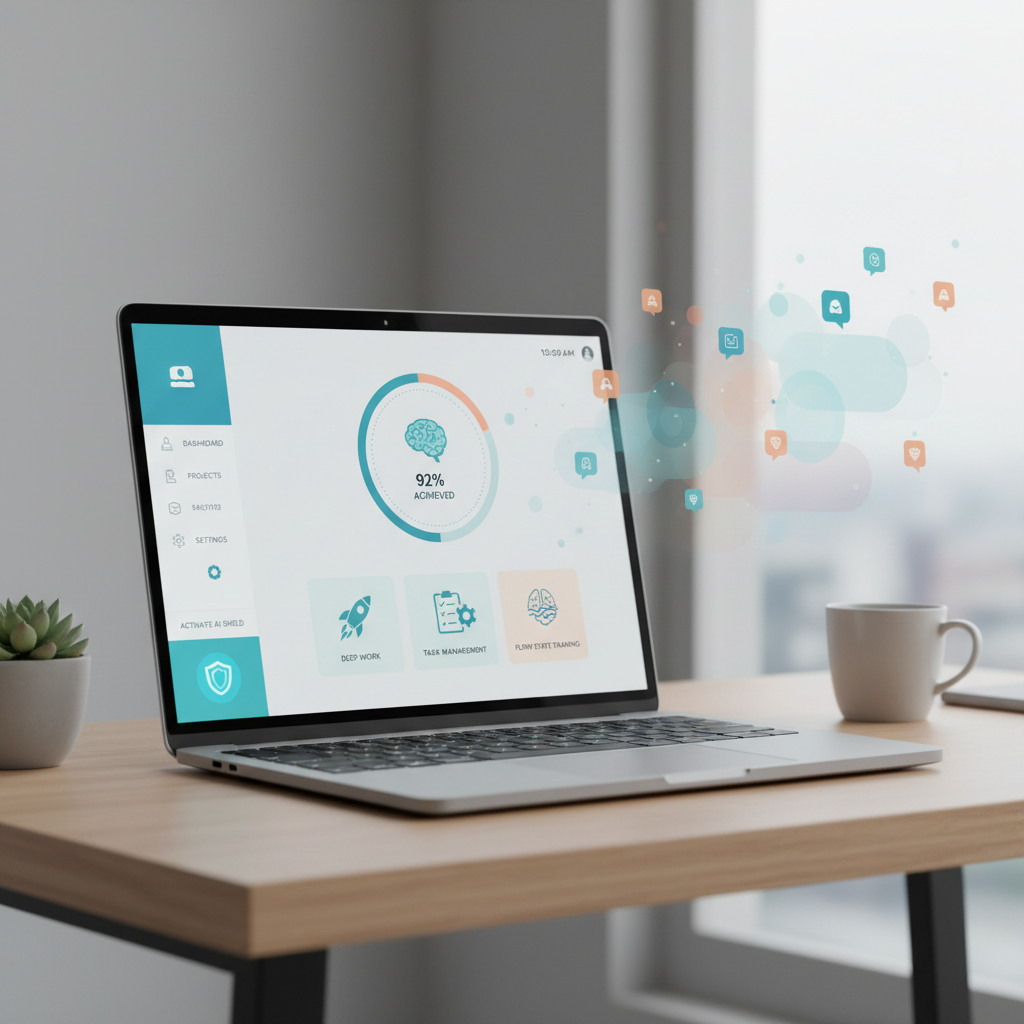
This category focuses on creating an optimal cognitive environment. These AI apps often leverage techniques beyond simple blocking. They might use adaptive noise cancellation based on ambient sounds, generate personalized focus music or soundscapes (e.g., brain.fm, Endel) that respond to your physiological state, or even guide you through micro-meditations when stress levels rise. Some advanced systems integrate with wearable tech to monitor biometrics like heart rate variability or brainwave patterns, using this data to provide real-time feedback or adjust interventions. The goal is to induce and sustain a state of deep concentration, mitigating both internal and external distractions by actively optimizing your mental and sensory environment. These tools are designed not just to remove distractions but to actively cultivate and prolong your ability to perform high-quality, focused work.
AI-Driven Time Tracking and Analytics
You can’t manage what you don’t measure. AI-powered time trackers go beyond simple logging; they offer intelligent insights into how you spend your time and where your biggest distraction sinks are. These apps can automatically categorize your activities (e.g., coding, meetings, research, social media) and provide detailed reports on your productivity patterns. Through machine learning, they can identify trends, such as specific times of day when you are most productive, or particular applications that consistently lead to decreased focus. This data-driven approach empowers you to make informed decisions about your work habits and adjust your strategies for distraction management. Some tools can even predict project completion times based on your historical data, providing more realistic expectations and helping you allocate your focus more effectively. By providing a clear, unbiased picture of your digital consumption, these AI analytics tools are indispensable for self-improvement and workflow optimization.
AI for Digital Decluttering and Information Curation
The sheer volume of digital information can be a major source of distraction and cognitive overload. AI excels at managing this deluge. Apps in this category use NLP and machine learning to filter, summarize, and prioritize information from various sources (emails, news feeds, documents). They can identify key themes, extract action items from lengthy emails, or curate relevant articles based on your interests and current projects, presenting you with only the most pertinent information. This reduces the time spent sifting through noise and minimizes the temptation to get lost in irrelevant content. By decluttering your digital workspace and presenting information in a streamlined, digestible format, these AI tools reduce the cognitive effort required to process information, thereby freeing up mental bandwidth for focused work. They transform information overload from a distraction into a manageable, even productive, resource.
Comparison of Popular AI-Enhanced Focus Applications
Choosing the right AI-powered focus tool depends heavily on your specific needs, operating system, and the nature of your distractions. Below is a comparison of some prominent AI-enhanced applications, highlighting their key features and how they integrate AI to boost productivity.
| Application/Category | Primary AI-Enhanced Feature | Key Benefit | Target User/Use Case |
|---|---|---|---|
| Freedom (AI features) | Personalized session scheduling, habit tracking insights | Adaptive blocking schedules based on past productivity; learning when you need stricter blocks. | Individuals and teams needing robust, customizable blocking across devices. |
| Cold Turkey Blocker (Advanced features) | Scheduled blocks, smart triggers (e.g., blocking after N minutes on distracting site) | Prevents ‘just a quick check’ from turning into hours; enforces deep work periods. | Windows/macOS users who need aggressive, unbreakable blocking. |
| Forest (Premium features) | Habit reinforcement learning, virtual tree growth tied to focus. | Gamified motivation for sustained focus; visual feedback of productive time. | Students and individuals seeking a gentle, rewarding approach to focus. |
| brain.fm | AI-generated functional music for focus, relaxation, sleep (based on neuroscience). | Optimizes brainwave states to enhance concentration without lyrical distractions. | Anyone struggling with environmental noise or needing a cognitive boost for deep work. |
| Reclaim.ai | Intelligent calendar scheduling, task prioritization based on habits and priorities. | Automates time blocking for tasks, habits, and meetings to optimize your schedule for focus. | Professionals and teams needing smart calendar management and time optimization. |
| Sunsama (Workflow features) | Daily planning, AI-driven task estimation, progress tracking. | Helps set realistic daily goals and provides accountability for focused work. | Individuals and small teams wanting structured daily planning and progress insights. |
| Twos (Smart Notes/Reminders) | AI-powered summarization, intelligent reminders, contextual search for notes. | Reduces cognitive load of organizing thoughts, quickly retrieves relevant information. | Anyone who takes frequent notes and needs intelligent organization/retrieval. |
Advanced AI Features in Focus Management
As AI technology continues to evolve, so do the capabilities of focus-enhancing applications. Beyond basic blocking, modern AI tools are integrating more sophisticated features that leverage deep learning and behavioral science to create truly personalized and adaptive environments for work.
One of the most exciting advancements is Proactive Distraction Prediction and Intervention. Instead of just reacting to you opening a distracting app, advanced AI can now predict when you are *about to* get distracted. This can be based on a combination of factors: your typical work patterns, changes in your typing speed or mouse movements (indicating a potential shift in focus), or even your schedule for the day. For example, if the AI notices you’ve been working on a mentally demanding task for an extended period and your usual break time is approaching, it might proactively suggest a short, guided mindfulness exercise or a planned break, rather than waiting for you to self-soothe with social media. This shifts the paradigm from reactive blocking to proactive focus maintenance, helping users build healthier digital habits before they even realize a distraction is looming.
Another powerful feature is Contextual Sensitivity and Dynamic Adaptation. Traditional blockers are often rigid; once a site is blocked, it’s blocked. AI-powered tools are far more nuanced. They can understand the *context* of your current work. For instance, if you are a content marketer, access to Twitter might be essential for a specific period for research or scheduling posts, but a massive distraction during deep writing. An AI system can intelligently allow access only when your calendar or project management tool indicates a relevant marketing task is active. It learns to differentiate between legitimate and distracting use of the same application. Some AI tools can even leverage location data – automatically switching to a “work mode” when you arrive at your office and a “personal mode” when you get home, adjusting blocking rules and notification filters accordingly. This dynamic adaptability ensures that the AI assistant is a helpful companion, not a frustrating barrier, allowing for flexibility while maintaining strict focus when needed.
Biofeedback Integration and Personalized Soundscapes represent another frontier. Some cutting-edge AI apps are starting to integrate with wearable devices that monitor physiological data like heart rate, skin conductance, or even basic brainwave patterns (via consumer EEG headbands). This data provides real-time insights into your stress levels, cognitive load, and state of focus. The AI can then dynamically adjust interventions: if your stress levels spike, it might suggest a short breathing exercise or change the ambient soundscape to a more calming frequency. If it detects a deep flow state, it might subtly increase the blocking intensity or mute all non-critical notifications to preserve that precious state. Platforms like brain.fm already use AI to generate music optimized for specific cognitive states, and the integration of personal biofeedback data promises an even more tailored and effective experience.
Finally, Intelligent Communication Filtering and Summarization is becoming increasingly sophisticated. AI can now do more than just silence notifications. Using advanced Natural Language Processing (NLP), these tools can analyze the content of emails and messages, summarize the key points, extract action items, and even draft polite, automated replies to non-urgent queries. This drastically reduces the time spent sifting through communication and frees up mental energy. Imagine an AI that scans your inbox, flags emails requiring immediate action, provides a one-sentence summary of the rest, and suggests a “Later” folder for non-critical messages. This level of intelligent information curation transforms communication from a constant source of interruption into an efficient, streamlined process, allowing you to engage with information on your terms, without losing precious focus.
Strategic Implementation of AI for Maximized Workflow
Integrating AI apps into your workflow for maximum benefit requires a strategic approach. It’s not enough to simply download an app; you need to understand how to leverage its intelligence to complement your existing habits and overcome your specific challenges. A piecemeal approach might offer temporary relief, but a holistic strategy ensures sustained improvement in focus and productivity.
1. Self-Assessment and Identification of Distraction Triggers
Before deploying any AI tool, the first crucial step is a thorough self-assessment. Understand your personal distraction landscape. What are your biggest time sinks? Is it social media, news sites, specific apps, or constant communication? When do these distractions typically occur? Are you more susceptible in the mornings, afternoons, or during specific types of tasks? Pay attention to internal triggers as well—do you reach for your phone when you hit a mental block, feel bored, or experience anxiety about a task? Tools like AI-driven time trackers (e.g., RescueTime with AI analytics) can be invaluable here, providing an objective overview of your digital habits without judgment. This data-driven insight forms the foundation for choosing and configuring the most effective AI solutions. Knowing *what* distracts you and *when* it happens allows for targeted, rather than generalized, intervention.
2. Phased Implementation and Customization
Once you’ve identified your patterns, begin with a phased implementation. Don’t try to block everything at once, as this can lead to frustration and a tendency to bypass the system entirely. Start with your most egregious distractions. For example, if social media is your Achilles’ heel, begin with an AI-powered blocker (like Freedom or Cold Turkey) specifically targeting those sites during your core work hours. Allow the AI to learn your habits during this initial phase. Most AI apps come with extensive customization options. Leverage these to fine-tune the settings: create specific ‘focus modes’ for different types of work, set varying levels of blocking intensity, or adjust notification filtering rules. For instance, you might have a “Deep Work” mode that blocks everything except essential tools, a “Meeting” mode that mutes all notifications, and a “Creative Flow” mode that allows specific inspiration sites but still blocks social media. This granular control, guided by AI’s learning, ensures that the tools support, rather than hinder, your unique workflow.
3. Leveraging AI for Proactive Schedule Optimization
Beyond simply blocking, integrate AI tools that proactively optimize your schedule. Apps like Reclaim.ai or Clockwise use AI to intelligently find focus time in your calendar, automatically schedule breaks, and even reschedule non-critical meetings to create longer blocks of uninterrupted work. Provide these AI schedulers with your priorities and preferences, and let them take the cognitive load out of time management. For example, tell Reclaim.ai that you need 2 hours of “writing time” three times a week, and it will automatically slot those into your calendar, protecting them from meeting invites. These tools learn your ideal working rhythms and adapt your schedule to maximize your most productive hours. They can also integrate with task managers, ensuring that your most important tasks get dedicated time on your calendar, rather than being squeezed in reactively.
4. Utilizing AI for Cognitive Enhancement and Environment Control
Don’t overlook AI tools designed to actively enhance your cognitive state. Applications like brain.fm or Endel use AI to generate personalized soundscapes proven to improve focus, relaxation, or sleep. Experiment with these during your focus blocks to create an optimal auditory environment, especially if you work in a noisy setting or struggle with internal mental chatter. Some advanced solutions can even adapt the soundscape based on your biometric data if integrated with wearables. The goal here is to use AI to not just remove external noise but to cultivate an internal state of calm and concentration. This proactive management of your cognitive environment, rather than just reacting to distractions, significantly amplifies your ability to engage in deep, high-quality work.
5. Regular Review, Feedback, and Iteration
AI’s power lies in its ability to learn and adapt. To fully benefit, you must engage in a continuous feedback loop. Regularly review the analytics provided by your AI focus apps. Are your blocking sessions effective? Are you still finding ways to get distracted? Provide explicit feedback to the AI where possible (e.g., marking a suggestion as helpful or unhelpful). Adjust your settings based on insights gained. Your digital habits are not static, and neither should your distraction management strategy be. As your workflow evolves, as new distractions emerge, or as you master certain habits, your AI tools should evolve with you. This iterative process of review, feedback, and adjustment ensures that your AI assistants remain highly effective and perfectly aligned with your goal of maximized workflow and sustained focus.
Practical Examples and Case Studies
To illustrate the tangible benefits of AI-powered distraction blockers, let’s explore a few real-world scenarios and how these tools can make a significant difference.
Case Study 1: The Freelance Writer’s Deep Work Revival
Scenario: Maria, a freelance content writer, struggled with maintaining focus. Her income depended on meeting strict deadlines, but she found herself constantly sidetracked by social media, news alerts, and the temptation to “just quickly check” her email. A 3-hour writing block often devolved into 1 hour of writing and 2 hours of digital wandering, leading to late nights and increased stress.
AI Solution: Maria implemented a combination of AI tools:
- She used Freedom’s AI-enhanced blocking, setting up recurring “deep work” sessions from 9 AM to 1 PM and 2 PM to 5 PM. The AI learned her typical distraction sites and apps (Twitter, Instagram, online news portals) and enforced strict blocking during these times. It also offered personalized insights, suggesting optimal blocking durations based on her past productivity logs.
- For ambient focus, she subscribed to brain.fm. The AI-generated focus music helped mask environmental noises and quiet her internal monologue, creating a consistent cognitive environment conducive to writing.
- She integrated Reclaim.ai with her calendar. Instead of manually blocking writing time, she told Reclaim her writing priorities. The AI then intelligently found 2-3 hour slots in her calendar, protecting them from meetings and suggesting optimal times based on her learned energy levels.
Outcome: Within a month, Maria reported a significant increase in her actual writing output. Her 3-hour blocks were now genuinely productive, often yielding 2.5 hours of focused work. She met deadlines consistently, reduced her working hours, and experienced less stress. The AI tools acted as an intelligent external prefrontal cortex, enforcing discipline without constant willpower exertion.
Case Study 2: The Project Manager’s Notification Nightmare
Scenario: David, a project manager, was overwhelmed by a constant barrage of notifications from Slack, Teams, email, and various project management tools. Every ping felt urgent, leading to constant context-switching. He struggled to dedicate uninterrupted time to strategic planning or reviewing complex project documents.
AI Solution: David focused on intelligent notification management:
- He deployed an advanced AI-powered notification manager (e.g., a custom solution or a feature within a larger productivity suite). This AI learned to distinguish between urgent messages (e.g., direct mentions from his boss, critical system alerts) and less urgent ones (e.g., team channel discussions, automated reports).
- The AI was configured to bundle non-urgent notifications and deliver them in batches every 90 minutes, or during designated “break” times. During his critical planning blocks, only “urgent” notifications from a whitelist of key contacts were allowed through, and even then, often with a summarized snippet first.
- For his strategic planning, he used an AI task prioritization tool that integrated with his project management software. This tool analyzed his deadlines and dependencies, suggesting the most critical tasks for his focus blocks and minimizing the mental overhead of deciding “what to work on next.”
Outcome: David experienced a dramatic reduction in context-switching. He could now dedicate substantial, uninterrupted blocks to high-level strategy and deep work. His response times to truly critical messages actually improved because he wasn’t sifting through constant noise. His team noticed he was more engaged during meetings and less distracted by his devices, leading to improved team cohesion and project velocity.
Case Study 3: The Student Battling Digital Procrastination
Scenario: Sarah, a university student, faced the common challenge of digital procrastination. With lectures online and research requiring extensive web use, the line between productive and distracting online activity blurred. YouTube, social media, and online gaming were her biggest productivity killers, especially during exam periods.
AI Solution: Sarah opted for a more gamified and integrated approach:
- She started using Forest (premium version), which uses AI-enhanced features to learn her typical study patterns. During her study sessions, the app would block distracting sites, and she would “plant a tree” that grew only if she stayed focused. The AI also provided insights into her most productive study times and suggested optimal focus durations.
- For research, she used a browser extension with AI-powered content filtering. This tool could analyze the content of web pages and automatically highlight key information or filter out irrelevant articles, helping her stay on task during research without getting lost in tangential links.
- She also used a simple AI smart assistant (like a calendar bot) that integrated with her university’s learning management system. This AI would automatically pull upcoming deadlines and major assignments, creating a prioritized study schedule that integrated with Forest’s focus blocks.
Outcome: Sarah’s study habits significantly improved. The gamification of Forest provided external motivation, and the AI’s insights helped her schedule her study sessions more effectively. She found she was completing assignments ahead of schedule and retaining information better due to more focused study blocks. Her screen time on distracting apps plummeted, and her academic performance saw a noticeable uplift.
These examples underscore that AI isn’t just about turning off distractions; it’s about intelligently shaping your digital environment to empower focus, whether you’re a professional battling email overload, a creative needing deep work, or a student striving for academic excellence. The adaptive, learning nature of AI tools makes them uniquely suited to address the complex and ever-evolving challenge of digital distractions.
Frequently Asked Questions
Q: What are AI apps for blocking digital distractions?
A: AI apps for blocking digital distractions are software tools that leverage Artificial Intelligence, machine learning, and sometimes natural language processing to intelligently manage your access to distracting websites, applications, and notifications. Unlike traditional blockers that rely on rigid, pre-set rules, AI-powered apps learn your unique digital habits, productivity patterns, and distraction triggers. They can then dynamically adapt their interventions, proactively suggest focus modes, filter communications, or even optimize your schedule to help you maintain concentration and maximize your workflow. They move beyond simple “on/off” switches to provide a more personalized, adaptive, and effective approach to focus management, often integrating with your calendar, tasks, and even biometric data for a holistic solution.
Q: How do AI apps differ from traditional website/app blockers?
A: The primary difference lies in their intelligence and adaptability. Traditional blockers typically operate on static blacklists (sites/apps to block) or whitelists (sites/apps to allow) and fixed schedules. They treat all users and situations the same. AI apps, however, use machine learning to analyze your behavior over time. They can understand *when* you get distracted, *which* specific content is distracting, and even *why* you might be tempted to switch tasks. This allows them to:
- Learn and Adapt: They get smarter over time, personalizing interventions based on your evolving habits.
- Contextual Awareness: They can consider your current task, calendar events, or even location to adjust blocking rules dynamically.
- Proactive Suggestions: They can predict potential distractions and suggest interventions before you even open a distracting app.
- Smarter Filtering: They can filter notifications based on content, sender, and urgency, rather than just silencing everything.
In essence, AI apps are dynamic, learning companions, while traditional blockers are static rule enforcers.
Q: Can AI apps truly improve my productivity, or are they just a crutch?
A: Yes, AI apps can significantly improve productivity by reducing cognitive load and helping you cultivate better digital habits. They act as an external intelligent system that complements your willpower. By automating the process of managing distractions, they free up mental energy that would otherwise be spent resisting temptations or deciding what to focus on. They are not merely a crutch but a powerful tool that:
- Creates an Optimal Environment: By removing digital noise, they create a space conducive to deep work.
- Builds Habits: Consistent use helps reinforce positive focus habits and break cycles of distraction.
- Provides Insights: AI analytics offer objective data on your productivity, allowing for informed self-improvement.
- Reduces Decision Fatigue: They automate many micro-decisions related to digital interaction, conserving your mental energy for core tasks.
Like any tool, their effectiveness depends on how strategically they are used and integrated into your workflow.
Q: What are the privacy concerns associated with using AI focus apps?
A: Privacy is a legitimate concern, as AI focus apps often need to monitor your digital activity (websites visited, apps used, notification data) to be effective. Key considerations include:
- Data Collection: What kind of data is collected (e.g., browsing history, app usage, keystrokes, content of messages)?
- Data Storage: Is the data stored locally on your device, or is it sent to cloud servers?
- Data Usage: How is the collected data used? Is it solely for improving your focus, or is it anonymized and used for broader research or even sold to third parties?
- Security Measures: What security protocols are in place to protect your data from breaches?
It is crucial to read the privacy policy of any AI app you consider. Look for apps that emphasize local data processing, transparent data usage, and robust security. Reputable companies prioritize user privacy and often offer clear opt-out options for data sharing.
Q: How do I choose the right AI focus app for my needs?
A: Choosing the right AI focus app involves several steps:
- Identify Your Main Distractions: Are they specific websites, social media, notifications, or a general lack of structure?
- Determine Your Operating System/Devices: Ensure the app is compatible with your computer (Windows, macOS), phone (iOS, Android), and browser.
- Evaluate AI Features Needed: Do you need basic blocking, intelligent scheduling, notification filtering, focus music, or analytical insights?
- Consider Customization: How much flexibility do you need in setting rules, schedules, and focus modes?
- Read Reviews and Testimonials: See what other users say about the app’s effectiveness, ease of use, and customer support.
- Check Privacy Policy: Understand what data is collected and how it’s used.
- Look for Free Trials: Many apps offer trials, allowing you to test their effectiveness before committing.
- Assess Pricing: Compare subscription models and features offered at different price points.
Prioritize apps that align with your specific distraction patterns and offer the most relevant AI-powered solutions.
Q: Are there free AI focus apps available, or are they all subscription-based?
A: While many advanced AI focus apps operate on a subscription model to fund their continuous development and sophisticated AI features, there are free options or freemium models available. Some browser extensions (like certain ad blockers with basic AI filtering) might offer limited AI capabilities for free. Additionally, some productivity suites might include AI-powered features as part of their free tier but reserve advanced analytics or customization for paid subscriptions. Open-source projects sometimes offer AI-driven tools as well. However, for the most comprehensive and consistently updated AI features, a paid subscription is often necessary and typically offers a greater return on investment in terms of sustained productivity and focus.
Q: Can these AI apps be easily bypassed?
A: The ability to bypass AI apps varies significantly depending on the app’s design and your technical savviness. Many robust blockers (like Cold Turkey Blocker) are designed to be extremely difficult to bypass during active blocking sessions, even preventing system-level tricks or uninstallations. Others, particularly browser extensions, can sometimes be disabled or removed more easily. AI apps that rely on learning your behavior often have “hard mode” settings that make bypassing even harder by imposing penalties (like extending the block). The goal of these apps is not to completely lock you out, but to create enough friction that you consciously decide against distraction, allowing your better judgment to kick in. While no software is foolproof against a determined user, AI apps significantly raise the barrier to self-sabotage, making it much harder to fall into old habits unintentionally.
Q: Do AI focus apps work across all my devices (laptop, phone, tablet)?
A: Many leading AI focus apps offer cross-device synchronization and blocking. For instance, apps like Freedom are designed to block distractions across your macOS, Windows, iOS, and Android devices simultaneously, ensuring a consistent distraction-free environment regardless of which device you’re using. This is crucial in today’s multi-device world, as a distraction blocked on your laptop can easily be picked up on your phone. When choosing an app, check its compatibility and whether it offers cloud sync for settings and blocking sessions across all your platforms. This unified approach is key to truly maximizing workflow and focus in a pervasive digital ecosystem.
Q: What is the future of AI in productivity and focus management?
A: The future of AI in productivity and focus management is incredibly promising and will likely become even more integrated and personalized. We can expect to see:
- Deeper Biofeedback Integration: Real-time physiological data (heart rate, brain activity) will allow AI to dynamically adjust interventions to your exact cognitive and emotional state.
- Proactive Mindset Nudging: AI might evolve beyond blocking to offer personalized motivational nudges, micro-learning modules on focus, or even AI-guided mental exercises when it detects signs of waning attention or stress.
- Ambient AI Assistants: Invisible AI layers across your operating system that continuously optimize your digital environment without requiring constant manual setup.
- Hyper-Personalized Learning: AI systems that create unique “digital twin” profiles of your productivity, offering highly tailored strategies and adapting to life changes (e.g., new job, new project).
- Ethical AI for Well-being: A stronger emphasis on AI designed not just for productivity, but for digital well-being, helping users cultivate healthier relationships with technology and prevent burnout.
Ultimately, AI will become an increasingly sophisticated, invisible partner that helps us navigate the complexities of the digital age with greater clarity, purpose, and sustained focus.
Key Takeaways
- Digital distractions are a significant impediment to productivity and deep work, intensified by platform design.
- AI offers a novel approach to distraction management, moving beyond static blockers to dynamic, intelligent, and personalized solutions.
- AI apps leverage predictive analytics, contextual awareness, and personalized learning to adapt to individual habits and needs.
- Key categories of AI focus apps include smart blockers, intelligent notification managers, AI personal assistants, focus enhancement tools, AI time trackers, and digital decluttering systems.
- Strategic implementation involves self-assessment, phased customization, proactive schedule optimization, cognitive enhancement, and continuous feedback.
- Real-world examples demonstrate AI’s effectiveness for writers, project managers, students, and other professionals.
- When choosing AI apps, consider privacy, cross-device compatibility, and whether the features align with your specific distraction patterns.
- The future of AI in productivity promises deeper integration, biofeedback-driven personalization, and proactive mindset nudging for enhanced well-being.
Conclusion
The battle for our attention in the digital age is fierce, but Artificial Intelligence offers a powerful new arsenal in this fight. The pervasive nature of digital distractions, from endless social media feeds to incessant notifications, has profoundly impacted our ability to engage in sustained, meaningful work. Traditional methods often fall short against the sophisticated algorithms designed to capture our attention. This is where AI steps in, transforming distraction management from a reactive, willpower-dependent struggle into a proactive, intelligent, and adaptive process.
AI-powered applications are not just about blocking; they are about understanding. They learn our unique patterns, anticipate our vulnerabilities, and dynamically adjust our digital environments to foster deep work. Whether it’s through intelligent website and app blockers that adapt to our context, smart notification systems that filter and prioritize communication, personal AI assistants that optimize our schedules, or tools that generate focus-enhancing soundscapes, AI is reshaping how we interact with our digital tools. The practical examples highlighted illustrate that these aren’t theoretical concepts but tangible solutions already making a real difference in the lives of professionals, students, and creatives worldwide.
As we navigate an increasingly complex digital landscape, the ability to focus will become an even more critical skill. Embracing AI-powered focus tools is not a sign of weakness; it is a strategic empowerment. By offloading the burden of constant digital vigilance to intelligent systems, we free up our cognitive resources for what truly matters: creativity, problem-solving, learning, and genuine connection. We encourage you to explore these innovative applications, understand their capabilities, and strategically integrate them into your workflow. Reclaim your attention, cultivate your focus, and unlock your full potential in an age where digital clarity is the ultimate competitive advantage. The future of productivity is intelligent, adaptive, and, most importantly, focused.


























































Leave a Reply