


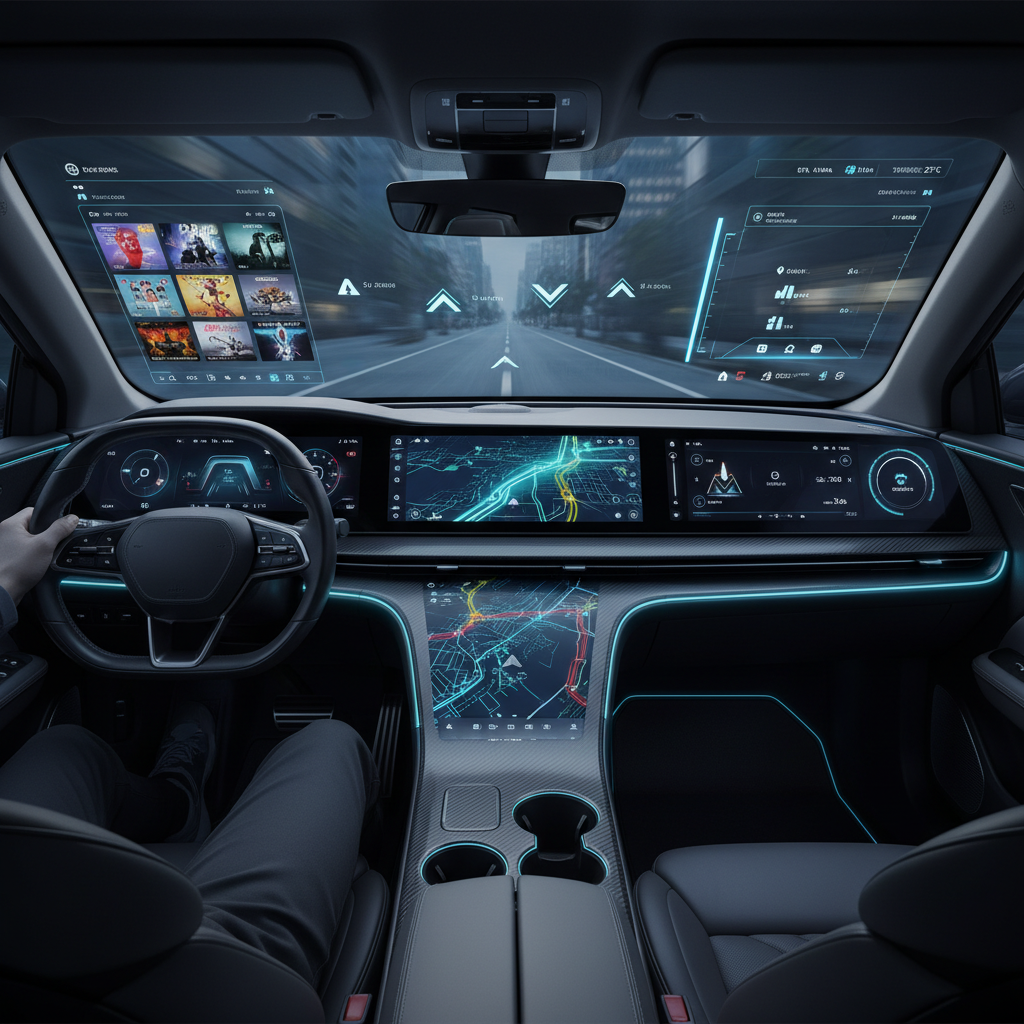
In an increasingly interconnected world, our vehicles are evolving far beyond mere modes of transport. They are becoming extensions of our digital lives, intelligent co-pilots, and personalized entertainment hubs. Imagine a commute where frustrating traffic jams melt away with dynamic rerouting, your favorite podcast seamlessly resumes precisely where you left off, and urgent messages are handled without ever taking your hands off the wheel or your eyes off the road. This isn’t a futuristic fantasy; it’s the reality ushered in by voice-activated AI integration in our commutes.
The daily commute, often a source of stress and lost productivity, is being revolutionized by sophisticated artificial intelligence systems. These systems are designed to offer an unparalleled level of convenience, safety, and personalization, fundamentally transforming how we interact with our vehicles and the world around us while on the move. From pinpoint navigation that anticipates your needs to an entertainment suite that learns your preferences, voice-activated AI is making every journey not just manageable, but genuinely enjoyable.
This comprehensive blog post will delve deep into the world of voice-activated commutes, exploring the intricate technologies that power them, the myriad benefits they offer, and what the future holds for this exciting domain. We will examine how AI is enhancing navigation, personalizing entertainment, boosting productivity, and ultimately creating a safer, more integrated driving experience. Get ready to discover how your car is becoming the smartest space in your life, all at the command of your voice.
The Evolution of In-Car Technology: From Buttons to Bytes
For decades, the automobile interior remained relatively unchanged. Controls were mechanical, entertainment was limited to radio and tapes, and navigation was a physical map or a rudimentary GPS device with limited functionality. The introduction of touchscreens marked a significant leap, bringing more digital interfaces into the car. However, touchscreens, while intuitive in many contexts, still require a driver’s visual attention and manual input, which can be distracting and compromise safety.
The true paradigm shift began with the integration of advanced voice recognition and artificial intelligence. Early voice command systems were often clunky, misinterpreting commands, and offering limited functionality. They were frustrating, leading many drivers to revert to manual controls. However, rapid advancements in natural language processing (NLP), machine learning, and cloud computing have dramatically enhanced the accuracy and capabilities of these systems. Today’s voice AI is not just about understanding simple commands; it’s about comprehending context, learning user preferences, and engaging in more natural, conversational interactions.
This evolution has been driven by several key factors. Firstly, the ubiquitous presence of voice assistants in our homes and on our smartphones has normalized the idea of interacting with technology through speech. Consumers now expect this level of convenience in every aspect of their lives, including their vehicles. Secondly, the increasing complexity of in-car systems, with features ranging from climate control to advanced driver-assistance systems (ADAS), necessitates a simpler, less distracting mode of interaction. Voice control offers a hands-free, eyes-on-the-road solution that traditional interfaces cannot match. The journey from rudimentary voice prompts to sophisticated, intelligent AI co-pilots represents a monumental stride in automotive technology, promising a future where our cars truly understand and anticipate our needs.
The Core of Voice AI: How It Works in Your Car
At the heart of a voice-activated commute lies a sophisticated interplay of technologies, each working in harmony to deliver a seamless experience. Understanding these foundational components helps demystify the magic behind your car’s intelligent assistant.
- Microphone Arrays and Noise Cancellation: Modern cars equipped with voice AI don’t just have one microphone. They often feature an array of microphones strategically placed throughout the cabin. These arrays, combined with advanced digital signal processing (DSP) and noise cancellation algorithms, are crucial for isolating the driver’s voice from ambient road noise, passenger conversations, and even music playing in the background. This ensures clear capture of commands, even in noisy environments.
- Automatic Speech Recognition (ASR): Once your voice is captured cleanly, it goes through an ASR engine. This technology converts spoken words into text. Modern ASR systems leverage deep learning models trained on vast datasets of human speech, allowing them to accurately transcribe a wide range of accents, speaking styles, and vocabulary. The better the ASR, the less frustrated you’ll be.
- Natural Language Processing (NLP) and Understanding (NLU): This is where the AI truly comes to life. After transcription, NLP and NLU components analyze the text to understand its meaning, intent, and context. For instance, if you say, “Find the nearest coffee shop,” the NLU understands “coffee shop” as a point of interest, “nearest” as a proximity filter, and the overall intent as a navigation request. It can also handle more complex, multi-part commands or follow-up questions.
- Contextual Awareness and Personalization: A truly intelligent system doesn’t just process individual commands; it understands the current situation. This includes knowing your location, current route, time of day, calendar appointments, and even your past preferences. If you frequently listen to a specific genre of music, the AI might prioritize suggestions within that genre. This contextual understanding allows the AI to offer proactive suggestions and more relevant responses.
- Cloud Integration and Edge Computing: While some basic commands can be processed on the car’s internal hardware (edge computing), more complex requests, especially those requiring up-to-the-minute information (like real-time traffic, weather, or new music releases), are often sent to powerful cloud servers. These servers have access to vast databases and computational power, allowing for rapid and accurate responses. The results are then sent back to the car, often within milliseconds.
- Voice Synthesis (Text-to-Speech): Finally, the AI responds to you using a natural-sounding voice. Text-to-speech (TTS) technology has come a long way, moving from robotic-sounding voices to highly natural, even emotionally nuanced, synthetic speech. This enhances the user experience, making interactions feel more human and less like talking to a machine.
This intricate dance of hardware and software ensures that when you speak, your car not only hears you but genuinely understands your intentions and acts upon them intelligently.
Revolutionizing Navigation: Beyond Simple Directions
Gone are the days when in-car navigation simply pointed you in the right direction. Voice-activated AI has transformed navigation into an intuitive, dynamic, and predictive experience that significantly reduces commute stress and optimizes travel time.
Intelligent Route Planning and Real-time Traffic Avoidance
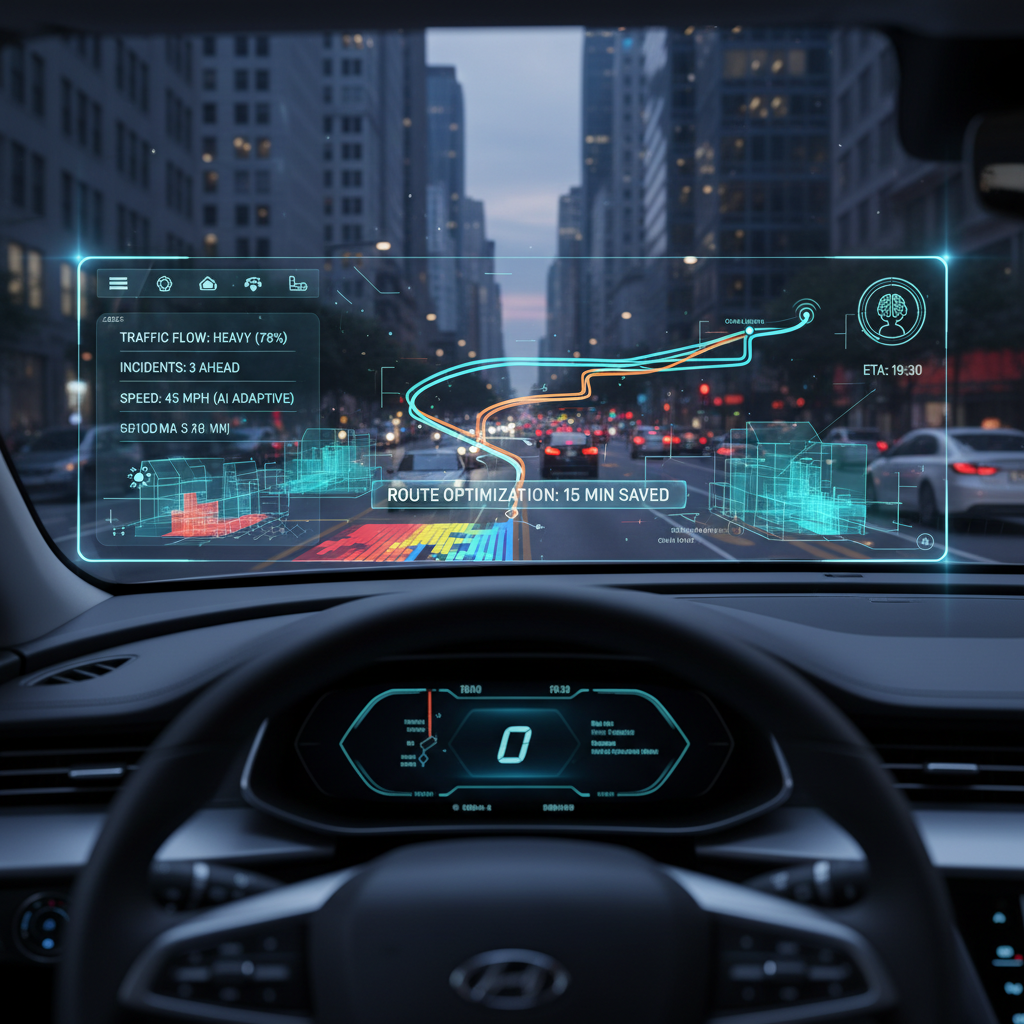
- Dynamic Rerouting: Modern AI navigation systems go far beyond displaying traffic data. They actively monitor traffic conditions in real-time, pulling data from millions of connected vehicles, road sensors, and even local authorities. If an accident occurs or congestion builds ahead, the system can proactively suggest alternative routes, often saving significant time. Your voice command, “Hey AI, find the fastest way to work,” might trigger a complex calculation considering multiple variables to present the optimal path.
- Predictive Traffic Analysis: AI algorithms learn from historical traffic patterns, predicting congestion before it even happens. For instance, the system might know that a certain highway experiences bottlenecks every weekday at 5 PM and can suggest an earlier departure or an alternative route to avoid it entirely, even before you’ve left your driveway.
- Personalized POI Search: Whether you’re craving a specific type of cuisine, need to find the nearest EV charging station, or are looking for a highly-rated coffee shop, voice commands allow for quick and intuitive searches for points of interest (POIs). The AI can even filter results based on your past preferences, ratings, or proximity. For example, “Find a highly-rated vegan restaurant with parking near our destination.”
- Multimodal Navigation: AI navigation can integrate with other modes of transport. If your destination is in a pedestrian-only zone, the system might guide you to the nearest parking garage and then seamlessly transition to walking directions on your phone, ensuring a smooth end-to-end journey.
The ability to interact with navigation using voice means less fiddling with screens and more focus on the road, contributing significantly to driver safety and reduced cognitive load. It’s not just about getting from A to B; it’s about doing so efficiently, safely, and without unnecessary hassle.
Elevating Entertainment: Your Personal In-Car DJ and More
For many, the commute is a precious opportunity to catch up on entertainment. Voice-activated AI turns your car into a personalized concert hall, a mobile library, or a podcast studio, all at your command.
Seamless Audio Streaming and Content Management
- On-Demand Music and Playlists: With voice commands, you can effortlessly access vast libraries of music from streaming services like Spotify, Apple Music, and Amazon Music. “Play my ‘Driving Rock’ playlist,” “Put on the new album by [artist name],” or “Shuffle songs by [genre]” are common commands that instantly transform your drive. The AI can also suggest new music based on your listening history and mood.
- Podcasts and Audiobooks: Continue your favorite podcast precisely where you left off or dive into a new audiobook. Voice commands like “Resume ‘The Daily’ podcast” or “Play Chapter 5 of ‘Dune’ audiobook” make managing your spoken-word content a breeze, making long commutes fly by.
- Radio and Live Broadcasts: Even traditional radio benefits from voice integration. Tune into specific stations by frequency, name, or genre. “Tune to 98.7 FM” or “Play NPR” or “Find a classical music station” become intuitive commands.
- Personalized Recommendations: Over time, the AI learns your entertainment preferences. It might suggest new artists, podcasts, or audiobooks that align with your tastes, creating a truly personalized in-car entertainment experience. This proactive recommendation engine transforms passive listening into an engaging, discovery-rich journey.
- Multi-Zone Audio Control: In vehicles with multi-zone audio systems, voice AI can even manage different audio streams for different parts of the car. For example, “Play a children’s story in the back seats” while the driver listens to news up front. This level of granular control caters to the diverse needs of all occupants.
The integration of voice AI into entertainment systems means less fumbling with controls and more immersion in your chosen content, turning every drive into an opportunity for enjoyment and intellectual engagement. It’s about providing a hands-free, distraction-reduced way to manage all your digital media, making your car a true extension of your connected lifestyle.
Boosting Productivity and Connectivity on the Go
For many, the commute is not just travel time; it’s a valuable window that can be leveraged for productivity. Voice-activated AI transforms your vehicle into a mobile office, allowing you to manage tasks, stay connected, and even control your smart home, all hands-free.
Seamless Integration with Your Digital Life
- Calendar and Schedule Management: With voice commands, you can effortlessly check your schedule, add new appointments, or receive reminders. “What’s my first meeting today?” or “Add a reminder for grocery shopping at 6 PM” keeps you organized without distraction. The AI can also proactively inform you about upcoming meetings and suggest departure times based on current traffic.
- Communication: Calls, Messages, and Emails: Make and receive calls, send and read text messages, and even dictate emails without touching your phone. “Call John Smith,” “Text Sarah ‘Running 5 minutes late’,” or “Read my last email” are common commands that maintain your connectivity safely. The AI can summarize long emails or prioritize urgent messages, ensuring you stay informed without being overwhelmed.
- Virtual Meeting Integration: For professionals, the ability to join virtual meetings directly from the car’s infotainment system via voice commands is a game-changer. While active participation might require visual focus, joining audio-only meetings or listening in on presentations becomes feasible and safe. “Join my 10 AM conference call.”
- Smart Home Control: The convenience extends beyond the car. Integrate your car’s AI with your smart home devices. As you approach home, you can command, “Turn on the lights,” “Adjust the thermostat to 72 degrees,” or “Unlock the front door,” preparing your home for your arrival and adding a layer of convenience to your daily routine.
- News and Information Updates: Stay informed with personalized news briefings, weather updates, and even stock market information, all delivered via voice. “Give me the top news headlines,” “What’s the weather like in my destination city?”, or “What’s the current stock price for [company name]?” keeps you updated on the go.
- Personal Assistant Capabilities: Beyond specific tasks, the AI acts as a general personal assistant, capable of answering questions, converting units, setting timers, or even telling you a joke. “What’s the capital of France?” or “Convert 50 miles to kilometers” demonstrates its broad utility.
By enabling these productivity features through voice, drivers can optimize their commute time, reducing the feeling of “lost time” and transforming it into a productive extension of their workday or personal life, all while prioritizing safety.
Enhancing Safety and Driver Awareness
Perhaps the most significant benefit of voice-activated AI in vehicles is its profound impact on safety. By minimizing driver distraction and providing proactive assistance, these systems are making our roads safer for everyone.
Reducing Distraction and Providing Proactive Assistance
- Hands-Free Operation: This is the cornerstone of safety for voice AI. Any task that can be performed by voice — navigation input, music selection, making a call, sending a message — keeps the driver’s hands on the wheel and eyes on the road. This direct reduction in visual and manual distraction is critical in preventing accidents. Studies consistently show that distracted driving is a leading cause of collisions, and voice control directly addresses this.
- Voice-Activated Emergency Assistance: In the event of an accident, advanced AI systems can automatically detect a collision (via airbag deployment or sudden deceleration) and, if the driver is unresponsive, can automatically contact emergency services, providing the vehicle’s location and critical data. Additionally, drivers can manually trigger emergency calls via voice if they witness an accident or experience a medical emergency. “Call emergency services.”
- Driver Fatigue Detection (Emerging Technology): While still evolving, some advanced systems integrate with in-cabin cameras and AI algorithms to monitor driver alertness. If signs of fatigue or distraction (like repeated yawning, head nodding, or prolonged eye closure) are detected, the system can issue audible or visual alerts, or even suggest taking a break. This proactive approach aims to prevent accidents before they happen.
- Contextual Safety Prompts: Based on external conditions and driver behavior, the AI can offer relevant safety prompts. For example, if it detects heavy rain and you’re driving at highway speeds, it might gently remind you to slow down or activate your wipers. Or, if you’re approaching a school zone, it could alert you to the lowered speed limit.
- Reduced Cognitive Load: By handling complex tasks like navigation updates or searching for points of interest through simple voice commands, the AI reduces the mental effort required from the driver. A lower cognitive load means the driver can allocate more mental resources to observing the road and reacting to potential hazards.
- Enhanced Situational Awareness: Voice AI can deliver critical information audibly, such as upcoming turns, speed limit changes, or warnings about road conditions, allowing the driver to process information without needing to glance at a screen. This keeps the driver’s visual attention focused on the external environment.
The overarching goal of integrating voice AI into vehicle safety systems is to create a symbiotic relationship between driver and machine, where the AI acts as an intelligent guardian, anticipating needs, managing distractions, and providing timely assistance to ensure every journey is as safe as possible.
Personalization and Learning: Your Car, Your Way
One of the most compelling aspects of modern voice-activated AI is its capacity for personalization and learning. These systems are not static; they evolve with you, adapting to your habits, preferences, and routines to provide an increasingly tailored and intuitive experience.
AI That Understands and Anticipates Your Needs
- Learning Your Preferences: Over time, the AI learns your favorite music genres, preferred news sources, frequently visited destinations, and even your preferred climate settings. If you consistently listen to rock music on your morning commute, the AI might proactively suggest new rock artists or create a personalized rock playlist for you.
- Routine Recognition and Proactive Suggestions: The system can recognize your daily routines. For example, if you always drive to the gym on Tuesdays and Thursdays, the AI might proactively offer the route to the gym on those mornings, taking into account current traffic. It can also learn your common errands. “You usually pick up dry cleaning on Wednesdays, would you like directions?”
- Customized Voice Profiles: In vehicles shared by multiple drivers, advanced AI can distinguish between different voices, loading individual profiles with personalized settings, preferences, and even different voice assistant personalities. This means each driver gets a unique, tailored experience upon entering the car.
- Adaptive Climate Control: Beyond simply setting a temperature, the AI can learn your comfort preferences based on external weather conditions and time of day. If you prefer it slightly cooler on hot afternoons, the system will adjust automatically, or suggest doing so, anticipating your comfort needs.
- Personalized POI Recommendations: Based on your past searches and destinations, the AI can offer highly relevant suggestions for restaurants, fuel stations, or attractions. If you often visit coffee shops, it might suggest a new independent cafe along your route.
- Seamless Device Handover: As you transition from your home to your car, or from your car to your office, the AI can facilitate seamless handover of tasks. Your podcast continues on your car’s system from where it left off on your smart speaker, or navigation instructions transfer from your phone to the car’s display.
This deep level of personalization transforms the vehicle from a generic utility into a truly personal space that understands and anticipates the driver’s unique needs. It moves beyond mere command execution to genuine intelligence, making the driving experience more intuitive, comfortable, and tailored than ever before.
The Road Ahead: Future Trends and Challenges
While voice-activated AI has already made significant strides in enhancing our commutes, the journey is far from over. The future promises even more sophisticated integrations and capabilities, though it also presents its own set of challenges.
Emerging Technologies and Lingering Hurdles
- Deeper Integration with Autonomous Driving Systems: As autonomous driving technology advances, voice AI will play a critical role in human-machine interaction. Drivers (or passengers in a fully autonomous vehicle) will use voice to set destinations, change preferences, receive system updates, or even take manual control when necessary, making the transition between autonomous and human control seamless and intuitive.
- Emotional AI and Mood Detection: Future AI systems might incorporate emotional intelligence, using in-cabin sensors and voice analysis to detect the driver’s mood. If the driver appears stressed, the AI could automatically adjust ambient lighting, play calming music, or suggest a relaxing detour. This moves towards a truly empathetic in-car experience.
- Augmented Reality (AR) Integration: Imagine asking your car, “Where is that new bakery everyone is talking about?” and having an AR overlay on your windshield point directly to it. Voice commands will drive these AR interfaces, providing a seamless blend of digital information with the real world.
- Advanced Predictive Capabilities: AI will become even more predictive, not just suggesting routes but anticipating maintenance needs, proactively scheduling service appointments, or even pre-ordering your morning coffee based on your routine and real-time location.
- Multi-Agent Systems: Instead of a single AI assistant, future cars might feature multiple specialized AI agents working in concert – one for navigation, one for entertainment, one for productivity, all seamlessly integrated and responding to voice commands.
Challenges to Overcome:
- Data Privacy and Security: The collection of vast amounts of personal data (location, preferences, habits, conversations) raises significant privacy concerns. Ensuring robust data encryption, clear consent mechanisms, and transparent data usage policies will be paramount.
- Standardization Across Manufacturers: Currently, each automaker often has its proprietary system, alongside third-party integrations like Apple CarPlay and Android Auto. A lack of universal standards can lead to fragmentation and inconsistent user experiences.
- Edge Case Reliability: While current AI is excellent in most scenarios, edge cases (unusual accents, complex commands, highly noisy environments) can still pose challenges. Continuous improvement in NLP and ASR is required.
- Ethical Considerations: As AI becomes more integrated and influential, ethical questions regarding decision-making in autonomous scenarios, potential for manipulation, and accountability will need careful consideration and regulation.
- Cost and Accessibility: Advanced AI features often come with a premium price tag, limiting accessibility. Making these technologies more affordable and standard across vehicle segments will be crucial for widespread adoption.
Despite these challenges, the trajectory of voice-activated AI in vehicles is clear: towards an increasingly intelligent, integrated, and indispensable partner in our daily commutes, promising a future of unparalleled convenience and safety on the road.
Comparison Tables
To highlight the advancements and differences, let us look at how modern voice-activated AI systems compare to traditional in-car interfaces and also how different AI assistants stack up against each other in automotive contexts.
Table 1: Traditional In-Car Interfaces vs. Voice-Activated AI Systems
| Feature Category | Traditional In-Car Interface (Buttons, Basic Touchscreen) | Voice-Activated AI System (Modern Integration) | Key Benefit of AI |
|---|---|---|---|
| Navigation Input | Manual typing on screen, joystick, or directional pads. Tedious and distracting. | Natural language voice commands (“Navigate to 123 Main St,” “Find nearest gas station”). Quick, intuitive, hands-free. | Significantly reduced driver distraction; faster input. |
| Traffic Information | Static map overlays, occasional alerts. Limited real-time updates. | Dynamic, real-time traffic data with predictive analysis and proactive rerouting suggestions. | Optimized travel time; avoids congestion efficiently. |
| Entertainment Control | Manual button presses for volume, track skip; menu navigation on screen. | Voice commands for music streaming, playlists, podcasts, radio by genre or artist. Personalized recommendations. | Seamless content access; personalized listening experience. |
| Communication | Manual dialing on screen; limited contact search. | Voice-activated calls (“Call Mom”), text dictation (“Text John ‘Be there soon'”), email reading. | Enhanced safety by keeping hands on wheel and eyes on road. |
| Productivity & Organization | Minimal or no integration; requires external devices. | Calendar management, reminders, smart home control, news updates, general queries via voice. | Leverages commute time for productivity; extends digital life into the car. |
| Personalization & Learning | Static settings; no learning or adaptation. | Learns driver preferences (routes, music, climate), routine recognition, proactive suggestions, individual profiles. | Tailored, intuitive user experience that anticipates needs. |
| Safety Impact | High potential for visual and manual distraction. | Minimizes distraction, allows hands-free operation, potential for fatigue detection and emergency assistance. | Substantially improves driver safety and reduces cognitive load. |
| Interaction Model | Command-based, menu-driven. | Conversational, context-aware, predictive. | More natural, less frustrating user interaction. |
Table 2: Comparison of Popular Automotive AI Voice Assistants
| Attribute | Apple CarPlay / Siri | Android Auto / Google Assistant | Amazon Alexa Auto | Proprietary Manufacturer AI (e.g., Mercedes MBUX, BMW iDrive) |
|---|---|---|---|---|
| Core Device Integration | iPhone (seamless integration with iOS ecosystem) | Android Smartphone (seamless integration with Android ecosystem) | Amazon Account / Alexa App (cloud-centric, device agnostic) | Integrated into vehicle’s native operating system |
| Voice Activation Phrase | “Hey Siri” or physical button | “Hey Google” or physical button | “Alexa” or physical button | Varies (e.g., “Hey Mercedes”, “Hey BMW”) or physical button |
| Navigation Sources | Apple Maps, Google Maps, Waze (via CarPlay) | Google Maps, Waze (native to Android Auto) | Alexa’s built-in navigation, some third-party integrations | Vehicle’s native navigation system (often with HERE or TomTom data) |
| Entertainment Integration | Apple Music, Spotify, Podcasts (via CarPlay) | YouTube Music, Spotify, Podcasts (via Android Auto) | Amazon Music, Spotify, Audible, TuneIn Radio (native Alexa skills) | Native audio system, often with deep integration for specific streaming services |
| Productivity & Communication | Calls, Messages, Calendar, Reminders (via Siri) | Calls, Messages, Calendar, Reminders (via Google Assistant) | Calls (limited), Messages (limited), Calendar (limited), shopping lists, smart home control | Calls, Messages, Calendar, sometimes smart home (dependent on manufacturer ecosystem) |
| Smart Home Control | HomeKit devices (via Siri) | Google Home / Nest devices (via Google Assistant) | Extensive Alexa-compatible devices (core strength) | Limited, sometimes integrates with manufacturer’s own smart home initiatives |
| Offline Capability | Limited, primarily cloud-dependent | Limited, primarily cloud-dependent (offline maps possible) | Very limited, almost entirely cloud-dependent | Often better offline capability for basic vehicle functions and navigation |
| Customization / Personalization | Learns user preferences from iPhone usage | Learns user preferences from Google account usage | Learns user preferences from Alexa usage, skills | Deep integration with vehicle settings, driver profiles, learns vehicle-specific preferences |
| Pros | Familiarity for iPhone users, strong app integration | Excellent Google Maps integration, robust search, powerful assistant | Extensive smart home control, wide range of skills | Deep vehicle system control, often higher audio quality, no phone required for core functions |
| Cons | Requires iPhone connection, less direct vehicle control | Requires Android phone connection, less direct vehicle control | Less robust navigation and communication compared to phone-based systems, primarily an “add-on” experience | Can be proprietary, less familiar UI for non-owners, updates can be slower |
Practical Examples: Voice AI in Action
To truly grasp the transformative power of voice-activated AI in the commute, let’s explore a few real-world scenarios.
Scenario 1: The Busy Professional’s Morning Drive
Meet Sarah, a marketing executive with a tight schedule. Her voice-activated car is her mobile office. As she enters her car, it greets her, “Good morning, Sarah. Current traffic to the office is moderate, expected arrival in 35 minutes. Your first meeting is at 9:00 AM.”
Sarah responds, “Hey AI, confirm my 9 AM meeting with the client.” The AI quickly confirms, then she adds, “Listen to my ‘Business News’ podcast.” As she drives, an important email comes through. “AI, read my new email from Mark.” The AI reads out the sender and subject. “Reply to Mark, ‘I’ve reviewed the report, I’ll send my feedback this afternoon’.” The AI drafts and confirms the message, sending it with a simple “yes.” Approaching the office, she remembers she needs to pick up coffee for her team. “Find the nearest Starbucks and add it as a stop to my route.” The navigation seamlessly updates, guiding her to the coffee shop without missing a beat, all while her hands remain on the wheel, and her eyes stay on the road.
Scenario 2: The Family Road Trip Adventure
The Miller family is embarking on a long weekend road trip. With two excited children in the back, the car’s voice AI becomes their essential travel companion. As they set off, Dad, John, says, “Hey AI, play ‘Kids’ Road Trip Playlist’ in the back seats and my ‘Classic Rock’ playlist up front.” The multi-zone audio system obliges, keeping everyone happy.
Hours later, the kids are hungry. “AI, find a family-friendly restaurant with outdoor seating in the next 20 miles,” says Mom, Lisa. The AI pulls up several options, displaying ratings and menus on the screen. Lisa points and says, “That one looks good, navigate there.” As they approach the restaurant, John realizes he forgot to set their home alarm. “AI, arm the home security system and turn off the porch lights,” he commands, taking care of home tasks remotely. The AI also keeps them updated on their estimated arrival time, finding rest stops, and even identifying points of interest along their scenic route, like a historical landmark, answering the kids’ spontaneous questions like “AI, how tall is Mount Rushmore?”
Scenario 3: The Daily Commuter’s Personalized Journey
David’s daily commute is usually predictable, but voice AI makes it a custom-tailored experience. “Hey AI, what’s my commute like today?” The AI reports a minor delay due to construction on his usual route and suggests an alternative that will save him 10 minutes. “Great, navigate using that route,” David confirms.
On the way, he decides he wants to explore new music. “AI, play some upbeat indie pop. Maybe something I haven’t heard before.” The AI taps into his listening history and streaming service data, curating a fresh playlist. Nearing his office, he realizes he needs to adjust his home thermostat before he gets back. “AI, set the living room thermostat to 72 degrees.” The seamless integration allows him to manage his smart home from the road. The system also learns that David prefers a slightly cooler cabin temperature on sunny days, and often proactively suggests adjusting the AC as he starts his drive, making his daily journey not just efficient, but perfectly comfortable and personalized to his evolving tastes.
These examples demonstrate how voice-activated AI moves beyond a novelty feature to become an indispensable tool, seamlessly integrated into the fabric of our daily lives, making every commute safer, more productive, and immensely more enjoyable.
Frequently Asked Questions
Q: What is a voice-activated commute?
A: A voice-activated commute refers to the experience of driving a vehicle where most of the in-car functions, traditionally controlled by buttons, touchscreens, or manual input, are instead managed through spoken commands. This includes navigation, entertainment, communication, climate control, vehicle settings, and even productivity tasks. Advanced systems leverage Artificial Intelligence (AI) to understand natural language, learn driver preferences, and provide contextually relevant responses, making the interaction intuitive and hands-free. The goal is to enhance safety by reducing driver distraction and improve convenience and productivity during travel.
Q: How does AI enhance navigation beyond traditional GPS?
A: AI significantly enhances navigation by moving beyond static directions. It integrates real-time data from a multitude of sources (traffic sensors, connected vehicles, weather reports, historical patterns) to provide dynamic rerouting, predicting congestion and suggesting optimal paths before they become an issue. AI-powered navigation can understand complex voice queries like “Find the nearest highly-rated Italian restaurant that’s open and has parking,” filtering results based on preferences and context. It also offers predictive arrival times, considers fuel stops or EV charging needs, and can even learn your common routes and proactively suggest them, adapting to your daily schedule and habits for a truly intelligent journey.
Q: Is voice control safe while driving, and how does it prevent distraction?
A: Yes, modern voice control systems are designed primarily to enhance safety by reducing driver distraction. By enabling hands-free and eyes-on-the-road operation, drivers can keep their attention focused on the driving task. Instead of fumbling with touchscreens or physical buttons to change music, enter navigation data, or answer a call, a simple voice command handles the task. This minimizes visual-manual distraction, which is a leading cause of accidents. While no system completely eliminates cognitive distraction, voice control significantly lessens the need to divert attention from the road, making interactions quicker and more intuitive than traditional methods.
Q: Can I integrate my smart home devices with my car’s AI?
A: Absolutely. Many contemporary voice-activated AI systems in cars offer seamless integration with smart home ecosystems like Amazon Alexa, Google Home, and Apple HomeKit. This allows you to control your home devices directly from your vehicle using voice commands. For example, you can say, “Hey AI, turn on the lights at home,” “Set the thermostat to 72 degrees,” or “Arm the security system” as you’re driving away or approaching your house. This connectivity adds immense convenience, enabling you to manage your home environment even while on the go, enhancing the overall smart living experience.
Q: What kind of entertainment options are available through voice command?
A: The entertainment options are vast and comprehensive. Voice-activated AI allows you to control virtually every aspect of your in-car audio experience. This includes playing specific songs, artists, albums, or playlists from integrated streaming services (like Spotify, Apple Music, Amazon Music), accessing a wide range of podcasts and audiobooks, tuning into specific radio stations by frequency or name, and even receiving personalized music recommendations based on your listening history. You can start, pause, skip, and adjust volume all with simple voice commands, transforming your car into a personalized entertainment hub.
Q: Are these voice-activated AI systems compatible with all cars?
A: While the technology is rapidly expanding, full voice-activated AI integration is not standard in all cars. Newer models, especially those from premium brands or with advanced infotainment packages, often come with proprietary voice AI systems (e.g., Mercedes-Benz MBUX, BMW iDrive with Intelligent Personal Assistant). Many cars also offer compatibility with third-party systems like Apple CarPlay and Android Auto, which bring voice assistants like Siri and Google Assistant into the car via your smartphone. For older vehicles, aftermarket solutions or dedicated Alexa Auto devices can add some voice functionality, though typically not with the deep vehicle system integration found in native systems.
Q: What are the privacy implications of using voice AI in my car?
A: Data privacy is a significant consideration. Voice AI systems collect and process vast amounts of data, including your voice commands, location data, driving habits, and potentially even in-cabin conversations (though reputable manufacturers clarify that audio is processed locally and only specific commands are sent to the cloud). This data is used to improve the AI’s understanding, personalize services, and provide real-time information. It’s crucial for users to understand the privacy policies of their vehicle manufacturer and any integrated third-party services. Look for features like clear consent mechanisms, options to delete voice recordings, strong data encryption, and transparent explanations of how your data is used and stored to mitigate privacy concerns.
Q: How is AI personalization achieved in a vehicle?
A: AI personalization in a vehicle is achieved through sophisticated machine learning algorithms that observe and learn from your interactions and behaviors over time. This includes:
- Learning Preferences: Remembering your favorite music genres, navigation preferences (e.g., avoiding tolls), climate control settings, and frequently visited destinations.
- Routine Recognition: Identifying patterns in your daily or weekly commutes, such as specific times you leave for work or places you regularly stop.
- Contextual Awareness: Considering your current location, time of day, weather conditions, and upcoming calendar events to offer relevant suggestions.
- Voice ID: Some advanced systems can differentiate between multiple drivers’ voices, loading individual profiles with their specific settings and preferences.
This continuous learning allows the AI to anticipate your needs, offer proactive suggestions, and tailor the in-car experience to your unique habits and tastes.
Q: What are the current limitations of voice AI in cars?
A: Despite rapid advancements, current voice AI in cars still has some limitations. These include:
- Natural Language Nuance: While much improved, complex or highly nuanced commands, sarcasm, or very casual speech can sometimes still be misinterpreted.
- Offline Functionality: Many advanced features, especially those requiring up-to-the-minute data (traffic, news, streaming music), rely on an internet connection, limiting functionality in areas with poor cellular reception.
- Background Noise: While noise cancellation is effective, extremely loud environments or multiple people speaking simultaneously can still challenge the system’s accuracy.
- Integration Depth: Some third-party voice assistants (like Alexa Auto) may not have as deep control over core vehicle functions (e.g., window control, advanced vehicle settings) as proprietary manufacturer systems.
- Learning Curve: While designed to be intuitive, some users might still face a slight learning curve to understand the optimal ways to phrase commands for their specific system.
- System Latency: Occasionally, there can be a slight delay between a voice command and the system’s response, though this is continually improving.
These limitations are actively being addressed through ongoing research and development in AI and automotive technology.
Q: What does the future hold for voice-activated commutes?
A: The future of voice-activated commutes is incredibly promising and will likely involve even deeper integration and intelligence. We can expect:
- Seamless Autonomous Vehicle Interaction: Voice AI will be crucial for interacting with fully autonomous vehicles, setting destinations, adjusting comfort settings, and receiving system updates.
- Emotional AI: Systems will potentially detect driver mood and adjust cabin ambiance, music, or even offer comforting suggestions.
- Augmented Reality Integration: Voice commands will likely control AR overlays on windshields for navigation and information.
- Proactive Maintenance and Predictive Services: AI might proactively schedule vehicle maintenance, pre-order your favorite coffee based on your route, or even suggest routes based on your energy levels.
- Multi-Agent AI: Specialized AI assistants might handle different domains (e.g., one for navigation, one for wellness) working together to create a holistic experience.
- Universal Standards: A move towards more standardized interfaces across different vehicle brands to reduce complexity for users.
The ultimate vision is a vehicle that acts as an intelligent, empathetic co-pilot, anticipating every need and making every journey effortlessly safe, productive, and enjoyable.
Key Takeaways
- Revolutionary Convenience: Voice-activated AI transforms the commute from a chore into a seamless, highly convenient experience.
- Enhanced Safety: By enabling hands-free operation, AI significantly reduces driver distraction, keeping eyes on the road and hands on the wheel.
- Intelligent Navigation: Modern systems offer dynamic, real-time rerouting, predictive traffic analysis, and personalized point-of-interest searches.
- Personalized Entertainment: Drivers can control music, podcasts, and audiobooks with voice, receiving tailored recommendations and managing content effortlessly.
- Boosted Productivity: The car becomes a mobile office, allowing for hands-free calendar management, communication (calls, texts, emails), and smart home control.
- Adaptive Personalization: AI learns individual preferences, driving routines, and habits to offer a unique, anticipatory user experience.
- Future-Proofing Commutes: This technology is foundational for integrating with future autonomous driving systems and advanced in-car experiences.
- Addressing Challenges: While promising, ongoing efforts are needed to address data privacy, standardization, and edge case reliability.
Conclusion
The era of the voice-activated commute is not just dawning; it is rapidly becoming an indispensable part of our daily lives. What once seemed like science fiction is now a tangible reality, with artificial intelligence seamlessly integrating into the very fabric of our vehicles. From the moment we step into our cars, these intelligent systems are ready to serve as co-pilots, personal assistants, and entertainment concierges, all at the command of our voice.
The benefits are profound and far-reaching. We’ve explored how voice AI revolutionizes navigation, making every journey more efficient and less stressful by dynamically adapting to real-time conditions. We’ve seen how it elevates entertainment, transforming mundane drives into opportunities for personalized enjoyment. Crucially, we’ve understood its pivotal role in boosting productivity, allowing us to manage our digital lives safely and efficiently while on the move. Above all, the significant enhancement to driver safety, through minimizing distraction and offering proactive assistance, stands out as a paramount advantage.
As technology continues to evolve, the capabilities of voice-activated AI in our vehicles will only expand, bringing us closer to a future where our cars are not just smarter, but truly empathetic and intuitive companions. While challenges related to privacy, standardization, and complexity remain, the trajectory is clear: voice-activated AI is not merely enhancing our commute; it is fundamentally redefining our relationship with our vehicles and the journey itself. Embrace the future where every drive is a testament to convenience, connectivity, and intelligent design, all made effortless by the power of your voice.















































































Leave a Reply