


Enhancing Your Commute: AI Navigation and Entertainment Solutions
Introduction: Navigating the Future of Your Daily Journey
The daily commute is a universal experience, often synonymous with frustration, unexpected delays, and the monotonous grind of traffic. For decades, drivers have relied on maps, then static GPS, and eventually dynamic GPS systems that offered real-time traffic updates. While these tools brought significant improvements, they often reacted to problems rather than preventing them. Imagine a world where your navigation system doesn’t just tell you the current best route, but actually predicts future traffic patterns, anticipates bottlenecks before they form, and intelligently guides you along the smoothest, most efficient path possible. This isn’t science fiction; it’s the reality emerging through advanced AI navigation.
We are standing at the precipice of a revolution in how we travel. Artificial Intelligence (AI) is transforming every facet of our lives, and urban mobility is no exception. Predictive paths, powered by sophisticated AI algorithms, are redefining what it means to navigate. These systems go far beyond simply showing you a line on a map; they learn from vast datasets, understand complex interdependencies, and make real-time, intelligent decisions to optimize your journey. From reducing travel times and fuel consumption to enhancing safety and lowering stress levels, AI navigation promises a smarter, more sustainable, and infinitely more pleasant commute. This comprehensive guide will delve into the intricacies of this transformative technology, exploring its mechanisms, benefits, challenges, and the exciting future it holds for every traveler.
Beyond Basic GPS: The Evolution of Intelligent Navigation
To truly appreciate the power of advanced AI navigation, it’s essential to understand its lineage. The journey from crude paper maps to today’s intelligent systems is a testament to human ingenuity and technological progress. In the early days, navigation was a laborious process of unfolding large maps, deciphering symbols, and hoping for the best. The advent of satellite navigation (GPS) in consumer devices revolutionized this, providing turn-by-turn directions based on a pre-calculated shortest path.
The first significant leap came with the integration of real-time traffic data. Systems like early versions of Google Maps or Waze began incorporating information about current road conditions, allowing for dynamic re-routing around reported incidents or congestion. This was a reactive approach: a traffic jam would be reported, and then the system would suggest an alternative. While groundbreaking, this still meant you might already be stuck in the jam before being rerouted. The intelligence was limited to current events, without much foresight.
Advanced AI navigation systems, however, represent a paradigm shift. They move beyond mere reaction to proactive prediction. These systems leverage machine learning, big data analytics, and continuous learning to anticipate traffic, understand user preferences, and even predict potential hazards. They don’t just know what’s happening now; they infer what’s likely to happen in the next 5, 10, or even 30 minutes, allowing for truly optimized, future-proof routing. This evolution transforms navigation from a simple directional tool into a highly intelligent, personalized, and predictive travel assistant, making every journey smoother and more efficient.
The Core of Predictive Paths: How AI Transforms Routing
The magic behind predictive paths lies in the sophisticated interplay of vast data, powerful algorithms, and continuous learning. It’s a complex ecosystem designed to foresee the dynamics of traffic and provide the optimal route before problems even materialize.
Comprehensive Data Sources: The Fuel for Foresight
AI navigation systems are data omnivores, constantly ingesting and processing information from a multitude of sources:
- Traffic Sensors and Cameras: Inductive loops, radar, and video cameras embedded in roadways provide real-time data on vehicle speed, density, and flow.
- Connected Vehicles (V2V and V2I): Modern cars equipped with telematics transmit anonymized speed and location data, offering a granular view of road conditions. This Vehicle-to-Vehicle (V2V) and Vehicle-to-Infrastructure (V2I) communication is becoming increasingly vital.
- Smartphone and Crowd-Sourced Data: Millions of smartphone users running navigation apps passively contribute their speed and location, creating a vast network of real-time road condition reporters. Platforms like Waze famously harness this collective intelligence.
- Historical Traffic Patterns: AI models analyze years of historical data to understand recurring patterns – rush hour peaks, weekend traffic, event-specific congestion, and even seasonal variations.
- Weather Data: Rain, snow, fog, and strong winds significantly impact traffic flow. AI integrates real-time and forecasted weather conditions to adjust predictions.
- Public Event Schedules: Concerts, sporting events, festivals, and large gatherings are known catalysts for congestion. AI systems factor these into their routing.
- Road Construction and Maintenance Data: Scheduled road closures or construction zones are pre-programmed, allowing AI to route around them proactively.
Machine Learning Algorithms: The Brains Behind the Predictions
Once data is collected, machine learning algorithms get to work. These are the “brains” that make sense of the chaos and extrapolate future conditions:
- Supervised Learning for Traffic Prediction: AI models are trained on historical traffic data labeled with outcomes (e.g., “heavy traffic at this intersection on Tuesday at 8 AM”). They learn to identify features that correlate with specific traffic conditions, allowing them to predict future congestion levels.
- Reinforcement Learning for Route Optimization: This type of AI learns by trial and error, much like a human. It tries different routing strategies and receives “rewards” for successful (fast, efficient) routes and “penalties” for unsuccessful ones (slow, congested). Over countless simulations, it discovers optimal routing policies.
- Neural Networks for Pattern Recognition: Deep learning, a subset of machine learning using neural networks, excels at identifying subtle, non-obvious patterns in vast datasets. This helps in understanding complex interactions between different data sources that might indicate an impending traffic event or a specific driver behavior trend.
- Predictive Modeling: Sophisticated statistical and machine learning models are employed to forecast traffic conditions minutes or even hours into the future. These models consider not just current speeds but also inflow/outflow from adjacent roads, typical driver acceleration/deceleration patterns, and how these change under various conditions.
The beauty of these systems is their continuous learning. As new data streams in, the models refine their predictions, becoming more accurate over time. This iterative process allows AI navigation to adapt to ever-changing urban landscapes and unforeseen events, offering a truly dynamic and intelligent routing experience.
Key Features of Advanced AI Navigation Systems
Modern AI navigation systems offer a suite of features that significantly enhance the driving experience, moving far beyond simple turn-by-turn directions. These capabilities are designed to make every journey smoother, safer, and more efficient.
- Dynamic and Predictive Route Optimization: This is the cornerstone of AI navigation. Instead of merely finding the shortest distance, AI determines the fastest predicted time considering current and forecasted traffic, road closures, and even predicted parking availability at your destination. It constantly monitors your progress and the road ahead, dynamically re-routing if a faster path becomes available or a new impediment arises.
- Hyper-Accurate Estimated Time of Arrival (ETA): Traditional GPS ETAs could be notoriously inaccurate, especially during peak hours. AI navigation, with its predictive capabilities, offers significantly more precise ETAs. By factoring in all current and predicted variables, it provides a realistic arrival time, allowing for better planning and reduced stress.
- Proactive Accident and Hazard Detection: AI systems integrate data from various sources, including emergency services, crowd-sourced reports, and even historical accident hotspots. This allows them to alert drivers to potential hazards (e.g., debris on the road, sudden stops ahead, sharp curves that have seen past incidents) before they are encountered, enhancing safety.
- Personalized Routing and Preferences: AI learns from your driving habits and expressed preferences. Do you prefer highways or scenic routes? Do you want to avoid tolls, ferries, or unpaved roads? AI can factor these into its routing suggestions, potentially even learning optimal routes for specific times of day or days of the week based on your historical patterns.
- Multi-Modal Integration and Last-Mile Solutions: For urban commuters, AI navigation extends beyond just driving. It can suggest optimal combinations of driving, public transport (bus, train, subway), ride-sharing, cycling, or walking. It can even guide you to available parking near your destination and then provide walking directions for the “last mile” of your journey, offering a truly holistic travel plan.
- Intuitive Voice Control and Natural Language Processing: Modern AI navigation interfaces allow for natural voice commands, letting drivers keep their hands on the wheel and eyes on the road. You can ask “Navigate to the nearest gas station,” or “Avoid highways,” and the system understands and responds intelligently.
- Points of Interest (POI) and Contextual Recommendations: Beyond just navigation, AI systems can suggest relevant points of interest along your route or at your destination, such as restaurants, charging stations for EVs, cafes, or attractions, often based on your past preferences and the current context.
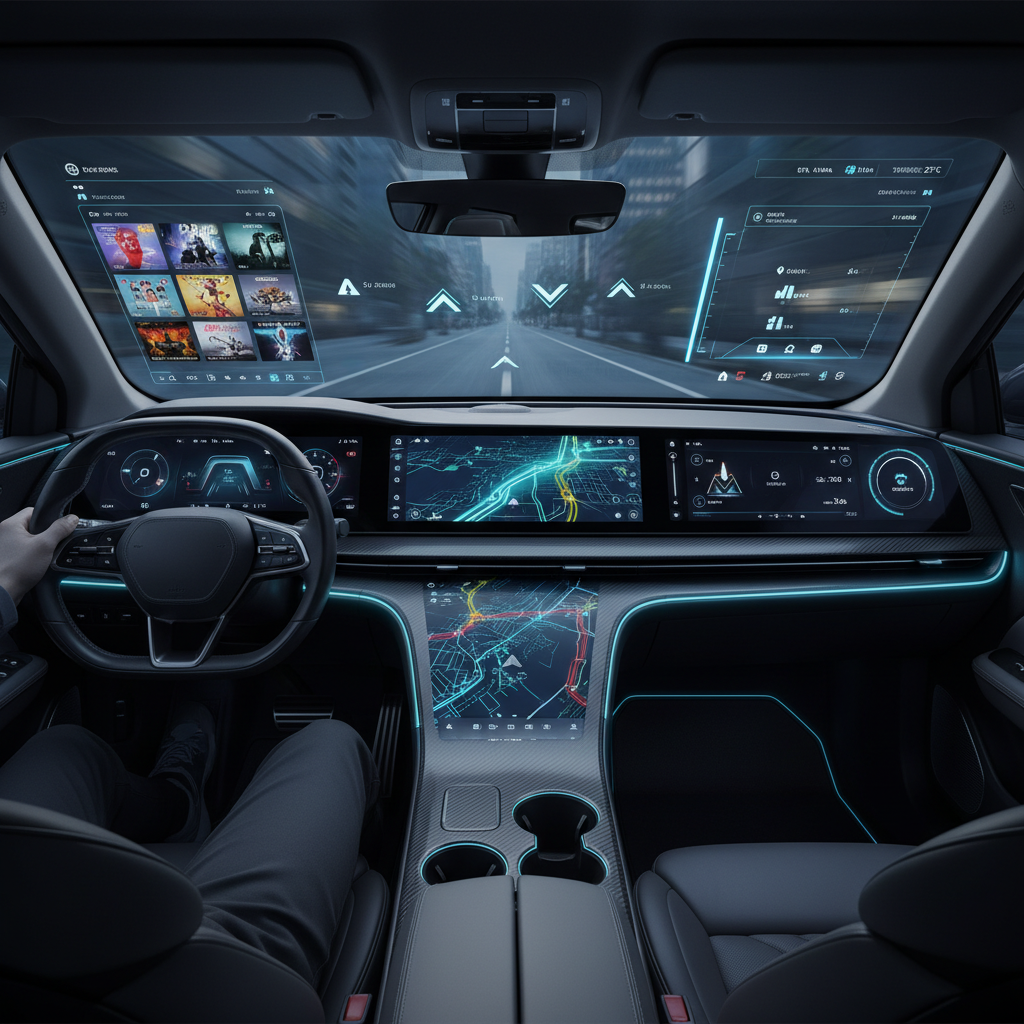
- Integration with Vehicle Systems: In modern vehicles, AI navigation is deeply integrated with the car’s infotainment system, heads-up display, and even Advanced Driver-Assistance Systems (ADAS). This allows for seamless information display and can even influence adaptive cruise control or lane-keeping assist features based on upcoming road conditions.
These features collectively transform the act of driving from a potentially stressful chore into an optimized, informed, and often more enjoyable experience. The AI isn’t just a map; it’s a co-pilot that understands the road, the traffic, and your individual needs.
Benefits for the Everyday Commuter
The tangible advantages of advanced AI navigation systems are numerous, translating directly into significant improvements for anyone who spends time on the road. These benefits extend beyond just getting from point A to point B, impacting everything from personal well-being to environmental footprint.
Reduced Travel Time: More Moments for What Matters
The most immediate and appreciated benefit of predictive routing is the significant reduction in travel time. By anticipating traffic, accidents, and other delays, AI navigates you away from potential bottlenecks before you get stuck. This isn’t about finding a marginally shorter route, but about identifying the path that will genuinely be faster at that specific moment, even if it’s slightly longer in distance. Over days, weeks, and years, these saved minutes accumulate into hours, giving commuters more time for work, family, hobbies, or simply relaxation.
Lower Fuel Consumption and Reduced Emissions: A Greener Drive
Stop-and-go traffic is not only frustrating but also incredibly inefficient for fuel consumption. Idling cars burn fuel without covering ground, and frequent acceleration and braking cycles use more energy than smooth, consistent driving. By guiding drivers along less congested, more fluid routes, AI navigation drastically reduces the instances of idling and unnecessary braking. This directly translates to lower fuel costs for the individual and a smaller carbon footprint for society, contributing to cleaner air and a healthier planet. For electric vehicle owners, this efficiency also means extended range and less range anxiety.
Stress Reduction and Improved Well-being: A Calmer Journey
Few things are as stressful as being stuck in unexpected traffic, knowing you’re going to be late, or feeling lost. AI navigation mitigates these stressors by providing predictable arrival times and clear, confident guidance. Knowing that your route is continuously optimized, and that you’ll be alerted to any major changes, instills a sense of control and calm. Less time spent in frustrating traffic jams means less driver fatigue, fewer instances of road rage, and a more positive start or end to the day.
Enhanced Safety: Proactive Alerts and Hazard Avoidance
Beyond simply avoiding traffic, advanced AI systems contribute to safety in several ways. They can alert drivers to hazardous road conditions (e.g., black ice reports, heavy fog areas), sudden stops ahead on highways, or accident scenes before they are visually apparent. By providing safer, less chaotic routes, AI reduces the likelihood of stressful driving situations that can lead to accidents. Furthermore, by smoothly guiding drivers through complex intersections or lane changes, it minimizes confusion and potential errors.
Improved Productivity and Punctuality: Reliability You Can Trust
For professionals, delivery drivers, or anyone with a tight schedule, punctuality is paramount. AI navigation’s precise ETA predictions and dynamic re-routing capabilities ensure a higher degree of reliability. Businesses can optimize delivery schedules, field service technicians can manage their appointments more effectively, and individuals can arrive at meetings, appointments, or childcare pickups with confidence, knowing their journey has been intelligently managed.
In essence, advanced AI navigation doesn’t just improve your drive; it enhances your entire travel experience, offering peace of mind, saving resources, and giving you back precious time.
AI Navigation in the Era of Smart Cities and Autonomous Vehicles
The impact of AI navigation extends far beyond individual drivers; it is a pivotal technology enabling the vision of smart cities and the future of autonomous transportation. Its capabilities are intrinsically linked to creating more efficient, sustainable, and livable urban environments.
Smart City Integration: Orchestrating Urban Flow
In smart cities, AI navigation is not just an isolated app but a crucial component of a larger intelligent transport system (ITS). Its real-time data collection and predictive capabilities feed into city-wide traffic management systems. This integration allows for:
- Optimized Traffic Light Synchronization: AI can dynamically adjust traffic light timings across an entire grid to improve traffic flow, especially during peak hours or in response to unexpected congestion.
- Smart Parking Solutions: Navigation systems can guide drivers not just to a destination but to available parking spaces, even predicting vacancy rates based on historical data and real-time sensor information. This reduces cruising for parking, a major cause of urban congestion.
- Congestion Pricing and Zone Management: AI can help enforce and manage congestion pricing zones, intelligently routing drivers around restricted areas or informing them of fees.
- Emergency Service Optimization: AI navigation can provide emergency vehicles with the absolute fastest, clearest routes, potentially saving critical minutes in life-or-death situations.
By providing a comprehensive, real-time understanding of urban mobility, AI empowers city planners and traffic managers to make data-driven decisions that benefit all citizens.
V2X Communication (Vehicle-to-Everything): The Connected Ecosystem
The full potential of AI navigation is realized through V2X communication, where vehicles communicate not only with each other (V2V – Vehicle-to-Vehicle) but also with infrastructure (V2I – Vehicle-to-Infrastructure), pedestrians (V2P – Vehicle-to-Pedestrian), and the network (V2N – Vehicle-to-Network). This constant exchange of information creates an intelligent, cooperative driving environment:
- Enhanced Situational Awareness: Vehicles can share data about road conditions, hazards, and even their intended movements, allowing AI navigation systems to anticipate events far beyond the line of sight.
- Cooperative Maneuvers: In the future, V2X could enable vehicles to coordinate actions like merging or platooning (driving in close proximity) to optimize traffic flow and reduce congestion.
- Real-time Infrastructure Updates: Traffic signals, construction zones, and variable speed limit signs can directly communicate with vehicles’ navigation systems, providing immediate and highly accurate information.
V2X communication acts as a nervous system for smart transportation, making AI navigation incredibly powerful and responsive.
The Critical Role of AI Navigation for Autonomous Vehicles
Autonomous vehicles (AVs) cannot function safely or efficiently without highly advanced AI navigation. It’s not just about knowing where to go, but how to get there in a way that is safe, compliant with traffic laws, and optimized for efficiency. For AVs, AI navigation provides:
- High-Definition Mapping and Localization: AVs rely on extremely precise, frequently updated maps that include details like lane markings, traffic signs, and pedestrian crossings, which AI navigation systems help maintain and utilize for precise positioning.
- Path Planning and Trajectory Generation: AI navigation plans the AV’s entire path, considering not only the destination but also obstacles, other road users, and traffic regulations, then generates the precise trajectory (speed, acceleration, steering angle) for every millisecond of the journey.
- Dynamic Obstacle Avoidance: While on-board sensors detect immediate obstacles, AI navigation provides the broader context, helping the AV anticipate and plan around larger-scale disruptions like road closures or major accidents.
- Predictive Behavior Modeling: AI in AVs uses navigation data to predict the likely actions of other vehicles, pedestrians, and cyclists, enabling safer and smoother interactions in complex urban environments.
Companies like Google’s Waymo and Tesla rely heavily on sophisticated AI navigation algorithms that learn from billions of miles of driving data to power their autonomous driving capabilities. The future of self-driving cars is inextricably linked to the continued advancement of predictive AI navigation.
Challenges and Ethical Considerations in AI Navigation
While the promise of AI navigation is immense, its widespread adoption and development are not without significant challenges and important ethical considerations that must be addressed carefully.
Data Privacy Concerns: The Double-Edged Sword of Information
AI navigation thrives on data – lots of it. This includes personal location history, travel patterns, speed, and even driving style. The collection and analysis of such granular personal information raise significant privacy concerns. Who owns this data? How is it stored and protected from breaches? How is it used, and could it be used for purposes other than navigation optimization, such as surveillance or targeted advertising? Robust anonymization techniques, clear consent mechanisms, and transparent data policies are crucial to build and maintain user trust.
Bias in Algorithms: Perpetuating or Mitigating Inequalities?
AI algorithms are only as unbiased as the data they are trained on. If historical traffic data predominantly reflects patterns in certain socio-economic areas, or if road infrastructure in underserved communities is less equipped with sensors, the AI might inadvertently optimize routes primarily for privileged areas, potentially exacerbating congestion or neglecting the needs of other communities. There’s a risk that algorithms could perpetuate or even amplify existing biases, leading to unequal service provision or resource allocation. Developers must actively work to ensure data diversity and fairness in algorithmic design.
System Reliability and Redundancy: What Happens When AI Fails?
As we become more reliant on AI for critical functions like navigation, questions about system reliability and redundancy become paramount. What happens if the AI server goes down, loses connectivity, or provides incorrect information? In an era of autonomous vehicles, such failures could have severe consequences. Robust fail-safes, offline capabilities, and multiple layers of redundancy are essential. The system must be resilient to cyberattacks and technical malfunctions, ensuring continuous and accurate operation.
Infrastructure Requirements and Digital Divide: Bridging the Gap
Advanced AI navigation, particularly in the context of smart cities and V2X communication, requires substantial technological infrastructure. This includes widespread deployment of sensors, high-speed internet connectivity (like 5G), and robust cloud computing resources. There’s a risk of a “digital divide” where communities lacking this advanced infrastructure are left behind, unable to reap the benefits of smart mobility solutions. Ensuring equitable access to these technologies and investments in universal infrastructure upgrades is a major challenge.
User Adoption and Trust: Overcoming Skepticism
Despite the obvious benefits, encouraging widespread user adoption requires overcoming natural skepticism. Users need to trust that the AI is making the best decisions, that their data is secure, and that the system is genuinely improving their experience. A poor initial experience, a privacy scare, or a perceived lack of control can deter users. Clear communication, intuitive interfaces, and demonstrable benefits are key to building this trust.
Addressing these challenges requires a concerted effort from technologists, policymakers, urban planners, and the public to ensure that AI navigation develops responsibly, ethically, and for the benefit of all.
The Future Landscape: What’s Next for AI Navigation?
The current state of AI navigation is impressive, but it’s merely a stepping stone to an even more integrated, personalized, and predictive future. The roadmap ahead promises innovations that will further blur the lines between navigation, personal assistance, and urban intelligence.
Hyper-Personalization and Proactive Destination Suggestions
Imagine a navigation system that not only knows your typical commute but also learns your habits, preferences, and even your mood. Future AI navigation could:
- Predict Needs: Based on your calendar, current location, and past behaviors, it might proactively suggest destinations like “Route to gym – you usually go around this time,” or “There’s a gas station with good prices on your way to work.”
- Integrate Biometric Data: While controversial for privacy, in a fully opt-in scenario, a car’s AI could potentially detect driver fatigue or stress levels and suggest a break at a rest stop or a less demanding route.
- Anticipate Preferences: Over time, the system will learn if you prefer specific types of coffee shops for breaks, certain routes for their scenic beauty, or even specific charging networks for your EV.
This level of personalization aims to make the navigation experience feel less like following instructions and more like having an incredibly insightful personal chauffeur.
Seamless Integration with Augmented Reality (AR) and Virtual Reality (VR)
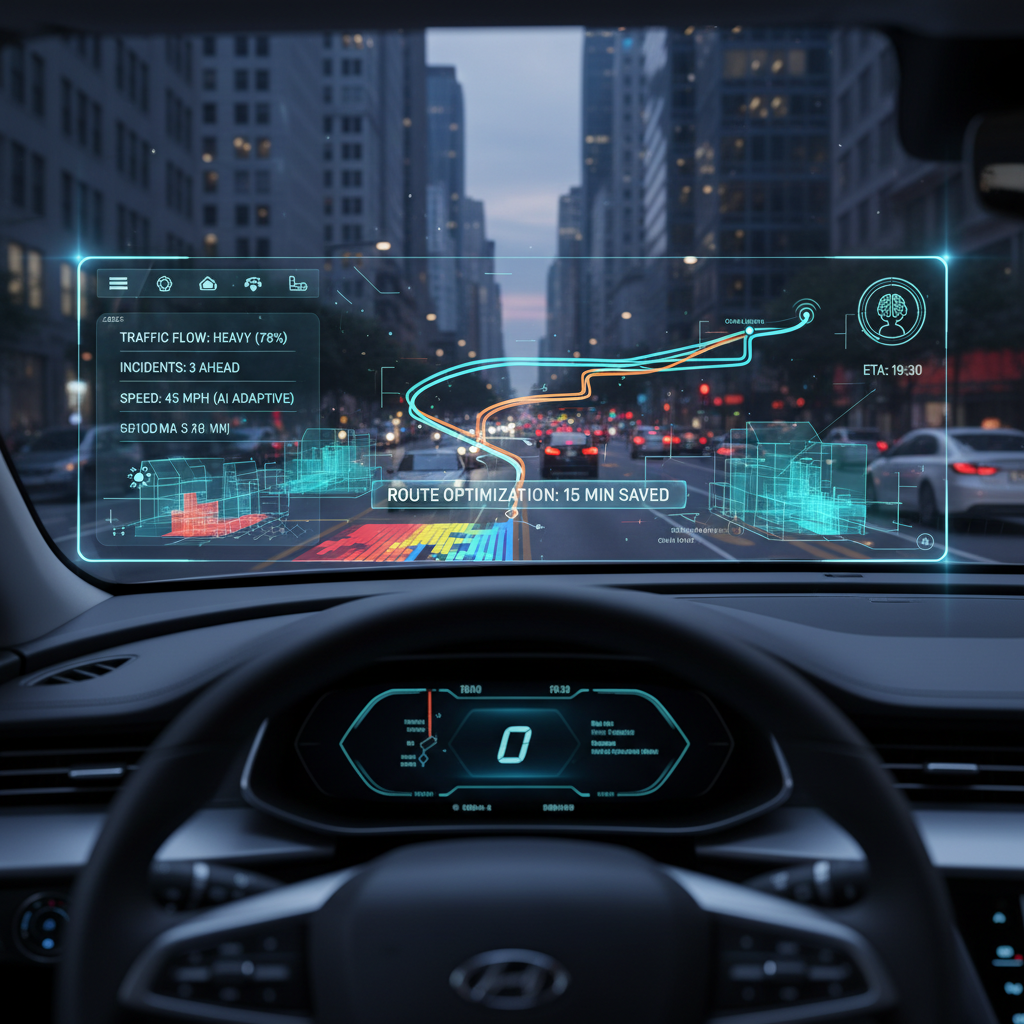
Augmented Reality (AR) is already making inroads into vehicle displays, projecting navigational cues directly onto the road ahead. The future will see this become more sophisticated:
- Immersive Navigation: AR overlays could highlight turns, point out specific lanes, or even identify points of interest with real-time information, reducing the need to glance at a separate screen.
- Contextual Information: As you drive past a building, AR could display its name, history, or current offerings.
- VR for Pre-Visualization: Before a complex journey or a trip to an unfamiliar city, drivers could virtually “drive” the route in VR, familiarizing themselves with intersections and landmarks.
This will create a more intuitive and less distracting way to consume navigational information, blending digital guidance with the physical world.
Dynamic Pricing Integration and Resource Optimization
Future AI navigation systems will likely integrate with various dynamic pricing models:
- Parking: Not just showing available parking, but also predicting future prices and guiding you to the most cost-effective option for your estimated stay.
- Tolls and Congestion Charges: Providing real-time cost comparisons for different routes and allowing users to select based on a balance of time and expense.
- EV Charging: Directing electric vehicle owners to charging stations based on availability, charging speed, price, and even their vehicle’s specific charging port type, optimizing for both time and cost.
This holistic approach will empower users to make more informed economic decisions related to their travel.
Enhanced Multi-Modal and Interconnected Mobility
The vision of mobility hubs and seamless transitions between different modes of transport will be fully realized:
- Integrated Travel Chains: AI will plan your entire journey from door-to-door, suggesting the optimal combination of walking, e-scooter, ride-share, public transit, and car, with real-time updates for each segment.
- Demand-Responsive Transport: Integration with on-demand shuttle services or dynamic carpooling platforms, automatically pairing users with available transport options.
- Smart City Synergy: Deep integration with urban infrastructure for real-time traffic flow adjustments, predictive maintenance alerts for public transport, and proactive management of congestion hotspots.
The future of AI navigation is not just about isolated driving directions; it’s about orchestrating an intelligent, fluid, and highly personalized mobility experience that seamlessly adapts to your needs and the ever-changing urban landscape.
Comparison Tables
Table 1: Traditional GPS vs. Advanced AI Navigation
| Feature | Traditional GPS Navigation | Advanced AI Navigation |
|---|---|---|
| Traffic Data | Real-time, often reactive to current events. Limited historical data use. | Predictive, combines real-time with vast historical, contextual, and forecasted data. Proactive. |
| Route Optimization | Primarily shortest distance or fastest current path. Re-routes only when significant current delays are detected. | Optimizes for fastest predicted arrival time, considering future traffic patterns, dynamic events, and user preferences. Constantly re-optimizes. |
| ETA Accuracy | Moderate to low accuracy, especially in variable traffic conditions. | High accuracy, leverages predictive models for more realistic arrival times. |
| Personalization | Minimal or basic (e.g., avoid tolls). | High; learns driver habits, preferences, suggests destinations, integrates with calendar. |
| Hazard Detection | Basic (e.g., reported accidents). | Proactive alerts for potential hazards (sudden stops, black ice, accident hotspots). |
| Multi-Modal Support | Limited; primarily car-centric. | Extensive; integrates public transport, walking, cycling, ride-sharing, last-mile solutions. |
| Integration with Smart Cities/AVs | Very limited or none. | Deeply integrated; feeds into ITS, V2X, crucial for autonomous vehicle path planning. |
| Fuel Efficiency / Emissions | Indirect benefit from shorter routes. | Direct benefit from smoother, less congested routes; significantly reduces idling. |
Table 2: Key AI Navigation Features by Popular Providers (Illustrative)
| Feature | Google Maps | Waze | Apple Maps | HERE WeGo |
|---|---|---|---|---|
| Predictive Traffic | Excellent; uses historical data, ML, and real-time. | Excellent; heavily relies on crowd-sourced data and ML. | Very Good; improving with increased data. | Good; strong in real-time and historical data. |
| Dynamic Re-routing | High; quick to suggest faster alternatives. | High; very aggressive re-routing based on crowd data. | High; responsive to traffic changes. | Good; offers multiple route options. |
| Personalized Preferences | Good; learns home/work, basic preferences. | Moderate; limited beyond basic route options. | Good; integrates with Apple ecosystem. | Moderate; customizes for vehicle type. |
| Multi-Modal Support | Excellent; comprehensive transit, walking, cycling, ride-sharing. | Basic; focused on car, some ride-sharing integration. | Good; integrated transit and walking. | Good; public transport, bike, car-sharing options. |
| Hazard/Alerts | Good; accidents, road closures. | Excellent; real-time crowd-sourced alerts (police, hazards, speed traps). | Good; accidents, speed cameras. | Good; traffic incidents. |
| EV Specific Features | Growing; charging station locator with details. | Limited; some community-reported stations. | Growing; charging station locator. | Good; charging stations with details, route optimization for range. |
| Offline Maps | Yes, extensive regions downloadable. | Limited; real-time aspects require connection. | Yes, specific areas. | Yes, entire countries downloadable. |
| Smart City/AV Integration | Strong potential; Google’s ventures (Waymo, Sidewalk Labs). | Indirect via data contribution. | Growing; integration with CarPlay ecosystem. | Strong; HERE is a major provider of mapping data for AVs. |
Practical Examples and Real-World Scenarios
To truly grasp the impact of advanced AI navigation, let’s explore a few real-world scenarios where its predictive capabilities shine.
1. The Commuter’s Daily Save: Avoiding the Predictable Pile-up
Consider Sarah, who commutes 45 minutes to work every morning. Her traditional GPS always suggested the same highway route. One Tuesday morning, a minor accident occurs 20 miles ahead on her usual route. Her old GPS would only alert her once she was already caught in the slow-down, adding 30-40 minutes to her journey. With advanced AI navigation, the system, having learned typical traffic patterns and ingested data about the accident as it happened (or even predicted its impact based on other feeder roads slowing down), proactively suggests an alternative route through surface streets, slightly longer in distance but predicted to be 15 minutes faster due to avoiding the impending gridlock. Sarah arrives at work calmer and on time, thanks to the AI’s foresight.
2. Optimizing Logistics: Multi-Stop Delivery Efficiency
For a delivery driver like Mike, who has 50 packages to deliver across a sprawling city, efficiency is paramount. Traditional routing might give him the geographically shortest path. However, AI navigation takes it several steps further. It considers:
- Predicted traffic congestion at each stop’s vicinity throughout the day.
- Time-sensitive deliveries and customer availability windows.
- Historical parking availability data at each location.
- Optimal left-turn avoidance for safer and faster turns.
The AI dynamically re-sequences his stops and adjusts his route in real-time. If a major sporting event creates unexpected congestion near stop 3, the AI might suggest completing stops 4 and 5 first, then returning to stop 3 once traffic subsides. This not only saves Mike hours of driving time but also significantly reduces fuel consumption for his company.
3. Emergency Services: Critical Minutes Saved
In emergency situations, every second counts. AI navigation plays a crucial role for first responders. When an ambulance needs to reach an accident scene, its AI navigation system is integrated with municipal traffic systems. It not only identifies the fastest route but can also potentially communicate with traffic lights to prioritize the ambulance’s passage, turning them green ahead of its arrival. Furthermore, it can anticipate secondary accidents or pedestrian activity around the primary incident, guiding the driver to approach safely and efficiently. This intelligent routing can be the difference between life and death.
4. The Weekend Explorer: Discovering Hidden Gems
Beyond daily commutes, AI navigation enhances leisure travel. Sarah and her family are on a road trip to a national park. Their AI system, knowing their preference for natural attractions and local food, not only guides them efficiently but also proactively suggests a beautiful scenic overlook slightly off their path, or a highly-rated local diner for lunch, predicting they’d appreciate the recommendation based on past user behavior and preferences. It elevates the journey from a mere transit to an enriched travel experience.
These examples highlight how AI navigation moves beyond simple directions, becoming an intelligent assistant that anticipates needs, optimizes outcomes, and fundamentally improves the way we interact with the world around us.
Frequently Asked Questions
Q: What is the main difference between traditional GPS and advanced AI navigation?
A: The core difference lies in their approach to traffic and route optimization. Traditional GPS primarily offers static directions and reacts to current traffic reports. Advanced AI navigation, however, is predictive. It uses machine learning to analyze vast amounts of real-time and historical data (traffic sensors, connected cars, weather, events) to forecast future traffic conditions and proactively guide you along the path that is predicted to be fastest, rather than just currently shortest or least congested. It learns and adapts over time, offering a much more dynamic and intelligent routing experience.
Q: How does AI predict traffic and congestion?
A: AI predicts traffic by employing sophisticated machine learning algorithms. It analyzes patterns from historical traffic data (e.g., typical rush hour slowdowns on specific days), current conditions reported by millions of connected vehicles and smartphones, road infrastructure data, public event schedules, and even weather forecasts. By combining these diverse data sources, AI models can identify correlations and extrapolate future traffic flow with high accuracy, often predicting congestion before it physically manifests on the road.
Q: Is AI navigation safe and reliable?
A: Yes, AI navigation systems are designed with safety and reliability as paramount concerns. They aim to enhance safety by providing clearer, less congested routes, alerting drivers to potential hazards (like accidents ahead or dangerous road conditions), and reducing driver stress. While no system is infallible, modern AI systems incorporate redundant data sources and continuous learning to improve accuracy. For critical applications like autonomous vehicles, multiple layers of AI, sensor fusion, and fail-safe mechanisms are built in to ensure robust operation.
Q: What about data privacy concerns with AI navigation?
A: Data privacy is a significant concern. AI navigation systems collect vast amounts of location data, driving patterns, and potentially personal preferences. Reputable providers typically employ anonymization techniques to mask individual identities and adhere to strict data protection regulations (like GDPR or CCPA). Users should review privacy policies, understand what data is collected, how it’s used, and exercise control over their data sharing settings. While the benefits are clear, balancing utility with privacy protection remains an ongoing challenge for the industry.
Q: Can AI navigation help me reduce fuel costs and environmental impact?
A: Absolutely. By consistently guiding you along the most efficient and least congested routes, AI navigation significantly reduces instances of stop-and-go traffic, idling, and unnecessary braking and acceleration. This smoother driving directly translates to lower fuel consumption for gasoline vehicles and optimized energy use for electric vehicles, saving you money on fuel. Furthermore, reduced fuel consumption means lower carbon emissions, contributing to a smaller environmental footprint and cleaner air.
Q: Will AI navigation work without an internet connection?
A: The most advanced, predictive features of AI navigation, which rely on real-time data feeds and continuous model updates, generally require an active internet connection. However, many modern AI navigation apps allow users to download map data for specific regions for offline use. In offline mode, the system can still provide basic turn-by-turn directions based on the downloaded maps, but it won’t be able to offer real-time traffic updates, dynamic re-routing around new incidents, or highly predictive ETA calculations until connectivity is restored.
Q: How does AI navigation handle unexpected events like sudden accidents or road closures?
A: This is where AI navigation truly shines. Unlike older systems, AI is designed for dynamic adaptation. When a sudden accident or road closure occurs, the system rapidly processes new data from connected vehicles, police reports, and crowd-sourced information. Its predictive models quickly recalculate the impact of this event on surrounding traffic flows and instantaneously re-optimizes your route, providing alternative paths to get you to your destination with minimal delay. This happens in real-time, often within seconds of the event being reported and processed.
Q: Is AI navigation only for cars, or does it support other modes of transport?
A: While often associated with driving, advanced AI navigation is increasingly multi-modal. Many systems offer comprehensive routing for public transport (buses, trains, subways), walking, cycling, and even ride-sharing services. They can plan entire journeys that combine different modes, such as driving to a train station, taking a train, and then walking the “last mile” to your destination, providing seamless, integrated travel solutions tailored to urban environments and user preferences.
Q: What are some popular AI navigation apps or services available today?
A: Several popular platforms leverage advanced AI for navigation. Key examples include: Google Maps, which uses its vast data ecosystem and machine learning for predictive traffic; Waze, renowned for its crowd-sourced, real-time accident and hazard reporting powered by AI; Apple Maps, which is continuously improving its predictive capabilities and integration with the Apple ecosystem; and HERE WeGo, which provides robust mapping data and navigation services often used by automotive manufacturers and for enterprise solutions.
Q: How will AI navigation evolve with the rise of autonomous vehicles?
A: AI navigation is absolutely critical for autonomous vehicles (AVs). It will evolve to provide ultra-high-definition mapping, real-time localization, and sophisticated path planning for AVs, enabling them to navigate complex environments safely and efficiently. Future AI navigation for AVs will involve continuous communication with other vehicles and infrastructure (V2X), predictive behavior modeling of other road users, and seamless integration with the vehicle’s own sensor suite to ensure precise and dynamic decision-making on the road. It forms the brain that guides self-driving cars.
Key Takeaways: Navigating Towards a Smarter Future
- Beyond Reaction, Towards Prediction: Advanced AI navigation fundamentally shifts from reactive traffic management to proactive prediction, anticipating congestion and optimizing routes before problems arise.
- Data is King: The power of AI navigation stems from its ability to ingest and process massive amounts of diverse data – from sensors and connected vehicles to historical patterns and weather.
- Machine Learning is the Engine: Algorithms like supervised learning, reinforcement learning, and neural networks are crucial for analyzing data, predicting outcomes, and optimizing routes.
- Tangible Benefits for All: Users experience reduced travel times, lower fuel costs, decreased stress, enhanced safety, and improved punctuality.
- Pivotal for Smart Cities: AI navigation is a core component of intelligent transport systems, enabling traffic light optimization, smart parking, and efficient urban planning.
- Essential for Autonomous Vehicles: It provides the high-precision mapping, path planning, and real-time decision-making capabilities critical for self-driving cars.
- Challenges Require Thoughtful Solutions: Data privacy, algorithmic bias, system reliability, and infrastructure requirements are key areas demanding continuous attention and ethical development.
- The Future is Hyper-Personalized and Integrated: Expect innovations like proactive destination suggestions, AR/VR integration, dynamic pricing, and seamless multi-modal travel chains.
Conclusion: Your Co-Pilot for the Journey Ahead
The journey from basic GPS to advanced AI navigation represents one of the most significant leaps in personal mobility since the invention of the automobile itself. We are moving beyond simple directions to a world where our travel companion is an intelligent, learning entity, capable of anticipating the future of our roads and guiding us with unparalleled foresight. Predictive Paths, powered by sophisticated AI, are not just about getting to your destination; they are about transforming the entire experience of travel.
By harnessing the immense power of data and machine learning, these systems promise a future of commutes that are not only faster and more efficient but also less stressful, safer, and more environmentally friendly. They are integral to the vision of smart cities, enabling smoother urban flows, and are the foundational technology underpinning the rise of autonomous vehicles. While challenges remain in areas like data privacy and ethical development, the trajectory is clear: AI will continue to make our journeys smarter, more seamless, and increasingly intuitive.
Embracing advanced AI navigation means unlocking a new era of personal freedom and efficiency on the road. It’s about reclaiming valuable time, reducing your carbon footprint, and experiencing a renewed sense of calm behind the wheel. As this technology continues to evolve, your daily commute will become less of a chore and more of an optimized, enjoyable part of your day, truly enhancing your mobility experience in ways we are only just beginning to fully appreciate.













































































Leave a Reply