

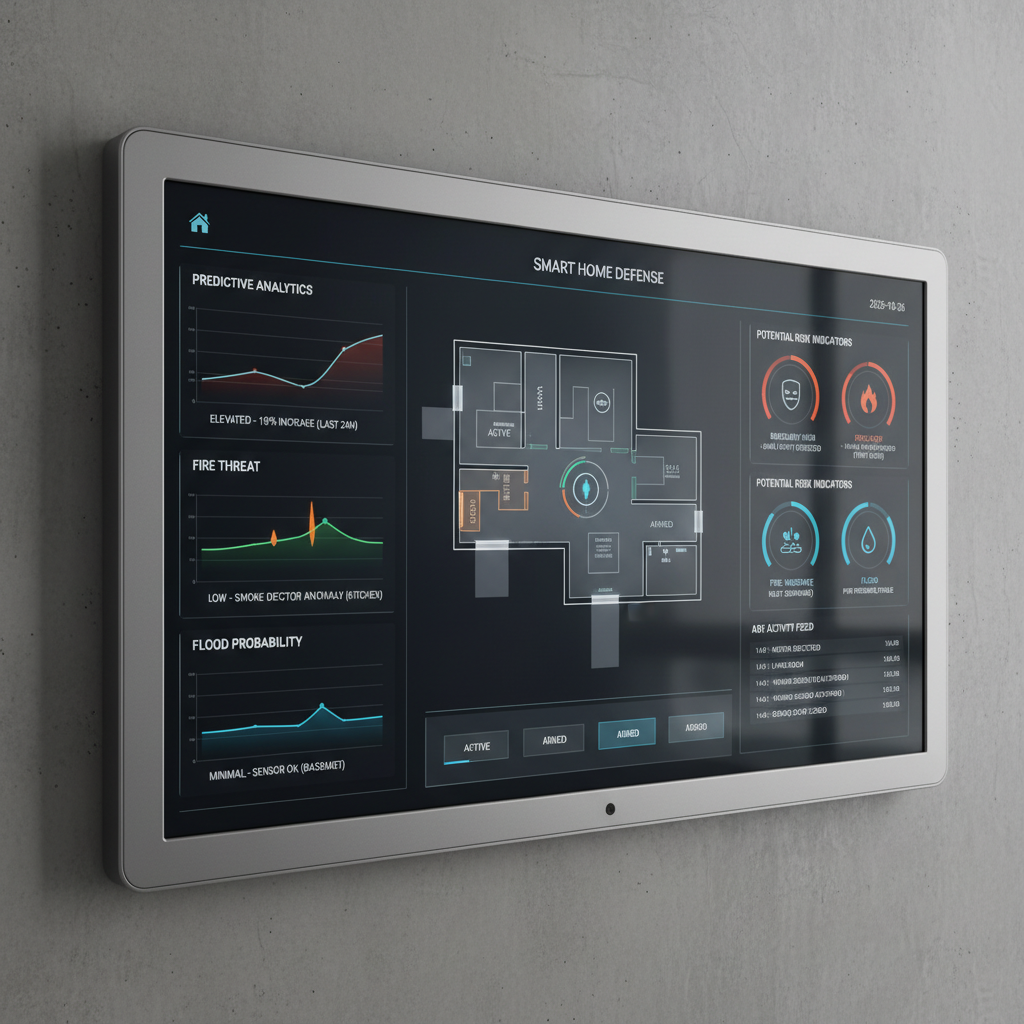
In an age where technology constantly reshapes our daily lives, the realm of home security is undergoing a revolutionary transformation. Gone are the days when security systems merely reacted to an intrusion after it occurred. Today, thanks to the remarkable advancements in Artificial Intelligence (AI) and machine learning, we stand on the precipice of a new era: predictive security analytics. This sophisticated approach empowers our smart homes to not just respond to threats, but to anticipate them, identifying potential risks to your property long before they materialize. Imagine a home that doesn’t just sound an alarm when a window breaks, but actively warns you of suspicious activity hours earlier, or even predicts a plumbing leak before any damage is done. This isn’t science fiction; it’s the tangible reality of AI-driven smart home security.
This comprehensive blog post delves into the fascinating world of predictive security analytics, exploring how AI serves as the vigilant guardian of your sanctuary. We will uncover the underlying mechanisms, the incredible benefits, the current innovations, and what the future holds for proactive property protection. Prepare to discover how intelligent algorithms are learning, adapting, and even thinking ahead to safeguard your peace of mind and your valuable assets.
The Evolution of Home Security: From Reactive to Proactive
For decades, home security operated on a fundamentally reactive model. Traditional systems, while effective in their time, were designed primarily to detect an event after it had already begun. A motion sensor would trigger an alarm once an intruder was inside; a smoke detector would blare only after smoke was present. This “after-the-fact” approach, while better than no security at all, often meant that damage had already been inflicted, or property compromised, by the time authorities or homeowners could respond.
Early Security Systems: A Foundation of Detection
The journey began with simple mechanical locks and human vigilance. The advent of electronic security introduced door and window sensors, passive infrared (PIR) motion detectors, and rudimentary alarm panels. These systems provided an initial layer of protection by creating a perimeter and an internal zone of detection. When a sensor was tripped, a siren would activate, and in more advanced setups, a signal would be sent to a monitoring station. This was a significant leap, offering faster alerts than relying solely on neighbors or passersby.
- Physical Deterrents: Strong locks, reinforced doors, and window bars served as the primary line of defense.
- Basic Electronic Alarms: Early wired systems utilized contact sensors on entry points and simple motion detectors to identify breaches.
- Monitored Services: The introduction of central monitoring stations allowed for professional response upon alarm activation, connecting homeowners to emergency services.
The Rise of Smart Home Security: Connecting the Dots
The 21st century ushered in the era of smart homes, fueled by the Internet of Things (IoT). Devices became interconnected, allowing homeowners to remotely control and monitor various aspects of their property. Security cameras evolved from analog to high-definition IP cameras, offering remote viewing from anywhere with an internet connection. Smart locks, video doorbells, and integrated hubs provided a more cohesive, albeit still largely reactive, security ecosystem. You could get an alert on your phone if a door opened, or see who was at your front door, but the system’s primary function remained detection and notification.
- Integration of diverse smart devices: Cameras, smart locks, environmental sensors, and smart plugs began communicating within a single platform.
- Remote monitoring and control: Smartphone applications became central control panels, enabling users to arm/disarm systems, view live camera feeds, and manage access from afar.
- Improved video surveillance: High-definition video with cloud storage became standard, offering clearer imagery and easy access to recordings.
- Basic automation capabilities: Simple rules like “lights turn on when motion is detected” or “doors lock at bedtime” added convenience but were still largely event-driven.
The Paradigm Shift: Introducing Predictive Analytics
The true revolution occurs when these interconnected smart devices are infused with Artificial Intelligence. AI moves security beyond mere detection to genuine prediction. Instead of simply recording an event, AI algorithms analyze vast streams of data from multiple sensors – video feeds, environmental data, access logs, even external data like weather patterns or local crime statistics – to identify subtle anomalies and patterns that could signify an impending threat. This transformation from reactive to proactive security is not just an upgrade; it’s a fundamental change in how we conceive of and implement home protection, offering an unprecedented level of foresight and prevention.
Predictive security leverages machine learning models trained on millions of data points to understand “normal” behavior within and around your property. Anything deviating from this norm, even slightly, triggers further investigation or an alert. This could mean recognizing a specific vehicle repeatedly circling your block, detecting unusual sound frequencies, or even noticing a gradual increase in humidity that indicates a potential leak. This capability to anticipate threats allows for intervention *before* an incident escalates, protecting your property and providing a deeper sense of security. It’s about empowering your home to “think ahead” and act as a truly intelligent guardian.
What is Predictive Security Analytics?
At its core, predictive security analytics is the application of advanced data analysis techniques, particularly Artificial Intelligence and machine learning, to forecast potential security threats and incidents. It’s about leveraging the enormous volume of data generated by our smart home devices and external sources to identify patterns, anomalies, and correlations that human observers might miss. The ultimate goal is to shift from merely responding to security breaches to actively preventing them, providing a truly proactive layer of protection for your property and loved ones.
Artificial Intelligence and Machine Learning: The Brains Behind the Brawn
AI acts as the central intelligence of a predictive security system. It encompasses various technologies that enable machines to simulate human-like intelligence, including learning, problem-solving, and decision-making. Machine learning (ML), a subset of AI, is particularly crucial here. ML algorithms are trained on vast datasets to recognize patterns and make predictions without being explicitly programmed for every conceivable scenario. Over time, as more data is fed into the system, these algorithms become more accurate, sophisticated, and adept at identifying subtle indicators of risk.
- Supervised Learning: Algorithms learn from labeled data, where inputs are paired with desired outputs (e.g., “this is an intruder,” “this is a friendly face,” “this is normal water pressure”).
- Unsupervised Learning: Algorithms identify patterns and structures in unlabeled data, clustering similar events or identifying outliers without prior examples (e.g., recognizing unusual traffic flow or network anomalies).
- Reinforcement Learning: Algorithms learn by trial and error, optimizing actions based on a system of rewards or penalties, continually improving their decision-making process over time.
- Deep Learning: A more advanced form of ML using neural networks with many layers, particularly effective for processing complex, unstructured data like images, video, and audio, allowing for highly nuanced pattern recognition.
Data Sources: The Eyes and Ears of Predictive AI
The effectiveness of predictive security analytics hinges critically on the quantity and quality of data it can access and process. A truly comprehensive system pulls data from a multitude of sources, both internal to your home and external, creating a rich, multi-dimensional view of your property’s environment and activity, enabling a holistic assessment of risk.
- Smart Home Sensors:
- Motion sensors: Detecting movement in specific areas, differentiating between pets and humans.
- Door/window contact sensors: Monitoring entry and exit points, logging access times.
- Glass break sensors: Identifying the specific acoustic signature of breaking glass.
- Environmental sensors: Monitoring temperature, humidity, carbon monoxide, smoke, and water leaks.
- Vibration sensors: Detecting subtle disturbances on surfaces like walls or fences.
- Occupancy sensors: Understanding which rooms are in use and when.
- Video Surveillance: High-definition cameras with advanced computer vision capabilities for object detection, facial recognition, activity analysis, and even thermal imaging.
- Audio Analytics: Microphones detecting unusual or threatening sounds like screams, gunshots, aggressive voices, or distinct alarm tones from other devices.
- Access Control Logs: Data from smart locks, keypads, and garage door openers, detailing who enters and exits the property and at what specific times.
- Network Activity Logs: Monitoring unusual network traffic within your home, identifying unauthorized devices or potential cyber threats to smart devices.
- External Data Feeds:
- Local crime statistics: Identifying patterns of criminal activity in your immediate neighborhood or zip code.
- Weather forecasts: Predicting severe weather events that could impact property (e.g., high winds, heavy rain, freezing temperatures leading to pipe bursts).
- Social media monitoring (opt-in): Detecting mentions of local incidents, suspicious activities, or public safety alerts in your vicinity.
- Calendar data: Understanding your family’s planned absences (e.g., vacation) or events that might affect home activity.
Algorithms and Pattern Recognition: Deciphering the Future
Once this diverse data is collected, specialized algorithms get to work. These algorithms are designed to establish baselines of “normal” activity and then identify any deviations, no matter how subtle, that could precede an incident. For instance, a system might learn that your household typically goes dormant between 11 PM and 6 AM, with minimal light changes, stable environmental readings, and all doors locked. Any significant departure – a motion sensor trip at 2 AM in an unexpected area, an unusual increase in water flow, or a new Wi-Fi device connecting – would be flagged as an anomaly. More advanced algorithms can even identify a specific vehicle repeatedly driving past your house at unusual hours over several days, linking it to potential reconnaissance activity before a burglary attempt.
The continuous learning aspect of these systems is vital for their long-term effectiveness. As they gather more data and receive feedback from homeowners (e.g., “this flagged anomaly was a false alarm,” or “this predicted threat was indeed real”), their underlying models are continually refined. This iterative process leads to increasingly accurate predictions, fewer false positives, and a security system that becomes more intelligent and reliable over time. This adaptive capability makes AI-powered security systems incredibly robust and highly effective at predicting and preventing a wide array of threats.
How AI Foresees Risks: Mechanisms and Methodologies
The ability of AI to foresee risks isn’t magic; it’s the result of sophisticated algorithms applying various analytical techniques to the continuous stream of data from your smart home. These mechanisms allow the system to build a comprehensive understanding of normal operations and identify subtle deviations that herald potential problems, empowering proactive intervention.
1. Behavioral Pattern Recognition
This is one of the most powerful and insightful aspects of predictive security. AI systems are designed to learn the routine behaviors of occupants, frequent visitors, and even regular external factors (like the mail delivery schedule, neighborhood dog walkers, or children playing in a park nearby). By establishing a dynamic baseline of “normal” activity, the system can instantly flag anything out of the ordinary, often long before it becomes an obvious threat.
- Occupant Behavior: AI observes typical times of entry and exit, common routes taken through the house, usual device usage patterns (e.g., lights on/off, thermostat adjustments), and even unique gait patterns for identifying potential falls in elderly residents.
- Visitor Behavior: It distinguishes between regular visitors (e.g., a cleaner, gardener) and unknown individuals based on pre-programmed recognition or observed frequency.
- External Behavior: AI monitors regular traffic patterns on the street, delivery vehicle schedules, and can detect the repetitive presence of unfamiliar vehicles or individuals near the property at unusual times or for extended durations.
Example: If an AI-powered outdoor camera observes a car previously unassociated with your property loitering in front of your house for an extended period across multiple days, especially during periods when occupants are typically absent, the AI can flag this as suspicious reconnaissance activity and alert you with video evidence, allowing you to act before any break-in attempt.
2. Environmental Anomaly Detection
Beyond human and external behavior, AI also meticulously monitors environmental factors that could pose risks. This includes everything from subtle changes in temperature and humidity to unusual sounds or changes in air quality. These anomalies can predict not only security threats but also non-security risks like property damage or health hazards.
- Water Leaks: Gradual drops in water pressure, unusual continuous water flow patterns (even small ones), or consistent increases in localized humidity in concealed areas (like under sinks or behind walls) can indicate an impending pipe burst or a slow, hidden leak.
- Fire Hazards: Detecting specific smoke particle signatures (via advanced air quality sensors), rapid temperature increases in atypical areas (e.g., attic, utility closet, inside an electrical panel), or the specific sound of electrical arcing can provide a significantly earlier warning than traditional smoke detectors.
- Gas Leaks: While integrated smart gas detectors provide immediate alerts for dangerous levels, advanced AI could potentially monitor appliance performance or ventilation systems for subtle signs that might precede a significant leak.
- Extreme Weather Impacts: Combining real-time local weather data with sensor readings (e.g., high winds causing persistent rattling or structural stress, heavy rain overwhelming drainage systems) to predict potential flood risks, roof damage, or foundation issues.
Example: An AI system continuously monitors a smart water meter and detects a consistent, albeit slight, increase in water usage during off-peak hours over a week. This subtle pattern, deviating from the norm, triggers an alert for a potential slow leak, allowing you to investigate and mitigate the issue before significant water damage occurs, potentially saving thousands in repairs.
3. Geospatial and Contextual Analysis
Modern AI security systems don’t operate in a vacuum; they integrate local and global contextual data to significantly enhance their predictive capabilities. This involves understanding the geographical context of your property and correlating it with wider trends, public events, and even your personal schedule.
- Local Crime Data Integration: By integrating with publicly available (or opt-in community-shared) crime maps and police reports, AI can identify if there’s a recent surge in specific types of burglaries, vandalism, or suspicious activity in your immediate neighborhood. This information can prompt heightened vigilance or adjusted security protocols.
- Event Correlation: If a local sports event, concert, or public gathering is letting out nearby, causing unusual traffic or pedestrian activity near your property, the AI can adjust its monitoring sensitivity or focus, differentiating between normal crowd movement and potential threats.
- Vacation Mode Intelligence: When you activate “vacation mode,” the AI can intelligently simulate occupancy (e.g., varying light schedules, playing sounds at realistic times, controlling smart blinds) and intensify its monitoring for external anomalies, leveraging learned patterns of your actual daily routines.
- Geo-Fencing and Proximity Alerts: Integrating with occupants’ smartphone locations (with consent) to arm/disarm the system automatically or alert if a registered person is entering/leaving a specific zone.
Example: Your AI system cross-references your vacation schedule with local police reports. If there’s a reported increase in “smash and grab” incidents in your specific zip code during the time you’re away, the system might automatically increase camera recording sensitivity, activate specific external deterrent lights at unusual times (not on a fixed schedule), and send more frequent status updates or video summaries to your designated emergency contacts, reflecting the heightened risk.
4. Predictive Maintenance and System Health Monitoring
Beyond external threats, AI can also foresee internal system failures or maintenance needs, ensuring your security infrastructure remains operational, robust, and always ready to protect. This self-awareness contributes significantly to the reliability of your entire smart home ecosystem.
- Battery Life Prediction: Notifying you precisely when sensor batteries are likely to run out based on their usage patterns and power consumption, allowing for proactive replacement before a critical device goes offline.
- Device Malfunction Alerts: Detecting unusual performance from a camera (e.g., frequent disconnections, degraded image quality, unusual buzzing sounds) or a smart lock (e.g., slow response, unusual motor sounds, excessive power draw) before it fails completely.
- Network Health Monitoring: Continuously monitoring Wi-Fi signal strength and connectivity to critical devices, alerting if it degrades to a point where reliability is compromised or a device might drop offline.
- Software Anomaly Detection: Identifying unusual software behavior or unexpected reboots in smart devices that could indicate a firmware bug or a potential cyber compromise.
Example: The AI analyzes the power consumption patterns of your smart camera system. It notices a specific outdoor camera module drawing slightly more power than usual, consistently for several days, accompanied by intermittent slight temperature increases. This indicates a potential hardware fault or overheating issue. It alerts you to inspect or replace the camera proactively, ensuring it remains operational during a critical moment when you might need it most.
Key Technologies Driving Predictive Security
The advanced capabilities of predictive security analytics are not the result of a single breakthrough but rather the convergence and sophisticated integration of several cutting-edge technologies. Each plays a vital and interconnected role in collecting, processing, understanding, and ultimately acting upon the vast amounts of data required for effective risk foresight and proactive protection.
1. Internet of Things (IoT) Sensors
IoT devices form the sensory nervous system of a smart security system. They are the frontline data gatherers, continuously collecting real-time information about the environment and activities both within and around your property. From ubiquitous motion sensors to sophisticated environmental monitors, IoT devices feed the AI with the raw, granular data it needs to perform its complex analysis and make accurate predictions.
- Variety and Precision: A vast array of highly sensitive sensors for motion, contact, glass break, vibration, temperature, humidity, light levels, sound, water presence, smoke, and CO detection.
- Seamless Connectivity: Devices are designed for seamless integration into a central hub, typically communicating wirelessly via robust and energy-efficient protocols like Wi-Fi, Zigbee, Z-Wave, or Bluetooth Mesh.
- Miniaturization and Discretion: Small, aesthetically pleasing, and discreet devices that can be strategically placed without being obtrusive or easily noticed by potential threats.
- Edge Computing Capabilities: Increasingly, some AI processing is done directly on the sensor itself (at the “edge” of the network). This reduces latency, conserves bandwidth, and enhances privacy by processing raw data locally before sending only aggregated or event-triggered information to the cloud.
2. Computer Vision and Video Analytics
High-definition cameras coupled with advanced computer vision algorithms are arguably one of the most impactful technologies for visual risk prediction. These systems go far beyond simple motion detection, enabling the AI to “see” and interpret complex visual information with remarkable accuracy and understanding.
- Object Recognition and Classification: Accurately differentiating between humans, animals (like pets or wildlife), vehicles, and inanimate objects, significantly reducing false alarms.
- Facial Recognition: Identifying known individuals (family, friends, regular visitors) versus unknown persons, and flagging or alerting for specific suspicious faces from a watchlist (with privacy considerations and opt-in consent).
- Activity Recognition: Understanding complex actions and behaviors such as loitering, package delivery, trespassing, unusual gait patterns, or even potential confrontations.
- Anomaly Detection: Identifying subtle pixel changes or visual patterns that deviate from normal visual baselines, such as an object appearing where it shouldn’t be (e.g., a ladder against a wall) or a person moving in an unusual, erratic way.
- Thermal Imaging: Detecting heat signatures, which is extremely useful in low light or complete darkness, and for identifying potential fire risks by monitoring unusual heat sources.
3. Natural Language Processing (NLP) and Audio Analytics
The security system’s “ears” are just as important and insightful as its “eyes.” NLP and audio analytics allow the AI to understand, interpret, and classify sound, which is particularly useful for identifying threats or emergencies that might not be immediately visible or for supplementing visual data.
- Sound Classification: Accurately distinguishing between innocuous background sounds (e.g., dog barking, children playing, a passing car, thunder) and alarm-worthy events (e.g., the specific acoustic signature of glass breaking, gunshots, screams, aggressive voices, or the distinct beeping of a traditional smoke detector).
- Voice Recognition: Identifying specific voices, potentially for access control (e.g., voice unlocking) or alerting if an unfamiliar voice is detected attempting to command a smart assistant or gain entry.
- Keyword and Distress Signal Detection: In smart assistants integrated into security systems, recognizing specific commands, distress signals, or keywords that indicate an emergency situation.
4. Cloud Computing and Big Data Analytics
The sheer volume of diverse data generated by a comprehensive smart home security system necessitates robust and scalable cloud computing infrastructure. Cloud platforms provide the massive storage capacity and processing power needed for AI algorithms to work their magic, enabling real-time analysis and continuous learning.
- Scalable Data Storage: Storing vast amounts of video footage, sensor data, historical logs, and processed analytics efficiently and securely.
- High-Performance Processing: Running complex machine learning models, deep learning neural networks, and advanced analytical queries that require significant computational resources, often in parallel.
- Real-time Analytics: Analyzing incoming data streams instantly to identify emerging threats, correlate events, and trigger immediate alerts or automated responses.
- Global Threat Intelligence and Model Refinement: Aggregating anonymized and permission-based data from numerous homes to identify broader trends, evolving threat patterns, and continually refine and improve AI prediction models globally.
5. Cybersecurity Measures and Secure Communication
As smart security systems become increasingly interconnected and reliant on sensitive data, robust cybersecurity is not just important but absolutely paramount. Protecting the system itself from cyber threats, data breaches, and unauthorized access is crucial to maintaining its integrity, ensuring its reliability, and safeguarding the privacy of homeowners.
- End-to-End Encryption: Securing all data transmission between devices, hubs, cloud servers, and user applications using strong cryptographic protocols, ensuring data remains confidential and unalterable.
- Robust Authentication and Authorization: Implementing multi-factor authentication (MFA) for user accounts, complex password requirements, and granular access controls to prevent unauthorized access to the system.
- Regular Security Audits and Penetration Testing: Conducting frequent vulnerability assessments and ethical hacking tests by independent security experts to identify and address potential weaknesses proactively.
- Secure Software Development Lifecycle (SSDLC): Embedding security considerations throughout every stage of the development process for hardware, firmware, and software, from design to deployment and maintenance.
- Built-in Firewall and Intrusion Detection Systems: Protecting the home network and individual smart devices from external cyber threats, monitoring for suspicious network activity, and alerting to potential attacks.
- Continuous Firmware and Software Updates: Ensuring that all smart devices and the central hub’s software are consistently updated to patch vulnerabilities, improve performance, and integrate new security features.
Benefits Beyond Burglary Prevention
While deterring and preventing burglaries remains a primary function of any robust security system, AI-powered predictive analytics extends its protective umbrella far beyond this singular threat. The ability to monitor, analyze, and predict across multiple data streams opens up a vast array of benefits, transforming your smart home into a truly comprehensive sanctuary that protects against a multitude of risks, enhances well-being, and optimizes efficiency.
1. Enhanced Property Protection Against Environmental Hazards
AI’s continuous, intelligent monitoring of environmental sensors can foresee issues that lead to costly property damage, health risks, or significant inconvenience, often long before traditional detectors would react.
- Proactive Fire Prediction: Going beyond just detecting smoke, AI can identify precursor signs like unusual temperature spikes in electrical panels, inside appliances, or in concealed spaces (e.g., attics, utility closets), or even the subtle scent of burning (via advanced air quality sensors), providing earlier warnings than traditional smoke detectors.
- Flood and Water Damage Prevention: Detecting subtle, sustained drips or pressure drops in water lines, unusual water flow patterns (even small continuous usage when no one is home), or consistent high humidity in confined spaces can predict pipe bursts or hidden leaks before they become catastrophic. The system could even auto-shut off the main water supply if a major leak is detected.
- Carbon Monoxide and Gas Leak Mitigation: While smart CO and gas detectors provide immediate alerts, an AI system could, in theory, monitor ventilation patterns, appliance performance, or even integrate with local utility data to identify potential issues or failures that might precede a critical gas leak.
- Mold and Mildew Prevention: Persistent elevated humidity levels, particularly in basements, crawl spaces, or bathrooms, can be flagged by AI, prompting dehumidifier activation, ventilation adjustments, or an alert to prevent costly mold growth and associated health issues.
2. Advanced Personal Safety and Wellness Monitoring
For households with vulnerable members, such as the elderly, young children, or individuals with specific health conditions, AI offers an invaluable layer of safety, peace of mind, and proactive care, often enabling quicker response times in critical situations.
- Elderly Fall Detection and Prevention: AI analyzing privacy-focused video footage (e.g., low-resolution thermal cameras to preserve anonymity), wearable sensor data, or even changes in gait patterns detected by floor sensors, can detect unusual movements or actual falls, automatically alerting caregivers or emergency services. It can also learn routines and flag unusual prolonged inactivity.
- Child Safety Zones and Monitoring: Creating virtual boundaries within the home (e.g., around a pool, near a garage, in a utility room) and alerting parents if a child enters a dangerous or off-limits area, helping to prevent accidents.
- Enhanced Emergency Response Optimization: In a medical emergency, AI can activate two-way audio to communicate with the occupant, use voice commands to contact emergency services, share the exact location within the home, and even provide relevant medical information (with prior consent) to first responders, significantly reducing response times.
- Wandering Prevention: For individuals with cognitive impairments, AI can monitor for patterns of wandering and alert caregivers if an individual attempts to leave the home at unusual times.
3. Energy Efficiency and Cost Savings
An AI system constantly monitoring your home’s environment, occupancy, and external factors can significantly optimize energy consumption, leading to reduced utility bills and a smaller carbon footprint.
- Intelligent HVAC Control: Learning your preferences, predicting occupancy patterns, and integrating with external weather forecasts to dynamically adjust heating and cooling, ensuring comfort while minimizing waste by pre-conditioning your home only when needed.
- Optimized Lighting Management: Adjusting interior and exterior lighting based on natural light levels, occupancy, time of day, and even seasonal changes, avoiding unnecessary energy use and enhancing ambiance.
- Appliance Monitoring and Phantom Load Detection: Identifying “phantom load” devices (appliances consuming power even when off) or appliances consuming abnormal amounts of energy, flagging them for inspection or automatic shutdown via smart plugs.
- Smart Window and Blind Control: Automatically opening or closing smart windows and blinds based on external temperature, sunlight, and internal climate control settings to maximize natural light and thermal efficiency.
4. Convenience and Home Automation Enhancement
Predictive AI elevates the smart home experience by making automation more intelligent, context-aware, and responsive to your evolving needs and preferences, leading to a truly intuitive living environment.
- Contextual Automation: Your home can anticipate your needs. For example, if your AI learns you typically arrive home at 6 PM, and the weather forecast predicts heavy rain, it might automatically close all open windows, adjust the thermostat to a comfortable level, and turn on porch lights just before your arrival.
- Personalized Environments: Adjusting lighting, music, and temperature settings based on who is detected entering a room, or even based on your mood (if AI-enabled wearables are integrated), creating a truly tailored ambiance.
- Package Delivery Management: Not just alerting you to package arrival, but potentially detecting suspicious persons lingering after delivery, or even coordinating with smart lock systems for secure in-home delivery services (with trusted providers and explicit user authorization).
- Seamless Device Integration: AI acts as the orchestrator, ensuring all smart devices work together harmoniously, simplifying complex routines and making your smart home feel truly cohesive.
By extending its capabilities beyond simple intruder detection, AI-powered predictive security transforms a house into a truly intelligent, self-aware home that actively works to protect its inhabitants and its structure from a diverse range of potential dangers, all while enhancing comfort, efficiency, and overall quality of life.
Addressing Concerns: Privacy, Data Security, and Ethical AI
While the benefits of predictive security analytics are profound and transformative, adopting such advanced technology also brings forward legitimate and critical concerns regarding privacy, data security, and the ethical implications of AI. A responsible and sustainable approach to smart home security necessitates a clear understanding and proactive mitigation of these challenges, ensuring that innovation does not come at the expense of fundamental rights or trust.
1. Data Privacy: The Right to Seclusion
Predictive AI thrives on data, and much of this data pertains to your personal habits, movements, and interactions within your most private sanctuary – your home. The continuous collection of video, audio, environmental, and behavioral sensor data raises fundamental questions about who has access to this information, how it is used, and how it is protected from misuse or unwarranted surveillance.
- Mitigation Strategies:
- Data Anonymization and Aggregation: Reputable providers should anonymize and aggregate data wherever possible, especially when data is used for training AI models, ensuring that individual identities and specific activities remain private.
- Granular Opt-in Policies: Clear, easy-to-understand, and granular opt-in options for data sharing are essential. Users should have explicit control over what information is collected, for what purpose it is used, and with whom it is shared.
- Local Processing (Edge AI): Performing as much data processing and analysis as possible directly on devices (at the “edge” of the network) rather than sending all raw data to the cloud. This significantly reduces the amount of personal data transmitted and stored externally.
- Transparent Data Use Policies: Companies must provide clear, concise, and easily accessible explanations of their data collection, storage, retention, and usage practices, empowering users to make informed decisions.
- Limiting Data Retention: Establishing strict, publicly stated policies on how long data is stored and implementing automatic deletion protocols for unnecessary historical data.
2. Data Security: Protecting Against Breaches and Cyberattacks
A system that collects and processes sensitive personal data must also be rigorously protected against cyberattacks, hacking attempts, and unauthorized access. A security breach could expose intimate personal routines, compromise video feeds, or even grant malicious actors unauthorized control over smart home devices, posing significant risks to safety and privacy.
- Mitigation Strategies:
- End-to-End Encryption: All data, both in transit (between devices, hubs, and the cloud) and at rest (stored on servers), must be encrypted using strong, industry-standard cryptographic protocols.
- Robust Authentication Mechanisms: Implementing multi-factor authentication (MFA) as a mandatory feature for user accounts, enforcing strong, complex password requirements, and encouraging regular password updates.
- Regular Security Audits and Penetration Testing: Providers should conduct frequent, independent vulnerability assessments and penetration testing on their systems, networks, and applications to identify and rectify potential weaknesses.
- Secure Software Development Lifecycle (SSDLC): Embedding security considerations and best practices throughout the entire development process of hardware, firmware, and software, from initial design to deployment and ongoing maintenance.
- Integrated Firewall and Intrusion Detection Systems: Protecting the home network and individual smart devices from external threats, monitoring for unusual network activity, and promptly alerting to attempted cyberattacks.
- User Education and Best Practices: Empowering homeowners with knowledge about securing their home Wi-Fi networks, using unique and strong passwords for each device, and being wary of phishing attempts.
3. Ethical AI: Fairness, Bias, and Accountability
As AI systems become increasingly autonomous in their decision-making and predictive capabilities, ethical considerations become paramount. Issues like algorithmic bias (where AI performs differently or unfairly across various demographic groups), the potential for misuse, and clear accountability for AI-driven decisions must be proactively addressed to foster trust and ensure equitable protection.
- Mitigation Strategies:
- Bias Detection and Mitigation: Regularly auditing AI models for any inherent biases in their training data (e.g., if facial recognition or behavioral analysis performs differently across diverse demographics) and actively working to correct and reduce these biases.
- Human Oversight and Intervention: Ensuring that human operators can review AI decisions, override automated actions, and intervene in critical situations. AI should augment human intelligence and judgment, not entirely replace it.
- Transparency and Explainability (XAI): Striving for AI systems whose decisions and predictions can be understood and explained to users, rather than functioning as “black boxes.” Users should know why a certain alert was triggered.
- Clear Accountability Frameworks: Establishing unambiguous lines of responsibility when AI systems make errors, produce false positives/negatives, or contribute to unintended negative outcomes.
- Purpose-Driven Design and Impact Assessment: Ensuring AI is developed and deployed with a clear, beneficial purpose, conducting thorough impact assessments to foresee and mitigate any unintended negative societal or individual consequences.
- Regulatory Compliance and Ethical Guidelines: Adhering to relevant data protection laws (e.g., GDPR, CCPA) and actively participating in the development of future AI ethics guidelines and standards.
Navigating these complex concerns requires a collaborative and ongoing effort from technology providers, policymakers, consumer advocacy groups, and individual users. By prioritizing privacy-by-design principles, implementing robust security measures, and adhering to strict ethical AI development guidelines, predictive security analytics can deliver its immense benefits while upholding fundamental rights, building enduring trust, and ensuring a safer, more intelligent future for smart homes.
Implementing Predictive Security in Your Home
Integrating predictive security analytics into your home might initially seem like a complex undertaking, but with the right approach and an understanding of modern smart home ecosystems, it’s an achievable and increasingly user-friendly process. Many contemporary systems are designed for scalability and interoperability, allowing for a phased adoption that can grow with your needs and comfort level.
1. Assess Your Current Security Posture and Specific Needs
Before diving into new technology, it’s crucial to understand your existing security setup, identify specific vulnerabilities, and define your primary security goals. This foundational step helps tailor the predictive system to your unique circumstances.
- Evaluate Existing Systems: Take stock of any current alarms, cameras, smart locks, and smart devices you already own. Consider their age, functionality, and compatibility.
- Identify Vulnerability Hotspots: Walk through your property to pinpoint areas of concern, such as secluded windows, easily accessible doors, a flood-prone basement, or aging plumbing infrastructure.
- Define Your Priorities: Are you primarily worried about intrusion, environmental damage (fire, flood), personal safety for family members, or a combination? Your priorities will guide device selection.
- Consider Budget and Scale: Determine your financial investment capacity and whether you want a full-scale integrated system from the start or prefer to build it out in phases.
2. Choose a Smart Home Ecosystem or Dedicated Security Hub
A central hub or smart home ecosystem is the brain of your predictive security system. It aggregates data from various devices, runs the AI algorithms, and allows for centralized control and automation. The choice of hub often dictates the compatibility of your devices.
- Compatibility and Interoperability: Ensure the chosen hub supports a wide range of devices and common communication protocols (Wi-Fi, Zigbee, Z-Wave, Thread, Matter) to avoid vendor lock-in and allow for future expansion.
- AI and Machine Learning Capabilities: Research the built-in AI and machine learning capabilities of the platform. Does it offer true predictive analytics, continuous learning, and advanced anomaly detection, or primarily basic automation?
- Scalability and Future-Proofing: Can the system easily expand with more devices and integrate new technologies as they emerge? Is the platform regularly updated with new features and security enhancements?
- Provider Reputation and Policies: Review the provider’s track record for reliability, data security, privacy policies, and customer support. Transparency in data handling is key.
3. Install and Integrate Key Sensors and Devices
Begin by strategically deploying the core components that will feed the essential data to your AI. Start with critical areas and expand coverage as needed, focusing on high-risk zones first.
- AI-Powered Cameras: Install high-resolution IP cameras with AI features like object, facial, and activity recognition, placing them strategically both indoors and outdoors for optimal coverage and threat identification.
- Advanced Environmental Sensors: Deploy smart water leak detectors (especially in kitchens, bathrooms, basements, utility rooms), multi-spectrum smoke/CO alarms, and temperature/humidity sensors in critical areas.
- Contact and Motion Sensors: Secure all entry points (doors, windows) and critical internal areas (hallways, living rooms) with intelligent contact and motion sensors that can differentiate between various triggers.
- Smart Locks and Access Control: Integrate smart locks for all exterior doors and smart garage door openers for comprehensive access logging and remote control capabilities.
- Smart Water Meter Integration: If available, integrate a smart water meter or a whole-home water flow sensor to provide invaluable data for real-time leak prediction and water usage monitoring.
- Audio Sensors: Consider adding standalone audio sensors or utilizing camera microphones for advanced sound classification if privacy considerations allow.
4. Configure AI Rules, Learning Phases, and Personalization
This is where the “predictive” aspect comes to life. Initial setup typically involves a crucial learning phase where the AI establishes baselines of normal activity and environment for your specific home.
- Define Zones and Sensitivities: Precisely mark specific areas in camera views for motion detection, define “no-go” zones, and adjust sensor sensitivities to minimize false alarms (e.g., ignore pets within a certain size range).
- Establish Baseline Behaviors: Allow the system to observe and learn daily routines for a period (typically days to weeks) to build a robust model of what is “normal” for your household, including occupancy patterns, device usage, and environmental conditions.
- Set Up Custom Alerts and Automated Responses: Configure specific alerts based on predicted threats (e.g., “Suspicious vehicle detected,” “Potential leak in basement,” “Unusual activity in child’s room”). Set up automated responses like lights flashing, a smart speaker issuing a warning, or a smart water shut-off valve activating.
- Provide Feedback and Refine: Actively engage with the system by providing feedback when it flags an anomaly (e.g., “This was a false alarm,” “This was a real threat”). This crucial step helps the AI refine its models, improve accuracy, and reduce future false positives or negatives.
- Personalize Preferences: Adjust settings for individual family members, vacation modes, and specific scenarios to optimize security and convenience.
5. Regular Monitoring, Updates, and Maintenance
Predictive security is not a “set it and forget it” solution. Ongoing engagement, regular monitoring, and proactive maintenance are essential to ensure its continuous effectiveness, reliability, and security.
- Review Alerts and Logs: Regularly check your system’s alerts, event logs, and video recordings to stay informed and understand AI insights.
- Ensure Software Updates: Keep all smart devices, cameras, and your central hub’s software and firmware consistently updated. These updates often include critical security patches, bug fixes, and new AI features.
- Proactive Battery Replacement: Pay attention to the system’s notifications for low sensor batteries and proactively replace them before a critical device goes offline.
- Periodic System Checks: Periodically test your sensors, cameras, and alarms to ensure they are functioning correctly and communicating with the hub.
- Adapt to Changes: As your household routines change (e.g., new pet, home renovations, new family member, extended travel), the AI may need time to re-learn baselines, or you may need to manually adjust certain settings to maintain optimal performance.
- Network Security Review: Periodically review your home Wi-Fi security settings and ensure strong, unique passwords are used for all smart devices.
By diligently following these steps, homeowners can effectively implement and manage a sophisticated, AI-driven predictive security system that offers unparalleled protection, enhanced safety, and profound peace of mind, transforming their property into a truly intelligent sanctuary.
The Future Landscape: Hyper-Personalized and Autonomous Security
The journey of predictive security analytics is far from over; it’s just gaining momentum. The future promises an even more integrated, intelligent, and autonomous security ecosystem, moving towards systems that are not only highly personalized but also capable of complex decision-making, sophisticated interaction, and self-correction. This evolution will further blur the lines between passive monitoring and active, intelligent guardianship, making our homes truly self-aware protectors.
1. Hyper-Personalized Threat Models
Future AI systems will build extremely detailed, dynamic profiles of individual homes, occupants, and their specific risk landscapes. This goes beyond general behavioral patterns to deeply understanding the unique nuances and individual preferences of each property and its inhabitants.
- Individualized Risk Assessment: AI will analyze a vast array of unique factors such as property value, detailed local crime rates, individual occupant schedules, travel patterns, and even integrate with personal calendar data (with explicit consent) to create a dynamic, highly personal risk score for your property.
- Adaptive Sensitivity and Contextual Responses: Security responses will be finely tuned to individual preferences and current, real-time situations. For instance, if you’re expecting a specific package delivery, the system might temporarily lower the sensitivity of certain outdoor sensors for that precise timeframe to avoid nuisance alerts for known activity.
- Advanced Biometric Integration: Beyond basic facial recognition, future systems could integrate advanced biometrics like gait analysis, voice print recognition, or even subtle physiological cues (from embedded sensors) for highly secure and personalized access control and identity verification.
- Emotional Intelligence (Emerging): Limited AI capabilities capable of detecting human emotions (e.g., distress in voices or facial expressions) to differentiate between playful activity and genuine emergencies, enhancing child and elderly care scenarios.
2. Proactive Deterrence and Intelligent Intervention
Beyond mere detection and prediction, future systems will become significantly more active in deterring threats and even intervening autonomously, all within carefully defined ethical and legal boundaries, to prevent incidents from escalating.
- Dynamic and Authentic Occupancy Simulation: AI will create highly realistic “occupancy simulations” using varied lighting patterns, realistic sounds (e.g., conversations, music, TV), and even robotic vacuum movements that adapt in real-time based on learned household behavior, making your home appear truly occupied even when empty.
- Drone and Robotic Integration: Autonomous security drones could perform perimeter checks or respond to external alerts, providing real-time aerial surveillance of your property and surroundings. Indoor robots could autonomously investigate unusual sounds or movements in specific zones, providing visual verification.
- Directed and Intelligent Communication: If an AI detects a suspicious person, it might initiate a polite but firm verbal warning through outdoor speakers, or even engage in a dynamic, AI-driven conversation to gather more information, escalating to contacting authorities if necessary.
- Integrated Community Security Networks: Homes will increasingly share (anonymized and consent-based) data with neighborhood security networks, creating a collective intelligence that can identify wider criminal patterns, coordinate neighborhood watch efforts, and enable rapid, localized responses across an entire community.
3. Self-Healing and Resilient Systems
Future AI security will not only predict external threats but also anticipate and mitigate internal system vulnerabilities and failures, ensuring continuous, uninterrupted protection and a truly robust security infrastructure.
- Predictive Maintenance 2.0: AI will move beyond just warning of low batteries. It will predict specific component failure based on minute performance degradations, internal diagnostics, and usage patterns, automatically ordering replacement parts or scheduling technician visits before a device fails.
- Automated Redundancy and Failover: If a primary communication channel fails (e.g., Wi-Fi outage), the system will seamlessly and autonomously switch to a backup (e.g., cellular, satellite, mesh network) without any user intervention, ensuring continuous connectivity and operation.
- AI-Powered Cyber-Hardening: AI will continuously monitor its own network and the security of all connected smart devices for cyber threats, automatically quarantining suspicious devices, applying necessary security patches, and alerting users to potential vulnerabilities in their smart home ecosystem.
- Power Management Optimization: AI will intelligently manage power consumption across all devices, optimizing battery life, identifying power anomalies, and even potentially integrating with home energy storage solutions for uninterrupted operation during outages.
4. Deeper Integration with Public Services and Infrastructure
The ultimate vision for predictive security involves seamless, secure, and permission-based integration with emergency services, utility providers, and urban infrastructure, creating a truly interconnected ecosystem of safety and efficiency.
- Direct and Intelligent Emergency Dispatch: Upon verified threat prediction or an actual emergency, AI could automatically alert and provide critical, context-rich information (e.g., floor plans, number of occupants, exact location of threat, relevant medical information with consent) directly to fire, police, or medical services, drastically reducing response times and improving outcomes.
- Smart City Integration: Your home security system could exchange anonymized data with broader smart city infrastructure (e.g., intelligent streetlights, public traffic cameras, city-wide safety alerts) to enhance both personal and community-wide security and emergency response capabilities.
- Insurance Premium Reduction and Risk-Based Policies: As these highly advanced systems demonstrate superior risk mitigation capabilities and provide verifiable data on prevention, insurance providers may offer significant reductions in premiums for homes equipped with advanced predictive security.
The future of smart home security is one where your property is not just protected, but intelligently stewarded by an ever-learning, ever-adapting AI. This autonomous guardian will offer an unprecedented level of safety, efficiency, and profound peace of mind, allowing you to truly experience your home as a secure, intelligent, and perpetually vigilant sanctuary.
Comparison Tables
Table 1: Traditional Security Systems vs. AI Predictive Security
| Feature Category | Traditional Security Systems | AI Predictive Security Analytics |
|---|---|---|
| Core Functionality | Reactive detection and alert. Focus on responding to events after they occur. Primarily concerned with “what happened.” | Proactive prediction and prevention. Focus on anticipating threats before they escalate. Concerned with “what is likely to happen.” |
| Data Sources | Basic physical sensors like door/window contacts, simple motion detectors, smoke, and CO detectors. Limited data types. | Multi-layered sensors (video, audio, environmental, access logs, network data) integrated with external data (weather forecasts, local crime statistics, public events). Rich, diverse data. |
| Intelligence Level | Rule-based logic (IF-THEN statements). Very limited or no learning capability. Static responses. | Machine learning and Deep learning algorithms. Continuous learning, adaptation, and pattern recognition. Dynamic, evolving responses. |
| Threat Identification | Identifies direct, immediate events (e.g., open door, motion detected, smoke present). | Identifies subtle anomalies, emerging patterns, and complex correlations indicating *potential* threats or risks that are developing over time. |
| False Alarms | Higher likelihood due to simple, non-contextual triggers (e.g., pet movement, tree branches, sudden drafts). | Significantly lower likelihood due to intelligent differentiation (e.g., distinguishes pet from human, analyzes context, learns normal activity). |
| Types of Protection | Mainly against intrusion, fire, and carbon monoxide. Focus on traditional security threats. | Comprehensive protection covering intrusion, fire, flood, gas leaks, general property damage, personal safety (e.g., falls), energy efficiency, and cybersecurity threats. |
| Response Time | Alerts sent after an event begins or is in progress. Reactionary response. | Warnings sent *before* an event escalates, allowing for preemptive action, early investigation, or proactive deterrence. |
| Cost (Initial) | Generally lower upfront cost due to less complex hardware and software. | Higher initial investment due to advanced AI-enabled hardware, sophisticated software, and often subscription services for cloud analytics. |
| Long-term Value | Provides basic, static security. Capabilities depreciate over time without significant hardware upgrades. | Provides comprehensive, evolving security. Capabilities improve over time with continuous learning and software updates, increasing value. |
Table 2: Key AI Predictive Analytics Capabilities and Applications in Smart Homes
| AI Capability | Description | Smart Home Security Application | Example Scenario |
|---|---|---|---|
| Behavioral Pattern Recognition | Analyzes learned routines of occupants, visitors, and external elements to identify deviations from typical patterns over time. | Predicts unauthorized entry attempts, suspicious reconnaissance, or personal safety risks (e.g., falls, unusual inactivity). | AI learns family leaves every weekday at 8 AM. It detects an unfamiliar vehicle repeatedly circling at 7:45 AM for 3 consecutive days, alerts homeowner to potential reconnaissance activity before a break-in attempt. |
| Environmental Anomaly Detection | Continuously monitors sensor data (e.g., temperature, humidity, water flow, air quality) for deviations from established normal baselines, often subtle ones. | Predicts pipe bursts, hidden water leaks, impending fire hazards, mold growth, or potential appliance malfunctions. | AI detects a consistent, slight increase in basement humidity over a 48-hour period and flags a gradual, unexplained rise in water consumption, alerting for a potential hidden leak or mold risk. |
| Object, Facial, & Activity Recognition | Identifies and categorizes objects, people, known vs. unknown faces, and specific actions within video streams using computer vision. | Differentiates intruders from family/pets, identifies known visitors, flags suspicious loitering, detects unusual movements, or monitors package deliveries. | An outdoor camera with AI recognizes an unknown person lingering at the front door for more than 5 minutes after a package has been dropped off, flagging the activity as suspicious loitering. |
| Audio Analytics / Sound Classification | Analyzes ambient sounds to classify specific acoustic events (e.g., glass breaking, screams, gunshots, distinct alarms, aggressive voices). | Provides early warning for forced entry, domestic disputes, specific emergencies, or other non-visual threats requiring immediate attention. | AI distinguishes the specific acoustic frequency and pattern of breaking glass in a secluded window (differentiating from other loud noises) and sends an immediate, priority alert to the homeowner and monitoring station. |
| Geospatial & Contextual Analysis | Integrates local crime data, real-time weather forecasts, public event calendars, and occupant location data (with consent) with internal home sensor data. | Adjusts security posture based on external risks, predicts weather-related property damage, or enhances occupancy simulation during absences. | AI cross-references your upcoming vacation schedule with a recent increase in local daytime burglaries reported in your specific zip code, automatically suggesting activating advanced occupancy simulation and heightened camera sensitivity. |
| Predictive Maintenance | Monitors performance metrics, power consumption, and diagnostic data of security devices and smart home components for signs of impending failure. | Ensures continuous system operation by proactively preventing sensor battery depletion, device malfunction, or network connectivity issues before they occur. | AI detects erratic Wi-Fi signal drops and unusual power draw from a specific outdoor camera, predicting imminent connectivity loss or hardware failure, and advises troubleshooting or replacement. |
| Cybersecurity Threat Detection | Analyzes home network traffic for unusual patterns, unauthorized access attempts, malware activity, or deviations from normal device communication. | Protects smart home devices from hacking, data breaches, ensures system integrity, and warns of potential network vulnerabilities. | AI identifies an unusual outbound connection attempt from a smart thermostat to a known malicious IP address, flags it as suspicious, quarantines the device on the network, and alerts the homeowner. |
Practical Examples and Real-World Scenarios
Understanding predictive security analytics abstractly is one thing; seeing it in action in real-world scenarios paints a clearer, more compelling picture of its transformative power. Here are several practical examples demonstrating how AI foresees and mitigates diverse risks to your property and peace of mind, showcasing its proactive capabilities.
Scenario 1: Preventing a Burglary Through Behavioral Analysis and External Data
The Traditional Approach: An intruder breaks a window, triggers a glass-break sensor, and an alarm sounds. The police are dispatched, but the intruder may have already gained entry or grabbed valuables before officers can arrive on the scene.
The AI Predictive Approach: Over several consecutive days, your outdoor AI-powered cameras observe an unfamiliar vehicle slowly driving past your house multiple times a day, often at varying speeds, and sometimes pausing briefly. The AI’s advanced behavioral analytics engine, having meticulously learned your neighborhood’s typical traffic patterns and your household’s daily schedule, flags this repetitive activity as “unusual reconnaissance.” It then cross-references this behavioral anomaly with publicly available local crime data, noting a recent surge in daytime burglaries in your specific zip code. The system immediately compiles this data and sends a priority alert to your smartphone: “Suspicious vehicle observed repeatedly near property – potential reconnaissance activity identified.” You receive a short video clip of the vehicle, its license plate, and the specific times of observation. Armed with this proactive warning and tangible evidence, you can then take immediate steps like activating external deterrent lights, speaking through your camera’s two-way audio to signal awareness, notifying neighbors, or immediately contacting local law enforcement with specific, actionable intelligence *before* any actual attempt to breach your property is made.
Scenario 2: Pre-empting a Major Water Leak and Flood Damage
The Traditional Approach: A pipe bursts in your basement while you’re at work or on vacation. Water floods the area for hours, causing significant and costly damage to belongings, structural components, and potentially leading to mold growth before you or a neighbor discovers the catastrophe.
The AI Predictive Approach: Your smart home system includes smart water leak detectors strategically placed near major appliances and plumbing, alongside a whole-home smart water meter. The AI continuously monitors not only for sudden leaks but also for subtle changes in water flow and pressure. Over the course of a week, it detects a consistent, albeit very slight, drop in overall water pressure and a minor, unexplained increase in continuous water consumption during the early hours of the morning when no one is typically using water. This subtle pattern, a deviation from the established norm, is identified by the AI as a “potential slow leak.” Concurrently, a humidity sensor in your basement shows a gradual, sustained rise in moisture levels over the same period. The AI compiles this multi-sensor data and sends you an urgent alert: “Potential water leak detected in basement – investigate pipes near furnace immediately.” You are able to check the area, discover a small drip that could have easily been missed, and call a plumber to fix it before it escalates into a catastrophic burst, potentially saving thousands in repair costs and preventing extensive damage to your property and cherished belongings.
Scenario 3: Ensuring Elderly Safety and Preventing Undetected Falls
The Traditional Approach: An elderly parent living alone suffers a fall and is unable to call for help due to injury or disorientation. Hours or even a full day might pass before they are discovered, leading to more serious health complications, hypothermia, or prolonged distress.
The AI Predictive Approach: An AI-powered system, utilizing privacy-focused motion sensors and potentially low-resolution thermal cameras (to preserve anonymity while detecting presence), meticulously monitors your elderly parent’s movement patterns. The AI learns their typical daily routine: when they wake, move between rooms, visit the bathroom, and go to bed. One afternoon, the AI detects an unusual gait pattern – a subtle unsteadiness or dragging of feet over several days – followed by a sudden, sharp change in elevation and prolonged inactivity in an atypical location (e.g., the kitchen floor, a hallway). The system immediately registers a “potential fall” event. It attempts a voice check through a smart speaker (“Are you alright? Do you need help?”). If there’s no verbal response, it automatically alerts designated family members and local emergency services, providing the exact location within the home. This rapid and intelligent response dramatically reduces the time to aid, significantly improving the outcome for your loved one and providing immense peace of mind to the family.
Scenario 4: Proactive Fire Hazard Detection and Prevention
The Traditional Approach: A short circuit in an old appliance or faulty wiring leads to visible smoke and then flames. A traditional smoke detector activates, blaring an alert and notifying occupants, but the fire has already started and is growing, potentially causing significant damage before evacuation or suppression.
The AI Predictive Approach: Your smart home system includes multi-spectrum smoke detectors (that can differentiate between types of smoke), smart electrical outlets monitoring energy consumption, and integrated temperature sensors. The AI diligently learns the normal operating profile of all plugged-in appliances and electrical circuits. It notices an older toaster oven in the kitchen drawing an unusually high and erratic power load over several days, accompanied by intermittent, barely perceptible spikes in localized temperature detected by a nearby ambient sensor. The AI compiles this data and flags it as an “electrical anomaly and potential overheating risk.” It sends you an immediate alert to inspect the appliance and its wiring. You investigate, discover frayed wires and a faulty heating element, and promptly replace the toaster oven, thereby preventing a potential electrical fire *before* any smoke or flames could even ignite, safeguarding your property and family.
Scenario 5: Advanced Vacation Security with Intelligent Occupancy Simulation
The Traditional Approach: You go on vacation, setting a simple timer for some lights to turn on and off at fixed times. Experienced burglars often surveil homes and can easily spot these predictable, artificial patterns of absence.
The AI Predictive Approach: When you activate “vacation mode” on your AI security system, it draws upon months of meticulously learned data regarding your actual daily routines, not just generic timers. Instead of a simple, predictable timer, the AI creates a dynamic, authentic occupancy simulation. It randomly adjusts light schedules in different rooms, mimicking your actual usage patterns. It might briefly activate smart speakers to play conversational audio or TV sounds, open and close smart blinds at varying times, or even trigger a robot vacuum to move around the house. Externally, the AI continuously monitors for suspicious loitering, unusual deliveries, or attempts to tamper with locks. If an unfamiliar person approaches the front door, the system might activate a pre-recorded, randomized message (“Excuse me, can I help you?”) or flash external lights sporadically to give the strong impression that someone is genuinely home, effectively deterring potential intruders who rely on predictable patterns of absence. The system can even adjust its simulation based on real-time weather forecasts or local event schedules.
These examples vividly highlight how AI’s ability to analyze subtle cues, integrate diverse data, and predict future events significantly elevates home security from a reactive measure to a truly proactive, intelligent, and comprehensive defense system, providing unparalleled safety and peace of mind.
Frequently Asked Questions
Q: What exactly is predictive security analytics?
A: Predictive security analytics is an advanced approach to home security that uses Artificial Intelligence (AI) and machine learning algorithms to analyze vast amounts of data from your smart home devices (cameras, sensors, smart locks, environmental monitors) and external sources (like local crime statistics, weather forecasts). Its primary goal is to identify patterns, anomalies, and correlations that indicate a potential security risk or incident *before* it fully develops or escalates. Essentially, instead of merely reacting to an event after it occurs, it aims to foresee and prevent it by identifying early warning signs.
Q: How is AI predictive security different from a traditional smart home security system?
A: Traditional smart home security systems are primarily reactive; they alert you when an event (such as a door opening, motion detection, or smoke presence) occurs. AI predictive security, in contrast, is fundamentally proactive. It learns your home’s normal patterns of activity and environmental conditions and then uses advanced AI to analyze subtle deviations from these norms. This allows it to suggest potential risks, such as suspicious reconnaissance before a burglary, an impending environmental hazard like a water leak, or even personal safety issues like a fall, *before* they become full-blown incidents. It offers foresight and proactive intervention, not just detection and notification.
Q: What kinds of risks can AI predictive security foresee and help prevent?
A: AI predictive security can foresee and mitigate a wide and diverse range of risks, extending far beyond typical intrusion attempts. These include:
- Intrusion attempts: Detecting suspicious loitering, reconnaissance, or unusual vehicle patterns around your property before a break-in.
- Environmental damage: Predicting pipe bursts, significant water leaks, fire hazards (e.g., overheating appliances), or even mold growth.
- Personal safety concerns: Identifying potential falls for elderly occupants, unusual activity in children’s play areas, or prolonged periods of inactivity that might indicate a problem.
- Utility issues: Flagging unusual energy consumption patterns that could indicate faulty appliances or potential gas leaks.
- Cyber threats: Detecting suspicious network activity or unauthorized access attempts that could compromise your smart home devices or data.
Q: Do I need a lot of special equipment for predictive security?
A: While many existing smart home devices can contribute data, a truly comprehensive and effective predictive security system often benefits from a robust set of interconnected, AI-enabled IoT sensors. This typically includes high-definition cameras with advanced AI features (like object/facial recognition and activity analysis), smart environmental sensors (for water, smoke, CO, humidity, temperature), intelligent contact and motion sensors, smart locks, and a central smart home hub with powerful AI and machine learning capabilities. The more diverse and granular data points the AI has access to, the more accurate and reliable its predictions become. However, many systems allow for phased integration, starting with core components.
Q: What about privacy concerns with all this data collection?
A: Privacy is a paramount concern with AI predictive security. Reputable providers prioritize “privacy-by-design” principles, which typically include:
- Local processing (Edge AI): Processing much of the raw data directly on the device itself to minimize the amount of personal data transmitted to and stored in the cloud.
- Data anonymization and aggregation: Anonymizing and aggregating personal data whenever possible, especially when used for AI model training, to protect individual identities.
- Granular opt-in controls: Providing users with clear, easy-to-understand, and granular control over what data is collected, for what purpose it is used, and with whom it is shared.
- Strong encryption: Implementing end-to-end encryption for all data, both in transit and at rest, to safeguard against unauthorized access.
- Transparent policies: Clearly outlining how data is collected, stored, retained, and used in easily accessible privacy policies.
It is crucial for homeowners to choose providers with strong privacy track records and to thoroughly understand their data policies.
Q: Is AI predictive security expensive to set up and maintain?
A: The initial setup cost for a comprehensive AI predictive security system can be higher than that of traditional security systems. This is primarily due to the inclusion of more advanced hardware (such as AI-enabled cameras, specialized environmental sensors) and the sophisticated software required for AI and machine learning. However, the long-term value in preventing costly property damage (e.g., from floods or fires), enhancing personal safety, and potentially even reducing insurance premiums can often offset this initial investment. Maintenance typically involves ensuring regular software and firmware updates, proactively replacing sensor batteries, and usually a subscription fee for cloud services, advanced AI features, and professional monitoring.
Q: Can AI systems have false alarms? How are they reduced?
A: While early AI systems might have generated more false alarms, modern AI is specifically designed to significantly reduce them. Through continuous machine learning, the AI constantly learns and refines its understanding of your home’s normal environment, occupant routines, and benign activities (e.g., differentiating between a pet moving and an intruder, a delivery person and a suspicious loiterer, or steam from cooking versus actual smoke). User feedback is also crucial; by reporting whether a flagged anomaly was a false alarm or a real threat, homeowners actively help the AI refine its models over time, leading to increasingly accurate predictions and a substantial reduction in nuisance alerts.
Q: What happens if my internet goes down? Will my predictive security system still work?
A: Most advanced predictive security systems are designed with various levels of redundancy to ensure continued operation during internet outages. While they rely on an internet connection for cloud-based AI processing, remote access, and sending alerts to your smartphone or monitoring station, many critical functions will still operate locally. This often includes:
- Local siren activation in case of a detected breach.
- Local video recording to internal storage on cameras or the hub.
- Basic sensor detection and triggering of local alarms.
- Many systems offer optional cellular backup to maintain connectivity for alerts and some cloud functions during internet outages, ensuring communication with monitoring services.
It is essential to inquire about the offline capabilities and available backup options when choosing a system.
Q: How does AI contribute to energy efficiency in a smart home security context?
A: Beyond its security functions, AI can significantly boost your home’s energy efficiency. By continuously analyzing occupancy patterns, external weather forecasts, and your personal preferences, AI-powered systems can intelligently and dynamically adjust heating, cooling, and lighting. For example, it can learn your arrival patterns to pre-condition your home only when needed, optimize lighting based on natural light levels and room occupancy, identify appliances drawing “phantom load” power, or automatically close smart blinds to reduce heat gain/loss. This minimizes energy waste, reduces utility bills, and contributes to a more sustainable home.
Q: What are the future trends for predictive security analytics in smart homes?
A: The future of predictive security promises even more advanced and integrated capabilities, including:
- Hyper-personalization: Systems will build extremely detailed profiles of individual homes and occupants, tailoring security responses and insights to unique habits and specific household needs.
- Proactive deterrence and intelligent intervention: More sophisticated, dynamic occupancy simulations, AI-driven verbal warnings, and potential integration with autonomous drones or robots for perimeter checks and immediate threat assessment.
- Self-healing and resilient systems: AI will not only predict external threats but also anticipate and mitigate its own system failures (e.g., device malfunction, network issues), ensuring continuous, uninterrupted protection.
- Deeper integration with public services: Seamless, secure, and permission-based data sharing with emergency services, smart city infrastructure, and even insurance providers for optimized response, community-wide safety, and potential premium benefits.
- Enhanced ethical frameworks: Continued development of AI ethics guidelines and robust privacy-preserving technologies to ensure responsible and trusted deployment.
The goal is an increasingly autonomous, intelligent, and comprehensively protective home guardian.
Key Takeaways
- Fundamental Paradigm Shift: AI predictive security analytics represents a fundamental shift from merely detecting security incidents to actively anticipating, foreseeing, and preventing them, offering unparalleled levels of proactive protection.
- Data-Driven Intelligence: The immense power of predictive AI stems from its ability to analyze and learn from vast, diverse streams of data, encompassing smart home sensors, video, audio, access logs, and crucial external data like weather patterns and local crime statistics.
- Sophisticated Threat Foreseeing: AI foresees risks through advanced mechanisms such as behavioral pattern recognition, environmental anomaly detection, geospatial and contextual analysis, and proactive system health monitoring, learning “normal” to identify deviations.
- Comprehensive Protection Spectrum: Beyond traditional burglaries, AI-powered systems protect against a broad array of threats including environmental hazards (fire, flood, gas leaks), enhance personal safety (e.g., elderly fall detection), optimize energy efficiency, and significantly improve overall home automation convenience.
- Addressing Concerns is Paramount: The successful and ethical implementation of predictive security necessitates careful consideration and robust mitigation of legitimate concerns surrounding data privacy, strong cybersecurity measures, and adherence to ethical AI principles.
- Strategic Implementation is Key: Effective deployment involves a structured approach: assessing needs, choosing a suitable smart home ecosystem, strategically integrating a variety of AI-enabled sensors, meticulously configuring AI rules and learning phases, and committing to continuous monitoring and maintenance.
- Future of Autonomous Guardianship: The future of AI security promises hyper-personalized threat models, intelligent proactive deterrence and intervention capabilities, self-healing and resilient systems, and deeper, secure integration with public services, culminating in a truly intelligent and self-aware home sanctuary.
Conclusion
The concept of a home that truly understands its environment, anticipates threats, and acts proactively to protect its inhabitants and assets is no longer a distant dream. Predictive security analytics, powered by sophisticated Artificial Intelligence and machine learning, is transforming the very definition of home protection. We’ve moved beyond simple alarms to an era where our homes can learn, adapt, and even think ahead, offering a level of foresight that was once confined to the pages of science fiction.
From discerning suspicious behavior before a burglary attempt to foreseeing a catastrophic water leak, or even ensuring the safety of vulnerable family members, AI-driven security provides a comprehensive shield against a myriad of risks. While valid concerns regarding data privacy, robust cybersecurity, and ethical AI deployment are crucial and demand diligent attention from both technology developers and individual users, the transformative benefits of proactive protection, enhanced safety, and deeper peace of mind are undeniably compelling.
Embracing predictive security analytics means investing in a future where your sanctuary is not just secured, but intelligently guarded. It’s about empowering your home to be an active, vigilant partner in safeguarding what matters most. As these cutting-edge technologies continue to evolve, becoming even more intelligent, intuitive, and seamlessly integrated into our daily lives, the promise of a truly secure, efficient, and intelligent home sanctuary is well within our grasp. The time to consider making your home a future-ready fortress, capable of foreseeing risks before they manifest, is now.








































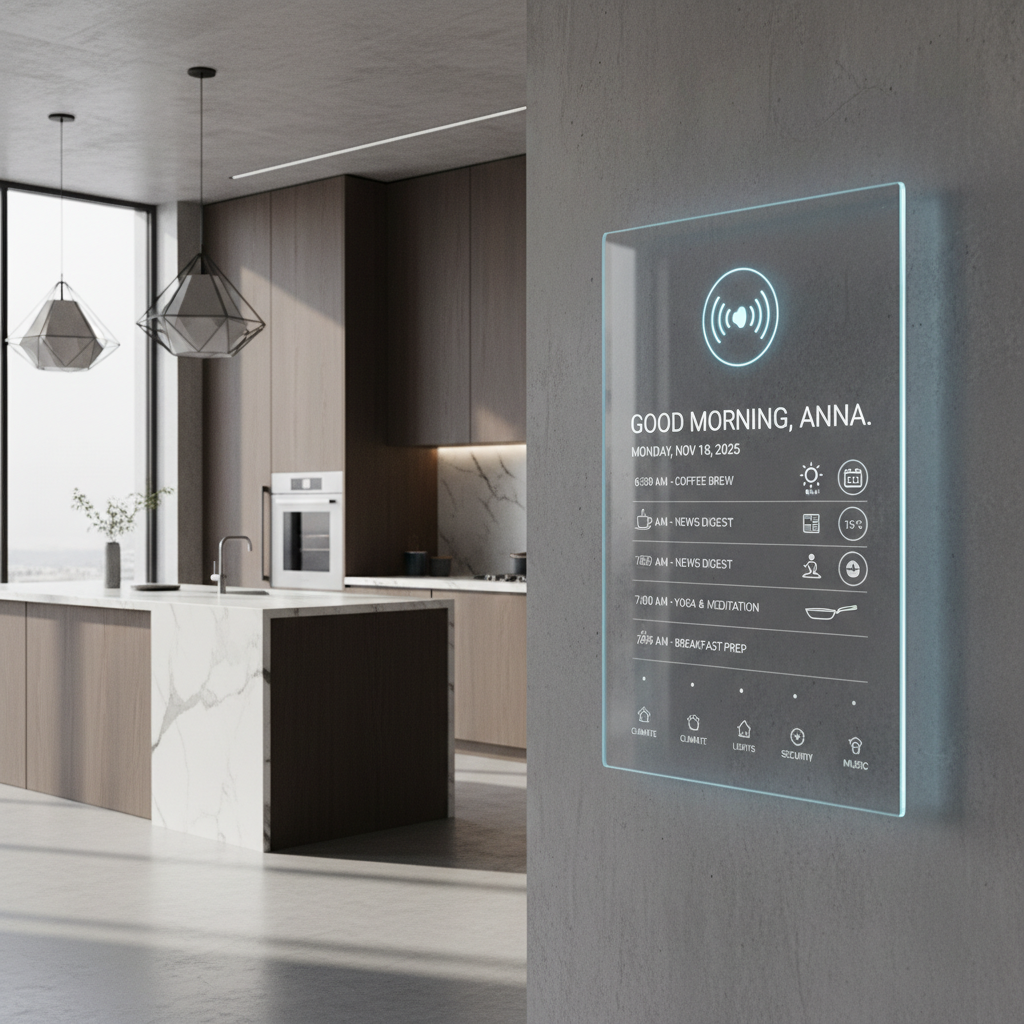











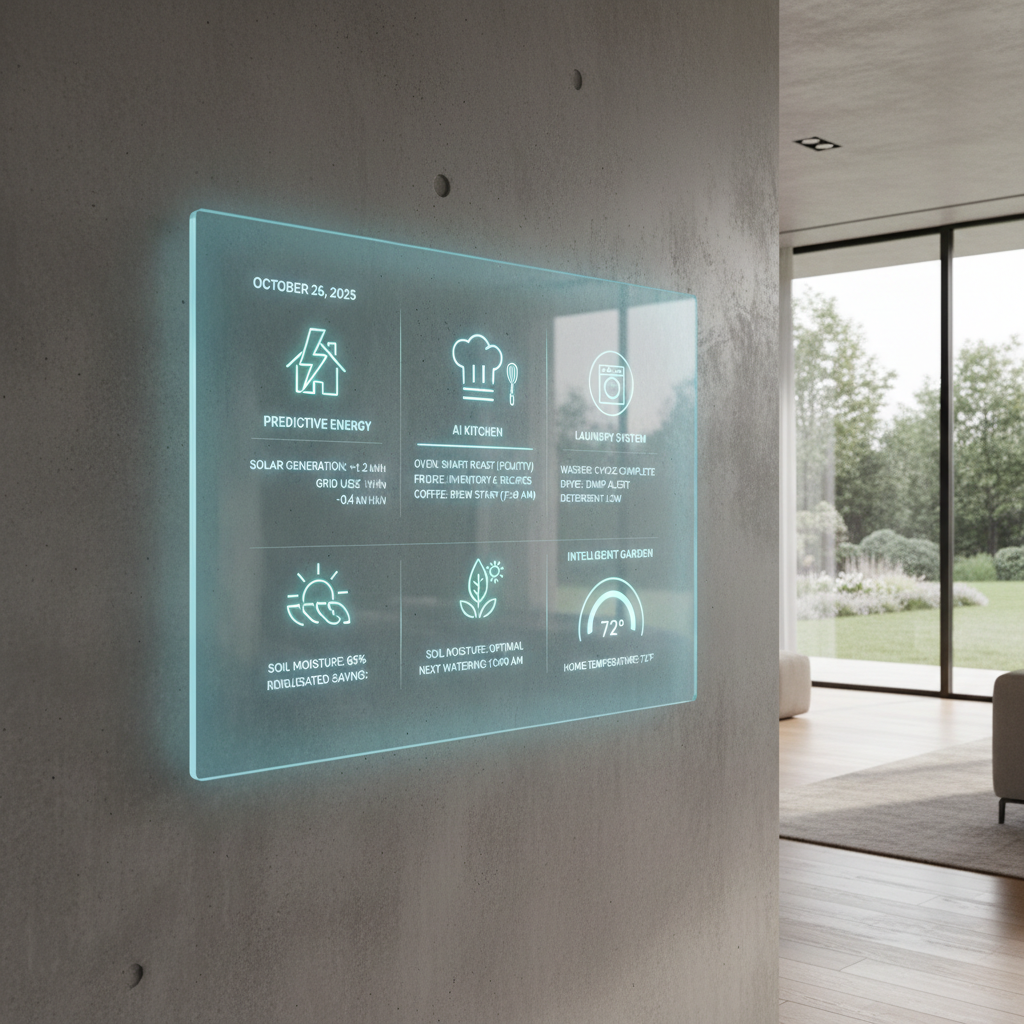























Leave a Reply