

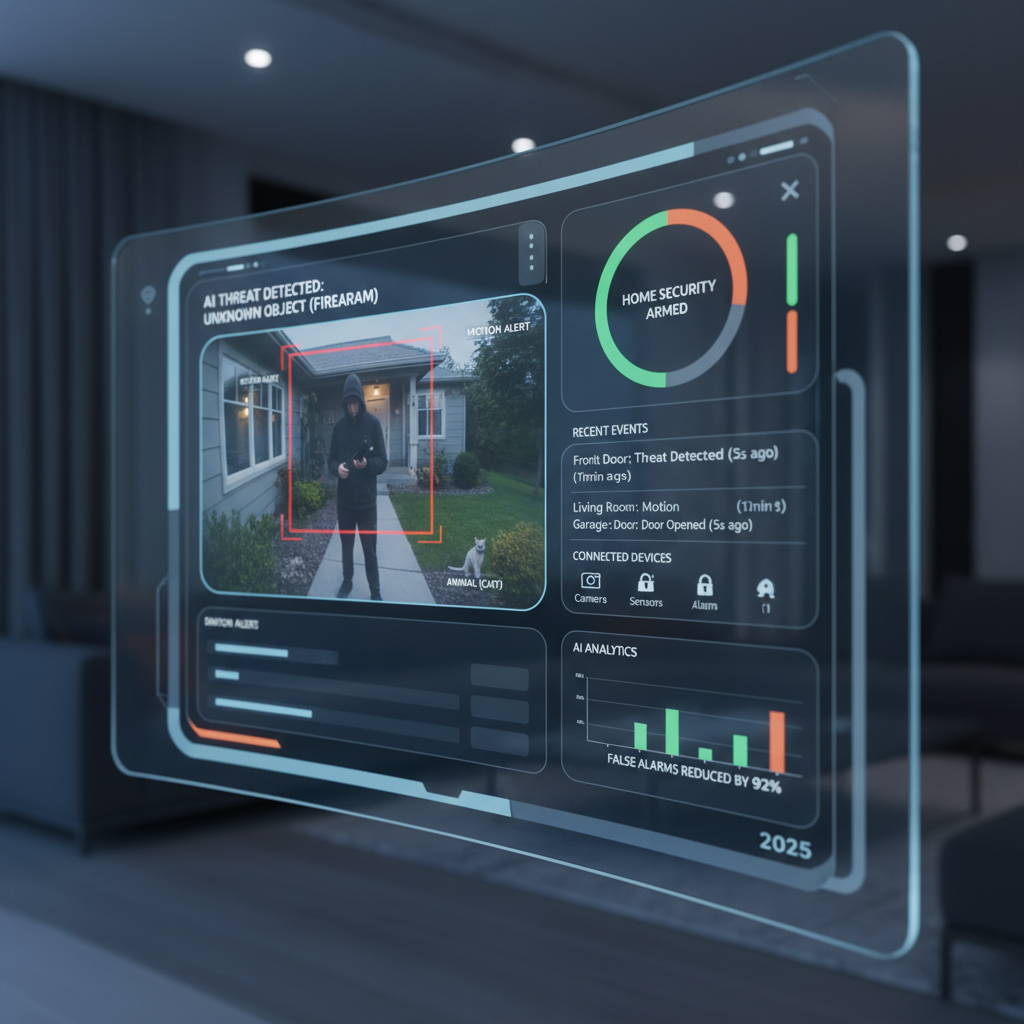
Smart Home Security: How AI Protects Your Sanctuary
In an increasingly connected world, the security of our homes remains a paramount concern. For decades, home surveillance systems have offered a layer of protection, ranging from simple peepholes to complex networks of cameras. However, the traditional security camera, while providing visual evidence, often came with its own set of frustrations: incessant false alarms triggered by pets, shadows, or even a gust of wind; the daunting task of sifting through hours of irrelevant footage; and the reactive nature of merely recording an event after it has happened. These limitations often left homeowners feeling more overwhelmed than truly secure.
Today, we stand at the precipice of a revolutionary shift in home security, spearheaded by the astonishing advancements in Artificial Intelligence (AI) and computer vision. No longer confined to the realm of science fiction, AI-powered cameras are transforming the very essence of home surveillance, moving beyond mere recording to intelligent understanding. Imagine a system that not only sees what’s happening but comprehends it – distinguishing between a delivery person and an intruder, identifying a package left on your doorstep, or even detecting unusual behavior before a threat fully materializes. This is the promise of AI vision, offering a level of sophistication, accuracy, and proactive protection that traditional systems simply cannot match.
This comprehensive guide delves deep into the world of AI vision for home surveillance, exploring how these smart systems function, the myriad capabilities they offer, and what sets them apart from their predecessors. We will uncover how AI dramatically reduces false alarms, enhances the reliability of alerts, and provides actionable insights that empower you to protect your sanctuary with unprecedented confidence. From understanding the core technologies to navigating privacy concerns and choosing the right system for your home, prepare to embark on a journey that redefines what ultimate home security truly means in the age of intelligence.
The Evolution of Home Surveillance: From Basic to Brilliant
The journey of home surveillance has been a fascinating one, marked by continuous innovation. Initially, security was a rudimentary affair, relying on simple locks and physical deterrents. The advent of closed-circuit television (CCTV) systems in the mid-20th century marked a significant leap, allowing continuous monitoring of properties. These analog systems, though groundbreaking for their time, were complex to install, offered grainy black and white footage, and required dedicated recording equipment and constant manual review.
The digital age brought about the next major evolution with the introduction of IP cameras and Network Video Recorders (NVRs). This transition enabled higher resolution video, easier installation via internet protocols, and remote viewing capabilities through computer networks. Suddenly, homeowners could check on their properties from afar using a web browser. The rise of smart homes further integrated security cameras, offering features like basic motion detection, two-way audio, and control via smartphone apps. While these systems provided convenience and improved video quality, their intelligence was often superficial. Motion detection, a cornerstone feature, frequently led to exasperating false alarms, notifying users of everything from swaying branches to neighborhood cats. The sheer volume of recordings made it challenging to pinpoint genuinely critical events, turning security monitoring into a chore rather than a seamless protective layer.
This is where Artificial Intelligence makes its grand entrance, initiating a paradigm shift from merely observing to truly understanding. AI-powered surveillance systems aren’t just recording video; they are actively interpreting it, adding layers of contextual awareness that transform raw data into intelligent insights. This evolution is not just about better cameras; it’s about making cameras intelligent companions in safeguarding our homes, moving us from a reactive security stance to a more proactive and intuitive one. The transition from basic motion triggers to sophisticated AI algorithms represents a leap from brute-force monitoring to nuanced, intelligent protection, drastically reducing the noise and focusing on what truly matters for your peace of mind.
What is AI Vision in Home Surveillance?
To truly appreciate the power of AI vision in home surveillance, it’s essential to understand the underlying technology. Artificial Intelligence (AI) itself is a broad field dedicated to creating machines that can simulate human intelligence. Within AI, two key subfields, Machine Learning (ML) and Deep Learning (DL), are central to how modern security cameras function.
Machine Learning involves training algorithms to learn patterns and make predictions from data. For a security camera, this means feeding it vast datasets of images and videos containing various objects, scenes, and events. Through this training, the ML model learns to identify specific elements. Deep Learning takes this a step further, utilizing neural networks – complex algorithms inspired by the human brain’s structure – to process even larger datasets and identify more intricate patterns. Deep learning models can effectively teach themselves to detect nuanced features that might be missed by simpler ML algorithms, making them exceptionally powerful for visual tasks.
At the heart of AI vision for surveillance is Computer Vision. This is the field that enables computers to “see” and “understand” the content of digital images and videos. In the context of a home security camera, computer vision processes the live video feed frame by frame. Instead of just registering pixel changes (like basic motion detection), it analyzes these pixels to identify distinct objects, shapes, and movements. For example, a computer vision algorithm can differentiate between a human figure, a car, a pet, or a package. It does this by comparing what it sees to the extensive knowledge base it accumulated during its training phase.
When you hear about AI cameras, they are essentially sophisticated computer vision systems powered by deep learning models. These models are continuously refined, allowing the cameras to become incredibly adept at tasks like:
- Identifying and tracking multiple objects simultaneously.
- Recognizing specific types of objects, even in varying lighting conditions or angles.
- Understanding the context of a scene, such as whether a person is merely walking past or attempting to tamper with property.
This ability to not just see, but to interpret and understand, is what elevates AI vision surveillance far beyond traditional camera systems, transforming passive monitoring into intelligent, active protection. It means fewer irrelevant alerts and more meaningful notifications that genuinely contribute to your home’s security.
Key AI Vision Capabilities Transforming Home Security
The true genius of AI vision lies in its diverse set of capabilities that significantly enhance home security. These aren’t just incremental improvements; they represent fundamental shifts in how surveillance systems operate, moving from reactive recording to proactive, intelligent monitoring. Let’s explore some of the most impactful features:
Object Detection and Classification
One of the foundational AI capabilities is the ability to accurately detect and classify various objects within a camera’s field of view. Instead of a generic “motion detected” alert, an AI camera can tell you specifically: “A person was detected at the front door,” “A vehicle entered the driveway,” or “A package has been delivered.” This distinction is critical for minimizing false alarms and providing contextual alerts. You can configure your system to only notify you for specific types of objects, such as humans, while ignoring pets or wildlife.
Facial Recognition and Familiar Face Detection
Advanced AI cameras can employ facial recognition technology to identify individuals. While often raising privacy concerns (which we will address later), in a home context, this can be incredibly useful for recognizing family members, frequent visitors, or trusted service providers. The system can then provide tailored alerts, for example, “Your child arrived home from school” or “An unfamiliar face detected in the backyard.” Some systems allow you to create a database of “familiar faces,” ensuring you only get alerts for unknown individuals, adding a layer of personalized security and convenience. This feature empowers you to know who is on your property at any given time, enhancing safety and control.
Anomaly Detection and Behavioral Analysis
Beyond simply identifying objects, AI vision systems can analyze behavior and detect anomalies. This means they can learn what “normal” activity looks like in your home environment over time. If a sudden, unusual event occurs – such as someone lingering suspiciously near a window, attempting to climb a fence, or even the sound of breaking glass – the AI can flag it as an anomaly and trigger an alert. This capability moves surveillance from merely detecting presence to understanding intent. For example, an AI might detect someone walking back and forth repeatedly in front of your house for an extended period, an action that could precede a break-in attempt, triggering a specific “loitering” alert.
Smart Alerts and Notifications
The most immediate and appreciated benefit for homeowners is the dramatic reduction in irrelevant alerts. With AI, you receive notifications that are rich in context and relevance. Instead of countless alerts for a tree swaying in the wind, you get specific notifications like “Unrecognized person detected on property” or “Vehicle stopped at driveway entrance for an extended period.” Many systems also allow for customizable zones and specific object types within those zones, meaning you only get alerts when a human enters your garden, but not when your pet roams freely. This intelligent filtering prevents alert fatigue and ensures that when your phone buzzes, it’s genuinely important.
Pet Detection and Monitoring
For pet owners, AI vision offers specialized capabilities. Beyond just ignoring pets to prevent false alarms, some systems can specifically monitor your furry friends. This includes detecting if your dog is on the couch when it shouldn’t be, identifying specific pet activities, or simply allowing you to check in on them. This feature is not just about security but also about extending the peace of mind to your beloved companions.
These core capabilities collectively transform home surveillance from a passive recording tool into an intelligent, proactive security guardian, offering unparalleled insights and control over your home environment.
Beyond Motion Detection: The Power of Contextual Understanding
The Achilles’ heel of traditional security cameras has always been their reliance on basic motion detection. While effective at flagging any movement, this simplistic approach is notoriously prone to false alarms. A leaf blowing across the yard, a shadow shifting with the sun, a squirrel scurrying by, or even heavy rain could trigger an alert, bombarding homeowners with irrelevant notifications and leading to “alert fatigue.” This often results in users ignoring alerts altogether, defeating the purpose of a security system.
AI vision transcends this limitation by introducing contextual understanding. It doesn’t just detect motion; it interprets the meaning behind that motion. This is a monumental shift. Instead of triggering an alarm every time pixels change in the frame, an AI system processes the visual data to discern what caused the change and whether it poses a potential threat. This sophisticated analysis is the cornerstone of significantly reducing false alarms and delivering genuinely actionable intelligence.
Real-World Examples of Contextual Understanding:
- Differentiating Pets from People: One of the most common causes of false alarms is pets. Traditional cameras can’t tell the difference between your golden retriever and a human intruder. AI cameras, however, are trained on vast datasets of both animal and human shapes and movements. They can confidently classify a moving object as a “dog” or a “cat” and, if configured, simply ignore it, preventing unnecessary notifications. This means your surveillance system monitors for actual threats without harassing you every time your furry friend walks into view.
- Package Detection, Not Just the Delivery Truck: Many people use cameras to monitor package deliveries. A basic motion sensor might alert you when the delivery truck pulls up, when the driver walks to your door, and when the truck drives away. An AI camera, on the other hand, can be specifically trained to identify a “package.” It will alert you only when a package is placed on your doorstep and perhaps even when it’s picked up. Some advanced systems can even notify you if a package has been left for an unusually long time or if an unknown person approaches a detected package, offering a precise layer of security against package theft.
- Vehicle Identification vs. Every Car Passing By: For homes with driveways, basic motion detection often triggers alerts for every car that drives down the street. AI cameras can distinguish between a specific vehicle parked in your driveway and a car simply passing by on the road. More advanced systems can even learn to recognize specific vehicles (like your own car or a neighbor’s) and only alert you if an unfamiliar vehicle stops or parks for an extended period on your property. This precision means you’re only notified about events that truly matter to your property’s security.
- Weather and Environmental Factors: Wind, rain, snow, and even changes in lighting can cause pixel shifts that confuse traditional motion detectors. AI algorithms are sophisticated enough to understand that these are environmental phenomena, not potential threats. They can filter out the movement of tree branches, fluttering flags, or falling leaves, ensuring that alerts are reserved for genuine anomalies.
By moving beyond simple motion detection, AI vision systems empower homeowners with a security solution that is not only powerful but also incredibly smart and unobtrusive. The power of contextual understanding transforms a security camera from a mere recording device into an intelligent guardian that understands your environment and focuses on what truly requires your attention.
Advanced Features and Future Trends of AI Surveillance
The current capabilities of AI vision are already impressive, but the field is rapidly evolving, promising even more sophisticated and integrated security solutions. Here are some advanced features and emerging trends that are shaping the future of home surveillance:
Predictive Analytics and Proactive Threat Identification
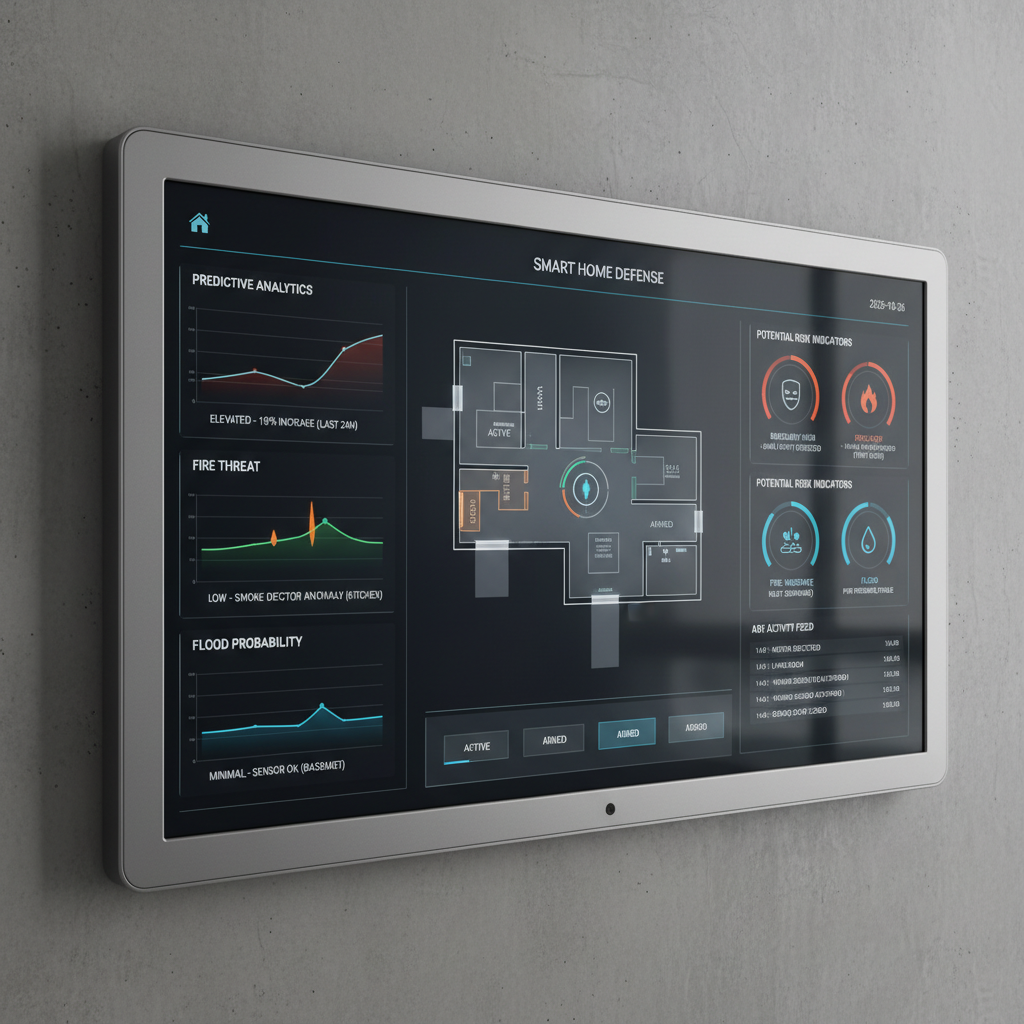
Current AI systems are excellent at detecting events as they happen or shortly after. The next frontier is predictive analytics. By continuously analyzing patterns and behaviors over time, AI could potentially identify indicators of a potential threat before it fully materializes. For instance, if the system consistently observes unusual loitering patterns, multiple individuals casing the property over several days, or suspicious activity near entry points, it could issue a predictive alert, urging heightened vigilance or even triggering pre-emptive actions like activating floodlights or recording enhanced footage. This moves security from reactive to truly proactive, aiming to deter incidents before they even begin.
Drone Integration for Perimeter Security
Imagine your home surveillance system detecting an anomaly in a remote part of your property and automatically dispatching a small, autonomous security drone to investigate. Equipped with its own AI vision, the drone could stream live video, use thermal imaging, or even activate an alarm if a threat is confirmed, all while maintaining a safe distance. While still in nascent stages for residential use, drone integration holds immense potential for large properties or remote locations, providing a dynamic and expandable perimeter security solution.
Privacy-Preserving AI and Anonymization
As AI capabilities grow, so do concerns about privacy. Future AI surveillance systems are incorporating more advanced privacy-preserving techniques. This includes:
- On-Device Processing (Edge AI): Minimizing the amount of data sent to the cloud by processing video directly on the camera, keeping sensitive information local.
- Anonymization: Automatically blurring or pixelating faces of non-threats or known individuals, ensuring privacy for family and friends while maintaining clarity for potential intruders.
- Selective Recording: Only recording and storing footage when specific, predefined events (e.g., an unfamiliar person detected) occur, rather than continuous recording.
- Consent Management: More granular control for users over whose faces are recognized and how that data is used or stored.
These innovations aim to balance robust security with individual privacy rights, giving homeowners more control over their data.
Edge AI vs. Cloud AI: The Evolving Landscape of Processing
The processing power for AI vision can reside in two primary locations:
- Cloud AI: Video footage is sent to remote servers (the cloud) for analysis. This offers immense processing power, constant updates, and easy scalability. However, it requires a robust internet connection, can have latency issues, and raises data privacy concerns as footage leaves your home.
- Edge AI: Processing occurs directly on the camera device itself (“at the edge” of the network). This provides instant analysis, enhanced privacy (data stays local), and reduced reliance on internet bandwidth. Edge AI is becoming increasingly powerful with advancements in chip technology, enabling complex AI models to run on compact devices.
The trend is towards a hybrid approach, where initial detection and basic classification happen on the edge for speed and privacy, while more complex analysis or long-term storage occurs in the cloud when necessary. This optimizes performance and security.
Interoperability and Ecosystem Integration
The future of AI surveillance is deeply intertwined with the broader smart home ecosystem. Expect even more seamless integration with other smart devices:
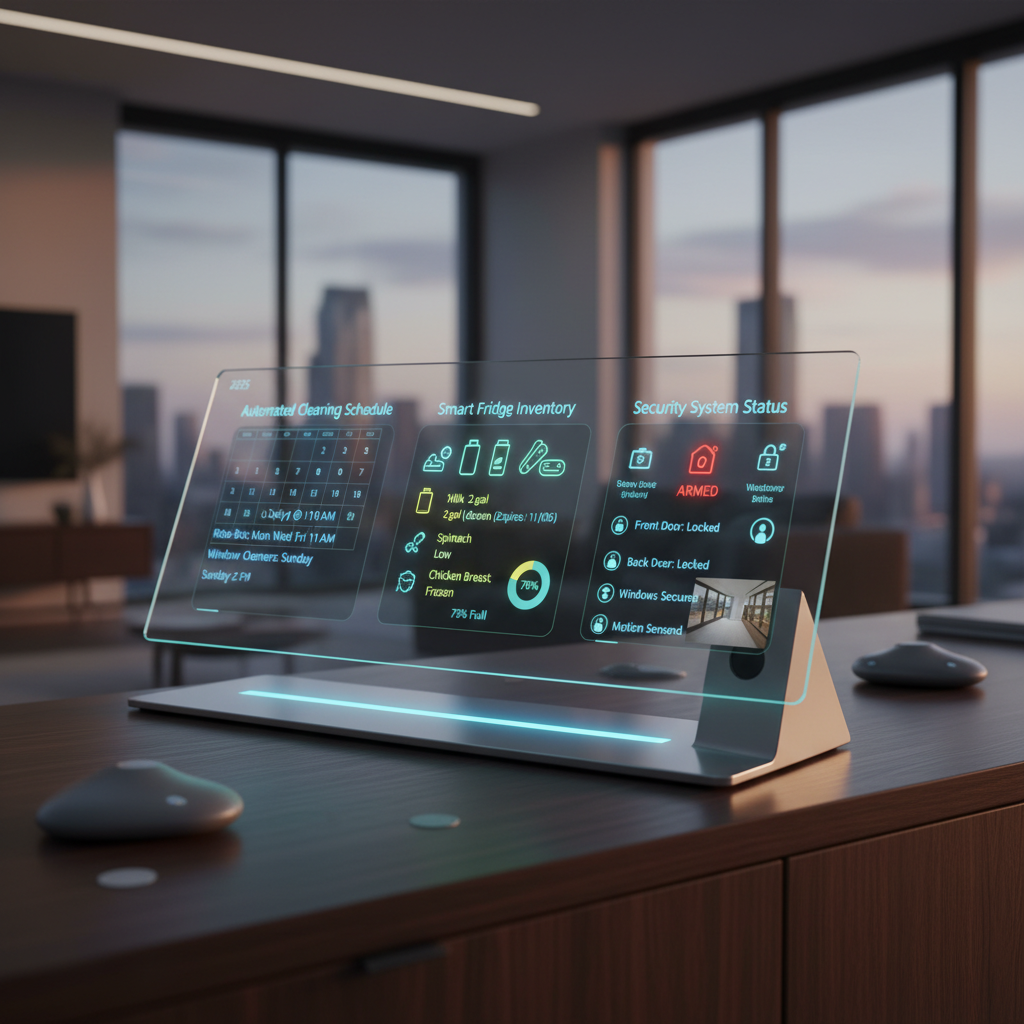
- AI camera detects an unfamiliar person; smart lights turn on, and smart locks engage.
- AI identifies a potential fire; smoke detectors are alerted, and smart vents open to clear smoke.
- AI confirms a delivery; smart doorbell chimes, and a text message is sent.
This level of interoperability creates a truly cohesive and intelligent security network, where all devices work in concert to protect your home. The goal is a security system that is not only smart but also inherently adaptive and responsive to your home’s evolving needs.
Choosing the Right AI Vision System for Your Home
With the rapid growth in AI surveillance options, selecting the ideal system for your home can seem daunting. It’s crucial to consider several factors to ensure you invest in a solution that meets your specific needs, budget, and comfort level. A truly effective AI security system is one that integrates seamlessly into your lifestyle and provides genuine peace of mind.
1. Define Your Security Needs and Priorities
Before looking at products, consider what you want your system to achieve. Are you primarily concerned about package theft? Do you want to monitor specific areas like a swimming pool or a child’s play area? Is pet monitoring important? Do you need facial recognition for family members? Prioritizing your needs will narrow down your options significantly, helping you focus on cameras with the specific AI capabilities that matter most to you.
2. Budget Considerations: Entry-Level vs. Premium Features
AI cameras span a wide price range. Entry-level models might offer basic person detection and smart alerts, while premium systems boast advanced features like facial recognition, behavioral analysis, 4K resolution, and robust local storage options. Factor in not just the upfront cost of the hardware but also potential monthly subscription fees for cloud storage, advanced AI features, or professional monitoring. Sometimes, a slightly higher initial investment can save you money and headaches in the long run by providing superior performance and fewer false positives.
3. Privacy Policy and Data Security
This is arguably one of the most critical factors. Research how each manufacturer handles your data. Questions to ask include:
- Is video footage stored locally (on-device, SD card, NVR) or in the cloud?
- If cloud-stored, is it encrypted? What are the company’s data retention policies?
- Does the company sell or share your data with third parties?
- What cybersecurity measures are in place to protect against hacking?
- Do they offer two-factor authentication for account access?
Look for transparency and strong commitments to user privacy. Reputable brands will clearly outline their data handling practices.
4. Integration with Your Existing Smart Home Ecosystem
If you already have a smart home hub (e.g., Amazon Alexa, Google Home, Apple HomeKit, Samsung SmartThings), consider how well the AI camera system integrates with it. Seamless integration means you can control your cameras, receive alerts, and trigger automations (like turning on lights when motion is detected) through a unified platform. Check for compatibility with voice assistants and other smart devices you own or plan to acquire.
5. Specific AI Capabilities and Performance
Evaluate the actual performance of the AI features. Some systems excel at person detection but might be weak on package detection. Read reviews, watch demo videos, and ideally, test a unit if possible. Look for:
- Accuracy of object detection (humans, vehicles, animals, packages).
- Effectiveness in reducing false alarms.
- Speed of notifications.
- Quality of night vision and low-light performance.
- Range of customization for alert zones and detection sensitivity.
Don’t just take marketing claims at face value; look for independent assessments.
6. Installation and Power Options
Consider whether you prefer a DIY-friendly setup or professional installation. Wireless cameras offer more flexibility but require battery changes or consistent charging. Wired cameras (PoE – Power over Ethernet, or AC power) provide continuous power and often more reliable connectivity but may require more complex installation. Assess your technical comfort level and the wiring possibilities in your home.
7. Scalability and Future-Proofing
Think about your future needs. Can you easily add more cameras to the system? Does the manufacturer offer a range of outdoor and indoor cameras? Are software updates frequent, ensuring the AI models improve over time? Investing in a system that can grow with your needs and offers ongoing support is a wise decision.
By carefully evaluating these factors, you can make an informed decision and choose an AI vision system that truly enhances your home’s security, providing intelligent protection without the frustration of traditional surveillance.
Addressing Common Concerns: Privacy, Ethics, and Data Security
The rise of AI-powered surveillance, with its advanced capabilities like facial recognition and behavioral analysis, naturally brings forth legitimate concerns regarding privacy, ethical use, and data security. It’s crucial for homeowners to understand these aspects and choose systems that prioritize responsible deployment of technology.
Privacy Considerations
The primary privacy concern revolves around who has access to your footage and how it’s used. When an AI camera identifies a person, records their activities, or recognizes their face, that data is generated.
- Data Ownership and Access: Who owns the video data? Is it stored on your device, by the manufacturer, or a third-party cloud service? Ensure the terms of service clearly state your ownership and control over your data.
- Recording Public vs. Private Spaces: Be mindful of where your cameras are pointed. While monitoring your own property is acceptable, inadvertently recording public sidewalks or a neighbor’s yard can lead to privacy conflicts and potential legal issues. Most systems allow you to set privacy zones to black out parts of the image.
- Facial Recognition Ethics: While powerful, facial recognition can be a double-edged sword. For personal home use, identifying family members might be convenient, but using it on every visitor without their knowledge raises ethical questions. Many systems allow you to opt-in or out of this feature, or only use it to distinguish between “known” and “unknown” individuals rather than specific identities.
Many reputable companies are implementing privacy-by-design principles, offering features like local storage, on-device (edge) processing to minimize cloud transfers, and options for anonymizing non-critical footage.
Ethical Use of AI
The ethical implications of AI in surveillance are complex and constantly debated. Key ethical considerations include:
- Bias in Algorithms: AI algorithms are trained on data, and if that data is biased (e.g., containing more images of one demographic than another), the AI might perform less accurately or even exhibit bias when identifying individuals from underrepresented groups. Reputable manufacturers invest in diverse datasets and rigorous testing to mitigate this.
- Mission Creep: Ensuring that the surveillance system is used for its intended purpose – home security – and not for unwarranted monitoring, harassment, or other unethical activities. Homeowners have a responsibility to use the technology responsibly.
- Transparency: Understanding how the AI works, what data it collects, and how it makes decisions is crucial for building trust. Manufacturers should be transparent about their AI models and capabilities.
The responsible use of AI requires both technological safeguards and conscious decision-making by users.
Data Security Measures
Beyond privacy, the security of the collected data against cyber threats is paramount. A compromised security system could provide intruders with insights into your home or expose sensitive personal information. Look for systems that incorporate robust security features:
- Encryption: All data, whether in transit (from camera to cloud) or at rest (stored in the cloud or on device), should be strongly encrypted. This prevents unauthorized access even if data is intercepted.
- Secure Cloud Infrastructure: If cloud storage is used, ensure the provider utilizes industry-standard security protocols, regular audits, and robust physical and digital safeguards for their servers.
- Multi-Factor Authentication (MFA): Always enable MFA for your security camera accounts. This adds an extra layer of protection, typically requiring a code from your phone in addition to your password, making it much harder for unauthorized users to gain access.
- Regular Software Updates: Manufacturers should frequently release software and firmware updates. These updates often include security patches to address newly discovered vulnerabilities, keeping your system protected against evolving cyber threats.
- Network Security: Protect your home Wi-Fi network with a strong password and WPA2/WPA3 encryption. Isolate IoT devices on a separate guest network if possible, to limit potential access to your main network.
By choosing a system from a trusted brand that prioritizes privacy and security, and by implementing best practices in your own home network, you can harness the powerful benefits of AI vision without compromising your digital safety or personal privacy.
Installation and Integration: Making AI Vision a Reality
Bringing AI vision home surveillance into your sanctuary involves more than just selecting the right cameras; it also encompasses the practical aspects of installation and seamless integration into your existing smart home ecosystem. Understanding these processes will help you deploy your system effectively and maximize its benefits.
DIY vs. Professional Installation
The choice between doing it yourself or hiring a professional largely depends on your technical comfort level, the complexity of the system, and your desired level of finish.
- DIY Installation: Many modern AI cameras are designed for easy, user-friendly installation. Wireless cameras, especially, often involve simply mounting them, connecting to your Wi-Fi, and following app-based setup instructions. This option saves money on installation costs and gives you direct control over placement. It’s suitable for simple setups or when you’re comfortable with basic home networking. However, challenges can arise with optimal camera placement for best AI performance, ensuring adequate Wi-Fi signal strength, and dealing with wiring if you opt for wired cameras.
- Professional Installation: For larger homes, complex multi-camera setups, systems requiring extensive wiring (e.g., Power over Ethernet – PoE), or if you prefer a perfectly concealed and optimized setup, professional installation is invaluable. Installers can ensure optimal camera angles, hide unsightly wires, configure network settings, and provide training on the system. While incurring additional costs, it guarantees a robust and efficient setup, often with better reliability and fewer troubleshooting headaches down the line. Professionals can also advise on local regulations regarding camera placement.
Network Requirements for Optimal Performance
AI cameras, especially those relying on cloud-based processing or streaming high-resolution video, are internet-dependent. A stable and sufficiently fast internet connection is crucial:
- Bandwidth: Ensure your home internet plan has enough upload bandwidth to handle continuous video streams from multiple cameras. High-resolution (1080p, 2K, 4K) cameras consume more bandwidth. Check the manufacturer’s recommendations for minimum upload speeds.
- Wi-Fi Strength: For wireless cameras, strong Wi-Fi signal strength at each camera location is paramount. Weak signals can lead to dropped connections, lagging footage, or unreliably functioning AI features. Consider Wi-Fi extenders, mesh networks, or wired (Ethernet) connections for areas with poor coverage.
- Router Capacity: Your router should be capable of handling multiple connected smart devices without performance degradation. An older or budget-friendly router might struggle under the load of several high-bandwidth cameras.
Many AI cameras now feature “Edge AI,” processing data on the device itself. While these still require internet for alerts and remote viewing, they reduce reliance on constant, high-bandwidth uploads, potentially working better with more modest internet speeds for core AI functions.
Powering Your AI Vision Devices
AI cameras require a power source, and you typically have a few options:
- Battery-Powered: Offer maximum flexibility in placement as they don’t require proximity to an outlet. Ideal for renters or hard-to-reach spots. However, they require periodic recharging or battery replacement, and often use motion-activated recording to conserve power, meaning they might miss continuous footage.
- Wired (AC Powered): Plug directly into a standard electrical outlet. Provides continuous power, ensuring constant operation and often allowing for continuous recording. Limited by outlet proximity.
- Power over Ethernet (PoE): A single Ethernet cable provides both network connectivity and power. This is a very reliable and robust option, eliminating the need for separate power cables and often offering more stable internet connection than Wi-Fi. It requires a PoE-compatible camera and either a PoE-enabled router/switch or a PoE injector.
- Solar Powered: Some outdoor cameras offer solar panel attachments, which continuously trickle-charge a built-in battery, providing a sustainable power solution for sunny locations.
Smart Home Ecosystem Integration
The true power of modern AI surveillance is realized when it integrates seamlessly with your broader smart home. This allows for powerful automations and centralized control:
- Voice Assistants: Connect with Amazon Alexa, Google Assistant, or Apple HomeKit to view camera feeds on smart displays, arm/disarm your system, or ask for event summaries using voice commands.
- Smart Lighting: Set up routines where detecting an unfamiliar person after dark automatically triggers outdoor floodlights or interior lights, creating a deterrent and enhancing visibility for recording.
- Smart Locks and Doorbells: When your AI camera identifies a known family member at the front door, smart locks could automatically unlock. Conversely, if an unknown person is detected lingering, the smart doorbell could trigger a pre-recorded message or two-way audio interaction.
- Other Sensors: Integrate with door/window sensors, motion sensors (non-AI), and smoke/CO detectors to create comprehensive security scenarios. For example, if a door sensor triggers, your AI camera could automatically focus on that area and begin recording.
By carefully planning installation and leveraging smart home integration, you can transform your AI vision system into a highly effective, intelligent, and responsive guardian for your home.
Comparison Tables
Table 1: Traditional Surveillance vs. AI-Powered Vision Surveillance
| Feature/Aspect | Traditional Surveillance (e.g., Basic IP Camera) | AI-Powered Vision Surveillance (e.g., Smart AI Camera) |
|---|---|---|
| Core Detection Method | Basic pixel change motion detection | Advanced computer vision, deep learning for object classification, behavioral analysis |
| Alert Accuracy | High rate of false alarms (pets, shadows, weather, insects) | Significantly reduced false alarms, highly accurate, context-rich alerts |
| Intelligence Level | Reactive; records whatever moves, limited understanding of content | Proactive; understands content (who, what, when), interprets actions, learns patterns |
| Notification Types | Generic “Motion Detected” | Specific: “Person detected,” “Vehicle entered driveway,” “Package delivered,” “Animal detected” |
| Footage Review | Manual review of potentially hours of irrelevant footage to find events | Smart indexing and filtering, event summaries, relevant clips highlighted, quicker review |
| Privacy Features | Basic (e.g., on/off schedule) | Advanced (e.g., facial recognition opt-in/out, privacy zones, local processing, anonymization options) |
| System Cost (Relative) | Generally lower initial hardware cost | Higher initial hardware cost, potential for subscription fees for advanced AI features |
| Integration with Smart Home | Basic (e.g., on/off via app) | Deep integration (e.g., voice control, automation with lights/locks, predictive actions) |
Table 2: Edge AI vs. Cloud AI Processing in Surveillance
| Aspect | Edge AI (On-Device Processing) | Cloud AI (Remote Server Processing) |
|---|---|---|
| Processing Location | Directly on the camera or local hub | Remote servers in the cloud |
| Data Transfer Required | Minimal (only metadata or triggered clips sent to cloud) | High (raw video stream sent to cloud for analysis) |
| Latency | Very low, near real-time analysis | Higher, dependent on internet speed and server load |
| Privacy Implications | Enhanced privacy; raw data stays local | Potential privacy concerns; raw data leaves your home to be processed remotely |
| Internet Reliance | Less dependent on constant high bandwidth for core AI functions | Highly dependent on consistent, high upload bandwidth |
| Cost Model | Higher upfront hardware cost for powerful local chips | Lower upfront camera cost, but often requires recurring cloud subscription fees |
| Scalability | Limited by individual device processing power | Highly scalable; cloud resources can be expanded easily |
| Computational Power | Limited by device hardware, but rapidly improving | Virtually limitless, leveraging large server farms |
| Software Updates | Requires firmware updates for new AI models/features | AI models can be updated and improved centrally in the cloud without device firmware changes |
Practical Examples: Real-World Scenarios for AI Vision in Home Security
To truly grasp the transformative impact of AI vision, let’s look at how it solves common problems and enhances daily life with real-world scenarios:
1. Combatting Package Theft
The Problem: You order something online, but a “porch pirate” steals it before you get home. Traditional cameras might record the theft, but often the notification comes too late, or you’re swamped with alerts from every delivery driver and passing car.
AI Solution: An AI-powered camera specifically trained for “package detection” monitors your porch. When a delivery person places a package down, you receive an instant alert: “Package detected at front door.” If, an hour later, a different, unfamiliar person approaches the package and picks it up, you get a critical alert: “Unrecognized person taking package from doorstep.” This specific, actionable intelligence allows you to intervene immediately, potentially through two-way audio, or provide crystal-clear evidence to authorities, increasing the chances of recovery.
2. Enhancing Child Safety (e.g., Pool Monitoring)
The Problem: A swimming pool is a wonderful amenity but poses a significant safety risk for young children. Traditional motion detectors can be triggered by leaves, pool covers, or animals, leading to constant false alarms.
AI Solution: An AI camera strategically placed to monitor the pool area is configured for “human detection” specifically for children’s height profiles or “person entering restricted zone” detection. If a child approaches the pool perimeter or enters the water unsupervised, the AI immediately triggers an alert to your phone, potentially activating an audible alarm outside, giving you precious seconds to respond. It ignores birds, squirrels, or the swaying of pool toys, focusing only on the true safety risk.
3. Elderly Monitoring and Fall Detection
The Problem: Caring for elderly family members who live alone can be worrying. Accidents like falls can go unnoticed for hours with traditional monitoring, which only records but doesn’t interpret.
AI Solution: AI vision cameras (used with consent and careful privacy considerations) can be deployed in common areas. The AI can be trained to recognize a “fall event” – a sudden collapse or a prolonged period of a person remaining on the floor. If such an event is detected, it immediately sends an alert to designated family members or caregivers, potentially with a short video clip for verification, allowing for rapid response and assistance.
4. Deterring Unwanted Visitors and Loiterers
The Problem: Someone is repeatedly lingering suspiciously near your property, or an unfamiliar vehicle is parked outside your house for an unusually long time. Basic motion detection might flag this, but the context is missing, making it hard to assess the threat.
AI Solution: An AI camera with “behavioral analysis” can detect “loitering” or “unusual vehicle activity.” If an unknown person repeatedly walks back and forth near your fence for several minutes, or an unfamiliar car stops and stays for an extended period, the AI recognizes this as abnormal behavior. It triggers a specific alert: “Suspicious loitering detected” or “Unidentified vehicle stationary in front of property for 10 minutes.” You can then use two-way audio to confront the individual, activate floodlights, or notify authorities, potentially deterring an incident before it escalates.
5. Vacation Peace of Mind
The Problem: When you’re away on vacation, every “motion detected” alert from a traditional camera can cause anxiety, forcing you to constantly check your phone, only to find it was a bird or a shadow.
AI Solution: With AI vision, you can relax. You receive specific alerts like “Person detected at back gate” or “Unfamiliar vehicle entered driveway.” You know these alerts are genuine and actionable. If the system has facial recognition, it can even notify you: “Known person (e.g., neighbor checking mail) detected at front door,” giving you complete peace of mind that nothing out of the ordinary is happening, or conversely, empowering you to respond immediately to a real threat.
These examples illustrate how AI vision transforms home surveillance from a simple recording device into an intelligent, proactive guardian, providing relevant insights and actionable alerts that truly secure your home and enhance your peace of mind.
Frequently Asked Questions
Q: What’s the main difference between an AI camera and a regular smart camera?
A: The core difference lies in their intelligence. A regular smart camera typically offers basic features like motion detection (based on pixel changes), remote viewing, and two-way audio. It records whatever triggers its motion sensor. An AI camera, on the other hand, incorporates advanced Artificial Intelligence and computer vision algorithms. This allows it to not just detect motion, but to understand what is causing that motion. It can differentiate between humans, animals, vehicles, and packages, analyze behavior, and significantly reduce false alarms by only alerting you to specific, relevant events. Essentially, a regular smart camera sees, while an AI camera understands.
Q: Is AI surveillance expensive?
A: The cost of AI surveillance systems can vary widely. While initially, AI-powered cameras were significantly more expensive than basic models, advancements in technology and increased competition have made them much more accessible. Entry-level AI cameras with basic person/vehicle detection can be quite affordable, often comparable to high-end traditional smart cameras. More advanced systems with features like facial recognition, behavioral analysis, or professional monitoring subscriptions will naturally cost more. When considering the price, it’s important to factor in not just the hardware cost but also any recurring subscription fees for cloud storage or advanced AI features. Many find the investment worthwhile due to the significant reduction in false alarms and more reliable, contextual alerts.
Q: How do AI cameras handle privacy?
A: Privacy is a significant concern for AI surveillance, and reputable manufacturers are addressing it in several ways. Many systems offer features like local storage (on-device or NVR) to keep raw footage within your home, minimizing cloud transfers. ‘Edge AI’ processing means much of the analysis happens directly on the camera, so sensitive video data doesn’t necessarily leave your property for interpretation. Companies also implement strict encryption protocols for data in transit and at rest. Users often have control over features like facial recognition (opting in or out), and can set ‘privacy zones’ to black out public areas or neighbor’s properties. Always review a manufacturer’s privacy policy to understand how your data is collected, stored, and used.
Q: Can AI cameras really reduce false alarms effectively?
A: Yes, dramatically so. Reducing false alarms is one of the most celebrated benefits of AI vision. Traditional motion detectors are notorious for triggering alerts from pets, swaying trees, shadows, or even insects. AI cameras use sophisticated algorithms to differentiate between these benign movements and actual threats. By classifying objects (e.g., distinguishing a person from a cat) and understanding context, AI ensures that you only receive alerts for what truly matters to your security, such as an unknown person on your property, a vehicle stopping in your driveway, or a package being delivered. This prevents ‘alert fatigue’ and makes your security system far more reliable and useful.
Q: Do I need a strong internet connection for AI surveillance?
A: A stable and reasonably fast internet connection is highly recommended, especially for systems that rely on cloud AI processing or stream high-resolution video. AI cameras upload video footage for analysis, alerts, and remote viewing. While ‘Edge AI’ cameras perform much of the AI processing on the device itself, reducing the constant upload demands for raw footage, they still need internet for sending notifications, firmware updates, and allowing you to access live or recorded video remotely. A slow or unreliable internet connection can lead to delays in alerts, choppy video streams, or even missed events. Check the manufacturer’s recommended upload speeds for optimal performance, especially if you have multiple cameras.
Q: What if the power goes out?
A: Most AI cameras are designed to operate with a continuous power source. If the power goes out, wired cameras will typically cease to function unless they are connected to an Uninterruptible Power Supply (UPS) or a backup battery system. Battery-powered wireless cameras, however, will continue to operate as long as their battery has charge. The main limitation during a power outage is often the loss of internet connectivity (unless you have a battery backup for your modem/router), which means even battery-powered cameras may not be able to send alerts or upload footage to the cloud until power and internet are restored. Some systems may offer local recording to an SD card even without internet, providing a record of events during the outage.
Q: Can AI systems integrate with my existing smart home?
A: Absolutely, and this is a major advantage of modern AI surveillance. Most popular AI camera brands are designed to integrate seamlessly with major smart home ecosystems like Amazon Alexa, Google Assistant, Apple HomeKit, and Samsung SmartThings. This allows for centralized control through a single app or voice commands. You can view camera feeds on smart displays, arm/disarm your system, and create powerful automations. For example, an AI camera detecting an unfamiliar person could trigger your smart lights to turn on, a smart lock to engage, or a smart speaker to play a deterrent sound. This deep integration enhances both security and convenience.
Q: Is facial recognition ethical for home use?
A: The ethics of facial recognition for home use are a nuanced topic. For personal use, recognizing family members or trusted visitors can enhance convenience and provide personalized alerts (“Child arrived home”). However, using it to identify all visitors without their knowledge or consent, or pointing cameras at public spaces, raises privacy and ethical concerns. Many systems allow users to opt-in or out of facial recognition features and often focus on ‘familiar face’ detection rather than deep identification, only alerting for unknown individuals. Transparency, user control, and responsible deployment are key. It’s important to understand the capabilities and limitations, and to use such powerful technology responsibly and respectfully of others’ privacy.
Q: What is ‘edge AI’?
A: Edge AI refers to the process where Artificial Intelligence computations and data analysis are performed directly on the camera device itself (at the “edge” of the network), rather than sending all raw video footage to remote cloud servers for processing. This offers several benefits:
- Reduced Latency: Faster analysis and quicker alerts because data doesn’t have to travel far.
- Enhanced Privacy: Raw video data stays local, minimizing its exposure to external servers.
- Lower Bandwidth Usage: Only critical data or short clips are sent to the cloud, reducing internet bandwidth demands.
Edge AI relies on increasingly powerful processors embedded within the cameras, allowing them to run complex AI models independently. It represents a significant step forward in making AI surveillance more efficient, private, and reliable.
Q: How secure is the data collected by AI cameras?
A: The security of data collected by AI cameras depends heavily on the manufacturer and the measures they implement. Reputable brands prioritize data security through:
- End-to-End Encryption: Encrypting video data from the moment it leaves the camera until it reaches your device or secure cloud storage, preventing eavesdropping.
- Secure Cloud Infrastructure: Using robust, audited cloud servers with advanced cybersecurity protocols if cloud storage is involved.
- Multi-Factor Authentication (MFA): Requiring more than just a password to access your account, adding a critical layer of defense against unauthorized access.
- Regular Software Updates: Promptly releasing firmware and software updates to patch vulnerabilities and improve security features.
- User Control: Providing users with tools to manage data retention, delete footage, and control privacy settings.
As a user, it’s also crucial to use strong, unique passwords, enable MFA, and secure your home Wi-Fi network to maintain overall system security.
Key Takeaways
The journey into AI vision for home surveillance reveals a future where security is not just about cameras, but about intelligent protection. Here are the main points to remember:
- Beyond Basic Motion: AI cameras transcend traditional motion detection, offering contextual understanding to identify specific objects like humans, vehicles, and packages.
- Fewer False Alarms: A primary benefit of AI is the dramatic reduction in irrelevant notifications, thanks to its ability to differentiate between threats and benign movements (pets, shadows, weather).
- Proactive and Intelligent Alerts: You receive highly specific and actionable alerts, empowering quicker and more informed responses to real security events.
- Advanced Capabilities: AI vision brings features like facial recognition (for familiar faces), anomaly detection, and behavioral analysis to enhance security and convenience.
- Privacy is Paramount: Responsible AI systems offer features like local processing (Edge AI), encryption, and user controls to protect your data and privacy.
- Seamless Integration: AI cameras are designed to integrate deeply with existing smart home ecosystems, enabling powerful automations and centralized control.
- Continuous Evolution: The field is constantly advancing, promising future innovations like predictive analytics and even more sophisticated privacy-preserving technologies.
- Informed Choice is Key: Selecting the right system involves considering your specific needs, budget, privacy policies, integration capabilities, and the reliability of AI features.
Conclusion
The landscape of home security has irrevocably changed. The era of basic cameras, plagued by false alarms and passive recording, is steadily being replaced by a new paradigm of intelligent, proactive protection. AI vision has emerged as the true game-changer, transforming our security cameras from mere eyes into intelligent guardians that not only see but also understand, interpret, and respond to the world around your sanctuary.
By leveraging sophisticated algorithms and deep learning, these advanced systems offer unparalleled accuracy in detection, drastically reduce the frustration of irrelevant alerts, and provide a wealth of contextual information that empowers homeowners like never before. From distinguishing a delivery driver from a potential intruder, to notifying you specifically about a package arrival or a suspicious loiterer, AI vision brings a level of precision and peace of mind that was once unimaginable. Moreover, with ongoing advancements in privacy-preserving AI and seamless smart home integration, these systems are becoming not just smarter, but also more respectful of your personal space and more deeply embedded into the fabric of your connected home.
Investing in an AI vision-powered surveillance system is more than just an upgrade; it’s a leap into the future of home security. It’s about moving from merely observing to truly understanding, from reacting to proactively protecting, and from feeling overwhelmed to feeling truly secure. As this technology continues to evolve, our homes will become increasingly resilient, intelligent, and ultimately, safer sanctuaries for ourselves and our loved ones. Embrace the intelligence of AI vision, and redefine what ultimate home security truly means.






































































Leave a Reply