


The dream of fluent communication in a new language often feels like an expensive and time-consuming endeavor. For many, the traditional avenues of private tutors, immersive travel, or costly language schools are simply out of reach. Yet, in our increasingly interconnected world, the benefits of multilingualism—from enhanced career opportunities and richer travel experiences to deeper cultural understanding—are more compelling than ever. What if there was a way to unlock this linguistic potential that was both highly effective and remarkably affordable?
Enter the era of Artificial Intelligence (AI) tutors. These intelligent digital companions are rapidly transforming the landscape of language education, offering personalized, accessible, and incredibly efficient learning experiences. No longer are learners constrained by rigid schedules, geographical limitations, or prohibitive costs. AI tutors provide a dynamic, on-demand learning environment that caters to individual needs, making language mastery a realistic goal for anyone with an internet connection.
This comprehensive blog post will delve into the exciting world of AI language tutors, exploring how these innovative tools operate, what makes them so powerful, and how you can harness their capabilities to maximize your learning journey. We will examine their cost-effectiveness compared to traditional methods, highlight key features to look for, and provide practical strategies for integrating them into your daily routine. By the end, you will understand why AI tutors are not just a convenient alternative, but a truly revolutionary path to affordable language mastery.
The Evolution of Language Learning and AI’s Transformative Role
For centuries, language learning largely relied on traditional methods: classroom instruction, textbooks, and eventually, human tutors. These approaches, while foundational, often presented significant barriers. Classroom settings could be intimidating, with limited opportunities for individual speaking practice. Textbooks, though informative, lacked interactivity and dynamic feedback. Private human tutors offered personalization but came with a hefty price tag and scheduling constraints.
The advent of the digital age brought a gradual shift. Early language learning software and basic apps introduced some interactivity, but they often followed rigid curricula and offered limited adaptive capabilities. They were essentially digital textbooks with some quiz features, lacking the intelligence to truly understand a learner’s progress, identify specific weaknesses, or engage in natural conversation.
The true revolution began with the integration of advanced AI, particularly in the last decade. Modern AI tutors are far more sophisticated than their predecessors. They leverage breakthroughs in Natural Language Processing (NLP), machine learning, and sophisticated speech recognition to create an experience that mimics, and in some aspects even surpasses, human tutoring. This leap in technology has fundamentally reshaped language education, moving it from a one-size-fits-all model to a deeply personalized and highly responsive learning journey.
Today’s AI tutors can adapt to a learner’s pace, style, and proficiency in real-time. They can analyze spoken language with remarkable accuracy, provide instant grammatical corrections, offer contextual vocabulary suggestions, and even engage in free-form conversations on a vast array of topics. This intelligent responsiveness allows learners to overcome hurdles that traditionally slowed progress, such as fear of making mistakes in front of others, lack of consistent practice partners, or difficulty in finding tailored learning materials. By democratizing access to high-quality, personalized instruction, AI has not just improved language learning; it has made it accessible to millions who previously found it out of reach.
What Makes AI Tutors So Effective for Language Acquisition?
The effectiveness of AI language tutors stems from several core advantages that address common challenges in language acquisition. These aren’t just incremental improvements; they represent a paradigm shift in how learning can be facilitated.
Personalized Learning Paths and Adaptive Algorithms
One of the most significant strengths of AI tutors is their ability to offer truly personalized learning paths. Unlike a fixed curriculum, AI algorithms continuously analyze a learner’s performance, identifying areas of strength and weakness. If you consistently struggle with verb conjugations in Spanish, the AI will automatically generate more exercises and review sessions focused on that specific grammatical point. If your pronunciation of certain French sounds needs work, it will provide targeted drills and immediate feedback. This adaptive nature ensures that every minute spent learning is optimized for maximum impact, preventing boredom from overly easy tasks and frustration from tasks that are too difficult.
Instant Feedback and Error Correction
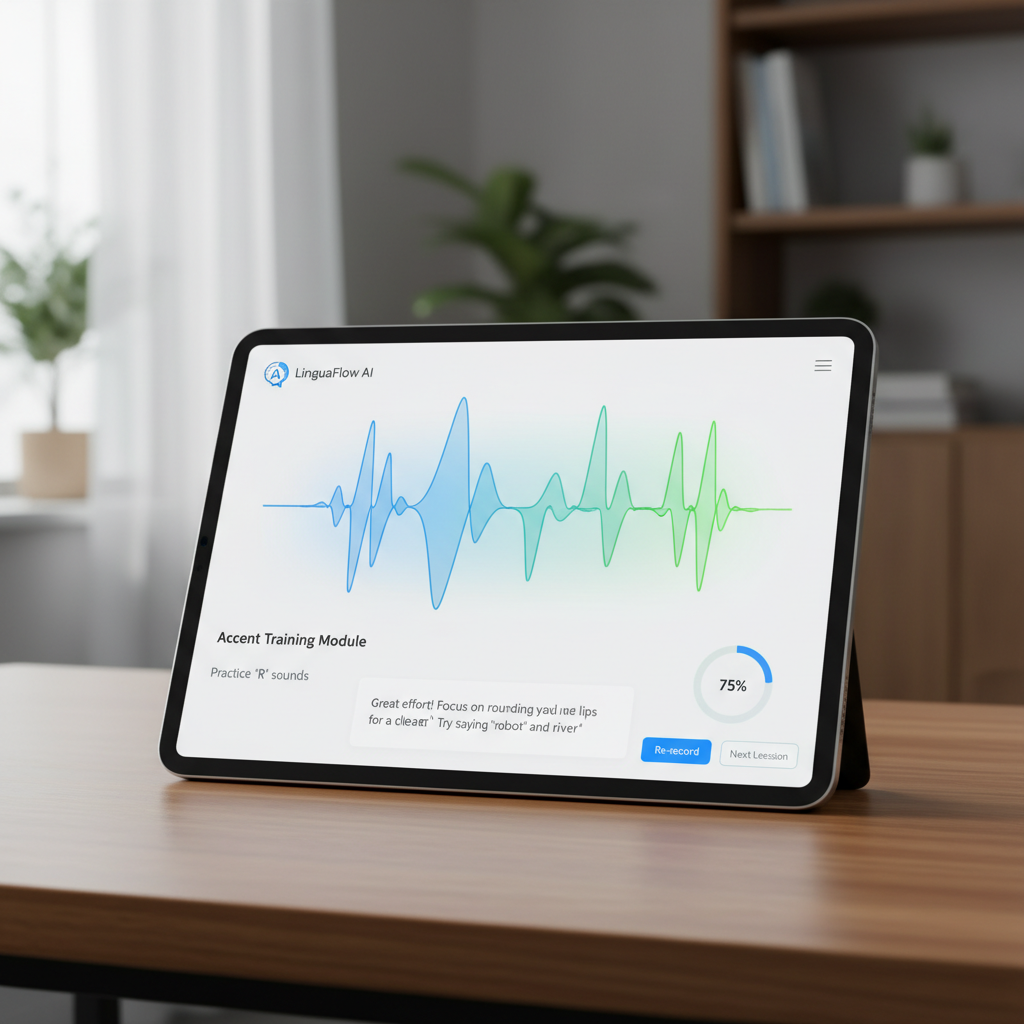
Immediate feedback is crucial for effective learning. With AI tutors, there is no waiting for a teacher to grade an assignment or for a conversation partner to correct a mistake. As soon as you speak, write, or answer a question, the AI provides instant, precise feedback. This could range from highlighting a grammatical error in a written sentence to showing a spectrogram of your pronunciation versus a native speaker’s. This rapid feedback loop allows learners to correct errors in real-time, solidify correct usage immediately, and prevent the reinforcement of bad habits.
24/7 Availability and Unparalleled Flexibility
Life is busy, and fitting in language lessons can be a logistical nightmare. AI tutors remove this barrier entirely. They are available whenever and wherever you are. Whether it’s 3 AM during a bout of insomnia, a quick 15-minute break during work, or a dedicated hour on a Sunday afternoon, your AI tutor is ready. This unparalleled flexibility means learners can integrate language practice seamlessly into their lives, maintaining consistency without compromising other commitments. This constant accessibility is a game-changer for motivation and progress.
Gamification and Enhanced Engagement
Many AI language platforms incorporate gamification elements to make learning enjoyable and sustainable. Earning points, unlocking new levels, competing with friends (or oneself), and achieving streaks transform mundane drills into engaging challenges. This psychological approach taps into intrinsic motivation, making learners eager to return and continue their progress. The satisfaction of seeing visual progress and achieving small milestones helps maintain momentum and combat the common phenomenon of burnout in language learning.
Access to Native-Like Pronunciation Models and Practice
Accurate pronunciation is often one of the hardest aspects of language learning. AI tutors provide access to high-quality, native-speaker audio for every word and phrase. More importantly, advanced AI uses sophisticated speech recognition technology to listen to your pronunciation, compare it to native models, and provide specific, actionable feedback on where you can improve – from intonation and stress to individual phonemes. This allows for unlimited, non-judgmental pronunciation practice, building confidence and refining accent in a way that traditional methods often struggle to achieve without constant one-on-one interaction.
Cost-Benefit Analysis: AI Tutors Versus Traditional Language Options
One of the most compelling arguments for AI language tutors is their profound affordability, especially when contrasted with established language learning methods. Understanding this cost-benefit analysis is crucial for anyone considering embarking on a language learning journey.
Private Human Tutors
A private human tutor offers highly personalized instruction and invaluable conversational practice. However, their services come at a premium. Depending on the tutor’s experience, location, and the language in question, hourly rates can range from $25 to $100 or even more. If a learner commits to just two hours a week for a year, the annual cost could easily exceed $2,500 to $10,000. While the quality is often high, the financial commitment is substantial and can be a significant deterrent for many aspiring polyglots.
Language Schools and Group Classes
Language schools and group classes provide structured learning environments and the opportunity to interact with peers. Semester-long courses can cost anywhere from $300 to $1,500, with many learners needing multiple semesters to achieve proficiency. While often more affordable than private tutors, they still represent a fixed cost, rigid schedule, and potentially slower progress due to the generalized curriculum designed for a group rather than an individual.
Immersive Travel and Study Abroad
Often considered the “gold standard” for language acquisition, immersive travel offers unparalleled exposure to the target language and culture. However, the costs associated with flights, accommodation, tuition for study abroad programs, visas, and daily living expenses can easily run into thousands or tens of thousands of dollars for even a short-term stay. While incredibly effective, it is arguably the least accessible option for the vast majority of people.
AI Language Tutors: The Affordable Advantage
In stark contrast, AI language tutors operate on a subscription model that is dramatically more affordable. Many leading AI-powered language apps and platforms offer premium subscriptions for as little as $5 to $20 per month. This translates to an annual cost of $60 to $240. Even if a learner subscribes to multiple AI platforms to leverage different strengths, the total annual expenditure rarely approaches even a single month’s cost of a private tutor or a single semester at a language school.
Beyond the direct monetary cost, AI tutors offer an incredible return on investment due to their 24/7 availability and personalized learning paths. For a low monthly fee, learners gain unlimited access to high-quality content, instant feedback, and adaptive exercises whenever they need them. This means more practice, faster progress, and ultimately, a more efficient journey to fluency, all without breaking the bank. The affordability factor alone makes AI tutors a revolutionary force, democratizing access to high-quality language education for a global audience.
Key Features to Look For in an AI Language Tutor
Not all AI language tutors are created equal. To maximize your learning, it’s essential to choose a platform that offers a robust suite of features designed to support comprehensive language acquisition. Here are the critical components to prioritize:
Conversational AI and Natural Language Processing (NLP)
The ability to engage in free-form, realistic conversations is perhaps the most crucial feature. Advanced AI tutors utilize sophisticated NLP to understand your spoken or typed input, respond contextually, and simulate natural dialogue. This moves beyond pre-scripted phrases and allows you to practice spontaneous communication, ask questions, discuss various topics, and truly internalize the language in a dynamic environment. Look for tutors that can handle unexpected inputs and adapt their responses accordingly, rather than just guiding you through a rigid script.
Advanced Speech Recognition and Pronunciation Analysis
Mastering pronunciation is vital for clear communication. A top-tier AI tutor will feature highly accurate speech recognition technology that can identify nuances in your accent, intonation, and rhythm. It should provide visual feedback (e.g., waveforms, pitch diagrams) and specific suggestions for improvement, rather than just a simple “right” or “wrong.” This detailed analysis helps you refine your spoken language to sound more natural and be better understood by native speakers.
Robust Grammar and Vocabulary Builders
While conversation is key, a strong foundation in grammar and vocabulary is indispensable. The AI tutor should offer structured lessons, interactive exercises, and contextual examples for grammatical rules. For vocabulary, look for features like spaced repetition systems (SRS) to optimize retention, contextual usage examples, and the ability to build personalized flashcard decks. The AI should also integrate new vocabulary and grammar into conversational practice to ensure practical application.
Cultural Insights and Context
Language is inextricably linked to culture. An excellent AI tutor goes beyond mere words and phrases to provide relevant cultural context, idioms, and social norms. Understanding these nuances is crucial for effective and appropriate communication. This might include explanations of proverbs, customs, or even differences in formality that are vital for real-world interactions.
Comprehensive Progress Tracking and Analytics
To stay motivated and understand where you stand, robust progress tracking is essential. The AI tutor should provide clear dashboards showing your learning streaks, mastery levels for different topics (e.g., grammar points, vocabulary sets), time spent learning, and areas requiring more attention. Data-driven insights can help you identify patterns in your errors and guide your future study efforts more effectively.
Customization Options and Learning Adaptability
The best AI tutors understand that every learner is unique. Look for platforms that allow you to customize your learning experience. This could include selecting specific topics of interest (e.g., travel, business, hobbies), adjusting difficulty levels, choosing different accents for listening practice, or even setting daily learning goals. The AI should adapt not just to your performance but also to your preferences and specific learning objectives.
Strategies for Maximizing Your Learning with AI Tutors
While AI tutors are incredibly powerful tools, their full potential is unlocked when learners adopt effective strategies. Simply having access to an AI tutor is not enough; active and smart engagement is key to accelerating your language mastery.
- Consistency is Paramount: Language learning is a marathon, not a sprint. Aim for daily practice, even if it’s just 15-20 minutes. Short, consistent sessions are far more effective than infrequent, long study blocks. Your AI tutor’s 24/7 availability makes this consistency highly achievable. Build a routine around it, whether it’s during your morning coffee, commute, or before bed.
- Engage Actively, Don’t Just Consume Passively: Don’t just click through lessons. Actively participate in every exercise. Speak aloud, even if you feel silly. Try to construct your own sentences rather than just repeating. Challenge the AI with questions or by trying to express complex ideas. The more you produce and interact, the deeper the learning will be.
- Utilize All Features Extensively: Explore every facet of your AI tutor. If it offers speech recognition, use it for every speaking exercise. If it has a vocabulary review system (like spaced repetition), commit to daily reviews. Don’t skip grammar explanations because you’re eager to speak; a strong foundation makes communication clearer and more confident. Each feature is designed to address a specific learning need, so make the most of them.
- Set Clear and Achievable Goals: Define what you want to achieve. Do you want to order food confidently in French by next month? Be able to hold a basic conversation in Japanese within six months? Setting specific, measurable, achievable, relevant, and time-bound (SMART) goals provides direction and motivation. Your AI tutor can help you track progress towards these goals.
- Combine AI with Other Learning Methods: While AI tutors are fantastic, they are even more powerful when integrated into a broader learning ecosystem. Supplement your AI practice with:
- Native Speaker Interaction: Whenever possible, seek out opportunities to speak with native speakers, even if it’s via online language exchange platforms. This human element brings an irreplaceable dimension to your learning.
- Immersive Media: Watch movies and TV shows, listen to music and podcasts, and read books or news articles in your target language. Start with subtitles and gradually transition away.
- Traditional Resources: Don’t discard physical dictionaries, grammar books, or even human-led group classes if they fit your budget and schedule. They can provide complementary perspectives.
- Review and Revisit: AI tutors often have built-in review functions, but also take time to manually revisit topics you found challenging. Make notes of difficult vocabulary or grammar points and specifically ask your AI tutor for more practice on those areas if possible.
- Embrace Mistakes as Learning Opportunities: One of the greatest benefits of an AI tutor is the non-judgmental environment. Don’t be afraid to make mistakes; they are crucial for learning. The AI will provide instant correction, allowing you to understand and internalize the correct forms without embarrassment.
Overcoming Common Language Learning Hurdles with AI
Language learners frequently encounter specific challenges that can impede progress and dampen motivation. AI tutors are uniquely positioned to help individuals surmount many of these common hurdles, providing targeted support and an encouraging learning environment.
Pronunciation Fears and Accuracy
Many learners dread speaking aloud, particularly due to fear of mispronunciation or sounding unnatural. This fear often leads to a lack of speaking practice, which is detrimental to fluency. AI tutors obliterate this barrier. Their advanced speech recognition technology provides a safe, private space for unlimited pronunciation practice. You can repeat words and phrases countless times, receive instant, objective feedback on your intonation, stress, and specific sounds, and compare your attempts directly to native speaker audio. This constant, non-judgmental correction builds confidence and refines your accent faster than traditional methods where opportunities for personalized pronunciation coaching are often limited.
Grammar Confusion and Complex Structures
Grammar can be daunting, with intricate rules, irregular verbs, and complex sentence structures often causing confusion. AI tutors excel at breaking down these complexities. Through adaptive algorithms, they identify exactly which grammatical concepts you struggle with and provide focused exercises, clear explanations, and repeated practice until mastery is achieved. They can generate endless examples, quiz you in various formats, and instantly correct your grammatical errors in written and spoken exercises, transforming abstract rules into practical application. This personalized, iterative approach demystifies grammar and solidifies understanding.
Vocabulary Retention Challenges
Remembering new words and phrases is a perpetual challenge. Traditional methods often rely on rote memorization, which is inefficient. AI tutors frequently incorporate sophisticated spaced repetition systems (SRS) for vocabulary learning. These intelligent algorithms schedule review sessions for words precisely when you are about to forget them, optimizing retention. Furthermore, AI platforms often present vocabulary in context, use engaging visuals, and integrate new words into conversational practice, making memorization more organic and effective than simply looking up definitions in a dictionary.
Lack of Confidence in Speaking
Even after learning grammar and vocabulary, many learners struggle with the confidence to speak. The pressure of real-time conversation with a human can be paralyzing. AI tutors provide a no-pressure environment where you can experiment, make mistakes, and practice speaking extensively without fear of judgment. This safe space allows you to gradually build conversational fluency, practice expressing ideas, and improve your spontaneous communication skills. The more you successfully communicate with the AI, the more confident you will become when interacting with real people.
Difficulty Finding Practice Partners
For many independent learners, finding consistent and suitable practice partners is a major hurdle. Schedules rarely align, proficiency levels might be mismatched, and sometimes the simply do not know anyone who speaks the target language. An AI tutor solves this problem entirely. It serves as an ever-present, tireless practice partner, available 24/7. You can practice dialogues, role-play scenarios, or engage in free-form conversations anytime, anywhere, ensuring that a lack of human partners never hinders your progress.
The Future of Language Learning: AI and Beyond
The current capabilities of AI tutors are already impressive, but the field is continuously evolving at a rapid pace. The future of language learning, heavily influenced by advancements in artificial intelligence, promises even more immersive, personalized, and seamless experiences.
Deeper Personalization with Advanced Machine Learning
Future AI tutors will move beyond simply adapting to performance. They will leverage even more sophisticated machine learning to understand a learner’s cognitive style, preferred learning modalities (visual, auditory, kinesthetic), emotional state, and even moments of fatigue. This will allow for hyper-personalized learning plans that dynamically adjust not just content, but also presentation methods, pacing, and motivational strategies to perfectly align with an individual’s unique brain and current emotional state. Imagine an AI that knows when you’re frustrated and offers a fun, low-pressure game, or when you’re highly focused and presents complex grammatical challenges.
Enhanced Conversational Fluency with Generative AI
The rise of large language models (LLMs) like GPT-4 has already demonstrated incredible strides in generating human-like text and engaging in natural conversation. Future AI tutors will integrate even more advanced generative AI, allowing for truly open-ended, spontaneous, and nuanced conversations. They will be able to understand complex idiomatic expressions, infer context with greater accuracy, and participate in discussions on an almost limitless range of topics with greater coherence and creativity. This will bring the conversational experience even closer to interacting with a highly skilled human tutor.
Immersive Learning with VR and AR Integration
Virtual Reality (VR) and Augmented Reality (AR) hold immense potential for language immersion. Imagine walking through a virtual Parisian street, interacting with AI characters in French, ordering virtual coffee, or negotiating prices in a simulated market. AR could overlay language translations and cultural information onto your real-world environment. AI will power these interactive simulations, providing real-time feedback on your linguistic choices, cultural appropriateness, and even non-verbal communication, making learning highly experiential and engaging without needing to physically travel.
Emotional Intelligence and Empathy in AI
While often seen as a cold, logical entity, AI is slowly but surely developing aspects of emotional intelligence. Future AI tutors might be able to detect signs of frustration, boredom, or excitement in a learner’s voice or interaction patterns. They could then respond with encouraging words, modify activities to re-engage interest, or celebrate successes in a way that feels more empathetic and supportive. This human-like touch could significantly enhance motivation and the overall learning experience.
The Symbiotic Relationship Between AI and Human Tutors
The future is unlikely to be a complete replacement of human tutors by AI, but rather a symbiotic relationship. AI could handle the bulk of personalized drills, immediate feedback, and consistent practice, freeing up human tutors to focus on higher-level coaching, cultural nuances that are difficult for AI to grasp, complex conversational subtleties, and providing the irreplaceable human connection and mentorship that some learners desire. Human tutors might leverage AI-generated insights into a student’s progress to tailor their sessions even more effectively.
Ultimately, the future of language learning with AI is one of unprecedented accessibility, personalization, and effectiveness. These intelligent tools will continue to break down barriers, making the dream of multilingualism a reality for an ever-wider global audience, pushing the boundaries of what is possible in linguistic acquisition.
Comparison Tables
Table 1: AI Tutors vs. Traditional Language Learning Methods
| Feature/Aspect | AI Tutor Platforms | Private Human Tutor | Language School/Group Class | Self-Study (Books/Apps) |
|---|---|---|---|---|
| Cost (Annual Estimate) | $60 – $240 (Subscription) | $2,500 – $10,000+ | $600 – $3,000+ | $50 – $300 (Initial Purchase) |
| Availability | 24/7 On-Demand | Scheduled Appointments | Fixed Class Schedule | Flexible |
| Personalization | Highly Adaptive, Data-Driven | High, Based on Tutor’s Expertise | Low to Moderate (Group Pace) | Low to Moderate (Self-Directed) |
| Instant Feedback | Immediate (Speech, Grammar, Vocab) | Immediate (During Session) | Delayed (Teacher-led Corrections) | None or Limited (Answer Keys) |
| Speaking Practice | Unlimited, Non-Judgmental | High, Focused Conversation | Limited (Shared time) | Minimal (Self-practice) |
| Pronunciation Analysis | Advanced, Visual, Specific Feedback | Qualitative Feedback | General Correction | None |
| Motivation/Engagement | Gamification, Progress Tracking | Human Connection, Accountability | Peer Interaction, Structured Goals | Self-Discipline Required |
| Access to Native Speakers | Simulated Conversations (NLP) | Direct, Authentic Interaction | Teacher/Peers (Varies) | Indirect (Audio/Video) |
Table 2: Key Features of Advanced AI Language Tutors and Their Benefits
| Feature | Description | Primary Benefit | Example Use Case |
|---|---|---|---|
| Conversational AI (NLP) | Engages in free-form, context-aware dialogue using natural language processing. | Develops spontaneous speaking and listening comprehension in a safe environment. | Practicing ordering food at a restaurant or discussing current events without a script. |
| Speech Recognition | Analyzes user’s spoken language for pronunciation, intonation, and fluency. | Refines accent and improves clarity, building confidence in verbal communication. | Receiving instant feedback on vowel sounds or word stress in Spanish. |
| Adaptive Learning Paths | Adjusts curriculum difficulty and focus based on individual learner performance. | Optimizes learning efficiency by targeting weaknesses and reinforcing strengths. | AI automatically assigns more exercises on French subjunctive after multiple errors. |
| Grammar Correction Engine | Identifies and explains grammatical errors in written and spoken input. | Ensures correct sentence structure and usage, preventing the formation of bad habits. | Getting an immediate explanation for why “I am go” is incorrect in English. |
| Spaced Repetition System (SRS) | Schedules vocabulary and phrase reviews at optimal intervals for long-term retention. | Maximizes vocabulary acquisition and recall, reducing forgotten words. | Reviewing a specific set of difficult German nouns precisely when they’re about to be forgotten. |
| Progress Tracking & Analytics | Monitors learning streaks, mastery levels, time spent, and performance metrics. | Provides clear insights into progress, areas for improvement, and maintains motivation. | Seeing a dashboard that shows 80% mastery in Japanese Hiragana and Katakana. |
| Cultural Insights Integration | Offers contextual information about customs, idioms, and social norms. | Enhances cultural understanding, leading to more appropriate and effective communication. | Learning about the subtle differences in formal vs. informal address in Korean conversation. |
Practical Examples: Real-World Use Cases and Scenarios
To truly appreciate the power and versatility of AI language tutors, let’s explore a few real-world scenarios where they make a tangible difference in a learner’s journey.
Scenario 1: The Busy Professional Mastering Mandarin for Business
Meet Sarah, a project manager who frequently travels to China. She needs to learn basic Mandarin for business meetings and networking, but her schedule is packed.
Challenge: Finding time for traditional classes or a private tutor is nearly impossible. Sarah also struggles with the tonal nature of Mandarin and fears mispronouncing crucial business terms.
AI Solution: Sarah subscribes to an AI tutor app that offers a dedicated “Business Mandarin” module. She carves out 20-30 minutes each morning during her commute and another 15 minutes before bed. The AI’s advanced speech recognition immediately corrects her tones and pronunciation of industry-specific vocabulary. It simulates business meeting dialogues, allowing her to practice introductions, negotiations, and presenting ideas. The adaptive learning system identifies her weakness in character recognition and presents targeted, gamified exercises. Within three months, Sarah can confidently exchange greetings, introduce herself, and understand key phrases in meetings, greatly enhancing her professional effectiveness.
Scenario 2: The College Student Preparing for a Study Abroad in Spain
Liam is excited about his upcoming semester abroad in Barcelona, but his high school Spanish is rusty, and he’s nervous about daily conversations.
Challenge: Liam needs to quickly improve his conversational fluency and immerse himself in practical, everyday Spanish before he leaves. He also wants to understand local slang and cultural nuances.
AI Solution: Liam uses an AI tutor that specializes in natural conversation and provides cultural context. He spends an hour each day role-playing scenarios like ordering tapas, asking for directions, or making small talk with a shopkeeper. The AI’s conversational engine allows for open-ended responses, simulating real interactions. When he misuses a verb tense, the AI instantly provides correction and a mini-lesson. He also uses the cultural insights feature to learn about local customs and common idioms unique to Spain. By combining the AI practice with Spanish movies, Liam arrives in Barcelona feeling much more confident and ready to engage with the local community.
Scenario 3: The Hobbyist Picking Up Japanese for Fun and Anime
Maria loves Japanese anime and manga and dreams of understanding them without subtitles. She’s a complete beginner with no prior exposure to the language.
Challenge: Japanese grammar and writing systems (Hiragana, Katakana, Kanji) seem incredibly complex. Maria needs a structured, engaging way to start from scratch and maintain motivation.
AI Solution: Maria chooses an AI tutor known for its beginner-friendly approach and gamified lessons. She starts with Hiragana and Katakana, practicing writing and recognition with interactive drills. The AI’s spaced repetition system helps her master hundreds of new vocabulary words related to anime and daily life. She then moves to basic sentence structures, using the AI to practice speaking simple phrases and getting immediate feedback on her pronunciation. The AI introduces Kanji gradually, with mnemonic aids and contextual examples. Maria finds the process enjoyable and addictive, making steady progress and slowly understanding her favorite anime without always relying on subtitles.
Scenario 4: The Traveler Learning Basic Italian for a Vacation
David and Emily are planning a trip to Italy and want to learn enough Italian to navigate, order food, and interact politely with locals. They only have a few weeks.
Challenge: Time is limited, and they need practical, travel-focused phrases and vocabulary quickly. They also want to sound as natural as possible when speaking.
AI Solution: They both download an AI tutor app known for its travel-specific language courses. For 30 minutes every evening, they practice common travel scenarios: checking into a hotel, asking for directions to tourist attractions, ordering different dishes at a restaurant, and making simple purchases. The AI provides pronunciation practice for every phrase, ensuring they sound confident. It also includes short modules on common Italian gestures and dining etiquette. They even practice conversational role-plays where the AI simulates different responses, preparing them for various interactions. Their trip is greatly enriched by their ability to communicate effectively, moving beyond just pointing and smiling.
Frequently Asked Questions
Q: Are AI language tutors truly as effective as human tutors?
A: AI language tutors offer unique advantages such as 24/7 availability, instant and non-judgmental feedback, and highly personalized adaptive learning paths. For foundational skills, vocabulary, grammar, and pronunciation practice, they can be remarkably effective and often surpass human tutors in terms of consistency and immediate feedback. However, human tutors excel in providing nuanced cultural insights, empathetic interaction, and handling highly complex, spontaneous, and abstract conversations that still push the boundaries of current AI capabilities. For many learners, a combination of AI and occasional human interaction offers the most comprehensive approach.
Q: How much do AI language tutors typically cost?
A: The cost of AI language tutors is generally very affordable, especially compared to traditional methods. Most popular AI-powered language apps and platforms operate on a subscription model, ranging from approximately $5 to $20 per month. Annual subscriptions often come with a discount, bringing the yearly cost down to between $60 and $240. Many also offer free basic versions or trials, allowing users to experience the platform before committing to a paid plan.
Q: Can AI tutors help with advanced language learners or just beginners?
A: AI tutors are designed to cater to learners across all proficiency levels. For beginners, they provide structured lessons, fundamental vocabulary, and basic grammar. For intermediate and advanced learners, AI can offer complex conversational practice, advanced grammar drills, nuanced pronunciation feedback, and exposure to specialized vocabulary or topics. Many platforms have content specifically tailored for B2, C1, or C2 level learners, including advanced literature excerpts, news articles, and intricate discussion prompts.
Q: What are the main limitations of using an AI tutor for language learning?
A: While powerful, AI tutors do have limitations. They may lack the subtle empathy and understanding of a human tutor, sometimes failing to grasp complex emotional nuances in conversation. They cannot replicate the full spontaneity of real-life human interaction, where unforeseen situations and cultural misunderstandings often occur. AI might also struggle with truly open-ended, philosophical discussions, and they cannot provide the kind of mentorship or personal connection that a human teacher might offer. Furthermore, they depend on internet connectivity and device availability.
Q: Is my data and privacy protected when using AI language learning apps?
A: Reputable AI language learning platforms prioritize user data privacy. They typically adhere to data protection regulations like GDPR and CCPA. Most companies state their data handling policies clearly in their terms of service, detailing how your learning progress, usage patterns, and any voice recordings are used (often for improving the AI model) and how they are protected. It is always wise to review the privacy policy of any app before extended use, especially if you have specific concerns about data security.
Q: How does AI help with pronunciation specifically?
A: AI helps with pronunciation through advanced speech recognition technology. When you speak, the AI records and analyzes your audio, comparing it to native speaker pronunciations. It can then provide immediate, objective feedback, often highlighting specific sounds, intonation patterns, or word stresses that need improvement. Many apps offer visual aids like waveforms or pitch graphs to help you see where your pronunciation deviates, allowing for precise, iterative correction without the potential embarrassment of practicing with a human.
Q: Can AI tutors teach me about cultural aspects of a language?
A: Yes, many modern AI language tutors integrate cultural insights into their curricula. This can include explanations of common idioms, social etiquette, traditional customs, historical context, and important cultural values. While they may not fully replicate the lived experience of cultural immersion, AI tutors can provide valuable information and context that enhances your understanding of how the language is used in real-world cultural settings, leading to more appropriate communication.
Q: Do I need a strong internet connection to use AI language tutors effectively?
A: For most AI language tutors, a stable internet connection is essential, especially for features relying on real-time AI processing like conversational AI and speech recognition. Many apps, however, offer offline modes for certain content, allowing you to download lessons, vocabulary lists, or basic exercises to practice without an internet connection. For the full, dynamic experience, especially with advanced features, a reliable internet connection is highly recommended.
Q: What’s the best way to combine an AI tutor with other learning resources?
A: To maximize learning, use your AI tutor for consistent daily practice, especially for grammar, vocabulary acquisition (via SRS), and pronunciation drills. Supplement this with: real human interaction (language exchange partners, online tutors) for nuanced conversation; immersive media (movies, music, podcasts) for natural language exposure; and traditional resources (books, articles) for reading comprehension and deeper dives into grammar. The AI lays the foundation and provides constant practice, while other resources add depth and real-world application.
Q: How long does it typically take to become fluent using an AI tutor?
A: “Fluency” is subjective and varies greatly depending on the language, your starting point, dedication, and the definition of fluency itself. With consistent daily practice (e.g., 30-60 minutes) using an AI tutor, combined with other learning methods, many learners can reach conversational proficiency (B1/B2 level) in 6-12 months for simpler languages and 1-2 years for more complex ones. True mastery (C1/C2) will always require several years of dedicated effort and ongoing exposure, but AI tutors can significantly accelerate the initial and intermediate stages.
Key Takeaways: Your Path to Affordable Language Mastery
- AI Tutors are Revolutionizing Language Learning: They offer unprecedented personalization, flexibility, and effectiveness, moving beyond traditional one-size-fits-all methods.
- Unmatched Affordability: AI tutors provide high-quality instruction at a fraction of the cost of private tutors or language schools, making language mastery accessible to a broader audience.
- Highly Effective Learning Mechanisms: Key benefits include adaptive learning paths, instant feedback and error correction, 24/7 availability, gamification for engagement, and advanced pronunciation analysis.
- Essential Features to Prioritize: Look for strong conversational AI (NLP), accurate speech recognition, robust grammar and vocabulary builders, cultural insights, comprehensive progress tracking, and customization options.
- Strategic Engagement is Crucial: Maximize your learning by maintaining consistency, actively engaging with all features, setting clear goals, and combining AI practice with other diverse learning methods.
- Overcome Common Hurdles: AI tutors are excellent for conquering pronunciation fears, clarifying grammar, boosting vocabulary retention, building speaking confidence, and providing a constant practice partner.
- The Future is Brighter with AI: Expect even deeper personalization, enhanced conversational AI, immersive VR/AR experiences, and a symbiotic relationship between AI and human educators.
- Your Dream Language is Within Reach: With the power of AI, consistent effort, and smart strategies, achieving language fluency is more attainable and affordable than ever before.
Conclusion
The journey to language mastery, once perceived as an arduous and expensive undertaking, has been profoundly transformed by the advent of Artificial Intelligence tutors. These intelligent digital companions are not merely supplementary tools; they represent a fundamental shift in how we can acquire new languages, making the process more efficient, more engaging, and crucially, far more affordable.
By leveraging adaptive algorithms, sophisticated speech recognition, and cutting-edge Natural Language Processing, AI tutors deliver a level of personalized instruction and instant feedback that was once the exclusive domain of costly private tutors. They break down barriers of time, cost, and geographical location, empowering millions to pursue their linguistic ambitions. From overcoming the fear of speaking to mastering intricate grammar, AI provides a non-judgmental, ever-present partner on your learning path.
As AI technology continues to evolve, we can anticipate even more immersive, hyper-personalized, and emotionally intelligent learning experiences, further blurring the lines between digital instruction and real-world interaction. The future of language learning is not just about mastering new words, but about truly connecting with global cultures and opportunities. Embrace the power of AI tutors, integrate them strategically into your learning routine, and unlock a world of possibilities that is now more accessible and affordable than ever before. Your journey to affordable language mastery starts today.












































































Leave a Reply