
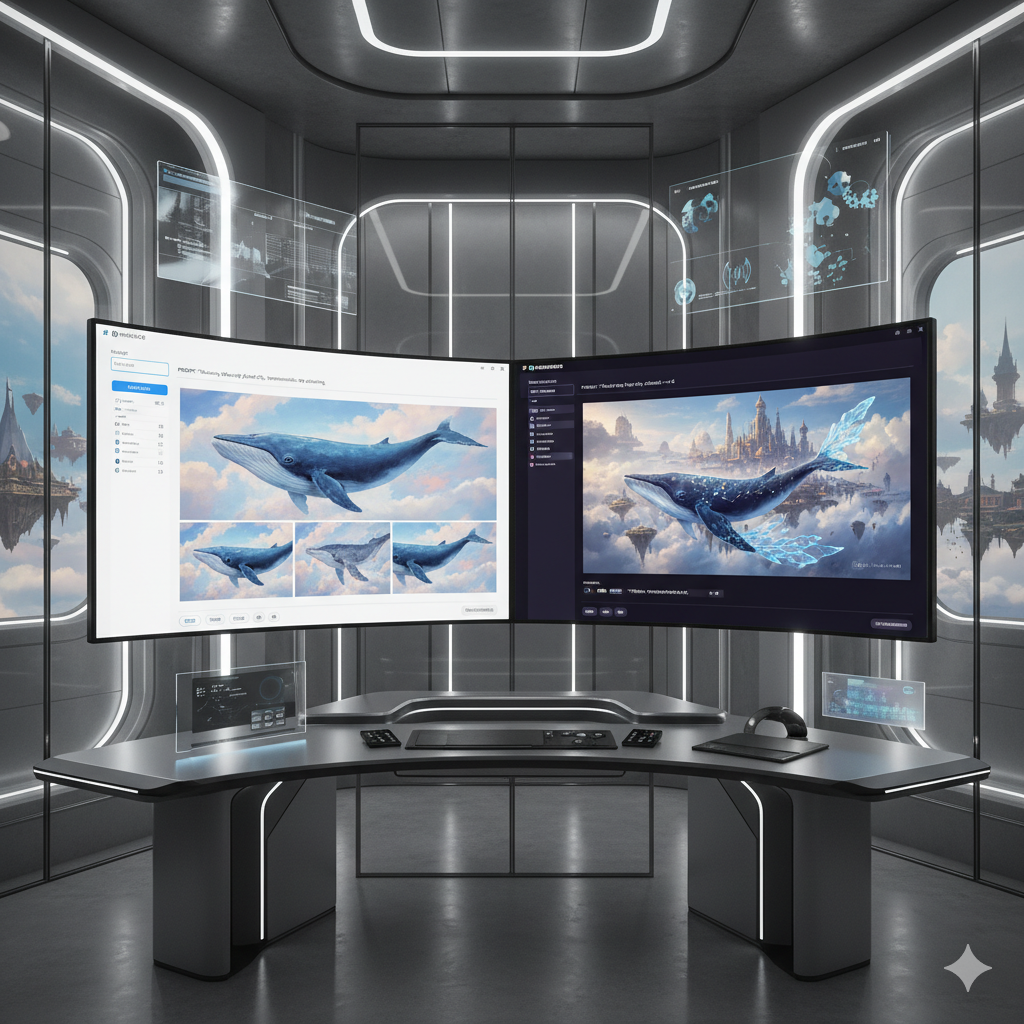
The dawn of generative artificial intelligence has ushered in an unprecedented era for creativity, fundamentally reshaping how artists, designers, marketers, and countless other professionals approach visual content creation. At the forefront of this revolution stand two titans: OpenAI’s DALL-E and David Holz’s Midjourney. Both have captured the imagination of millions, demonstrating remarkable capabilities in transforming textual prompts into stunning visual masterpieces. However, despite their shared goal of AI-powered image generation, they possess distinct philosophies, feature sets, and artistic outputs that cater to different needs and preferences.
For creative professionals, choosing between DALL-E and Midjourney isn’t merely a matter of picking the “better” tool; it’s about understanding which platform aligns more closely with their specific workflow, artistic vision, and project requirements. This comprehensive comparison aims to dissect the nuances of each generator, providing an in-depth analysis of their evolution, core functionalities, unique strengths, and areas where they might fall short. We will explore practical use cases, delve into the intricacies of prompt engineering for both, and ultimately help you determine which AI art generator could be your ultimate champion in the creative arena.
The Evolution of AI Art and the Current Landscape
The journey of AI art generation has been a rapid and fascinating one. What began with rudimentary algorithms producing abstract, often uninterpretable visuals has quickly evolved into sophisticated models capable of generating photorealistic images, intricate illustrations, and imaginative concept art with astonishing detail and coherence. Early pioneers in the field, leveraging techniques like Generative Adversarial Networks (GANs), laid the groundwork, but it was the advent of transformer architectures and diffusion models that truly propelled AI art into the mainstream.
Diffusion models, in particular, have revolutionized the field. These models work by taking an image, gradually adding noise until it becomes pure static, and then learning to reverse that process, step by step, to reconstruct the original image from noise. When prompted with text, the model is guided to reconstruct an image that matches the textual description. This iterative process allows for incredible detail and nuanced understanding of prompts, moving beyond simple object recognition to grasp contextual relationships, artistic styles, and emotional tones.
DALL-E, initially released by OpenAI in 2021, was a groundbreaking moment, demonstrating the ability to generate images from text with unprecedented versatility. Its name is a portmanteau of the artist Salvador Dalí and the robot character WALL-E, signifying its blend of artistic vision and computational power. Midjourney emerged slightly later, quickly gaining acclaim for its distinctive artistic style and vibrant community, primarily operating through a Discord bot interface. Both have continually pushed the boundaries, with frequent updates introducing new capabilities, improved aesthetics, and greater user control.
Today, the landscape is incredibly dynamic. We are seeing AI art generators not just as tools for novelty but as integral components of creative workflows, assisting in everything from brainstorming and concept development to rapid prototyping and final asset creation. The competition drives innovation, with each platform striving to offer unique advantages to its growing user base.
DALL-E: The OpenAI Standard-Bearer for Precision and Control
DALL-E, developed by OpenAI, has consistently championed a philosophy rooted in precision, logical consistency, and detailed object manipulation. Its evolution, culminating in DALL-E 3, has focused on enhancing its understanding of complex textual prompts and providing users with more direct control over the elements within their generated images.
Core Philosophy and Features
At its heart, DALL-E aims to be a highly literal interpreter of prompts. If you ask for “a red square on a blue circle,” DALL-E strives to deliver exactly that, with clear definitions between objects and adherence to specified spatial relationships. This makes it particularly powerful for scenarios requiring exactness and logical composition.
- Prompt Adherence: DALL-E 3, especially when integrated with ChatGPT Plus, exhibits an unparalleled ability to interpret long, complex, and nuanced prompts. It breaks down prompts into their constituent parts, ensuring that all elements, styles, and attributes mentioned are incorporated into the final image. This is a significant leap from earlier versions, which sometimes struggled with multi-faceted instructions.
- Inpainting and Outpainting: These are powerful editing features.
- Inpainting: Allows users to select a specific area within an existing image and regenerate just that portion based on a new prompt, effectively replacing or modifying objects without altering the rest of the image. This is invaluable for fine-tuning details or correcting errors.
- Outpainting: Extends the canvas of an image beyond its original borders, intelligently filling in the new space with content that matches the existing style and context. This is fantastic for expanding scenes, changing aspect ratios, or creating panoramic views.
- Text Overlay Generation: While still an area of development for most AI models, DALL-E has made strides in generating legible text within images, a critical feature for mockups, logos, or posters.
- Specific Object Generation and Manipulation: DALL-E excels at generating specific, identifiable objects and placing them according to instructions. This level of control is often preferred by those who need to iterate on product designs or architectural elements.
- Integration with ChatGPT Plus: This is arguably DALL-E 3’s most significant recent development. ChatGPT acts as an intelligent prompt engineer, taking a user’s high-level request and automatically generating detailed, optimized prompts for DALL-E. This lowers the barrier to entry for complex generations and dramatically improves prompt adherence. It also allows for iterative refinement through conversational dialogue.
Strengths of DALL-E
- Exceptional Prompt Adherence: Especially DALL-E 3, it understands and executes complex, multi-layered prompts better than most competitors, reducing the need for extensive prompt engineering on the user’s part.
- Precision and Logical Consistency: When you need objects placed exactly as described, or images that make logical sense, DALL-E tends to deliver more reliably.
- Editing Capabilities (Inpainting/Outpainting): These features provide a powerful way to refine and expand generated images, making DALL-E a more complete tool for image creation and manipulation.
- User-Friendly Interface: The web-based interface (and ChatGPT integration) is intuitive, making it accessible for beginners while still offering powerful controls for advanced users.
- Integration Ecosystem: Being part of the OpenAI family, its integration capabilities are growing, offering seamless workflows with other AI tools and services.
Weaknesses of DALL-E
- Aesthetic Bias: While DALL-E can generate beautiful images, its default output sometimes leans towards a more “clean” or “realistic” style, and can occasionally lack the inherent artistic flair or dramatic composition that Midjourney often produces without specific instruction. Achieving highly stylized or uniquely artistic results might require more explicit prompting.
- Less “Organic” Feel: In some instances, DALL-E’s adherence to logical construction can make images feel slightly more “assembled” rather than organically created, particularly in highly complex or abstract scenes.
- Cost: While reasonably priced, extensive usage can accumulate costs, especially without a subscription like ChatGPT Plus.
Case Study: Marketing Campaign Asset Generation
Consider a marketing agency tasked with creating a series of social media ads for a new sustainable coffee brand. The agency needs images that feature specific elements: “a happy person drinking coffee in a lush green park,” “a coffee cup with steam rising on a reclaimed wood table,” and “a barista artfully pouring latte art, with the brand logo subtly visible on the cup.” DALL-E’s ability to precisely place objects, interpret detailed scenarios, and even attempt text overlay for the logo makes it an ideal choice. The inpainting feature could then be used to swap out different coffee cup designs or refine the brand logo without regenerating the entire image, saving time and ensuring consistency across the campaign.
Midjourney: The Artistic Visionary for Stunning Visuals
Midjourney has carved out its niche by prioritizing aesthetic quality and artistic composition. From its inception, it has been celebrated for generating visually stunning, often evocative and cinematic, imagery that often requires less explicit artistic direction from the user.
Core Philosophy and Features
Midjourney’s philosophy leans towards the artistic and aspirational. It aims to produce images that are not just technically correct but also possess an inherent sense of beauty, atmosphere, and stylistic coherence. This is evident in its default outputs, which often have a painterly, illustrative, or hyper-stylized quality.
- Exceptional Aesthetic Quality: Midjourney consistently produces images with a high degree of artistic merit. Its models (especially versions 5 and 6) are trained to understand and apply complex aesthetic principles, resulting in well-composed, beautifully lit, and visually striking outputs.
- Stylization Parameters: Midjourney offers a robust set of parameters that allow users to control the level of stylization, chaos, and even the “weirdness” of the generated images. This empowers users to fine-tune the artistic direction without having to describe every brushstroke.
- Aspect Ratio Control: Precise control over aspect ratios is a standard and well-implemented feature, crucial for various design contexts, from social media to print.
- Image Prompting: Users can upload an image along with a text prompt, allowing Midjourney to draw inspiration from the visual input in terms of style, composition, or even specific elements. This is incredibly powerful for maintaining visual consistency across a series or iterating on existing designs.
- Niji Mode: A specialized model within Midjourney designed specifically for anime and illustrative styles. Niji Mode excels at generating characters, scenes, and aesthetics highly tuned for Japanese animation and comic art, making it a favorite for concept artists in those genres.
- Community-Driven Development and Showcase: Midjourney fosters a strong community, primarily through its Discord server. This environment allows users to see others’ prompts and results, learn from shared experiments, and draw inspiration from a vast public gallery of creations. The iterative development with community feedback is a hallmark of Midjourney.
- In-built Upscaling and Variation: Midjourney provides multiple options for upscaling images and generating variations of a chosen output, making it easy to refine and enhance selected results.
Strengths of Midjourney
- Unrivaled Artistic Flair: For generating images that look professionally illustrated, painted, or highly stylized with minimal prompting effort, Midjourney is often considered superior.
- Excellent for Concept Art and Visual Exploration: Its ability to quickly generate stunning and diverse interpretations of a concept makes it invaluable for brainstorming and visual development in creative fields.
- Strong Community and Learning Resources: The Discord-centric environment provides a rich learning ground, with countless examples and active discussions that help users master the platform.
- Rapid Iteration for Aesthetic Discovery: With its multiple output grids and variation options, it’s easy to explore many artistic directions quickly.
- Regular Model Updates: Midjourney frequently releases new versions (e.g., v5, v6) that bring significant improvements in coherence, understanding, and aesthetic quality.
Weaknesses of Midjourney
- Less Granular Control Over Object Placement: While recent versions (v6) have improved, Midjourney can still be less precise than DALL-E when it comes to specific object placement, complex spatial relationships, or modifying individual elements post-generation. It’s more about guiding the overall scene than dictating exact details.
- Discord-Centric User Interface: For some, the reliance on Discord as the primary interface can be a barrier. While effective for community engagement, it may not feel as streamlined or professional as a dedicated web application for all users.
- Learning Curve for Advanced Control: While easy to get beautiful results, mastering Midjourney’s full suite of parameters and prompt nuances to achieve *specific* artistic control can have a steeper learning curve.
- Less Consistency with Character/Scene Elements: Maintaining absolute consistency for characters or specific elements across multiple generations can be challenging, though “character reference” and “style reference” features are continually improving.
Case Study: Game Concept Art Development
Imagine a small indie game studio developing a fantasy RPG. They need concept art for various creatures, environments, and character archetypes. Midjourney shines here. A prompt like “enigmatic forest guardian, ancient moss-covered armor, glowing eyes, dark fantasy art” will instantly yield multiple, artistically stunning interpretations. They can then use image prompts to maintain a consistent art style across different generations or iterate on variations of a particularly compelling creature design. The speed at which Midjourney produces high-quality, inspiring visuals allows the art team to explore dozens of concepts in a fraction of the time it would take to draw them manually, significantly accelerating the pre-production phase.
Core Differences: A Head-to-Head Analysis
Understanding the fundamental distinctions between DALL-E and Midjourney is crucial for creative professionals to make an informed decision. These differences extend beyond mere features and delve into their underlying design philosophies and target user experiences.
1. Prompt Engineering Philosophies: Explicit vs. Implicit
DALL-E: Tends towards an explicit prompt engineering philosophy. With DALL-E 3, especially via ChatGPT, you can be highly descriptive and verbose. The model is designed to interpret and execute every instruction with considerable accuracy. This means you can write long, grammatically correct sentences, and it will attempt to synthesize all the specified elements. It thrives on clear, unambiguous instructions for object placement, attributes, and actions.
Midjourney: Leans towards a more implicit and suggestive prompt engineering style, though recent versions (v6) have improved explicit understanding. While it responds well to descriptive keywords, it often infers artistic intent and fills in stylistic gaps to produce aesthetically pleasing results. It often benefits from concise prompts combined with specific stylistic keywords (e.g., “cinematic lighting,” “octane render,” “hyperrealism,” “dreamlike”). Less is sometimes more, relying on its internal aesthetic engine to do the heavy lifting for visual appeal.
2. Image Generation Style: Photorealistic Precision vs. Artistic Flourish
DALL-E: Generally excels at generating images that aim for photorealism or a clean, illustrative style. It’s very good at depicting specific objects, brand elements, and realistic scenarios without an overt artistic overlay unless explicitly prompted. Its strength lies in clarity and direct representation.
Midjourney: Has a distinct artistic signature. Its default outputs often possess a strong aesthetic, frequently leaning towards illustrative, painterly, surreal, or cinematic qualities. Even with relatively simple prompts, Midjourney tends to imbue its creations with a sense of atmosphere, dynamic composition, and artistic polish that often requires more effort to achieve in DALL-E without detailed stylistic prompts.
3. User Interface and Workflow: Web-Based vs. Discord-Centric
DALL-E: Offers a straightforward web-based interface. Its integration with ChatGPT provides a conversational workflow where the AI assists in crafting and refining prompts. This is intuitive, especially for those familiar with web applications and chatbots.
Midjourney: Primarily operates through a Discord bot. Users interact with the AI by typing commands and prompts into Discord channels. While this creates a vibrant, communal environment where users can see each other’s creations, it can be a barrier for those unfamiliar or uncomfortable with Discord. A basic web interface exists for viewing and managing creations, but the core generation process happens on Discord.
4. Control and Manipulation vs. Aesthetic Output
DALL-E: Provides more direct control over image content post-generation through features like inpainting and outpainting. This allows for precise modifications, object replacements, and canvas expansion, making it a more versatile tool for iterative design and refinement.
Midjourney: While improving, traditionally offered less direct manipulation post-generation. Its strength lies in its ability to generate multiple aesthetically varied options from a single prompt, allowing users to choose the most appealing one and then generate variations. Recent features like “pan” and “zoom” do add some post-generation flexibility, but not to the extent of DALL-E’s inpainting/outpainting.
5. Integration Ecosystems: OpenAI’s Suite vs. Standalone/Community
DALL-E: Benefits from being part of OpenAI’s broader ecosystem. Its integration with ChatGPT, and potential future integrations with other OpenAI services, positions it as a component within a larger AI-powered workflow. This can be a significant advantage for businesses already leveraging OpenAI’s APIs.
Midjourney: Operates more as a standalone service, deeply integrated with the Discord platform for its community and development. While it can be integrated into workflows through API access or manual export, it doesn’t offer the same out-of-the-box integration with other major AI tools as DALL-E does with ChatGPT.
Practical Examples: Real-World Use Cases and Scenarios
To truly understand the strengths of DALL-E and Midjourney, let’s explore how creative professionals might leverage each tool in specific real-world scenarios.
1. For Graphic Designers and Marketers
Scenario: A graphic designer needs to create a series of advertisements for a new product, ensuring brand consistency and specific product placement.
- DALL-E’s Edge:
- Product Mockups: Generating photorealistic images of a product in various settings (e.g., “a sleek smartphone on a modern desk with warm natural light”). DALL-E’s precision ensures the product looks accurate and integrates naturally.
- Text Integration: Creating visuals with specific headlines or calls-to-action directly embedded, reducing the need for post-processing in image editing software.
- Brand Asset Consistency: Using inpainting to swap out background elements or color schemes while keeping the main product intact, maintaining brand guidelines across different ad variations.
- Concept Visualization: Rapidly generating diverse concepts for ad layouts, color palettes, and imagery that adhere to specific marketing briefs.
- Midjourney’s Edge:
- Mood Boards: Quickly generating visually rich, atmospheric images to set the tone and aesthetic for a campaign. Prompts like “futuristic city, neon glow, cyberpunk aesthetic” can yield stunning results for inspiration.
- Illustrative Ads: If the brand’s style is more illustrative or artistic, Midjourney can create unique, eye-catching visuals that stand out from conventional photography.
- Creative Brainstorming: For campaigns requiring a strong, imaginative visual hook, Midjourney’s ability to produce unique and artistic interpretations can spark innovative ideas.
- Social Media Content: Generating highly stylized images for social media posts that demand immediate visual impact and artistic appeal.
2. For Architects and Interior Designers
Scenario: An architect needs to visualize building exteriors, interior spaces, or specific material textures for client presentations.
- DALL-E’s Edge:
- Accurate Renderings: Generating photorealistic architectural renderings of proposed buildings or interiors based on detailed descriptions (e.g., “modern minimalist living room, large windows overlooking a city skyline, concrete walls, beige sofa”).
- Material and Texture Swapping: Using inpainting to experiment with different flooring materials, wall finishes, or furniture styles within an existing render without rebuilding the entire scene.
- Site-Specific Context: Generating landscapes or surrounding environments that accurately reflect a specific location or planned urban context.
- Detailed Object Placement: Precisely placing architectural elements like windows, doors, or furniture according to design specifications.
- Midjourney’s Edge:
- Conceptual Massing Studies: Rapidly exploring abstract architectural forms and massing options in a highly aesthetic, almost sculptural manner.
- Atmospheric Visualizations: Creating evocative mood renderings that capture the feeling and ambiance of a space (e.g., “cozy reading nook, soft morning light, rain outside window, impressionist painting style”).
- Inspirational Imagery: Generating unique and imaginative architectural styles or future concepts that push the boundaries of conventional design, perfect for initial brainstorming phases.
- Artistic Interpretations: Visualizing a building or interior in a specific artistic style (e.g., “art deco skyscraper concept, golden hour lighting, cinematic”).
3. For Game Developers and Concept Artists
Scenario: A game studio needs to generate concept art for characters, creatures, environments, and in-game assets.
- DALL-E’s Edge:
- Prop and Item Generation: Creating specific in-game items, weapons, or UI elements with clear details (e.g., “an ancient magical sword, glowing runes, hilt wrapped in dragon scale leather”).
- Character Sheet Elements: Generating consistent views of character costumes or individual armor pieces for detailed design.
- Textured Asset Bases: Creating base textures or patterns that can then be further refined in 3D software.
- Orthographic Views: Attempting to generate objects from specific angles for clear reference.
- Midjourney’s Edge:
- Creature Design: Excelling at generating fantastical creatures and monsters with incredible artistic flair and visual impact (e.g., “leviathan emerging from deep ocean, bioluminescent scales, stormy sky, fantasy art”).
- Environment Concept Art: Quickly producing breathtaking landscapes, futuristic cities, or alien worlds with strong atmosphere and composition.
- Character Archetypes: Generating diverse and inspiring character concepts in various styles, from heroic fantasy to gritty cyberpunk.
- Niji Mode for Anime/Manga Styles: Perfect for studios working on games with an anime aesthetic, providing highly specialized character and scene generation.
In essence, DALL-E is often the choice for when you know exactly what you want and need precise execution, while Midjourney is your go-to when you need artistic inspiration and stunning visuals, even if the precise details are a bit more fluid.
Comparison Tables
Table 1: Feature and Style Comparison
| Feature/Aspect | DALL-E (DALL-E 3 via ChatGPT) | Midjourney (V6) | Notes for Creative Professionals |
|---|---|---|---|
| Prompt Interpretation & Adherence | Excellent, highly literal, understands complex syntax, strong with multi-object prompts. | Very good, improving with V6, strong aesthetic interpretation, can be less literal with complex layouts. | DALL-E for precision, Midjourney for creative interpretation. |
| Image Style & Aesthetic Output | Versatile, leans towards photorealism, clean illustration, good for specific object rendering. | Exceptional artistic flair, often cinematic, painterly, illustrative, strong default aesthetic. | DALL-E for corporate/brand assets, Midjourney for concept art/mood imagery. |
| User Interface & Workflow | Web-based (OpenAI Playground), highly integrated with ChatGPT for prompt generation. | Discord bot primary interface, web gallery for management, very community-focused. | DALL-E for traditional web users, Midjourney for Discord-savvy teams/artists. |
| Image Editing & Control | Strong inpainting/outpainting, precise modifications, excellent for iterative refinement. | Limited direct editing, strong variation generation, pan/zoom features add flexibility. | DALL-E for post-generation tweaks, Midjourney for exploring variations. |
| Text Generation within Images | Good and improving, capable of legible text in many scenarios. | Challenging, often generates garbled text, not its forte. | DALL-E is better if legible text is critical for your visual. |
| Character Consistency | Can maintain some consistency with very careful prompting; still a challenge across multiple images. | Improving with ‘character reference’ feature, but still a significant hurdle for strict consistency. | Both struggle, but DALL-E’s precision can help in limited contexts. |
| Community & Learning | OpenAI forums, documentation, but less direct community interaction for prompt sharing. | Vibrant Discord community, public galleries, excellent for learning from others’ prompts. | Midjourney wins for collaborative learning and inspiration. |
Table 2: Pricing and Accessibility Comparison (as of recent updates)
| Aspect | DALL-E (DALL-E 3 via ChatGPT) | Midjourney | Implication for Professionals |
|---|---|---|---|
| Access Method | Standalone via API (paid), or via ChatGPT Plus/Team/Enterprise subscription. | Discord bot (requires paid subscription), web interface for viewing/managing. | DALL-E is part of a broader OpenAI ecosystem; Midjourney is Discord-centric. |
| Pricing Model (General) | Pay-as-you-go for API usage; included with ChatGPT subscriptions. | Subscription tiers (Basic, Standard, Pro, Mega) with varying fast GPU hours. | DALL-E 3 via ChatGPT Plus is a fixed monthly fee; Midjourney scales with usage. |
| Free Trial/Tier | Limited free credits for DALL-E 2; DALL-E 3 typically requires a subscription. | No free trial for new users since early 2023 due to abuse. | DALL-E offers a taste; Midjourney requires immediate commitment. |
| Commercial Use Rights | Generally allows commercial use of images generated by paid users, subject to terms of service. | Paid subscribers typically have full commercial rights; free tier (when available) often had restrictions. | Both generally permit commercial use for paid users, important for business. |
| Cost per Generation (Approx.) | API: Varies by resolution (e.g., $0.02 to $0.08 per image). Included in ChatGPT subscriptions. | Implicit in ‘fast GPU hours’; Basic starts at ~200 images/month, Pro at ~1200. | DALL-E’s API is transparent per image; Midjourney’s cost is based on time, harder to estimate per image. |
| API Availability | Yes, for DALL-E 2 and DALL-E 3 (with waitlist/access criteria). | Limited API for third-party integrations, not general public access for image generation. | DALL-E is more open for custom application development. |
| Scalability for Enterprise | OpenAI offers enterprise plans with dedicated support and higher limits. | Has higher tiers (Mega) for greater GPU hours, but less formal enterprise-level support than OpenAI. | OpenAI may be more suitable for large-scale enterprise integration. |
Frequently Asked Questions
Q: What is the main difference in output quality between DALL-E and Midjourney?
A: The main difference lies in their aesthetic emphasis. Midjourney often produces images with a more inherently artistic, stylized, or cinematic quality, frequently described as more “beautiful” or “dreamlike” by default. DALL-E, particularly DALL-E 3, excels at precise, logical image generation and highly accurate prompt adherence, often resulting in more literal or photorealistic outputs that might require more specific artistic prompting to achieve the same level of aesthetic flair as Midjourney’s default.
Q: Which AI generator is better for photorealistic images?
A: Both can generate photorealistic images. DALL-E often achieves higher levels of logical consistency and precision in photorealism, especially when specific objects and details are crucial. Midjourney can also produce stunning photorealism, particularly in V6, but might default to a slightly more stylized realism depending on the prompt and its internal aesthetic biases.
Q: Can I use images generated by DALL-E or Midjourney for commercial purposes?
A: Yes, generally. For paid subscribers of both DALL-E and Midjourney, the terms of service typically grant users commercial rights to the images they generate. However, it is crucial to always review the most current terms of service for each platform, as policies can change. If you are on a free tier (if one is available), commercial rights might be restricted.
Q: Is prompt engineering different for DALL-E versus Midjourney?
A: Absolutely. DALL-E, especially with its DALL-E 3 integration in ChatGPT, responds very well to detailed, verbose, and grammatically correct prompts, interpreting nearly every word. Midjourney, while improving with V6, often thrives on concise, impactful keywords and parameters, letting its artistic model fill in the aesthetic gaps. Learning the specific prompt modifiers and syntax for each platform is key to getting optimal results.
Q: Which platform has a steeper learning curve for beginners?
A: DALL-E, especially when accessed through ChatGPT Plus, generally has a gentler learning curve for beginners due to its intuitive web interface and the AI’s ability to assist with prompt refinement. Midjourney’s Discord-centric interface can be a hurdle for some, and mastering its extensive parameters and nuances to achieve specific artistic control can take more time and experimentation.
Q: Can DALL-E or Midjourney generate text within images accurately?
A: DALL-E has made significant strides in generating legible text within images, making it a viable option for simple text overlays or mockups. Midjourney historically struggled with generating coherent text, often producing distorted or nonsensical characters. While it has improved, DALL-E is generally the stronger contender if you need readable text in your generated images.
Q: Are there any ethical considerations when using AI art generators?
A: Yes, several. These include concerns about copyright and ownership of AI-generated content, the potential for deepfakes and misinformation, biases present in training data that can lead to stereotypical or harmful outputs, and the impact on human artists’ livelihoods. Both OpenAI and Midjourney have implemented content moderation and safety guidelines, but users bear responsibility for ethical use.
Q: Which tool is better for maintaining character consistency across multiple images?
A: Maintaining perfect character consistency across multiple distinct images remains a significant challenge for both DALL-E and Midjourney. While both are continuously improving with features like ‘style reference’ or ‘character reference’ (Midjourney), or careful ‘seed’ management and inpainting (DALL-E), neither provides a foolproof solution yet. It often requires significant manual editing post-generation or advanced prompt engineering techniques.
Q: How do DALL-E and Midjourney handle image editing after generation?
A: DALL-E excels in post-generation editing with its robust inpainting and outpainting features. These allow users to precisely modify specific areas of an image or extend its canvas, offering a high degree of control. Midjourney offers variation generation, upscaling, and more recently, ‘pan’ and ‘zoom’ functionalities to adjust composition, but it doesn’t provide the same granular object-level manipulation as DALL-E’s editing tools.
Q: What are the current hardware requirements to run these AI art generators?
A: Neither DALL-E nor Midjourney require powerful local hardware. Both are cloud-based services, meaning all the heavy computational work is done on their remote servers. You only need a stable internet connection and a compatible device (desktop, laptop, or smartphone) to access their web interfaces or the Discord app, respectively.
Key Takeaways
Navigating the world of AI art generators as a creative professional requires a nuanced understanding of each tool’s unique strengths. Here are the key takeaways from our comparison:
- DALL-E for Precision and Control: Choose DALL-E, especially DALL-E 3 via ChatGPT, when you need exact adherence to complex prompts, specific object placement, and the ability to modify generated images with inpainting and outpainting. It’s ideal for marketing assets, product mockups, and scenarios demanding logical consistency.
- Midjourney for Artistic Flair and Inspiration: Opt for Midjourney when your priority is generating visually stunning, aesthetically rich, and often imaginative artwork with a strong artistic signature. It excels in concept art, mood board creation, and rapid visual exploration where artistic impact is paramount.
- Prompt Engineering is Different: DALL-E benefits from detailed, conversational prompts, while Midjourney often thrives on concise, impactful keywords and parameters, though V6 has improved its understanding of natural language.
- User Experience Varies: DALL-E offers a traditional web-based workflow (enhanced by ChatGPT), appealing to those seeking simplicity. Midjourney’s Discord-centric approach fosters a vibrant community but might be a learning curve for some.
- Editing Capabilities are Distinct: DALL-E offers powerful post-generation editing tools (inpainting/outpainting), whereas Midjourney focuses more on generating diverse variations and compositional adjustments.
- Integration Matters: DALL-E benefits from being part of the broader OpenAI ecosystem, facilitating integration with other AI tools. Midjourney, while powerful, is more of a standalone art generator within its Discord environment.
- Both are Evolving Rapidly: The AI art landscape is dynamic, with both platforms continuously releasing updates, improving capabilities, and addressing limitations. Staying updated with their latest versions is crucial.
- Ethical Responsibility: Always be mindful of the ethical implications of AI-generated content, including copyright, bias, and responsible use.
Conclusion: Empowering the Creative Professional
The choice between DALL-E and Midjourney is not about declaring a single “champion” but rather about identifying the best tool for the specific task at hand and the unique preferences of the creative professional. Both platforms represent monumental achievements in artificial intelligence and offer unparalleled opportunities to enhance creativity, accelerate workflows, and unlock new visual possibilities.
DALL-E stands as a testament to precision and controlled generation, a reliable partner for designers and marketers who require explicit detail and iterative refinement. Its integration with conversational AI like ChatGPT positions it as a powerful assistant that understands intent and executes with logical consistency, making complex visual ideas accessible with ease. On the other hand, Midjourney remains the artist’s muse, an unparalleled engine for generating breathtaking aesthetics, inspiring concepts, and exploring the boundless realms of imagination with inherent artistic quality.
Ultimately, the most effective approach for many creative professionals might involve leveraging both. Using Midjourney for initial concept exploration and generating visually compelling mood boards, then transitioning to DALL-E for precise mockups, detailed asset creation, or targeted image modifications can create a symbiotic workflow that harnesses the best of both worlds. The true champion isn’t a single AI generator, but the empowered creative professional who understands how to wield these cutting-edge tools to their fullest potential, transforming their visions into reality with unprecedented speed and artistry. The future of visual creation is collaborative, innovative, and increasingly brilliant thanks to these AI titans.



















































Leave a Reply