


Exploring the unique user interface of Atlas Browser with integrated ChatGPT
In an increasingly digital world, the efficiency with which we interact with the internet directly impacts our productivity. From sifting through mountains of information for research to drafting emails and managing complex projects, the demands on our digital workflow are constantly evolving. Traditional web browsers, while functional, often act as mere conduits, leaving the heavy lifting of information processing and content creation entirely to the user. This status quo is rapidly changing with the advent of AI-driven interfaces, and at the forefront of this revolution stands the Atlas Browser, a groundbreaking platform that seamlessly integrates the power of artificial intelligence, particularly ChatGPT, into its core browsing experience. This article delves deep into the unique user interface of Atlas Browser, revealing how its AI-driven capabilities are not just enhancing, but fundamentally redefining, what it means to browse the web productively.
Imagine a browser that doesn’t just display web pages but understands them. A browser that can summarize lengthy articles, draft responses, generate ideas, and even organize your tabs based on context, all with a simple prompt. This is the promise of Atlas Browser. By embedding advanced AI directly into its interface, Atlas transforms the passive act of browsing into an active, intelligent, and highly efficient interaction. It’s more than just a tool; it’s an intelligent companion designed to amplify your focus, streamline your tasks, and unlock unprecedented levels of digital productivity. Join us as we explore how Atlas Browser, powered by ChatGPT, is setting a new standard for intelligent web navigation and how its unique interface empowers you to achieve more.
The Evolution of Browsing: Beyond Static Pages
For decades, web browsers have served as our primary gateway to the vast expanse of the internet. From the early days of Mosaic and Netscape Navigator to the dominance of Internet Explorer, Firefox, Chrome, and Edge, the core functionality remained largely consistent: fetch a web page, render it, and allow user interaction through hyperlinks and forms. While incremental improvements in speed, security, and rendering capabilities were made, the fundamental user experience, particularly concerning information consumption and content creation, remained largely manual.
The rise of artificial intelligence, particularly large language models (LLMs) like ChatGPT, has ushered in a new era of possibilities. These sophisticated AI models possess the ability to understand, generate, and process human language with remarkable accuracy and nuance. Initially experienced as standalone applications or chatbots, the natural progression was to integrate these powerful capabilities directly into the tools we use most frequently—our web browsers. This integration marks a pivotal shift from browsers as mere display mechanisms to intelligent agents that can actively assist, interpret, and generate content, transforming the user’s role from a passive consumer to an empowered collaborator.
Atlas Browser represents this paradigm shift. It acknowledges that the modern internet user is overwhelmed with information and constantly seeks ways to distill, process, and act upon it more efficiently. By weaving AI directly into its fabric, Atlas moves beyond the concept of a browser as a simple window to the web. Instead, it positions itself as an intelligent operating system for your online activities, offering a level of proactive assistance that was previously unimaginable. This is not just about adding a new feature; it’s about reimagining the very interface through which we engage with digital content, making it more intuitive, more powerful, and ultimately, more productive.
Introducing Atlas Browser: A New Paradigm in Web Navigation
Atlas Browser isn’t just another contender in the crowded browser market; it’s a statement about the future of web interaction. Conceived with the ambitious goal of integrating advanced artificial intelligence into the everyday browsing experience, Atlas stands out through its commitment to a productivity-centric, AI-driven, and user-focused design. At its core, Atlas aims to mitigate digital fatigue, enhance comprehension, and accelerate execution by providing users with an intelligent co-pilot for their online journeys.
Core Philosophy: AI-Driven, Privacy-Focused, Productivity-Centric
The design philosophy behind Atlas Browser rests on three fundamental pillars:
- AI-Driven Intelligence: Unlike browsers that offer AI as an optional extension, Atlas builds AI directly into its interface and functionality. This deep integration allows the browser to understand context, anticipate needs, and provide proactive assistance across various tasks, from searching and summarizing to generating and organizing. The AI is not just a feature; it is the fundamental operating system for how you interact with content.
- Privacy-Focused Architecture: In an era of increasing concerns over data privacy, Atlas Browser prioritizes user security and anonymity. It incorporates robust privacy protections, including advanced ad blocking, tracker prevention, and a commitment to minimizing data collection. The AI processing is often designed to occur locally or with stringent data anonymization protocols, ensuring that your browsing habits and personal information remain secure.
- Productivity-Centric Design: Every aspect of Atlas Browser’s interface and feature set is engineered to boost productivity. This includes streamlined navigation, intelligent content tools, and features designed to reduce distractions and facilitate deep work. The goal is to transform your browser from a passive portal into an active workspace that helps you accomplish more in less time.
Highlighting Atlas Browser’s Unique Selling Points
What truly sets Atlas Browser apart from its contemporaries is not just the presence of AI, but the unique way it orchestrates its capabilities within a cohesive and intuitive user experience. Here are some of its standout unique selling points:
- Integrated ChatGPT Experience: Unlike other browsers that might offer an AI chatbot in a separate sidebar, Atlas allows for contextual interaction with ChatGPT directly on the page you are viewing. This means you can ask questions, summarize content, or generate text relevant to the current page without ever leaving it.
- Smart Contextual Actions: The browser’s AI proactively suggests actions based on the content you are viewing. Reading a news article? Atlas might offer to summarize it or find related information. Viewing a product page? It could suggest price comparisons or user reviews. This predictive intelligence significantly reduces the steps required to get information.
- Dynamic Interface Adaptation: The Atlas UI is designed to be fluid and adaptive. It can intelligently highlight key information on a page, reformat content for better readability, or even adjust layout elements to bring relevant AI tools to the forefront when needed, ensuring the most efficient interaction for the task at hand.
- Unified Information Hub: Beyond individual page interactions, Atlas aims to be a hub for your digital information. Its AI can connect disparate pieces of information, help organize research, and provide a holistic view of your ongoing projects directly within the browser, moving beyond simple bookmarks and history.
Atlas Browser isn’t merely a technological upgrade; it’s a re-imagination of our fundamental interaction with the internet, promising a more intelligent, intuitive, and ultimately, more productive digital life.
The Seamless Integration of ChatGPT: Your AI Co-Pilot
The true power of Atlas Browser springs from its profound and seamless integration of ChatGPT, transforming it from a mere search engine or display platform into a dynamic, intelligent co-pilot for all your online activities. This isn’t just about having a chatbot accessible; it’s about embedding a sophisticated large language model so deeply into the browsing experience that it feels like an extension of your own cognitive processes.
How ChatGPT is Integrated into Atlas Browser
Atlas Browser’s integration of ChatGPT is designed for maximum utility and minimal friction. Rather than being confined to a separate tab or a hidden menu, ChatGPT is contextually aware and readily available throughout the browser’s interface. Here’s how this integration typically manifests:
- Contextual Sidebar Access: A dedicated, unobtrusive sidebar allows you to invoke ChatGPT at any time. What makes it unique is its ability to understand the current web page you’re on. You can ask it to “Summarize this article,” “Explain this concept,” or “Generate an email reply based on this content,” and it will automatically process the relevant information from your active tab.
- Direct Text Selection and Interaction: One of the most intuitive aspects is the ability to highlight any text on a web page and instantly interact with ChatGPT. A right-click or a quick floating button often appears, offering options like “Explain selected text,” “Translate,” “Rephrase,” “Expand,” or “Draft an email using this.” This direct interaction eliminates copying and pasting, drastically speeding up information processing.
-
Omnibox AI Commands: The browser’s address bar (omnibox) isn’t just for URLs and search queries anymore. Atlas allows you to initiate AI commands directly from the omnibox. For instance, typing “atlas summarize
” or “atlas generate idea for ” can trigger ChatGPT actions without even loading the page first.
- Proactive AI Suggestions: In some instances, the AI might even proactively offer assistance. If you’re frequently visiting research papers, Atlas could subtly suggest summarizing capabilities or offering to extract key findings, learning from your usage patterns to provide more relevant help over time.
Capabilities: Content Summarization, Generation, Q&A, Coding Assistance
The integrated ChatGPT endows Atlas Browser with a versatile suite of capabilities that fundamentally reshape how users interact with online content:
- Content Summarization: For long articles, academic papers, news reports, or even video transcripts, ChatGPT can instantly distill the core information into concise summaries. This is invaluable for quickly grasping the essence of content without having to read every word, saving immense amounts of time for researchers, students, and busy professionals.
- Content Generation: Need to draft an email, write a social media post, brainstorm ideas for a blog, or even generate a creative story? ChatGPT can do it all within the browser. Provide it with a prompt, context from the current page, or your own ideas, and it will generate well-structured, coherent text, acting as a powerful writing assistant.
- Real-time Question & Answer: Beyond simple search, ChatGPT allows for conversational Q&A. You can ask follow-up questions about the content on a page, seek clarifications on complex topics, or explore related subjects in a natural, interactive dialogue, much like talking to an expert.
- Coding Assistance: For developers, Atlas Browser with ChatGPT becomes an indispensable tool. It can explain code snippets found online, suggest improvements, generate boilerplate code based on requirements, or debug issues by analyzing error messages displayed on a web page. This significantly accelerates the development workflow by providing immediate, context-aware programming support.
- Language Translation and Explanation: Encountering content in a foreign language or complex jargon? ChatGPT can provide instant translations, explain technical terms, or simplify complex sentences, making diverse information accessible to a broader audience.
Real-time Interaction with Web Content
The most transformative aspect is the ability to interact with web content in real-time. Instead of viewing the internet as a static repository, Atlas with ChatGPT transforms it into a dynamic, interactive knowledge base. You can highlight a paragraph on a news site and ask ChatGPT to elaborate on a specific point, or quickly draft a response to an email while referencing an open document in another tab. This fluidity between consuming information and acting upon it is what truly defines the unique productivity enhancement offered by Atlas Browser. It’s not just about finding information; it’s about understanding it, leveraging it, and creating with it, all within a single, intelligent interface.
Key Features of Atlas Browser’s AI-Driven Interface for Productivity
The Atlas Browser is meticulously engineered to serve as a comprehensive productivity hub, leveraging its AI-driven interface to transform ordinary browsing into an extraordinary experience. Its suite of features goes far beyond a simple chatbot integration, embedding intelligence into every facet of web interaction.
1. AI Search and Discovery: Contextual Intelligence
Traditional search engines often rely on keywords, delivering a barrage of results that require manual sifting. Atlas Browser revolutionizes this with AI-powered search and discovery:
- Contextual Search: When you perform a search within Atlas, its AI considers your current tab, your browsing history (if permitted), and even your recent interactions with ChatGPT to provide more relevant and refined results. If you are researching a specific historical event, subsequent searches will subtly prioritize information related to that context.
- Intelligent Recommendations: Beyond direct search, Atlas proactively suggests related content, articles, or even multimedia based on what you are currently viewing. Reading about renewable energy? Atlas might recommend a documentary or a scientific paper on the topic, acting as a diligent research assistant.
- Semantic Understanding: The AI understands the intent behind your queries, not just the keywords. This means you can ask more natural language questions, and Atlas will deliver answers rather than just links, often drawing directly from the most authoritative sources it can identify within its knowledge base and the web.
2. Content Summarization: Instant Comprehension
Information overload is a significant challenge. Atlas Browser tackles this head-on with its advanced summarization capabilities:
- One-Click Summaries: With a single click or prompt, Atlas can condense lengthy articles, reports, or even academic papers into digestible summaries. Users can often specify the desired length or focus (e.g., “Summarize this for a busy executive,” or “Extract the key methodologies from this research paper”).
- Video and Audio Transcript Summaries: Going beyond text, Atlas can process transcripts from videos (e.g., YouTube lectures) or audio recordings and provide summaries, making it easier to extract key information without watching or listening to the entire content.
- Key Point Extraction: For highly technical or complex documents, the AI can not only summarize but also identify and list the most crucial points, arguments, or data, allowing for rapid understanding and retention.
3. AI-Powered Writing Assistant: Crafting Content with Ease
For anyone who writes as part of their daily work, Atlas Browser’s AI writing assistant is a game-changer:
- Email Drafts and Replies: Based on the context of an open email thread or a web page, the AI can draft professional emails, suggest polite replies, or even generate complete email sequences for outreach.
- Social Media Posts: Need to quickly craft engaging social media content? Atlas can generate compelling captions, hashtags, and post ideas, tailored to your brand voice or desired tone.
- Report and Document Generation: For more extensive writing tasks, the AI can help outline, generate initial drafts, expand on ideas, or refine existing text, significantly reducing the time and effort involved in content creation.
- Grammar and Style Enhancement: Beyond drafting, Atlas offers real-time grammar checking, style suggestions, and readability improvements, ensuring your written communication is clear, concise, and impactful.
4. Smart Tab Management: Intelligent Organization
Tab clutter is a universal problem. Atlas Browser’s AI brings order to the chaos:
- AI Organizing: The browser intelligently groups related tabs based on their content and your activity. For example, all research tabs for a specific project might be grouped together, or tabs related to online shopping.
- Predictive Tab Grouping: Atlas can anticipate your needs and suggest grouping tabs even before you actively do so, learning from your past browsing patterns.
- Session Management: The AI can save entire browsing sessions, allowing you to resume complex research or work streams exactly where you left off, across multiple devices. It can even summarize what each tab in a saved session contains, providing a quick overview.
5. Personalized Workflows: Customizing AI Tools
Atlas understands that every user has unique needs. Its interface is designed for deep customization:
- Custom AI Prompts and Macros: Users can create their own custom AI prompts or ‘macros’ for ChatGPT, automating repetitive tasks. For instance, a researcher might create a macro to “Summarize and extract all key data points from this scientific paper” with a single command.
- Tailored AI Assistant Behaviors: You can fine-tune how the AI assistant behaves, adjusting its level of proactivity, preferred tone for content generation, or specific instructions for summarization (e.g., always summarize in bullet points).
- Integration with External Tools: While keeping AI central, Atlas also offers robust integration capabilities with popular productivity tools and services, allowing for a truly unified digital workspace.
6. Focus Mode and Distraction Blocking: Enhancing Concentration
To maximize productivity, minimizing distractions is paramount. Atlas incorporates features designed for deep work:
- Intelligent Ad and Tracker Blocking: Beyond basic ad blockers, Atlas uses AI to identify and block intrusive elements more effectively, creating a cleaner, faster browsing experience.
- Distraction-Free Reading Mode: This mode strips away sidebars, ads, and irrelevant elements from a web page, presenting the core content in a clean, readable format, often with customizable fonts and themes.
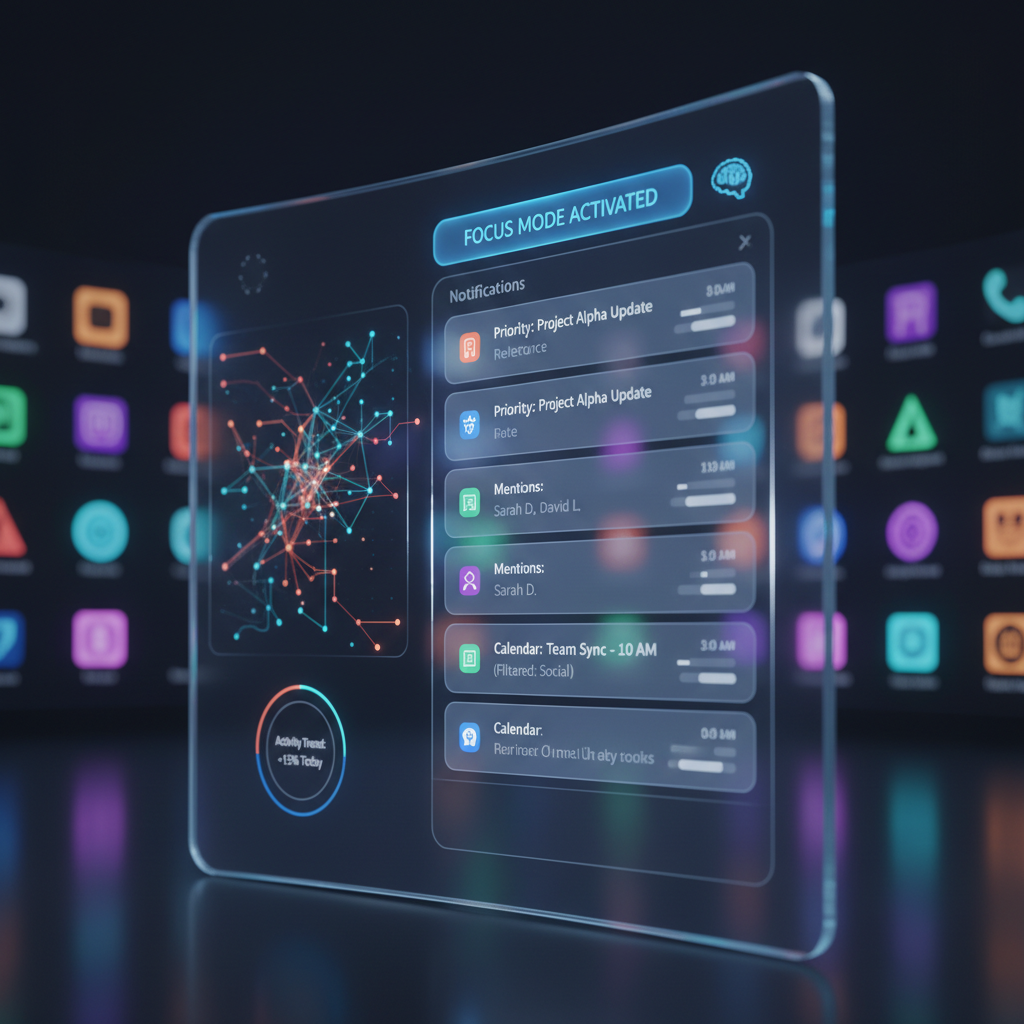
- Scheduled Focus Sessions: Users can set specific times for “Focus Mode,” during which notifications from certain websites are suppressed, and the AI helps maintain task relevance by suggesting related content only if it aligns with the defined focus.
Each of these features, individually powerful, synergize within Atlas Browser’s unique interface to create an ecosystem where information consumption is optimized, content creation is accelerated, and overall digital productivity is elevated to new heights.
Enhancing Research and Learning with Atlas and ChatGPT
The realms of academic research and continuous learning demand rigorous information processing, synthesis, and critical analysis. Atlas Browser, with its integrated ChatGPT capabilities, acts as a formidable ally in these endeavors, transforming tedious tasks into efficient, insightful processes. Its unique interface provides a robust environment where knowledge acquisition is streamlined and understanding is deepened.
Academic Research: Instant Summaries and Cross-Referencing
For students, academics, and professionals conducting in-depth research, the volume of information can be overwhelming. Atlas Browser significantly alleviates this burden:
- Instant Summarization of Papers: Imagine opening a dense scientific paper or a lengthy legal document. With Atlas, you can simply activate ChatGPT and request a summary, instantly grasping the abstract, methodology, results, and conclusions without reading hundreds of pages. This is particularly useful for quickly assessing the relevance of a paper before committing to a full read. The AI can be prompted to summarize for different audiences, for example, “Summarize this paper for a non-expert” or “Extract the core arguments for a peer review.”
- Key Data Point Extraction: Beyond general summaries, ChatGPT can be directed to extract specific types of information. For instance, “Extract all statistical findings,” “List all cited authors,” or “Identify the main hypotheses tested in this study.” This targeted extraction saves countless hours of meticulous scanning.
- Cross-Referencing and Contextualization: As you browse multiple sources, Atlas can help cross-reference information. You can ask ChatGPT, “How does the methodology in this paper compare to the one I was just reading?” or “Are there any contradictions between these two articles on the same topic?” The AI, being contextually aware of your open tabs and recent history, can provide insightful comparisons and highlight discrepancies.
- Bibliography and Citation Assistance: While not a full citation manager, ChatGPT can assist in formatting references or finding missing publication details based on partial information, acting as a quick helper during the citation process.
Skill Development: Interactive Tutorials and Concept Explanations
Learning new skills, whether coding, a new language, or a complex software application, often involves grappling with new concepts and debugging problems. Atlas Browser makes this journey more interactive and less frustrating:
- Interactive Tutorials: When following an online tutorial or documentation, if you encounter a confusing step or an unfamiliar term, you can highlight it and ask ChatGPT for an immediate explanation, clarification, or even an alternative example. This transforms passive reading into an active learning dialogue.
- Concept Explanations: For complex subjects like advanced mathematics, physics, or philosophy, you can ask ChatGPT to break down intricate concepts into simpler terms or provide analogies, making difficult topics more accessible. For example, “Explain quantum entanglement to me as if I’m five years old” or “Give me a simple real-world example of recursion.”
- Troubleshooting and Debugging: If you are learning to code and encounter an error message on a forum or in a coding environment, you can copy-paste it directly into Atlas’s ChatGPT interface and ask for an explanation of the error and potential solutions. This provides instant, context-aware debugging support.
- Practice Questions Generation: To test your understanding, you can even ask ChatGPT to generate practice questions based on the content of a web page or a concept you just learned, reinforcing your knowledge.
Language Learning: Translation, Grammar Correction, and Conversational Practice
Language learners will find Atlas Browser to be an invaluable tool, integrating various functionalities to enhance their proficiency:
- On-the-Fly Translation: Highlight a word, phrase, or even an entire paragraph in a foreign language on any web page, and ChatGPT can provide instant, accurate translations, often with contextual nuances.
- Grammar and Syntax Correction: When writing in a foreign language, whether it’s an email or a forum post, you can paste your text into ChatGPT or highlight sections and ask for grammar corrections, style improvements, or alternative phrasing suggestions.
- Vocabulary Expansion: Ask ChatGPT for synonyms, antonyms, or example sentences for unfamiliar words encountered while browsing, enriching your vocabulary in context.
- Conversational Practice: Engage with ChatGPT in a target language. You can ask it to role-play a scenario (e.g., ordering food, asking for directions) or simply have a free-form conversation to practice your speaking and comprehension skills in a low-pressure environment.
By transforming the browser into an intelligent tutor and research assistant, Atlas with ChatGPT significantly accelerates the processes of knowledge acquisition and skill development, making learning more interactive, efficient, and deeply engaging. This unique interface truly empowers users to learn smarter, not just harder.
Security, Privacy, and Performance: The Pillars of Atlas Browser
In the digital age, a browser’s value is no longer solely measured by its features, but equally by its commitment to user security, privacy, and seamless performance. Atlas Browser, while pioneering in its AI integration, does not compromise on these foundational pillars, recognizing that true productivity cannot flourish in an environment of vulnerability or sluggishness. Its unique interface design thoughtfully incorporates these elements to provide a secure, private, and lightning-fast browsing experience alongside its intelligent AI capabilities.
Built-in Privacy Features: Guarding Your Digital Footprint
Atlas Browser is engineered with a proactive approach to user privacy, understanding that an intelligent browser must also be a protective one. Its integrated privacy safeguards are designed to give users control over their digital footprint and shield them from intrusive tracking:
- Advanced Tracker Protection: Atlas employs sophisticated algorithms, often AI-enhanced, to identify and block third-party trackers across websites. These trackers, commonly used for advertising and data collection, are a major concern for privacy. Atlas actively prevents them from collecting your browsing data, ensuring your activities remain private.
- Intelligent Ad Blocking: Beyond simply blocking ads, Atlas’s AI-driven ad blocker can distinguish between intrusive ads and necessary content, aiming to block annoying pop-ups and banners without breaking website functionality. This creates a cleaner, less distracting browsing environment, directly contributing to increased focus and productivity.
- Fingerprinting Protection: Many websites attempt to ‘fingerprint’ users by combining various data points (browser version, installed fonts, screen resolution, etc.) to create a unique identifier. Atlas implements techniques to randomize or obscure these data points, making it significantly harder for sites to create persistent profiles of individual users.
- Strict Data Minimization Policies: Atlas Browser is designed with a commitment to collect as little user data as possible. For AI features, especially those interacting with services like ChatGPT, strong anonymization or on-device processing is prioritized whenever feasible to ensure that personal browsing context isn’t unnecessarily shared or stored. Users are typically given granular control over what data is shared with AI services.
- VPN Integration (Optional/Premium): Some versions or premium tiers of Atlas may offer integrated VPN services, further encrypting internet traffic and masking IP addresses, adding an extra layer of privacy and security, especially on public Wi-Fi networks.
Performance Optimization: Speed and Resource Management
A browser bristling with features is only productive if it’s fast and responsive. Atlas Browser prioritizes performance to ensure its AI capabilities enhance, rather than hinder, the user experience:
- Optimized AI Processing: The integration of ChatGPT and other AI models is done efficiently. Atlas leverages intelligent caching, optimized local processing where possible, and streamlined communication with cloud-based AI services to minimize latency and ensure AI responses are delivered swiftly. This means summaries, drafts, and answers appear almost instantly.
- Efficient Resource Management: Modern browsers can be memory hogs. Atlas is engineered for efficient resource utilization, actively managing CPU and RAM usage across tabs and extensions. It often employs techniques like tab suspension for inactive tabs to free up system resources, ensuring smooth performance even with many tabs open.
- Fast Page Loading: Through aggressive ad and tracker blocking, optimized rendering engines, and smart pre-loading techniques, Atlas aims for exceptionally fast page load times. A quicker loading page means less waiting and more doing, directly impacting daily productivity.
- Lightweight Core: While feature-rich, Atlas strives for a lightweight core architecture, avoiding bloatware that can slow down other browsers. This lean approach ensures that the browser remains agile and responsive, even on less powerful hardware.
- Regular Updates and Optimizations: The development team behind Atlas is committed to continuous improvement, regularly releasing updates that not only introduce new features but also enhance performance and security, ensuring the browser remains at the cutting edge of efficiency.
Data Handling Policies with AI Integration
The integration of powerful AI models like ChatGPT raises natural questions about data handling. Atlas Browser addresses these concerns transparently:
- User Consent and Control: Users are provided with clear consent mechanisms for how their data might be used by AI features. Granular settings allow users to choose which AI features are active and what level of data sharing (if any) is permitted with third-party AI providers.
- Anonymization and Encryption: When data needs to be sent to cloud-based AI services, Atlas employs robust anonymization techniques and encryption protocols to protect user privacy. Sensitive personal information is stripped or obfuscated before being processed by the AI.
- No Data Selling: A key commitment for privacy-focused browsers like Atlas is a strict “no data selling” policy. User data, even anonymized, is not sold to third parties for advertising or other commercial purposes.
- Clear Terms of Service: Atlas Browser provides transparent and easy-to-understand terms of service and privacy policies, detailing how data is handled, stored, and processed, particularly in relation to its AI features.
By embedding these robust security, privacy, and performance measures directly into its unique AI-driven interface, Atlas Browser establishes itself not just as an innovative productivity tool, but also as a trustworthy guardian of your digital life, ensuring that maximizing productivity never comes at the expense of your personal safety or efficiency.
Customization and Future Outlook: Tailoring Your Digital Workspace
The true strength of an advanced tool lies not just in its inherent capabilities, but in its adaptability to individual needs. Atlas Browser, with its AI-driven interface, embraces this principle through extensive customization options, allowing users to tailor their digital workspace to perfectly match their unique workflows and preferences. Furthermore, the browser is poised for continuous evolution, with a clear vision for integrating future AI advancements.
User Interface Customization Options
Atlas Browser understands that a personalized environment fosters greater productivity and comfort. Its UI is designed to be highly flexible:
- Theme and Appearance Settings: Users can choose from a range of themes, including light, dark, and custom color palettes, to personalize the browser’s aesthetic. Options to adjust font sizes, icon styles, and overall layout density ensure visual comfort.
- Layout and Panel Configuration: The AI sidebar, quick action buttons, and other interface elements can often be rearranged, resized, or even hidden to declutter the workspace. Users can pin frequently used AI tools to easily accessible areas or configure custom panels for specific tasks.
- Quick Access AI Prompts: Beyond the standard ChatGPT prompts, Atlas allows users to save and organize their own frequently used AI commands. For example, a marketer might create a “Social Media Post Generator” button that, when clicked, automatically prompts ChatGPT with their preferred tone and style for content creation.
- Keyboard Shortcuts and Gestures: For power users, comprehensive keyboard shortcut customization and mouse gestures allow for lightning-fast invocation of AI features and navigation, significantly speeding up workflow.
Plugins and Extensions Compatibility
While Atlas’s core strength lies in its native AI integration, it also acknowledges the diverse ecosystem of browser extensions. Typically, Atlas Browser is built on a Chromium base or a similar open-source framework, ensuring broad compatibility:
- Extensive Extension Support: Users can generally install most extensions available in the Chrome Web Store or other compatible repositories. This means they don’t have to sacrifice their favorite password managers, ad blockers (though Atlas has its own), or specialized productivity tools to leverage Atlas’s AI.
- Seamless AI-Extension Interaction: The browser is designed to allow AI features to work harmoniously with installed extensions. For instance, a reference manager extension might work alongside ChatGPT summarization to help organize research.
- Curated AI-Focused Add-ons: Over time, Atlas may introduce its own marketplace for AI-focused add-ons that further enhance its native capabilities, offering specialized AI models or unique integrations for niche use cases.
Roadmap for Future AI Features and Integrations
The field of AI is rapidly evolving, and Atlas Browser is committed to staying at the forefront of these advancements. Its development roadmap typically includes:
- Multi-Modal AI Integration: Beyond text, future iterations are likely to incorporate advanced image and video AI. Imagine being able to ask ChatGPT to analyze a chart on a webpage, describe elements in an image, or even generate images based on text prompts directly within the browser.
- Proactive Task Automation: The AI will become even more intelligent in anticipating user needs, potentially automating multi-step tasks. For example, it could offer to schedule a meeting based on email content, pre-fill forms, or manage complex online bookings with minimal user input.
- Deeper Personalization and Learning: As the AI interacts more with individual users, it will learn and adapt to their specific work styles, preferences, and knowledge domains at a more granular level, making its assistance even more bespoke and efficient.
- Enhanced Security AI: Future AI features could include real-time threat detection based on browsing behavior, intelligent phishing scam identification, or even AI-driven content moderation for personal use, providing an unprecedented layer of digital protection.
- Augmented Reality (AR) and Virtual Reality (VR) Browsing: As spatial computing evolves, Atlas may explore integrating its AI capabilities into AR/VR environments, offering a truly immersive and intelligent browsing experience that transcends the traditional 2D screen.
Atlas Browser is not just a tool for today; it is a platform built for tomorrow. Its commitment to customization ensures that users can craft an ideal digital workspace, while its ambitious roadmap for AI integration promises a future where browsing is not just efficient, but truly intelligent and deeply personal. The unique user interface of Atlas Browser is thus a dynamic canvas, continually evolving to meet the demands of an increasingly complex digital landscape.
Comparison Tables
Table 1: Productivity Browser Feature Comparison
This table offers a comparative overview of how Atlas Browser, with its deep AI integration, stacks up against other popular web browsers across key productivity and advanced feature categories. This highlights Atlas’s unique position in the market.
| Feature Category | Atlas Browser (with ChatGPT) | Google Chrome | Microsoft Edge | Mozilla Firefox |
|---|---|---|---|---|
| Core AI Integration (LLM) | Deep, contextual, native ChatGPT integration (summarize, generate, Q&A on page) | Limited (Search Generative Experience/Gemini in search, some extensions) | Integrated Copilot sidebar (Bing Chat/GPT-4) | Minimal (via third-party extensions only) |
| Content Summarization | One-click intelligent summaries of articles, videos, documents based on context | Primarily through extensions, limited native capability | Summarize feature via Copilot | Primarily through extensions |
| AI Writing Assistant | Draft emails, posts, reports; grammar/style checks; based on current page context | Via Google Docs/Gmail AI features, limited browser-wide integration | Compose text, generate ideas via Copilot | Primarily through extensions |
| Smart Tab Management | AI-driven grouping, predictive organization, session summarization | Manual grouping, Tab Groups feature | Vertical tabs, Tab Groups, Sleeping Tabs | Manual grouping, Tree Style Tab (extension) |
| Privacy & Tracking Protection | Advanced AI-enhanced tracker/ad blocking, fingerprinting protection, data minimization | Standard tracker blocking, Incognito mode | Tracking prevention levels, InPrivate mode | Enhanced Tracking Protection (ETP), Total Cookie Protection |
| Performance & Resource Mgmt. | Optimized AI processing, efficient RAM/CPU usage, fast loading, tab suspension | Good speed, can be resource-intensive, Memory Saver | Good speed, efficient with Sleeping Tabs, Performance Mode | Generally efficient, focus on privacy and open web standards |
| Customization & Workflows | Highly customizable UI, custom AI prompts, extensive extension support | Extensive extension support, theme customization | Extensive extension support, theme customization, vertical tabs | Extensive extension support, theme customization |
| Target User Base | Productivity enthusiasts, researchers, content creators, professionals seeking AI leverage | General users, Google ecosystem users | General users, Microsoft ecosystem users, business users | Privacy-conscious users, open-source advocates |
Table 2: Real-World Productivity Gains with Atlas Browser’s AI
This table illustrates specific everyday tasks and how the integration of Atlas Browser’s AI, particularly ChatGPT, significantly enhances efficiency and output compared to traditional browsing methods. These are practical examples demonstrating tangible benefits.
| Common Task | Traditional Browser Approach | Atlas Browser with AI Approach | Productivity Gain / Benefit |
|---|---|---|---|
| Researching a Complex Topic | Open multiple tabs, manually read/skim articles, copy-paste snippets into a document, synthesize information yourself. | Atlas AI summarizes articles across tabs, cross-references facts, answers specific questions about content, extracts key data points, and can even draft an initial summary report. |
Time Saved: Up to 70% reduction in reading and synthesis time. Quality Improvement: More comprehensive understanding, better synthesis of disparate sources. |
| Drafting an Email Reply | Read original email, switch to email client, type out a response from scratch, proofread manually. | Highlight the relevant parts of the original email in Atlas, prompt ChatGPT to draft a professional, context-aware reply (e.g., “Draft a polite decline,” “Propose alternative dates”). Grammar check and tone adjustments are instant. |
Time Saved: Up to 80% reduction in drafting time. Quality Improvement: Faster, more polished, and contextually accurate communication. |
| Learning a New Skill (e.g., coding) | Struggle with complex documentation, search forums for explanations, manually test code snippets, debug errors through trial and error. | Highlight confusing code or concepts in tutorials for immediate explanation from ChatGPT. Paste error messages for instant debugging suggestions, ask for alternative code examples, or generate practice questions based on the lesson. |
Time Saved: Accelerated learning curve, reduced frustration in debugging (potentially 50% faster problem solving). Quality Improvement: Deeper understanding of concepts, higher retention. |
| Content Creation (e.g., blog post idea) | Brainstorm ideas manually, research keywords, outline structure, then start writing in a separate editor. | Atlas AI, based on current browsing topic, can brainstorm blog post ideas, generate SEO-friendly titles, create an outline, and even write initial paragraphs or bullet points for specific sections. |
Time Saved: Significant reduction in ideation and outlining phases (up to 60%). Quality Improvement: More diverse ideas, structured content, reduced writer’s block. |
| Managing Numerous Research Tabs | Tabs accumulate, difficult to keep track of context, often lose track of important pages or close them accidentally. | Atlas AI automatically groups related tabs by project/topic, summarizes each tab’s content with a hover, and allows for intelligent session saving and recall, often with an AI-generated overview of the session’s purpose. |
Time Saved: Eliminates time spent organizing, searching for tabs (up to 40% efficiency gain in information retrieval). Quality Improvement: Better context switching, reduced mental load, less information loss. |
Practical Examples: Real-World Use Cases and Scenarios
Understanding the theoretical capabilities of Atlas Browser’s AI-driven interface is one thing; witnessing its practical application in real-world scenarios is another. These examples illustrate how Atlas, powered by ChatGPT, seamlessly integrates into daily workflows, transforming mundane tasks into efficient, intelligent interactions across various professions and personal uses.
Scenario 1: The Marketing Professional Drafting a Campaign Summary
Challenge: A marketing manager needs to quickly review and summarize performance reports from various online advertising platforms (Google Ads, Facebook Ads, LinkedIn Ads) and then draft an internal report for senior management, highlighting key successes and areas for improvement. This involves sifting through multiple dashboards, extracting data, and then synthesizing it into coherent prose.
Atlas Browser Solution:
- The manager opens tabs for each advertising platform’s report page in Atlas.
- For each report, they use Atlas’s integrated ChatGPT to “Summarize key performance metrics and identify the top 3 successes.” The AI quickly extracts relevant data points and highlights significant achievements.
- They then open a new tab for their internal reporting document. Using the AI writing assistant, they prompt: “Based on the summaries from my ad reports, draft an executive summary highlighting overall campaign performance and two critical areas for improvement.”
- ChatGPT instantly generates a structured summary, drawing context from the open report tabs. The manager can then refine it with specific numerical data extracted earlier, saving hours of manual data extraction and initial drafting.
Outcome: A comprehensive, well-structured campaign summary is produced in a fraction of the time, allowing the marketing manager to focus on strategic insights rather than data compilation.
Scenario 2: The Student Researching for a Term Paper
Challenge: A university student is writing a term paper on the socio-economic impacts of climate change. They have dozens of academic articles, news reports, and statistical datasets to review, needing to extract specific arguments, data, and compare different perspectives.
Atlas Browser Solution:
- The student opens numerous relevant articles in Atlas Browser. The “Smart Tab Management” feature automatically groups these into a “Climate Change Research” category.
- For each academic paper, the student uses ChatGPT to “Summarize the main arguments and methodologies” or “Extract all statistical data related to sea-level rise.” This allows them to quickly assess the relevance and key findings of each source.
- While reading a complex economic report, they encounter an unfamiliar economic term. They highlight it, and ChatGPT provides an instant, simplified explanation and an example, clarifying the concept without needing to open a new search tab.
- As they gather information, the student can prompt ChatGPT: “Compare the arguments made by this author against the report I read yesterday on climate migration. Are there any major discrepancies?” Atlas, leveraging its contextual awareness, helps synthesize conflicting information.
- Finally, the student can use ChatGPT to help outline their paper, asking for “An essay outline on the socio-economic impacts of climate change, including an introduction, three body paragraphs, and a conclusion.”
Outcome: The student efficiently processes a large volume of research, gains deeper comprehension of complex topics, and gets a head start on outlining their paper, leading to a higher quality assignment completed with less stress.
Scenario 3: The Developer Debugging Code and Learning New Libraries
Challenge: A software developer is integrating a new JavaScript library into their project but is encountering obscure error messages and struggling to understand the library’s advanced concepts from its documentation.
Atlas Browser Solution:
- The developer navigates to the library’s official documentation in Atlas. When they find a particularly dense section on asynchronous operations, they highlight the paragraph and ask ChatGPT, “Explain this concept of Promises in simpler terms, with a practical example.” ChatGPT provides an immediate, easy-to-understand breakdown.
- Back in their coding environment, they copy an error message from their console. They paste it into Atlas’s ChatGPT interface and ask, “What does this error message mean, and what are common solutions for it in Node.js?” ChatGPT instantly provides a diagnosis and actionable steps.
- Later, the developer wants to write a quick function using a feature of the new library but isn’t sure of the exact syntax. They prompt ChatGPT: “Write a JavaScript function that fetches data from an API using the new library, including error handling.” ChatGPT generates a boilerplate function tailored to their request.
Outcome: The developer overcomes technical hurdles faster, understands new concepts more quickly, and accelerates their coding process, leading to improved productivity and reduced development time.
Scenario 4: The Personal User Planning a Trip
Challenge: A user is planning a multi-city European trip. This involves researching flights, accommodations, local attractions, visa requirements, and cultural etiquette across several countries, often leading to dozens of open tabs and fragmented information.
Atlas Browser Solution:
- As the user opens websites for airlines, hotels, travel guides, and visa information, Atlas’s “Smart Tab Management” automatically groups them under a “Europe Trip Planning” session.
- On a travel blog describing “Top 10 things to do in Rome,” the user highlights a paragraph about the Colosseum. They ask ChatGPT, “What’s the best time of day to visit the Colosseum to avoid crowds?” or “Are there any skip-the-line options available?”
- When reviewing visa requirements for a specific country, the user asks ChatGPT to “Summarize the key visa application steps for non-EU citizens.” This distills complex government websites into actionable bullet points.
- Before booking, the user might ask ChatGPT to “Compare the pros and cons of staying in an Airbnb versus a hotel in Paris based on average price, amenities, and location for a family of four.” The AI can draw information from various open tabs to provide a synthesized recommendation.
- After finalizing some bookings, the user can prompt the AI to “Draft a short itinerary for my first three days in Florence, including key historical sites and local dining recommendations.”
Outcome: The trip planning process becomes more organized, efficient, and insightful, transforming a potentially stressful task into an enjoyable and productive experience, leading to a well-planned and memorable trip.
These diverse examples underscore how Atlas Browser’s AI-driven interface, deeply integrated with ChatGPT, is not just a theoretical advancement but a practical, everyday tool that empowers users across all walks of life to achieve significantly higher levels of productivity, comprehension, and creativity in their digital interactions.
Frequently Asked Questions
Q: What is Atlas Browser, and how is it different from other browsers?
A: Atlas Browser is an innovative web browser that deeply integrates advanced artificial intelligence, specifically ChatGPT, into its core user interface and functionality. Unlike traditional browsers that are primarily for displaying web pages, or other browsers that offer AI as a separate sidebar feature, Atlas embeds AI to proactively assist with tasks like content summarization, generation, contextual search, smart tab management, and more, making it a productivity-centric AI co-pilot for your online activities. Its key difference lies in its holistic, context-aware AI integration designed to amplify user efficiency and understanding.
Q: How does ChatGPT integrate with Atlas Browser?
A: ChatGPT is integrated into Atlas Browser in several intuitive ways. You can access it via a contextual sidebar that understands your current web page, highlight any text on a page for instant AI actions (summarize, explain, translate, rephrase, generate), or use AI commands directly in the omnibox (address bar). The integration is designed to be seamless and context-aware, allowing you to interact with web content and generate text without leaving the page or copying and pasting, turning passive browsing into an interactive, intelligent process.
Q: Is Atlas Browser free to use, or is it a premium service?
A: The pricing model for Atlas Browser can vary. Often, the core browser with basic AI features might be available for free, with premium tiers or subscriptions offered for advanced AI capabilities, higher usage limits for AI interactions, or enhanced privacy and performance features (like integrated VPNs or priority support). It’s best to check the official Atlas Browser website for the most current pricing and feature breakdown.
Q: What are the main productivity features powered by Atlas’s AI?
A: Atlas Browser’s AI powers a wide range of productivity features, including:
- Content Summarization: Instantly distills lengthy articles, videos, or documents.
- AI Writing Assistant: Helps draft emails, social media posts, reports, and improves grammar/style.
- AI Search & Discovery: Provides contextual, intelligent search results and recommendations.
- Smart Tab Management: Automatically groups related tabs, summarizes sessions, and helps organize your workspace.
- Real-time Q&A: Allows you to ask questions about the current page content or broader topics.
- Coding Assistance: Explains code, suggests solutions, and helps debug for developers.
These features aim to reduce information overload, accelerate content creation, and streamline digital workflows.
Q: How does Atlas Browser handle user privacy and data security with AI integration?
A: Atlas Browser places a strong emphasis on privacy and security. It incorporates advanced tracker and ad blocking, fingerprinting protection, and practices data minimization. For AI features that interact with external services like ChatGPT, Atlas typically employs robust anonymization techniques and encryption protocols. Users are given granular control over data sharing with AI services, and the browser usually operates under a strict “no data selling” policy. Its commitment is to ensure AI enhances productivity without compromising user privacy.
Q: Can I customize the AI features or the browser’s interface?
A: Yes, customization is a core aspect of Atlas Browser’s unique interface. Users can personalize themes, layout, and appearance settings. More importantly, you can often create custom AI prompts or ‘macros’ for ChatGPT, tailoring its responses and automating specific tasks to your workflow. You can also adjust the AI’s proactivity and preferred tone. This high degree of customization ensures the browser adapts to your specific needs, creating a truly personalized digital workspace.
Q: Is Atlas Browser compatible with existing browser extensions?
A: Most likely, yes. Atlas Browser is often built on open-source frameworks like Chromium, which means it generally supports a vast array of existing extensions available from marketplaces like the Chrome Web Store. This allows users to leverage their favorite password managers, ad blockers (in addition to Atlas’s native ones), and specialized productivity tools alongside Atlas’s powerful AI capabilities without needing to switch ecosystems.
Q: How does Atlas Browser compare to other browsers that offer AI features like Microsoft Edge’s Copilot?
A: While browsers like Microsoft Edge (with Copilot) and Google Chrome (with SGE/Gemini) are integrating AI, Atlas Browser aims for a deeper, more integrated, and contextually seamless AI experience. Atlas often positions its AI as a fundamental layer of interaction across the entire browser, rather than primarily a sidebar or search-centric feature. It emphasizes a more proactive and omnipresent AI co-pilot that understands the entire browsing session, offering more extensive content summarization, generation, and workflow automation directly within the page, making its unique interface a more comprehensively AI-driven experience.
Q: What kind of tasks can ChatGPT specifically help with in Atlas Browser?
A: ChatGPT within Atlas Browser is versatile. It can:
- Summarize any article, document, or even video transcript.
- Generate email drafts, social media posts, reports, and creative content based on your prompts.
- Answer questions about content on your current page or general knowledge.
- Translate text, correct grammar, and offer style suggestions.
- Explain complex concepts, code snippets, or debug error messages.
- Brainstorm ideas and provide outlines for various projects.
Essentially, it acts as an intelligent assistant for reading, writing, learning, and organizing tasks directly within your browser.
Q: What are the system requirements for running Atlas Browser?
A: As a modern browser, Atlas Browser generally requires a relatively up-to-date operating system (Windows 10/11, macOS, Linux, or recent Android/iOS versions). While it’s optimized for performance, having a decent amount of RAM (8GB or more recommended, especially when using advanced AI features heavily) and a capable processor will ensure the smoothest experience. Its AI features, while efficient, do leverage computational resources. Check the official Atlas Browser website for precise minimum and recommended system specifications.
Key Takeaways
The journey through Atlas Browser’s AI-driven interface reveals a new frontier in digital productivity. Here are the core insights that underscore its transformative potential:
- Revolutionary AI Integration: Atlas Browser stands apart by integrating ChatGPT deeply and contextually into its UI, moving beyond simple chatbots to offer a truly intelligent co-pilot for all browsing activities.
- Unprecedented Productivity Gains: Features like one-click content summarization, AI-powered writing assistance, and smart tab management drastically reduce time spent on information processing and content creation.
- Enhanced Learning and Research: The browser transforms learning and research by offering instant explanations, cross-referencing capabilities, and targeted data extraction, making complex information more accessible and digestible.
- Seamless Interaction with Content: Users can interact with web page content in real-time—highlighting, querying, and generating—without breaking their workflow or leaving the current page.
- Prioritization of Security and Privacy: Despite its advanced AI, Atlas commits to robust privacy features (advanced tracker/ad blocking, fingerprinting protection) and transparent data handling, ensuring a secure and trustworthy environment.
- Optimized Performance: Engineered for efficiency, Atlas ensures its AI features operate swiftly and smoothly, minimizing resource consumption and maximizing page load times for a fluid user experience.
- Highly Customizable Workspace: The browser offers extensive UI customization and supports existing extensions, allowing users to tailor their digital environment and AI workflows to their exact preferences.
- Forward-Thinking Vision: With a roadmap for multi-modal AI, proactive automation, and deeper personalization, Atlas Browser is designed to evolve continually with the advancements in artificial intelligence.
- Redefining the Browsing Experience: Ultimately, Atlas Browser with ChatGPT redefines browsing from a passive act to an active, intelligent, and highly efficient interaction, empowering users to achieve more with less effort.
Conclusion
The digital landscape is in constant flux, and with it, our expectations of the tools we use to navigate it. Atlas Browser, with its profoundly integrated AI-driven interface and the power of ChatGPT, is not merely keeping pace with this change; it is leading it. We have explored how this innovative browser transcends the limitations of traditional web interaction, transforming the passive act of browsing into an active, intelligent, and deeply productive experience.
From revolutionizing how we research complex topics and learn new skills to streamlining content creation and managing our digital clutter, Atlas Browser offers a comprehensive suite of AI-powered features designed to amplify human potential. Its commitment to contextual understanding, real-time interaction, and personalized workflows sets a new benchmark for what a web browser can be. Furthermore, by rigorously upholding principles of security, privacy, and performance, Atlas ensures that this leap in productivity does not come at the expense of user trust or efficiency.
The unique user interface of Atlas Browser is more than just a collection of advanced features; it is a meticulously crafted ecosystem where information is distilled, insights are generated, and creativity flourishes effortlessly. It empowers users to move beyond merely consuming information to actively shaping it, interacting with it, and leveraging it to achieve their goals with unprecedented speed and precision. As artificial intelligence continues to evolve, Atlas Browser is poised to remain at the forefront, offering a glimpse into a future where our digital tools are not just smart, but truly intuitive co-pilots in our journey towards maximizing productivity.
Embrace the future of intelligent browsing. Explore Atlas Browser, and unlock a new era of digital efficiency and empowerment.























































































Leave a Reply