


Welcome, fellow designers! The world of visual content creation is experiencing an unprecedented revolution, largely driven by the rapid advancements in Artificial Intelligence. What was once the realm of complex 3D rendering, painstaking photo manipulation, or endless stock photo searches, can now be augmented, accelerated, and entirely reimagined through AI image generation. This comprehensive guide will explore how graphic designers can harness the power of AI to produce high-value visual content, elevate their craft, and achieve unparalleled creative impact.
In an increasingly visual-first digital landscape, the demand for unique, engaging, and personalized imagery has never been higher. Brands strive for distinct identities, marketers seek to cut through the noise, and content creators need a constant stream of fresh visuals. Traditional methods, while foundational, often face limitations in terms of speed, cost, and sheer creative bandwidth. This is where AI image generation steps in, not as a replacement for human creativity, but as an extraordinarily powerful tool that amplifies a designer’s capabilities, allowing them to push boundaries previously considered insurmountable.
The Paradigm Shift: Beyond Stock Photos and Manual Creation
For decades, graphic designers have relied on a combination of custom photography, illustration, and stock photo libraries to source visual content. While these methods remain valid and essential, they come with inherent limitations:
- Cost and Time for Custom Work: Professional photoshoots and custom illustrations are often expensive and time-consuming, requiring significant logistical planning and budget allocation.
- Limitations of Stock Libraries: Stock photos, while convenient, can feel generic, lack specificity for niche concepts, and sometimes lead to visual repetition across different brands. Finding the exact image that perfectly conveys a unique idea can be a frustrating and lengthy search.
- Manual Creation Constraints: Crafting complex visuals from scratch in design software requires immense skill, effort, and time, particularly for intricate scenes or highly detailed textures. Iteration speed is often slow.
AI image generation fundamentally challenges these constraints. By simply describing an image using natural language prompts, designers can conjure bespoke visuals in moments. This capability is not just about speed; it’s about unlocking a new dimension of creative freedom and specificity. Imagine needing a hyper-realistic image of a cat wearing a spacesuit, floating in a cosmic diner, with a neon glow – a task that would be incredibly difficult and expensive to achieve through traditional means. With AI, it’s a matter of crafting the right prompt.
Understanding AI Image Generation: How it Works for Designers
At its core, AI image generation relies on complex machine learning models, primarily a type known as “diffusion models.” These models are trained on vast datasets of images and their corresponding text descriptions. Through this training, they learn the relationships between words and visual concepts.
- Prompt Input: A designer provides a text description, known as a “prompt,” detailing the desired image. This can include subject matter, style, mood, lighting, composition, and more.
- Model Interpretation: The AI model interprets this prompt, drawing upon its learned understanding of visual elements and styles.
- Generative Process: The model then “generates” an image, often starting from random noise and iteratively refining it based on the prompt’s guidance until a coherent image emerges.
- Output and Refinement: The AI produces several image variations, allowing the designer to choose the best one. Further refinement can be achieved through iterative prompting, ‘in-painting’ (modifying specific parts of an image), ‘out-painting’ (extending an image beyond its original borders), or using the generated image as a starting point for traditional editing.
Leading AI image generation tools include:
- Midjourney: Known for its artistic and often fantastical outputs, excelling in creating aesthetically rich and evocative imagery.
- DALL-E 3 (integrated with ChatGPT Plus/Enterprise): Offers strong prompt understanding and coherence, making it excellent for specific, detailed requests and text integration.
- Stable Diffusion (open-source and various implementations): Highly customizable, allowing for local installation, fine-tuning, and a vast ecosystem of community-contributed models and plugins.
- Adobe Firefly: Specifically designed for creative professionals, integrated with Adobe tools, and focused on commercially safe content.
Boosting Creative Ideation and Exploration
One of the most profound impacts of AI image generation is its ability to supercharge the creative ideation phase. Designers often face creative blocks or the challenge of rapidly prototyping multiple visual concepts. AI alleviates these bottlenecks dramatically.
Rapid Prototyping of Concepts
Imagine a client asks for several distinct visual directions for a new campaign. Traditionally, a designer might sketch ideas, compile mood boards, and then painstakingly create mockups for each concept. With AI, a designer can:
- Generate dozens of variations for a central theme in minutes.
- Experiment with different artistic styles (e.g., cyberpunk, impressionistic, photorealistic, minimalist) at the drop of a hat.
- Visualize abstract ideas quickly, bringing intangible concepts into concrete visual forms.
This rapid iteration allows designers to explore a much wider creative space, presenting clients with diverse options without the heavy time investment previously required. It transforms the feedback loop, enabling quicker decisions and more refined outcomes.
Overcoming Creative Blocks
Even the most seasoned designers encounter moments of creative stagnation. AI can act as a powerful muse, generating unexpected visual interpretations of a prompt that can spark new ideas. By providing a broad concept and letting the AI explore possibilities, designers can often find unique angles or stylistic approaches they might not have conceived manually. It’s like having an infinite brainstorming partner that never tires and possesses an encyclopedic knowledge of visual styles.
Furthermore, AI can help in visualizing specific components. Need a unique texture for a background? A fantastical creature for a game concept? An unusual architectural element? AI can produce these elements in isolation, which can then be integrated into larger designs.
Efficiency and Speed: A Game-Changer for Workflow
Time is a critical resource in design. AI image generation significantly streamlines workflows, allowing designers to allocate more time to strategic thinking, client communication, and final polish rather than repetitive manual tasks.
Accelerated Content Production
For projects requiring a large volume of unique visuals, such as social media campaigns, website assets, or e-commerce product variations, AI is an invaluable asset. Instead of hours spent searching stock libraries or manipulating existing images, designers can generate a tailored suite of images in a fraction of the time. This is particularly beneficial for:
- Marketing Agencies: Quickly producing diverse ad creatives for A/B testing across multiple platforms.
- E-commerce Businesses: Generating lifestyle shots for products without costly photoshoots, or creating variations (e.g., product in different colors, environments).
- Content Creators: Producing unique blog headers, YouTube thumbnails, or podcast cover art on demand.
Rapid Iteration and Feedback Loops
The ability to generate multiple image options rapidly directly impacts the client feedback process. Designers can present several distinct visuals, gather feedback, and then quickly generate refined versions based on that input. This reduces the back-and-forth cycles, leading to faster project completion and higher client satisfaction. The design process becomes more agile and responsive.
For instance, if a client dislikes the mood of an image, a designer can simply adjust the prompt (e.g., “make it more vibrant,” “add a sense of mystery”) and generate new options instantly, rather than spending hours manually adjusting colors, lighting, or composition in traditional software.
Personalization and Niche Content Creation
Generic visuals struggle to resonate with highly specific audiences. AI image generation excels at producing hyper-personalized and niche content, a critical factor for effective marketing and brand differentiation in today’s crowded digital landscape.
Tailoring Visuals for Specific Audiences
Imagine designing for a niche market, like eco-friendly travel for millennials, or high-tech gardening equipment for urban dwellers. Finding truly relevant stock imagery can be challenging. AI allows designers to create visuals that speak directly to these specific demographics:
- Demographic Specificity: Generating images featuring diverse age groups, ethnicities, and cultural contexts that accurately reflect the target audience.
- Contextual Relevance: Creating scenes or scenarios that are highly relevant to a particular product or service, even if they are abstract or futuristic.
- Brand Tone and Style: Ensuring generated images perfectly align with a brand’s unique visual language, whether it’s whimsical, serious, luxurious, or playful.
Creating Unique Brand Assets
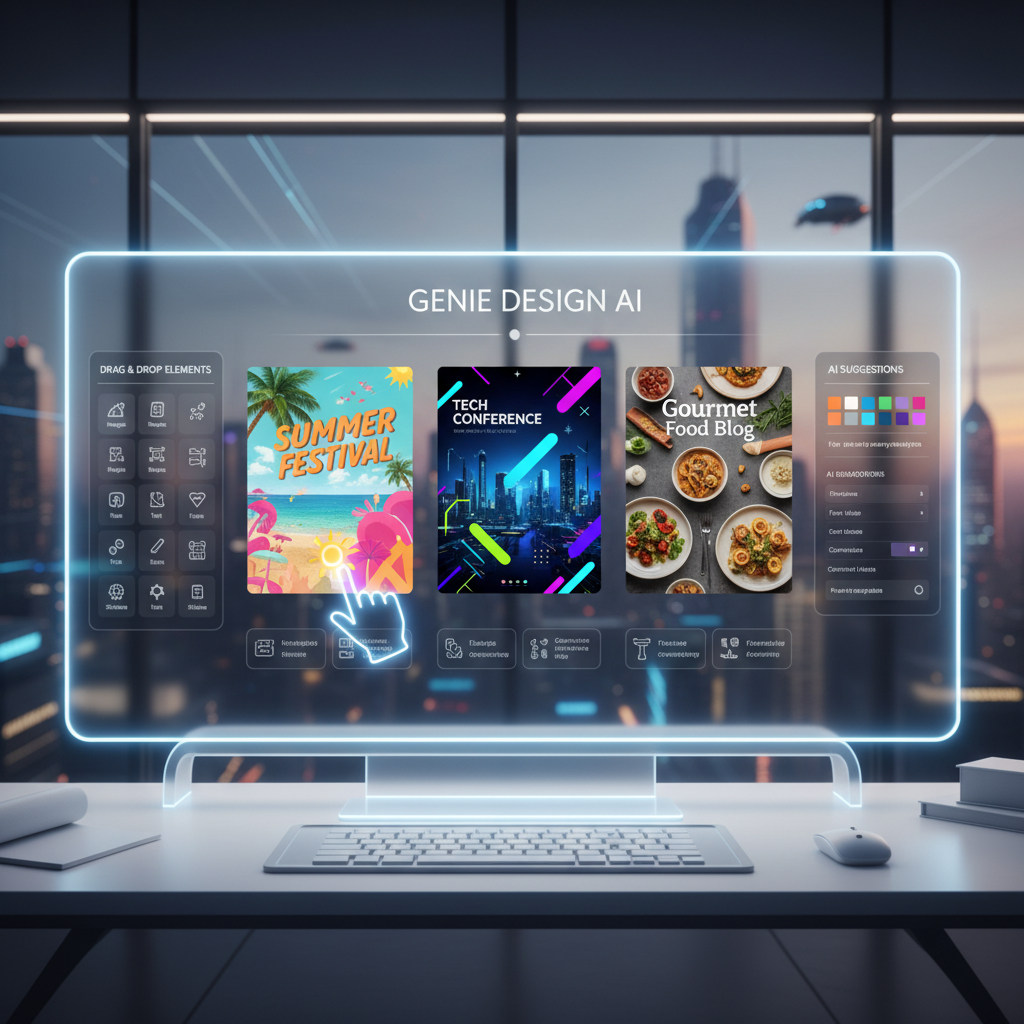
In branding, uniqueness is paramount. AI offers an unparalleled opportunity to develop truly distinct visual assets, from custom iconography and textures to abstract art and fantastical creatures that become synonymous with a brand. This capability helps brands stand out in a visually saturated market.
For example, a new beverage company could generate unique patterns and abstract imagery for their packaging that subtly hint at the drink’s flavors or origins, creating a visual identity that is completely bespoke and memorable, without needing to commission expensive artists for every element.
Ethical Considerations and Best Practices
While AI image generation offers immense benefits, it’s crucial for designers to approach its use with a strong understanding of ethical implications and best practices. Responsible AI usage ensures fair, unbiased, and legally sound creative output.
Addressing Bias and Representation
AI models are trained on existing data, which inevitably contains biases present in human society and the internet. If the training data overrepresents certain demographics or stereotypes, the AI outputs may inadvertently perpetuate these biases. Designers must be mindful of this:
- Conscious Prompting: Actively include diverse descriptors in prompts to ensure varied and inclusive outputs (e.g., “a diverse group of engineers,” “people of all ages enjoying nature”).
- Critical Evaluation: Always review AI-generated images for unintended biases or stereotypical representations before using them in client work.
- Educate and Advocate: Stay informed about how AI models are addressing bias and advocate for more inclusive training datasets.
Copyright and Ownership
The legal landscape around AI-generated content is still evolving. Key considerations include:
- Source of Training Data: Concerns exist about whether training data includes copyrighted works without permission. Some AI providers, like Adobe Firefly, train on licensed stock and public domain content to mitigate this.
- Ownership of Output: Who owns the copyright to an AI-generated image? In many jurisdictions, current interpretations suggest human authorship is required for copyright. However, many AI tool providers grant users commercial rights to images generated on their platforms, often with stipulations. Designers should always check the terms of service for each AI tool they use.
- Originality: Ensure that AI-generated content is sufficiently transformed or combined with human creative input to be considered original and not merely a reproduction.
It is advisable to use AI-generated images as a starting point, integrating them into larger compositions, adding human edits, and applying unique design elements to firmly establish human authorship and creativity.
Transparency and Disclosure
For certain contexts, especially journalism, public information, or sensitive topics, it may be important to disclose that AI was used in the creation of visual content. Transparency builds trust and helps manage audience expectations.
Integration into Existing Design Workflows
AI image generation isn’t meant to replace design software; it’s designed to augment it. Integrating AI tools seamlessly into existing workflows is key to maximizing their value.
AI as a Plugin or Companion Tool
Many AI tools now offer direct integrations or strong compatibility with industry-standard design software:
- Adobe Firefly: Native integration within Photoshop, Illustrator, and other Creative Cloud apps, allowing for “Generative Fill,” “Generative Expand,” and text-to-image features directly within the creative environment.
- API Access: Tools like DALL-E and Stable Diffusion offer APIs, enabling developers to build custom integrations or plugins for various applications.
- Image Export and Import: For standalone AI tools like Midjourney, the generated images are typically exported and then imported into Photoshop, Illustrator, Figma, or other software for further refinement, compositing, and final layout.
The Hybrid Workflow: AI and Human Touch
The most effective use of AI in design often involves a hybrid workflow:
- Concept Generation (AI): Use AI to quickly generate diverse visual concepts and explore styles.
- Selection and Refinement (Human): Choose the most promising AI-generated image and bring it into traditional design software.
- Enhancement and Compositing (Human): Apply advanced editing, color correction, masking, typography, and compositing techniques using tools like Photoshop.
- Branding Elements (Human): Integrate logos, brand-specific fonts, and other proprietary elements.
- Final Polish (Human): Ensure pixel-perfect precision, consistent branding, and adherence to client specifications.
This approach allows designers to leverage AI for speed and ideation, while retaining full creative control and applying their unique artistic vision and expertise to the final product.
Future Trends and Emerging Capabilities
The field of AI image generation is evolving at an astonishing pace. Designers should keep an eye on these emerging trends:
- Improved Coherence and Control: Future models will offer even greater control over specific elements, composition, and fidelity, reducing the need for extensive post-processing.
- 3D Asset Generation: AI models are increasingly capable of generating 3D models and textures from text prompts, revolutionizing workflows for game designers, animators, and product visualization specialists.
- Video Generation: Text-to-video capabilities are rapidly improving, promising to transform video content creation for social media, marketing, and film pre-production.
- Real-time Generation and Interaction: Imagine interacting with an AI in real-time, sculpting an image or scene with conversational prompts and immediate visual feedback.
- Personalized AI Models: Designers may be able to fine-tune AI models on their own portfolios or specific brand assets, allowing the AI to generate images that perfectly match their unique style or client’s brand guidelines.
- Ethical AI Frameworks: Greater emphasis on developing robust ethical guidelines, provenance tracking, and tools to detect AI-generated content will become standard.
Staying curious, experimenting with new tools, and continuously learning will be crucial for designers looking to stay at the forefront of this exciting technological frontier.
Comparison Tables
Table 1: Traditional Image Sourcing vs. AI Image Generation
| Feature | Traditional Image Sourcing (e.g., Stock Photos, Custom Shoots) | AI Image Generation |
|---|---|---|
| Time to Acquire | Hours to days (searching, licensing, scheduling, shooting) | Seconds to minutes (prompting, generating, selecting) |
| Cost per Image | Varies: low for basic stock, high for premium stock or custom shoots (hundreds to thousands) | Often subscription-based or credit system (low to moderate, depending on usage volume) |
| Uniqueness/Specificity | Limited by existing libraries or photoshoot briefs; can be generic | Highly customizable, capable of generating niche and unique concepts from text prompts |
| Creative Control | High (if custom shoot) or Low (if stock photo limitations) | Moderate to High (through prompt engineering and iterative refinement) |
| Iteration Speed | Slow (manual adjustments, reshoots, extensive editing) | Extremely fast (adjusting prompts, generating new variations) |
| Scalability | Challenging for high volume of diverse, unique visuals | Excellent for generating a large volume of varied images quickly |
| Ethical/Legal Issues | Generally clear licensing/copyright (for stock); clear ownership for custom | Evolving legal landscape for copyright, potential for bias in outputs |
| Required Skills | Photography, photo editing, graphic design, licensing knowledge | Prompt engineering, critical evaluation, photo editing, graphic design |
Table 2: Popular AI Image Generation Tools Comparison
| Tool Name | Primary Strength | Target User | Key Features | Ease of Use | Ethical/Safety Focus |
|---|---|---|---|---|---|
| Midjourney | Artistic quality, aesthetic richness, evocative imagery | Artists, illustrators, concept designers, general creatives | Discord-based interface, v5.2, custom styles, “remix” mode, image prompts | Medium (requires learning prompt structure & Discord commands) | Community moderation, some content restrictions |
| DALL-E 3 (via ChatGPT Plus) | Prompt understanding, semantic coherence, text integration | Marketers, content creators, designers needing specific outputs | Integrated into ChatGPT, strong understanding of complex prompts, text rendering | High (natural language prompts within conversational AI) | Strict content policies, focus on preventing harmful outputs |
| Stable Diffusion (various interfaces) | Customization, open-source flexibility, local control | Developers, advanced designers, researchers, tinkerers | Large ecosystem of models, in-painting/out-painting, ControlNet, img2img | Low to Medium (can be complex to set up and manage) | User’s responsibility for local versions, varied safety for online hosts |
| Adobe Firefly | Commercial safety, integration with Creative Cloud, ease of use | Graphic designers, photographers, creative professionals | Generative Fill, Generative Expand, Text to Image, vector recoloring, trained on Adobe Stock | High (intuitive UI, familiar Adobe ecosystem) | Strong emphasis on commercially safe and ethically sourced training data |
| Leonardo.Ai | Game assets, cinematic visuals, fine-tuned models | Game developers, concept artists, illustrators | Custom fine-tuned models, image generation, texture generation, 3D assets coming soon | Medium (web interface, extensive options) | Community guidelines, content filters |
Practical Examples: Real-World Use Cases and Scenarios
To truly appreciate the power of AI image generation, let’s explore some tangible applications across various design disciplines.
1. Marketing Campaigns and Advertising
Scenario: A social media manager needs to create 10 different ad variations for an upcoming product launch across Facebook and Instagram, targeting diverse demographics with personalized visuals.
- AI Application: Using DALL-E 3, the designer generates lifestyle images featuring different age groups and ethnicities interacting with the product in various settings (e.g., “a young couple laughing with a new smart gadget in a cozy café,” “an older woman smiling while using a smart gadget in a futuristic kitchen”). The AI can also generate images for A/B testing different emotional appeals (e.g., “joyful,” “serene,” “exciting”).
- Impact: Reduces time from days to hours, allows for extensive A/B testing of visual creatives, leading to optimized campaign performance and higher engagement rates for targeted audiences.
2. Product Design Mockups and Visualization
Scenario: A product designer needs to quickly visualize a new smartphone concept in multiple colorways, materials, and environmental contexts for an internal presentation.
- AI Application: With Midjourney or Stable Diffusion, the designer prompts for “a sleek futuristic smartphone, minimalist design, chrome finish, on a white pedestal with soft studio lighting.” Then, they generate variations by changing prompts like “matte black finish,” “wood grain texture,” or “on a natural mossy surface in a forest.”
- Impact: Speeds up the ideation and visualization phase dramatically, allowing designers to present a wide range of realistic mockups without needing complex 3D rendering software or physical prototypes. Facilitates quicker feedback and decision-making in the design process.
3. Storyboarding and Concept Art for Film/Games
Scenario: A film director needs to quickly visualize complex sci-fi scenes for a pitch deck, including alien landscapes, futuristic vehicles, and character costumes.
- AI Application: Using Midjourney’s artistic capabilities, the concept artist generates detailed environments (e.g., “a crystalline alien jungle at dusk, bioluminescent flora, cinematic lighting”), character designs (“a cybernetic warrior in desert camouflage, detailed armor, fierce expression”), and vehicle concepts (“a sleek, anti-gravity transport hovering over a bustling futuristic city”).
- Impact: Accelerates the pre-production phase, provides rich visual references for directors and cinematographers, helps secure funding by presenting compelling visual concepts, and streamlines communication among the creative team.
4. Branding and Identity Development
Scenario: A new organic food brand needs unique, nature-inspired visual elements for its packaging and website, beyond generic stock images.
- AI Application: The designer uses Adobe Firefly to generate abstract botanical patterns (e.g., “organic flowing lines, earthy tones, leaves and vines abstract pattern”), custom background textures (“handmade paper texture with subtle plant fibers”), and stylized images of fresh produce in whimsical settings (e.g., “a vibrant red apple floating in a clear stream, painterly style”).
- Impact: Creates a distinctive and cohesive visual identity that stands out, avoids generic stock imagery, and reinforces the brand’s unique ethos, all while maintaining commercial safety due to Firefly’s training data.
5. E-commerce Product Imagery
Scenario: An online fashion retailer wants to showcase a new dress collection on models of different sizes and ethnicities, and in various lifestyle contexts, without expensive photoshoots for every variation.
- AI Application: Using a specialized AI tool or Stable Diffusion with control nets (to maintain product consistency), the designer generates models wearing the dress in different poses and environments (e.g., “a plus-size woman confidently walking in a floral dress on a city street,” “an Asian model elegantly posing in a cocktail dress at a rooftop party”). The dress itself could be generated from existing product photos.
- Impact: Massively reduces the cost and logistical complexity of photoshoots, allows for comprehensive product representation for diverse customer bases, and enables rapid creation of marketing materials for seasonal collections.
Frequently Asked Questions
Q: Will AI image generation replace graphic designers?
A: No, AI image generation is a tool that augments, rather than replaces, the role of a graphic designer. It automates tedious tasks, accelerates ideation, and expands creative possibilities. Designers who embrace AI will become more efficient, innovative, and valuable, focusing more on strategic thinking, client communication, and applying their unique creative vision and critical judgment. The role evolves, it doesn’t disappear.
Q: What is “prompt engineering” and why is it important for designers?
A: Prompt engineering is the art and science of crafting effective text prompts to guide AI image generation models to produce desired outputs. It involves understanding how AI models interpret language, using descriptive keywords, specifying styles, lighting, composition, and even negative prompts (what to exclude). It’s crucial because the quality and relevance of AI-generated images directly depend on the skill of the prompt engineer. For designers, it’s a new core skill for controlling AI output.
Q: How does AI image generation impact copyright and intellectual property?
A: The legal landscape for AI-generated content is still developing and varies by jurisdiction. Generally, in many countries, human authorship is a prerequisite for copyright, meaning images generated solely by AI may not be copyrightable in the traditional sense. However, many AI tool providers grant users commercial rights to use the images generated on their platforms, usually under specific terms. It’s best practice for designers to use AI-generated images as a starting point, integrating significant human creative input and modification to ensure their own creative work is copyrightable.
Q: Are AI-generated images always commercially viable and safe to use?
A: Not always. The commercial viability and safety depend heavily on the AI tool used and its training data. Some tools, like Adobe Firefly, are explicitly trained on licensed content (e.g., Adobe Stock) or public domain content to ensure commercial safety and minimize copyright infringement risks. Other tools might be trained on vast datasets from the internet, which could include copyrighted material. Designers must always review the terms of service of the specific AI tool they use and perform due diligence, especially for client work, to ensure commercial rights and avoid potential legal issues.
Q: What is the learning curve like for designers wanting to use AI image generation?
A: The basic concepts are relatively easy to grasp – anyone can start typing prompts and generating images. However, mastering prompt engineering, understanding the nuances of different AI models, and effectively integrating AI into a professional workflow requires practice and learning. Tools like DALL-E 3 are very intuitive, while others like Midjourney or custom Stable Diffusion setups have a steeper but rewarding learning curve. Designers with strong visual literacy often adapt quickly.
Q: Can AI image generation help with specific design tasks like creating logos or typography?
A: While AI can generate images that incorporate textual elements, its ability to produce clean, legible, and consistent typography suitable for logos or branding is still developing and often imperfect. For logos, AI can be excellent for generating conceptual imagery or stylistic elements, but the final logotype or precise brand marks usually require human refinement in vector software. For typography, AI can inspire unique visual treatments or textures, but creating usable fonts or precise text layouts remains a human-driven process.
Q: How can I ensure the AI-generated images match my brand’s style guide?
A: This is a key challenge and opportunity. You can achieve this by incorporating detailed style descriptors into your prompts (e.g., “minimalist, pastel colors, clean lines,” or “gritty, cyberpunk, neon glow”). Some advanced AI tools allow you to ‘fine-tune’ models on your existing brand assets or use ‘image prompts’ to guide the AI towards a specific aesthetic. The best approach is a hybrid one: use AI for initial generation and then apply your brand’s specific color palettes, fonts, and design elements in traditional design software.
Q: What kind of hardware do I need to run AI image generation tools?
A: Most popular AI image generation tools (Midjourney, DALL-E, Adobe Firefly, Leonardo.Ai) run as cloud services, meaning you only need a modern web browser and an internet connection. No special hardware is required on your end. For running open-source models like Stable Diffusion locally on your computer, you would typically need a powerful GPU (Graphics Processing Unit) with a significant amount of VRAM (Video RAM), usually 8GB or more, for efficient generation.
Q: Can AI generate images that are completely unique and not derivative of existing art?
A: AI models are trained on vast datasets of existing imagery, so their outputs are inherently a synthesis of what they’ve learned. While they can create novel combinations and styles that haven’t existed before, the inspiration comes from existing data. It’s unlikely an AI image is “completely unique” in the sense of being entirely devoid of any learned influence. The degree of originality often comes from the designer’s prompt engineering and subsequent human modification, transforming the AI output into something truly original.
Q: What are the ethical concerns regarding AI’s potential to generate harmful or misleading content?
A: This is a significant concern. AI models can be prompted to create deepfakes, misinformation, hate speech, or explicit content. Leading AI developers implement strict content moderation policies and safety filters to prevent the generation of such harmful material. However, open-source models can sometimes be used without such safeguards. Designers must commit to using AI responsibly, adhering to ethical guidelines, and never contributing to the spread of harmful or misleading visuals.
Key Takeaways
- AI image generation is a powerful tool for graphic designers, not a replacement for human creativity.
- It dramatically accelerates creative ideation, allowing for rapid exploration of diverse concepts and styles.
- Workflow efficiency is significantly boosted, enabling faster content production and quicker iteration cycles.
- AI excels at creating highly personalized and niche visual content, helping brands stand out.
- Ethical considerations such as bias, copyright, and responsible usage are paramount for designers.
- Seamless integration into existing design workflows (e.g., Photoshop, Illustrator) maximizes AI’s value.
- Prompt engineering is a vital new skill for designers to master in order to control AI output effectively.
- The future of AI in design includes 3D asset generation, video creation, and increasingly personalized models.
- Designers who embrace and adapt to AI technologies will lead the next wave of visual innovation.
Conclusion
The advent of AI image generation marks a pivotal moment in the history of graphic design. Far from being a threat, it represents an unparalleled opportunity for designers to redefine their capabilities, enhance their creative output, and deliver high-value visual content with unprecedented impact. By embracing tools like Midjourney, DALL-E 3, Stable Diffusion, and Adobe Firefly, designers can transcend the limitations of traditional methods, explore boundless creative horizons, and achieve levels of personalization and efficiency previously unimaginable.
The journey forward requires curiosity, a willingness to learn new skills like prompt engineering, and a commitment to ethical practices. As AI technologies continue to evolve, the most successful designers will be those who master the art of collaboration with these intelligent systems, leveraging them to amplify their unique artistic vision and strategic thinking. The future of design is a collaborative dance between human ingenuity and artificial intelligence, promising an era of unparalleled visual richness and creative freedom. Step in, experiment, and prepare to elevate your design impact like never before.






















Leave a Reply